DECIMAL DESIGN HAS DESIGNED RAVENSCALE KHAOYAI, A CAFE IN THE MIDDLE OF KHAO YAI, TO BE A DESIGN THAT IS NOT JUST ABOUT AESTHETICS, BUT ABOUT LIVING IN HARMONY WITH NATURE
TEXT: PRATCHAYAPOL LERTWICHA
PHOTO: RICHARD SAE-SONG
(For Thai, press here)
In Thailand’s café culture, the creation of a memorable experience has become a defining factor in cultivating customer loyalty. For many Thais, cafés serve not only as places to enjoy food and drink, but as escapes from the routine; a way to release the weight of the everyday, to seek out the unfamiliar, and to take pleasure in thoughtfully prepared dishes and tasty drinks. Architecture, in this context, plays a central role in elevating these experiences into something sensorially cohesive. At Ravenscale Khaoyai, architecture is not merely a photogenic backdrop catering to social media habits, but a spatial framework that orchestrates a smooth, immersive journey and fosters a sense of true relaxation.
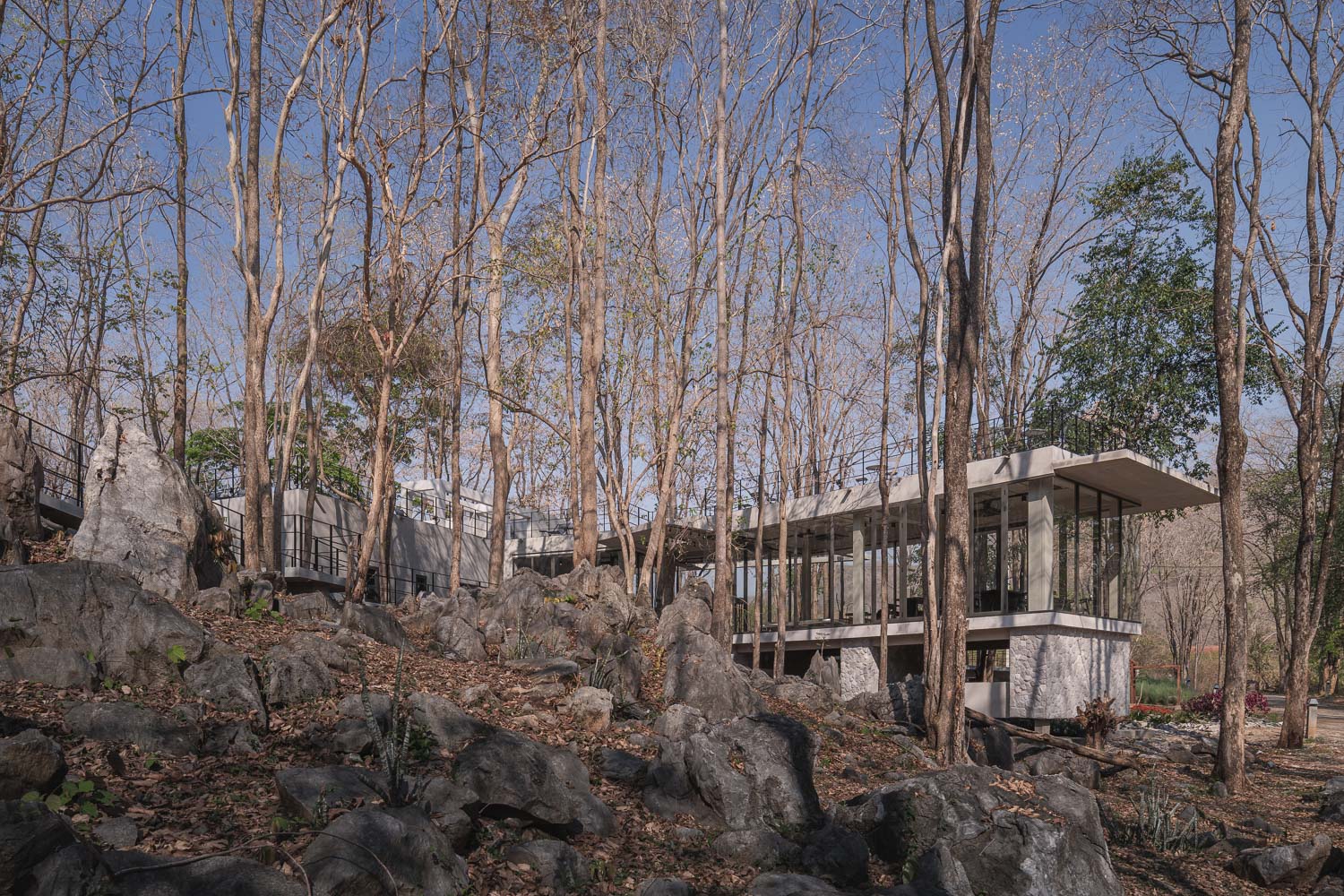
The sound of birdsong, the dappled shade beneath tall Burma padauk and ebony trees, and the presence of natural rock formations embedded in the soil all converge to form the enigmatic natural setting of Ravenscale Khaoyai, located in Nong Nam Daeng, Pak Chong District of Thailand’s Nakhon Ratchasima province. When Anawin Vorravin and Tanawan Supprasert, the project’s founders, decided to establish a café on this land, they presented a clear brief to architect Nathapong Polchiangdee of Decimal Design: the architecture must exist in harmony with the existing environment. “We wanted to preserve the atmosphere of the site,” Anawin explains. “We didn’t want the architecture to disrupt the original landscape.”
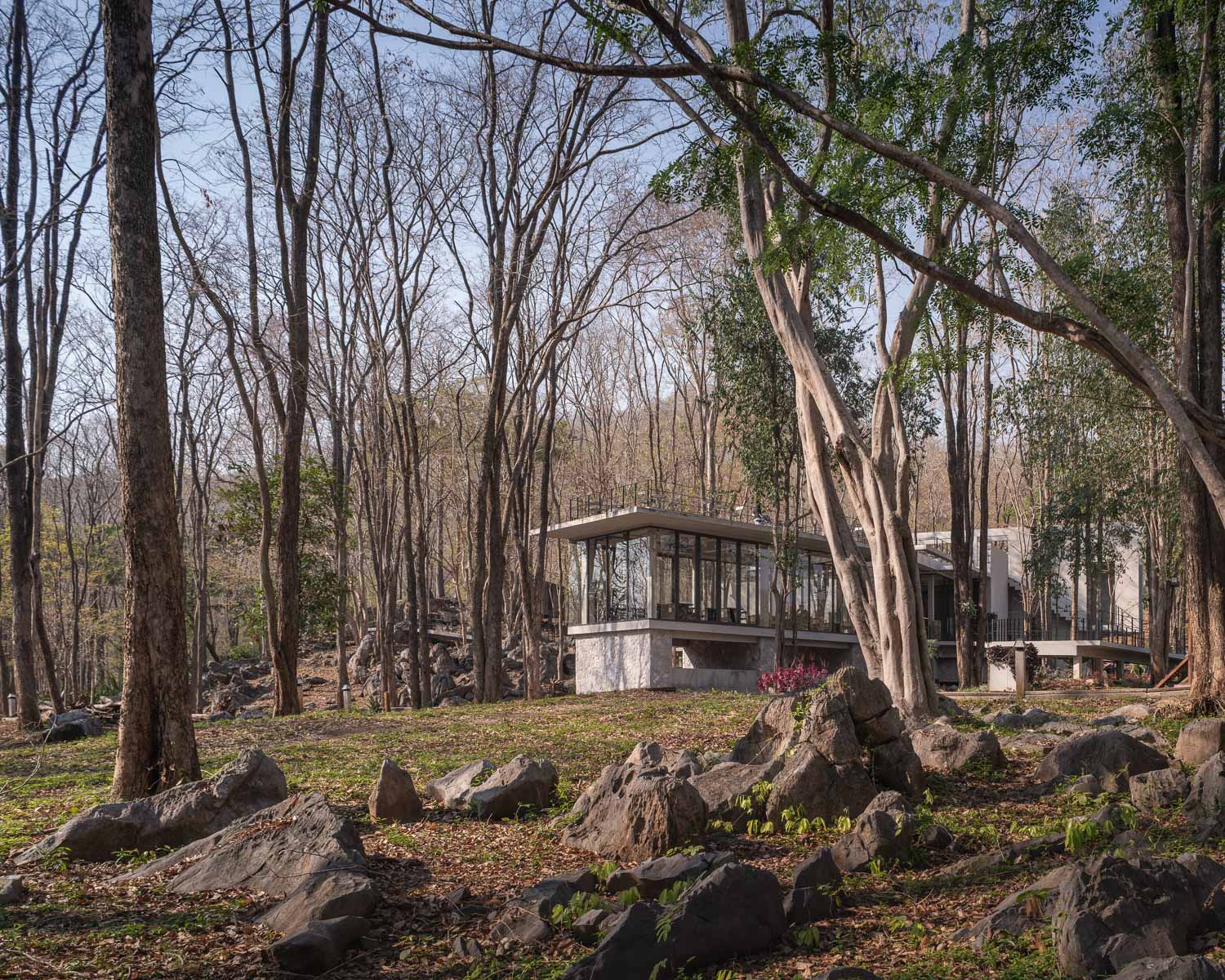
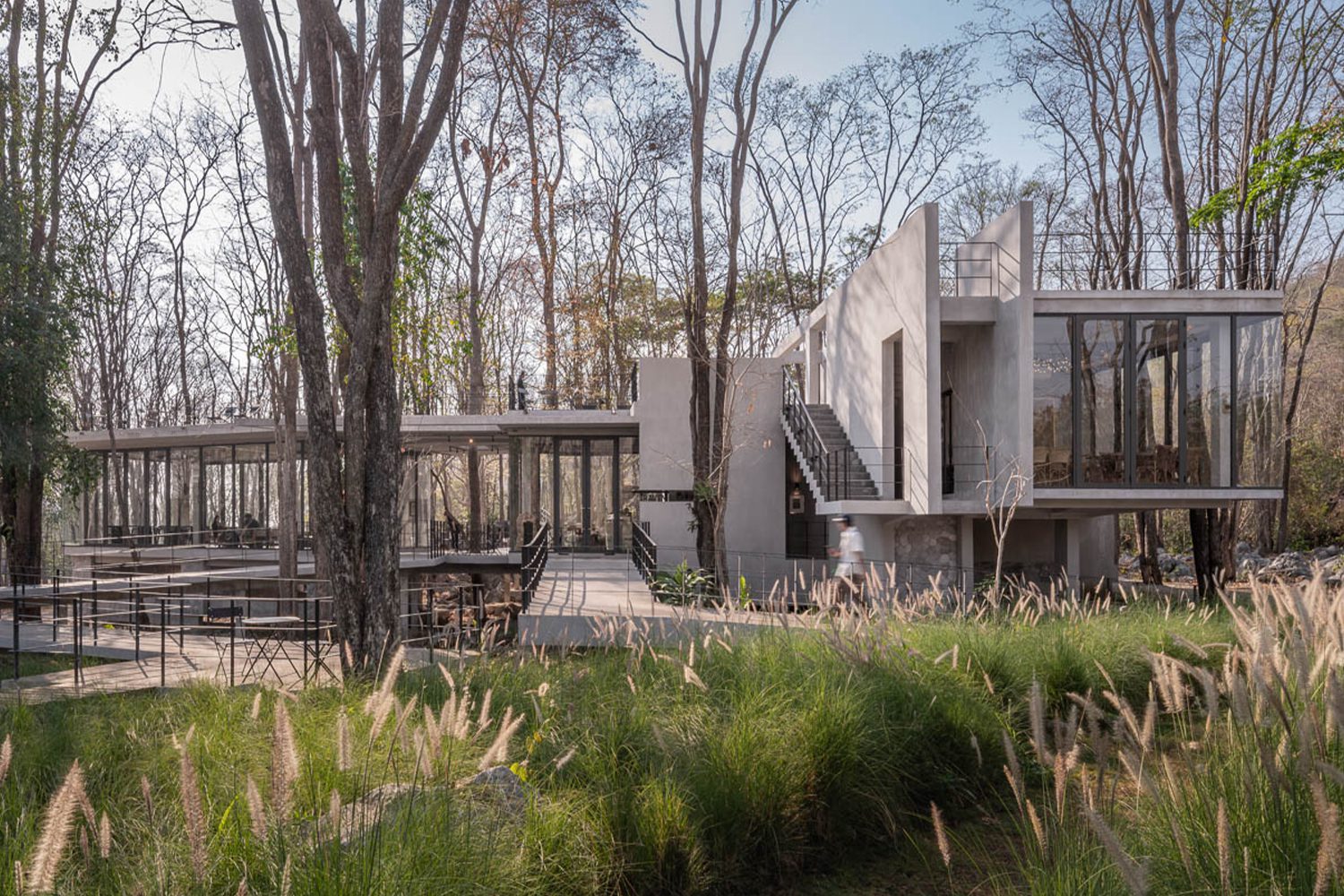
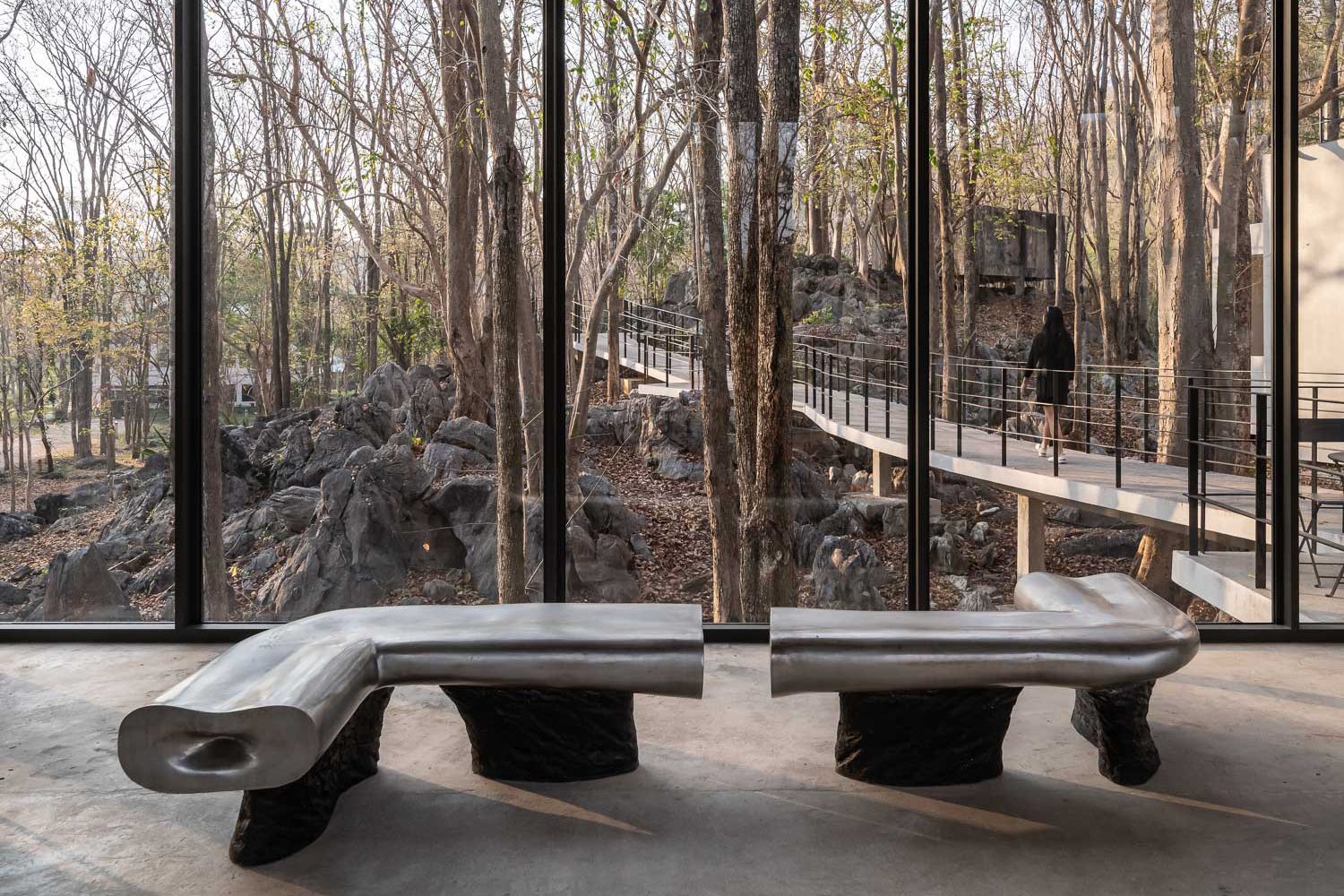
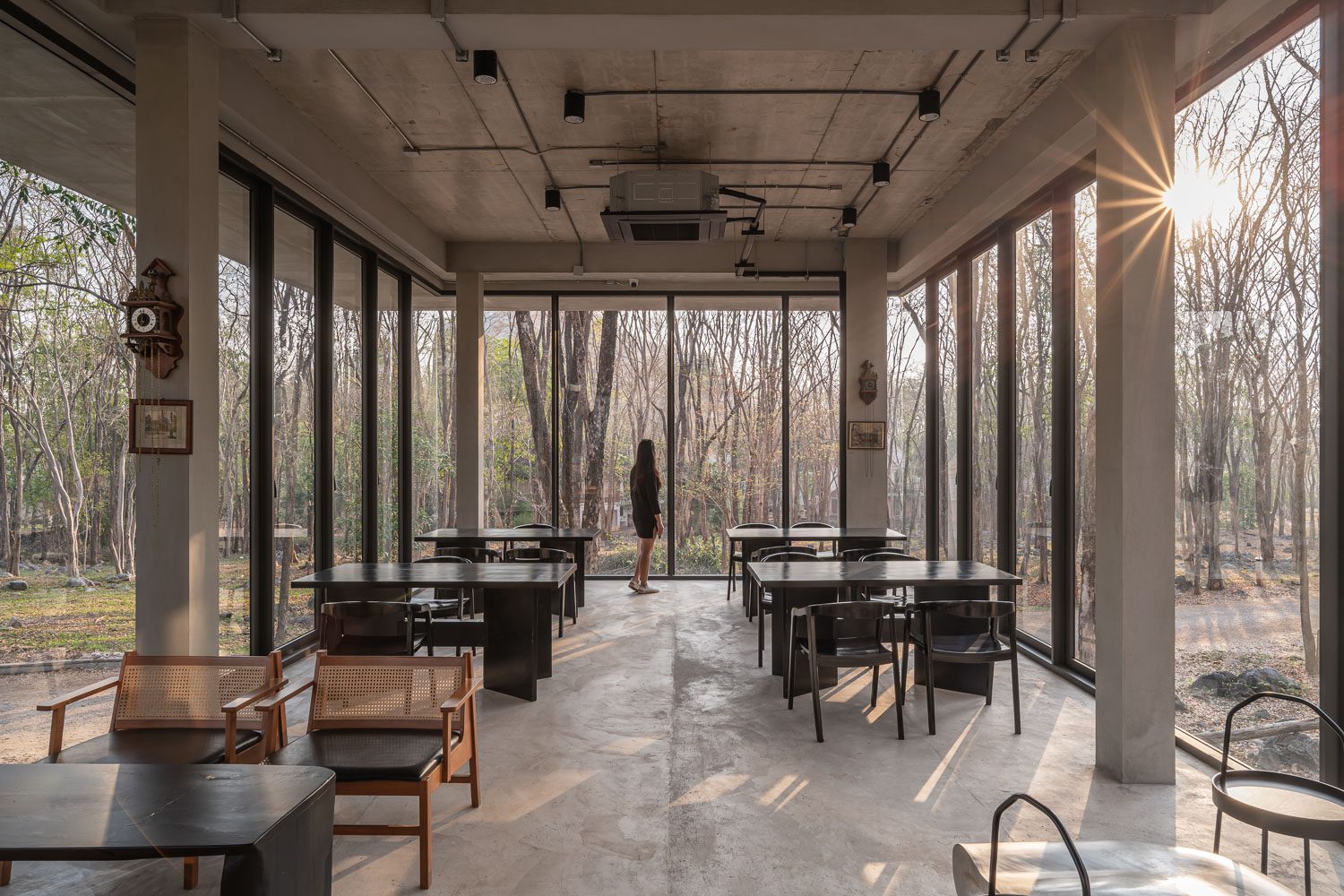
Beyond a swaying expanse of green meadow, Ravenscale Khaoyai emerges—unassuming in presence, meticulous in form, nestled among the surrounding woodlands. The architectural plan was laid out with careful intent, ensuring that no trees were cut or relocated in the process. Exposed concrete walls, left untreated, reflect a pared-down sensibility, allowing the building to recede into the background. It becomes a calm, unobtrusive canvas that lets nature and the filtered sunlight streaming through the trees, take center stage. The base of the building is clad in stone, softening the structural mass while subtly linking it to the natural rock formations scattered throughout the site. The dining area is encased in full-height clear glass panels, framing panoramic views and allowing the atmosphere of the outdoors to permeate the space.
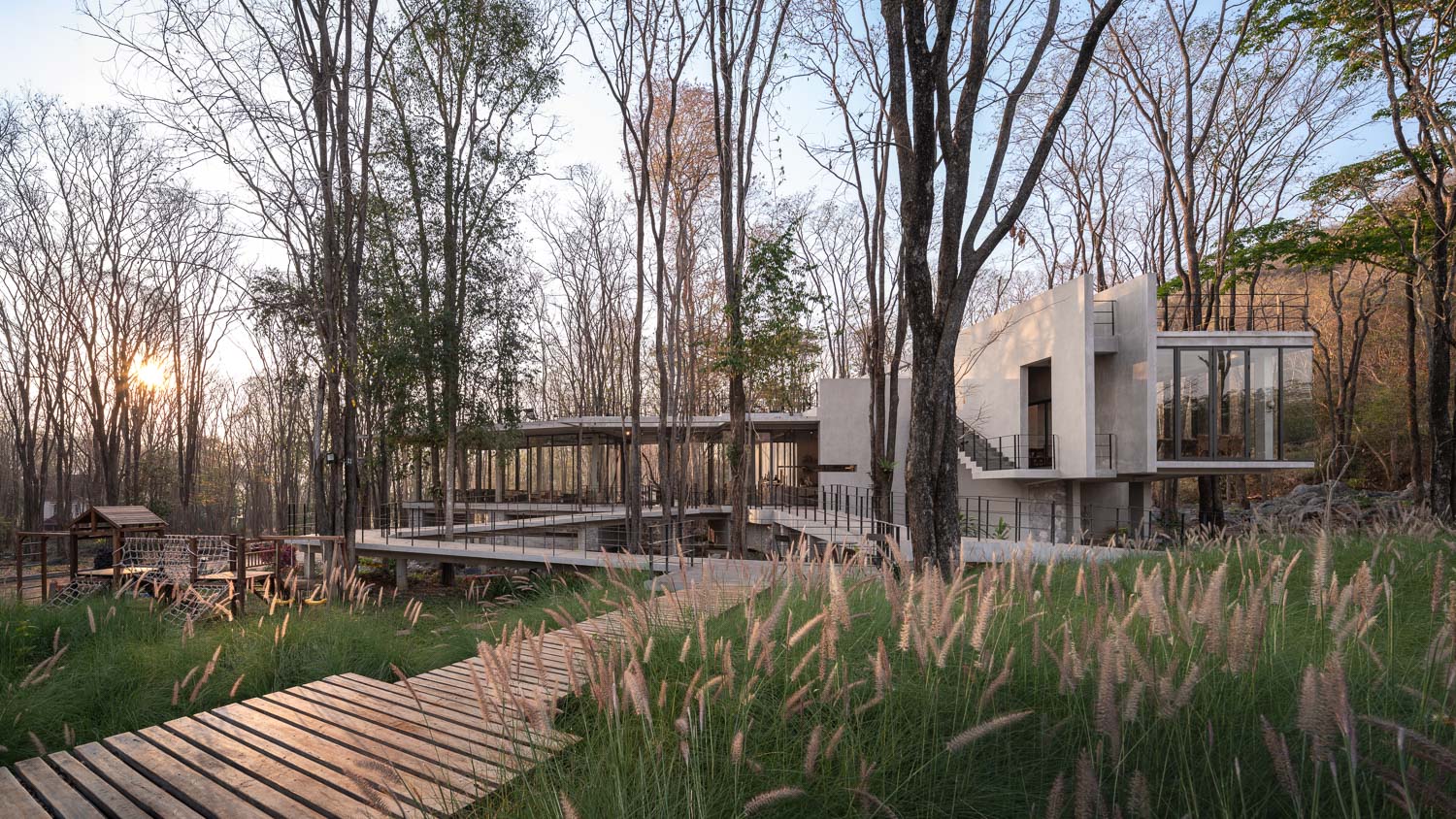
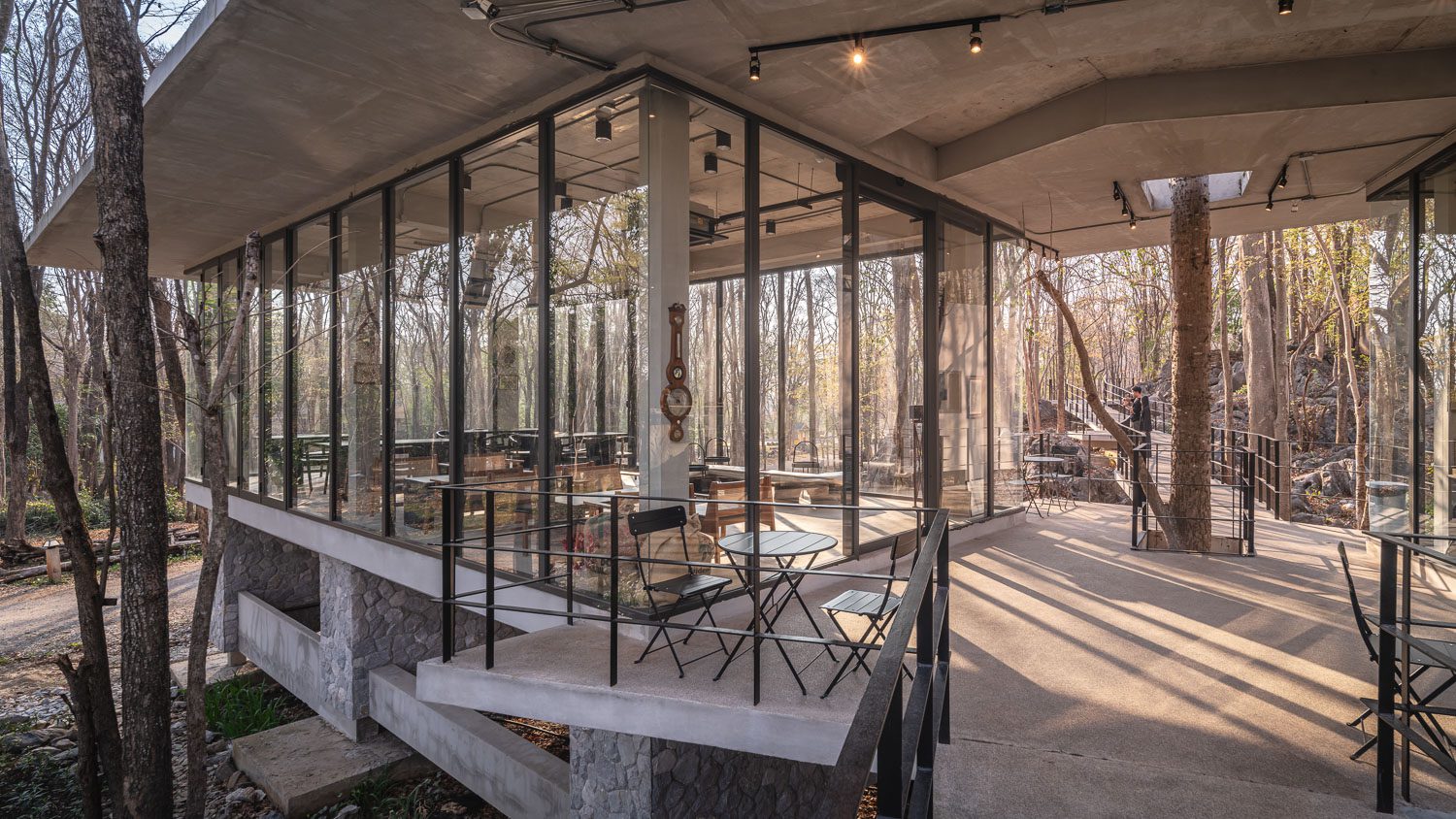
Though restrained in its design, the building is far from static. Slight shifts in its geometry, the strategic angling of volumes, and the cantilevered walls and beams lend it a sense of lightness and movement. These gestures dissolve the rigidity of form and respond with subtle grace to the vertical rhythm of the surrounding trees’ slender trunks. Gently stepped walkways lead visitors around the site, offering changing perspectives of the landscape. With trees that transform with the seasons and an architecture that reveals itself through multiple angles, Ravenscale Khaoyai consistently offers visitors a sense of renewal—a quietly evolving experience with every return.
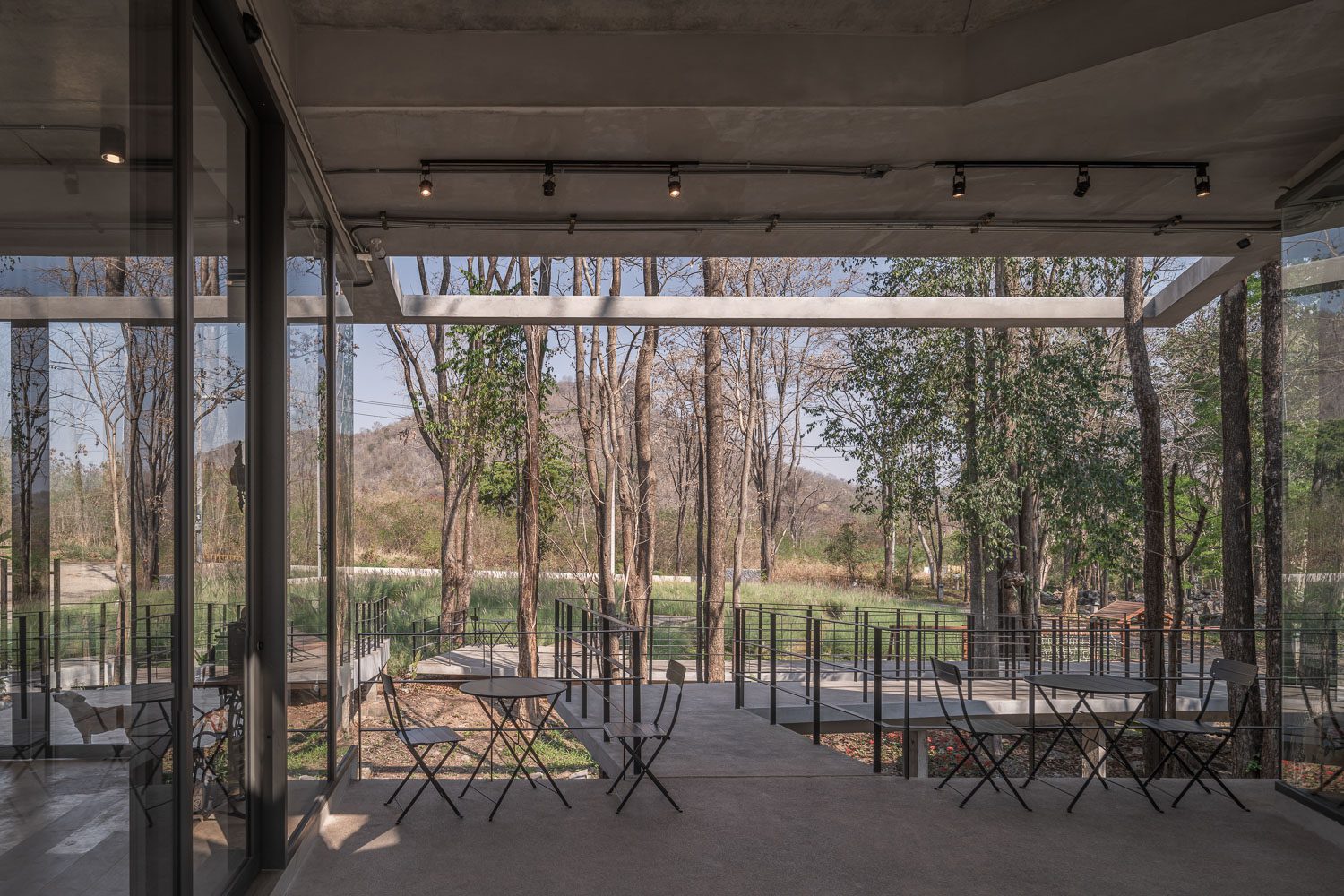
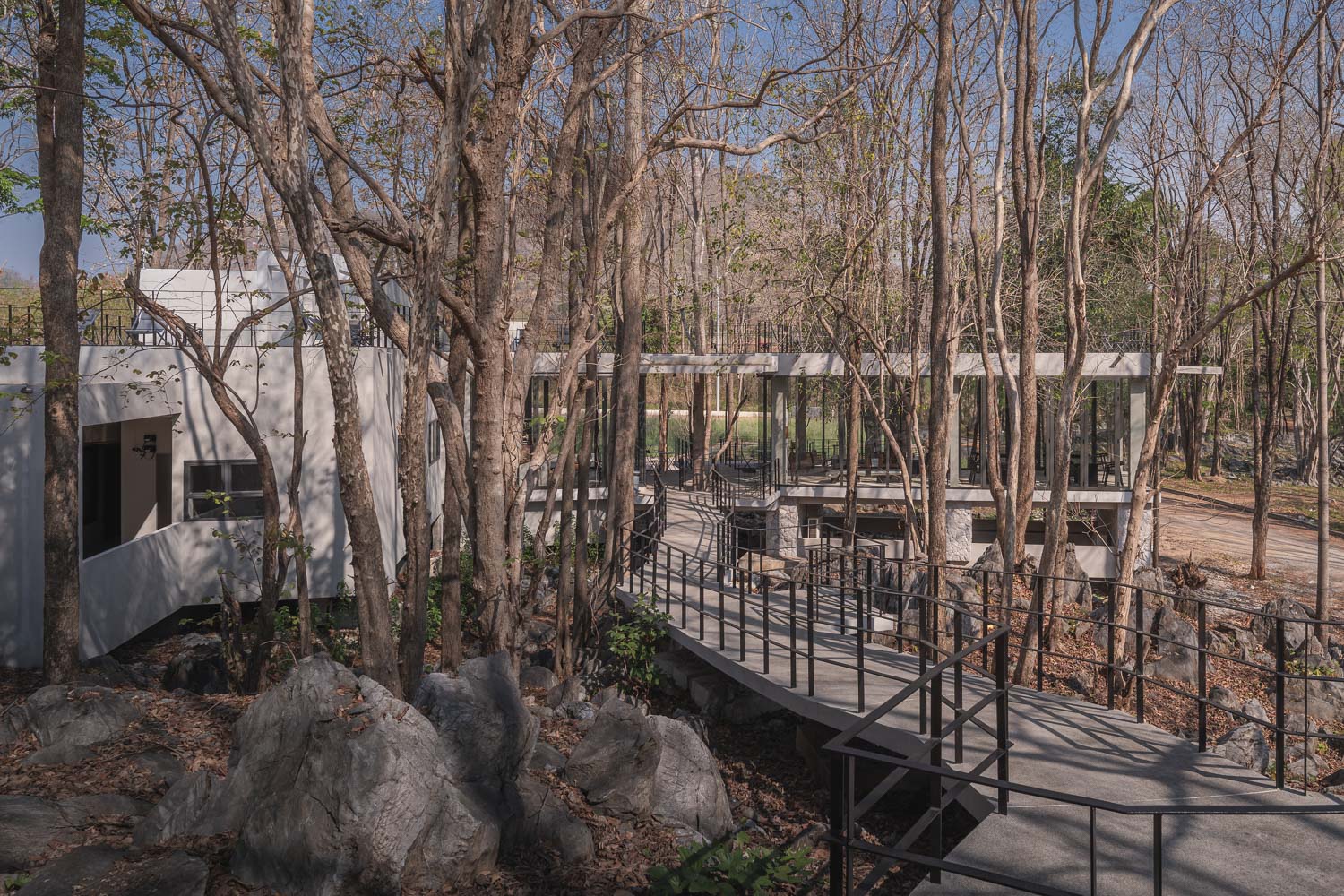
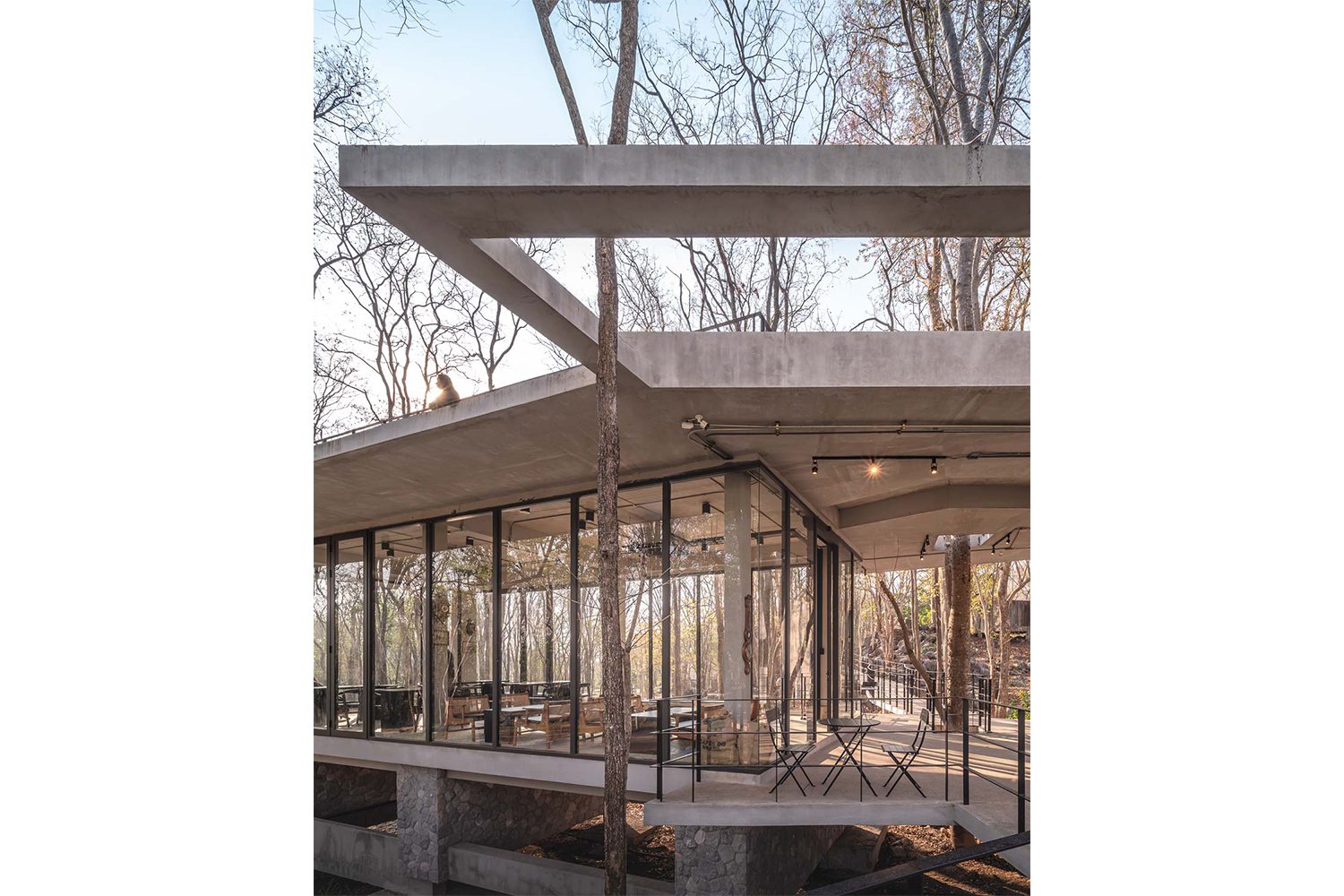
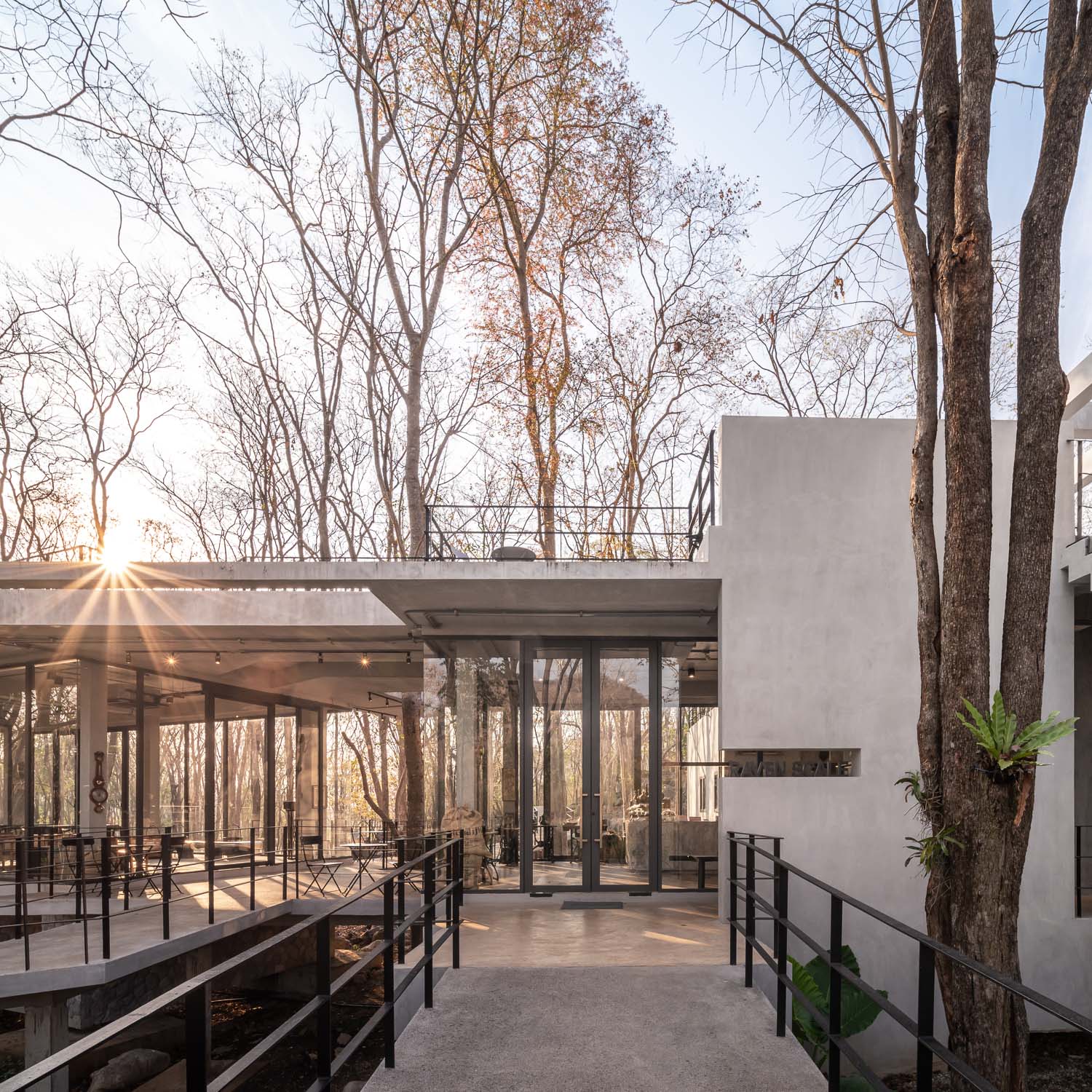
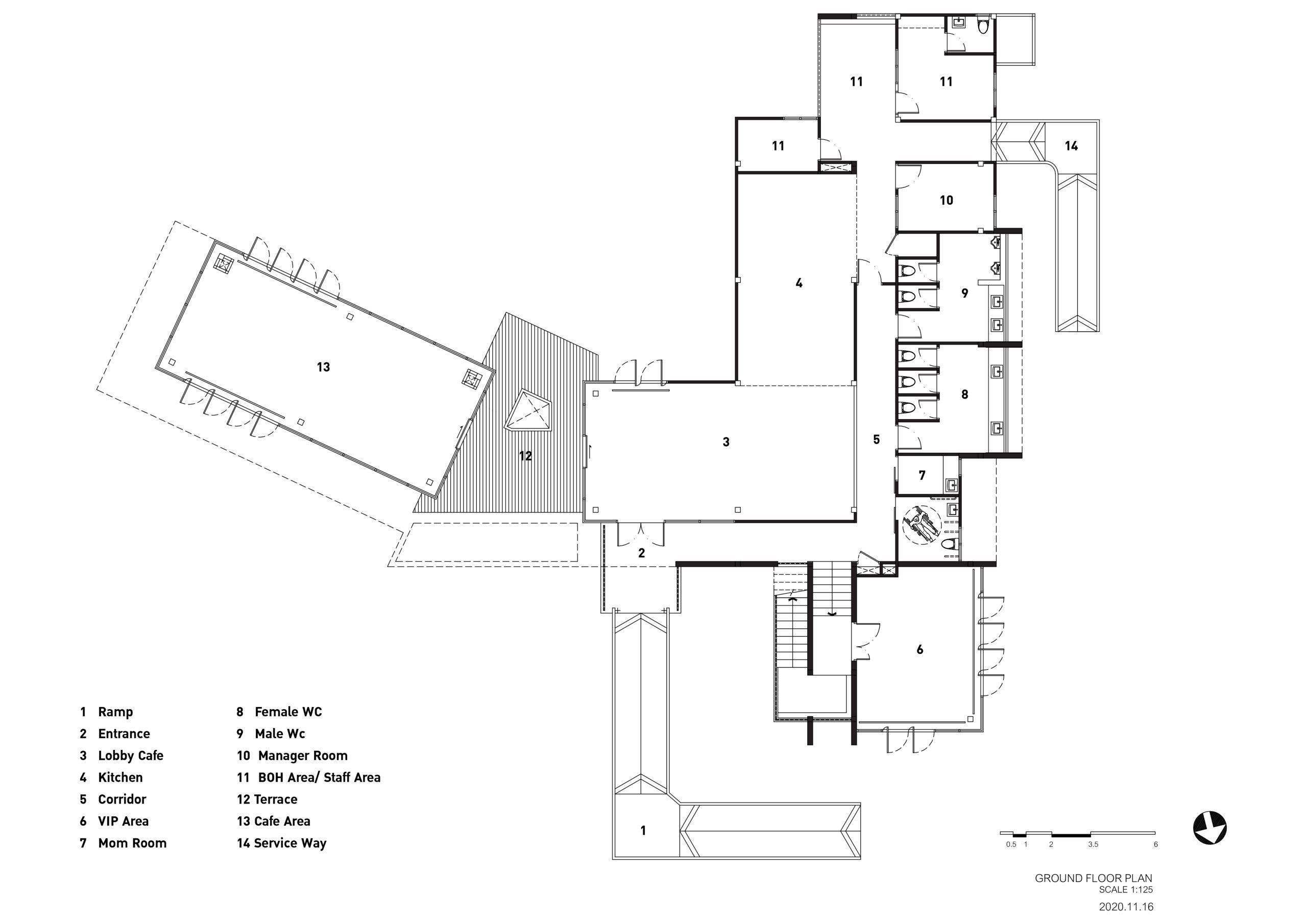
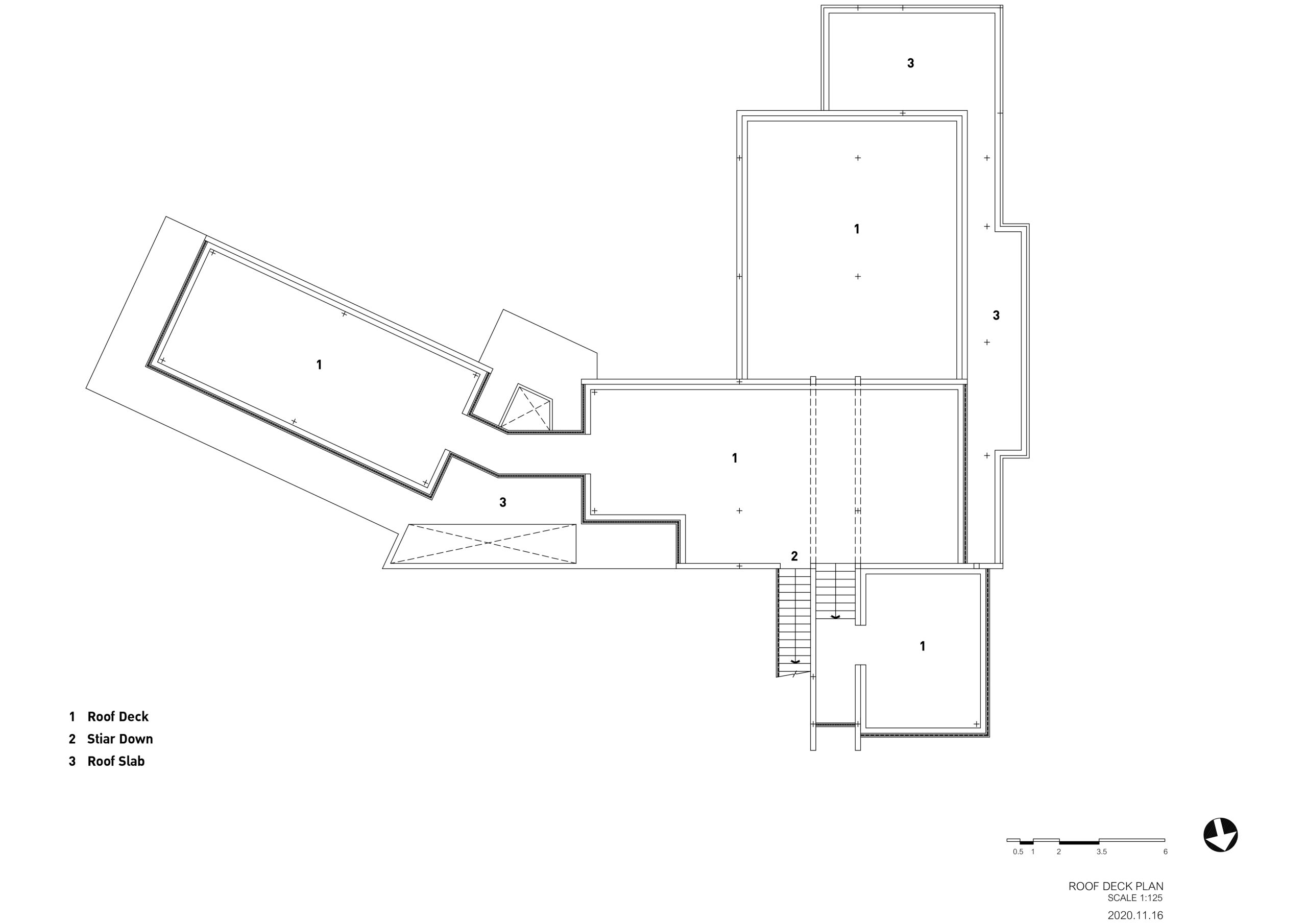
“Good design helps prevent problems before they arise,” says Tanawan. A sense of relaxation, she notes, stems not only from a pleasing atmosphere, but from architecture that supports functionality. At Ravenscale Khaoyai, the café is divided into two zones separated by an outdoor deck. The area near the entrance functions as a reception hall of sorts, catering to grab-and-go customers who may want to order a drink and continue exploring the surrounding grounds or head up to the rooftop for a view, without disrupting those who prefer to linger and take in the ambiance. This spatial arrangement also accommodates dedicated zones for events or workshops. According to Tanawan, clearly defined circulation and intuitive spatial planning allow guests to navigate the café without confusion or pressure. Visitors instinctively know where to go after placing an order, eliminating the need for cluttered signage and preserving the visual clarity of the space. This, she notes, is what enables visitors to truly relax.
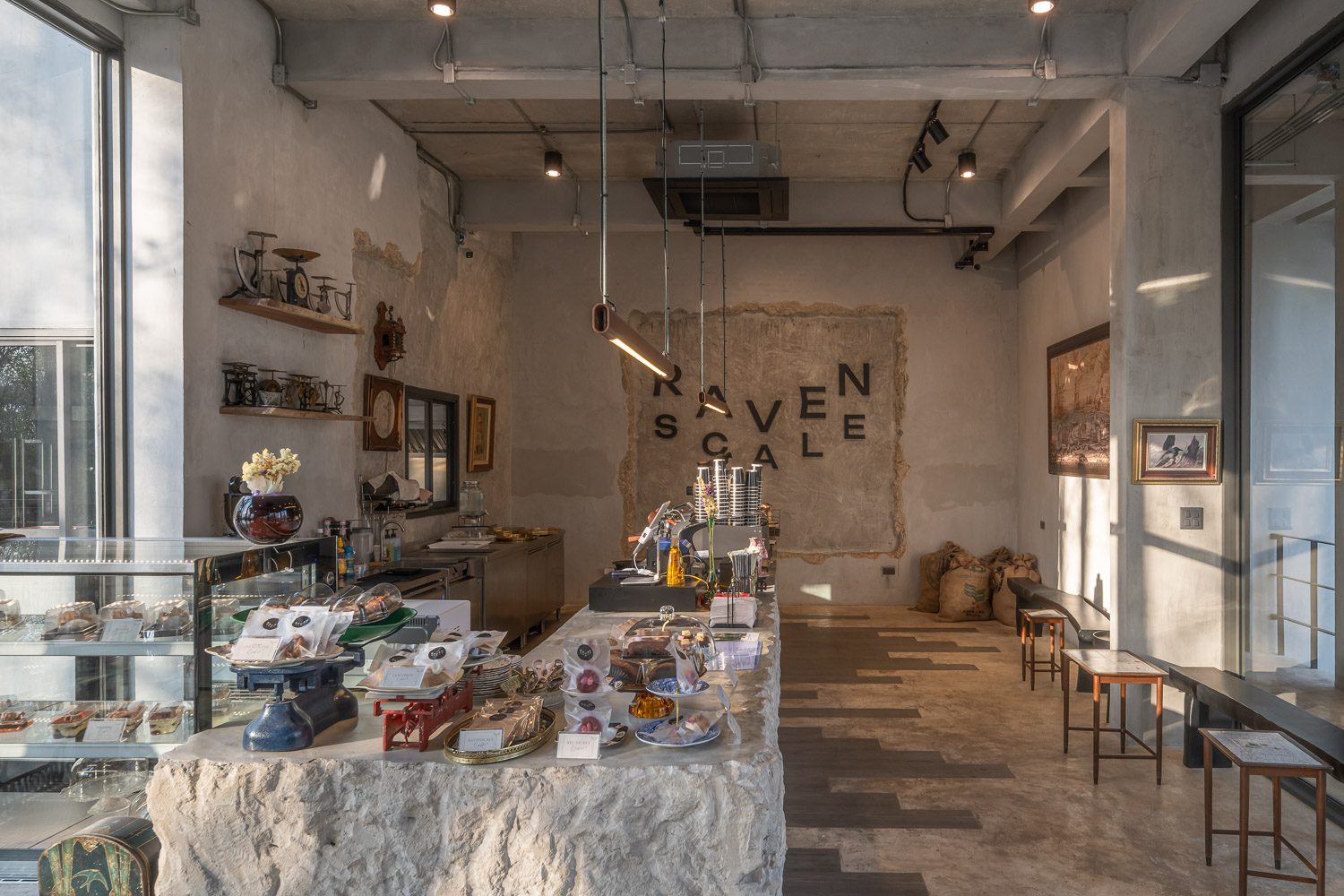
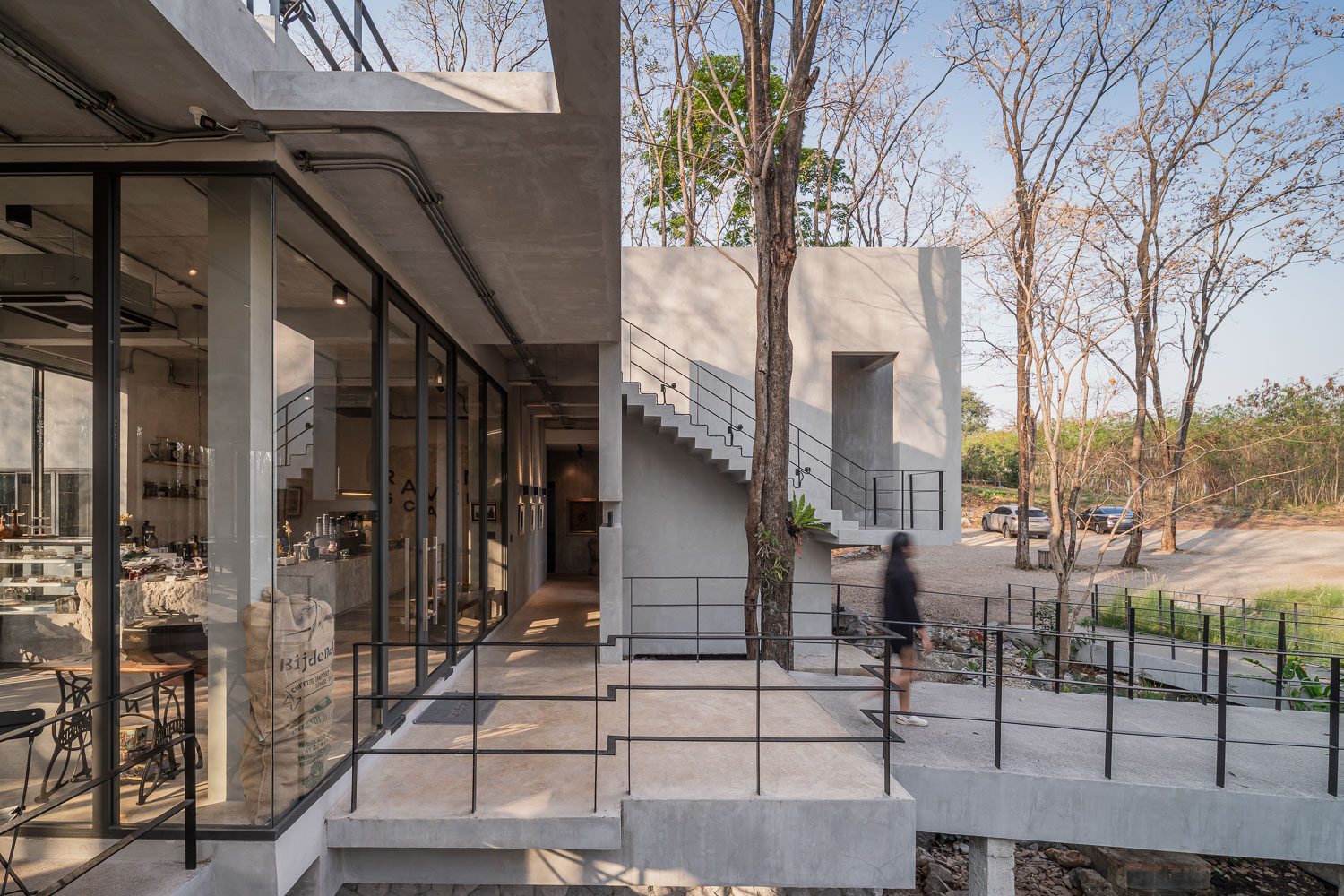
A well-designed experience also hinges on thoughtful service. For this reason, staff spaces have been carefully planned to ensure that employees are supported and in the right mindset to extend warmth to customers. Rather than being confined to the kitchen, staff are provided with a proper break room, complete with openings that frame views of the surrounding landscape. These spaces were not created as afterthoughts, but were deliberately integrated into the project, ensuring that the experience of care extends to everyone who inhabits the space.

On the day the building was completed, the atmosphere and architecture inspired Anawin and Tanawan to give the project its name: Ravenscale. The word ‘raven’ evokes the site’s enigmatic, almost mythical quality and reflects the founders’ commitment to sourcing fine ingredients from around the world. The name also draws on Norse mythology, where ravens are the trusted companions of Odin, the god of wisdom, war, and magic, tasked with bringing him knowledge from afar. The word ‘scale’ refers to both the building’s symmetrical form, with its two mirrored wings resembling a balance scale, and the precise craftsmanship behind the café’s culinary offerings. It speaks to the thoughtful process of measuring, weighing, and refining each element, ensuring that every dish delivers a distinct and lasting impression.