
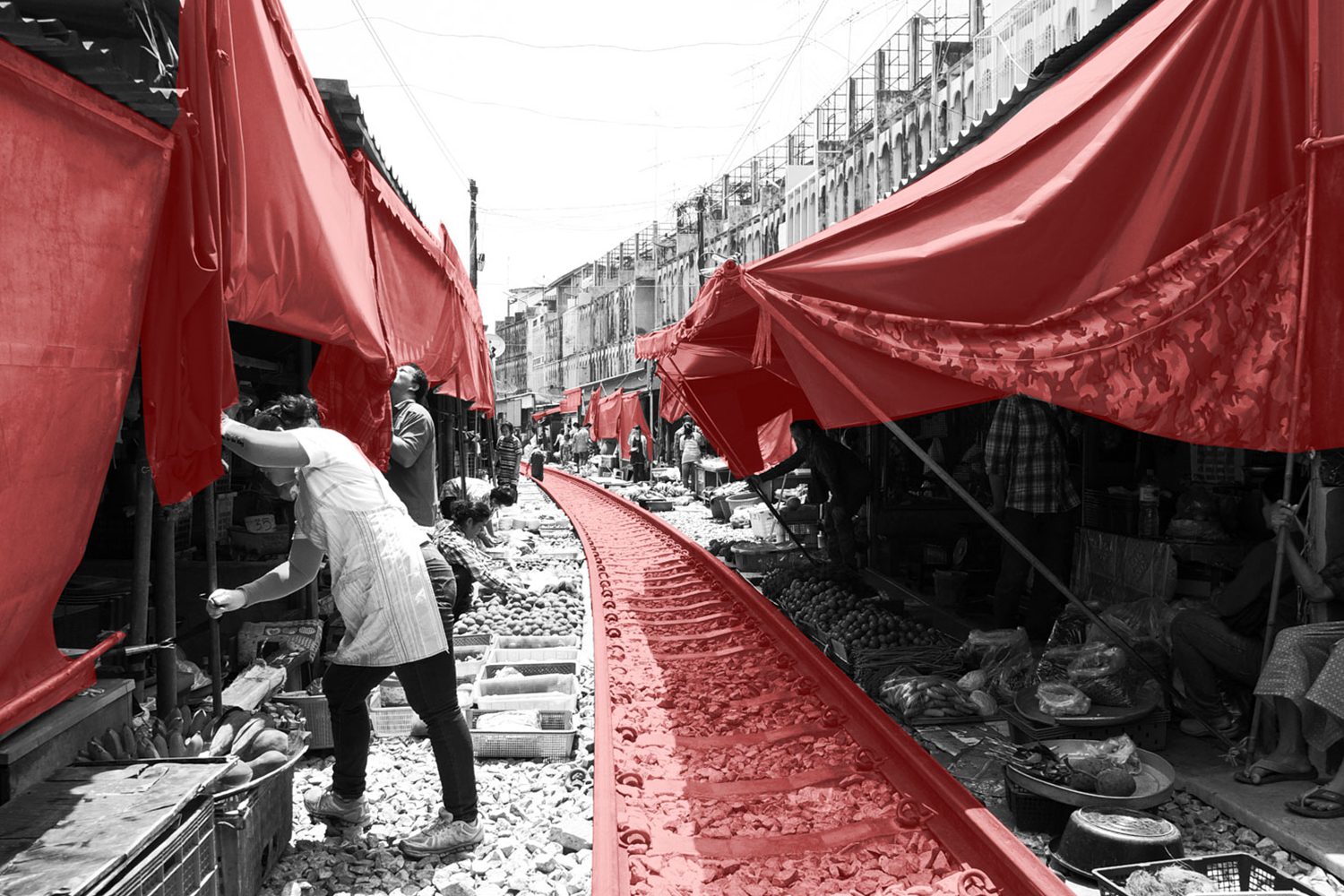
THE MAEKLONG RAILWAY MARKET, LOCATED ALONG THE MAEKLONG RIVER, IS ONE OF THE SITES RESEARCHED BY ARCHITECTS JENCHIEH HUNG AND KULTHIDA SONGKITTIPAKDEE, FOUNDERS OF HAS DESIGN AND RESEARCH, IN THEIR LATEST BOOK CHAMELEON ARCHITECTURE: SHIFTING / ADAPTING / EVOLVING. IN THIS RESEARCH EXPLORES THE IDEA OF ARCHITECTURAL SHIFTING, NOT MERELY AS A MEANS OF SURVIVAL BUT AS A STRATEGIC FORM OF COEXISTENCE WITH THE SURROUNDING CONTEXT
TEXT: JENCHIEH HUNG & KULTHIDA SONGKITTIPAKDEE
PHOTO: HAS DESIGN AND RESEARCH
(For Thai, press here)
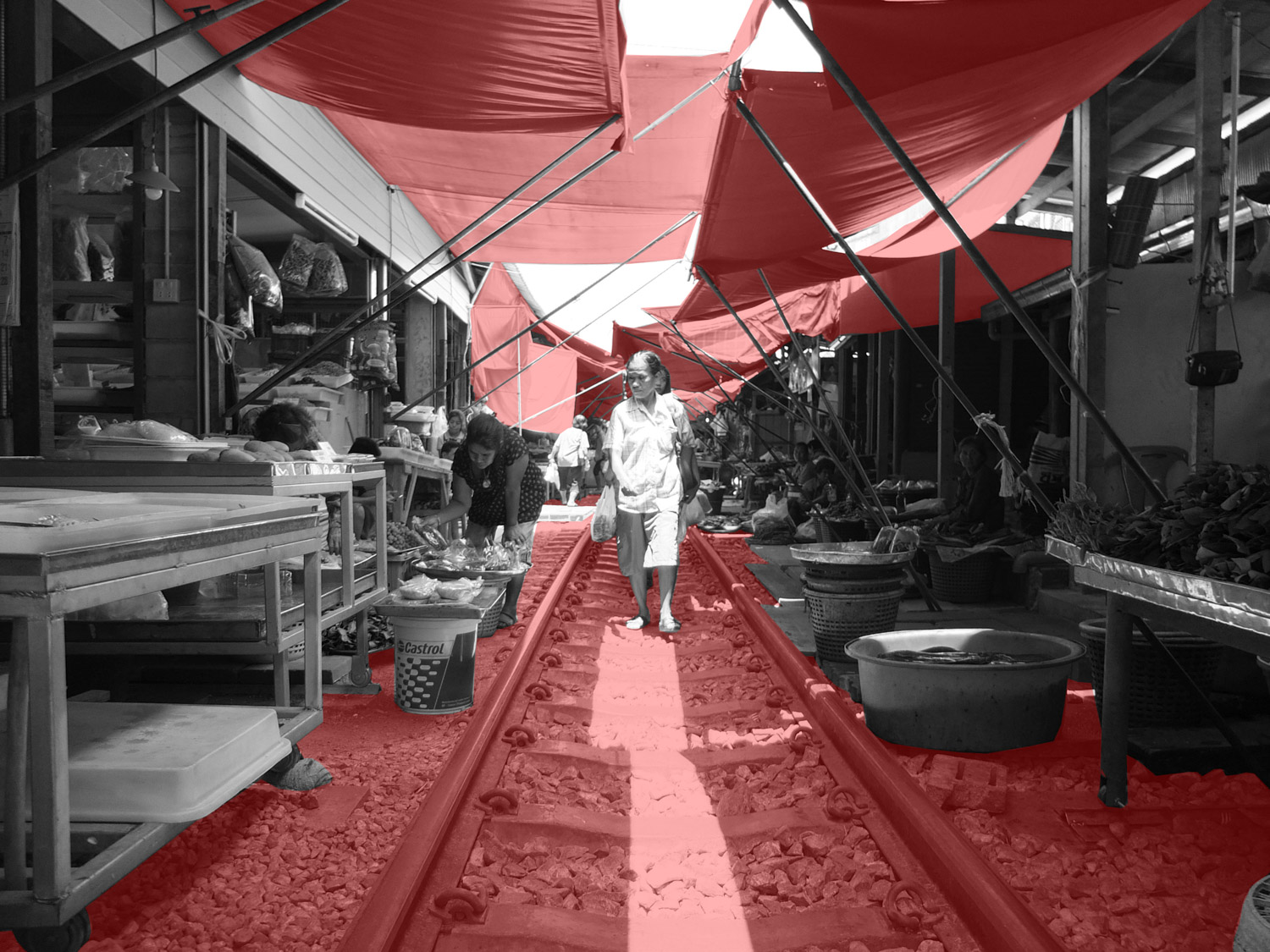
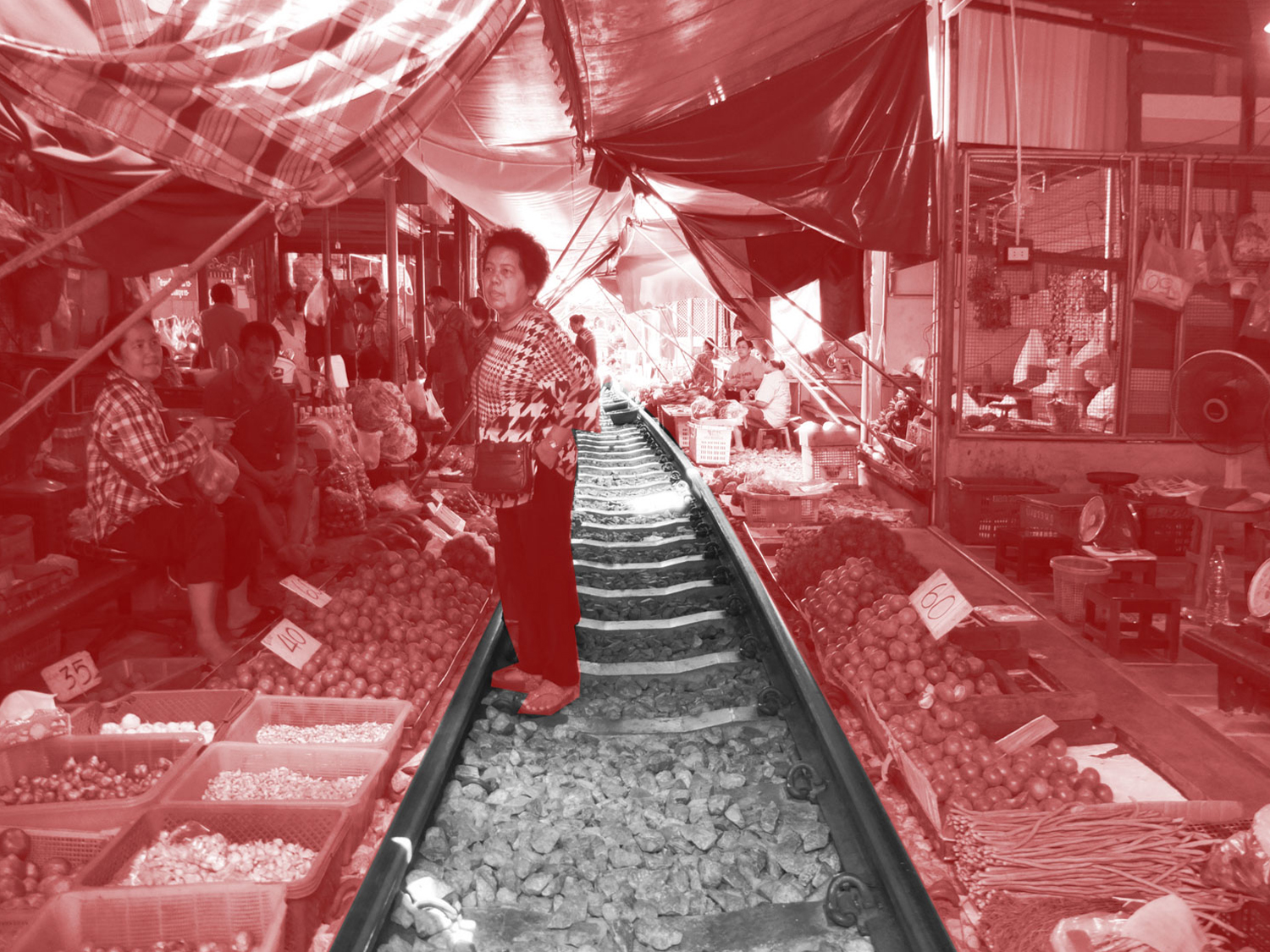
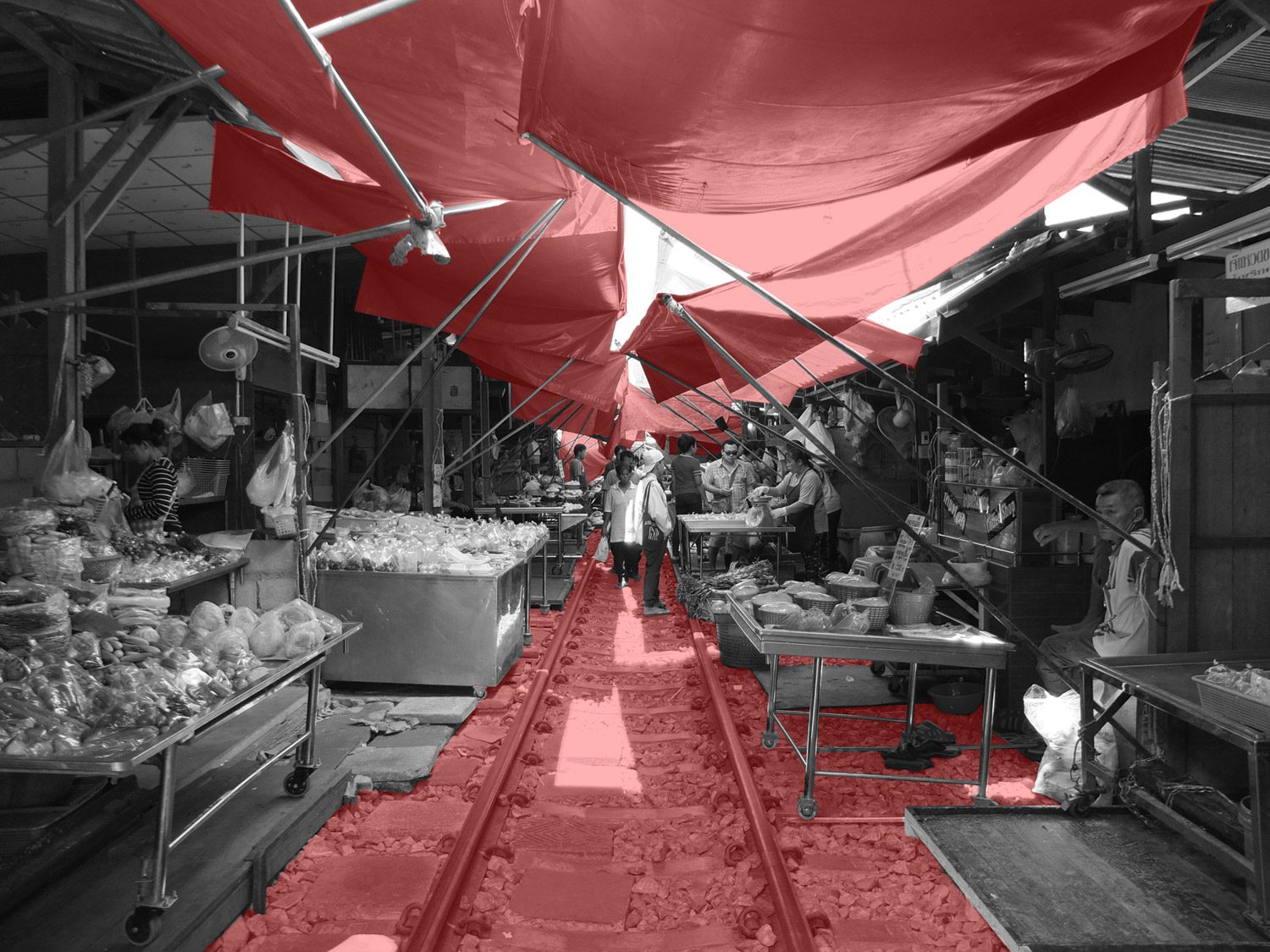
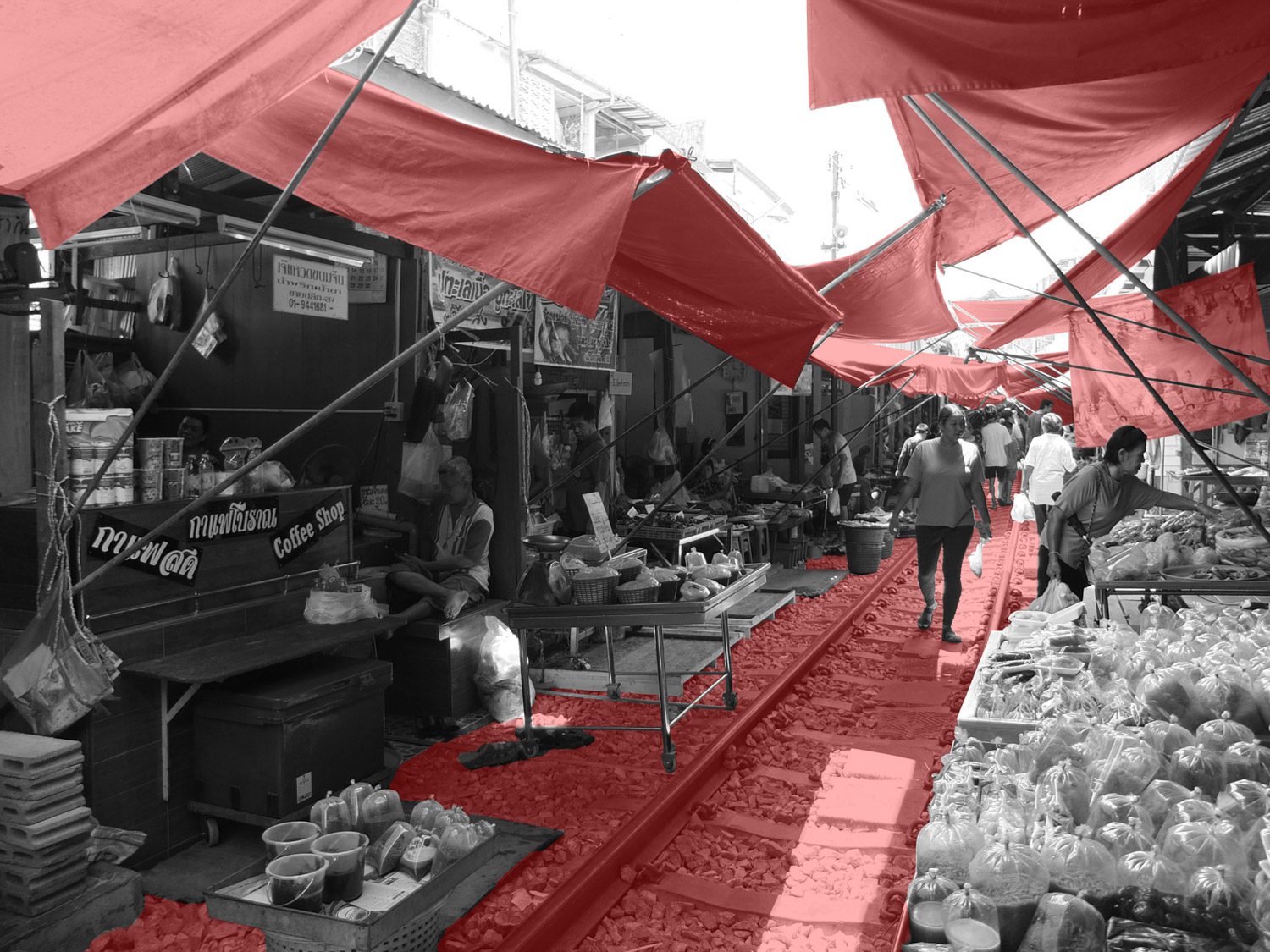
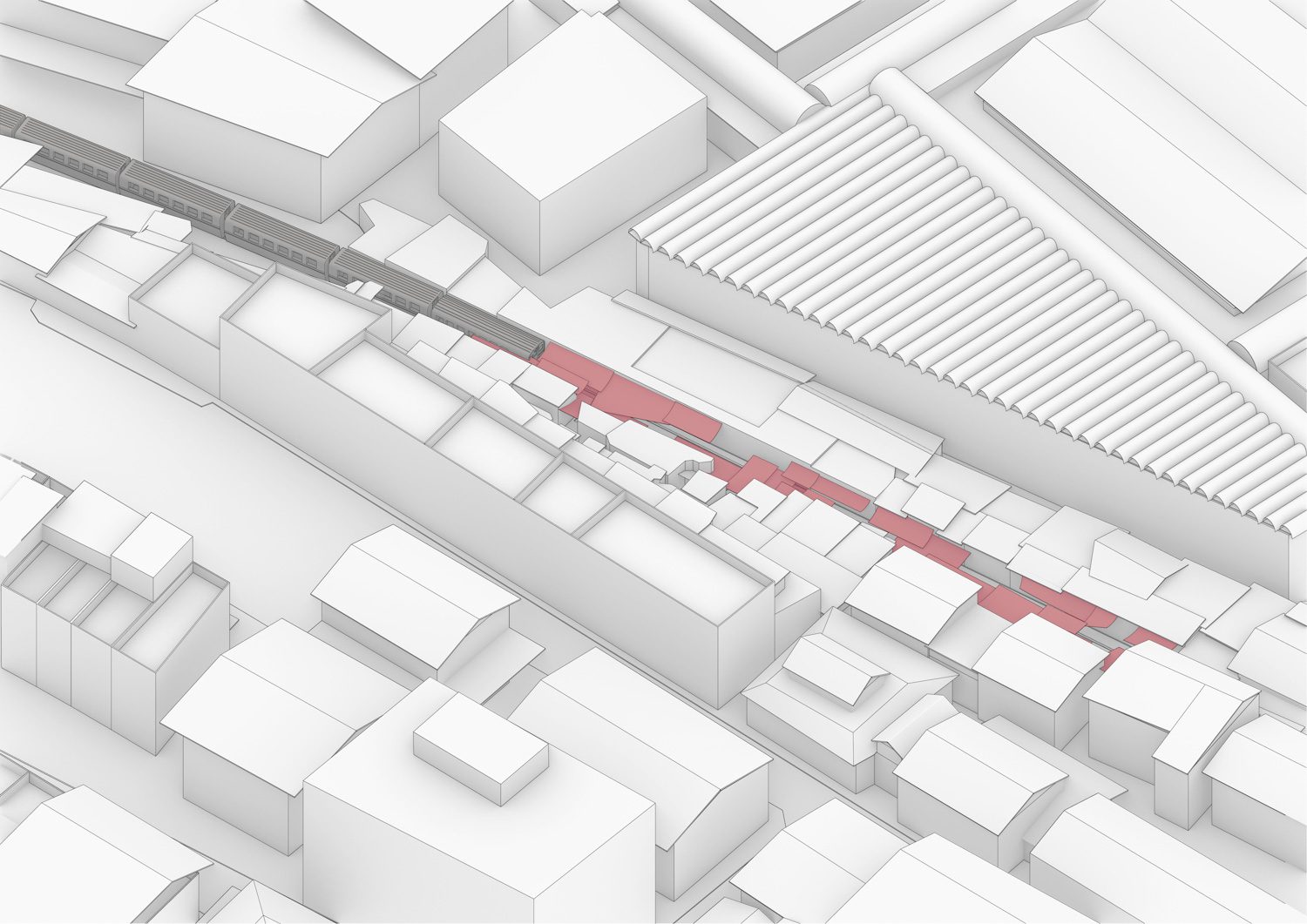
The evolving urban fabric of Asia reveals a unique architectural phenomenon, where informal, spontaneous construction thrives in response to local conditions and societal needs. One such space is the Maeklong Railway Market, located near the river in Mueang Samut Songkhram, not far from Bangkok. It serves as a compelling example of this phenomenon. The market is predominantly populated by vendors selling fish, fruits, and vegetables. Trains pass through infrequently, allowing vendors to ‘occupy’ the railway tracks. Utilizing the hot climate, the vendors build temporary tents that gradually evolve into private spaces, blending seamlessly into the public realm.
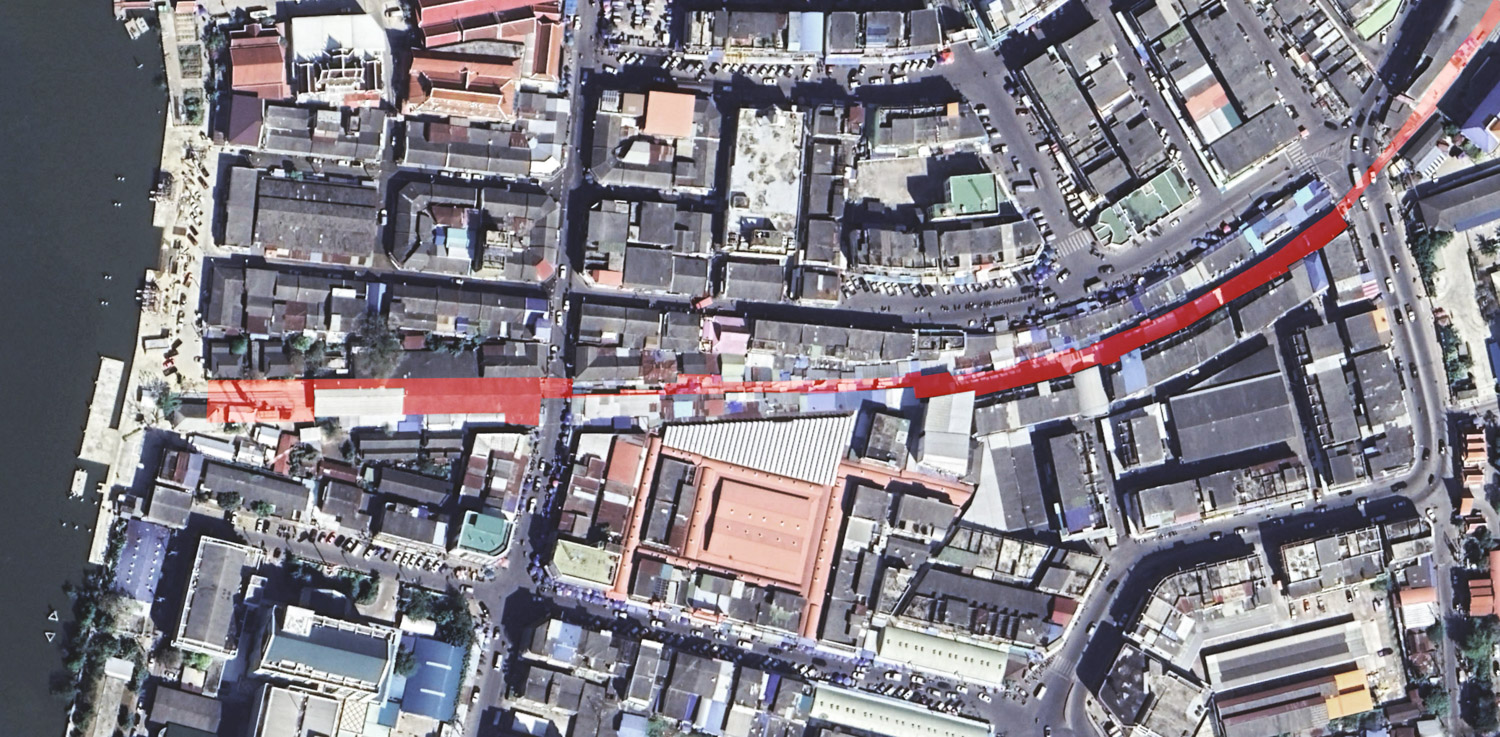
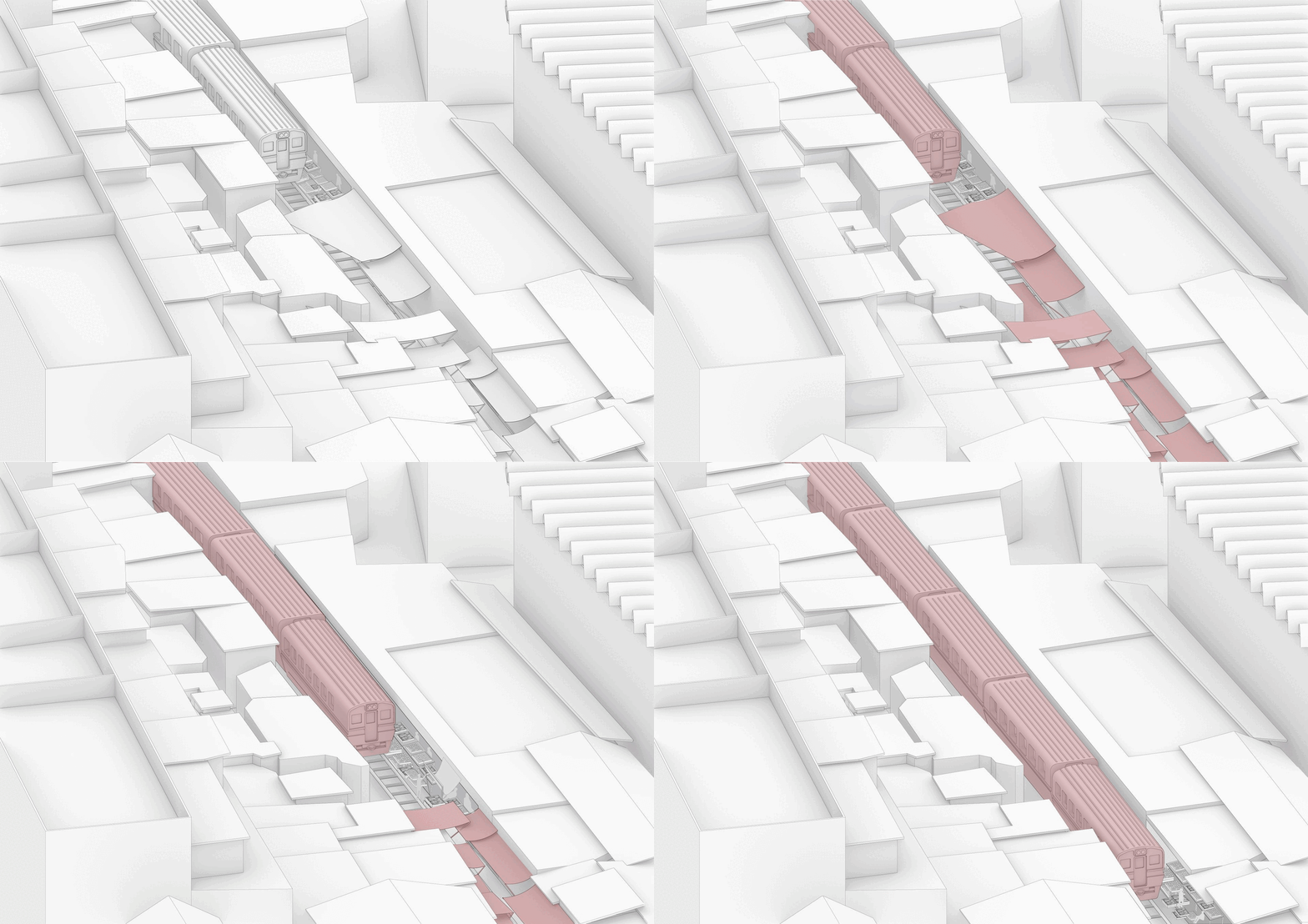
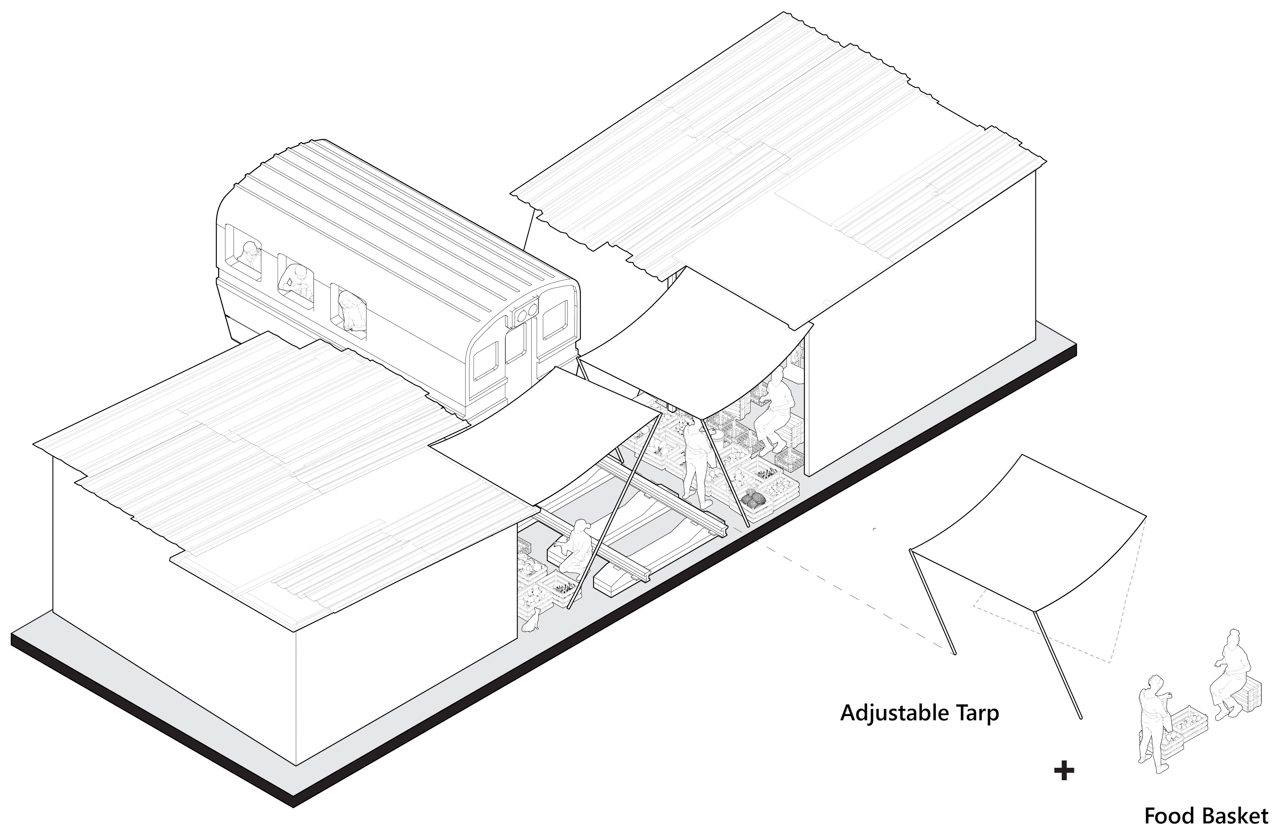
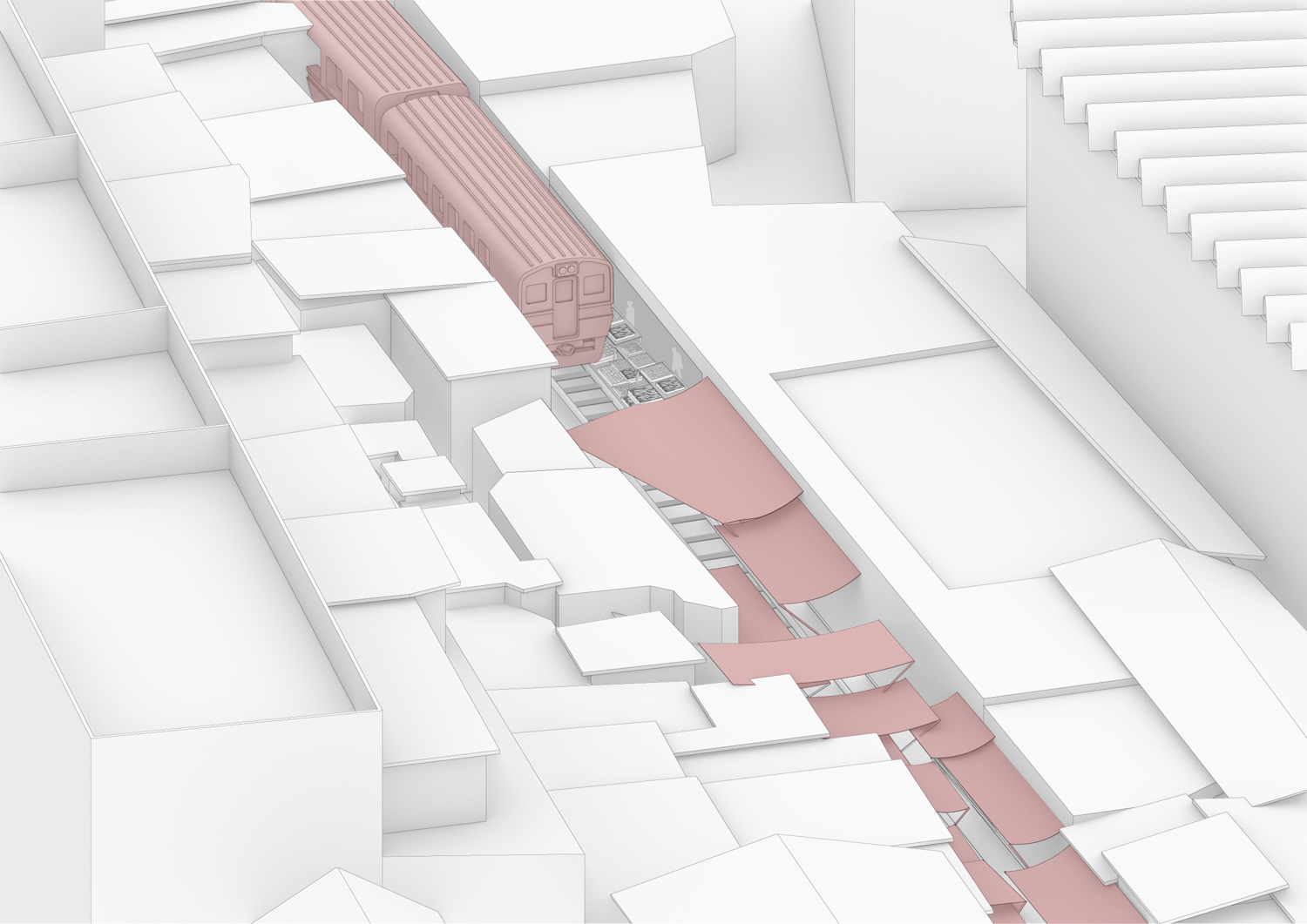
What is particularly remarkable about this scene is the interaction between the vendors and the passing train. Upon hearing the distant whistle of the train, vendors instinctively retract their tents, creating a synchronized moment between public space and private activity. This fleeting yet harmonious interaction highlights the spontaneous and improvisational nature of these spaces. While the train passes only for a few minutes, the connection between the local market community and the railway infrastructure is palpable. It represents an organic, bottom-up development process shaped by the daily needs and ingenuity of the local market. The movable tarp canopy and the immovable baskets of fish, meat, and vegetables provide shading and shifting space for both visitors and locals. At the same time, these canopies maximize the display area for goods, while fostering interaction with the train and railway.
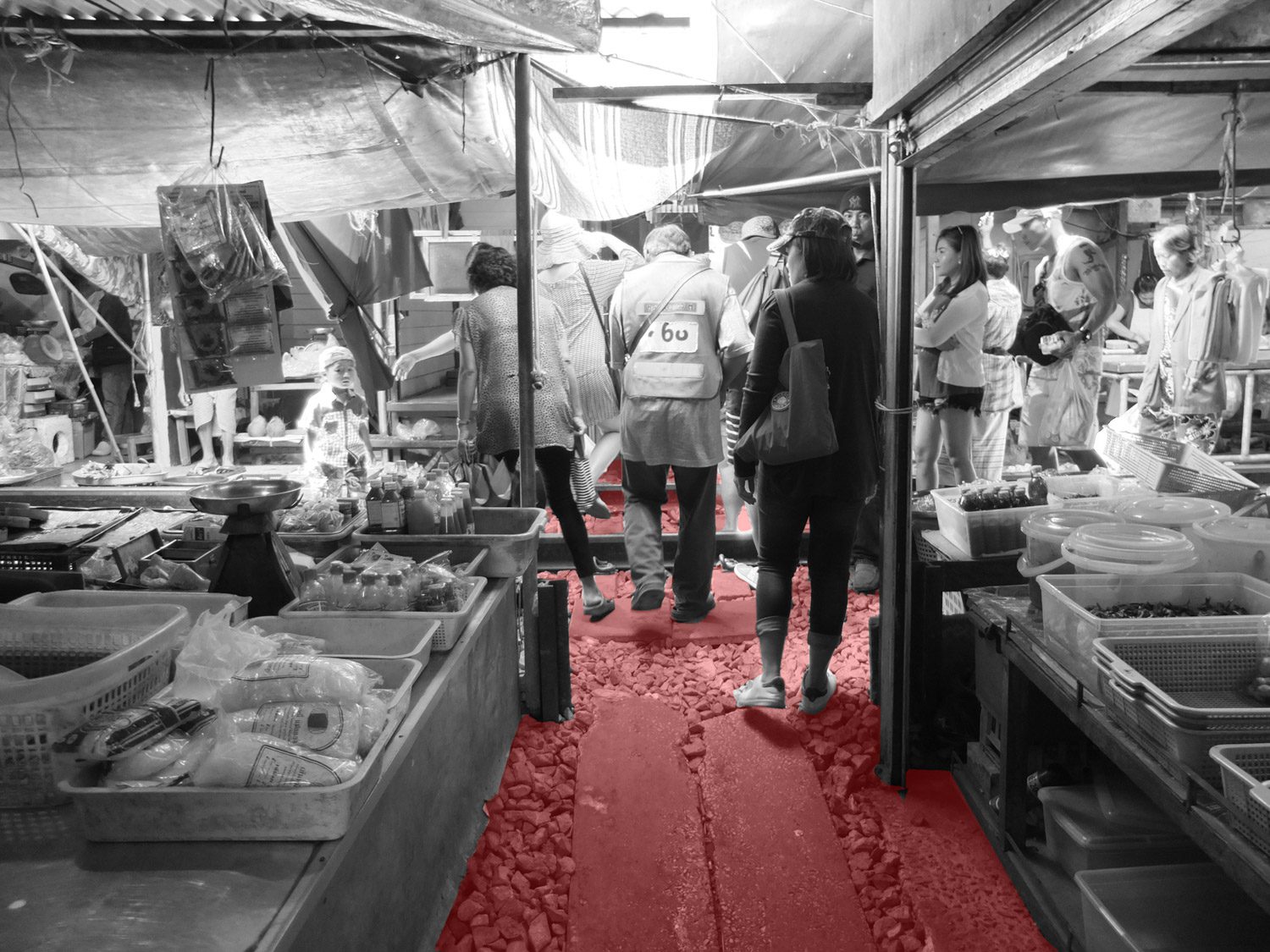
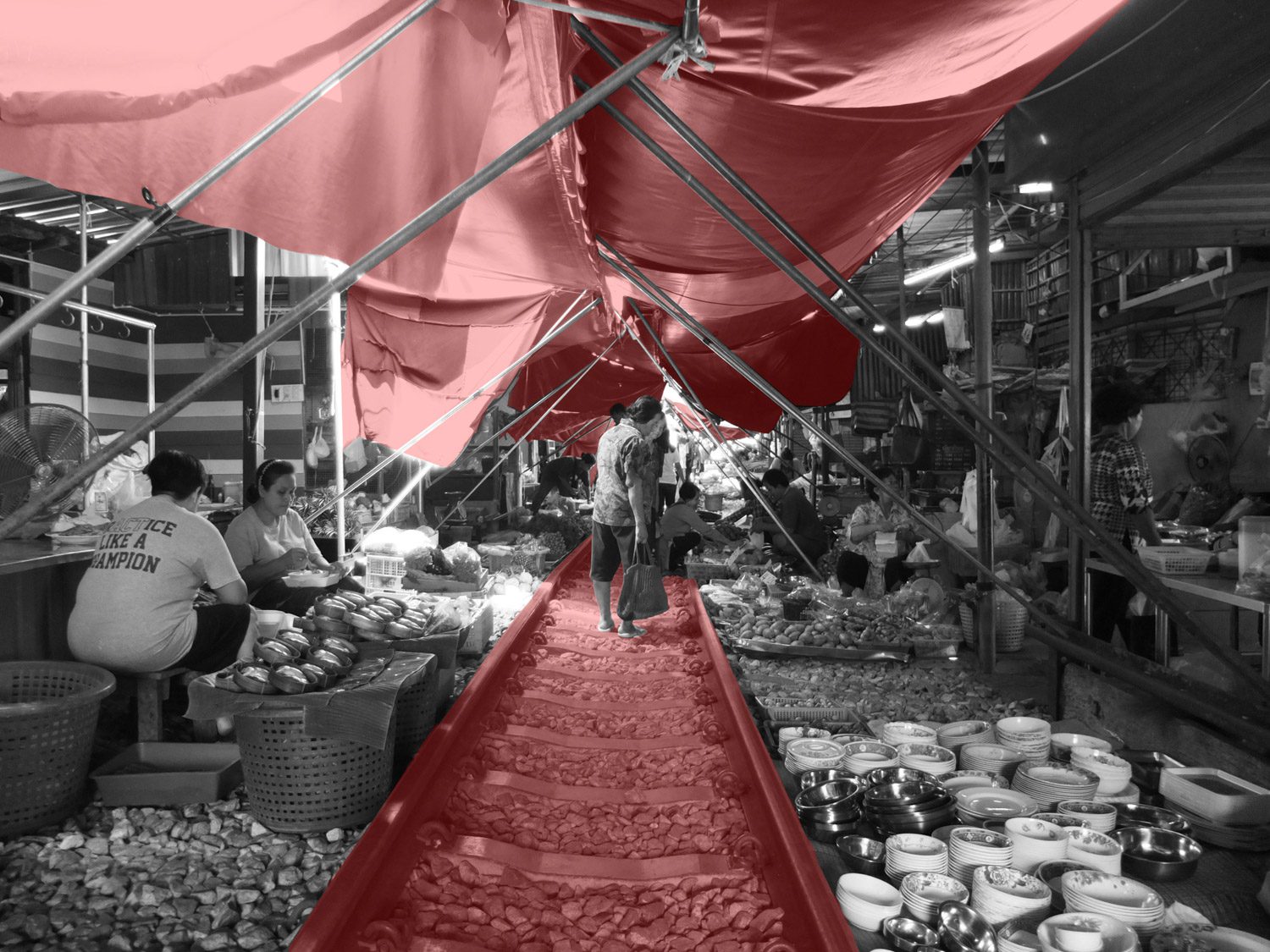
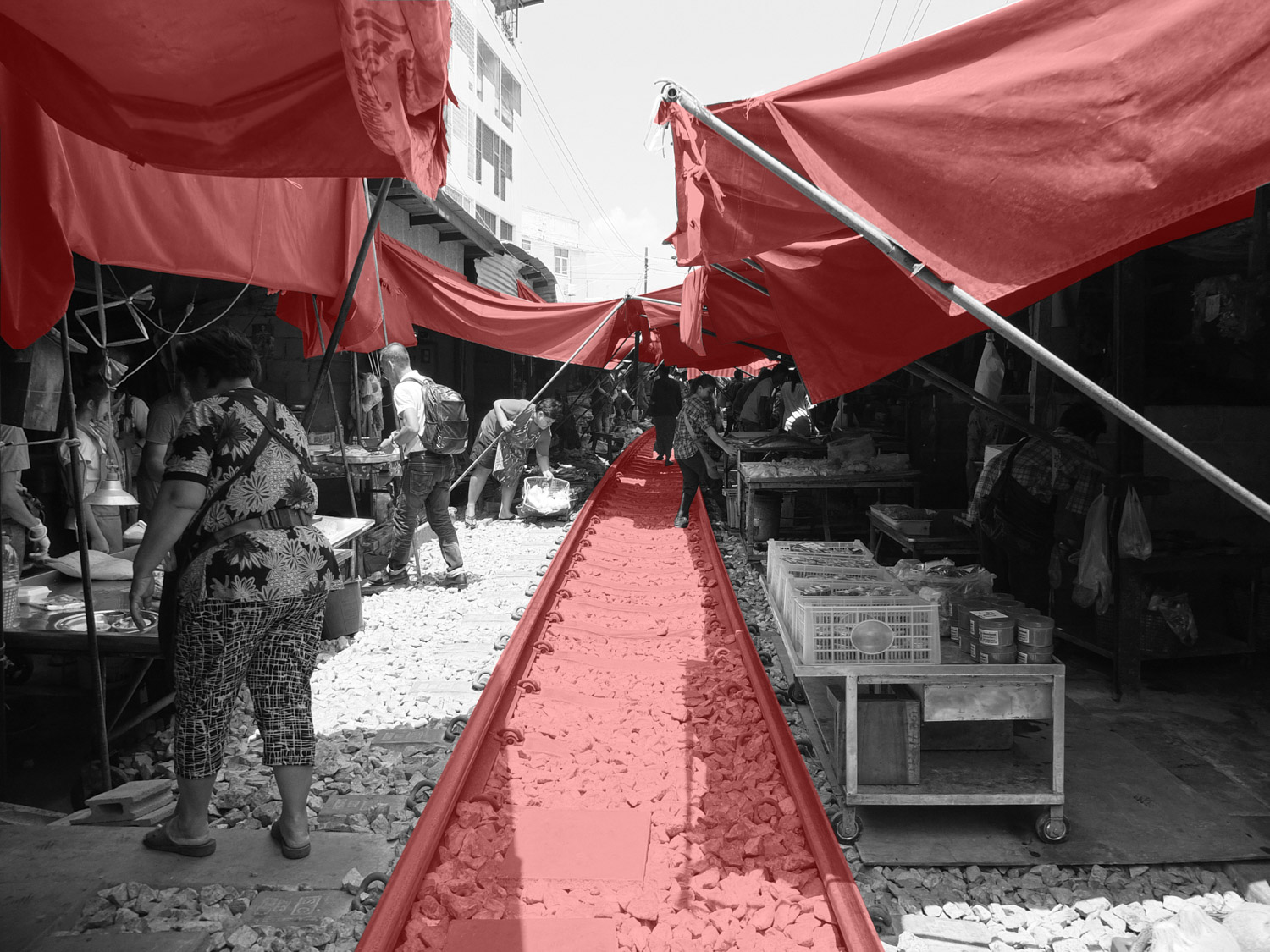
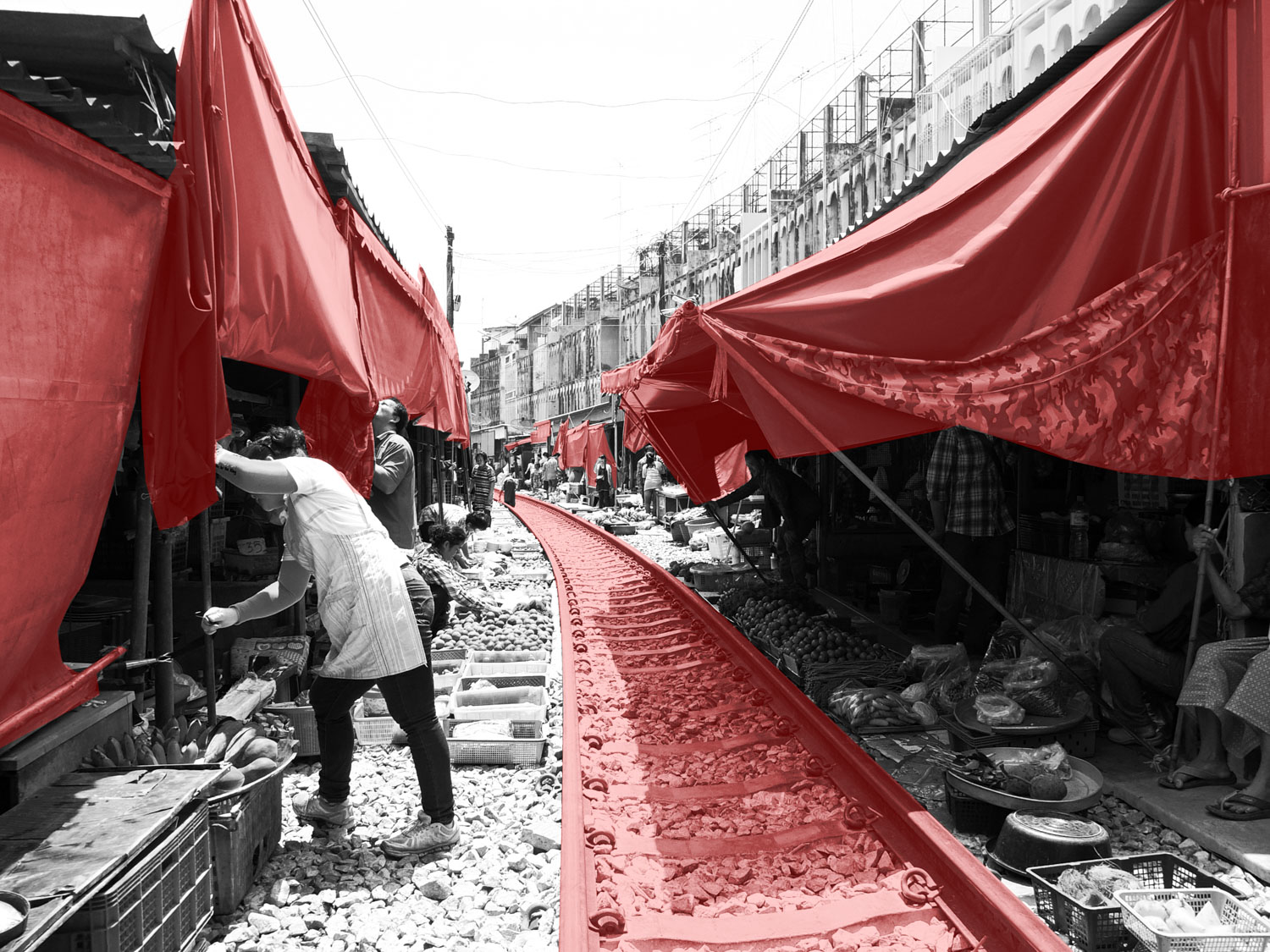
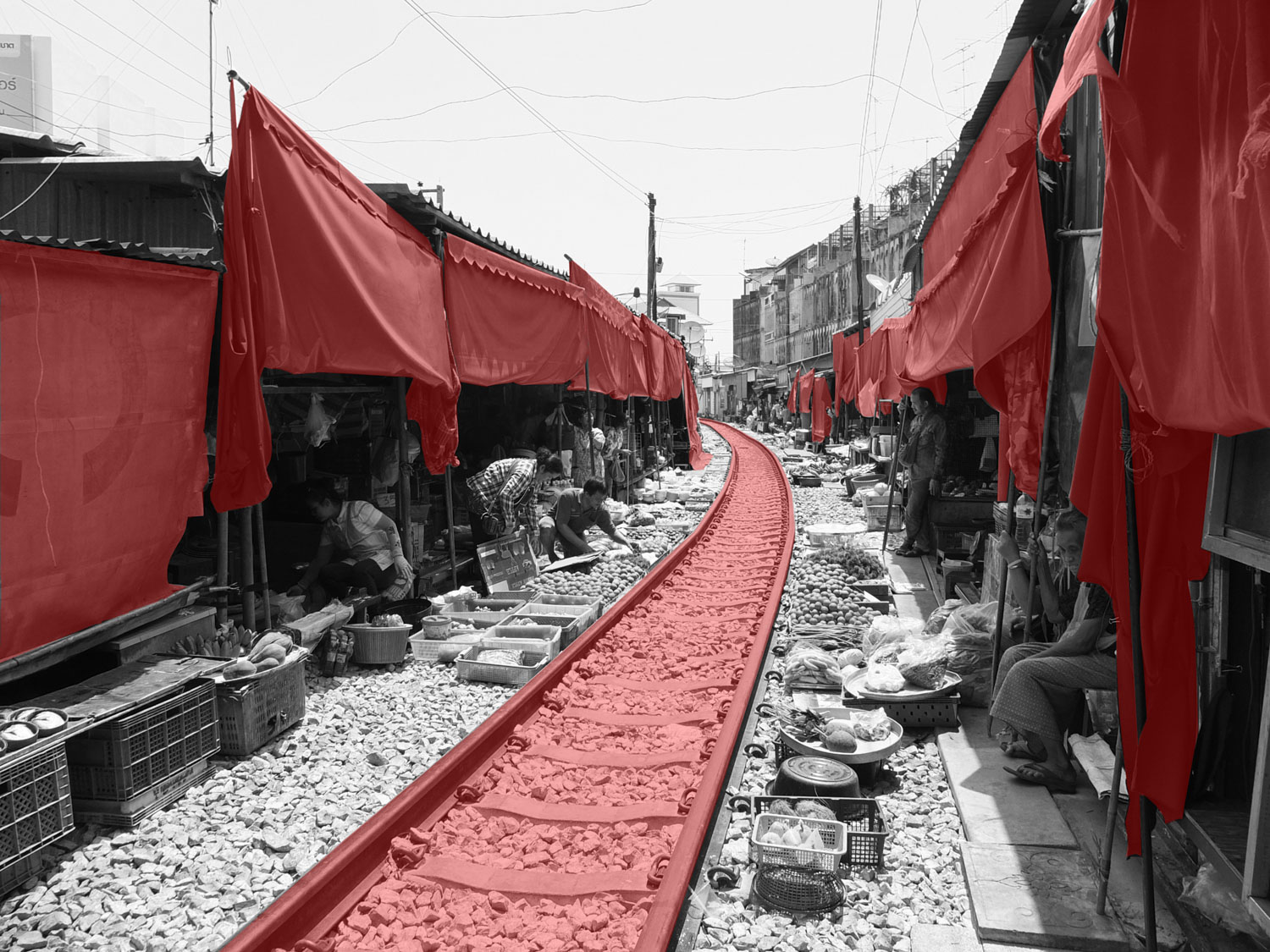
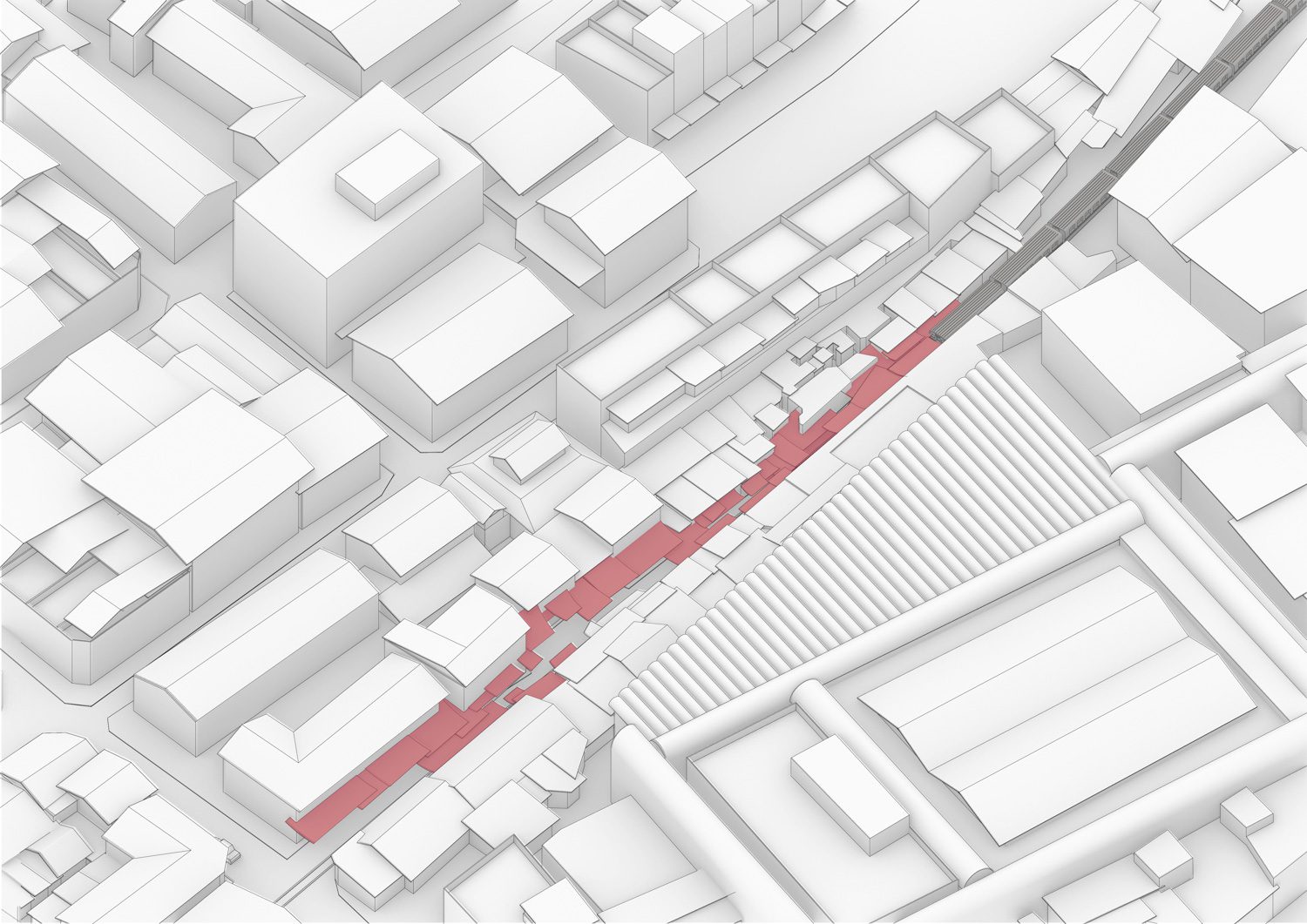
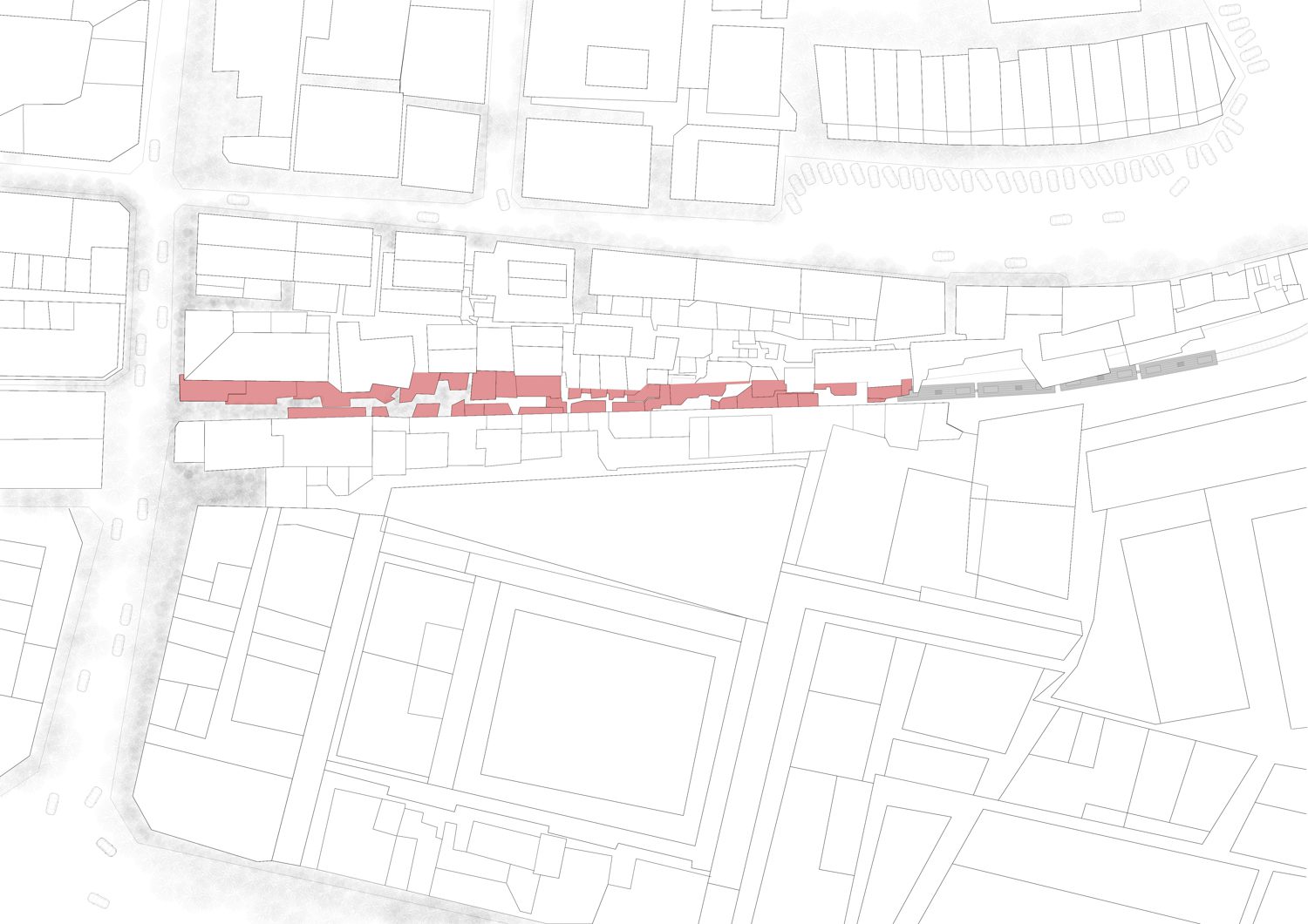
The phenomenon observed by HAS design and research represents a unique approach to urbanism in Thailand, Southeast Asia, and across Asia, which we term ‘Chameleon Architecture.’ In their book Chameleon Architecture: Shifting / Adapting / Evolving, the authors Jenchieh Hung and Kulthida Songkittipakdee catalog three key concepts: shifting, adapting, and evolving. Maeklong Railway Market is a typical market in Thailand; however, once combined with the train and railway, the market transforms into a ‘time-based’ space. Each moment offers a different scene: in the morning, some parts of the market are covered by a semi-open tarp canopy; at the hottest time of day, the market is fully shaded by a complete tarp canopy; and when the train passes through, all the tarp canopies are retracted. These tarp canopies blur the lines between indoor and outdoor spaces, as well as between the built environment and the natural environment. They reflect an ongoing dialogue between the built environment and the forces of nature, including wind, rain, and sunlight.
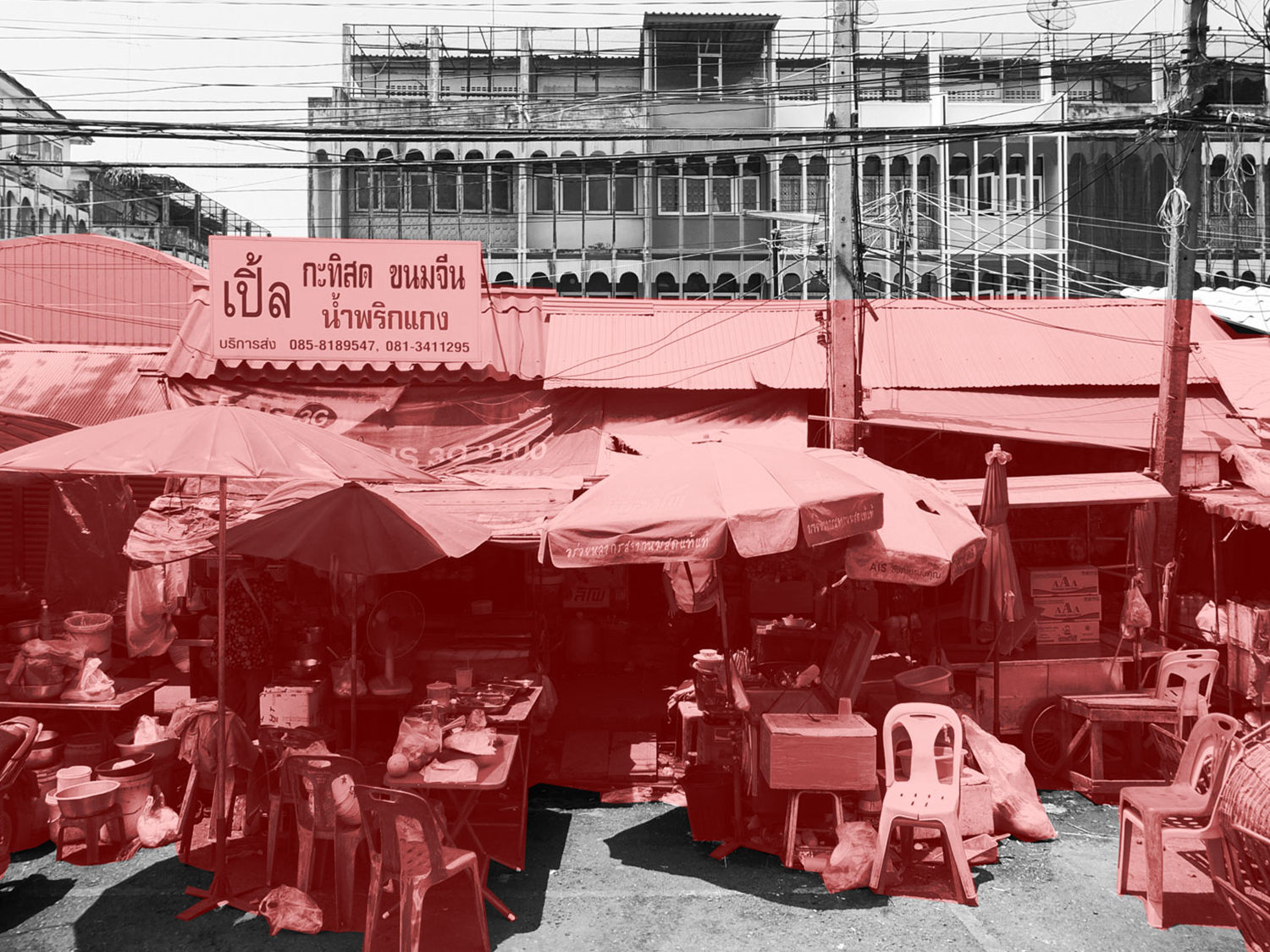
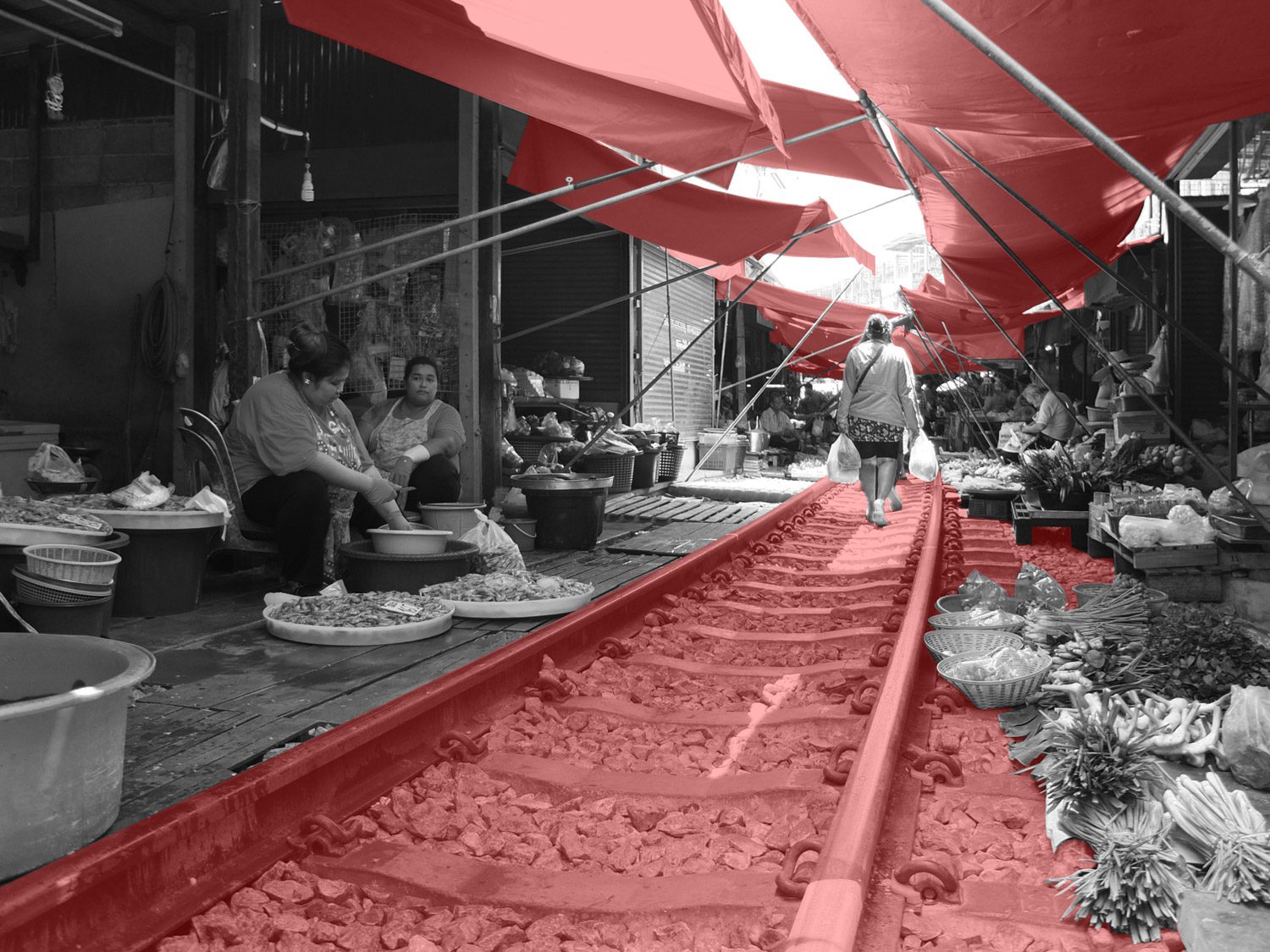
These vernacular spaces are not examples of ‘urban decay’ or disorder, but rather demonstrate a resilient, adaptive approach to living. They speak to the enduring relationship between people and their environment. The interplay of unevenness, rough textures, and temporary structures reflects the lived experience of Thai, Southeast Asian, and Asian communities, where impermanence becomes a form of cultural expression, deeply rooted in the region’s social and environmental context.
The content in this article is part of the book ‘Chameleon Architecture,’ available for purchase at: https://art4d.com/product/chameleon-architecture
facebook.com/hasdesignandresearch
instagram.com/has.design.and.research