
MALÝ CHMEL STUDIO DESIGNS HOUSE WITH SEVEN FLOORS, A SEVEN-STORY HOME THAT CONNECTS LIGHT, SPACE AND CHILDREN’S LEARNING WITH ARCHITECTURAL STRUCTURES
TEXT: NUDEE RODCHANAUDOMWUTIGUL
PHOTO: ALEX SHOOTS BUILDINGS
(For Thai, press here)
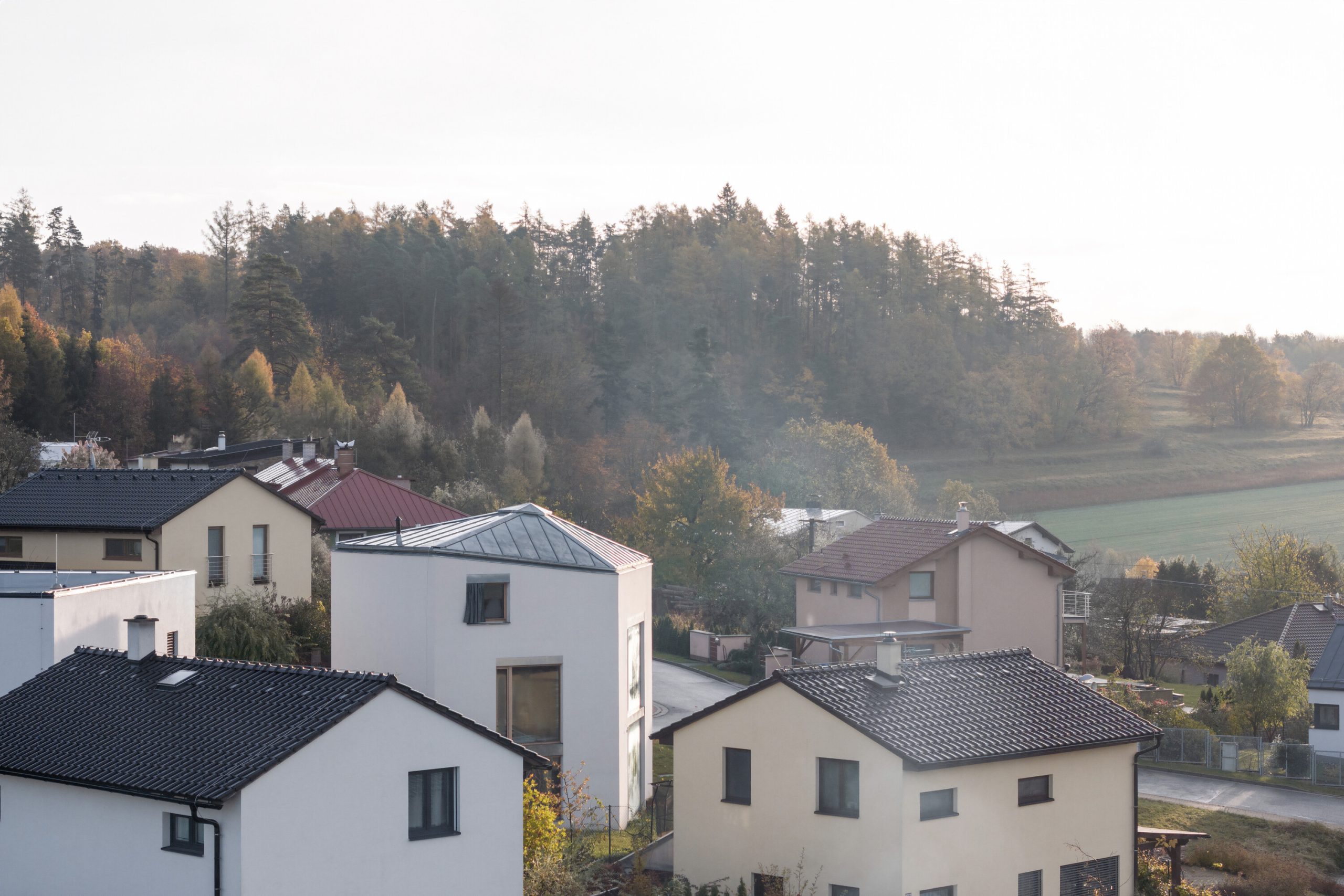
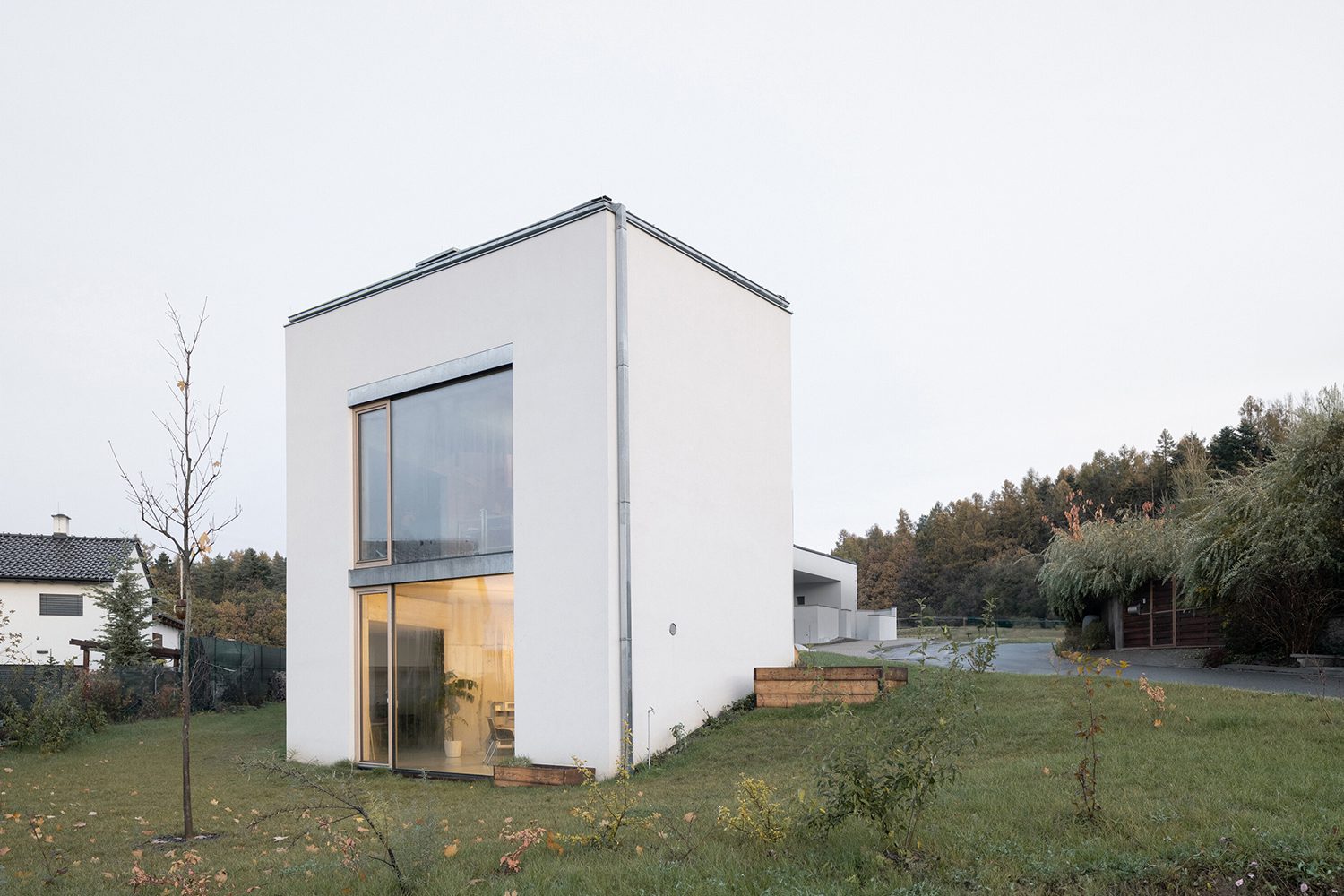
House with Seven Floors is a residence located on a small suburban plot in the Czech RepublicCzech Republic. Designed by Malý Chmel Studio, the project is guided by the concept ‘The Vertical Cave of Light.’ It’s an exploration of the interplay between light and spatial depth, where the architecture responds to shifting levels, surrounding context, and the evolving ways its occupants live and move through the space.

Conceived as a vacation home for a couple of athletes and their two children, the house was intended not only to reflect the family’s lifestyle but also to support the children’s learning, play, and experimentation, seamlessly integrated into daily life. Working within strict parameters of budget and energy efficiency, the architects identified two key priorities. The first was to maximize garden space on the small site, which led to a compact building footprint of only 63 square meters. The second was to organize the home vertically across seven split levels, connected by a central triangular spiral staircase that anchors the interior and guides circulation throughout the house. The program begins on the ground floor, which forms the heart of the home with a kitchen, dining area, and living room. The second floor serves as the main entrance. The children’s bedrooms are located on the third and fourth floors, followed by bathrooms on the fifth. A home office occupies the sixth floor, while the parents’ bedroom is positioned on the seventh and topmost level. In total, the house offers a net usable area of 143 square meters.
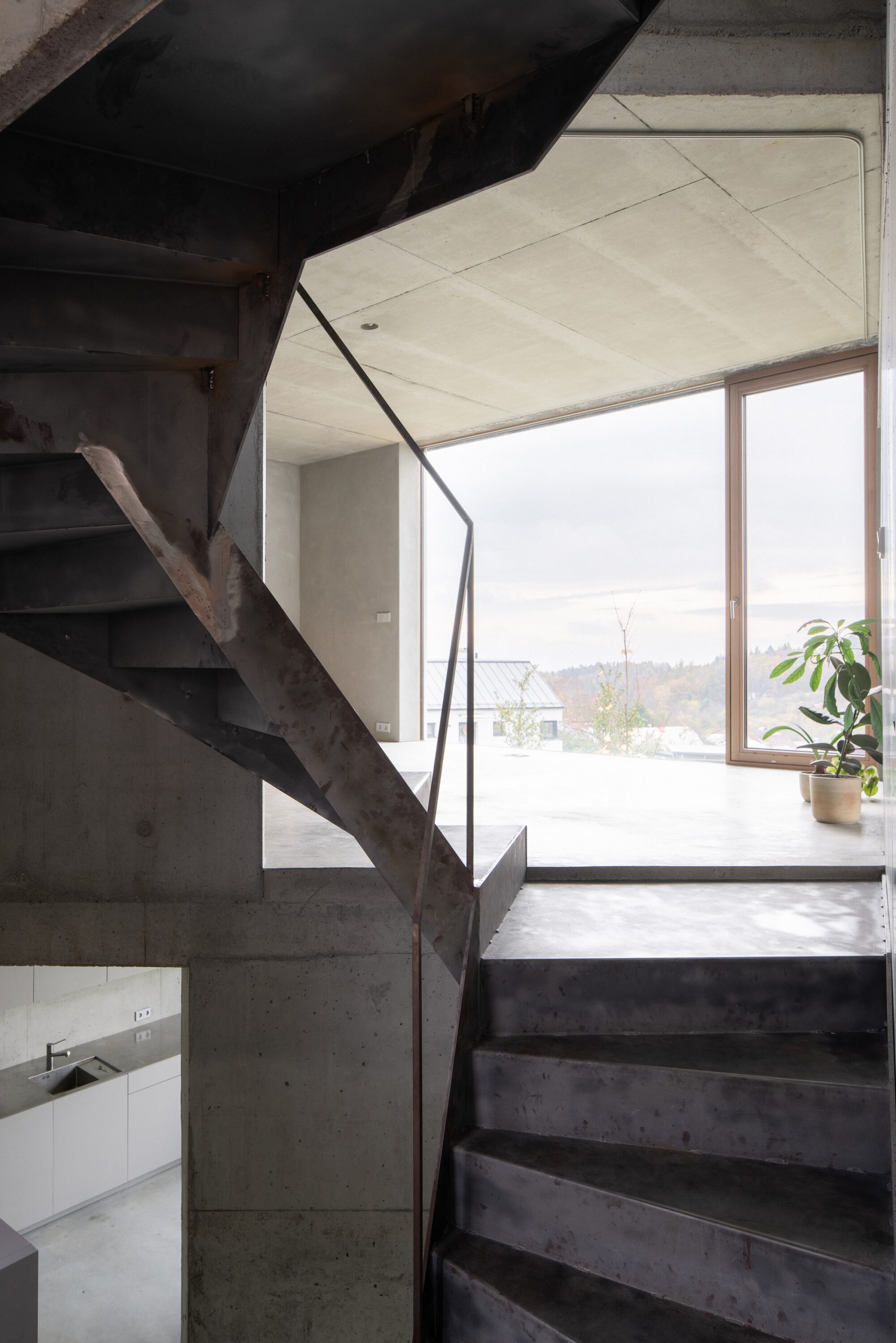
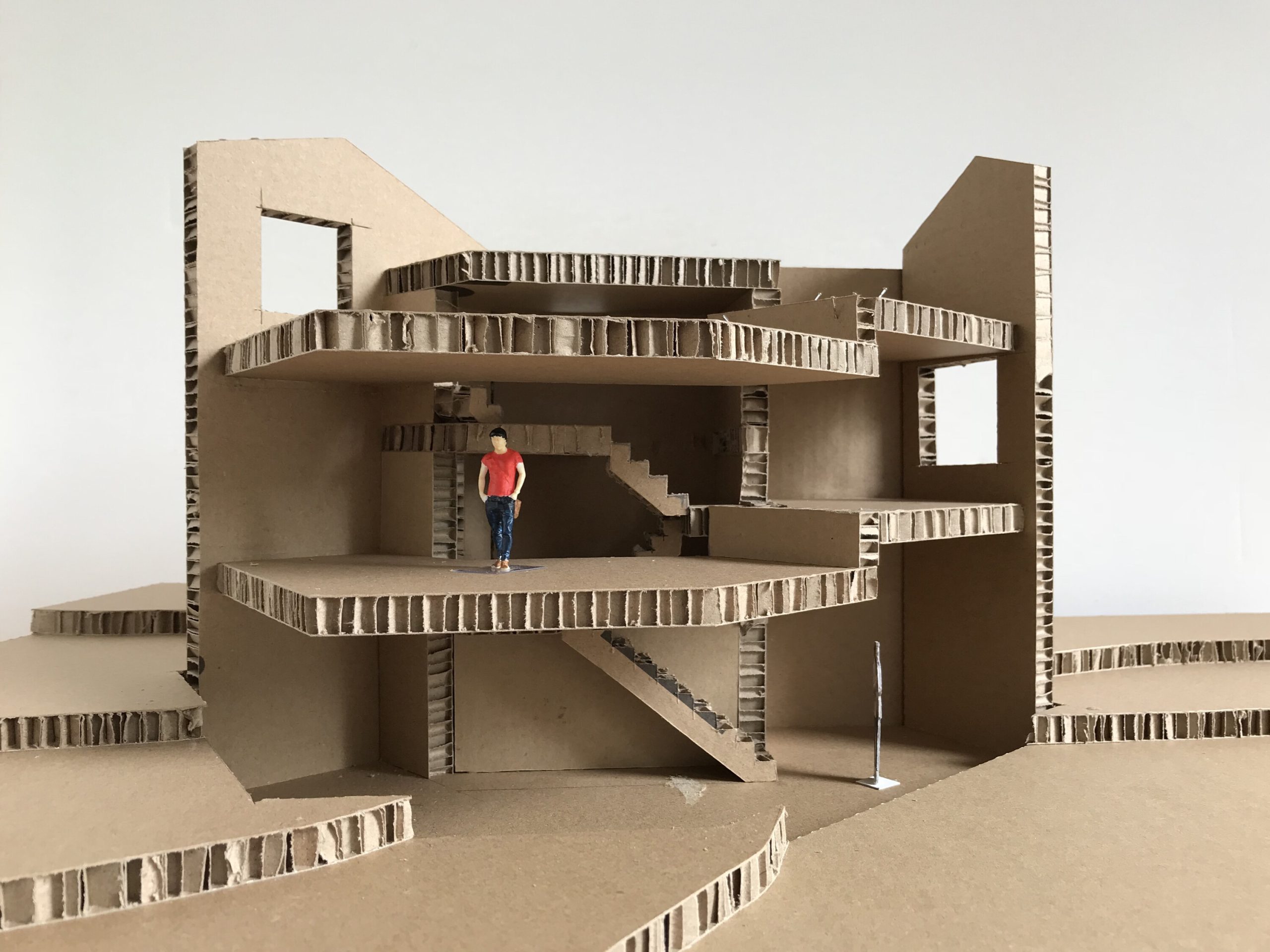
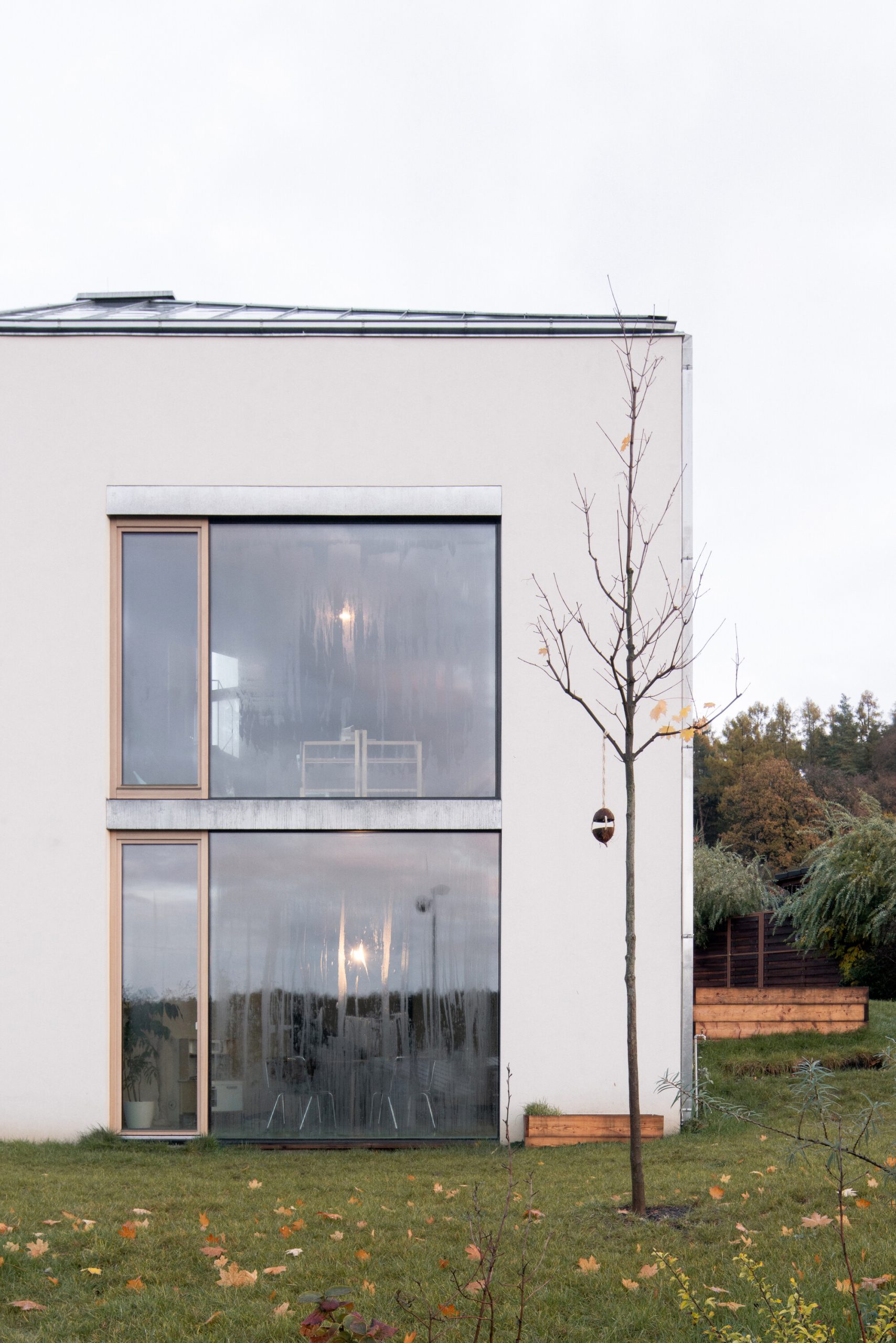
Another key aspect of the design lies in its spatial experience, specifically, the intention to create a dynamic relationship between interior perspectives and the surrounding landscape. The building adopts an asymmetrical pentagonal plan, shaped in response to the site’s topography and the orientation of views in each direction. This configuration allows interior spaces to open outward toward clusters of tall, slender pine trees growing around the property. As the split-level floors rotate incrementally around the pentagonal geometry, each space is afforded a distinct visual perspective, whether inward toward other parts of the house, outward toward the surrounding landscape, or downward into the garden. These views are framed by strategically positioned openings that vary in size, proportion, and placement, carefully calibrated to correspond with each room’s function, the quality of light, and the surrounding environment.
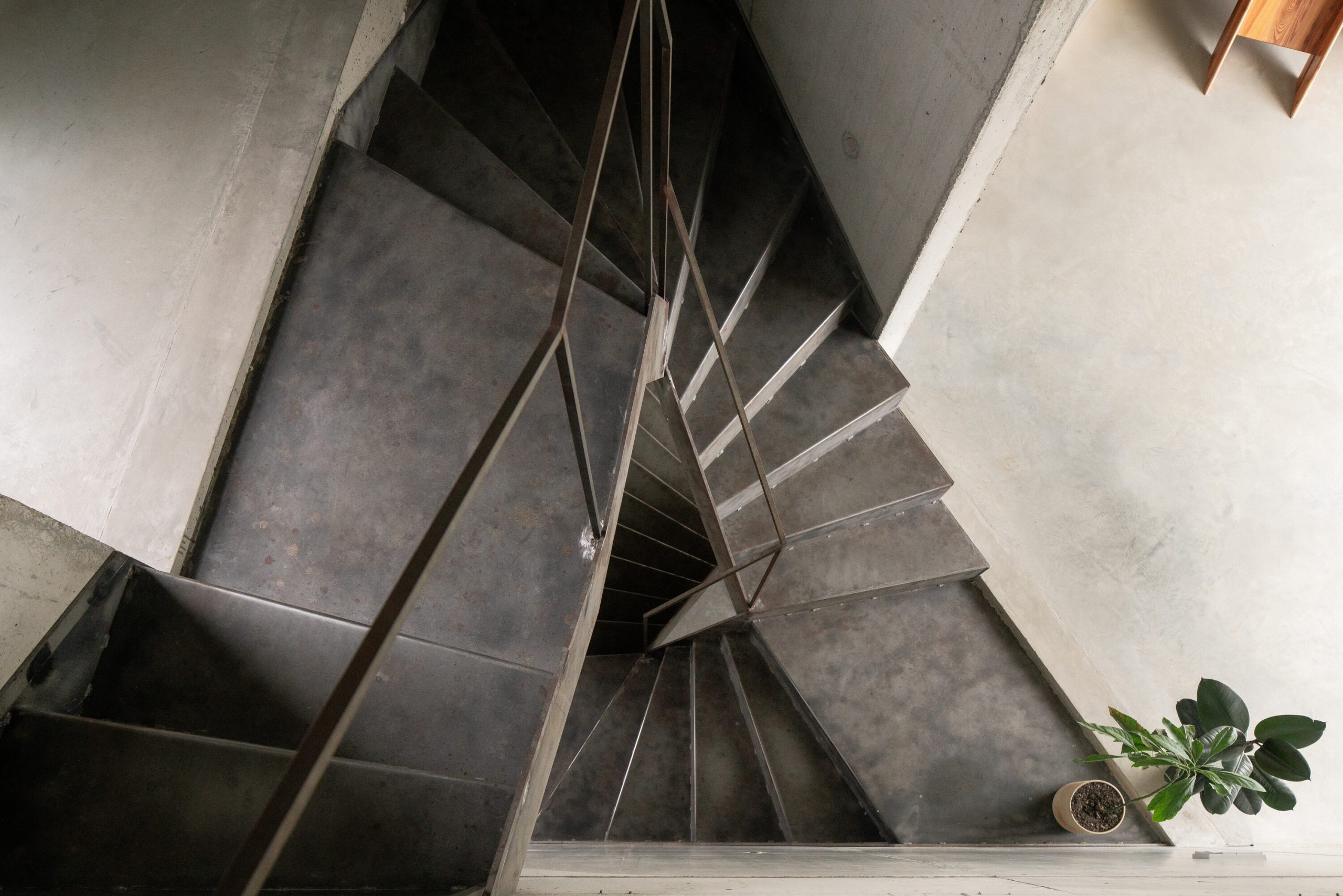
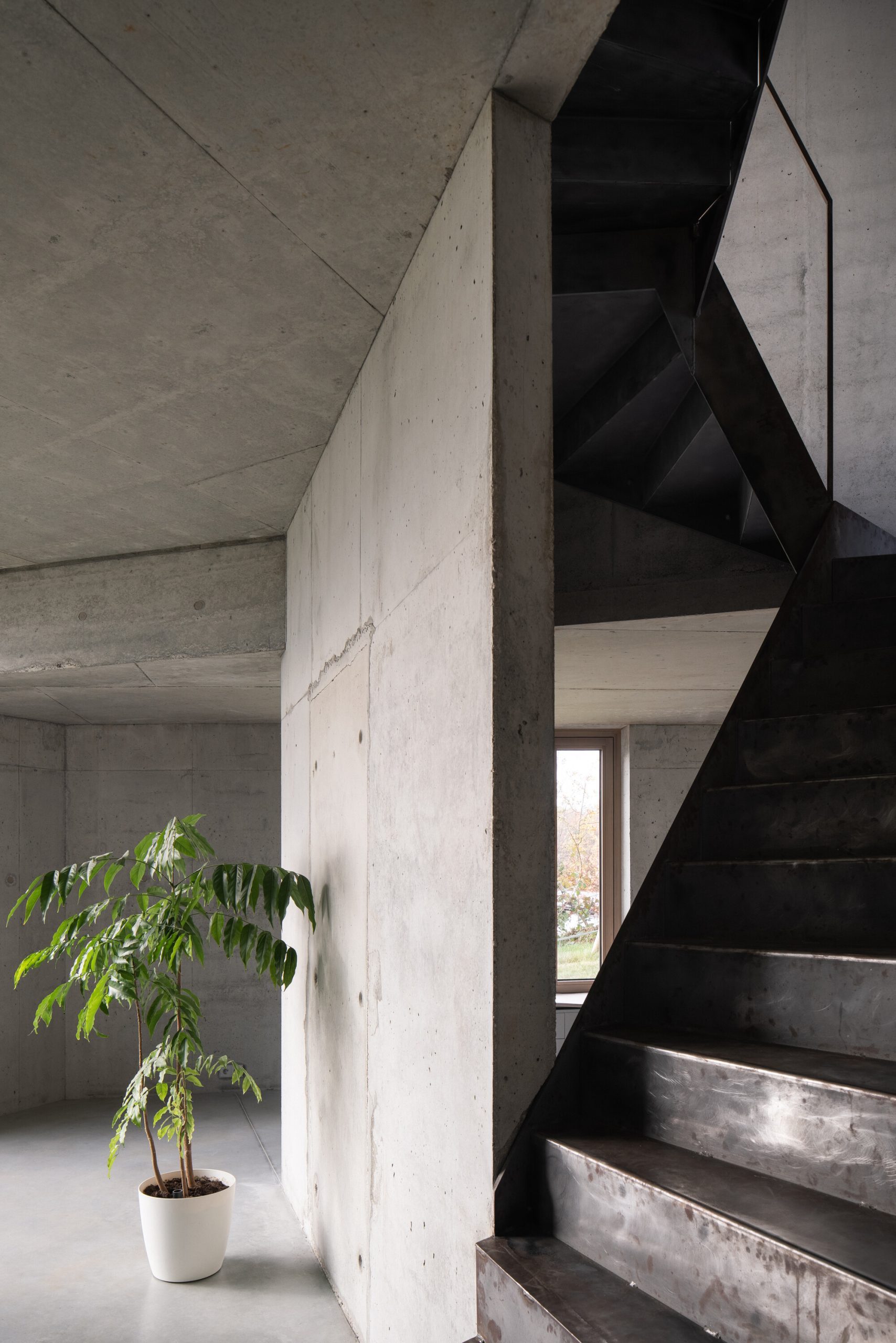
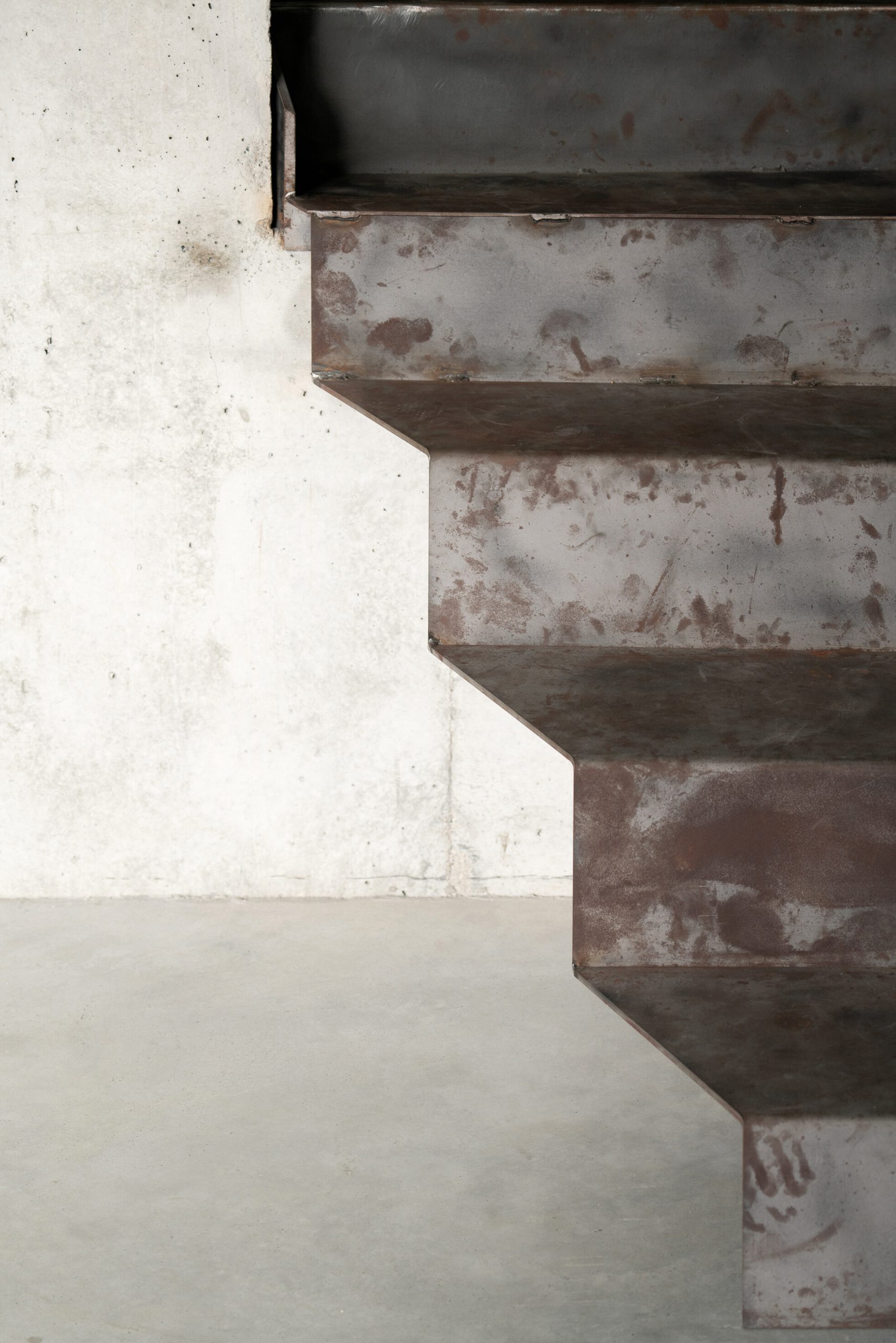
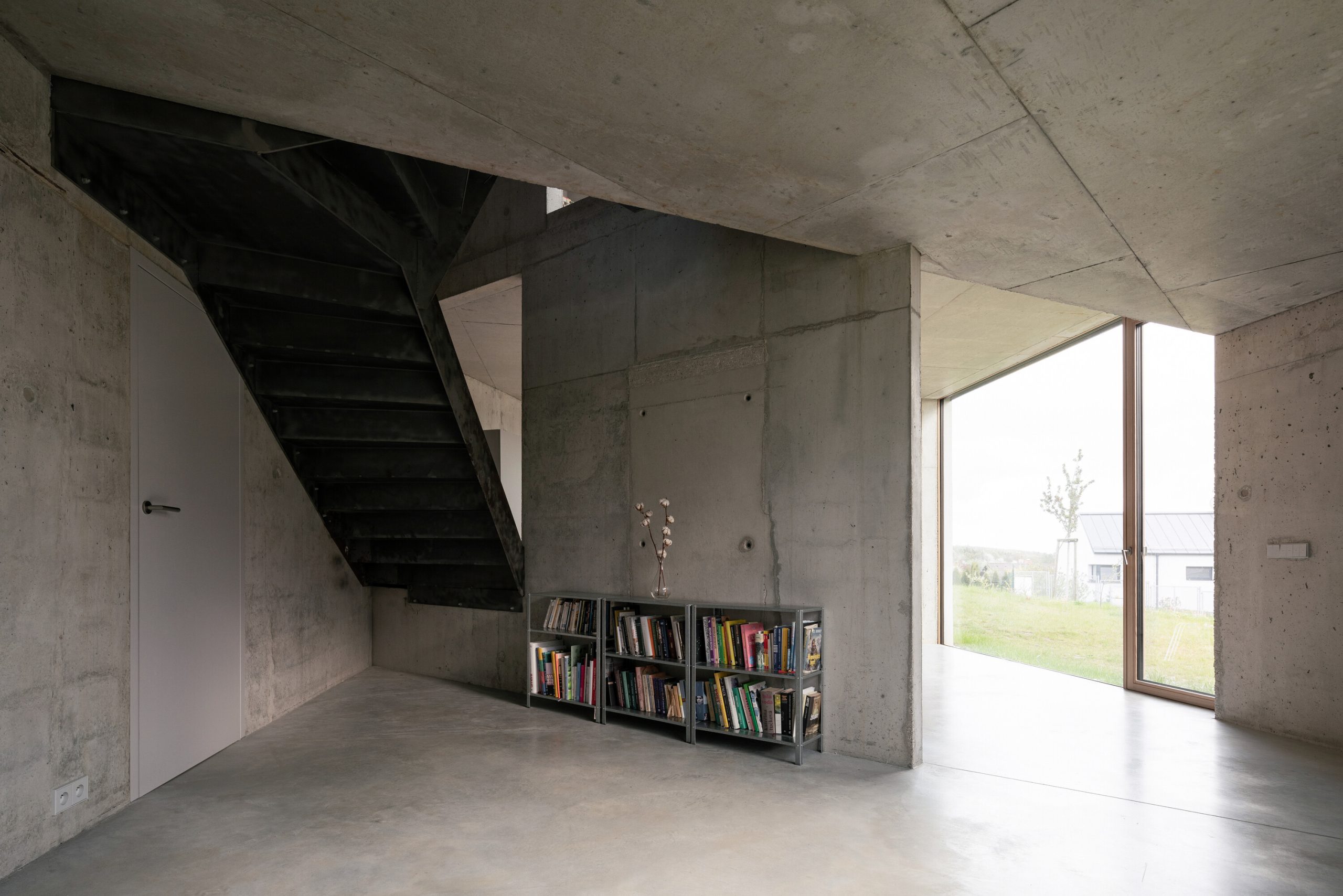
Circulation within House with Seven Floors is more than a means of movement; it serves as a central architectural element that connects and choreographs the entire spatial sequence. At the heart of the pentagonal plan of the ‘cave,’ a triangular steel staircase plays the role of the primary vertical link, guiding the eye and body through a continuous, upward spiral across all seven levels. This fluid ascent eliminates the need for conventional corridors, thereby preserving usable floor space. The stairwell works in concert with the exposed concrete walls, which serve as the structural spine of the building. Together, these three elements—wall, stair, and void—interlock with distinct roles: the concrete forms the architectural backbone, the stairwell reads as a sculptural centerpiece, and the central void acts as a conduit for light, articulating the house’s conceptual core: the Vertical Cave of Light.
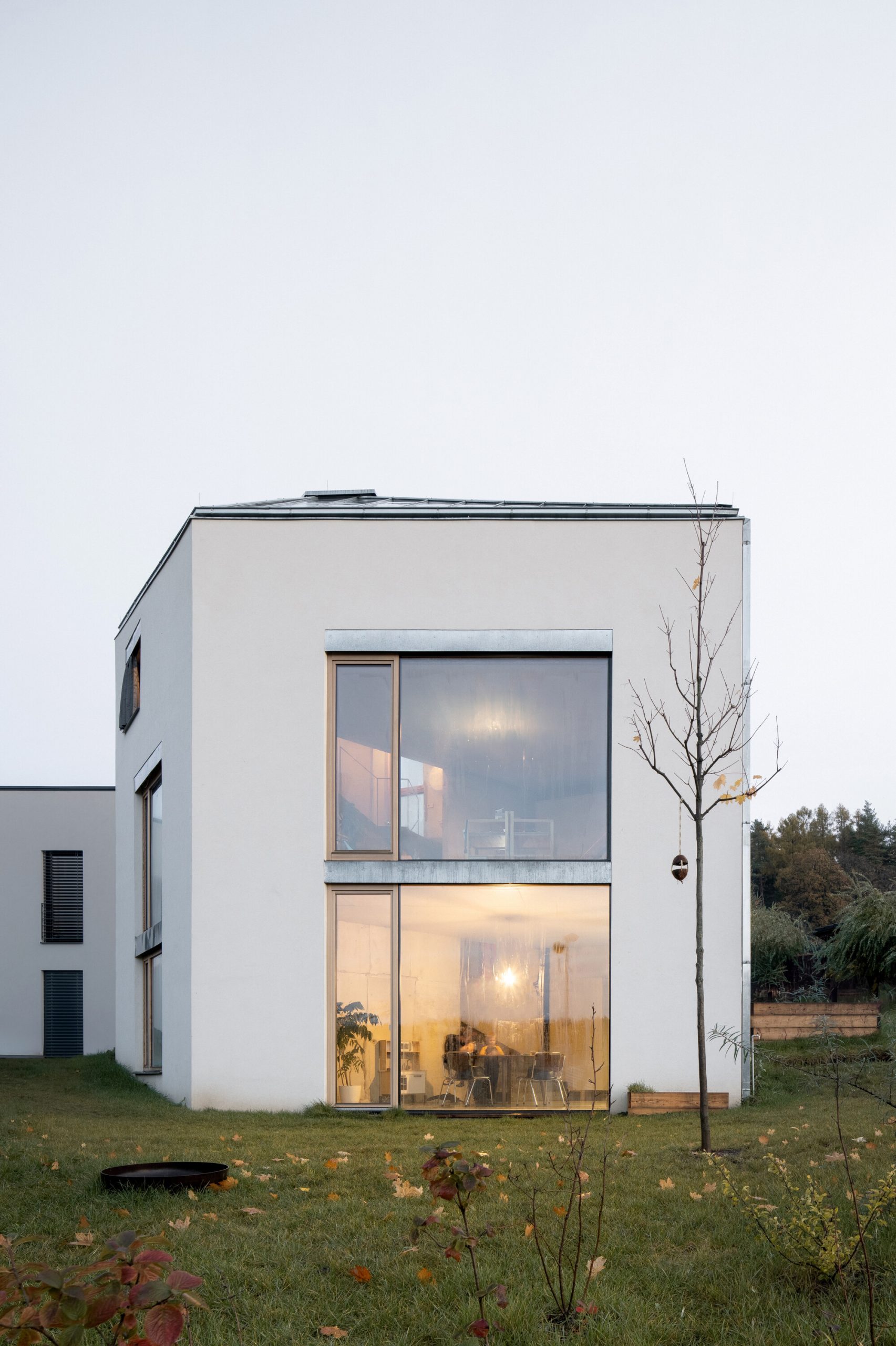
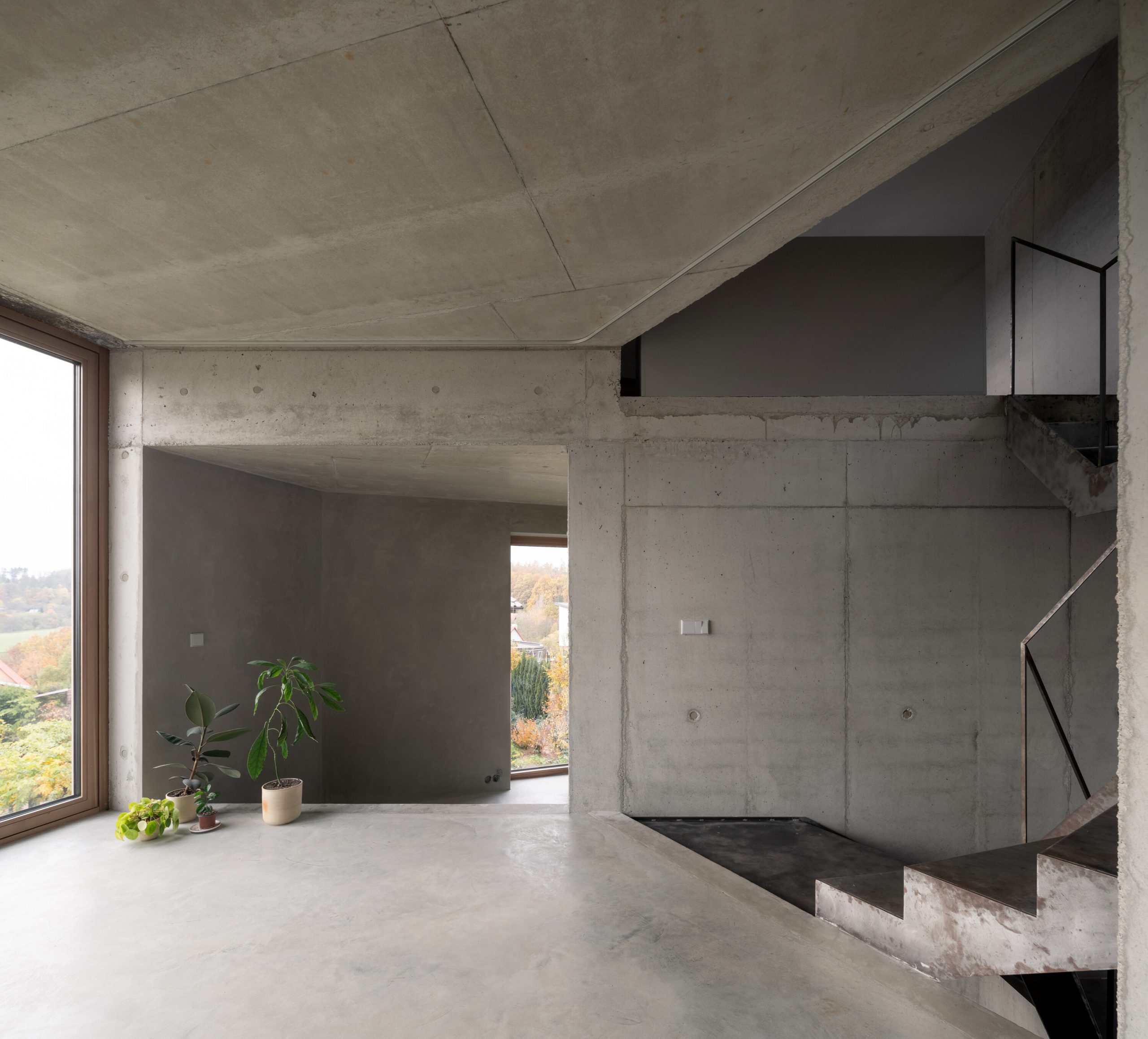
From the outside, House with Seven Floors appears deceptively simple, with a focus on ease of maintenance. The building takes the form of a clean, white-rendered box that blends subtly into the neighborhood, aligning with the visual language of surrounding homes. Its modest exterior serves as a quiet backdrop for the play of natural light and shadow across its surfaces. Inside, the design follows the concept of a ‘Minimalist and Rugged Style aesthetic’—a combination of spatial clarity and material honesty. Exposed concrete, along with cast-in-place floors, walls, ceilings, and façade elements, creates a raw yet composed atmosphere. These surfaces are allowed to speak for themselves, evoking a sense of solidity, protection, and calm, in keeping with the cave-like character of the ‘Vertical Cave of Light’.
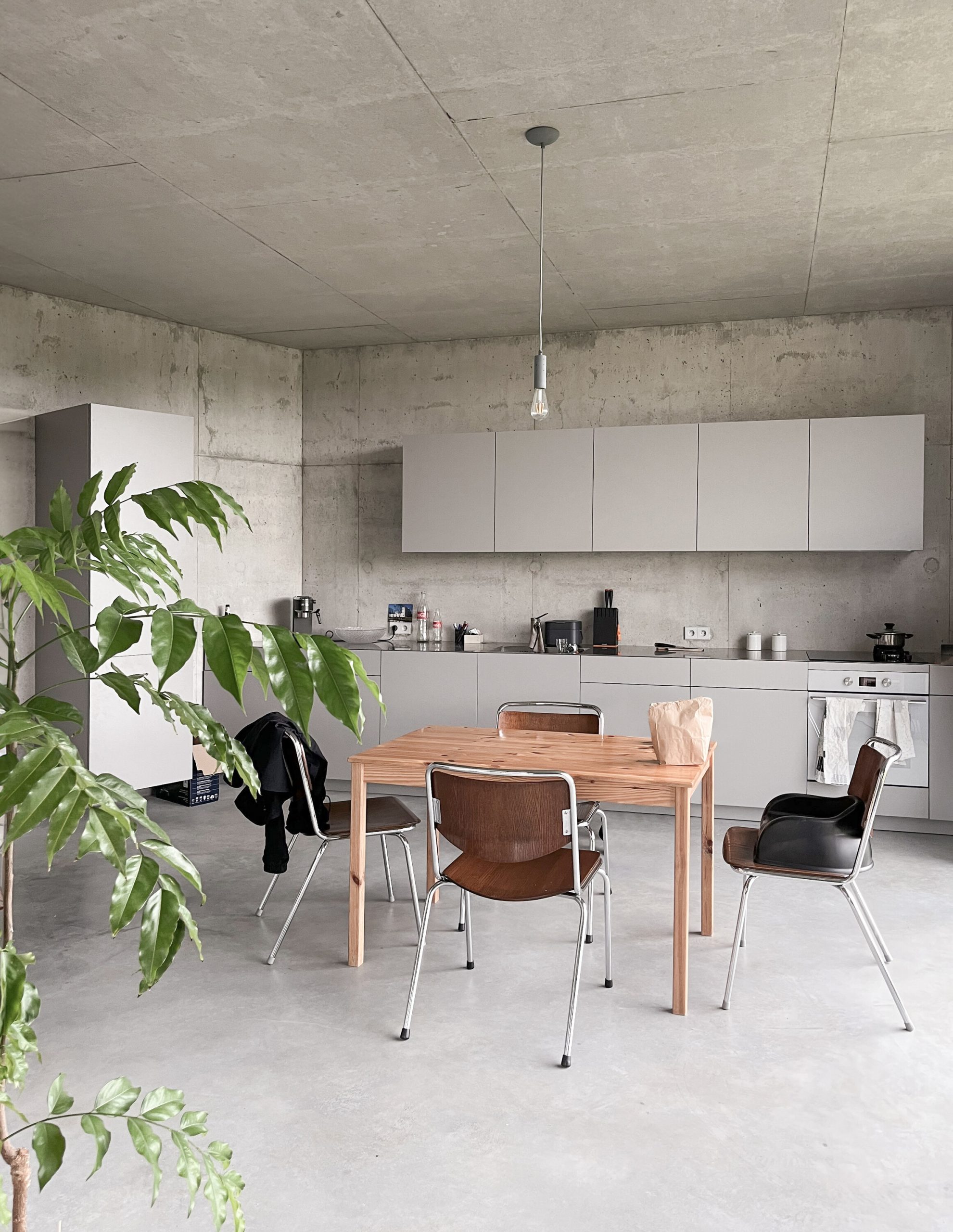
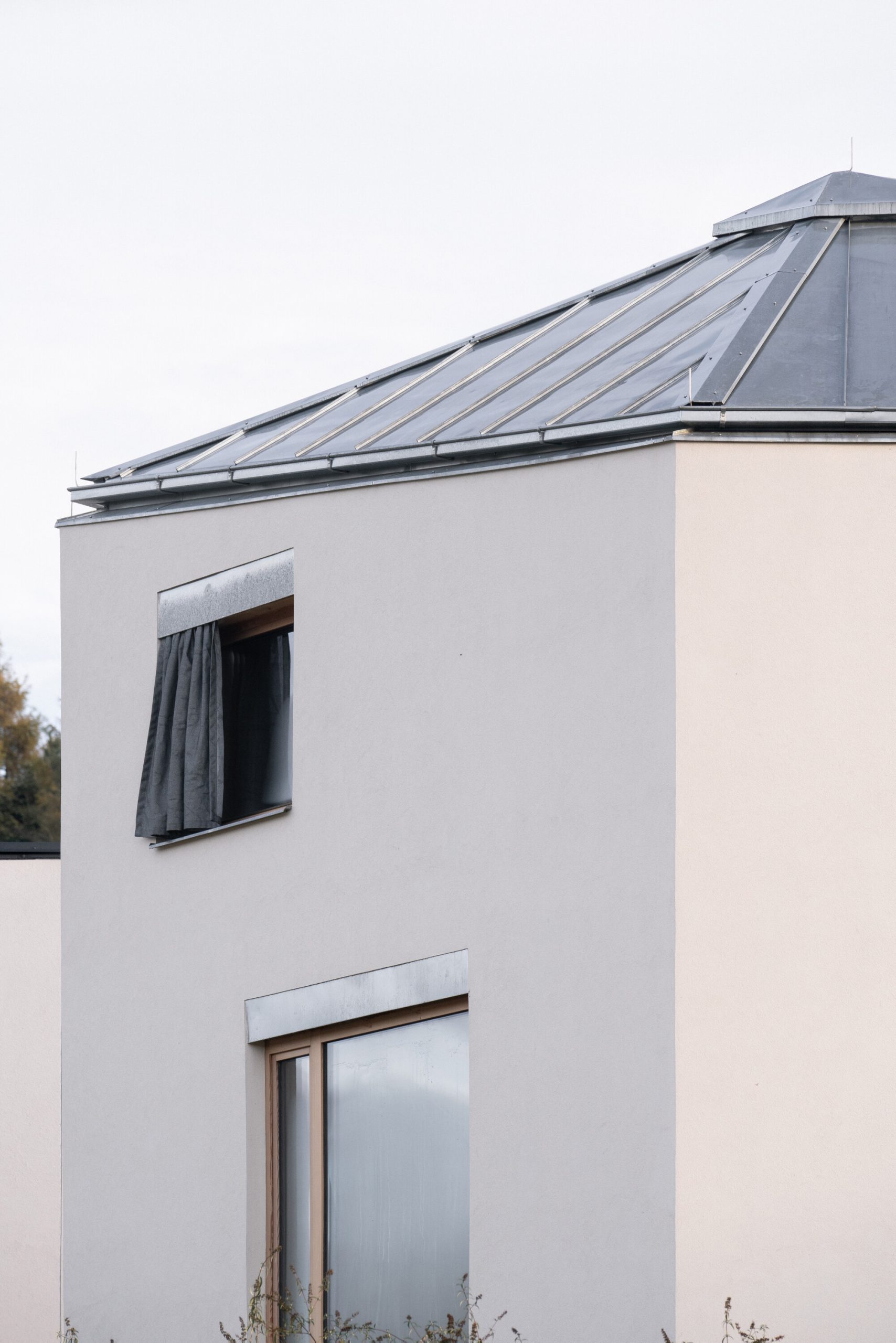
Though each level within the house differs in size, height, and the quality of light it receives, the continuity of the circulation sequence lends the interior a holistic spatial rhythm. Rather than feeling segmented into rooms, the house unfolds as a unified spatial experience, making the interior feel larger than its actual footprint. Light becomes a dynamic element in this interplay, moderated by lightweight interventions such as curtains. These soft partitions invite residents to engage with their environment; to explore distances, relationships, and viewpoints within the home. This spatial fluidity fosters a sense of discovery, encouraging each occupant to intuitively find the atmospheres that suit their individual needs across different moments and situations. In doing so, the house supports a way of living that resists rigid definition, allowing space for growth, exploration, and the open-ended learning process that the homeowners hoped to offer their children through the experience of growing up in this home.