
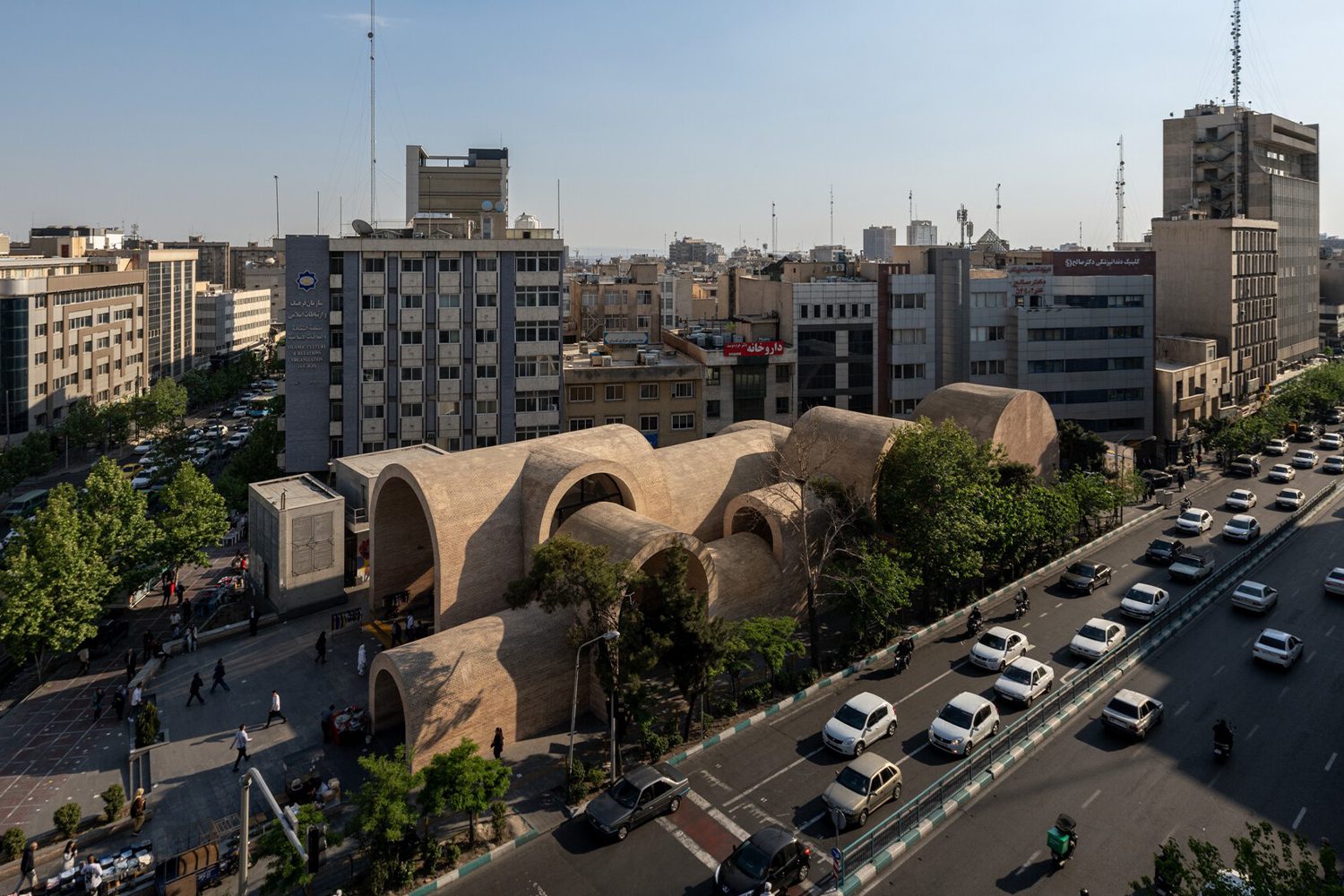
KA ARCHITECTURE STUDIO HAS REVITALIZED A PUBLIC SPACE IN CENTRAL TEHRAN BY TRANSFORMING THE ENTRANCE TO THE JAHAD METRO PLAZA TRAIN STATION INTO A SERIES OF INTERCONNECTED ARCHES MADE FROM OVER 300,000 HANDCRAFTED BRICKS
TEXT: PRATCHAYAPOL LERTWICHA
PHOTO: © AGA KHAN TRUST FOR CULTURE / DEED STUDIO
(For Thai, press here)
After the 1979 Iranian Revolution, Tehran, the nation’s capital, underwent a period of rapid expansion. Rural populations streamed into the city, drawn by opportunity or forced to escape the Iran–Iraq war raging along the borders. Yet, even as Tehran swelled, its urban development favored cars over people. New roads and highways intersected the landscape, while the quality of life for pedestrians was largely disregarded. Spaces for rest, leisure, and social connection remained scarce, failing to grow alongside the city’s ever-expanding asphalt arteries.
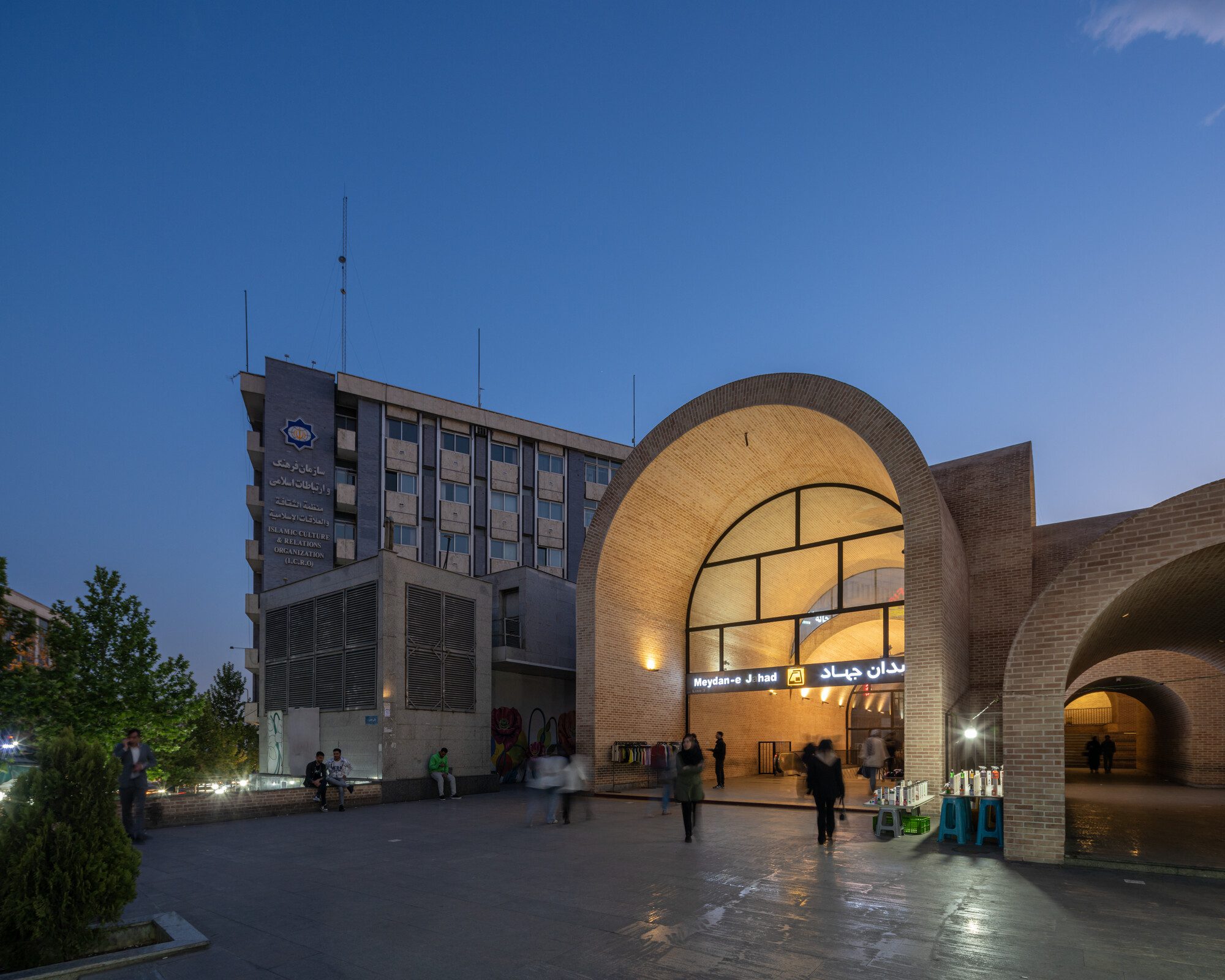
Decades of car-centered planning have left a legacy that continues to shape Tehran today. In response, urban specialists and the municipal administration launched Meydangah, an ambitious initiative to reclaim the city for pedestrians by transforming its public realm into vibrant civic centers. Among more than a hundred promising sites, ranging from sidewalks and small parks to underused gardens, the Jahad Metro Plaza was selected as a flagship pilot, with KA Architecture Studio entrusted as the project’s architect.
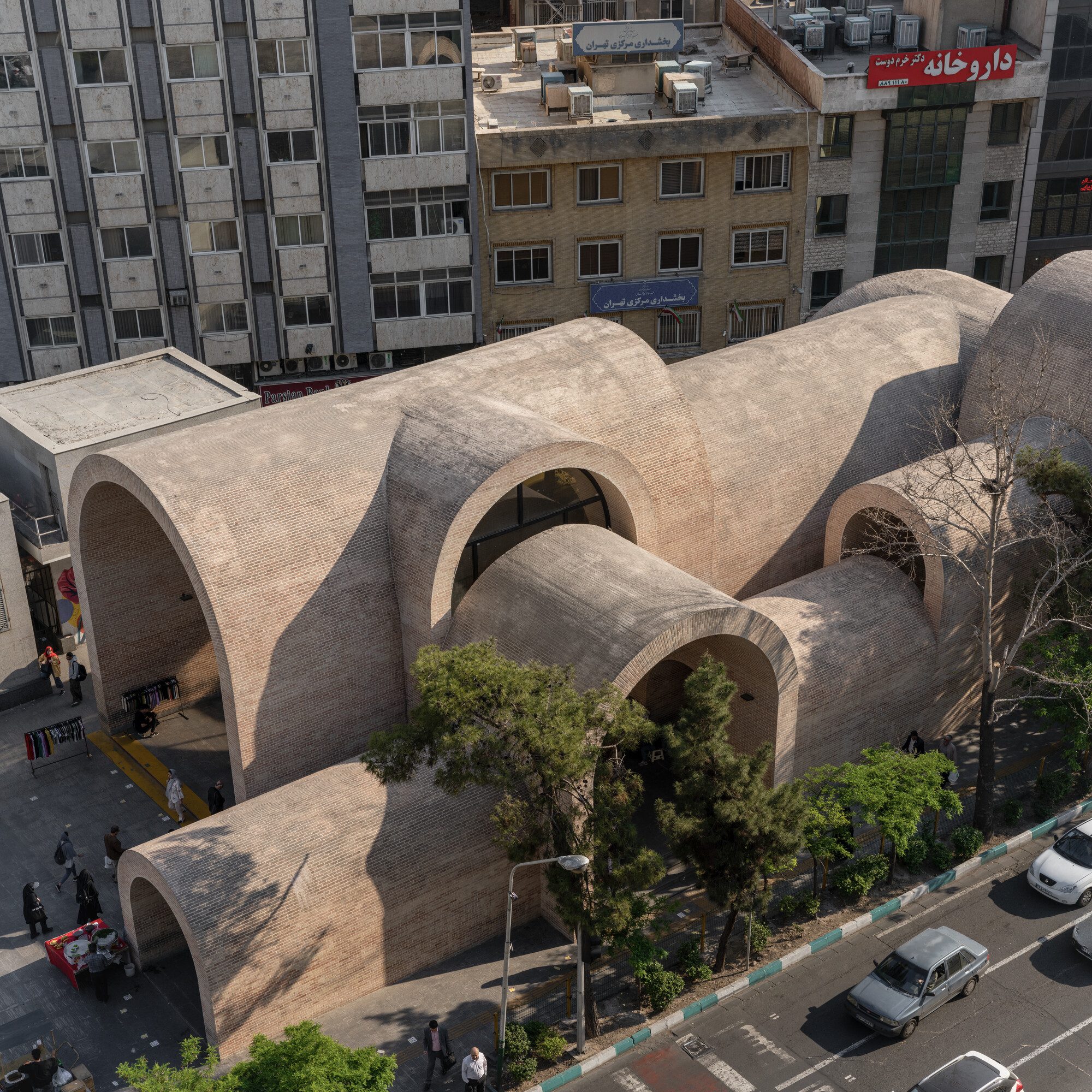
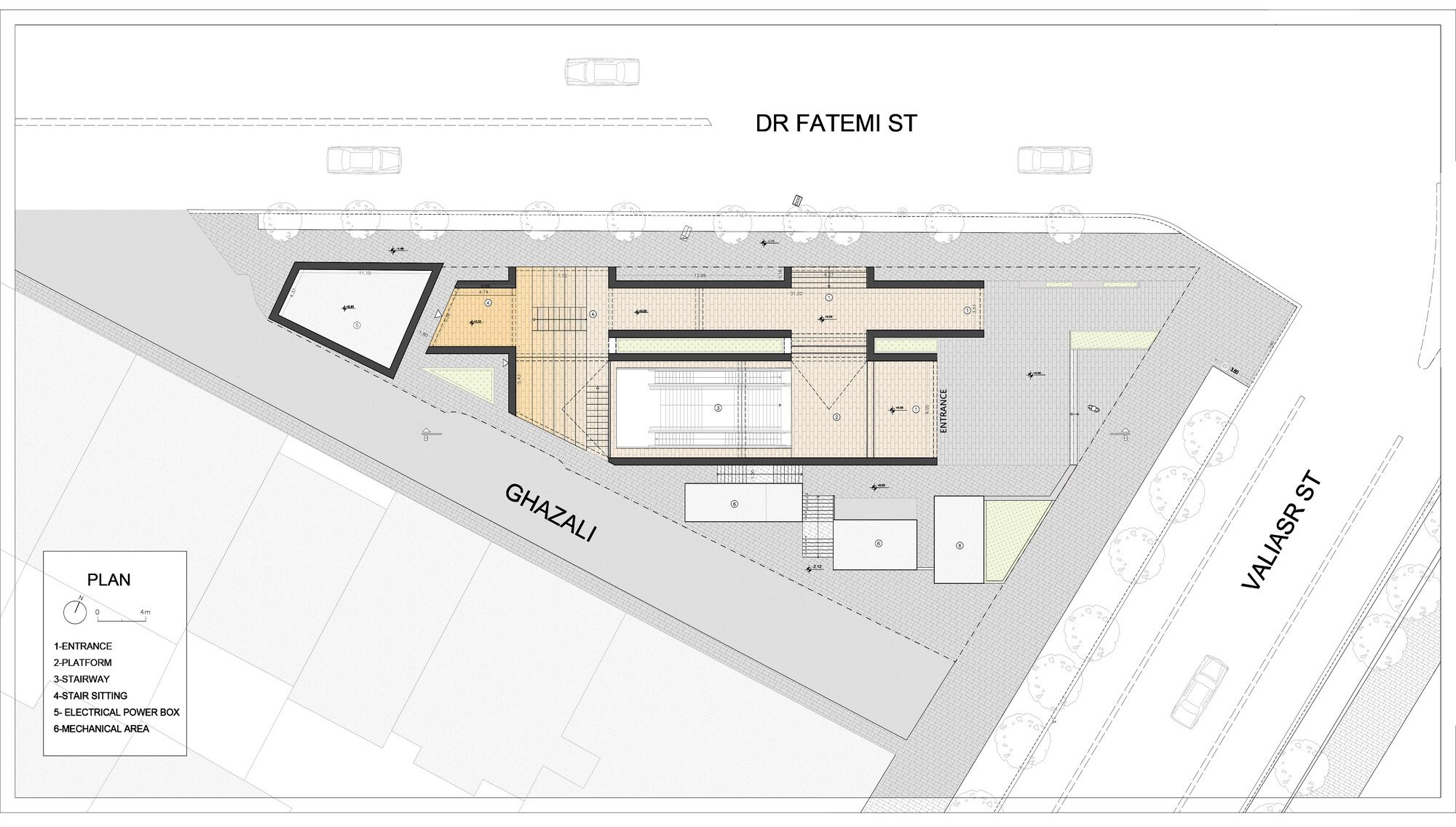
The plaza occupies a triangular 1,500-square-meter site at the busy intersection of Dr. Fatemi and Valiasr, two of Tehran’s major thoroughfares. Before its transformation, the metro entrance was nothing more than a weathered single-story glass box, stripped of character or beauty. Much of the plaza, including its restrooms and surrounding spaces, had fallen into disuse, left underutilized in the midst of the city’s bustle. The renovation set out to reclaim this overlooked corner, transforming it into a place that truly belongs to the people.
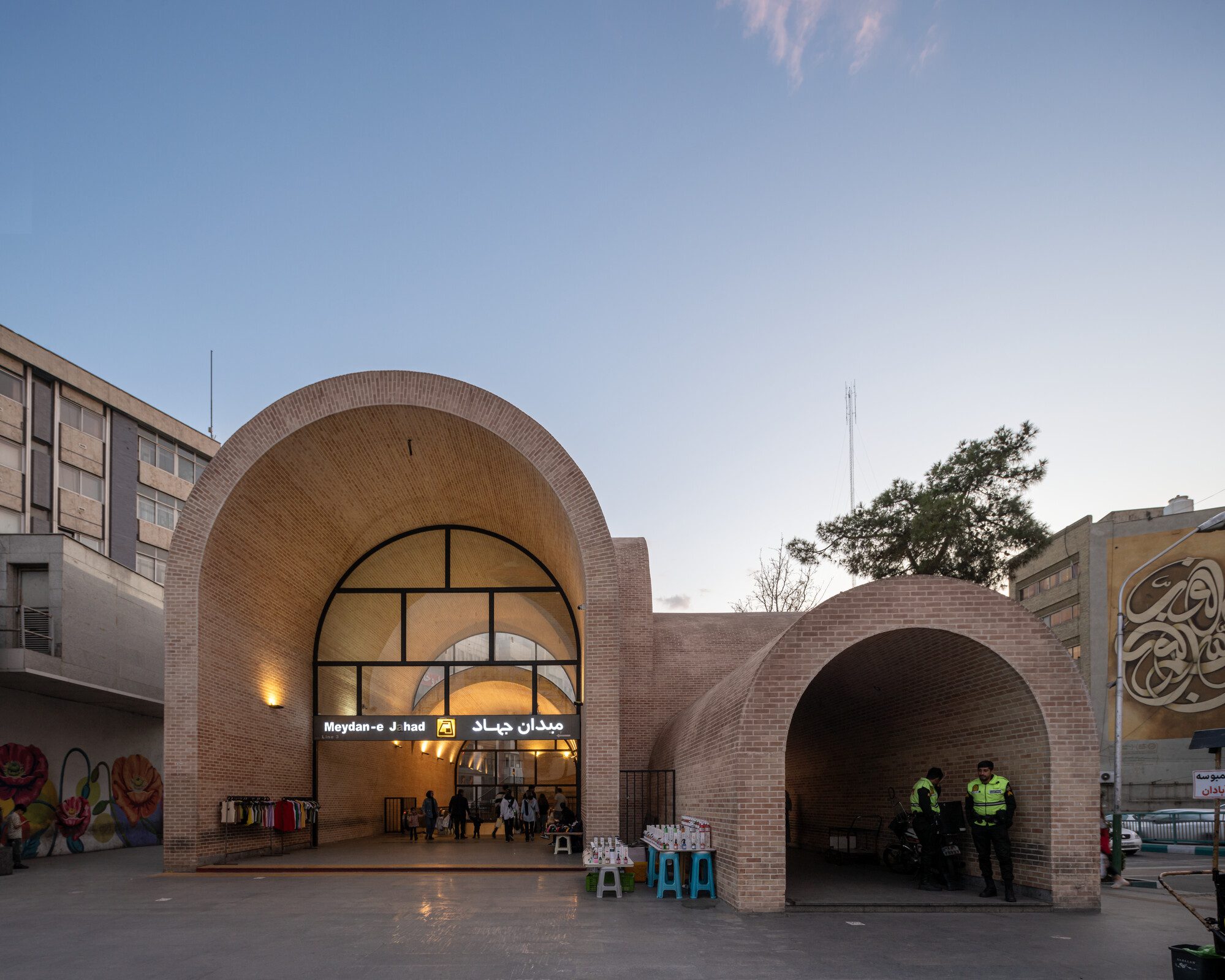
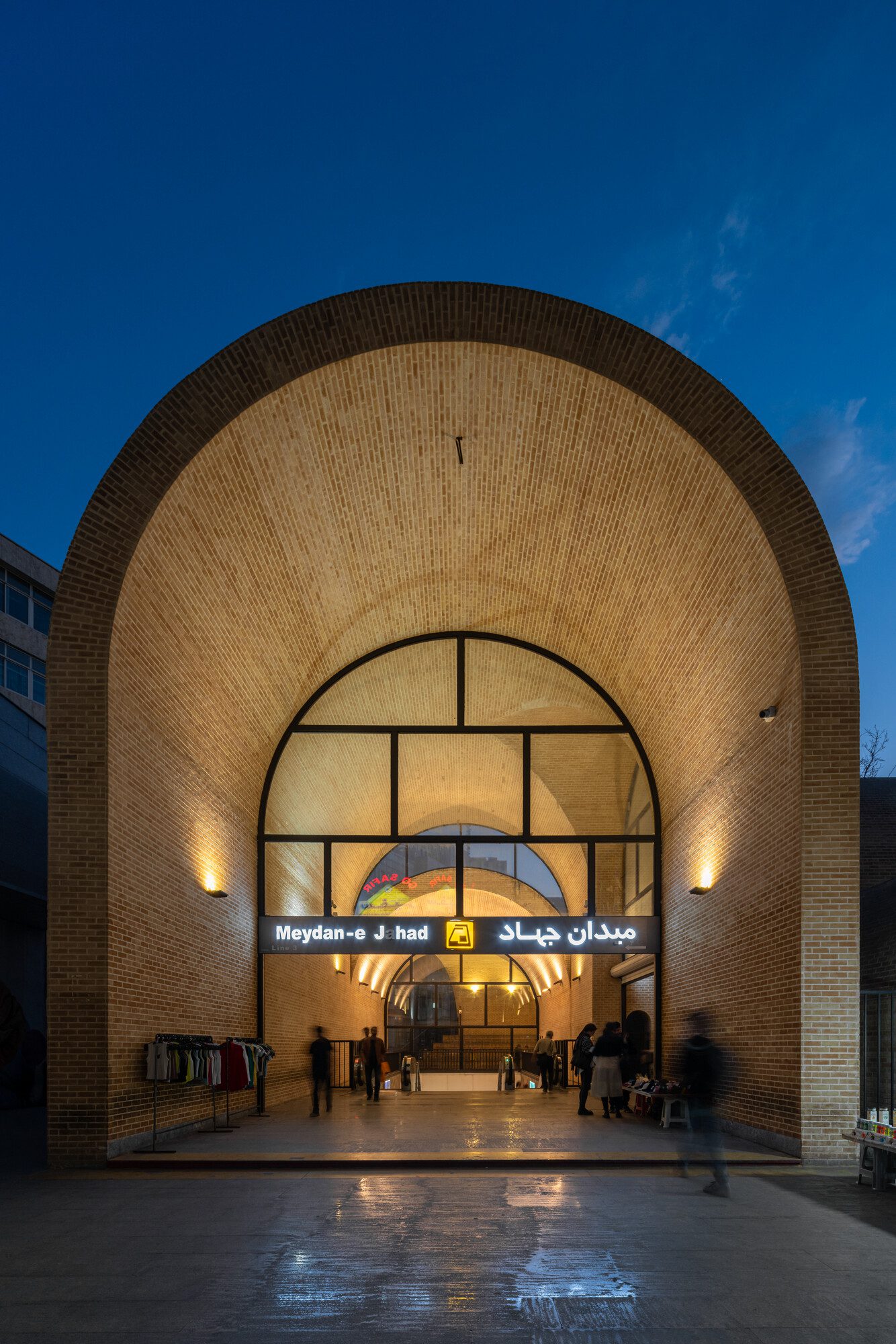
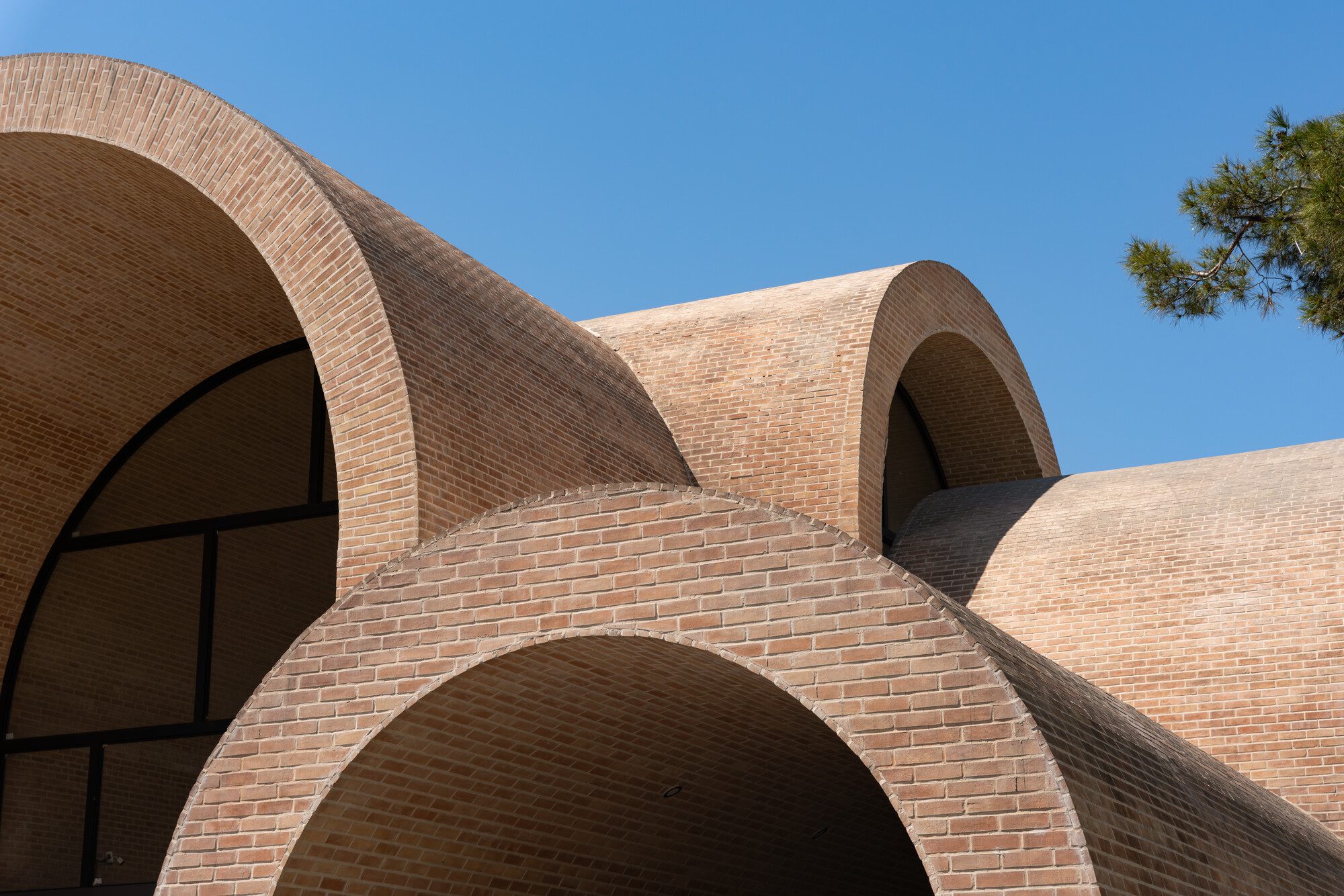
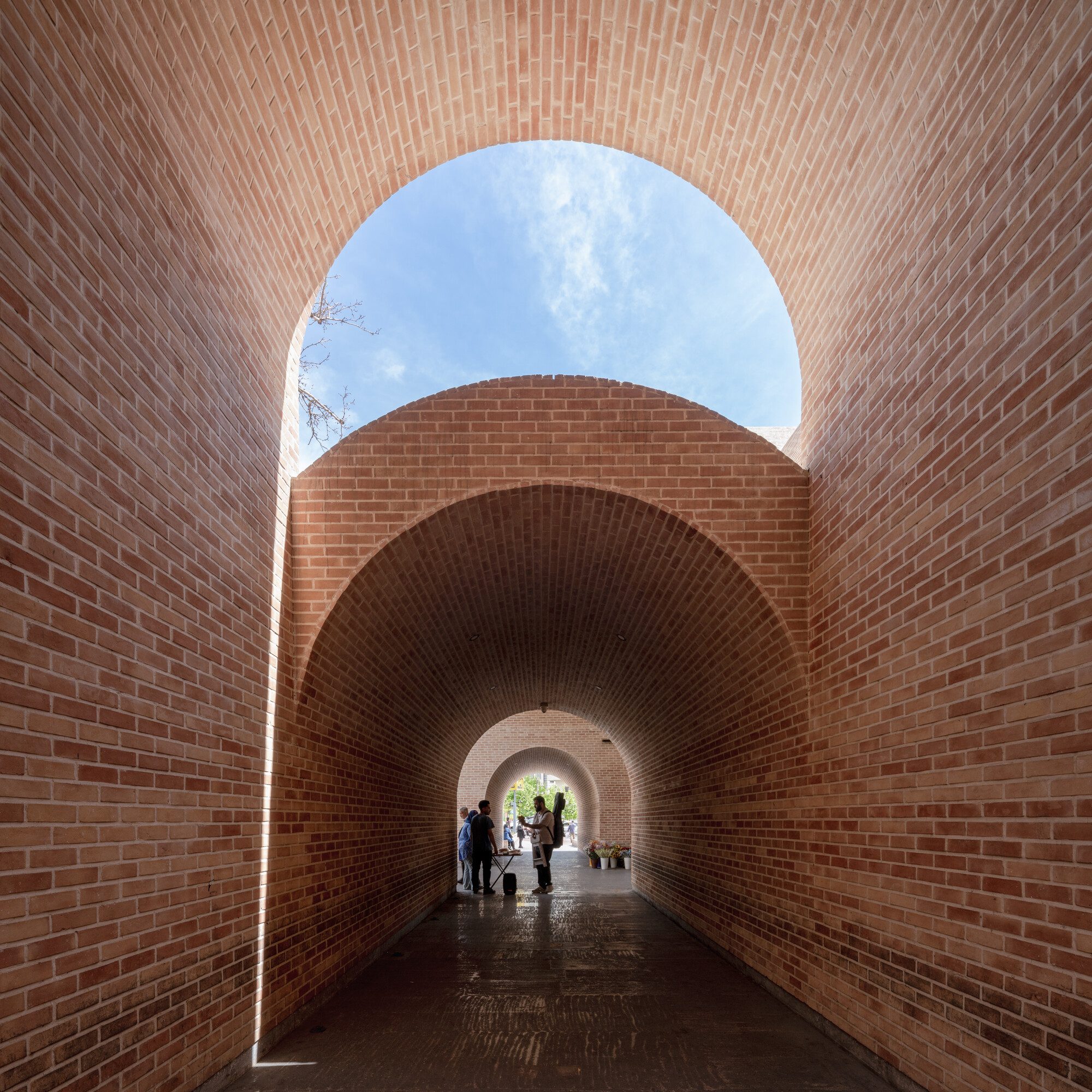
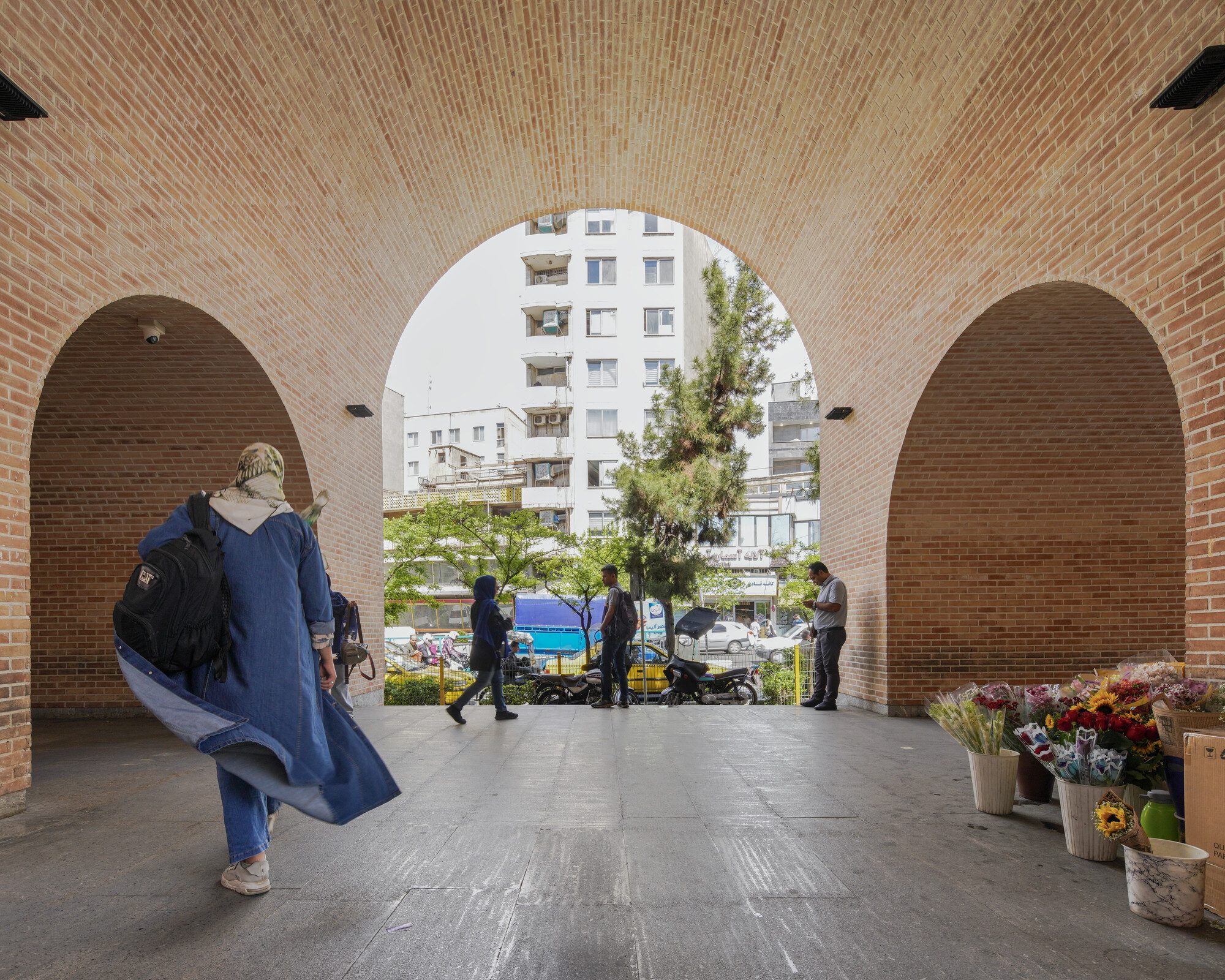
The former metro entry has been reimagined as a sequence of interlinked arched canopies, drawing inspiration from traditional Persian architecture. These vaults provide shelter from rain and sun while offering a refuge from the relentless noise of traffic. Varying in height, the arches create openings that admit daylight and allow hot air to escape, an essential response to Tehran’s sweltering summers. With its simple yet striking profile, the new structure transforms the once-forgotten entrance plaza into a fresh urban landmark.
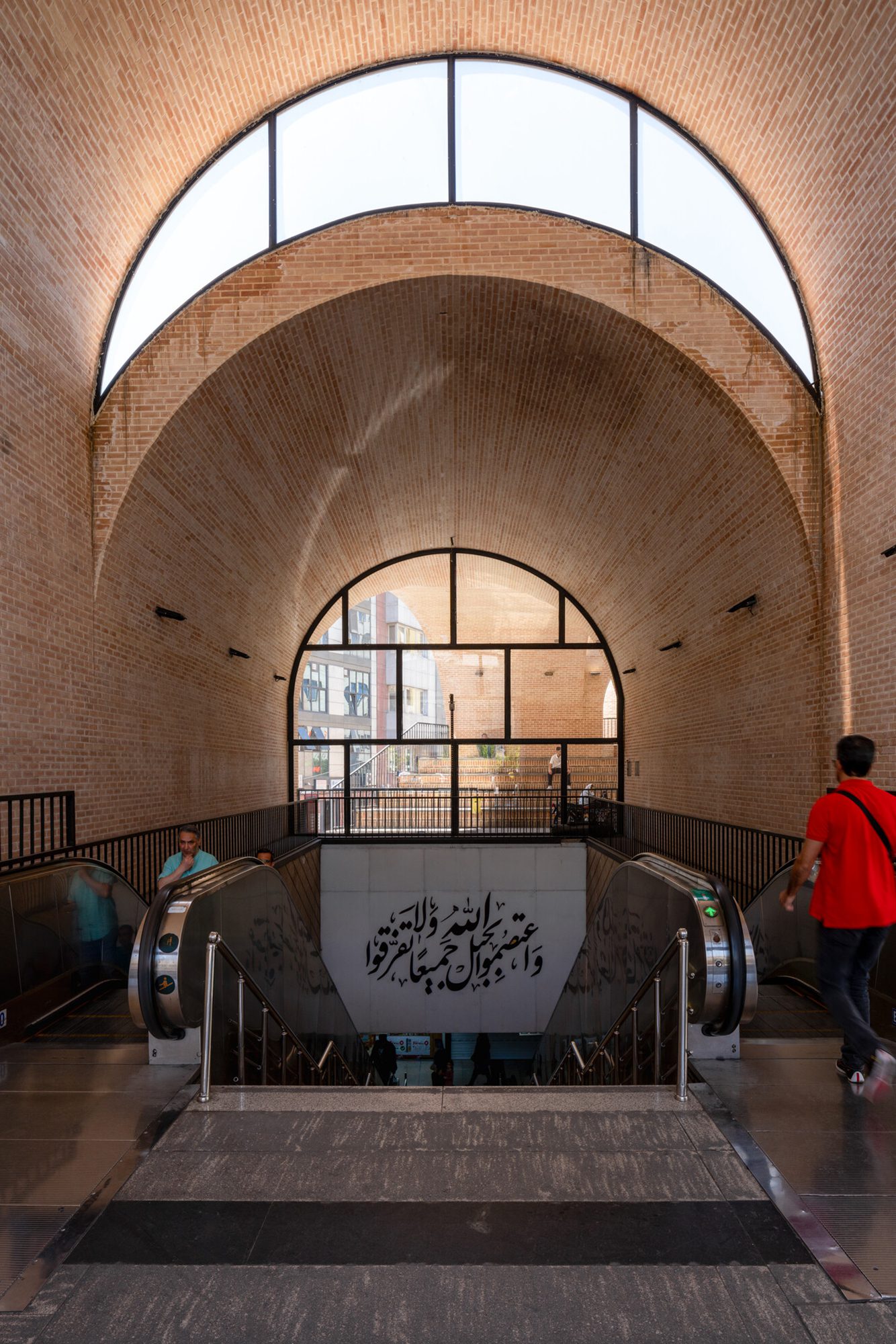
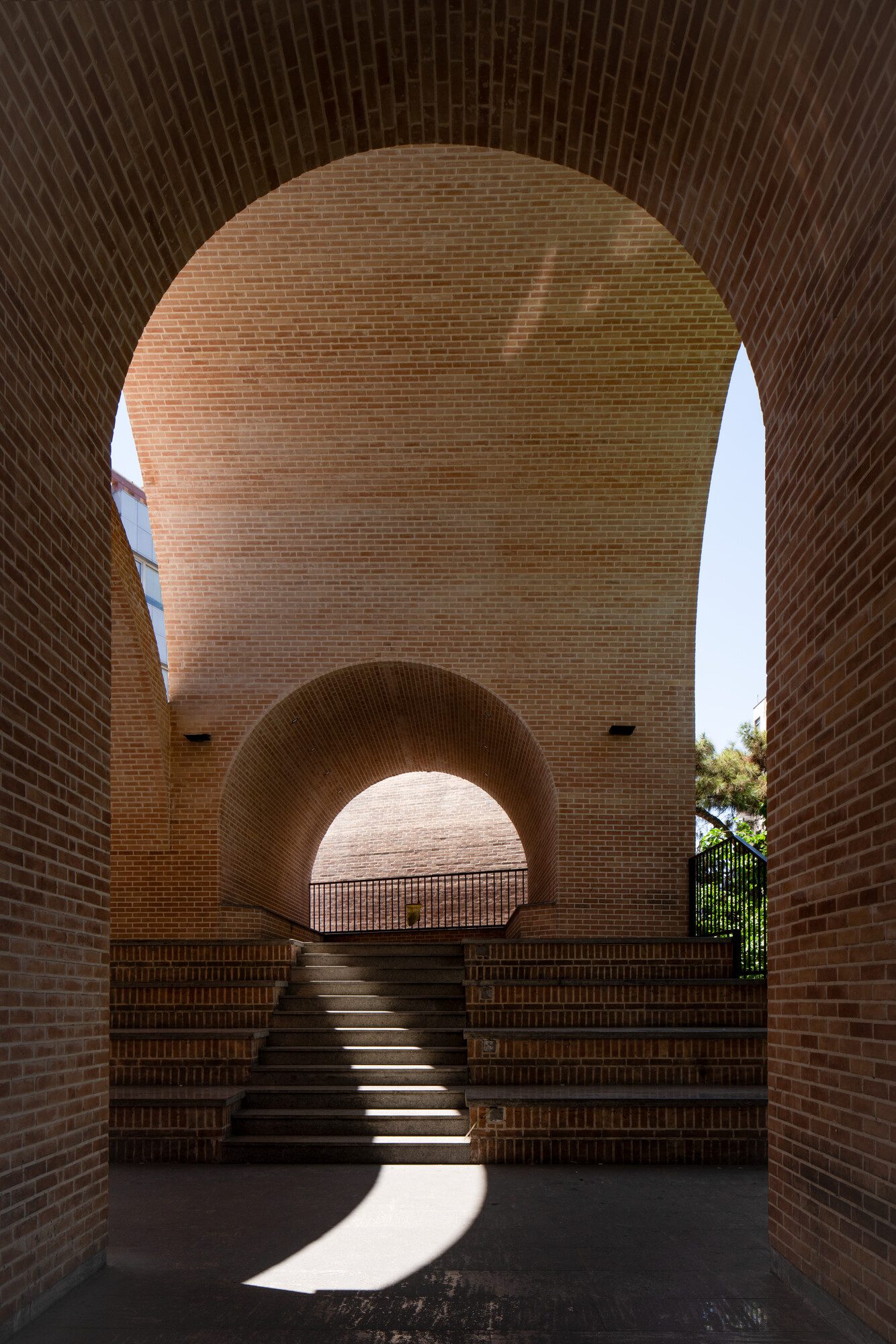
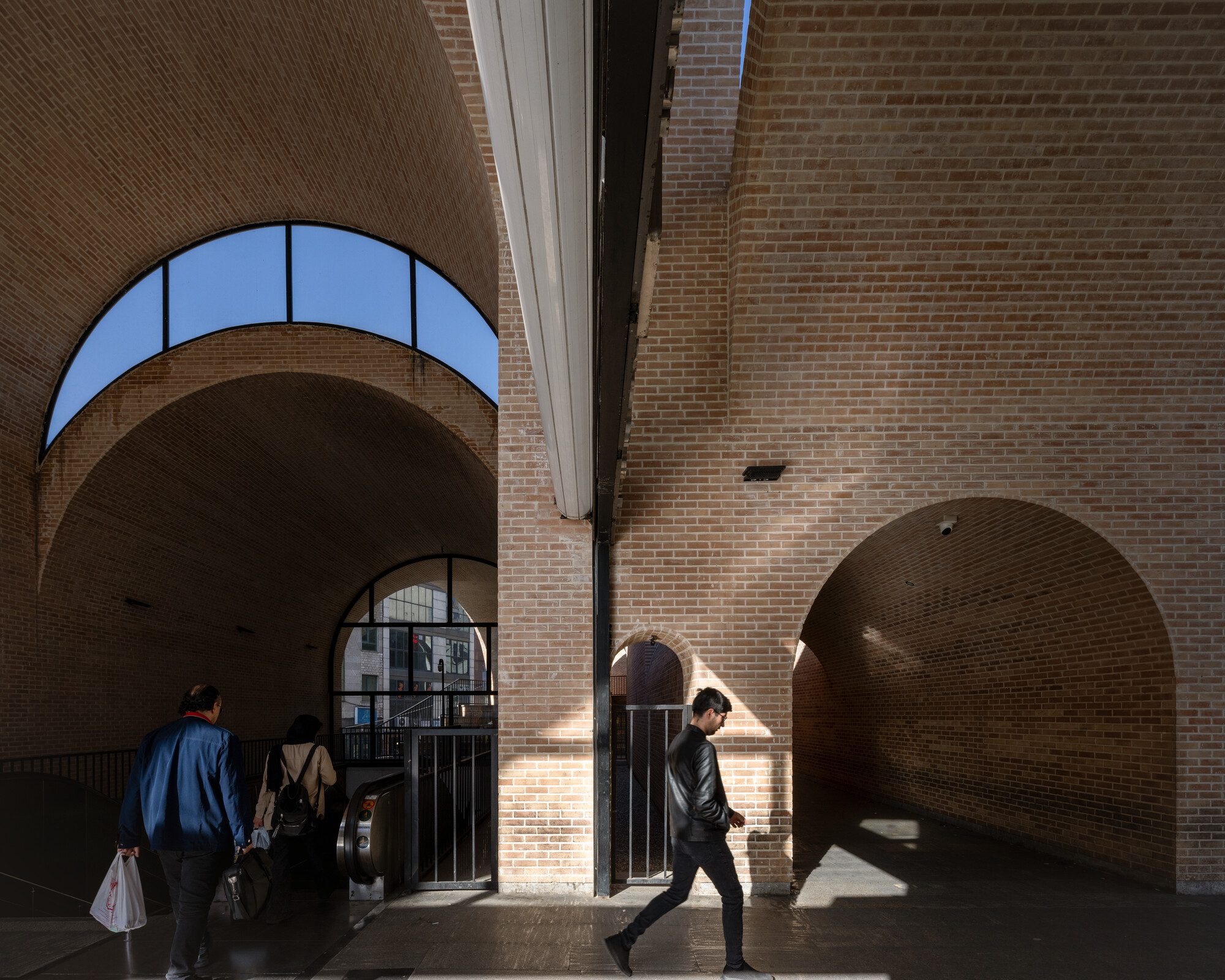
Through on-site study, the architects discovered that the metro plaza had long served as a popular meeting point for the community. With this in mind, the new design incorporates stepped seating that invites people to gather, socialize, or host small events such as live music performances, along with brick benches for casual rest. To prevent potential vandalism, the architects deliberately avoided using freestanding furniture.
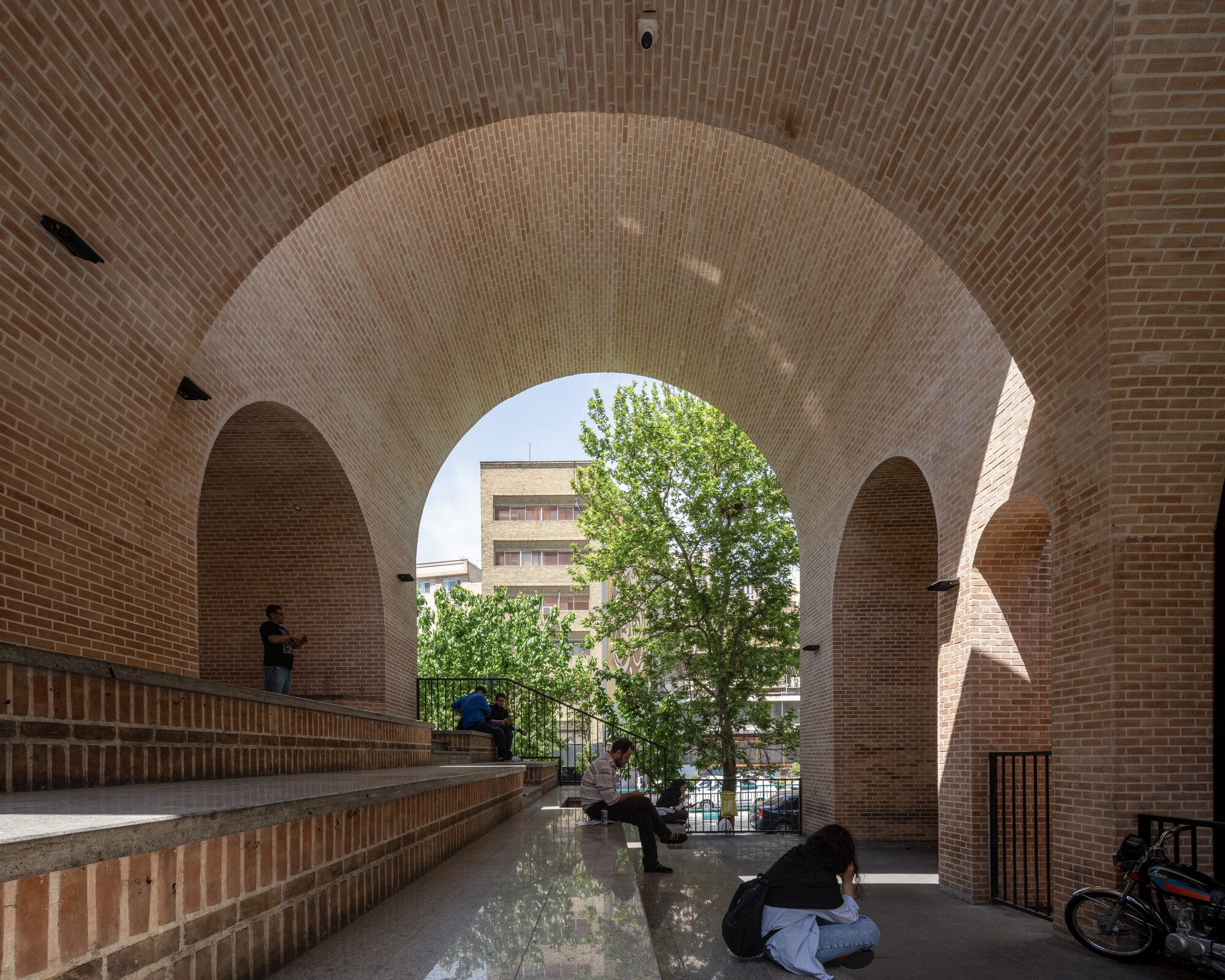
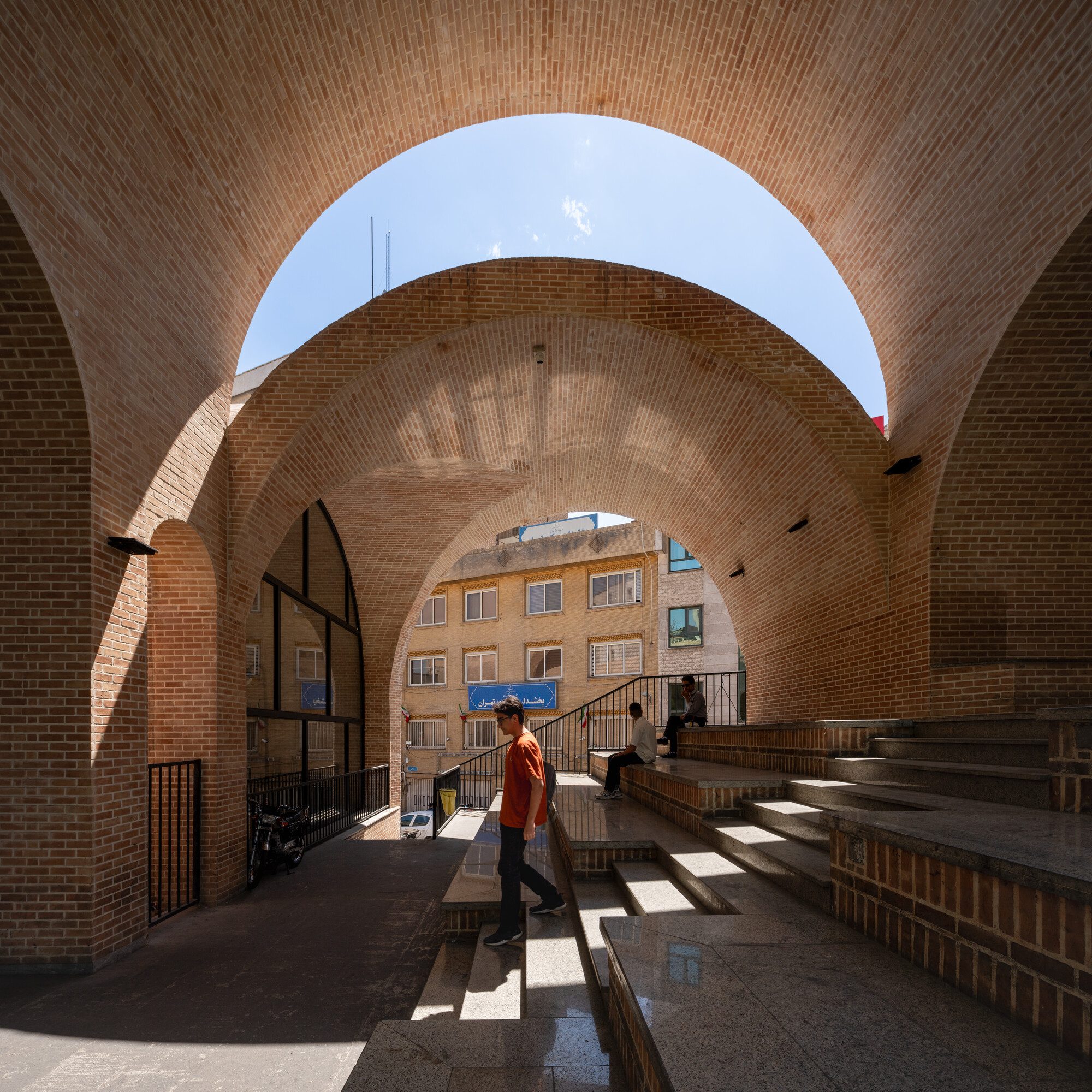
Working within a limited budget, the project employed a steel mesh structure and chose brick as its primary material. More than 300,000 handmade bricks produced by local factories were used, supporting local craftsmen and contributing to the local economy. The warm brown tones and subtle variations in texture from brick to brick lend the structure a welcoming, human quality that encourages people to engage with the space.
The project has earned international acclaim, receiving honors such as the Aga Khan Award for Architecture 2023–2025 Cycle and the RIBA International Awards for Excellence 2024. Yet its true significance lies beyond accolades: it demonstrates the power of architecture to revive neglected public spaces, create room for pedestrian life, and improve the quality of urban living in Tehran.