
CONSTELLATION OF COMPLICITY, AN EXHIBITION CONNECTING THE VOICES OF DISPLACED AND ANTI-AUTHORITARIAN VOICES FROM AROUND THE WORLD TO THE HEART OF BANGKOK
TEXT: TUNYAPORN HONGTONG
PHOTO: KETSIREE WONGWAN
(For Thai, press here)
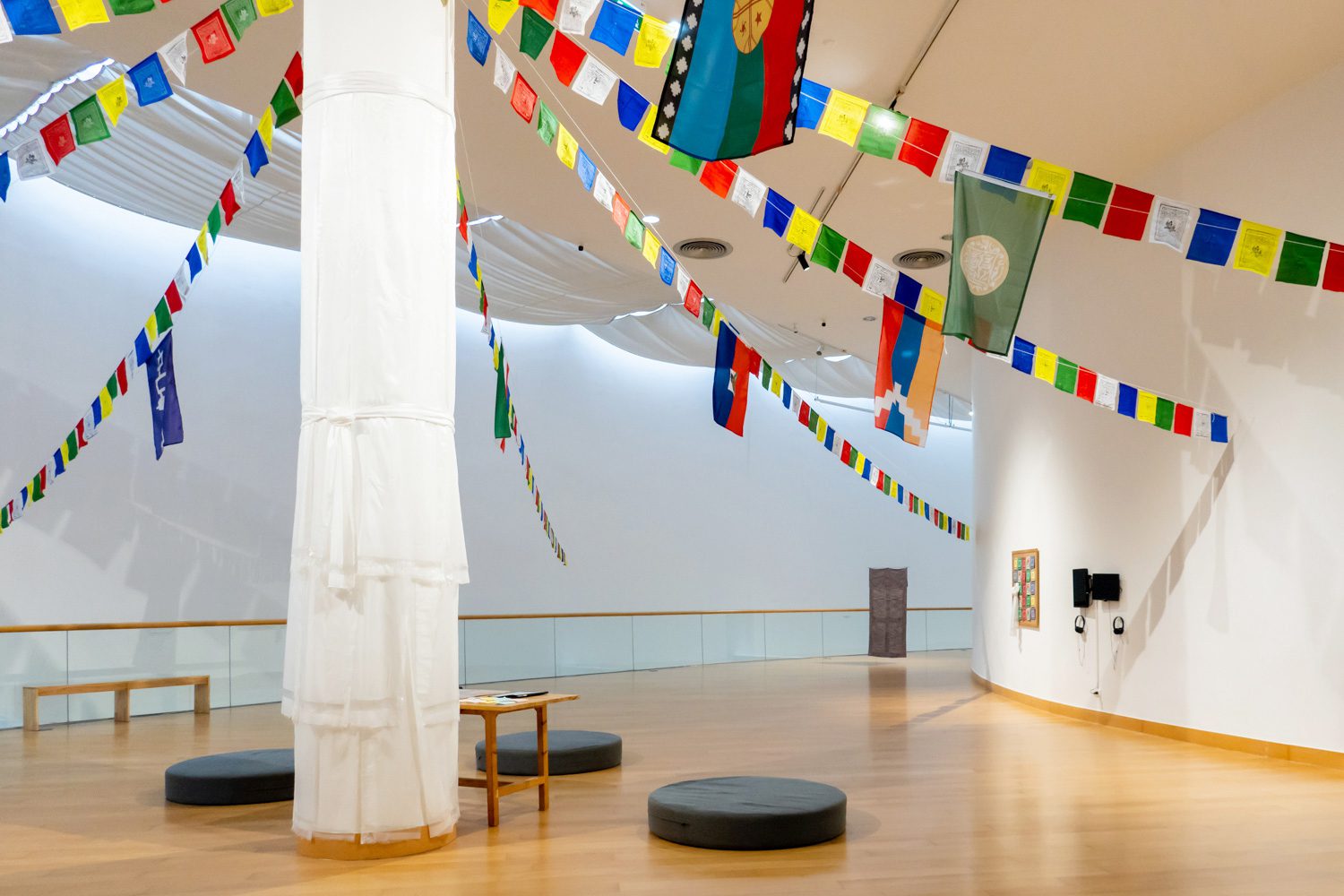
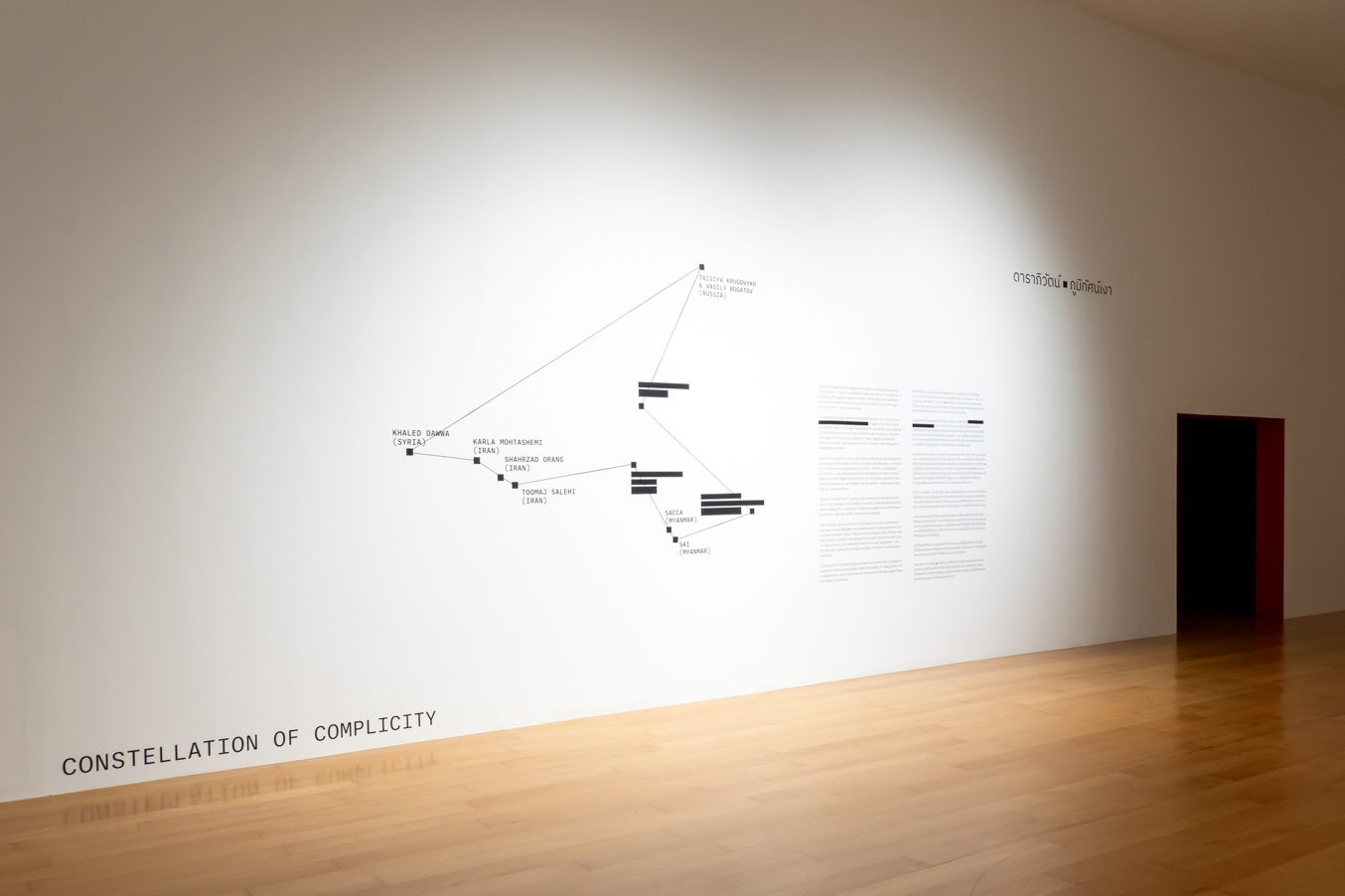
The exhibition ‘Constellation of Complicity’ had been on view since July 24, but it wasn’t until mid-August that people really began to take notice, after one of its video works was abruptly ordered to stop screening. Two national flags that formed part of an installation were quietly removed, while the names and home countries of several artists were obscured beneath strips of black tape.
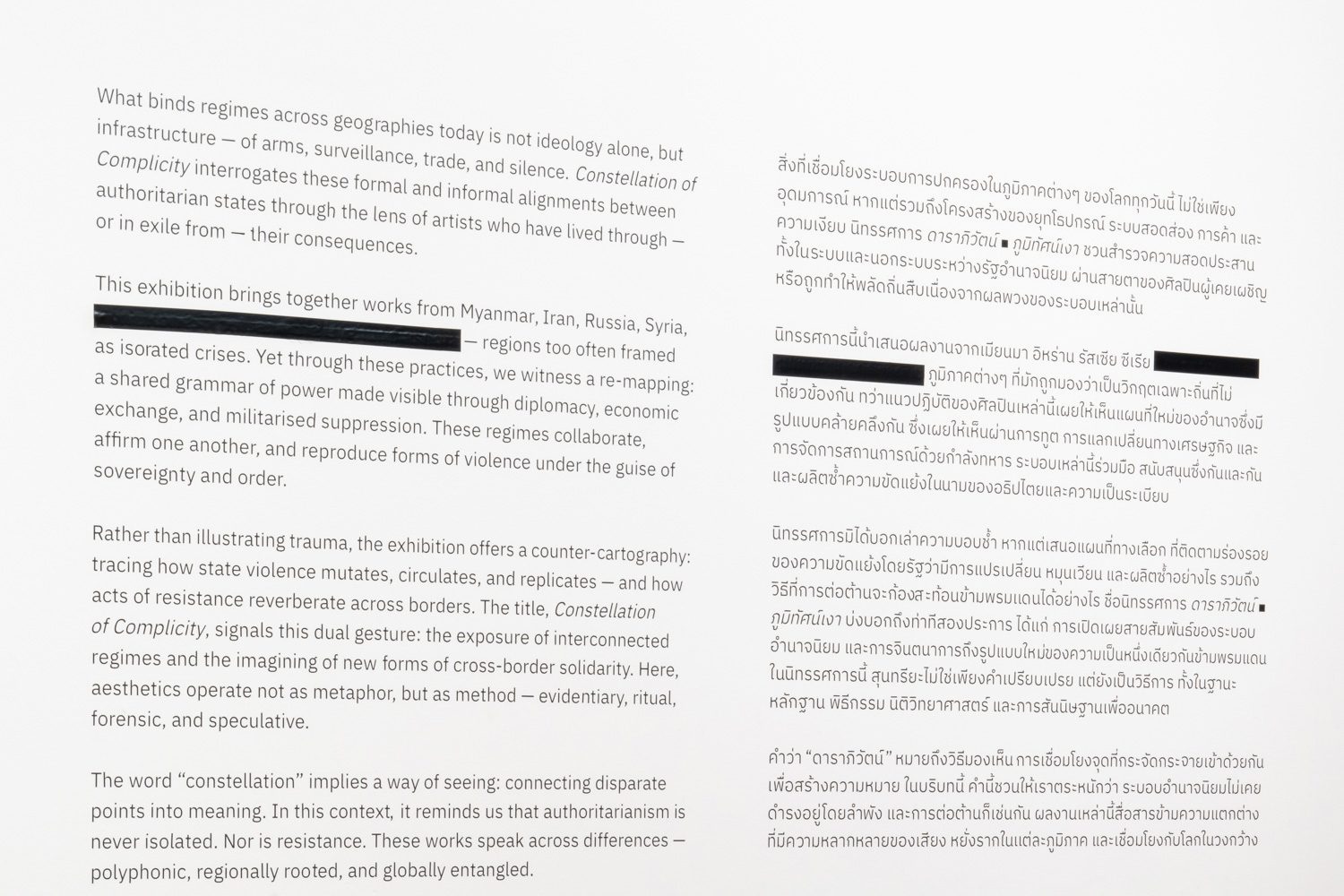
Bringing together eleven individual artists and one collective from across the world, Constellation of Complicity centers on practitioners who have endured, or been displaced by, the reach of authoritarian power. Among them are artists from Hong Kong, Tibet, and Xinjiang. According to an online report by the BBC, the Bangkok Art and Culture Centre (BACC) may have come under pressure from the Chinese Embassy, allegedly relayed through Thailand’s Ministry of Foreign Affairs and the Bangkok Metropolitan Administration, citing concerns that the show could strain diplomatic relations between Thailand and China. The Embassy of the People’s Republic of China in Thailand later stated that the exhibition promotes Tibetan independence. Such a claim led to the censorship of the works and identities of artists from the three regions.
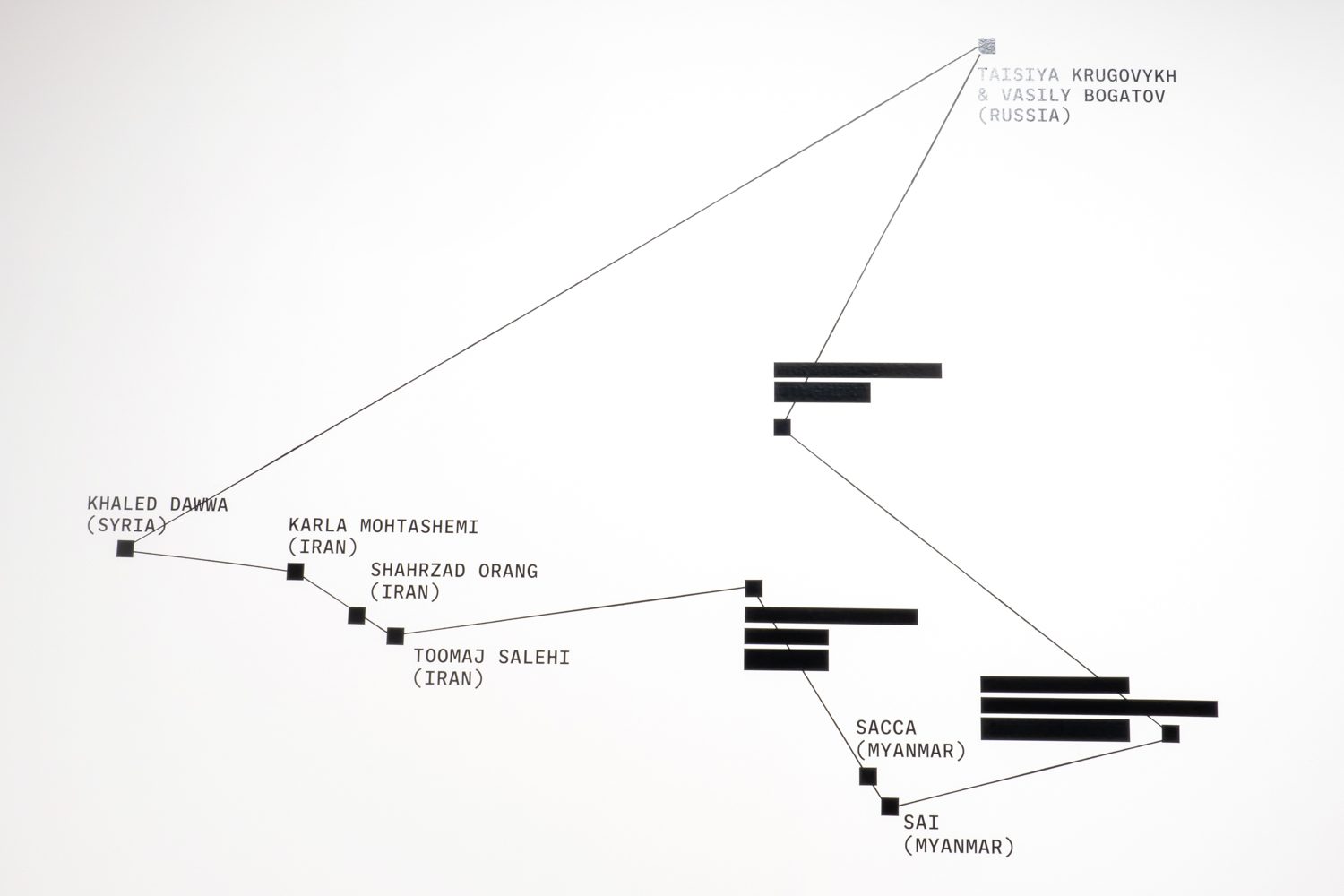
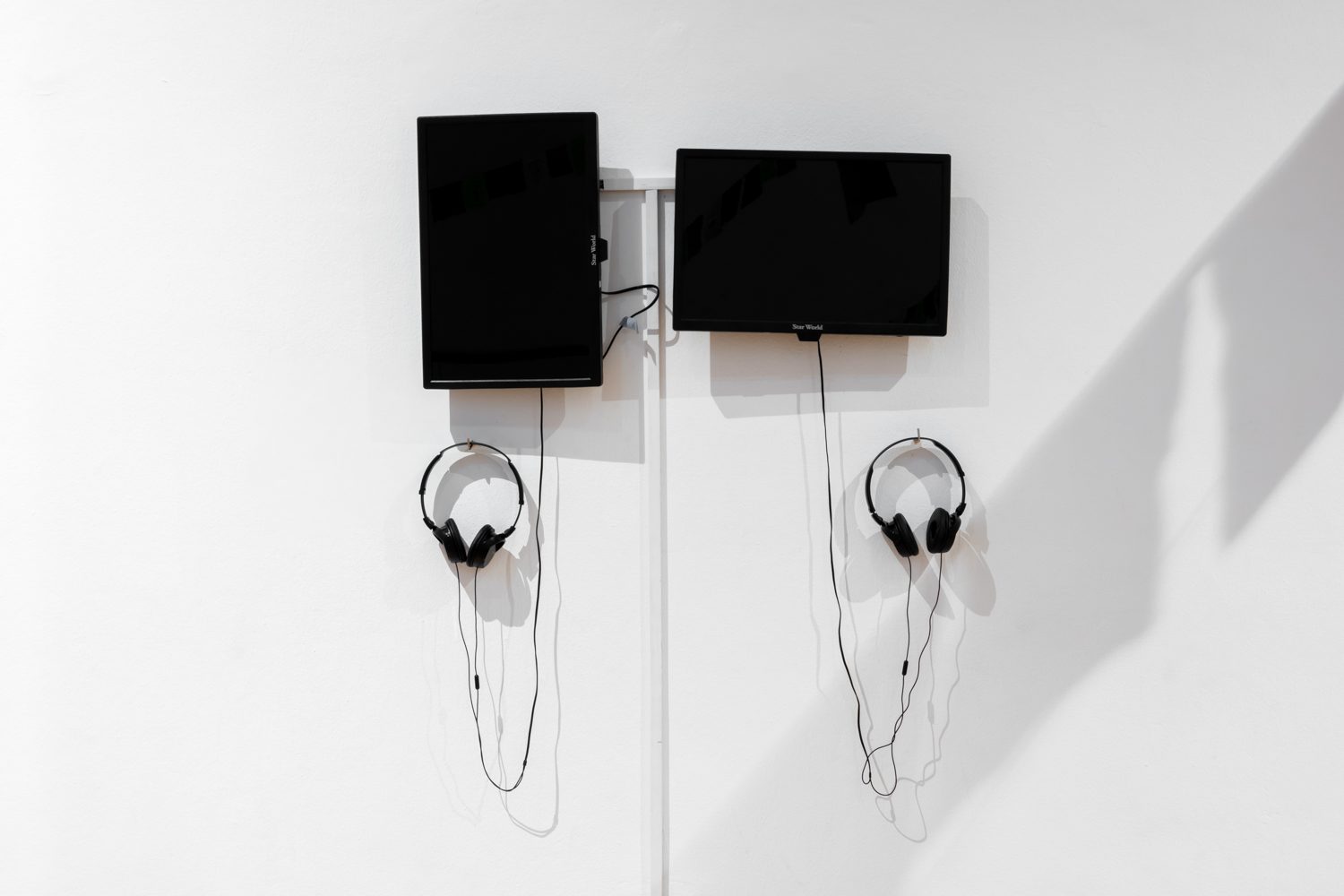
By the time art4d visited Constellation of Complicity, the act of censorship had already taken place. What we saw was, in a sense, an incomplete exhibition (although we later managed to view the censored video work by Tibetan artist Tenzin Mingyur Paldron on YouTube anyway). Yet censorship in art often opens up new meanings of its own—meanings that those enforcing it rarely realize they’ve created. Here, those meanings take shape in the small black strips concealing the names of artists from Hong Kong, Tibet, and Xinjiang; in the broader, heavier bands of black that cover the Tibetan and Uyghur flags; and in the dark, motionless television screen where Tenzin’s work once played. Together, they sharpen our view of authoritarian power at work. At the same time, these darkened surfaces evoke a sense of mourning, silent memorials to exiled artists everywhere, whose homelands continue to shadow them, no matter how far they’ve gone.
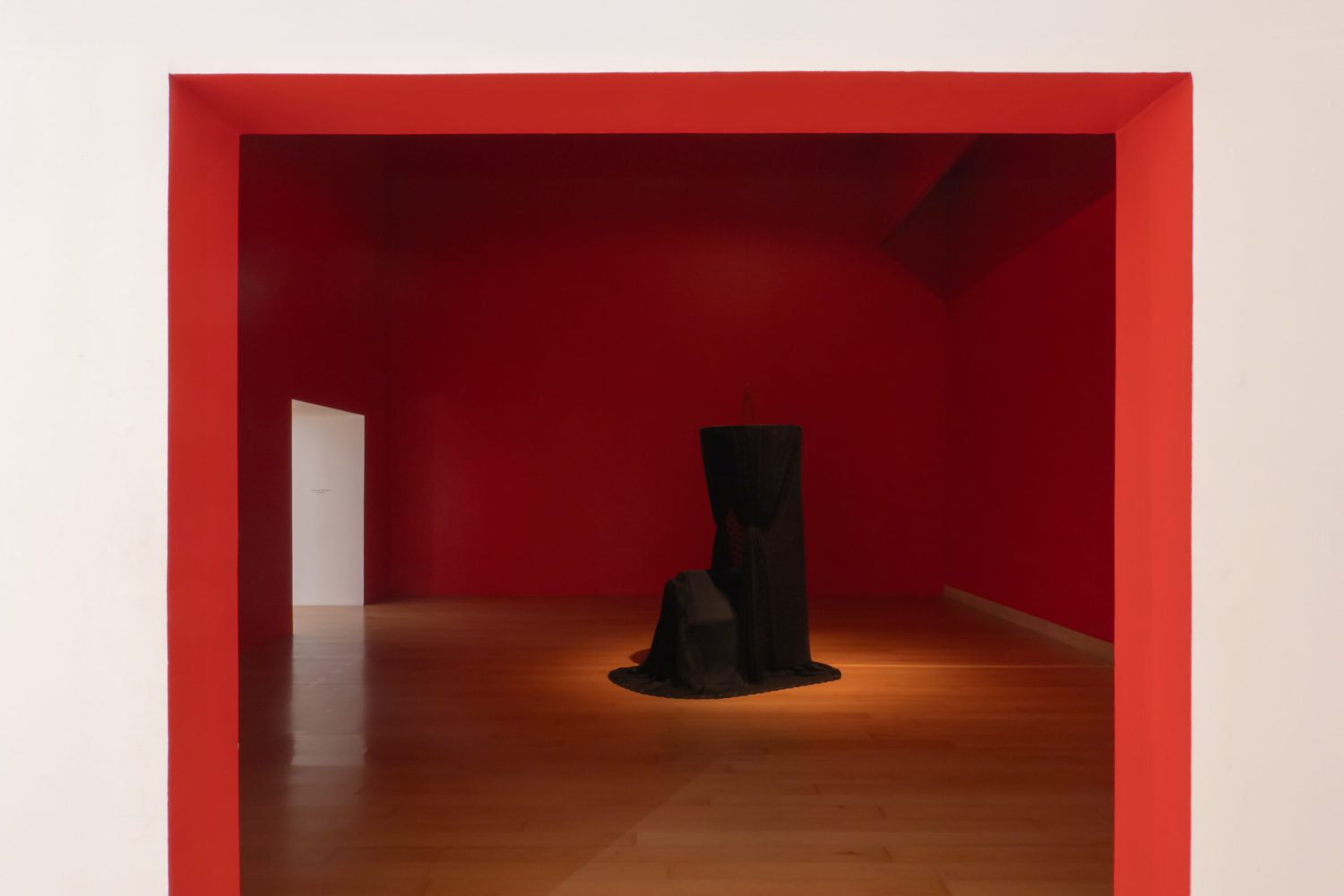
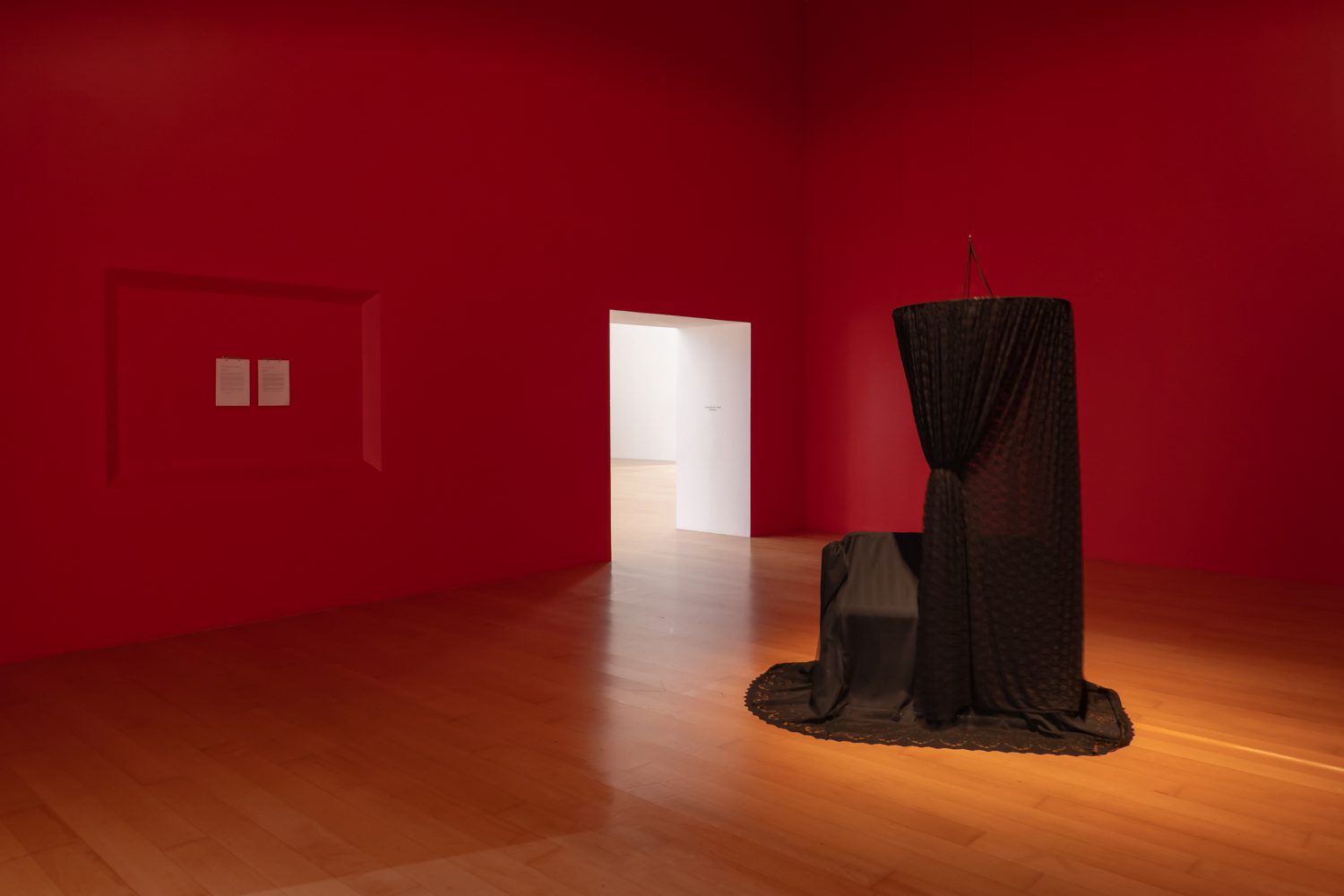
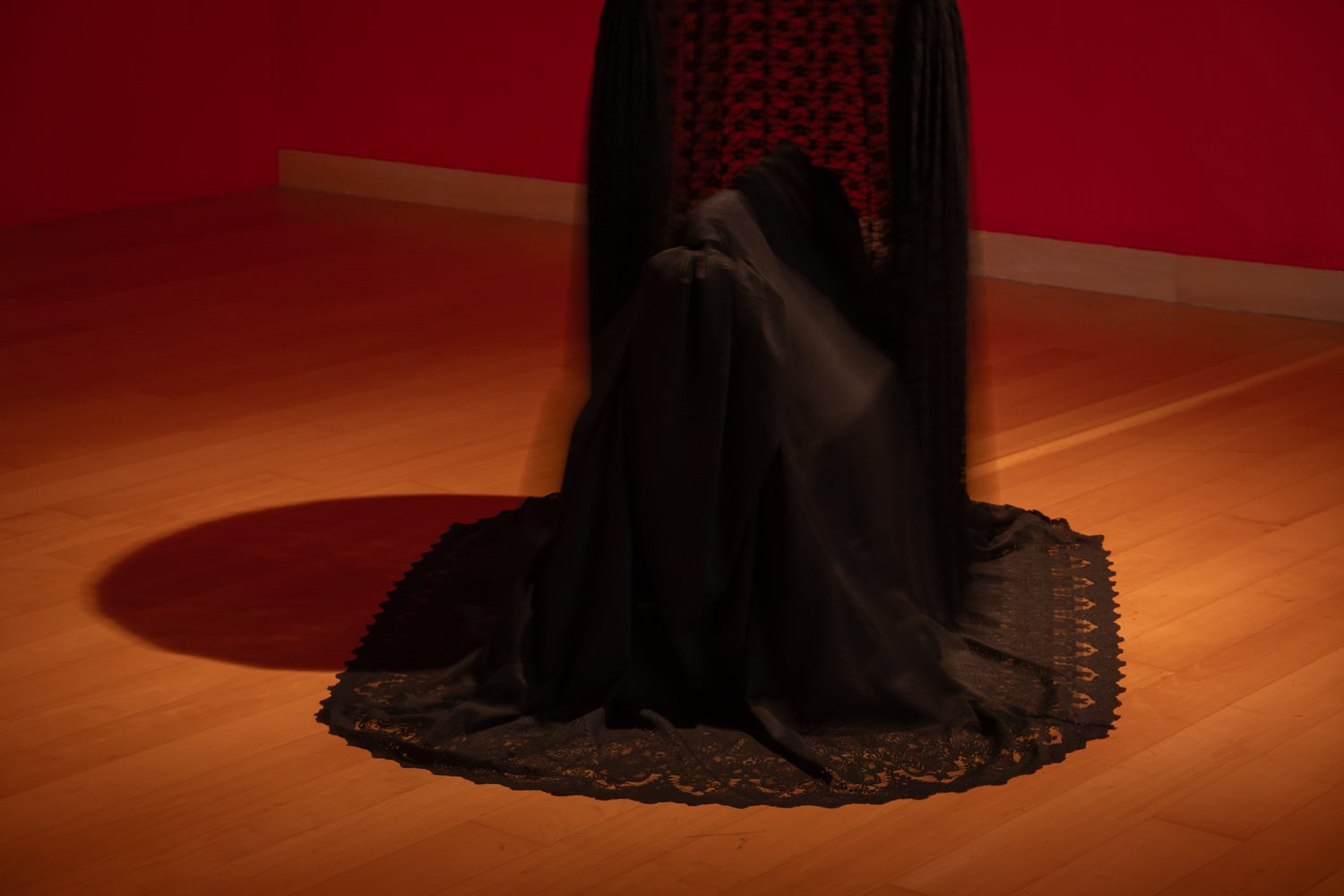
After standing before the entrance map, where four artists’ names had been obscured by black strips, we stepped inside and encountered the first work, also steeped in black. ‘In the Mother’s Arms’, by Russian artists Taisiya Krugovykh and Vasily Bogatov, is an installation resembling a cradle draped in a large piece of black lace. The cradle sways gently to the sound of a lullaby, but the imagery and sound it produces, amplified by the dim red room in which it is displayed, conjure a sense of unease and sorrow. For those who understand Russian, the lullaby’s lyrics make the work all the more haunting: they are based on a political promise between Russia and Myanmar, in which the former, as a military power, pledges to supply arms to suppress the latter’s pro-democracy movement. (The lyrics were generated by AI.)
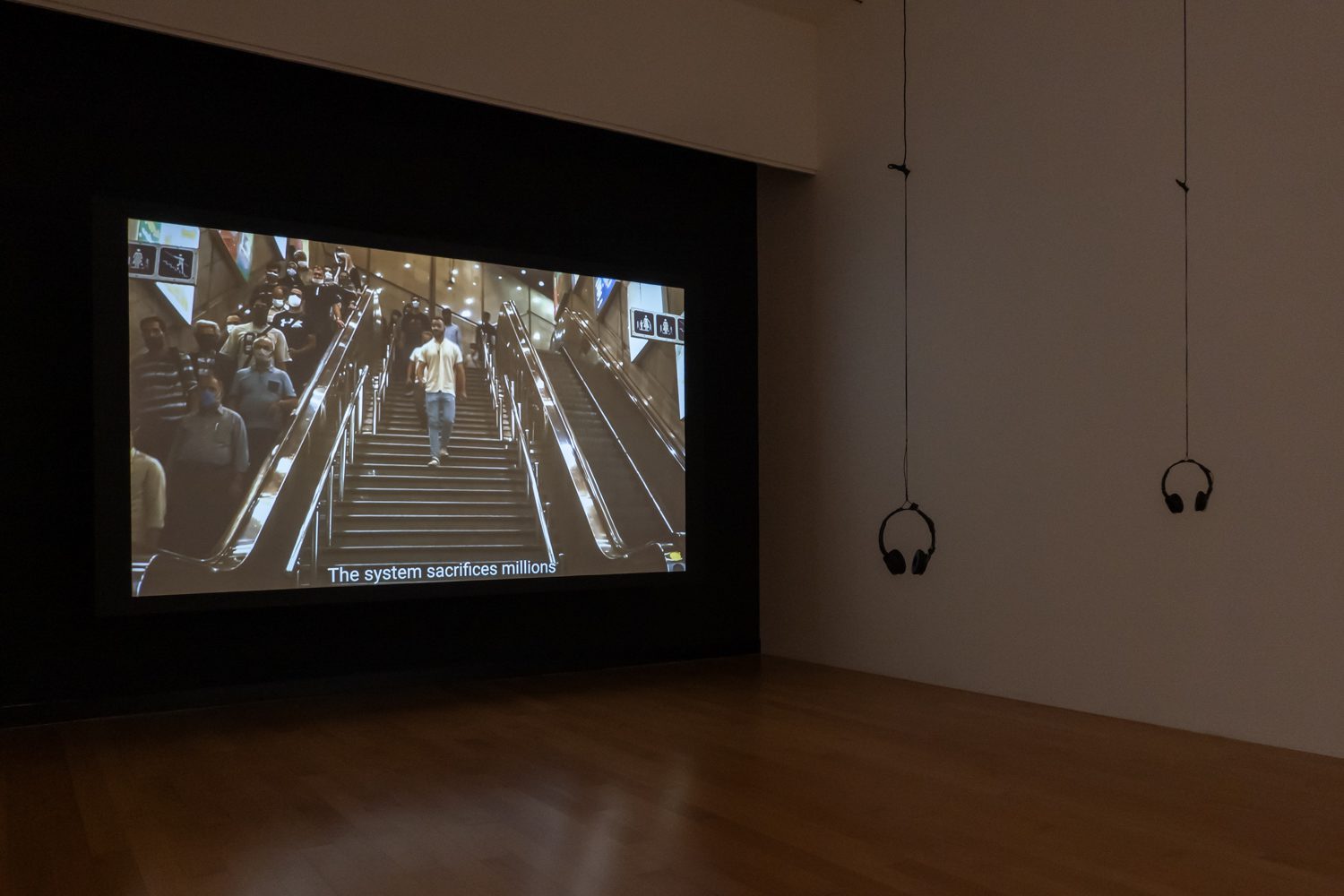
The lullaby drifts slowly, almost hypnotically, until one passes into the next room, where it gives way to the charged energy of Toomaj Salehi’s rap. His music video ‘Normal’ plays on a large screen, while two other tracks spill through the headphones hanging nearby, as if inviting viewers to tune in and meet that ‘voice’ directly.
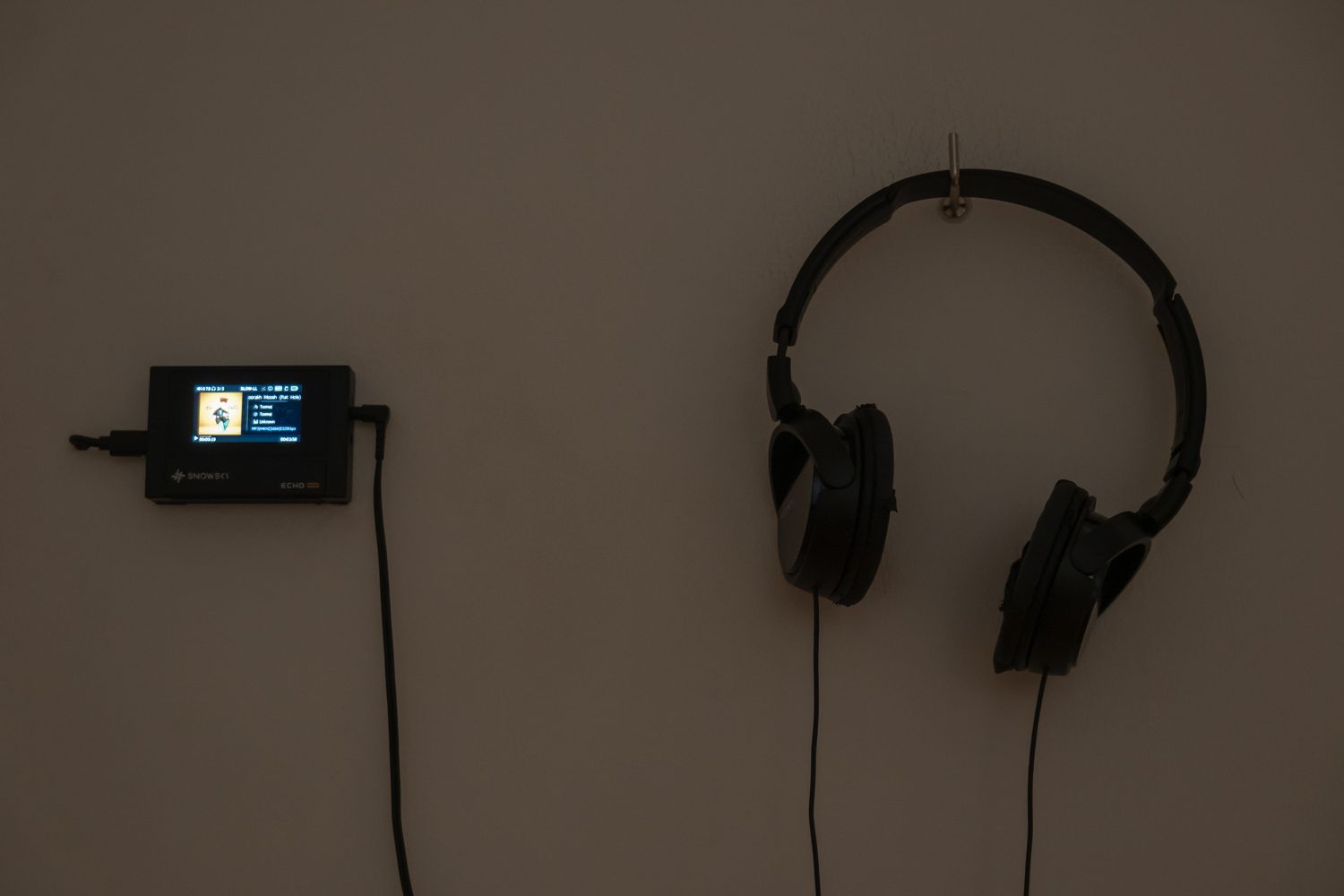
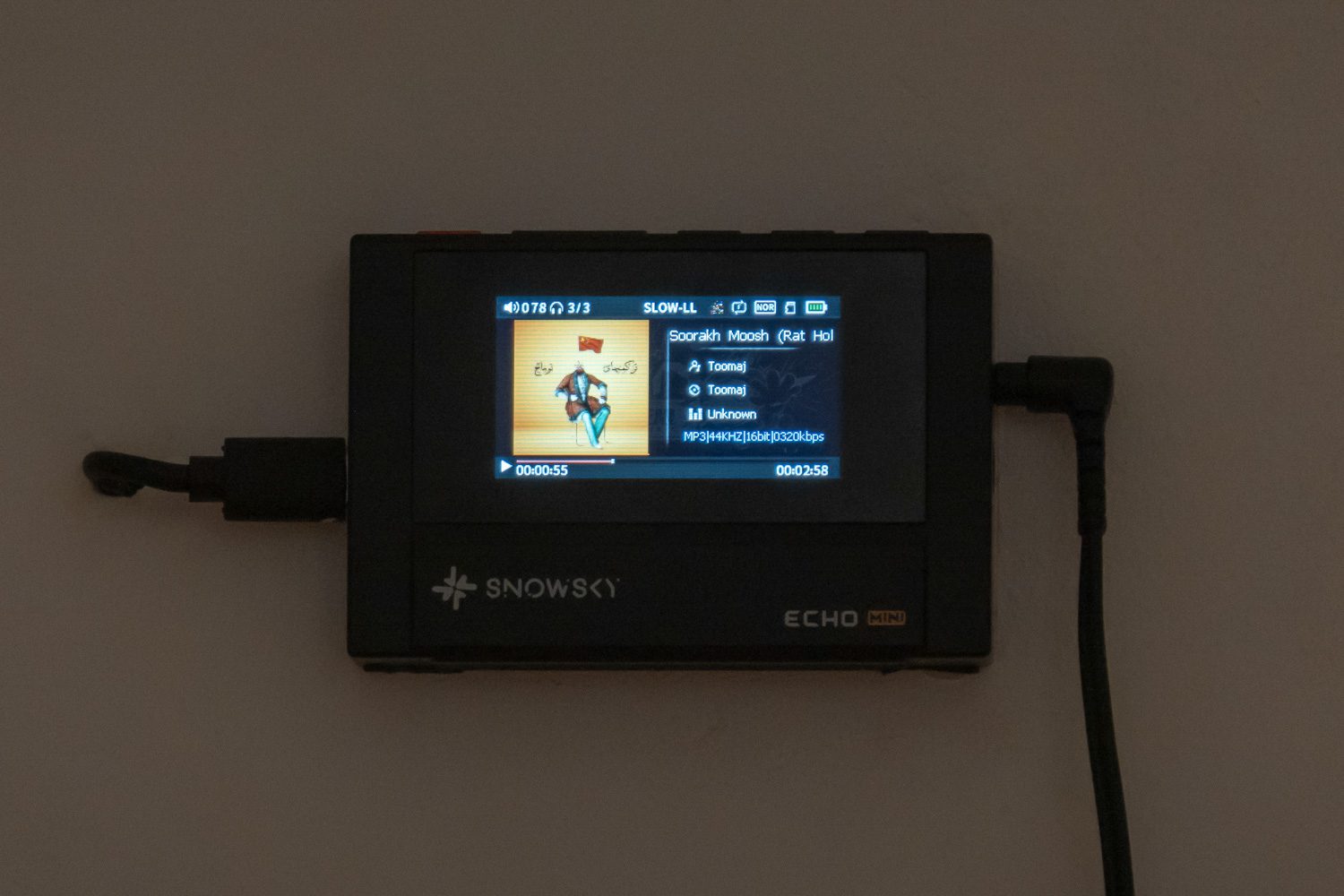
Toomaj Salehi is a well-known figure in Iran, especially among the younger generation. A rapper and activist, he has long used his music as a voice for those oppressed by the state. He also joined the Woman, Life, Freedom movement, which rose in protest after the death of Mahsa Amini, a young Iranian woman arrested for improper attire who later died while in custody. During the demonstrations, Toomaj was arrested and faced Iran’s most severe charges. He was placed in solitary confinement, where reports surfaced that he was tortured and subjected to harsh physical and psychological conditions. His imprisonment drew global attention: human rights organizations around the world called for his release, and after nearly a year, he was finally freed.
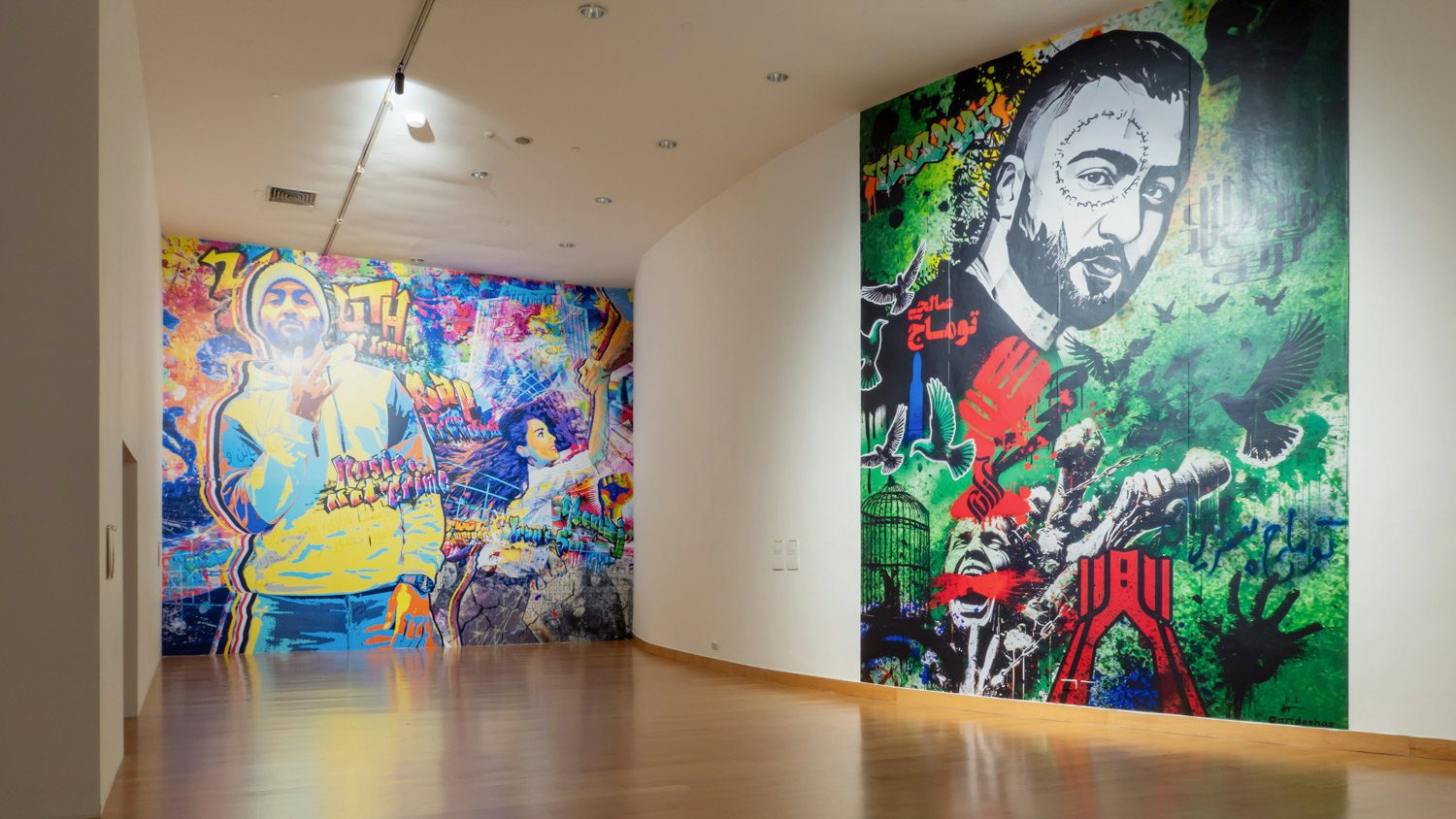
The extent of Toomaj’s status as an icon is evident in two digital graffiti works displayed opposite his installation. The first, ‘Music Is Not a Crime’ (2025) by Karla Mohtashemi, portrays Toomaj alongside imagery from the Woman, Life, Freedom movement. The second, ‘Toomaj Salehi ‘ (2025) by Shahrzad Orang, stands as a direct homage; a tribute to his struggle for freedom and the immense cost of his defiance.
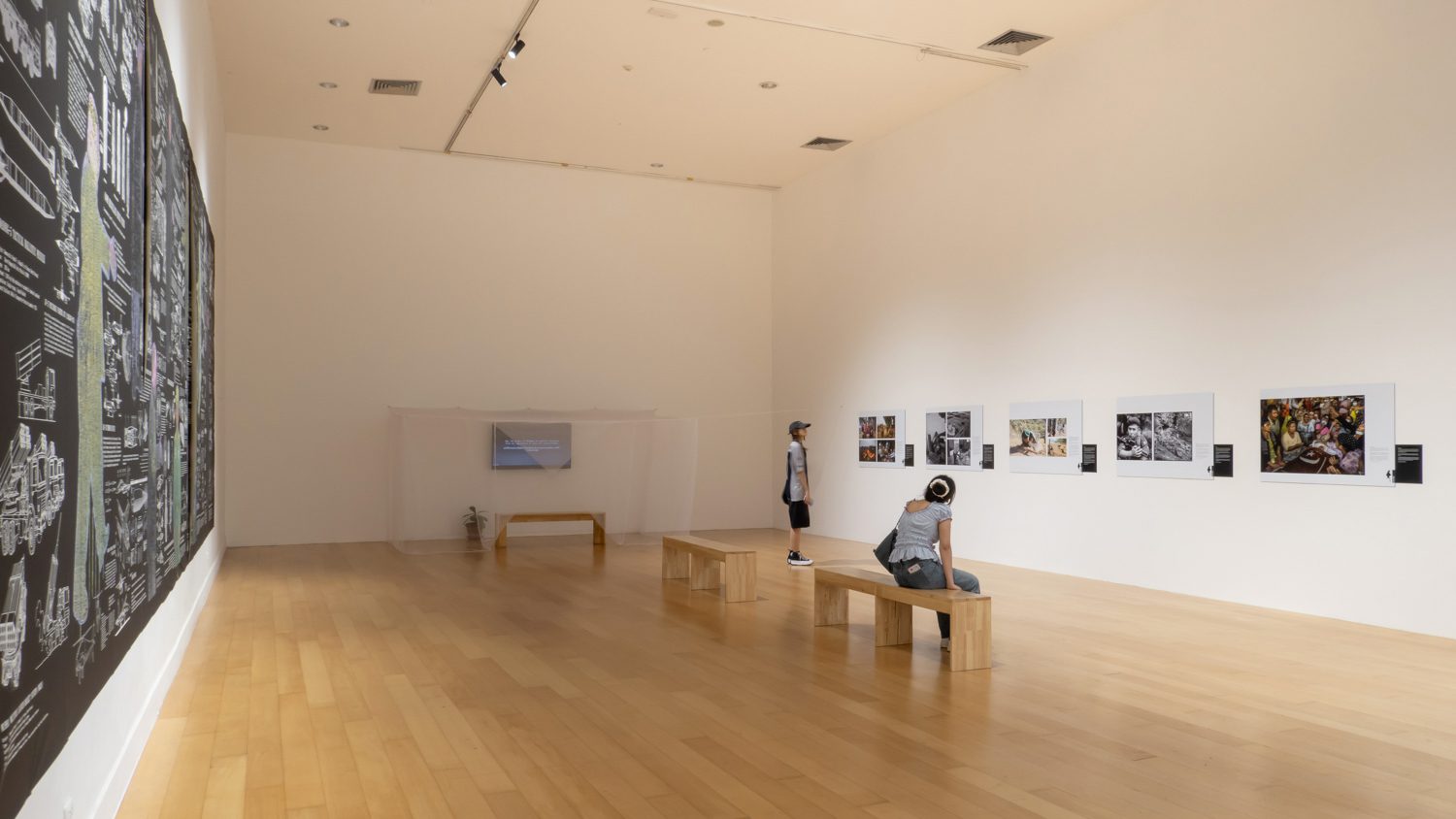
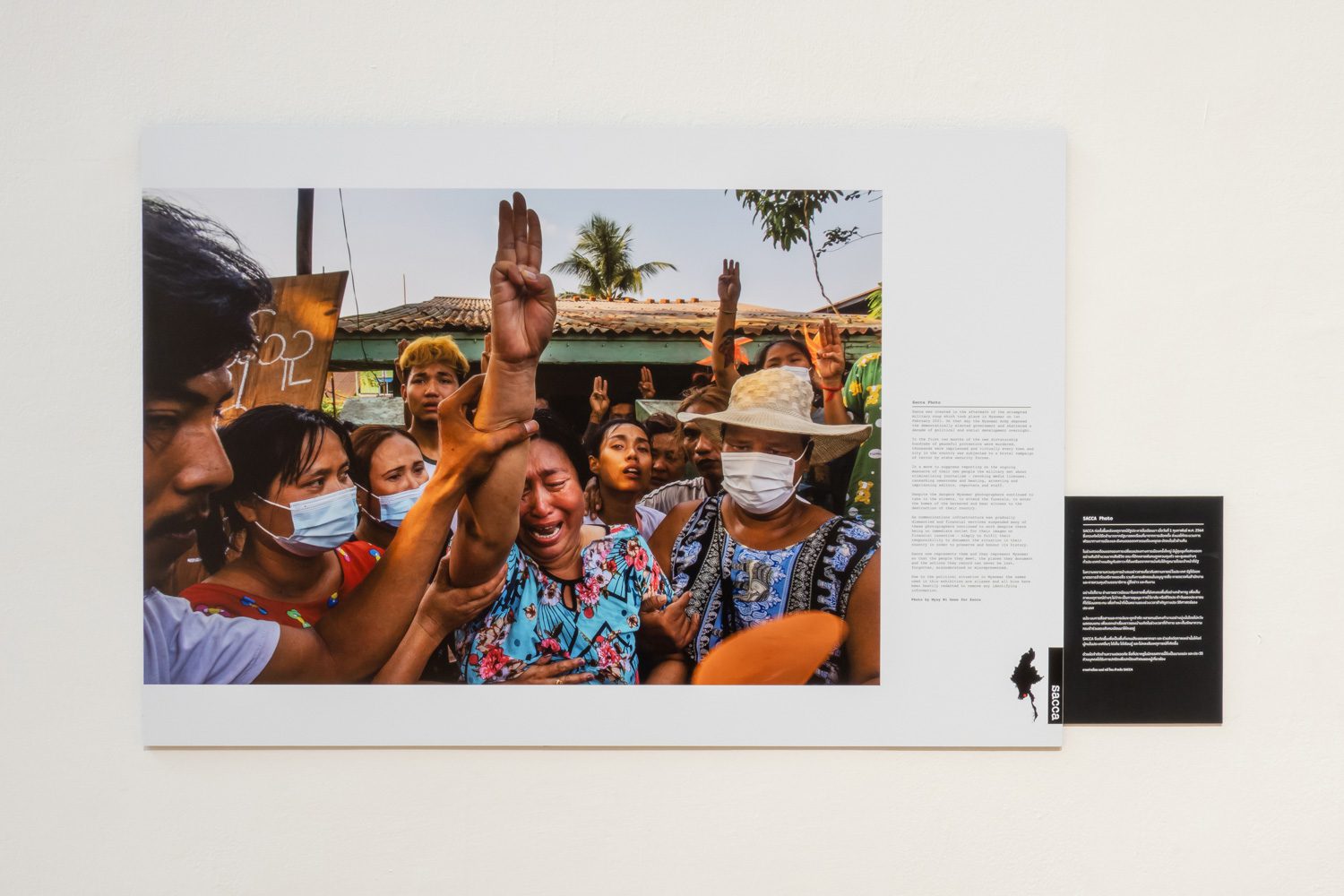
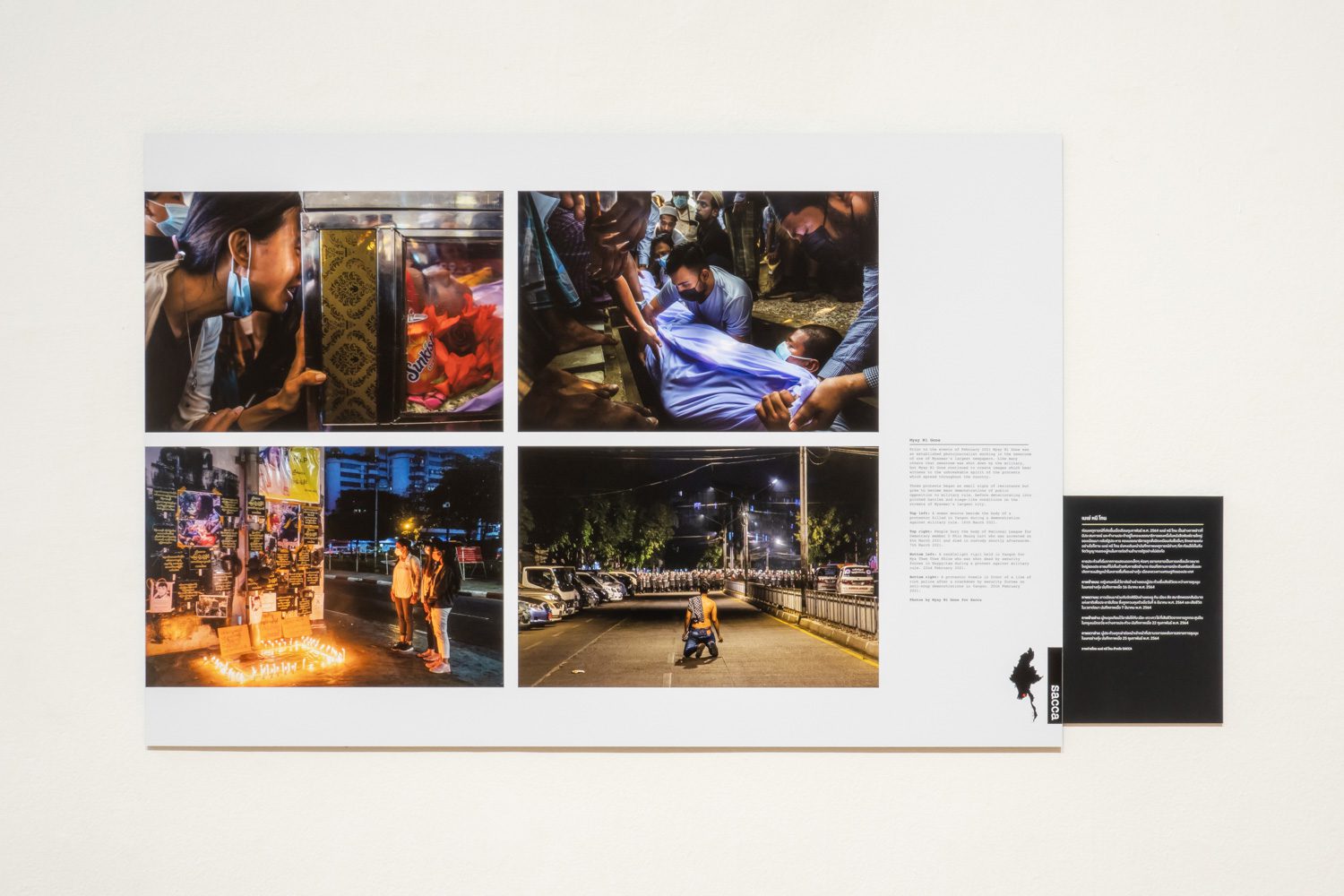
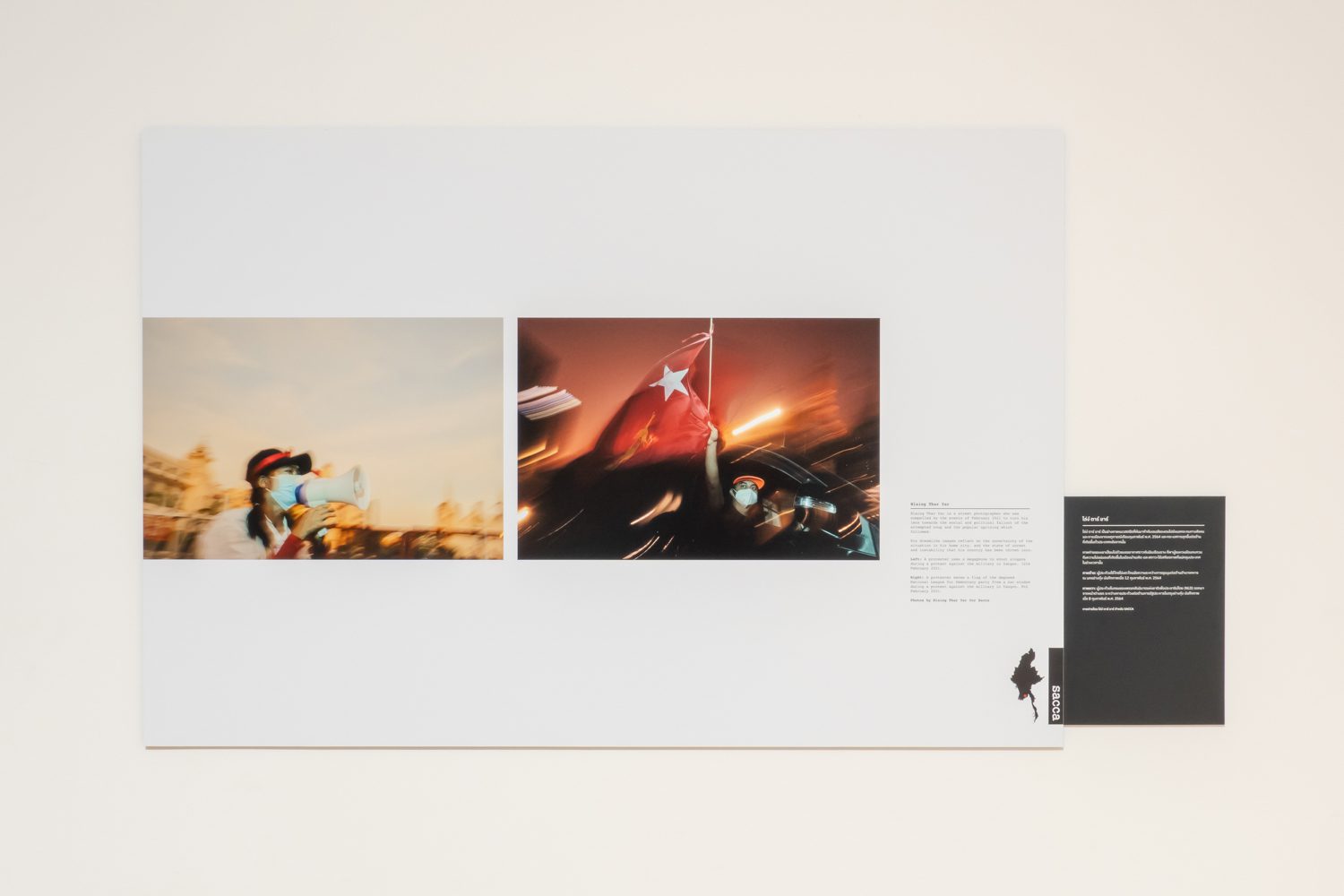
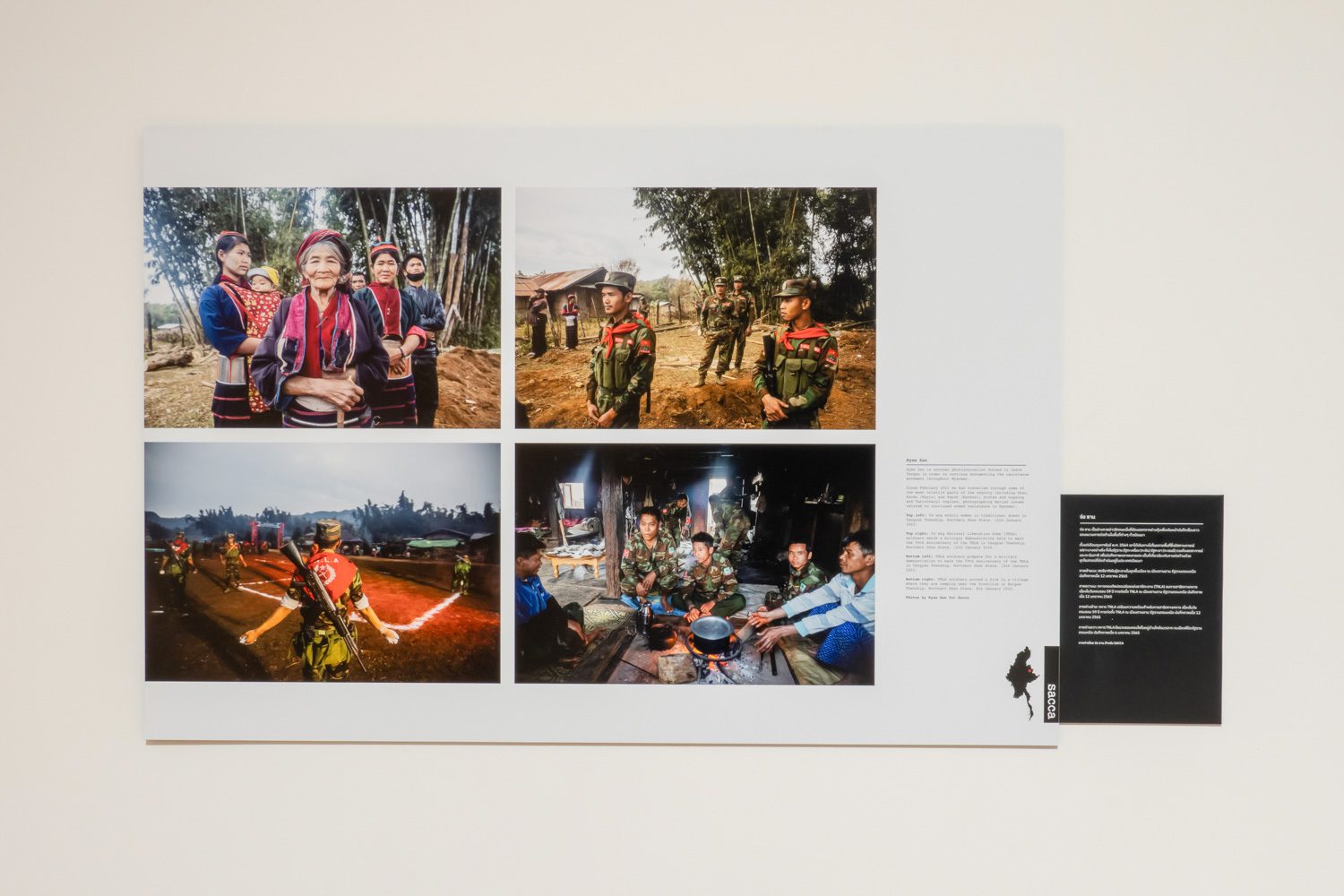
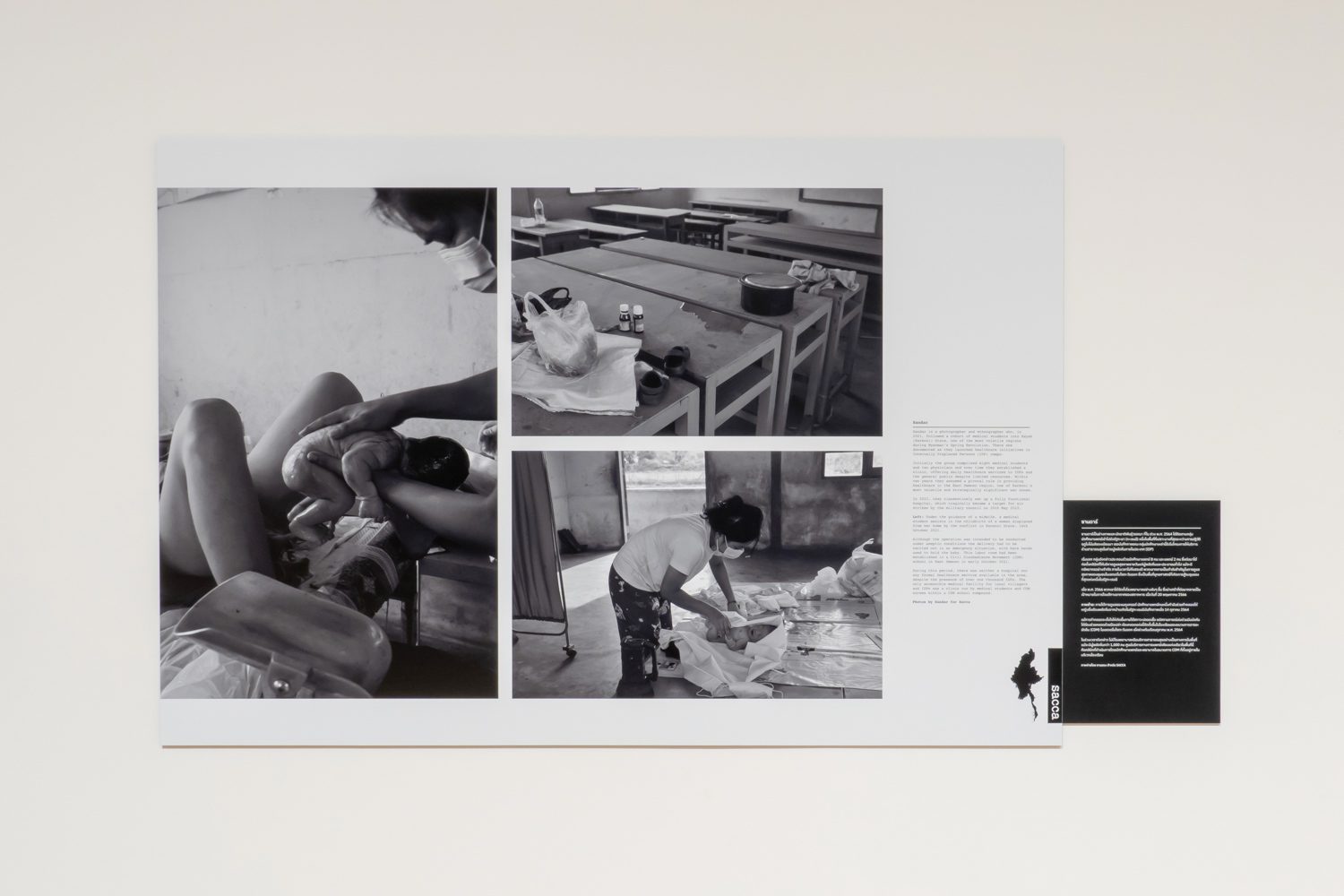
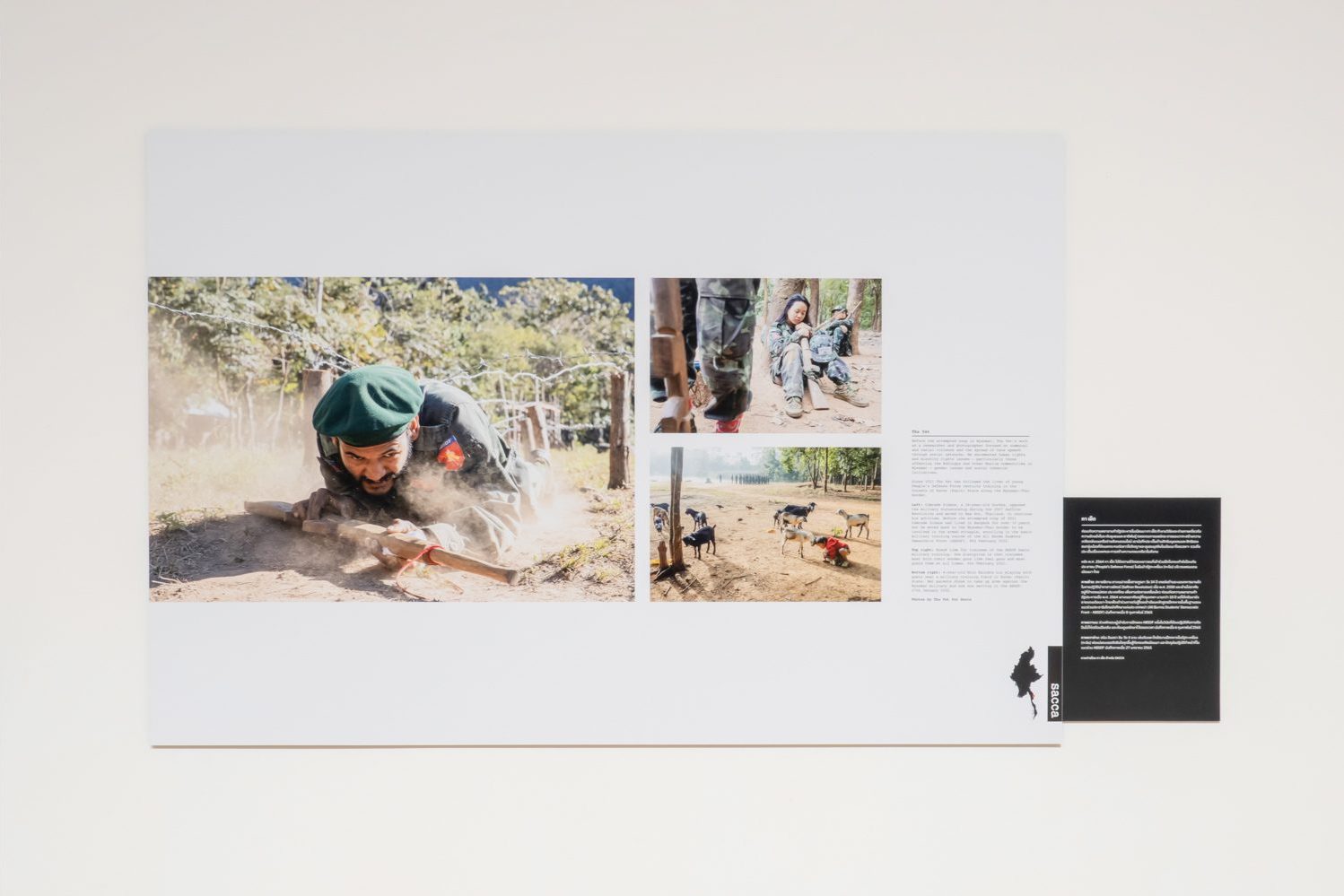
From Russia and Iran, the exhibition turns to Thailand’s neighboring country, Myanmar, where the situation is not far removed from the other two. Following the military coup on February 1, 2021, Myanmar has remained under a repressive junta. Protesters who rose against the regime were violently suppressed; independent media outlets were shut down; editors, journalists, and politicians were arrested; and armed conflict erupted between military forces and resistance groups. Within the exhibition, these realities are seen through the lens of SACCA, a collective of Burmese photographers who came together to document and share stories of their people’s struggle. Their images capture the armed resistance, the harsh living conditions endured by civilians, and the profound losses suffered along the path toward freedom. The group’s members include both street and photojournalists, many of whom continued working even after their news agencies were forced to close. They persist in recording what unfolds before them, driven by the belief that the truth of their country must not vanish, and that the stories of its people must not be forgotten.
Another artist from Myanmar featured in the exhibition is Sai ▇▇▇, a Shan artist, curator, and human rights activist. He is also a co-founder of the Myanmar Peace Museum, a project dedicated to preserving evidence of crimes against humanity, promoting collective memory, healing, and transitional justice. The museum itself serves as the curator of this exhibition. Sai’s personal history lends particular poignancy to his involvement. His father, a democratically elected minister of Shan State, was detained for interrogation following the coup, while their hometown was targeted in military airstrikes. Since then, Sai has continued to create and advocate under his pseudonym, ‘Sai,’ using the black bar at the end of his name as a symbol of threat and erasure, a reminder of the self-censorship he has been forced to adopt. He has lived in exile since 2021. Although he attended the exhibition’s opening in Bangkok, reports soon followed that he had left the country to seek asylum in the United Kingdom, citing concerns for his personal safety.
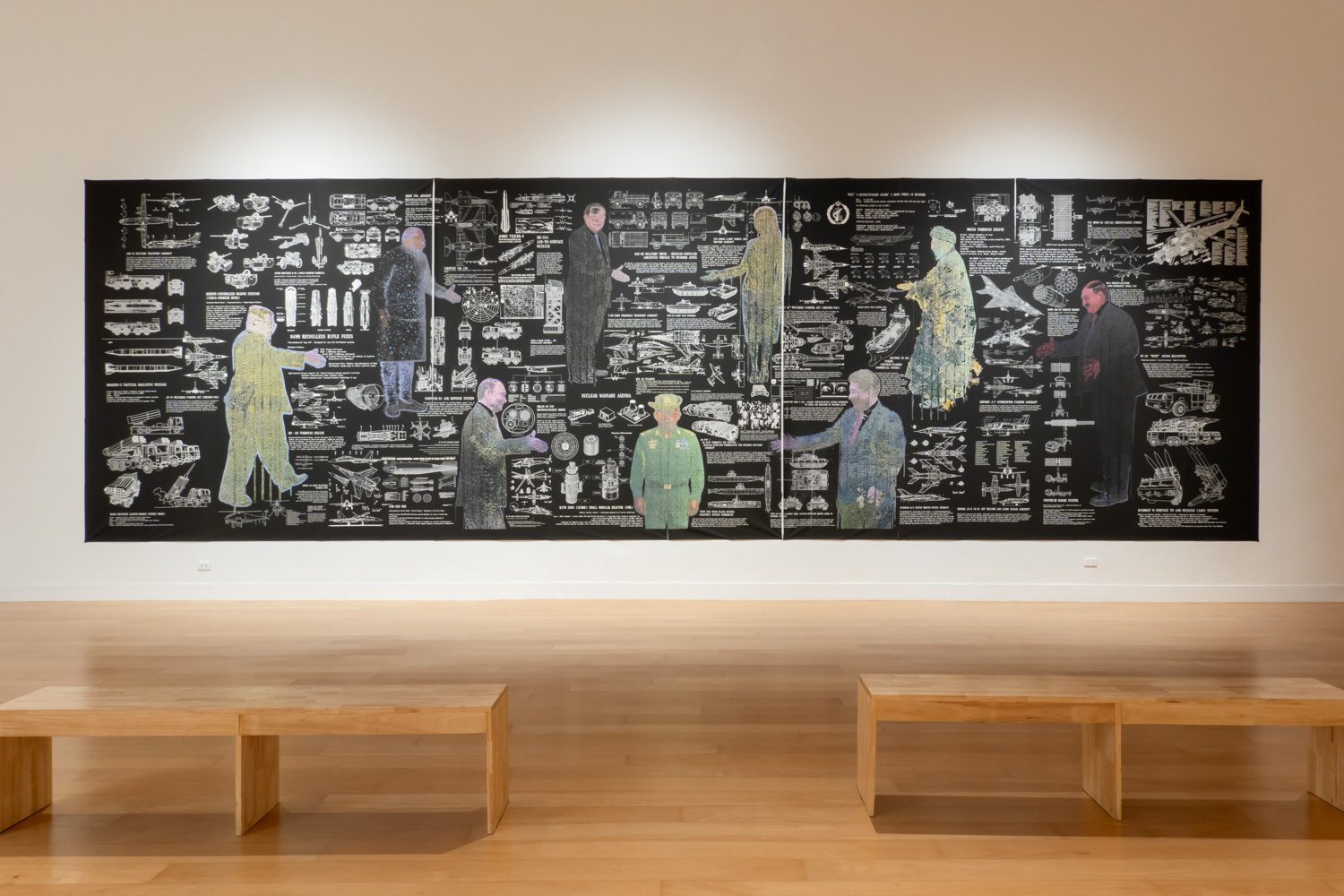
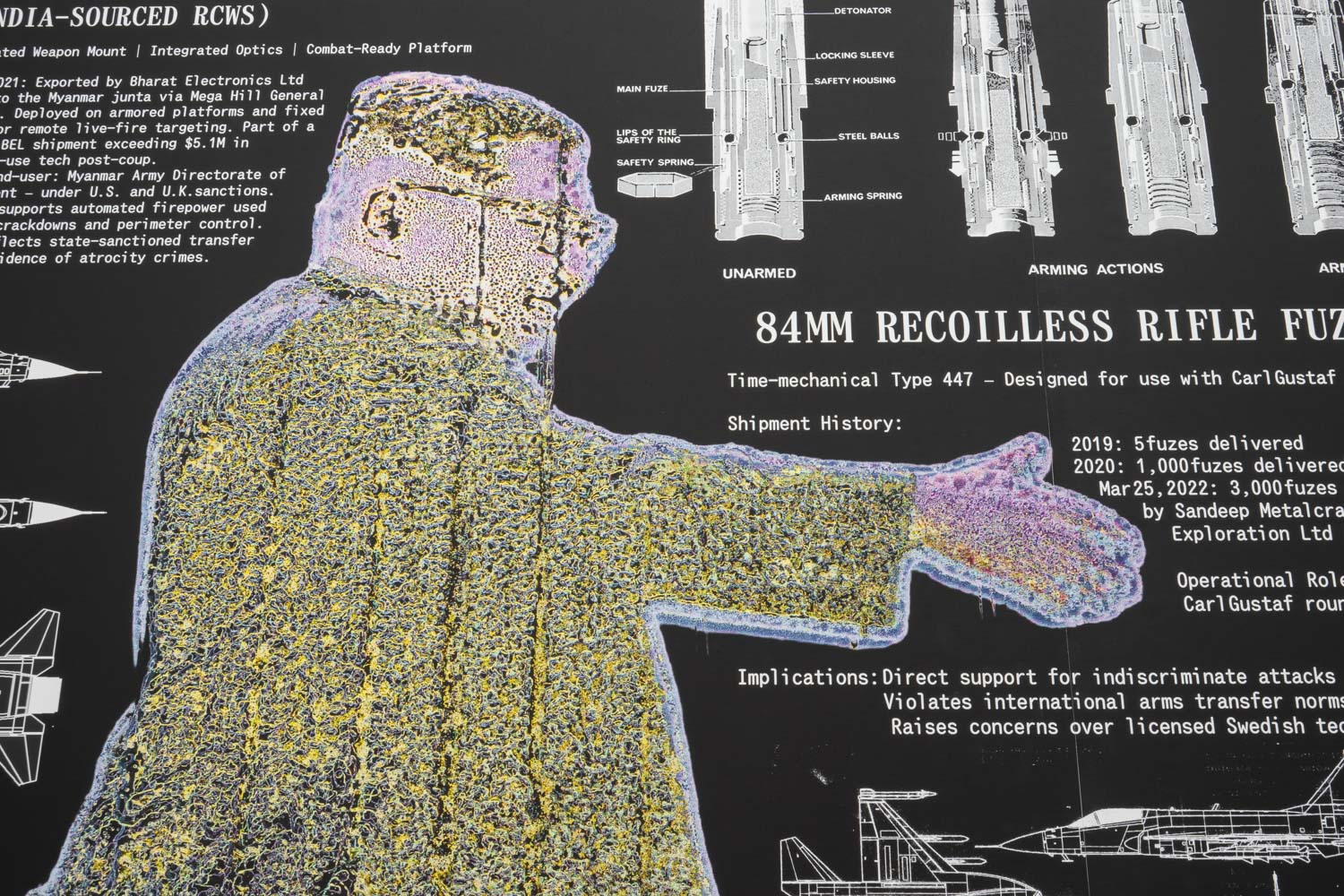
Sai ▇▇▇’s contribution to the exhibition, ‘The Regimes That Hold Hands’ (2025), is a large-scale digital print depicting authoritarian leaders from various nations. Each figure is shown extending a hand, as if in the act of greeting or sealing an alliance, surrounded by graphics of weaponry and data. The composition suggests a web of military support among regimes, and leaders who trade arms and assistance to maintain their grip on power, even as those same weapons are turned against their own citizens.
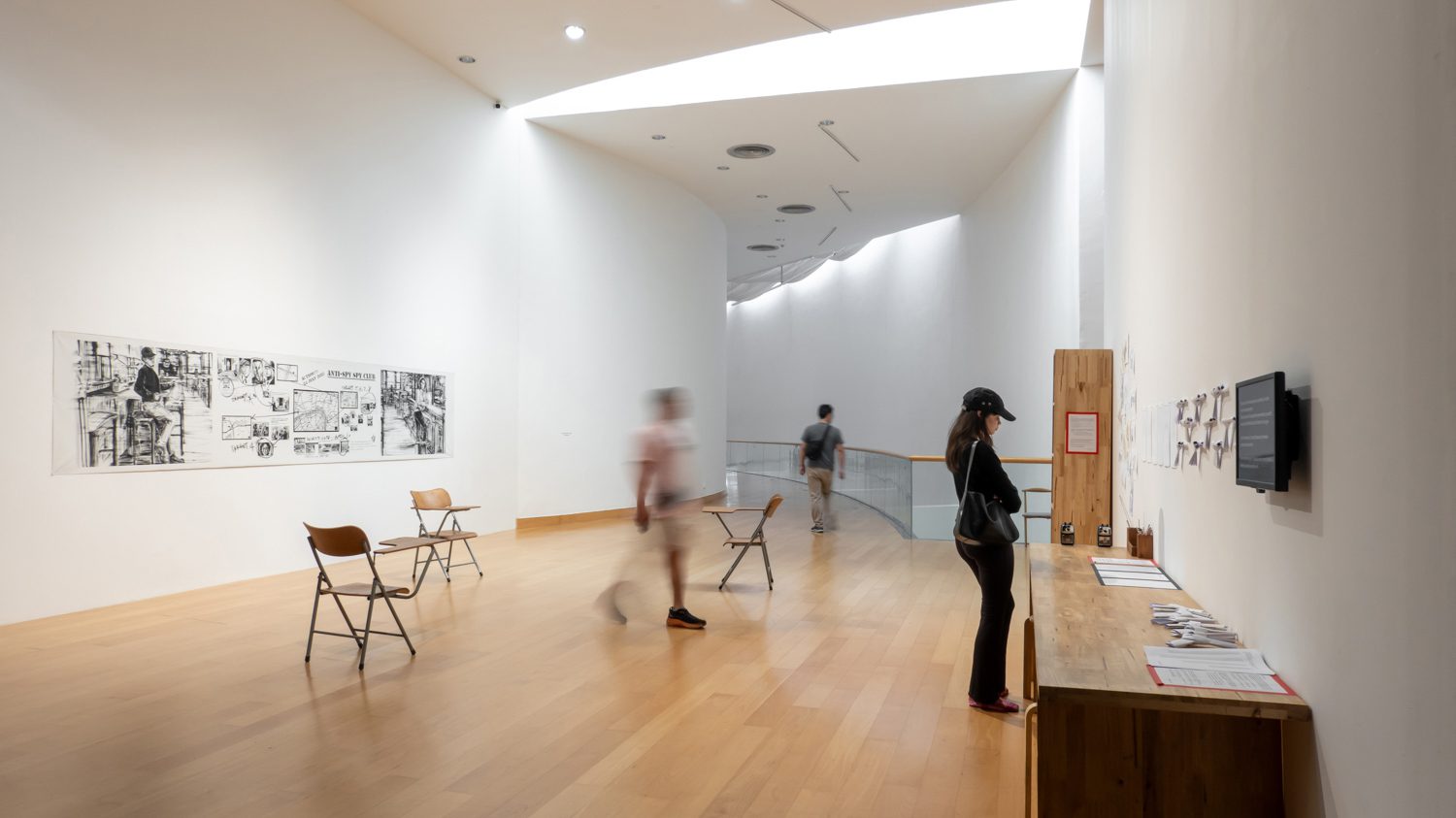
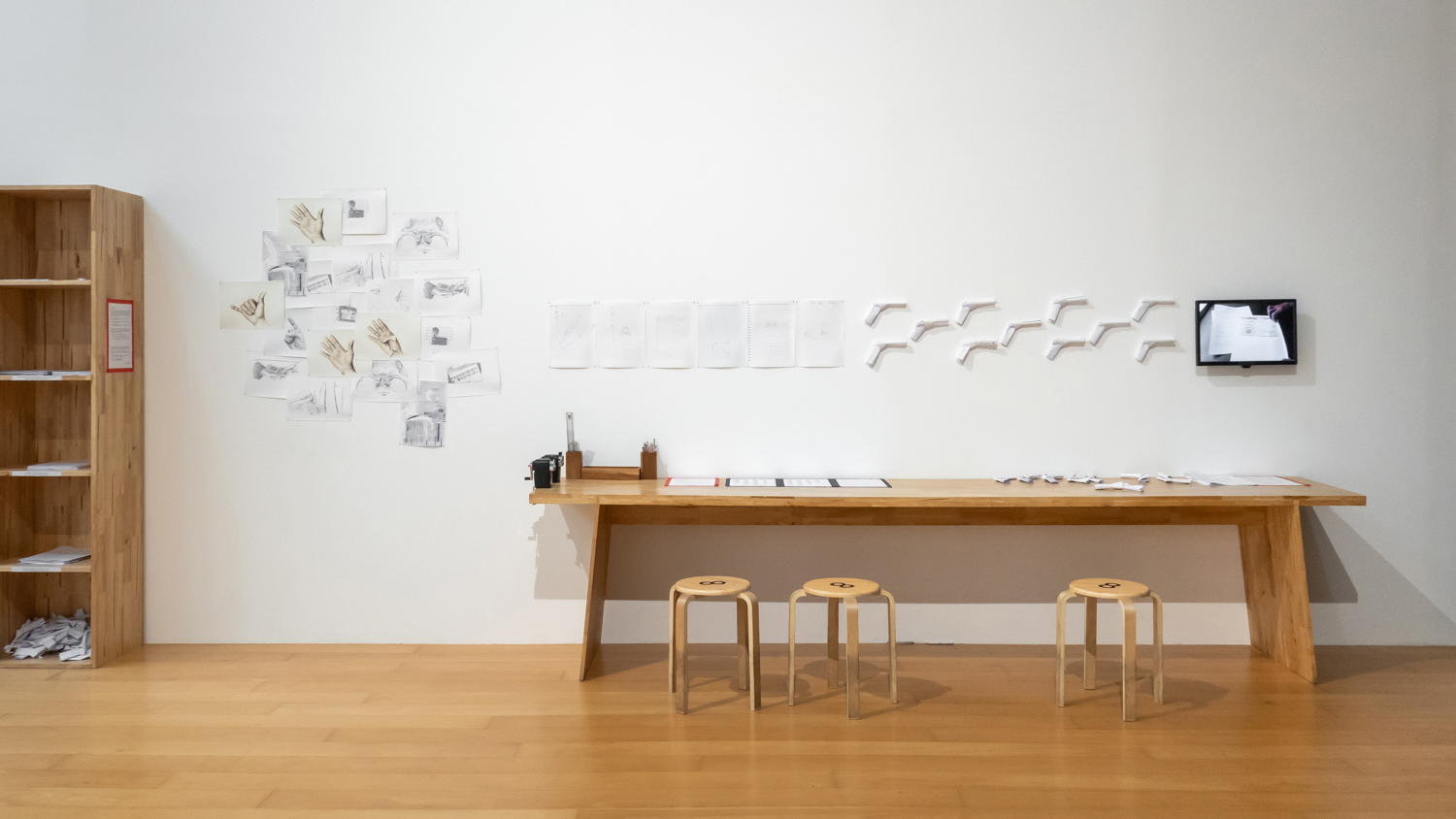
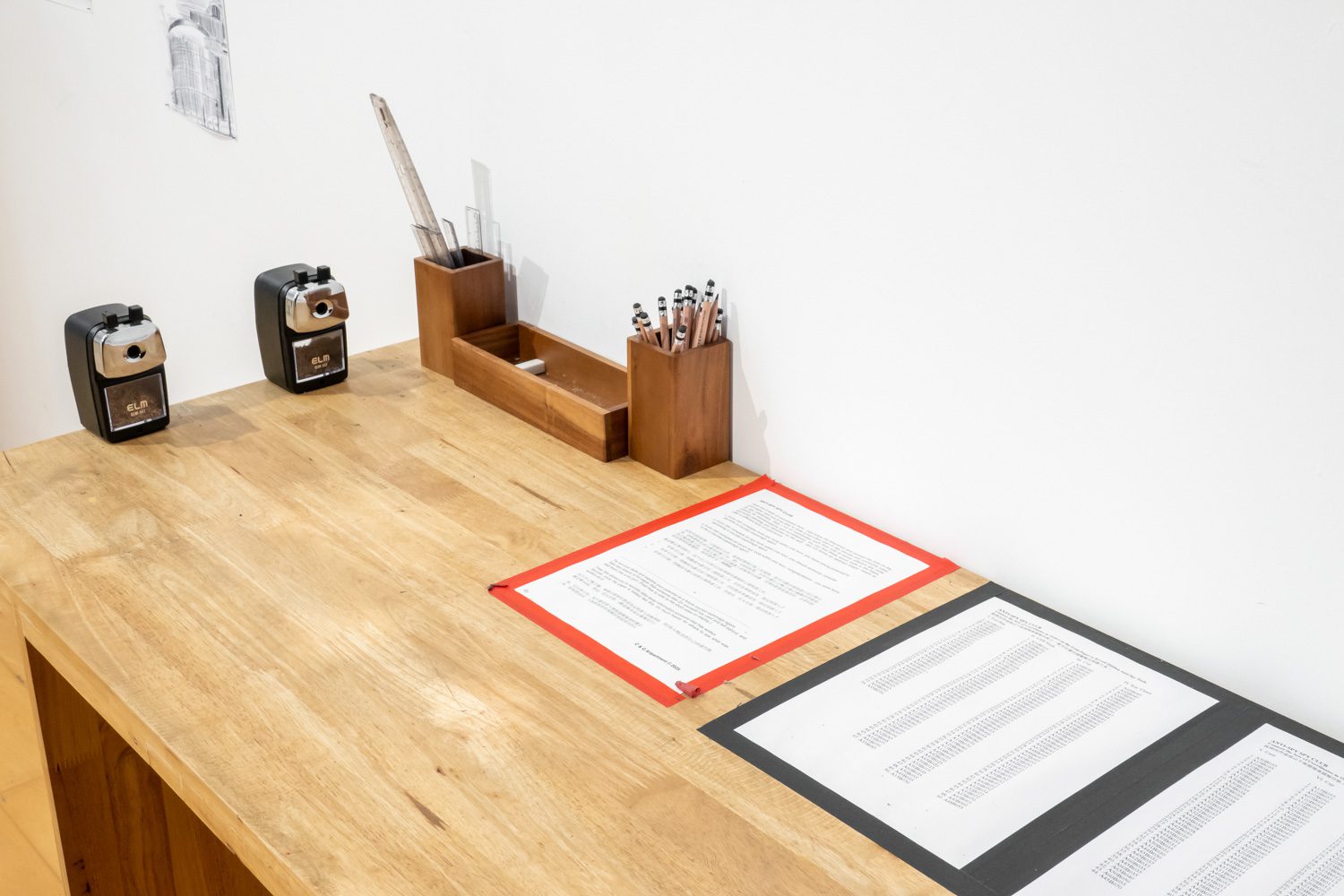
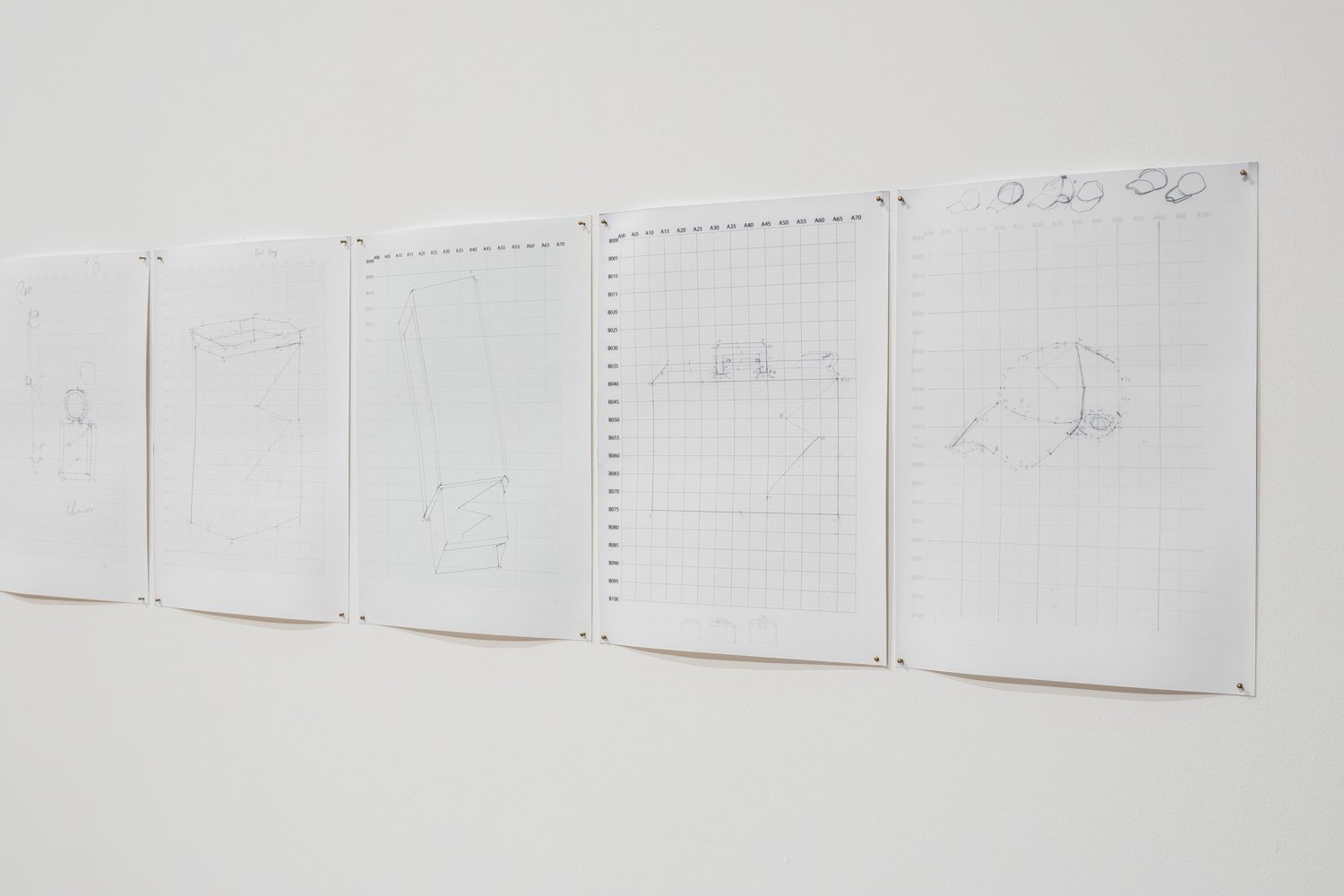
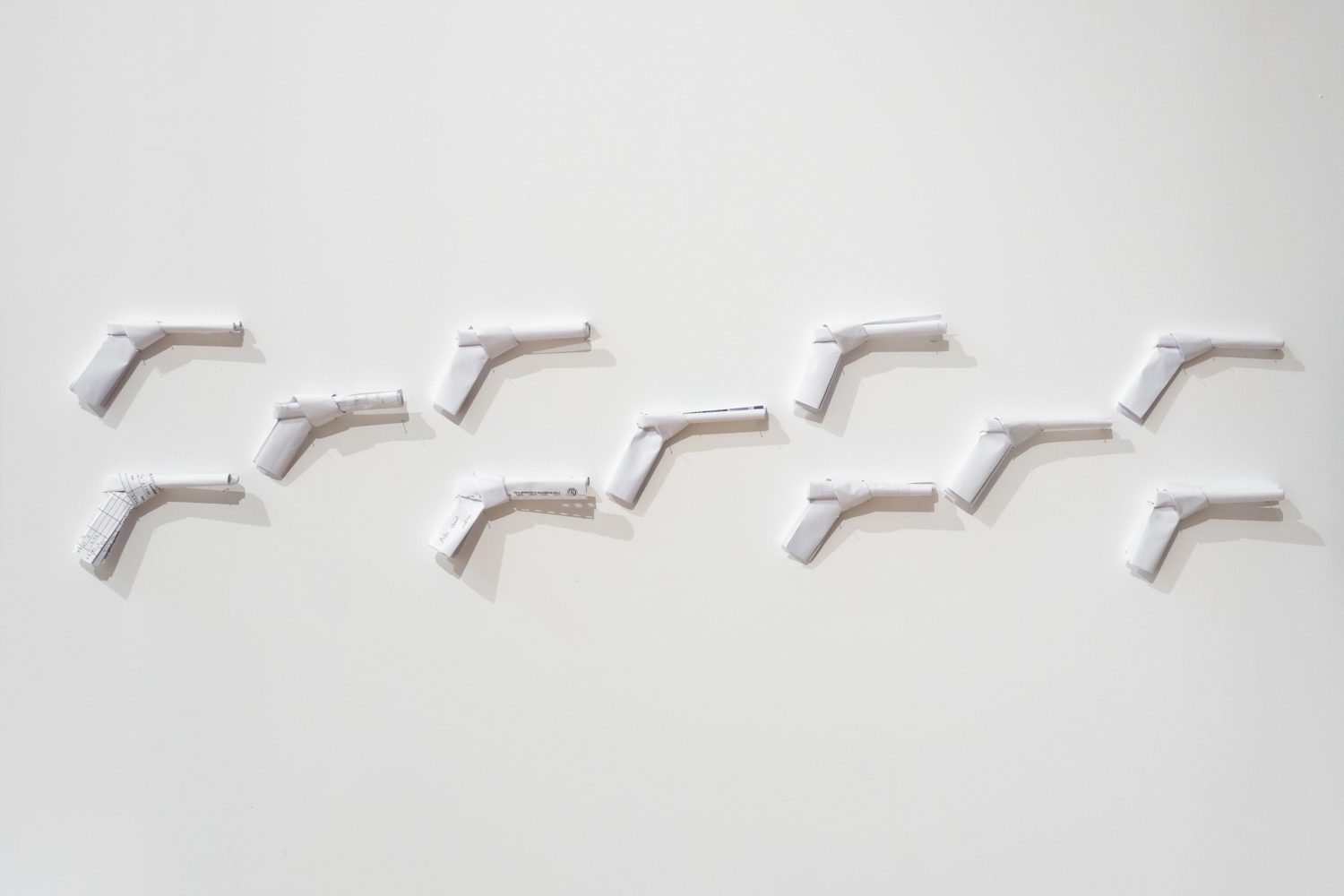
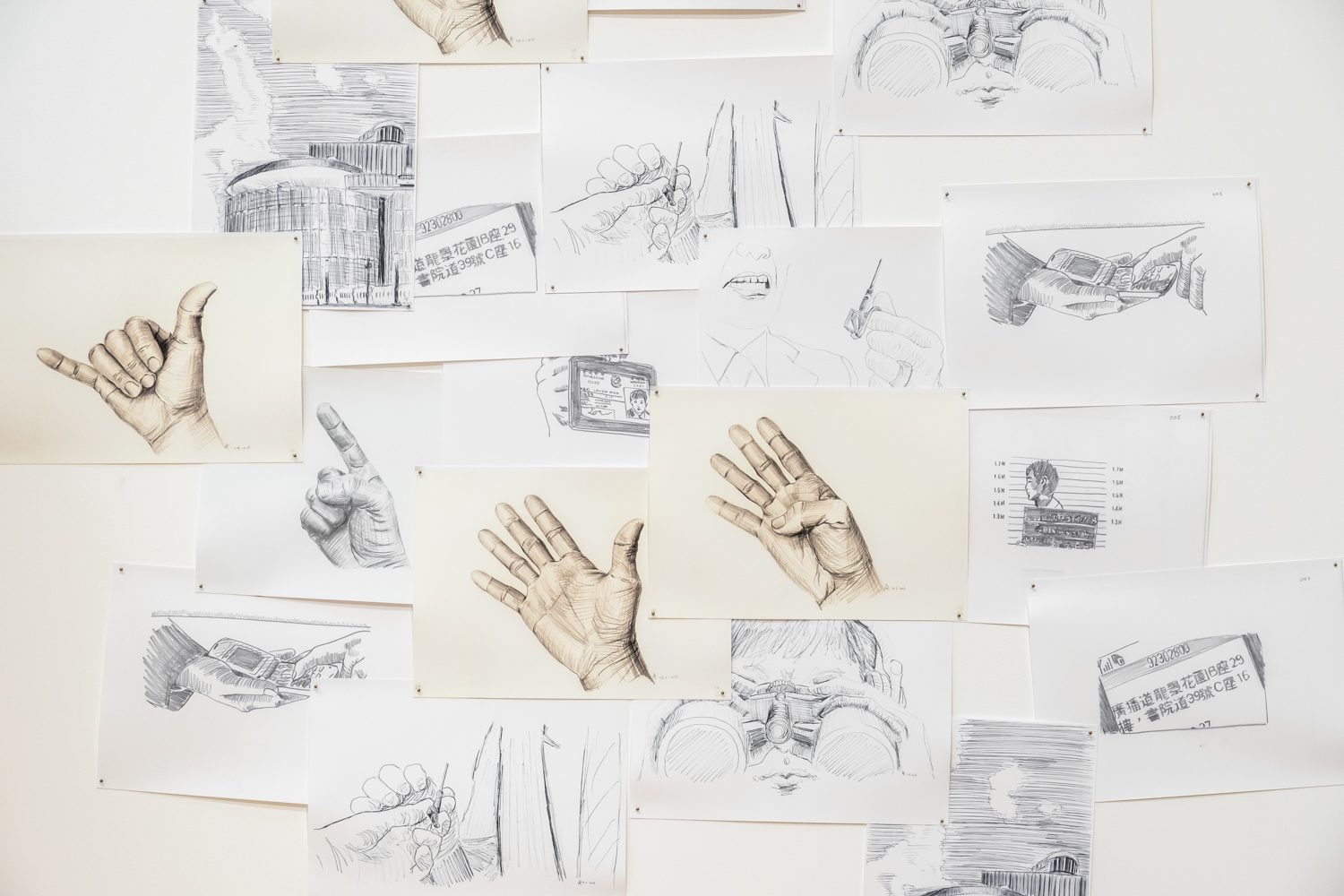
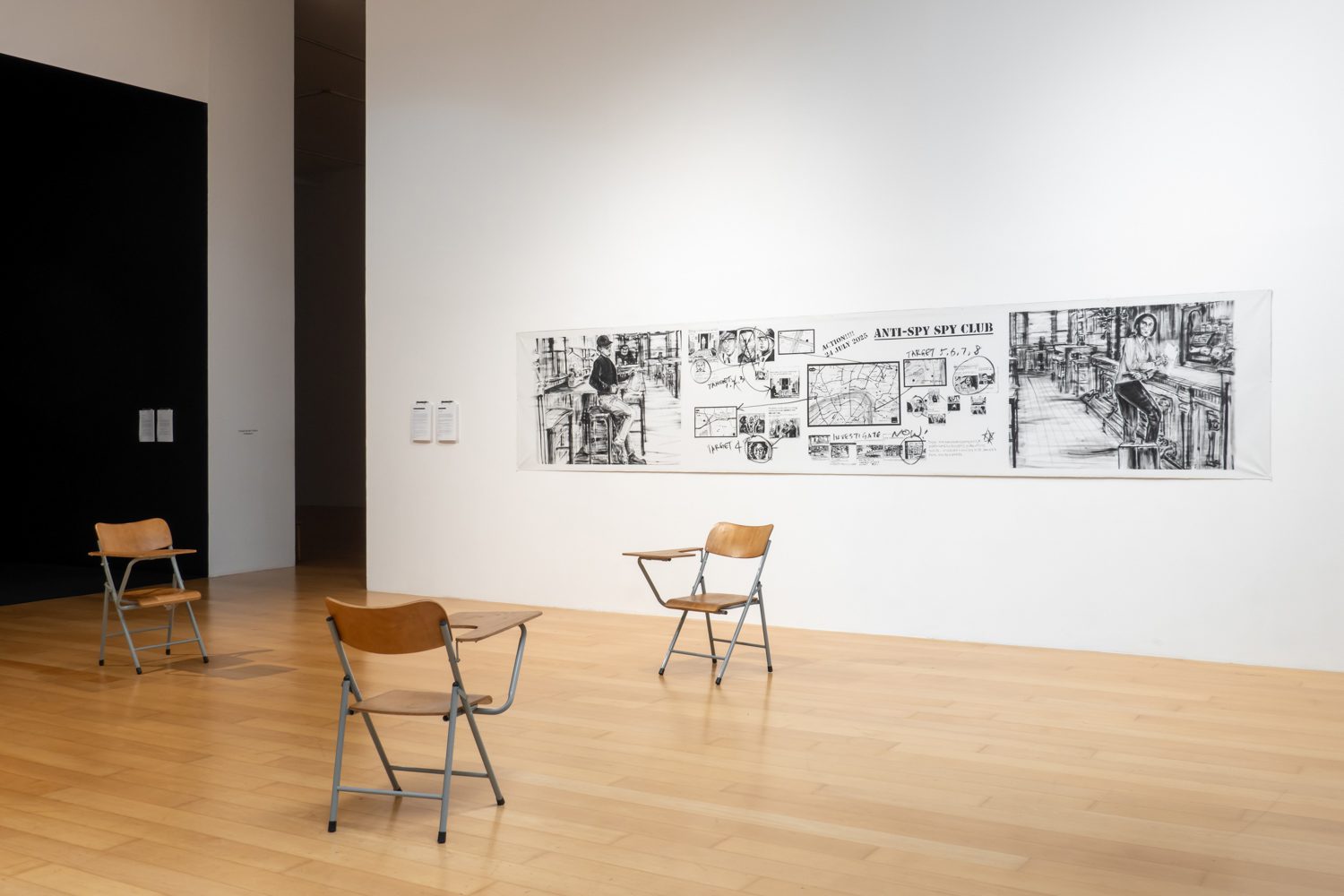
Moving deeper into the exhibition, one encounters the works of artists whose names and nationalities have been blacked out, along with parts of their artworks. The first duo, Clara Cheung and Gum Cheng Yee Man from Hong Kong, present ‘Anti-Spy Spy Club’ (2025), a work addressing the pervasive surveillance of citizens under authoritarian rule. In a tone both playful and unsettling, they propose that to survive under such constant watch, one must become skilled at resisting it, almost like a spy. Their installation invites visitors to learn simple espionage techniques, from decoding numbers to the darkly comic act of folding paper into the shape of a gun.
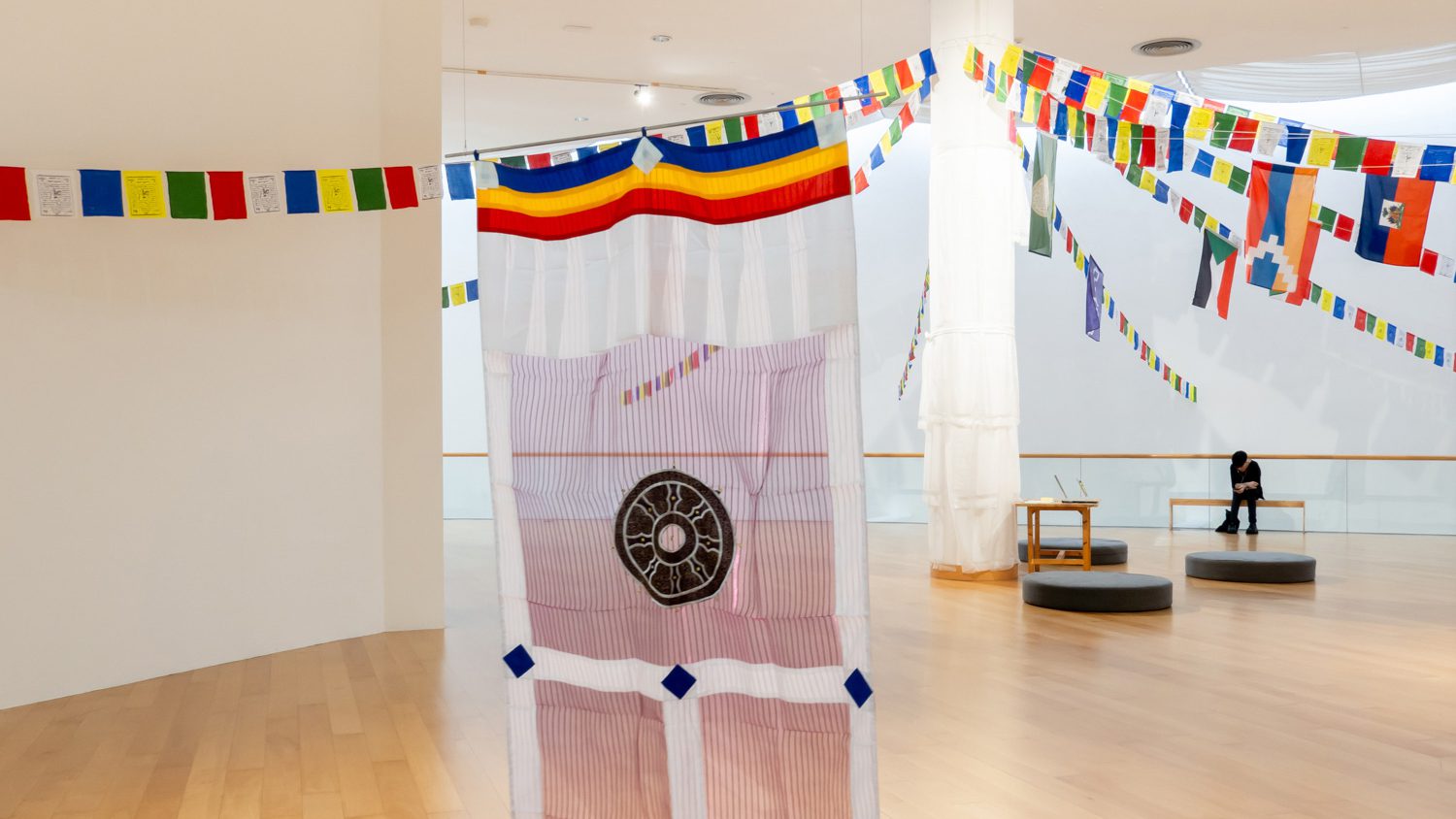
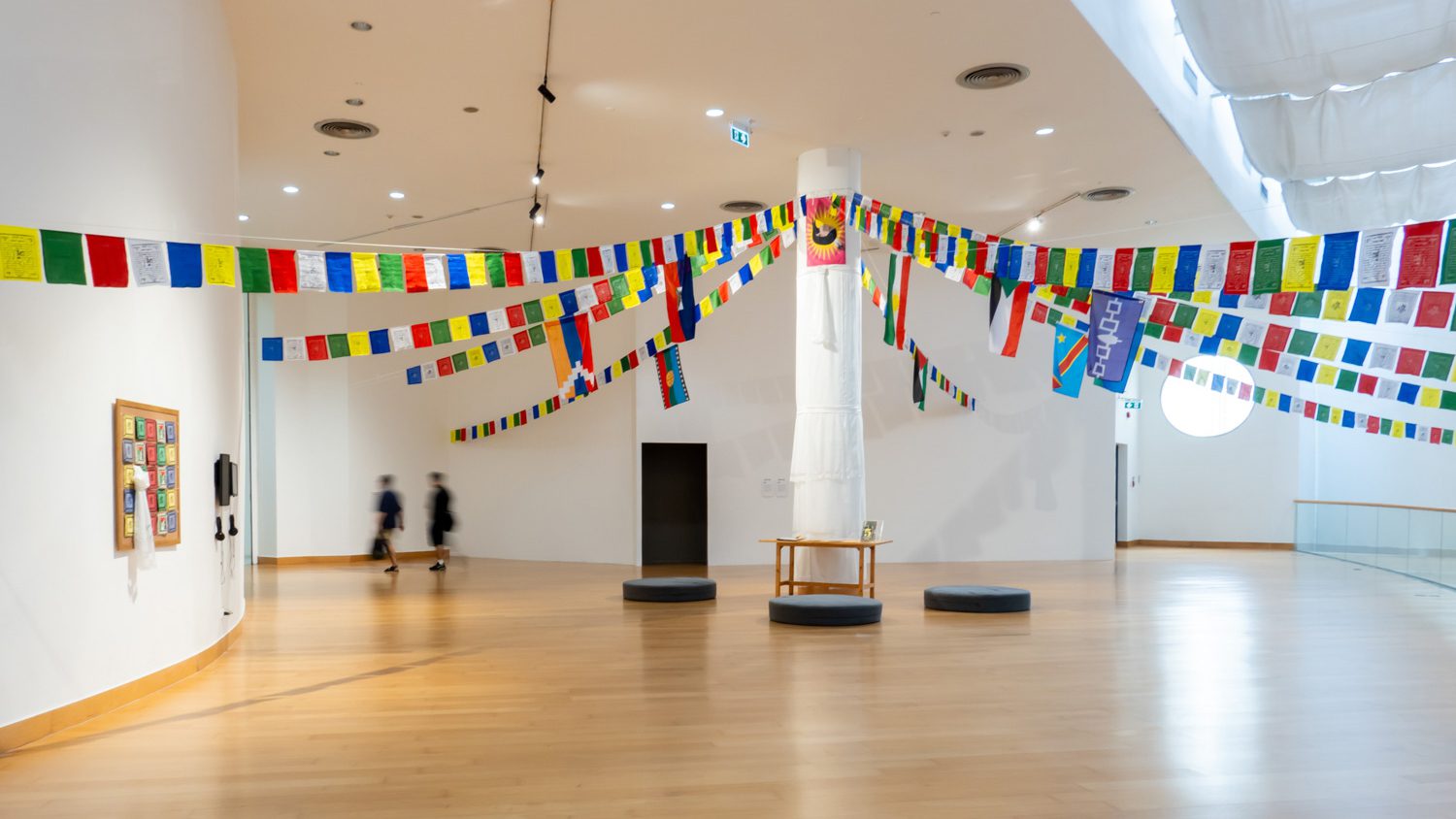
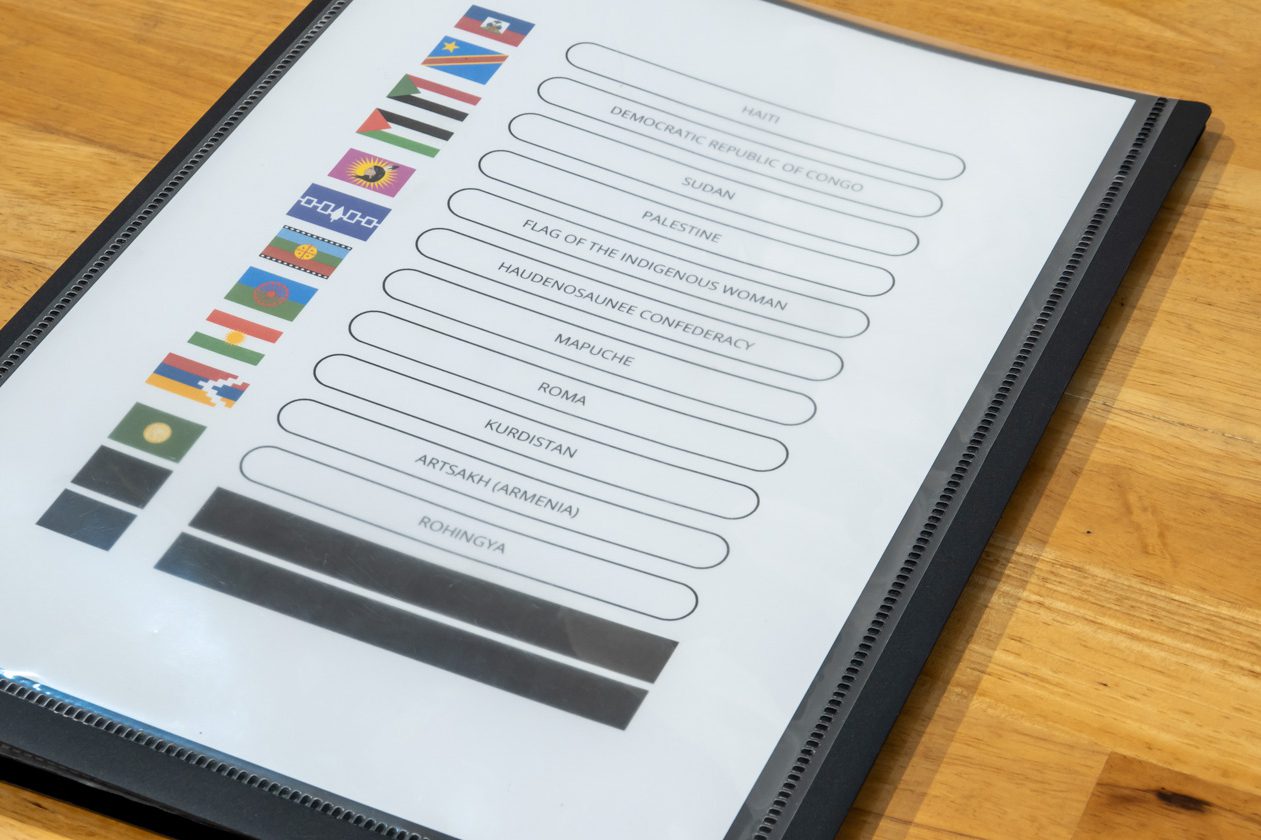
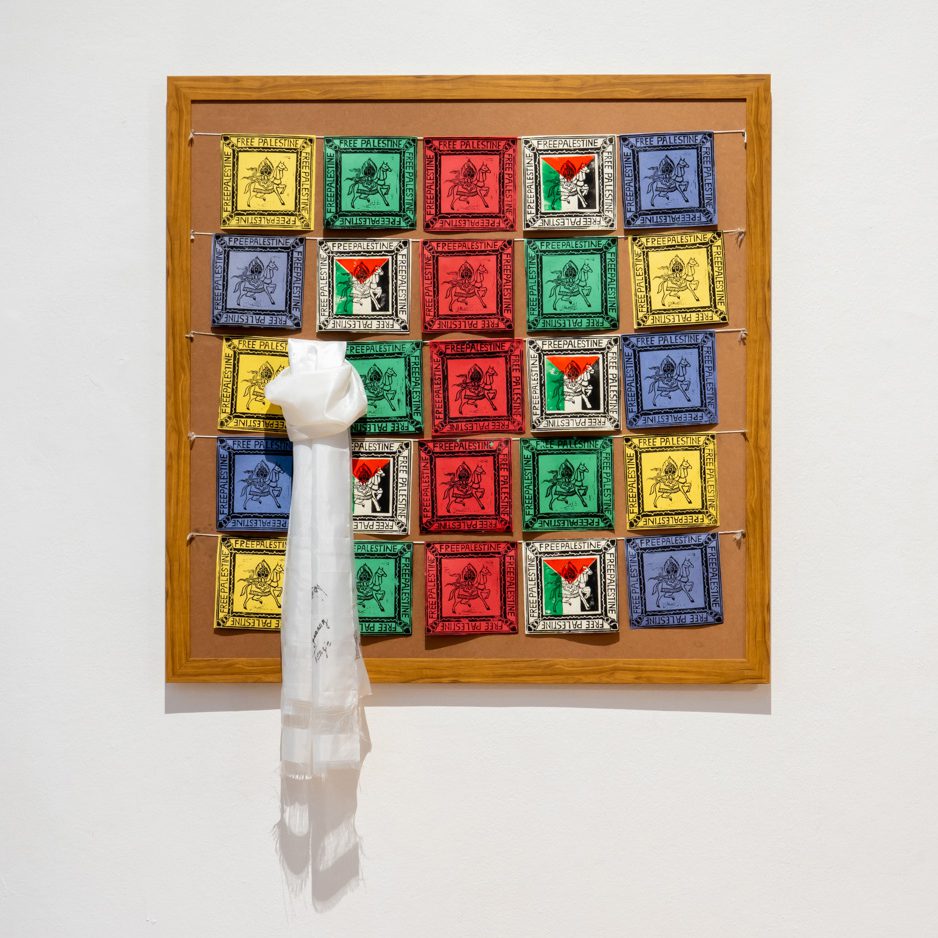
The next artist whose identity has been obscured is Tenzin Mingyur Paldron, a Tibetan trans artist, writer, and community educator. One knows immediately upon entering their section of the gallery: a Tibetan doorway curtain and rows of multicolored prayer flags mark the threshold. Interspersed among the flags are national flags from Haiti, Congo, Sudan, and the Rohingya community, among others. Another work features a small prayer flag inscribed with the words ‘Free Palestine’, framed and adorned with a kata, the ceremonial scarf Tibetans use to convey respect. Together, these elements form ‘Earth Is Heard’ (2025), a mixed-media installation that Paldron dedicated to the memory of David Buckel, the American civil rights lawyer and LGBTQIA+ activist who self-immolated in New York in 2018 to draw attention to the environmental devastation caused by fossil fuel dependency.
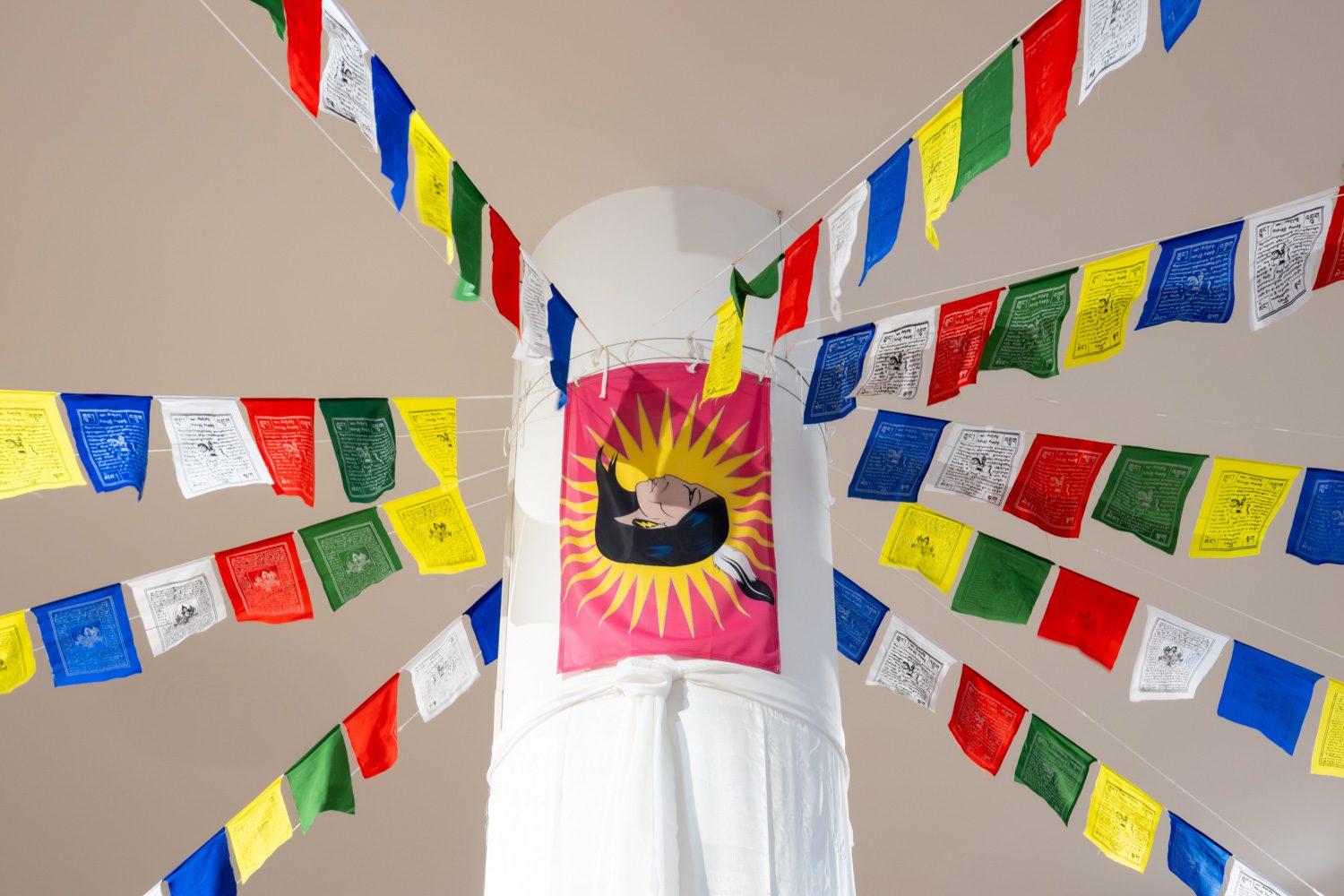
In fact, Buckel had no direct connection to the Tibetan freedom movement. Yet in the note he left before taking his own life, he drew a parallel between his act and that of Tibetans who self-immolated in protest for their nation’s independence. His final gesture embodied a sense of solidarity within an interconnected world, an idea deeply rooted in Buddhist belief. This is precisely why, in this installation, Tenzin chose not to speak solely of Tibet’s struggle, but of all oppressed nations.The same sentiment extends to the video work ‘Earth Is Heard’ (2025), now censored and replaced by a black screen. It documents Tenzin and fellow Tibetan LGBTQIA+ individuals performing a two-hour ‘distance prostration’ through the streets of New York as an act of profound reverence to the Palestinian flag, a symbol of a people facing genocide. As they moved, they carried the flags of Tibet and other oppressed nations.
Alongside the Tibetan flag, another that was removed from Tenzin’s installation was the flag of the Uyghur nation. Within Constellation of Complicity, there is one work by a Uyghur artist, whose name, too, has been blacked out. Titled ‘Geopoetics’ (2024), the work belongs to Mukaddas Mijit, an artist, ethnomusicologist, and filmmaker born in Ürümqi, the capital of the Xinjiang Uyghur Autonomous Region, now based in France. In this 11-minute and 54-second video, Mukaddas tells her story not through factual narration, but through a seamless interweaving of artistic forms: dance and traditional Uyghur music (she has performed around the world), photography, performance, and poetry. The result is a short yet deeply profound film that evokes the experiences of Uyghur exiles scattered across many countries. For Thai audiences, the work carries an added resonance, recalling the recent forced repatriation of Uyghur refugees by the Thai government just months earlier.
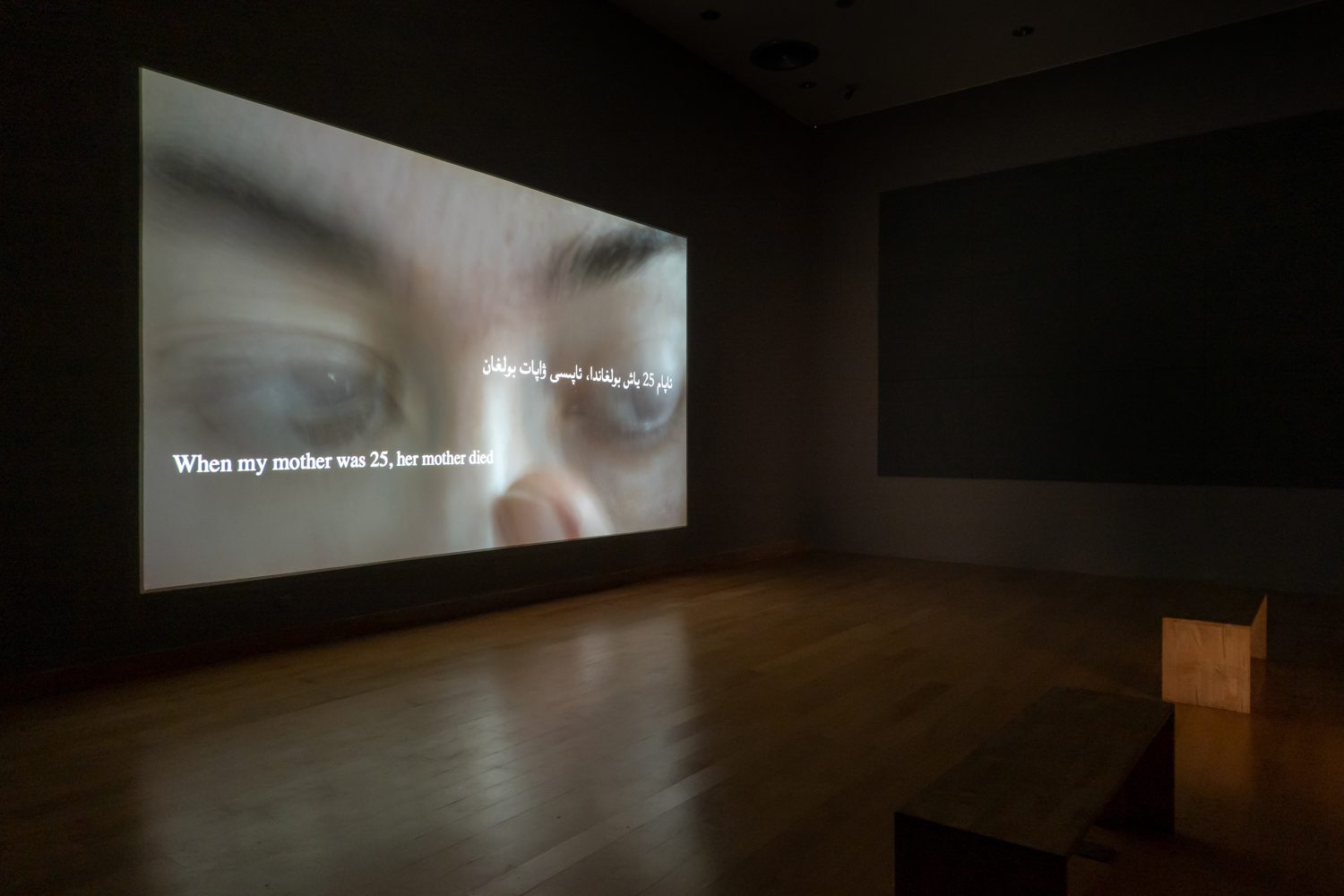
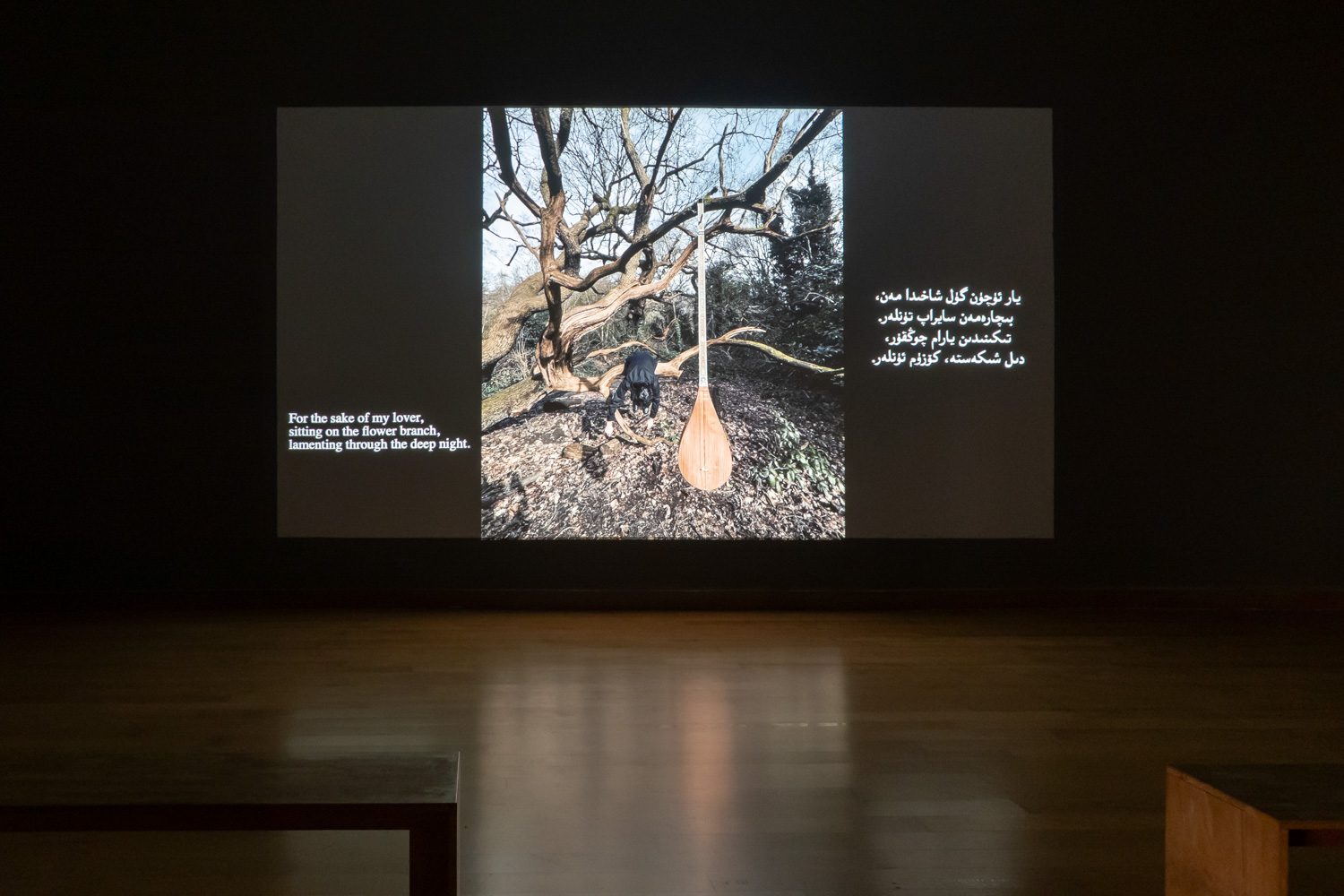
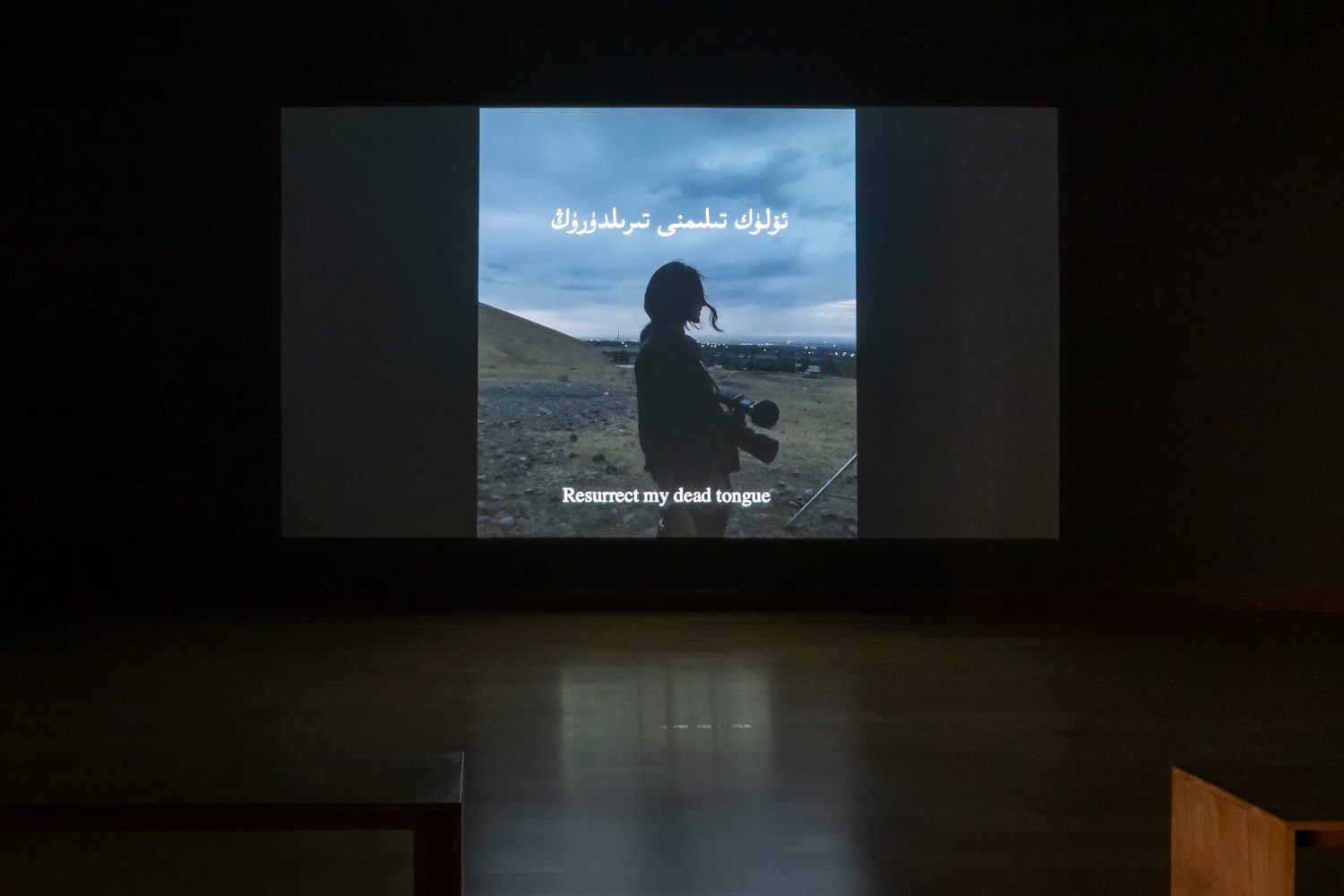
The stories of those displaced; people who have lost their identities along with their social, cultural, and collective roots, are already heartbreaking. Yet what feels even more devastating is the realization that, even after leaving their homelands behind, the power of the state can still reach across borders and seas to erase them once more. This feeling is made all the more palpable by the black strips covering the artists’ names and national flags. And perhaps no work in the exhibition encapsulates this shared sense of exile more poignantly than ‘Siege’ (2019) by Syrian artist Khaled Dawwa.
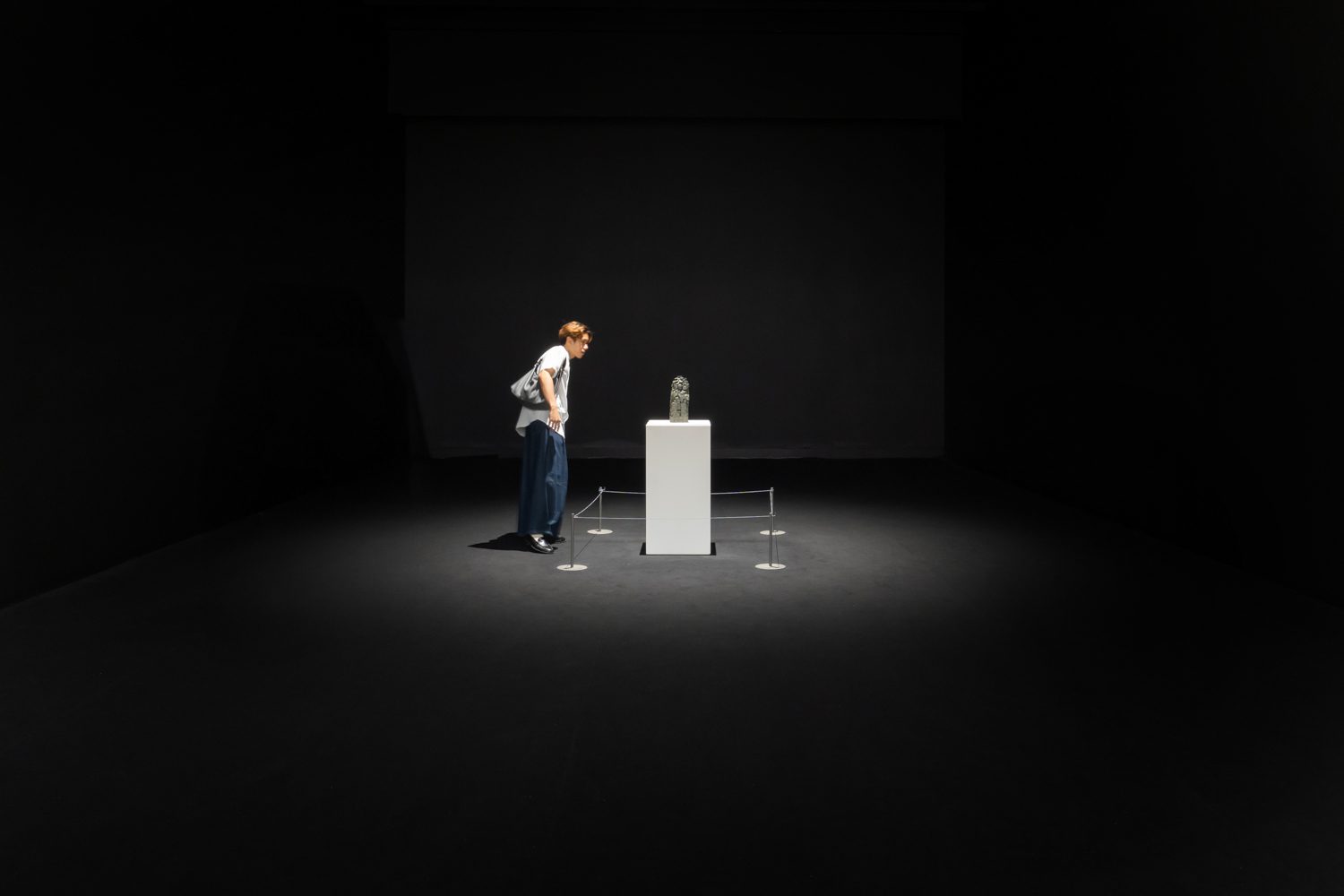
Dawwa’s life has been marked by hardship no less than that of Toomaj Salehi or Sai ▇▇▇. He was once detained in Damascus before fleeing to Lebanon, where he began his sculpture series ‘Clay & Knife,’ sharing the works anonymously on a Facebook page of the same name for his own safety.
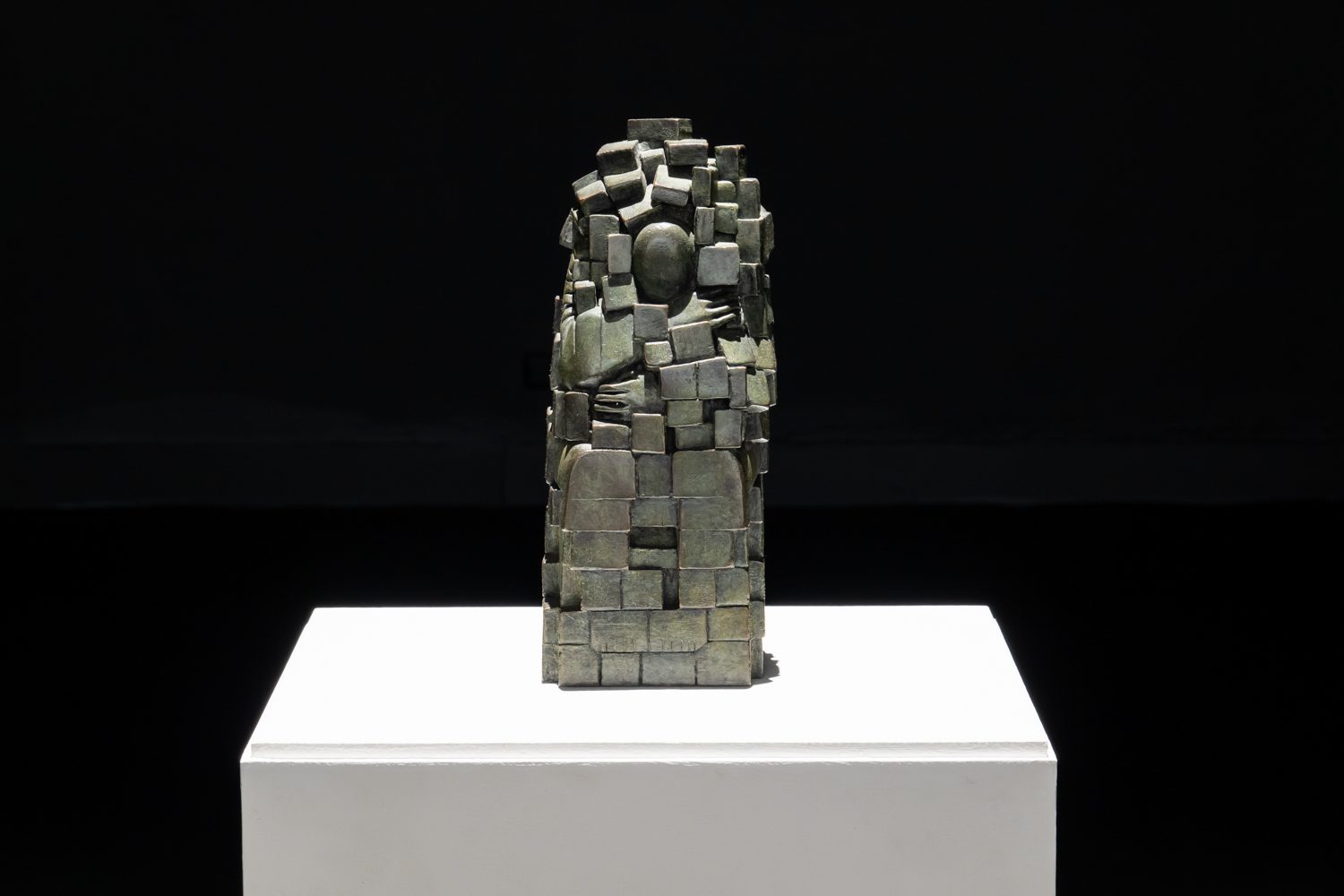
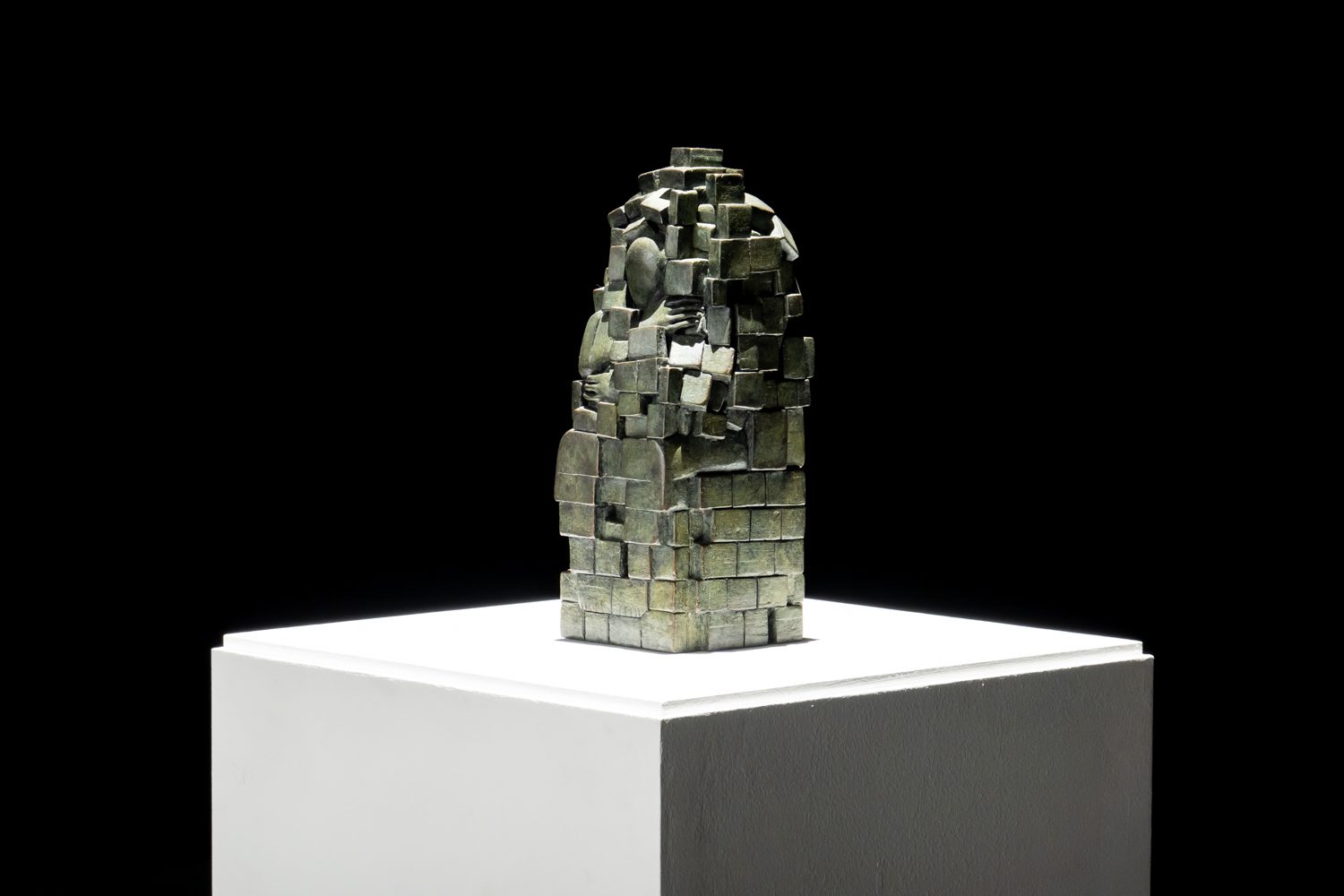
‘Siege’ belongs to Khaled Dawwa’s ‘Compression’ series, in which he channels the psychological weight of oppression, loss of freedom, and confinement through bronze sculptures. Human forms appear trapped and pressed within solid brick-like blocks, their bodies seemingly swallowed by mass and matter. The visceral sense of suffocation that these works evoke speaks not only for displaced Syrians but also for exiles everywhere who share the same experience of erasure and endurance. What is particularly striking is Dawwa’s reflection that even in France, where he has taken refuge, he still feels a sense of compression, this time from social pressures within his adopted society. Given the growing wave of anti-immigrant sentiment in many parts of the world, many refugees must feel the same tightening weight of hostility and judgment, lumped together under the same blanket of suspicion.
‘Constellation of Complicity’ runs from 24 July to 19 October 2025 at the Main Gallery, 8th floor, Bangkok Art and Culture Centre.