
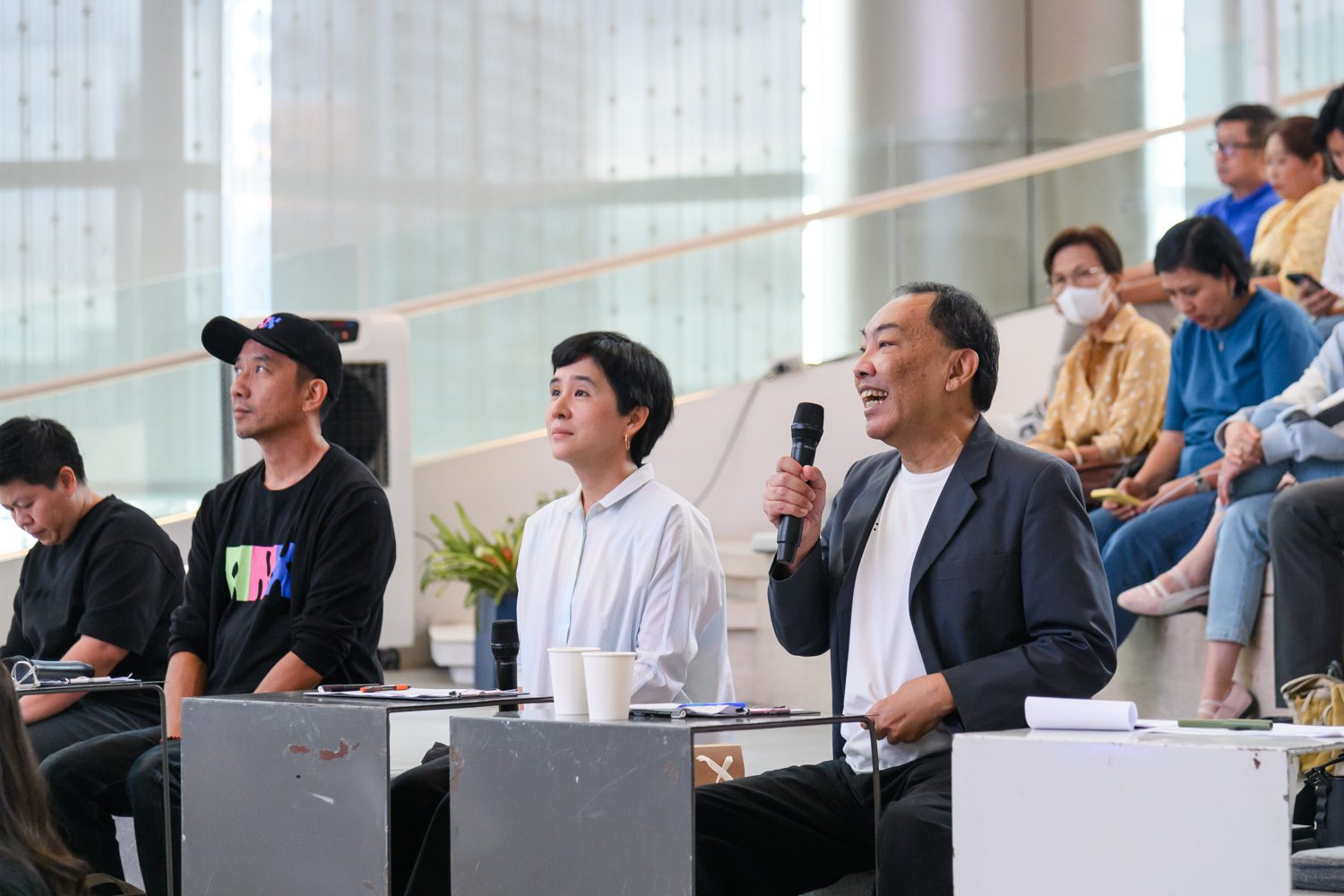
art4d INVITES THE THREE ARX 2025 JUDGES TO DISCUSS THE SHORTLIST’S WORK UNDER THE THEME LIMINAL TERMINAL: TRANSITIONING SOMETHING TO ANYTHING, REFLECTING THE CREATIVE POWER OF NEW-GENERATION DESIGNERS
TEXT: NATHATAI TANGCHADAKORN
PHOTO: WORAPAS DUSADEEWIJAI
(For Thai, press here)
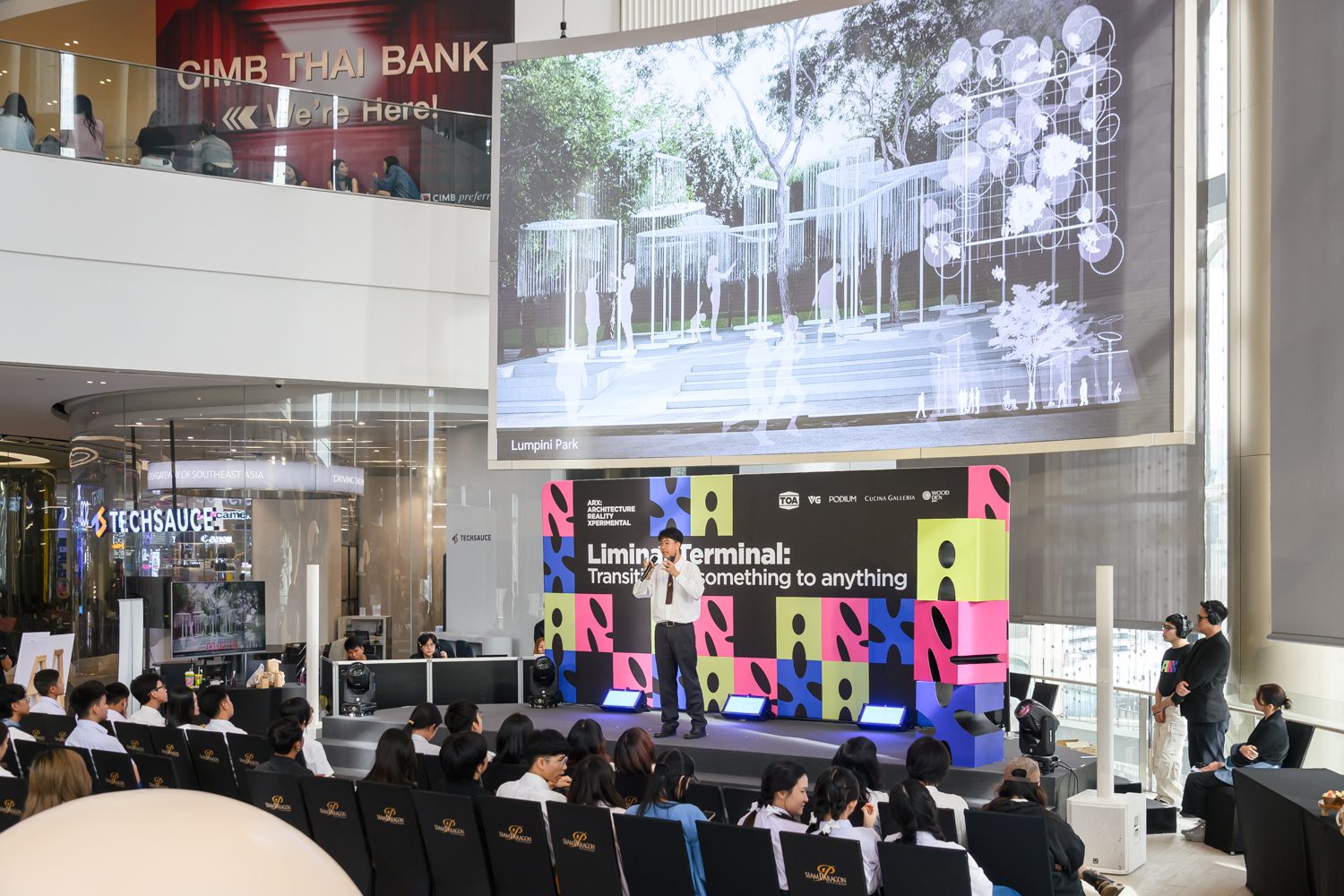
Following the final round of ARX: ARCHITECTURE ‧ REALITY ‧ XPERIMENTAL 2025, exploring the theme Liminal Terminal: Transitioning something to anything, the experimental design competition officially concluded on 27 September 2025. With the results finalized, the organizing team has now moved forward with the development phase, preparing to bring the winning proposal to life in early 2026.
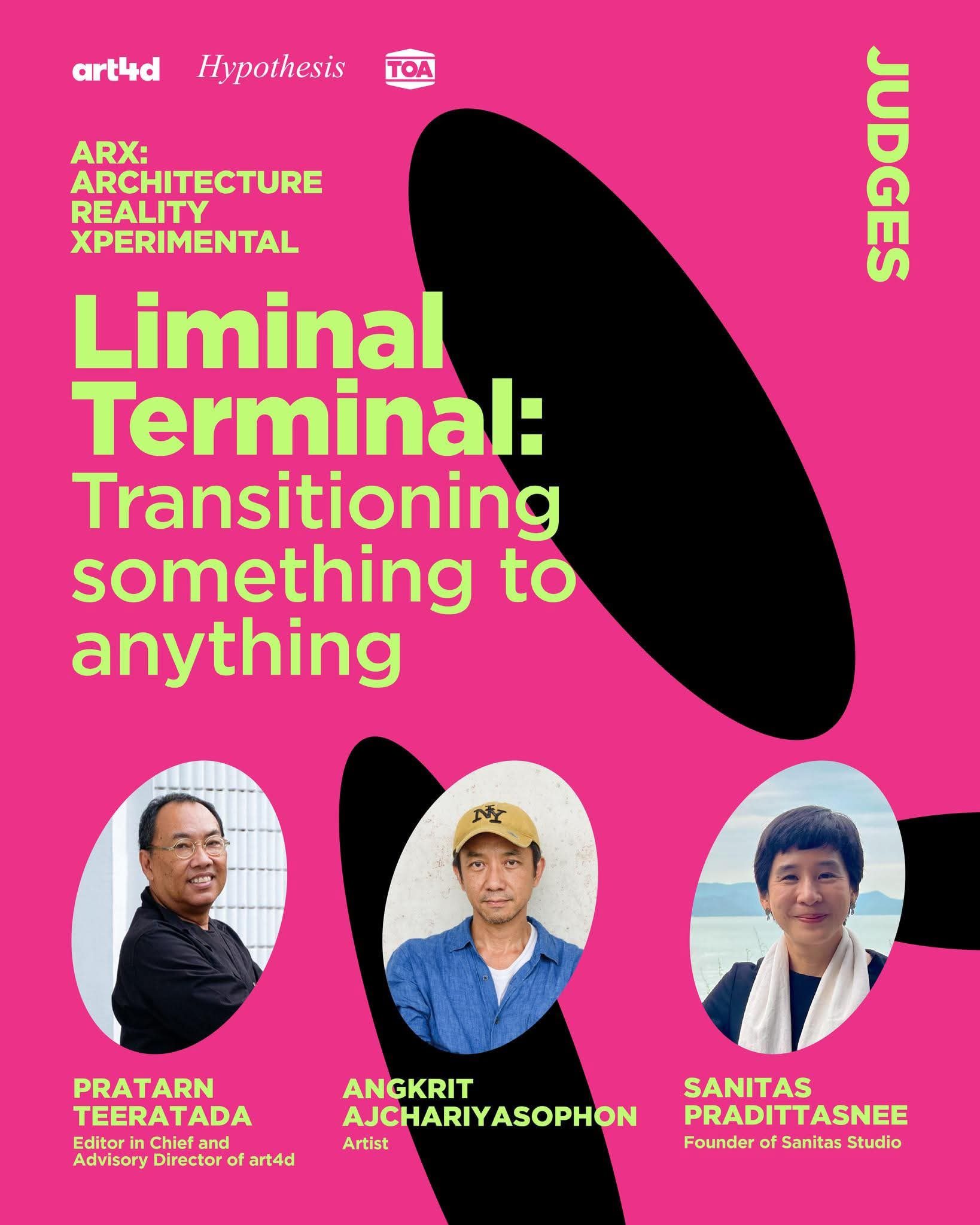
Before construction begins, art4d sat down with the three jurors of ARX 2025, Sanitas Pradittasnee, Angkrit Ajchariyasophon, and Pratarn Teeratada, for an in-depth conversation reflecting on the submissions, the competition process, and the broader ideas that emerged from this year’s edition.
art4d: How would you describe this year’s ARX overall? Was there any project whose interpretation of the theme particularly stood out to you?
Sanitas Pradittasnee: This year’s ARX truly exceeded our expectations. The overall quality of the work was impressive. Listening to the participants present their process, how they delved into research and developed their ideas from the theme ‘Liminal Terminal,’ was remarkable. Many of them were able to translate abstract concepts into tangible forms with great clarity and coherence. It was genuinely surprising, in the best way.
Pratarn Teeratada: The atmosphere of ARX this year was very lively. Broadly speaking, there were two groups of participants: high school and university students. The high school entries leaned more toward artistic and poetic expression, full of imagination and creative freedom. Some even took on a more academic direction, like ‘Bangkok Bounding Box,’ which adopted an experimental and research-based approach, focusing on urban living phenomena. It was quite impressive.
At the university level, participants showed a strong grasp of tools and methods, edging closer to professional practice. They also demonstrated a keen awareness of construction feasibility. Personally, I was drawn to several projects. There’s ‘Bangkok Bounding Box,’ which I just mentioned, and others such as ‘ANCHORED AIR,’ ‘CHAIR OF TIME,’ and ‘Wind of Change.’
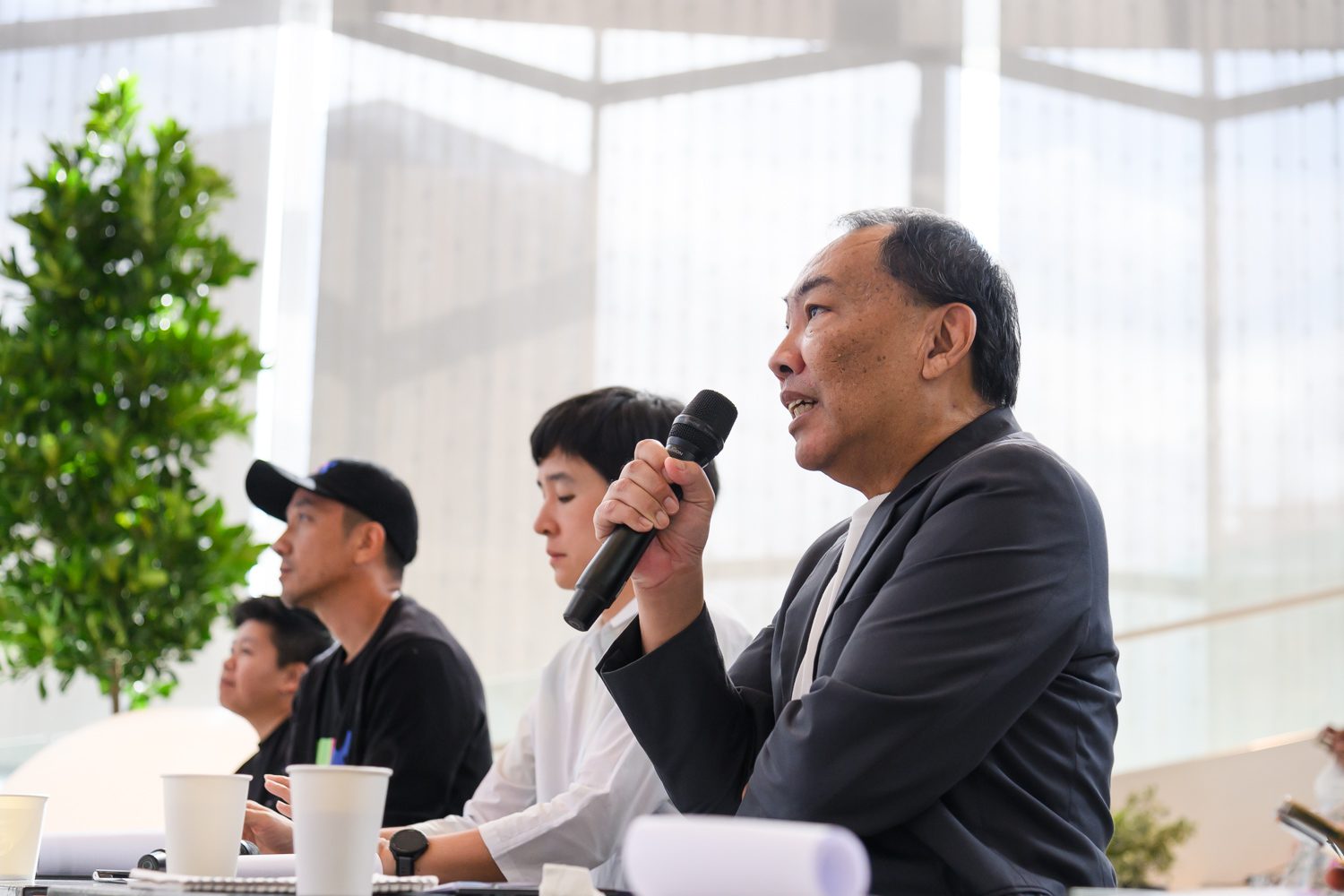
Sanitas: When we first saw the presentation boards, everything appeared in a familiar format. It was the kind of layout and composition we all know from architectural training. But seeing the live presentations changed everything. It revealed not only how they thought, but also the energy behind each idea. The high school students, in particular, radiated a kind of raw, unfiltered vitality. By sheer coincidence, the order of presentations that day began with the younger teams, followed by the university students. That sequence made the contrast even more vivid. The high schoolers were untouched by convention; they hadn’t yet learned what tools or methods they were ‘supposed’ to use. They simply worked with whatever they had, with a spontaneity that felt instinctive, even improvised. Their eyes shone with such intensity, and it was deeply moving to witness.
With the university students, the work showed a different kind of maturity. They were skilled and articulate, yet you could sense certain patterns; traces of academic conditioning. There was a structure to how they present, unfolding in orderly step by step. It was evident that an invisible framework was already at work.
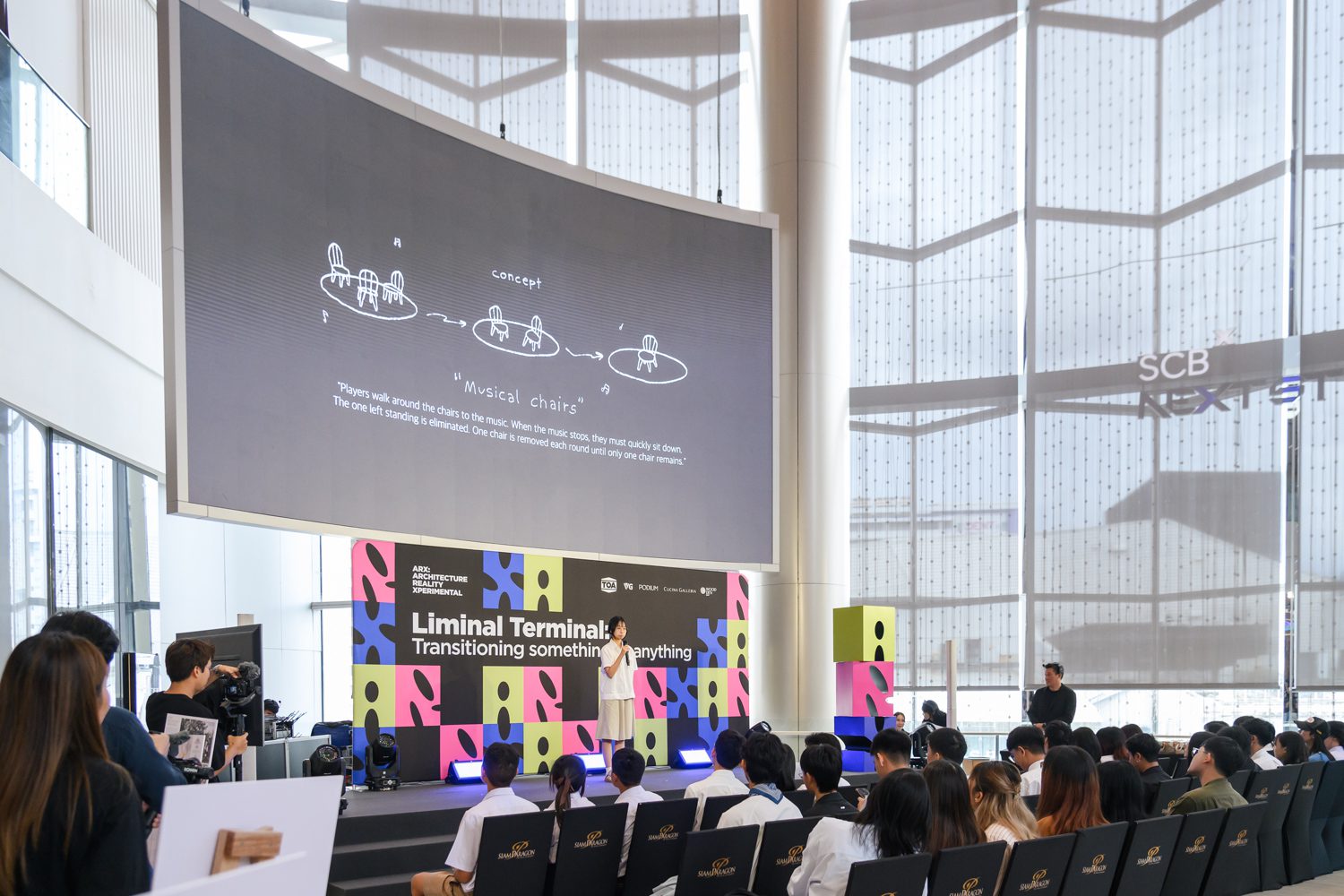
CHAIR OF TIME
Angkrit Ajchariyasophon: I felt very much the same as the others. What stood out to me this year was the exceptional calibre of the submissions. Each team demonstrated real commitment, and their presentations were full of inventive ideas. It was fascinating to see how they connected the abstract premise of ‘Liminal Terminal’ to such diverse interpretations, translating it into pavilion designs that were rich in imagination and clarity.
I honestly believe all twenty finalists were worthy of an award. Every project had its own strengths and distinct character. Among those that resonated with me most were ‘Bangkok Bounding Box’ by Tawin Tangjai, Natpatsorn Juengmanakij, and Mahasamutr Punjapaphawin; ‘Peras’ by Pitthayut Tansuk; ‘Wind of Change’ by Pabhada Ratthawekin; ‘Chair of Time’ by Pichaphan Phattanaphurk; and, of course, ‘FLUXn’FLOW’ by Chawin Laowananchai.
Sanitas: In terms of ideas, I was particularly fond of ‘CHAIR OF TIME.’ I found it remarkable that a high school team was able to connect music with the notion of time; the two subjects that seem unrelated and highly abstract. It was a thoughtful concept, and I hope they continue to develop it further.
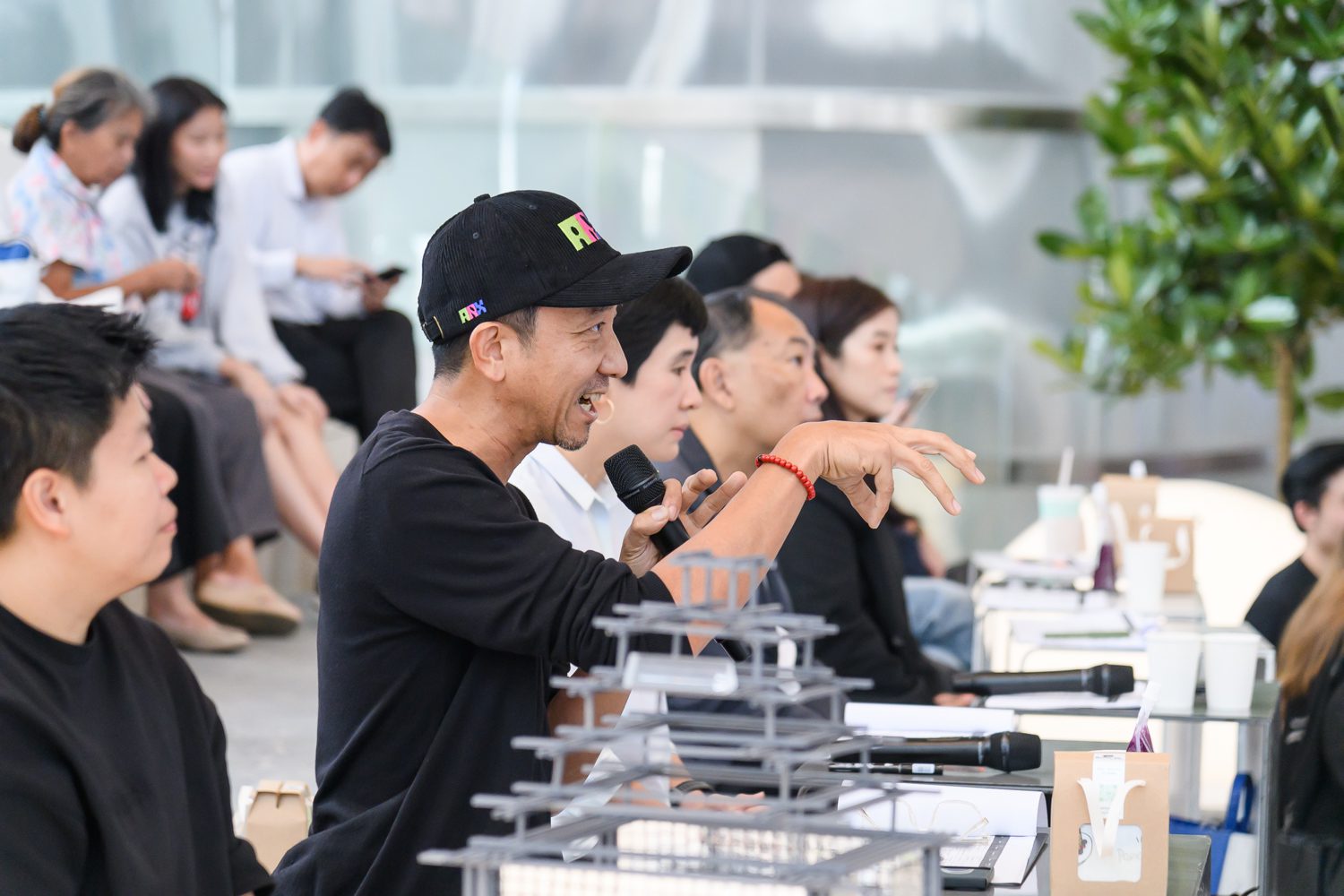
art4d: From your own perspective and experience, how do you think the participants could further develop their projects? Do you have any advice for the young designers who joined the competition?
Sanitas: Every team has the potential to take their project further. What limited them this time was mostly a lack of time. I also feel that most of them were still designing from a very personal standpoint. ‘I want to tell this story, so the work will be designed to tell it in this particular way.’ If they were to develop it further, I’d encourage them to step back and consider how audiences might actually experience the work in real life. Public projects, by nature, are meant to be open. Sometimes when we define the narrative too rigidly, it can become a constraint. It’s worth thinking about both sides: the experience you wish to convey, and the experience that truly unfolds for the audience. If the work can also engage with natural phenomena or elements that change over time, it would gain an even more dynamic and compelling sense of presence.
Pratarn: I’m genuinely proud of how these students were able to take the brief, research it, and develop their ideas to this level. The experience itself will be deeply valuable for their future, regardless of whether they go on to pursue design professionally or follow another path. Creative thinking and the ability to interpret reality through one’s own lens are essential qualities in any field. Most importantly, they should never stop dreaming.
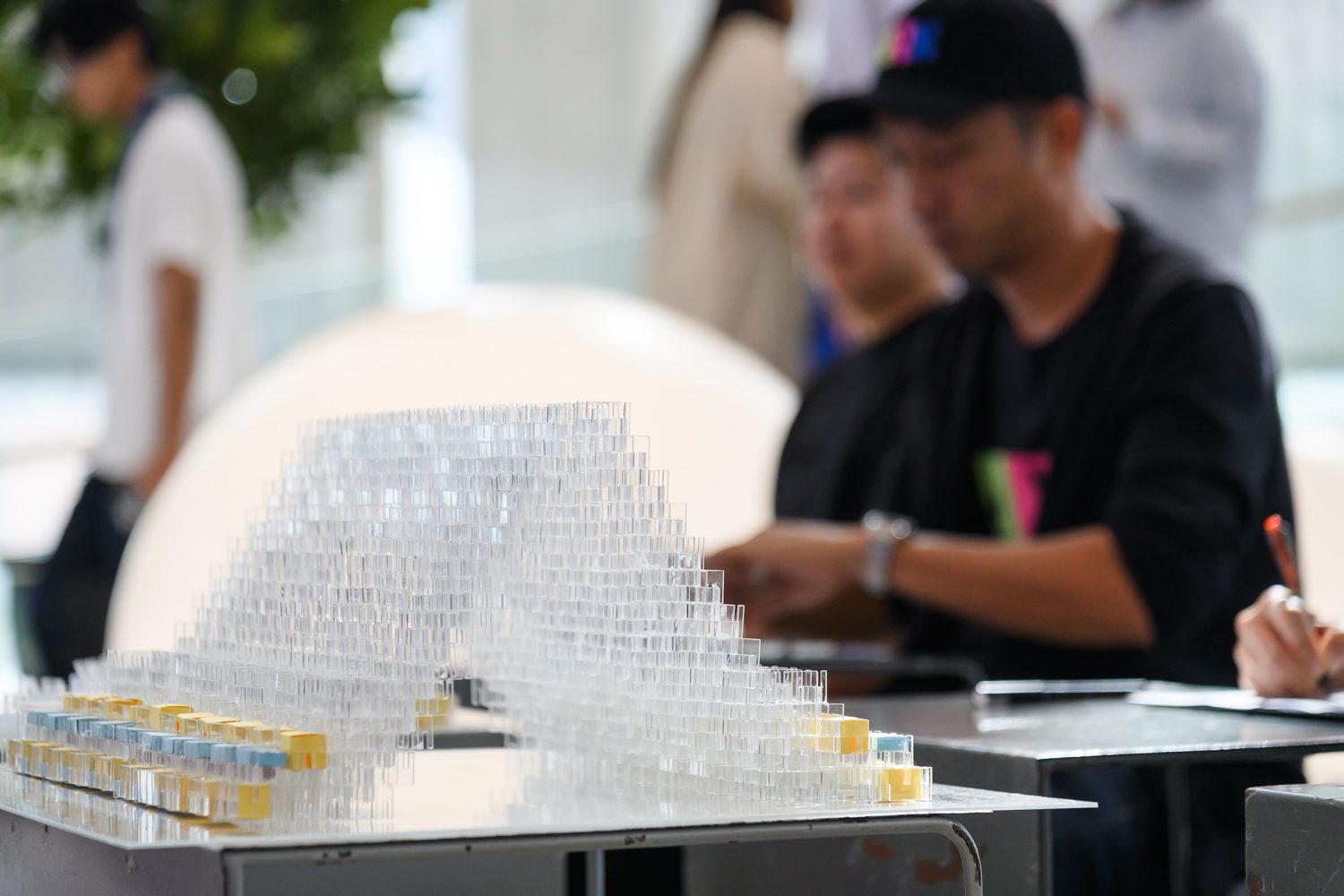
CHAMELEON PAVILION
Angkrit: For me, many of the teams have the potential to further develop their projects into contemporary art installations by deepening their sense of experimentation, and by exploring how material, space, and time can evoke feeling and experience. This is especially true for works intended for public settings. I would encourage everyone to place greater emphasis on designing in dialogue with both context and people. It would also be interesting to see how each team might continue expanding their ideas from ‘Liminal Terminal,’ branching them out, integrating insights from other disciplines, and finding ways to connect that knowledge with design practice.
Sanitas: When it comes to creating meaningful spatial experiences, it’s really something one has to learn over time, adjusting and refining, bit by bit. I’ve learned the same way through my own projects. Take Khao Mor, for example. At first, I wanted it to be a place where people could pause, slow down, and spend a quiet moment with themselves. But once it was built, it turned out to be incredibly photogenic, and people ended up spending more time taking pictures than being present. It gave me something to think about. There are places in other parts of the world where you’re not even allowed to bring your phone in. But the real question is how do you design a work that naturally creates that condition on its own?
Peras
art4d: From your perspective, what do you find most intriguing about the process of turning the winning proposal into reality? And what kind of outcome do you hope to see in the end?
Sanitas: The winning project stands out because it doesn’t rely on creating a grand or monumental space like many others did. Instead, it uses something ambiguous, like the oversized chair, as a device to generate two distinct spatial programs. Rather than building up a structure or columns to define space, it draws on light, shadow and natural movement to create a space that shifts and transforms throughout the day. What interests me most is how it will adapt to each site. I actually hope it doesn’t look exactly like the original drawings. I’m expecting an unexpected outcome (laughs).
From my point of view, I’d also love to see an added personal dimension. Right now, it’s a purely public installation, so it would be interesting to introduce something more intimate, perhaps through sound or other sensory elements that create a more dynamic form of engagement while keeping the main structure as it is.
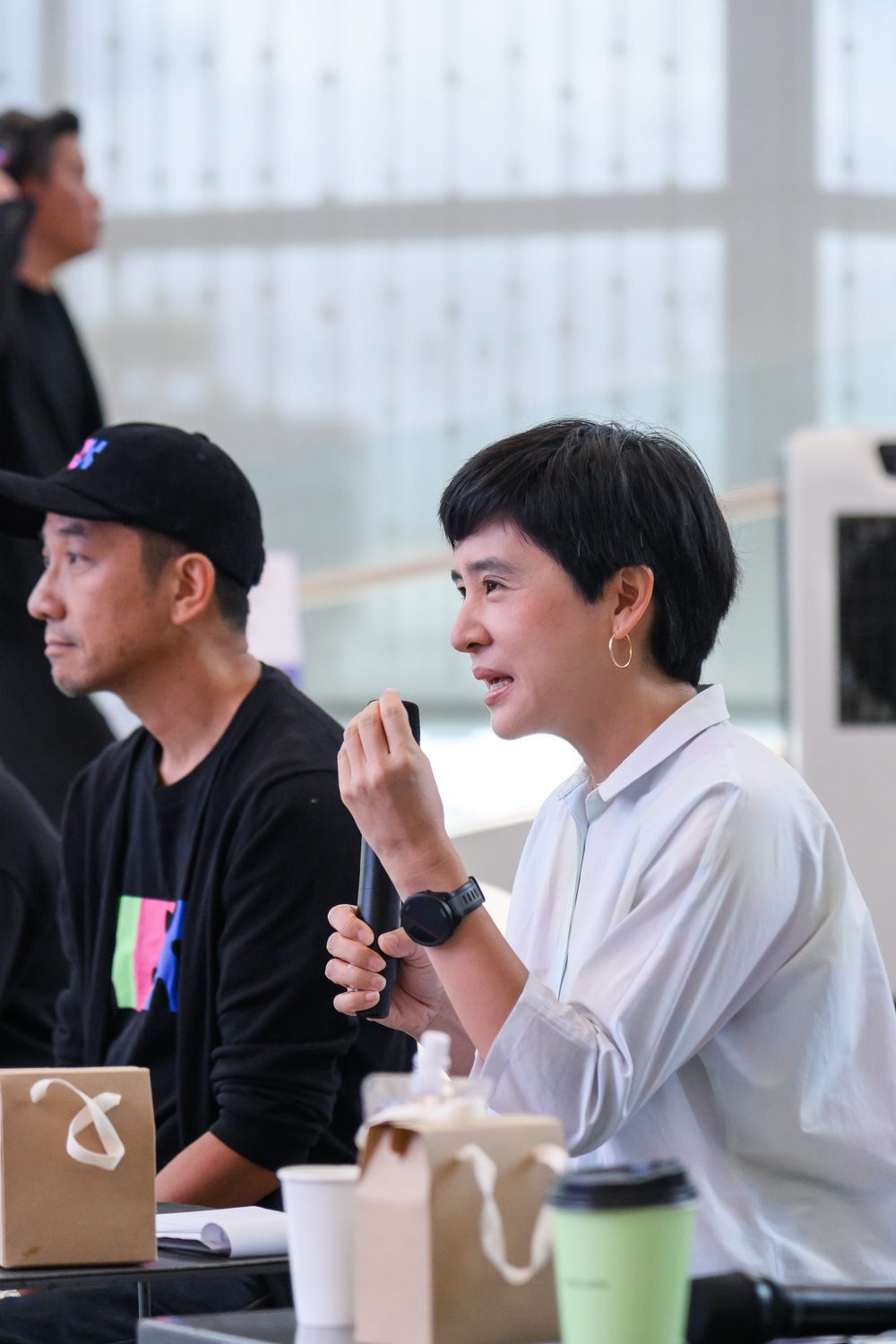
Angkrit: I think the main structure still feels too rigid, too large, and a little too self-assertive. It would be more intriguing, and more challenging, if the structure were reduced to the bare minimum required for it to stand. That would better reflect the project’s underlying idea of connecting with its surroundings and with nature itself. Personally, I feel the curvature of the form could go even further. Perhaps smaller components could echo that curve, creating an interplay of enclosed and open spaces at once. Or it could incorporate more playful, transformable features, like a surface that tilts upward to become a canopy, for instance.
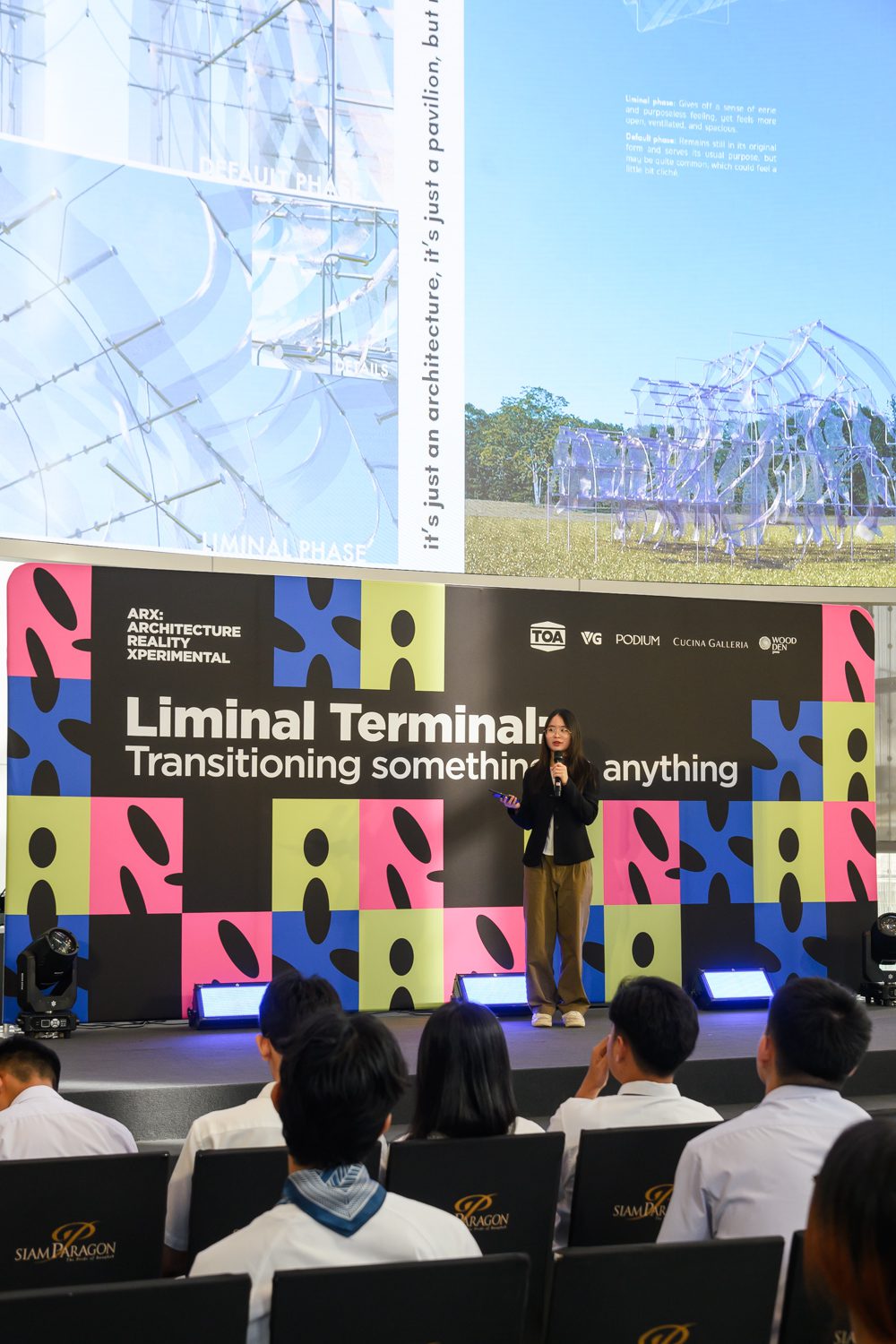
Wind of Change
Pratarn: Turning a design proposal into a built project is a truly formative experience. It brings in many people beyond the designer, during construction and even after the work is completed. I hope more of the finalist projects will have the chance to be realized. I’m very much looking forward to seeing where the next generation of ARX participants will go from here.
Angkrit: What exists in the mind and what finally takes form in reality will never be exactly the same, and I don’t expect it to be (laughs). What truly interests me is the process of development, refinement, and adaptation; how the work evolves to suit its site, materials, timeframe, and budget. It’s exciting to see an idea begin to take shape, to witness the making, the problem-solving, and the transformations along the way. It’s all deeply engaging and rewarding to follow, especially when you finally get to experience the finished work in person. I’d also like to take this chance to congratulate all the teams once again.
Visit 20 Finalists’ works: https://art4d.com/20-finalists-of-arx-2025