
 The first gallery of the main exhibition Richard Rogers: Talking Buildings.
 ‘RICHARD ROGERS: TALKING BUILDINGS,’ AN EXHIBITION FEATURING THE WORK OF RICHARD ROGERS, THE ARCHITECT WHO DEFINED PUBLIC ARCHITECTURE, CONVEYS THE SPIRIT OF DESIGN FOR PEOPLE THROUGH INSTALLATIONS BY RSHP ARCHITECTS
TEXT: PARK LERTCHANYAKUL
PHOTO: GARETH GARDNER EXCEPT AS NOTED
(For Thai, press here)
From June 18 to September 21, the exhibition Richard Rogers: Talking Buildings was held at the Sir John Soane’s Museum, celebrating the work of one of Britain’s most influential architects. Open to the public free of charge, the exhibition traced key milestones in Rogers’ career and explored his lasting impact on contemporary architecture. The design of the exhibition was personally overseen by Ab Rogers, Richard’s son, in collaboration with his father’s firm, RSHP Architects.
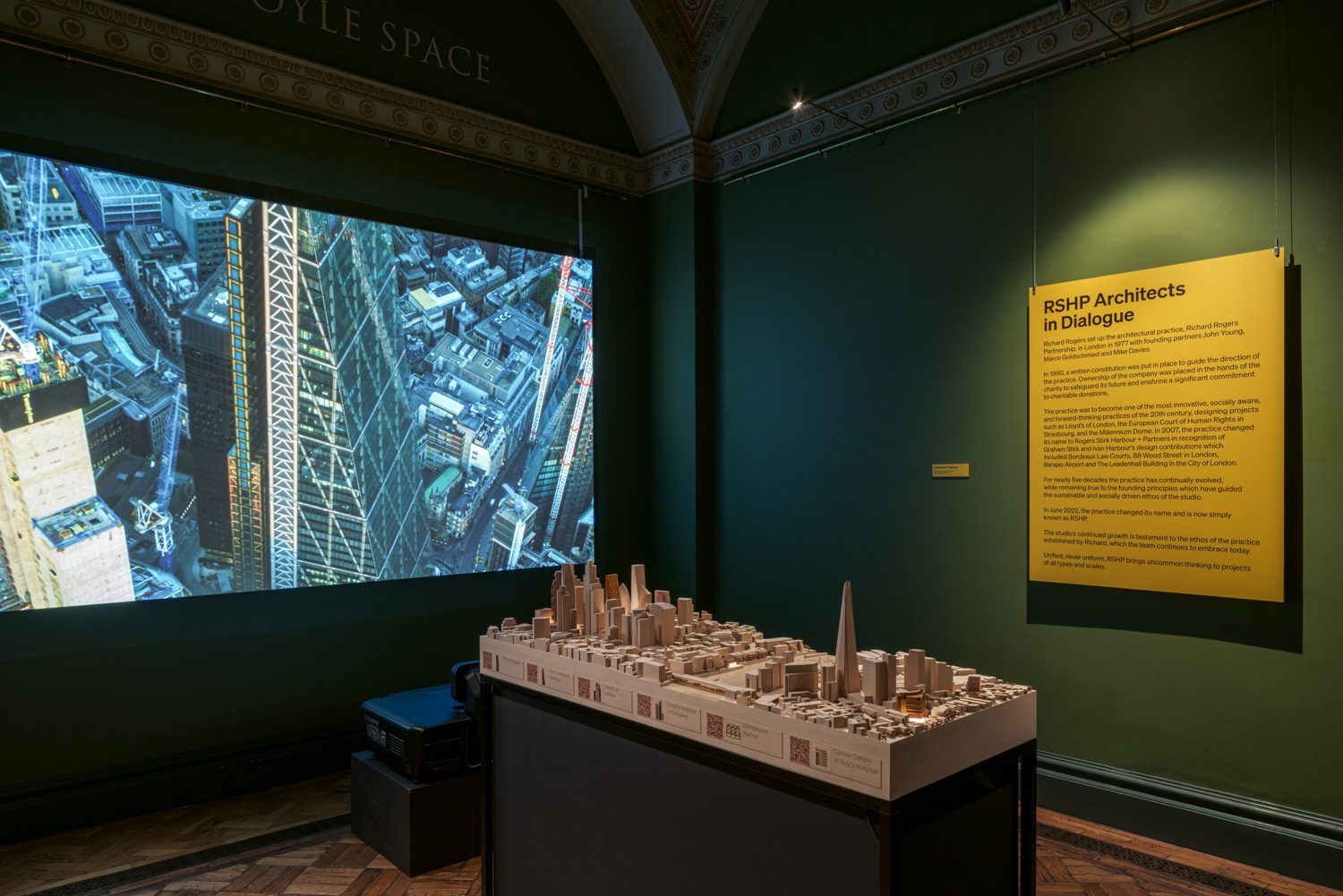
The exhibition’s first section, RSHP Architects in Dialogue
The opening section, RSHP: Architects in Dialogue, was presented separately from the main exhibition, located in the museum’s Foyle Space. This display narrated the evolution of the practice, from its founding years to the period following Richard Rogers’ passing in 2021, when the firm was renamed RSHP Architects. At the center of the room stood a timber model showcasing several of the firm’s landmark projects across London.
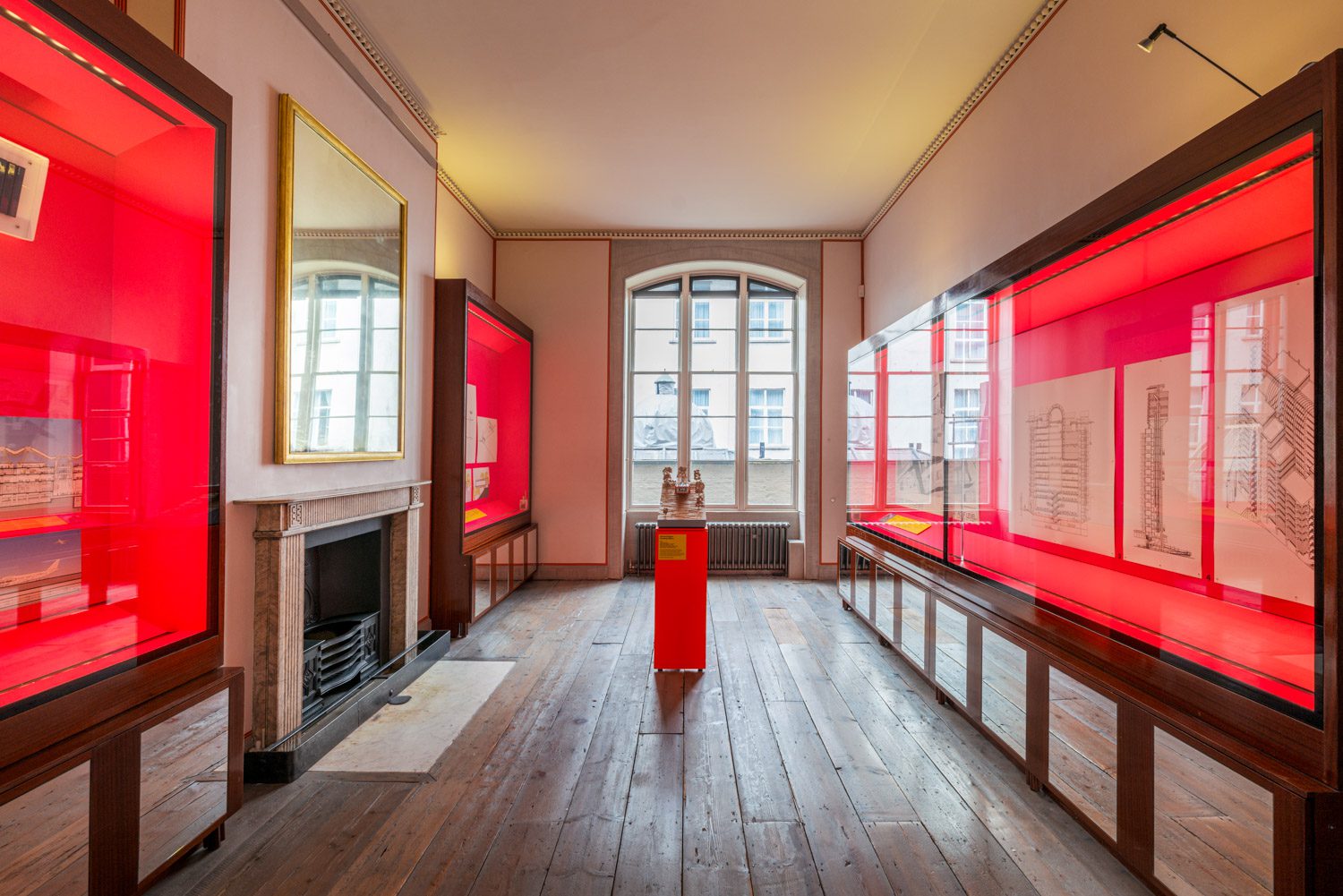
The second gallery of the main exhibition featured large-scale hand drawings surrounding a central Drawing Gallery model.
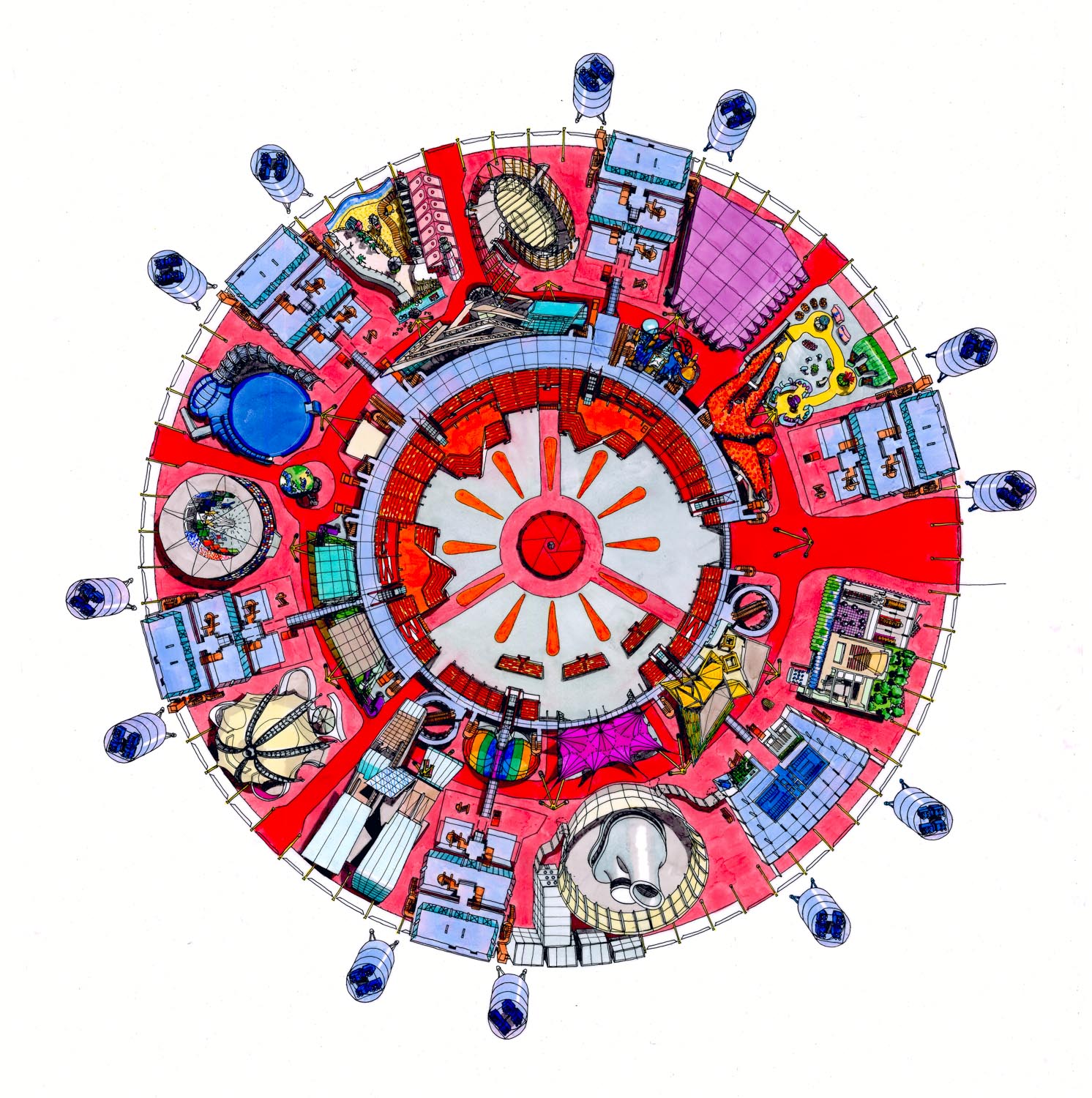
A plan drawing of the Millennium Dome, widely known today as The O2. | Image courtesy of RSHP Drawings
The main section of the exhibition comprised two rooms, each devoted to presenting Richard Rogers’ most significant and personally cherished works from his prolific career spanning over five decades, from 1967 to 2020. A total of eight projects are showcased—six realized buildings and two unbuilt proposals, through an array of media including photographs, sketches, drawings, architectural plans, and models, all displayed for close examination. Together, these materials provide a detailed narrative of each project’s genesis, context, design philosophy, and the underlying ideas that shaped Rogers’ architectural vision.
Richard Rogers’ lifelong fascination with public space is evident throughout his oeuvre. Whether designing civic landmarks or private commissions, his work consistently centers on the human experience—on how people perceive, move through, and inhabit space. Scale and proportion are carefully attuned to the user, while his architectural thinking expands beyond form to embrace the social, environmental, and political dimensions of the built environment. The result is a vast, open civic space where the boundaries between inside and out dissolve, inviting people to inhabit and use both realms with equal freedom.
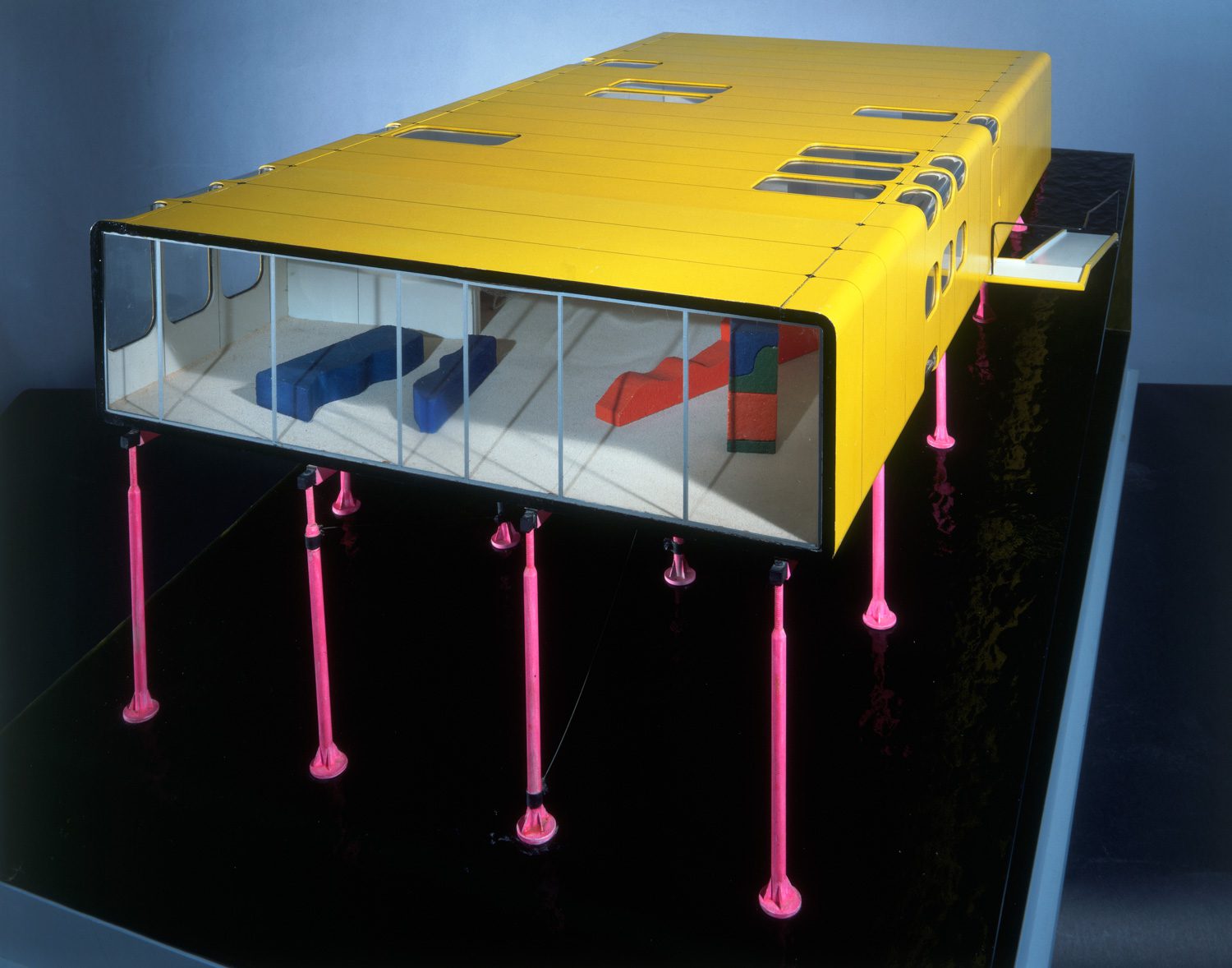
Model of the Zip-Up House designed for the 1968 competition ‘The House for Today’ | Photo courtesy of RSHP Archive
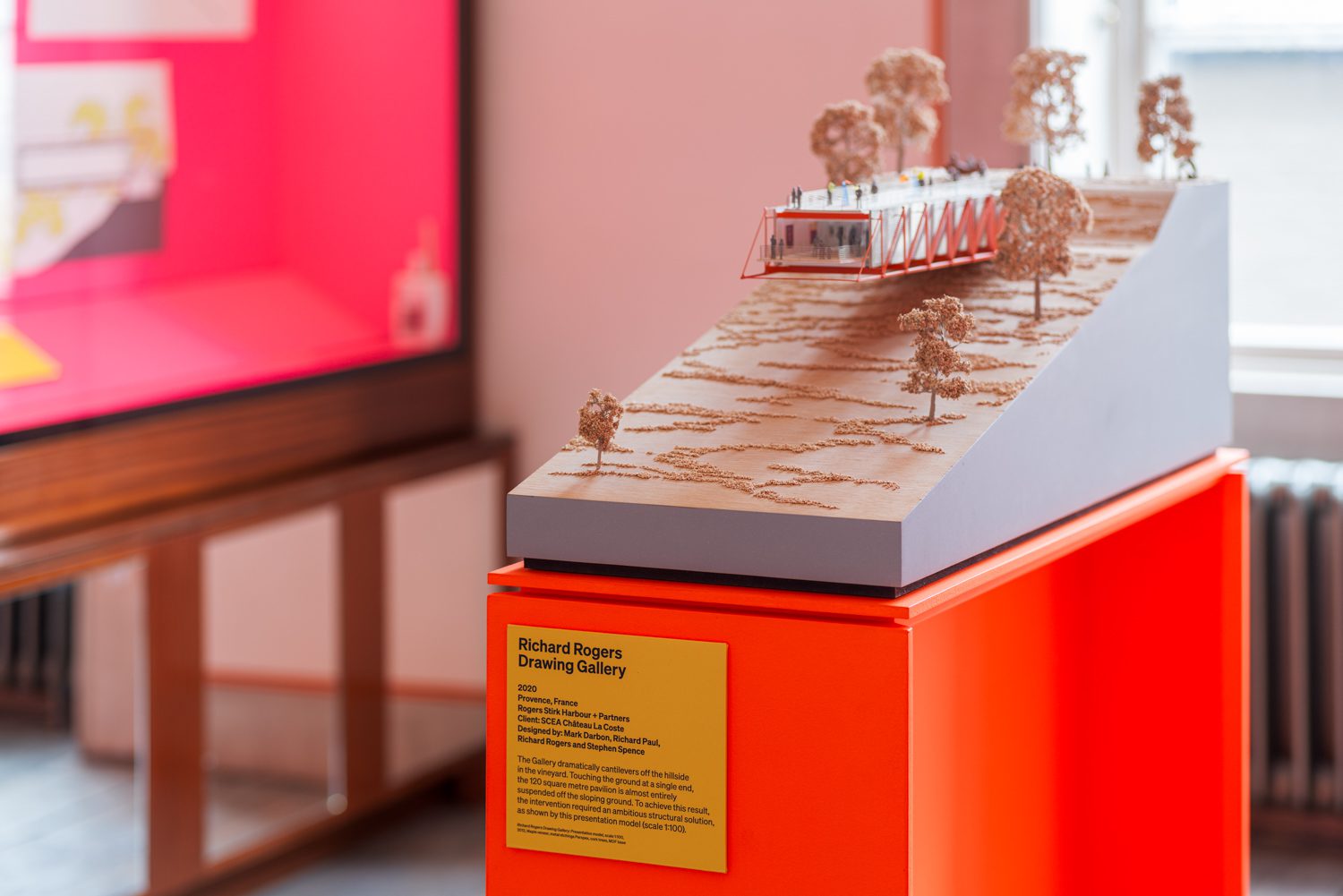
Model of the Drawing Gallery, the final project completed by Richard Rogers in 2020
The exhibition opens with Zip-Up House, Richard Rogers’ 1967 design submitted to The House for Today competition, and concludes with Drawing Gallery, his last built work, completed in 2020. Encountering these two works at opposite ends of the exhibition inevitably invites comparison. Although the Drawing Gallery was conceived with the benefit of contemporary construction technologies and a more sophisticated structural system, its underlying ideas echo those of the Zip-Up House. Beneath the technical evolution lies the same architectural DNA; a continuity of thought that reflects Rogers’ remarkable architectural vision and consistency across more than five decades of practice.
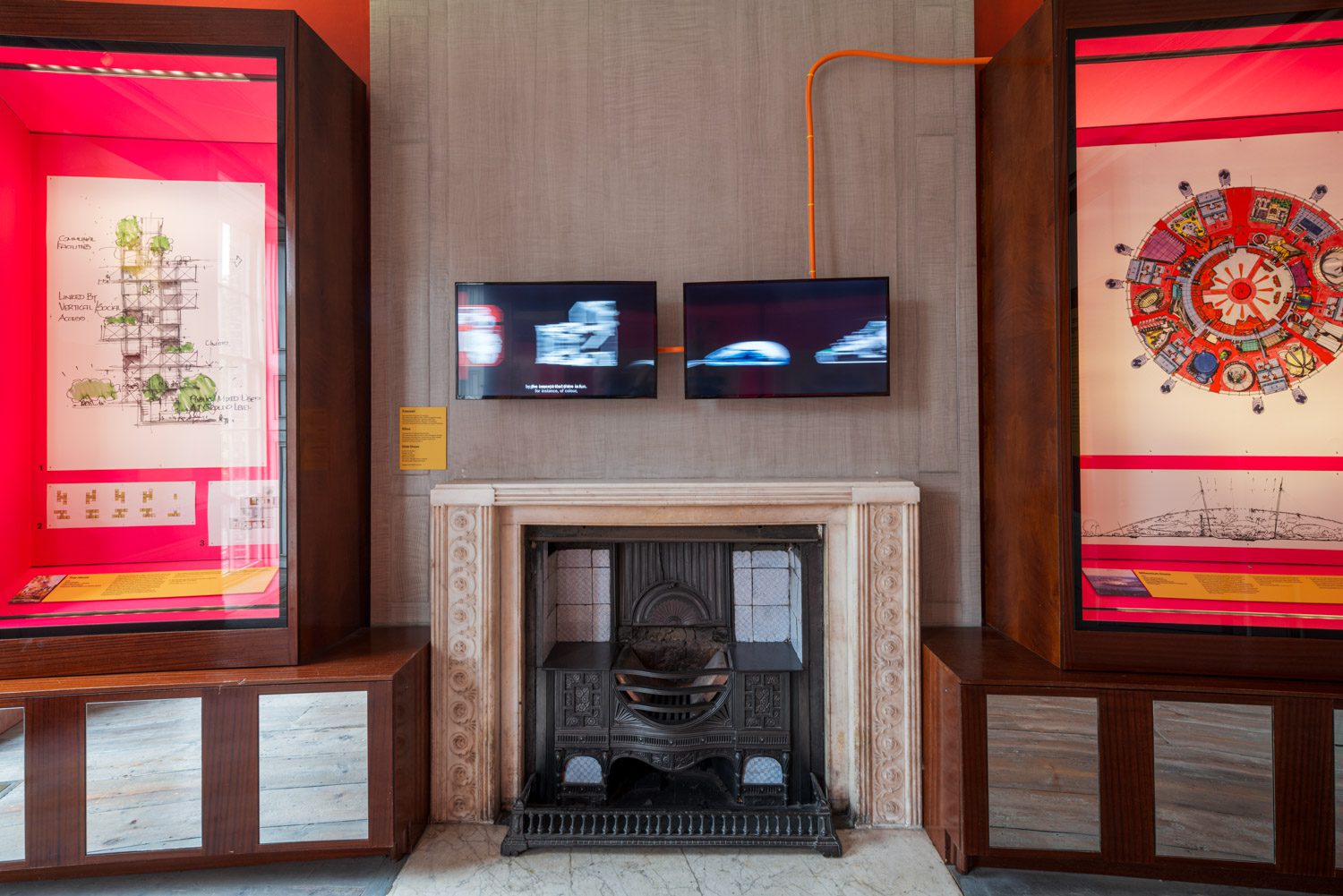
A screen projection alternates between interviews with Richard Rogers and photographs of the featured projects.
At the center of the exhibition, two video interviews with Richard Rogers, Exposed and Ethos, are presented, both originally created for earlier retrospectives of his work. There is perhaps no better way to grasp Rogers’ spirit than to hear him speak for himself. These recordings reveal his origins, convictions, and the values that shaped his approach to design. What stands out most is his belief that architecture should speak on its own terms. A building, in his view, ought to make its purpose and construction intelligible at first glance. This idea led him to expose the structure and mechanical systems on the exterior rather than concealing them behind walls, allowing their logic to be read from the outside. For Rogers, this transparency made architecture honest, open, and communicative. By enabling viewers to intuit how a structure works and why it exists, he sought to foster a connection and sense of belonging between the individual and the built environment, creating spaces that are inclusive, engaging, genuinely public.
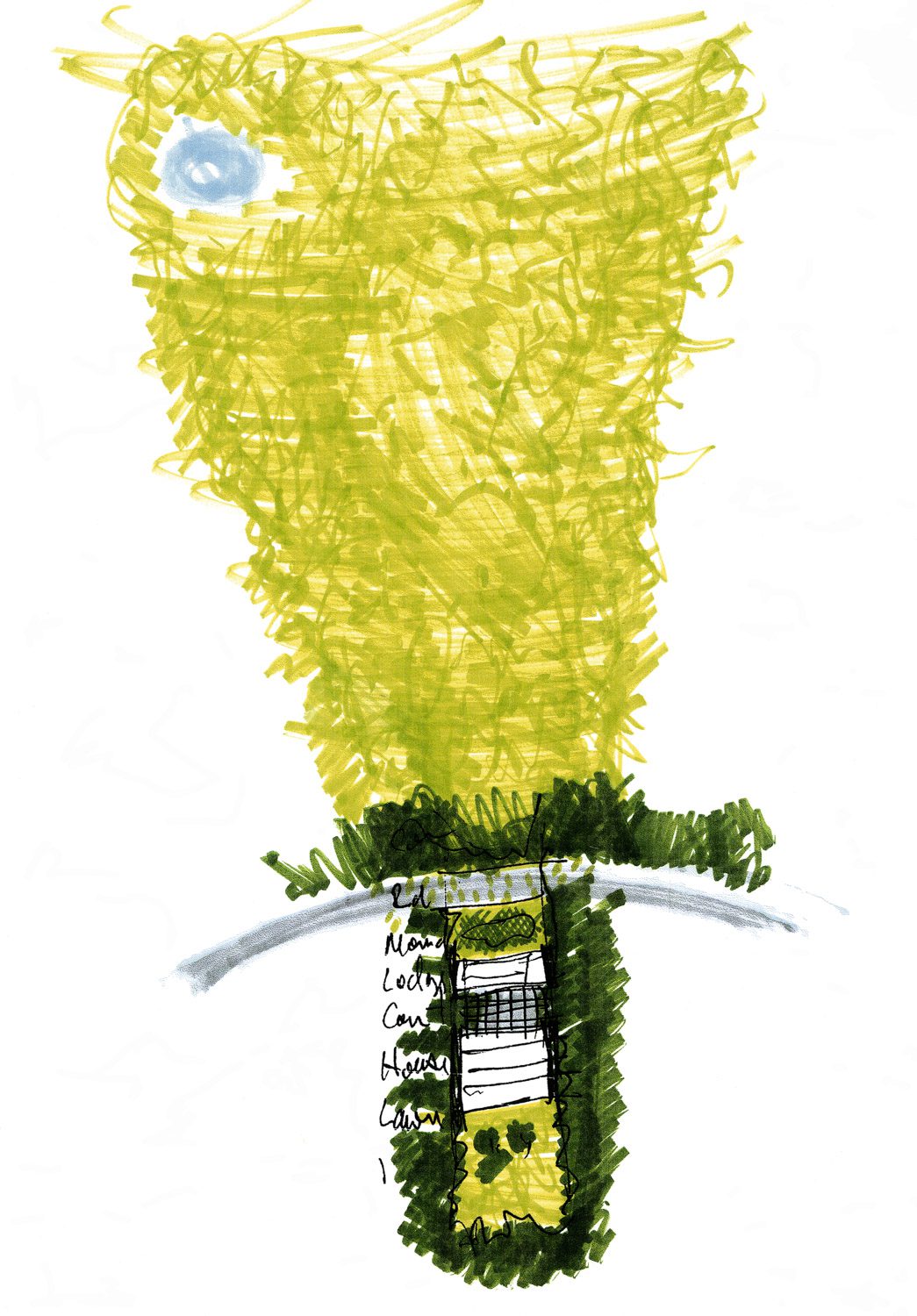
A conceptual sketch of the Rogers House showing the changing context of the building and the way the home’s environment opens out toward the rear garden and onto Wimbledon Common. | Image courtesy of RSHP Archive
One of the most compelling aspects of Richard Rogers: Talking Buildings is its choice of venue. Held at the Sir John Soane’s Museum, which was once the architect’s own home in the 19th century, the exhibition draws a quiet parallel between two figures separated by time yet united in spirit. Both Soane and Rogers were architects whose ideas were far ahead of their time. Each saw architecture as more than a physical construct; it was a means of communication, a way to express ideas and advance society through design. Their works reveal a shared belief that buildings should be created for people and remain accessible to them.
Although the exhibition has come to an end, those visiting London can still experience Rogers’ iconic architecture in person, from the Millennium Dome (now The O2) to Lloyd’s of London, which welcomes visitors to its main reception hall. Most notably, on October 24–25, the Centre Pompidou will host Because Beaubourg, an event of music, light, and sound that celebrates the building’s enduring vitality before it closes for a major renovation at the end of the year. The reopening is expected to take place five years from now.