
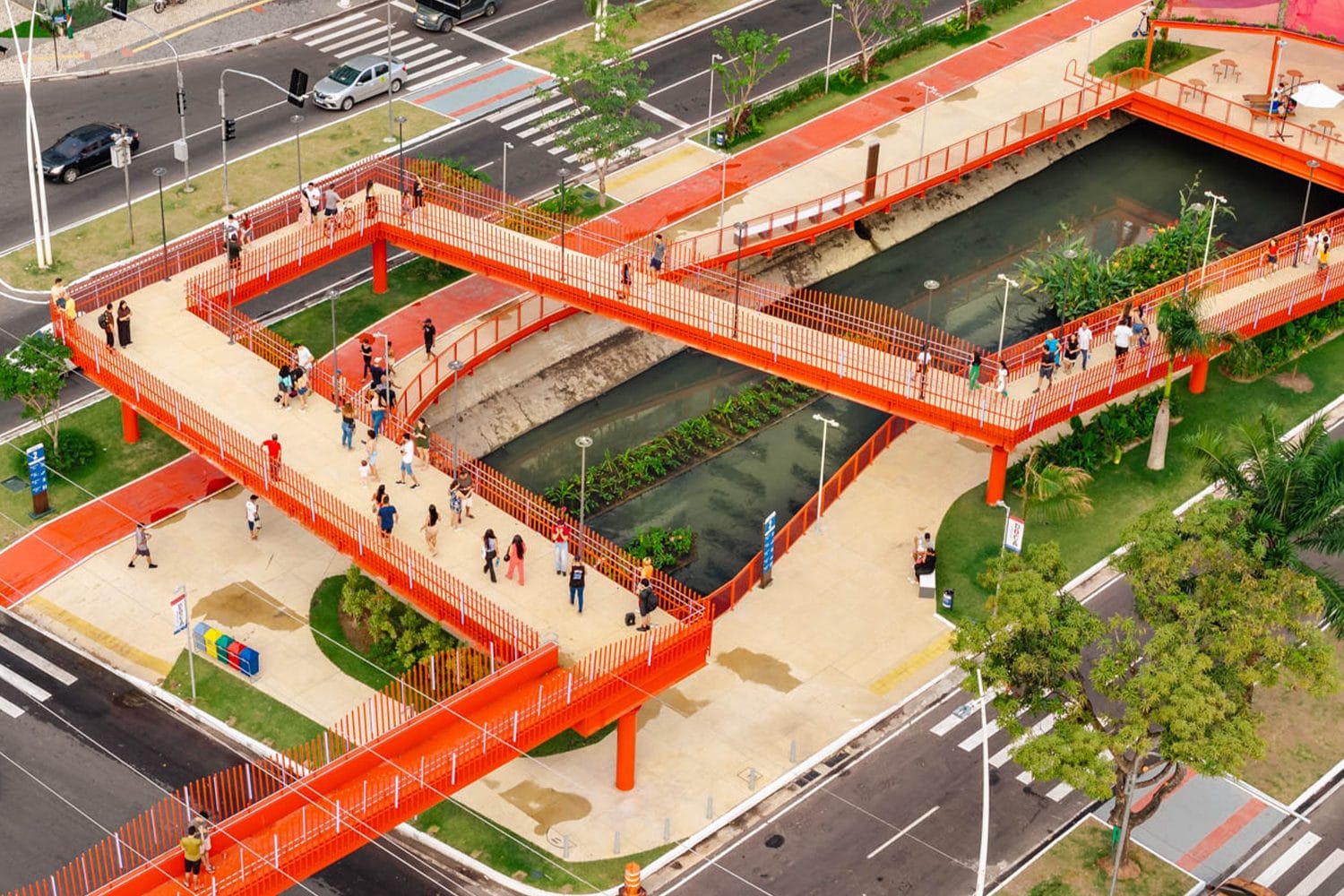
 Photo: Manuel Sa
 DOCA LINEAR PARK: AN ORANGE CANAL-SIDE BRIDGE IN BRAZIL REANIMATES A ONCE-FORGOTTEN WATERFRONT AND RAISES QUESTIONS ABOUT NATURE IN THE CITY
TEXT: PHARIN OPASSEREPADUNG
PHOTO CREDIT AS NOTED
(For Thai, press here)
DOCA Linear Park is a 1.2-kilometer orange pedestrian bridge that invites people back into the city for a canal-side stroll. Situated in the heart of Belém do Pará, it runs along the median of Avenida Visconde de Sousa Franco in Brazil. Designed by the São Paulo–based studio Natureza Urbana, the project first opened in 2023.
In recent years, canal-front public spaces and urban waterways have emerged in cities around the world, including Thailand, bringing renewed vibrancy to urban life, improving accessibility, encouraging people to venture outdoors, and generating economic momentum. Areas once neglected or overlooked have gradually been transformed into new destinations. Within this broader movement, DOCA Linear Park seeks to catalyze a similar shift within its own context.
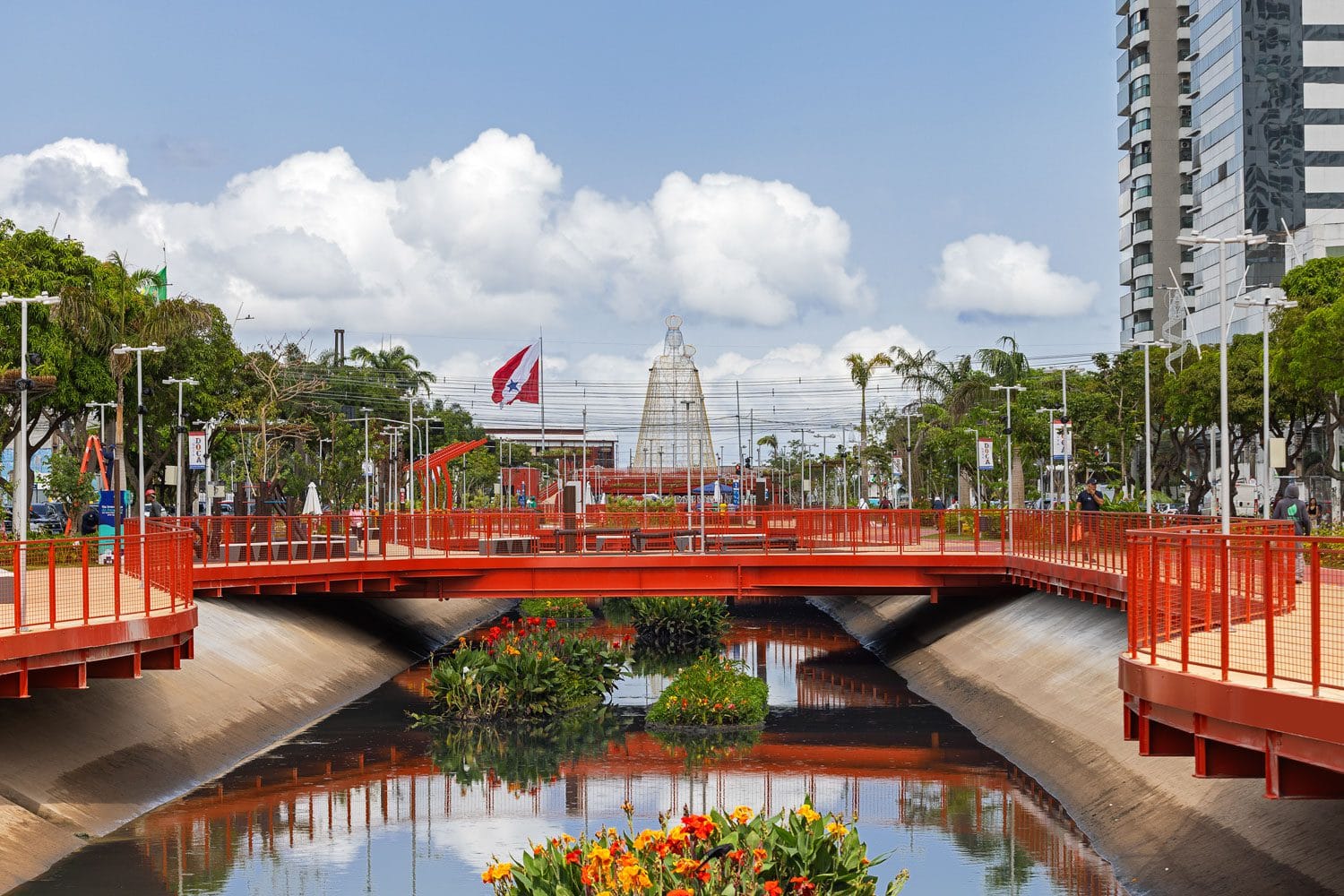
Photo: Leonardo Finotti
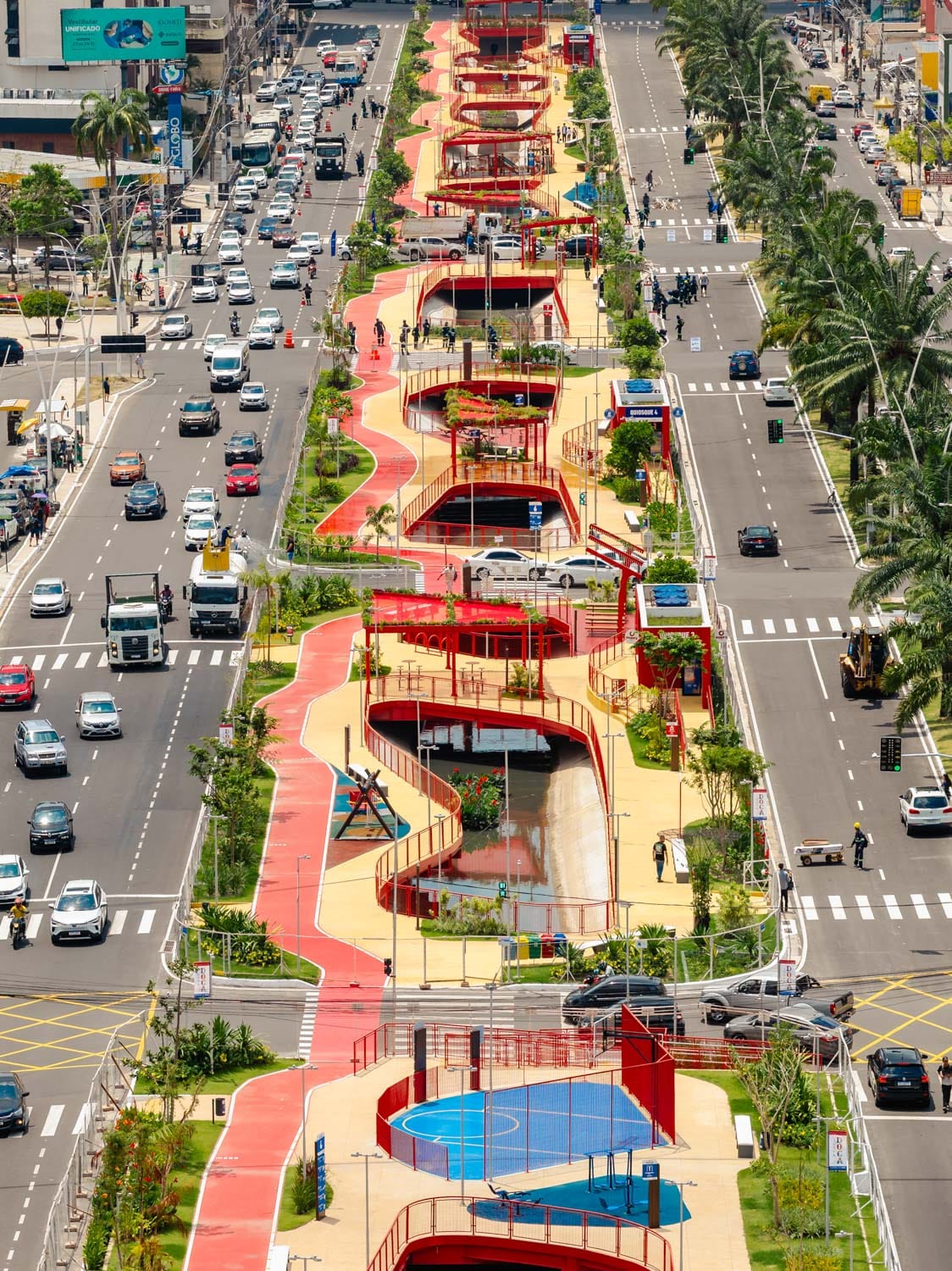
Photo: Manuel Sa
Here, the waterway’s original natural character had gradually disappeared under the pressures of urban growth, rising numbers of cars and motorcycles, and environmental decline, leading to a steady reduction in the public realm. In response, Natureza Urbana set out to restore the canal as a new civic living room for the city. Developed in collaboration with local communities, schools, and stakeholders, the project introduces programs aligned with public needs. Framed as an inclusive urban landscape, the park is intended to serve up to 500,000 people.
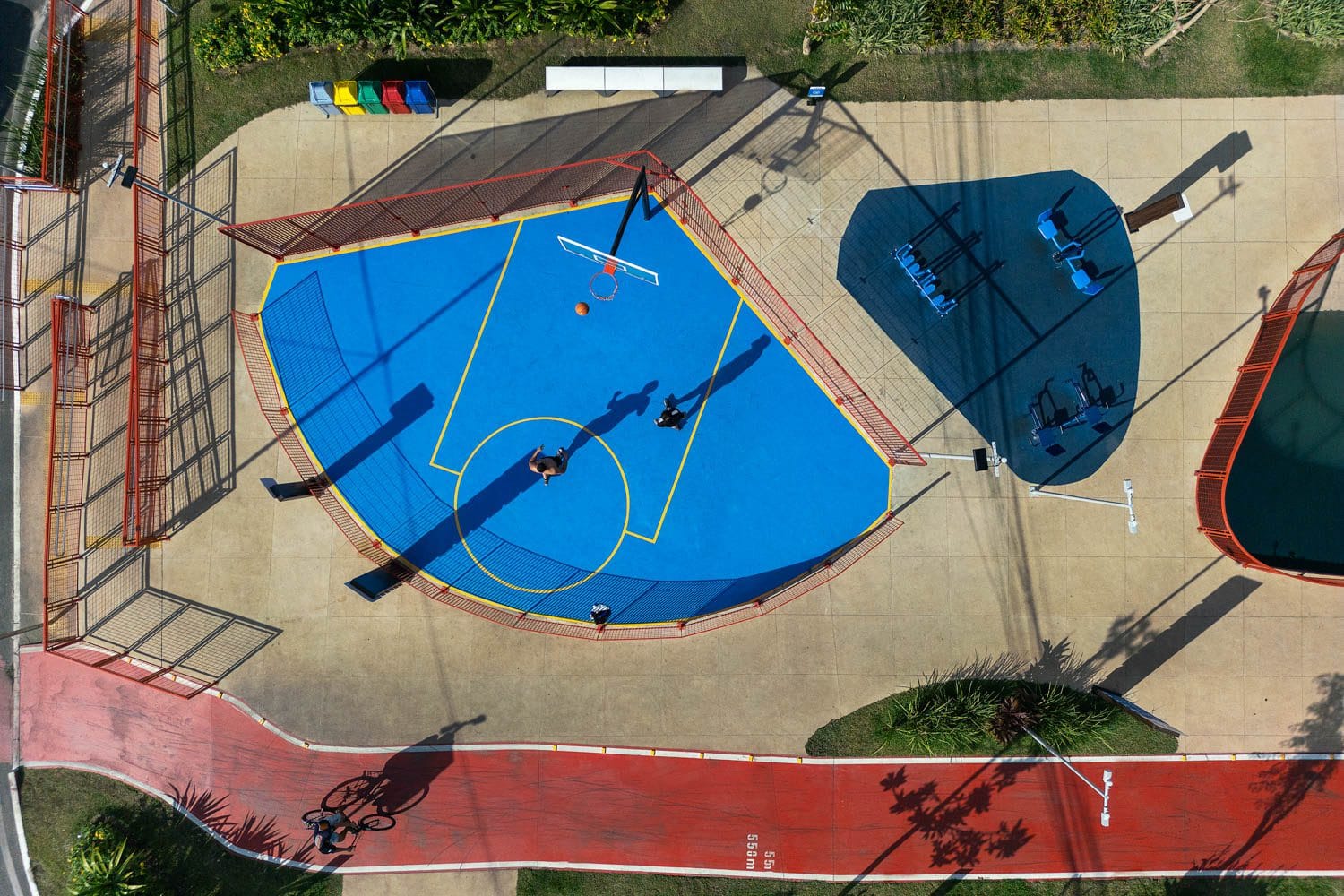 Photo: Leonardo Finotti
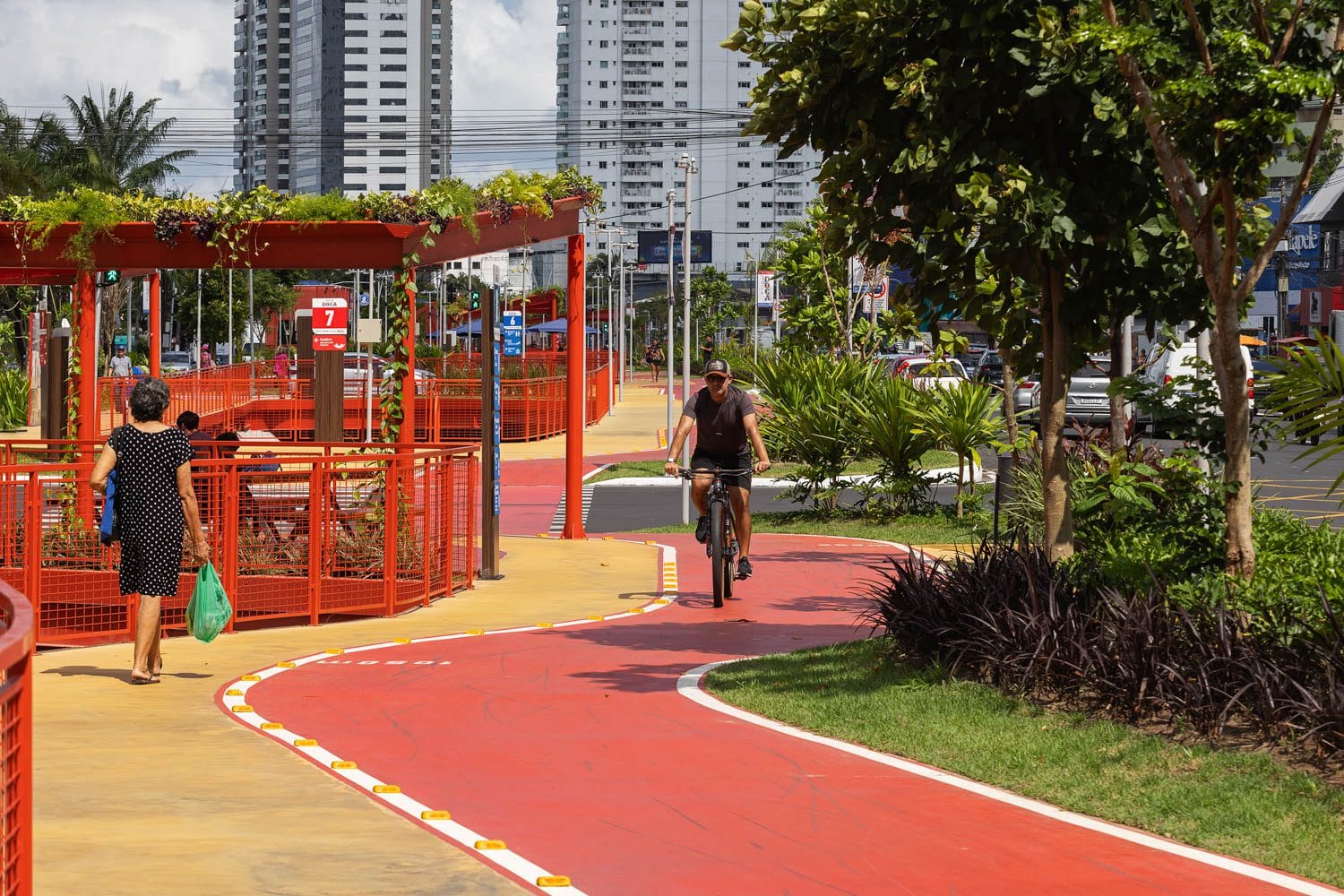
The intervention reconnects the urban fabric with its natural surroundings, transforming a once-untended canal-front space into an accessible setting capable of accommodating a wide range of activities. Envisioned as a place for rest, gathering, sports, and everyday leisure, it expands green areas, enhances the quality of the surrounding environment, and revives the historical memory of the city’s waterway.
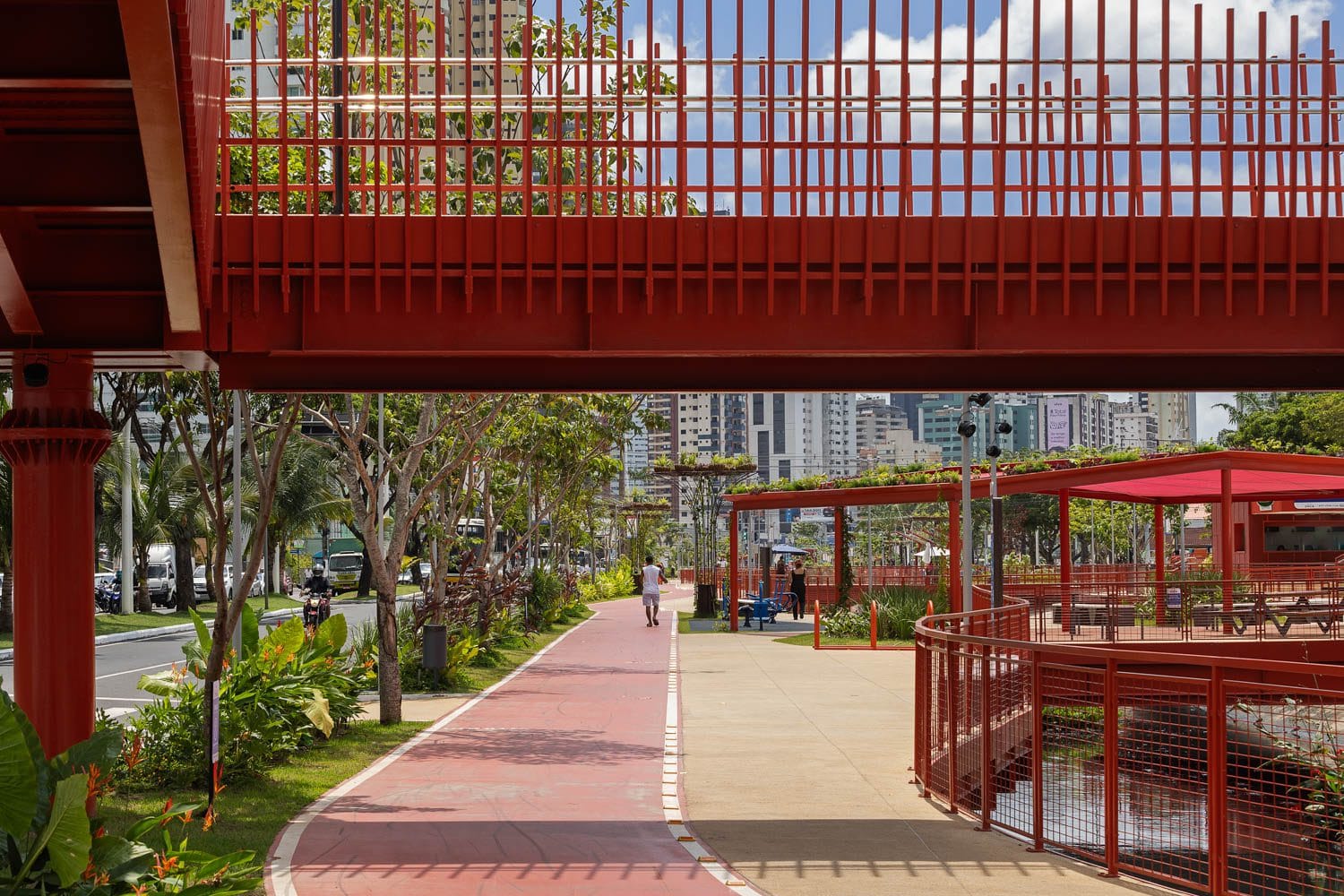
Photo: Leonardo Finotti
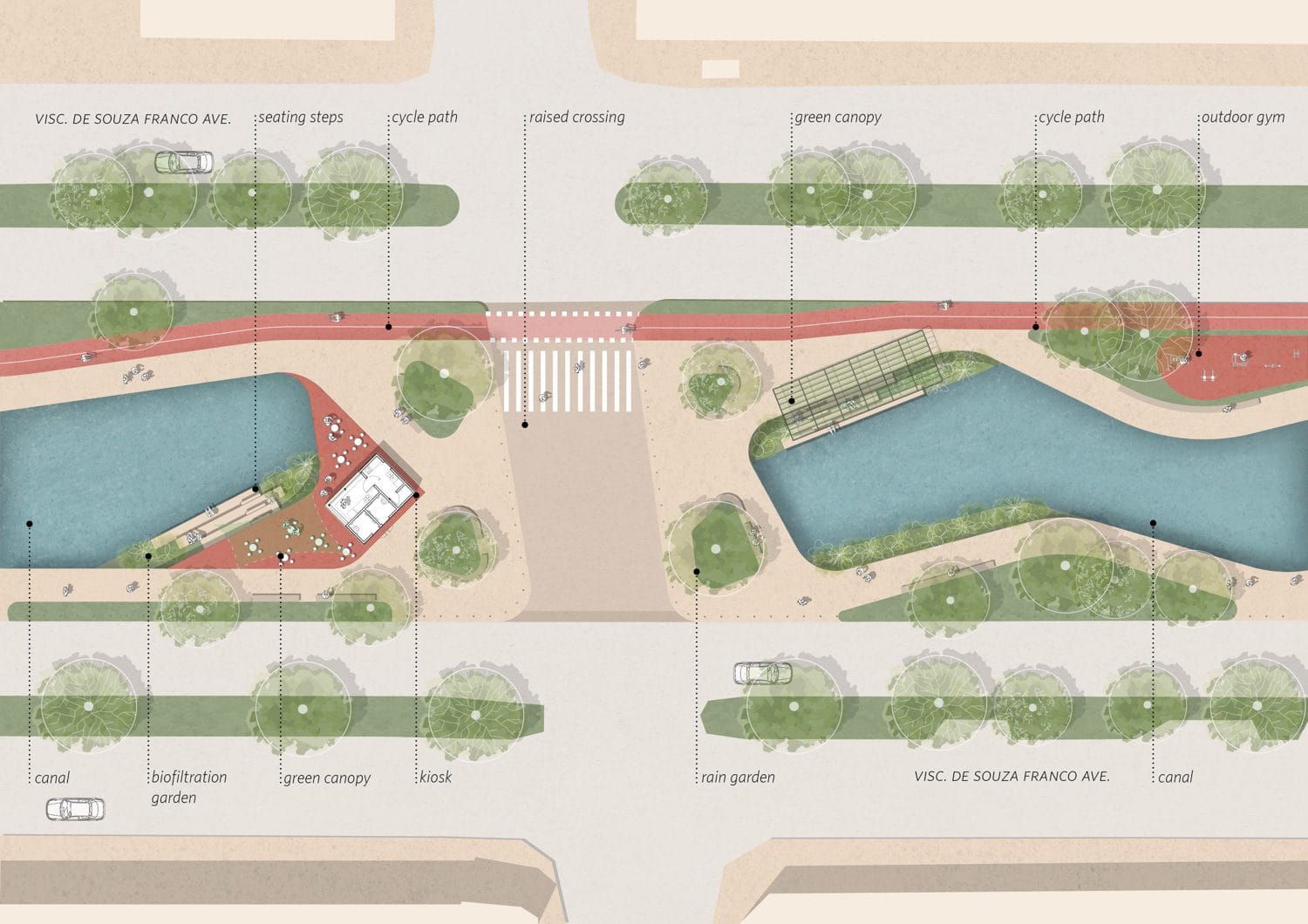
The orange structure, set against soft, yellow-toned surfaces, stretches along the canal’s edge. In some sections, it extends over the canal; in others, it runs alongside it. Each segment varies in width and spatial character. Seating areas are placed at intervals, with rows of trees lining both sides of the path. Food kiosks, elevated walkways, playgrounds, bicycle lanes, and flexible activity zones are integrated throughout, offering diverse experiences along the canal’s more than one-kilometer length. At the same time, the structure functions as a link between the streets on either side.
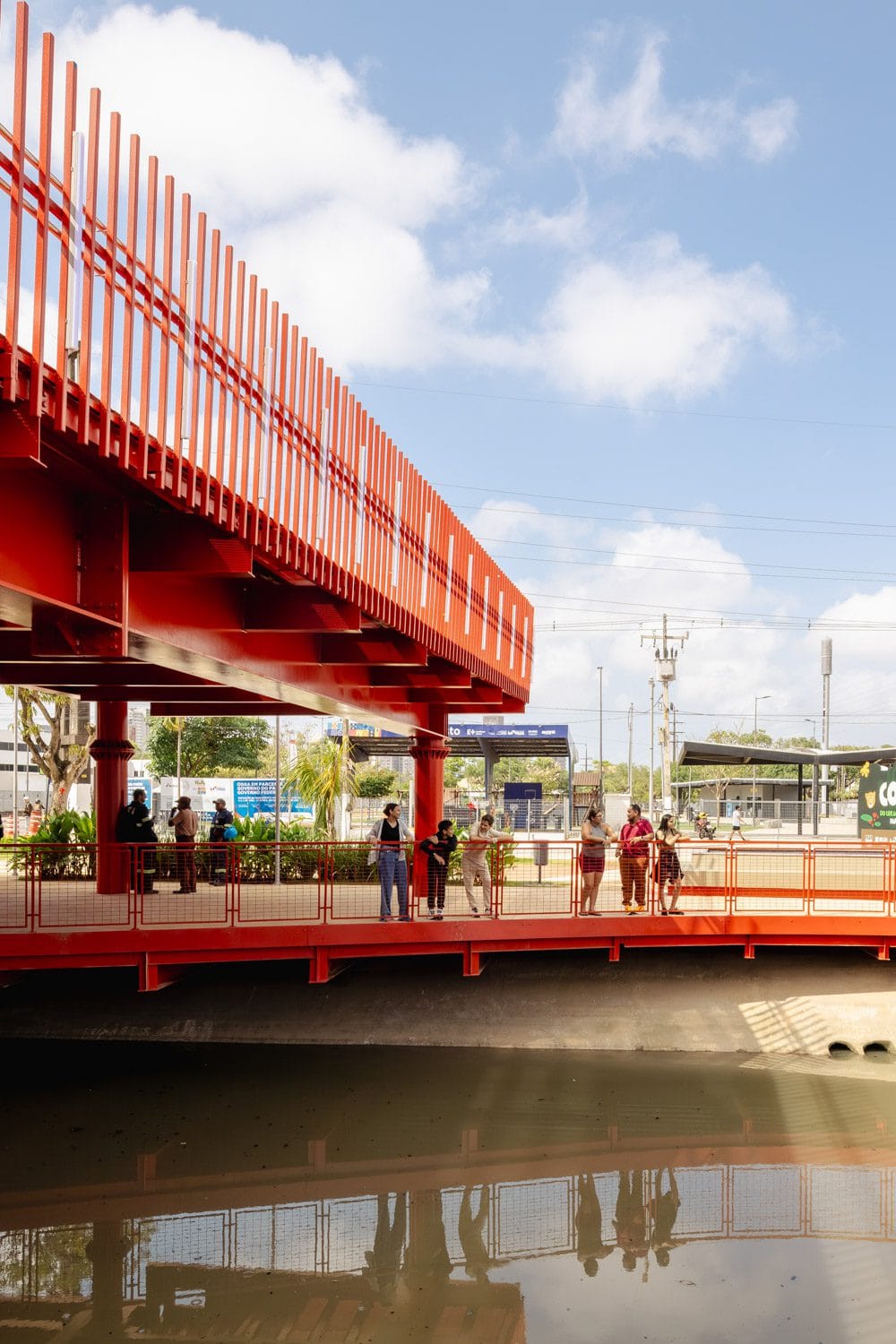
Photo: Manuel Sa
Beyond serving as a new recreational destination for the city, the project also drew attention during the 30th Conference of the Parties to the United Nations Framework Convention on Climate Change (COP30), held in Brazil. Its location in the same host city, along with its alignment with issues of climate stewardship, monitoring, and management, resonated with the core themes of the conference.
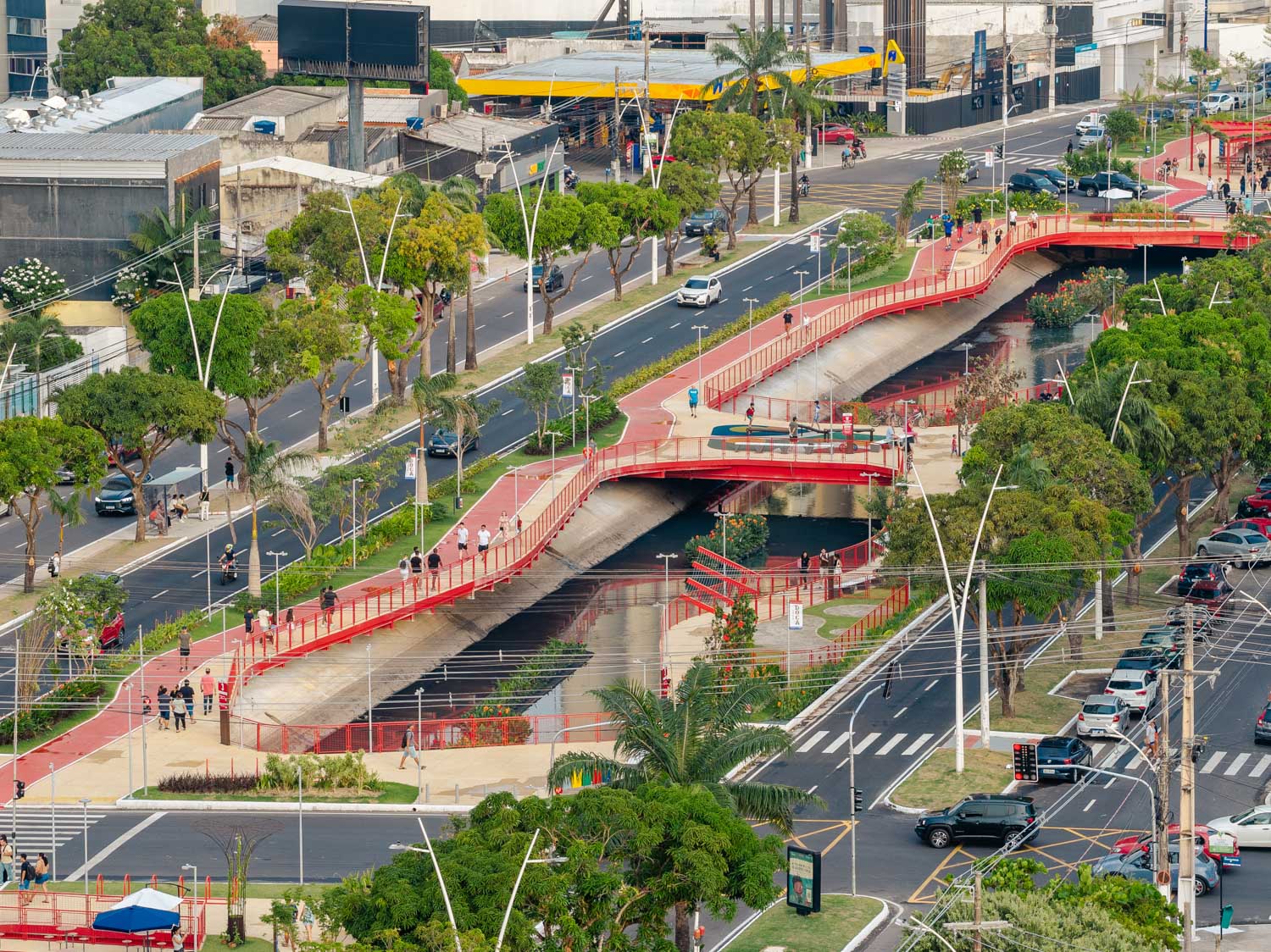
Photo: Manuel Sa
Urban development of this kind, however, often raises questions about its relationship with the natural world. No matter how visually compelling or accommodating a newly created setting may be for human use, questions inevitably remain: To what extent do the original systems persist? The flow of water, patterns of sunlight, shifts in temperature, and the habitats of other living beings may be altered in ways that are not immediately visible. Any architectural intervention, whether modest or monumental, inevitably impacts existing ecological conditions.
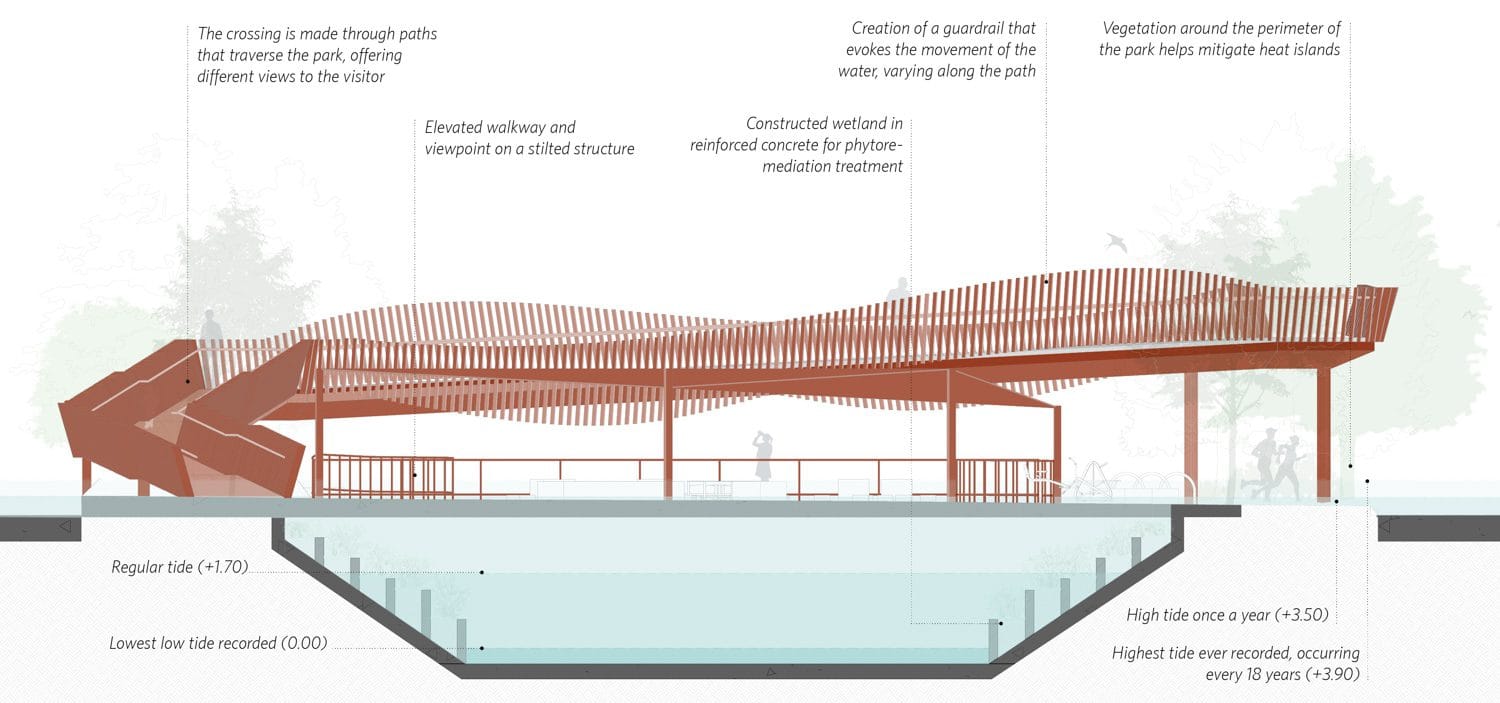
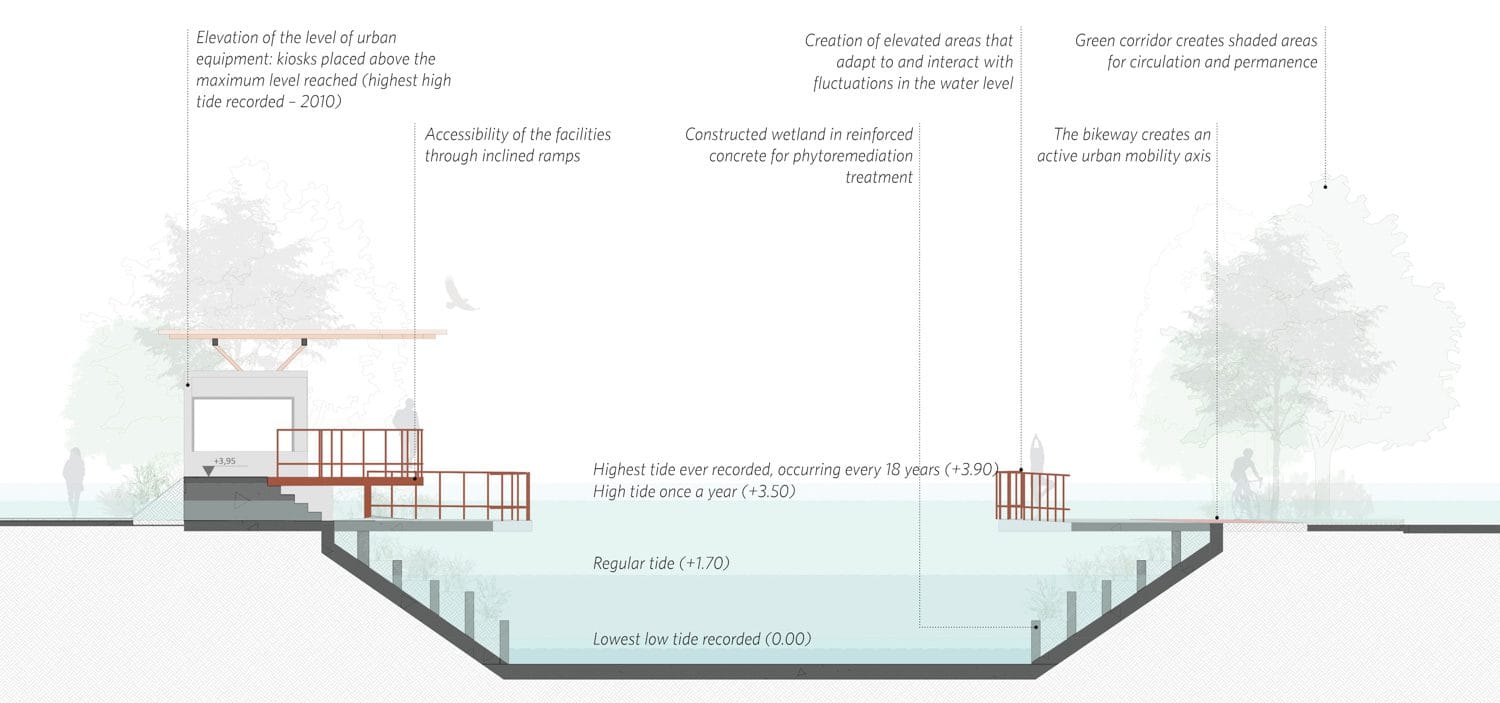
Environmental considerations were therefore integral to the overall approach. The architects regard the river corridor as part of the city’s original structure, one that deserves preservation rather than mere infrastructural addition. The proposal extends beyond the construction of a bridge, incorporating strategies to care for and rehabilitate the surrounding terrain. Sidewalk edges were adjusted to support plant growth, enhancing biodiversity and restoring a greater sense of naturalness to the canal. Grounded in nature-based solutions, the scheme introduces small-scale drainage systems along the waterway, reduces air pollution, mitigates flooding, and increases permeable surfaces to improve stormwater absorption and runoff management. In this way, the project reflects a broader ecological awareness and suggests one possible direction for the study of urban waterways, opening access for people while not excluding other living beings from sharing the environment.
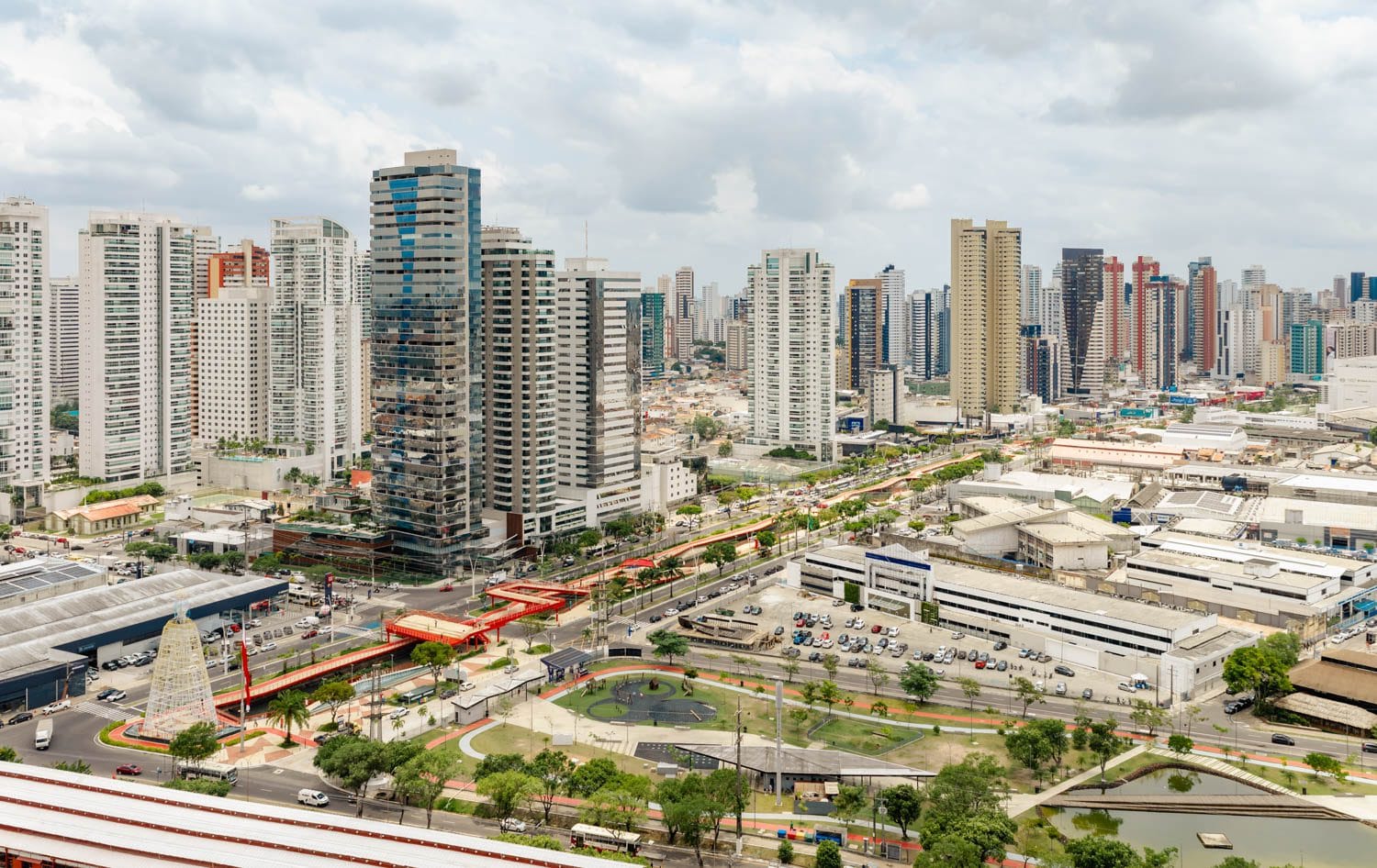
Photo: Manuel Sa
The challenge of shaping urban waterfronts, after all, extends beyond visual appeal or the ability to attract crowds. It lies in negotiating a balance between human activity, aquatic ecosystems, and the infrastructures that govern the city. Only through such equilibrium can these spaces function sustainably, both as civic realms and as living components of the urban fabric.