
Photo: W Workspace, Courtesy of Dib Bangkok
DIB BANGKOK, BANGKOK’S FIRST INTERNATIONAL CONTEMPORARY ART MUSEUM, IS A DESIGN BY KULAPAT YANTRASAST OF WHY ARCHITECTURE IN COLLABORATION WITH A49. THE DESIGN CONCEPT USES ARCHITECTURE AS A MEDIUM TO CONNECT PEOPLE WITH CONTEMPORARY ART THROUGH SPATIAL DESIGN AND SENSORY EXPERIENCES
TEXT: PRATCHAYAPOL LERTWICHA
PHOTO CREDIT AS NOTED
(For Thai, press here)
Sho Shibuya’s Memory (2025) appears prominently across the monumental billboard of Dib Bangkok.
Its finely gradated spectrum of color records the sky as observed by the artist each day. Where these memories were once captured on newspaper pages in Sunrise From A Small Window (2020), the same body of work has now been expanded onto an 85-meter-long billboard facing the Chalerm Maha Nakhon Expressway.
For many people traveling along the elevated roadway, this may be their first close encounter with international contemporary art.
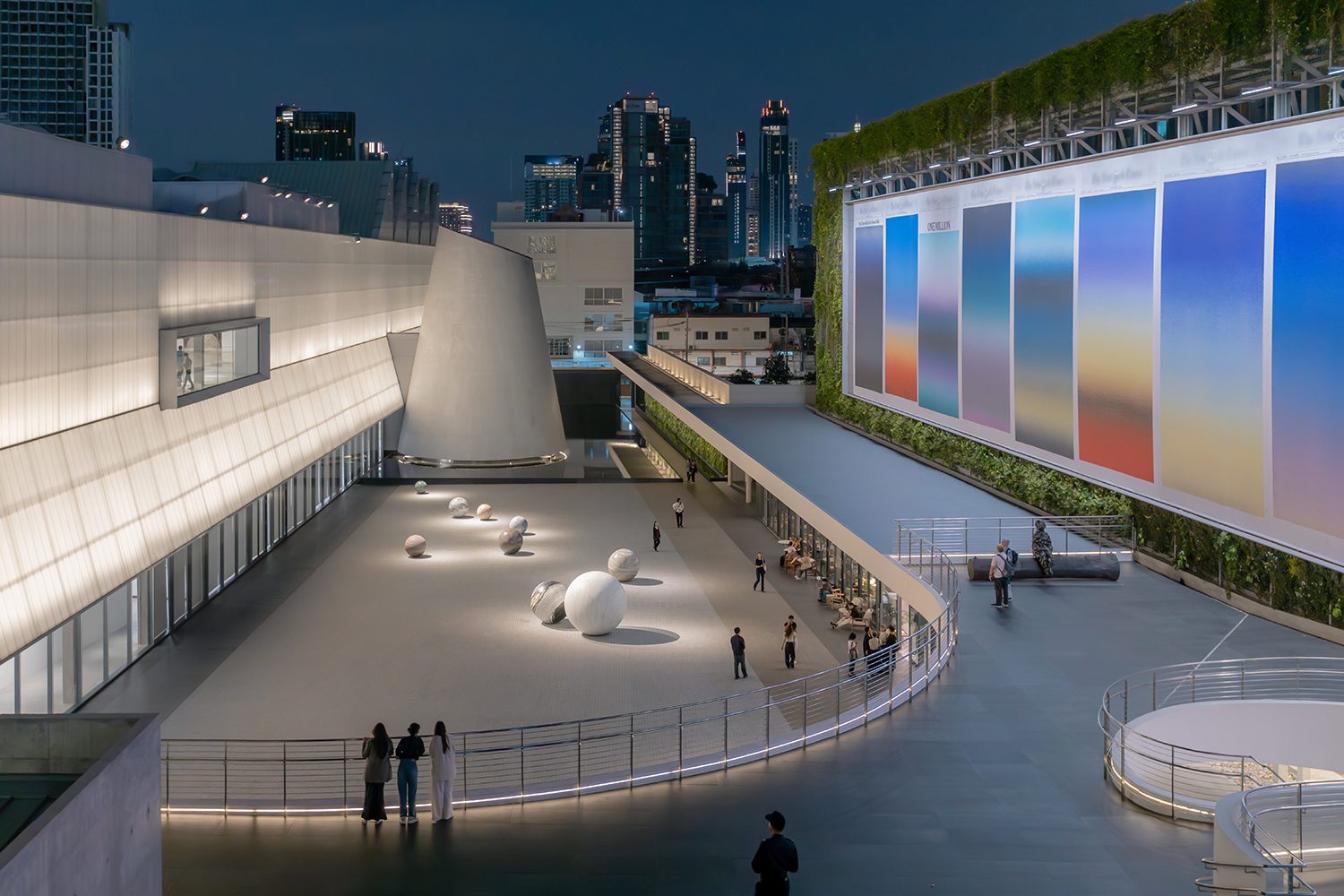
Photo: Ketsiree Wongwan
To many urban dwellers, contemporary art remains a world reserved for a select few, often perceived as something that requires layers of interpretation before its beauty can be appreciated. Yet the roots of this distance between contemporary art and the wider public lies beyond questions of understanding or taste alone. They run deeper, into the structures of education, public policy, and inequality that have pushed contemporary art away from the fabric of everyday life. The emergence of Dib Bangkok, led by its founding chairman Purat Osathanugrah, is therefore more than the opening of ‘Bangkok’s first international contemporary art museum.’ It is an attempt to build a bridge that brings the urban public into closer contact with art.
Dib Bangkok began with the vision of Petch Osathanugrah, who had long wished to establish a museum for the more than one thousand works he had collected with devotion over the course of three decades. Although his passing three years ago meant that he would not live to see the museum completed and opened to the public, that vision has been carried forward in full by his son, Purat. “This museum was born out of a love for art,” Purat says, describing the impulse that transformed a personal passion into a public institution.
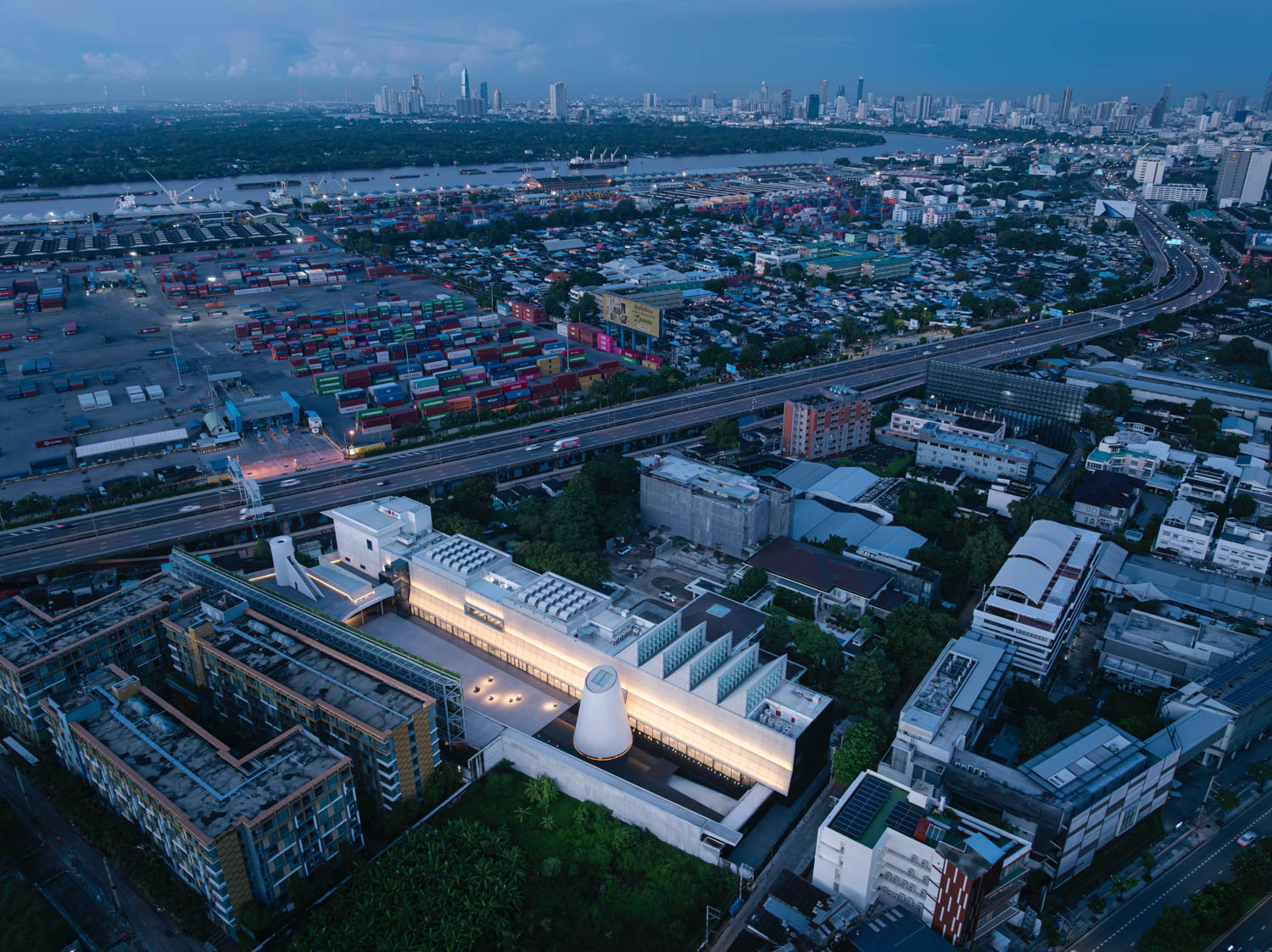
Photo: W Workspace, Courtesy of Dib Bangkok
Its positioning as ‘Bangkok’s first international contemporary art museum’ is not an overstatement. Dib is the first institution in the city to assume the status of a museum with a permanent collection comprising works by leading Thai and international artists, from Montien Boonma and Somboon Hormtientong to Louise Bourgeois and James Turrell. Led by museum director Dr. Miwako Tezuka, whose previous roles include positions at Asia Society Museum and Japan Society Gallery in New York, the team has set out to position Dib as a space of dialogue where Thai and global art can meet on equal terms.
“Dib Bangkok focuses on multidirectional visual dialogue. We are speaking to the world, but with the consciousness that we are firmly grounded in the Thai artistic community and Thai artistic culture,” Dr. Tezuka notes, describing the museum’s direction.
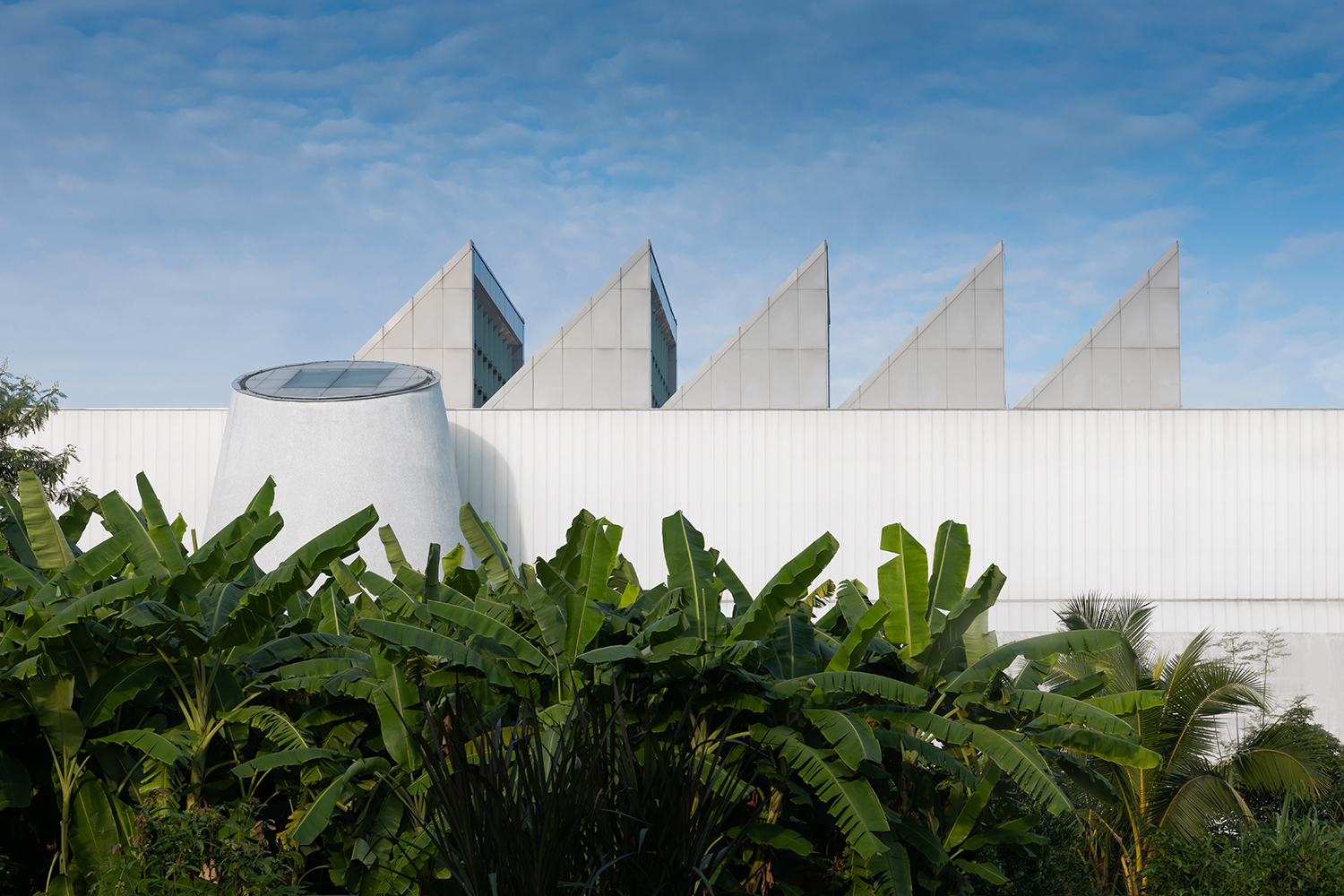
Photo: Ketsiree Wongwan
After a number of architects had been involved in the project’s early design stages, the task of bringing Dib Bangkok’s architecture to completion ultimately fell to Kulapat Yantrasast of wHY Architecture. As a Thai architect whose international reputation has been shaped by museum projects for institutions such as The Met and the Louvre, his involvement serves as another gesture of connection between local identity and global standards. A49 also joined the project as the local architect, helping transform more than 14,600 square meters of space in the Rama IV district into a realized cultural destination.
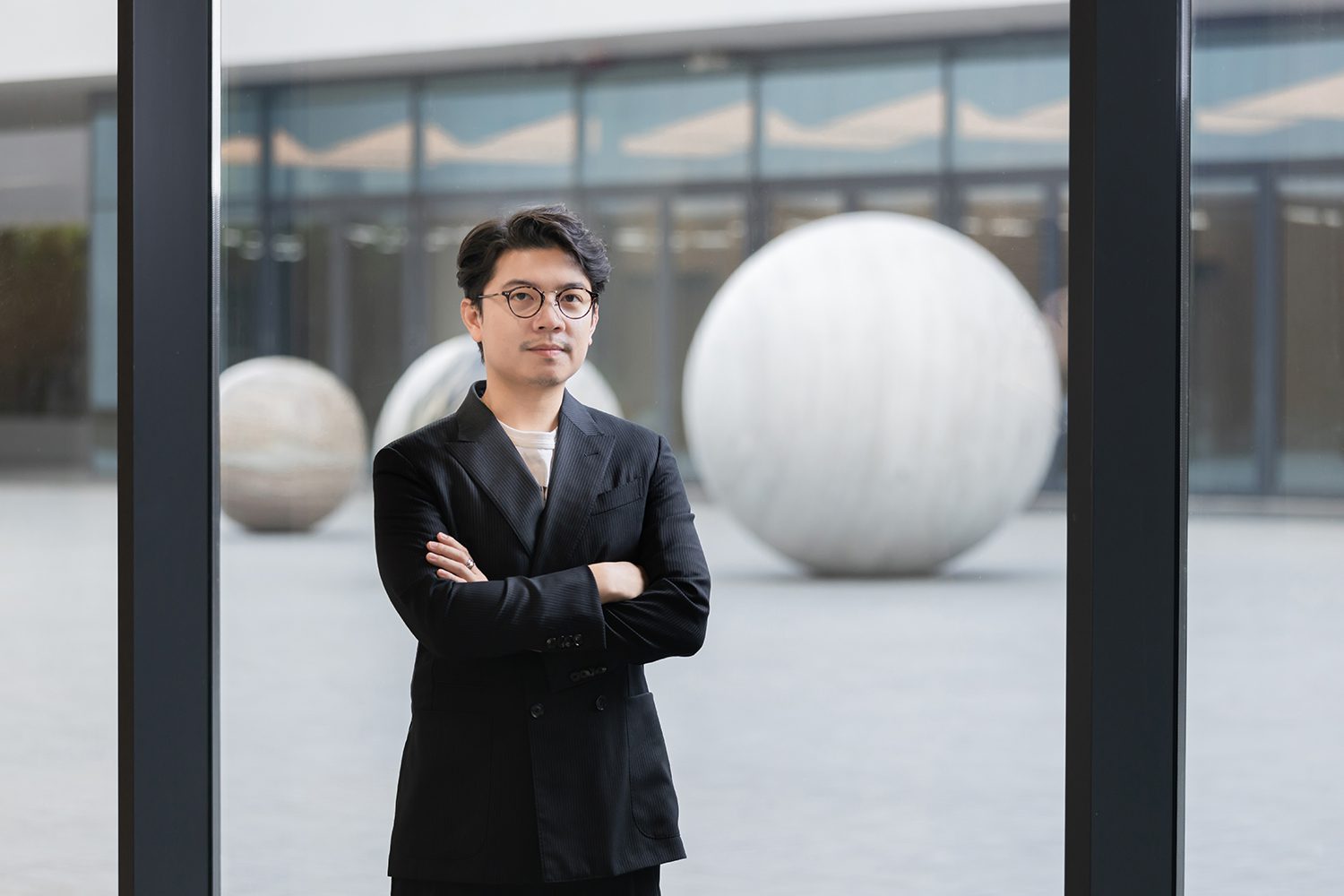
Purat ‘Chang’ Osathanugrah, Founding Chairman of Dib Bangkok | Photo: Ketsiree Wongwan
The name ‘Dib’ is simple yet open to multiple readings. It may suggest rawness, authenticity, or directness. Seen through the museum’s lowercase ‘dib’ logo, it can also imply a kind of unfiltered playfulness. For Purat, however, the name points to a state of openness, one in which visitors are invited to set aside their social masks and encounter inspiration with a freer mind. “We want people to come as they are, with sincerity and ease. To come in a raw, natural state, without having to put their guard up.”
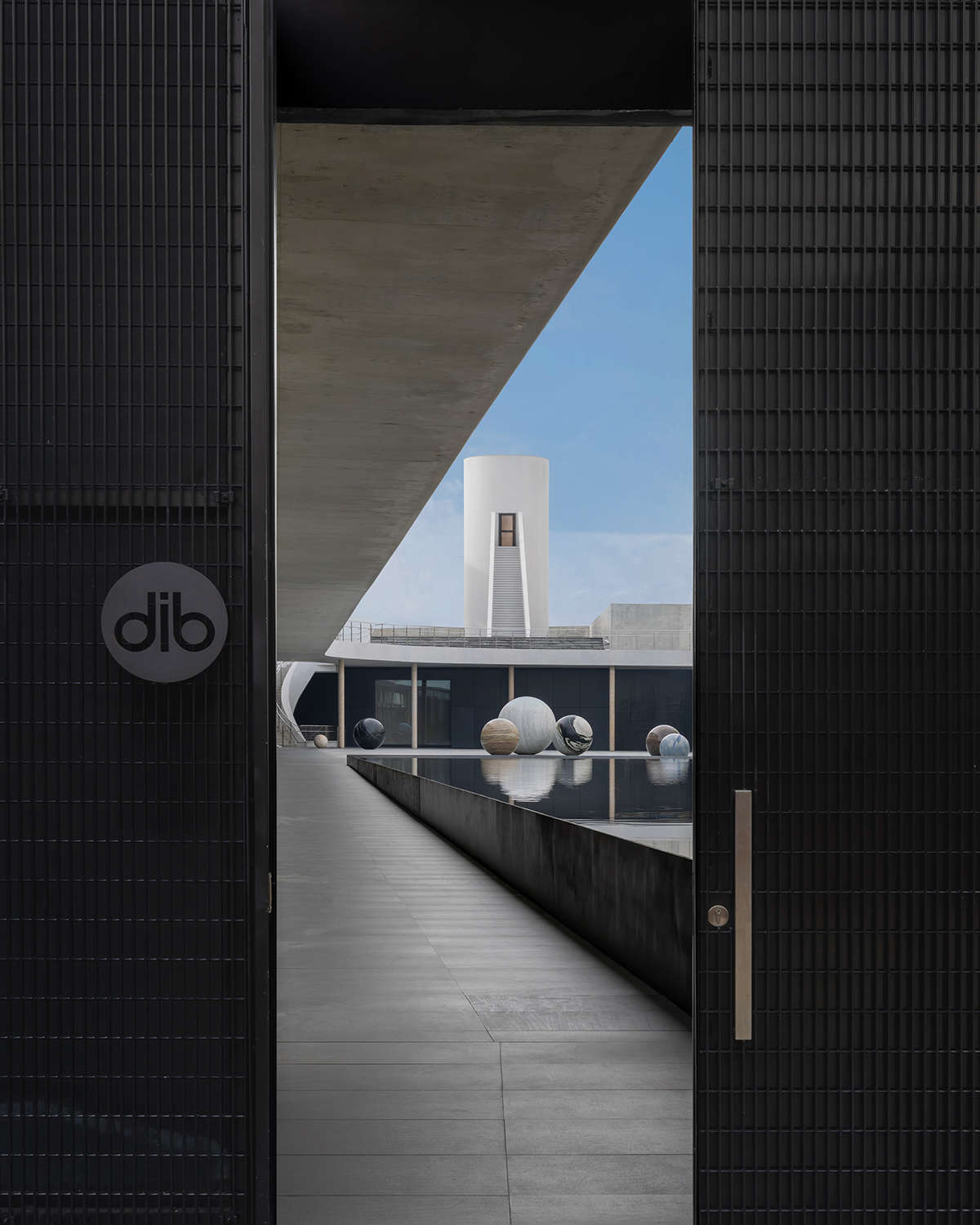
Photo: Ketsiree Wongwan
This intention resonates with Kulapat’s own desire for the architecture to help dissolve the noise and restlessness within, allowing visitors to begin forming a relationship with contemporary art. “I want the architecture to act as a matchmaker, bringing people and art together.”
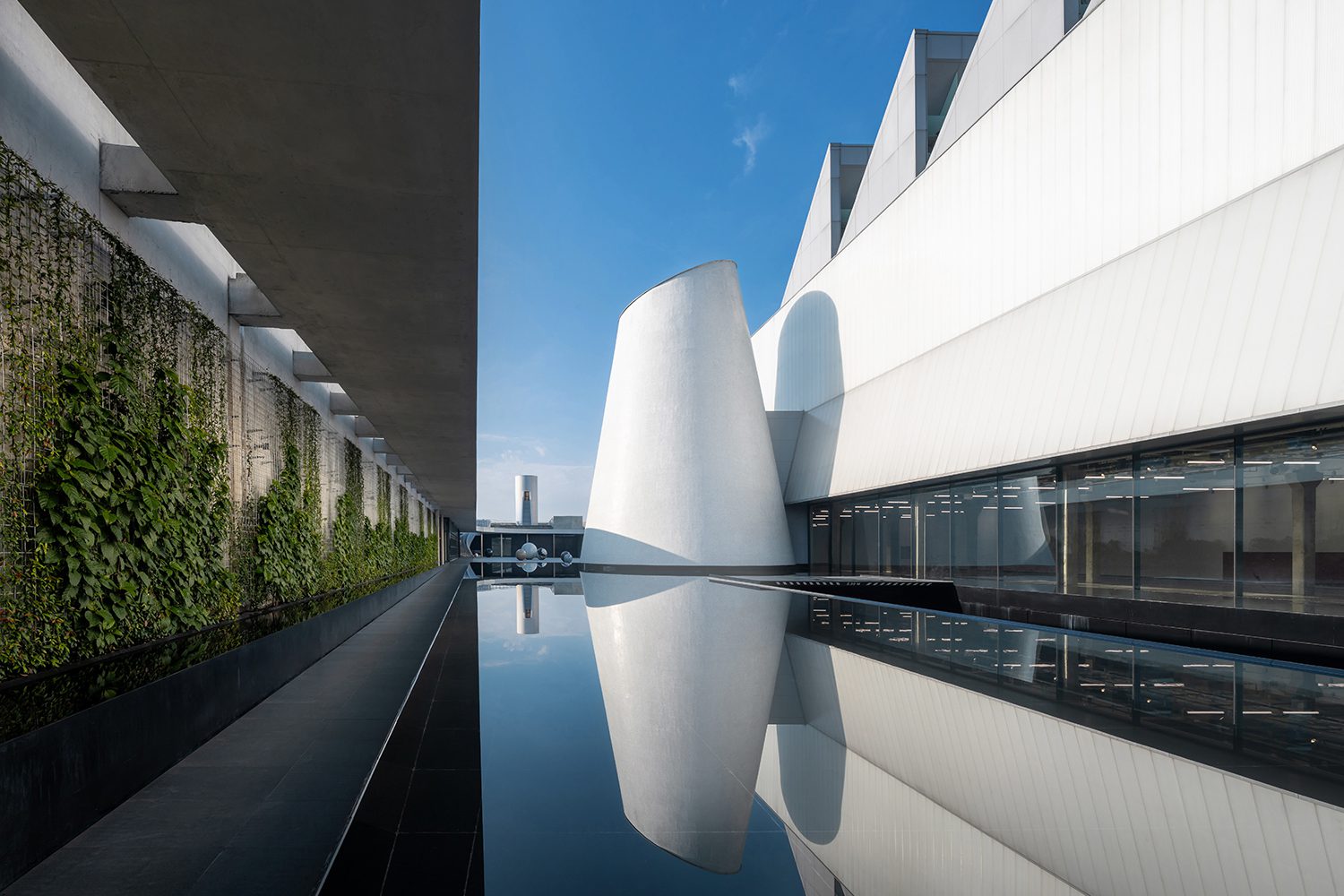
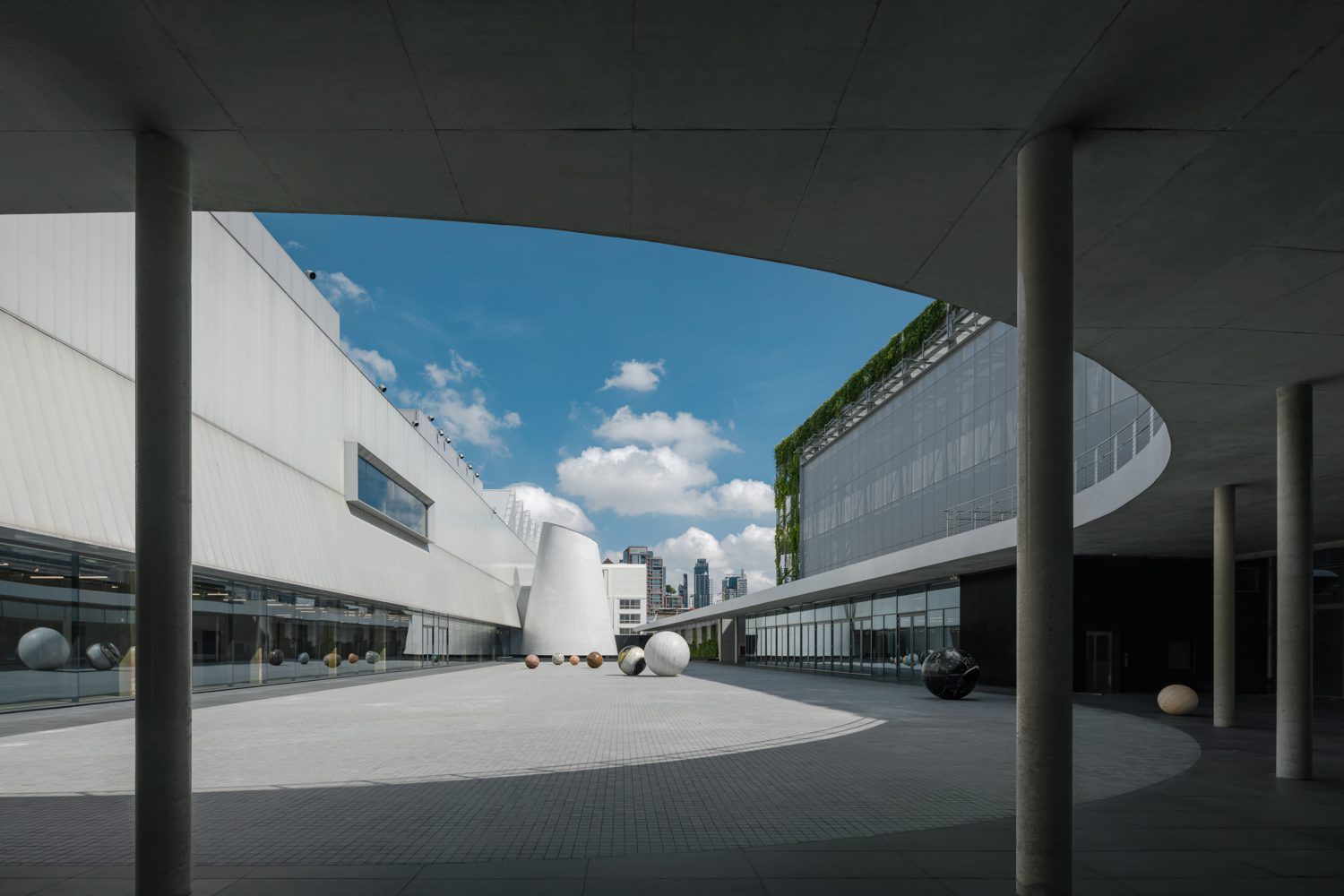
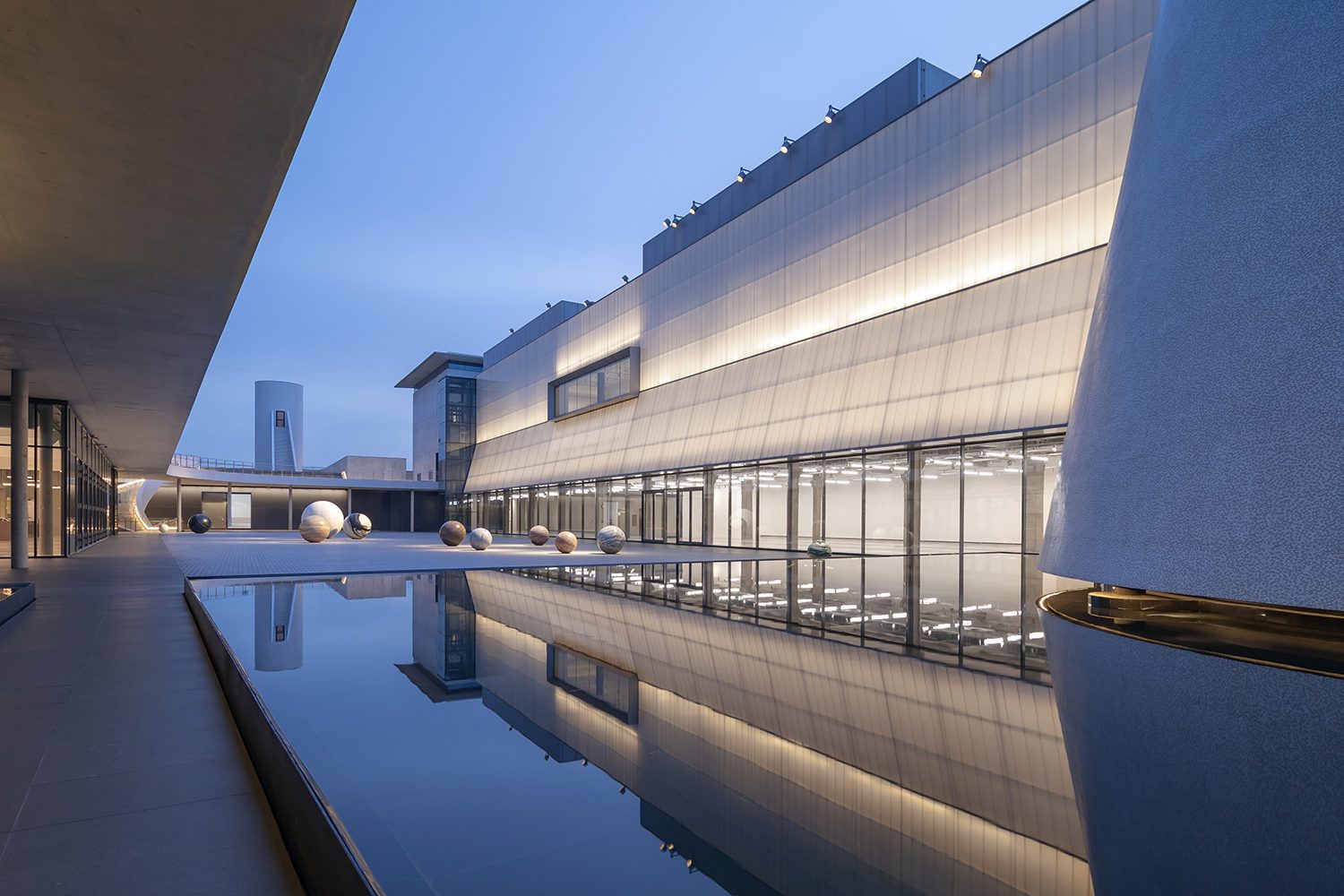
The arrival area tempers the heat from outside with a broad pool of water, its cooling presence offering a quiet sense of relief. It may not dispel Bangkok’s heat entirely, but it is enough to calm a restless mind. From the entrance, a long walkway leads toward a tranquil open-air courtyard. At its center is Pars pro Toto (2020) by Alicja Kwade, a constellation of spherical stone sculptures dispersed across the ground like planets suspended in a silent universe. Only a few hundred meters away lies a world of horns and engines. Here, however, another world unfolds in stillness.
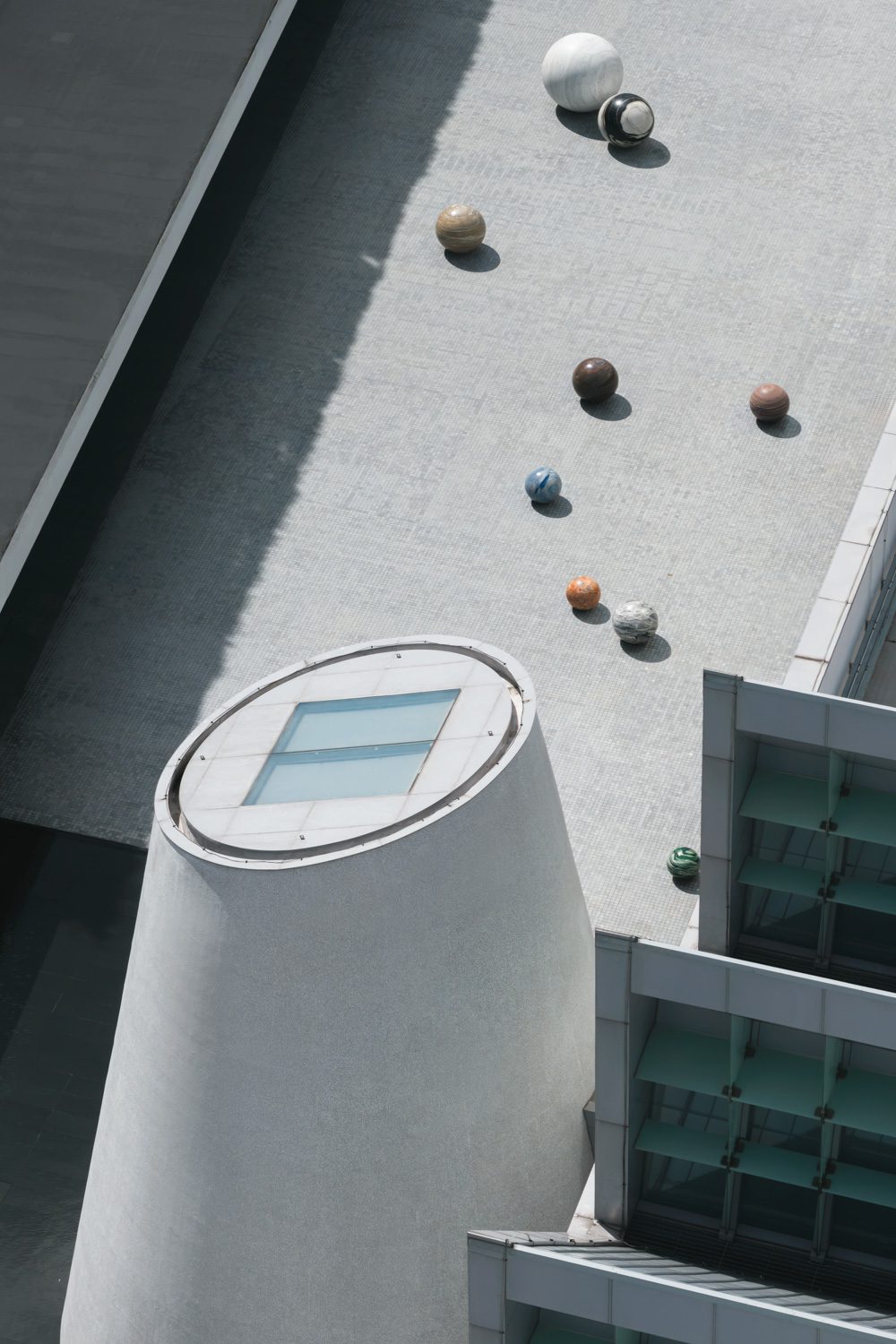
Photo: W Workspace, Courtesy of Dib Bangkok
While the experience of ‘walking’ into the museum has been carefully choreographed, the architecture also considers those who arrive on wheels. As private cars remain the primary mode of transport for many Bangkok residents, the building incorporates a ramp that cuts through the surface of the water and descends into the underground parking area, creating a moment of transition as composed and contemplative as the pedestrian approach. The car park itself rises to a height of more than five meters, avoiding the enclosed, oppressive quality often associated with such spaces. From there, a generous spiral staircase with a measured cadence of steps carries this sense of openness upward to ground level, sustaining the experience until the moment visitors first encounter the art.
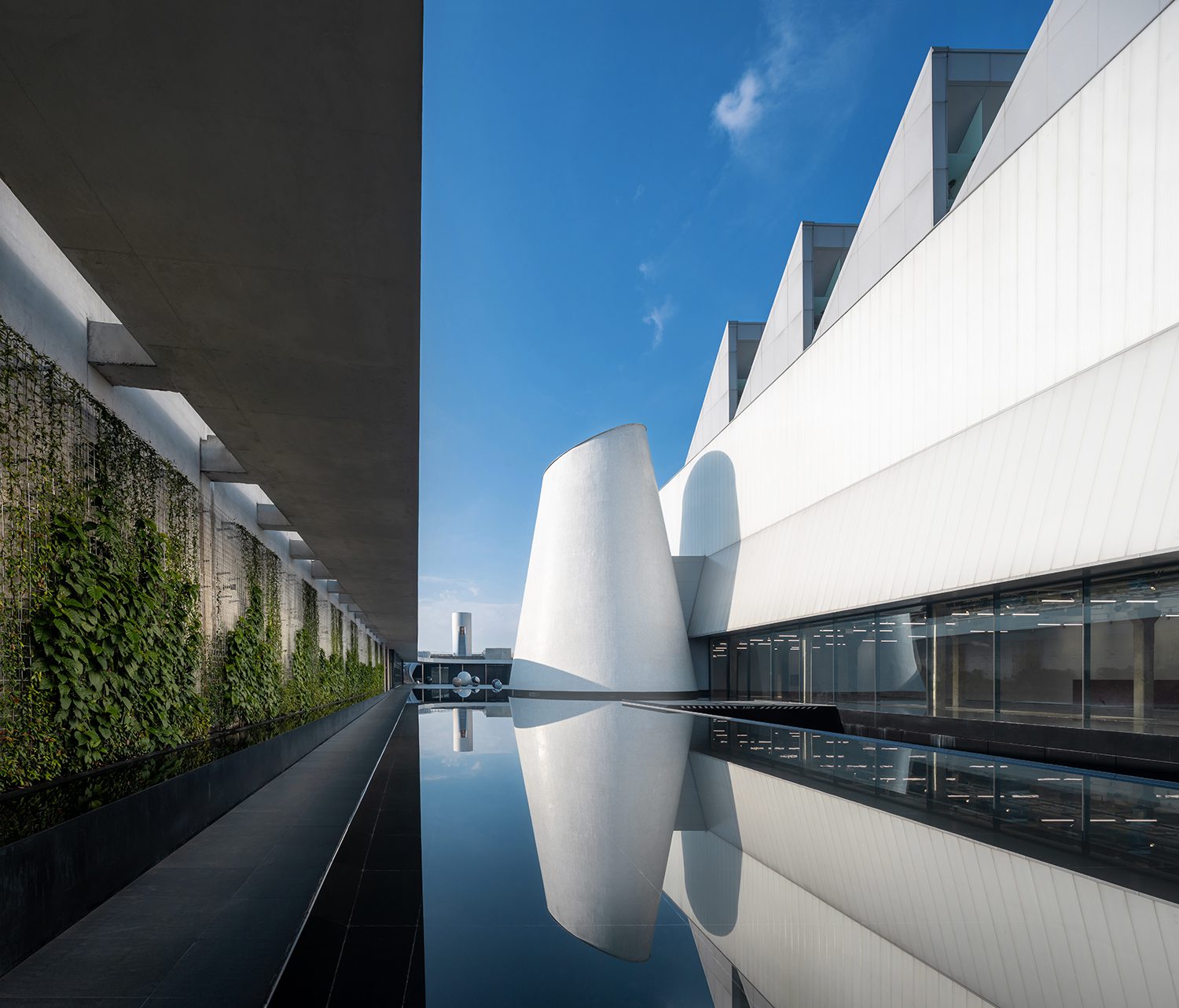
Photo: Ketsiree Wongwan
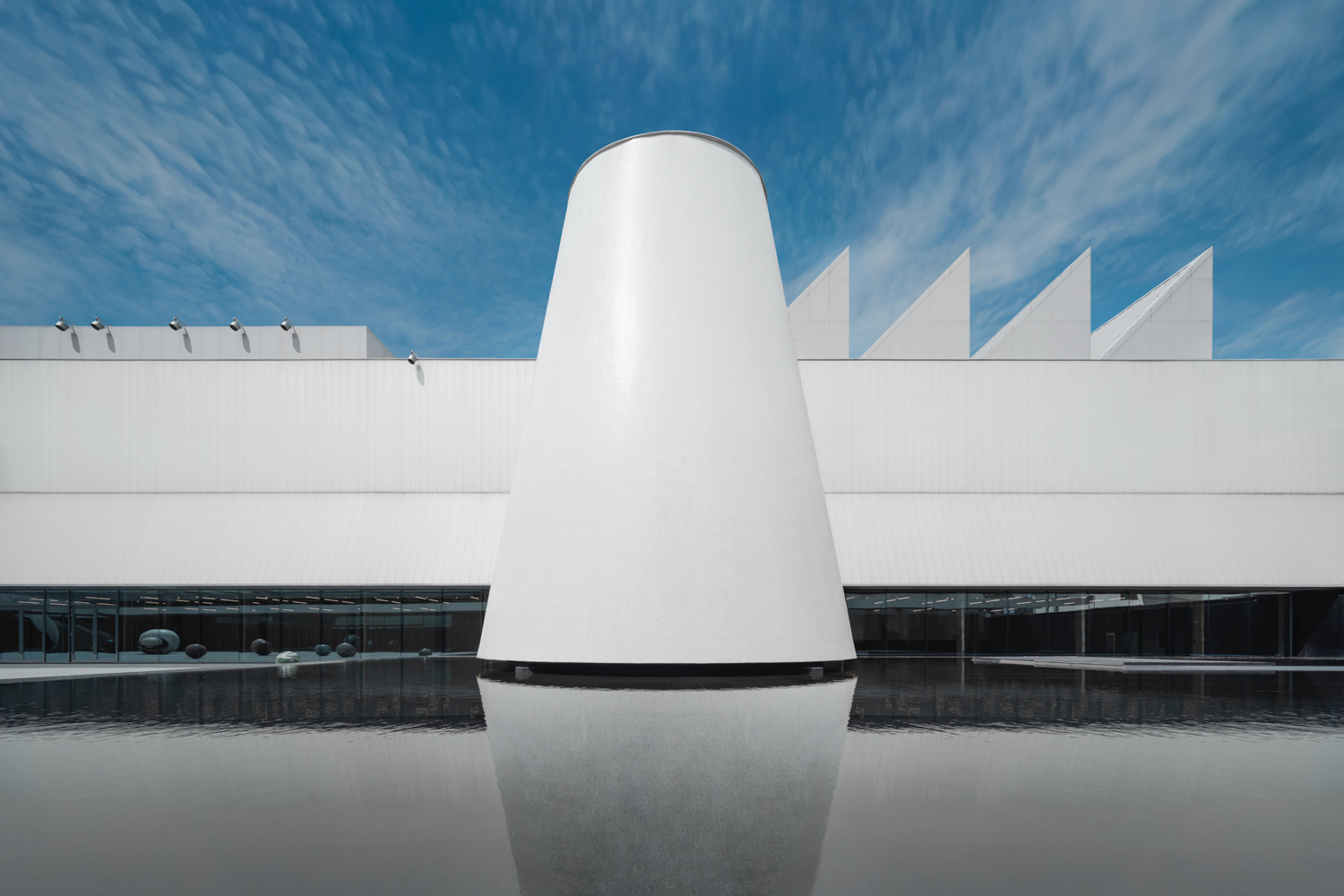
Photo: W Workspace, Courtesy of Dib Bangkok
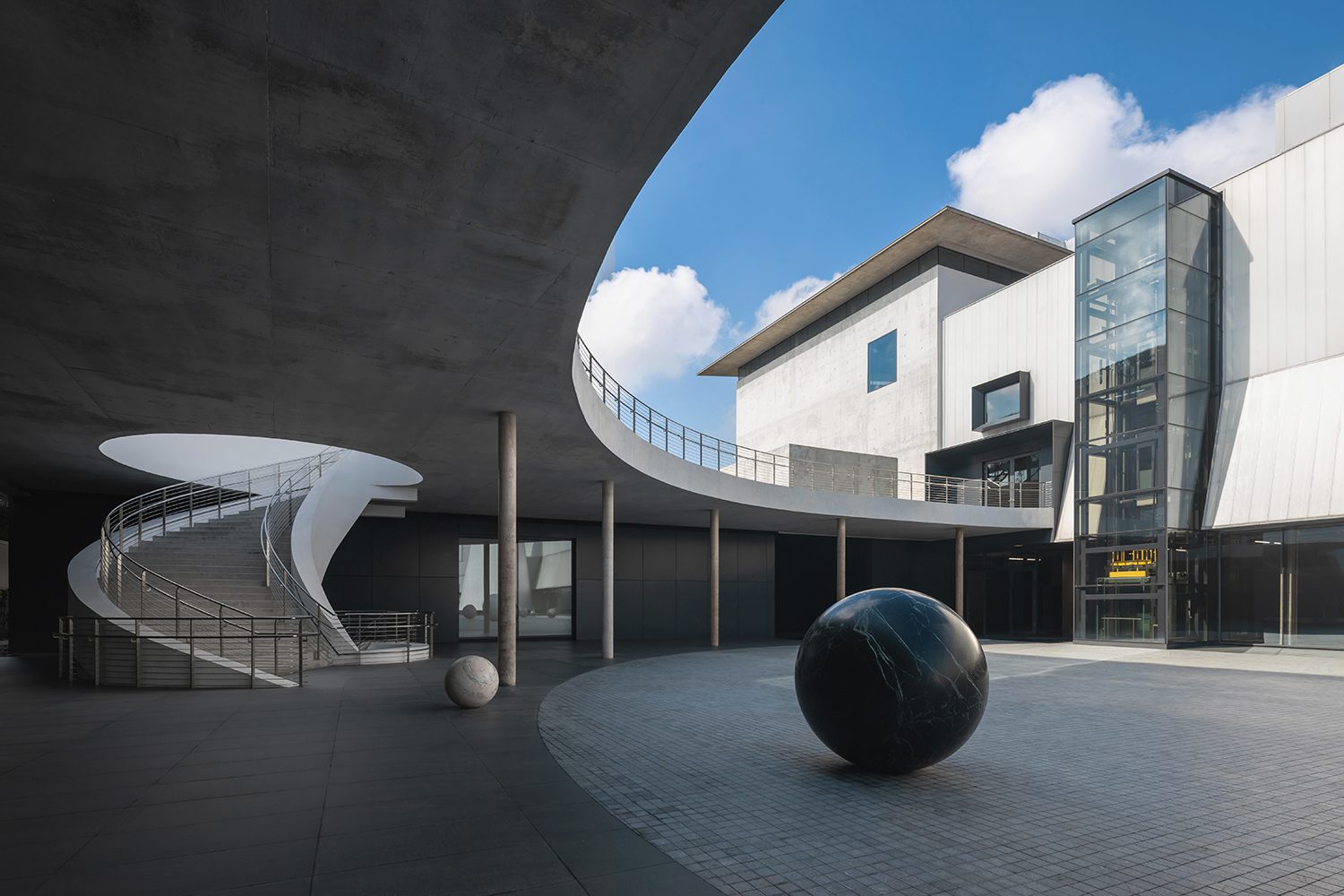
Photo: Ketsiree Wongwan
Flanking the courtyard are the exhibition buildings, which extend along the length of the site and are clad in industrial materials such as polycarbonate panels and clear glass. Their restraint is punctuated by the Chapel, a cylindrical tower whose surface is wrapped in small mosaic tiles, each naturally distinct from the next. The gesture softens the overall composition, lending the architecture a more approachable and quietly welcoming character.
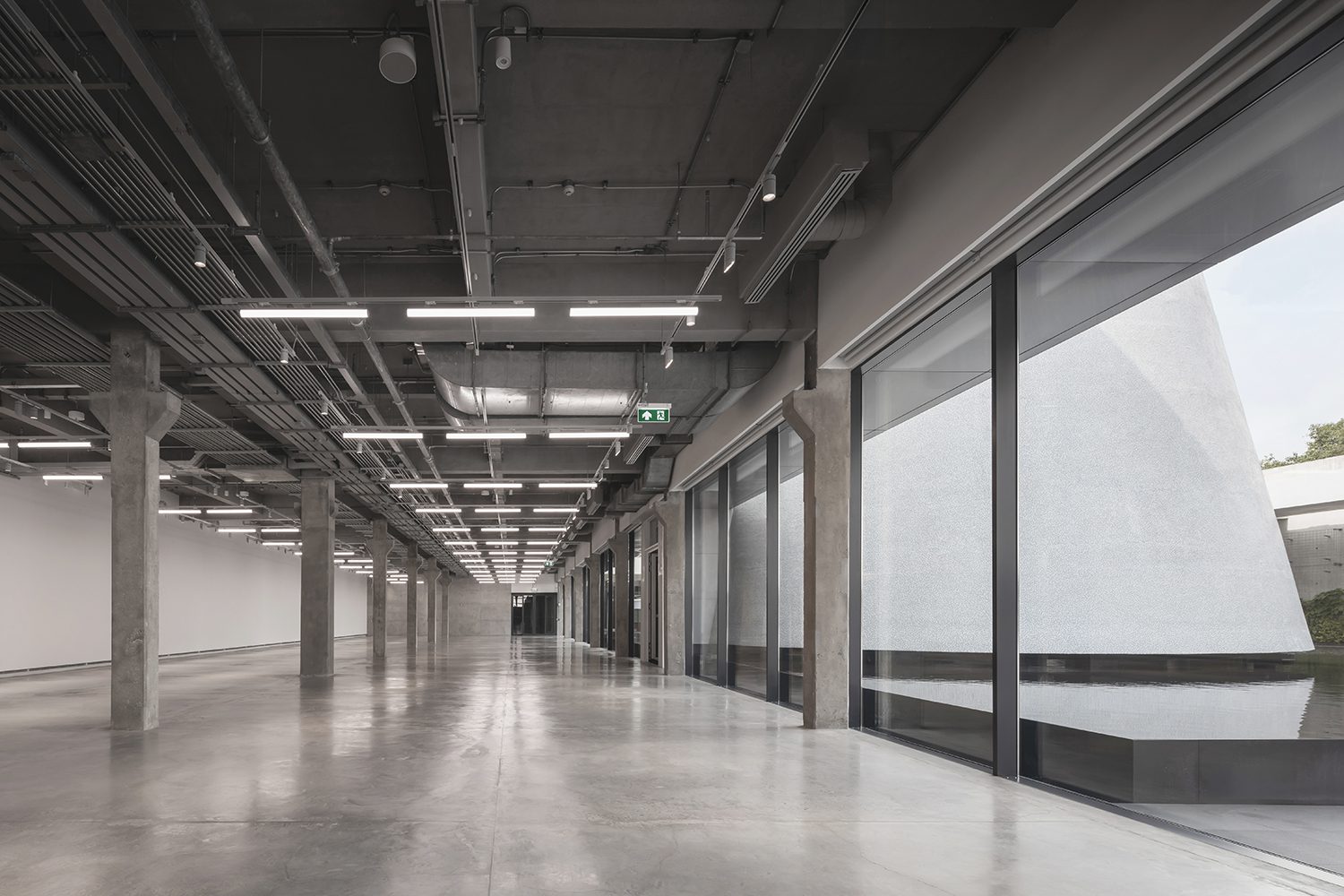 Photo: Ketsiree Wongwan
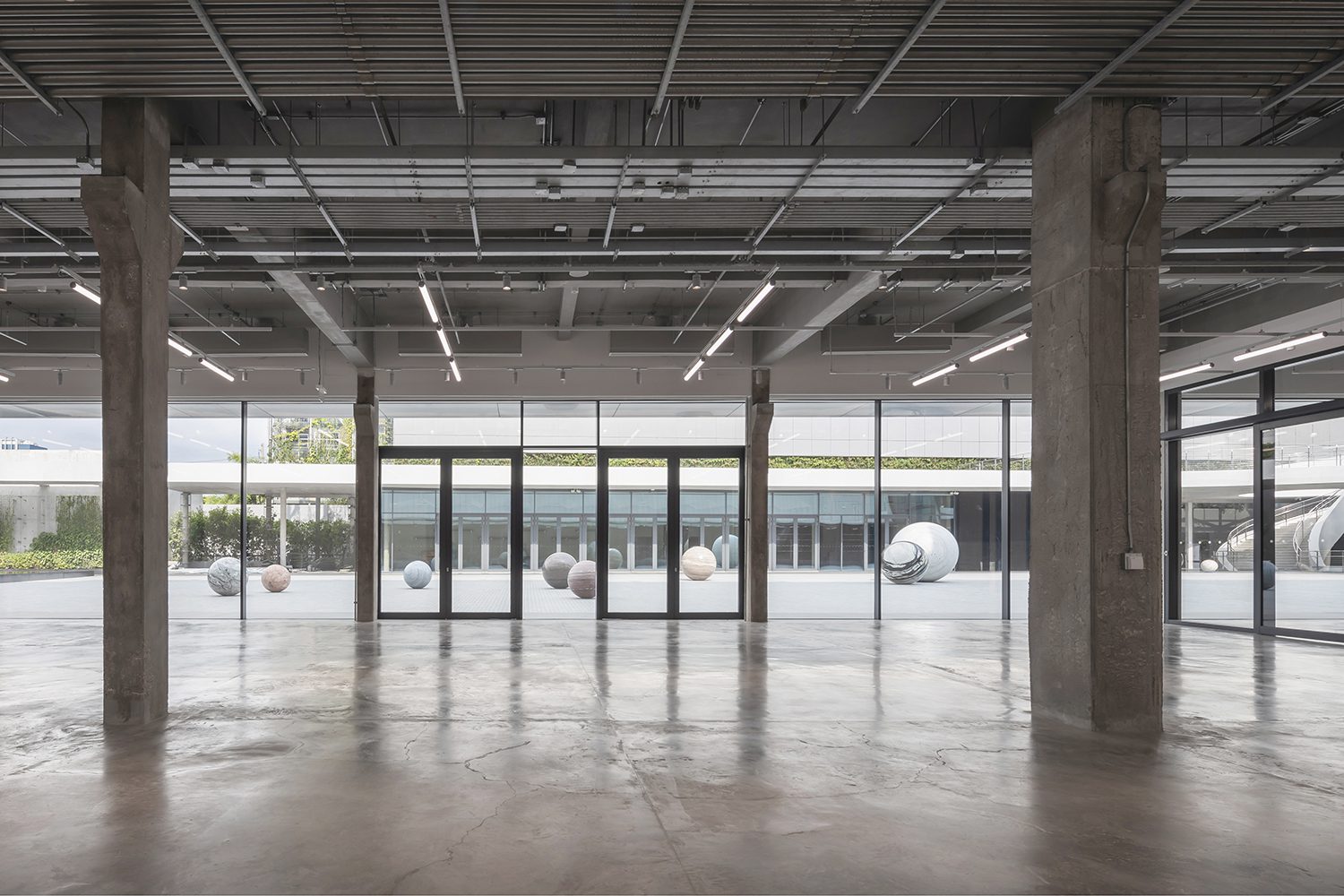
Although the building may appear to be newly constructed from the outside, it is in fact the revitalization of an old warehouse. Traces of its former life remain, from the concrete beams and columns on the first floor to the original wrought-iron grilles fitted to the windows. These remnants bring life and spirit to the building, shifting its presence away from that of an aloof museum and toward a place of traces and memory, one that receives visitors with a sense of ease and familiarity.
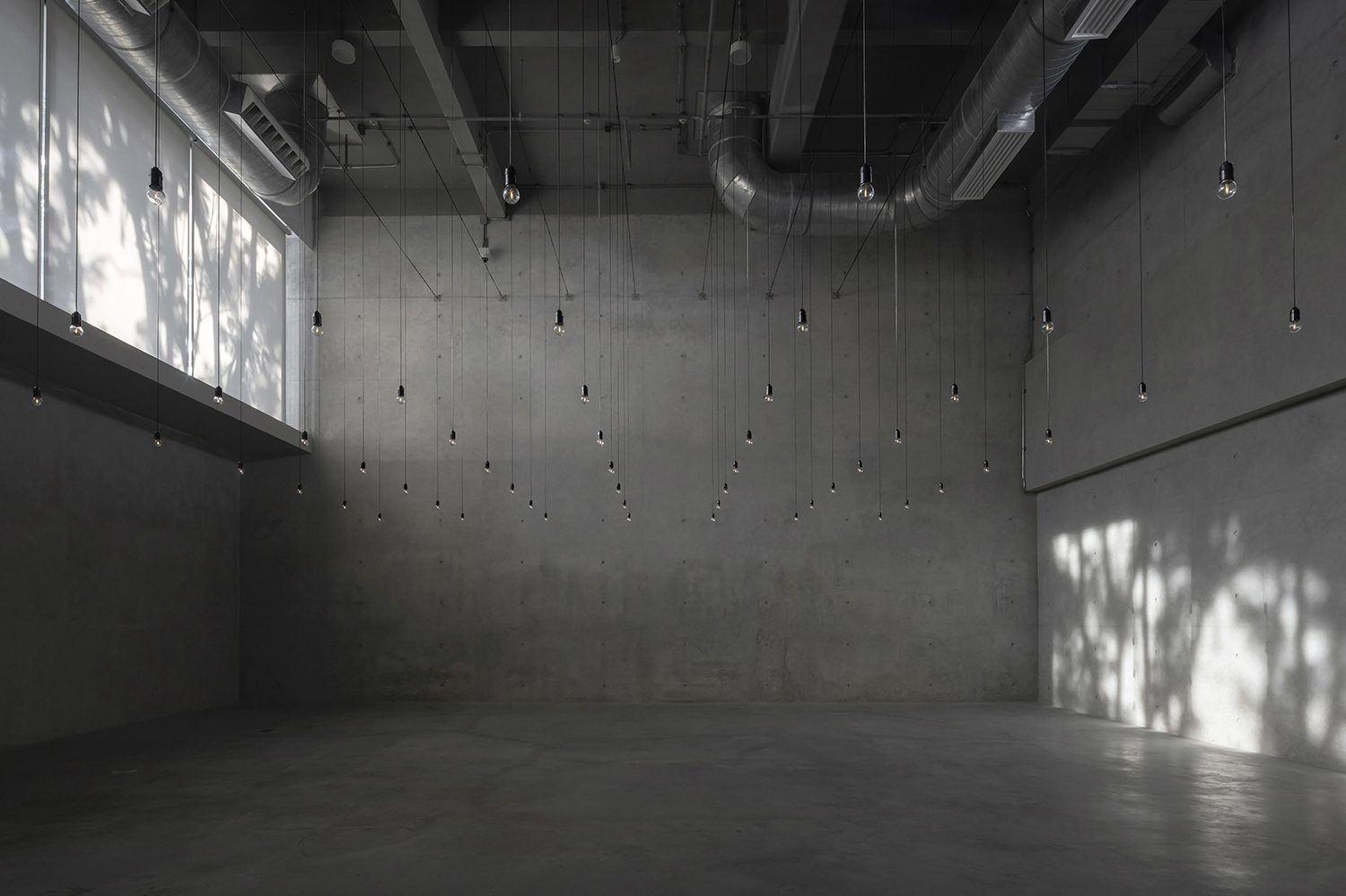
Photo: Ketsiree Wongwan
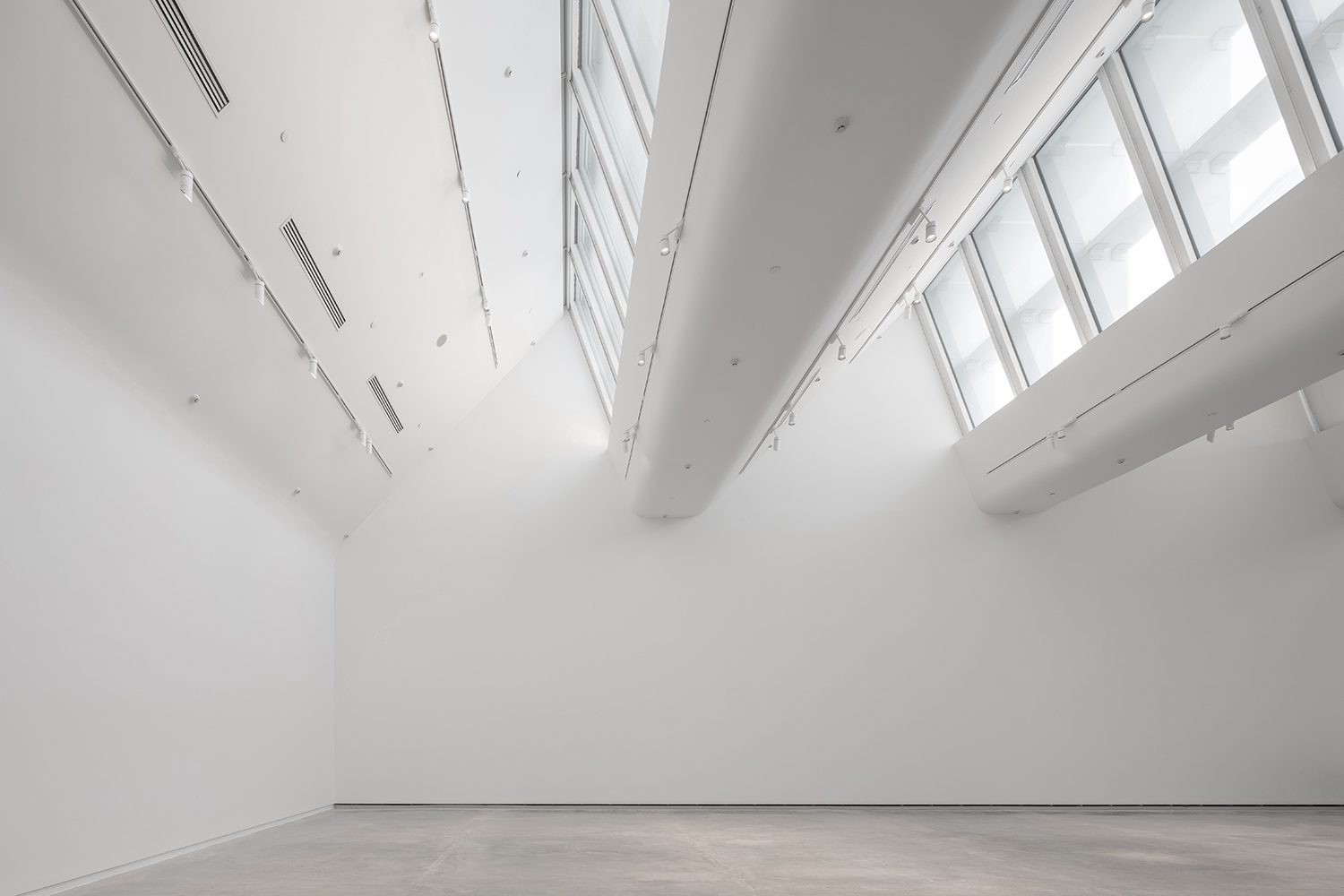
Photo: Ketsiree Wongwan
Each floor has a distinct spatial character. The first floor emphasizes openness, with large panes of glass that bring in natural light and frame views of the courtyard. The second floor feels more enclosed and contemplative, with a special room where an overhead aperture allows daylight to fall gently across solid walls. The sequence culminates on the third floor, a lofty volume beneath a sawtooth roof that filters light into the space with quiet softness.
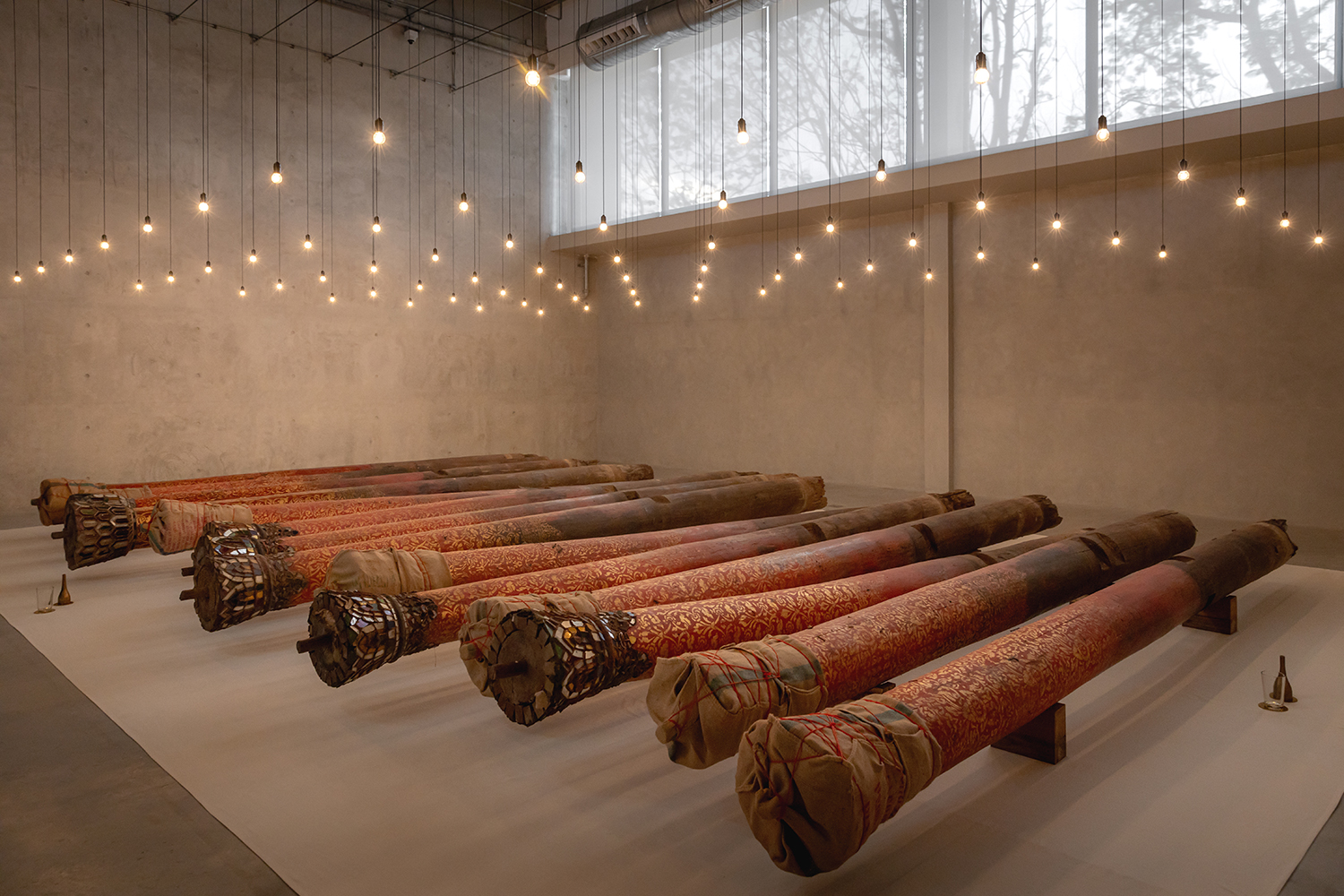
Second-floor exhibition gallery and The Unheard Voice (1995) by Somboon Hormtientong. | Photo: Ketsiree Wongwan
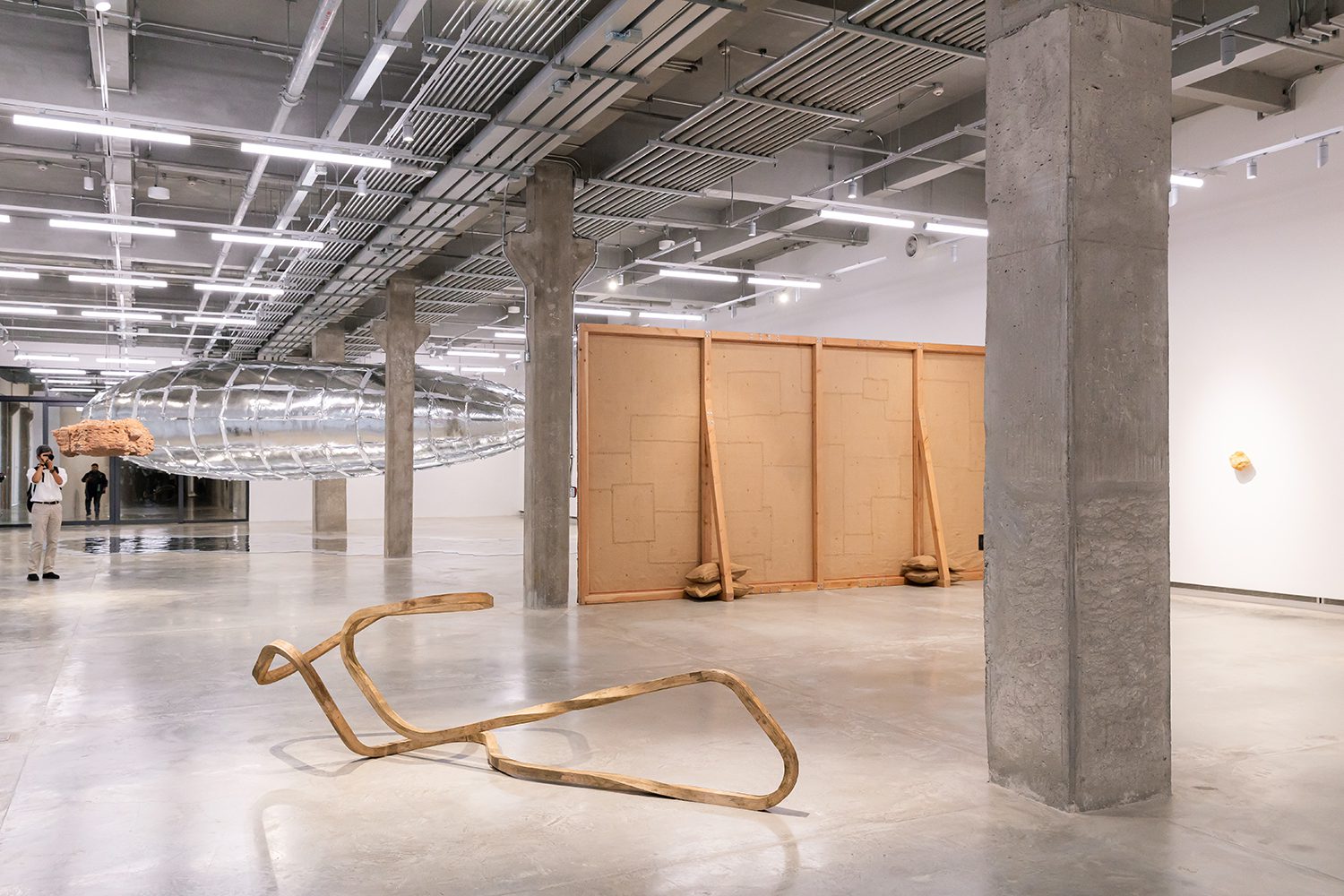 First-floor exhibition gallery | Photo: Ketsiree Wongwan
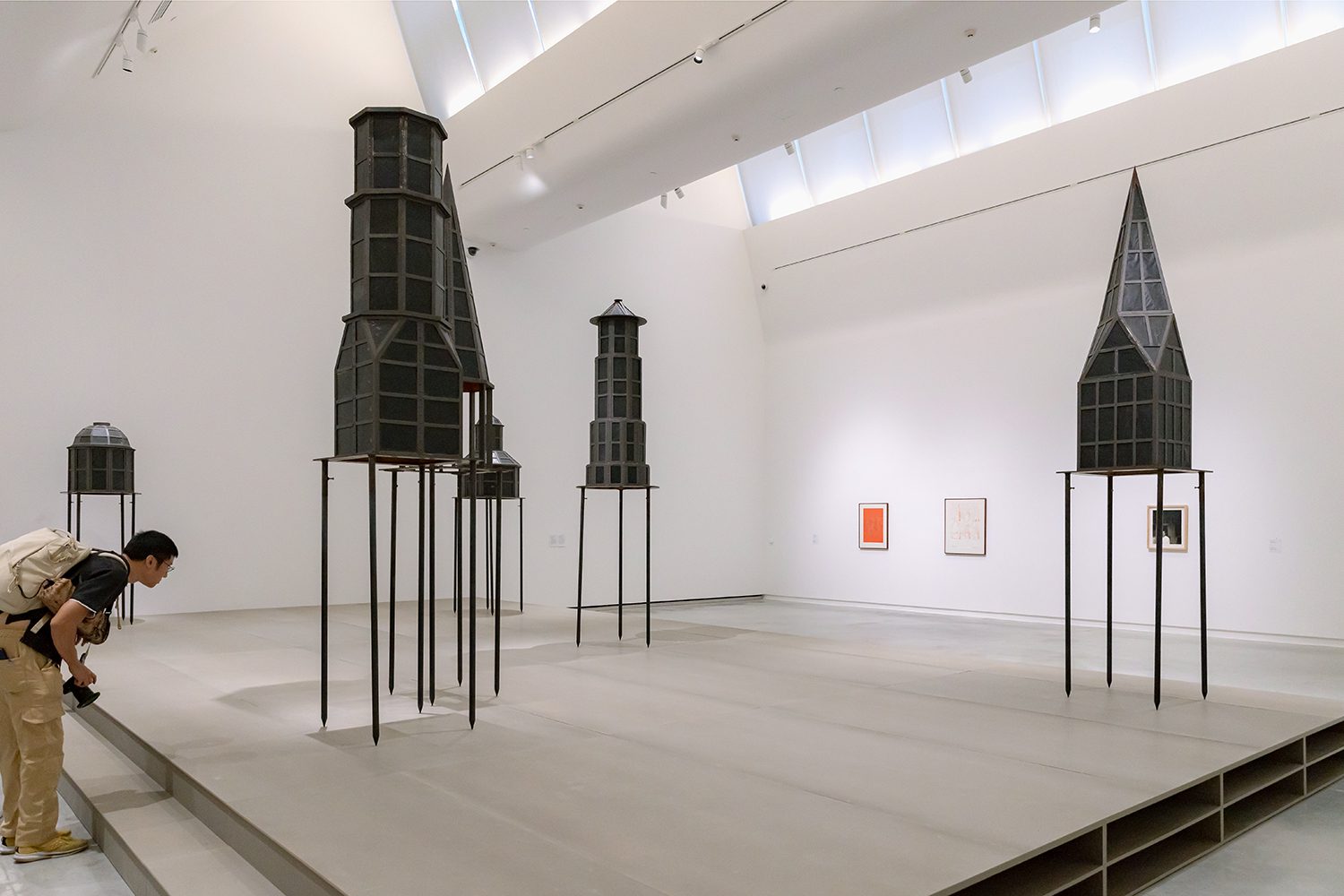
In the opening exhibition, (In)visible Presence, these varied spatial conditions allow each work to resonate in its own way. On the second floor, the dimly lit yet expansive gallery immediately heightens the solemn power of The Unheard Voice (1995) by Somboon Hormtientong, even before one understands the ideas behind the work. Likewise, Montien Boonma’s Zodiac House (1998–1999), installed in a large white room on the third floor, allows viewers to register the contrast between standing beneath the sculpture in a more compressed space and encountering it within an open, generous volume. The setting brings the viewer’s physical engagement with the work into sharper relief.
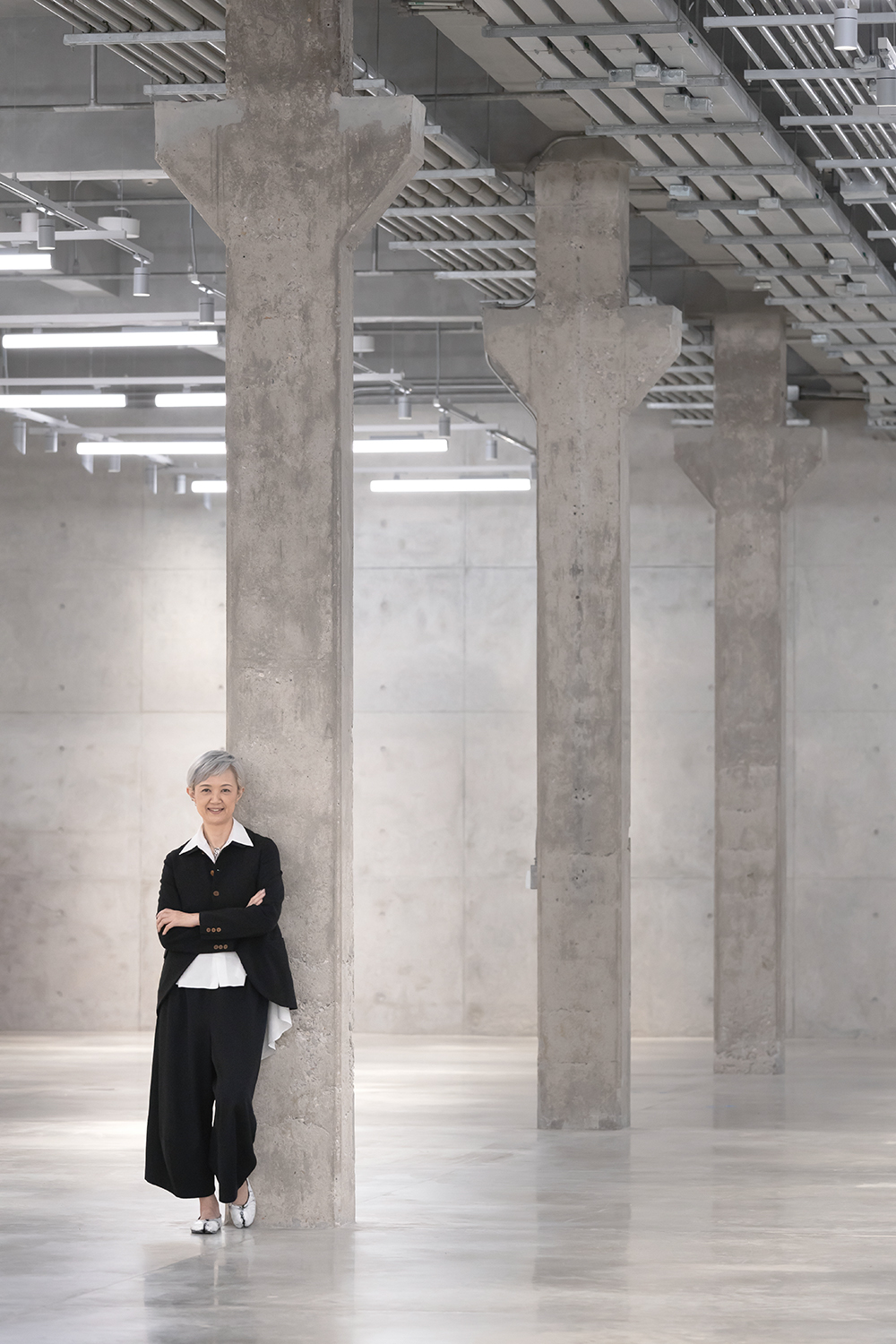
Dr. Miwako Tezuka, Museum Director of Dib Bangkok | Photo: Ketsiree Wongwan
This spatial diversity also benefits the curatorial process, offering flexibility in shaping different modes of perception while allowing for future rotations from the more than one thousand works in Petch’s collection. “All the spaces within this architecture feel very comfortable, and I would call it very curator-friendly,” Dr. Miwako Tezuka remarks.
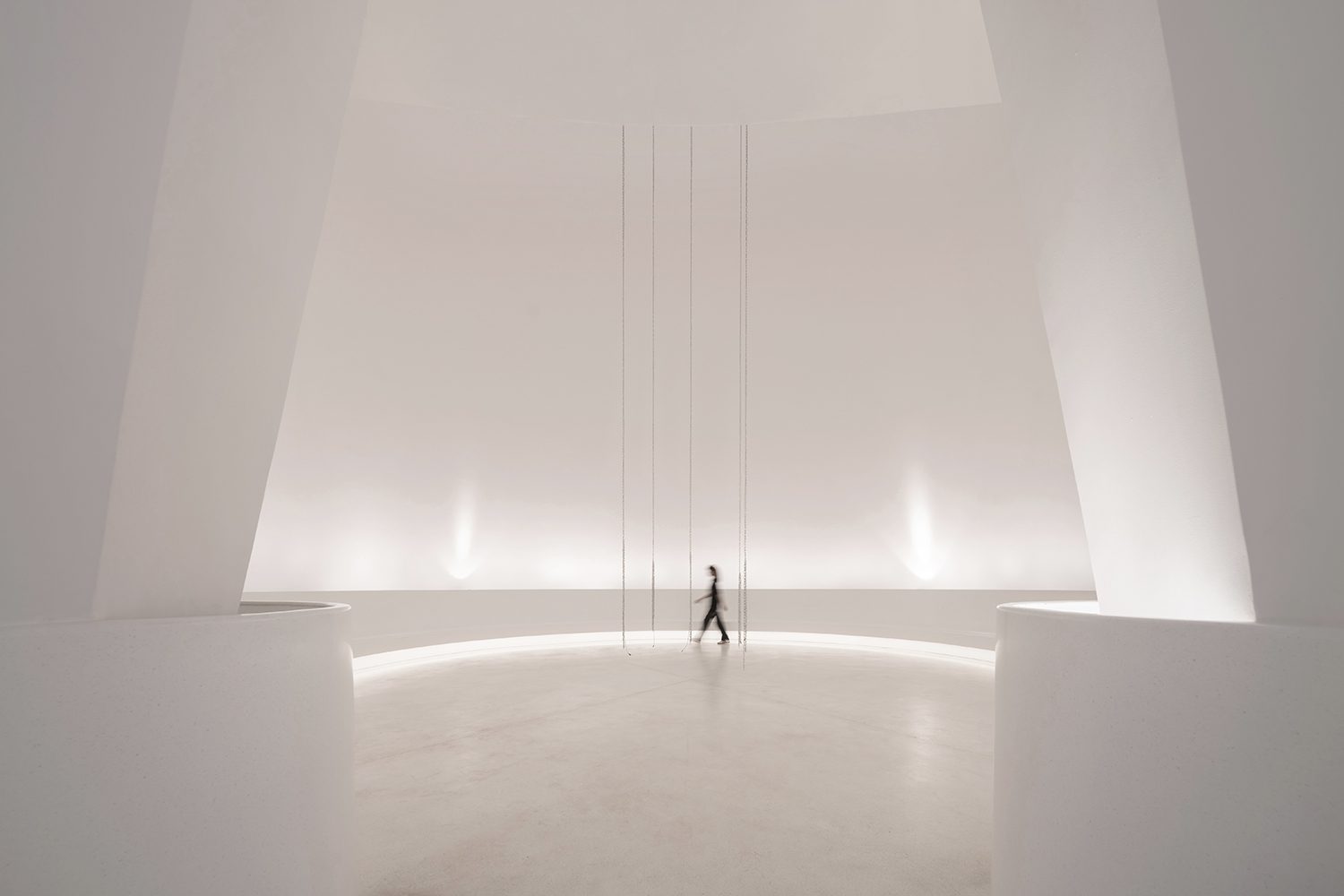
Photo: Ketsiree Wongwan
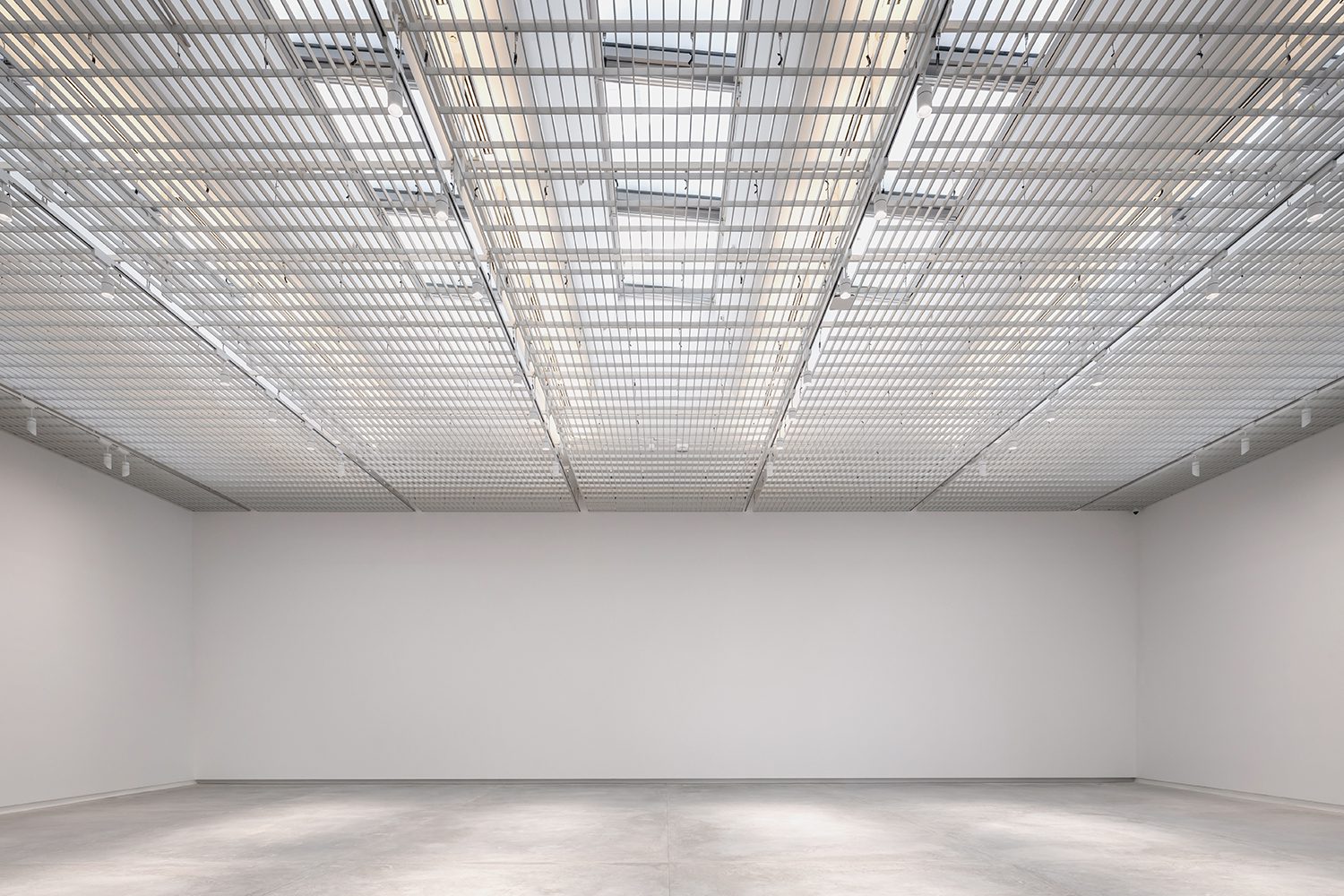
Photo: Ketsiree Wongwan
The museum’s exhibition spaces are not confined to the building’s interior. They extend outward to the monumental billboard, the courtyard, and the rooftop, where Straight Up, 1988, Realized in 2025, James Turrell’s first permanent installation in Southeast Asia, is housed within a tall tower. This spatial range is central to Kulapat’s intention: to allow every square meter of the museum to carry the potential for artistic communication, while also accommodating other forms of cultural activity enabling the institution can become more closely woven into urban life.
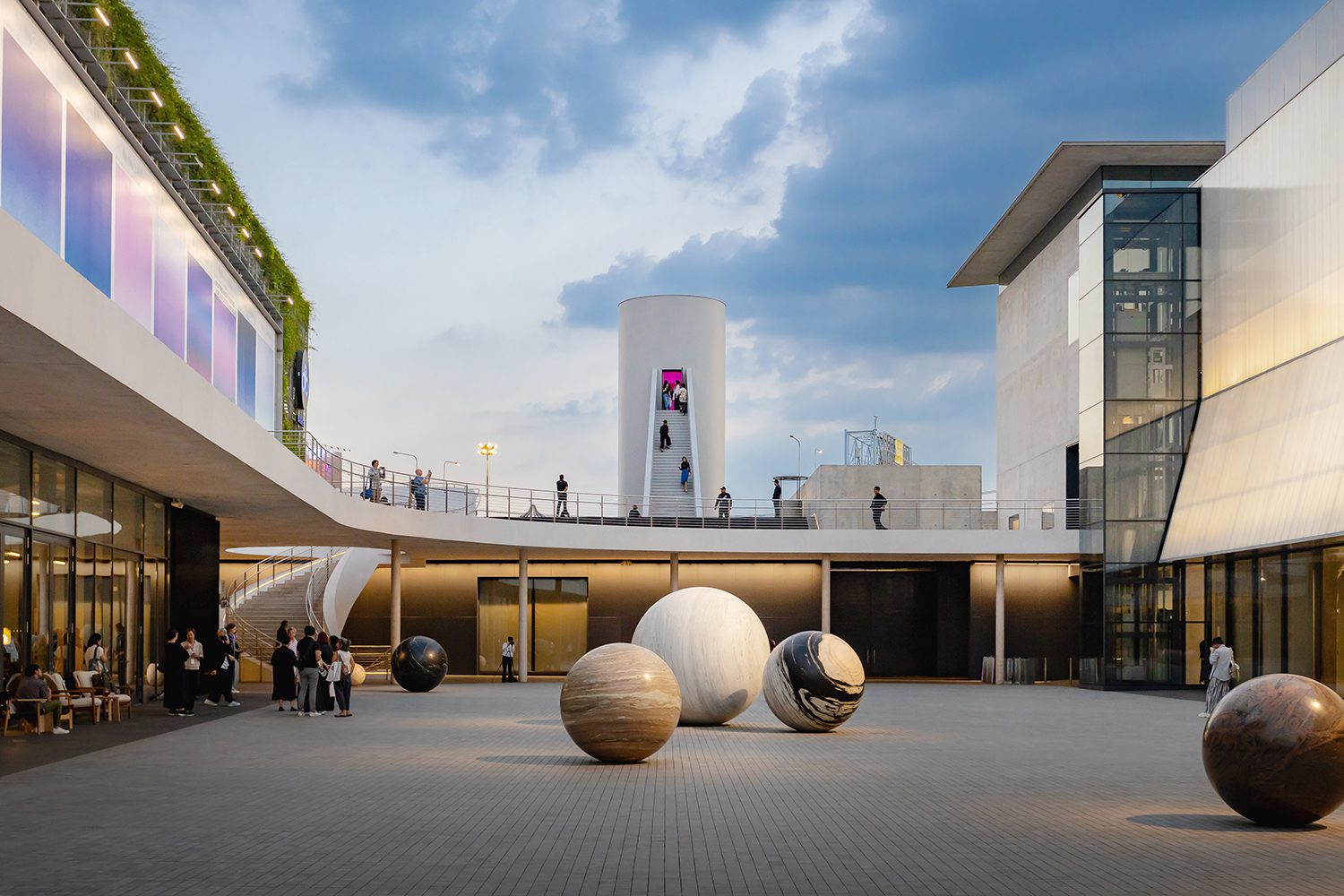 Photo: Ketsiree Wongwan
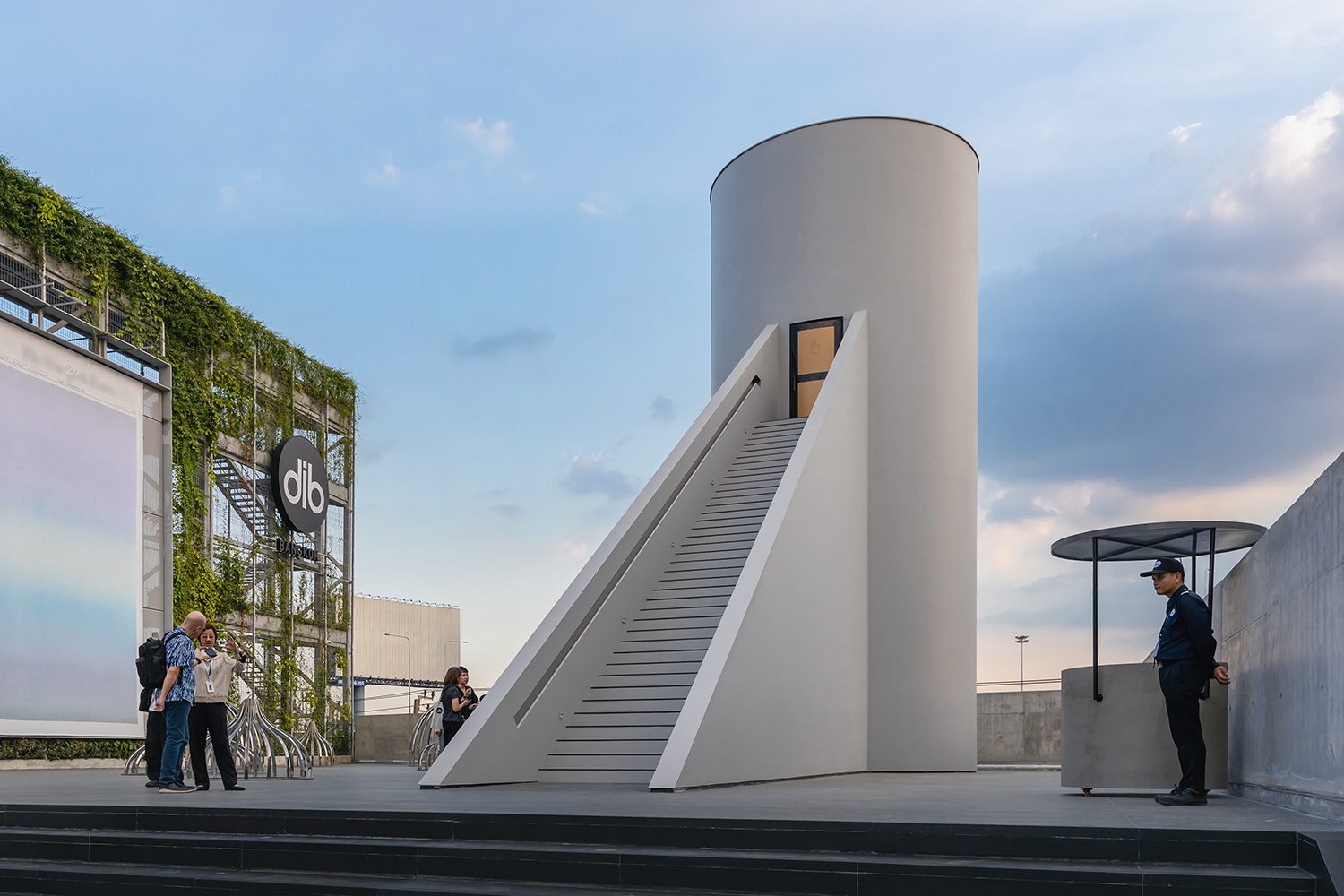
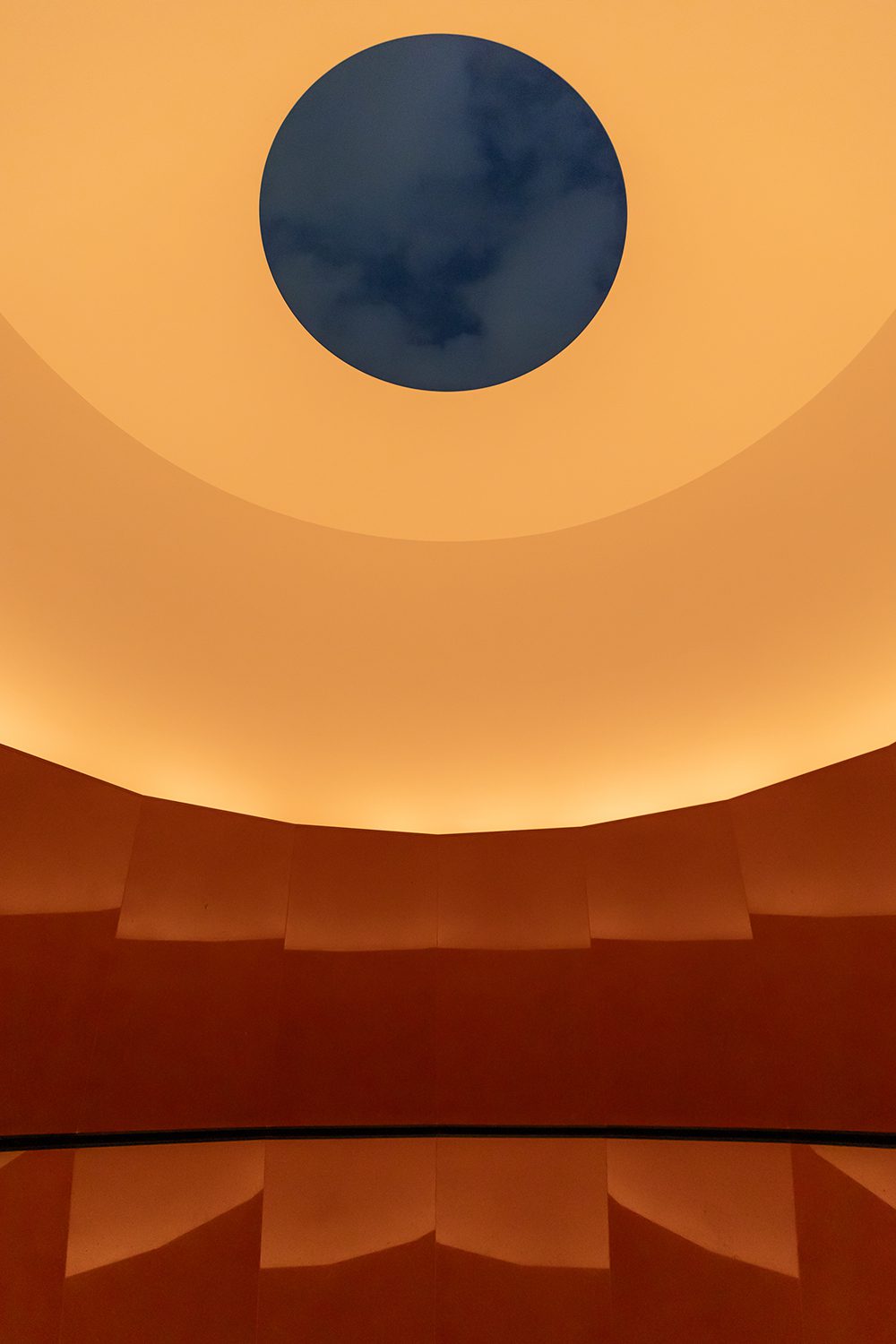
Photo: Ketsiree Wongwan
“People in Bangkok do not go to museums solely to look at art. They also go to take part in events, such as music performances,” Kulapat explains. “A museum space therefore has to be able to support all of these possibilities, whether in the courtyard or even in the underground car park, where we designed the ceiling to be slightly higher so that it can host concerts.”
Connecting people to the world of contemporary art requires many interlocking forces, from education and the media to critics and the market, all of which must continue to play their part. Yet Dib Bangkok demonstrates how architecture can offer a meaningful point of departure, creating a context of welcome in which visitors may discover the beauty of art for themselves.
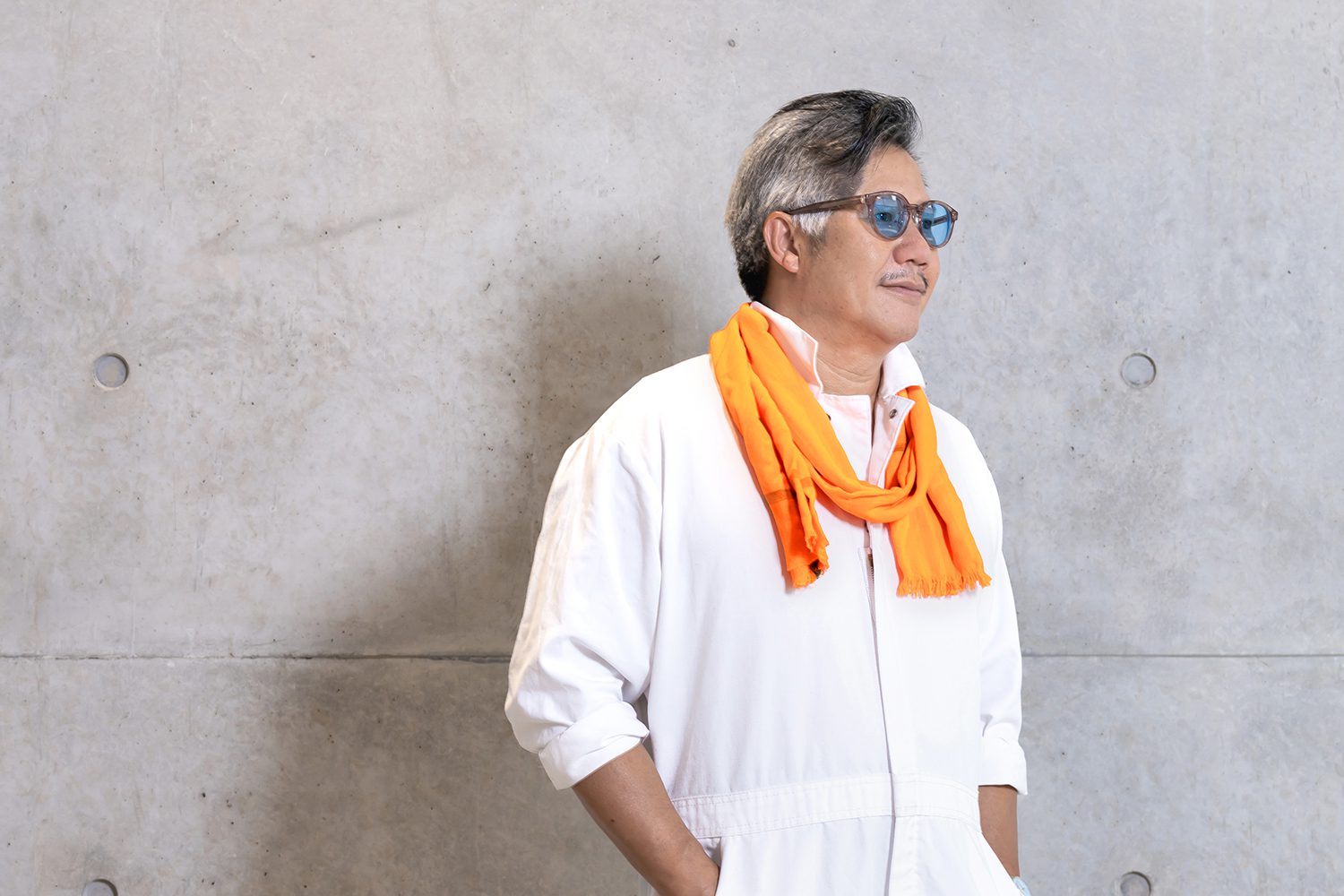
Kulapat Yantrasast of wHY Architecture | Photo: Ketsiree Wongwan
“Making a museum is not about transmitting information. It is about creating inspiration. For me, what matters most is creating an experience that moves people deeply enough that it stays in their memory,” Kulapat adds.
“Throughout the museum, there are many reflective surfaces, from the windows, the glass elevator, and the glass walls on the ground floor to the pool of water. They allow the colors of the artworks to be reflected across these surfaces at all times,” Dr. Miwako Tezuka says, describing the beauty she has discovered through the architecture.
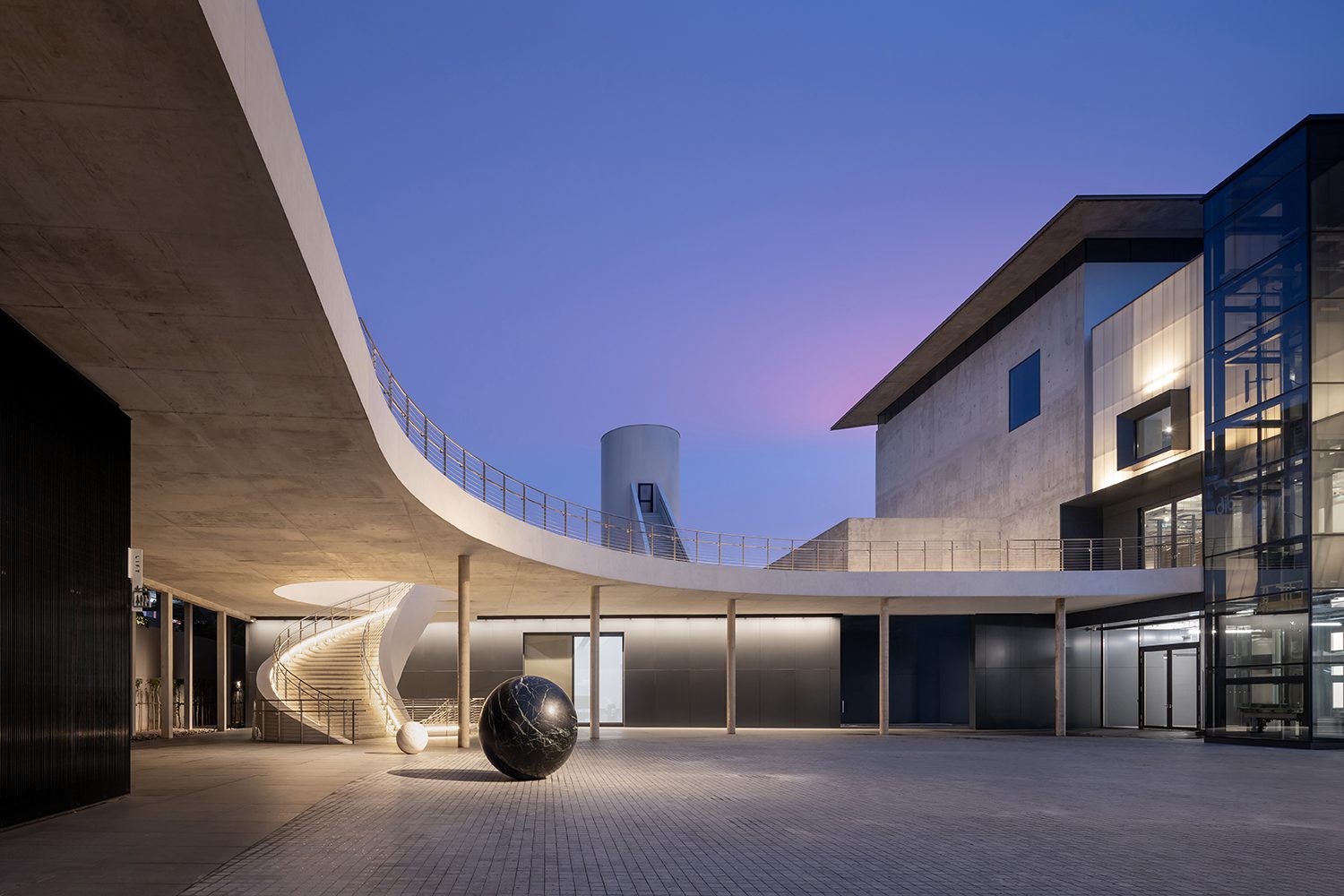 Photo: Ketsiree Wongwan
The beauty of encountering contemporary art lies in coming face to face with a work and allowing interpretation to unfold on one’s own terms. Purat hopes that visitors to Dib Bangkok will be able to take in the beauty of art in their own way.
“We want people who may not already be deeply engaged with art to come here and feel a sense of curiosity, to be moved in their own way. That is our mission,” Purat concludes.