
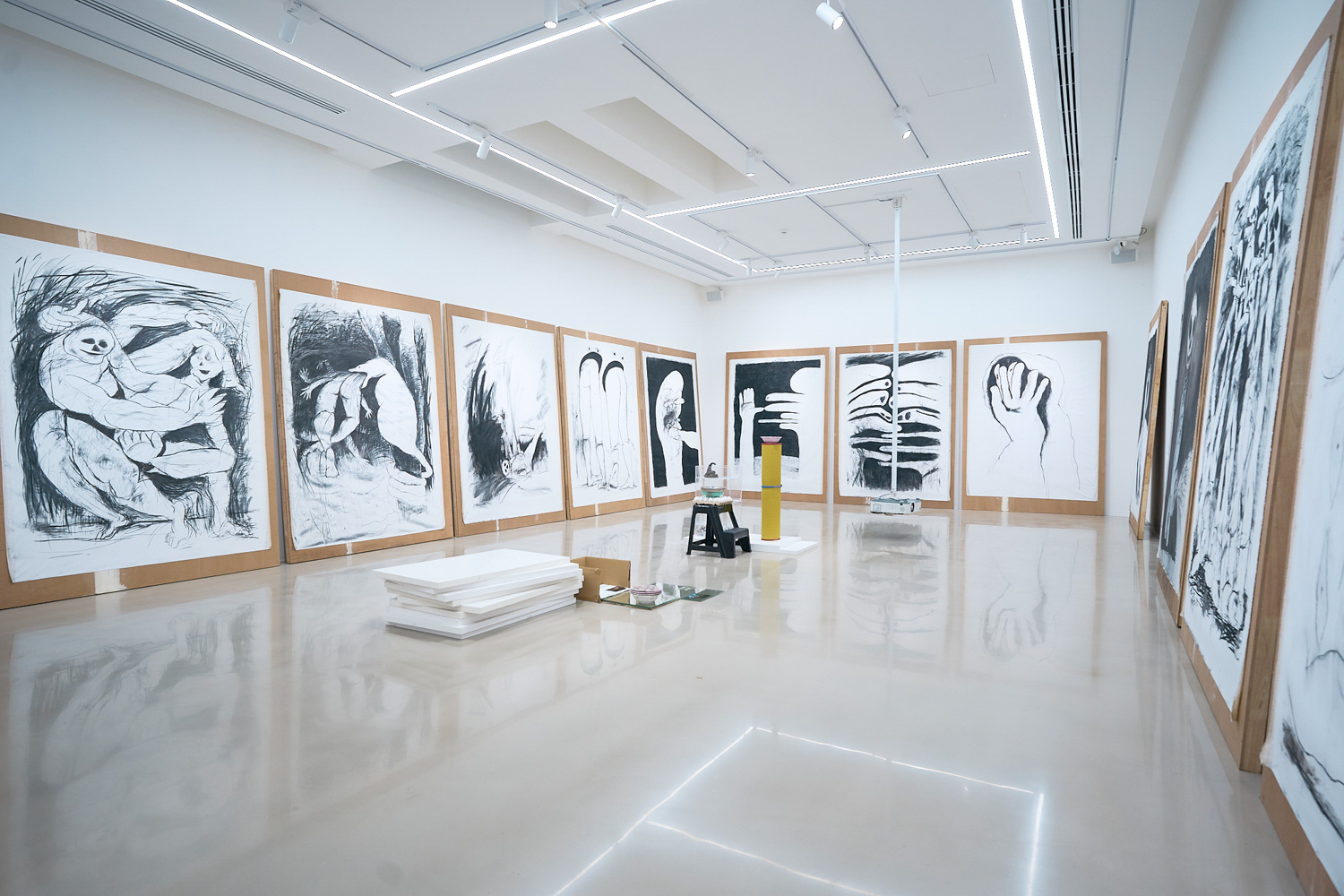
‘DRAWING’ BY PARINOT KUNAKORNWONG INVITES US TO EXPLORE MEMORIES THAT ARE NOT MERELY PERSONAL BUT ALSO INTERSECT WITH HISTORY AND COLONIALISM
TEXT: PEERAWICH RUANGPENG
PHOTO: KRITTAWAT ATTHASIS
(For Thai, press here)
Drawing, an exhibition by Parinot Kunakornwong, is on view at 100 Tonson Foundation from June 18 to October 4, 2026. Centered on the act of drawing, the exhibition invites us to consider what memory might look like, with Parinot translating recollection into both drawings and installation works.
The exhibition text positions drawing as its central subject, yet two installations occupying the middle of the gallery immediately draw attention away from the charcoal-on-canvas works lining the walls. At first glance, the contrast between these two bodies of work seems so pronounced that they might have little to say to one another. In fact, the opposite is true. A lively exchange emerges between them, almost as though the works themselves were standing in conversation along the street in Soi Tonson.
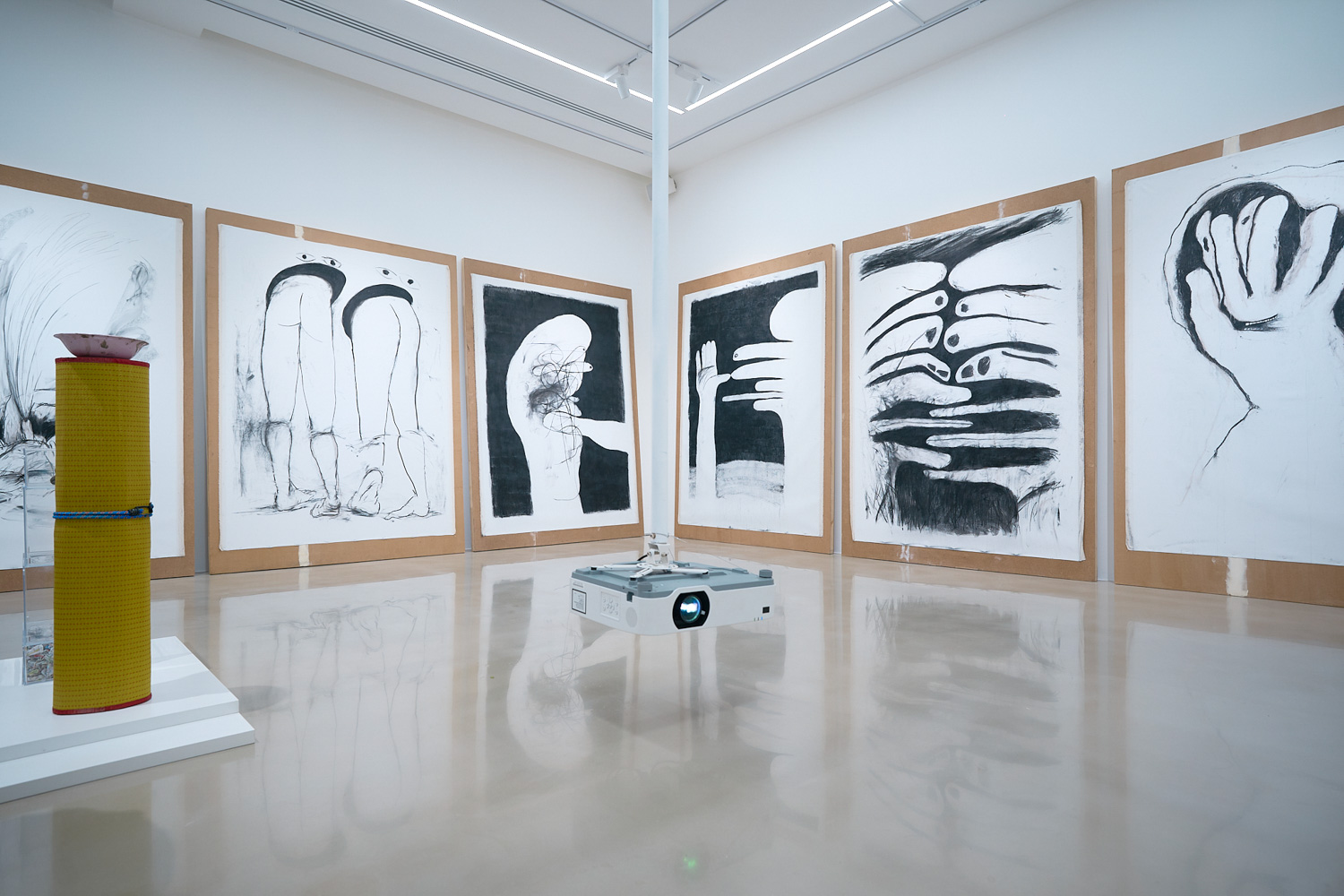
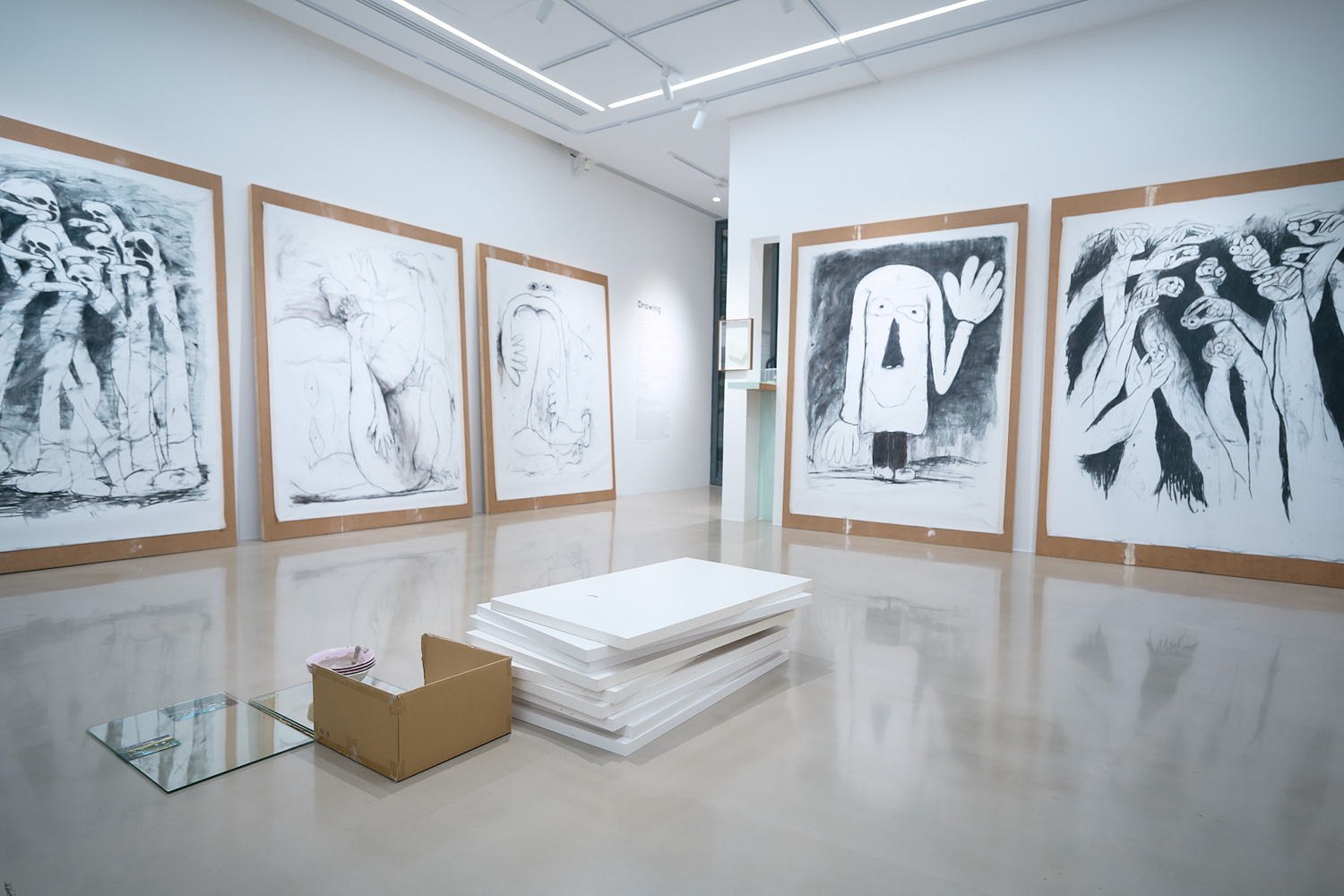
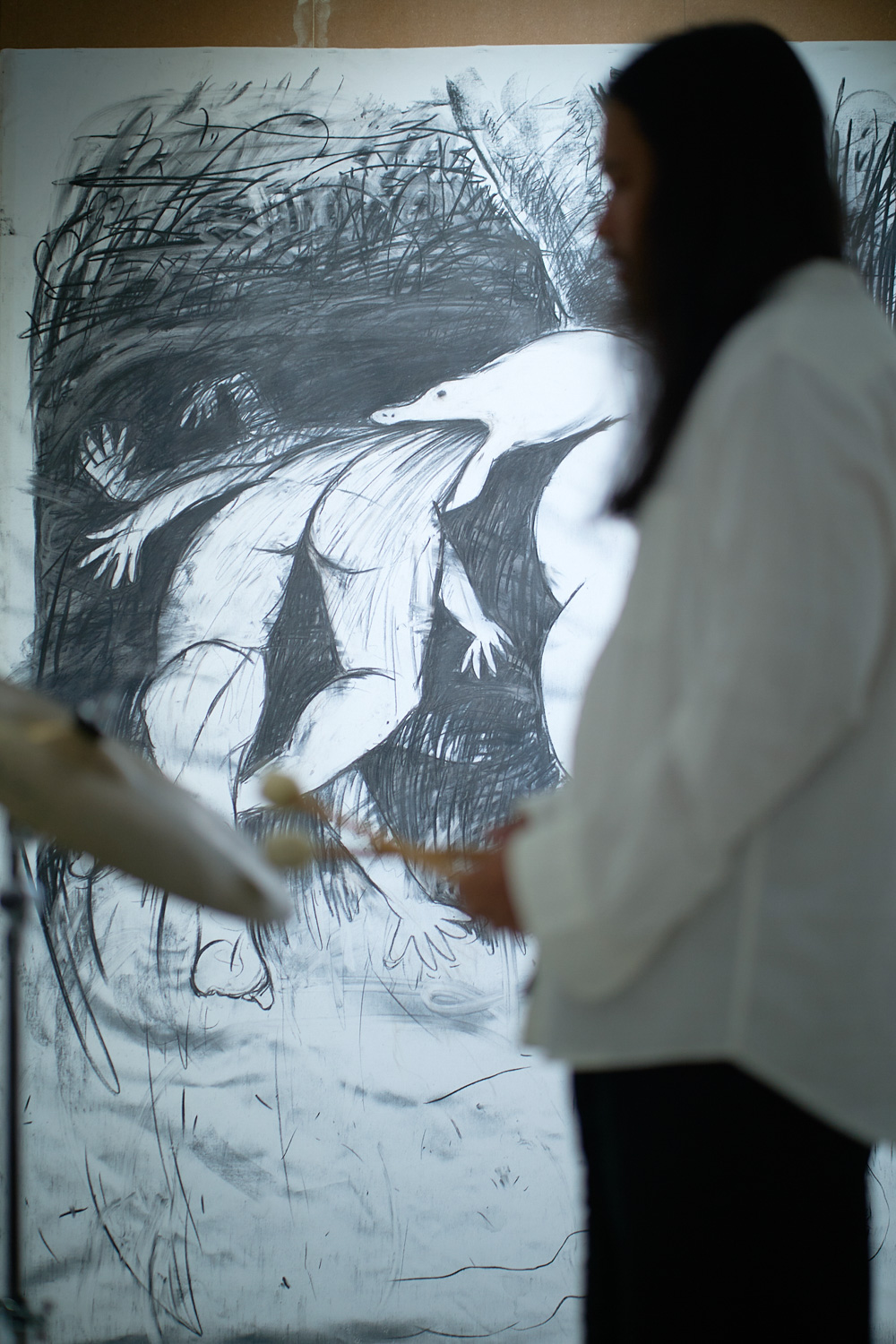
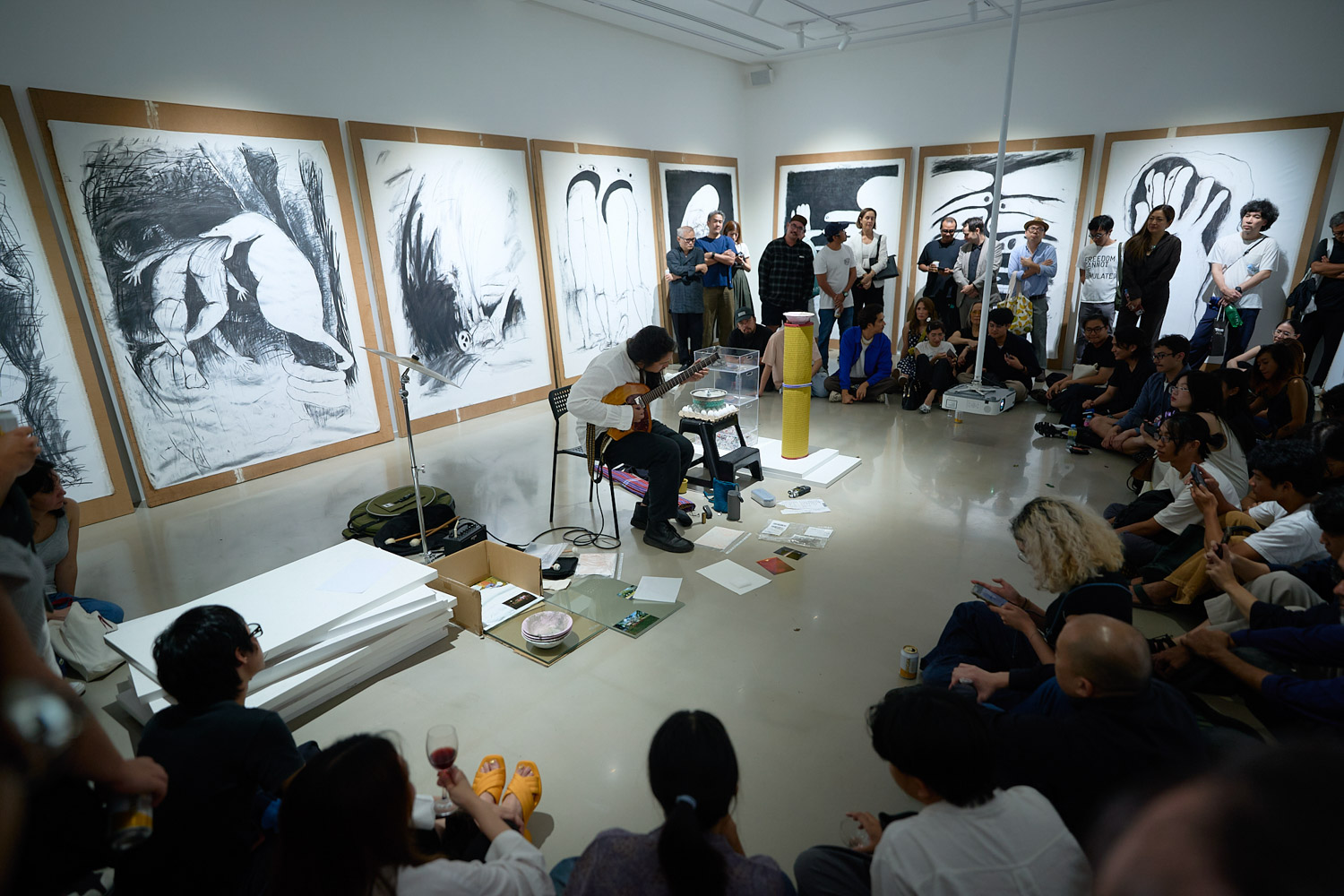
Charcoal marks sweep across canvases arranged around the gallery, carrying with them a succession of charged images and emotions: desire reaching a moment of ecstatic release; a pair of hands watching over puppets locked in conversation; an ego in the act of devouring; a snake swallowing a human figure; legs caught mid-stride; a group of people handing out bananas; and three hands raising the middle and ring fingers to form the numbers two, one, one. Across the room, these black lines bring a wide range of moods and impulses sharply to the surface.
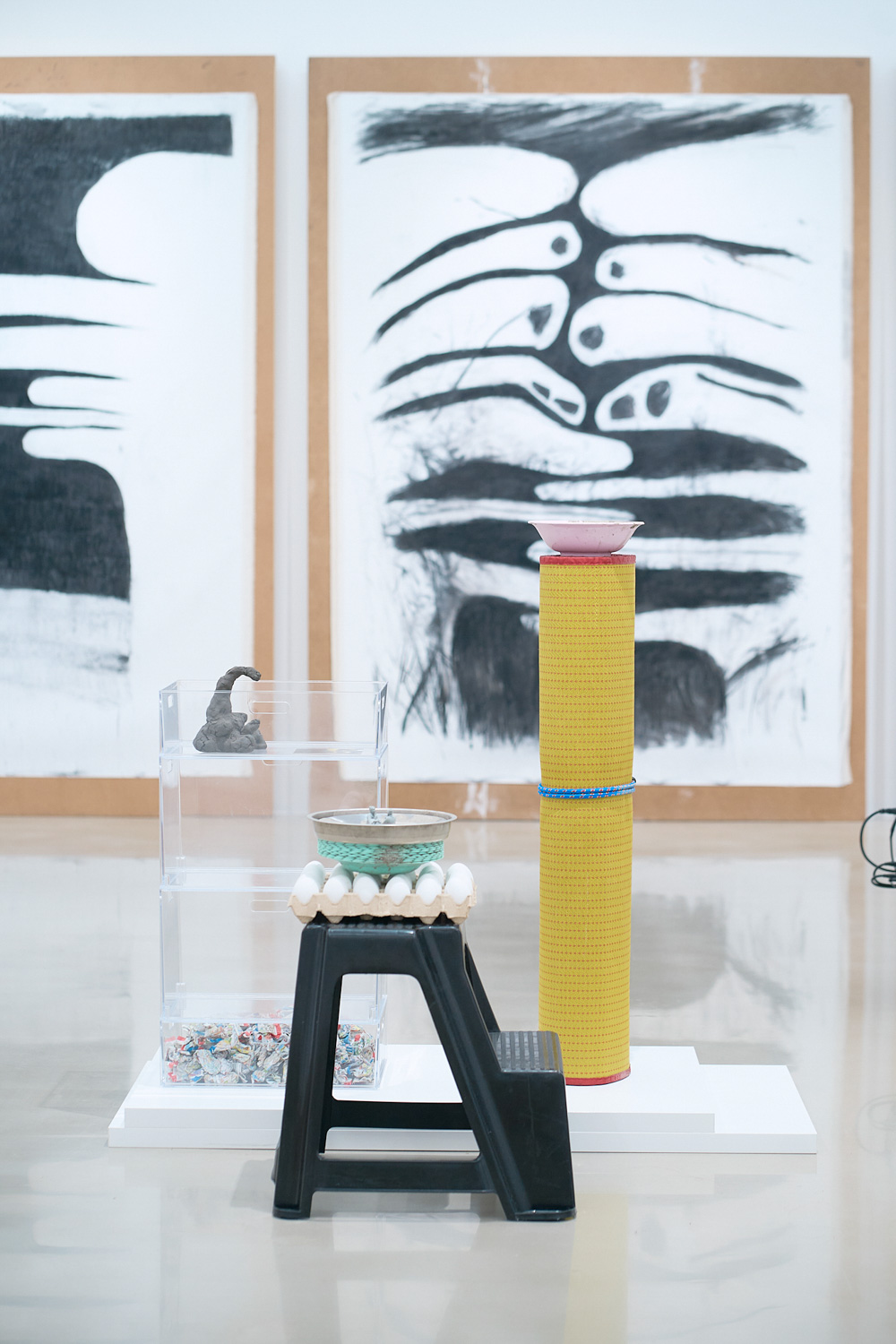
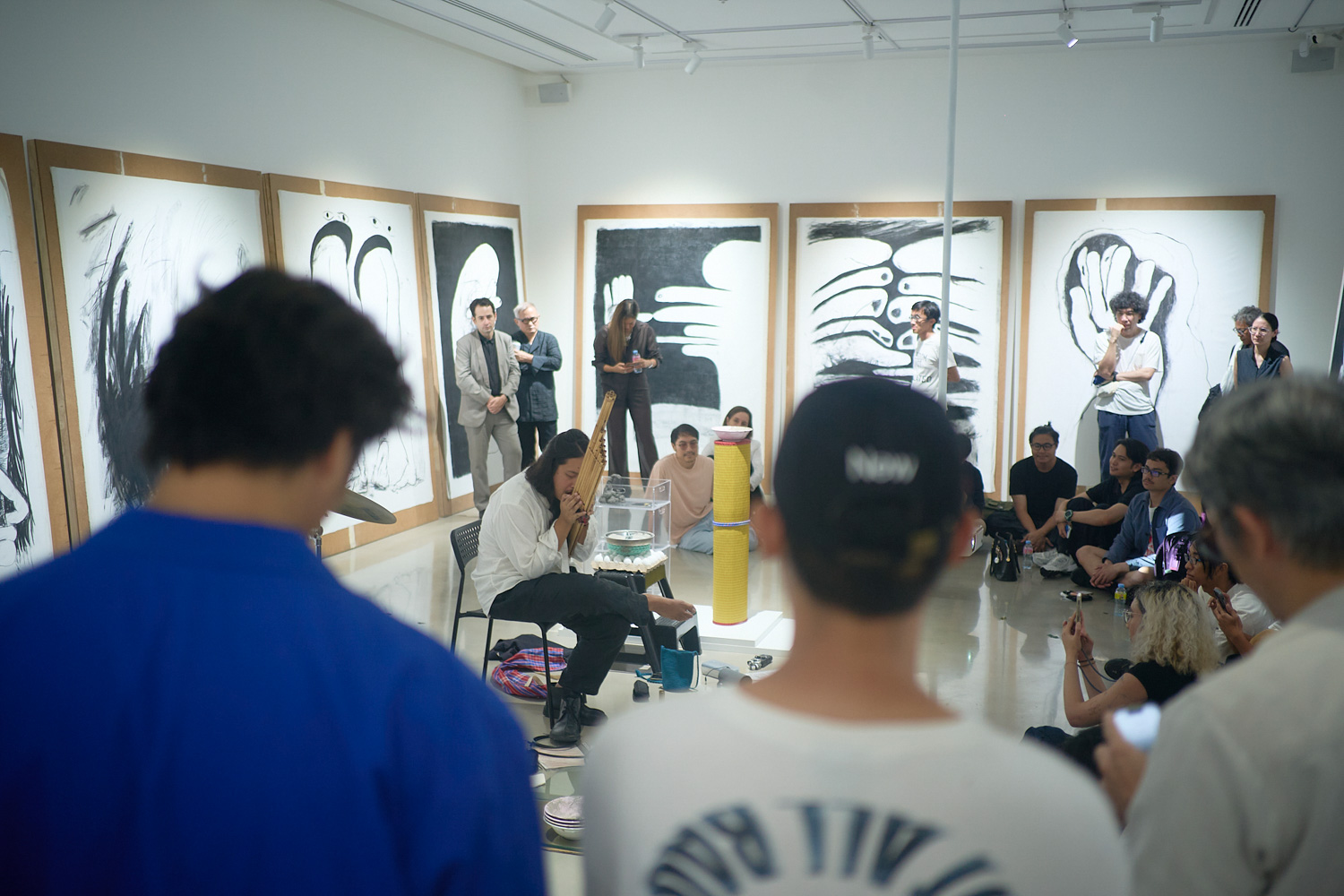
The gallery also contains two groups of installation works. In the first, a sheet of glass coated in white paint presses down on a paper bag that protrudes from beneath it, while a mud-stained noodle bowl rests on the same surface. Across from it, another arrangement seems to answer back: a similarly soiled bowl sits on a rolled mat beside a small ladder supporting a tray of duck eggs. Stacked bowls rise above the tray, and at its center, tiny figurines of ancient Chinese officials sit facing one another over a board game.
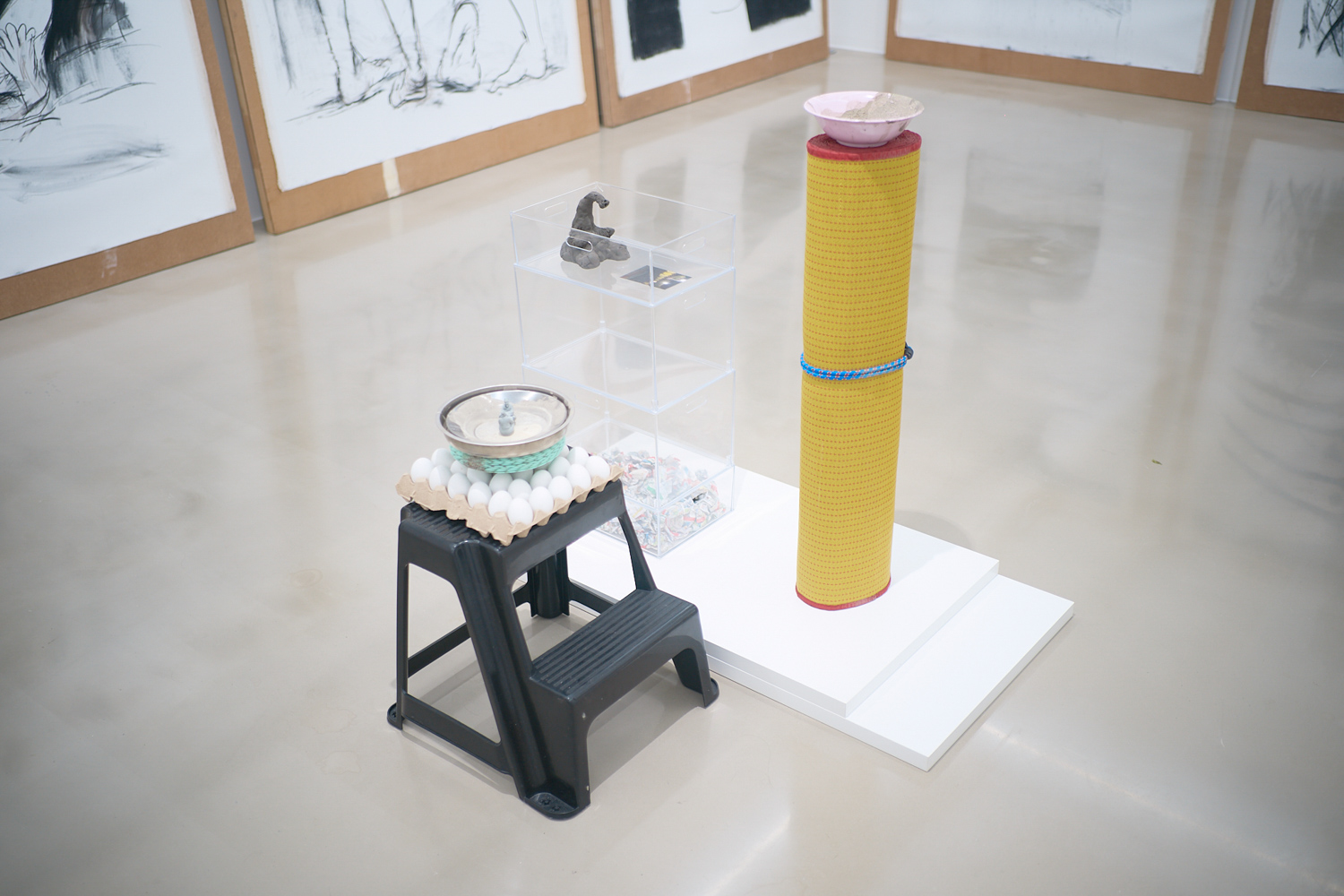
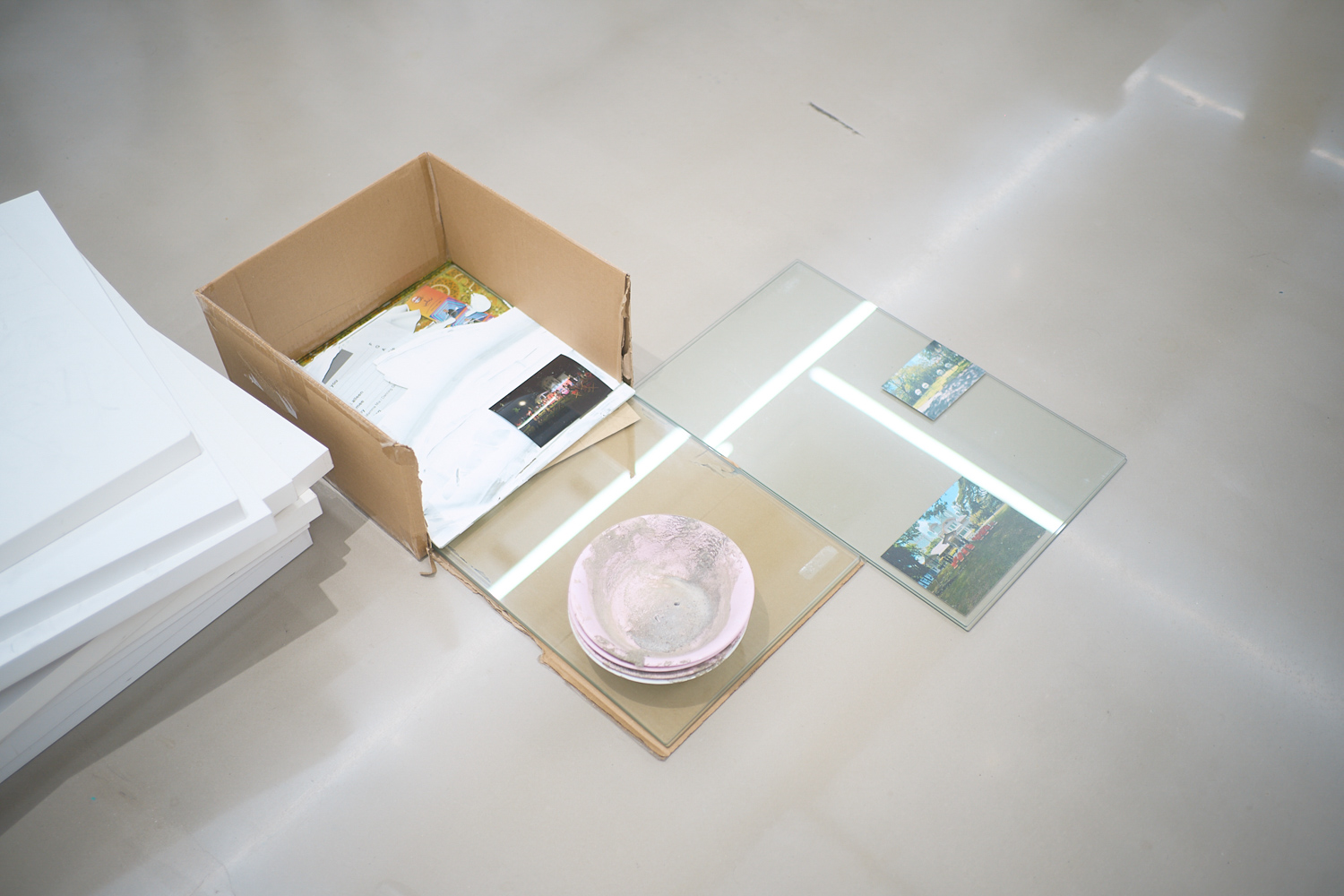
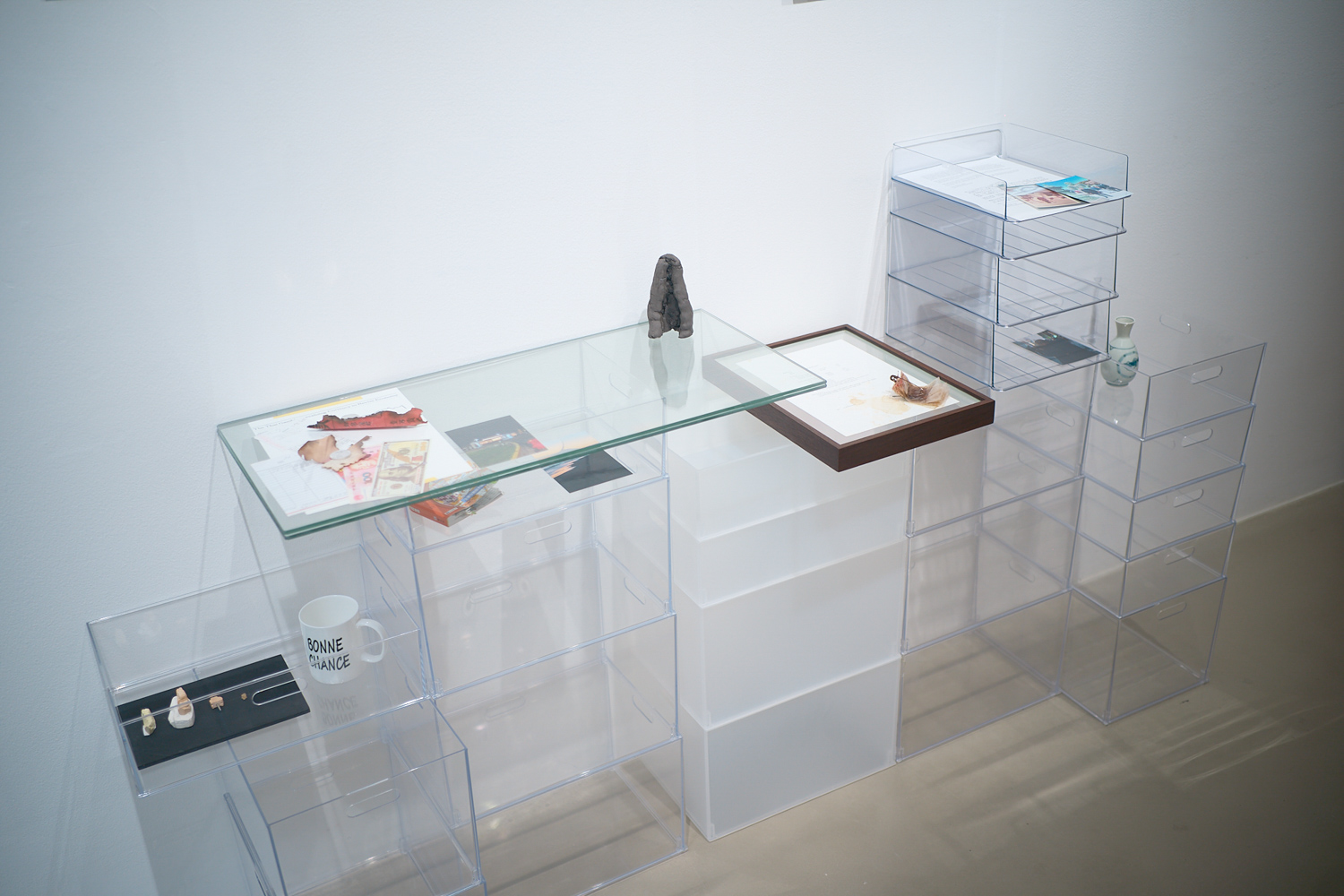
At first glance, the drawings and installations appear to have little in common. Look more closely, however, and the two bodies of work begin to engage in a far more animated exchange, drawing in histories and contexts that extend beyond the objects themselves: from the Dutch trading post on Dejima Island in Japan to Dutch colonial rule in Indonesia. Even the exhibition’s immediate surroundings seem to enter the conversation. Just before reaching 100 Tonson Foundation, one passes the Embassy of the Netherlands, positioned diagonally across the same street.
Part of the archive, displayed in a small room directly along the exhibition route, reveals a more personal thread in Parinot’s relationship with Japan. His parents traveled there on their honeymoon; among the materials is a photograph of them together at the Great Buddha of Kamakura, alongside another image taken by Parinot at the same site years later. There are also photographs of the sea in Kamakura and a map of Tokyo. Nearby, a recipe for nasi goreng associated with Sukarno brings another historical strand into sharper focus, pointing toward Indonesia’s struggle to liberate itself from Dutch colonial rule.
At the exhibition opening, a performance added another layer to the work, drawing the exhibition’s disparate elements together. The performer began by placing a series of objects between the two installations, then launched into a rapid clash of cymbals while producing a stream of wordless vocalizations. Guitar and khaen followed, played in melodies that resisted any clear direction or pattern. Against this, the murky charcoal drawings resurfaced as representations of Parinot’s inner world, a space marked by confusion, opacity, and ego. The separation between performer and audience lent the scene the atmosphere of a spirit-medium ritual. At the same time, it became increasingly clear that, through the exhibition, we were in fact being introduced to Parinot himself.
If Drawing unfolds as a deeply personal account, almost like a free-flowing conversation around a table heavy with the smell of alcohol, it also carries a sharply satirical edge toward Dutch colonialism, as well as the recent news of the sale of the Embassy of the Netherlands and the relocation of its offices elsewhere. After moving through the exhibition, one might well find oneself ready to say ‘Merdeka Sekarang’ once again.