


NEW OFFICE AT, DESIGNED BY OFFICE AT, CONVEYS ITS DESIGN PHILOSOPHY AND FUNCTIONALITY, WITH AN UNDERSTANDING OF EVERY PROGRAM NEEDED
TEXT: XAROJ PHRAWONG
PHOTO: RUNGKIT CHAROENWAT
(For Thai, press here)
Architectural offices typically fall into two categories. The first occupies a space not designed by the architect, adapting to an existing structure. The second and often more intriguing, is housed in a building the architect has designed for themselves—a process that demands a great understanding of personal needs and offers the clearest expression of their design philosophy.
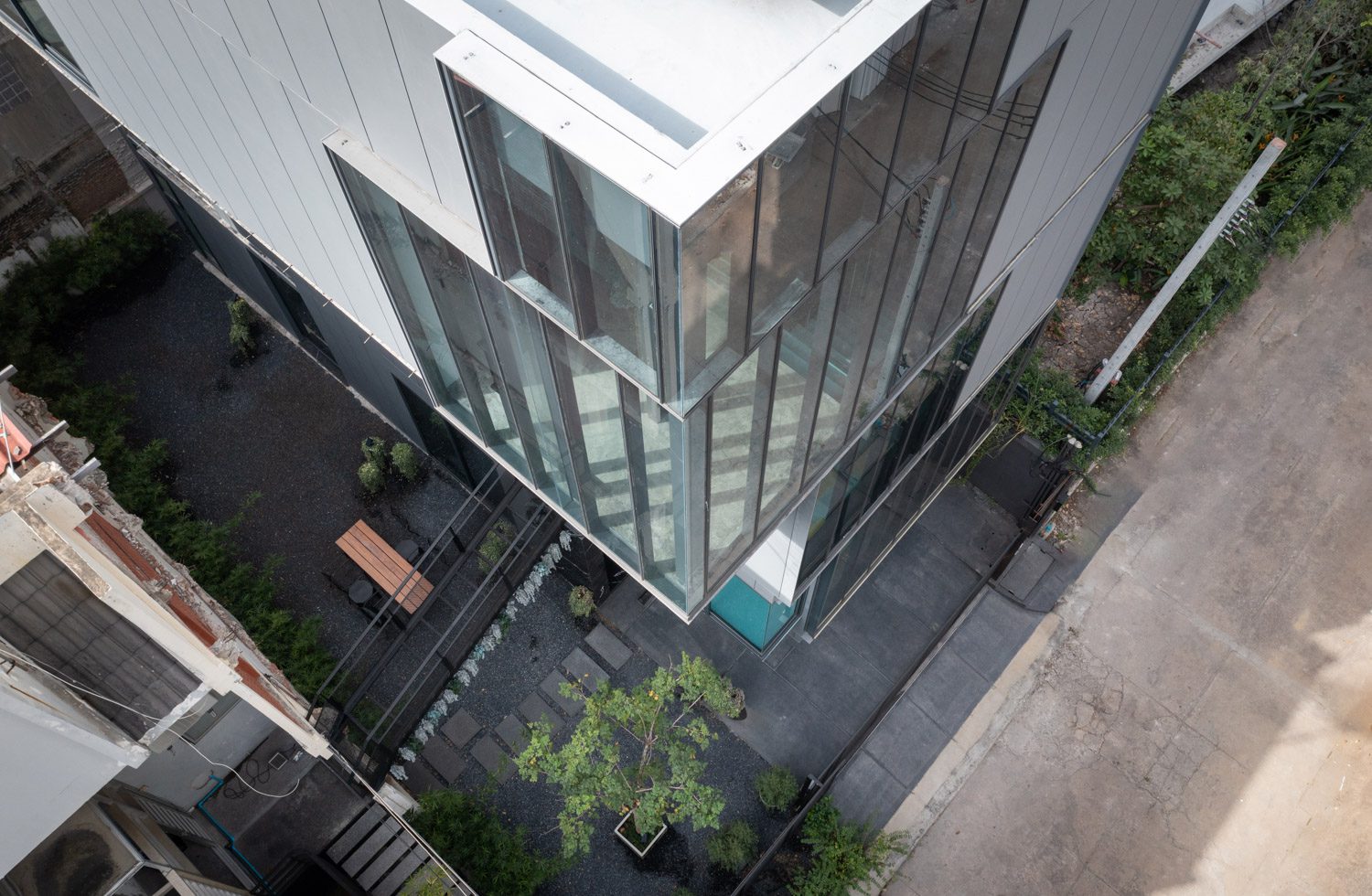
For Office AT, a practice that has navigated the architectural landscape for two decades, the opportunity to create such a space came after years of operating out of a modest townhouse. When the adjacent plot of land became available, it marked the beginning of a new chapter—designing their own office. This expansion project commenced in 2019 and was completed in 2021. The project unfolded in two phases. The first phase involved the construction of the office on the western edge of the plot, designed to anchor the professional functions of the firm, while the eastern side houses a residential wing. The result is a home office that is both a workplace and a living space, stitched together by a central courtyard that mediates between the two.
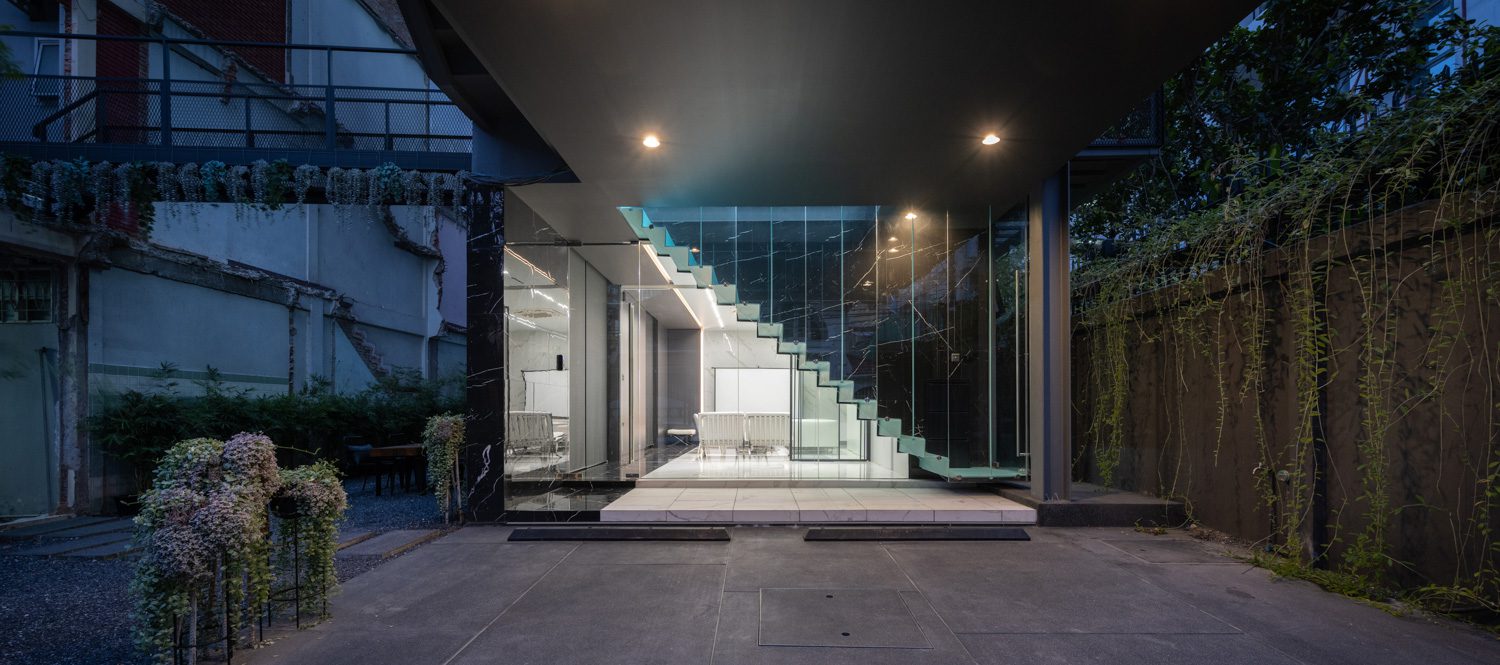
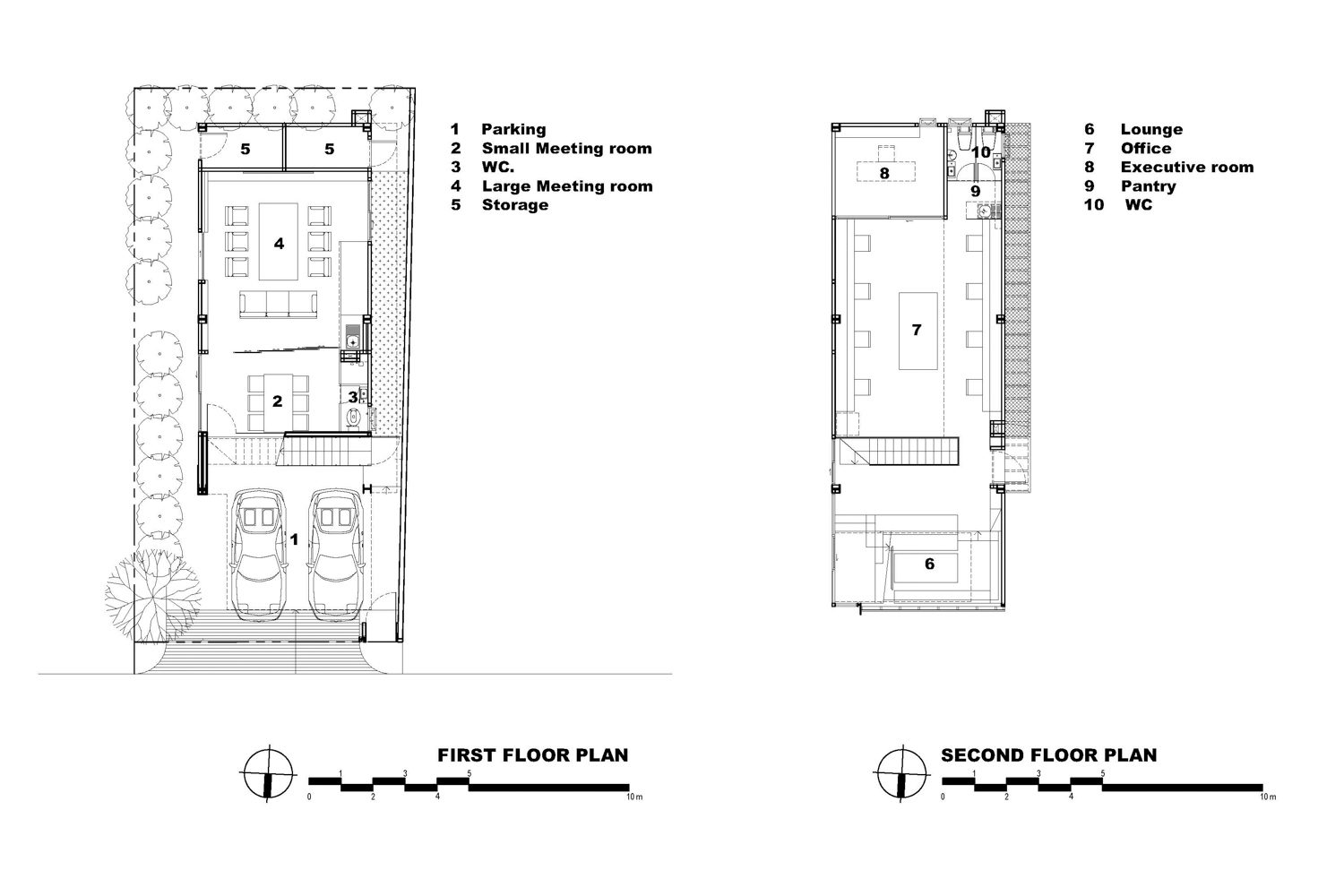
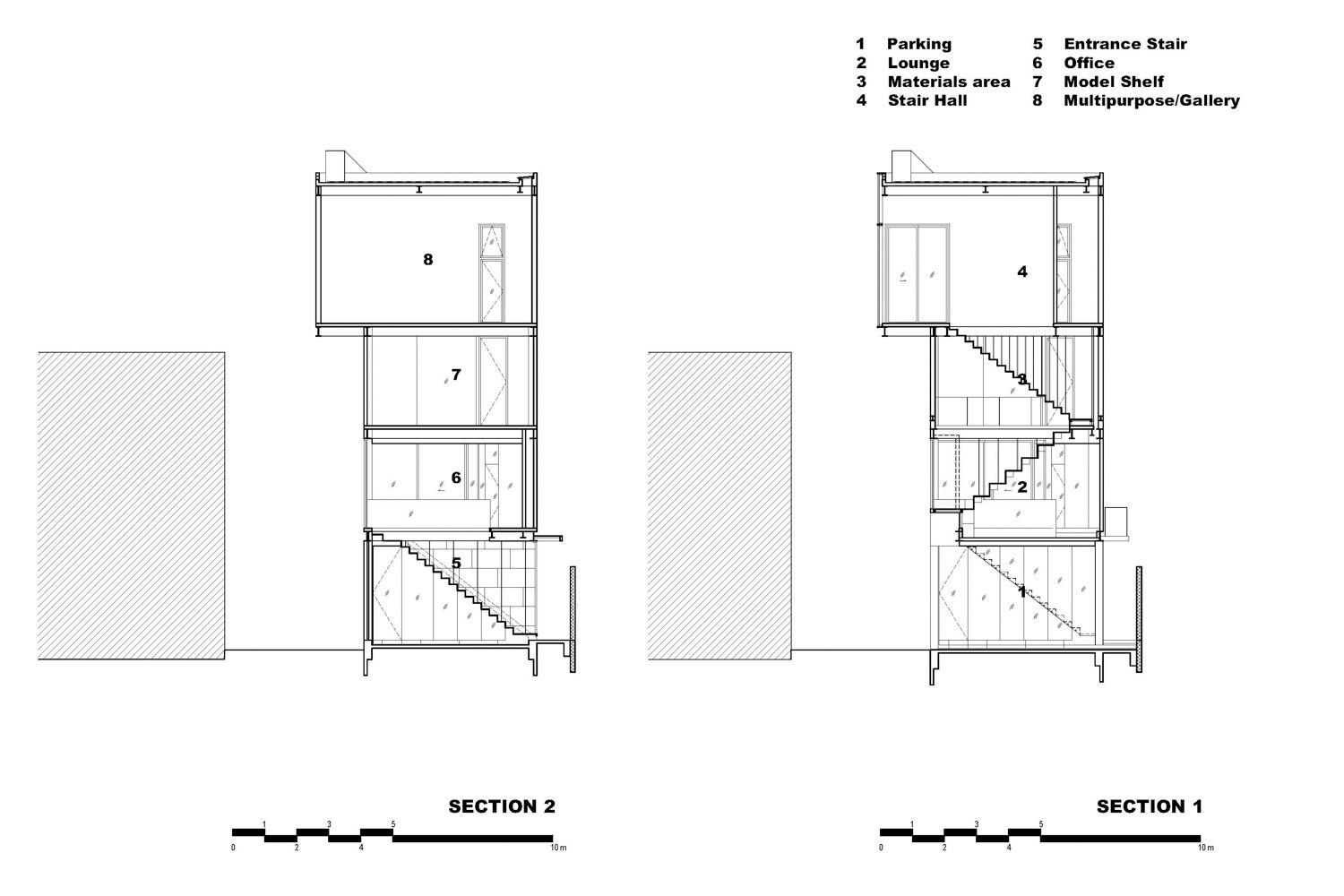
The spatial organization follows a vertical hierarchy, a deliberate choice to streamline the program. The ground floor, open and accessible, is dedicated to public functions including a parking area and two meeting rooms designed with flexibility in mind. These rooms can be directly accessed from outside, allowing visitors to use them without encroaching on the private workspaces. The primary areas of use face east, while a small garden separates the new building from the old townhouse office. The western edge of the office is reserved for service functions with storage units and a compact, discreet bathroom, cleverly concealed within the white wall, maintaining a clean and seamless appearance. The meeting rooms are also adaptable, occasionally transforming into entertainment spaces during moments of celebration.
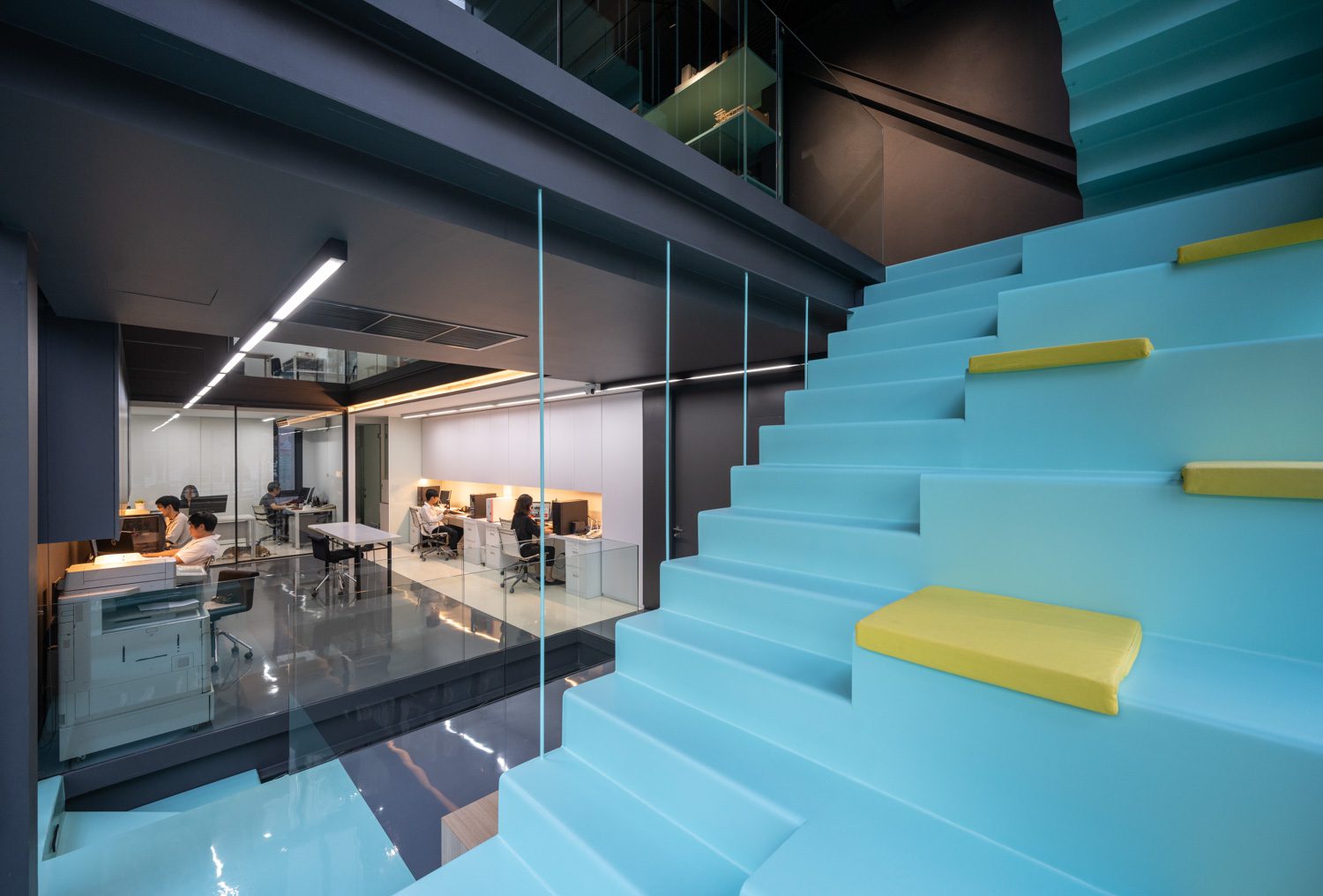
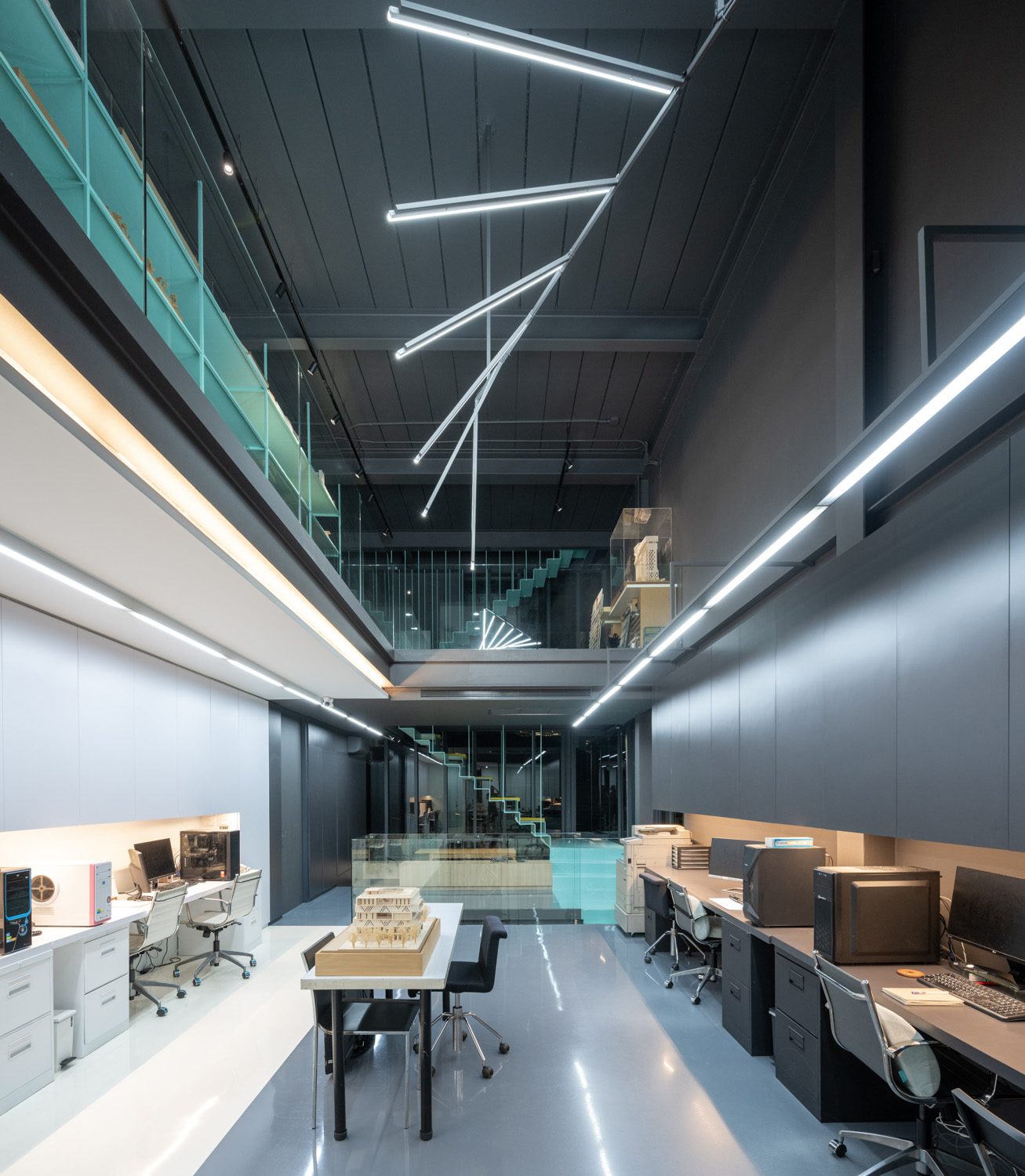
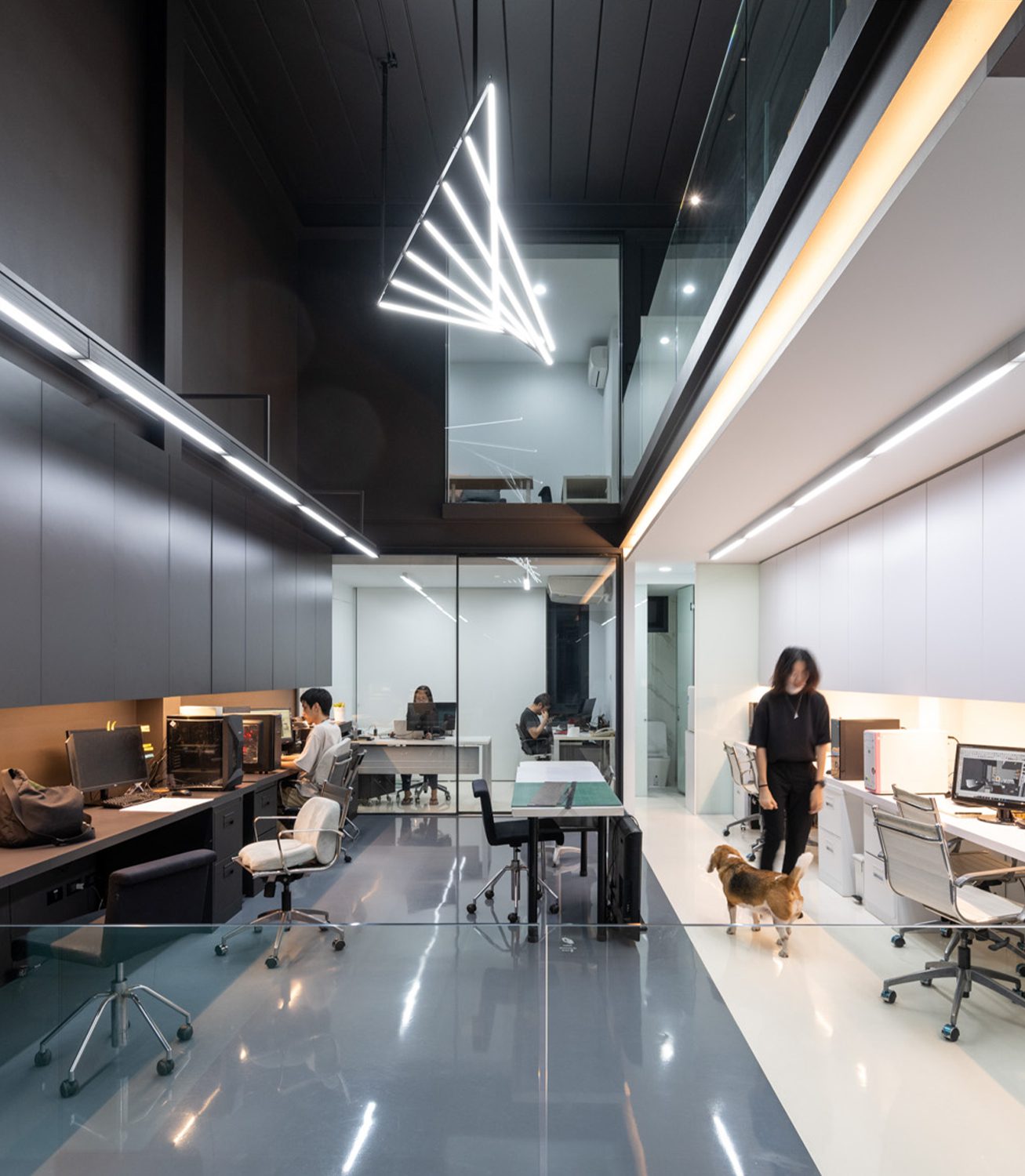
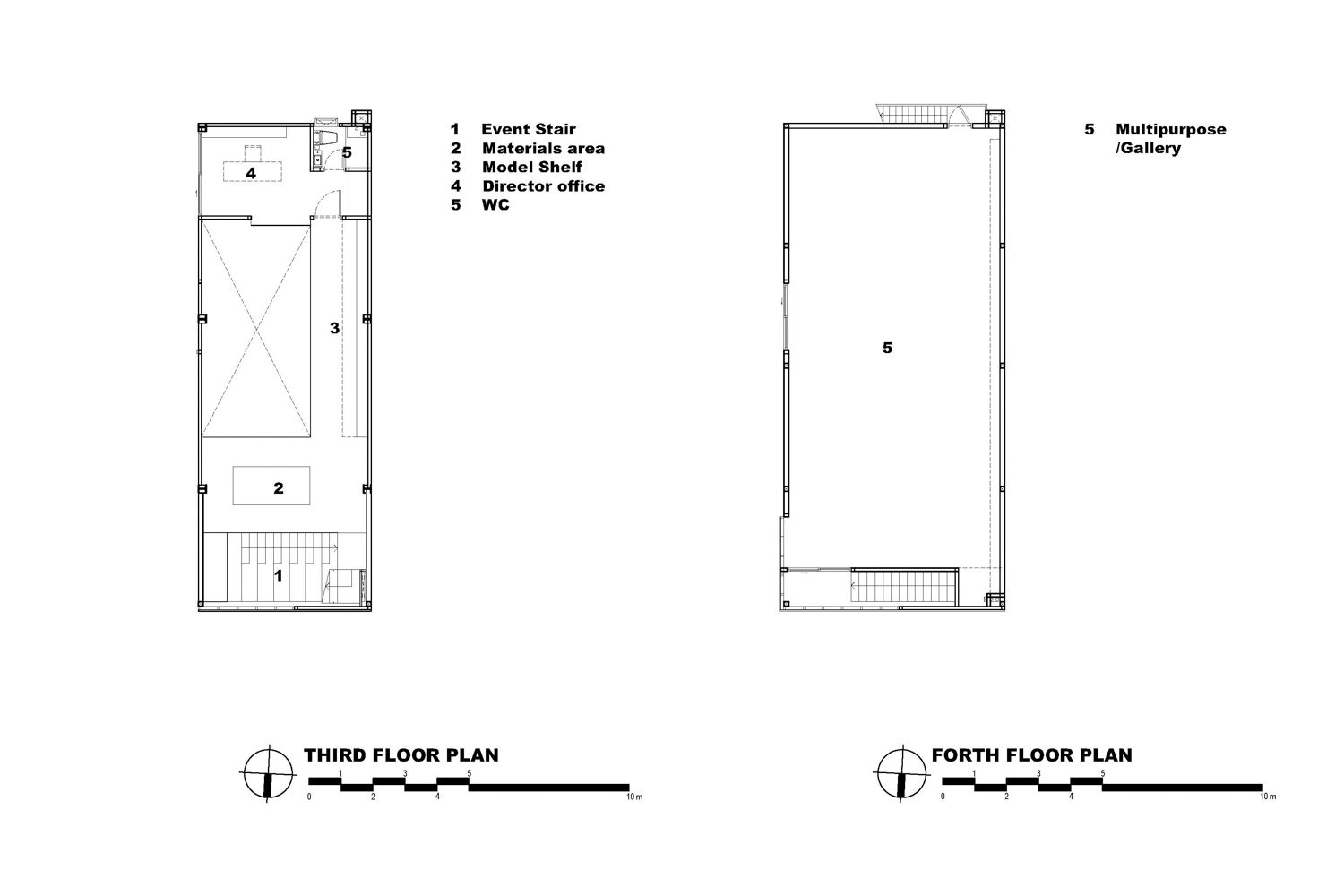
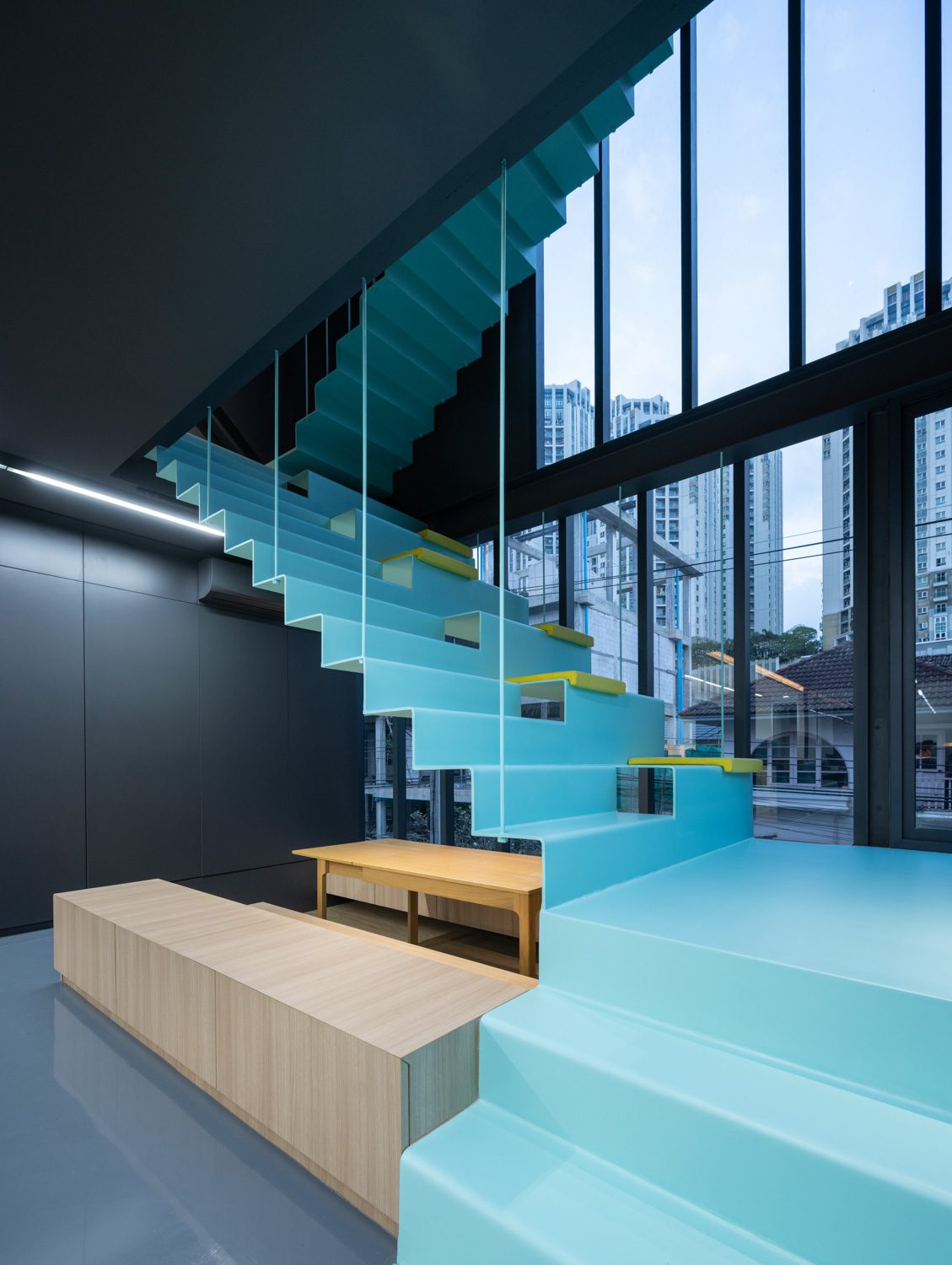
The architect strategically positioned the vertical circulation along the northern side, integrating a staircase that guides movement through the building. From the ground floor, access to the private workspace on the second floor is carefully filtered, with the stairway acting as a threshold between public and private zones. Upon reaching the workspace, the spatial organization becomes distinctly defined into two primary areas. On the northern side, a flexible, multi-purpose space accommodates various functions. The area beneath the staircase doubles as a compact meeting space, which, at times, transforms into a workstation for model-making. Additionally, a mezzanine staircase—more than just a passage—features integrated seating, forming what the architect refers to as an “Event Stair,” designed to support small gatherings and informal discussions. The southern side is dedicated to the core workspace, a two-story-tall hall where the architects work. At the far end, a private office and a small yet efficiently designed restroom complete the space, ensuring optimal use without excess.
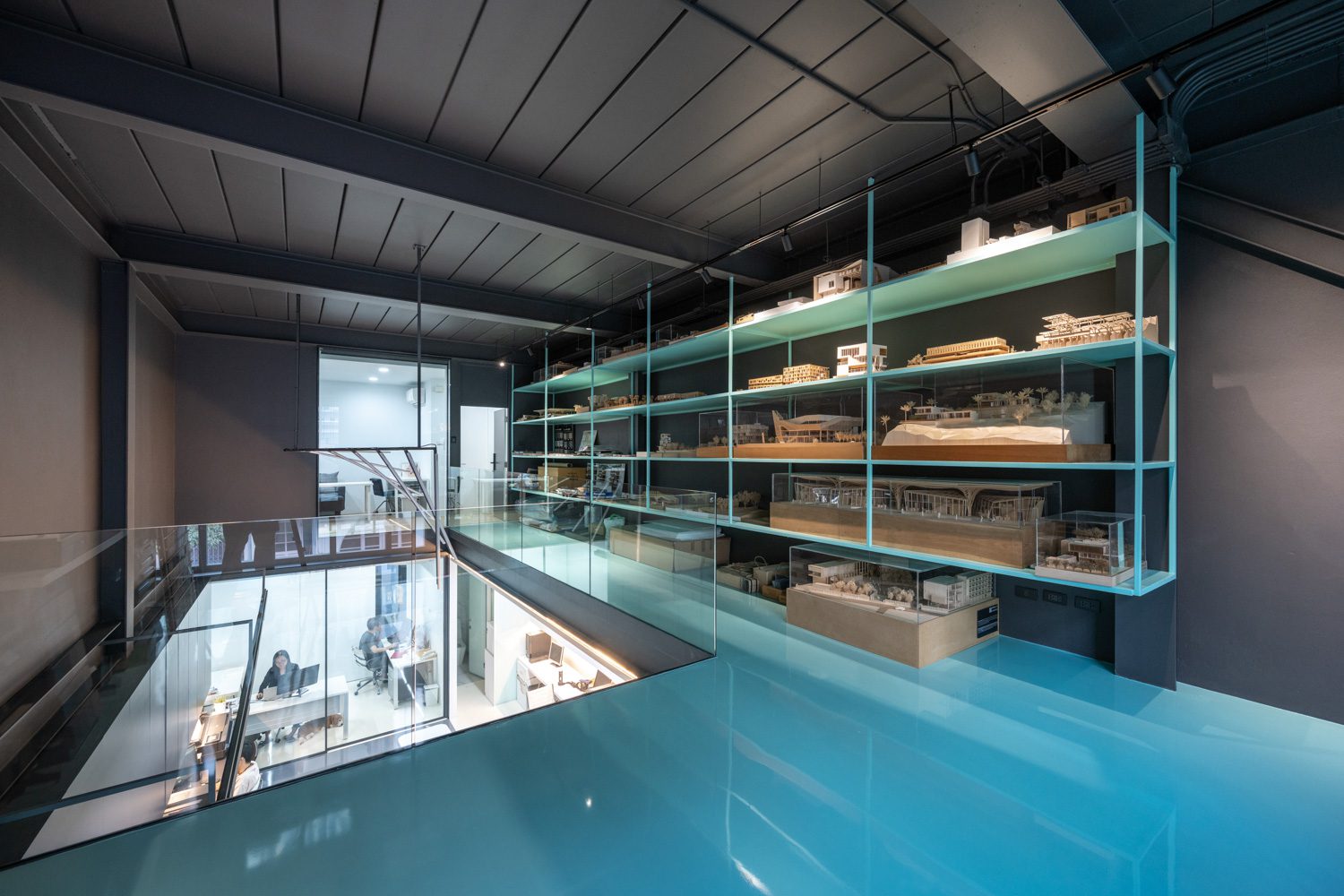
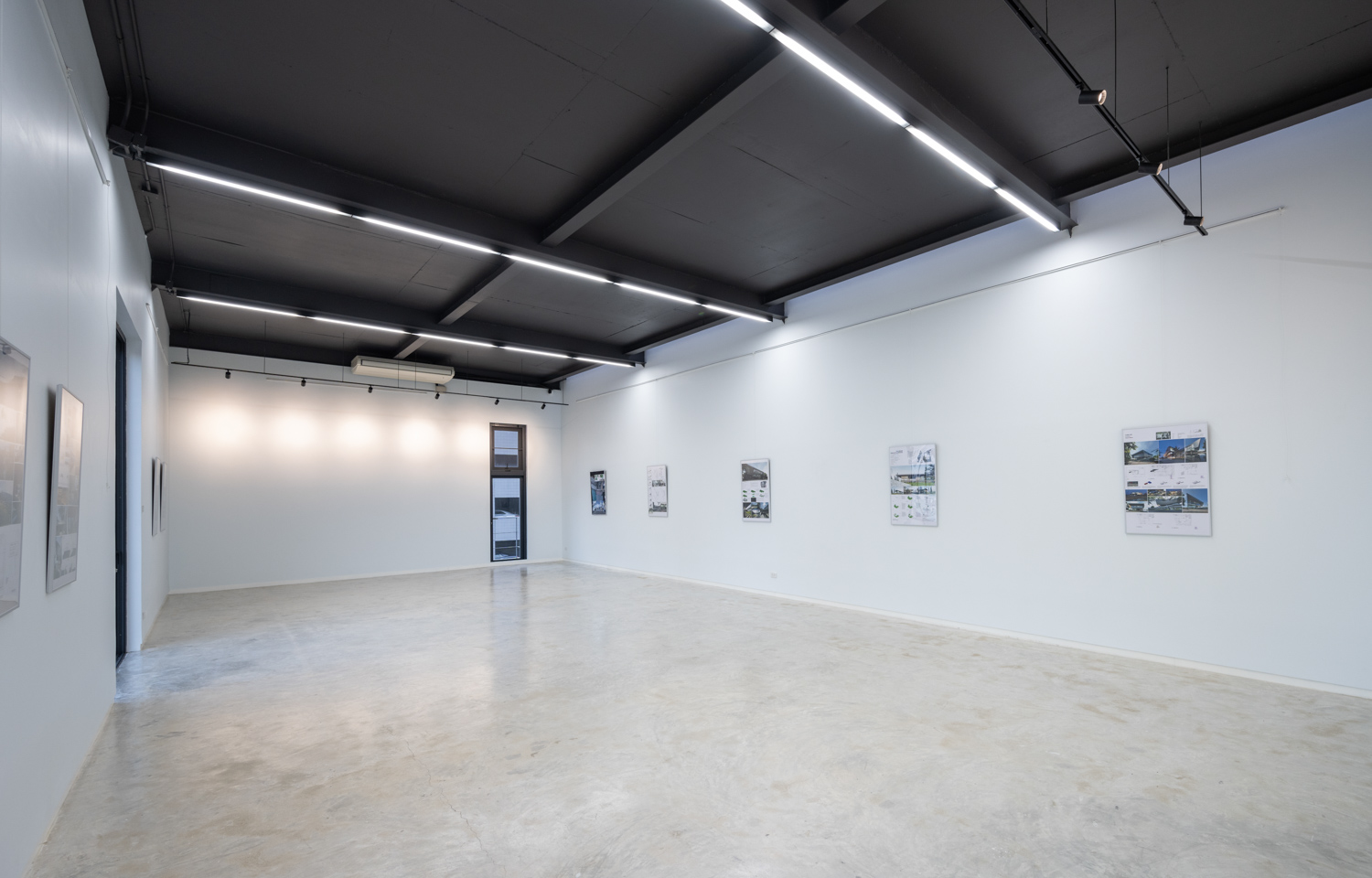
The mezzanine, positioned between the second and third floors, serves as dedicated storage for the firm’s extensive collection of material samples and architectural models. A custom shelving system is suspended from the steel beams that support the third floor. Above, the third floor is conceived as a multi-functional space, adaptable to various activities—from exercise and film screenings to temporary gallery exhibitions—offering a dynamic environment that evolves with its changing uses.
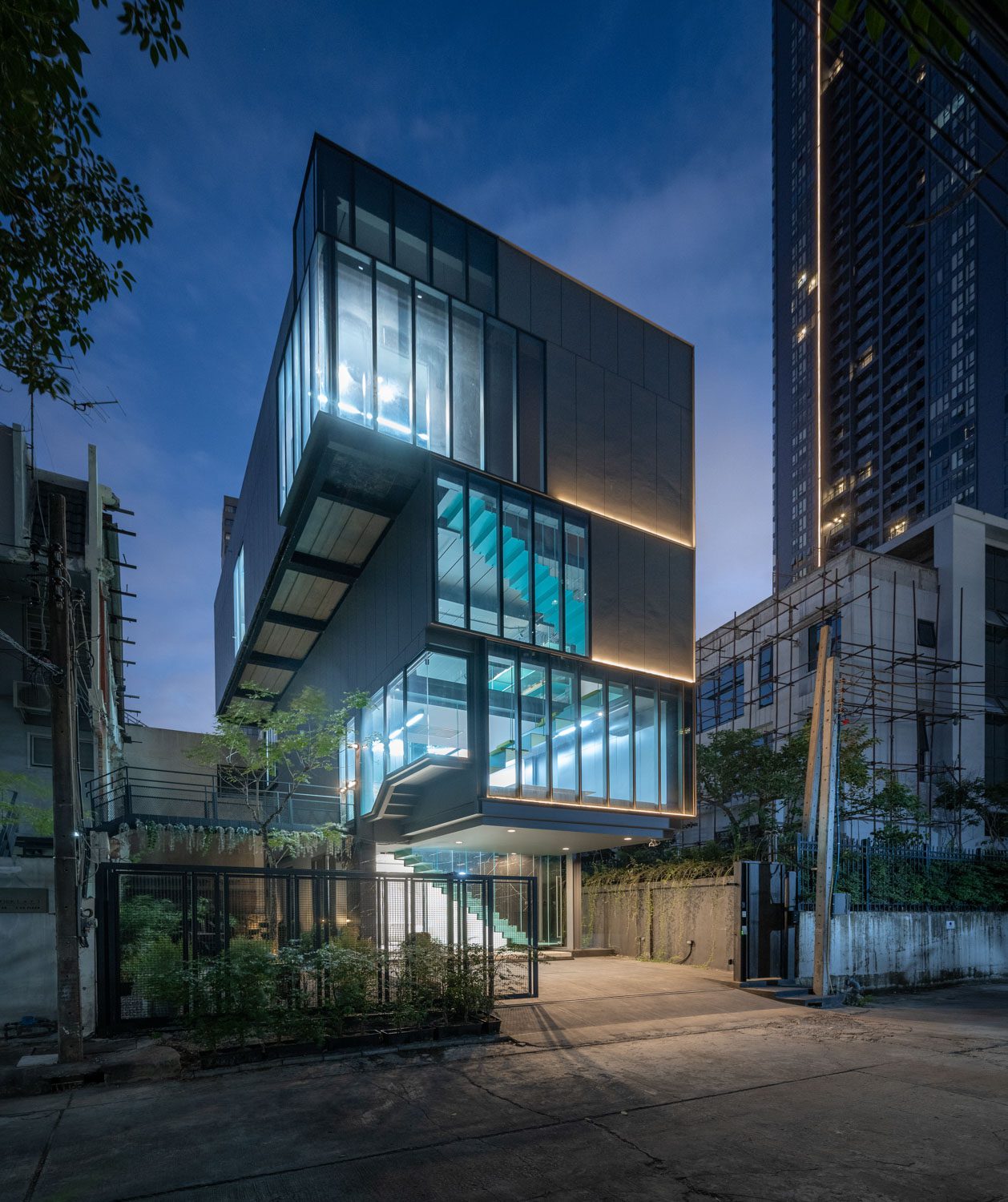
When viewed from the outside, the building’s envelope offers an honest reflection of its internal functions. Spaces intended for visibility are clad in clear glass, revealing their function with clarity and intent—there is no need for interpretation. Circulation routes, such as staircases and walkways, are similarly enclosed in transparent glass, allowing natural light to guide movement through the structure. In contrast, the office spaces are shielded by solid walls, strategically positioned to block the intense southern sunlight and prevent deep-angled rays from disrupting the work environment. On the northern side, a folded steel staircase extends seamlessly from the first to the third floor, replacing the conventional bulky stairwell. This refined structure preserves openness, inviting soft light deep into the building from the north.
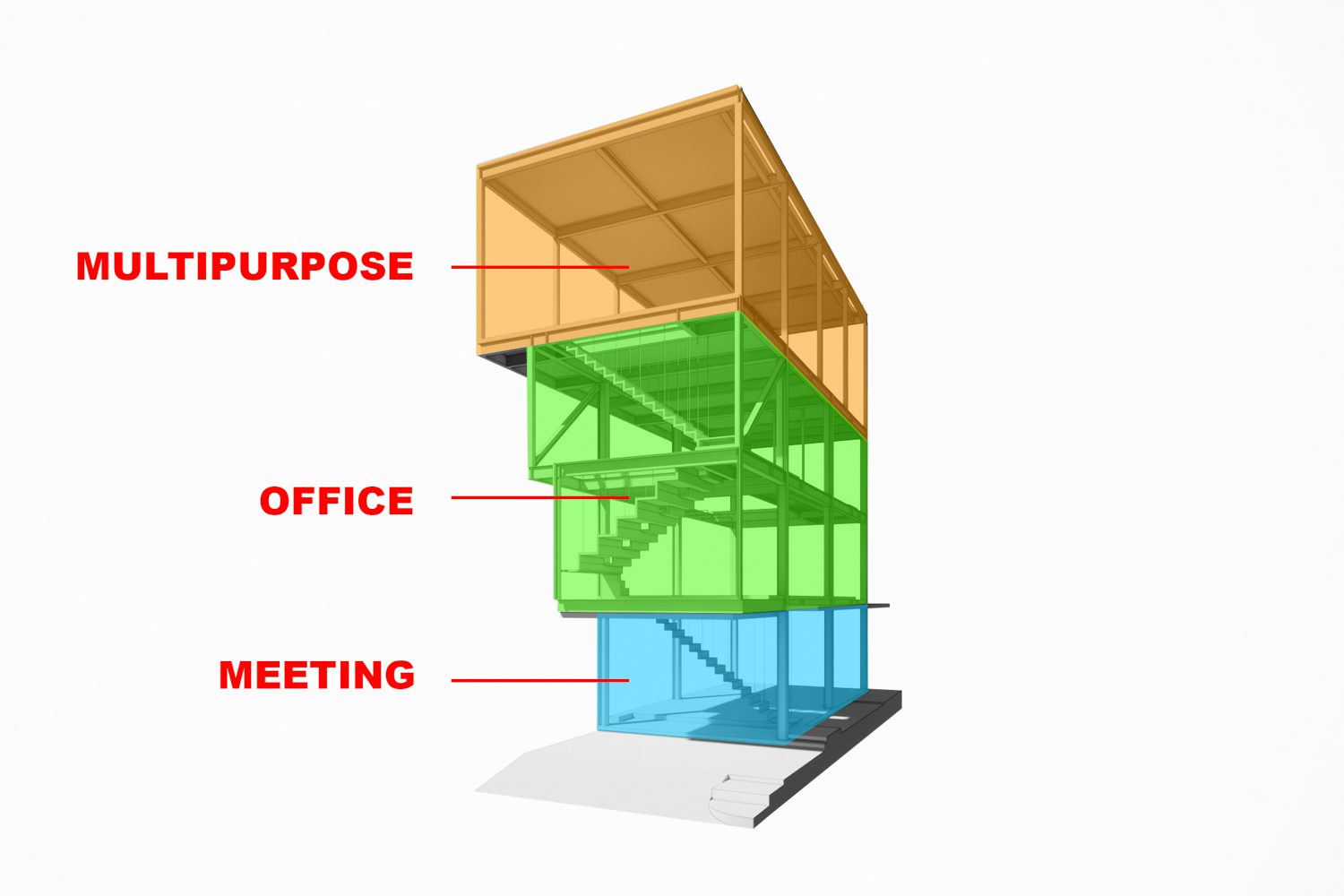
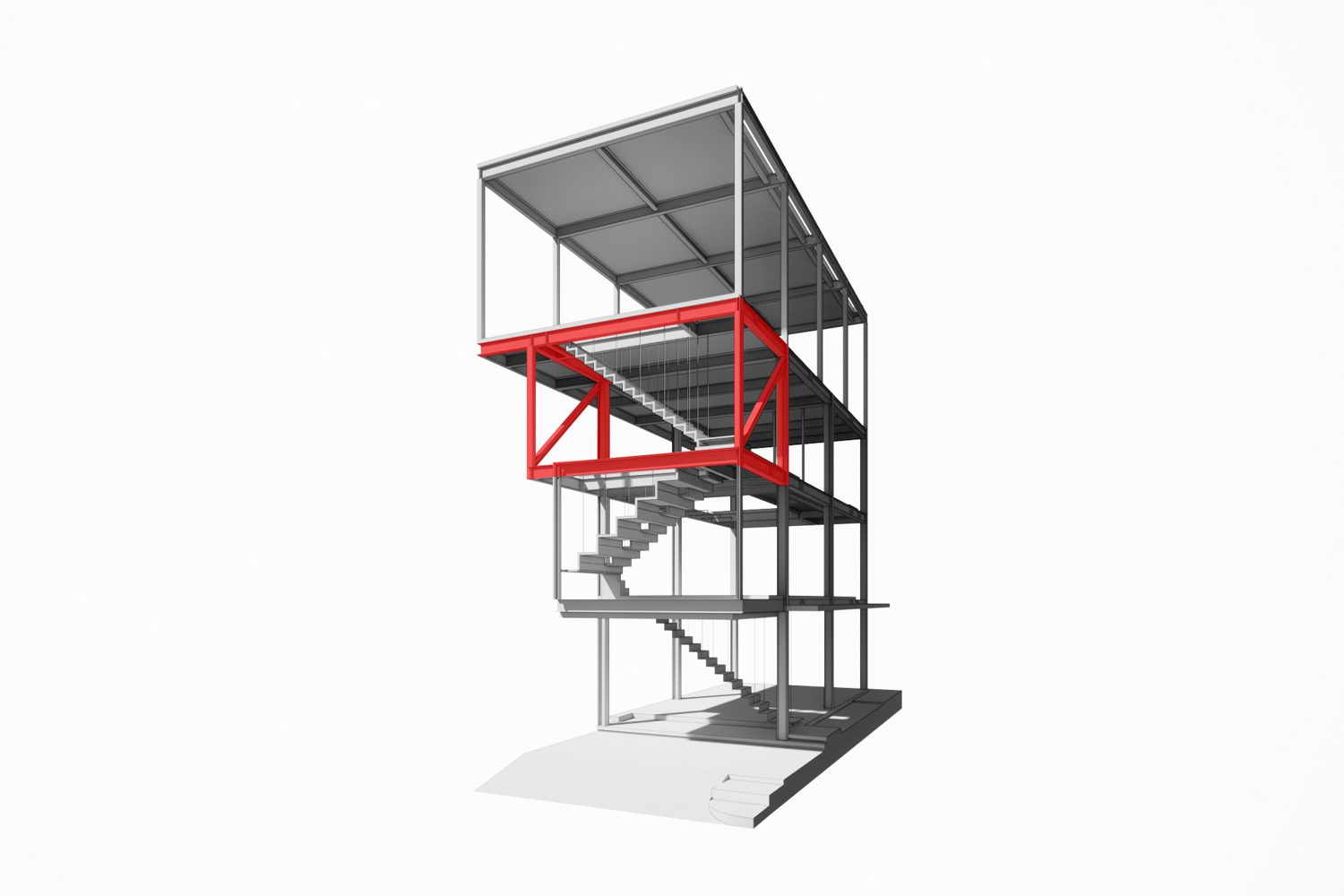
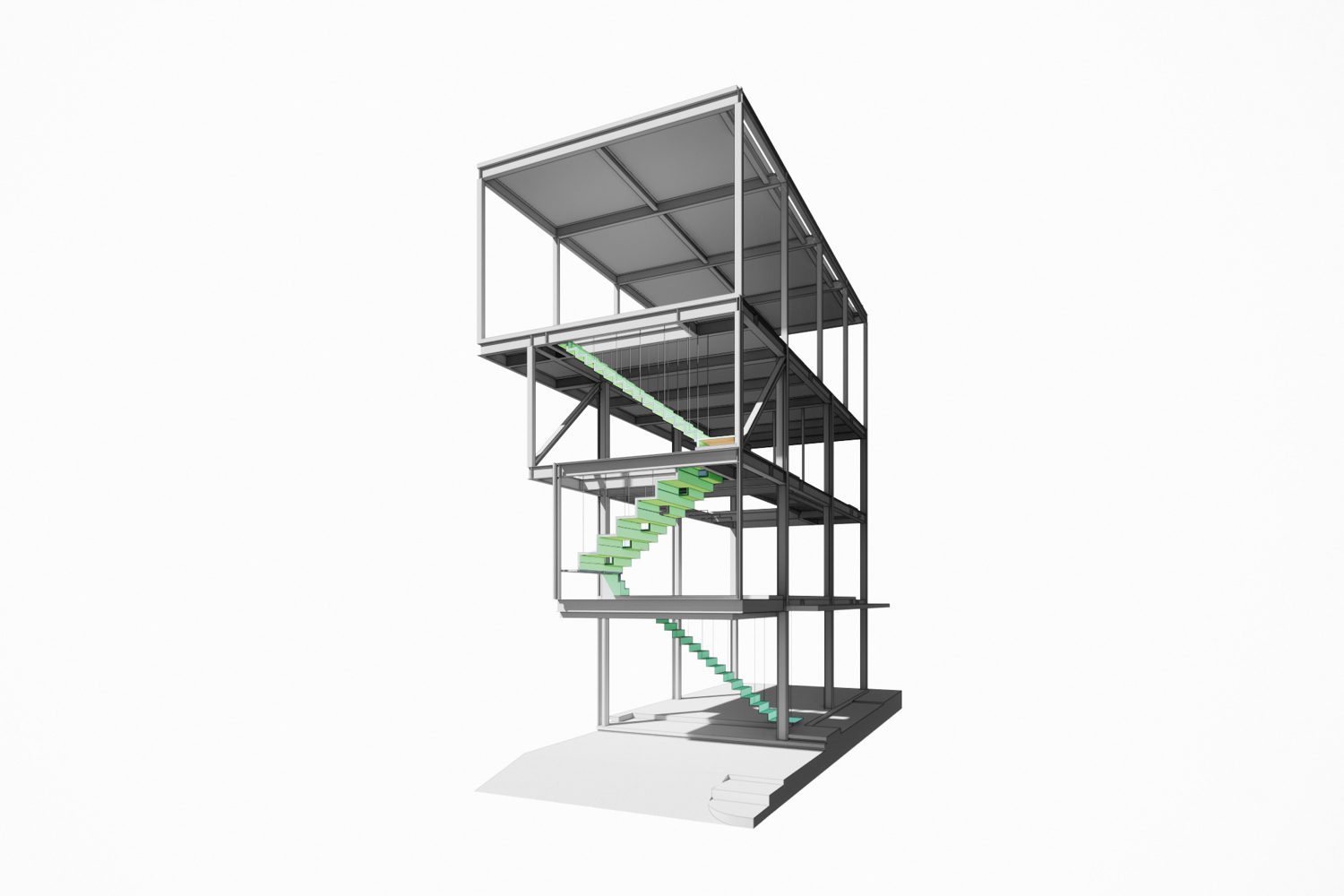
Beyond the staircase, the structural framework of steel beams and columns responds directly to the functional demands of the cantilevered floors on the second and third levels. The architect’s goal was clear: maintain an unobstructed parking area, free from intrusive columns. To achieve this, the mezzanine is supported by tension rods, which simultaneously bear the load of the second floor. The result is a column-free parking space and a building that appears to float above ground—its mass seemingly reduced, its form lifted. Every element of the design is rooted in purpose, driven by the logic of the program. This is architecture crafted by architects for architects—each space optimized with an acute understanding of their own needs.
On the subject of programmatic design, Juthathip Techachumreon and Surachai Akekapobyotin of Office AT reflect:
“It’s not just about function. The program also includes constraints—they’re part of the design brief. Anything that limits or shapes the project becomes part of the program. At Office AT, flexibility is at the core of our process. A program is never static; one day, the way a space is used might change.”