FANG EYEWEAR SHOWROOM, AN EYEWEAR EXHIBITION SPACE THAT DELIVERS AN IMMERSIVE MUSEUM-LIKE EXPERIENCE, DESIGNED BY M-D DESIGN STUDIO
TEXT: SURAWIT BOONJOO
PHOTO: YU SUNPING | XIE SHUXIANG | QU WENHAO | WU QIYAN
(For Thai, press here)
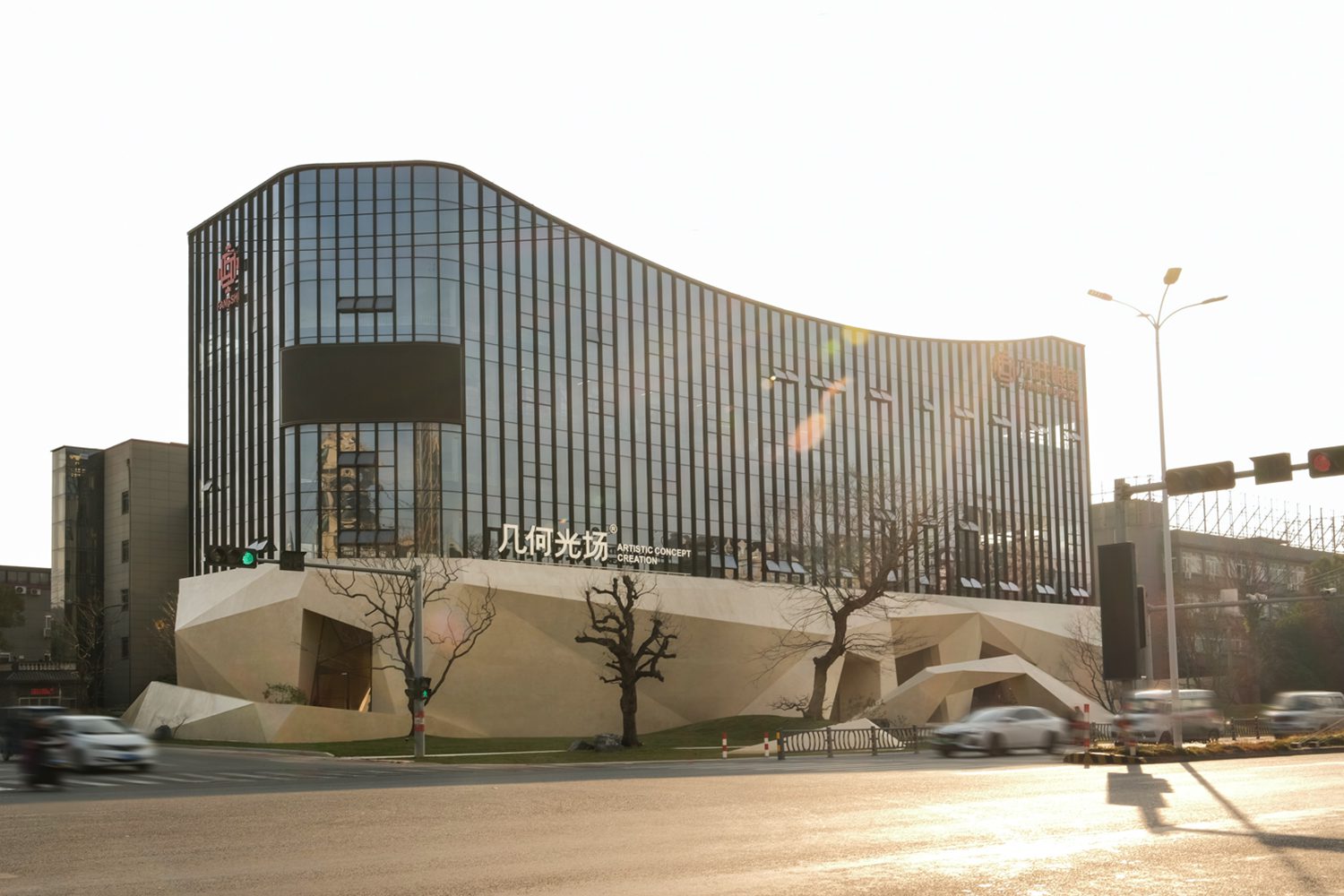
Situated on a street corner, an office building stands in deliberate contrast to its surroundings. Its shimmering glass surfaces, fluid lines, and softly curving forms mark a clear departure from the typical urban fabric. This distinct visual language is further emphasized by the building’s lower portion, where geometric volumes twist and interlock with bold dynamism. Rendered in solid forms and muted tones, the base introduces a sense of visual tension—an intentional paradox that reinforces the building’s presence. More than a conventional eyewear showroom amid the dense industrial cluster of China’s optical manufacturing hub, the project asserts itself as an art and cultural landmark—one that invites reflection on the role of design in shaping commercial experience. Designed by M-D DESIGN STUDIO, the Fang Eyewear Showroom is located in Wenzhou, Zhejiang Province, and recently opened in January of this year. Its program resists easy categorization. With its multifaceted program, the space defies definition as merely a showroom for eyewear. It brings together a café, a compact art bookstore, and a curated display of art objects shaped by a vision realized under the ‘museum of light’ concept.
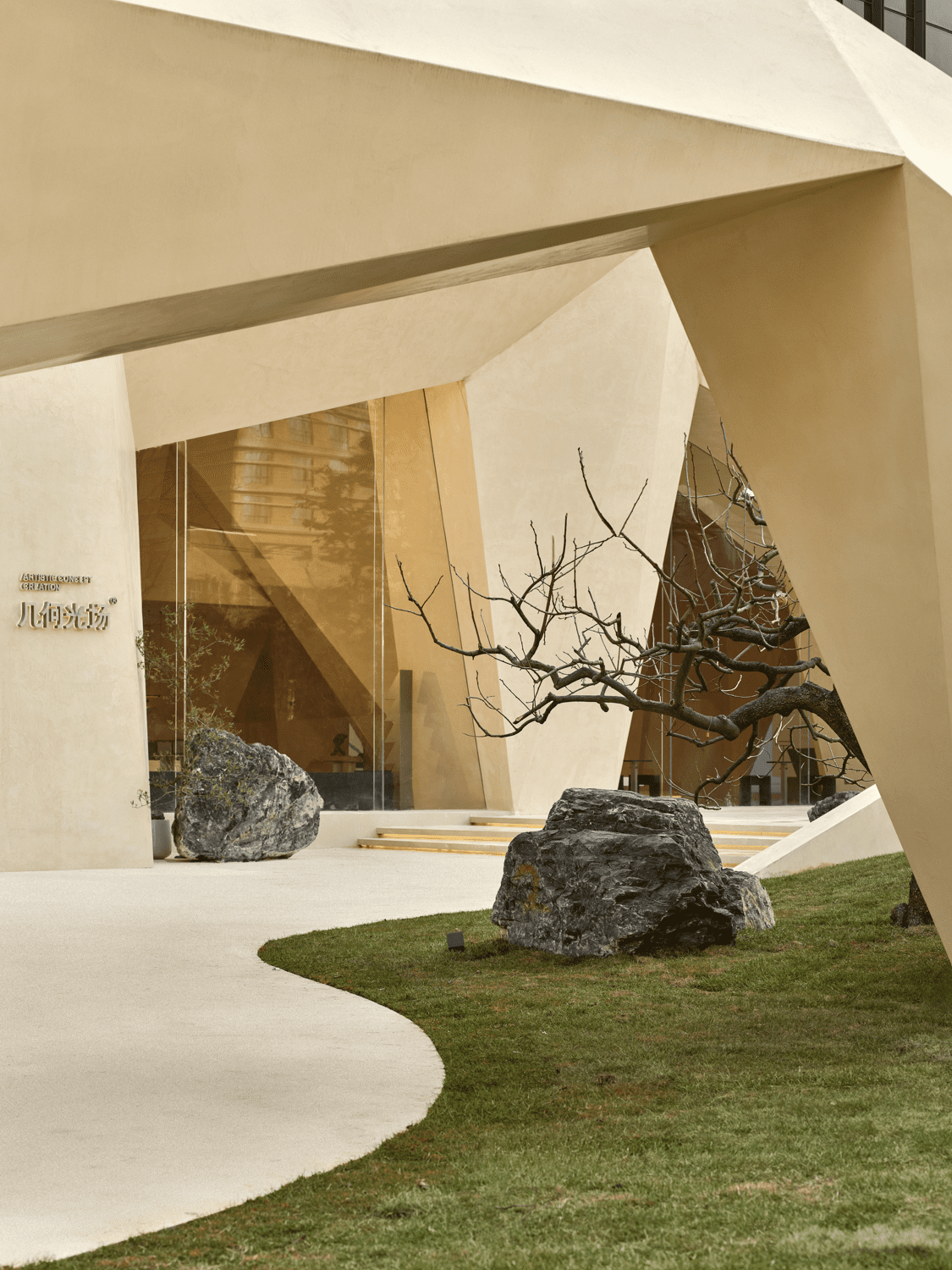
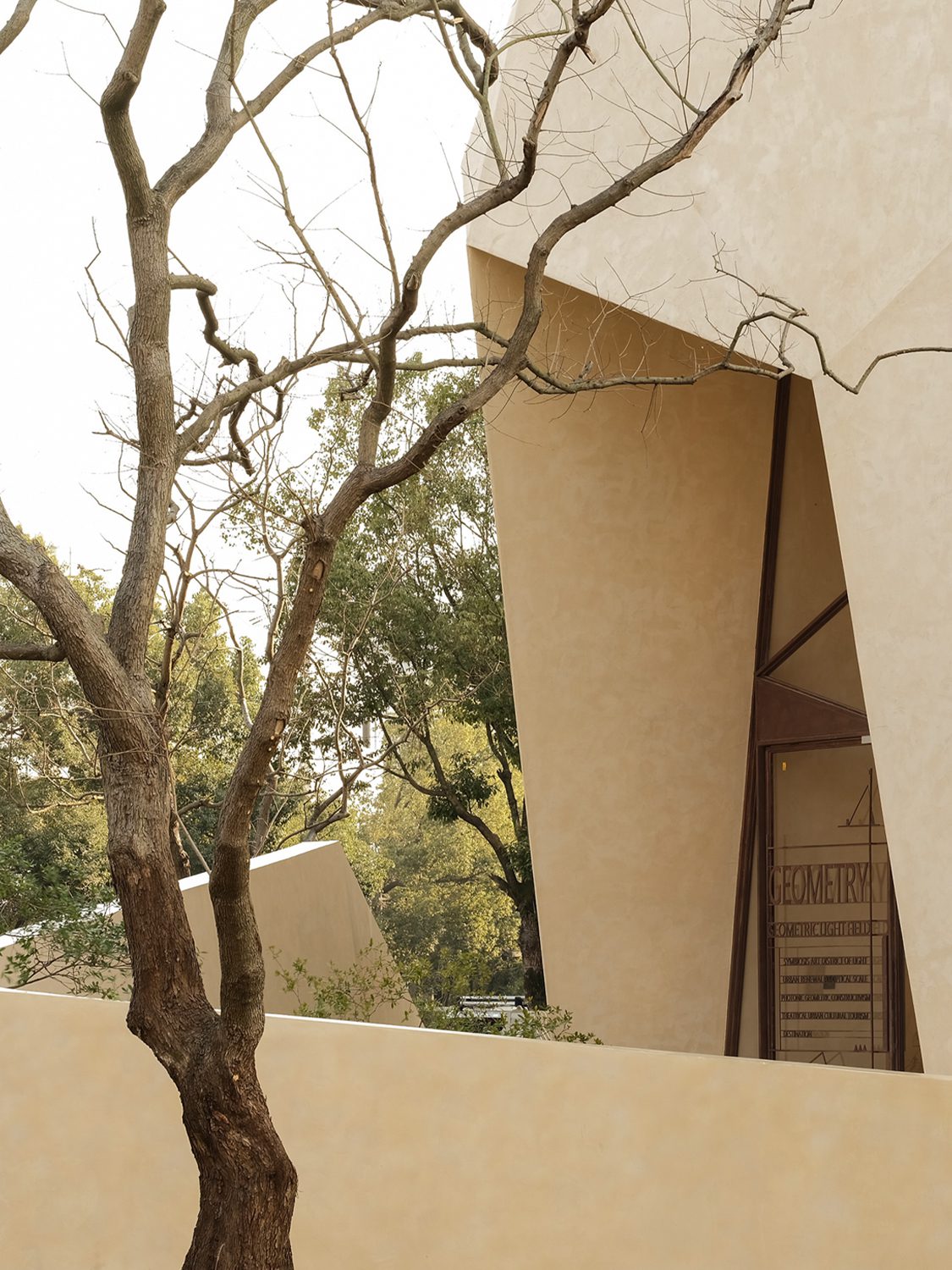
With a total floor area of over 1,300 square meters, this creative commercial space pushes the boundaries of retail architecture. It encourages engagement with the city, its inhabitants, and its users through an experience-led approach. In a context shaped by intense economic competition, the building offers an alternative to conventional retail models through a design and program that reframe product presentation as a thoughtfully choreographed experience—a fitting approach that effectively transforms this former office building.
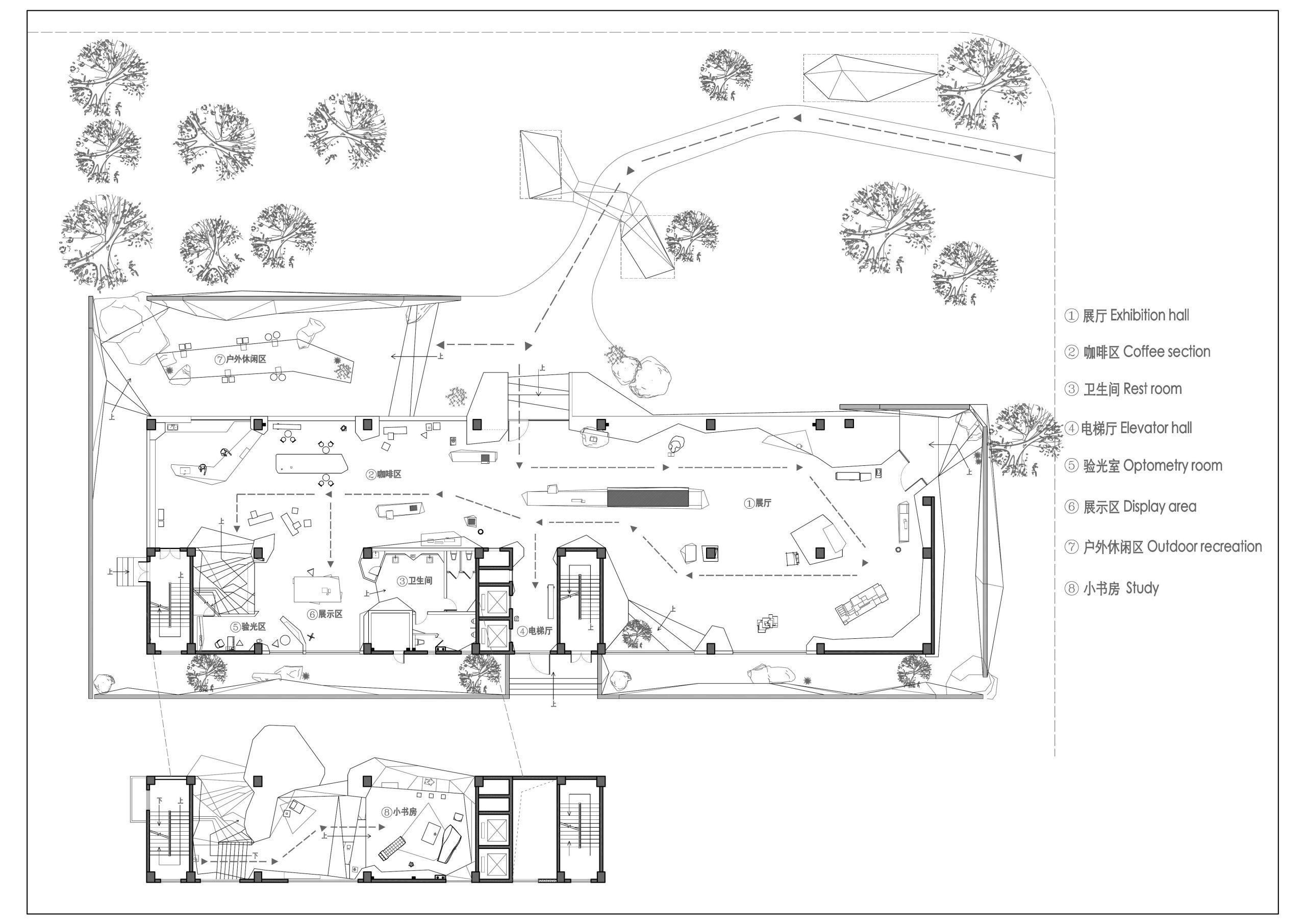
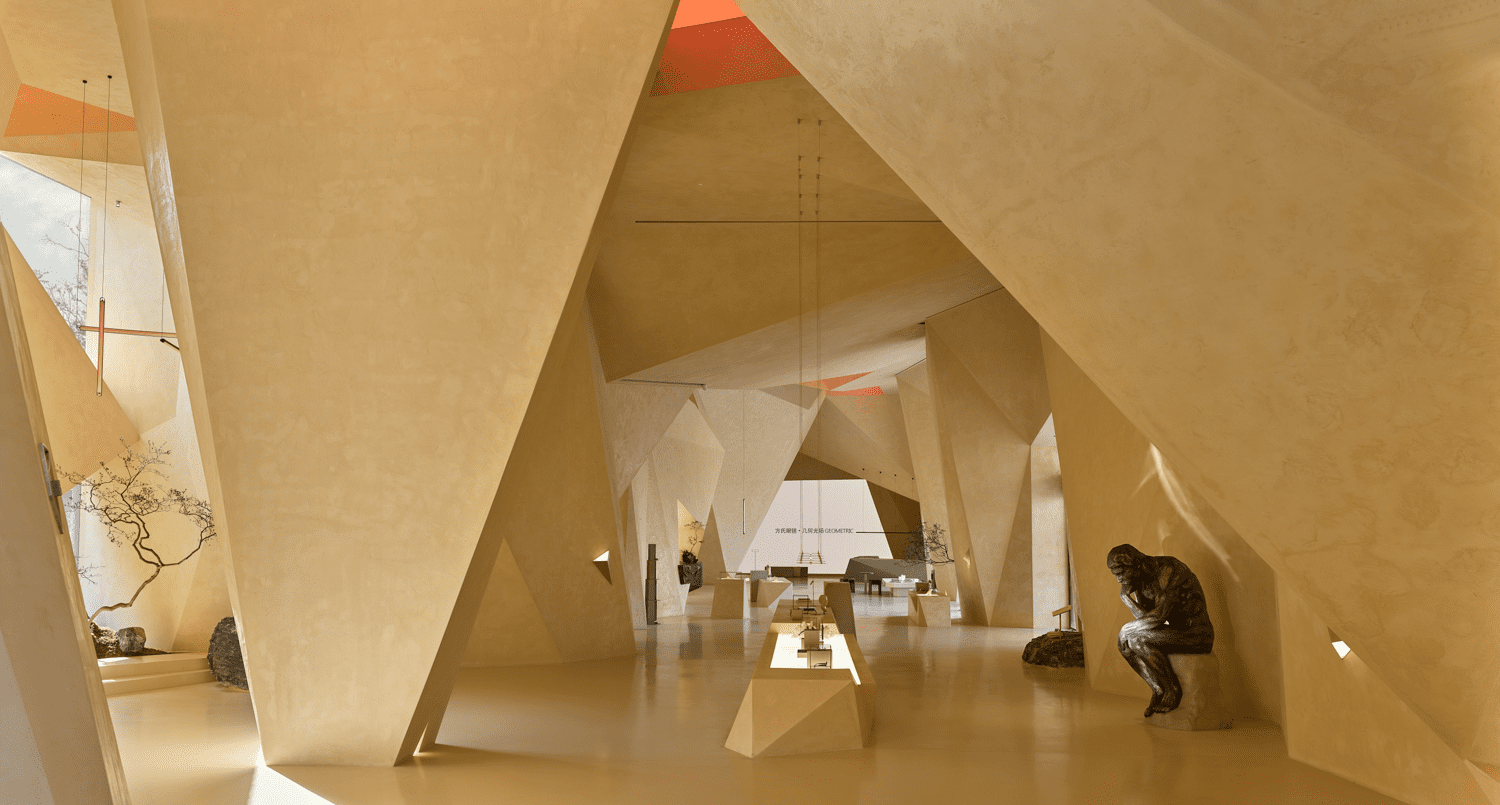
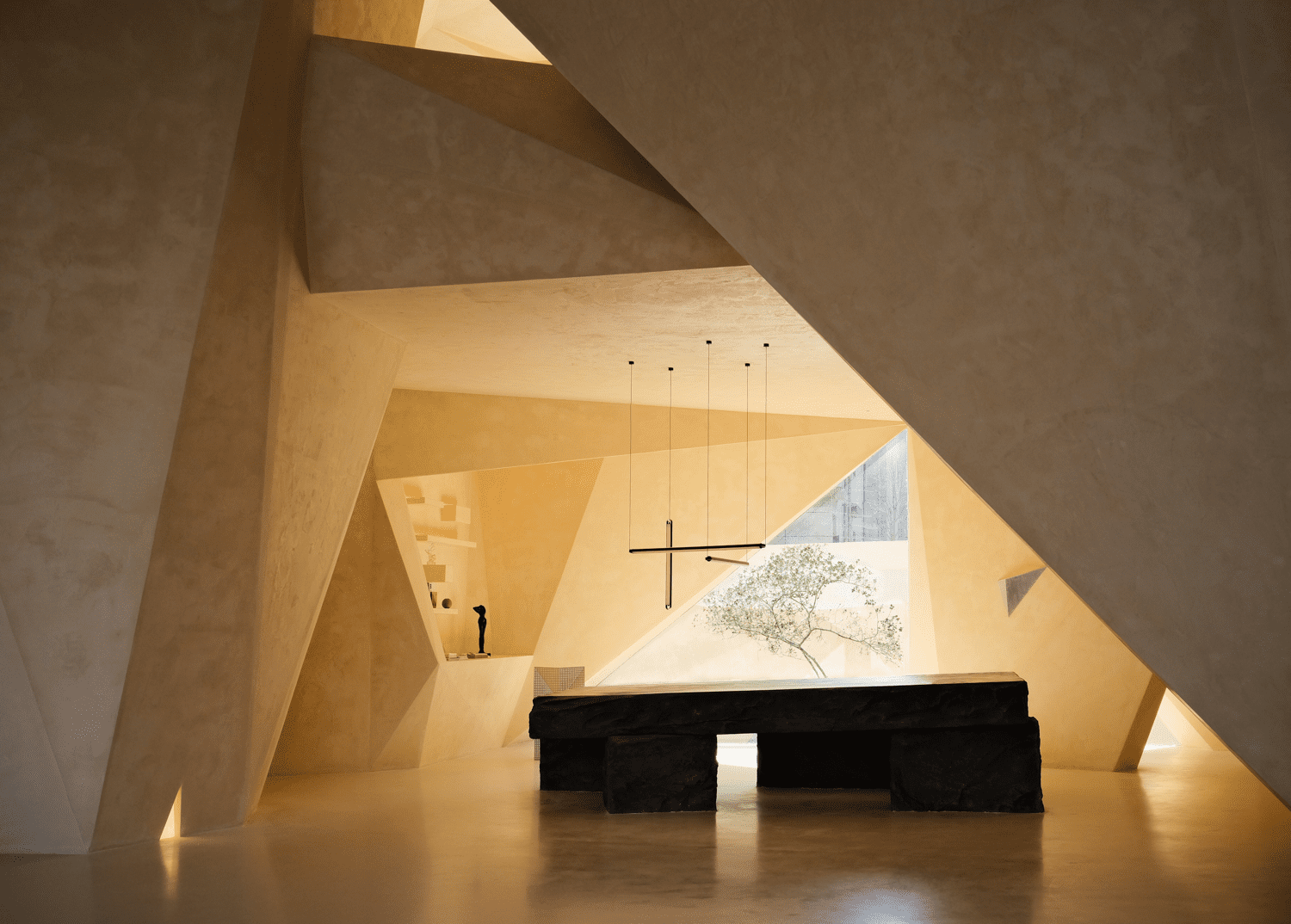
The design of the Fang Eyewear Showroom draws inspiration from astronomical theory, expressed through a recurring motif of triangular forms. Often associated with futurism and spiritual creativity in Indian cultural belief systems, these shapes serve as both structural and symbolic elements throughout the project. Inside and out, the composition is articulated through sharply defined forms and intersecting planes. Light plays a central role in shaping the spatial experience. Strategic openings positioned at 45-degree angles invite natural light into the interior, casting patterns that guide perception and animate the space. The illumination is carefully integrated with the crafted architectural lines and silhouettes. A series of small indoor gardens are placed throughout the interior to serve as visual anchors, drawing the eye and attention of visitors to step inside and explore.
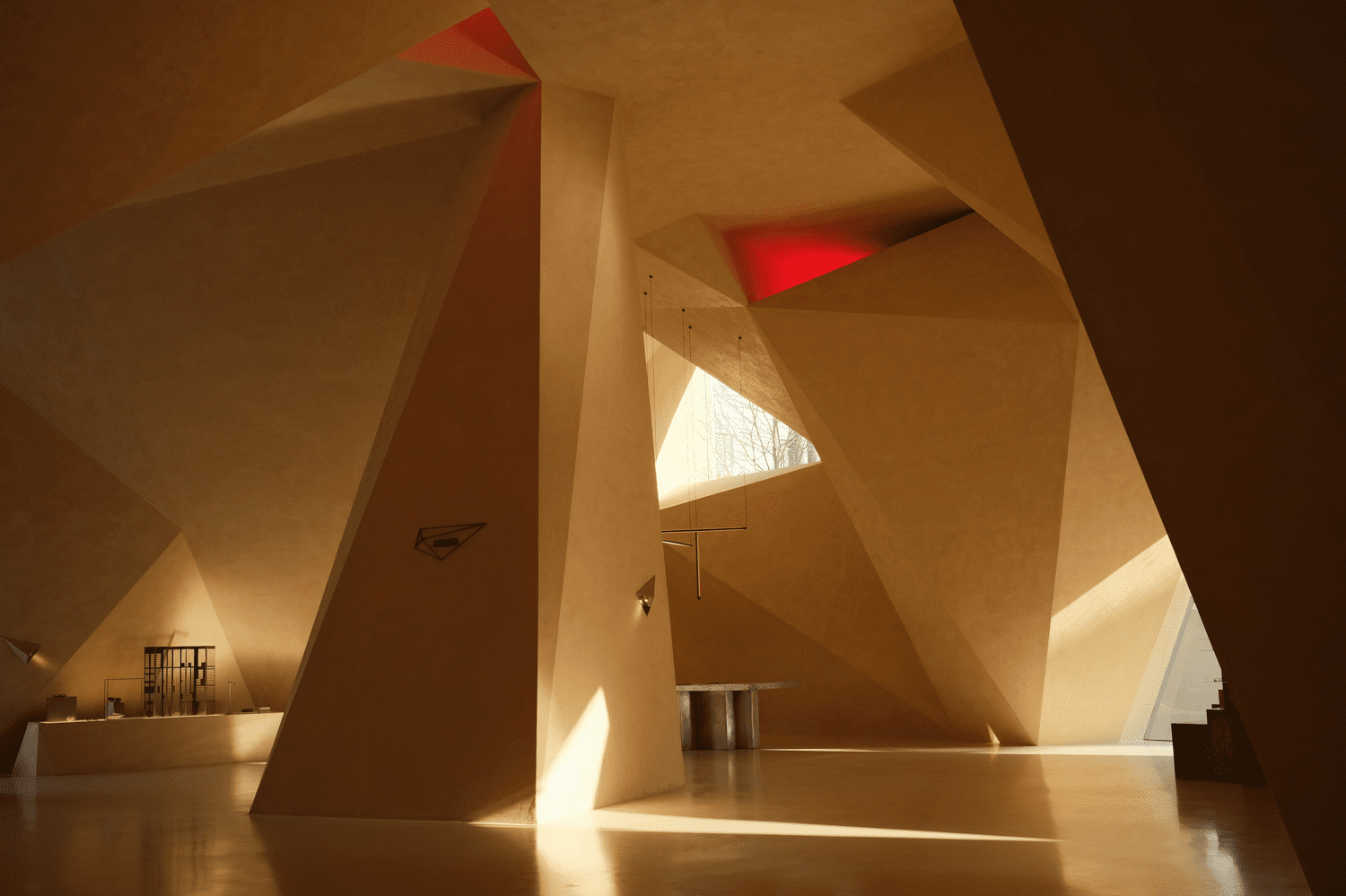
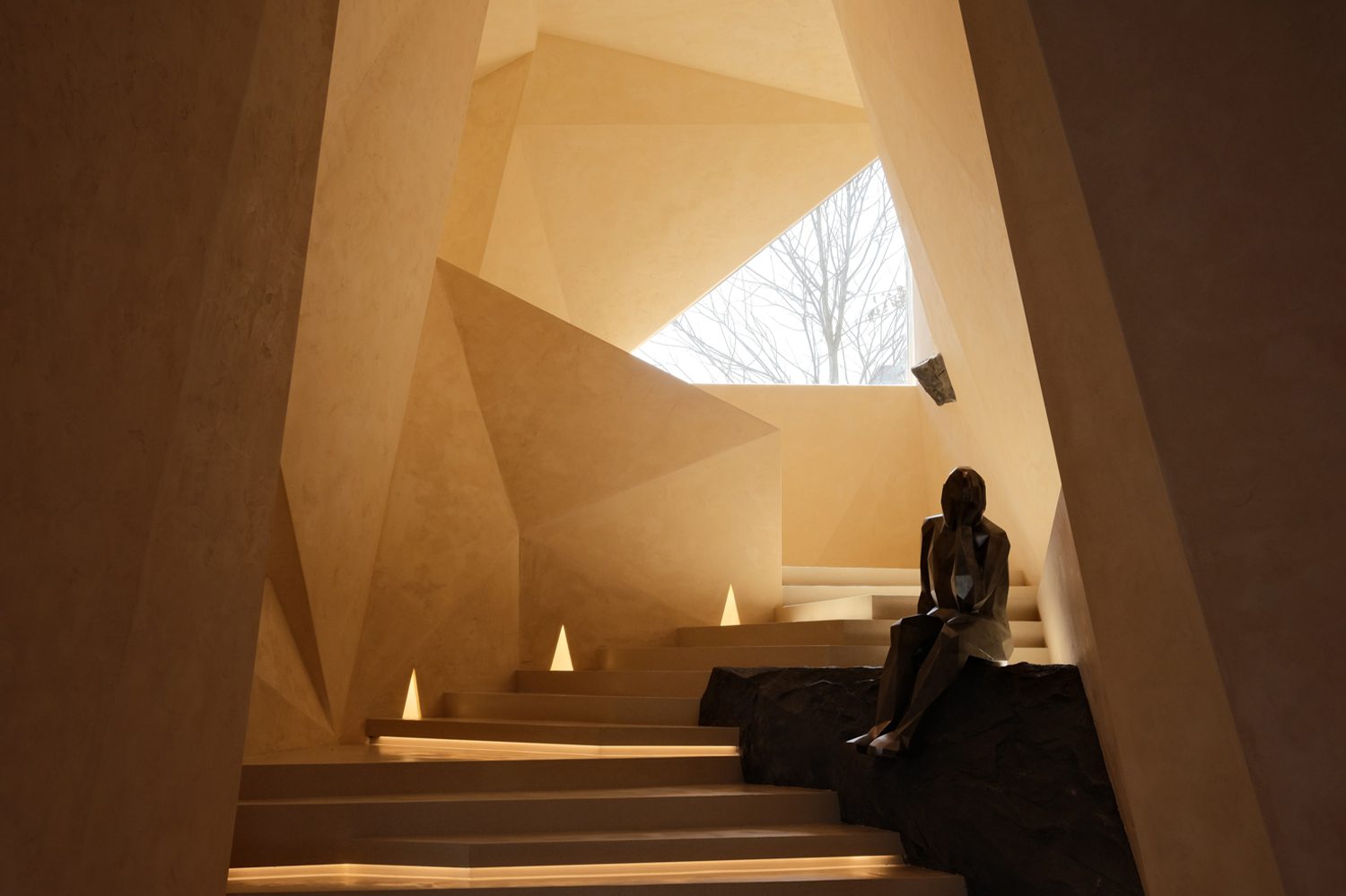
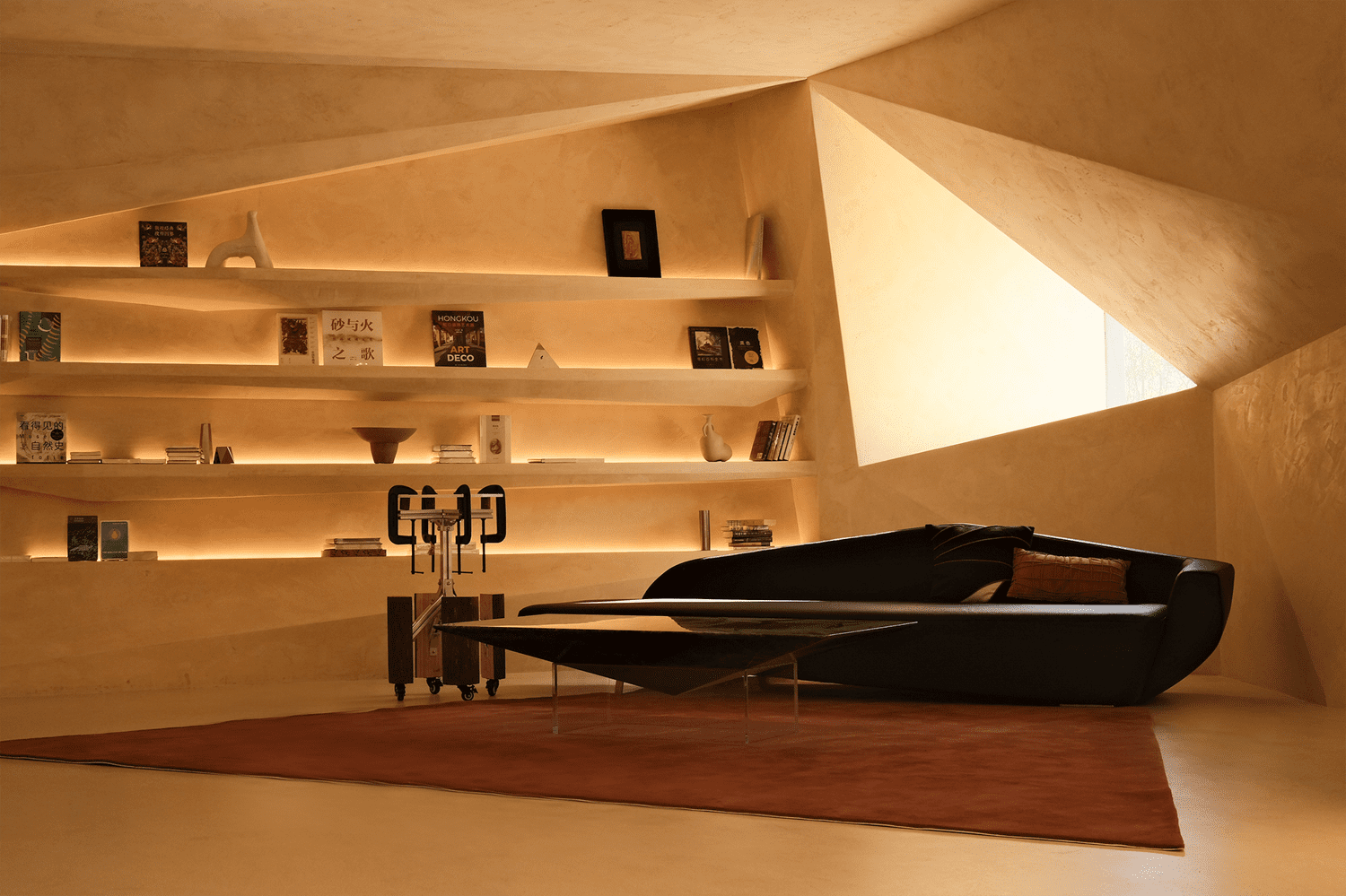
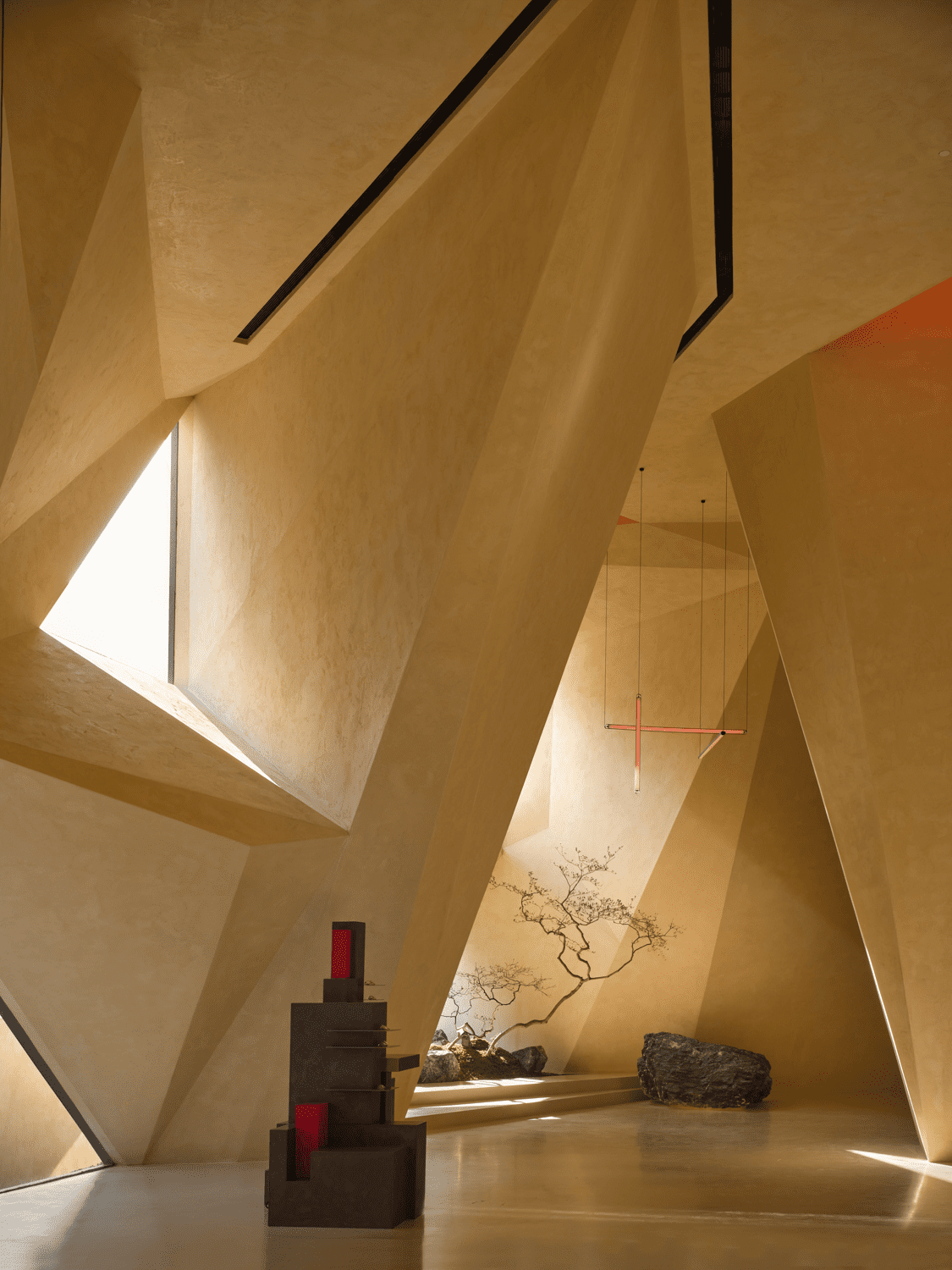
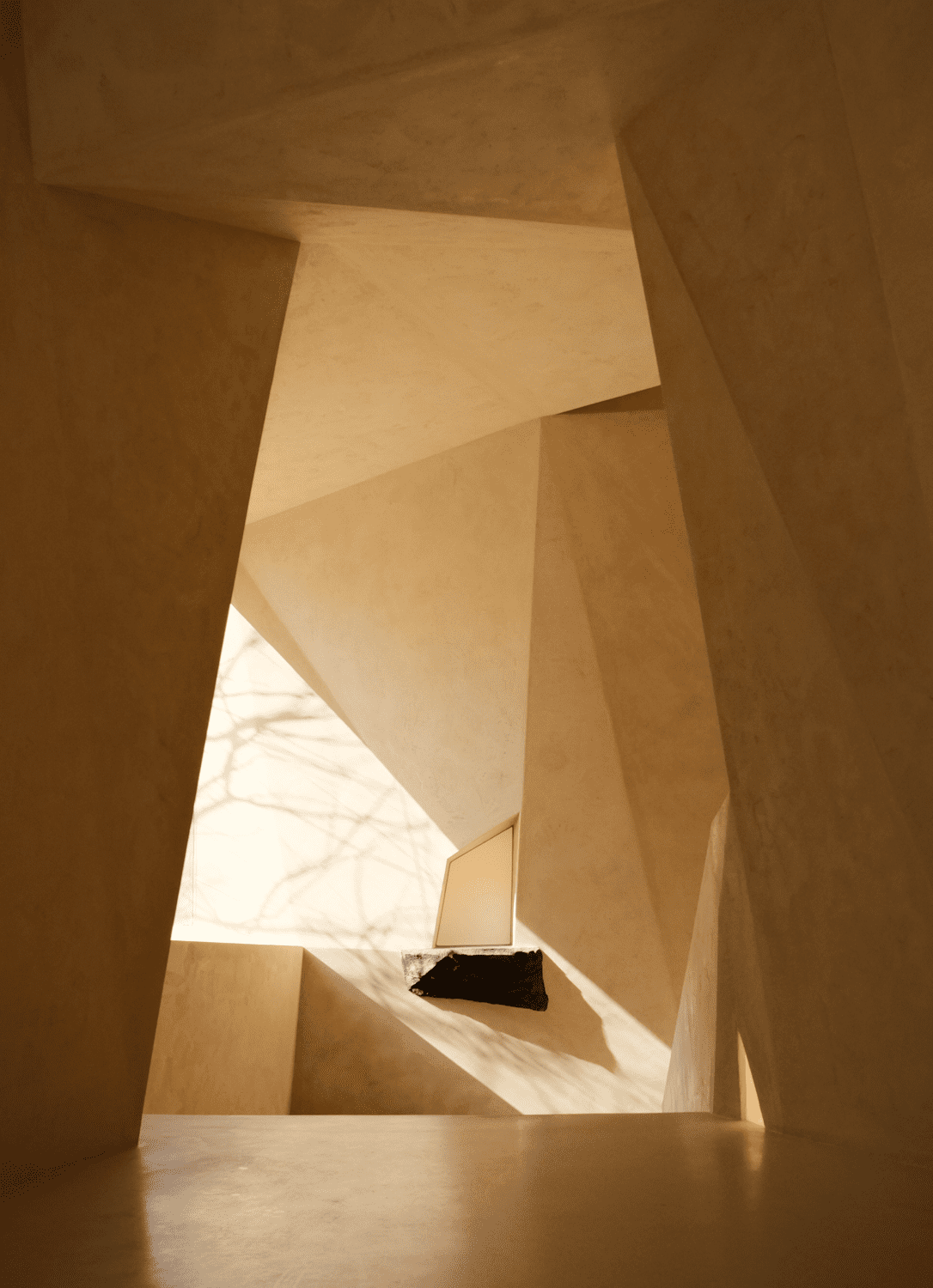
The layout unfolds through a sequence of open halls that serve as exhibition zones. Along the path, sculptures of male and female figures in stone-like metallic finishes are positioned to engage in quiet dialogue with abstract, rock-like metallic forms found throughout the space. This interplay between artificial and natural, interior and exterior, is further deepened through the use of dramatic lighting. A glowing red installation evokes a ‘seemingly real’ experience, conjuring the sensation of wandering through a subterranean cavern whose winding path gradually draws visitors inward. A small café is discreetly nestled in the depths of the space, where the aroma of coffee and the hum of the brewing machine beckon. Visitors move intuitively through the showroom, encountering curated displays along the way, until the route culminates at a striking spiral staircase. Grand yet enigmatic, it leads to the most secluded part of the showroom. There, a quiet bookshop, tucked into the uppermost recess of the space.
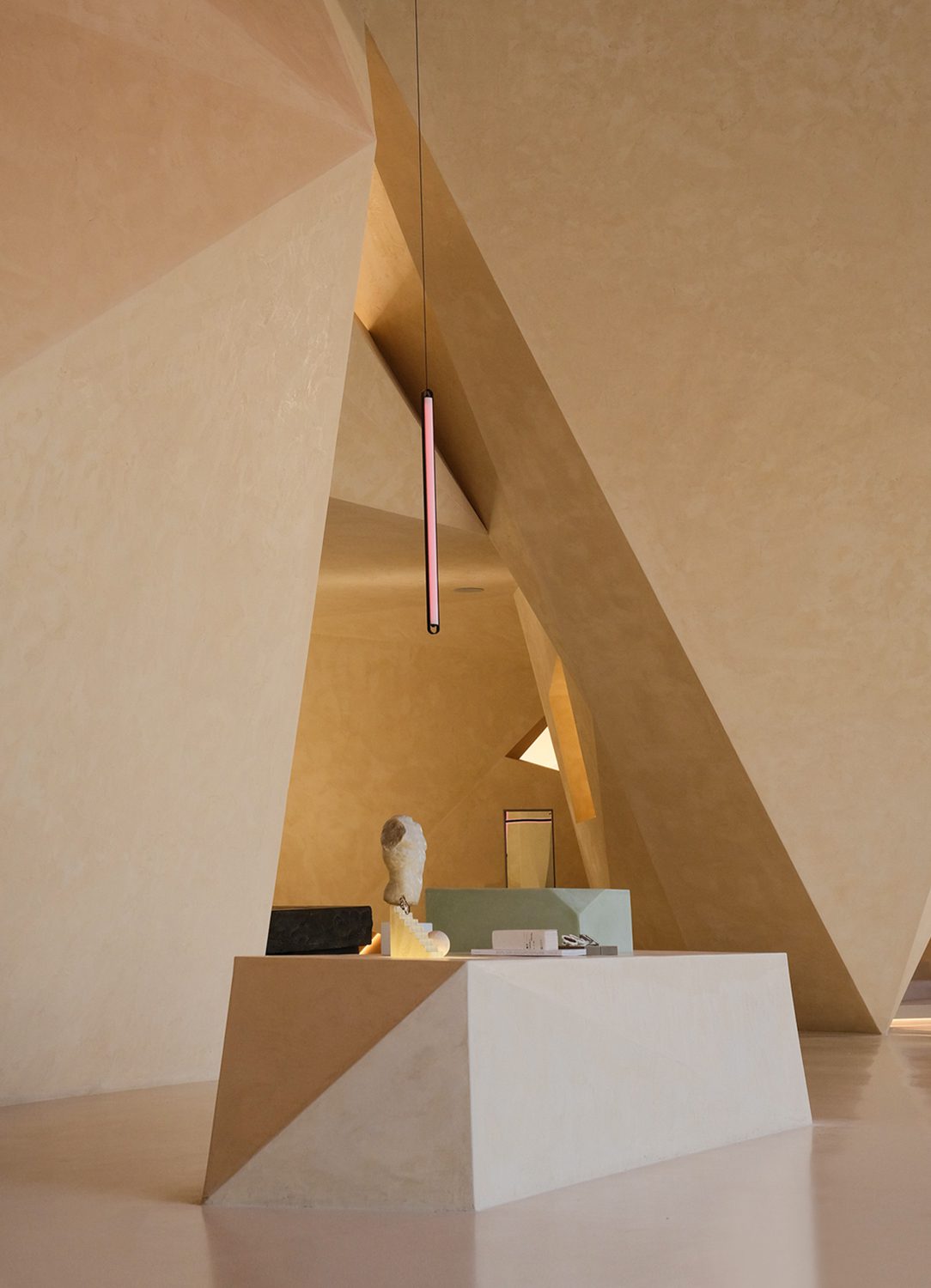
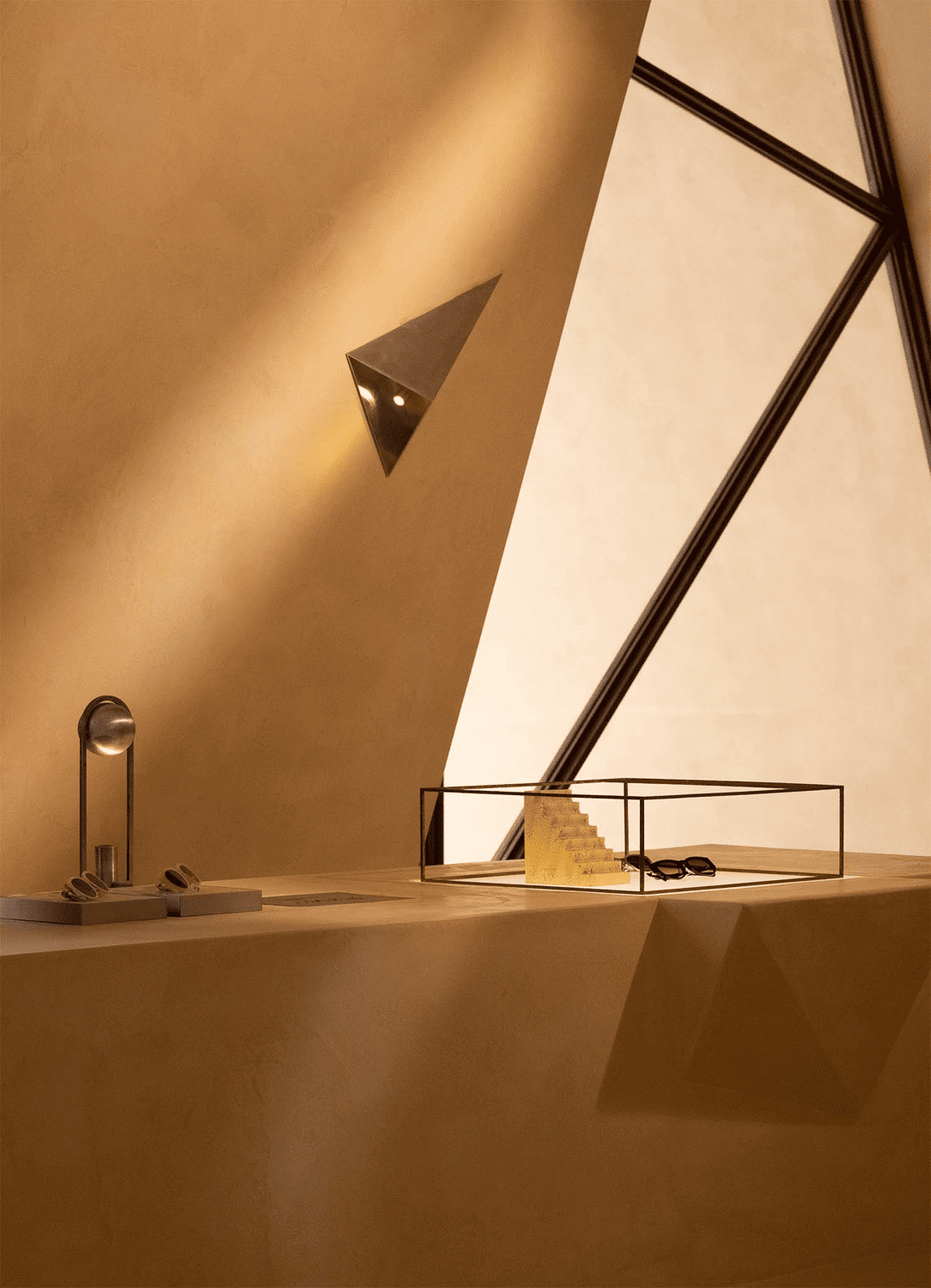
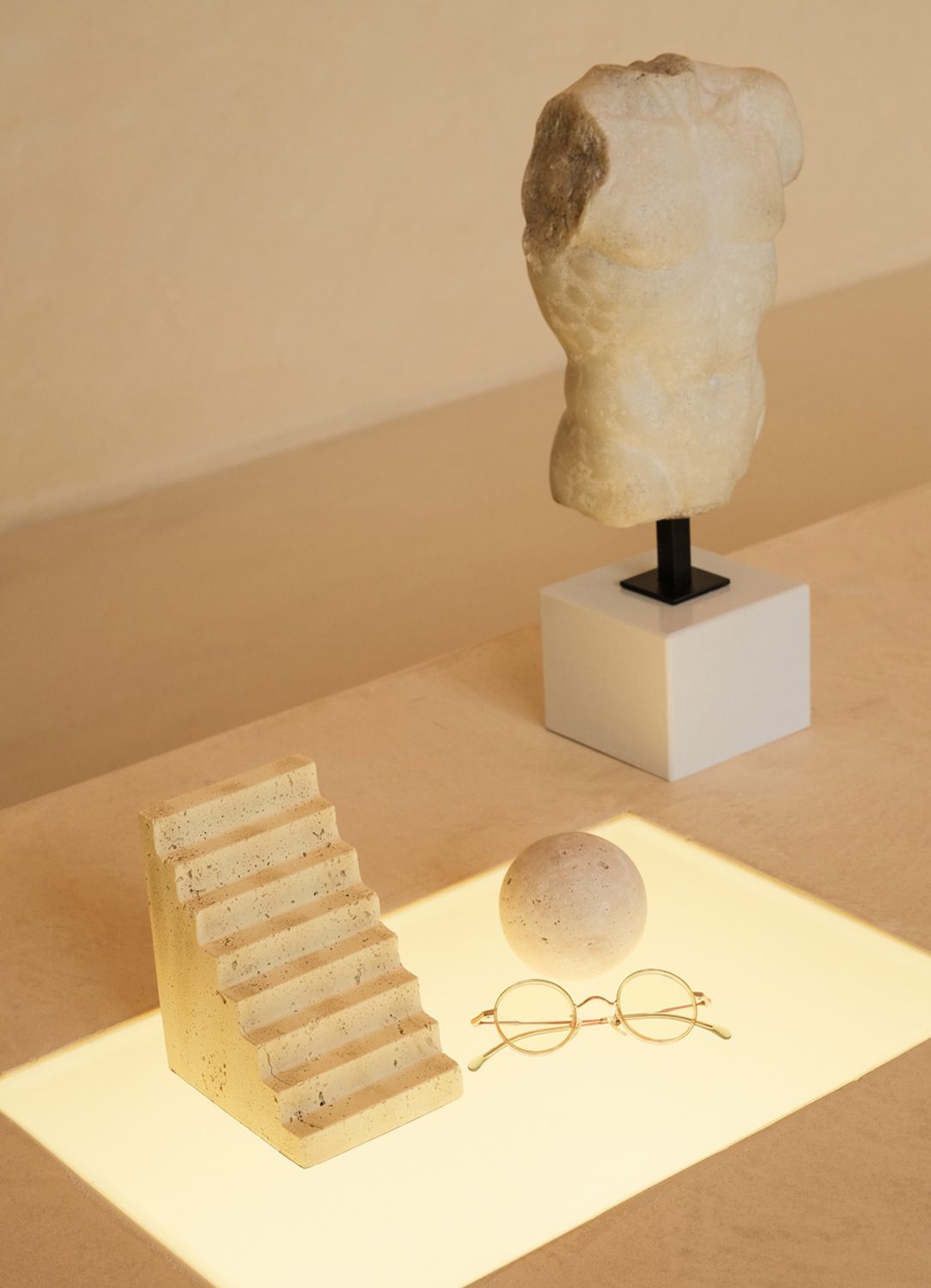
Beyond its vivid, unconventional presence within the urban landscape, what makes the Fang Eyewear Showroom truly compelling is its seemingly understated yet deliberate focus on the display objects themselves—not merely as commercial products, but as works in the process of becoming, or even as works of art. This is not a straightforward substitution of product for artwork, but rather a nuanced expression that draws attention to the care and precision behind each creation. In this context, the language of display extends beyond sight. The design engages multiple senses, suggesting that perception is layered, encompassing touch, sound, and spatial awareness, all thoughtfully composed as part of the experience. This multisensory approach aligns seamlessly with the architectural language of the building, inviting visitors/museum-goers to savor the environment.