
OOIIO ARCHITECTURE TRANSFORMS AN OLD INDUSTRIAL WAREHOUSE ON THE RIVERSIDE IN MADRID INTO WAREHOUSE APARTMENTS, A DESIGN THAT COMBINES MEMORIES WITH MODERN LIFESTYLES
TEXT: KARN PONKIRD
PHOTO: JAVIER DE PAZ
(For Thai, press here)
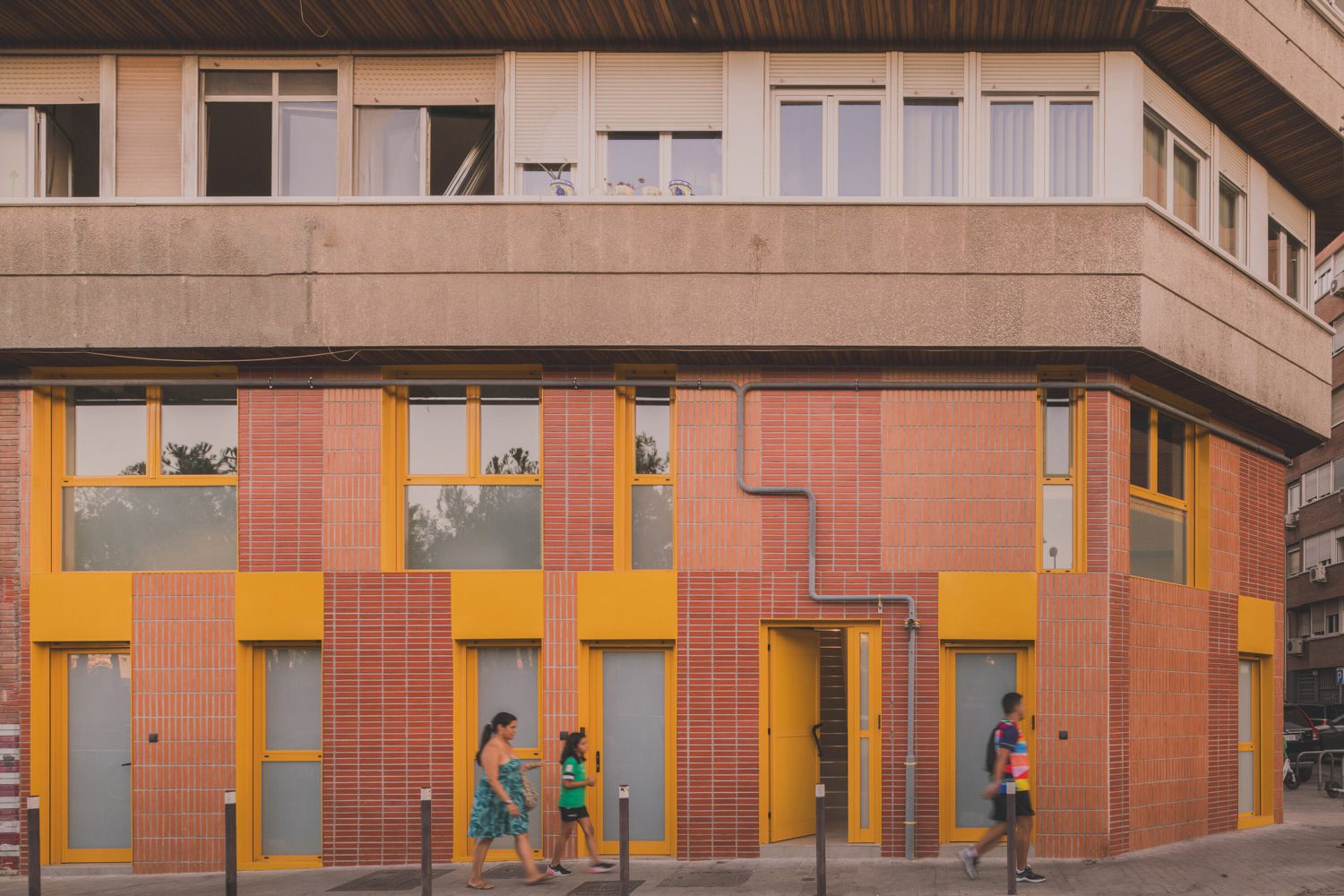
Along the Manzanares River in Carabanchel, a district in Madrid, sits a 295-square-meter apartment building whose cheerful red brick façade and vivid yellow door and window frames animate the surrounding streetscape. It’s hard to imagine this lively structure was once a dim, gray warehouse – little more than a storage depot for unused plumbing pipes and construction materials.
Now known as Warehouse Apartments, the building has been reimagined by OOIIO Architecture as a set of eight compact residences, each unit measuring 40 square meters. The project was conceived as part of a broader trend to reshape the residential neighborhoods across Madrid. Historically, the districts of Arganzuela, Latina, Carabanchel, and Usera located south of the Manzanares River have long suffered from pollution caused by the M-30 highway, a major ring road encircling Madrid. In certain stretches, the highway runs alongside or even over the river, degrading the riverside environment and rendering many nearby areas neglected or abandoned over time. But in 2005, following sustained advocacy from citizens and civic organizations, the city government launched the Madrid Río project in 2005, a large-scale public initiative aimed at revitalizing the river’s surroundings. Central to this effort was the rerouting of sections of the M-30 underground, clearing the way for a new linear public park along the riverbank. This transformation introduced expansive green spaces and laid the groundwork for the city’s future urban development.
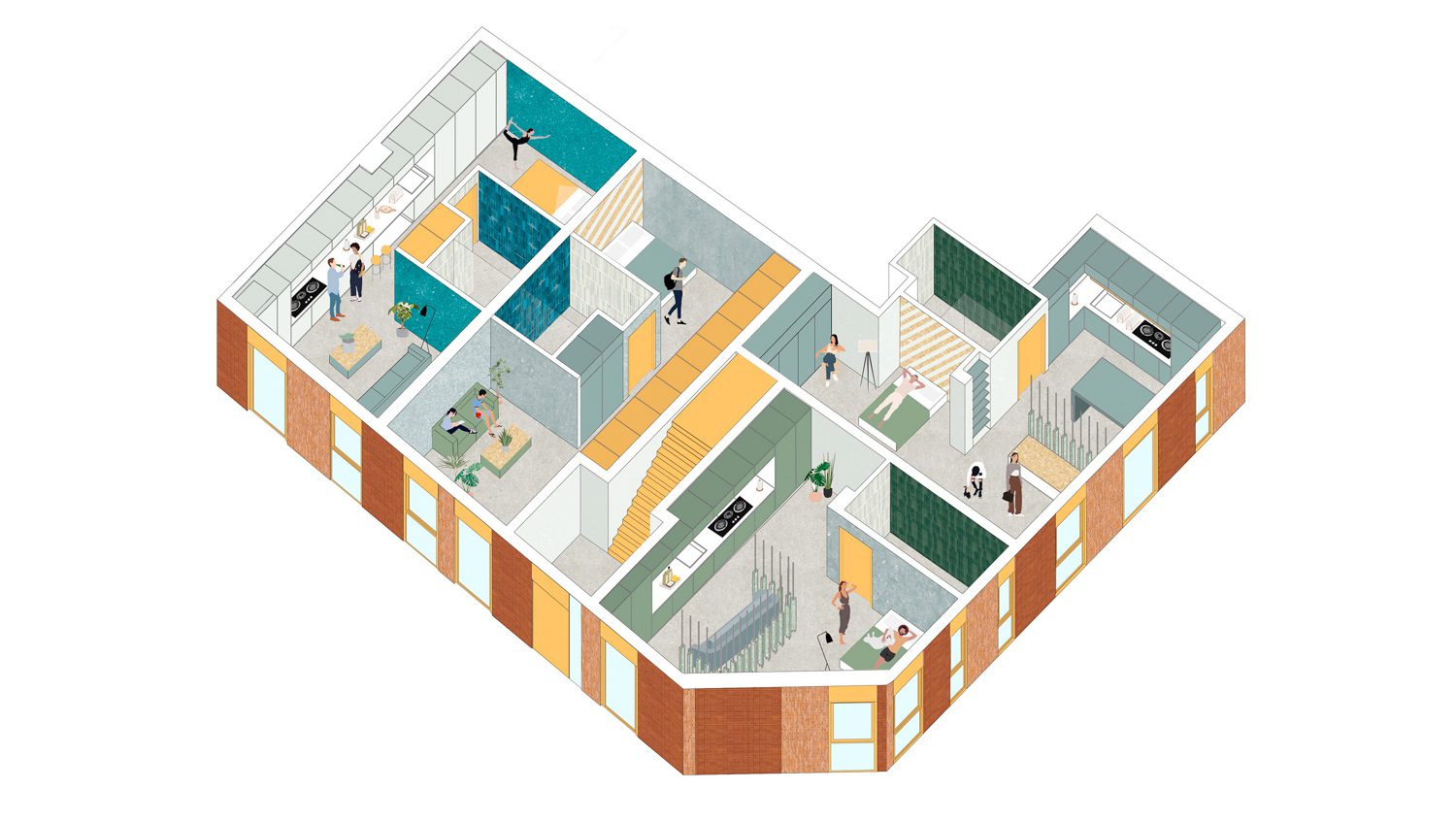
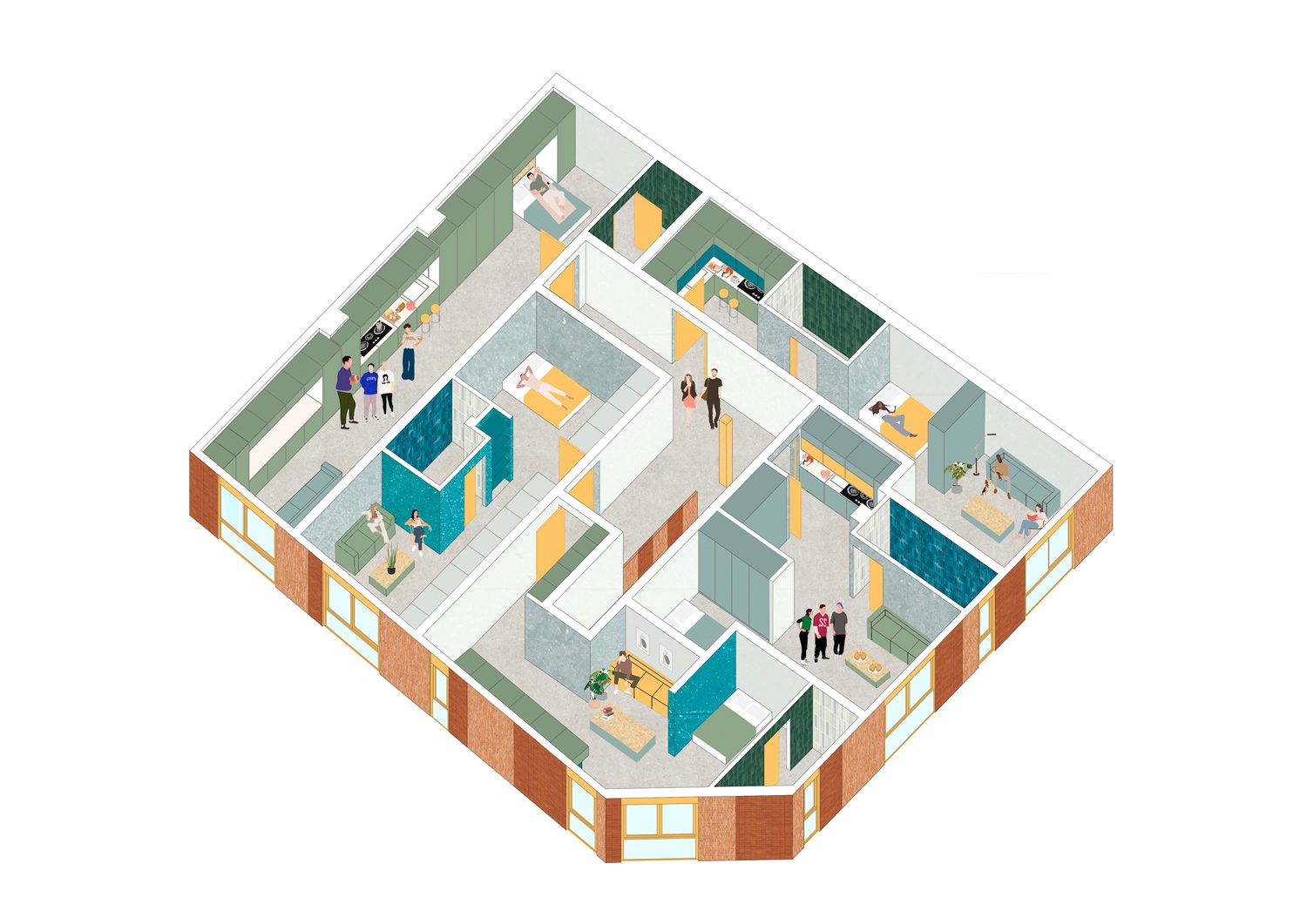
This transformation has reshaped a once-overlooked stretch of architecture lining Madrid’s M-30 ring road. Where rows of small factories and utilitarian warehouses once stood, residential developments are now drawing in new families seeking more affordable urban roots. In a time of economic constraint, reimagining existing structures has proven to be a more economical alternative for both developers and residents.
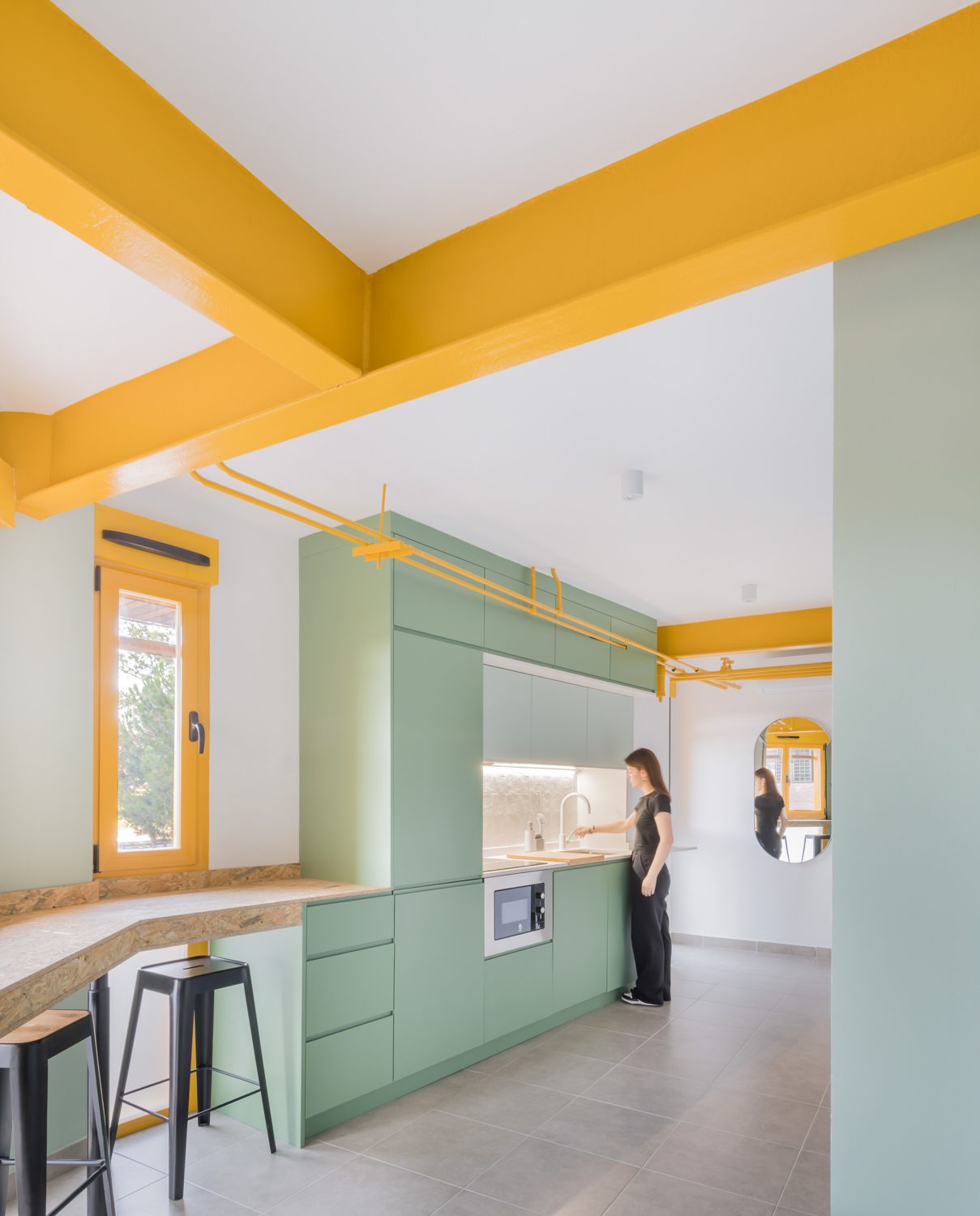
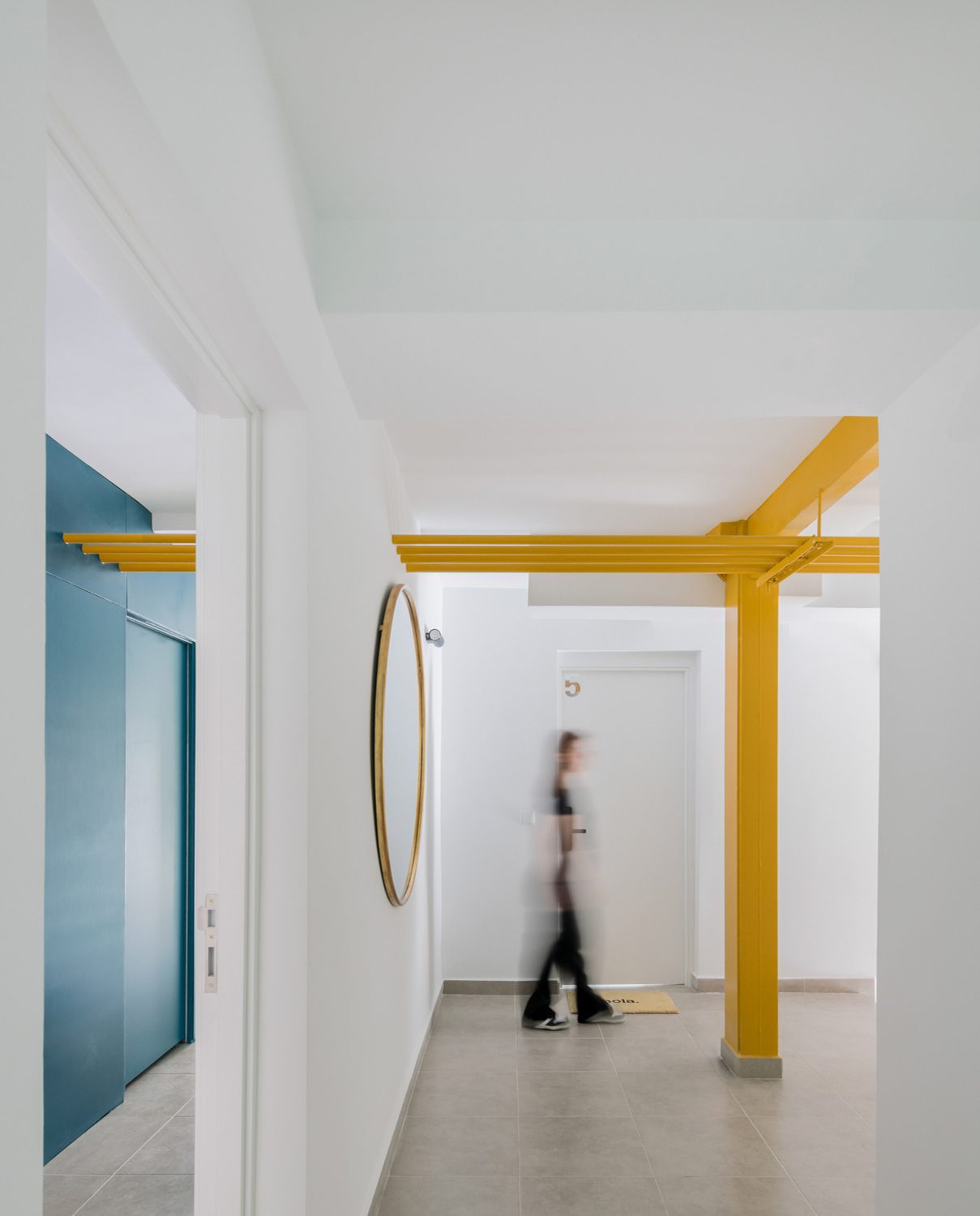
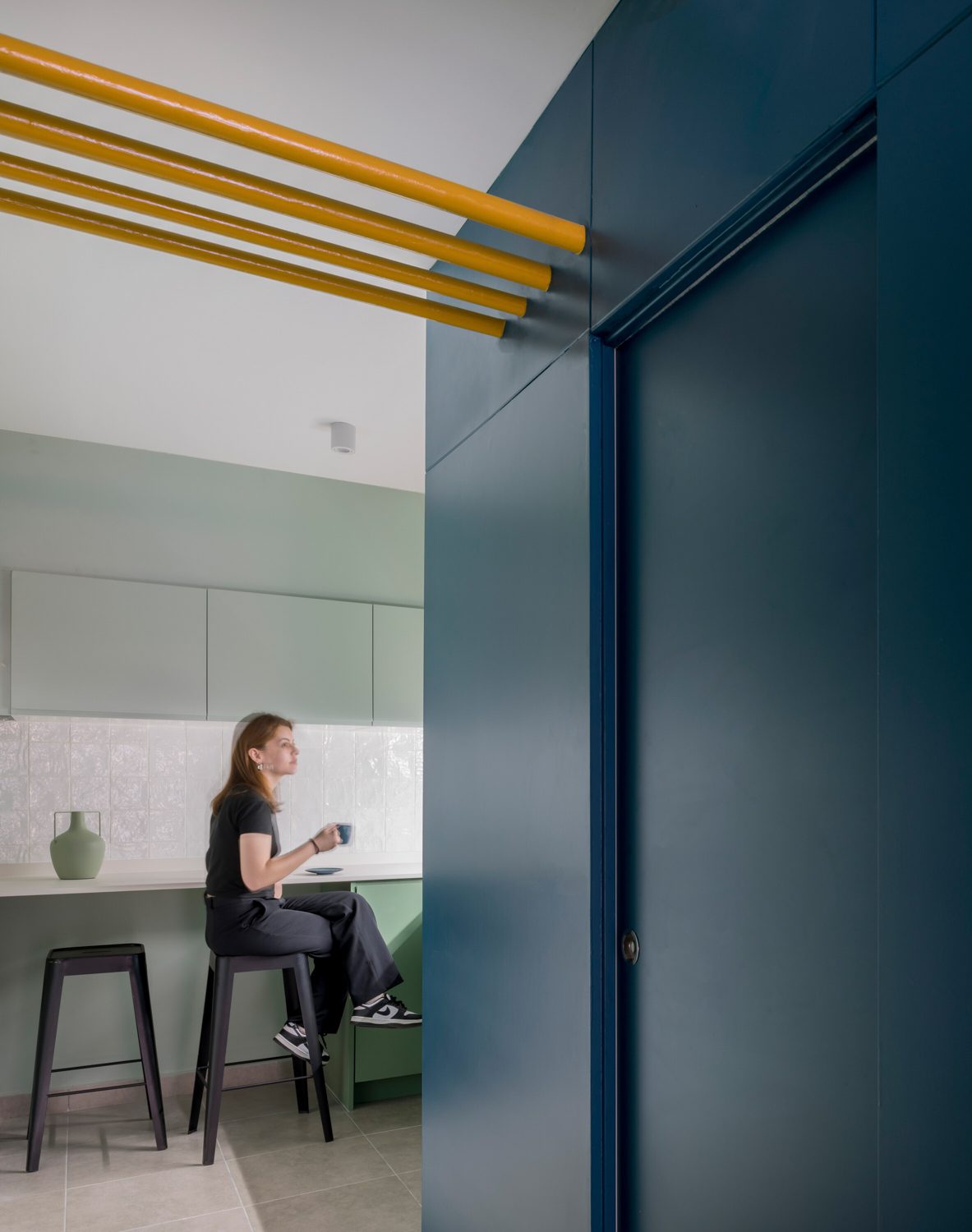
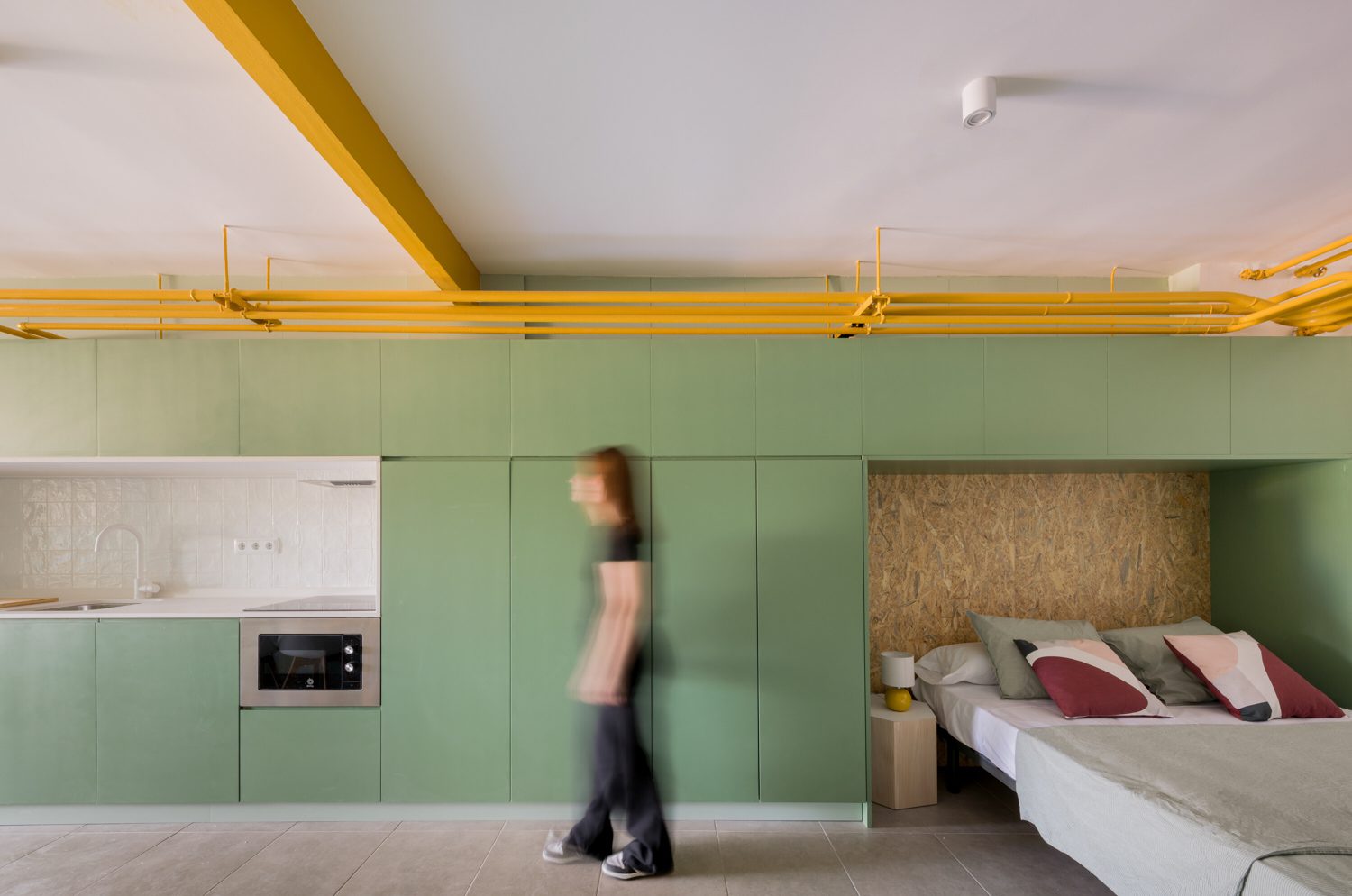
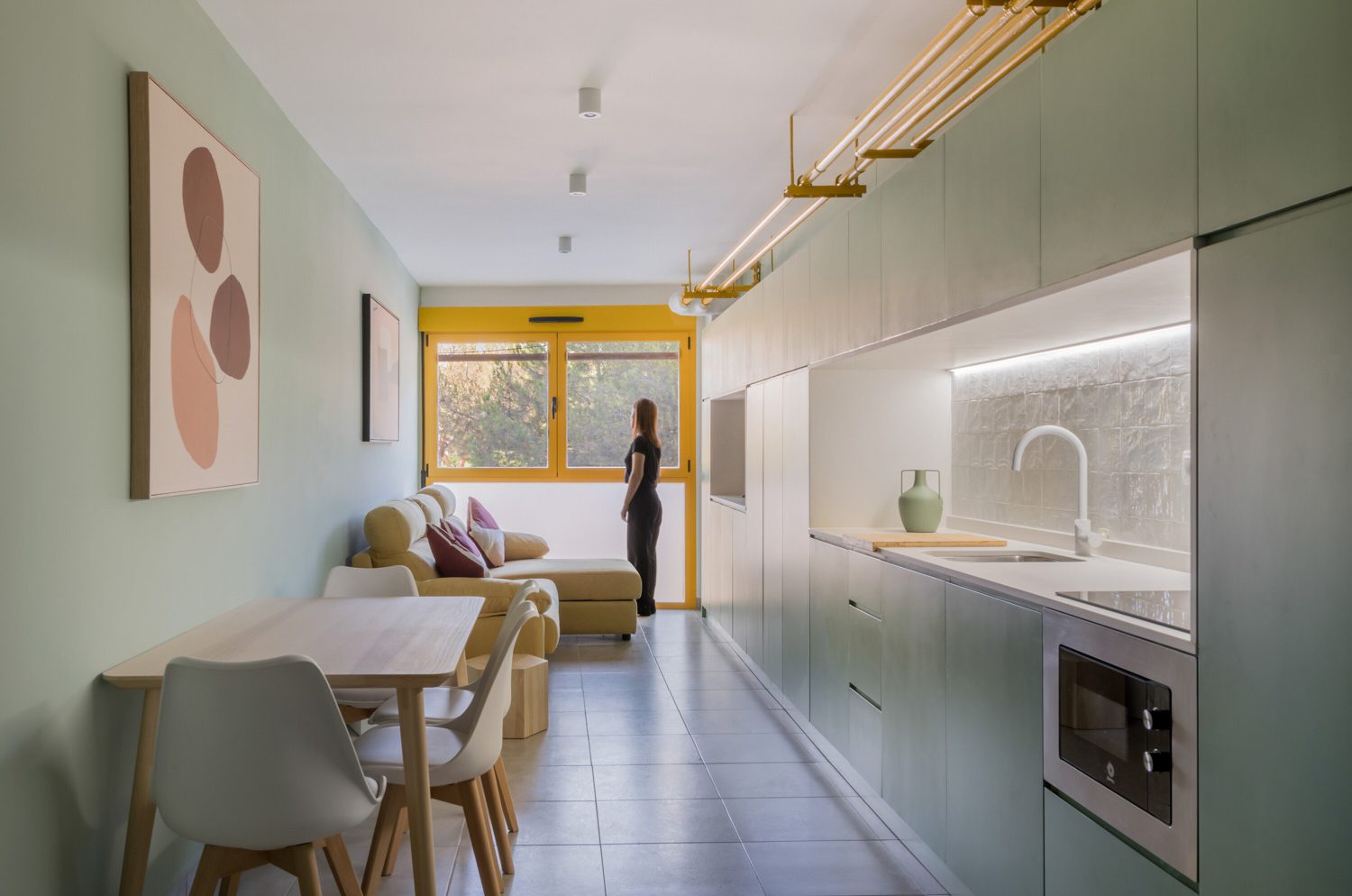
OOIIO Architecture approached the project with a focus on efficiency and economy, without losing sight of the building’s original character. Rather than erasing the past, the architects chose to engage with it. Structural elements such as beams, columns, and even old mechanical ducts were retained and refurbished, then boldly highlighted in bright yellow.
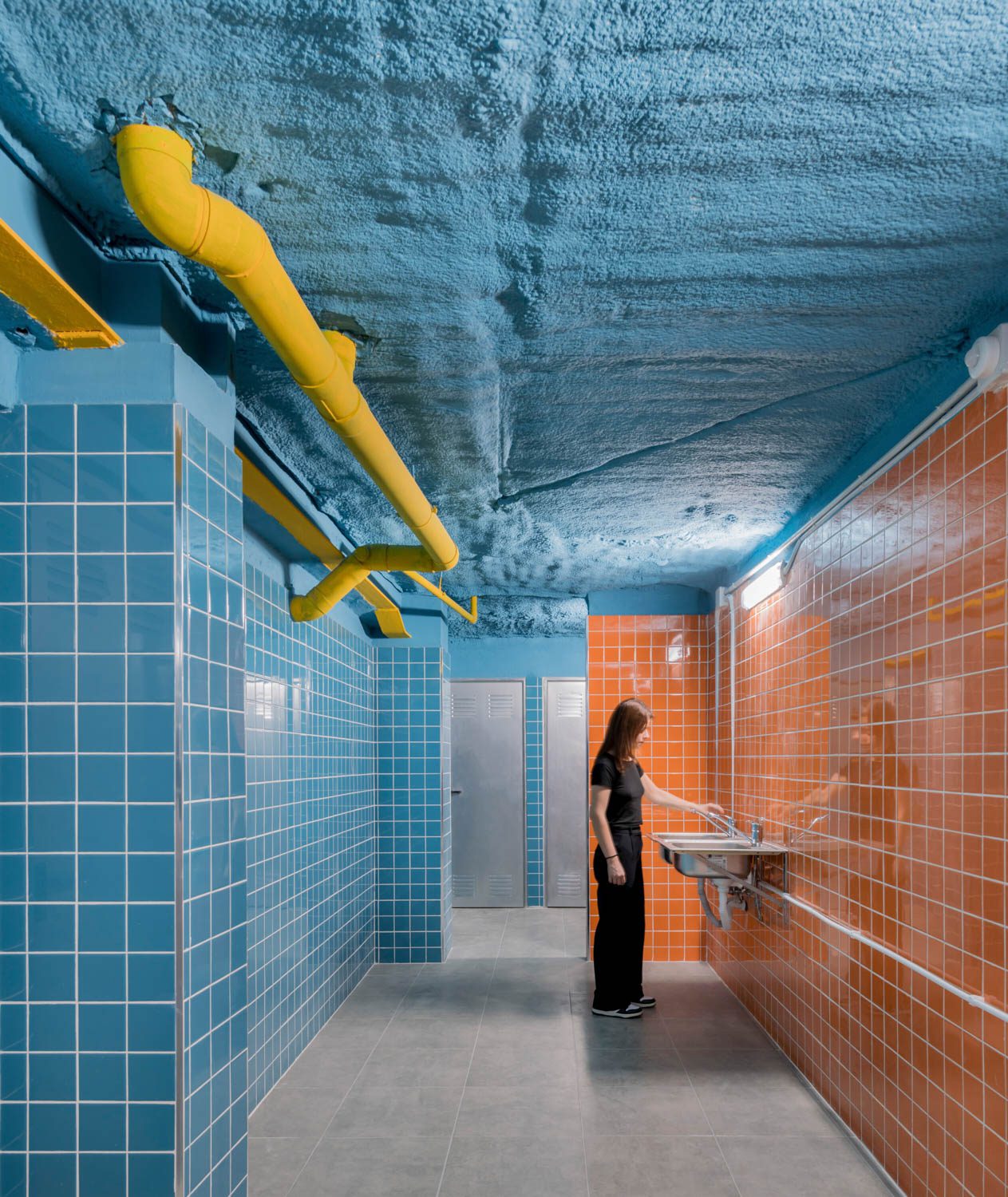
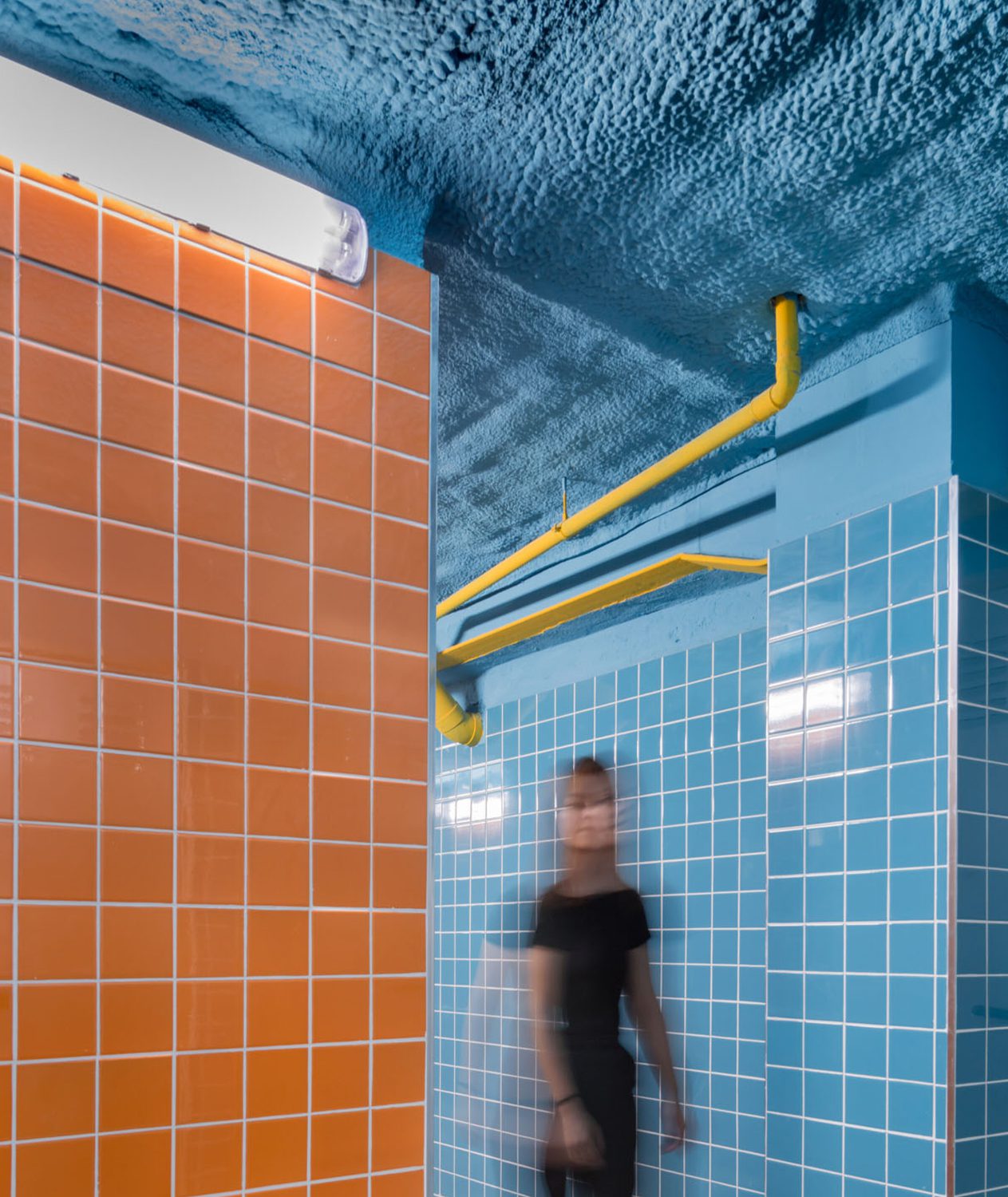
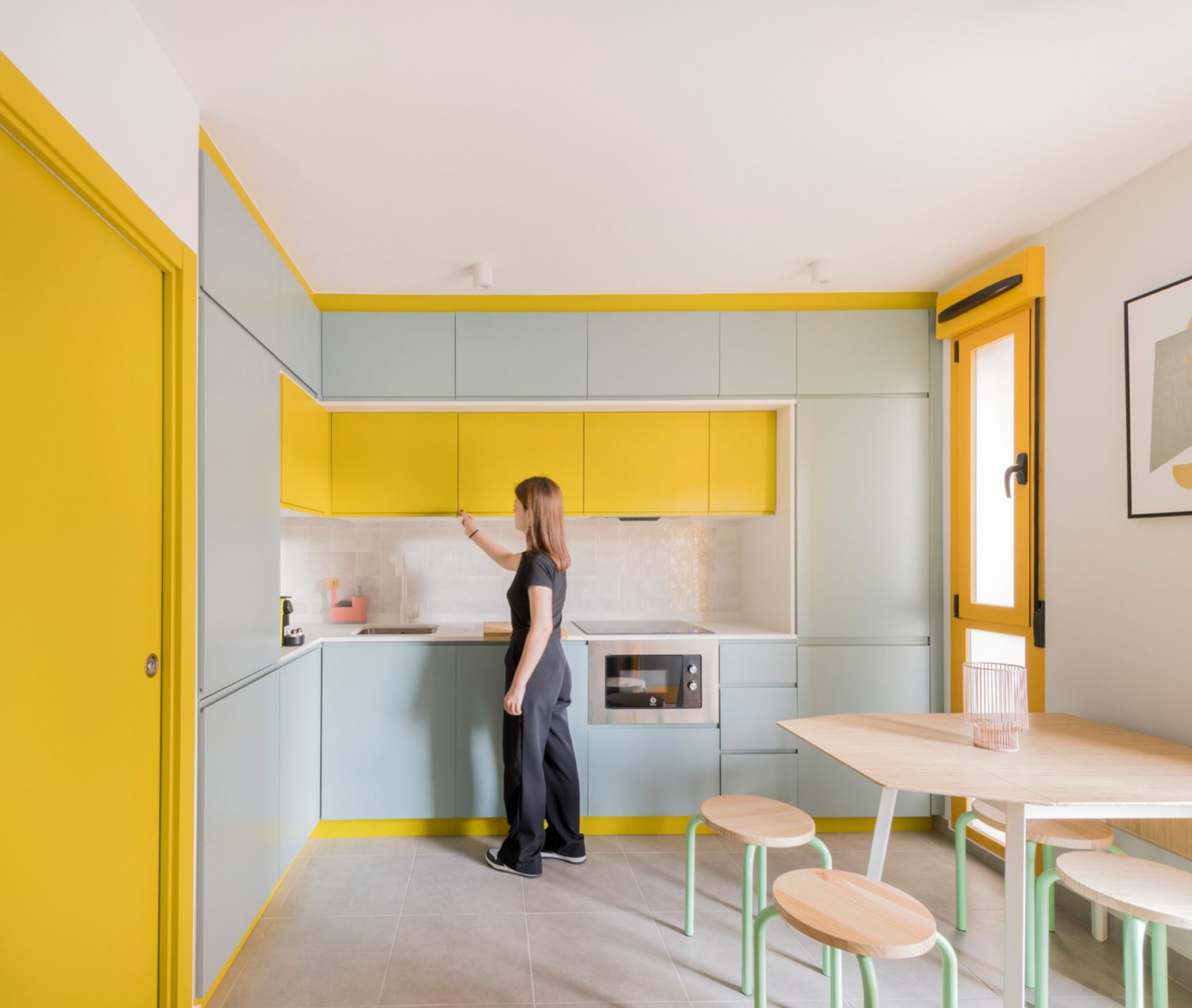
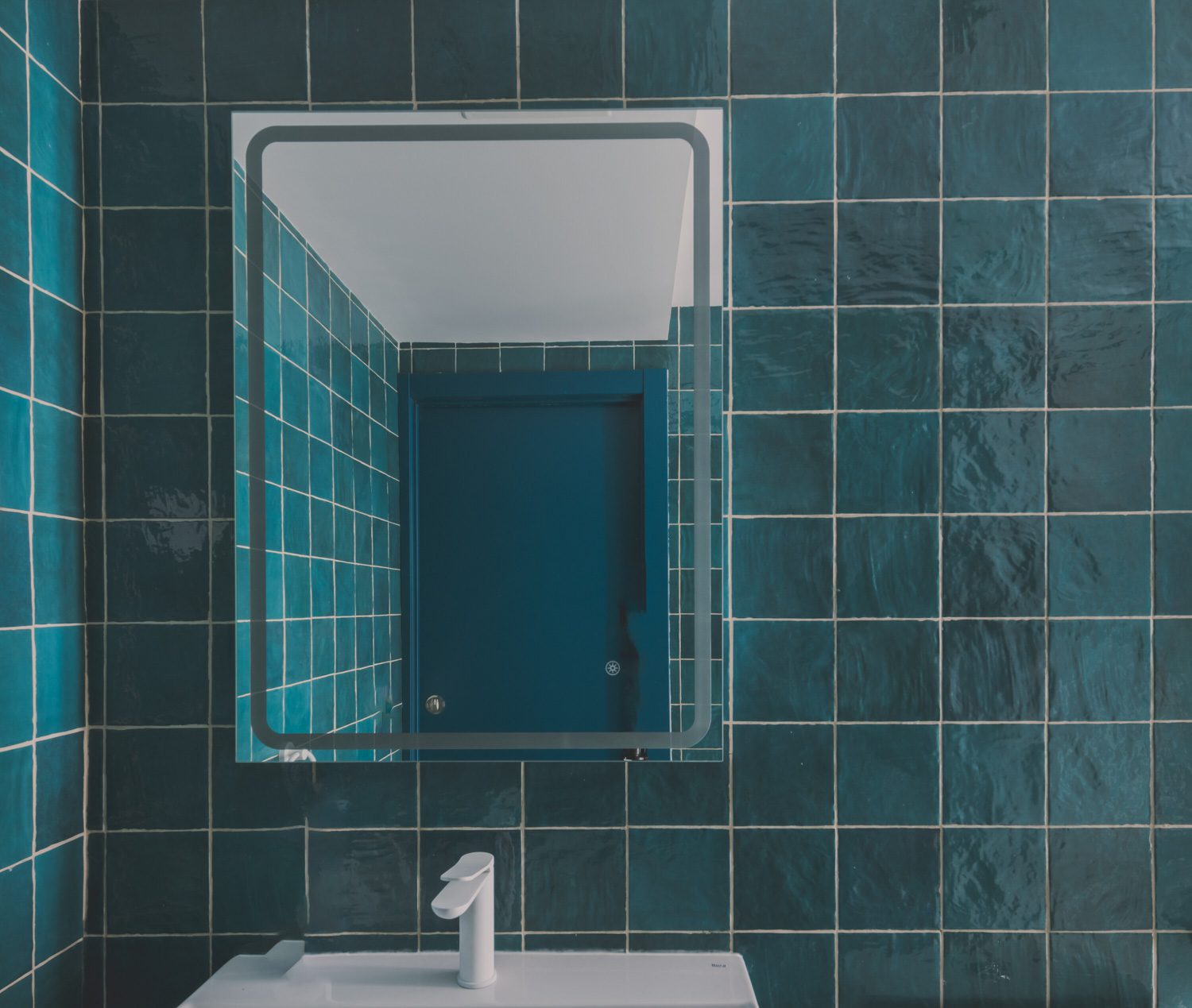
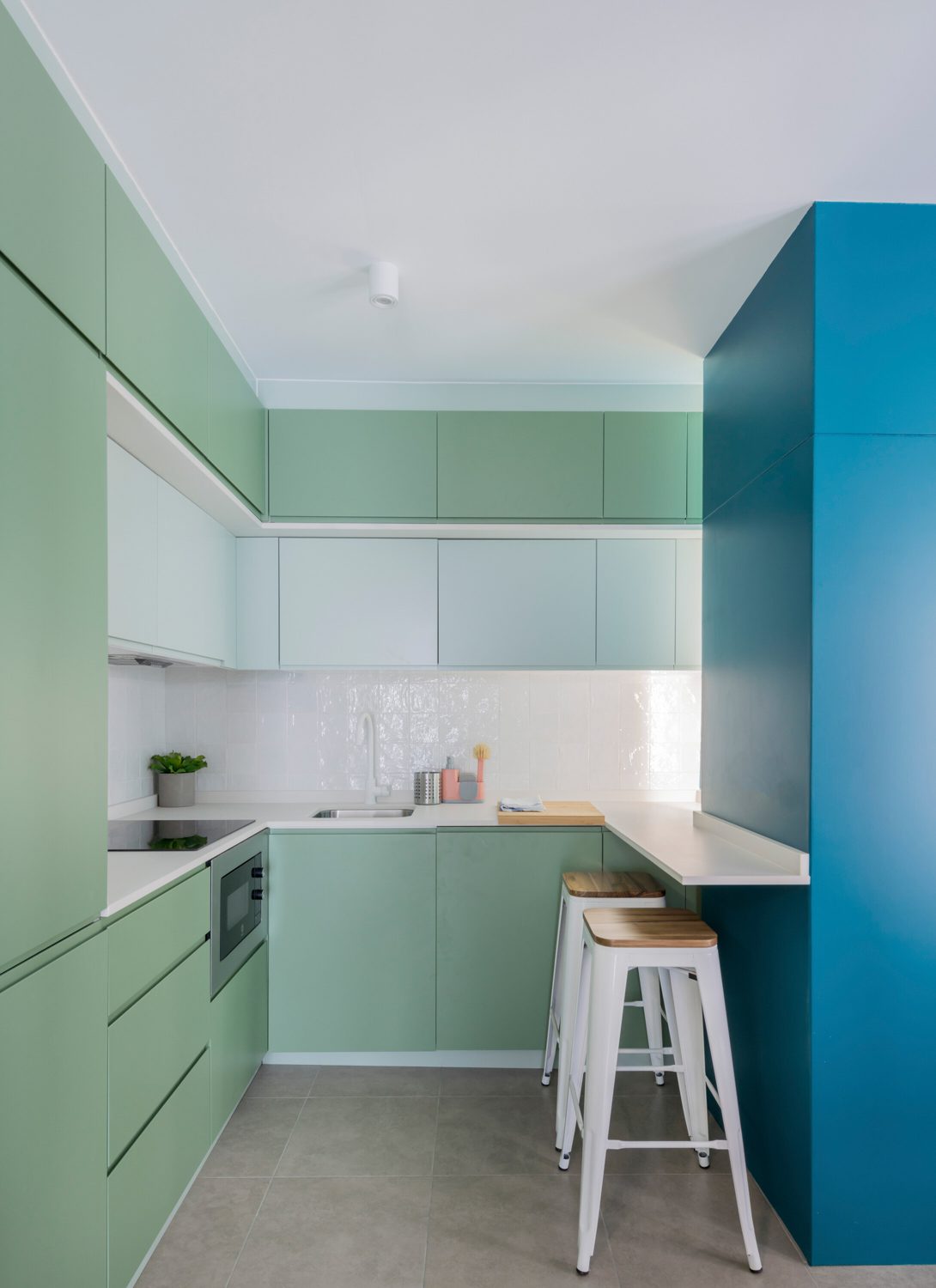
These features now crisscross the new interiors; some integrated into the background, others cutting through more prominently – layering function with history. The renovation introduces a series of thoughtful interventions: the basement was converted into individual storage units for each apartment, while enlarged openings allow more natural light into the compact living spaces. Custom built-in cabinetry in mint green adds essential functionality, and richly textured ceramic tiles in striking blue finish the kitchens and bathrooms. The exterior, too, received a well-thought out update. The first-floor façade echoes the surrounding neighborhood’s architecture with orange brick cladding, though it’s laid in playful, irregular patterns that soften the building’s industrial past and introduce a more cheerful, human-scaled sensibility.
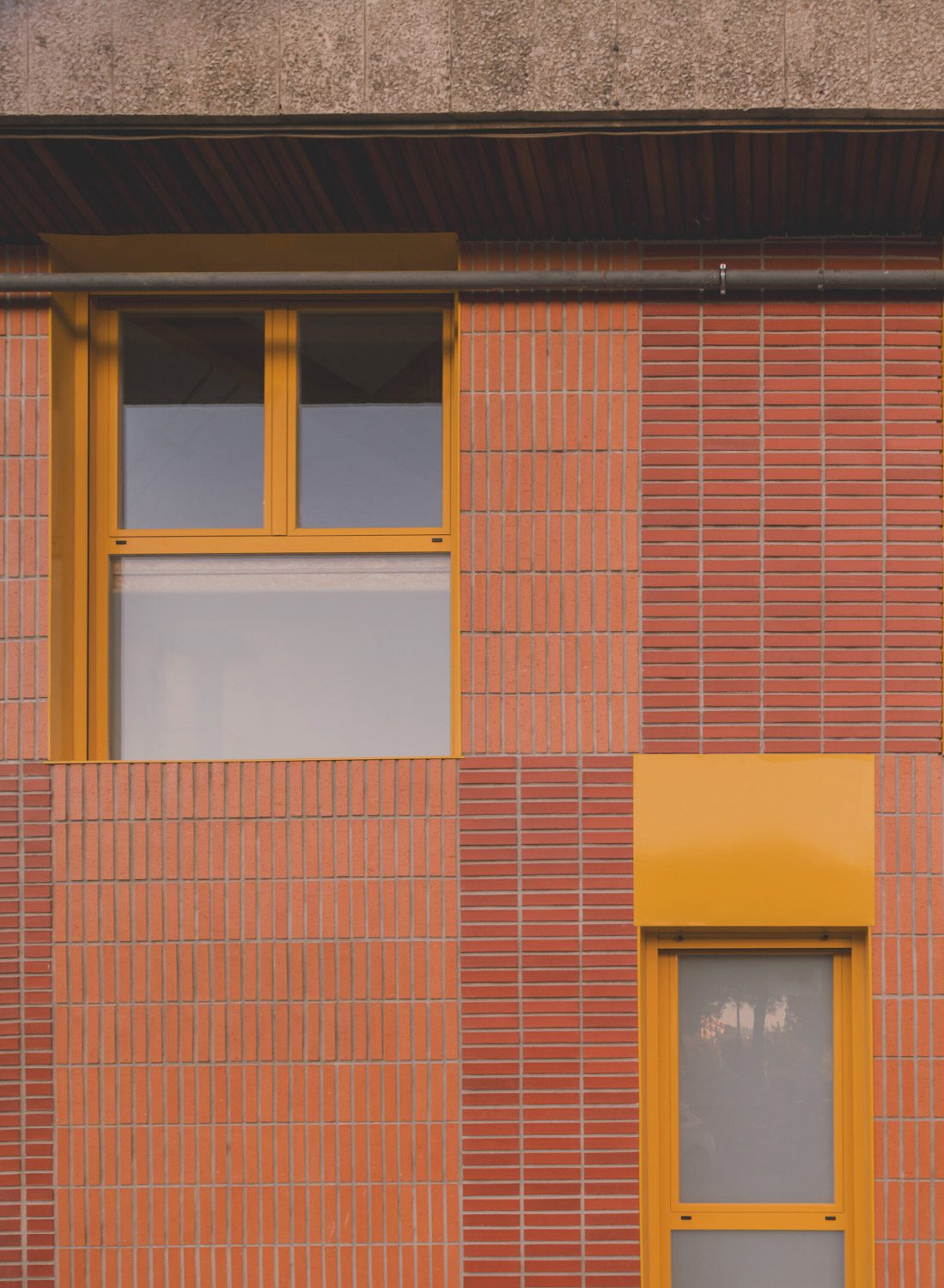
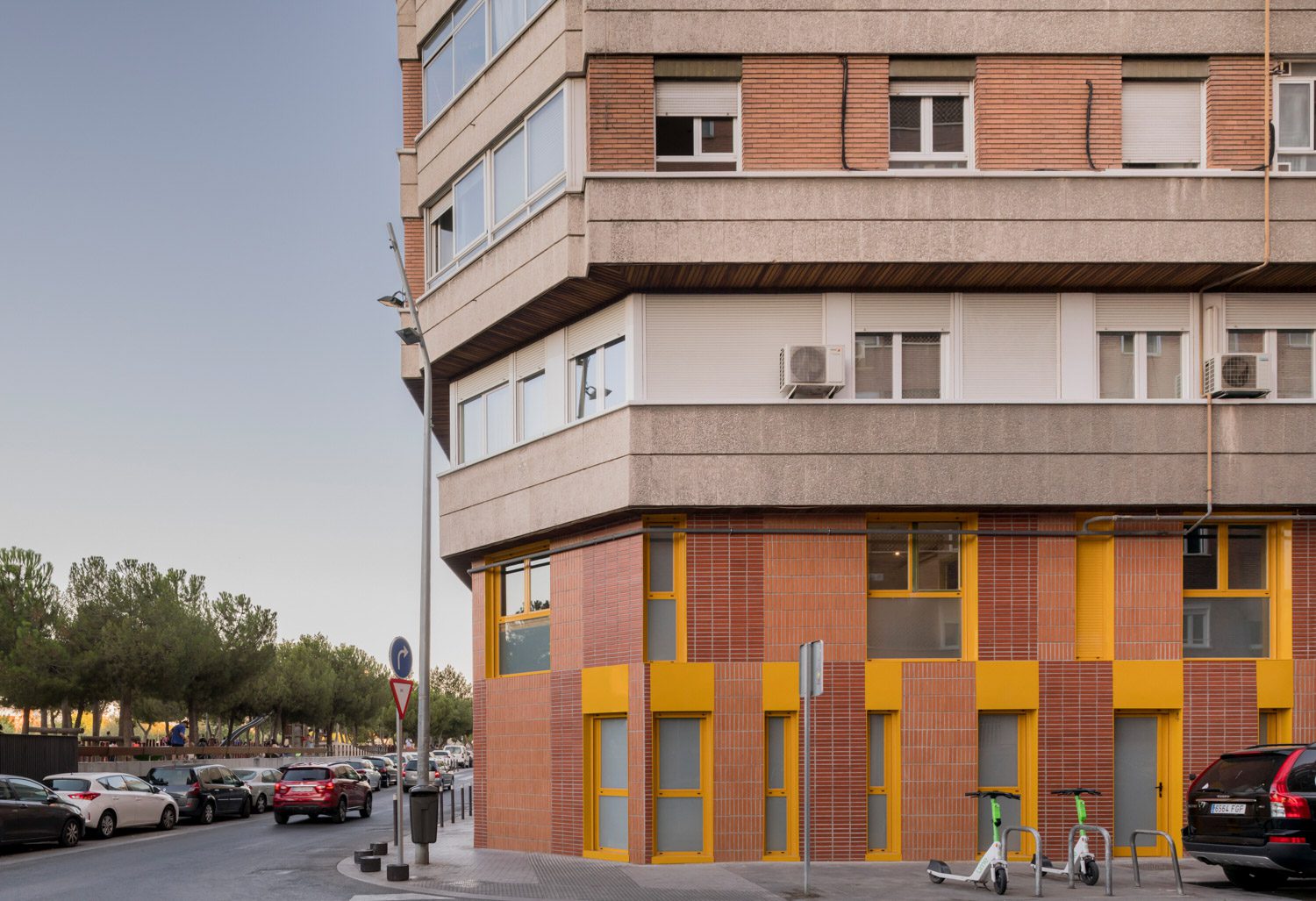
Warehouse Apartments is ultimately a case study in architectural calibration: between old and new, economy and expression. It embraces bold colors while responding to evolving patterns of use shaped by shifting social and economic dynamics. The project honors the historical context of its site and reinterprets it with the goal of enhancing quality of life – both environmentally and in terms of human well-being.