EKAPHAP DUANGKAEW AND THE EKAR TEAM RENOVATED AN OLD COMMERCIAL BUILDING IN THE HEART OF CHAROEN NAKHON INTO A COMMUNITY SPACE CALLED GUMP’S CROSS, WHICH CONNECTS THE CITY AND COMMUNITY IN A LIVELY WAY
TEXT: KARN PONKIRD
PHOTO: RUNGKIT CHAROENWAT
(For Thai, press here)
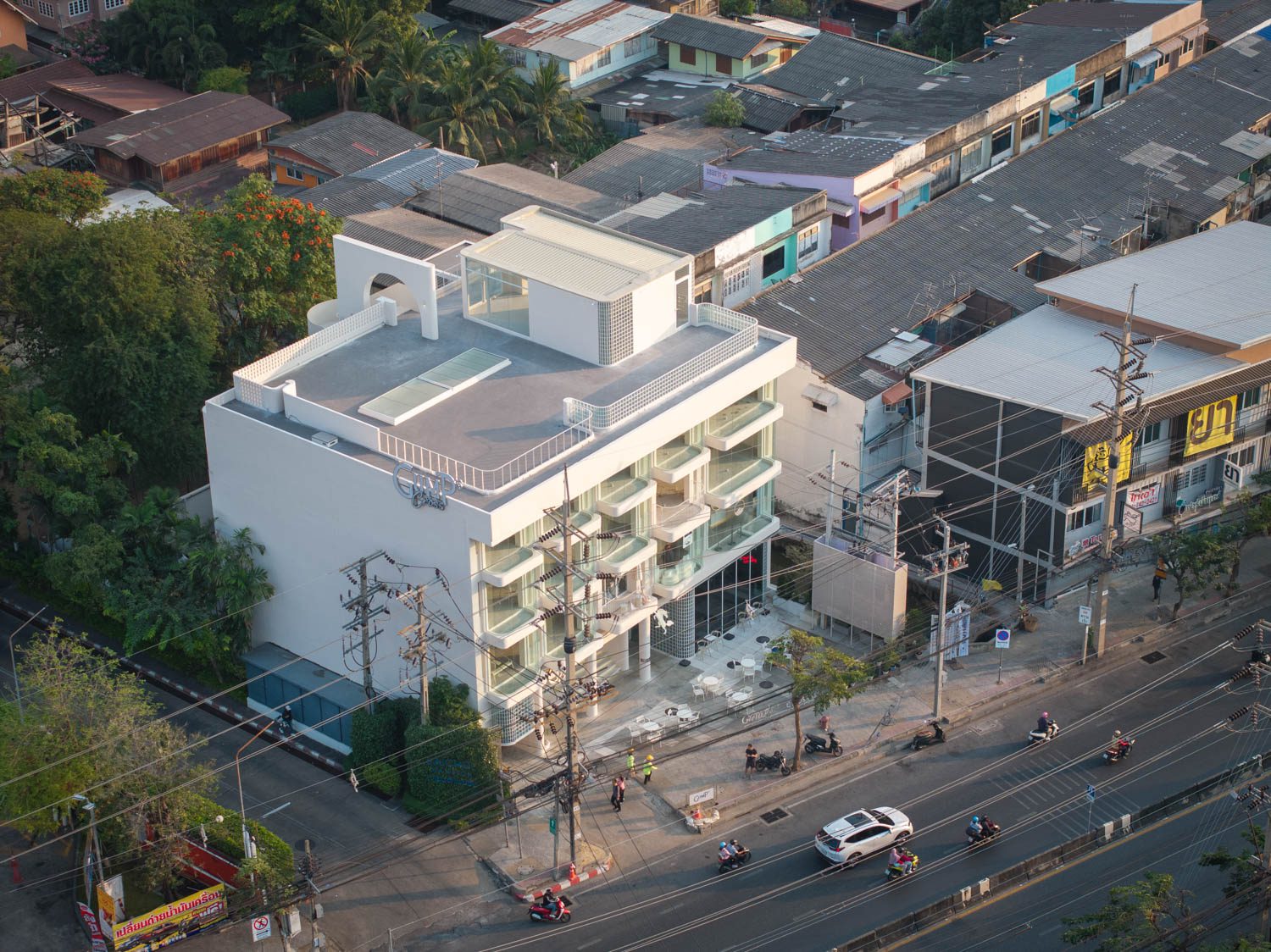
The landscape of business and lifestyle today has undergone a dramatic, if not almost an unrecognizable, transformation from the past. Architectural spaces that once supported commercial activity are no exception. Unlike their users, buildings cannot adapt as swiftly, bound by legal codes, structural limitations, and the very nature of architecture, which often inhibits change. As commercial districts evolve, the traditional shophouse, once designed for ground-floor business operations, with mezzanine storage and upper floors reserved for offices or residences, no longer meets the demands of contemporary use. This reality set the stage for a complex design challenge: to reimagine an old commercial building, formerly an auto repair and storage facility, as a community space capable of hosting a variety of activities and a sizable cluster of retail outlets. Situated on a modest plot of just 792 square meters along Charoen Nakhon Road, the site became the canvas for Ekaphap Duangkaew and the design team at EKAR to craft an architectural response attuned to the present.
Transforming a shophouse into a community-oriented space requires a multifaceted approach. While the core campaign was spearheaded by GUMP, known for its successful lifestyle destination Gump’s Ari, the new site in Charoen Nakhon presented an entirely different urban and social context. For EKAR, this meant extending their focus beyond the structure itself to examine the neighborhood and the fluid dynamics of its environment. Their design was guided by a vision to ensure that GUMP’s Cross would not stand as an isolated retail entity. Instead, it would serve as an architectural bridge linking residents and visitors through spatial configurations that encourage a diverse range of communal experiences.
“Once we began surveying the building, we started to ask ourselves how the new design could communicate with the surrounding community,” says Ekaphap, recalling the initial phase of the project. As a building that brings together retail outlets of various sizes, it was clear that visual appeal, while essential, was not enough. To ensure long-term sustainability, the space also needed to cultivate an atmosphere that made customers feel welcome and eager to return. Even more meaningful, perhaps, would be for the architecture to have a positive impact on the neighborhood itself. The surrounding urban fabric, composed of a network of alleys and pedestrian paths, stretching from Saphan Taksin BTS Station across the Chao Phraya River to GUMP’s Cross, offers multiple access points that invite foot traffic from various directions. This presents the potential to attract not only tourists and casual passersby, but also new patrons to nearby shops and businesses. “It’s a dimension of the project that may take time to develop, but if it happens, it could be beneficial for everyone,” Ekaphap notes, speaking to the long-term possibilities that lie ahead.
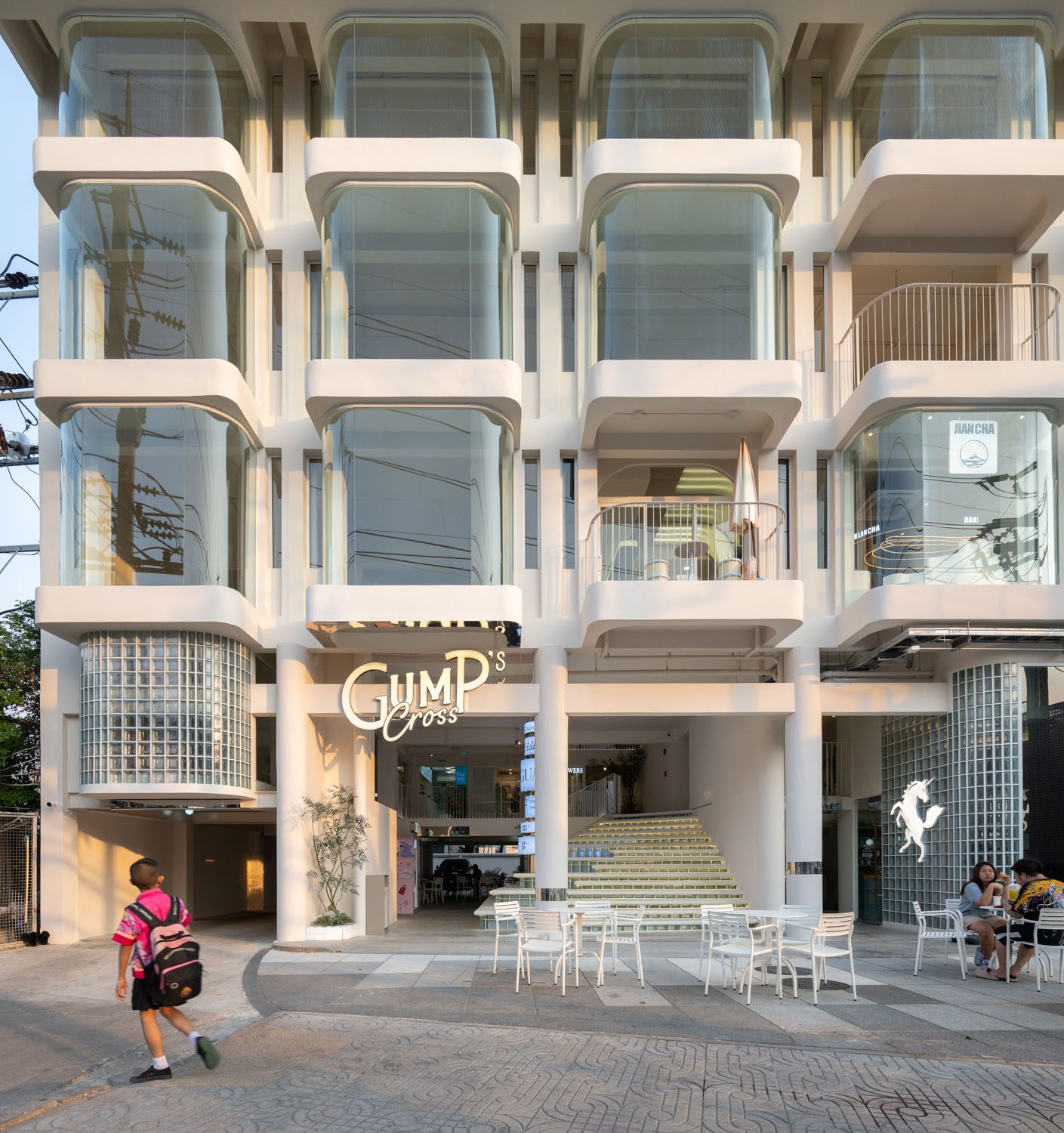
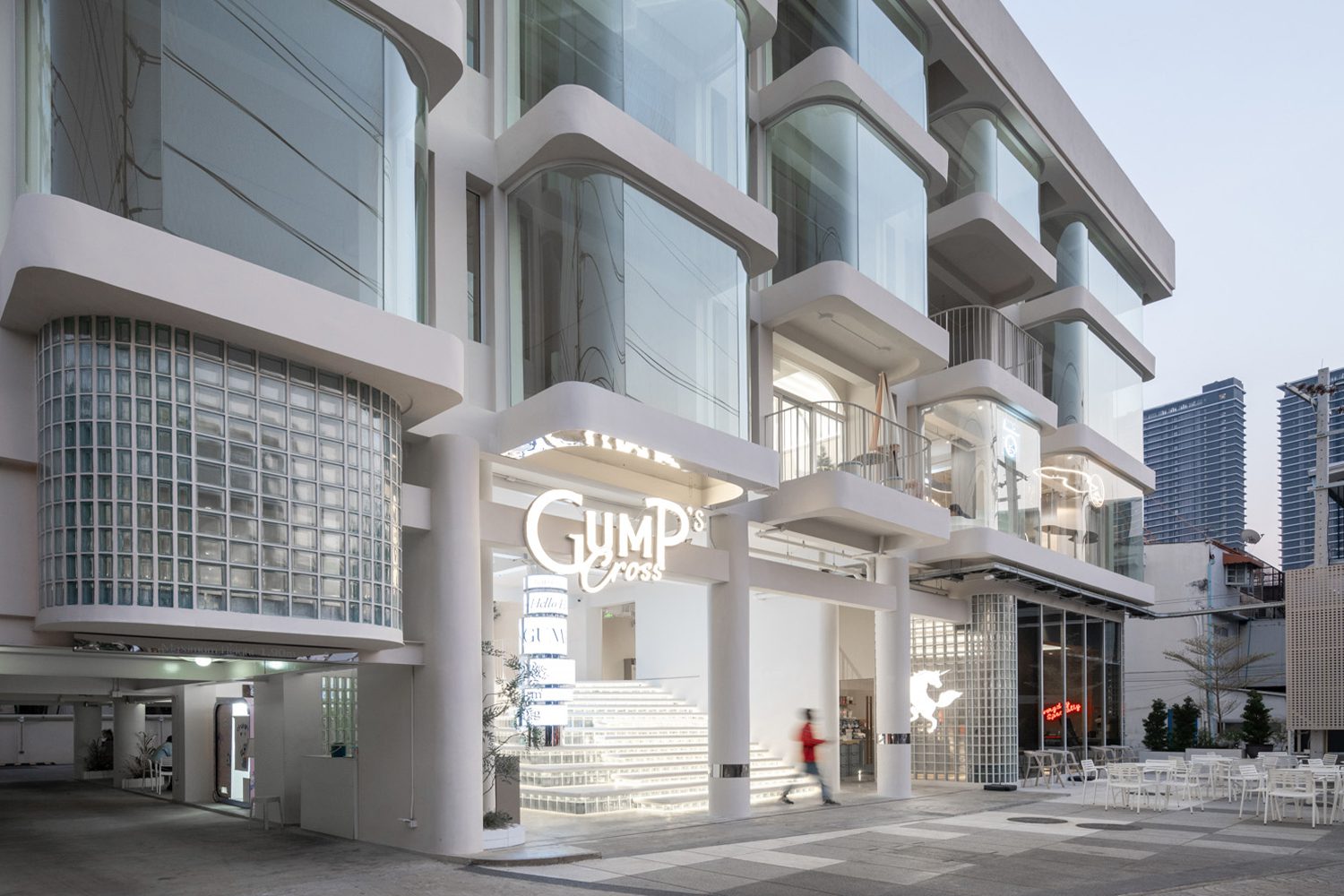
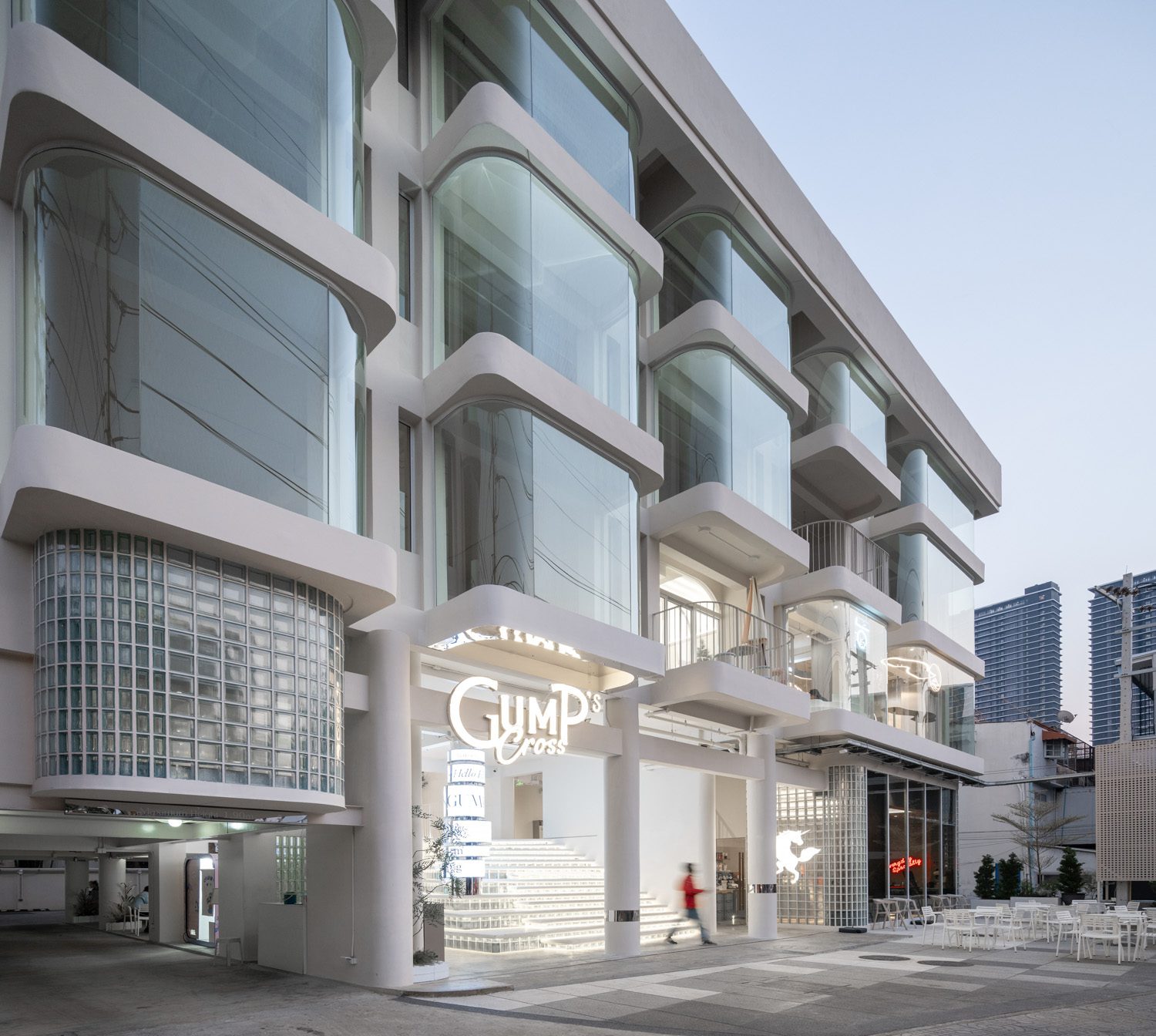
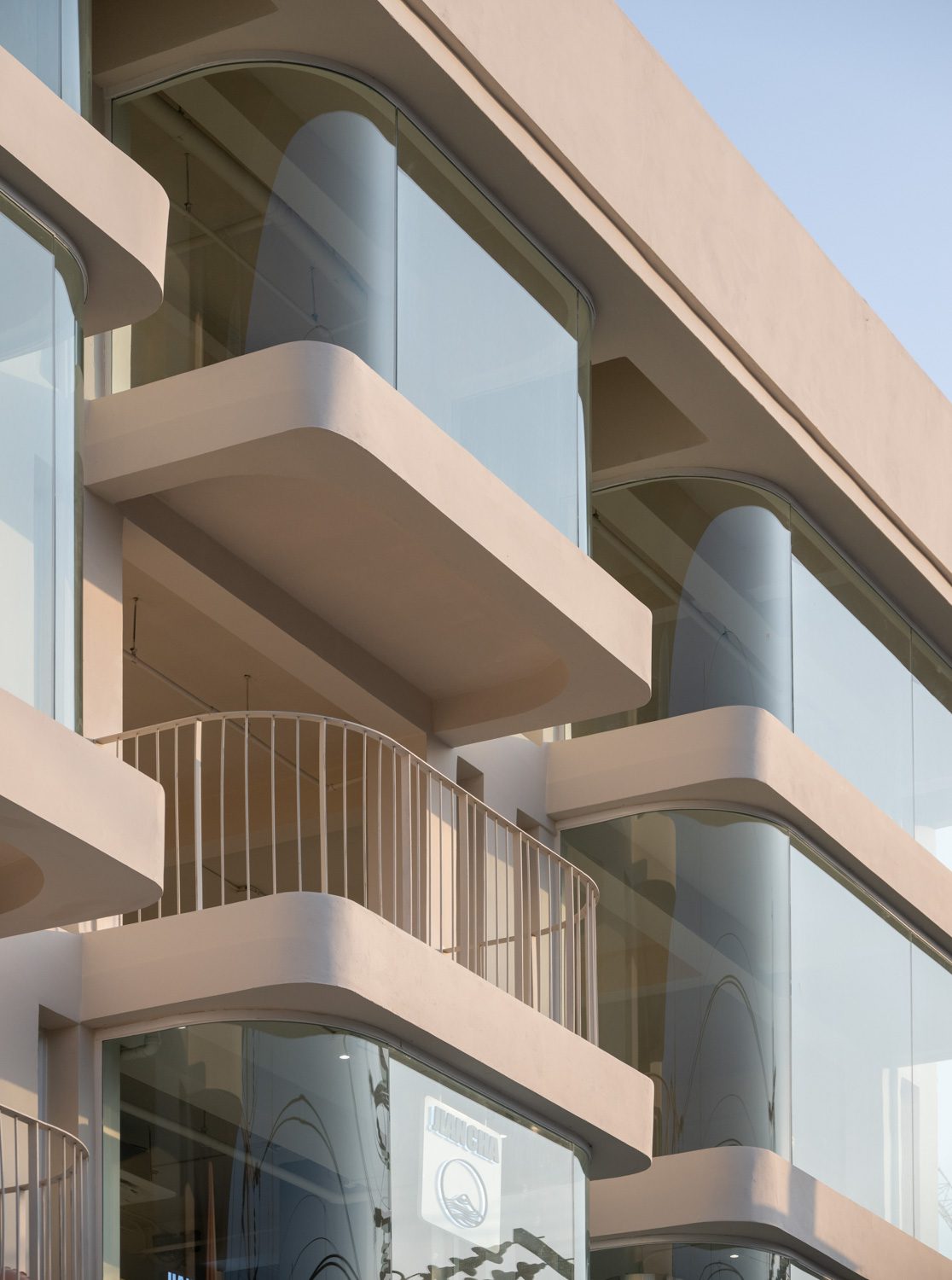
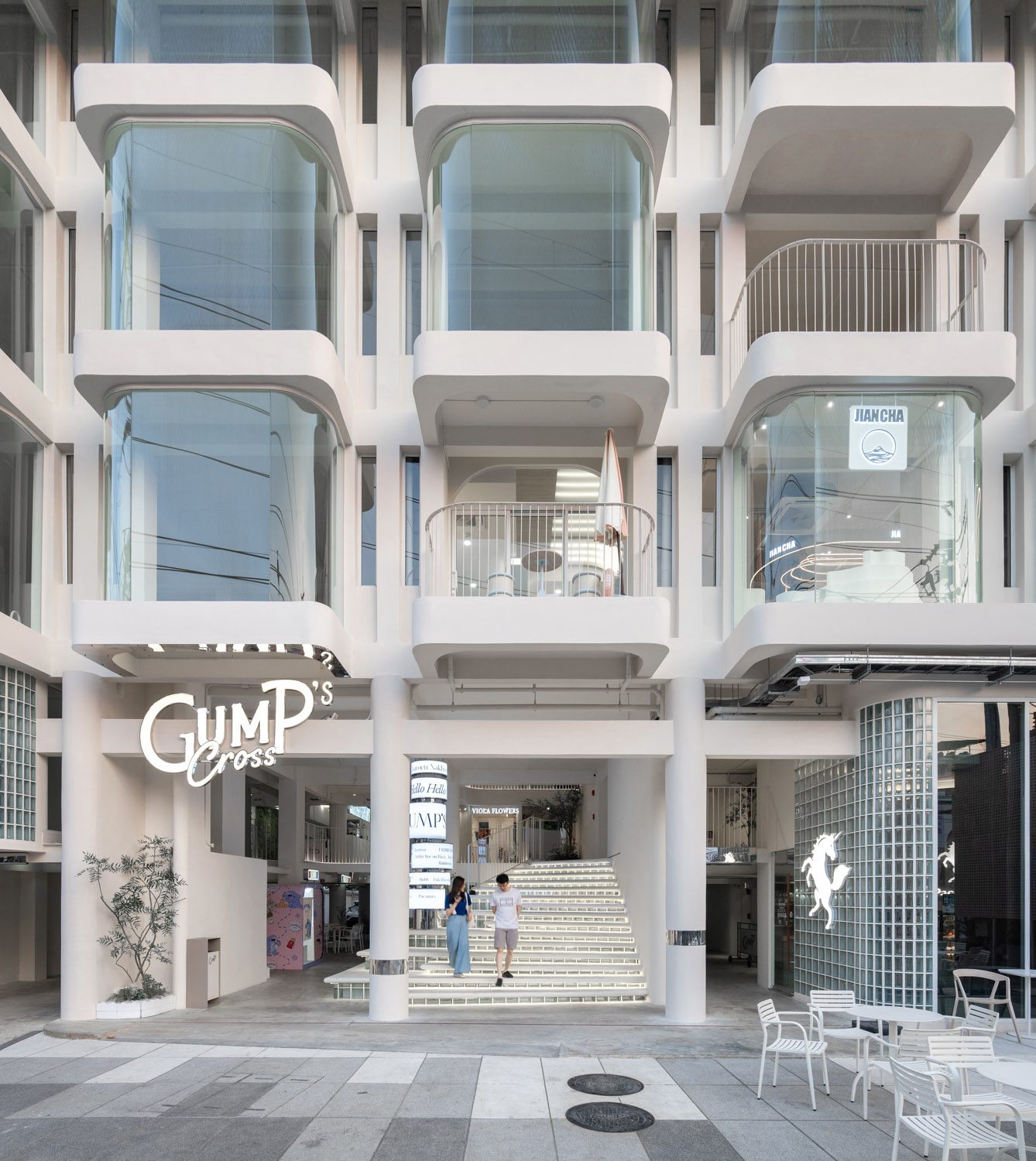
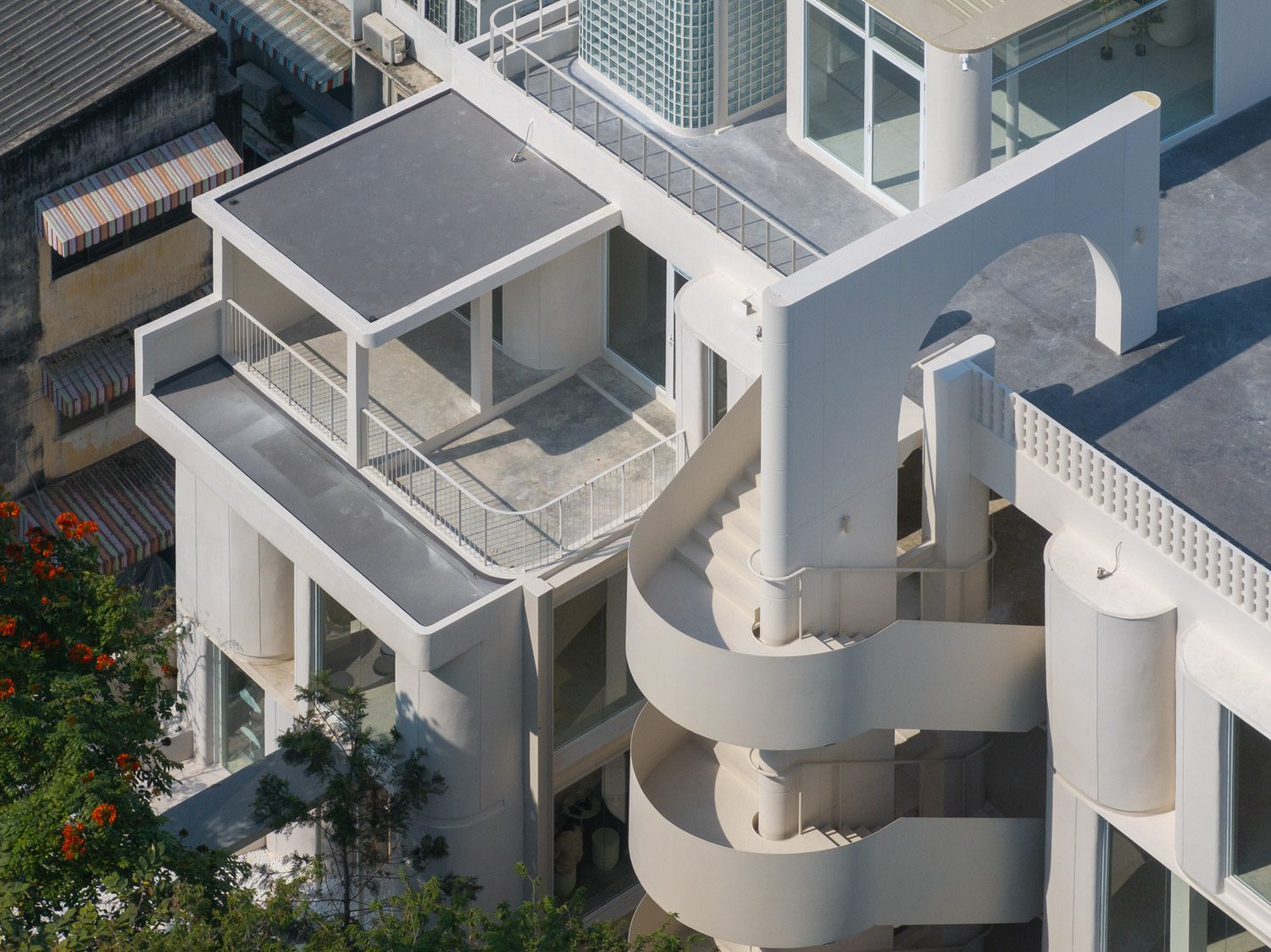
GUMP’s Cross was conceived as a building with a dual façade, presenting itself to the city on both the front and rear. The front façade, which faces Charoen Nakhon Road, serves as a dynamic display for the retail spaces within. A series of softly curved glass bays offer glimpses into the diverse interiors and activities of each shop, creating a sense of vitality and movement. This design approach emerged from a close study of the original structure, which revealed traces of a former balcony system. Over time, commercial use led to permanent modifications. Cement walls were added to support large signage and advertisements, effectively sealing off the original openness. In this renovation, those cement walls were removed and replaced with the new curved glass balconies, reviving the building’s sense of openness and interaction.
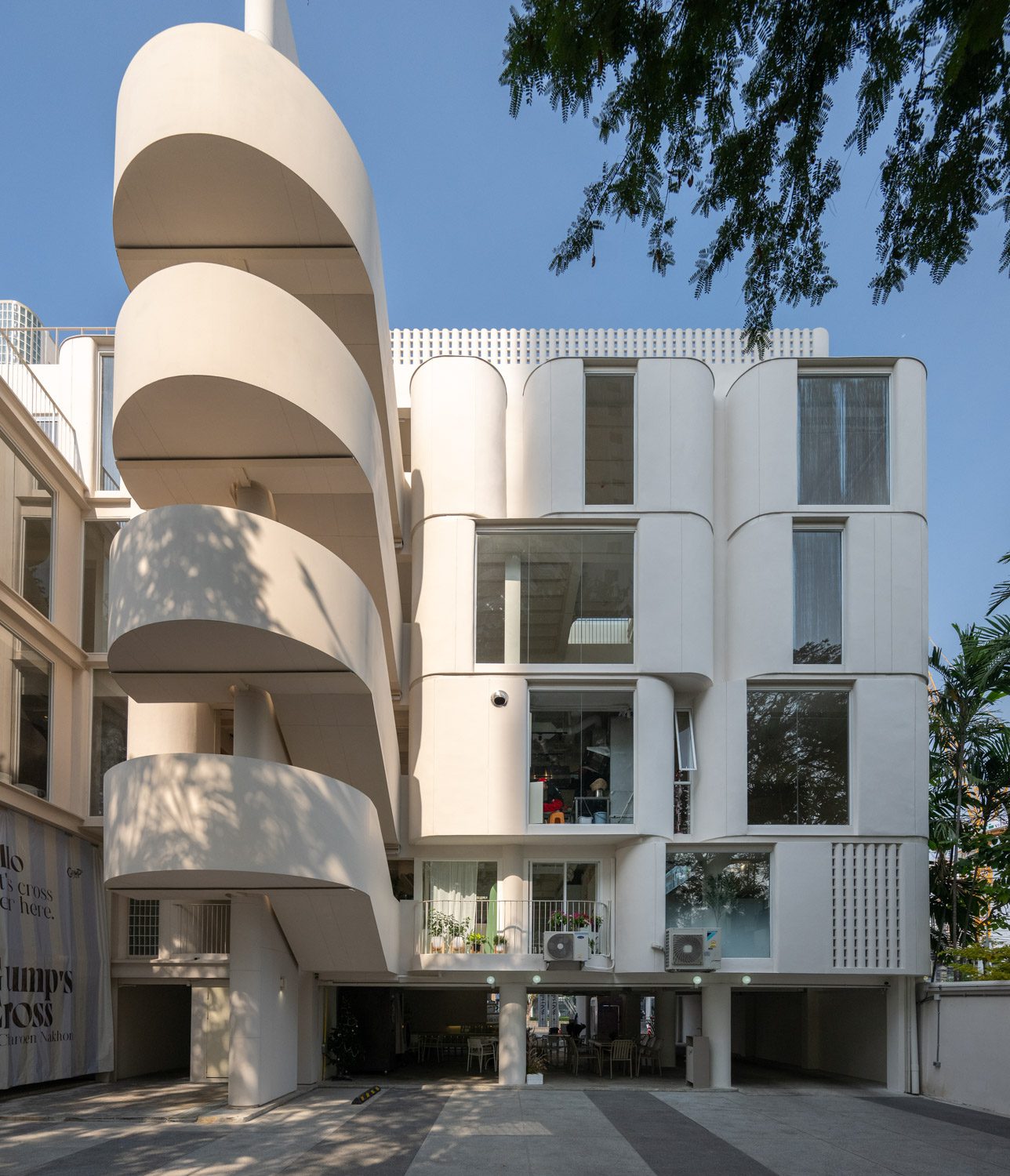
At the rear, the façade is marked by a sculptural curved staircase, which functions as a key circulation route connecting the various floors. The adjacent open courtyard serves as a flexible space: while it typically functions as a parking area, it can easily transform into a venue for small concerts, pop-up markets, or other community events. The landings along the staircase, designed as lookout points, encourage people to pause and observe the activities below, reinforcing a sense of animation that extends beyond just the ground floor.
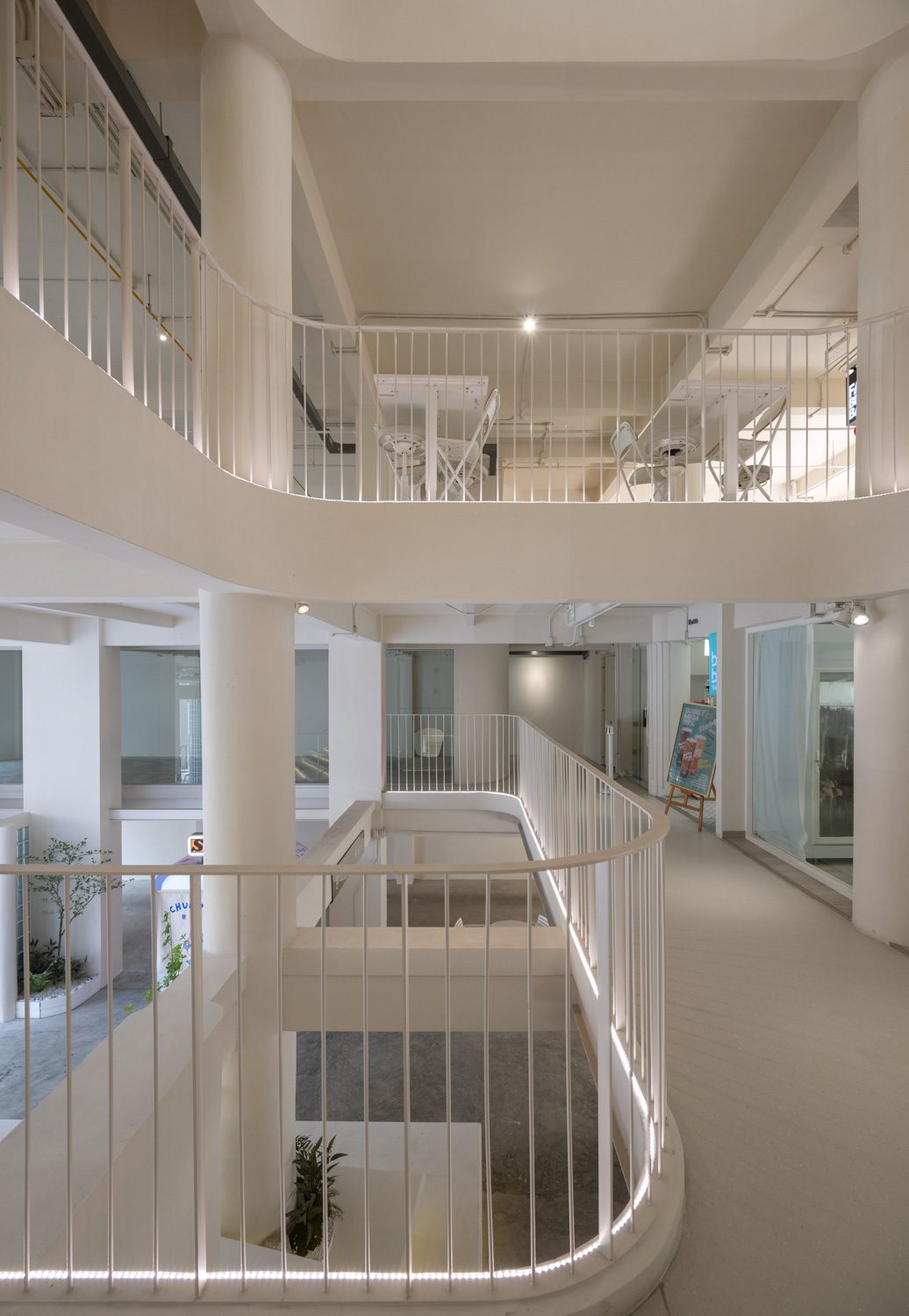
Inside, the design emphasizes thoughtfully orchestrated circulation, material clarity, and the use of natural light. Given the low ceiling height on the original ground floor, this level was reimagined as a semi-public zone, welcoming visitors into the space with a large glass-block staircase. More than just a circulation element, this staircase becomes a central feature, doubling as informal seating, a meeting spot, or a photo backdrop.
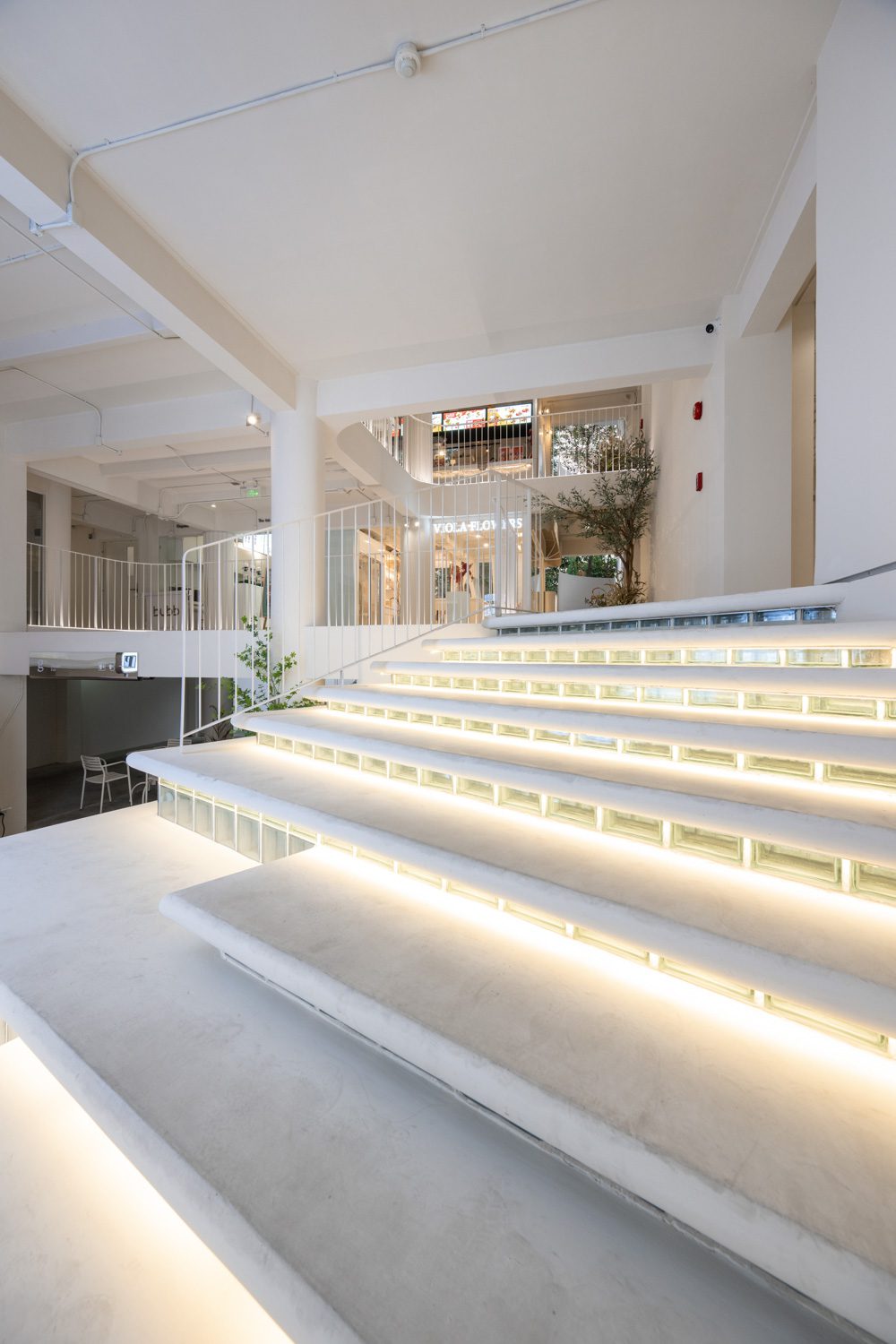
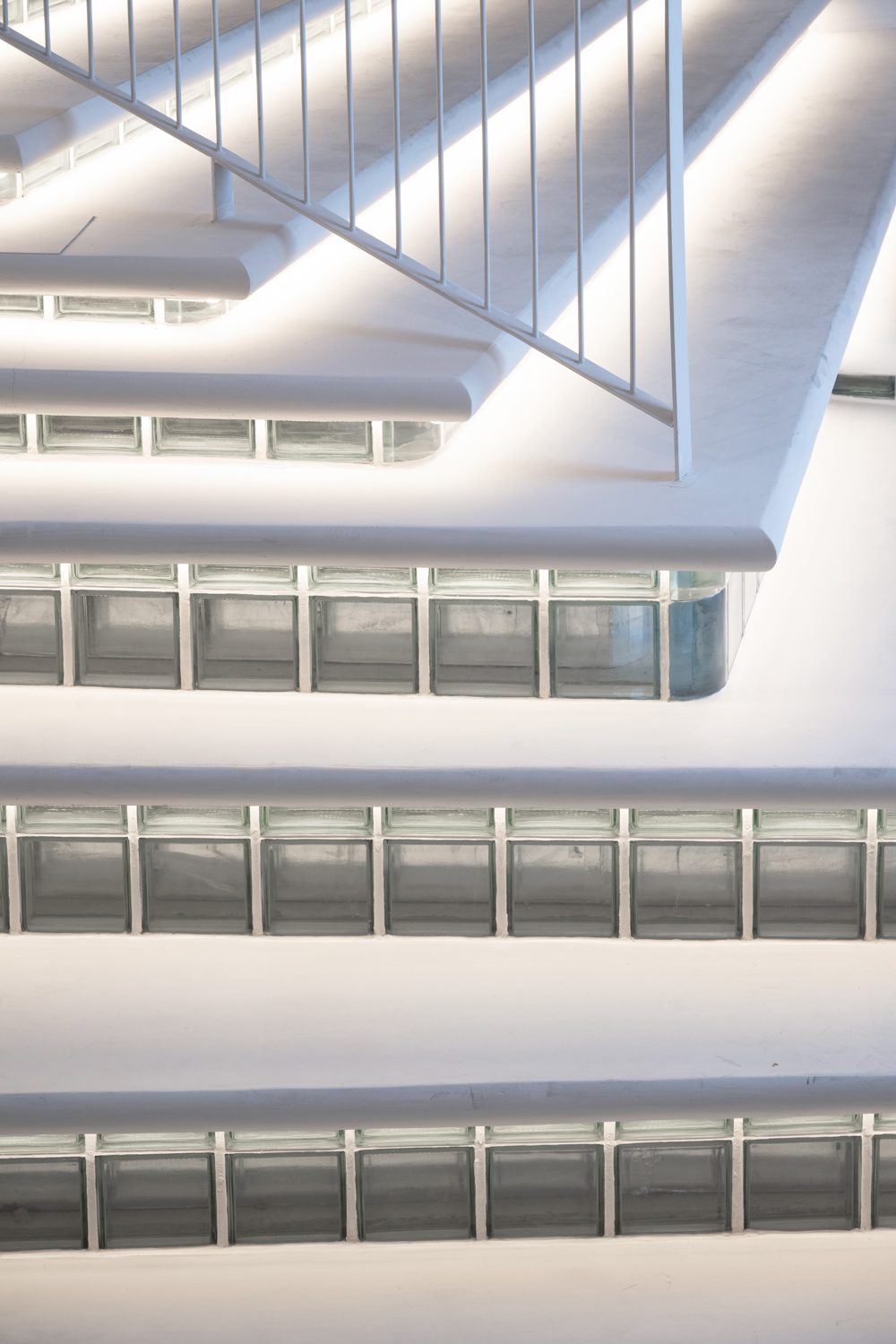
“We can guide a user’s movement through light,” explains Ekaphap. “People tend to avoid dark corners or spaces where they can’t see what’s inside. That’s why we use light as a way-finding tool, or transparency through glass and glazing, to reveal what’s just beyond.” This principle informed the decision to use glass blocks for the large staircase at the front of the building. Due to its substantial mass, there was a risk the staircase could block light and cast shadows, making the space feel dim and uninviting. Using translucent materials, therefore, became an effective solution. Additional openings were also introduced to let in more daylight, reducing reliance on artificial lighting during daytime hours. These strategically placed apertures create a luminous sequence of spaces, inviting users to explore or linger throughout the building. One of the most prominent interventions was the addition of a large skylight. Not only does it flood the upper floors with natural light, but it also draws the eye, and the feet, upward toward the rooftop. This uppermost level was transformed into a gathering terrace, now shared with a vinyl bar, offering a relaxed destination for evening hangouts under the open sky.
GUMP’s Cross, then, is more than a response to a client’s brief. It is an architectural statement, designed with the intention of “making visible what is possible.” It demonstrates that commercial architecture born from the adaptive reuse of old shophouses is viable. For Ekaphap and the EKAR team, the project serves as a model, which suggests that new forms of architecture and business can emerge from the foundations of the old, without requiring demolition or complete reinvention each time. Such an approach holds the potential to be more sustainable, both in relation to community and to history. But it is a process that requires time, and the willingness to let architecture do its work, gradually and in its own way.