
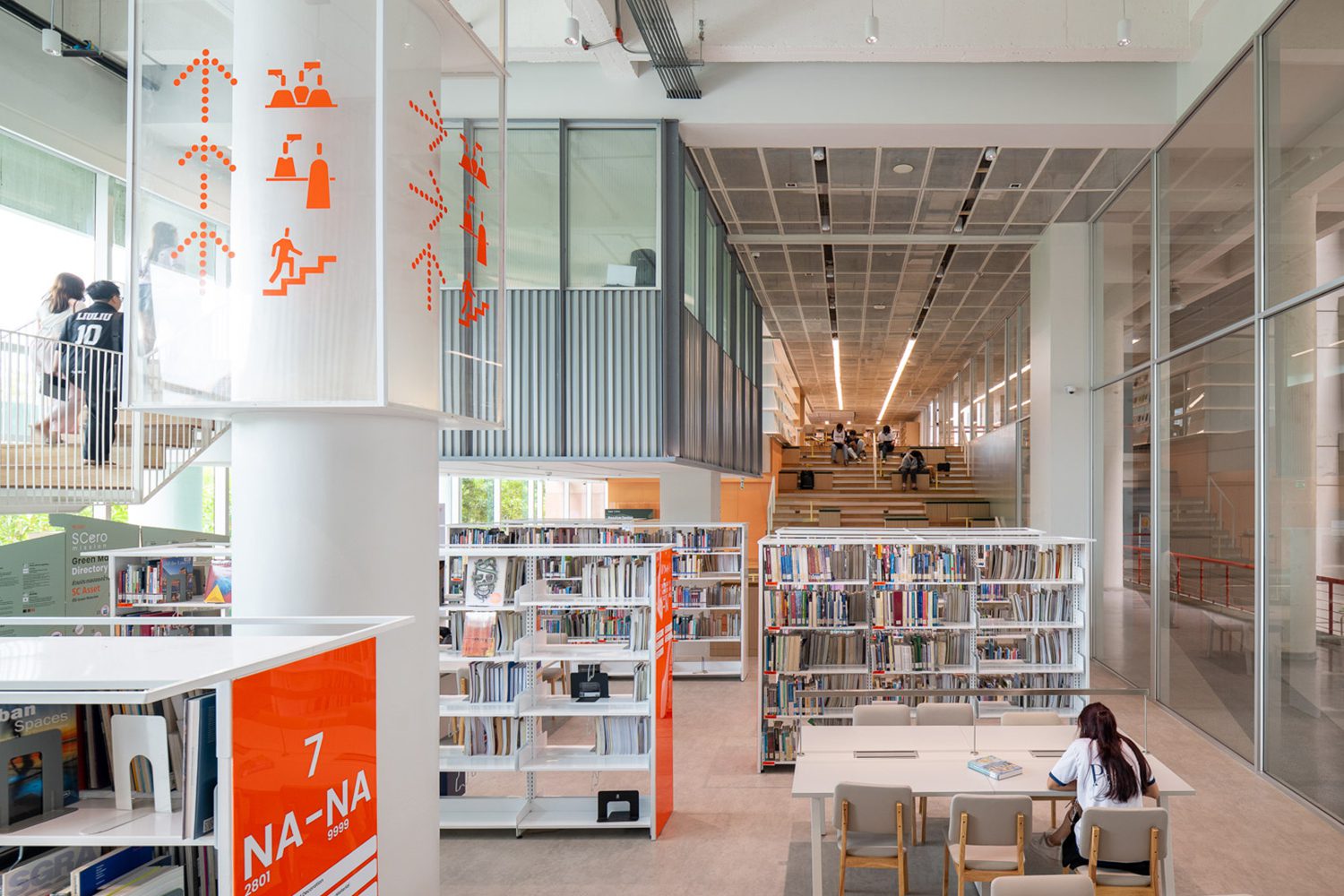
WHEN THREE THAI DESIGN STUDIOS COLLABORATED TO DESIGN VMS LIBRARY, A LIBRARY THAT UNDERSTANDS THE CHANGING TIMES, IT BECAME A SPACE FOR MEDITATION AND INTERACTION AT THE SAME TIME.
TEXT: XAROJ PHRAWONG
PHOTO: WEERAPON SINGNOI
(For Thai, press here)
‘A library has long been considered a sanctuary of wisdom, worshipped through the light of concentration and consecrated in silence.’ This statement may well capture the essence of what libraries represented in the 20th century, when the world was relatively less complex. Many case studies of library architecture from that era reveal a clear spatial hierarchy: book-browsing areas were often lit with subdued, diffused light that allowed users to scan titles along the spines comfortably. Once a book was selected, readers would move toward designated reading zones where spaces are deliberately designed with brighter illumination to support longer periods of focus and engagement.
In the 21st century, however, the world has grown increasingly intricate, shaped by rapidly shifting human behaviors. The design of libraries today must therefore embrace a far broader and more contemporary scope, beyond the mere act of reading. A fundamental question now arises: Is the library as a building type facing extinction, or is it in the process of transformation?
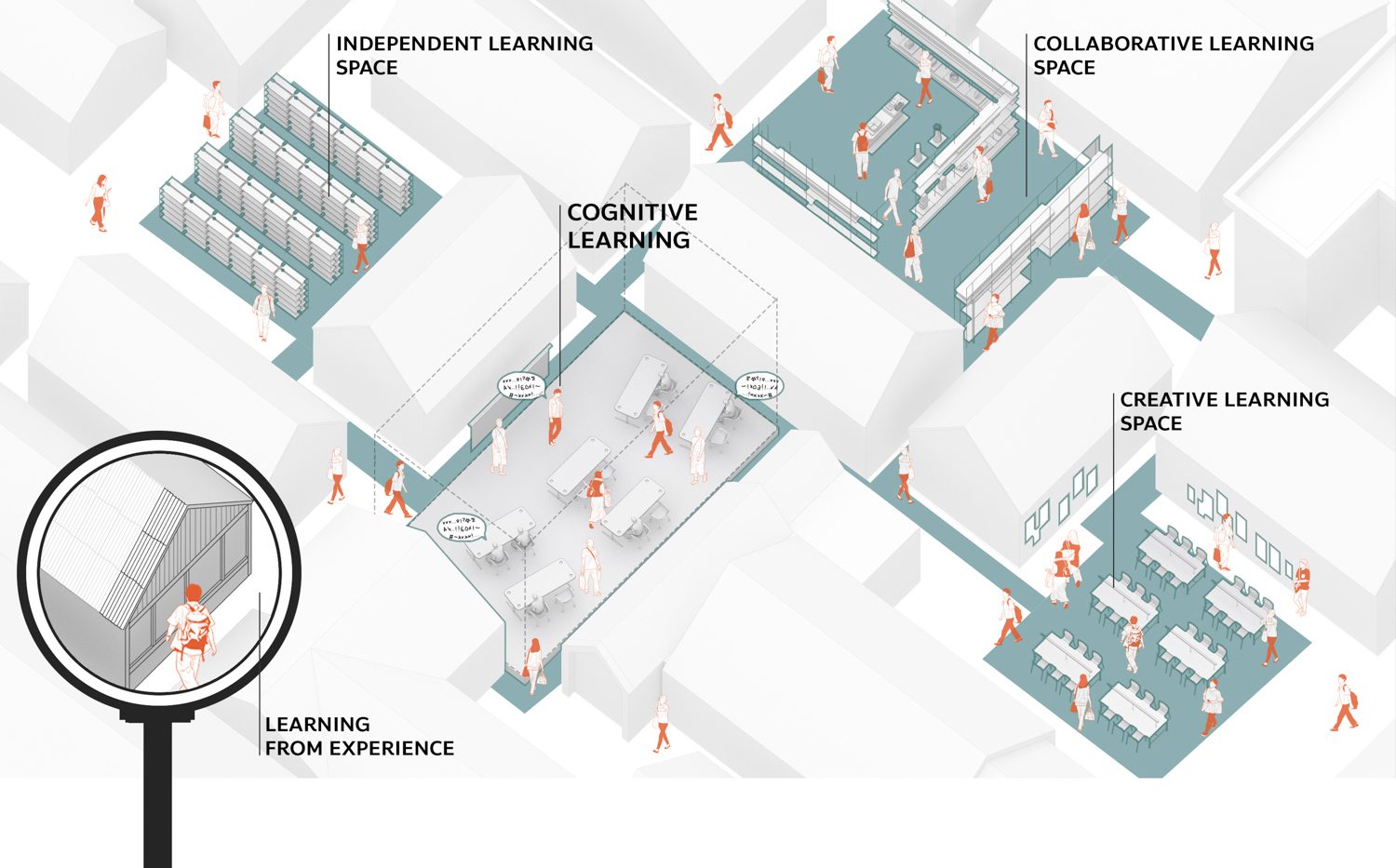
An insightful example that helps answer this question can be found in the Professor Vimolsiddhi Horayangkura Library at the Faculty of Architecture and Planning, Thammasat University. The project is a collaborative design effort by Wire Knot Studios, Architect Nonsense, and JUNNARCHITECT. The design process began with a close observation of user behavior, including students, staff, and librarians, leading to a concept that positions design itself as a means of problem-solving. The primary challenge was to create a library that not only accommodates the students, who are its main users, but also actively fosters interaction between people and the architecture itself.
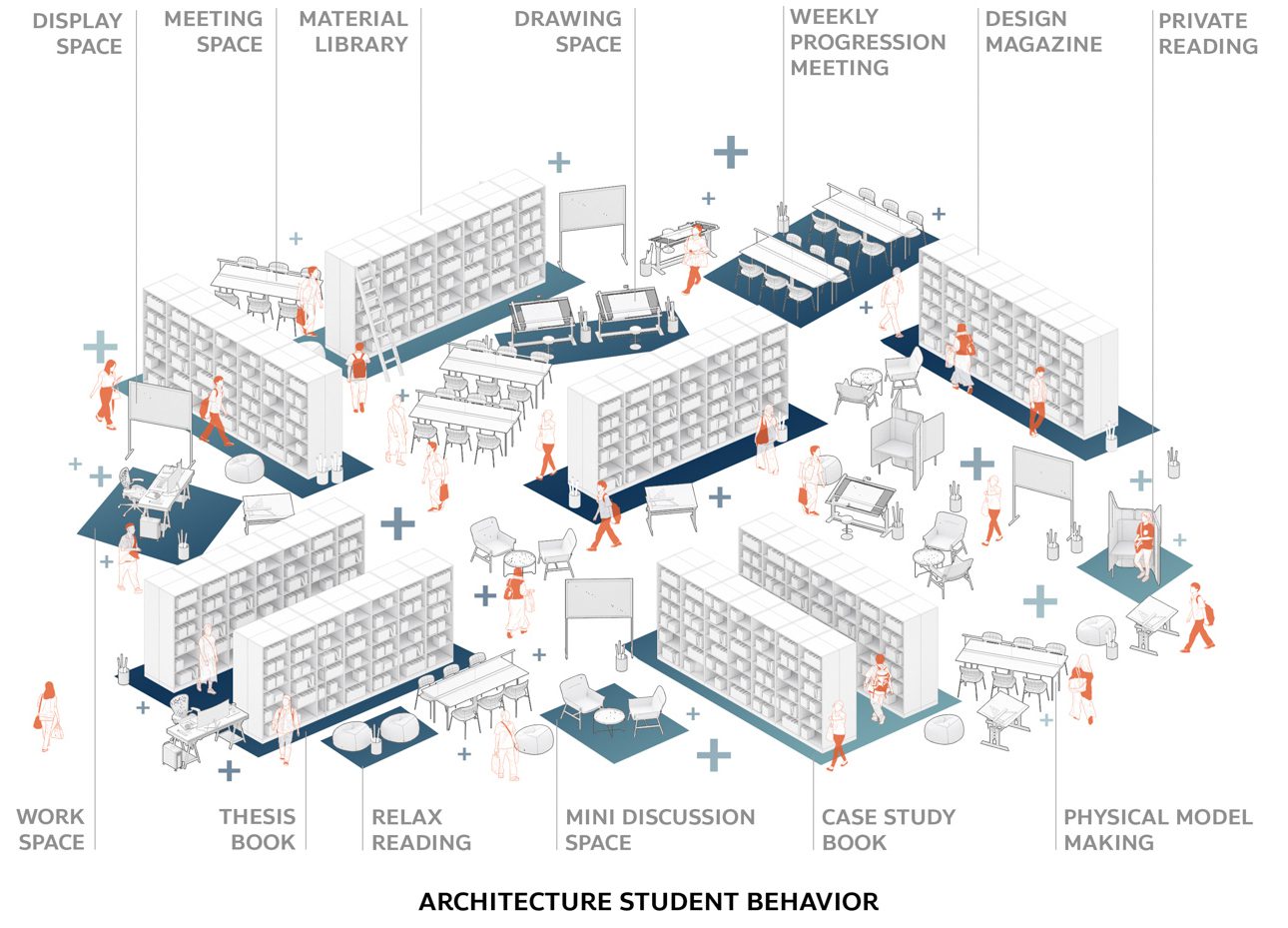
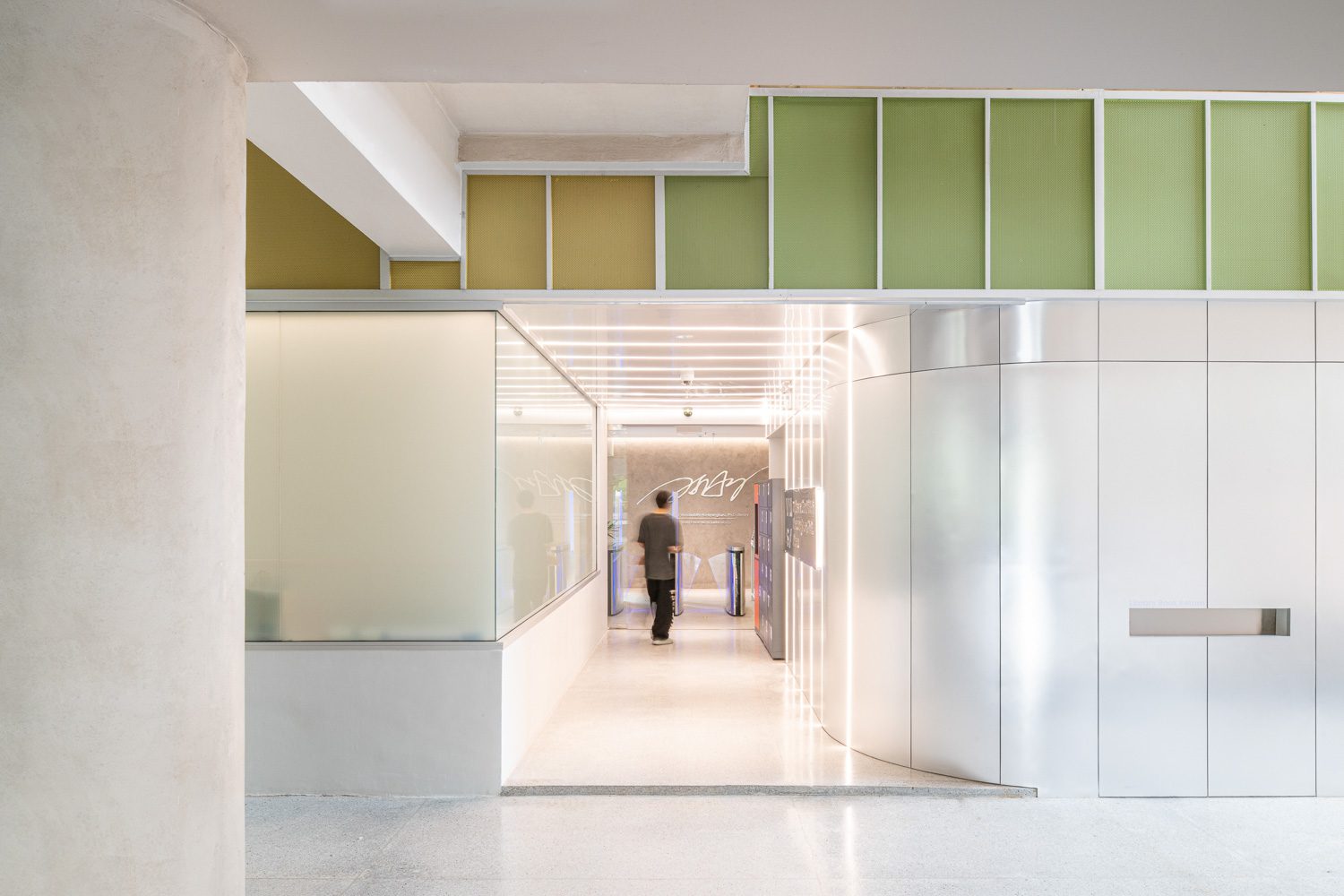
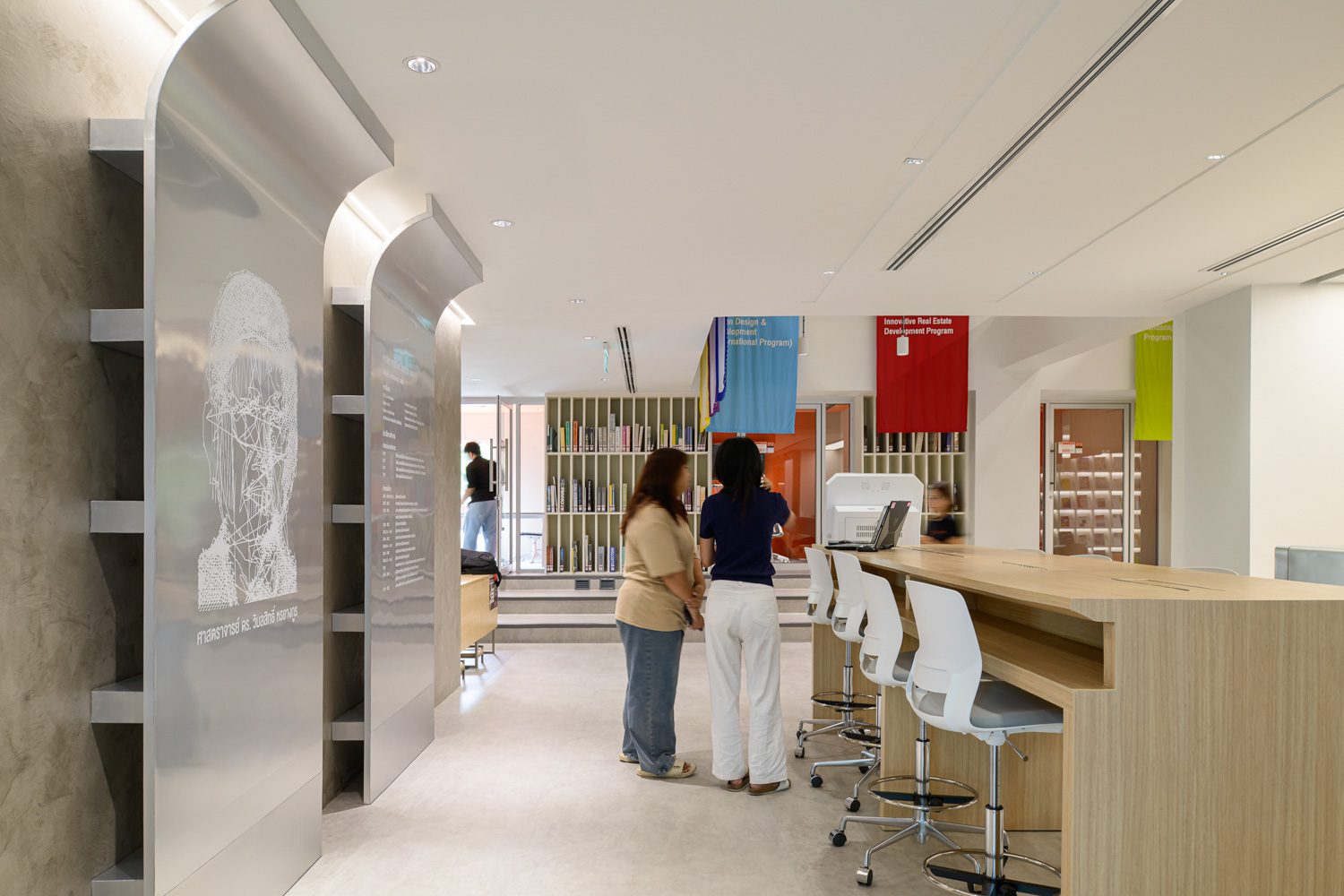
The spatial organization of the library is structured according to sound levels. When viewed from the plan, the layout is divided into three main zones. The first is the entrance, where access is controlled. The architects highlight this entry with a curved wall and an open, doorless passage, creating a recessed void that draws visitors inward through a subtle contrast with the surrounding rooms. Beyond this point lies the main library, where users pass through the librarian’s counter area before reaching meeting rooms, discussion zones, and document stacks. This section, intentionally designed to allow a lively, conversational atmosphere, is a hybrid between a social gathering area and a co-working space.
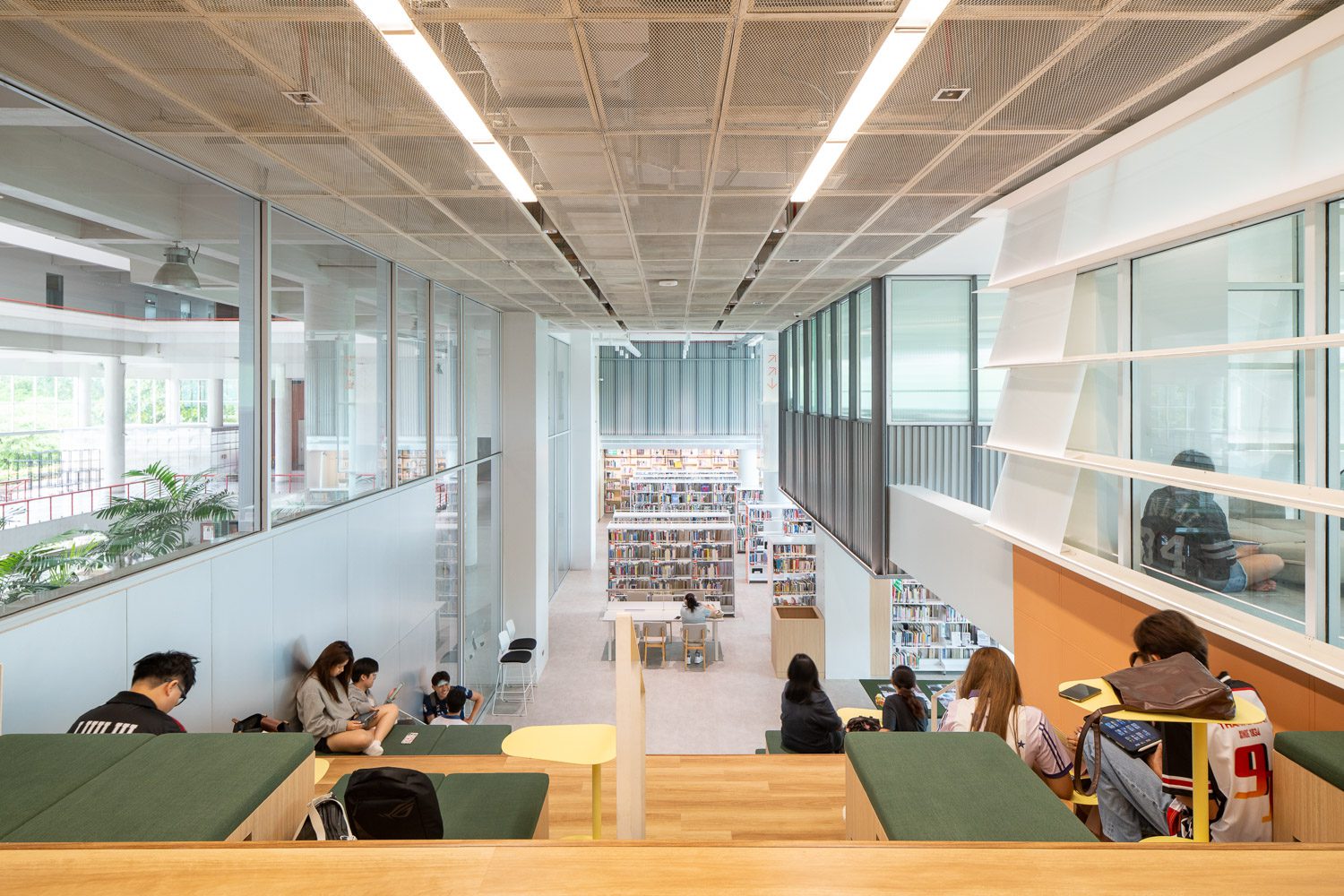
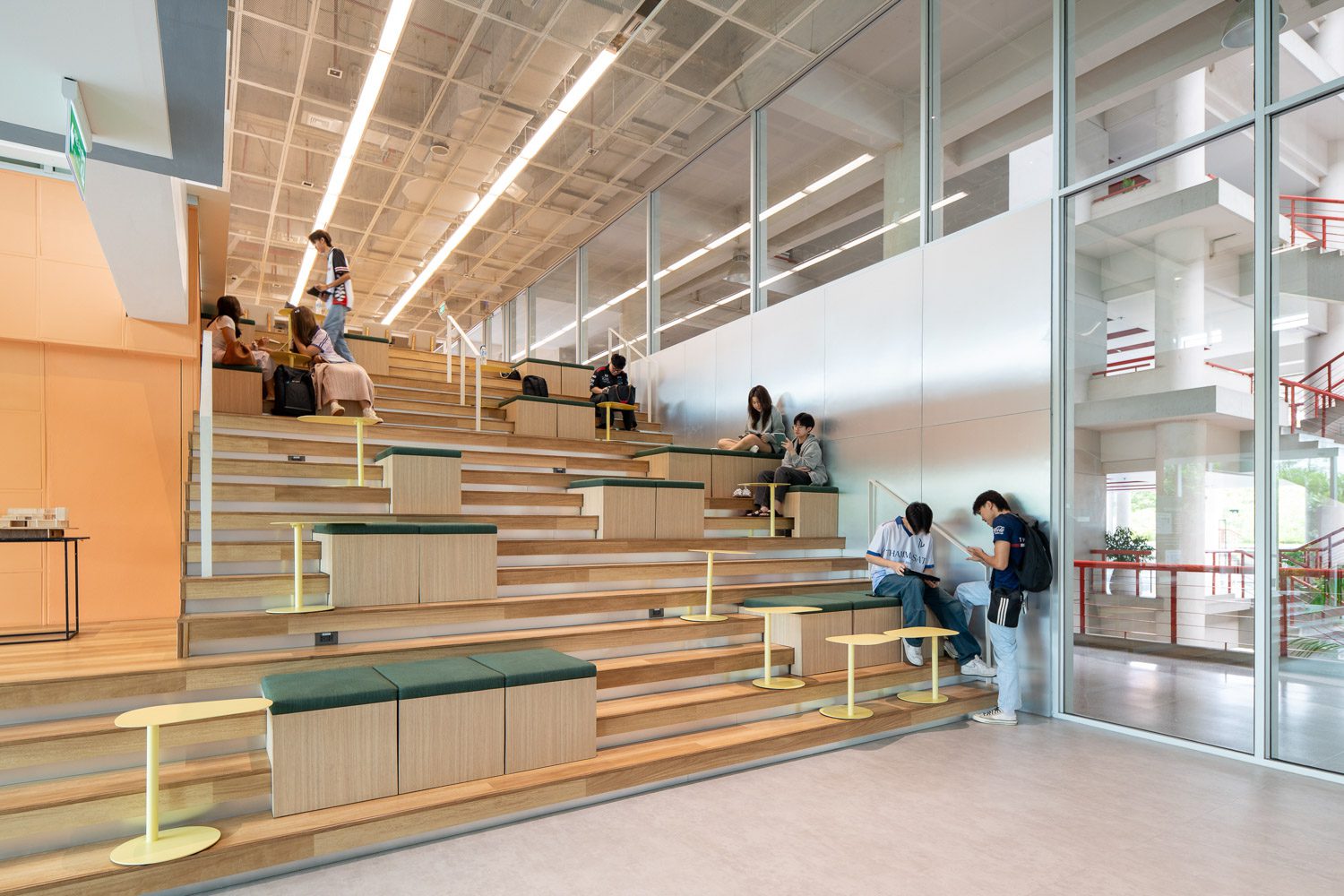
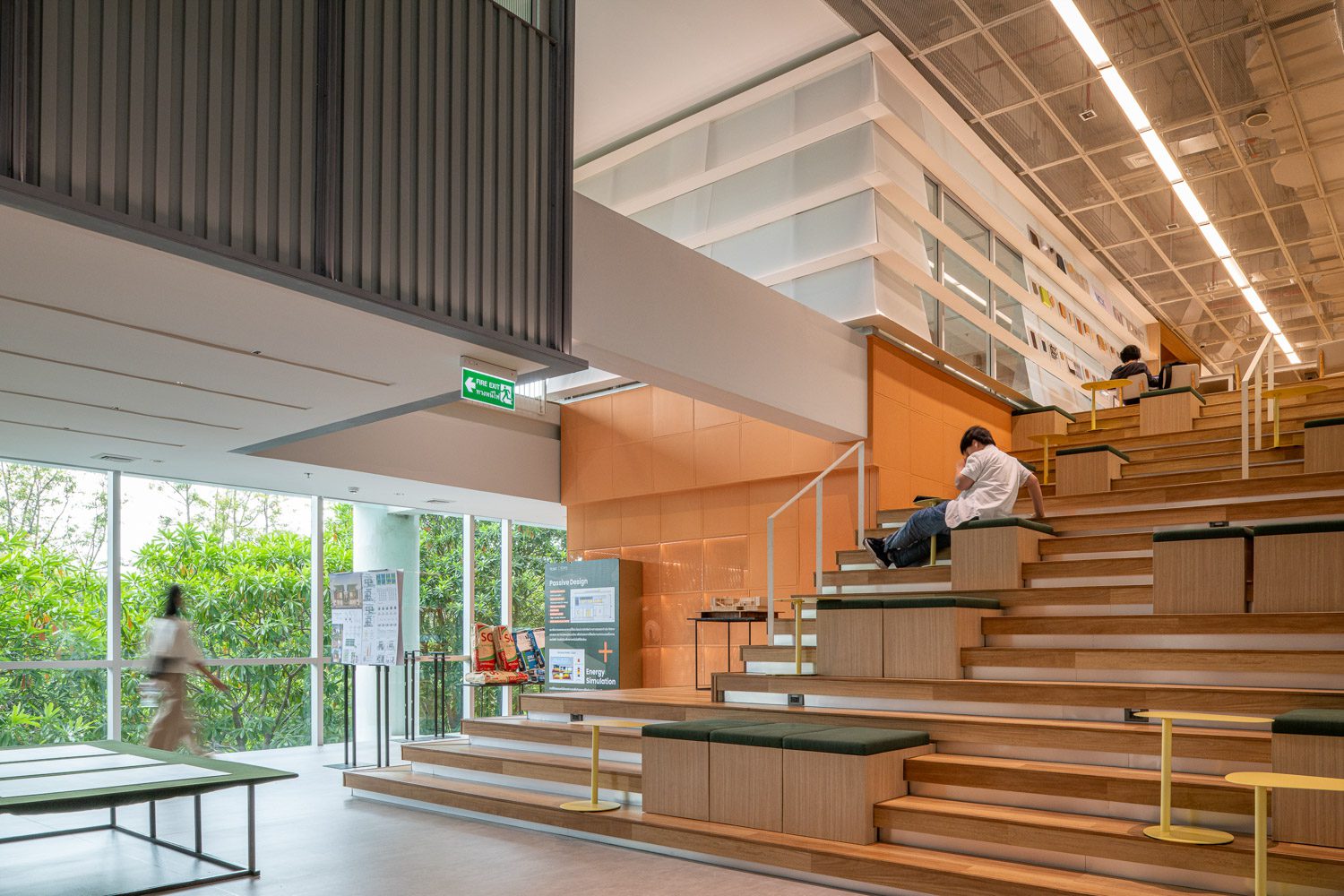
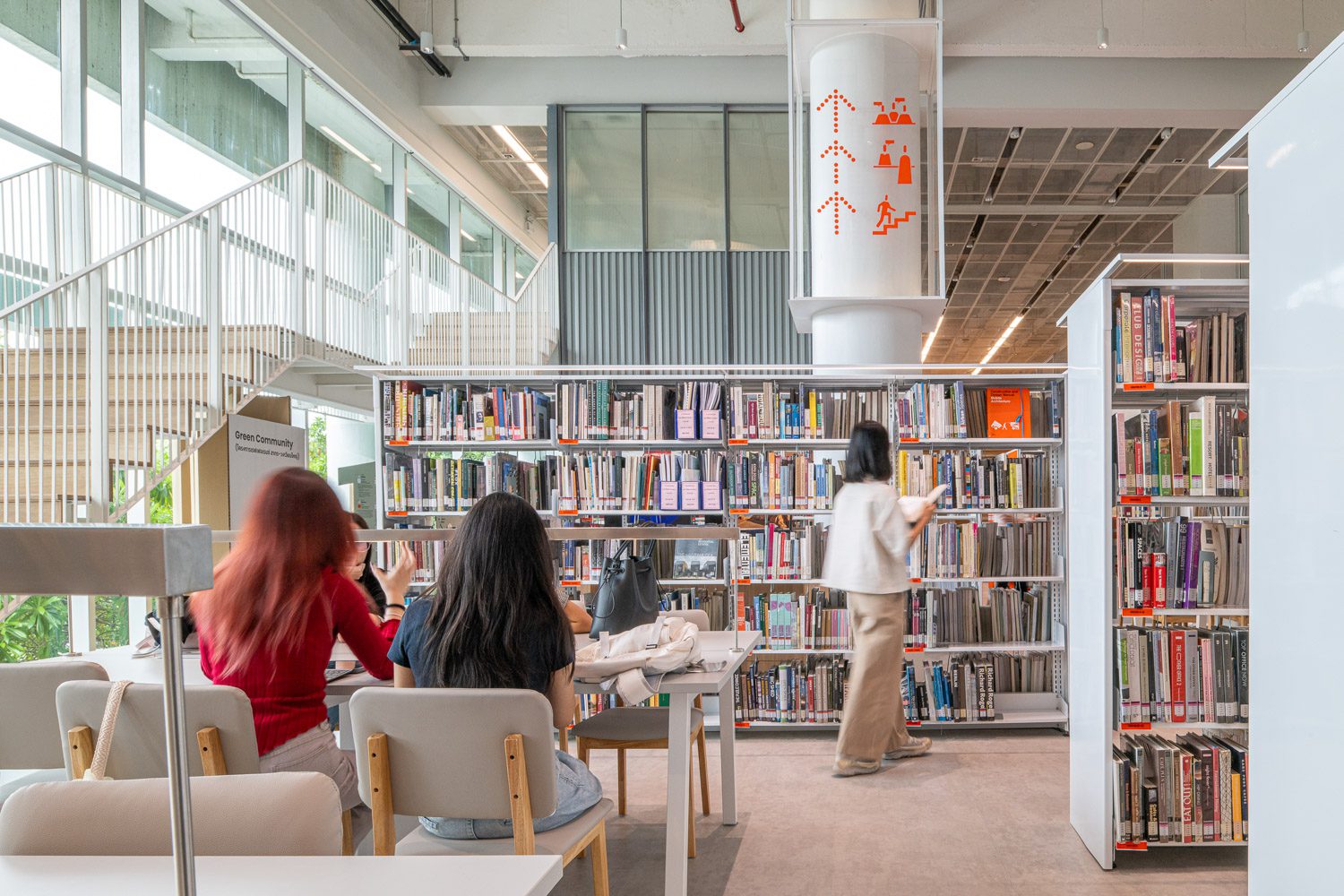
Turning left from the entrance leads to the second zone, a double-volume space that visually connects the ground floor and the mezzanine. This area accommodates reading activities alongside quieter group interactions, allowing conversations without disturbing others. The collection here spans a wide range of subjects across all eight academic disciplines taught within the faculty. The space encourages an informal, exploratory mode of reading. Students from any field can freely pick up books beyond their own discipline, reflecting the library’s educational philosophy of integrated and self-directed learning through cognitive engagement. At the heart of this zone, the main reading area merges seamlessly with the central staircase that links the two levels. Seating is interwoven into the wide stair treads, transforming the steps themselves into a landscape of reading nooks. This design invites users to interpret their own ways of sitting in relation to the architecture, whether perched on the 20 x 40-centimeter steps or reclining on the cushions provided.
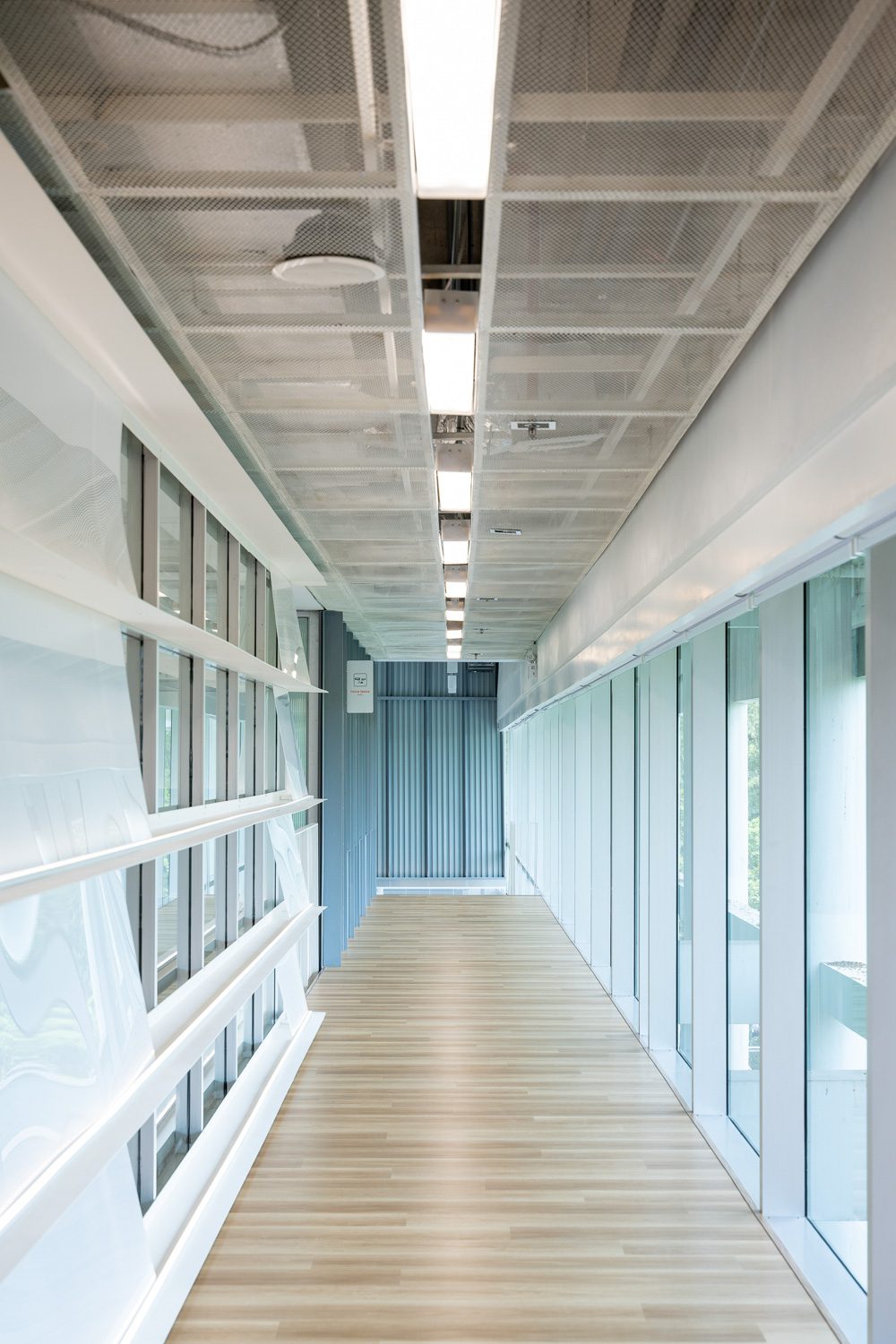
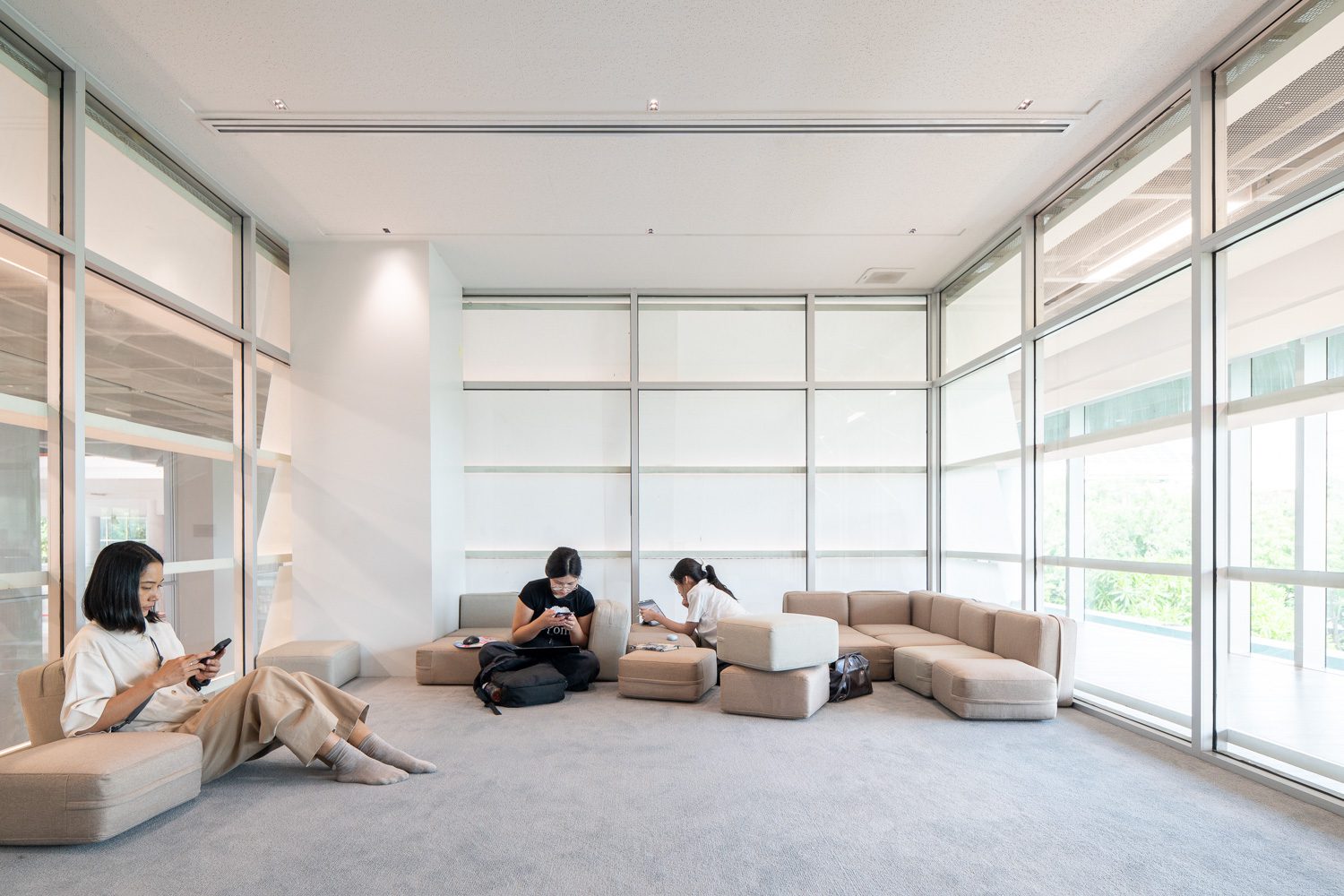
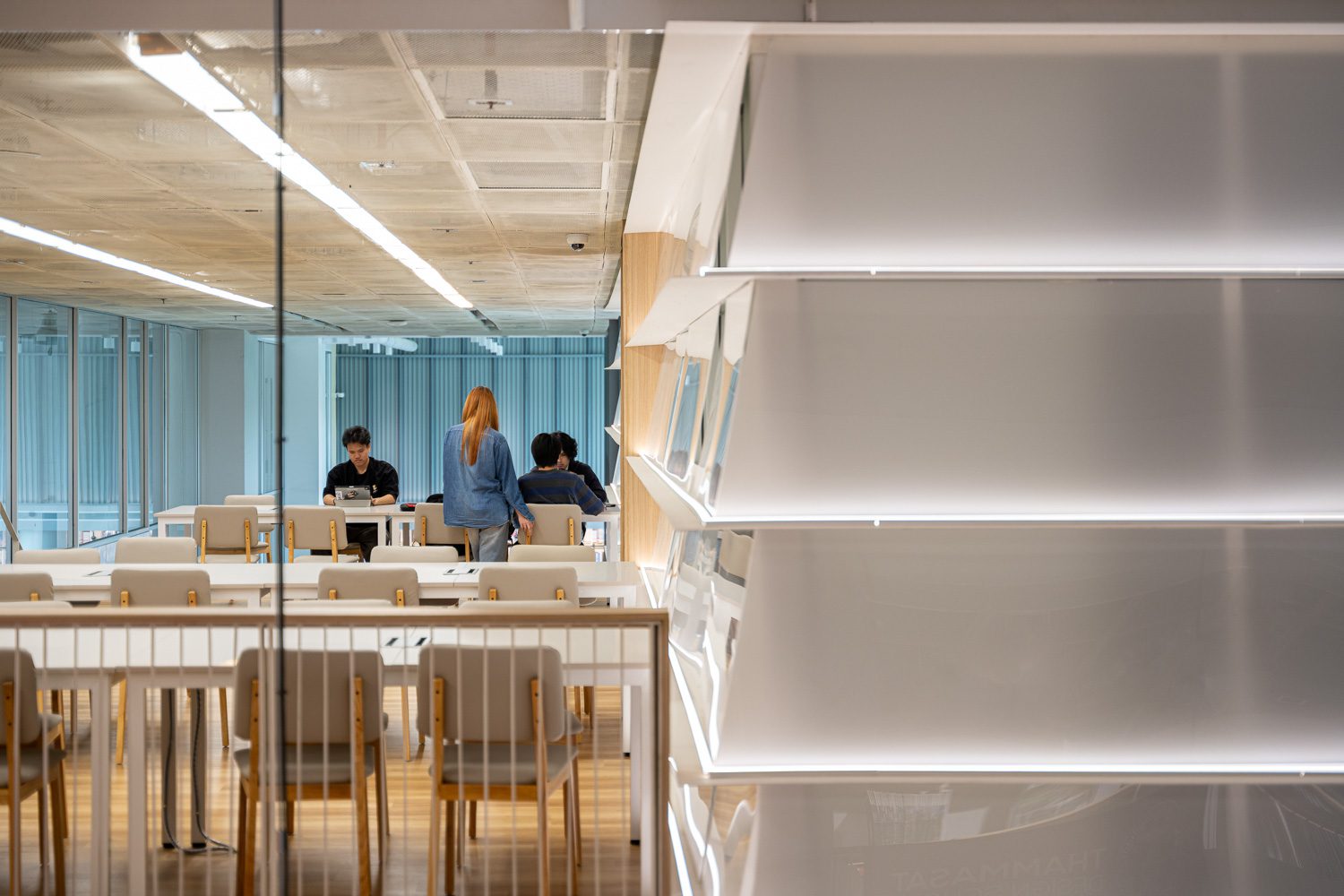
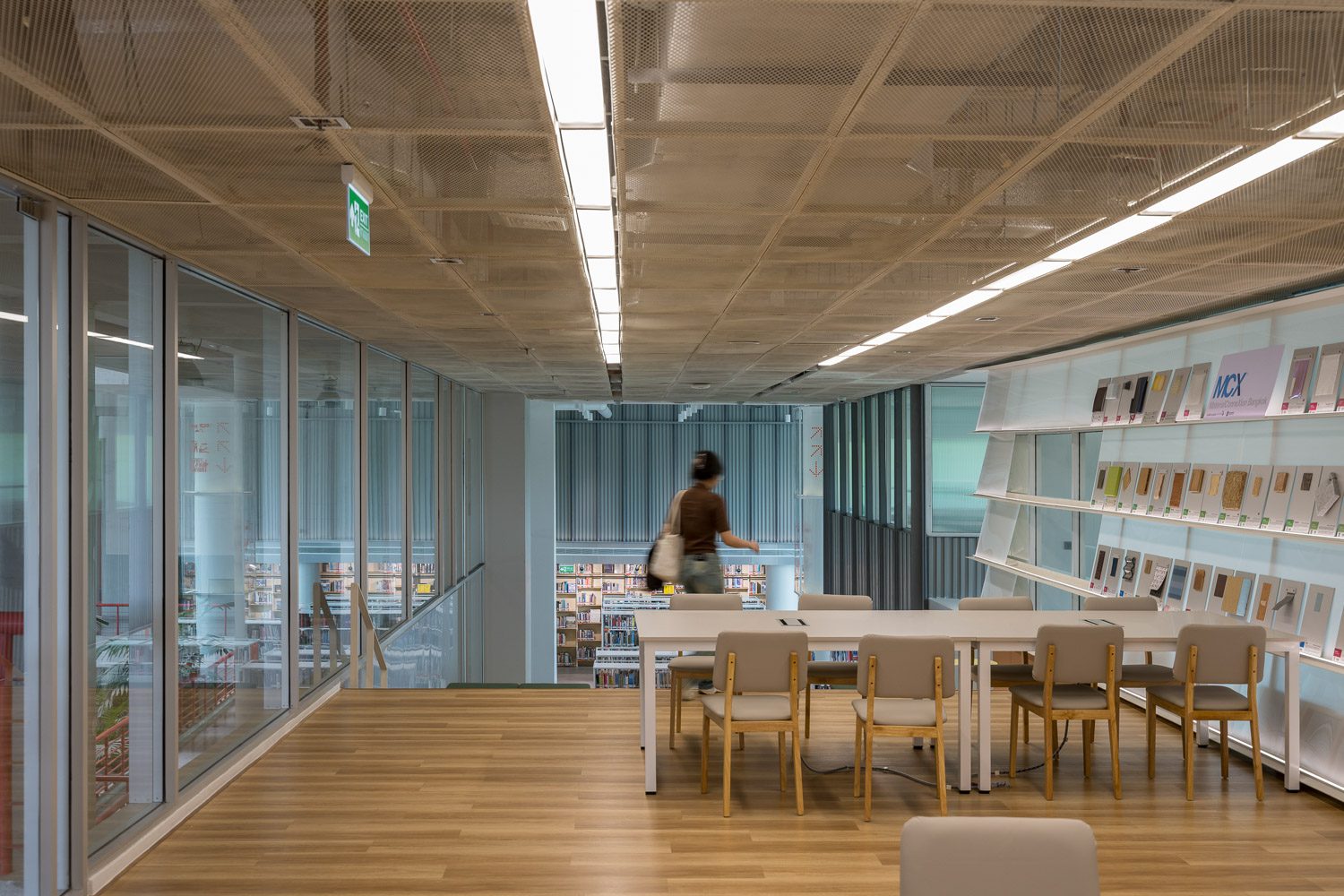
Ascending the staircase to the mezzanine leads to the third zone, a series of enclosed reading rooms surrounded by glass walls that allow light to enter while keeping outside noise at bay. This area is conceived as a sanctuary for reading. The architects divided it into three distinct rooms: the first offers a traditional reading experience, with tables and chairs arranged for focused study; the second invites a more relaxed mode of reading, furnished with low cushions and informal backrests that allow users to sit or recline comfortably in a quieter, more introspective atmosphere than the open staircase seating below.
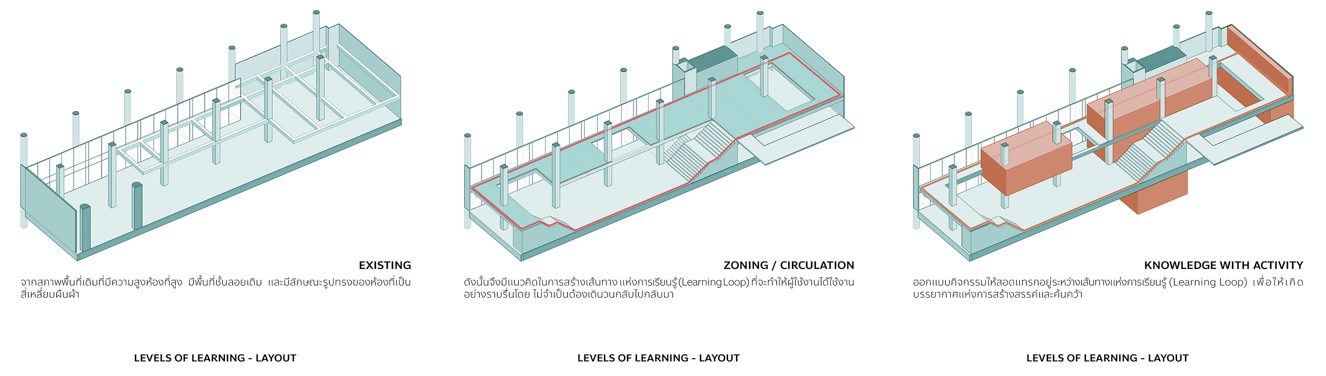
To further encourage cross-disciplinary learning, the designers introduced spatial interaction through circulation. The library’s internal pathway forms a continuous loop, allowing users to move fluidly through every zone and activity, be it browsing, discussion, or reading, before naturally returning to the starting point without retracing their steps.
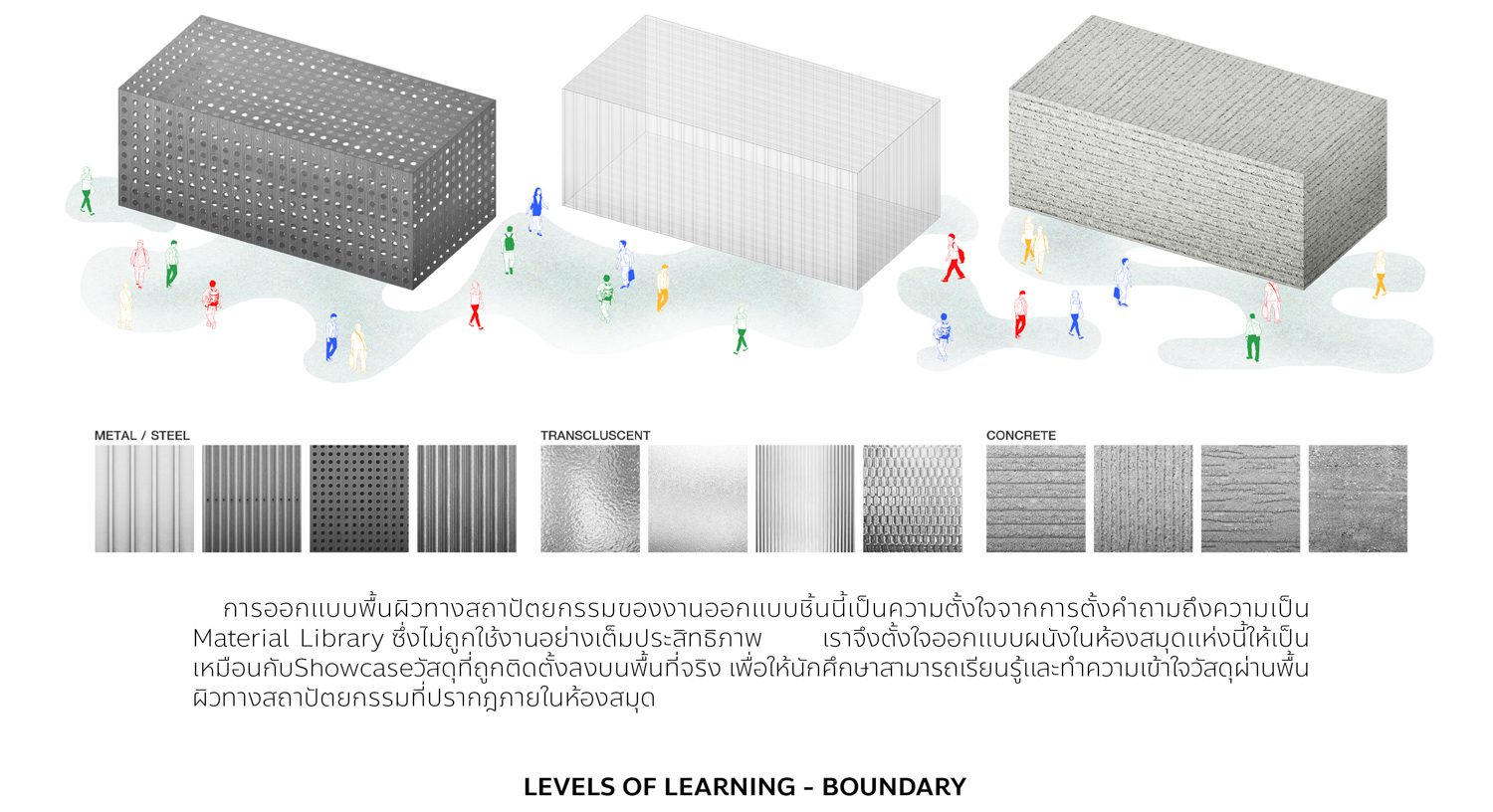
Beyond the creation of spaces that invite new interpretations of use, the architects also reinforced functionality through the thoughtful application of three primary materials, each corresponding to specific spatial behaviors and levels of activity.
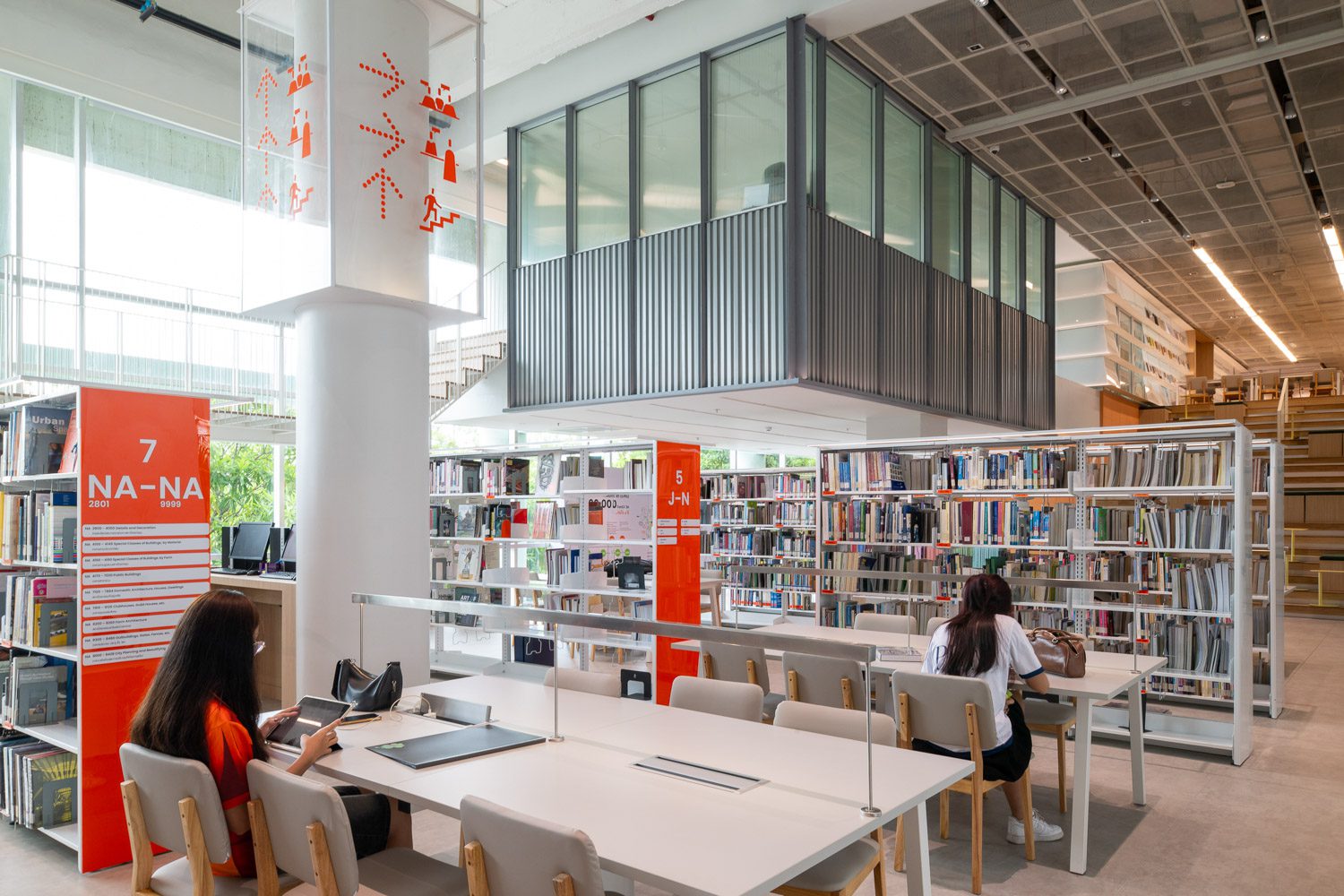
The first material is corrugated steel panels, which form much of the interior wall surfaces. These metal sheets, finished in varying textures and degrees of opacity, define areas that require clear separation or heightened concentration. Their solidity provides a sense of enclosure and focus, subtly guiding users toward quieter, more introspective zones.
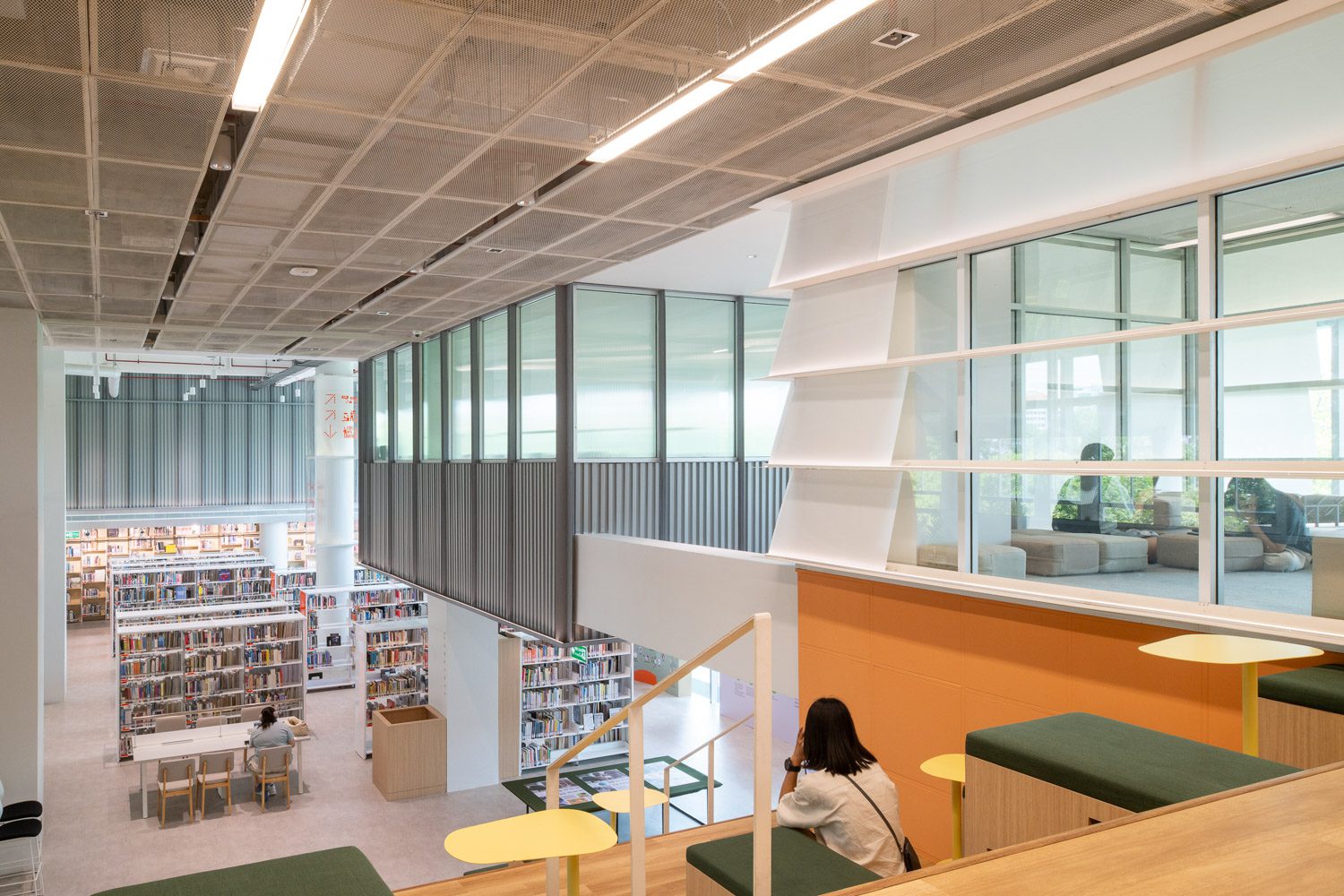
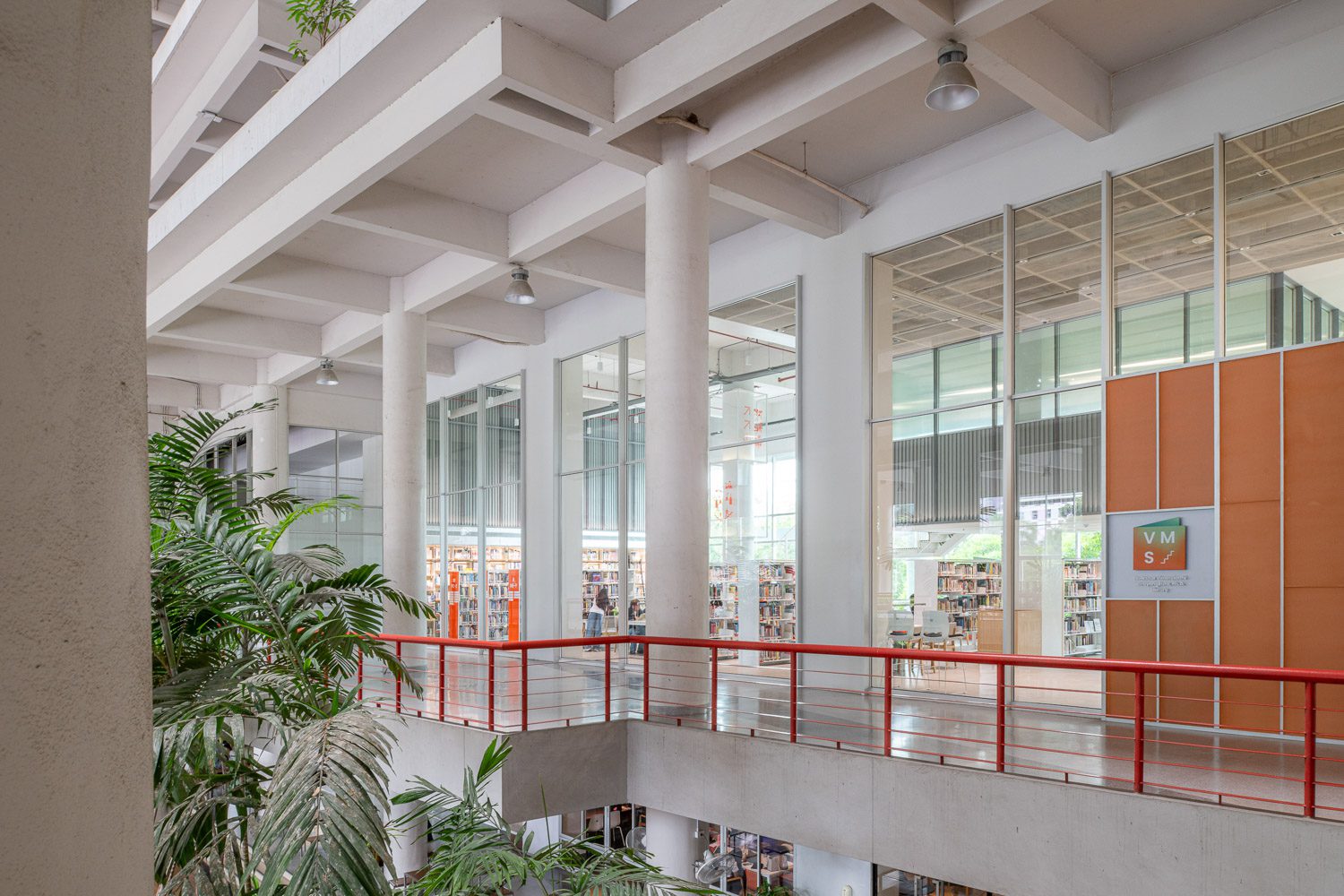
The second material category encompasses transparent and translucent surfaces, used in areas that demand visual connection with their surroundings. Clear glass is employed where visual continuity and openness are essential, while frosted or semi-translucent panels are introduced in spaces requiring privacy and concentration yet still benefiting from the gentle diffusion of natural light within.
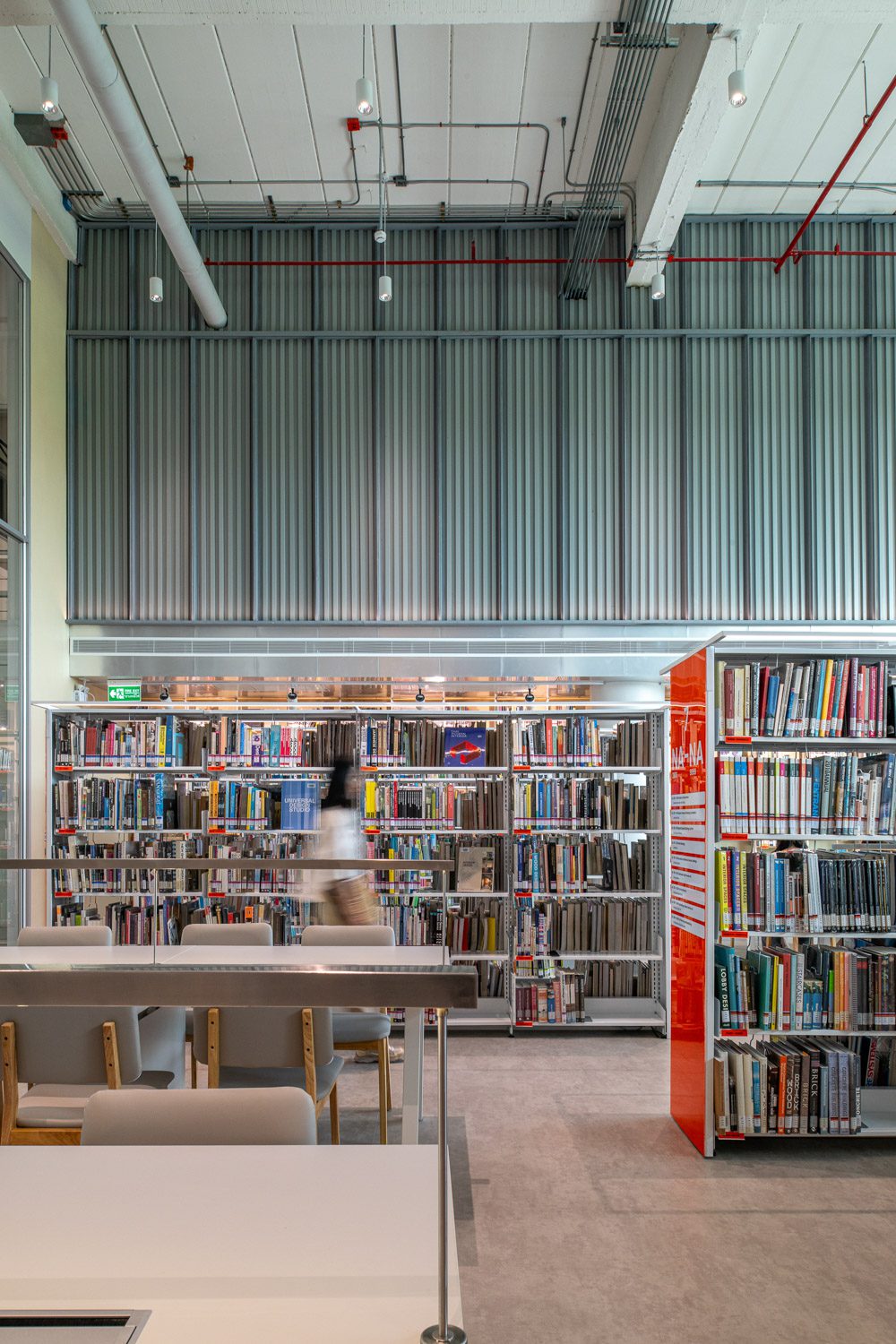
The final material, chosen to convey a sense of weight and formality, is concrete. In the overall composition, the library exhibits a rich material diversity where each surface, texture, and finish is intentionally varied. This diversity serves not only an aesthetic or functional purpose but also an educational one: to familiarize design students with the materials they will one day select and manipulate in their own professional practice. Ultimately, what the architects propose is a space for exploration and reinterpretation that invites users to engage, adapt, and redefine the act of reading itself. The design encourages flexibility and play, reflecting the evolving habits of Generation Z, while inspiring users to question, observe, and contemplate the built environment around them.
facebook.com/wireknotstudios
facebook.com/arch.nonsense
facebook.com/Junnarchitect