DERSYN STUDIO DESIGNED CRANE COUPLE, A HOUSE THAT TRANSLATES THE NEEDS OF A MULTI-GENERATIONAL FAMILY INTO AN L-SHAPED LAYOUT SURROUNDING A COURTYARD, CREATING A PERFECT BALANCE BETWEEN SHARED LIVING AND PRIVACY
TEXT: NATHATAI TANGCHADAKORN
PHOTO: NANTIYA BUSABONG
(For Thai, press here)
Featured Product
LAMITAK
S WINTECH

A house is an architectural construct made for its inhabitants, and a large house is never designed for a single occupant alone. Weaving together multiple requirements into a coherent whole is therefore a central part of the architect’s responsibility. Crane Couple, a 1,665-square-meter residence by Dersyn Studio in Buriram Province, exemplifies this challenge. The project began with the idea of the house as a shared ground, one that brings together the lives of children, working adults, and the elderly within a single architectural framework.
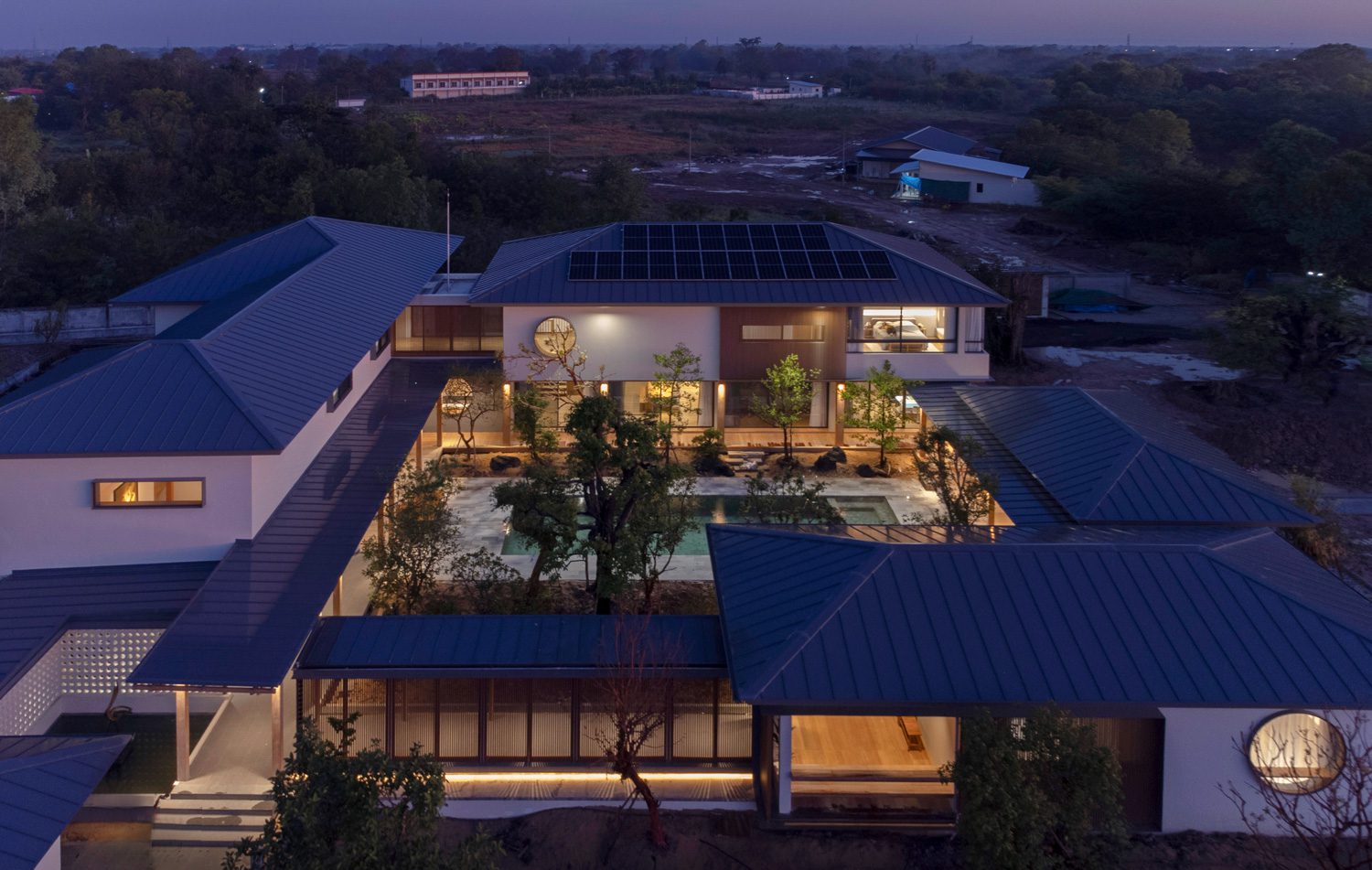
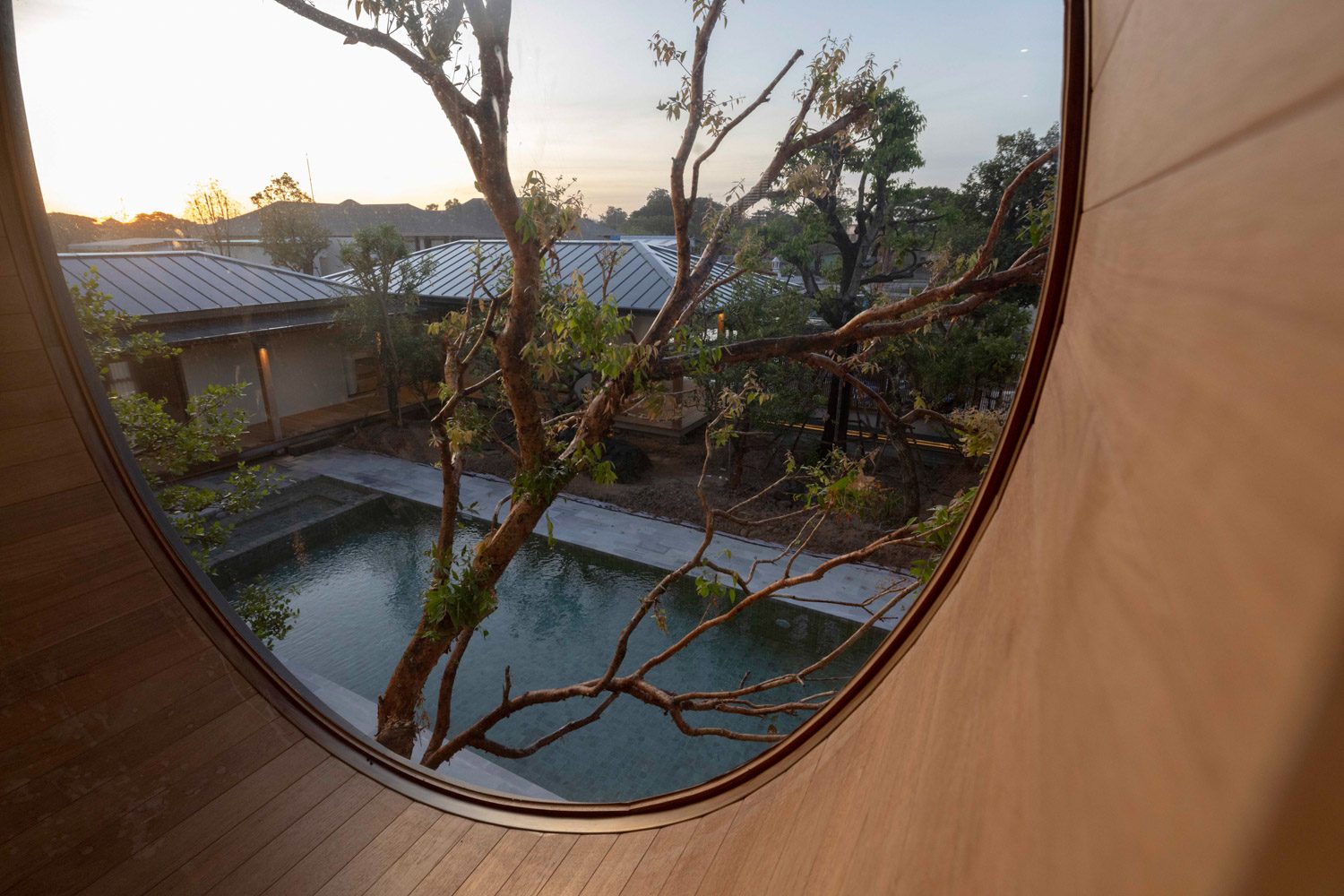
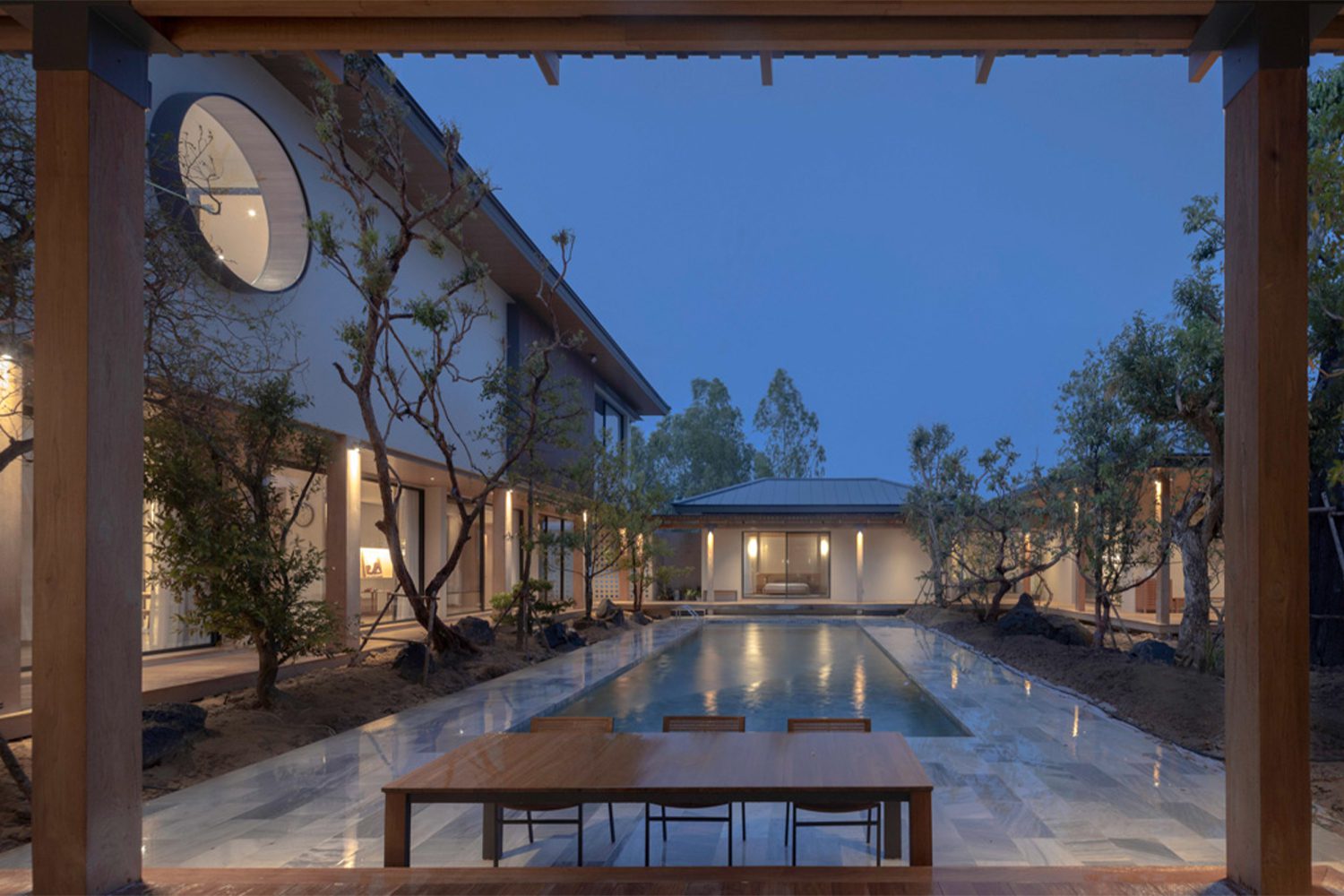
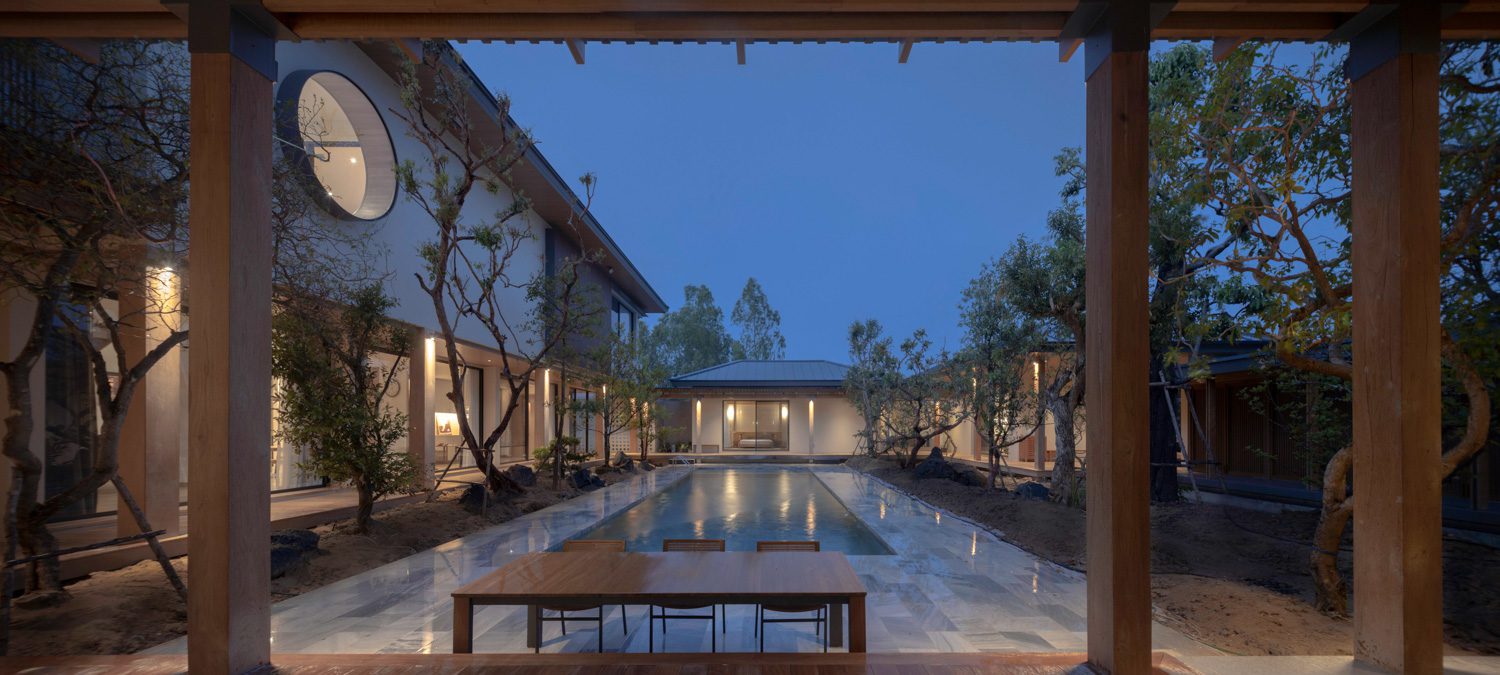
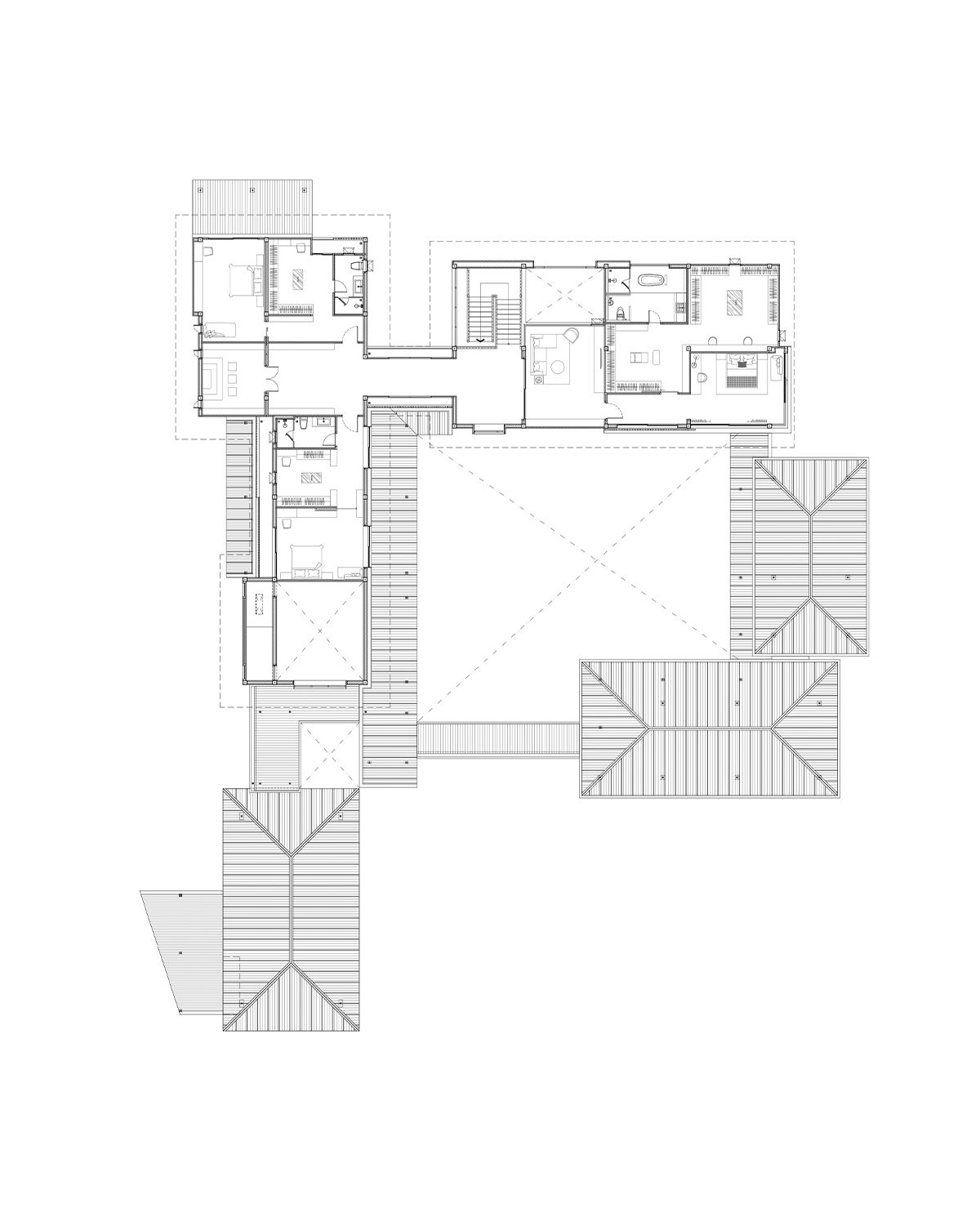
The household comprises a married couple, their two sons, and a respected elder relative closely connected to the family. As such, the house needed to accommodate people of all ages while still providing appropriate degrees of privacy for each. The plan resolves this complexity by unfolding into two distinct zones. The first is a two-story building for the parents and children; the second is a single-story residence for the aunt, for whom stairs are no longer convenient. Both volumes are arranged in L-shaped forms, embracing a central courtyard and swimming pool laid out as a rectangular core that binds the two parts together.
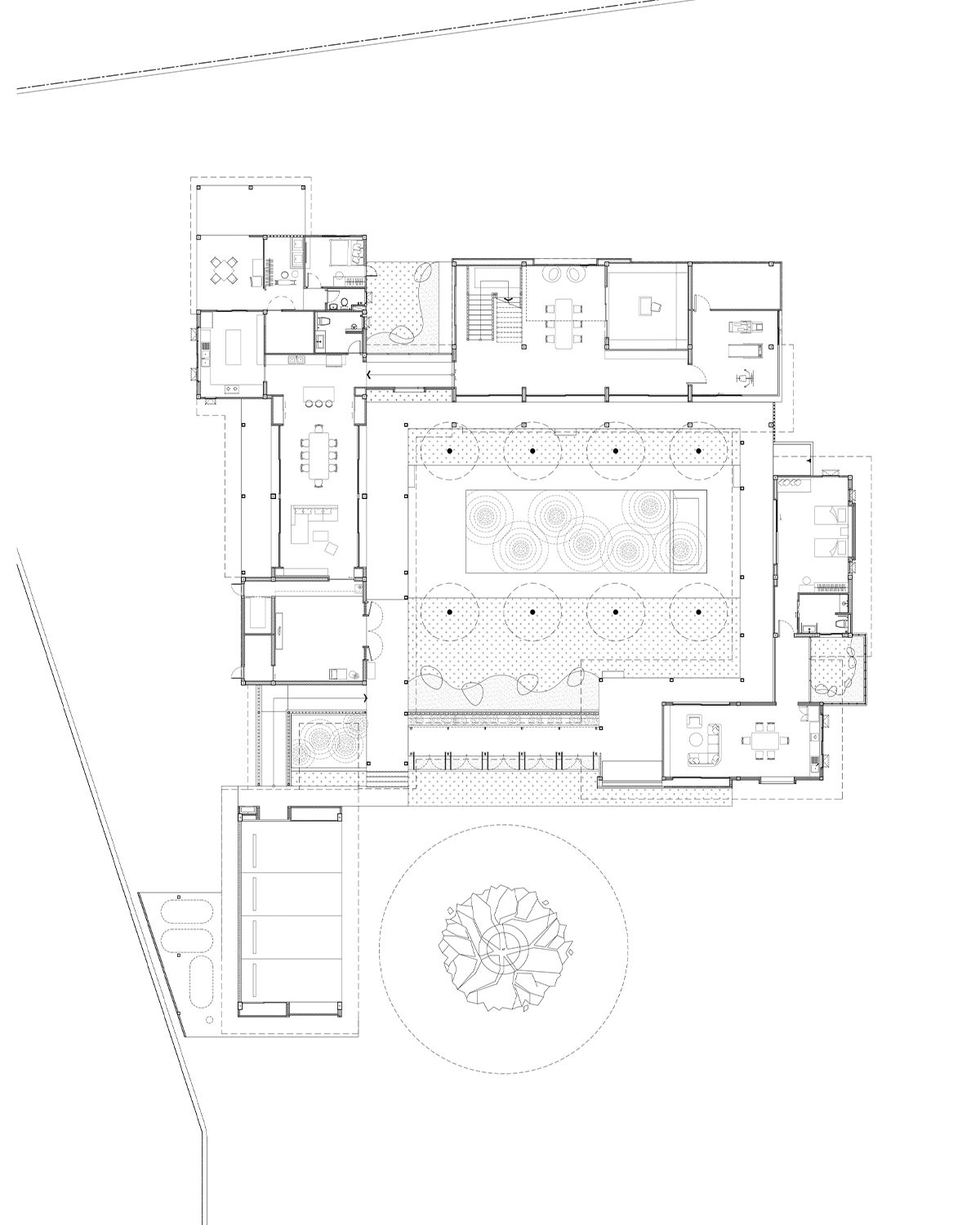
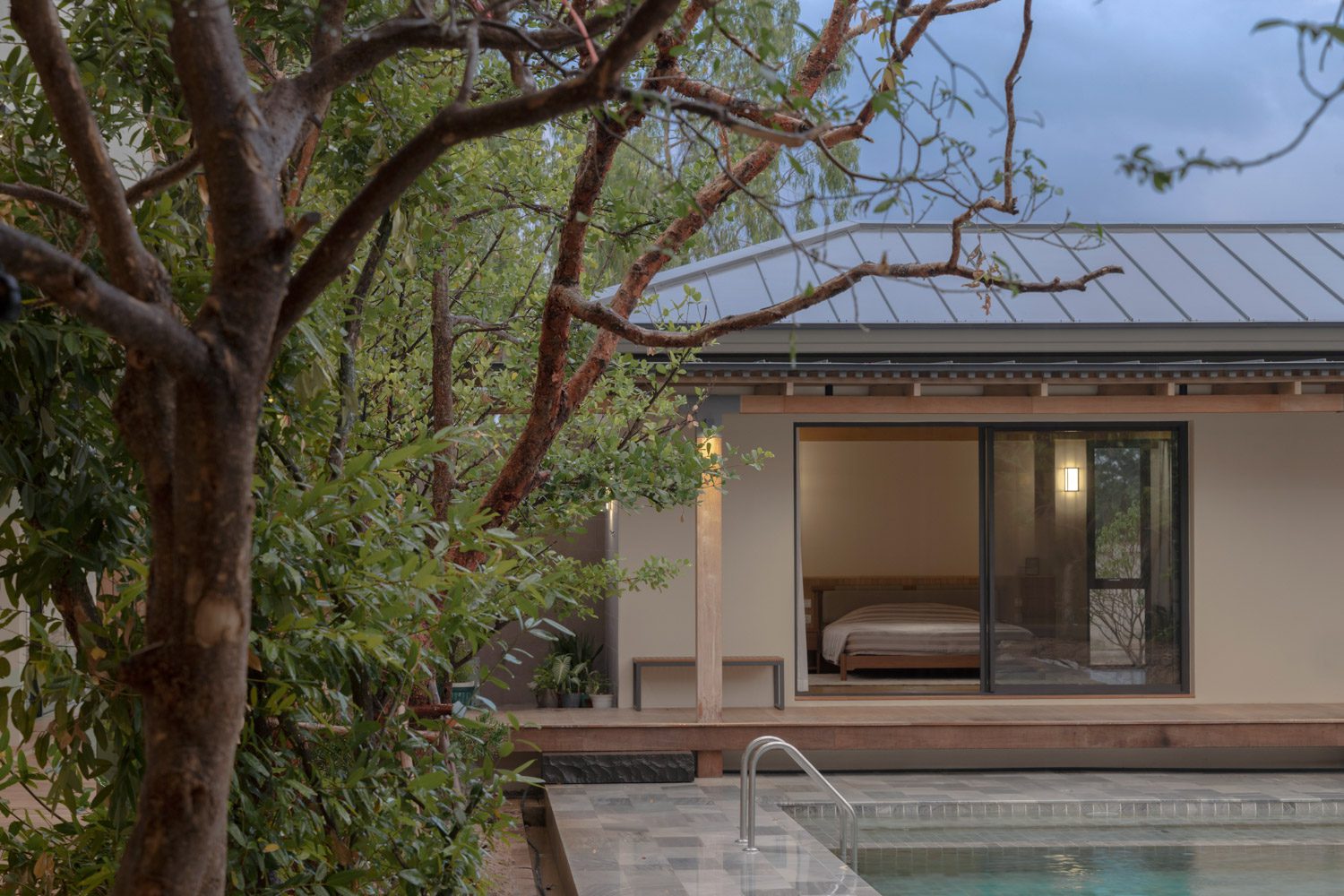
The concept of the project is articulated as ‘Inside-out, Outside-in.’ Beyond achieving privacy through clear zoning, the house is designed to foster visual connections and easy accessibility, ensuring that the elderly can move through daily life with confidence and safety. Although the aunt’s bedroom is located on the opposite side from the parents’ and children’s living quarters, sight lines extend across the open swimming pool, allowing the spaces to remain visually connected. At the same time, the aunt’s everyday living areas, such as the kitchen and sitting room, are discreetly tucked behind permeable timber screens, allowing each member of the family to go about their daily routines independently and comfortably during the day.
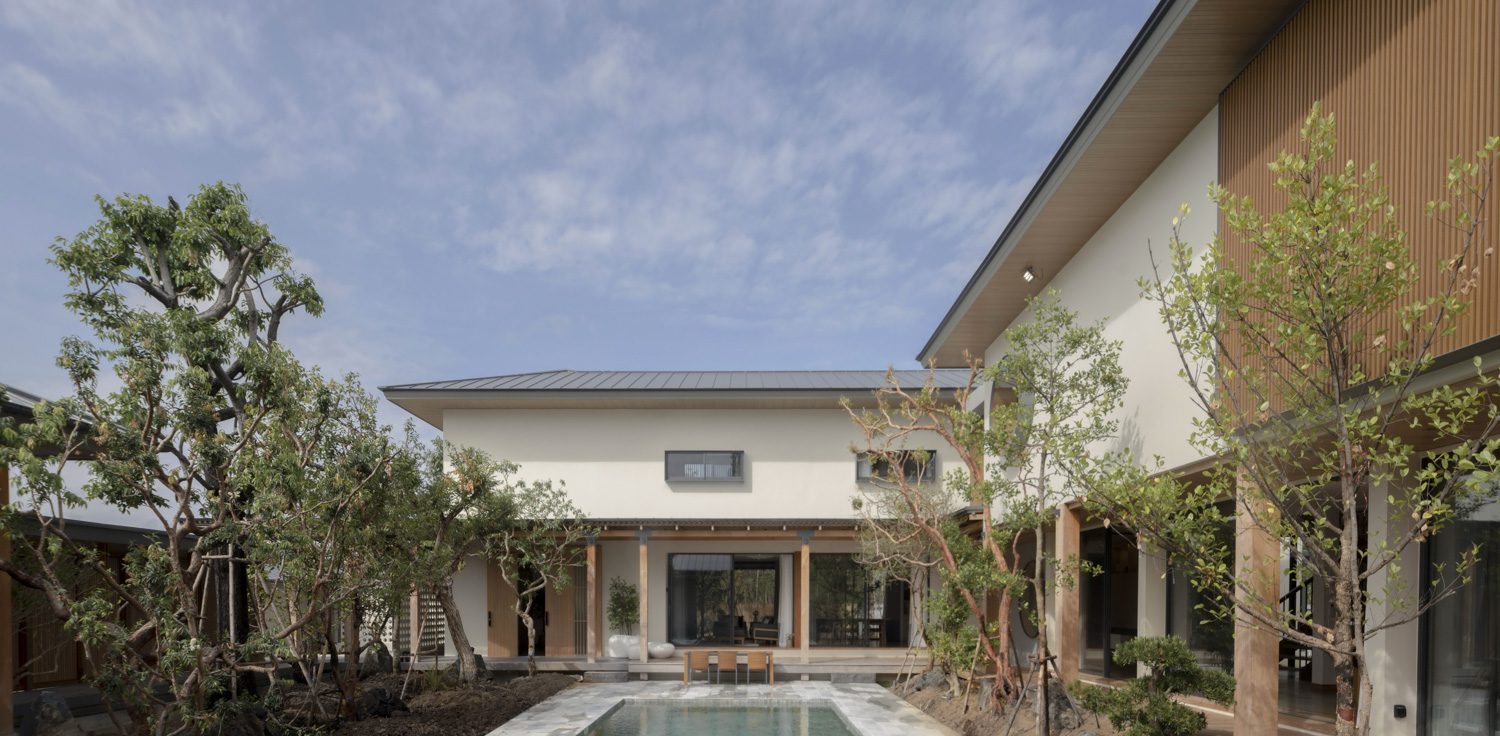
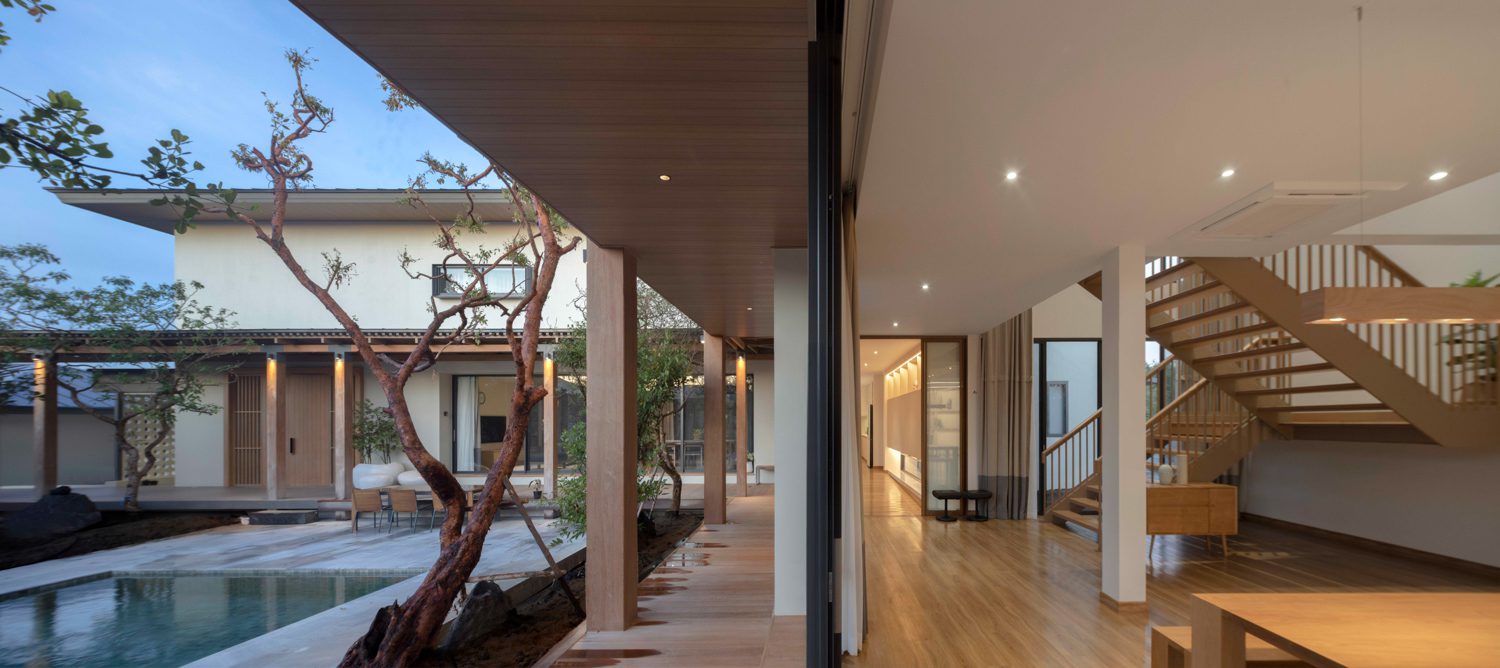
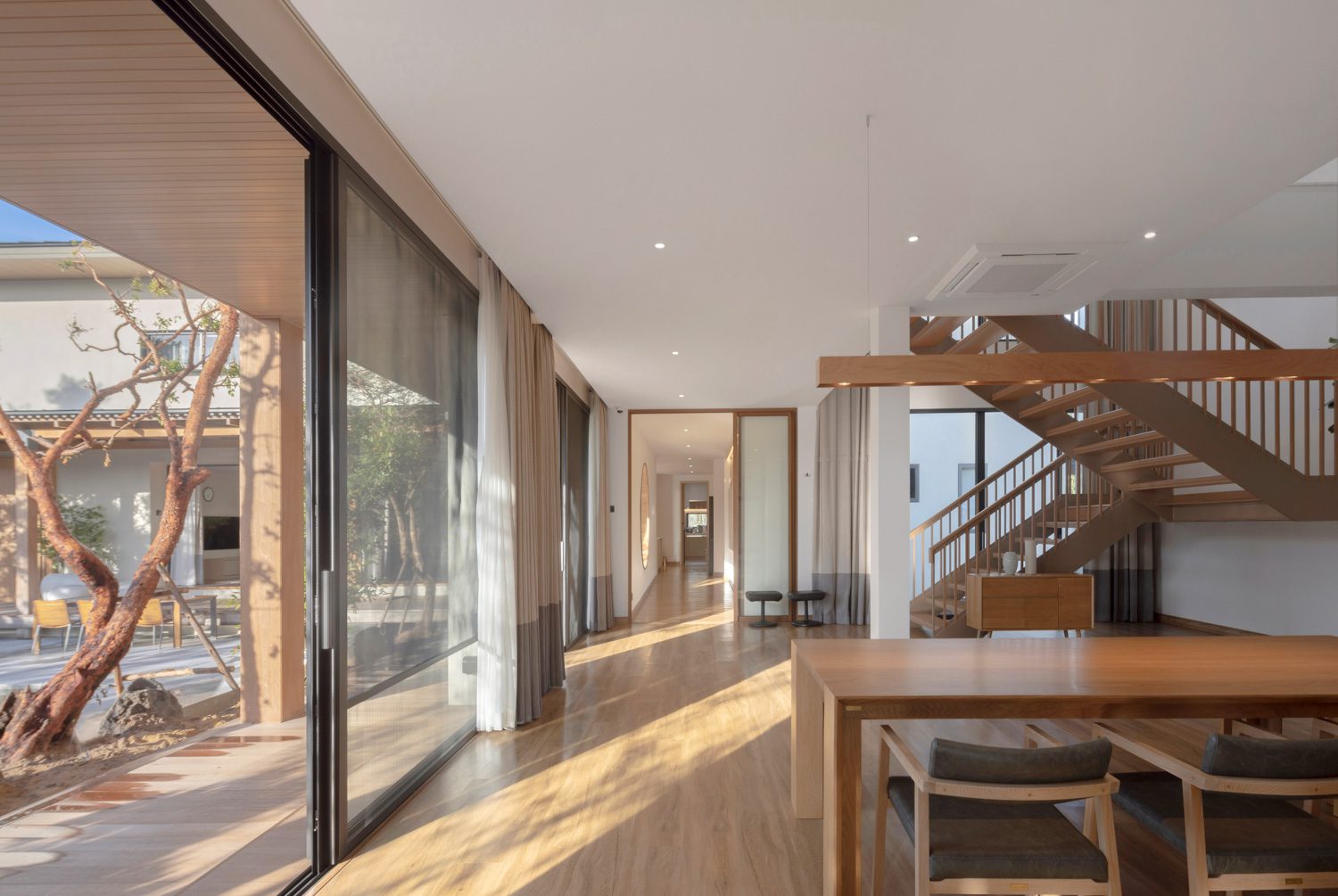
Seen from another perspective, this concept also speaks to the relationship between the inhabitants and their surrounding environment. Crane Couple is punctuated by a series of small private courtyards, strategically inserted to create separation between different functions. These courtyards are paired with semi-outdoor corridors and shaded verandas that wrap around the house. Such secondary spaces directly inform the placement and character of the openings. On the ground floor, large windows and glass walls are set back beneath deep eaves, opening generously to admit natural light and views. By contrast, openings on the second floor are limited to what is strictly necessary; rooms that require daylight are screened with timber louvers to temper heat and glare.
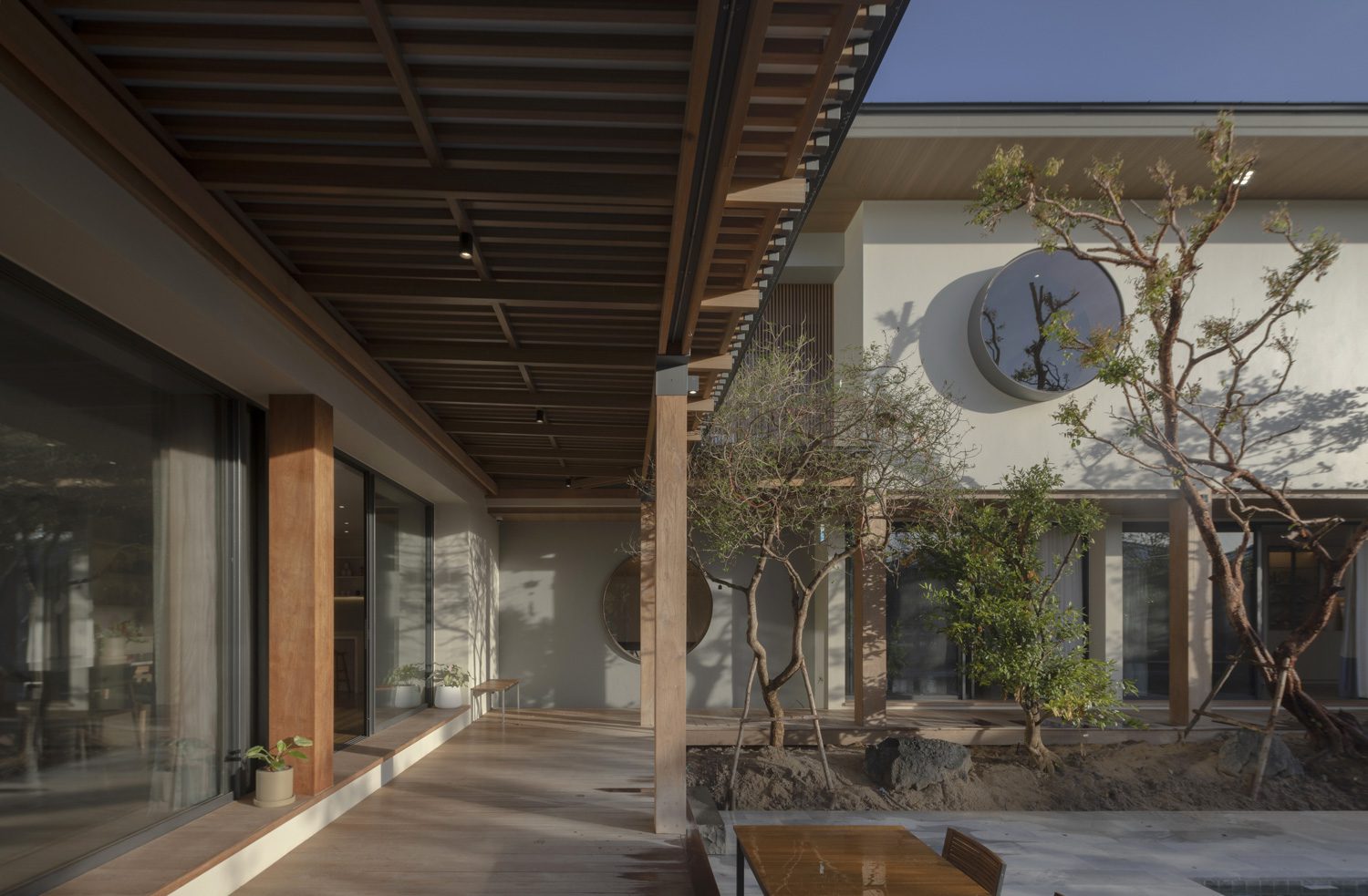
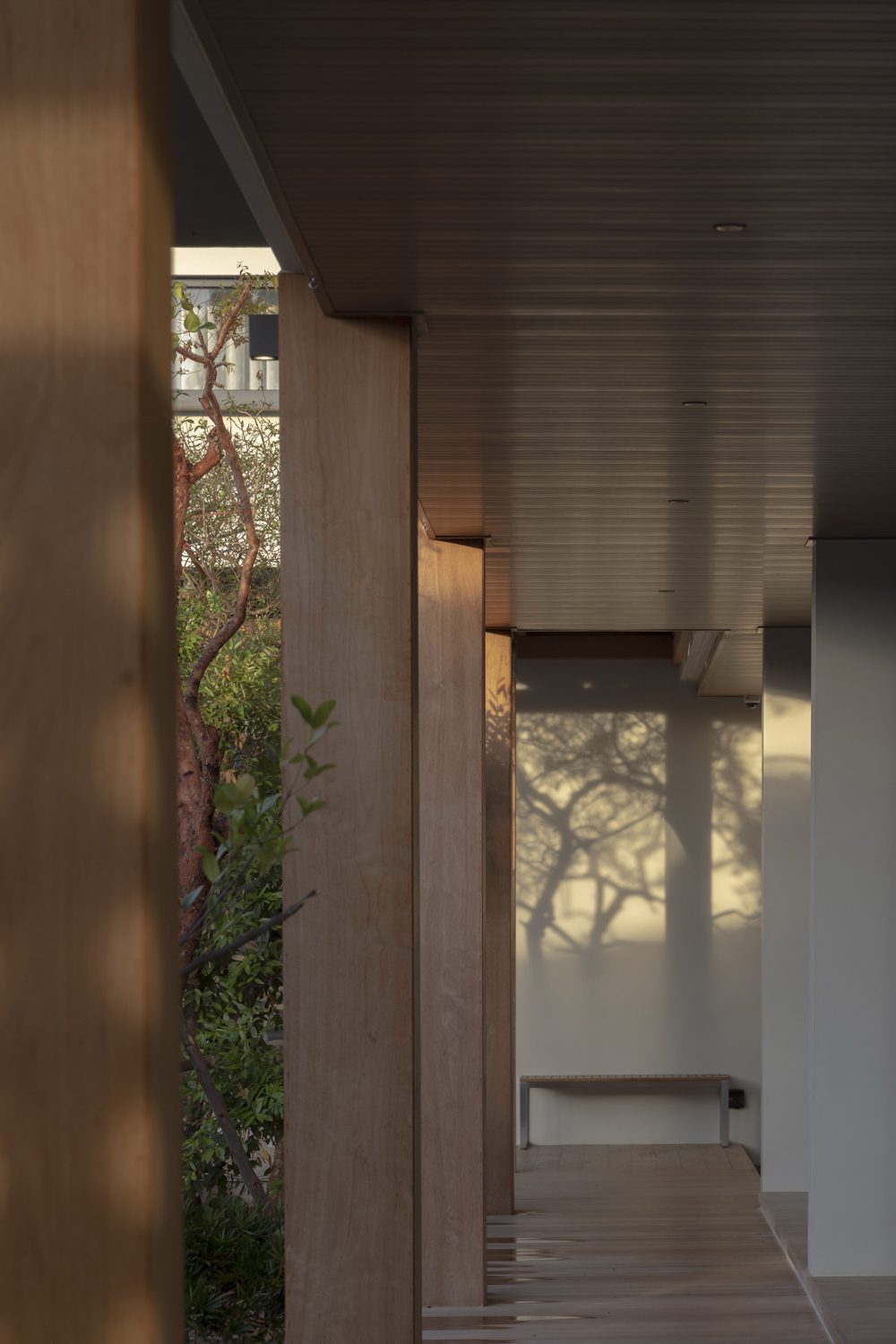
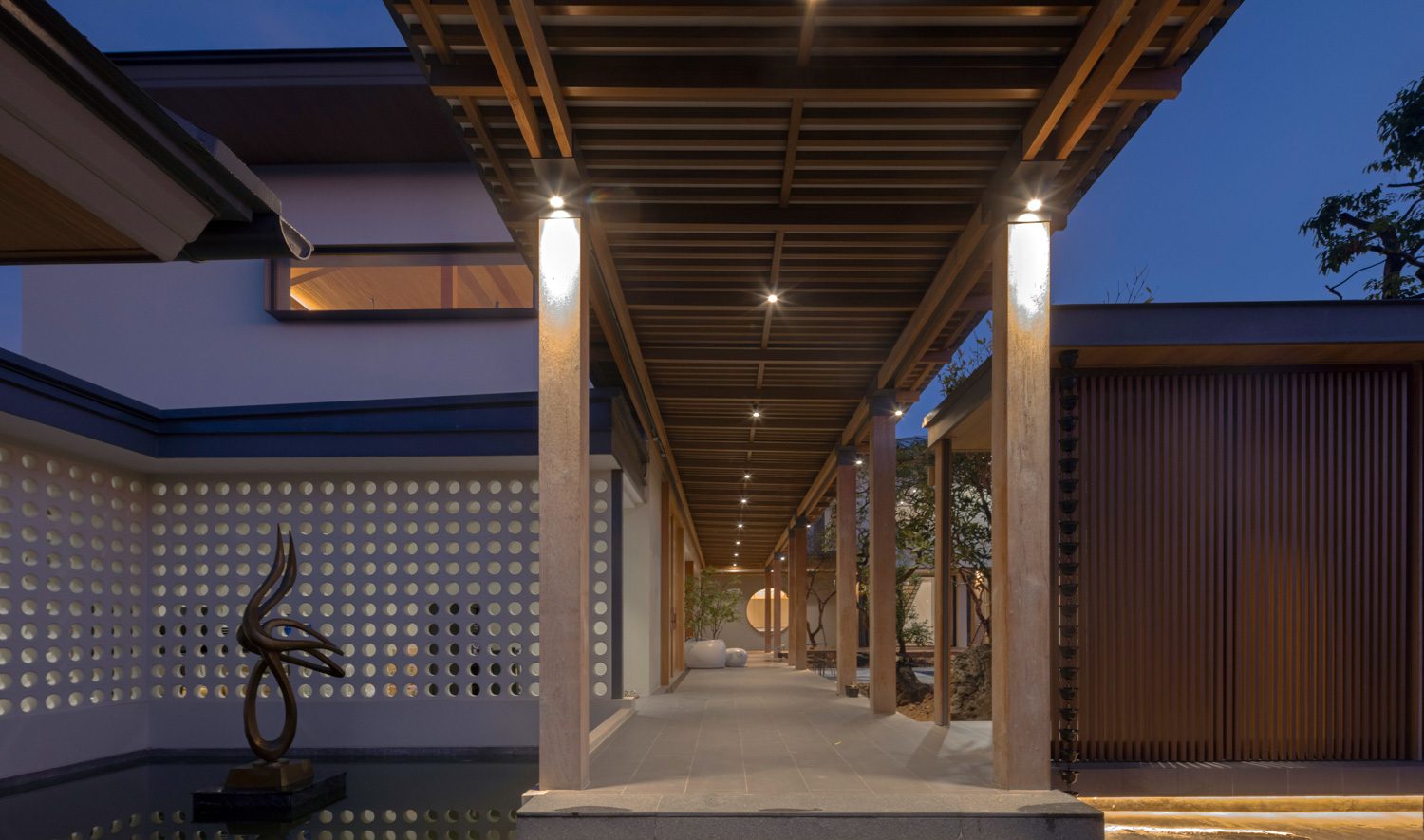
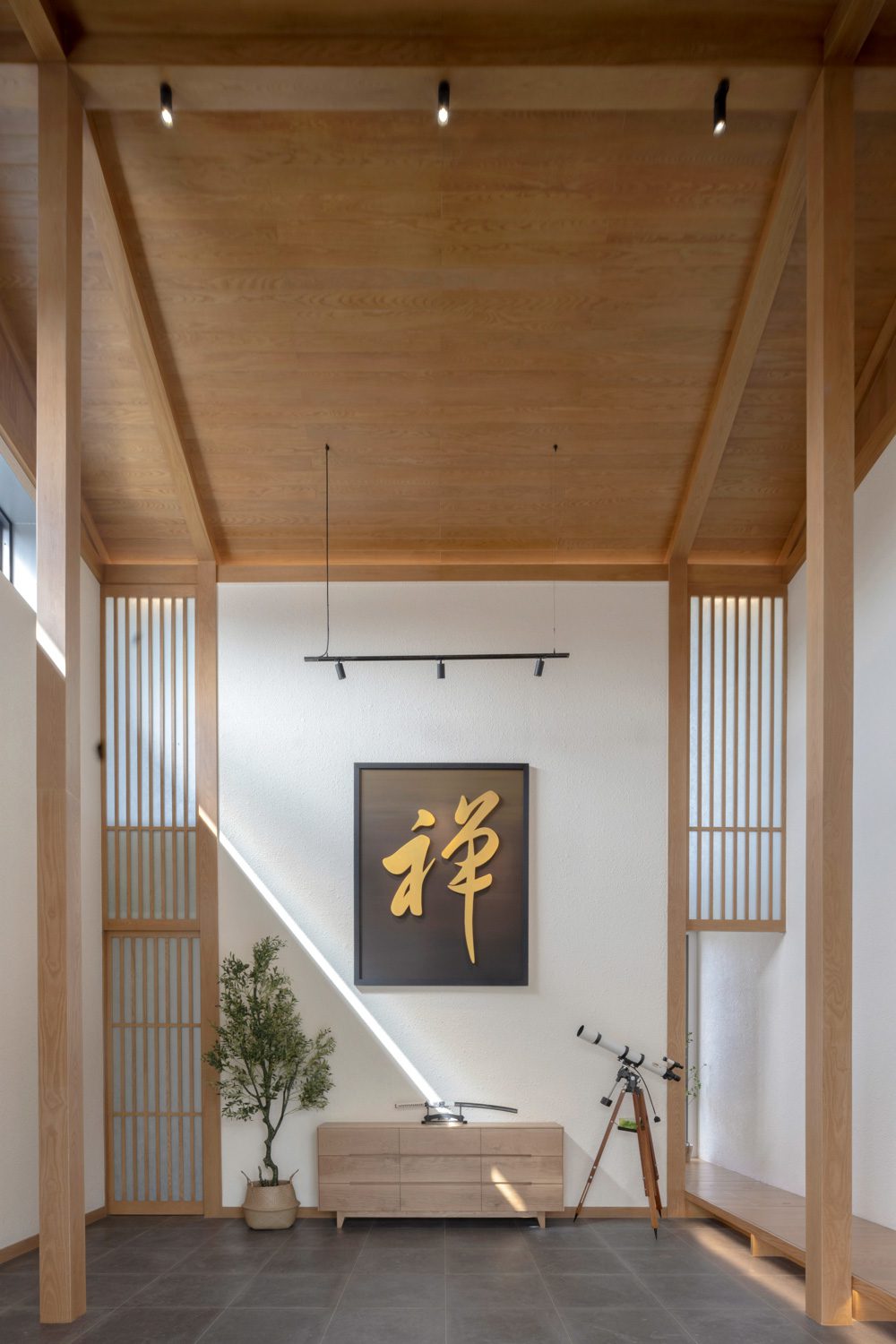
Another defining quality of the house lies in its Japanese-inspired aesthetic, a shared preference of the Thai homeowner and his Taiwanese wife. This sensibility ultimately became the guiding direction of the design. Timber and white surfaces, the two principal elements, are paired to create an atmosphere of calm that is also quietly warm. Beyond appearance, Dersyn Studio further infuses the house with moments of spatial scale inspired by Japanese domestic architecture. While Crane Couple may appear expansive from the inside, it is in fact carefully calibrated around well-being and appropriate use. The sole exception is the main reception hall, where the ceiling is lifted to a height of 5.5 meters, creating a dramatic highlight intended for guests from outside the household.
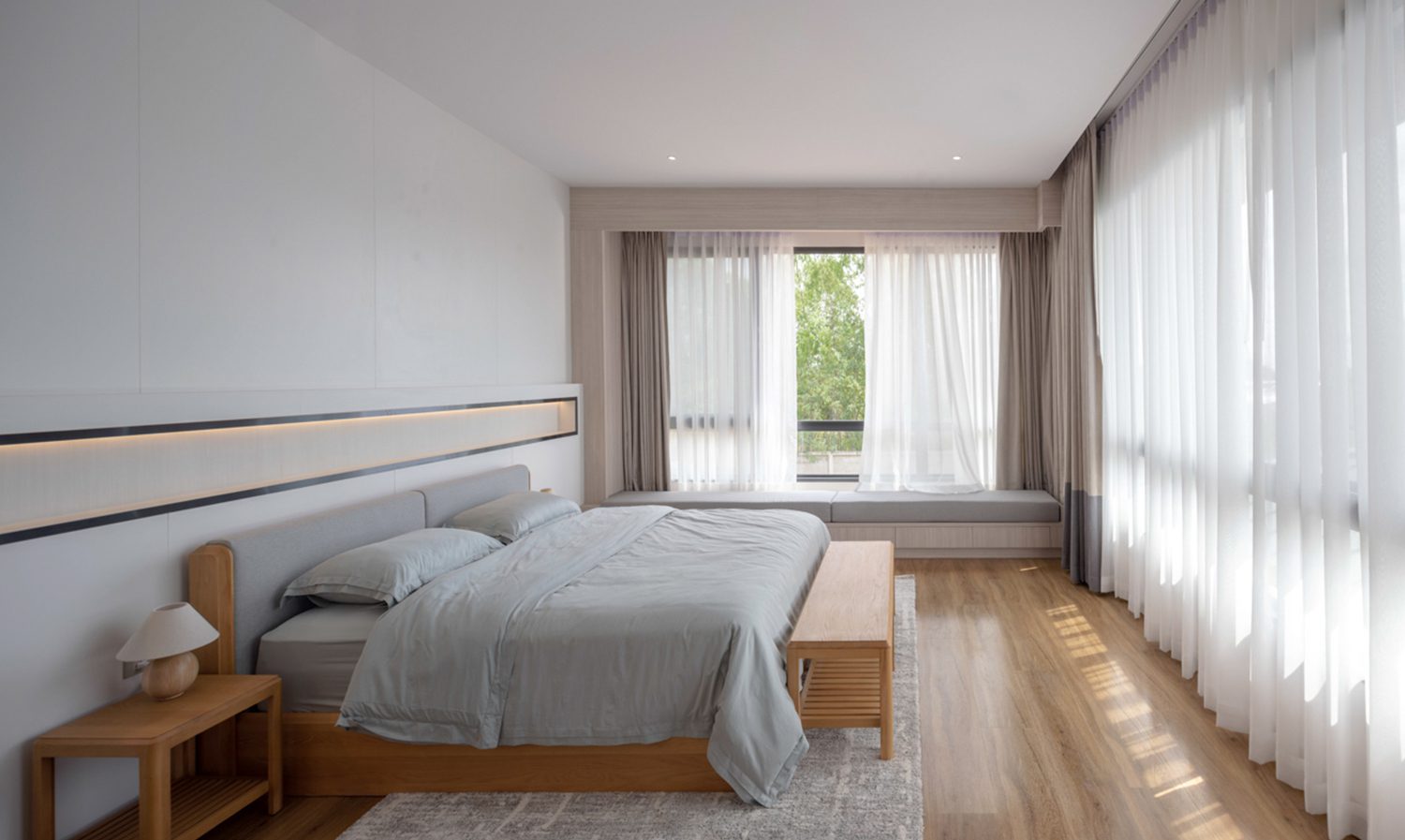
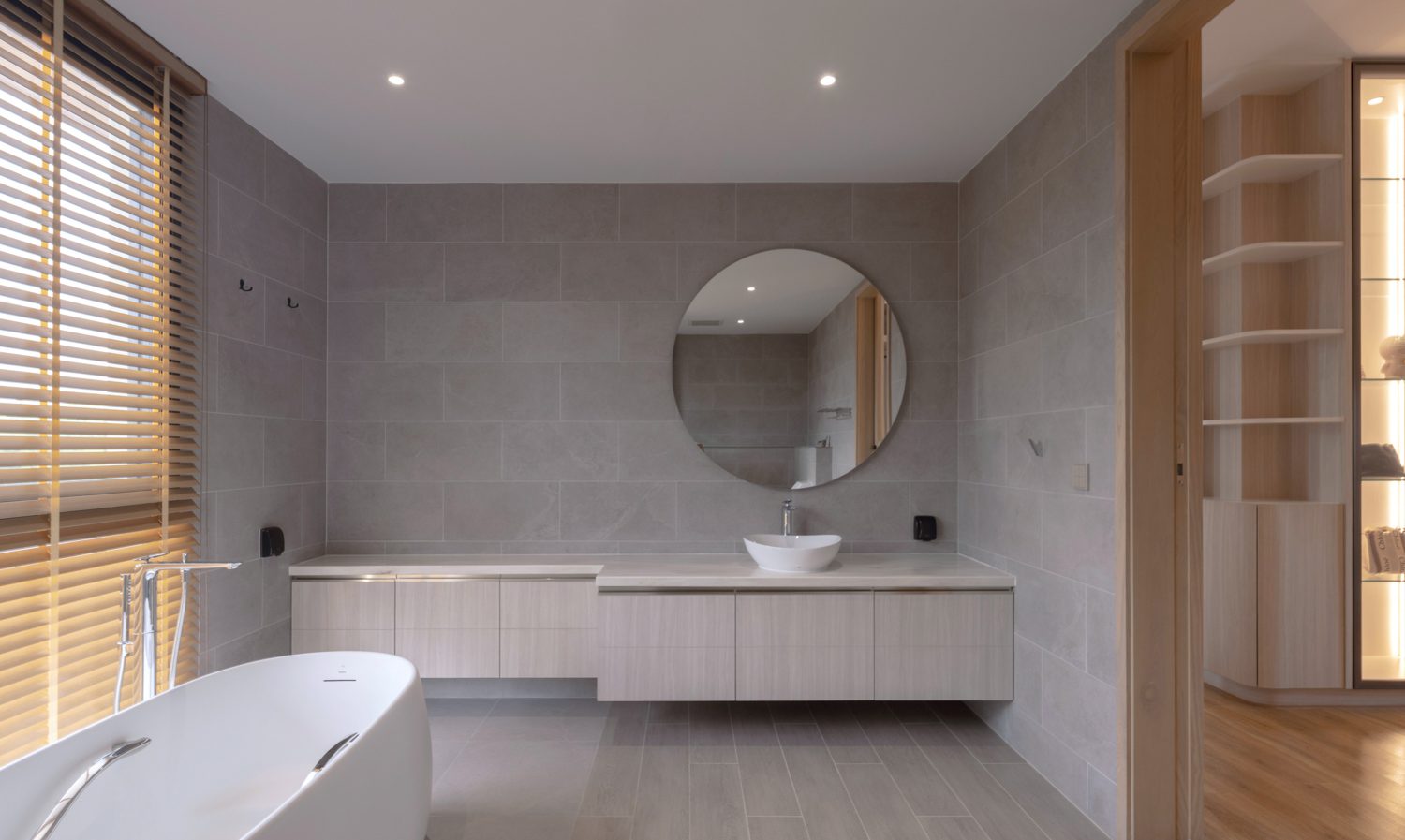
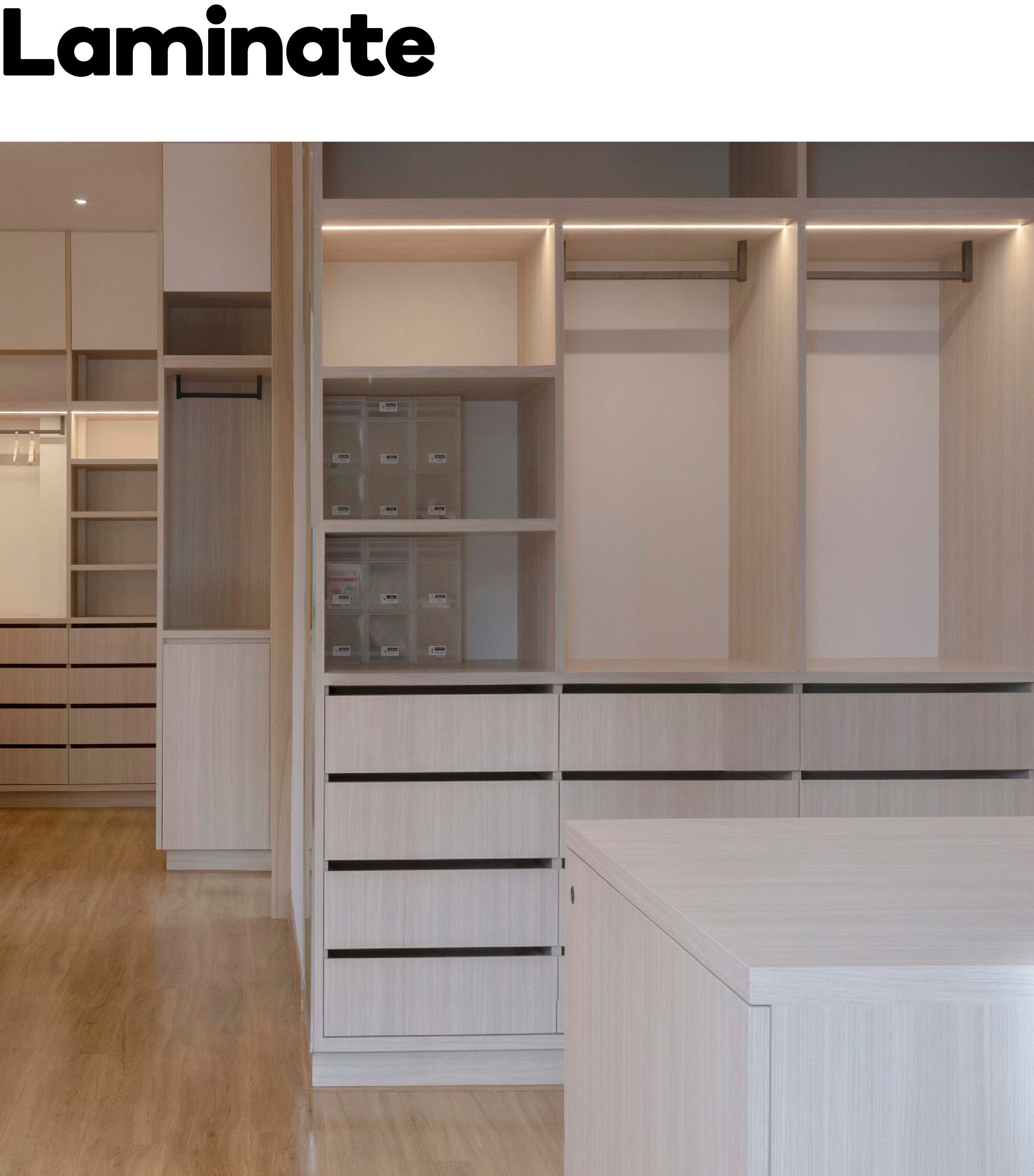
As the residents include both children and elderly family members, all interior materials and frequently touched surfaces were selected to be either solid wood or materials with low chemical emissions. Areas beyond direct human reach are finished with materials that are easy to maintain. In the aunt’s quarters in particular, level changes are kept to a minimum, and handrails are installed continuously throughout. This reflects a further step of forward thinking: from the moment the design began, through construction and completion, health and time do not wait for anyone. A user who is able to walk independently today may one day require spaces that comfortably accommodate a wheelchair.
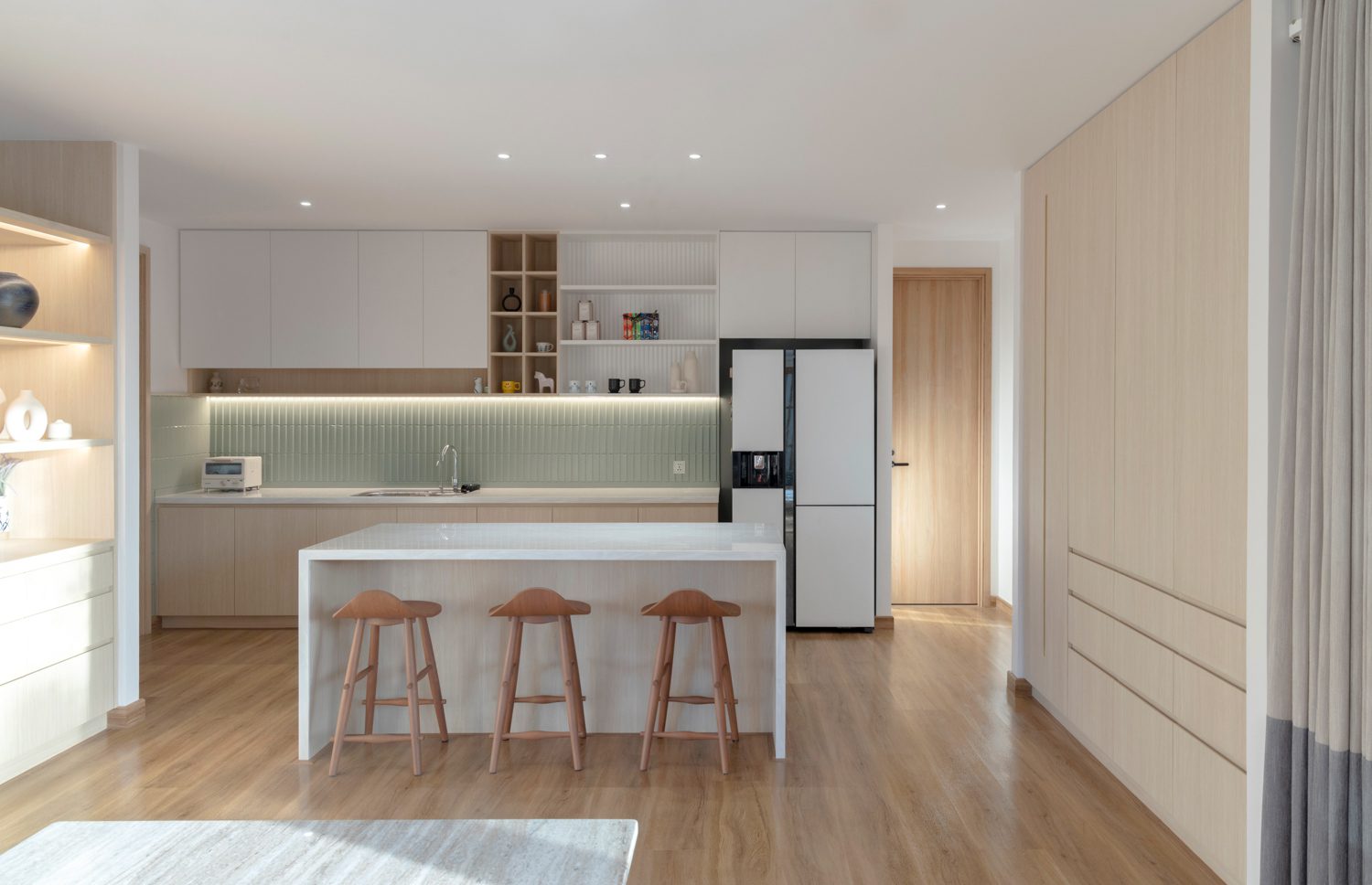
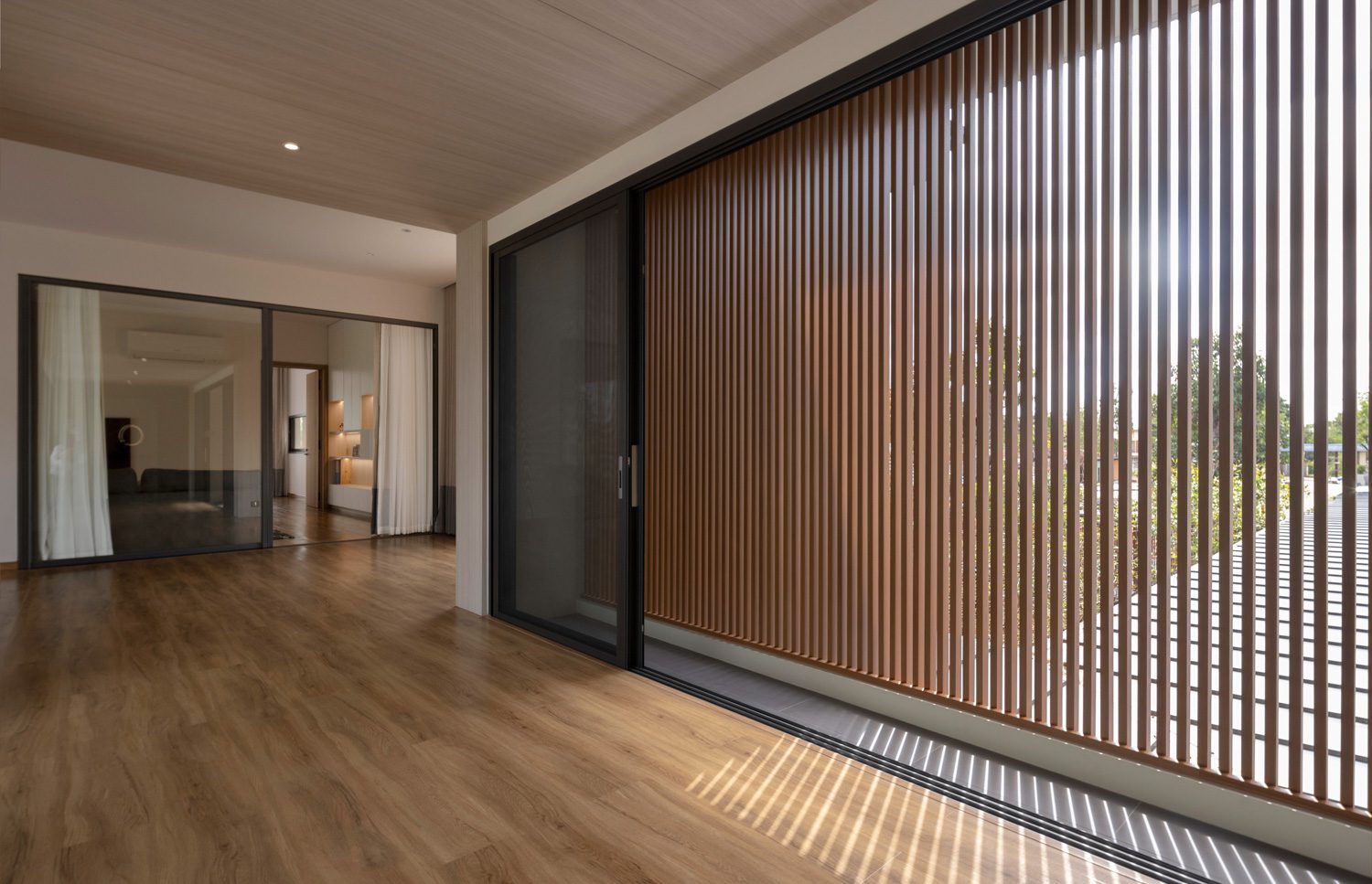
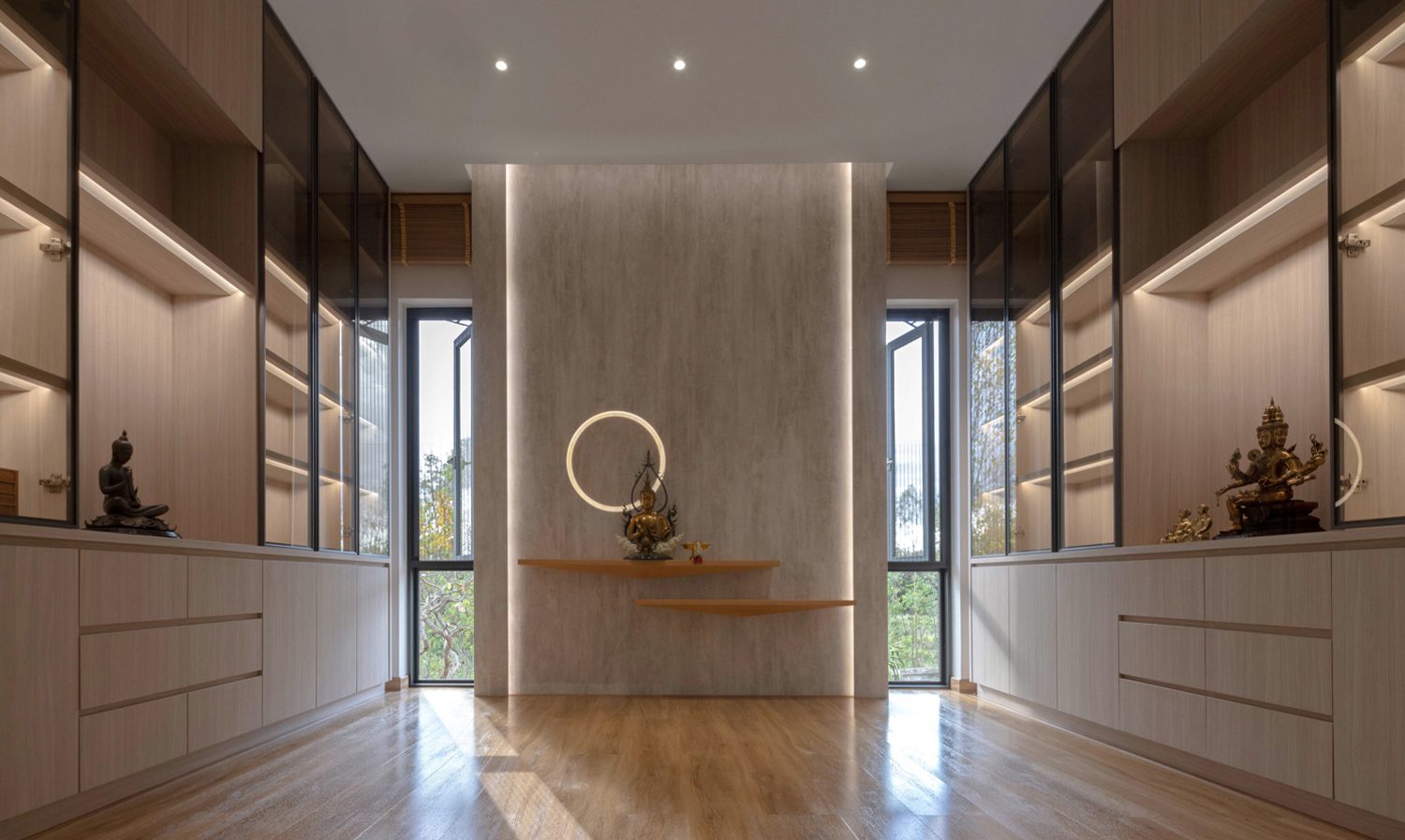
Crane Couple brings together a wide range of spaces shaped directly by the homeowners’ requirements and daily habits. These include dedicated rooms for assembling and displaying models, as well as multiple kitchens and dining areas, reflecting a shared love of cooking between the wife and the aunt. Most importantly, the house is never short of spaces that invite its inhabitants to stay closely connected to nature. All of these elements coexist in a balanced and harmonious manner, each finding its place within clear boundaries. Framed by a refined and composed exterior, the house achieves a sense of completeness that feels simply right and entirely sufficient.