
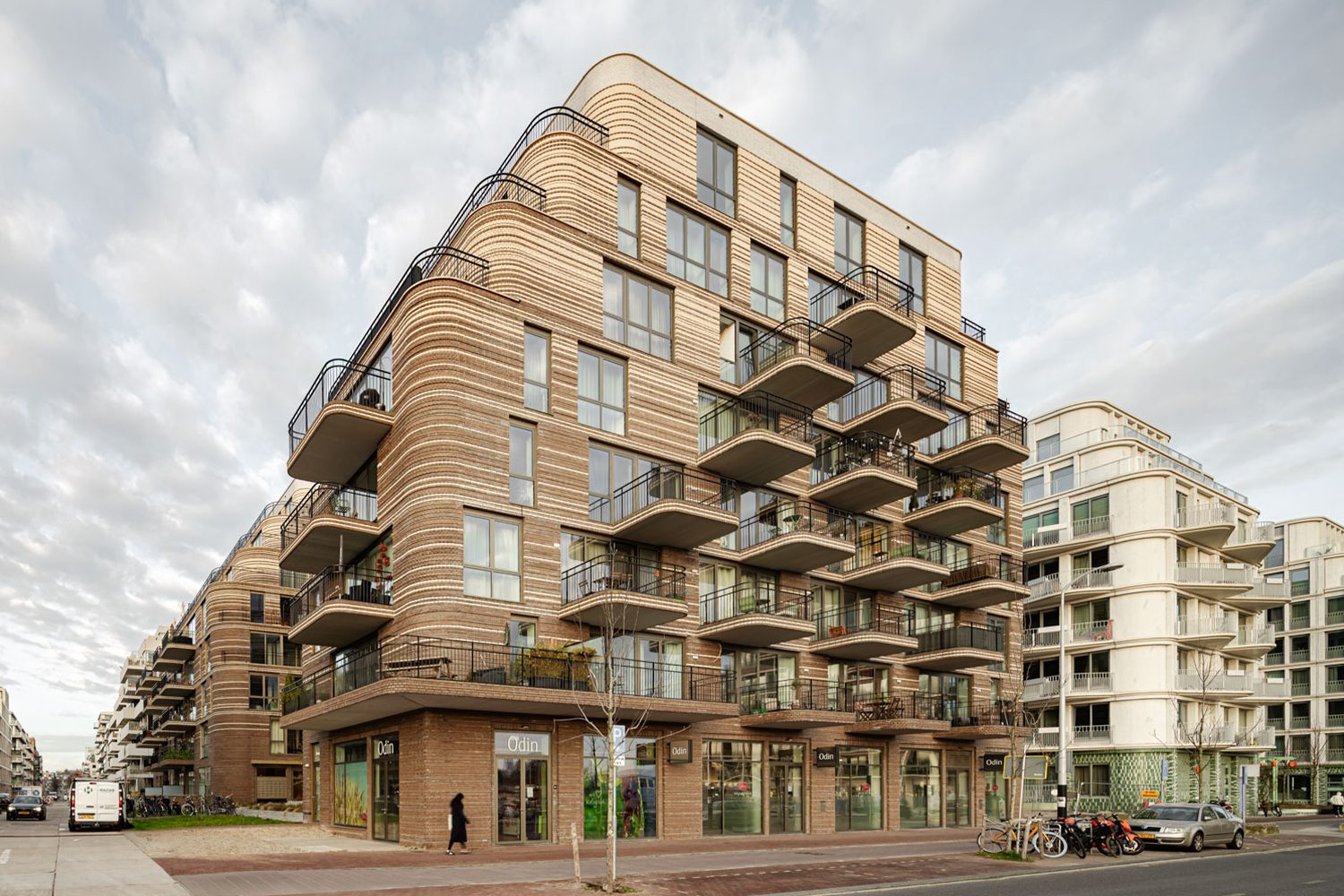
THE BOW, DESIGNED BY ORANGE ARCHITECTS, REINTERPRETS RESIDENTIAL ARCHITECTURE IN A COLD CLIMATE CONTEXT THROUGH LAYOUT, LIGHTING, AND MATERIAL DETAILS THAT ENHANCE THE QUALITY OF LIFE
TEXT: XAROJ PHRAWONG
PHOTO: SEBASTIAN VAN DAMME
(For Thai, press here)
Interpretations of the relationship between architecture and nature emerge in many forms, shaped by the diverse perspectives of architects across the design world. One widely embraced approach is to draw nature into the architectural realm, allowing it to become part of the built form itself. In tropical cities, some concepts encourage architecture to dissolve into the landscape, permitting vegetation to grow over and ultimately serve as the building’s outer skin. Yet on the opposite side of the world, in the colder climate of Overhoeks, a newly developed urban district in northern Amsterdam, the Netherlands, this relationship is reconsidered to reflect the conditions of a contemporary urban community.
Orange Architects was the firm selected to oversee the project in question, known as The Bow. Initiated in 2017 and completed in 2024, the development articulates its sustainability vision through architectural design, the adoption of energy-reducing systems, and a carefully curated selection of materials.
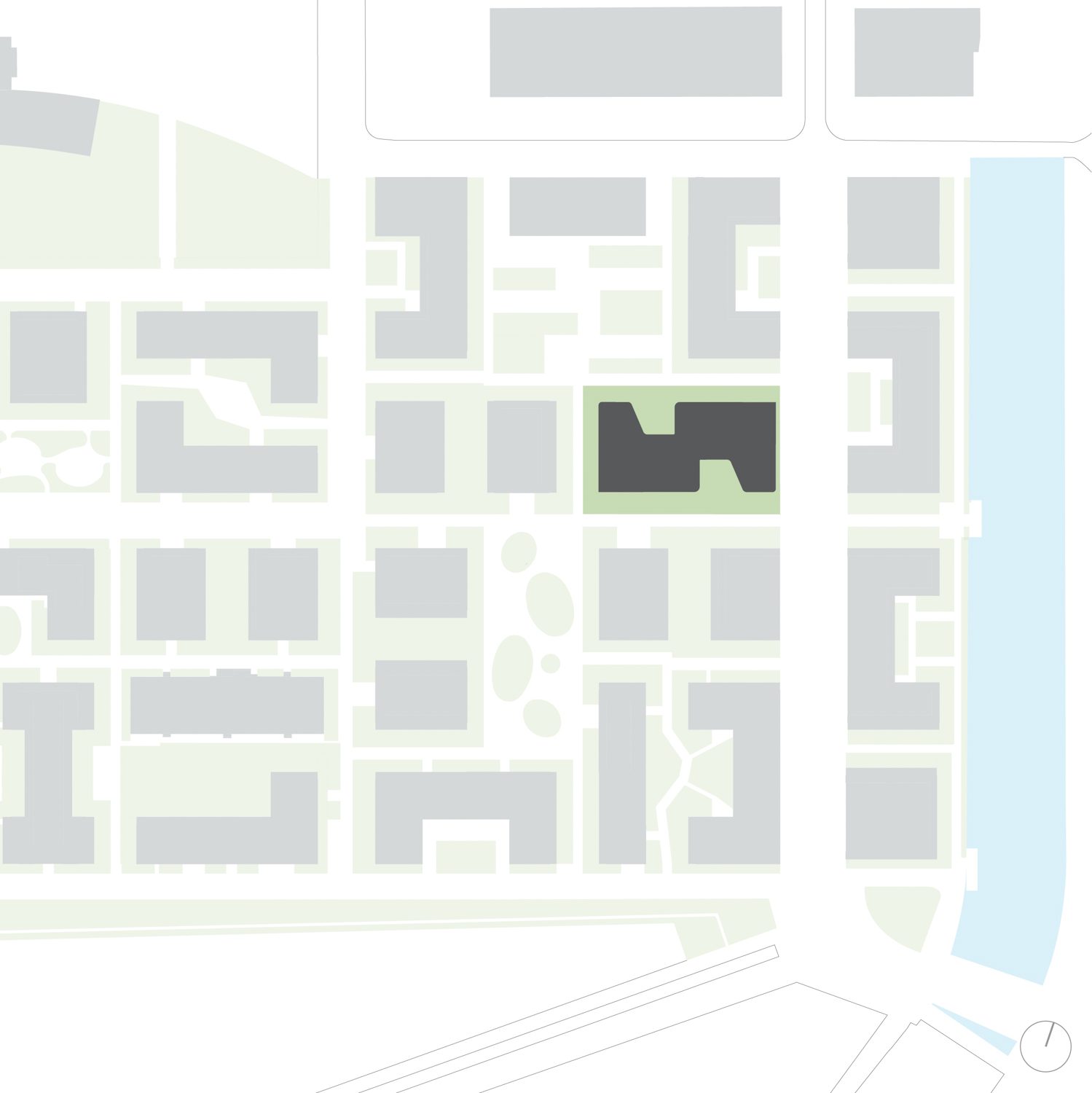
The first key idea shaping the design is the site planning strategy, which the architects realized as a campus-like layout. This does not imply an academic environment. Instead, it refers to a planning approach widely applied in residential developments to cultivate a setting that enhances quality of life and encourages social interaction. The scheme incorporates generous green and open spaces, together with shaded pedestrian routes that weave between the buildings, forming a kind of ‘green oasis’ at the heart of the masterplan. The layout encourages walking and cycling, supported by safe, well-connected pathways that link the buildings naturally and intuitively.
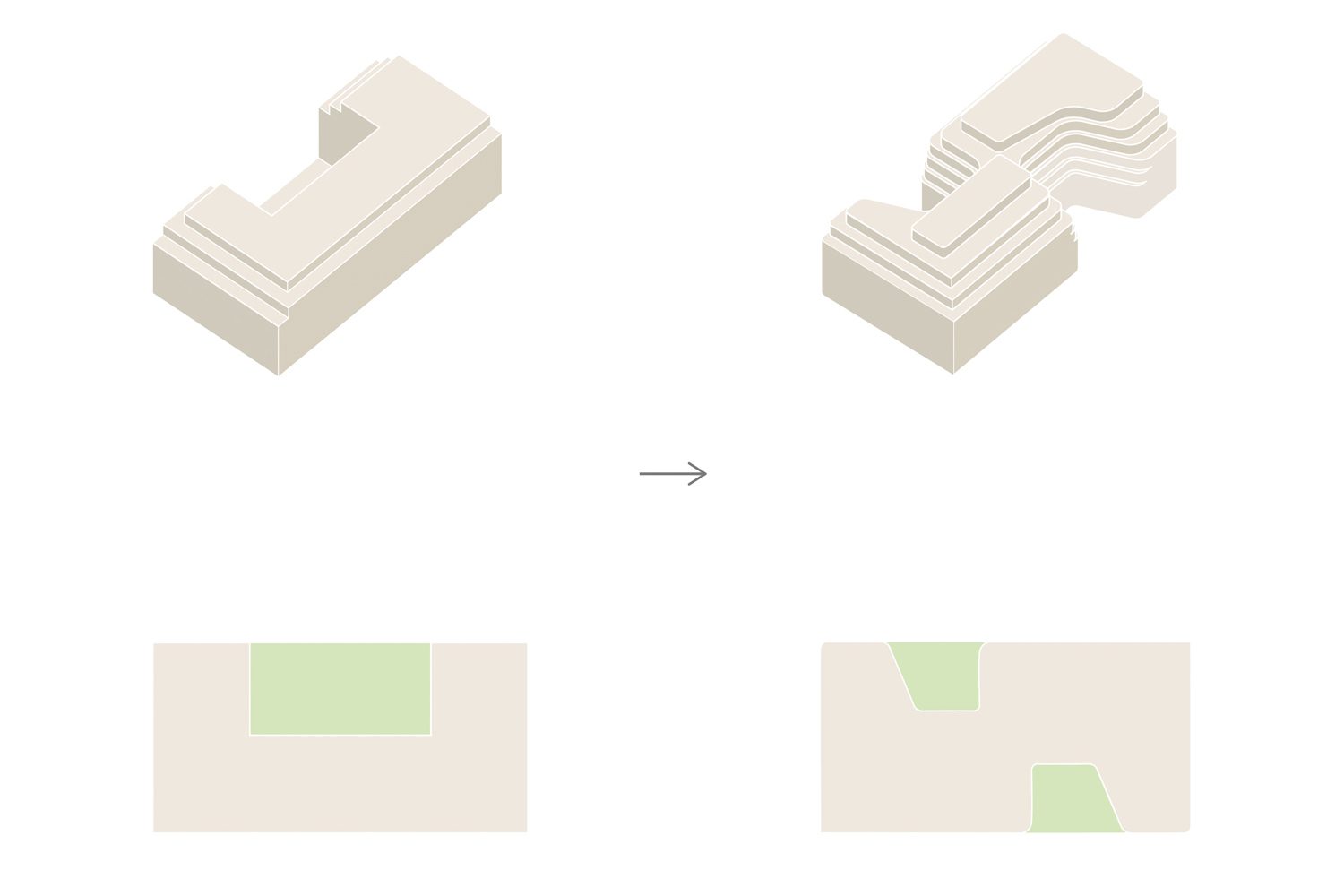
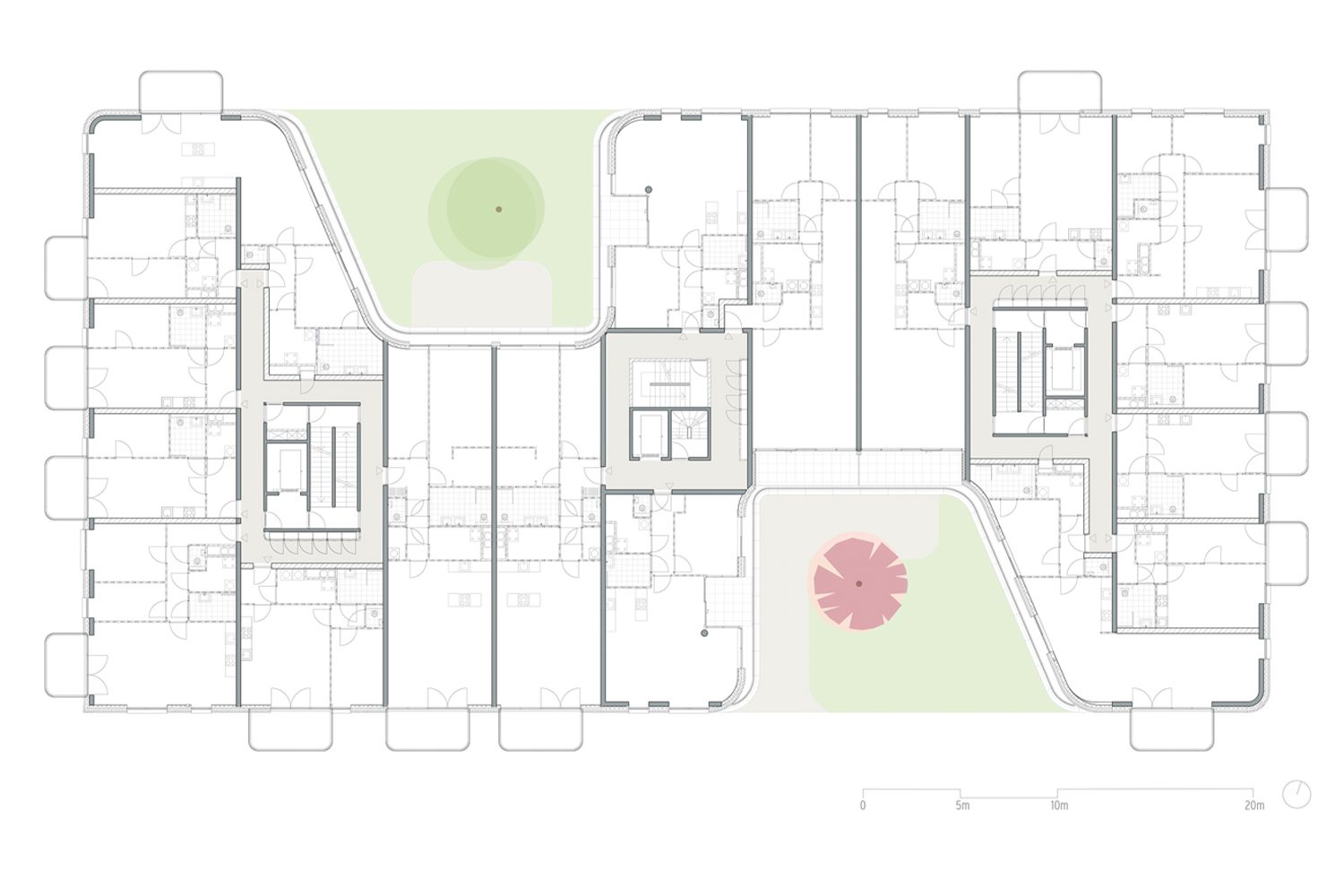
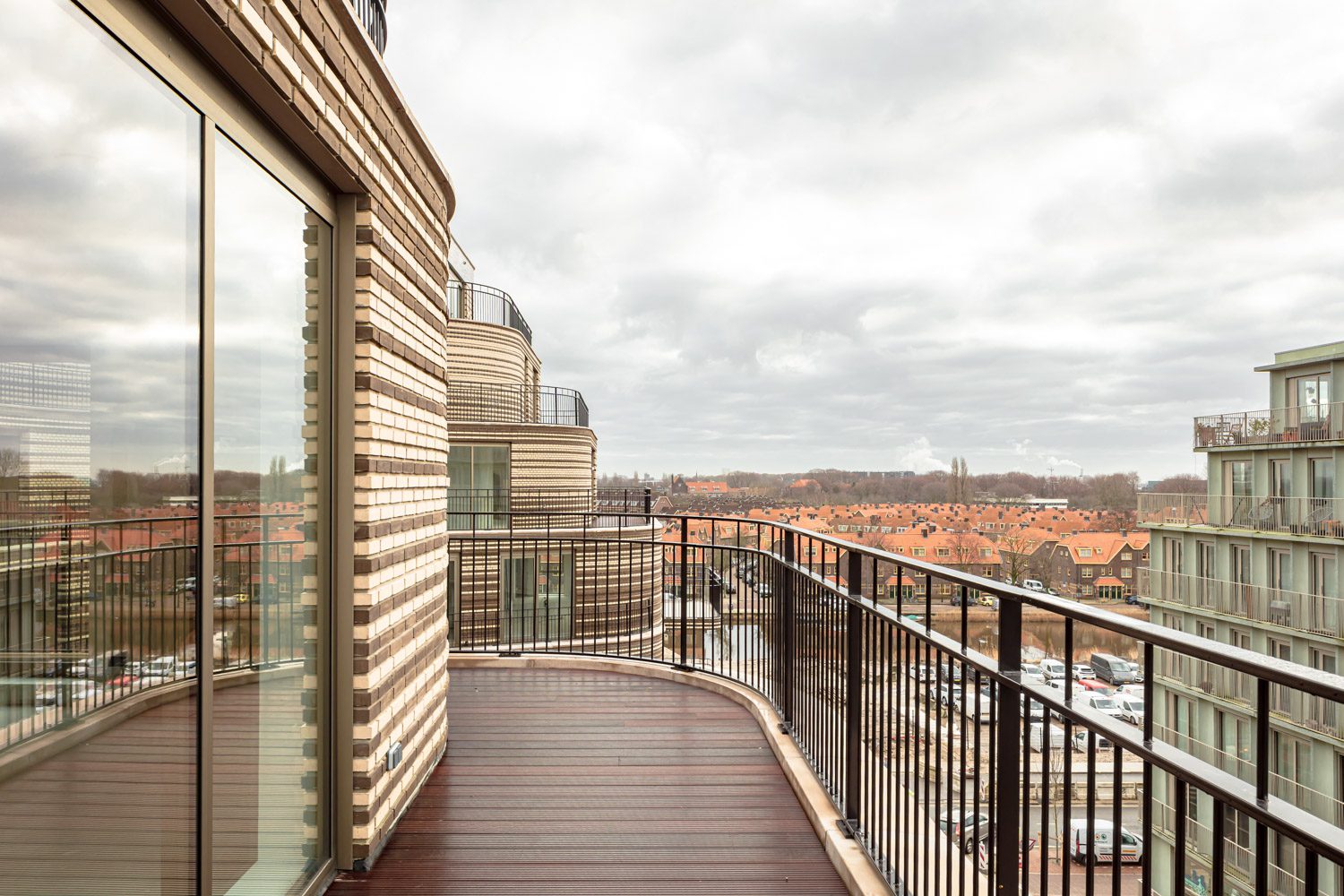
Another key consideration is the all-sided orientation adopted in the planning strategy. The project comprises 108 units arranged around three vertical circulation cores. In a conventional layout, this configuration would typically result in long, narrow units that receive natural light from only one direction, leading to living spaces with poor environmental quality. To address this, the architects introduced two carved-out courtyards on either side of the building. This approach increases the building’s perimeter, allowing more units to benefit from additional openings, improved ventilation, and greater access to daylight. On the uppermost level, the architects designed a series of recesses that create extra-deep terraces. These setbacks allow sunlight to reach both the units and the street below far more effectively than a design focused solely on maximizing floor area.
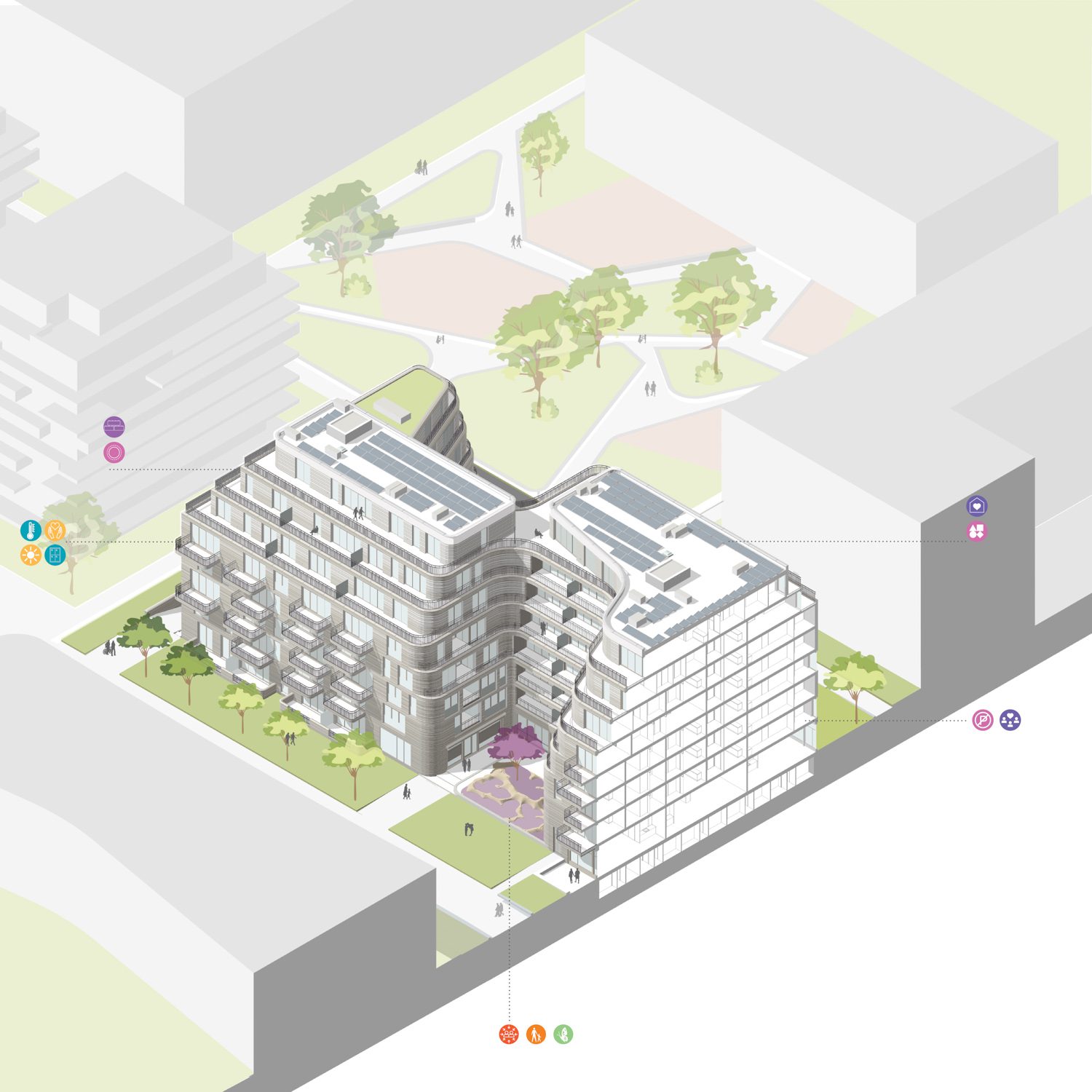
A further consideration lies in the integration of energy-efficient systems. The building is equipped with solar panels on the roof, along with a thermal energy storage system that can be tapped during the winter months, reducing dependence on external energy sources. The ventilation system also incorporates heat recovery, ensuring healthy indoor air quality while minimizing energy use. Generous openings throughout the building further reduce the need for artificial lighting during the day, contributing to overall energy savings.
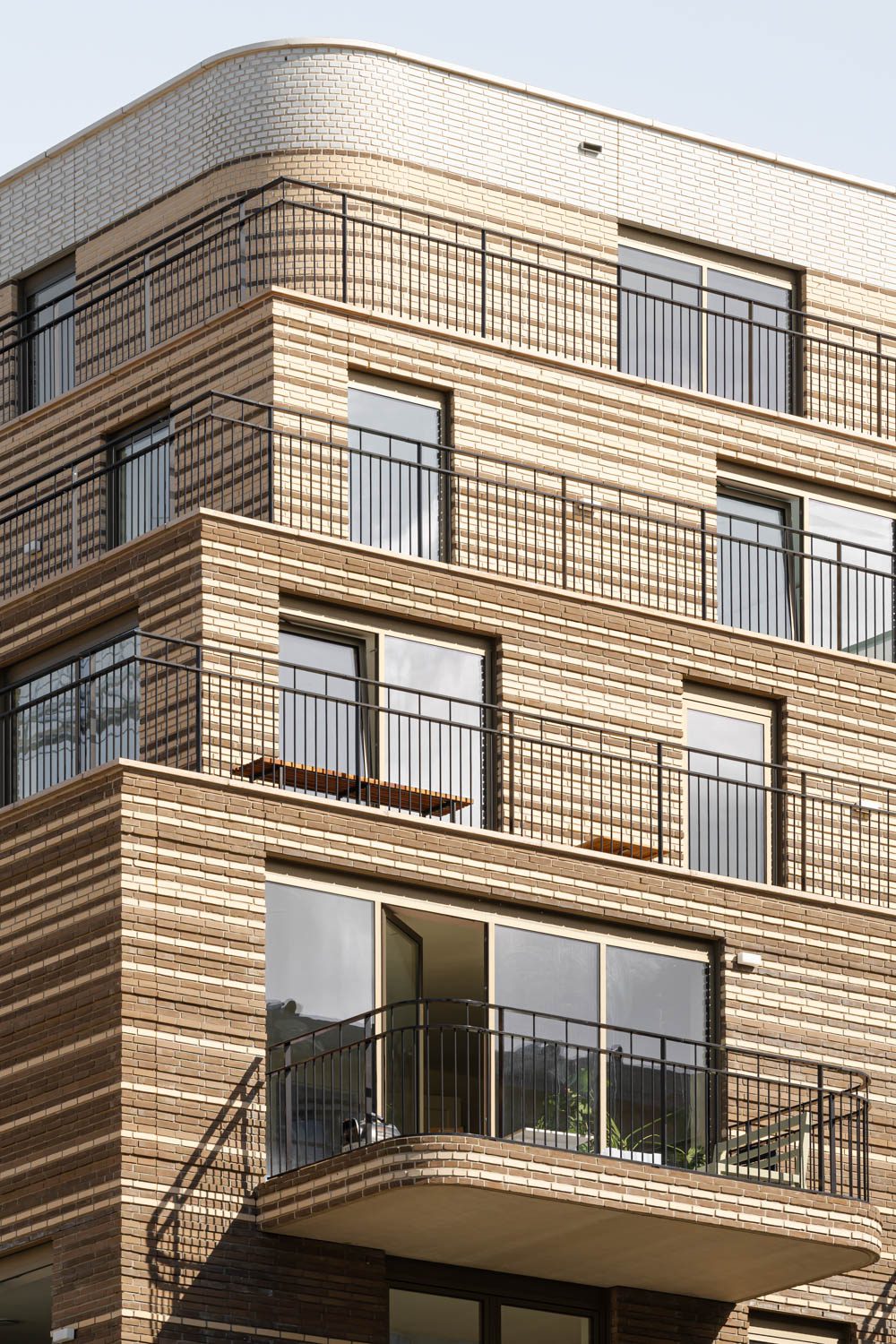
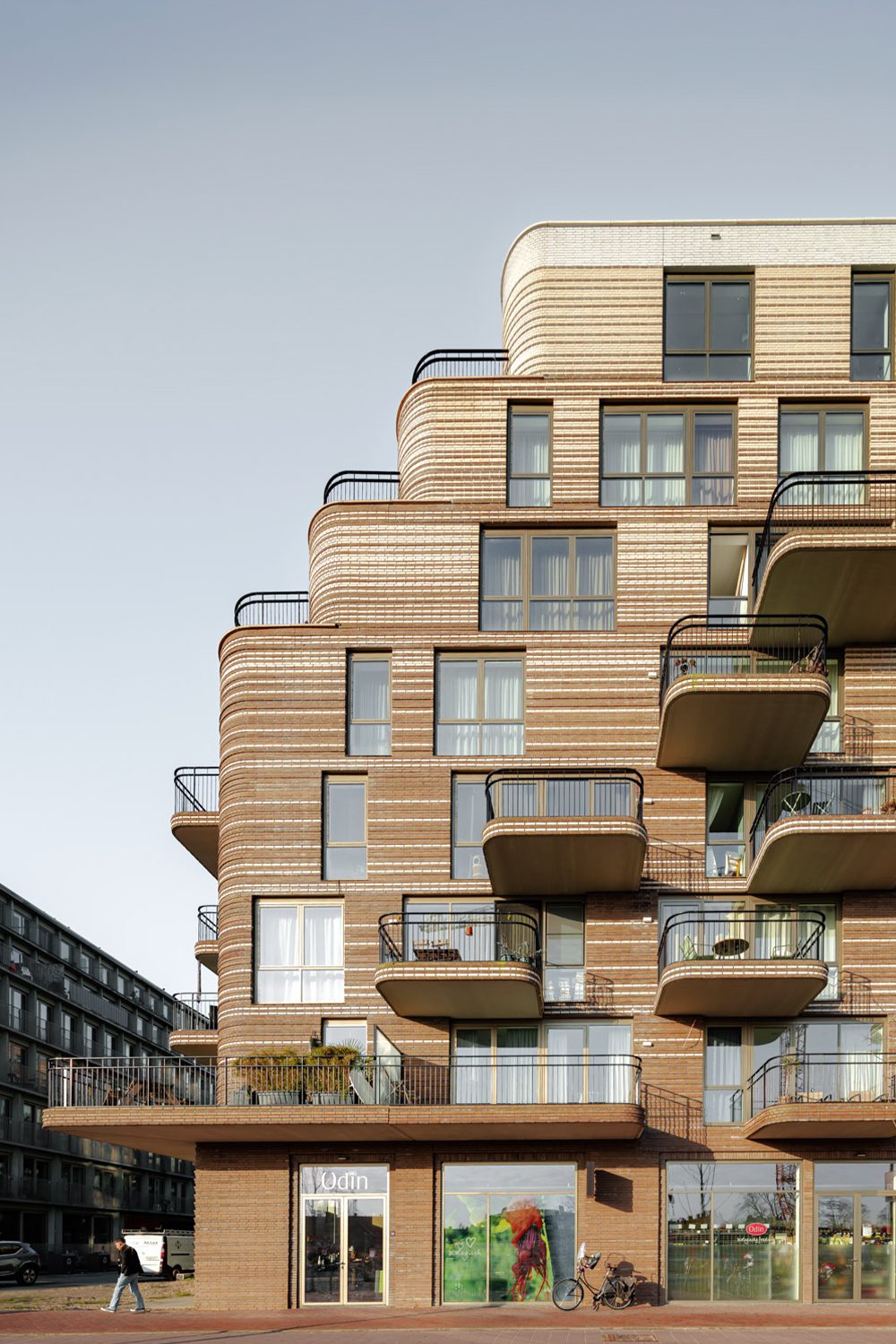
The most distinctive aspect of the material strategy is the treatment of the building envelope. The architects selected brick for its a universally recognizable material commonly found in architecture across various parts of the world. Yet through design and craftsmanship, the familiar is rendered new. Rather than applying a uniform pattern, the brickwork is composed as a subtle relief, recalling the low-relief techniques found in sculptural treatments of building façades. Another interesting feature is the use of a palette of four brick tones, where the shades gradually shift from gray-brown at the ground level, through cappuccino at the middle levels, to glossy white at the penthouse level. This gradation does more than enrich visual depth; it produces a dynamic play of shadow that inevitably traces the sun’s movement throughout the day.
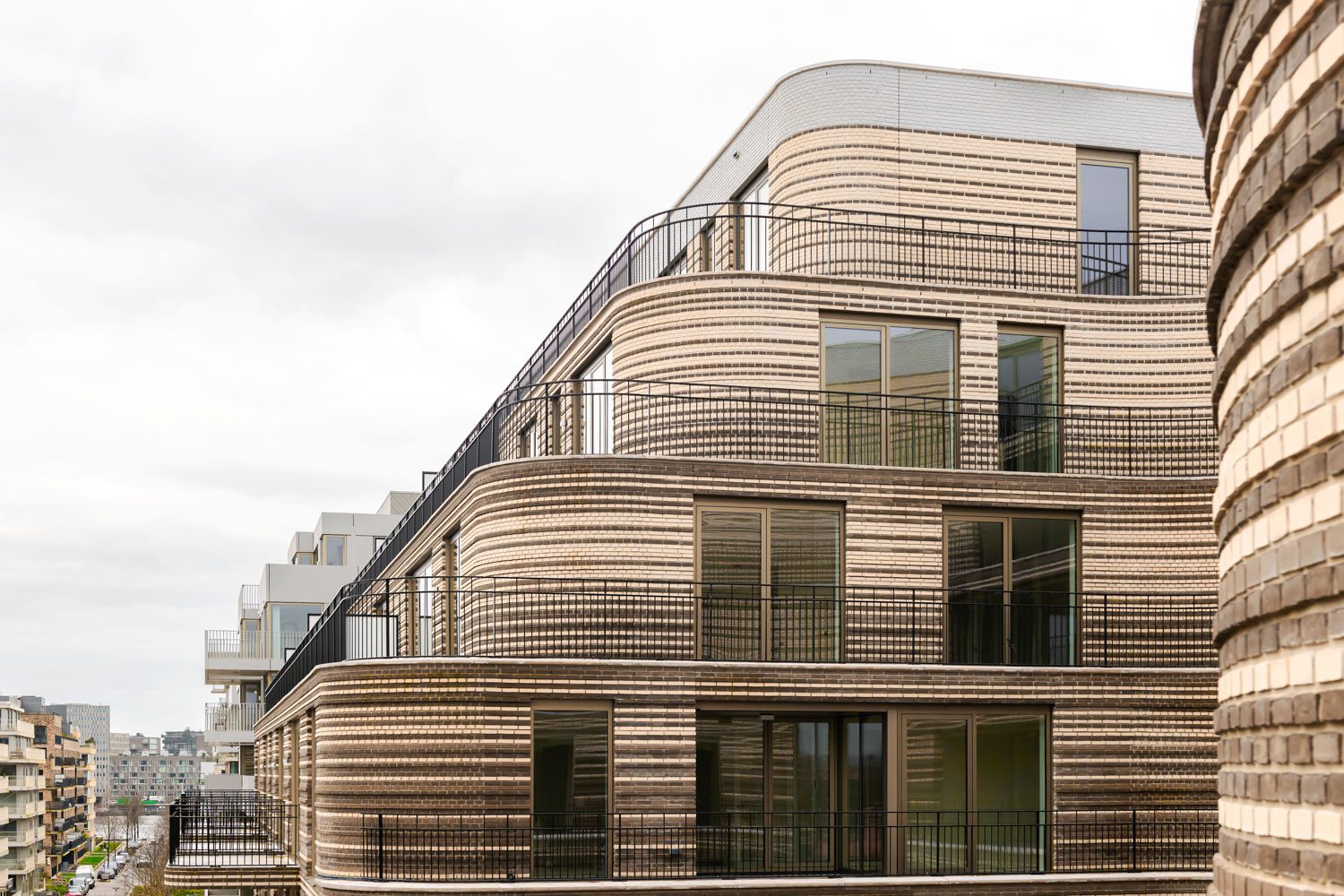
In addition, the horizontal emphasis created by the brick coursing helps modulate the building’s scale. The darker tones of the first four floors appear visually heavier and closer to the viewer, while the progressively lighter brickwork from the fifth to the eighth floor creates the perception of a lighter upper mass. This deliberate manipulation of tone and texture subtly enhances the building’s perceived height, making it appear taller.
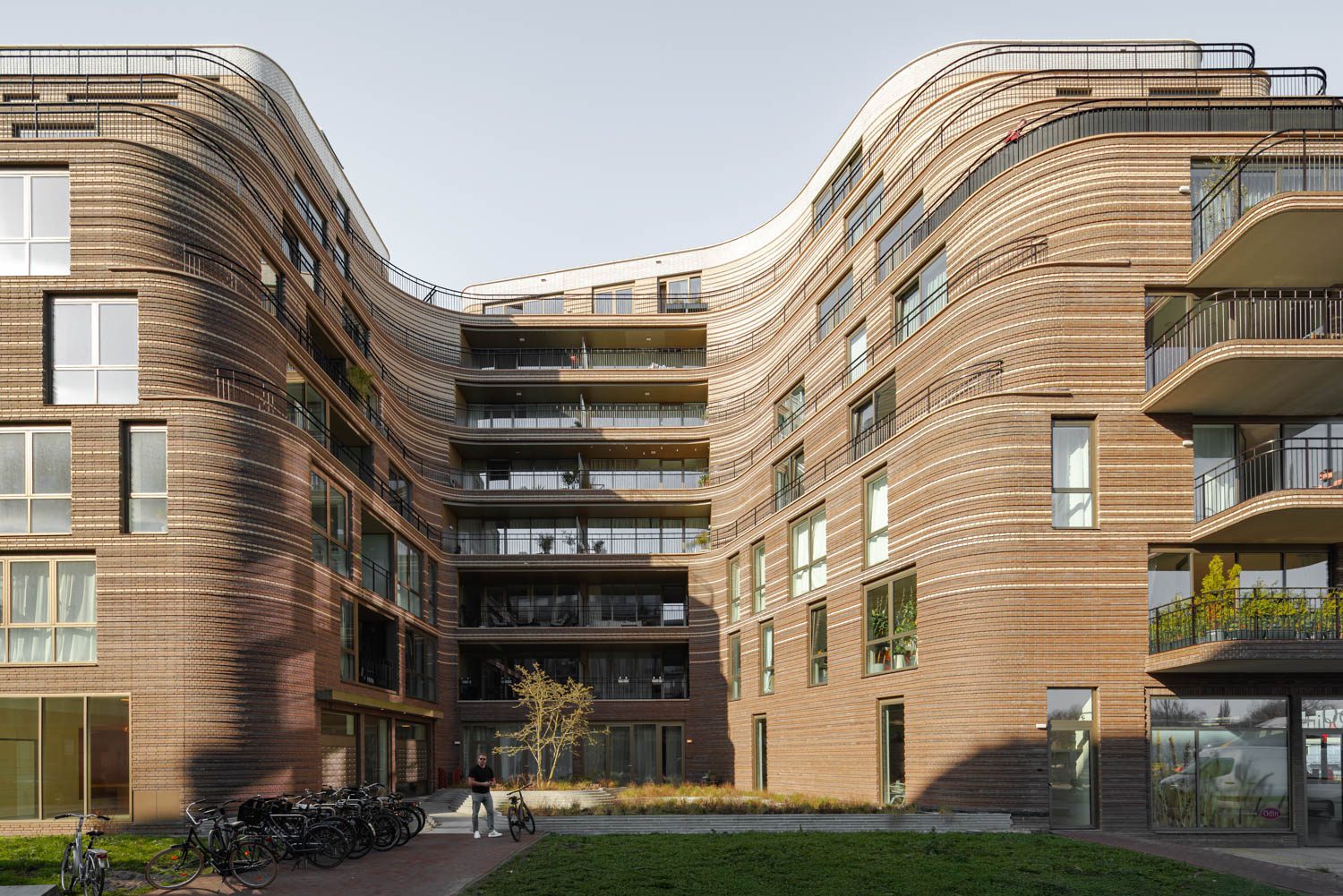
Though the architecture may appear simple at first glance, its details, however, reveal a design process grounded in problem-solving and committed to elevating everyday life, from the masterplan down to the smallest material articulation. The result underscores how thoughtful design can meaningfully enhance both the value and experience of an urban community.