
WITH THE ARCHITECTURE OF UNKNOWN SURFACE STUDIO AND REAL AS TECT, A GARDEN IN A JAR EXPANDS INTO TERRARIUM HOUSE, A DREAM HOME DESIGNED FOR SEAMLESS LIVING SPACE
TEXT: PHARIN OPASSEREPADUNG
PHOTO: RUNGKIT CHAROENWAT
(For Thai, press here)
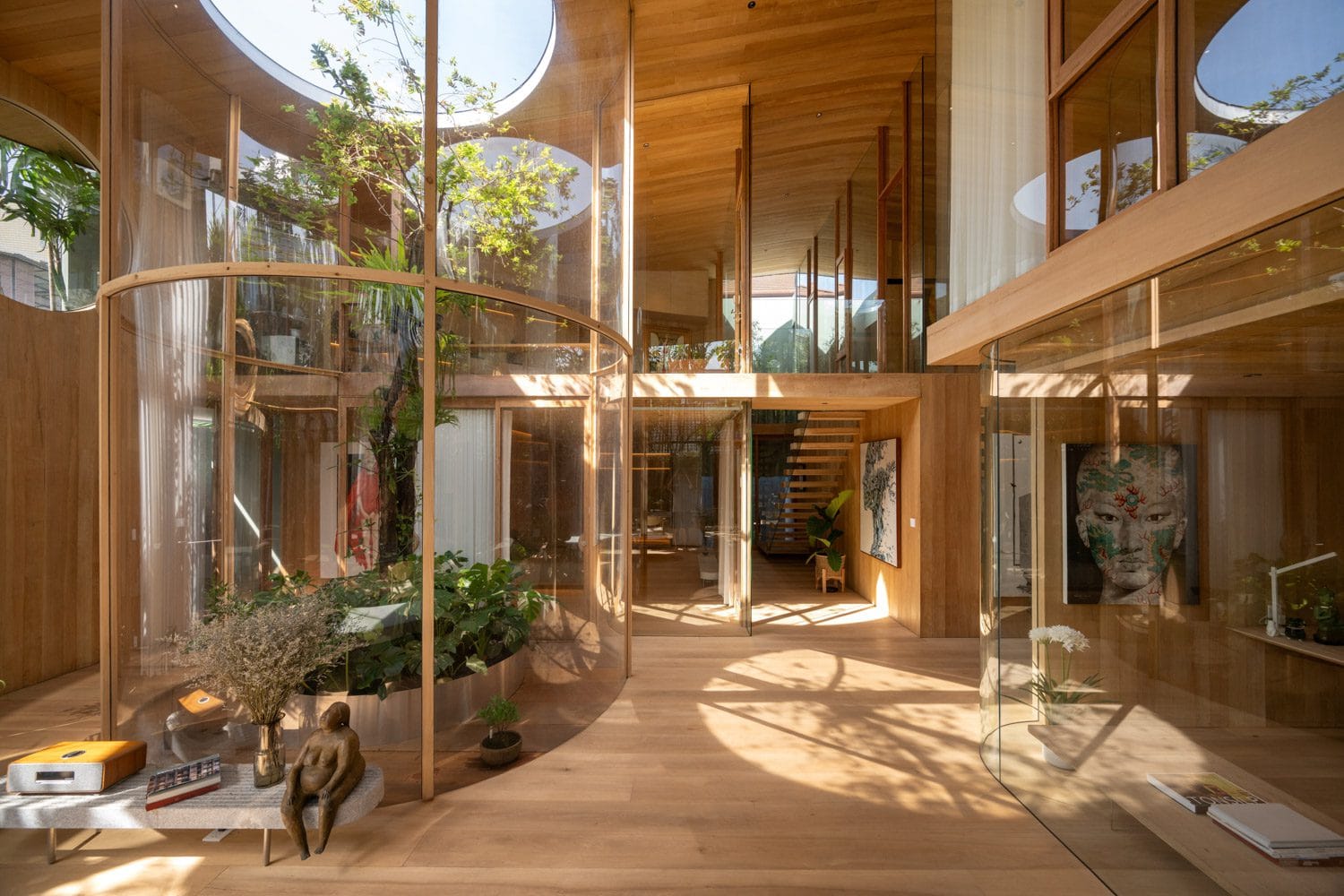
In Bangkok’s Lat Phrao district, Terrarium House first presents itself as a two-storey timber home set within an enormous glass vessel. Drawing from the idea of the ‘terrarium,’ a garden contained within glass, the house scales up this miniature world into a fully inhabitable domestic environment.
A terrarium is, at its core, a small ecosystem recreated within a transparent container, whether a bottle that fits in the palm of the hand or a much larger. Within that confined space, its owner is free to arrange plants, soil, and elements according to personal preference. In this sense, it is not far from the imagined ideal of a house, something gradually assembled out of affections and cherished objects. Terrarium House reinterprets this concept by turning the entire residence into a place that feels as though life unfolds within a garden enclosed by transparent walls.
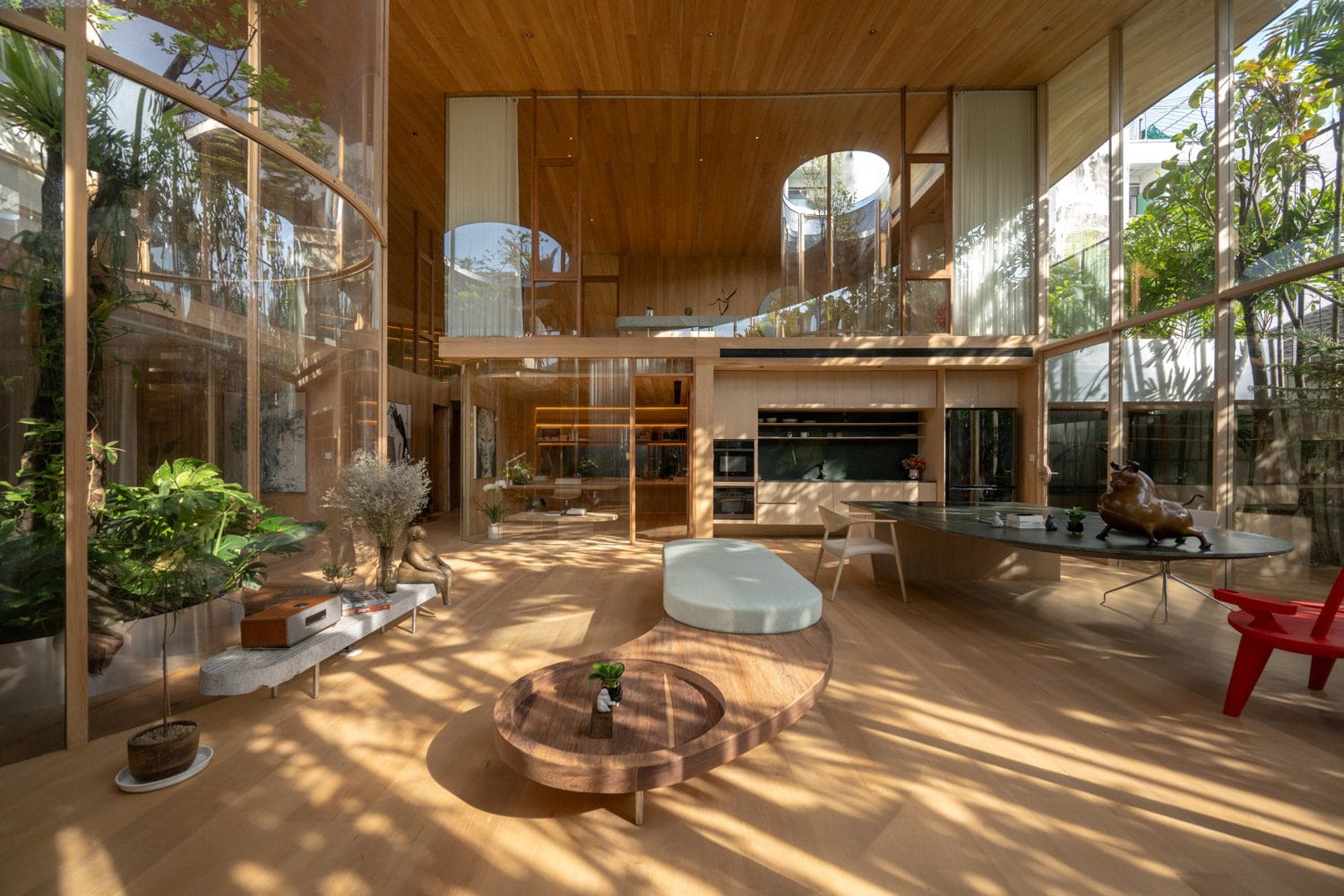
This column-free timber house was designed by Unknown Surface Studio, in collaboration with REAL AS TECT as project architect on a site of approximately 300 – 350 square metres. Its owner, Khagee Ketjumpol, is a contractor and founder of the woodcraft brand HACHI. More than simply borrowing the name of a garden in a glass jar, the design sets out to evoke an atmosphere akin to inhabiting a terrarium itself. The experience begins in the home’s open-plan central living space, enclosed by large glass panes, then extends through the inner courtyard, and continues to the second floor, where the primary bedroom adopts a distinctly Japanese architectural sensibility. An art gallery room, meanwhile, gives clear form to the owner’s personal interests.
The plot itself is unusual in shape, resembling a water ladle, with a relatively narrow access point and surrounded on all sides by four neighbouring houses, creating an almost landlocked condition. Yet the architects saw this not as a constraint, but as a design challenge. The ladle’s ‘handle’ was therefore reimagined as the main approach to the house, choreographing a gradual transition that leads its occupants away from the noise and disorder of the city outside.
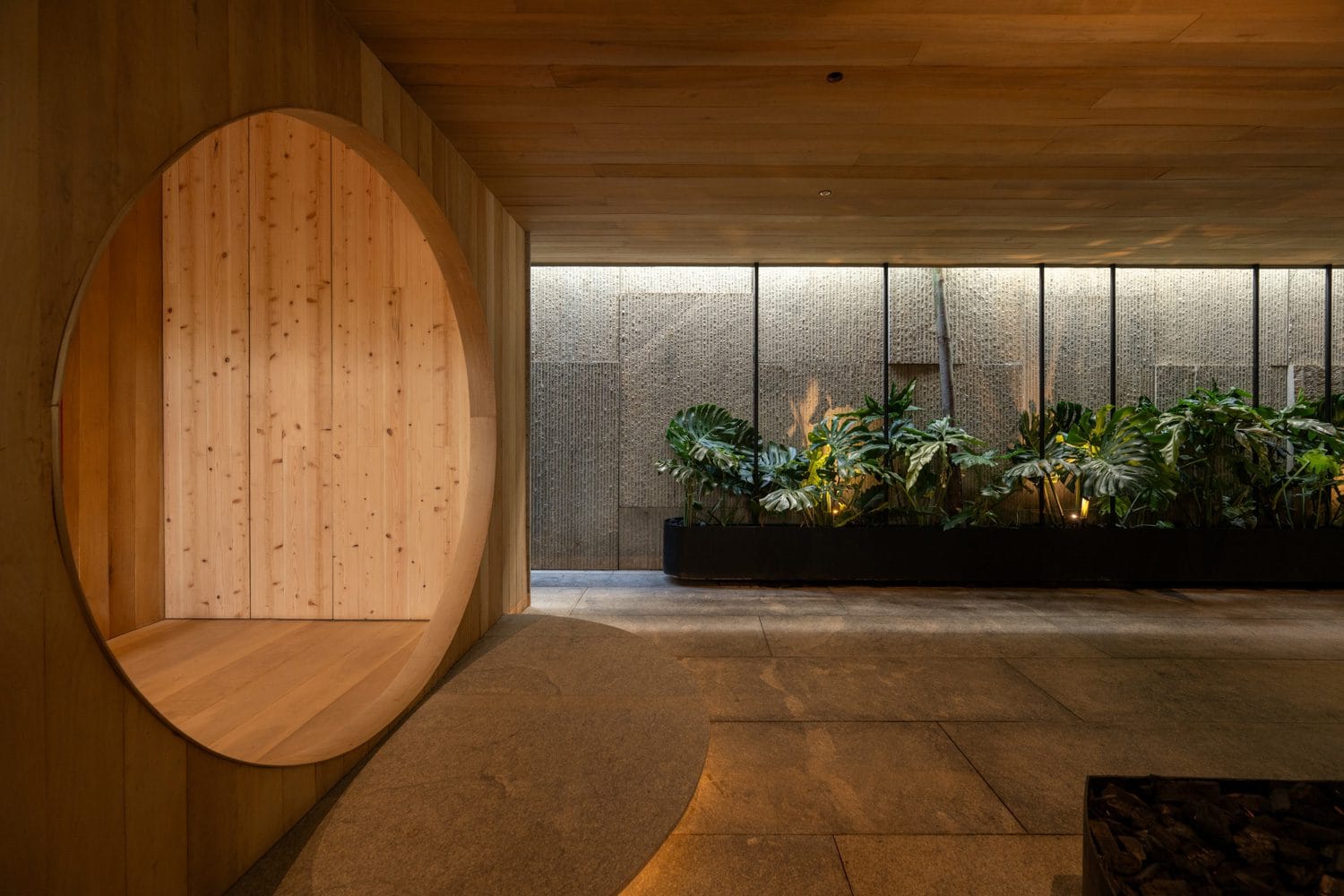
This sequence begins with the narrow entrance passage, just wide enough for a car to pass through and park, at approximately three to four metres wide. On either side, the approach is lined with natural materials chosen in keeping with the homeowner’s preference for materials in their honest, unadorned state. The architects selected walls of raw granite, left to reveal their rough surface, and paired them with a timber ceiling that runs the full length of the entryway. Elongated by design, this threshold reads as an atmospheric tunnel, a passage that shifts one’s state of mind, creating a mood that evokes the sense of stillness and quiet mystery before opening into the calm of the house beyond.
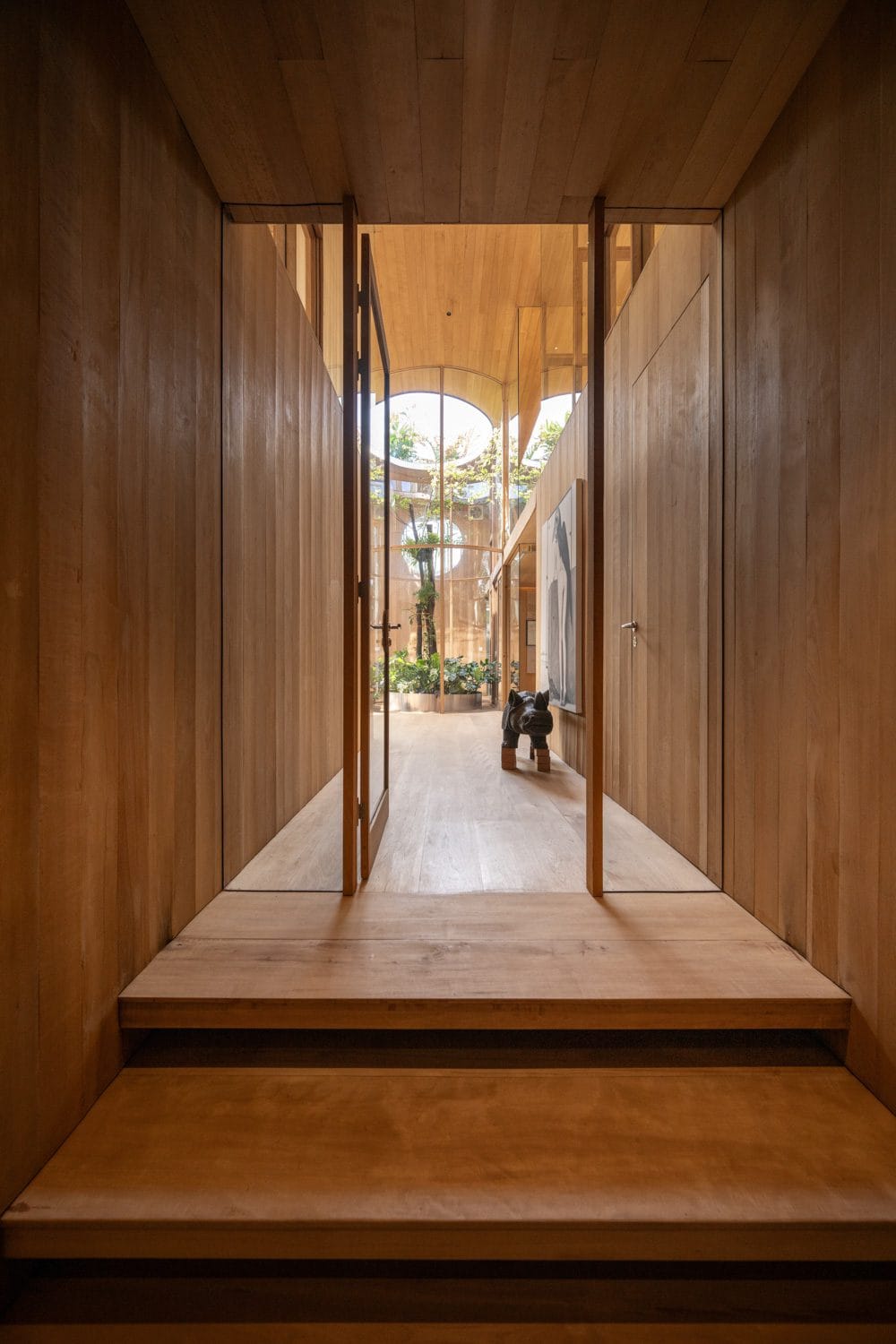
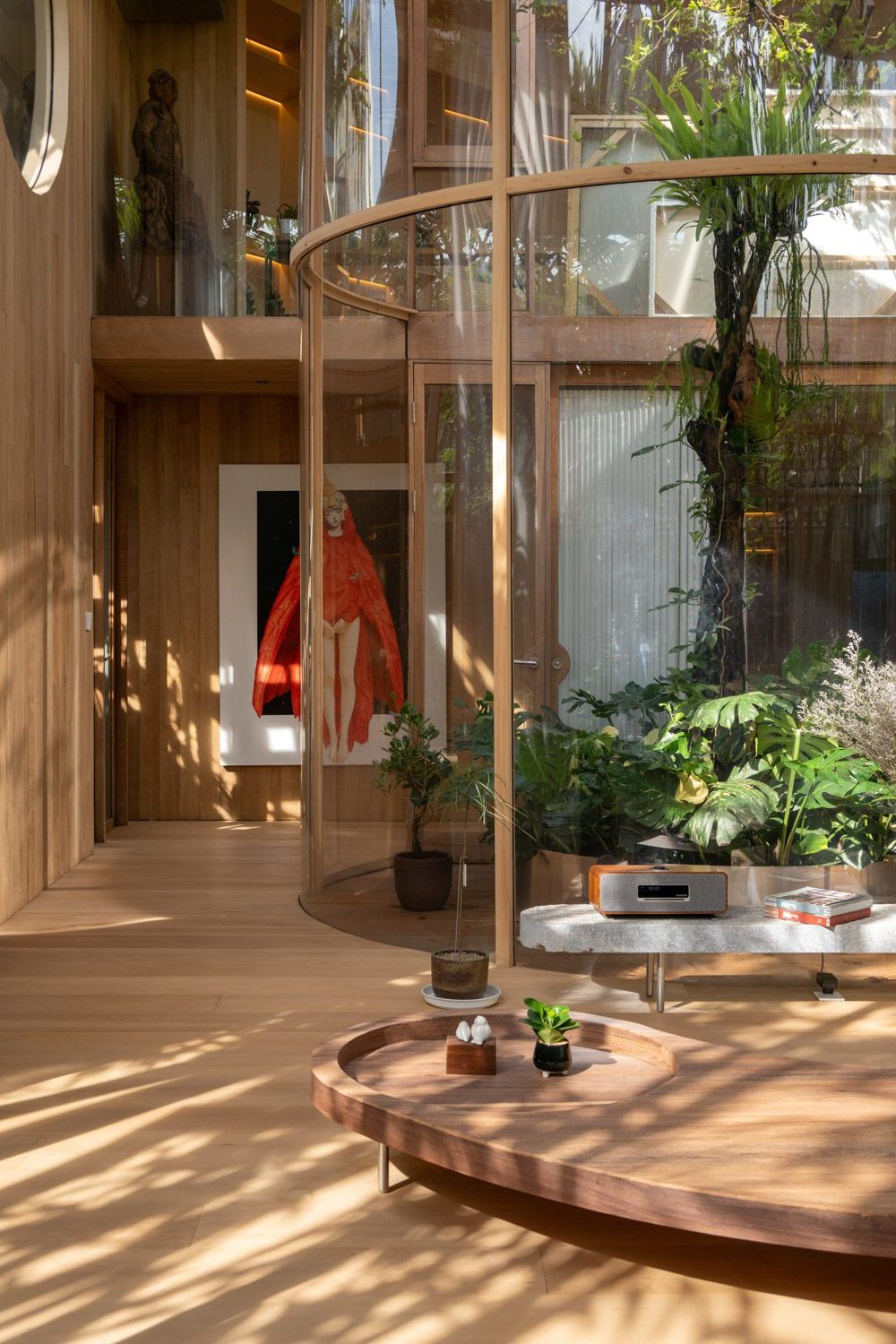
Once the restlessness of the outside world has been left behind after emerging from the enigmatic passage, the spatial experience shifts again upon entering the timber house itself. The first encounter is a large central courtyard, where an old ma mao or Thai blueberry tree, long rooted on the site and one the homeowner wished to preserve, stands at its centre. Enclosed by clear glass and lit from above, the courtyard draws natural light deep into the house. Adjacent to it, the living area rises into a double-height volume, further amplifying the sense of openness and airiness throughout the home.
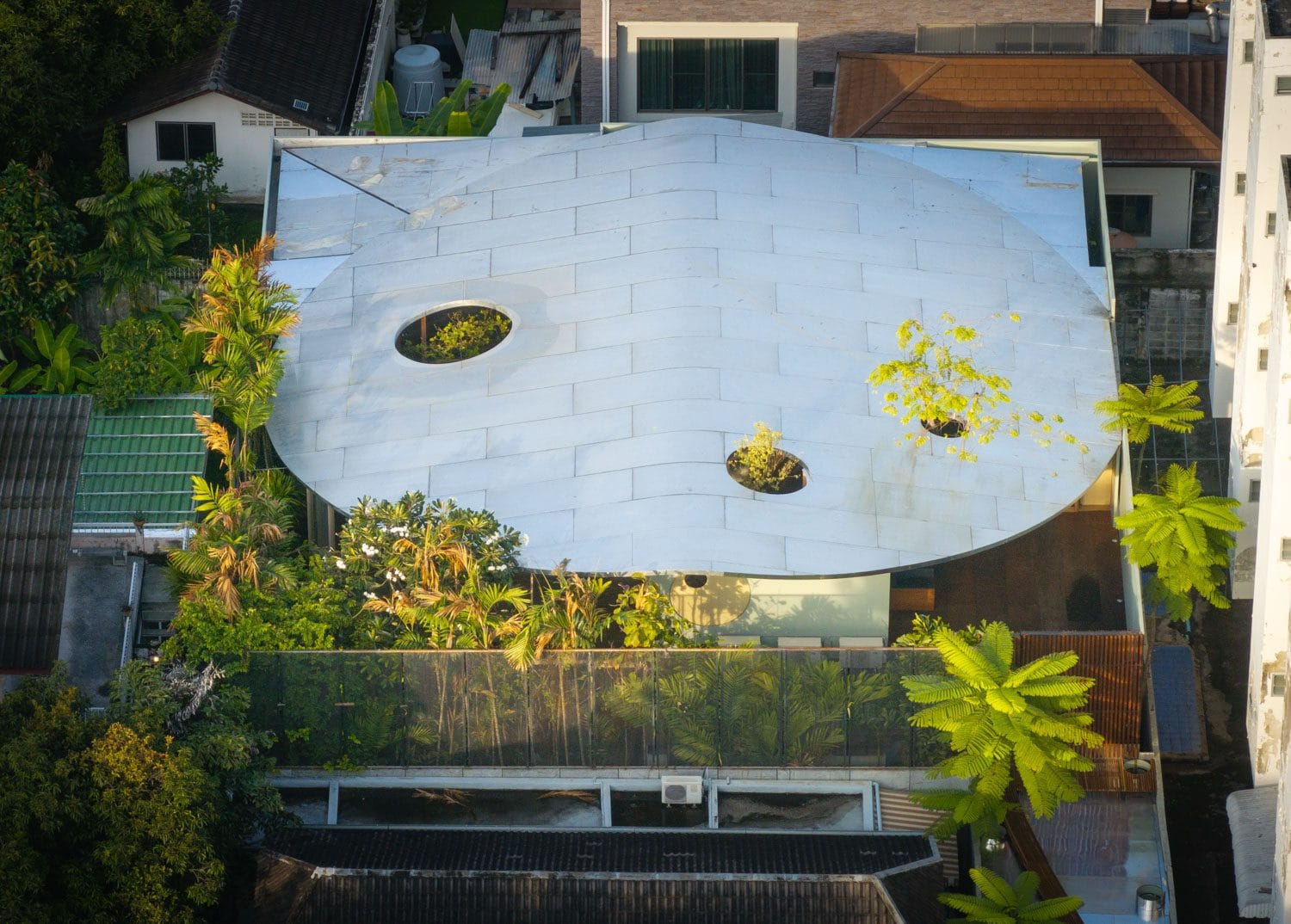
Because the owner was committed to preserving the existing trees, the central courtyard was enclosed from the outset. Another non-negotiable element that both the owner and the architects agreed on was the roof: a curved, sloping gabled form without right angles, punctuated by three small skylights aligned with the trees across both the ground and upper floors, allowing even more natural light to pour into the interior.
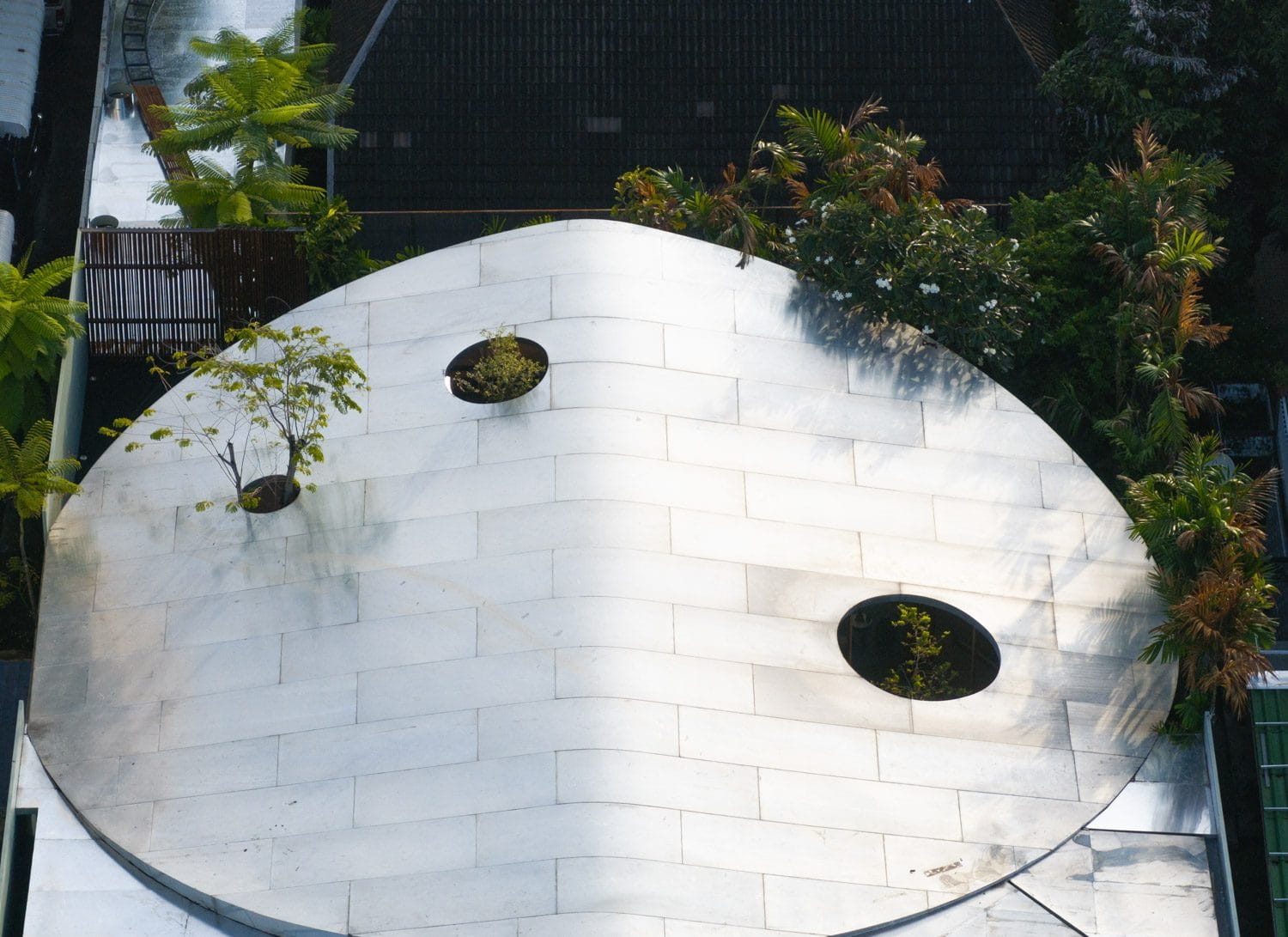
Clad in flat aluminium sheets, the roof presented a technical challenge, as this material is not commonly used in residential construction. Yet with the owner’s expertise as a contractor, it became possible to develop a custom installation method that would allow the roof to withstand sun and rain while also dissipating heat effectively. For that reason, the roof became the first element to be built, unlike typical building sequences, where construction usually begins with the floor structure before gradually moving on to the other spaces.
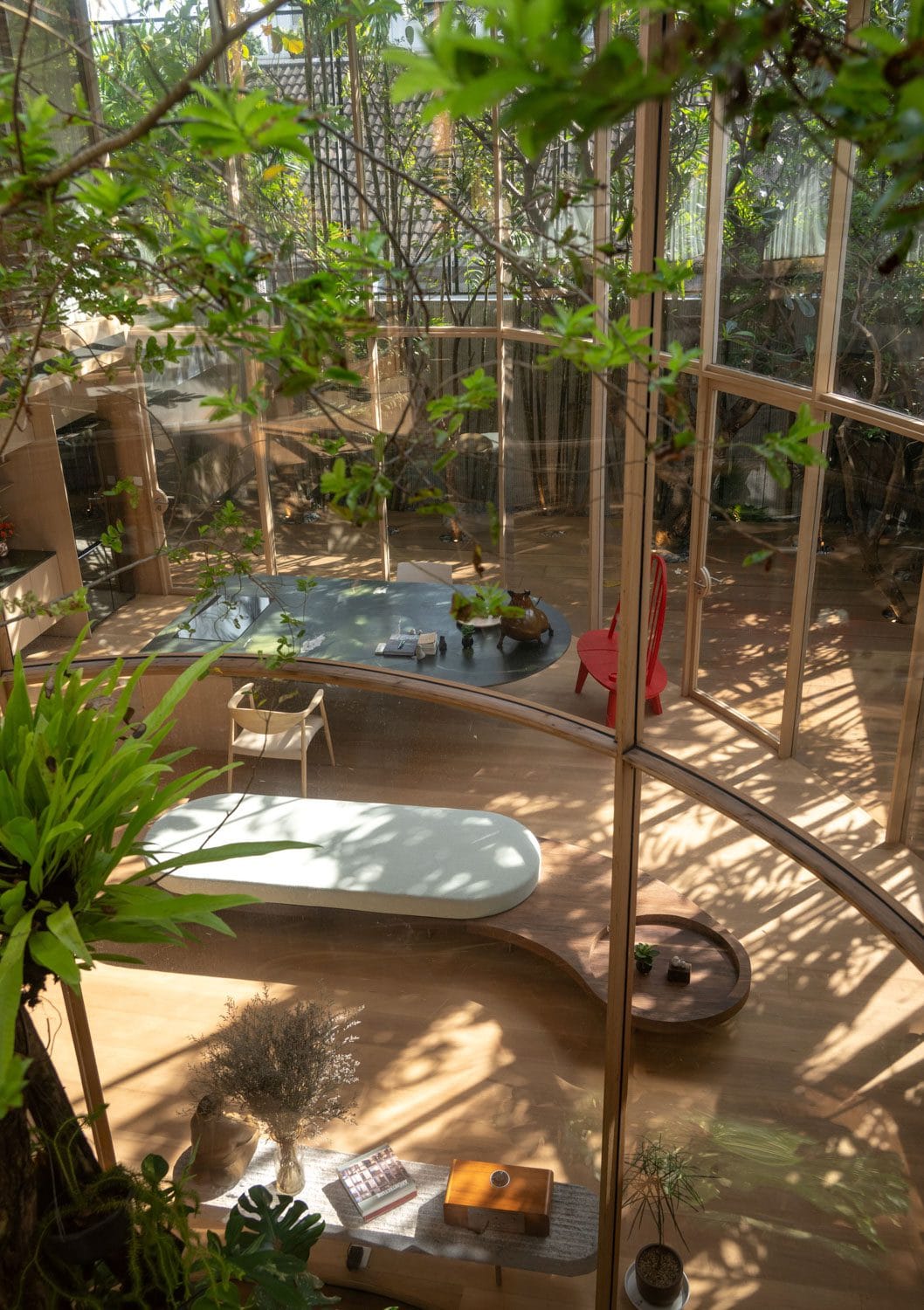
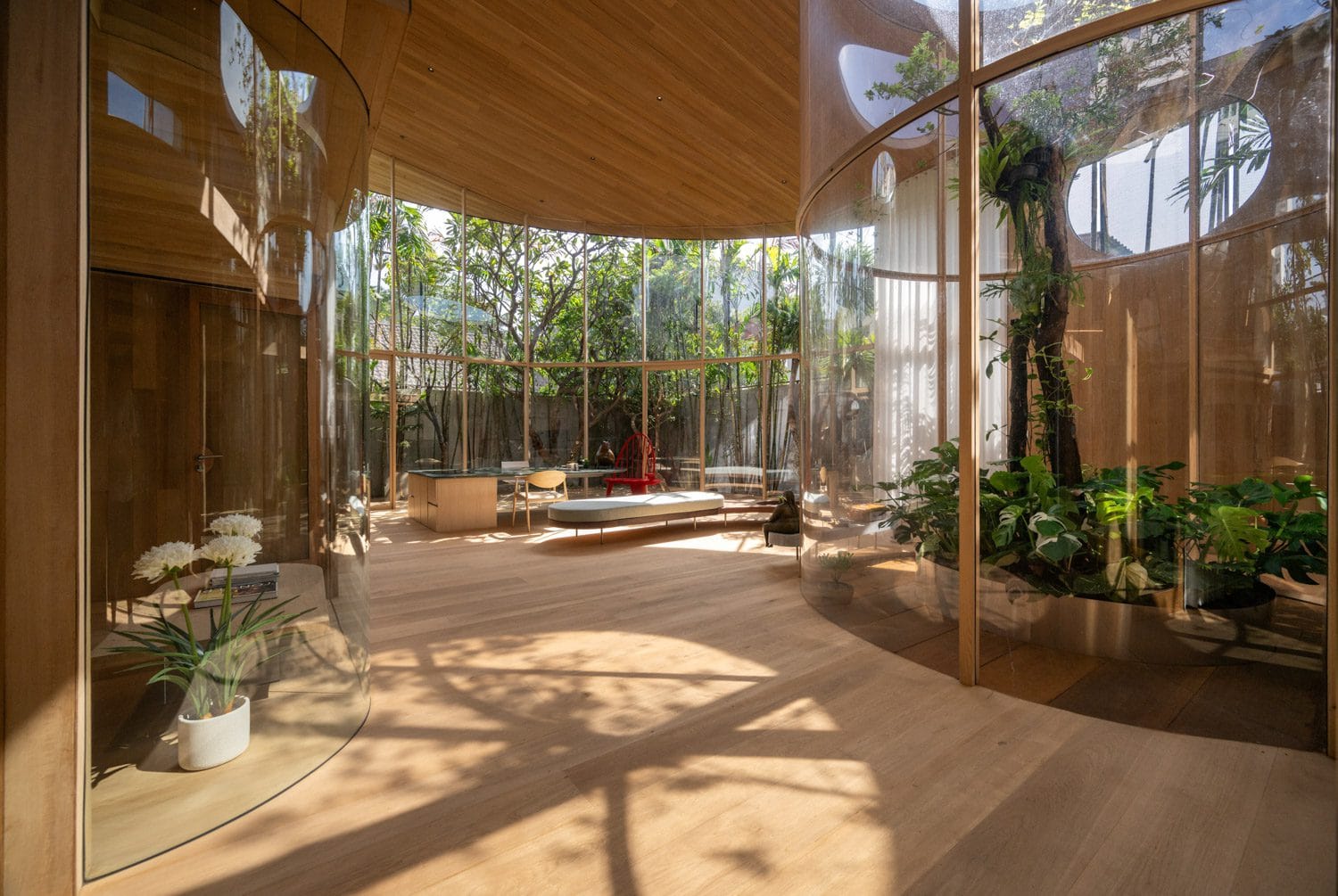
Another striking feature of the house is its entirely column-free interior, conceived to eliminate any sense of spatial compression. Instead of conventional supports, a structural system combining steel, a frame of takian timber, a dense hardwood sometimes known as ironwood, and glass carries the load of the roof. The absence of columns enhances the perception of openness. Together with its elevated ceilings, perimeter glass walls, and curved glazed partitions that visually connect each room, the design ensures that wherever one stands, the rest of the house remains visually present, from the living room and study to the second floor, which reads almost like the owner’s private penthouse.
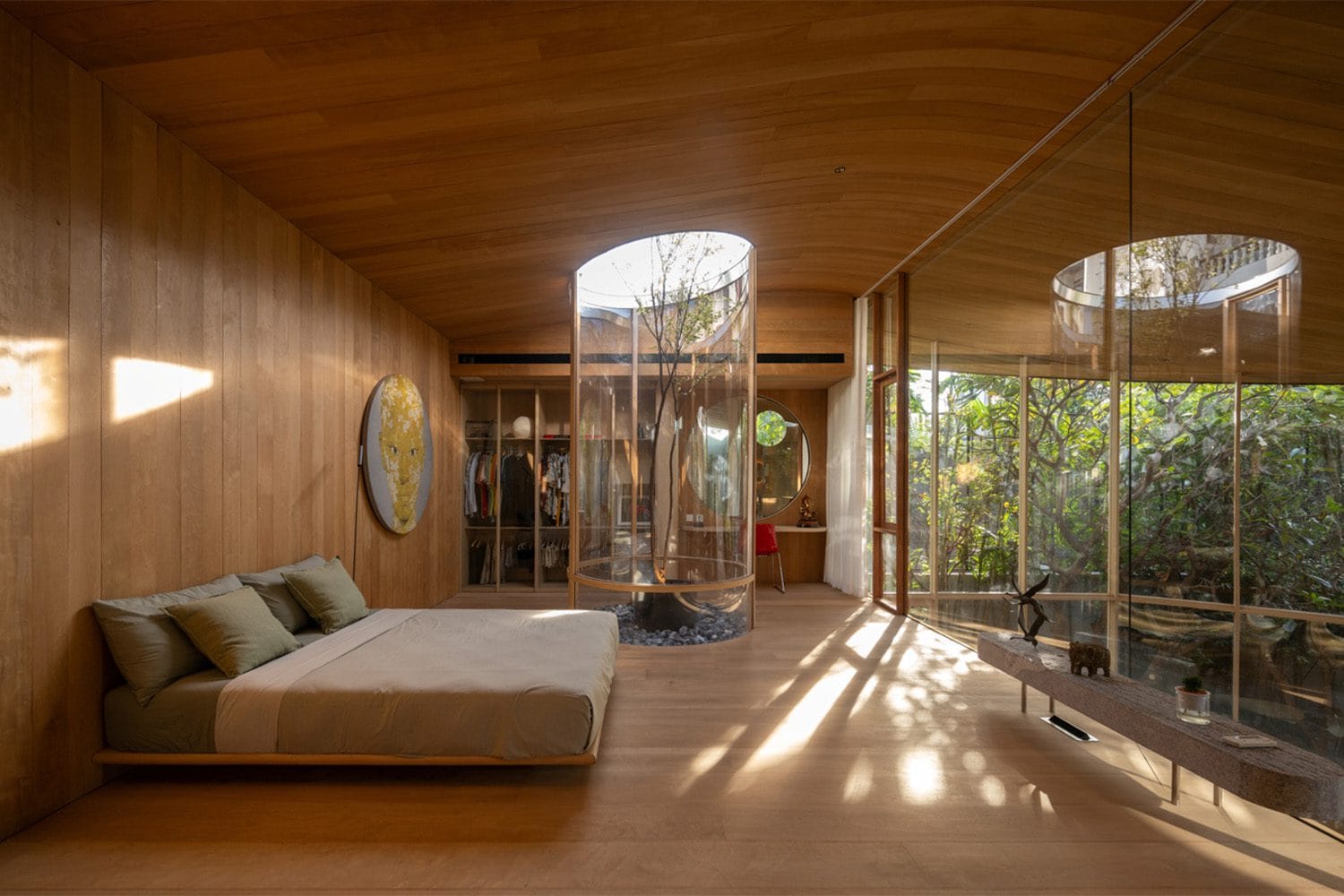
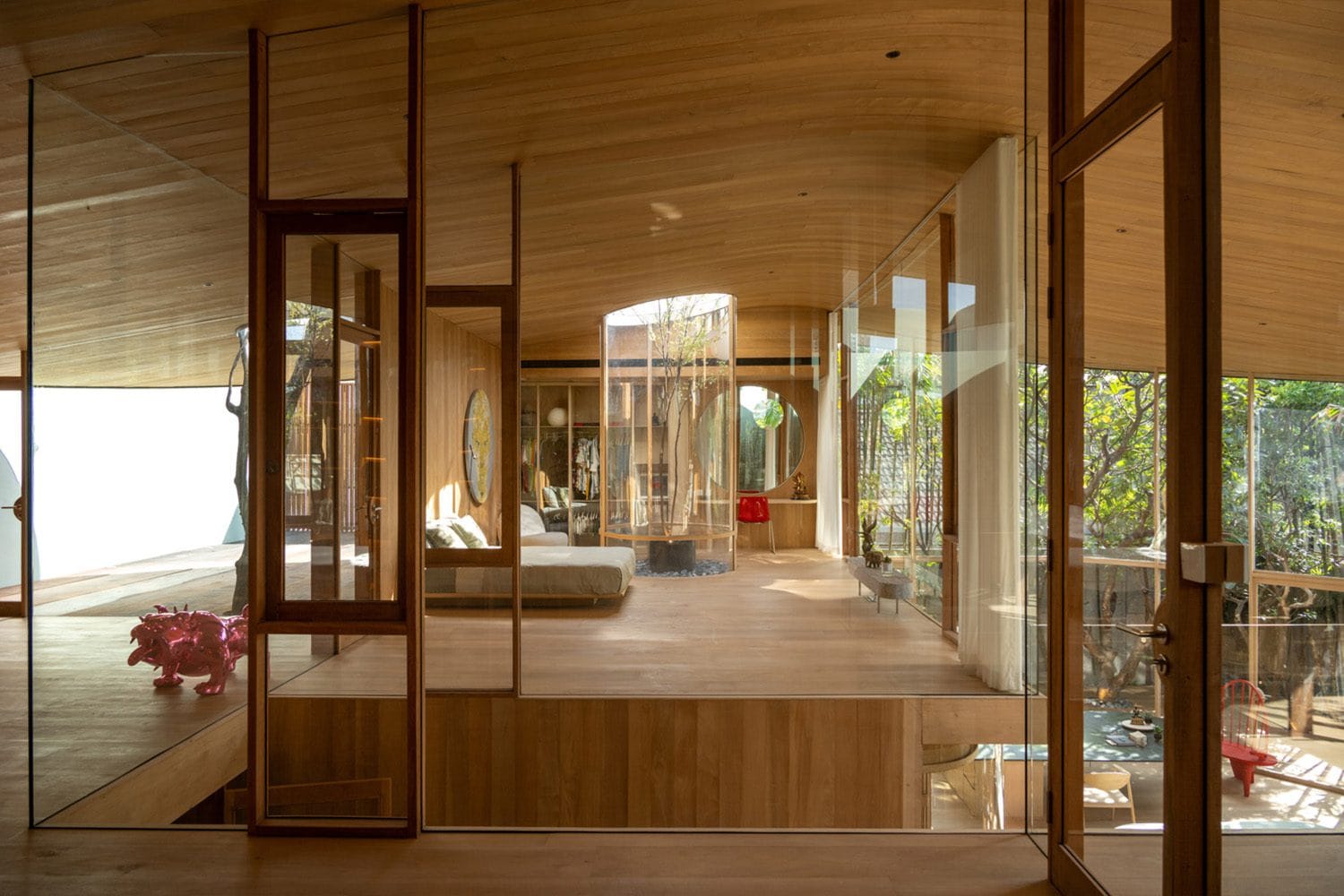
The upper floor houses the primary bedroom along with a space for the owner’s art collection. Natural light enters throughout the day, allowing the atmosphere of the house to shift with the passing hours. As sunlight falls across the timber surfaces, it reveals subtle tonal variations from one moment to the next, while the open plan and natural ventilation keep the interior visually gentle and comfortably cool.
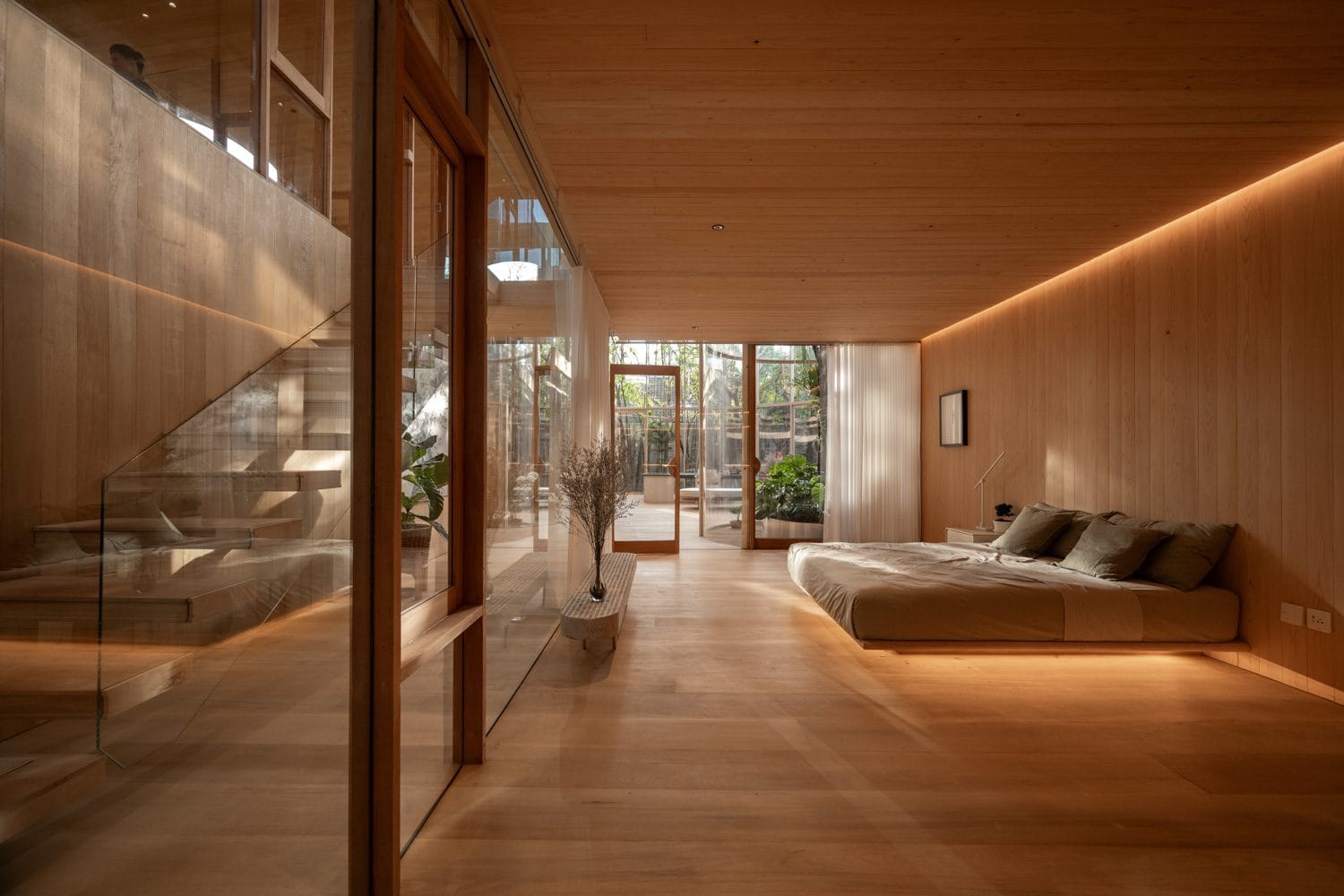
Woodwork is another defining element of the house. The architects selected different timber species according to their function: takian timber for the exterior structure, where resistance to sun and rain is essential; ta baek wood for the interior flooring, valued for its durability in relation to moisture; and Japanese hinoki cypress for the primary bedroom and living room, chosen for its distinctive fragrance and soft, muted tone. To maintain a cohesive atmosphere throughout the house, the architects stained the other timber surfaces to align more closely to the colour of hinoki, lending the living spaces an even softer, more harmonious character.
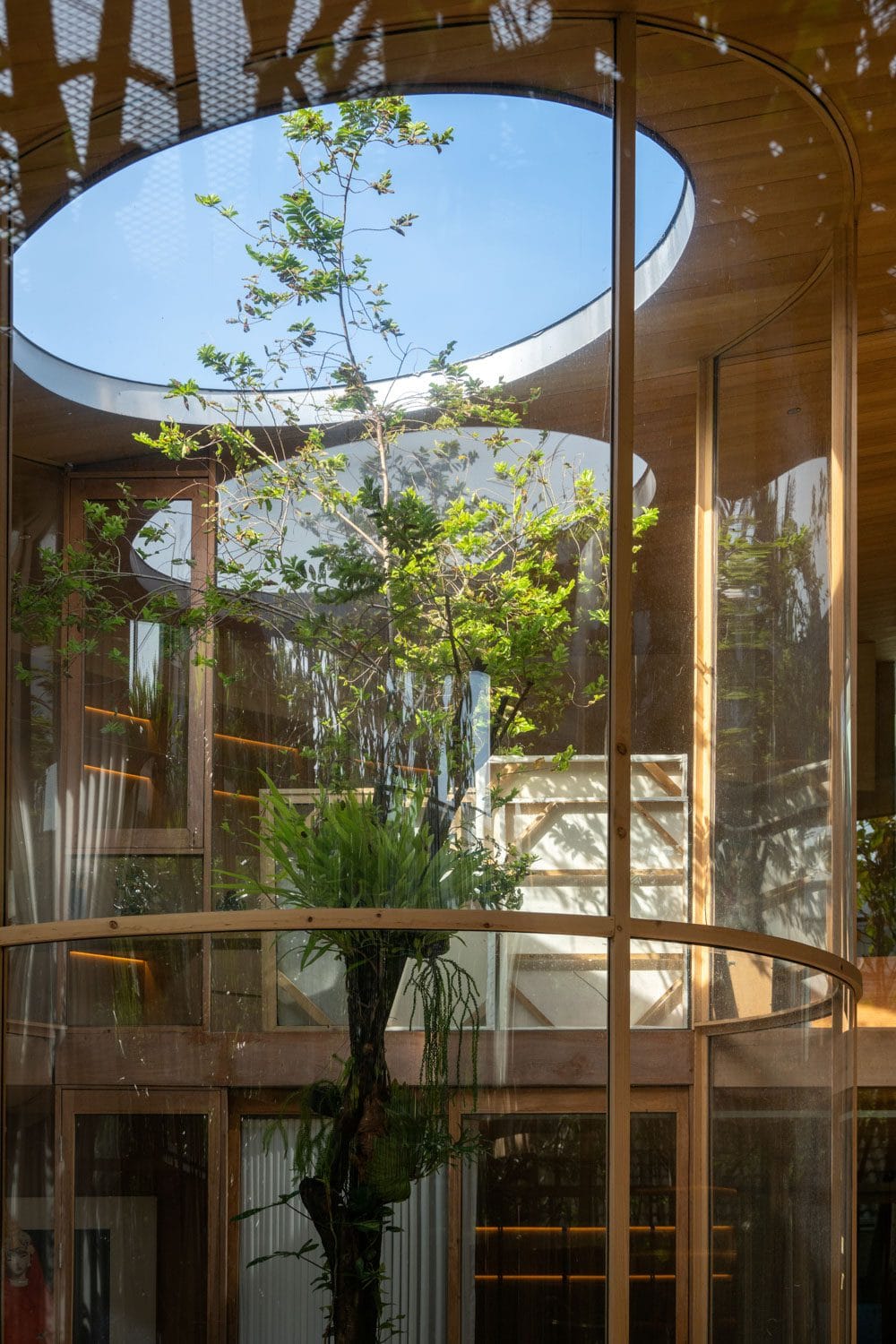
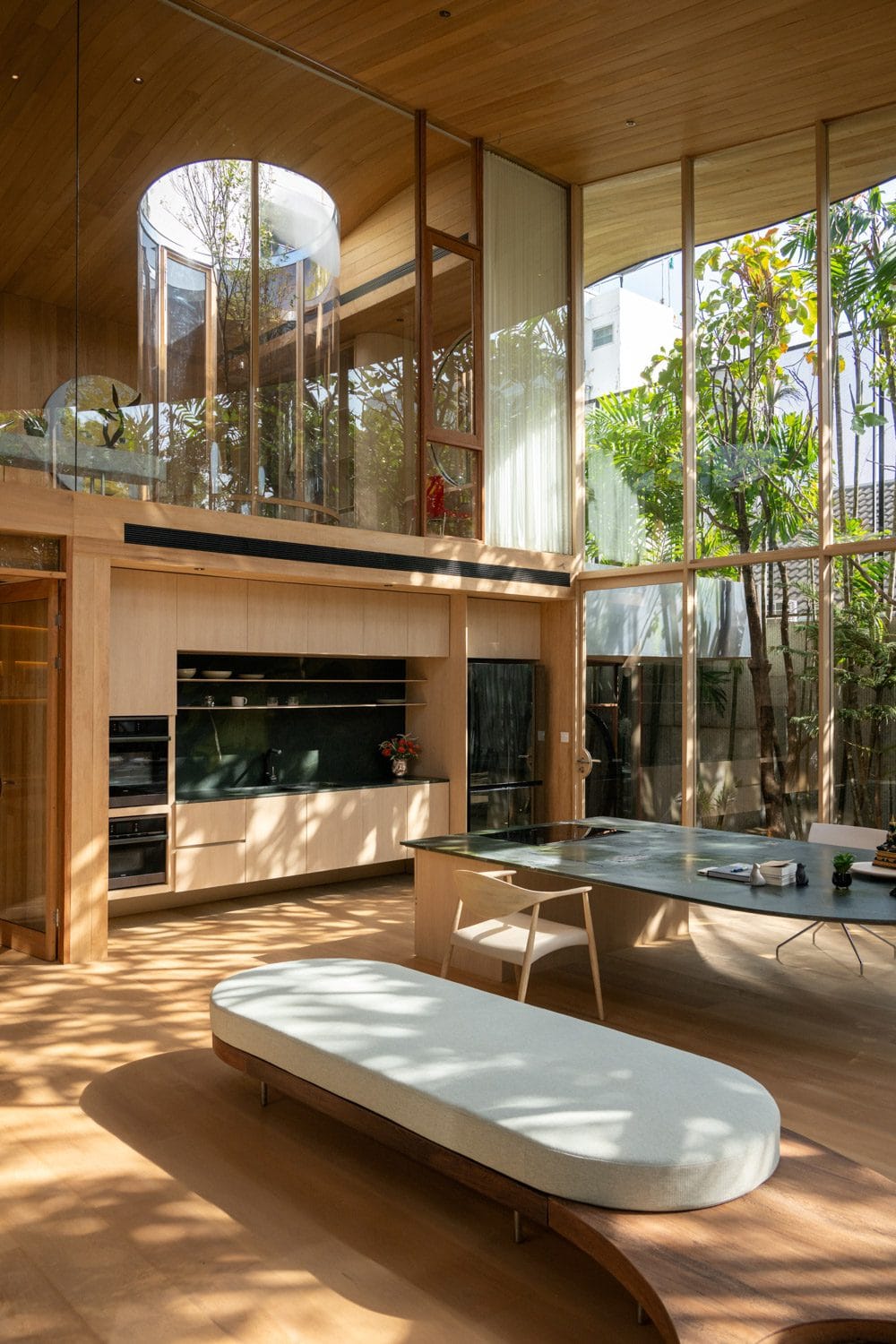
The greenery surrounding the house was conceived to grow alongside the architecture itself, from the trees at the entrance, which rise through openings in the ceiling, to the rows of layered planting along the perimeter walls that lend privacy to the open-plan interior. These small gardens envelop the house, allowing green views to be seen from every corner of the space. Although the plot is almost enclosed on all sides, once inside this private domestic retreat, the interior always opens onto a landscape.
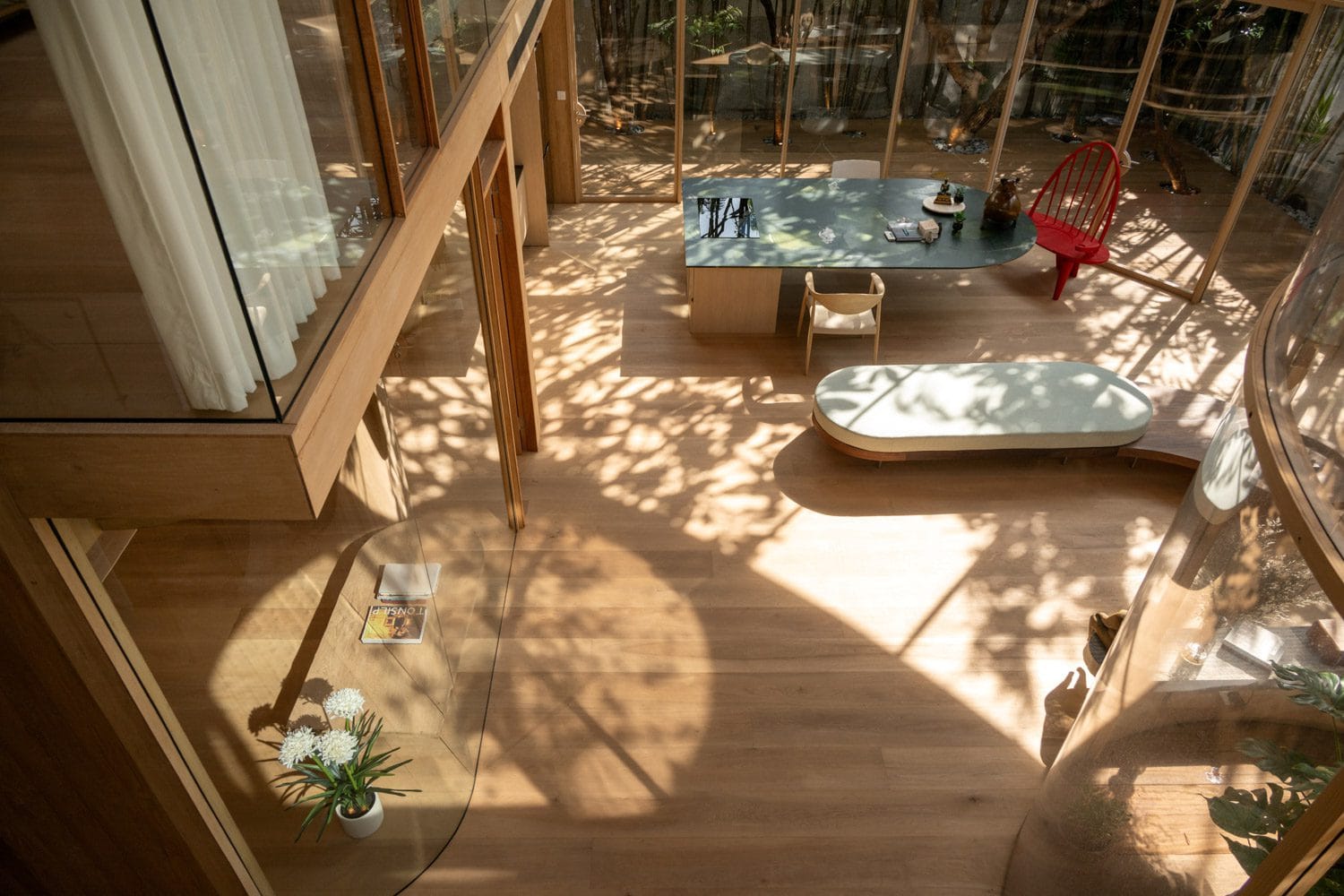
To say that a house can be an expression of the self is no overstatement here. From the free-flowing living hall, with no fixed corners or television, to the generous workspace that reflects the owner’s deep engagement with work, the house quietly reveals the character of the person who inhabits it. The extensive use of timber throughout, shaped into curved forms, the commitment to materials in their honest state, and the greenery woven through both the interior and exterior all speak to the shared enthusiasm between the homeowner and architects in experimenting together with new materials. In this sense, the house becomes a terrarium in its fullest expression.