
NARESUAN UNIVERSITY PRESENTS SIX ARCHITECTURE THESIS STUDENT PROJECTS
(For Thai, press here)
The Bachelor of Architecture program at Naresuan University aims to produce graduates capable of designing architecture in creative and sustainable ways. The program emphasizes the ability to co-create with others through a creative entrepreneurial mindset, grounded in professional standards of knowledge as well as skills in utilizing tools and digital technologies. It seeks to align architectural practice with the needs of communities, society, the economy, and the environment in a sustainable manner, through the application and integration of local wisdom with contemporary knowledge, all within a transparent and resilient organizational culture.
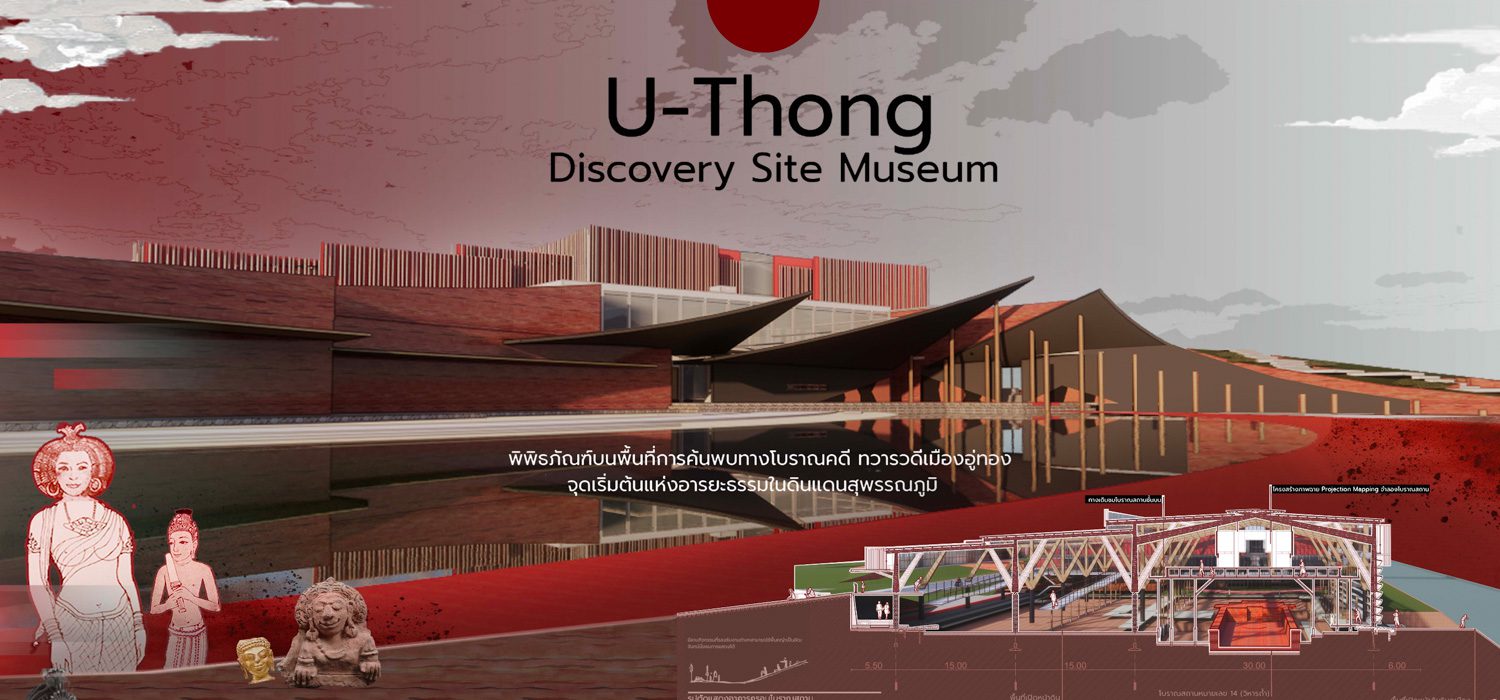
U-Thong Discovery Site Museum
By Thirawat Loylom
The core purpose of this project is to bridge people with the ancient monuments—to allow the present to look back upon the past, recognize its worth, and carry its cultural spirit into the future. The museum therefore features exhibitions narrating the history of ancient ancestors, tracing their evolution into the Dvaravati period, the golden age of U-Thong, before the city gradually vanished from historical records. This transition led to the migration toward Suvarnapura (Suphanburi), which laid the foundation for Ayutthaya, later evolving into Suphanburi Province, and ultimately becoming us—the people of today. The exhibition also reflects on the fading memory of history—how differences in race and language, though we share the same roots, have caused us to drift apart. It highlights methods of heritage preservation, providing an open archaeological workspace where visitors can witness real conservation processes and the search for historical truths. Another significant part of the site is the community cultural area, where local people can proudly present their living heritage—arts, crafts, and traditional customs—to visitors. This living exhibition creates a meaningful link between the cultures of the past and the lives of people today, connecting older generations with new ones—both locals and visitors alike—through shared understanding and appreciation.
Student: Thirawat Loylom
Advisor: Dr.Sirodom Sueklay
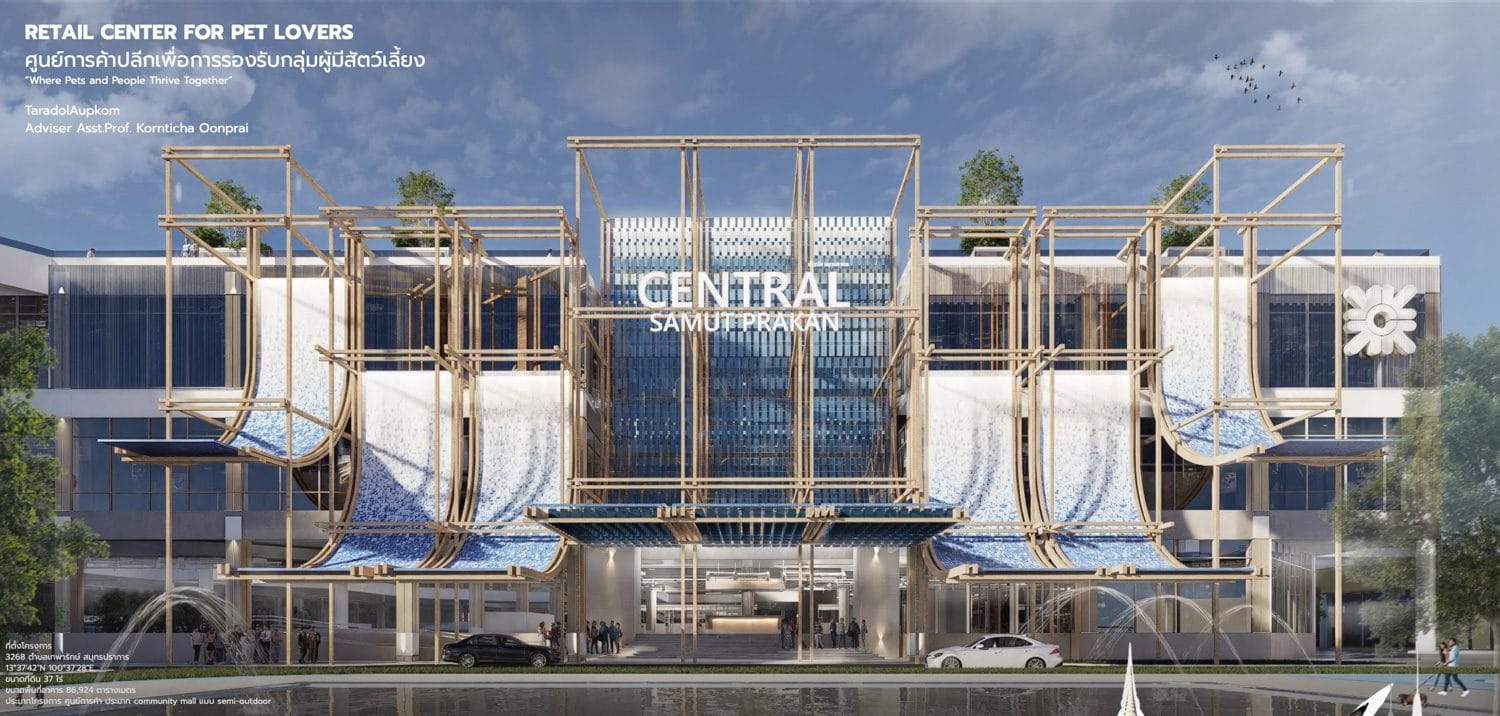
Retail Center for Pet Lovers
By Taradol Aupkom
In the post–COVID-19 era, people have spent more time with their pets than ever before. Pets are no longer just companions, but beloved family members who bring comfort and emotional connection. This shift in lifestyle has created a growing need for spaces where humans and animals can live freely, safely, and sustainably together.
Responding to this trend, The Fortress of Happiness was conceived as a new shopping destination under the Central Samut Prakan brand. Occupying over 37 rai (approximately 86,000 sq m), the project draws inspiration from Samut Prakan’s unique identity — a coastal city that harmoniously blends history, culture, and nature — to create a true ‘center of life’ connecting people, nature, and pets.
The architecture speaks a gentle and welcoming language through soft, flowing curves, natural materials, and semi-open spaces that invite sunlight and sea breeze. Inside, the design includes pet-friendly ramps, soft-touch surfaces, and shared rest areas, all crafted with empathy for the behavior and comfort of every living being.
Ultimately, The Fortress of Happiness is more than a shopping mall — it is a center of living connections, where people, nature, and pets coexist with understanding, respect, and genuine happiness.
Student: Taradol Aupkom
Advisor: Asst.Prof.Kornticha Oonprai
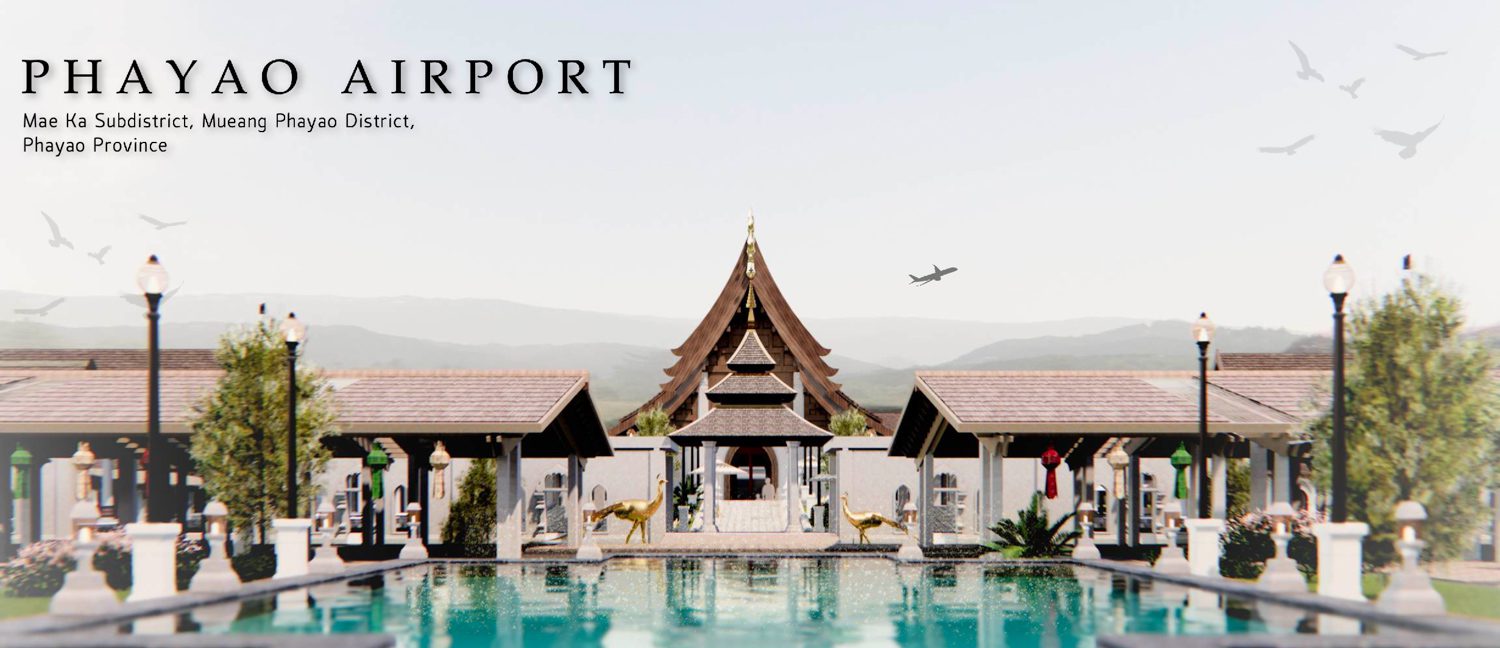
Phayao Airport
By Wichaidit Paengklang
The Phayao Airport Project represents more than a transportation hub. It is a narrative of identity, memory, and belonging. What may appear as a simple infrastructure project to outsiders embodies the aspirations of Phayao’s people, reflecting a deep desire to let the world see that Phayao is more than a destination; it is a living story rooted in its land and culture.
The design concept reinterprets the city’s historical richness through spatial experience, light, shadow, and local materials. Architectural elements are inspired by the vernacular wisdom of Phayao from the rooflines and spatial hierarchy of temples such as Wat Luang Ratsanthan and Wat Tha Fa Tai, to the traditional planning of village houses. These cultural traces are transformed into a contemporary architectural language that remains gentle and familiar.
Rather than seeking grandeur, the building embraces modesty and human scale. It becomes an airport that speaks the same language as its people through breathable walls, warm light, and low, embracing roofs forming a journey that is not only for travel but also for returning home.
Ultimately, this thesis stands as a letter from a small town declaring that Phayao is not silent, but speaks softly through architecture, telling its story to the world.
Student: Wichaidit Paengklang
Advisor: Assoc.Prof.Dr.Watcharin Jintwut
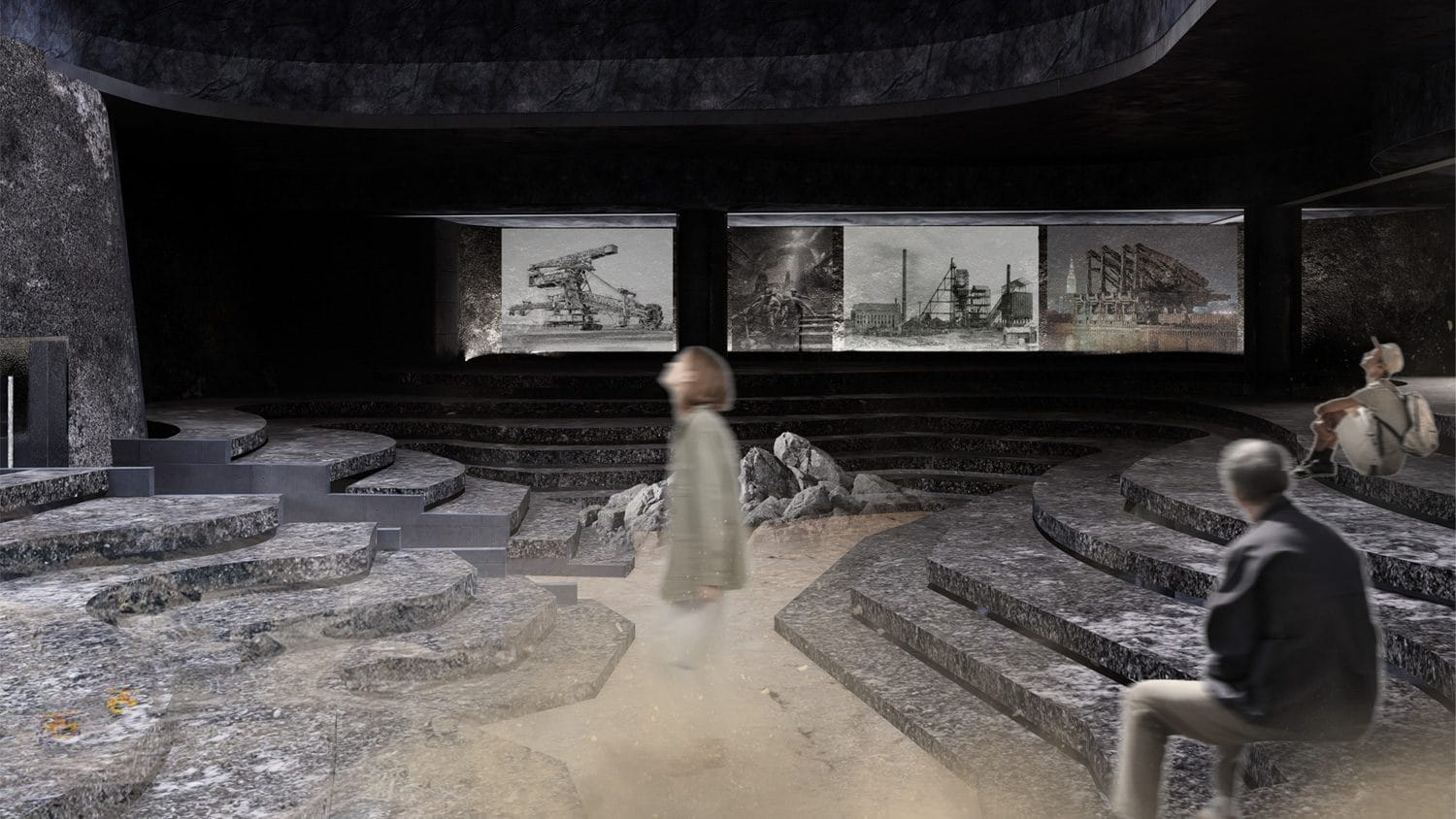
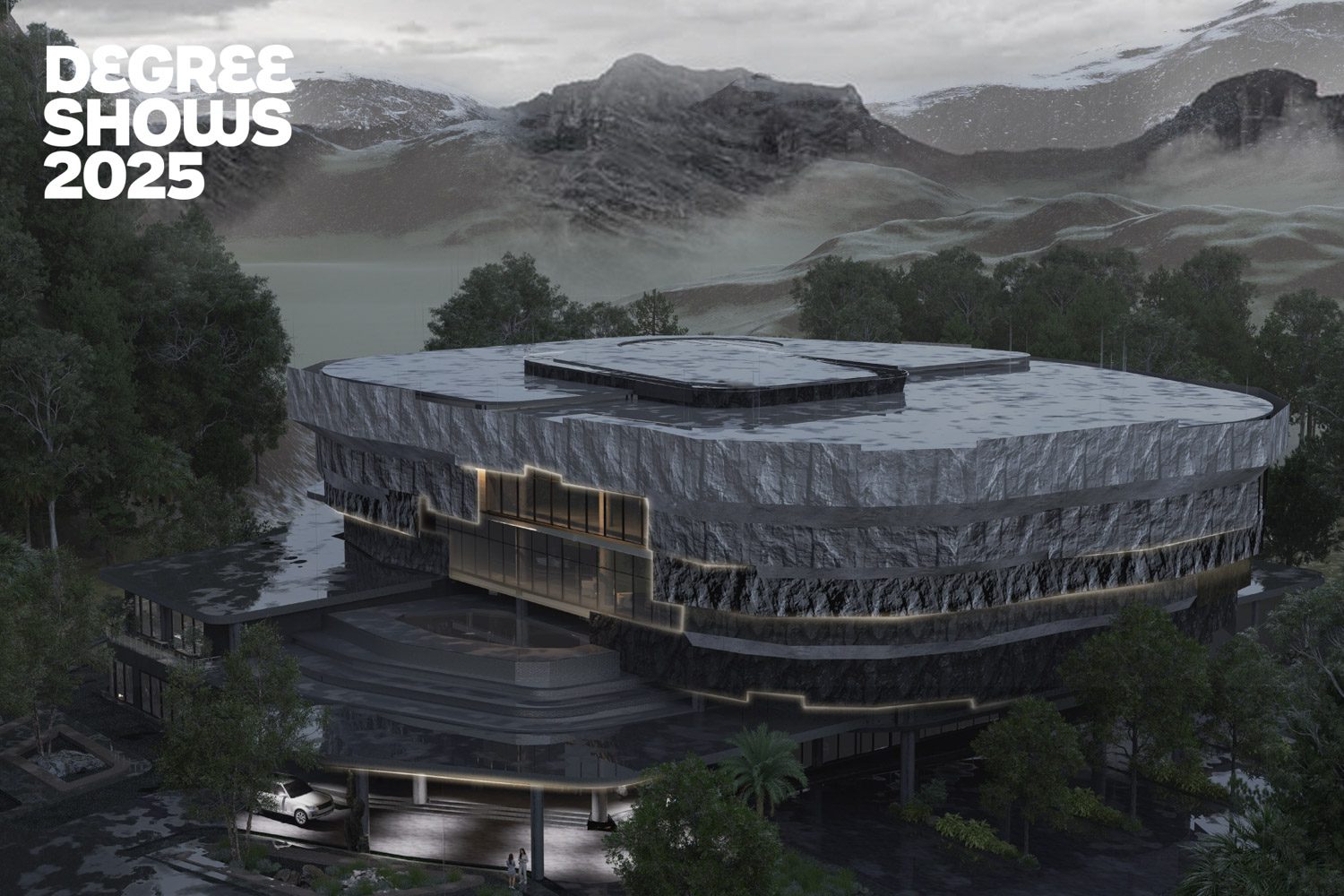
Rare Earth Elements Museum & Research Center
By Chitchanok Phatdam
Rare Earth Elements (REEs) are a group of minerals that serve as critical raw materials for advanced technologies, including electronics, batteries, aerospace, and green energy systems. Although they occur naturally, their extraction and processing are complex and often have significant environmental impacts. In addition, limitations in resource availability and uneven geographical distribution pose challenges to both environmental sustainability and industrial security.
In response to this context, the Rare Earth Museum and Research Center is proposed as a platform for knowledge accessibility and public engagement. The project comprises a museum that communicates information through interactive experiences, alongside a research center dedicated to advancing innovation and promoting efficient resource utilization. The design concept draws inspiration from the characteristics of an open-pit mine, expressed through a series of terraced architectural forms that cascade across the site, seamlessly connecting interior and exterior spaces. Material selection reflects the qualities of mineral resources, creating an immersive spatial experience that vividly conveys the exploration and significance of natural resources.
Student: Chitchanok Phatdam
Advisor: Asst.Prof.Kornticha Oonprai
Email: chitchanok4595@gmail.com
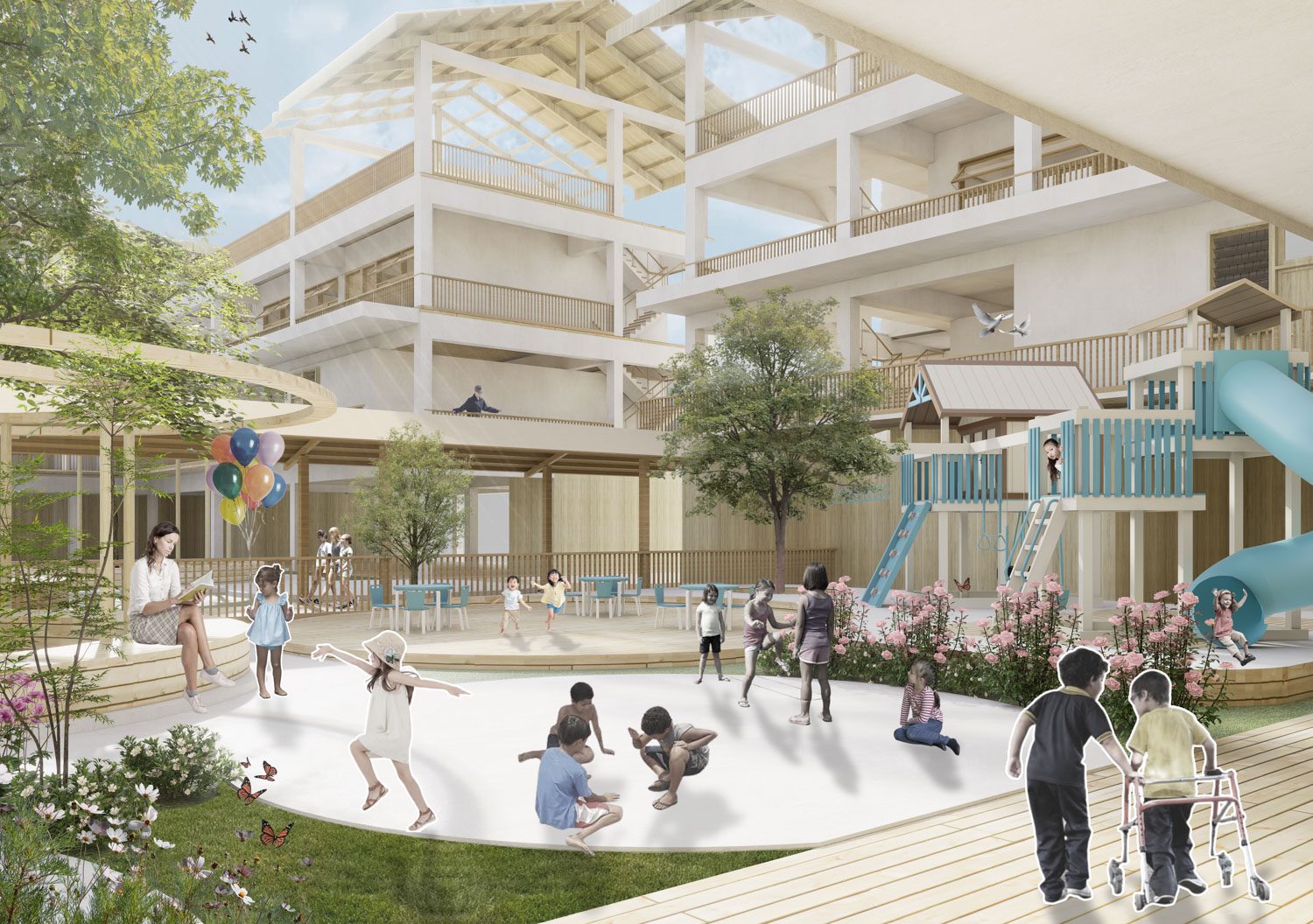
Shelter and Assistance Center for Abused Children Project
By Pajaree Wicha
At present, infrastructure in Thailand for supporting children who have experienced abuse remains limited—particularly in terms of shelters that provide a safe and nurturing environment conducive to both physical and psychological recovery, as well as the development of essential life skills to help children reintegrate into society.
In response to this issue, the Shelter and Assistance Center for Abused Children is proposed. The project aims to create an architectural environment that functions not only as a temporary refuge, but also as a calm and secure space where children do not feel pressured or retraumatized by the institutional setting. The design focuses on creating a healing environment that supports emotional recovery through spatial elements emphasizing safety, warmth, and a connection to nature. By fostering conditions that promote both physical and mental well-being, the project aspires to help children rebuild their lives with stability and renewed hope for the future.
Student: Pajaree Wicha
Advisor: Asst.Prof.Nattika Navapan
More Info: https://drive.google.com/file/d/1iANsiXu1OgoKWzVPR2ChuvI0pnmF-kOP/view?usp=sharing
Email: pajareew2@gmail.com
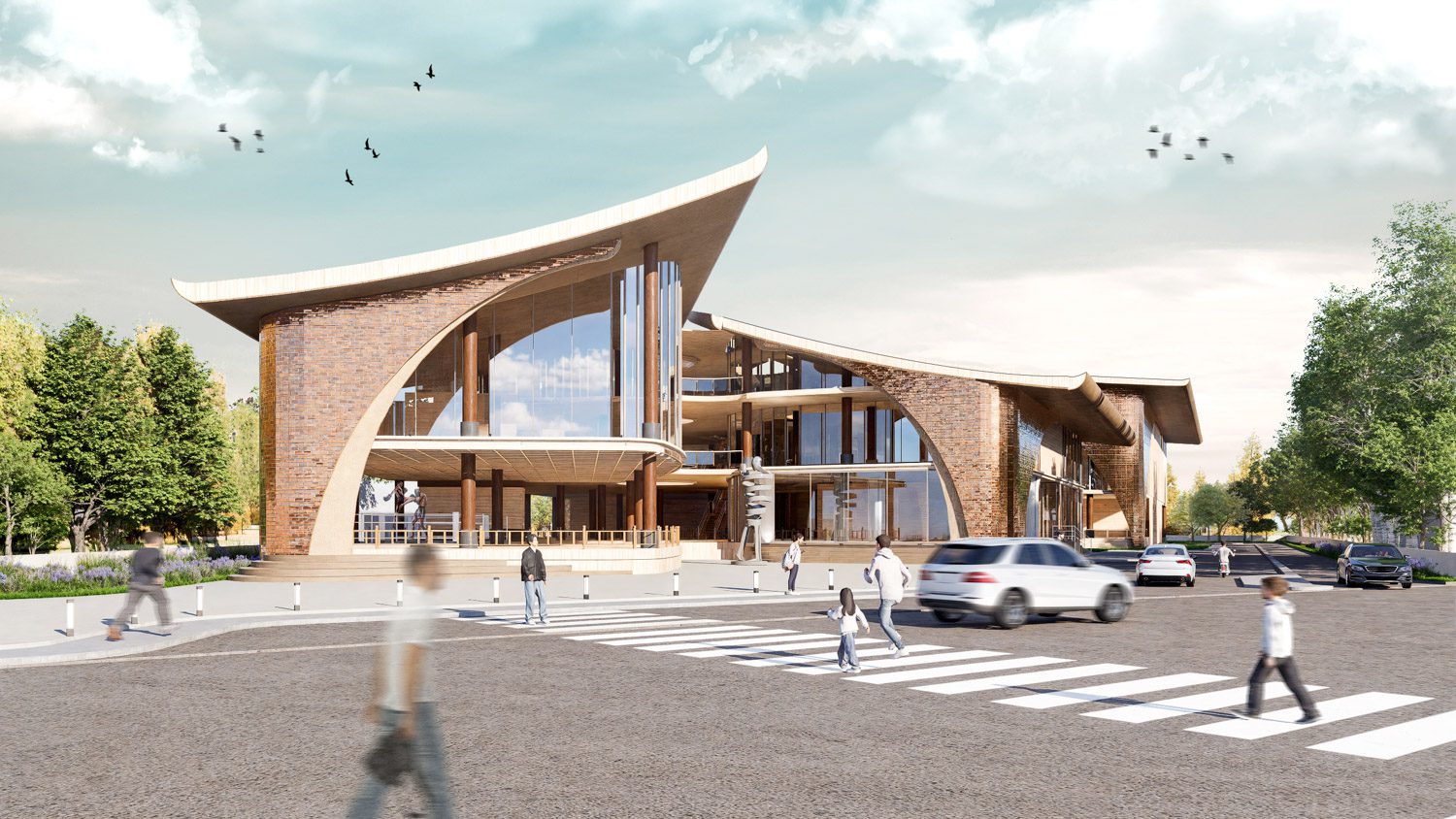
Muay Thai Training Center, Phuket
By Bordee Bumbadtook
The Muay Thai Training Center in Phuket was conceived a recognition of the need to elevate Thailand’s national sport to international standards. Research indicates that many countries have well-equipped training facilities that integrate standardized systems with comprehensive sports development programs. In contrast, Thailand—the birthplace of Muay Thai—still has a limited number of fully integrated training centers, and often lacks clear representation of Muay Thai’s historical and cultural identity. This project is therefore developed as a dedicated platform that not only enhances training standards but also preserves and promotes the cultural heritage of Muay Thai. It aims to support athletes at all levels—from beginners to professionals—by strengthening both physical and mental capabilities, while cultivating high-quality Muay Thai personnel to meet both domestic and international demands. Additionally, the center serves as a hub for knowledge exchange through training programs, seminars, and collaborative activities, fostering a deeper understanding of Muay Thai. Ultimately, the project aspires to elevate the discipline onto the global stage in a sustainable and meaningful way.
Student: Bordee Bumbadtook
Advisor: Asst.Prof.Dr.Chorpech Panraluk
Email: poo020844@gmail.com