
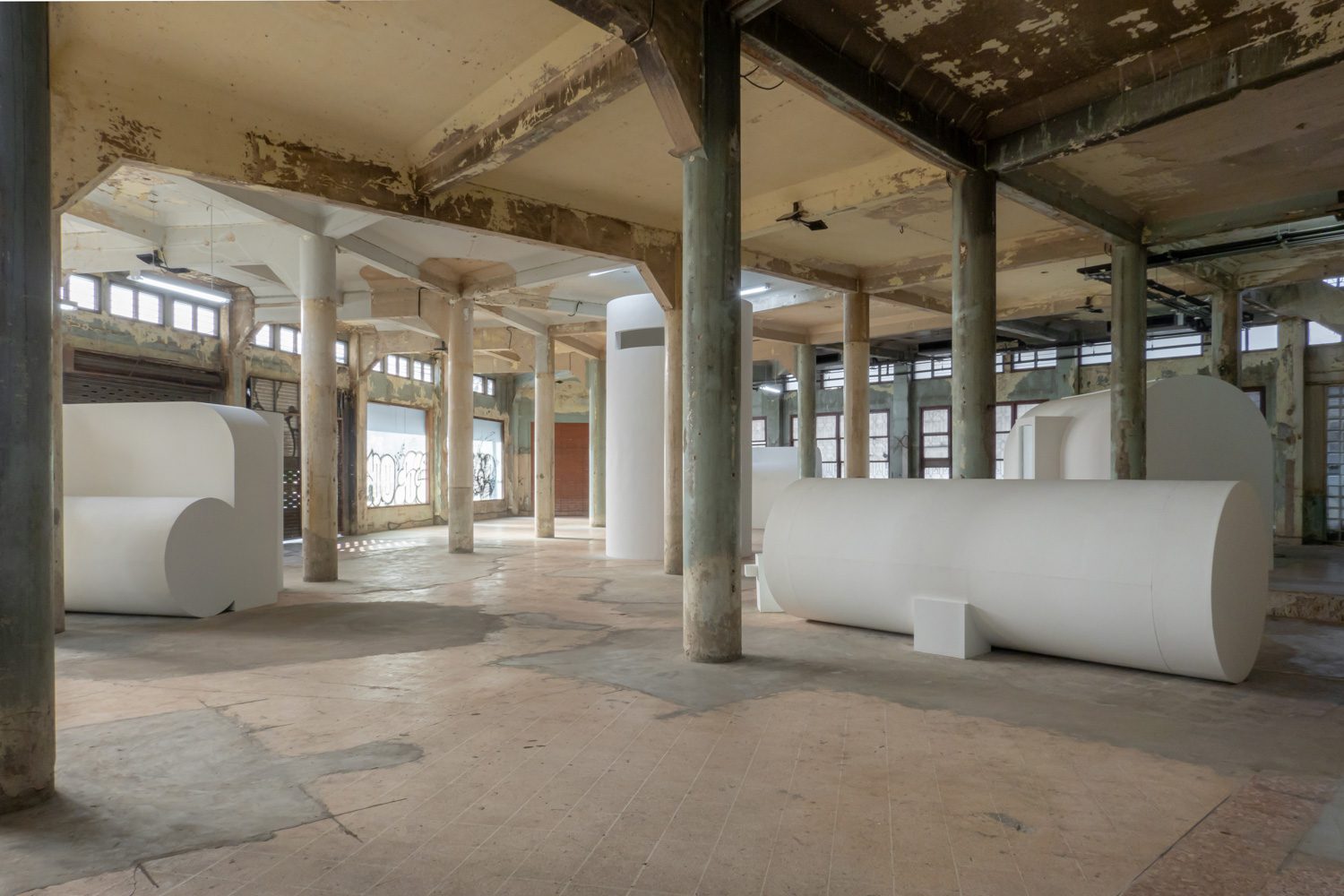
TO DWELL, TO EXIST, EXPLORING ABSALON’S ‘CELLS’ AND THE ARCHITECTURE OF SOLITUDE IN DESCRIPTION WITHOUT PLACE
TEXT: KANDECH DEELEE
PHOTO: KETSIREE WONGWAN
(For Thai, press here)
“Only the kernel of every object nourishes;
Where is he who tears off the husks for you and me?
Where is he that undoes stratagems and envelopes for you and me?”
-Walt Whitman, Song of the Open Road. 1856.1
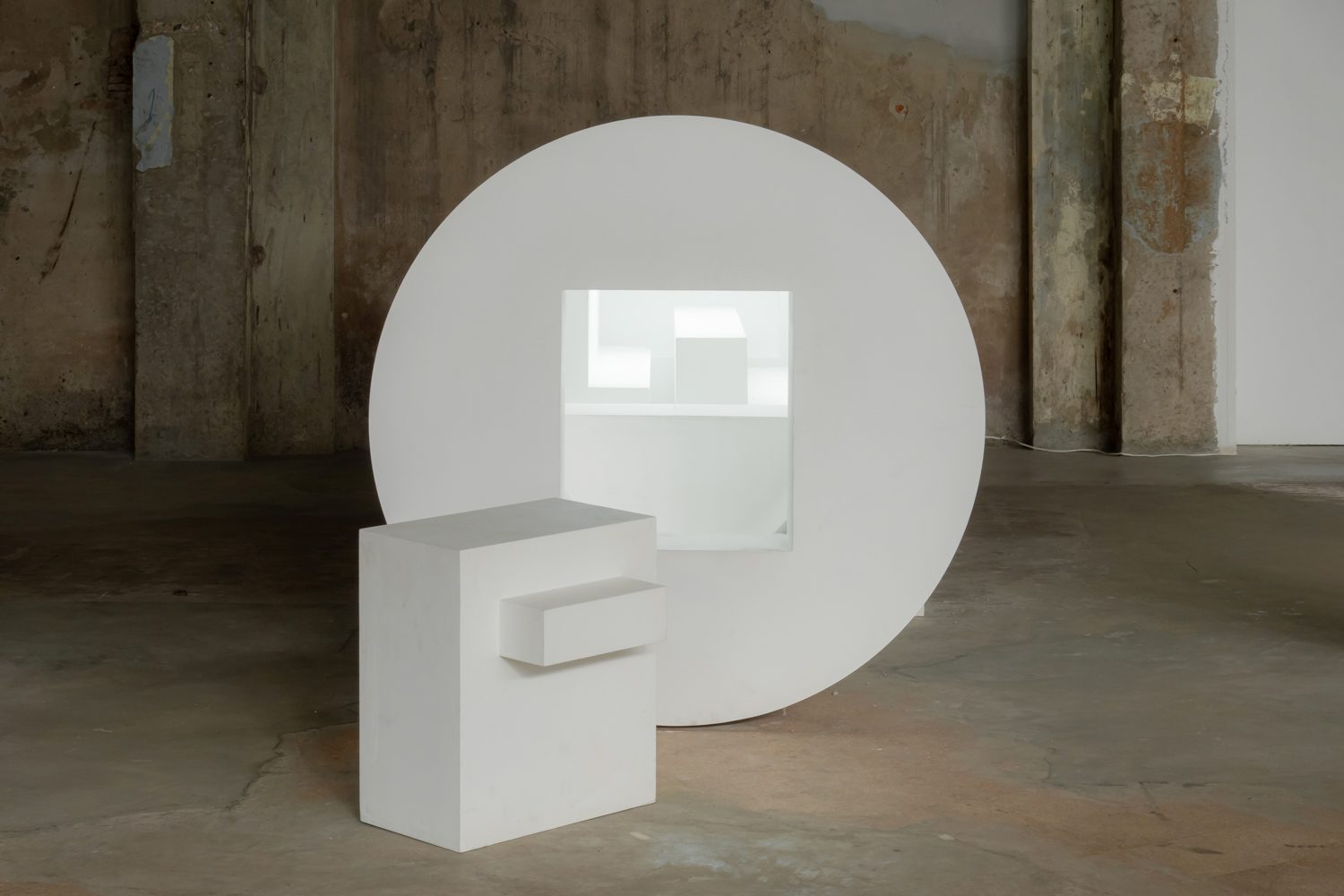
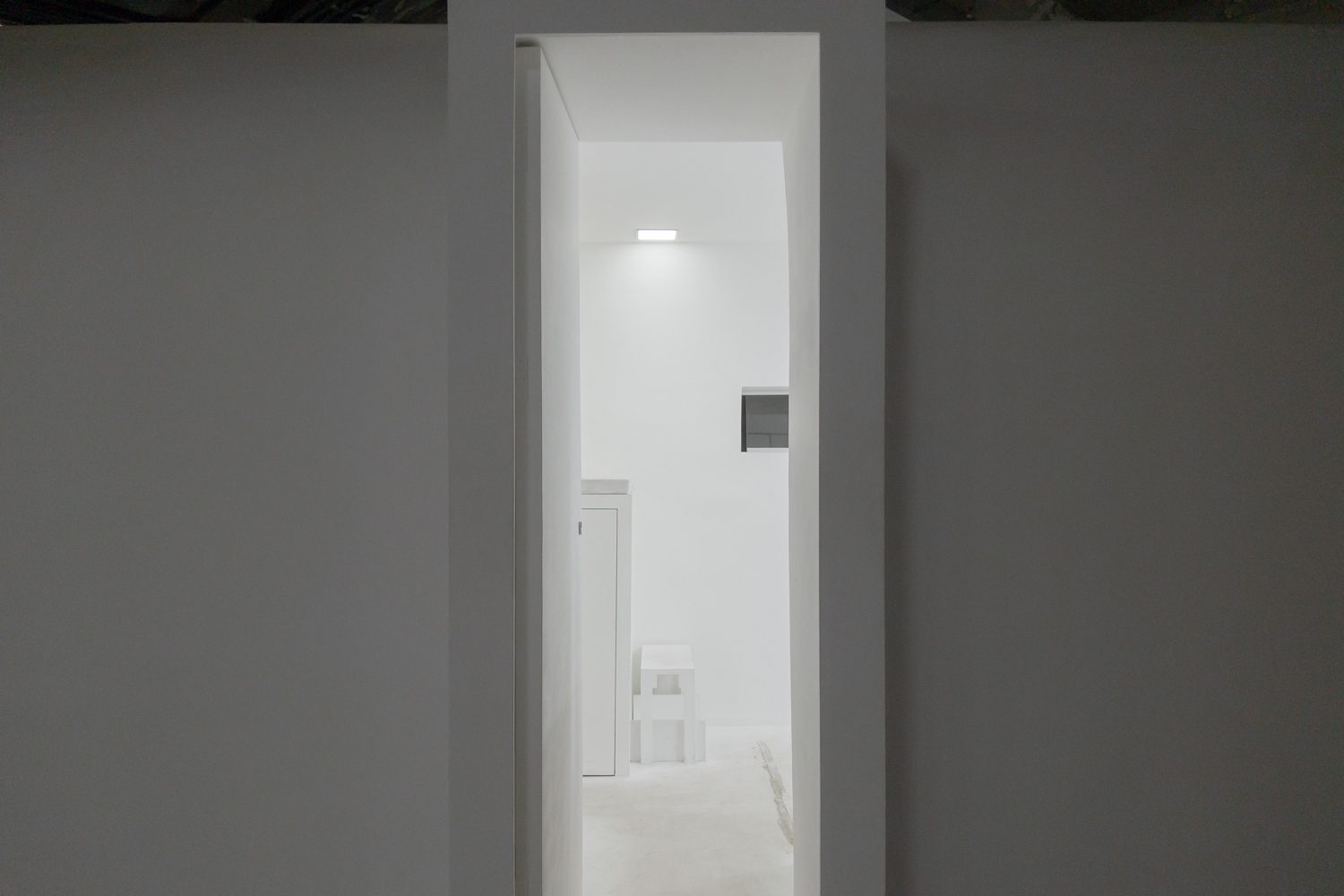
A cluster of stark white structures presents itself as something simply called ‘it.’ Their forms arise from an act of reduction, from paring away to trimming, slicing, and pressing out. These acts are driven by the concern that excess clinging to the surface might distort the core within, causing it to be misread or mistaken for something else. If color once existed, it has been wrung out until pale. If elements once protruded, they have been cut back until only the structural frame remains. Across these six buildings, only what is essential, necessary, and sufficient endures. They resemble oversized wooden blocks scattered across the hall.
Yet once the outer layers have been stripped away, and what is believed to be the core laid bare, what appears does not seem entirely normal.
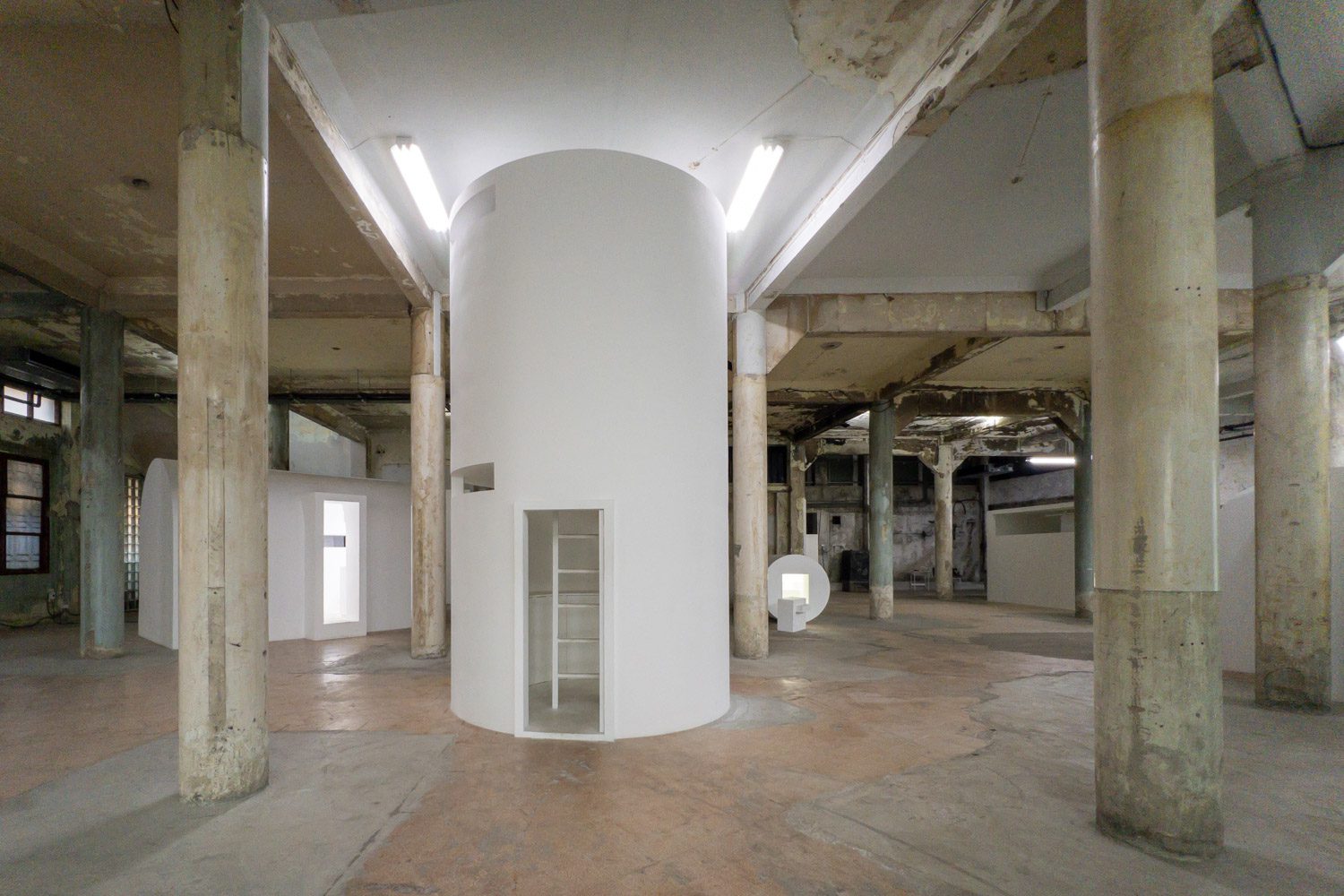
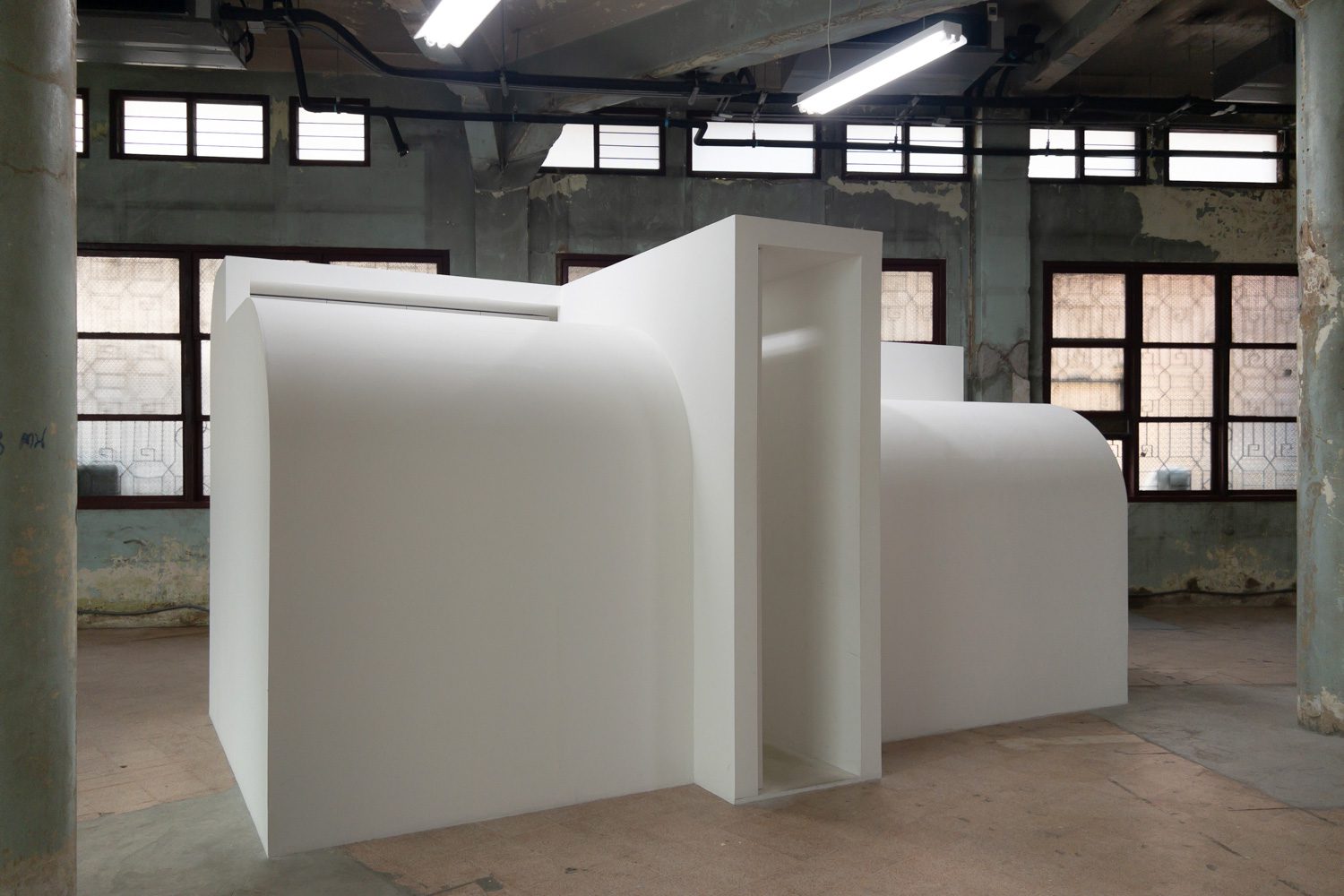
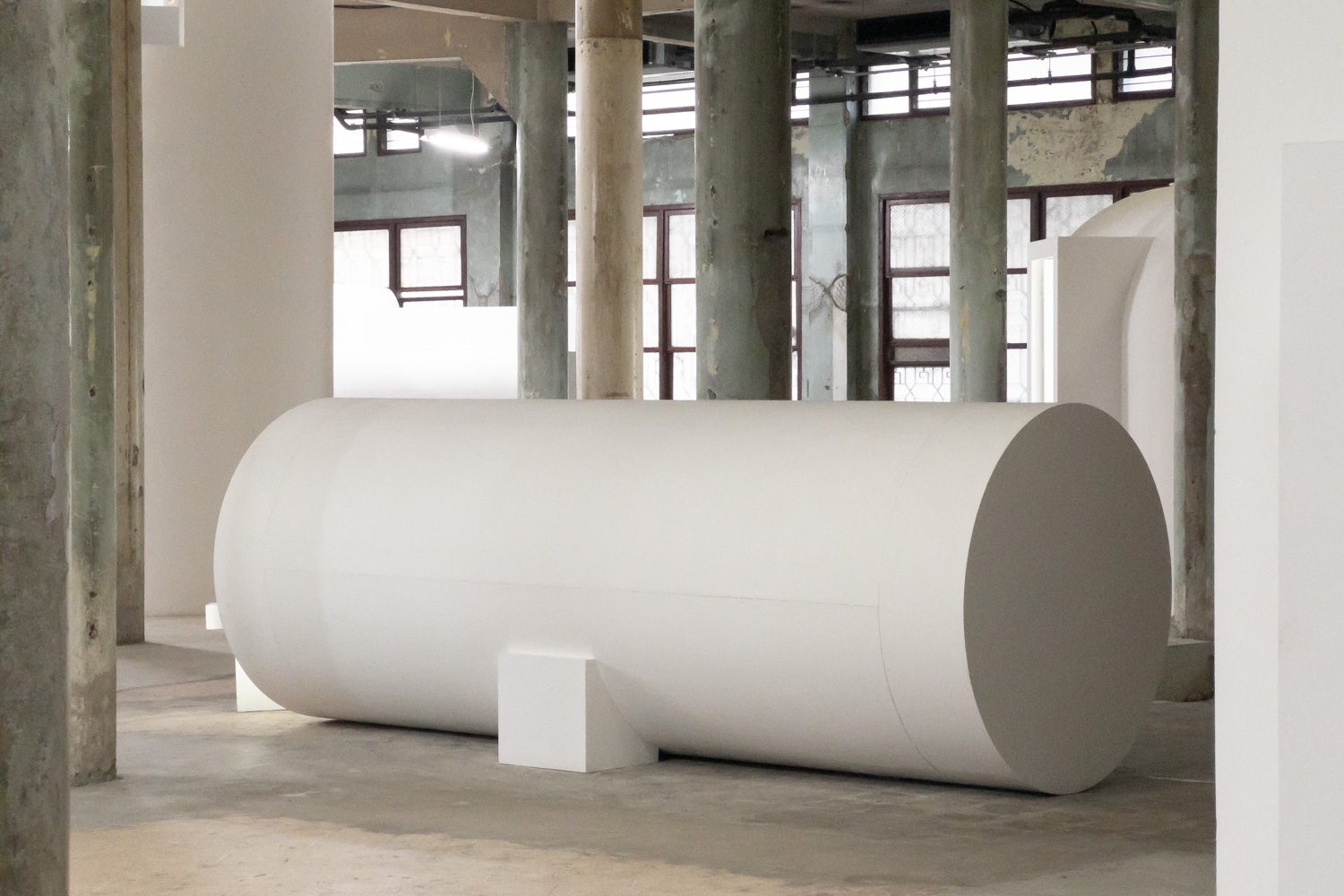
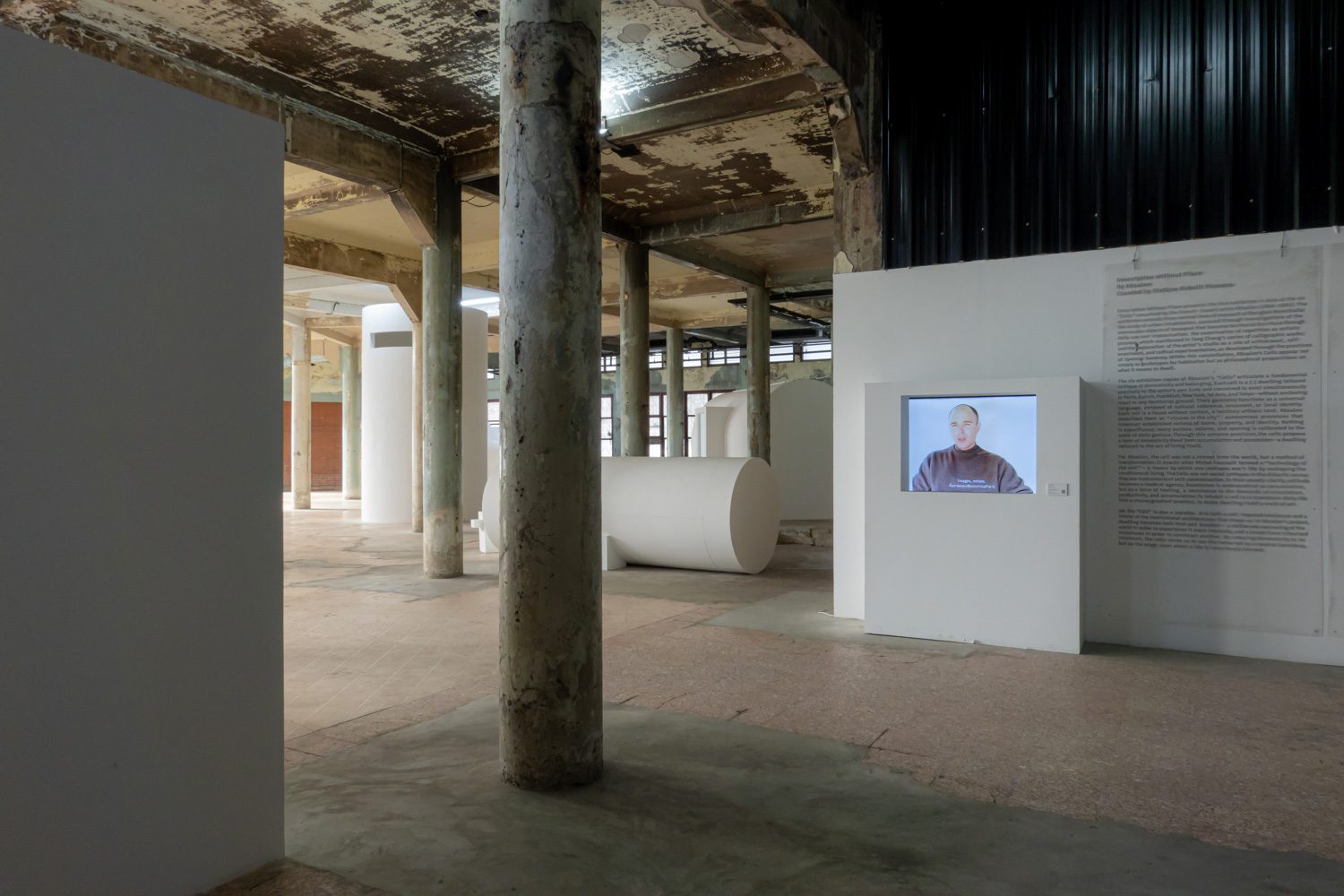
Description Without Place brings together Absalon’s six Cells, formerly dispersed across the world, within the ground-floor hall of Bangkok Kunsthalle. In the video Absalon Interview (1993), the artist describes the series as an attempt to establish a cultural boundary of his own through solitude. Because of the cultural conditions tied to his identity as an Israeli-French individual, his work was often read as a return to those origins. And whenever the works were placed within the physical territory of a particular nation, the meanings of that place inevitably seeped in and became entangled with them.
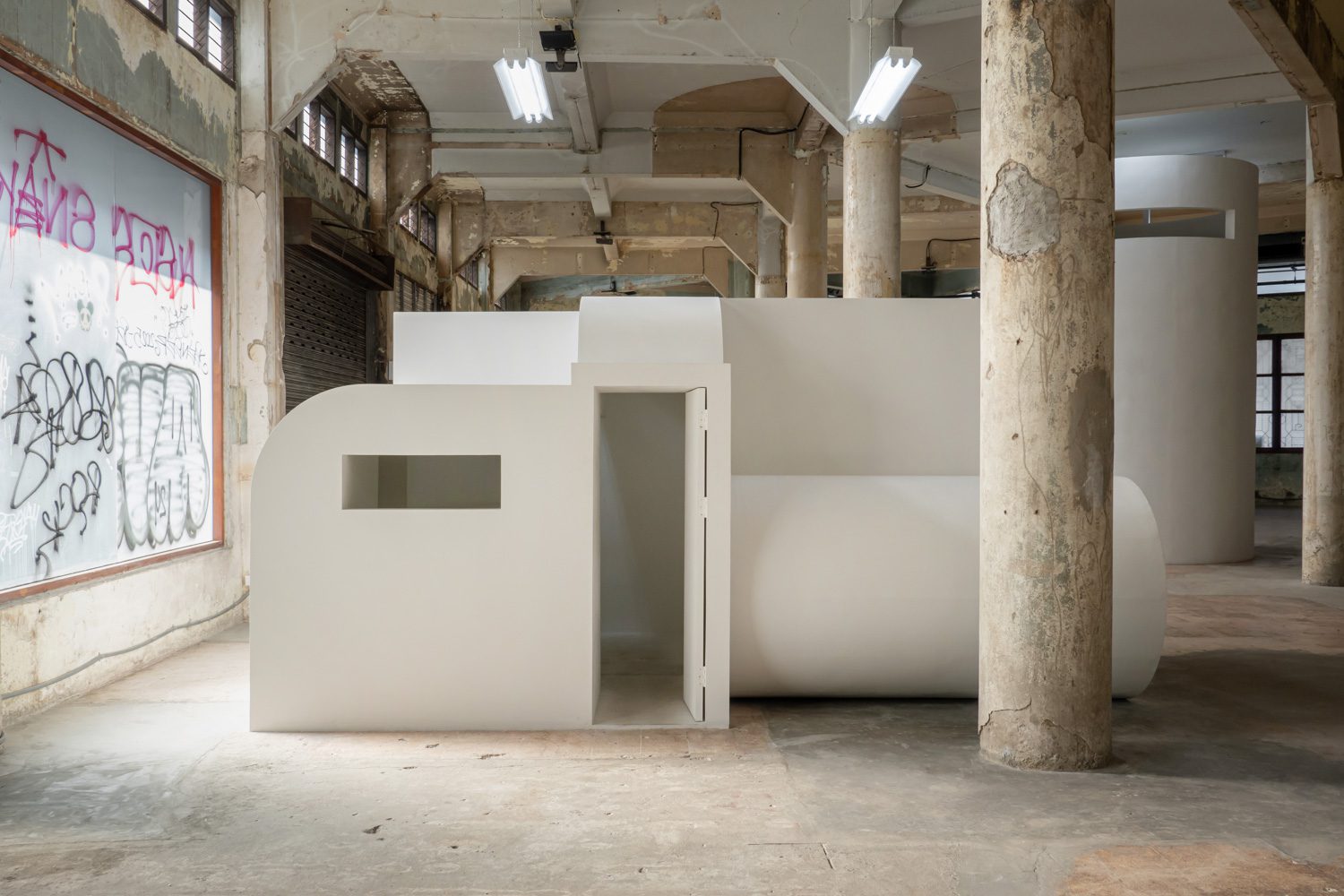
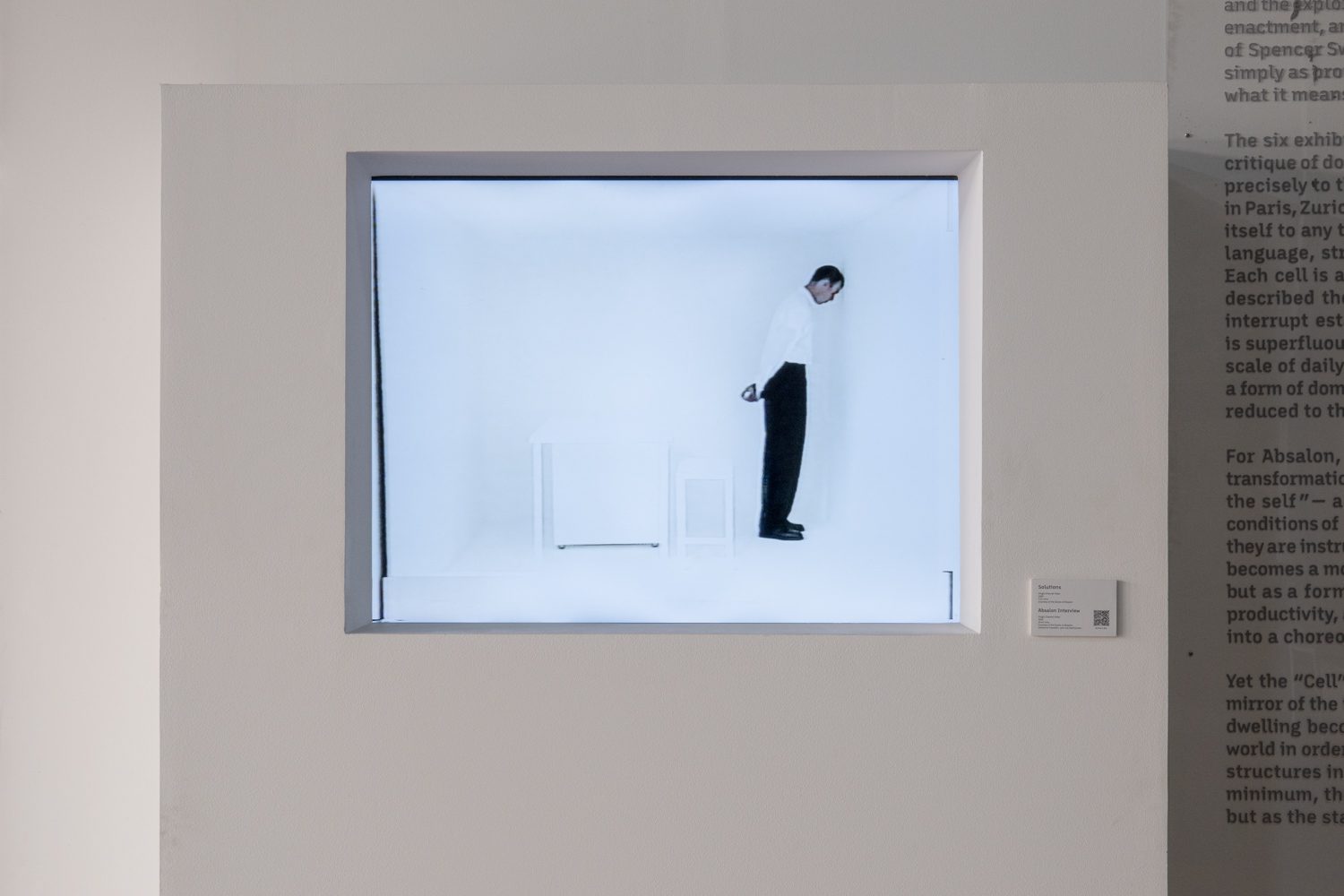
Absalon, therefore, sought to remove every form and element that might trace back to markers of national identity, leaving only what was sufficient for existence. The dimensions of each Cell were reduced to match his own height. Even the ceiling above the bed was cut down to just enough space to sit up. All decoration, inside and out, was drained of color until it turned a stark white. What remained were only the necessities required for the most basic routines of living. To affirm the domesticity of these strange boxes, Absalon filmed the video Solutions (1992), documenting himself inhabiting the Cells through everyday actions: eating, sleeping, sitting, walking, smoking, and bathing.
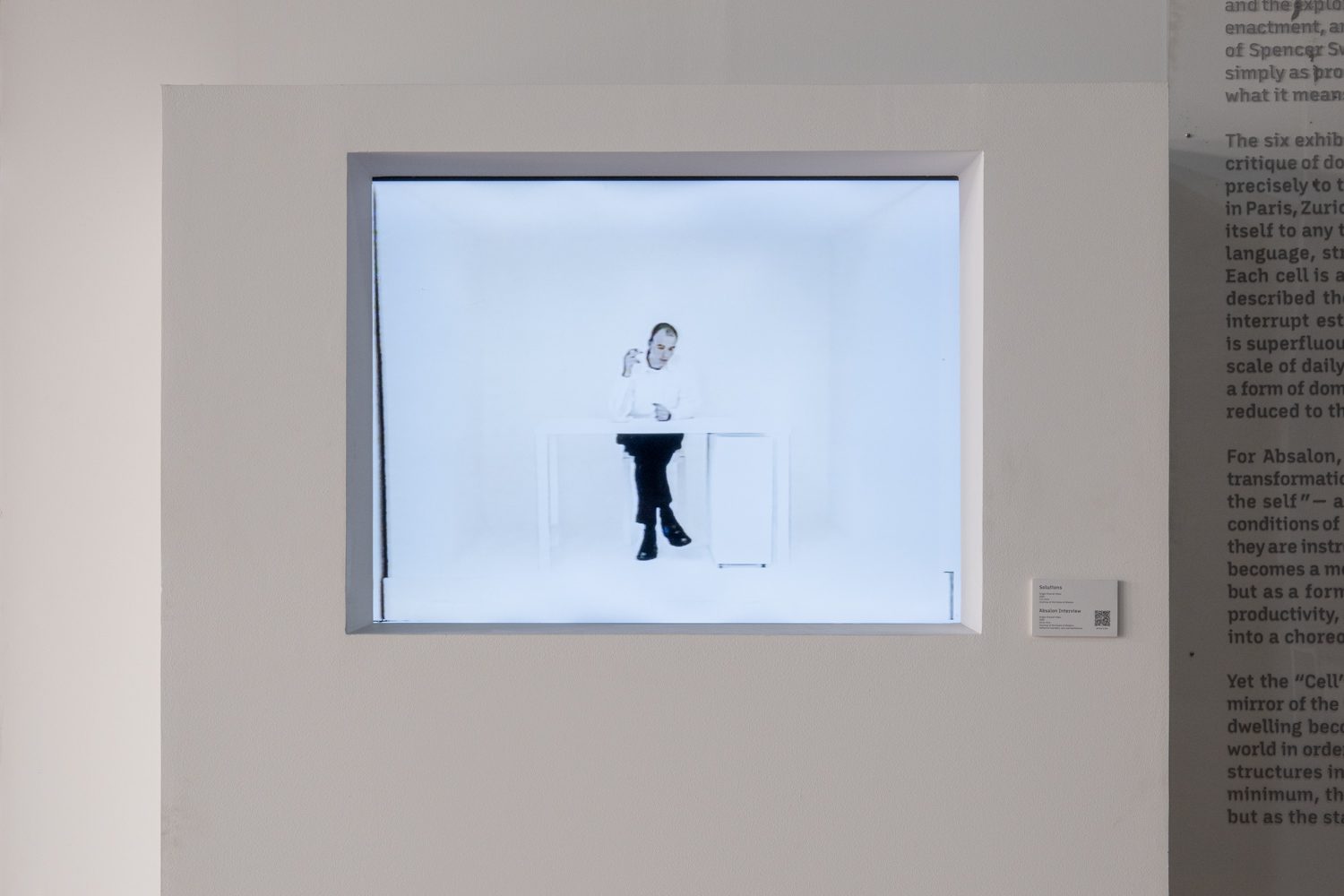
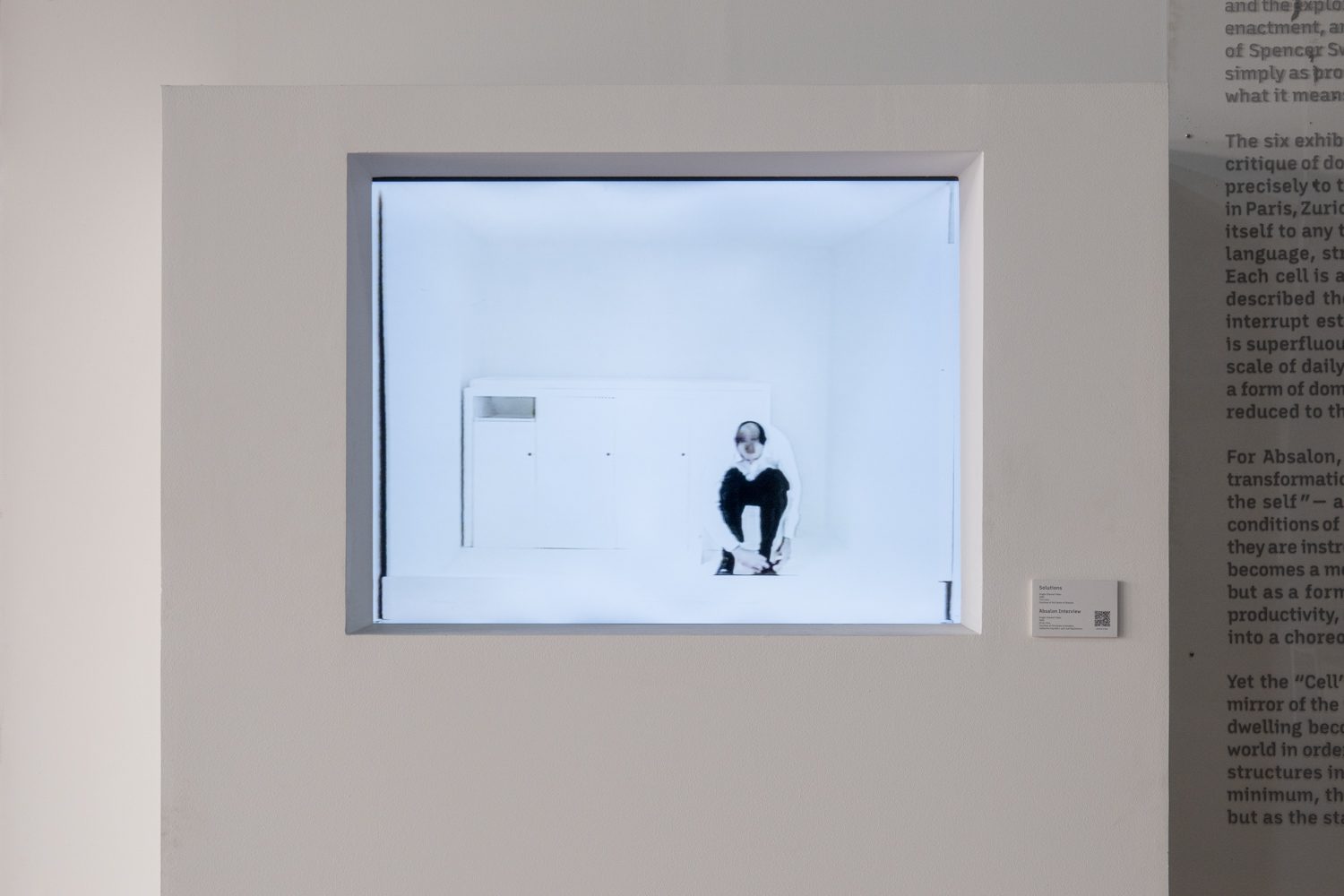
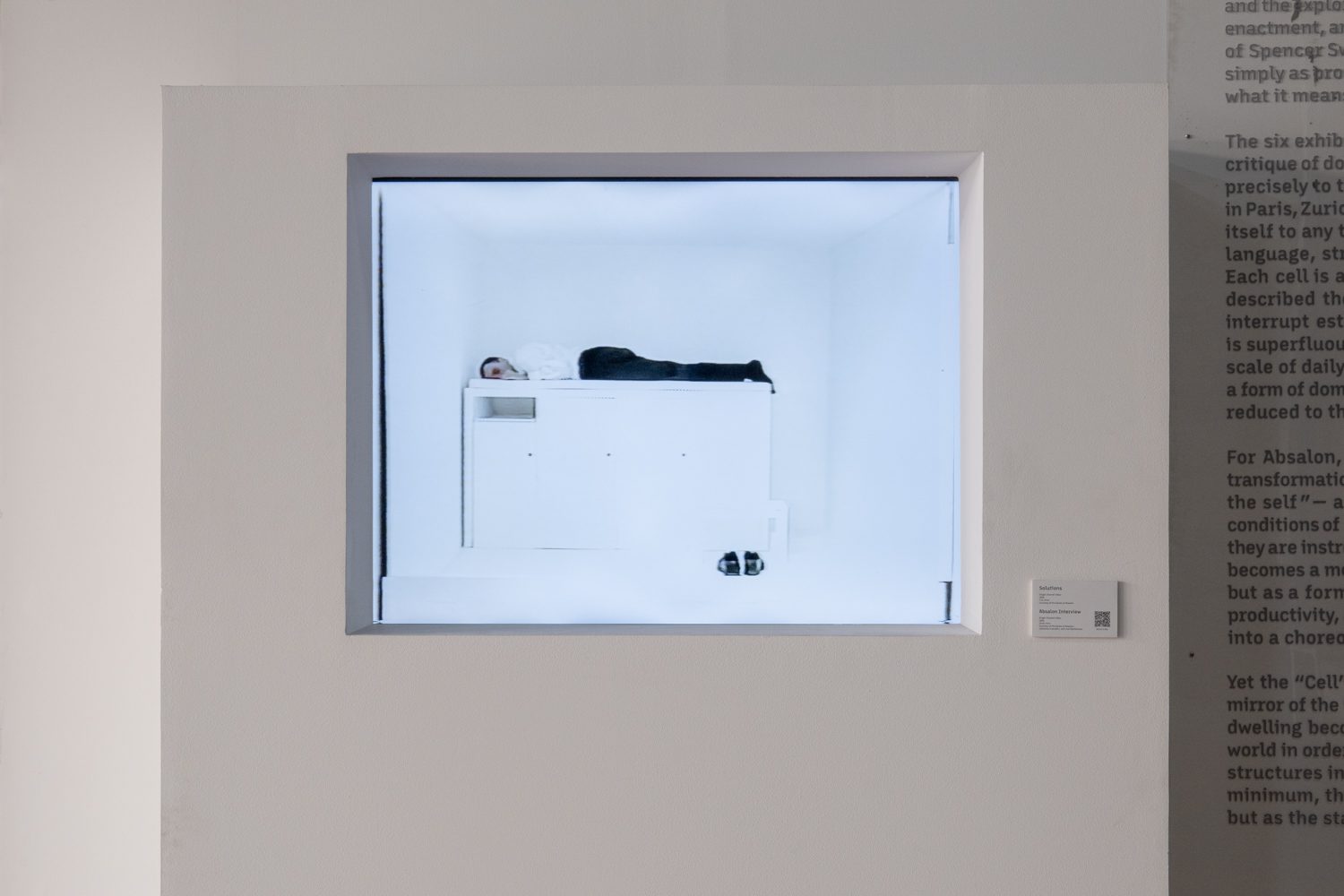
The six Cells thus seem to return us to the fundamental conditions of existence. As the original structures are dispersed across the world, without attempting to ‘fit’ into their surroundings, they prompt us to reconsider ‘house’ as something universal, shared by people everywhere. Wherever humans live, ‘house’ emerges from the effort to sustain existence, rooted in the basic necessity of dwelling. In this sense, Cells strips away every element beyond that necessity, in this sense, posing a quiet question: what must still remain for a house to remain a house? The closeness between building and dwelling2, so near that they almost merge into one, gradually reveals itself as this series of works attempts to answer that question.
Moreover, upon entering the Cells, one encounters everyday objects, including a mattress, chair, table, faucet, and counter, all rendered in the same white that dissolves into the architecture itself. Their disappearance into the house mirrors the way the house merges with existence. This reflects the relationship between humans and things as ready-to-hand (Zuhandenheit), revealing the world as a network of use. Tools and objects withdraw from view in use, receding into the background and becoming like extensions of the human being (Dasein, ‘being-there’).
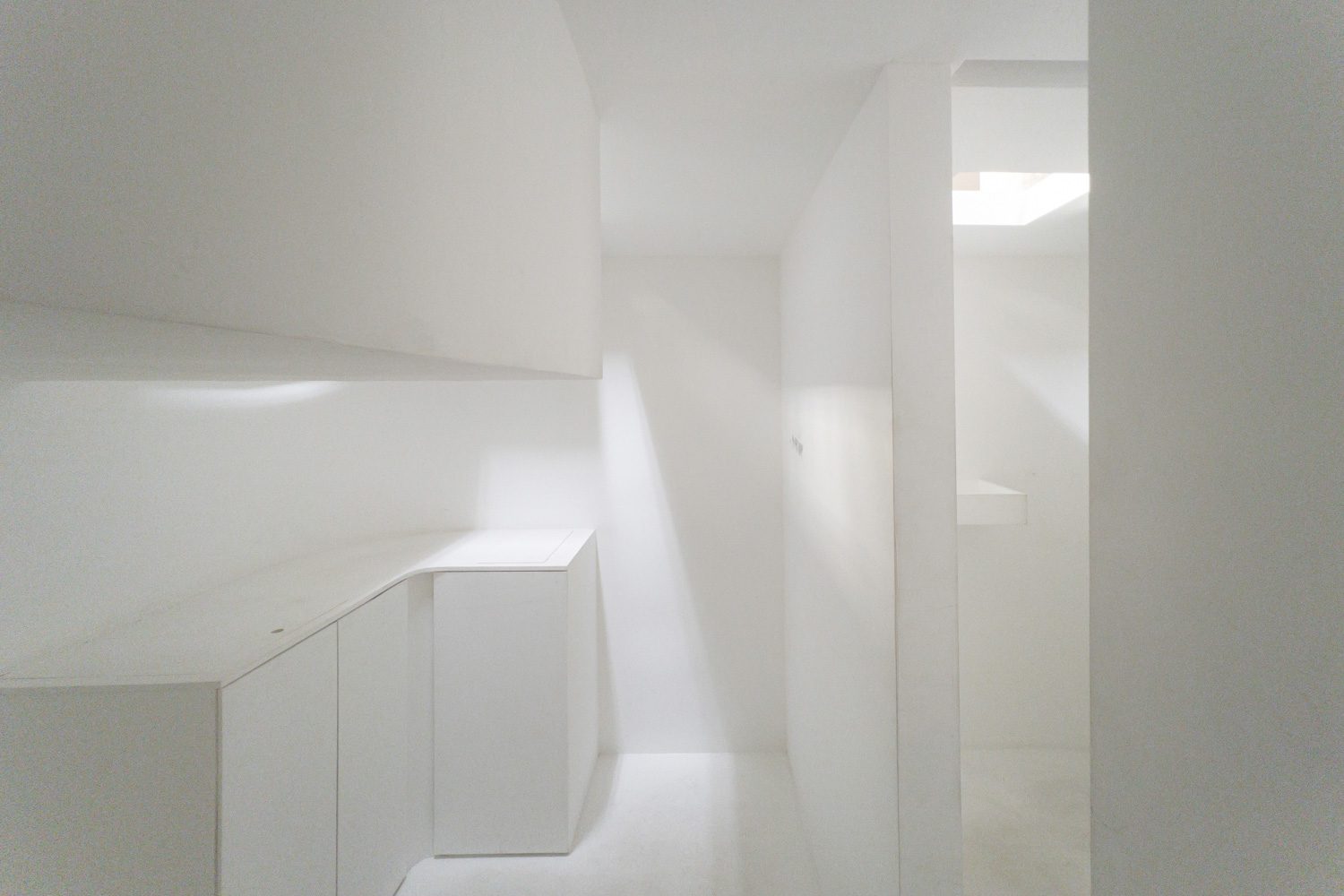
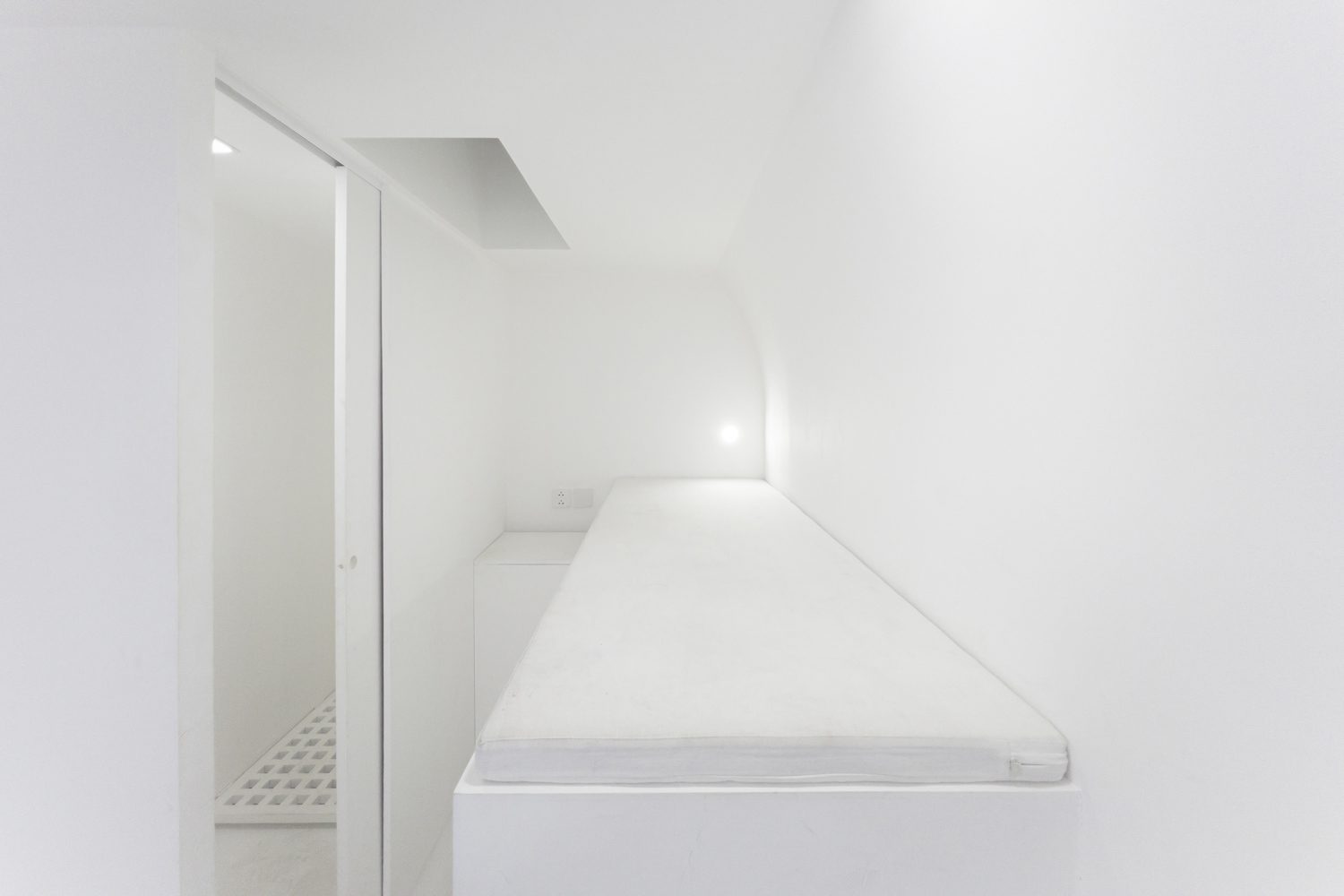
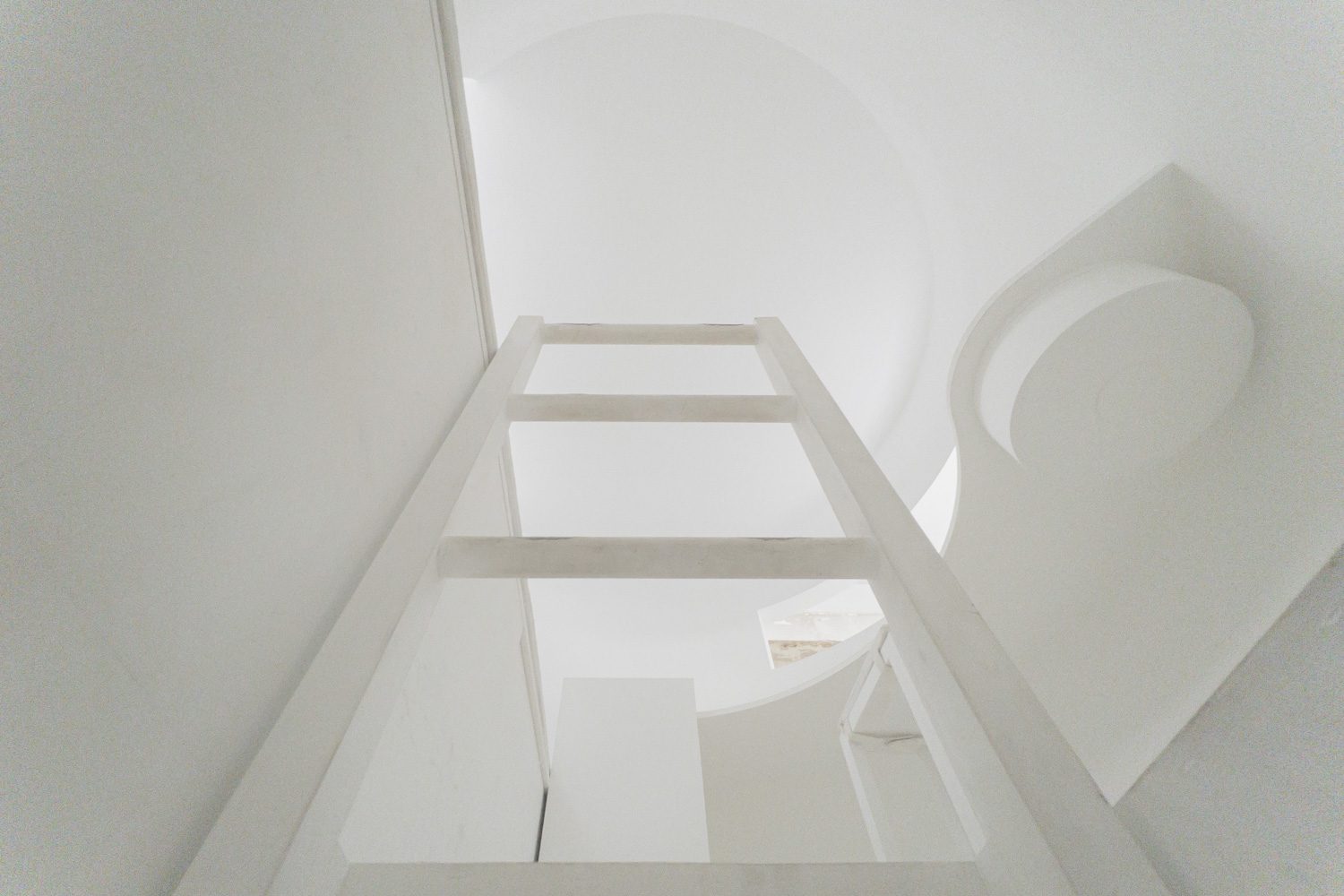
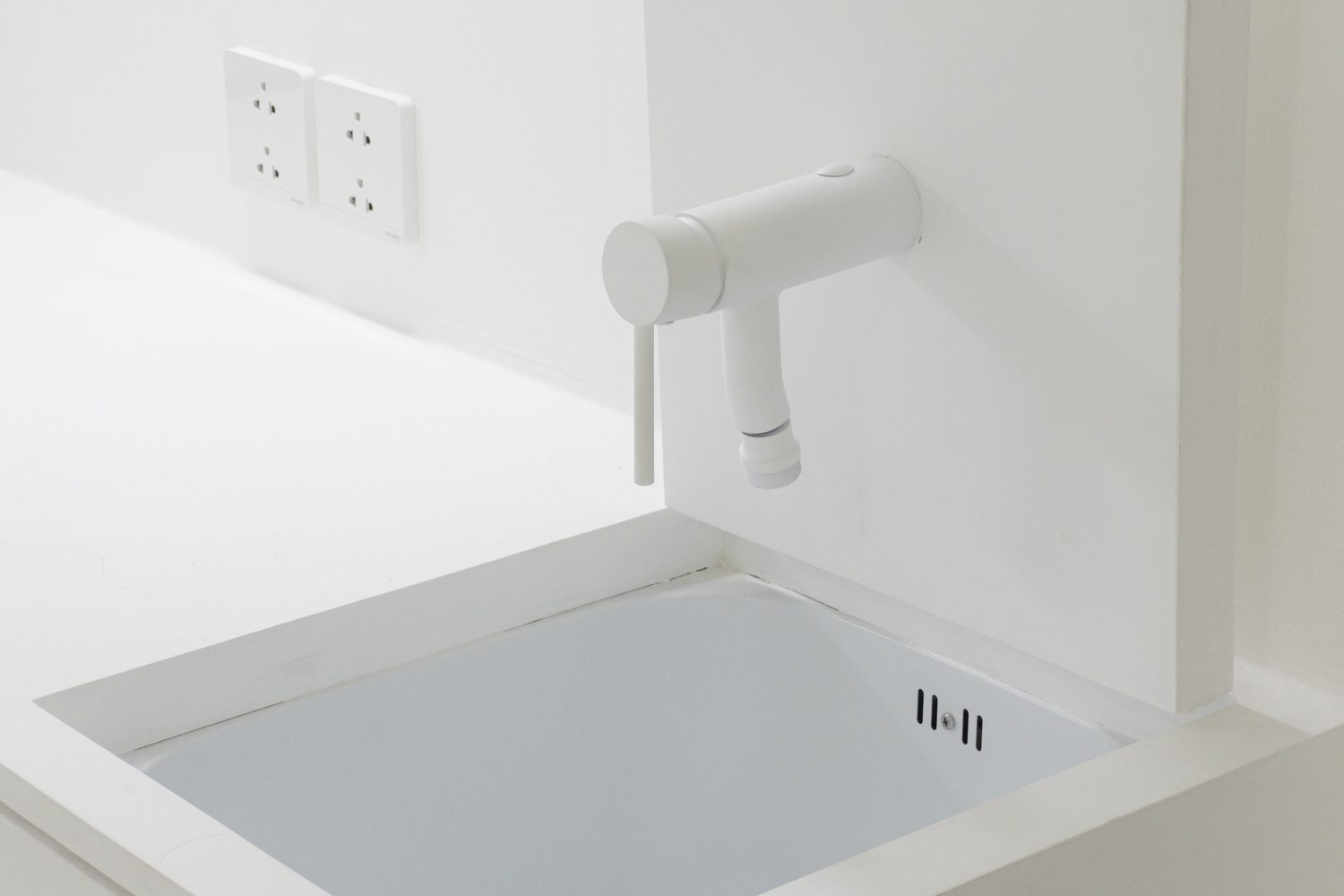
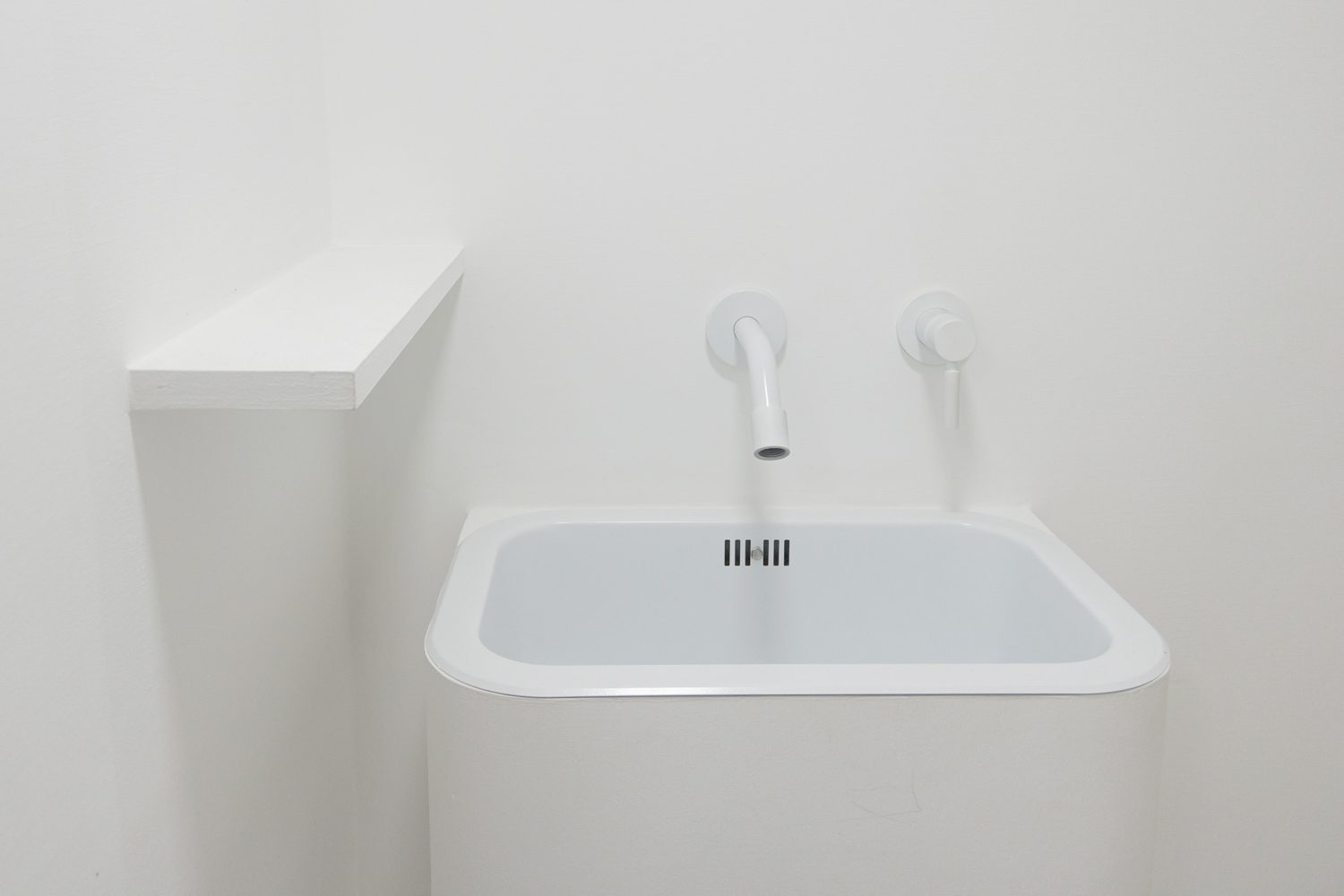
As Absalon’s house is reduced to the point of resembling a vacuum-sealed form, with all excess air pressed out, it fits tightly around his activities. Its bulging volumes reveal interior spaces and allow one to speculate on the actions taking place within, even from the outside. What we see, therefore, is not merely a ‘house,’ but the ‘body’ of dwelling. The cylindrical projection extending from the main volume, for instance, can be understood from the exterior as the sleeping area, shaped by Absalon to accommodate the full length of a reclining human body. In this sense, the reduction of the Cells becomes a way of capturing the routines of everyday life in architectural form. At the same time, it reduces dwelling itself to pure form when viewed from the outside.
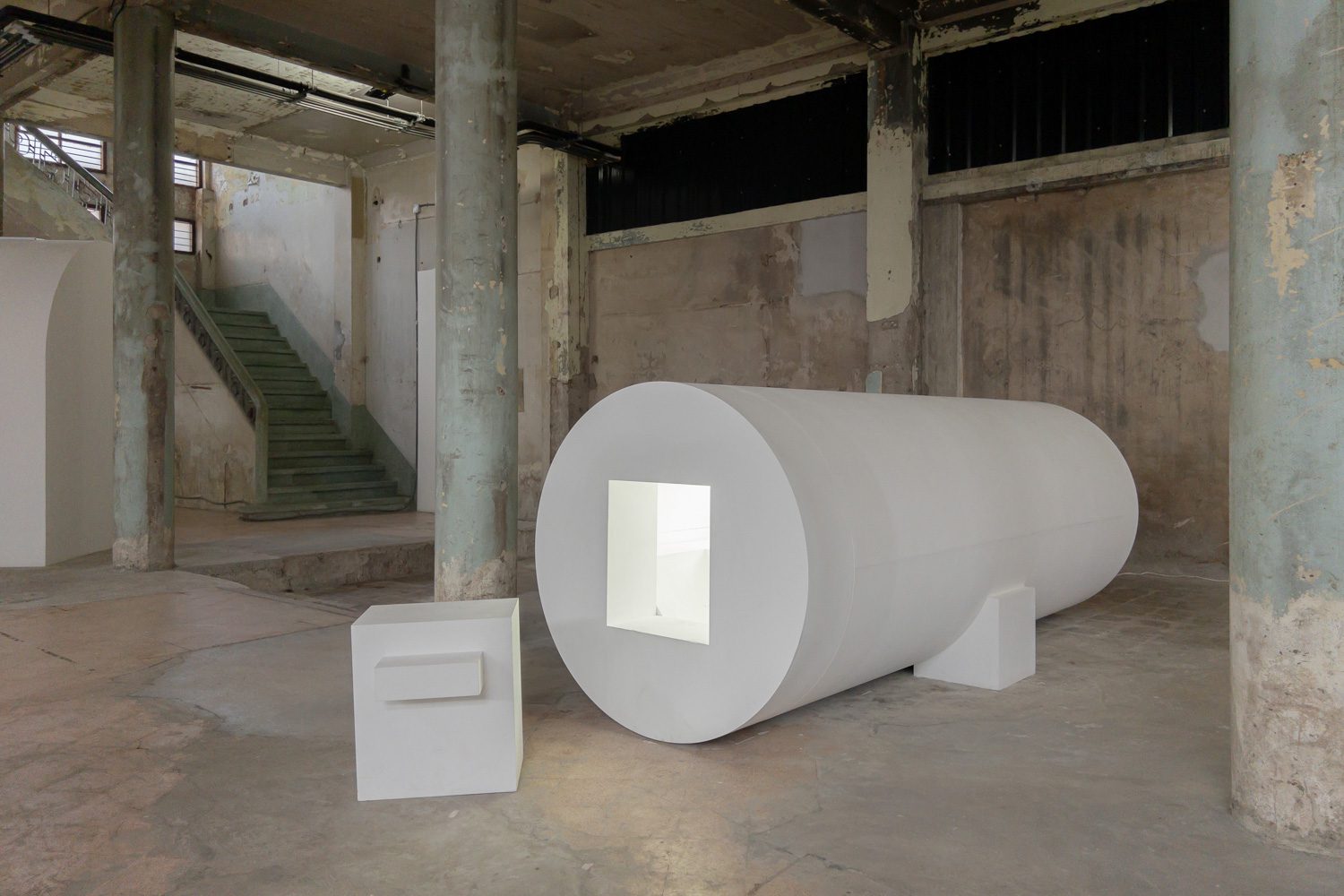
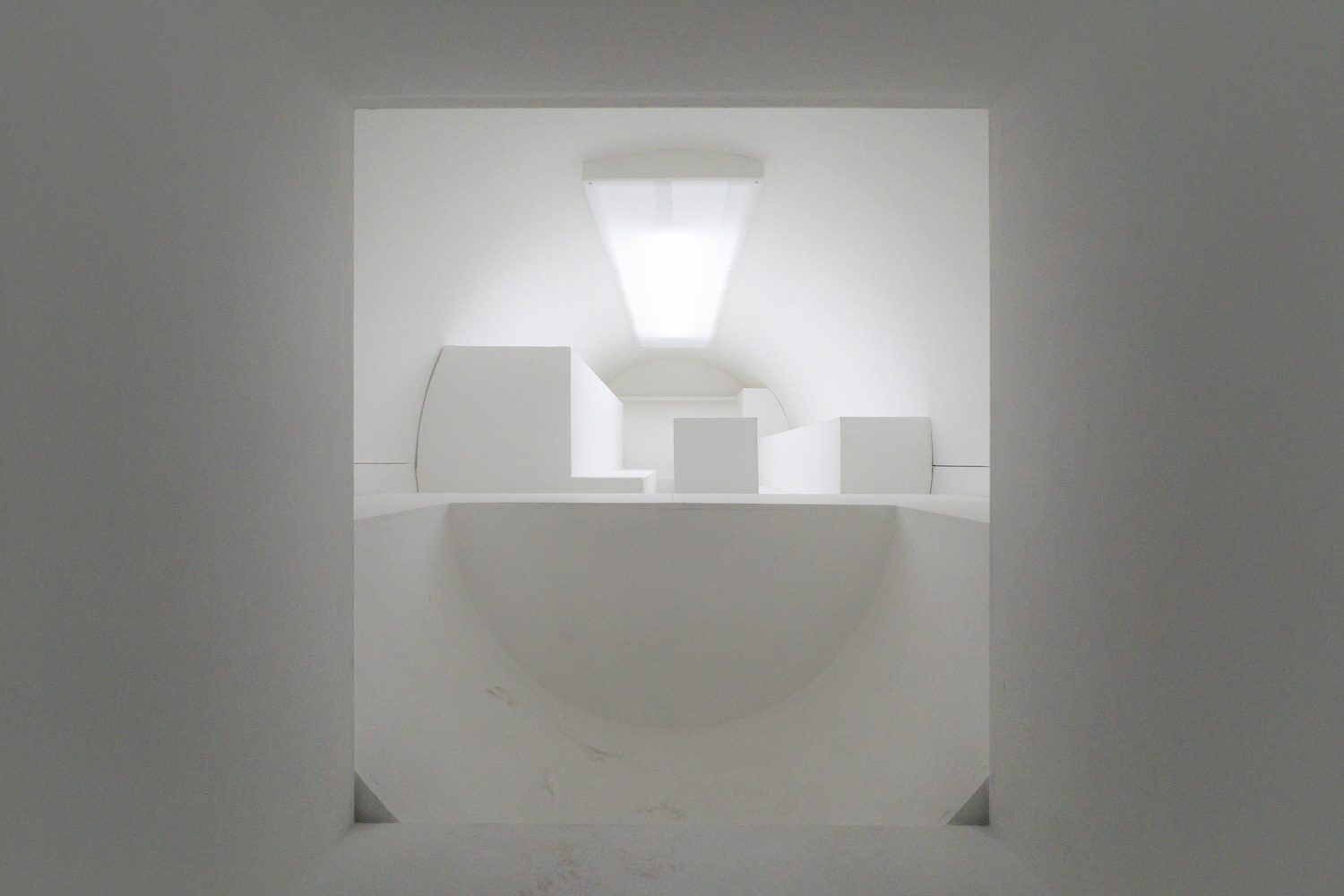
In one sense, these six structures might appear to dissolve into sculptures of dwelling. Yet each of them is hollow within, no different from a showhouse opened for visitors to walk through and imagine the life that might unfold inside. More precisely, Absalon’s Cells are not sculptures that translate dwelling into form. Rather, they resemble molds used to shape the dwelling itself. The six houses are not presented while inhabited. Instead, visitors enter empty houses and infer how each corner might be used. Absalon’s houses thus become ‘cavities of traces,’ where Absalon, both as builder (to build) and inhabitant (to dwell), has left behind the marks of construction and use. In this way, Cells returns to the architectural relationship that emerges from the conditions of existence, becoming a mold of existence and a shell of dwelling.
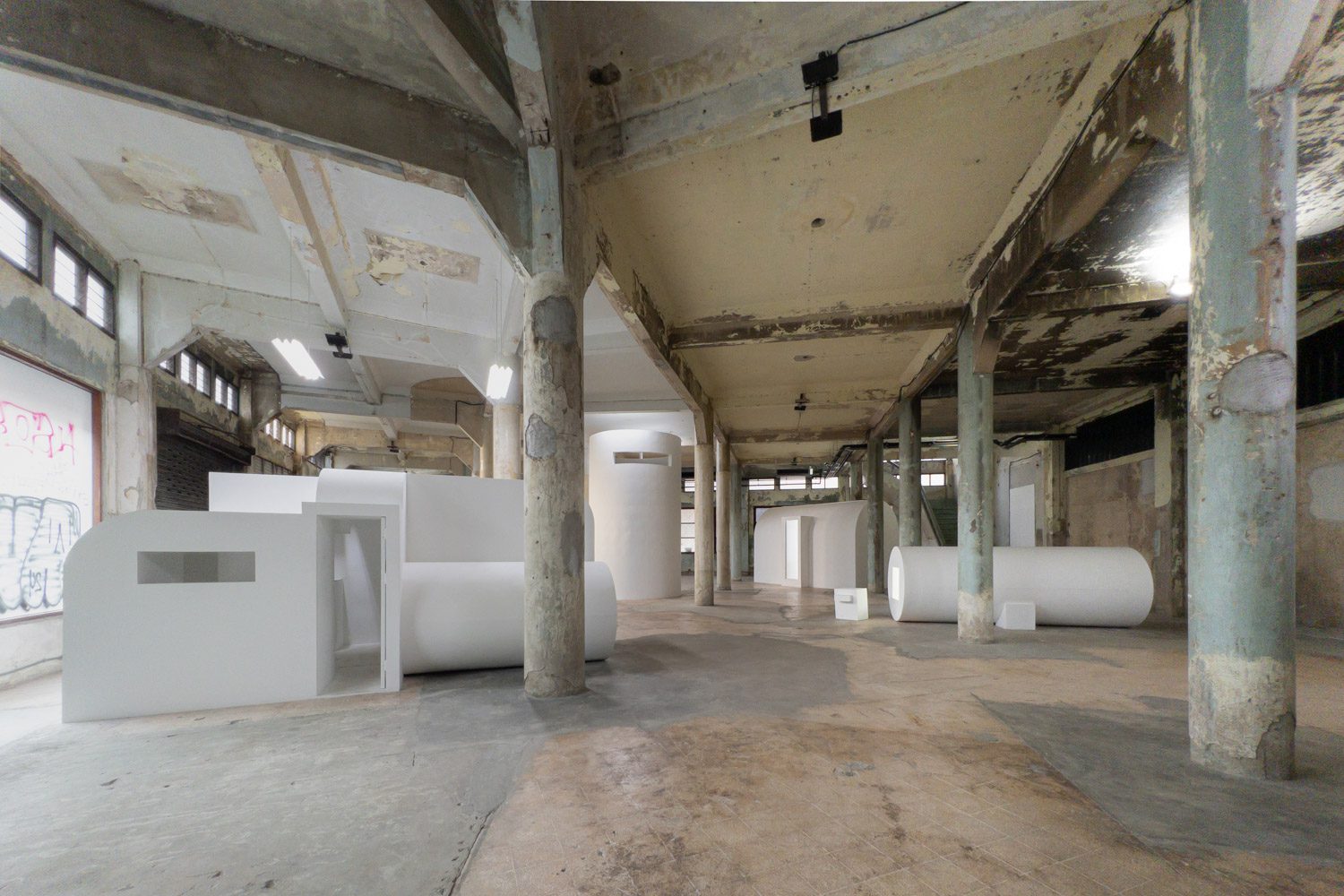
Absalon’s effort to pare away the shell, therefore, appears to produce another shell in its place. Certainly, he was able to cut away elements and decorative details that might refer to an external context, thereby avoiding labels he did not wish to carry. Yet the attempt to escape from a ‘mold’ simultaneously gives rise to another ‘mold.’ Once the interior is exposed, it inevitably meets the air outside. It must be seen, read, defined, and named, becoming a new label whose alignment with the maker’s expectations remains uncertain. The politics of identity that Absalon sought to evade, therefore, continues to linger, like an old karma merely cast anew.
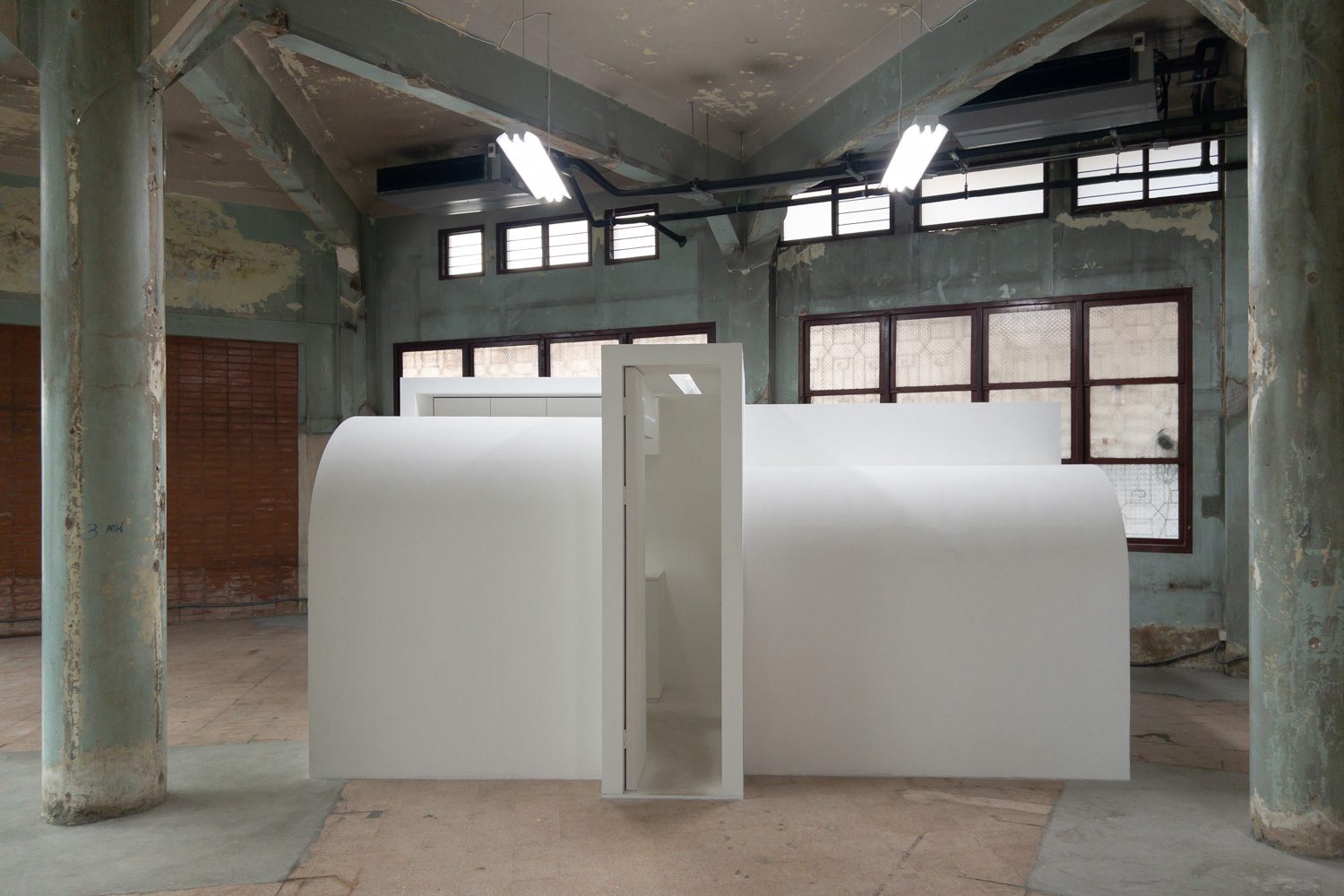
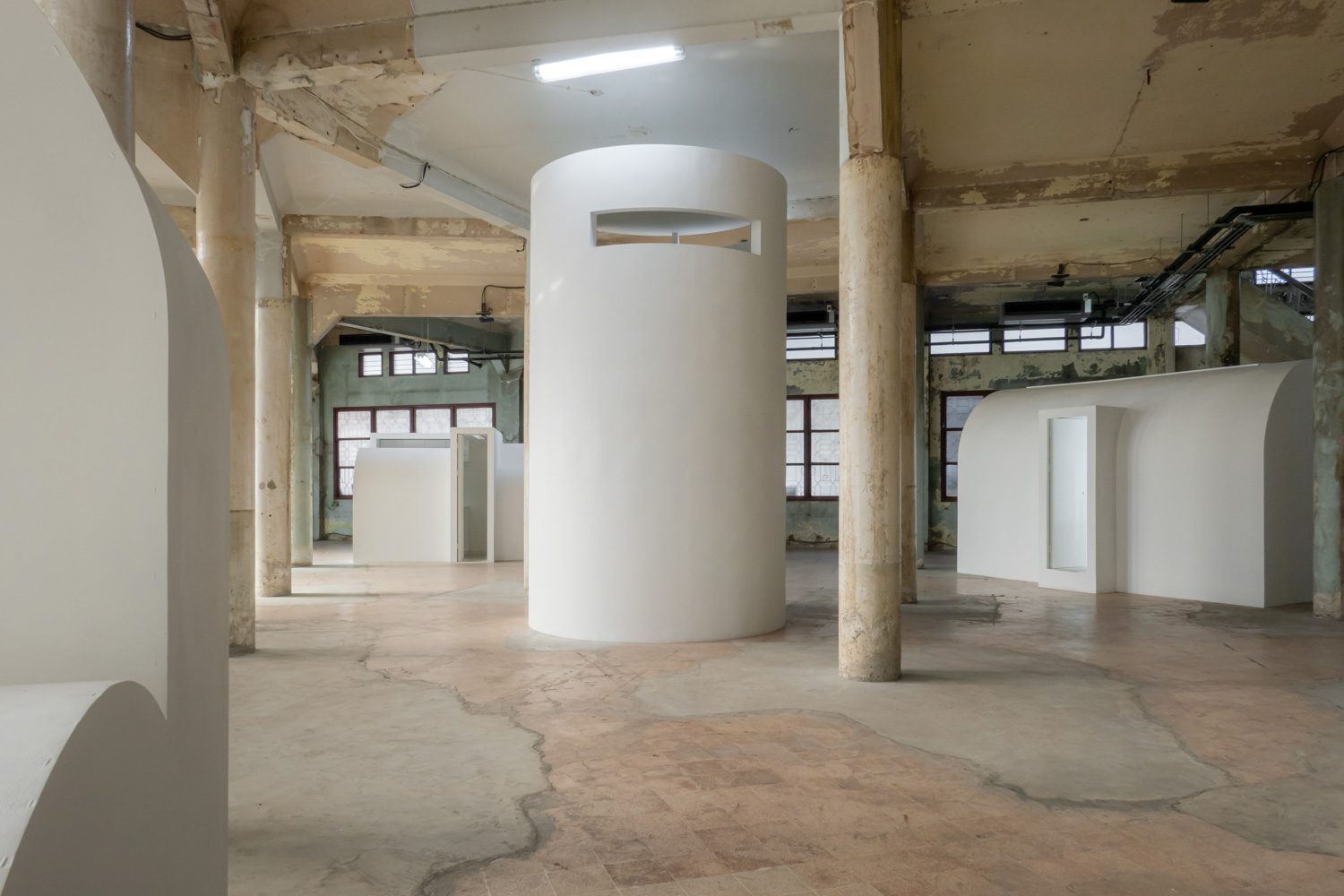
Even though Cells may appear to offer a prototype or model for a minimalist way of life, reflecting sufficiency, simplicity, solitude, and perhaps even extending toward emptiness, it cannot serve as a sacred path prescribed by a solitary ascetic to be followed entirely. At the very least, the six houses were designed according to Absalon’s own height. Certainly, one might imagine a version of Cells reproduced at a scale adjusted to one’s own body in order to experience this solitude. But if that were the intention, Absalon would not have needed to determine the dimensions of the Cells according to his own height from the outset. He could simply have presented the possibility of constructing a house reduced to the form we see here. Seen as a concept, the perfect Cell each of us might imagine for ourselves would likely take a different form. The six Cells before us, therefore, ‘belong’ only to Absalon.
(The following conversation is transcribed from a video interview screened in the exhibition space.)
Interviewer: ‘When you present your prototypes, don’t you feel like you’re turning the viewer into the voyeur of your private life?’
Absalon: ‘I wish I had known it, this solution. But I think that the society we live in, we don’t know any other way. I think there are two possibilities. And the line is firmly drawn between the two, either to go crazy or to become an artist.’3
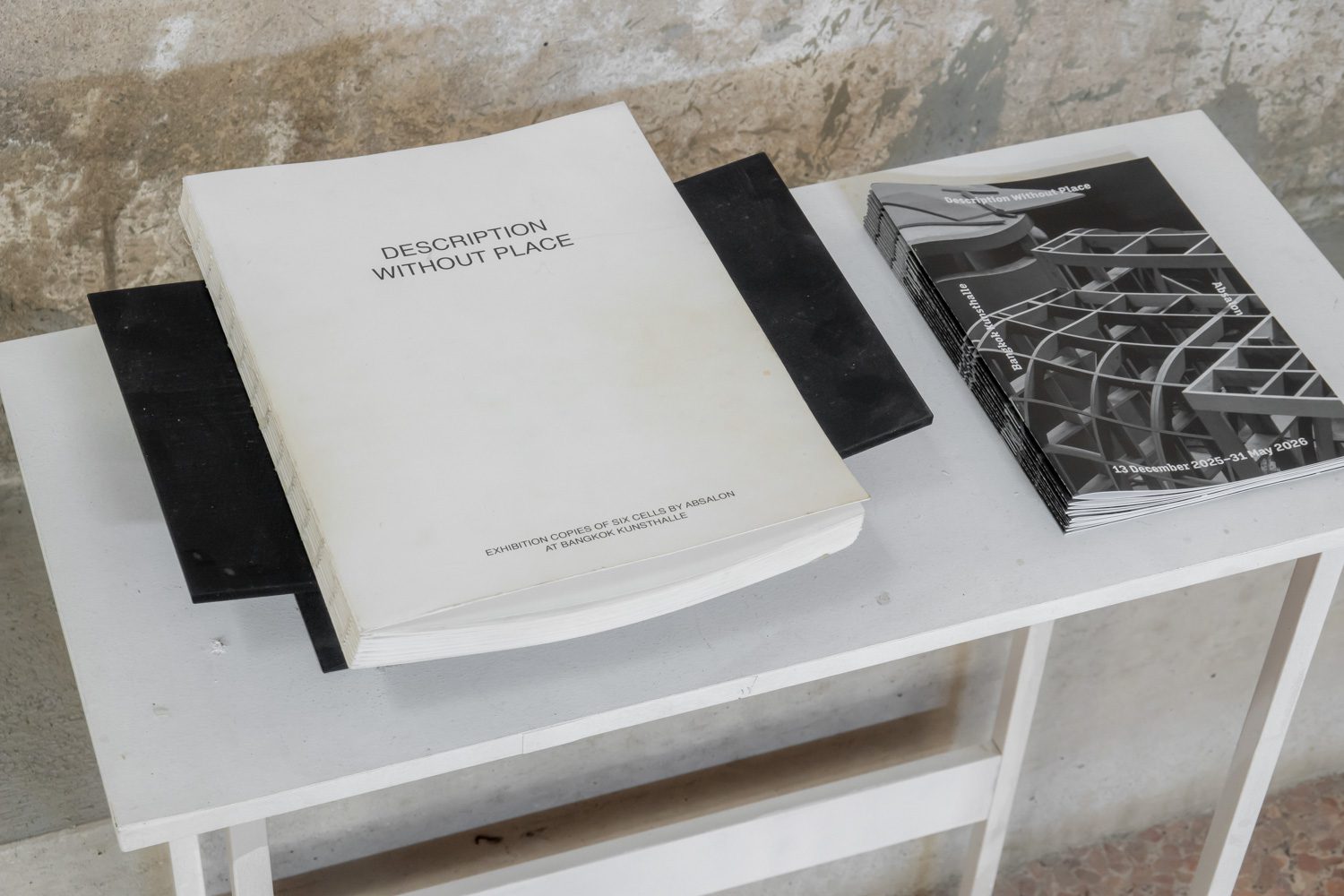
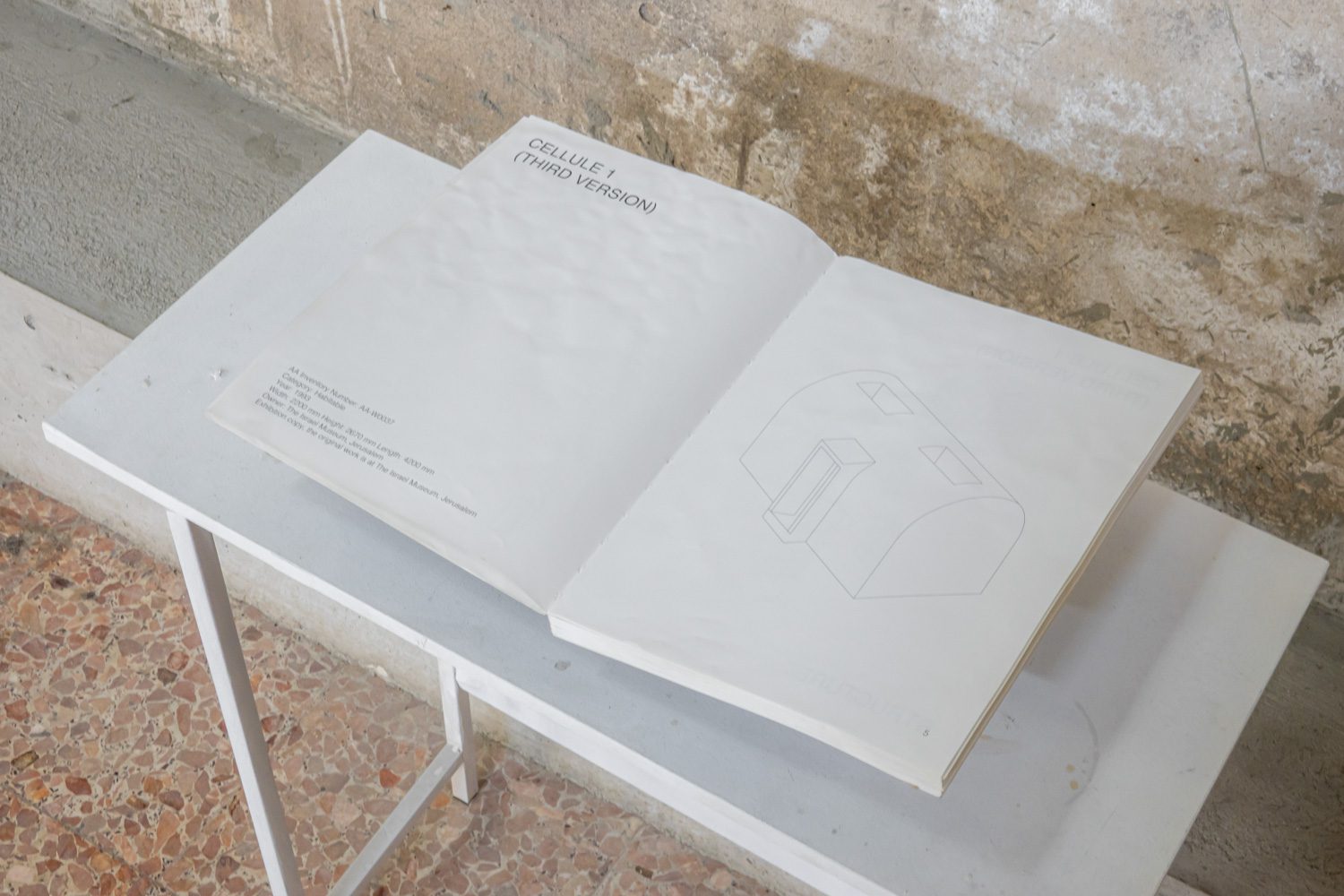
Cells is, therefore, not merely a ‘house,’ but also the ‘body’ of Absalon, challenging the rhetoric of exposing, revealing, or even selling the self. Notably, Description Without Place has produced and offered for sale a publication containing detailed information on all six Cells, including structural formats, specifications, dimensions, materials, and isometric drawings. It reads almost like a manual, allowing the purchaser to construct and possess the ‘artist’s cell’ on their own. This construction-oriented publication thus assumes the role of a blueprint for the artwork, laying bare its entire structure, arranging its components with precision, and suggesting that this house-body may be reproduced and commodified. After all, these six ‘houses’ are themselves artworks exhibited within another exhibition ‘building,’ which has likewise been assembled through similar means.
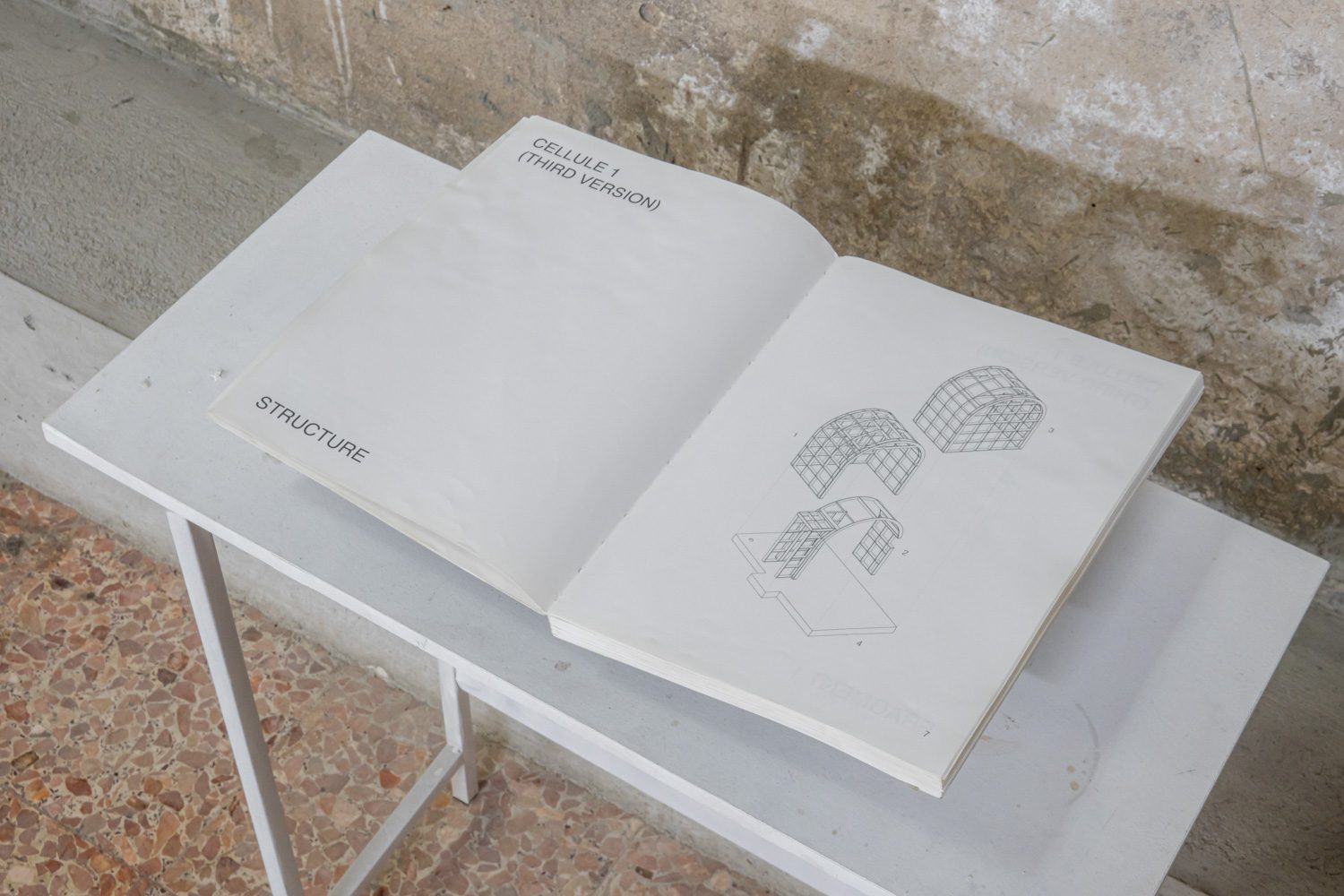
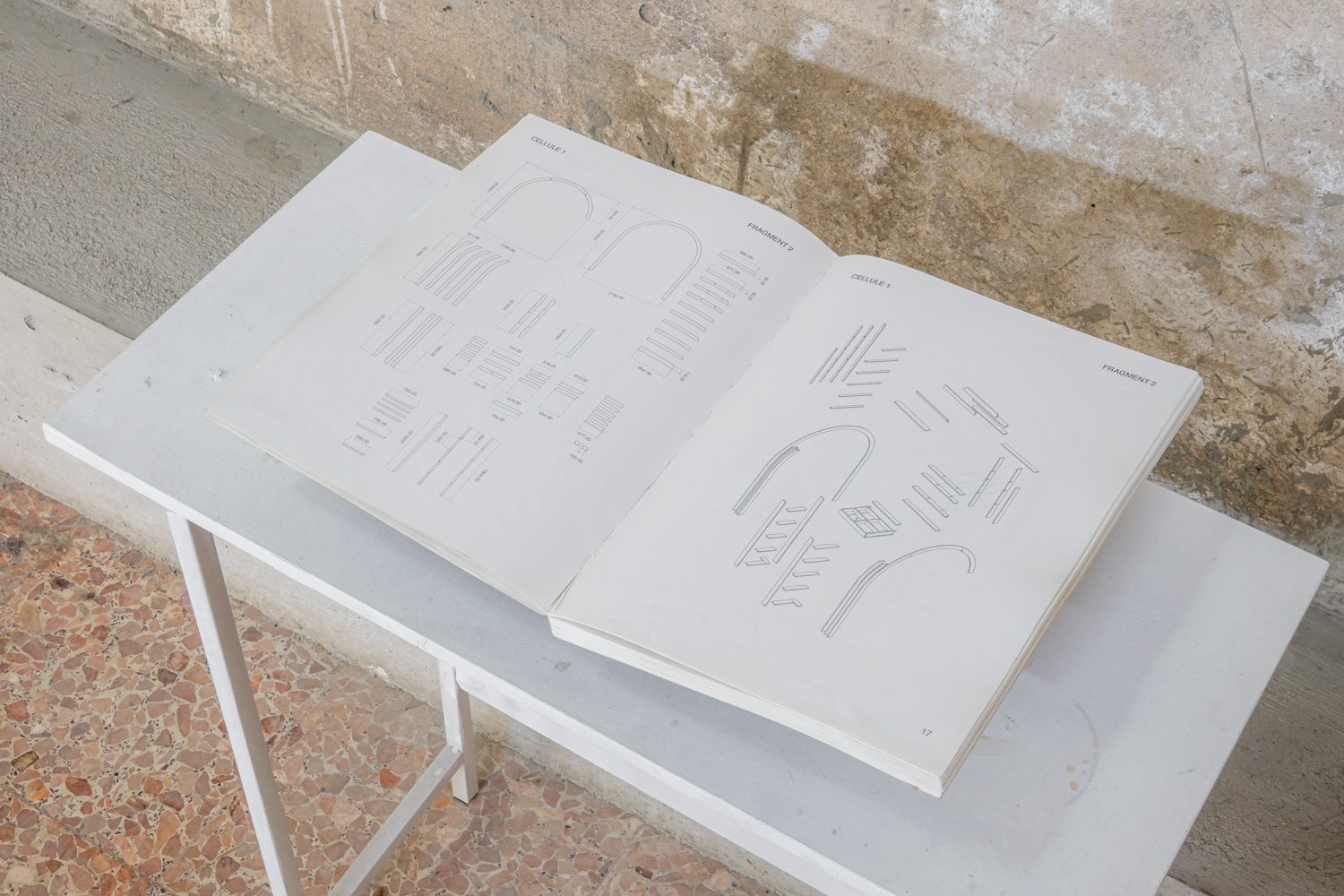
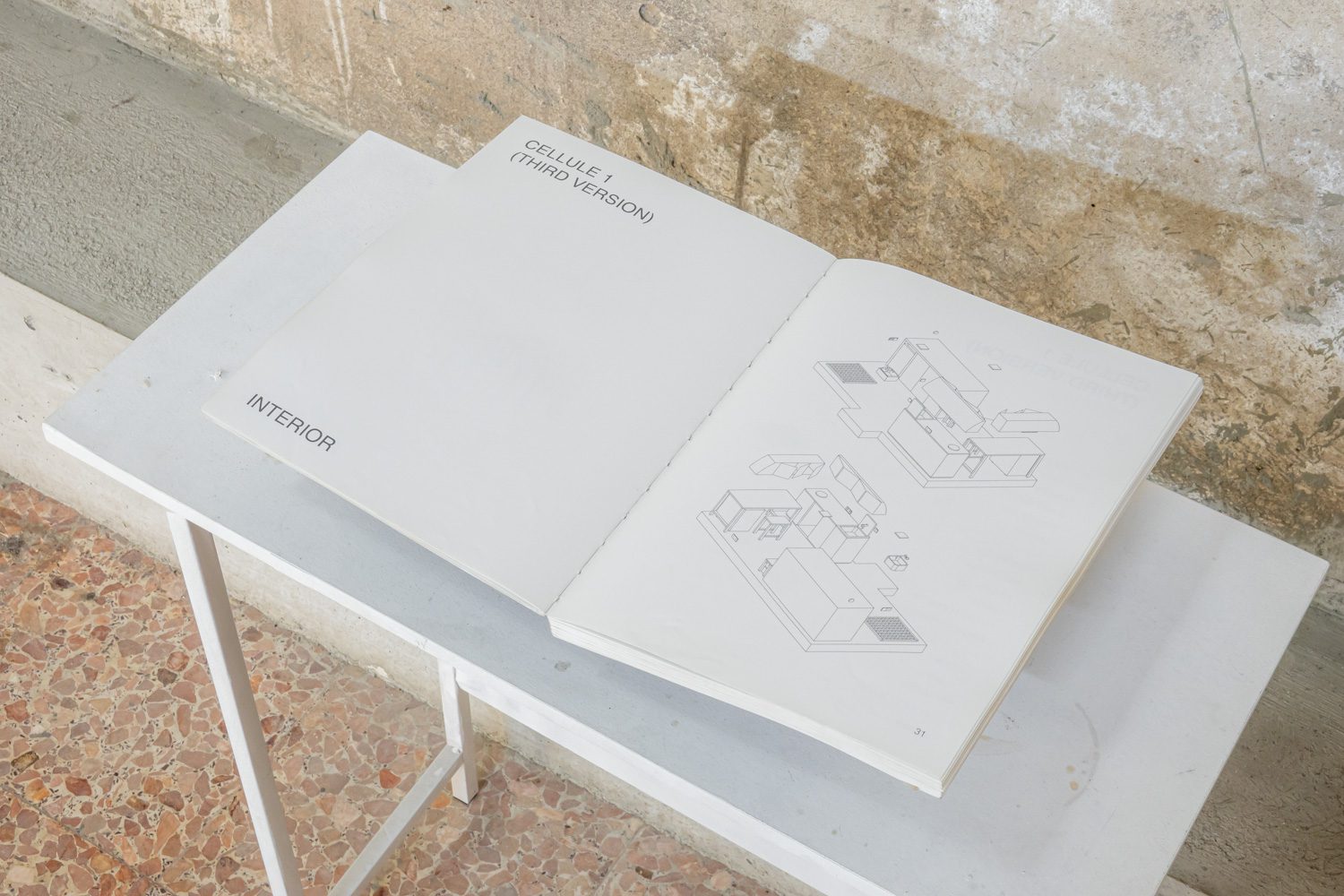
The artist, then, becomes a builder of houses spun from his own body, like a chrysalis weaving its cocoon from threads of itself. Whether it must depart because the time has come to emerge as a butterfly, or must leave while still a chrysalis, the body must eventually abandon its house, leaving behind only the traces of having once dwelled there.
That person, then, is always elsewhere.
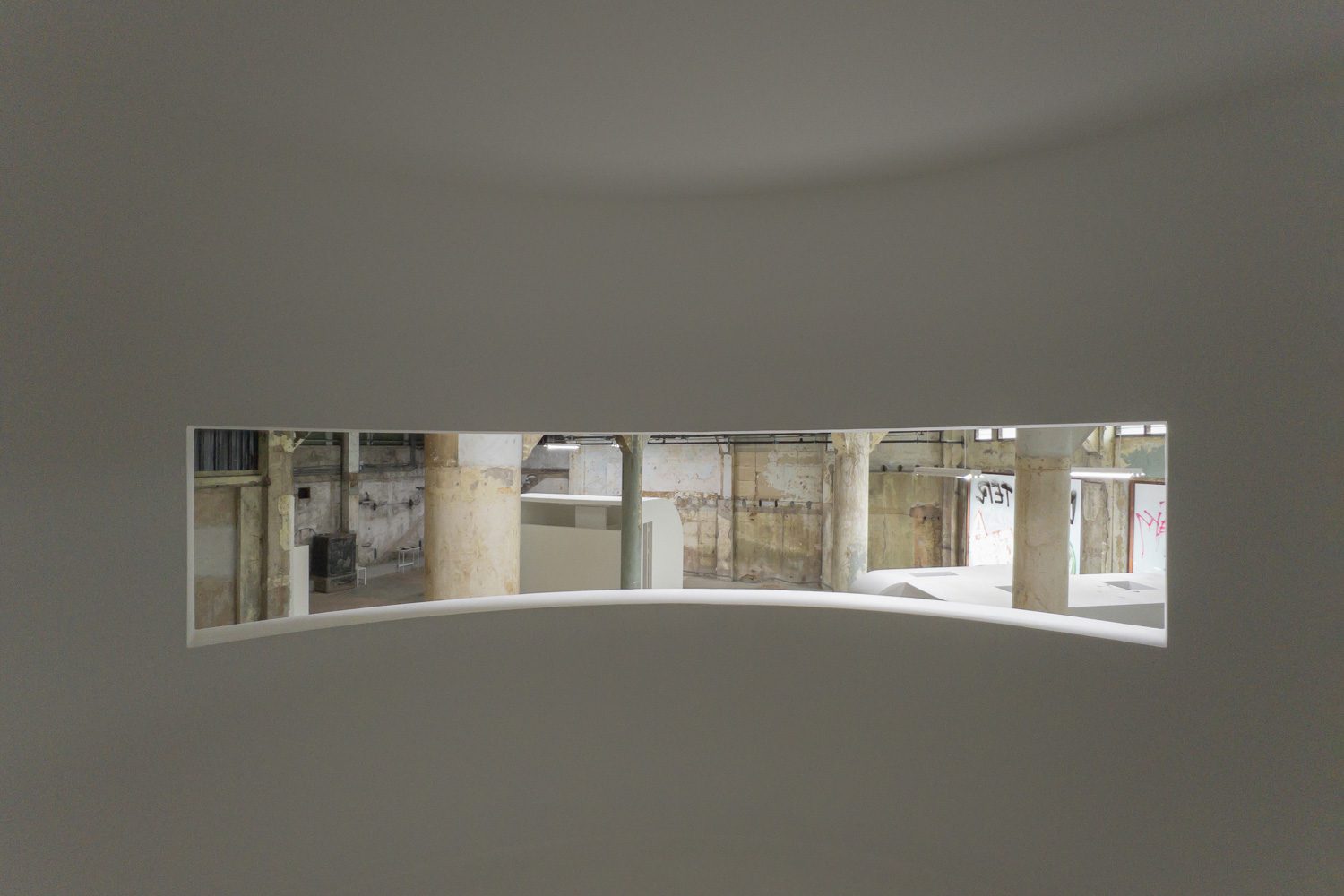
Description Without Place is on view at Bangkok Kunsthalle from 13 December 2025 to 31 May 2026.
_
1 Walt Whitman. (1856). ‘Song of the Open Road’ in Leaves of Glass (second edition). Poetry Foundation. https://www.poetryfoundation.org/poems/48859/song-of-the-open-road
2 See Martin Heidegger, Building, Dwelling, Thinking (1951), trans. Adam Bobeck, for further discussion of the relationship between building and dwelling. https://www.academia.edu/34279818/Building_Dwelling_Thinking_by_Martin_Heidegger_Translation_and_Commentary_by_Adam_Bobeck_
3 Absalon. (1993). Absalon Interview. [single channel video]. Courtesy of the Estate of Absalon.
khaoyaiart.com/bangkok-kunsthalle
facebook.com/BangkokKunsthalle