
LOCAL MYTHS #2: SHIFTING TERRAINS, A COLLECTION OF LOCAL NARRATIVES PRESENTED THROUGH ART THAT CONNECTS LANDSCAPES, MEMORIES, AND AUDIENCE ENGAGEMENT
TEXT: PEERAWICH RUANGPENG
PHOTO COURTESY OF BANGKOK ART AND CULTURE CENTRE (BACC)
(For Thai, press here)
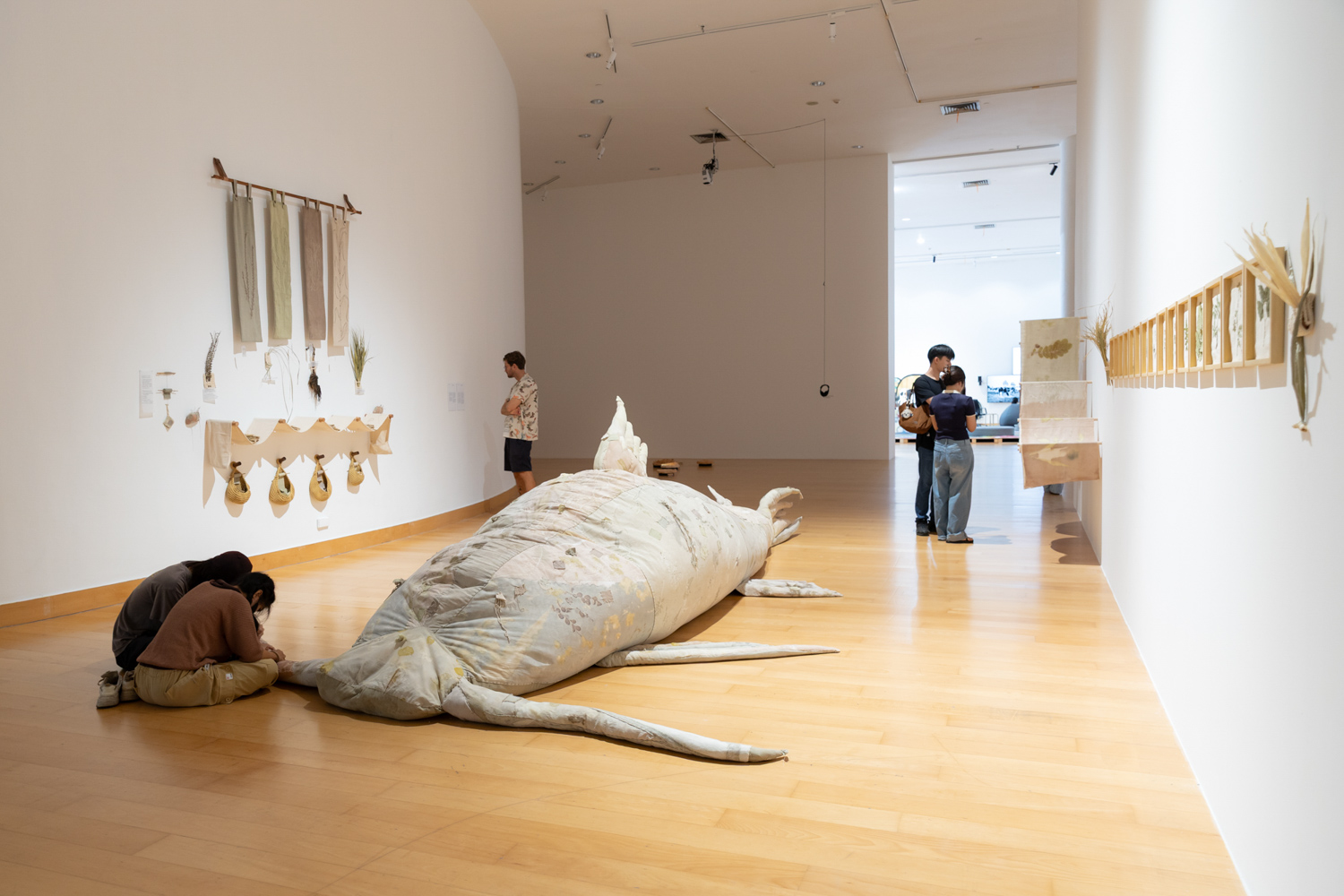
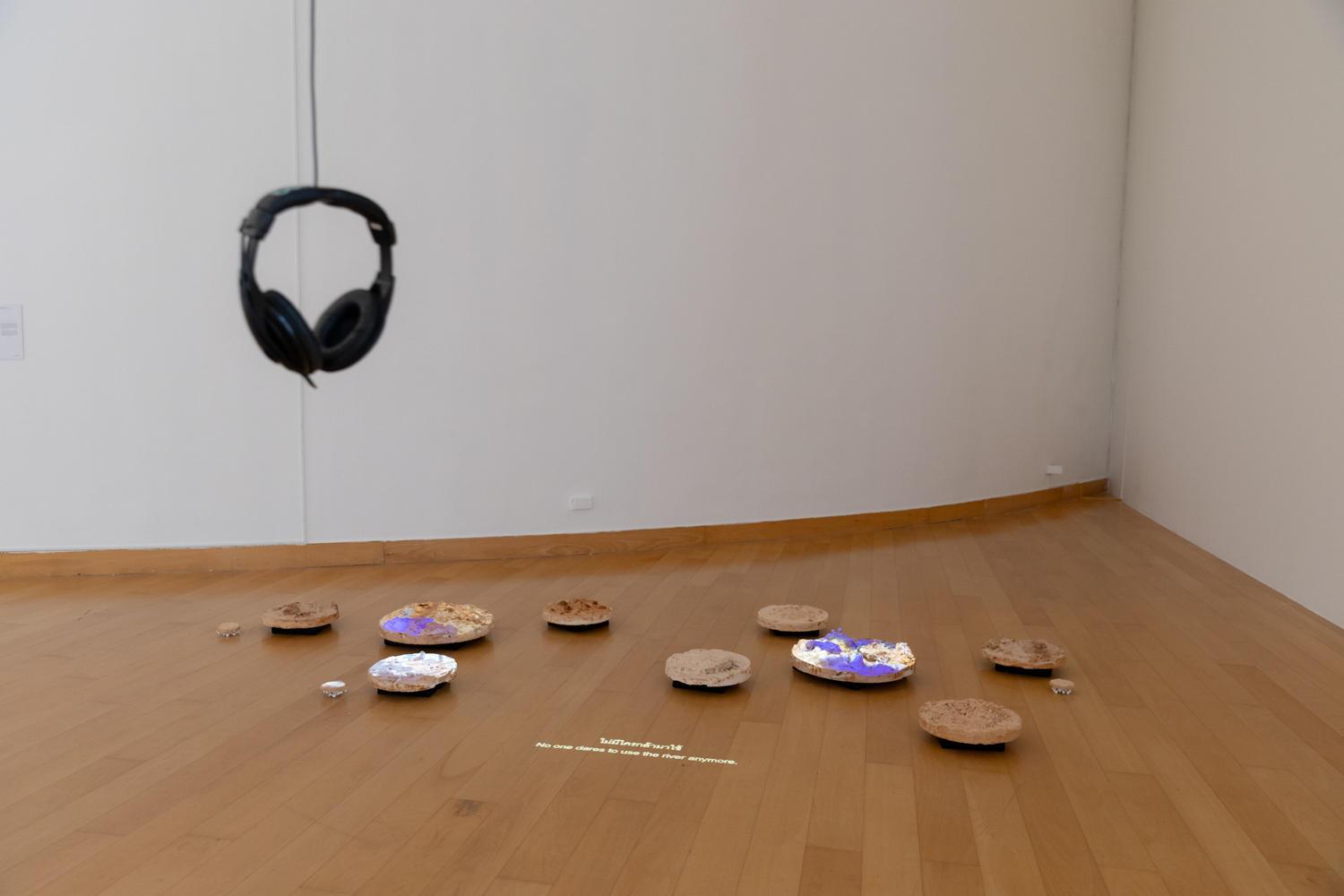
As I step into the exhibition, the first work to catch my eye is ‘The River’s Hint’ by Tananan Jaisawang, positioned right at the entrance. The piece gestures toward the river through the figure of a catfish sprawled across the floor, while a visitor sits beside it, stitching small scraps of fabric onto its body. Nearby, ‘Arsenic Bombs’ by ThaDa LAB presents casts of the muddy riverbed alongside a pair of headphones playing sounds recorded beneath the water. Slipping them on creates the strangely immersive sensation of being submerged in the Kok River itself, bringing to mind recurring reports of toxic contamination in its waters. The association lingers, prompting me to wonder what, collectively, the works in this exhibition are seeking to communicate to their viewers.
First staged by BACC in 2025, Local Myths: The Intrinsic Aesthetic invited audiences to examine the notion of the ‘local’ while questioning the very idea of ‘beauty’: to whom does beauty belong, and who has the authority to define it? This year, the project returns as Local Myths #2: Shifting Terrains. Local stories remain the exhibition’s principal narrative thread, but are now considered through landscapes of the ‘in-between,’ weaving stories of place together with spatial perceptions of what constitutes the ‘local.’
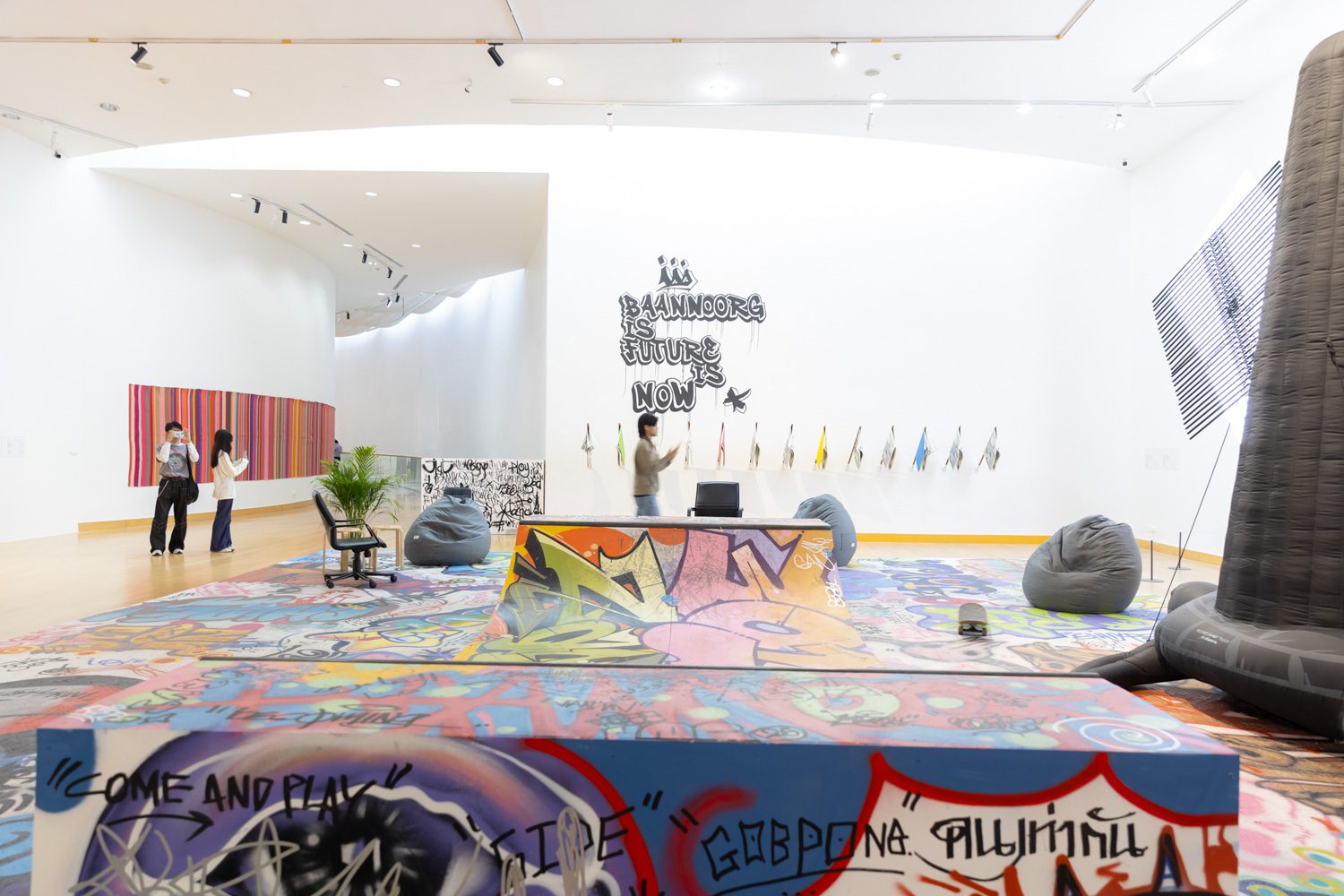
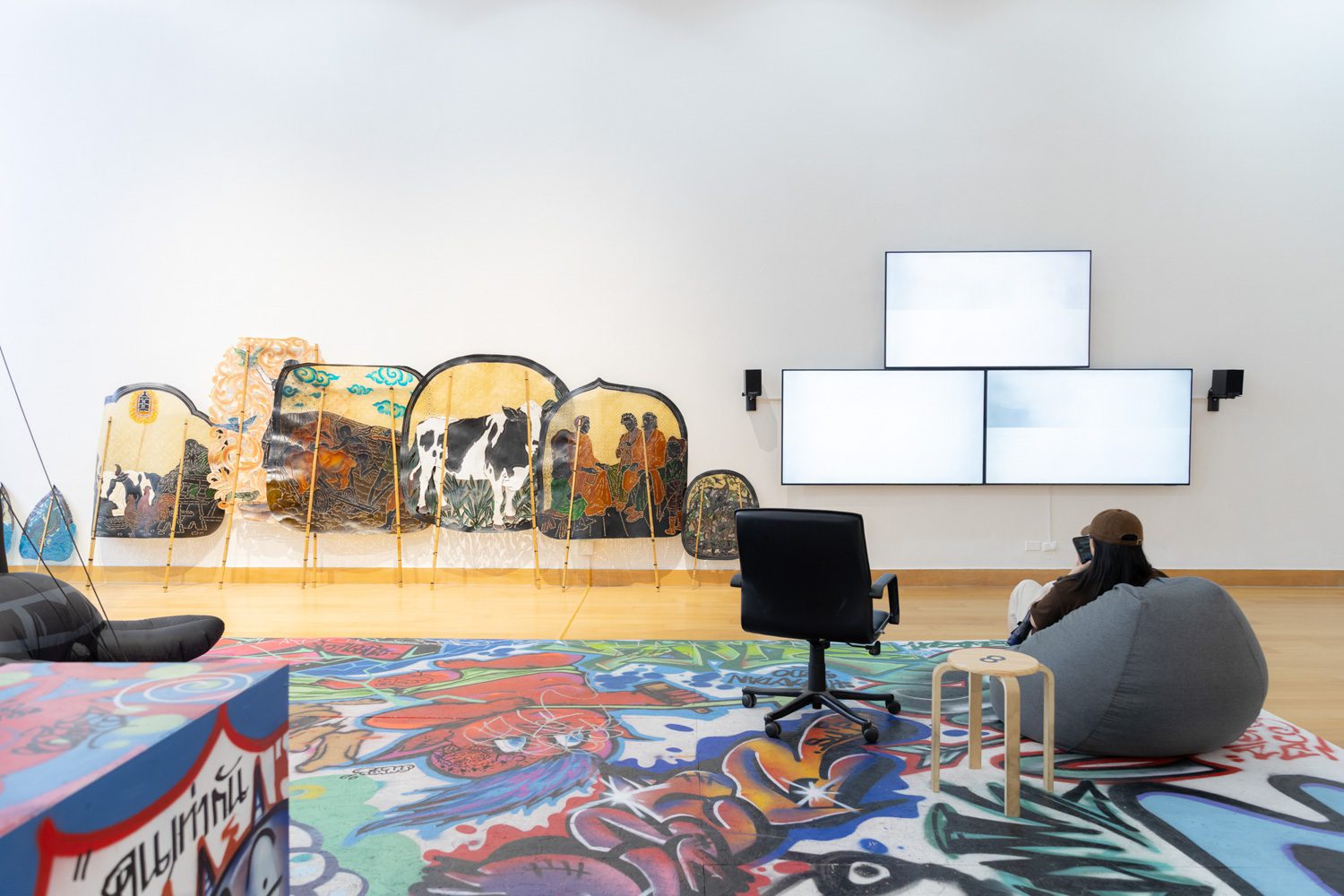
What makes this iteration of the exhibition particularly engaging is its emphasis on participation. Many of the works invite visitors to engage through an array of gestures: sewing, embroidering, knitting, threading, skating, pedaling, and touching. Others simply allow themselves to be handled, without the usual injunction to keep one’s hands off the art. Among the most striking is Churning Skate, a skateboard ramp from the Ritual of Things series by Baan Norg Collaborative Arts and Culture. Conceived as an artistic platform where different forms of cultural participation can occupy the same space, the work places interaction at its core, quite literally opening the gallery floor to anyone who wants to skate. There can be few occasions in one’s life when skating inside an art gallery becomes a genuine possibility. The project grew out of a 2024 exchange between Nongpho Community and Mr. Wilson Skatehalle, a community on the urban margins of Kassel, Germany. It playfully riffs on The Churning of the Milk Ocean, reimagining the myth through acts of play staged around a large ramp-like structure. (For more information, see the exhibition leaflet)
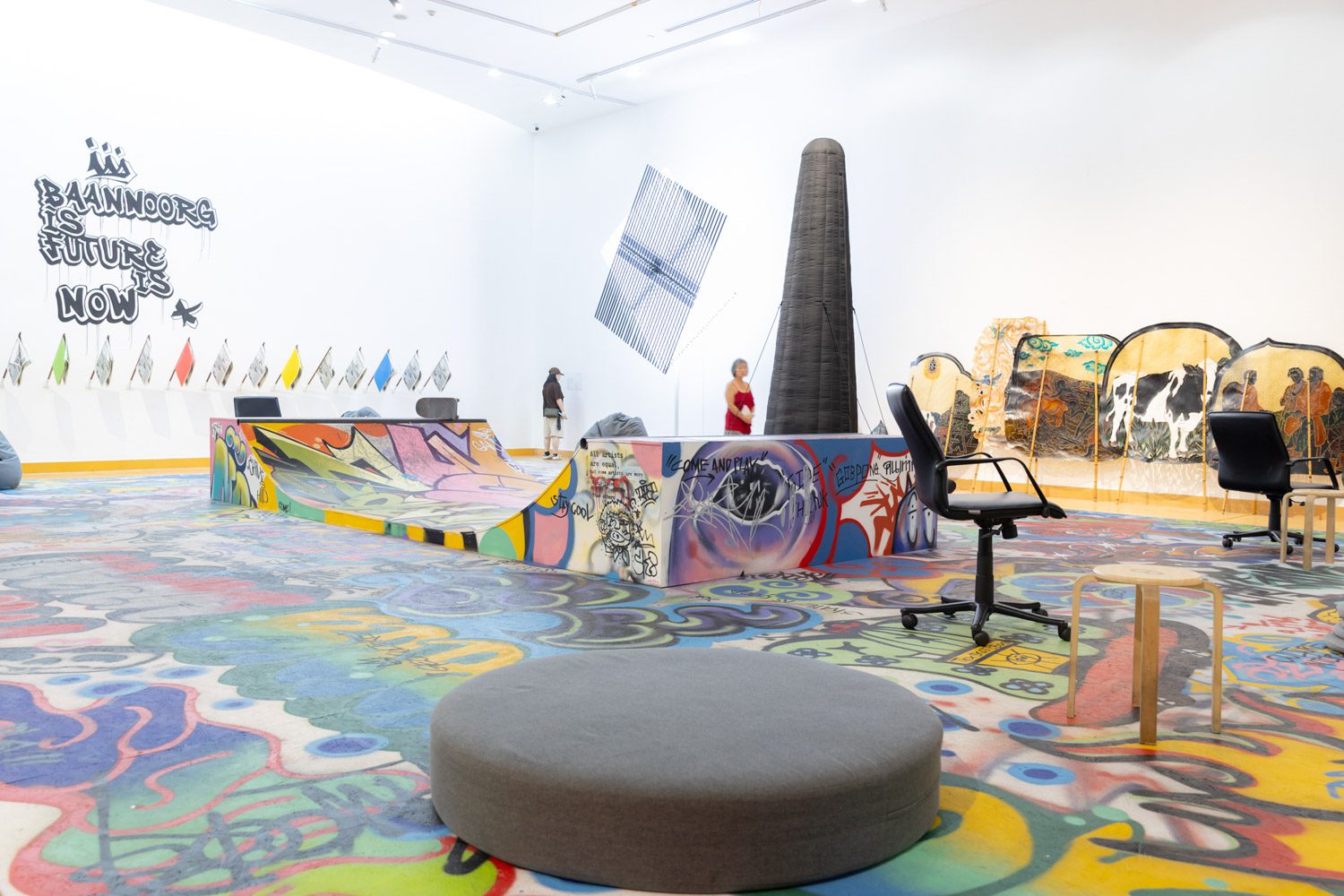
Cushions and chairs are scattered nearby, allowing visitors simply to sit and watch the skaters. One might linger for a conversation, pick up a copy of Baan Norg Post, or turn instead to Churning Milk: the Rituals of Things, another work from the same series projected onto an adjacent wall. Here, the skate ramp reveals itself as more than a surface for skating. Chairs can be gathered around it for informal conversations reminiscent of a sapha kafae, or coffee-circle gathering; at other times it becomes a place for exercise, along with any number of activities accommodated within the same shared ground. The effect is almost that of transplanting a public space into the gallery, creating the kind that often serves as the social center of a provincial community.
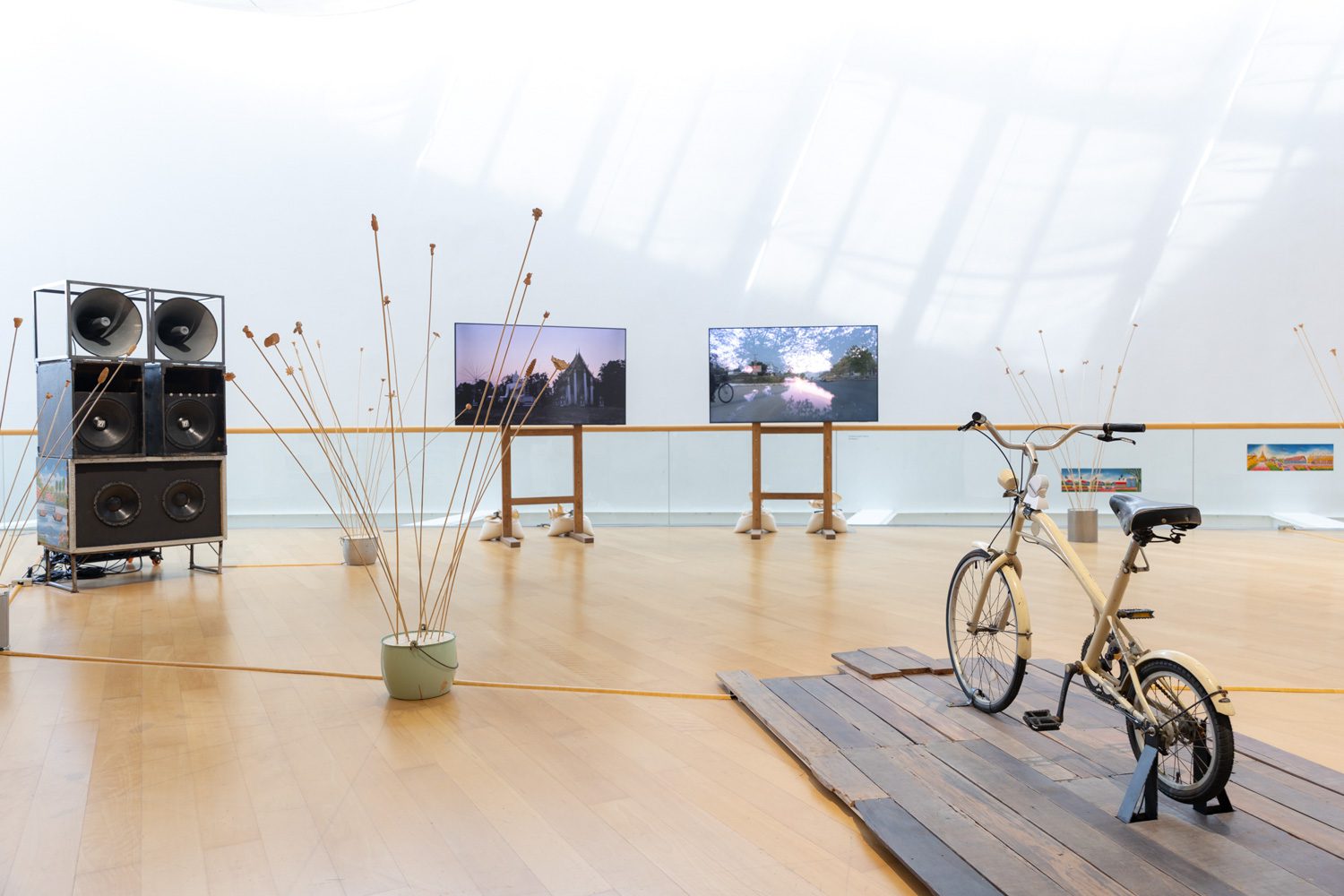
Landscapes in Transition by Farmjodjum Art Space Collective recounts memories of Nakhon Pathom through the experiences of people from different generations. One element invites us to pedal a bicycle while gazing up at a baby’s mobile, recreating for our adult selves the sensation of lying beneath one and looking up at the birds suspended above. Another bicycle nearby offers a virtual simulation of riding along Nakhon Pathom’s riverside, stirring memories of cycling with our childhood in gang in In Memorial, when we once roamed freely around the neighborhood together. These recollections unfold on a television screen through intimate images of the natural surroundings, evoking a closeness to nature that can be difficult to find in Bangkok, a city increasingly filled with forms of artificial nature.
The works by these two artist collectives take me back to my own home in the South, where expanses of nature still remain. Looking across the exhibition, there is little trace of the International Style high-rises that have come to erode the traditions and culture of old towns. Such skylines are still relatively uncommon in the provincial towns, yet the locally rooted landscapes that bring us into close contact with nature are even harder to come by in the capital. For a brief moment, then, the exhibition draws us beyond the city and back toward nature and local culture. And yet the implications of centralized power and capitalism, both so firmly embedded in Bangkok, never entirely disappear. One need only look outside to see the multitude of skyscrapers surrounding us.
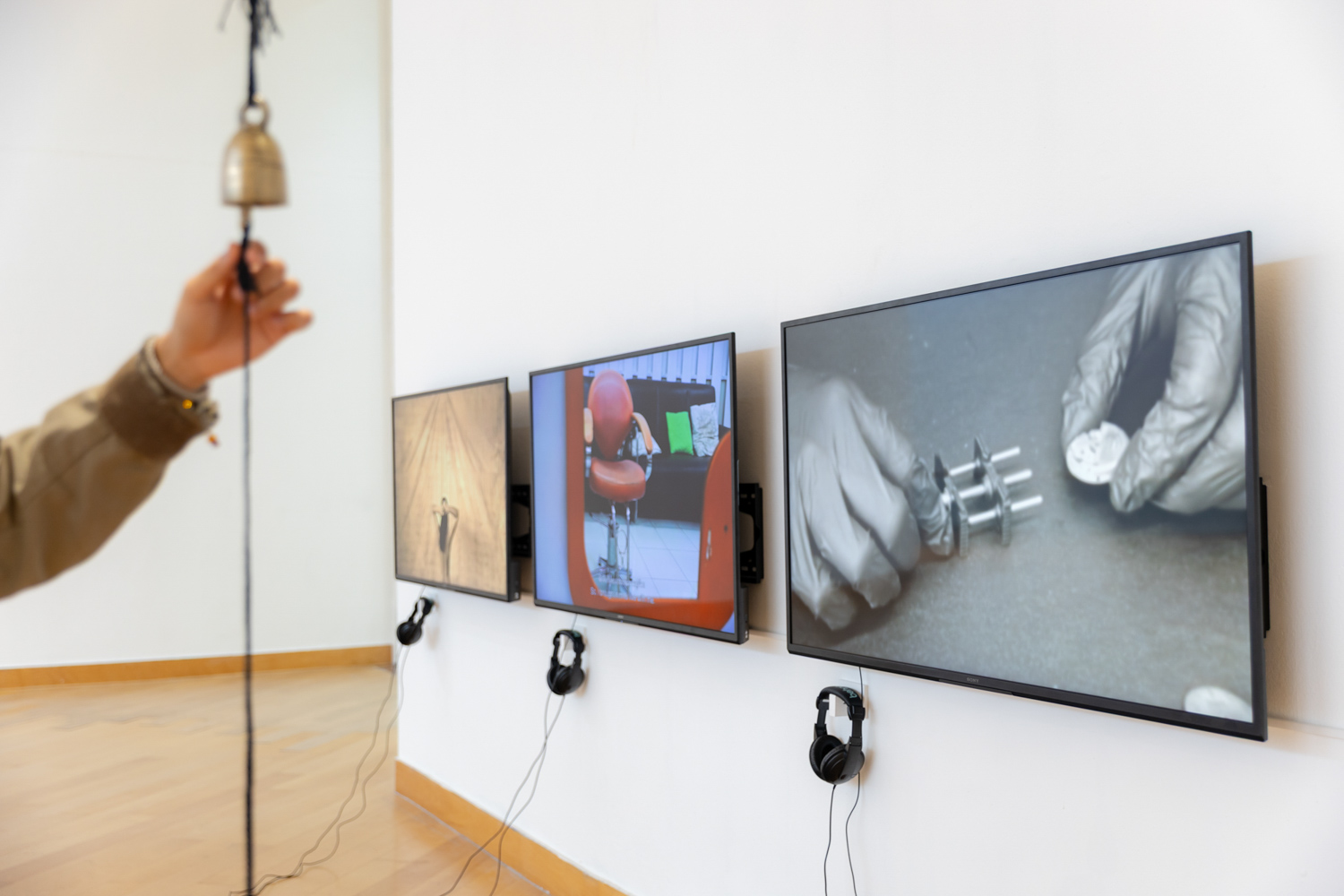
Several works also call on visitors to participate before they can, in a sense, be ‘completed.’ What the artists present, in other words, are works that remain deliberately unfinished. Returning to the exhibition’s title, Shifting Terrains, the terrain in question might also be understood as the increasingly blurred threshold between artwork and viewer. The visitor enters and becomes part of the terrain of the ‘Exhibition Space’ itself. Meaning no longer resides solely in the object before us, but takes shape through each viewer’s individual experience. Only through this act of participation does the work arrive at completion, allowing its meaning to be fully realized.
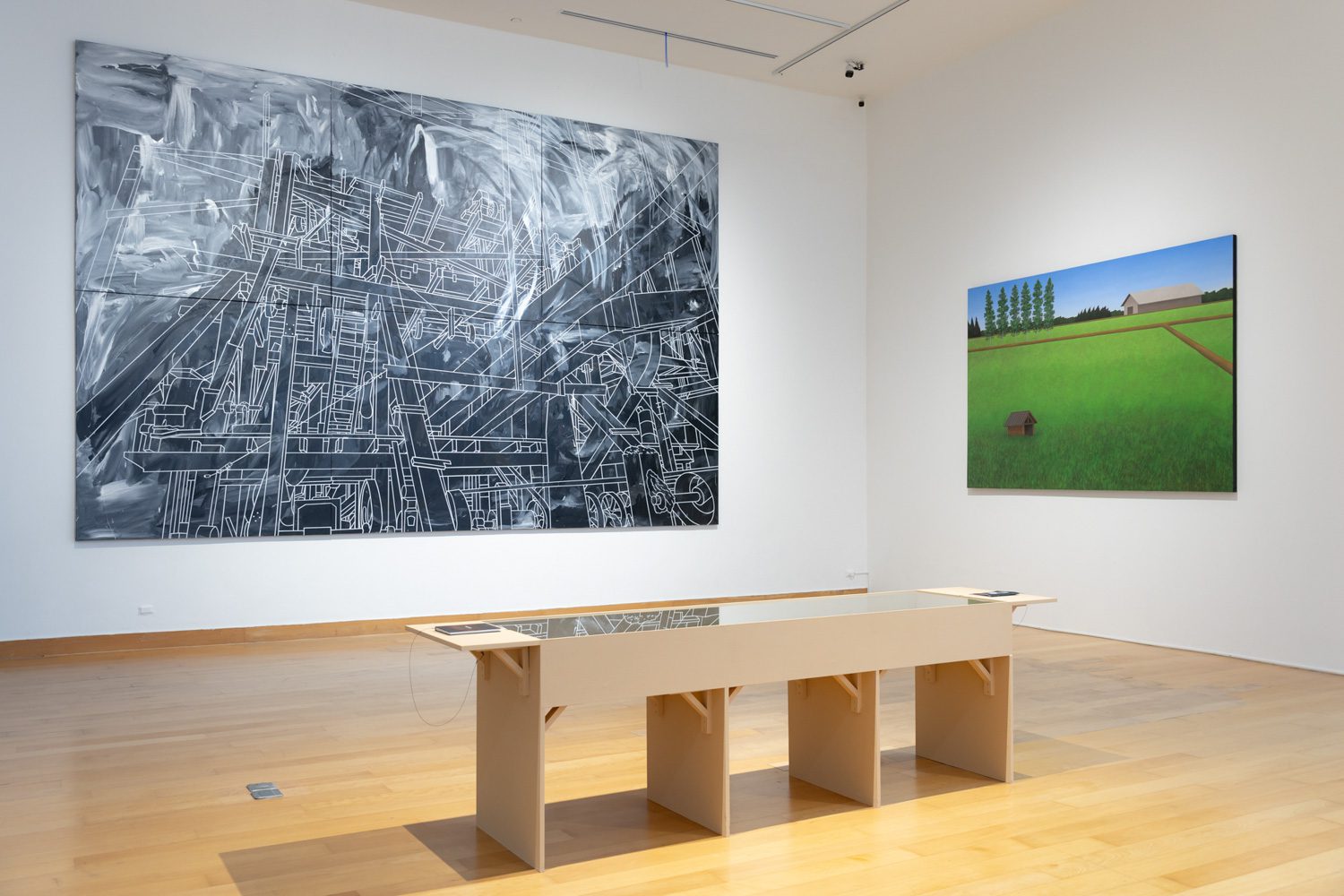
Local Myths #2: Shifting Terrains brings together works by nine artist groups: Chalit Saphaphak, Preecha Raksorn, and Vacharanont Sinvaravatn; Natpakhan Khemkhao; ThaDa LAB; Tananan Jaisawang; Baan Norg Collaborative Arts and Culture; Farmjodjum Art Space; Sudaporn Teja; SIDETHINK : SOCIETY; and Ubatsat x Sridonchai Weavers.
The exhibition runs from June 4 to September 13, 2026, on the 8th floor of the Bangkok Art and Culture Centre (BACC).