
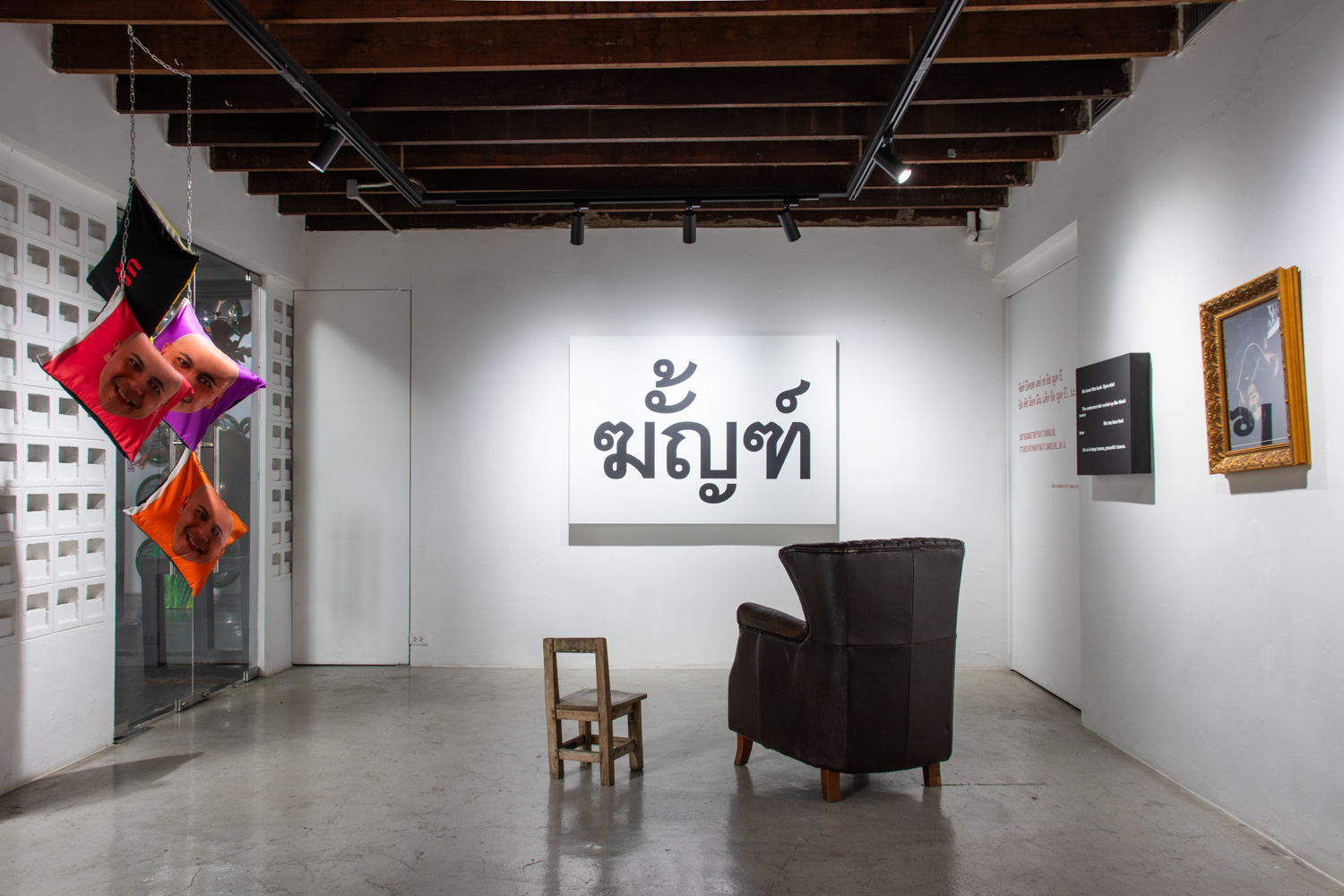
WHEN STANDARDS BECOME THINGS WE ACCEPT WITHOUT QUESTION, MICHAEL SHAOWANASAI INVITES US TO DISMANTLE THOSE FRAMEWORKS THROUGH HUMOR, LANGUAGE, AND SATIRE IN THE EXHIBITION ‘FAAK’
TEXT: SARUNKORN ARTHAN
PHOTO: NOTT JENKETRAKARN EXCEPT AS NOTED
(For Thai, press here)
You hardly need to be told that Michael Shaowanasai has always had a taste for satire. And now he is at it again with FAAK, an exhibition tucked into the compact space of Blacklist Gallery at MATDOT Art Center on Lan Luang Road. The first thing to stop us in our tracks upon entering was this:
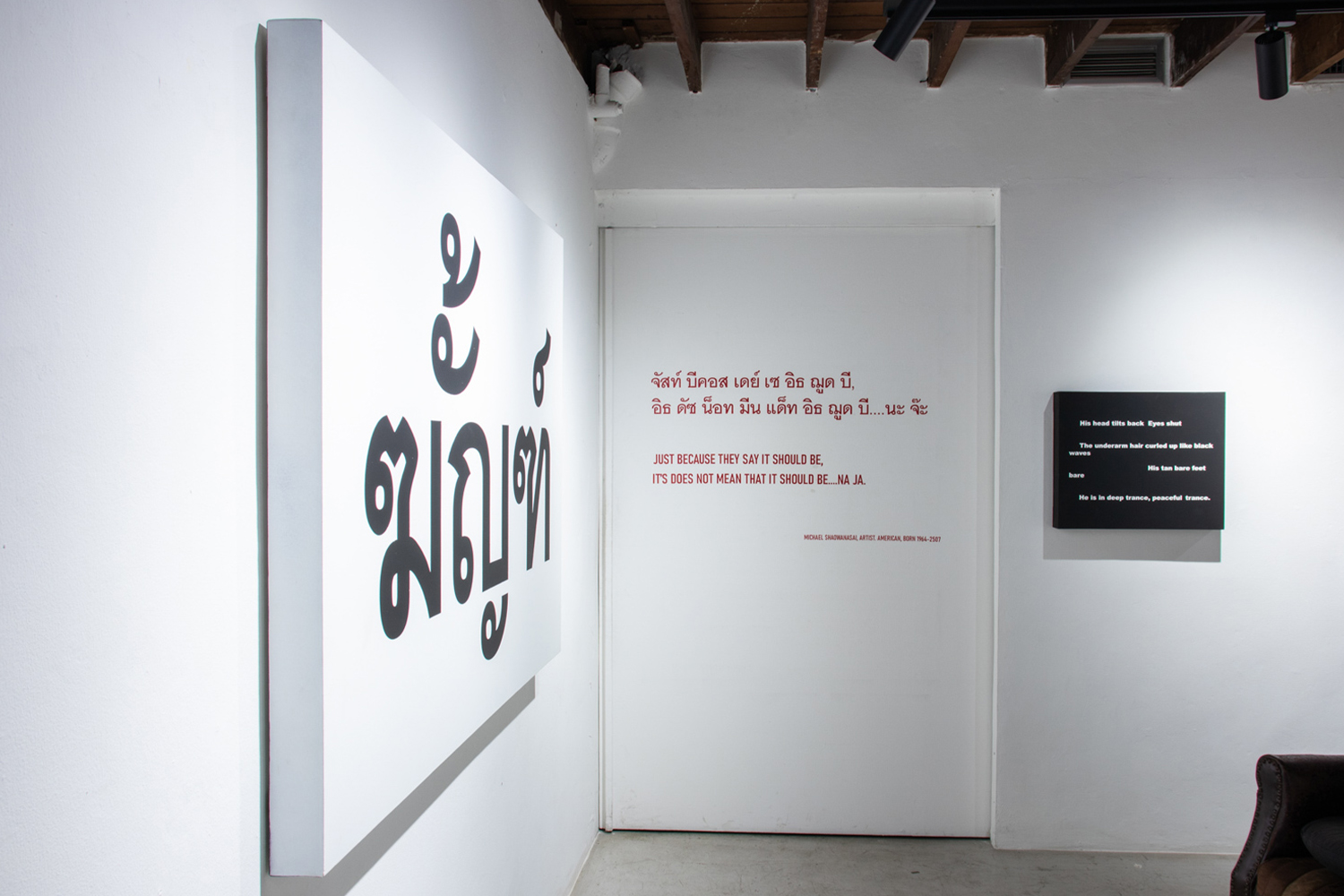
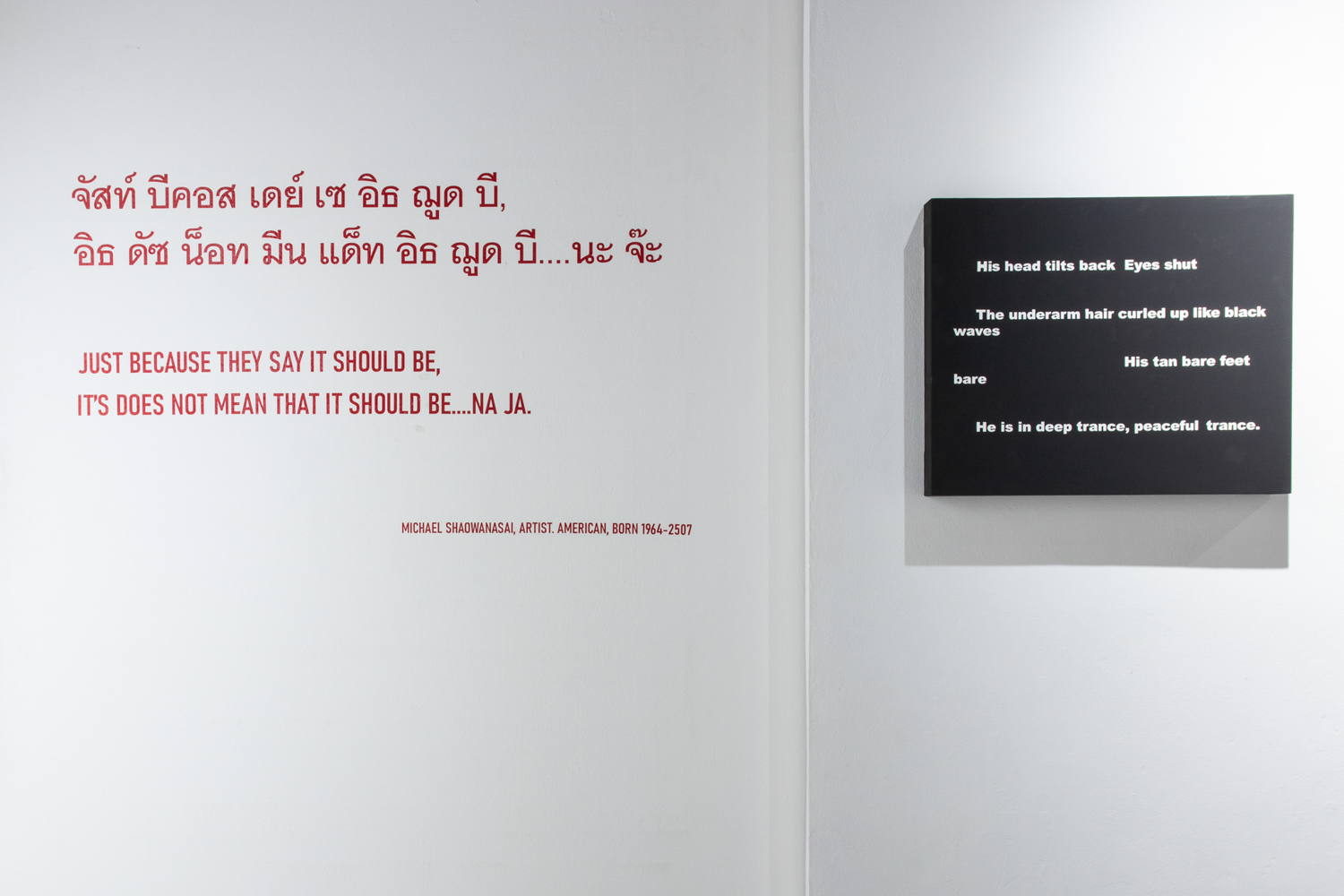
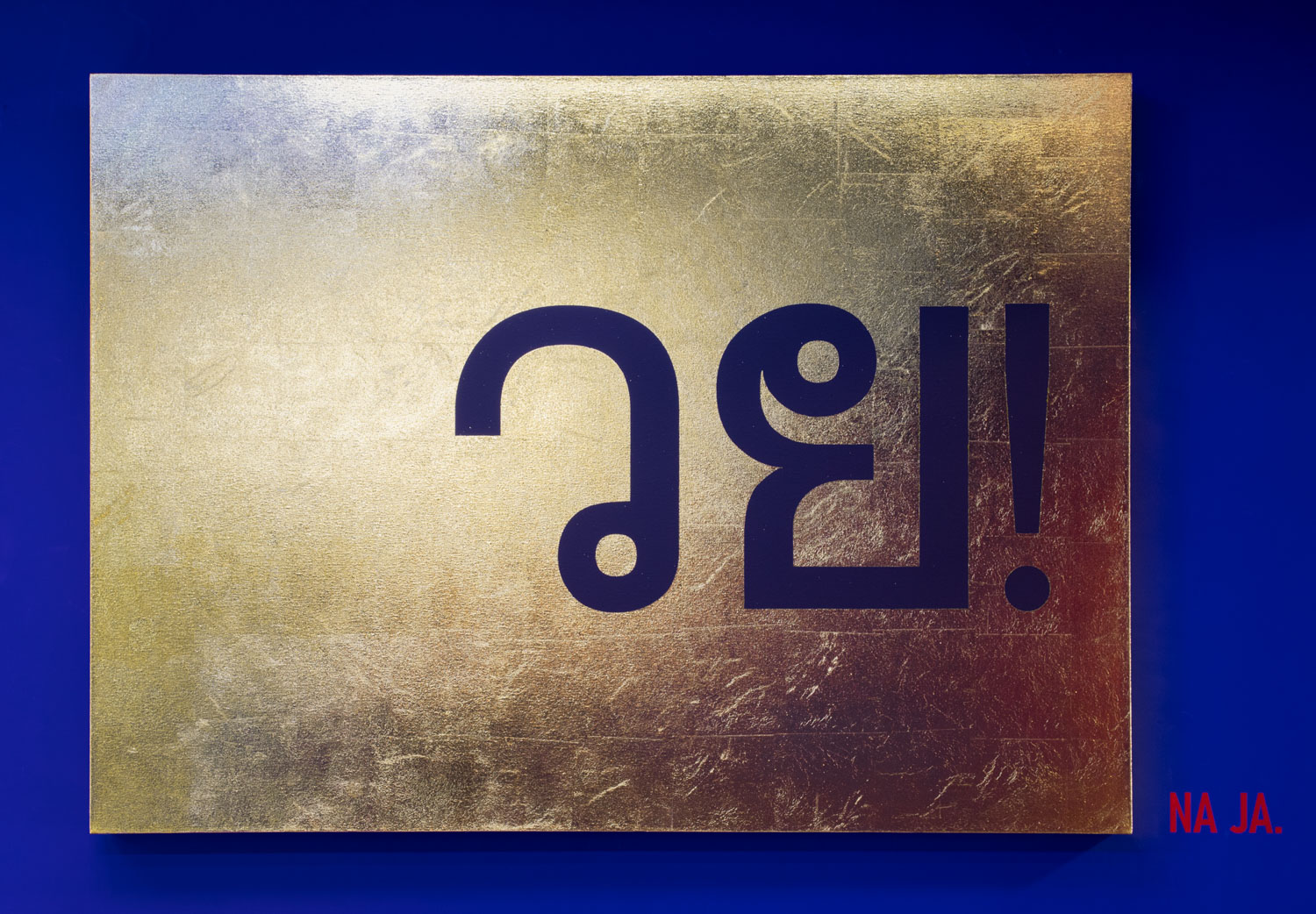
“JUST BECAUSE THEY SAY IT SHOULD BE,
IT DOES NOT MEAN THAT IT SHOULD BE…NA JA.”
The statement asks who gets to decide what should or should not be.
Who has the authority to declare something right or wrong?
Who ultimately owns that authority?
And, without a doubt, the quote also takes aim at the very notion of standards.
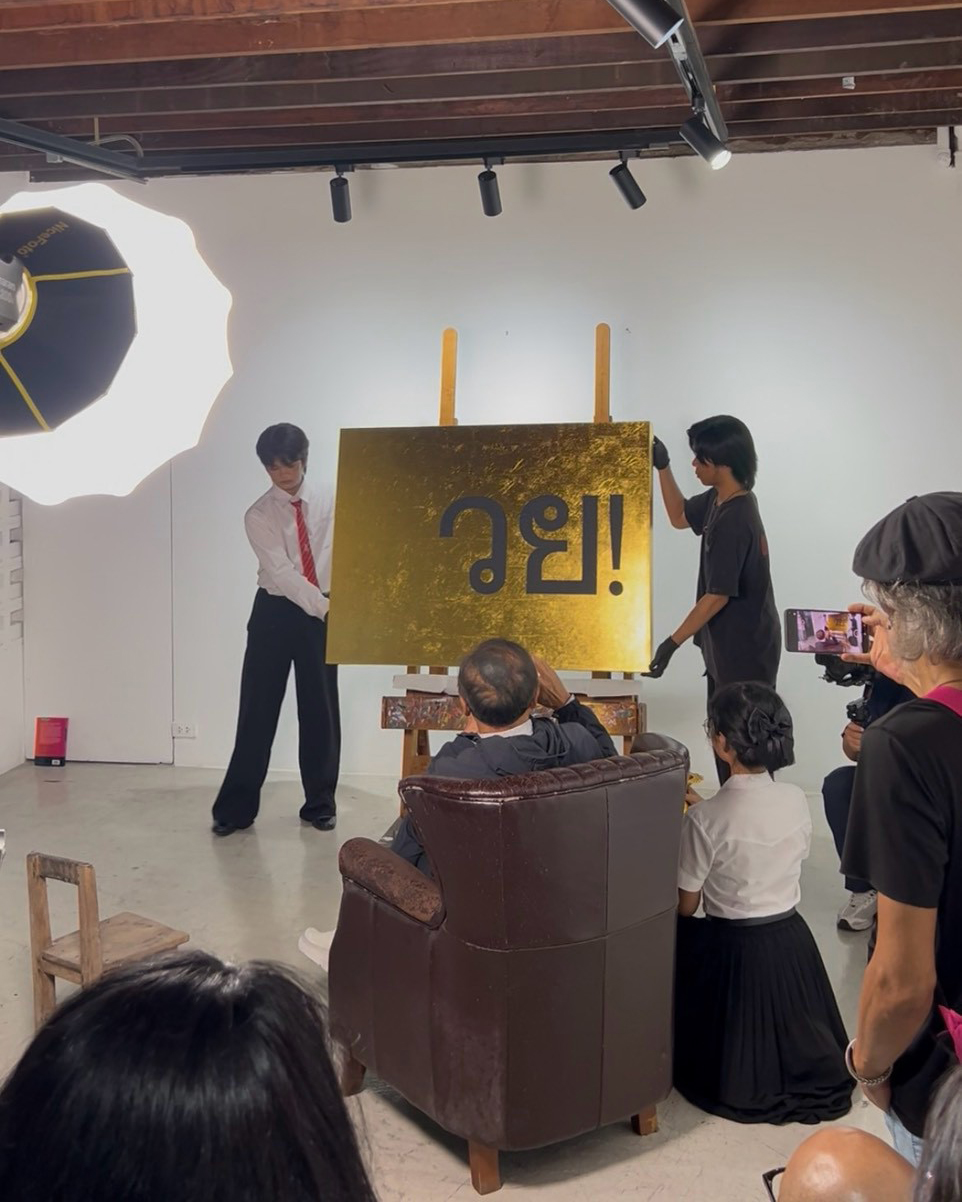
Photo: Sarunkorn Arthan
At the exhibition opening, Michael directed a live performance featuring Apinan Poshyananda as one of its protagonists. Apinan sat in a handsome, gleaming leather armchair. Beside him stood a young woman holding a tray with a bell atop it. Each time the bell rang, the framed image before him was replaced with another. The typeface looked familiar. The language sounded familiar. Yet something about the letters seemed decidedly off.
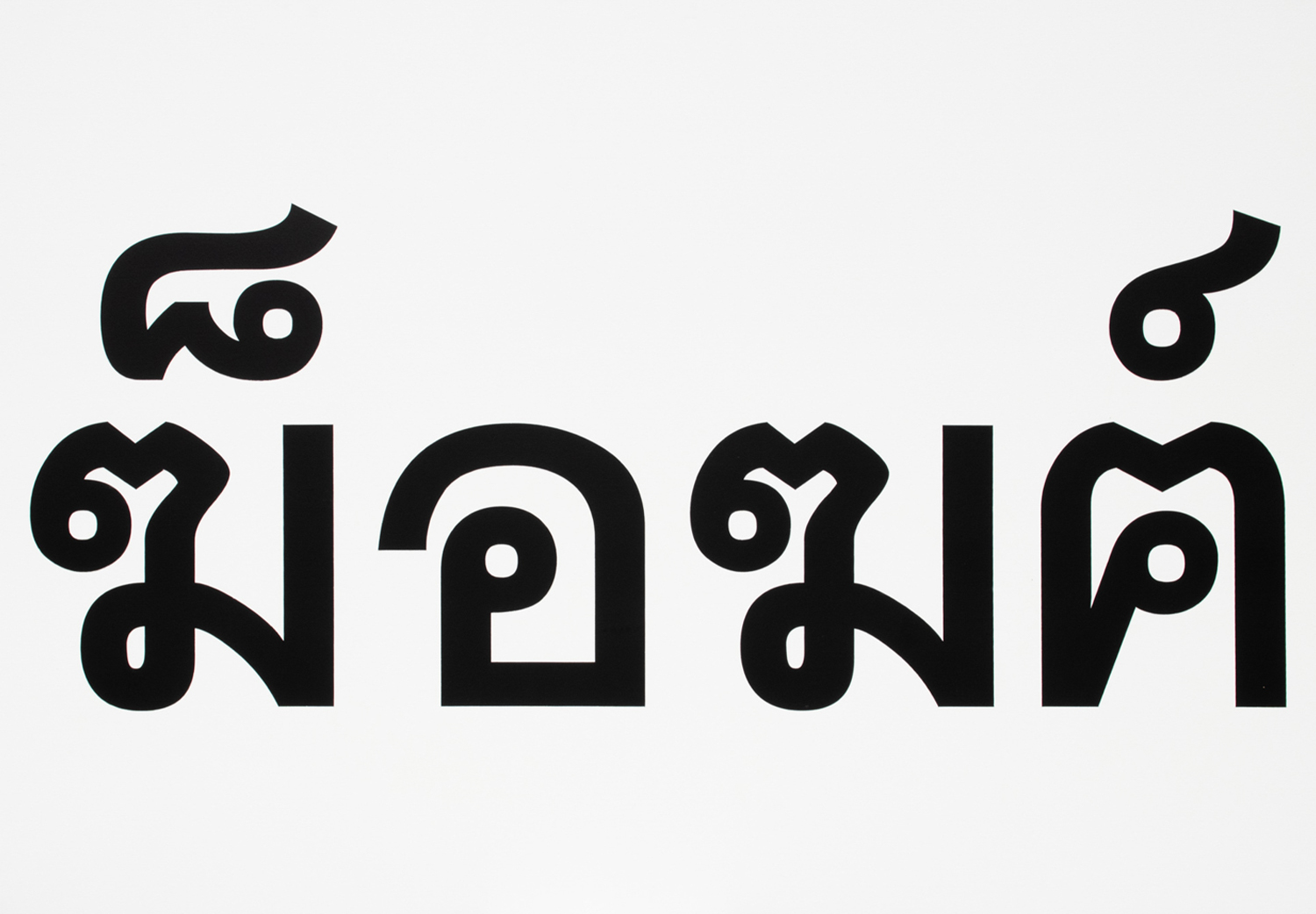 Cock
Cock
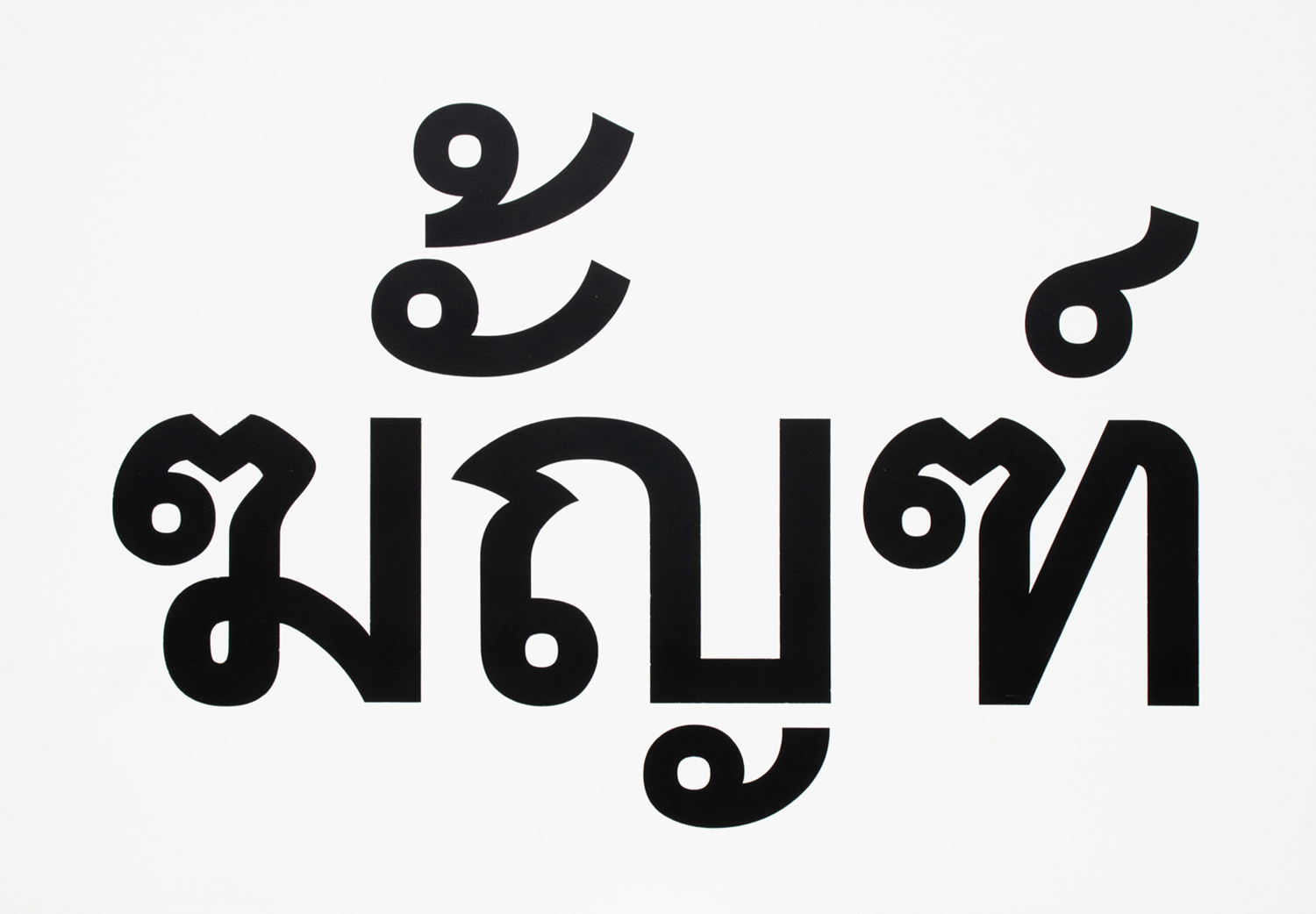
‘Cock’ ‘Cunt’ ‘Composition #9’
After several rings had seen the three word-images shuffling back and forth—and once the entire room had enjoyed an eyeful of Cock, inspected Cunt, and contemplated Composition #9 to its heart’s content—the murmurs began almost immediately. Some tried sounding out the words and burst out laughing. Others wondered aloud what they could possibly mean, despite knowing perfectly well what they meant. Still others chatted noisily behind the performers. The performance eventually concluded with Cock left hanging on the easel, a monument to the word.
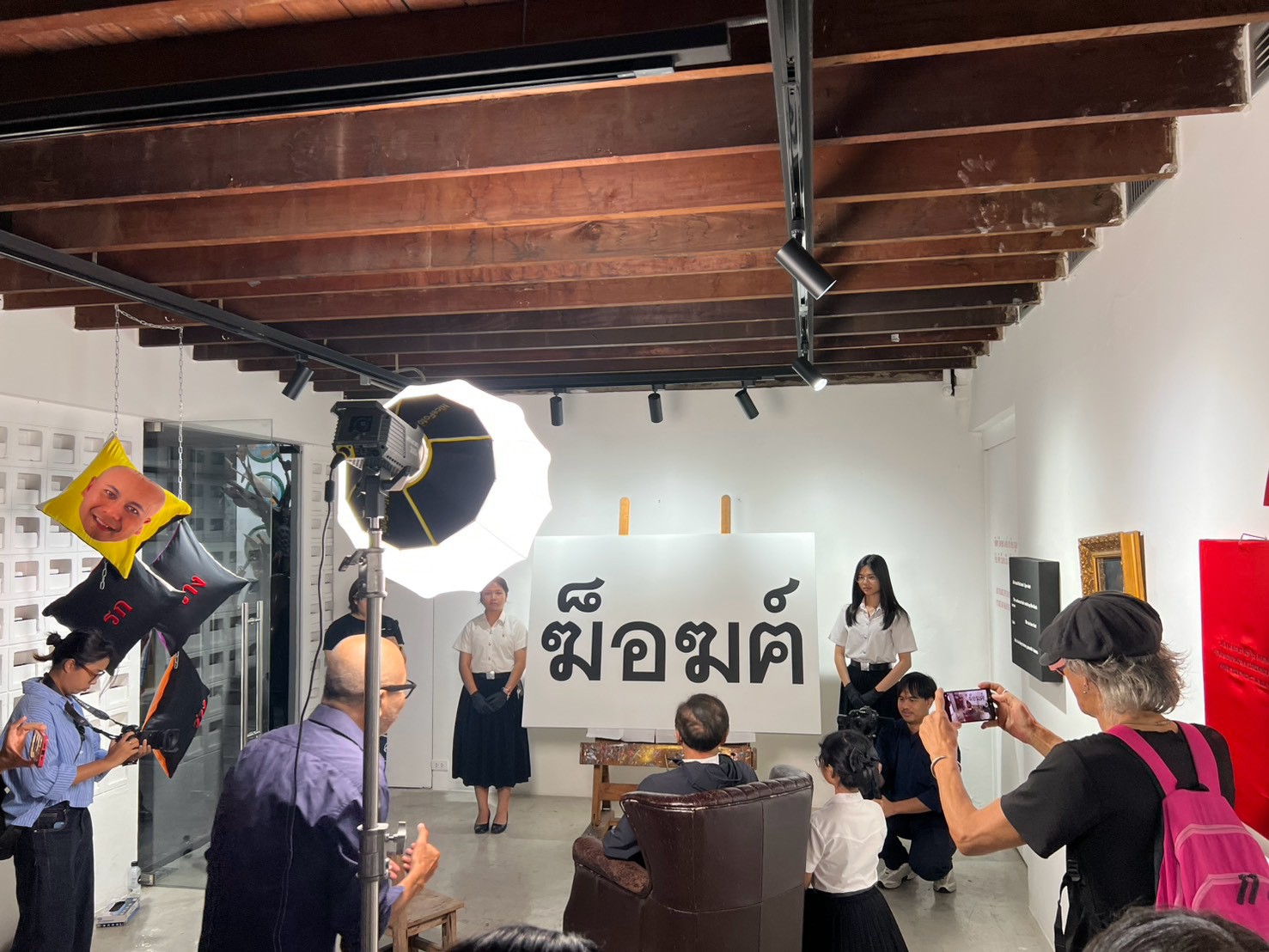
Photo: Sarunkorn Arthan
As I write this, I find myself wondering why Michael chose Apinan for the performance. There may, of course, be nothing to it. At an opening this hectic, no one really knows who will turn up or when. But if there is something to it, consider this: Apinan is the artistic director of the Bangkok Art Biennale and was featured in the 2025 edition of ArtReview Power 100. Just how much influence—and I do mean influence—does he wield, and how large a ripple can he create in the art world?
Seen from this angle, Apinan’s ringing of the bell becomes a darkly comic gesture that raises an intriguing question: did the cheers, applause, and laughter that greeted Cock and Cunt that day come from the works themselves, or simply because the words had received his ‘ring of approval’?
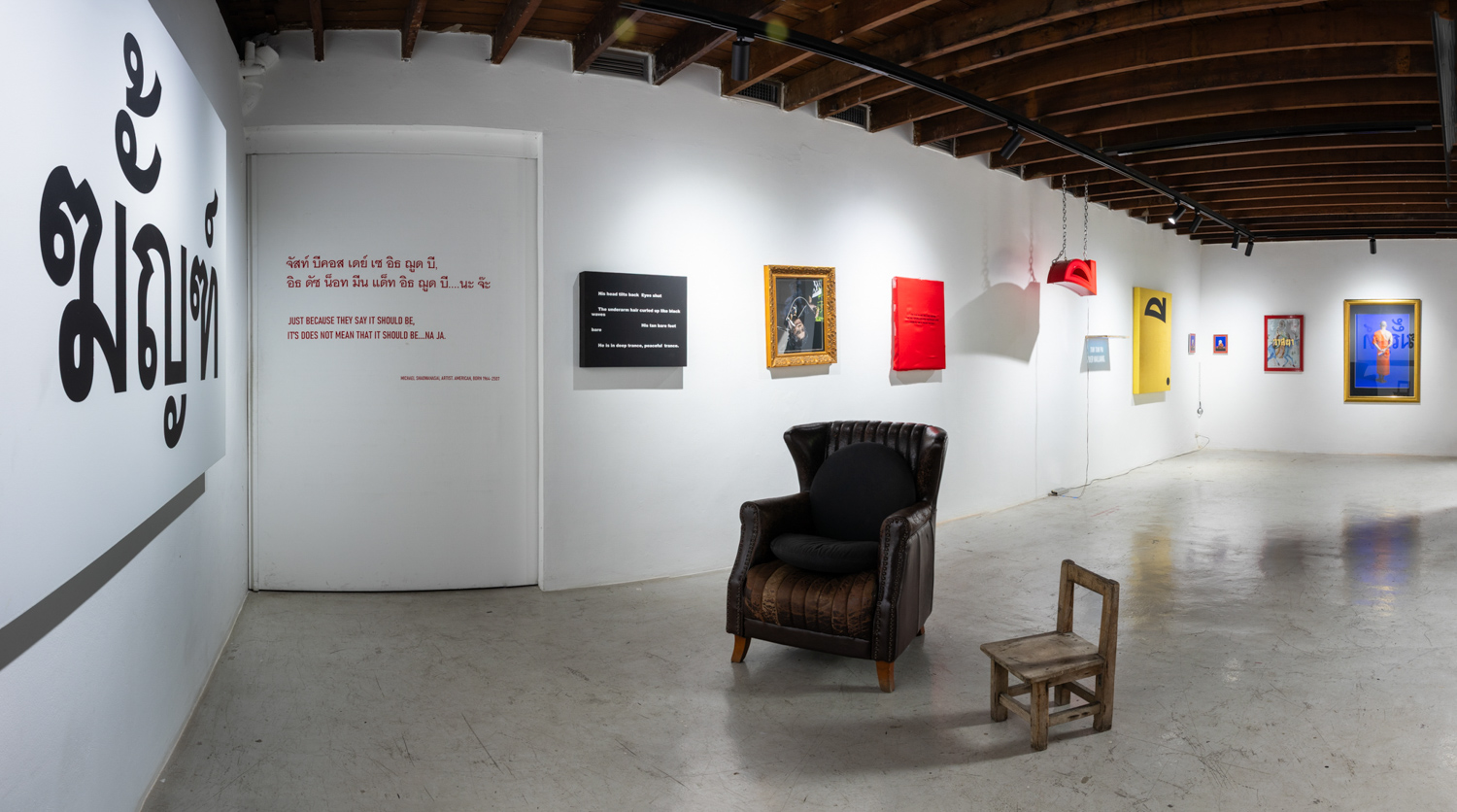
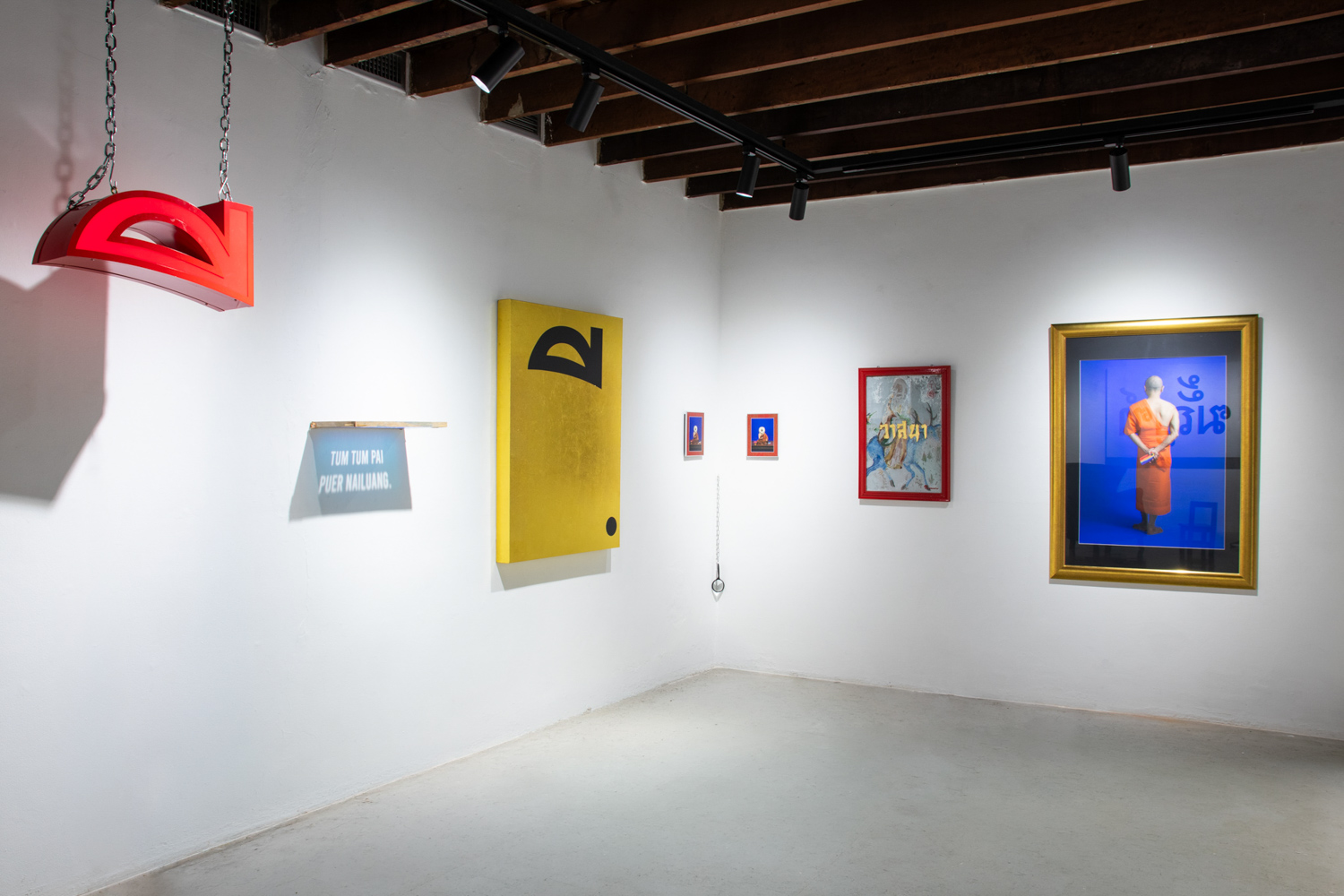
Beyond this thought-provoking performance, the long, rectangular gallery is packed with all sorts of things. If the show were food, it would be Gaeng Ho, or Leftover Curry: everything that has been previously cooked tossed together into a single pot, somehow turning out ‘delicious’ without any need for standardized recipes or precisely measured ingredients. The result is bold, fiery, and scorching enough to leave your eyes watering and your ears burning.
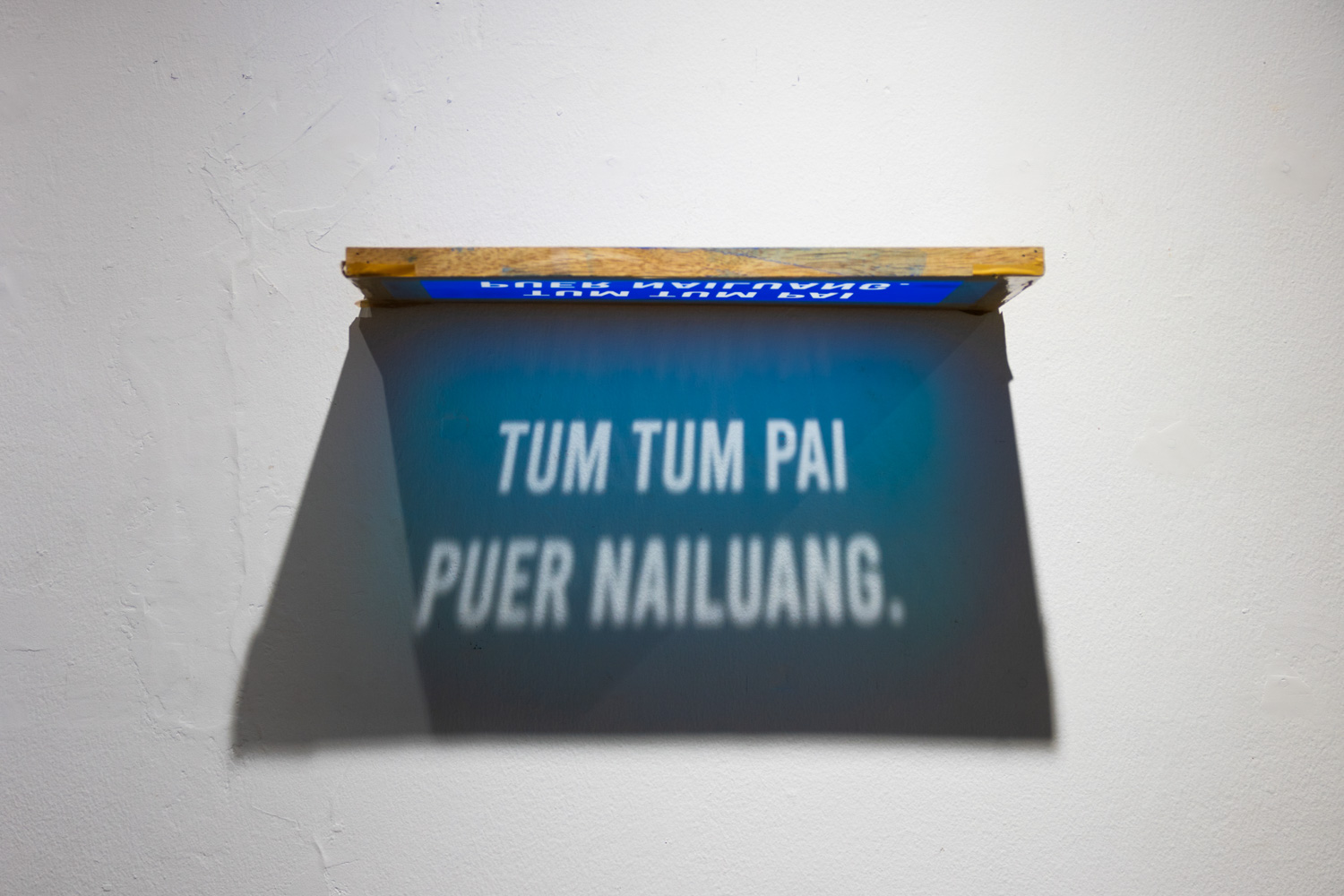
TUM TUM PAI PUER NAI LUANG
The Thai vowel -ี, which makes an ‘ee’ sound, blazes beneath the red neon of Sculpture #8, echoing the same vowel against the golden background of Composition #7. Both works invite visitors to stand beneath or in front of them, take photographs, and decide for themselves what -ี might be made to mean. At times, those interpretations may well push beyond the boundaries of conventional morality—even with the silkscreen work bearing the words TUM TUM PAI PUER NAI LUANG (Just do whatever for the King.) standing right beside them. What, then, shall we do? Do good selflessly, do it for free, do it cheekily, do it dirty, do…? The interpretation depends entirely on ‘one’s own standards,’ with no other yardstick by which it can be judged.
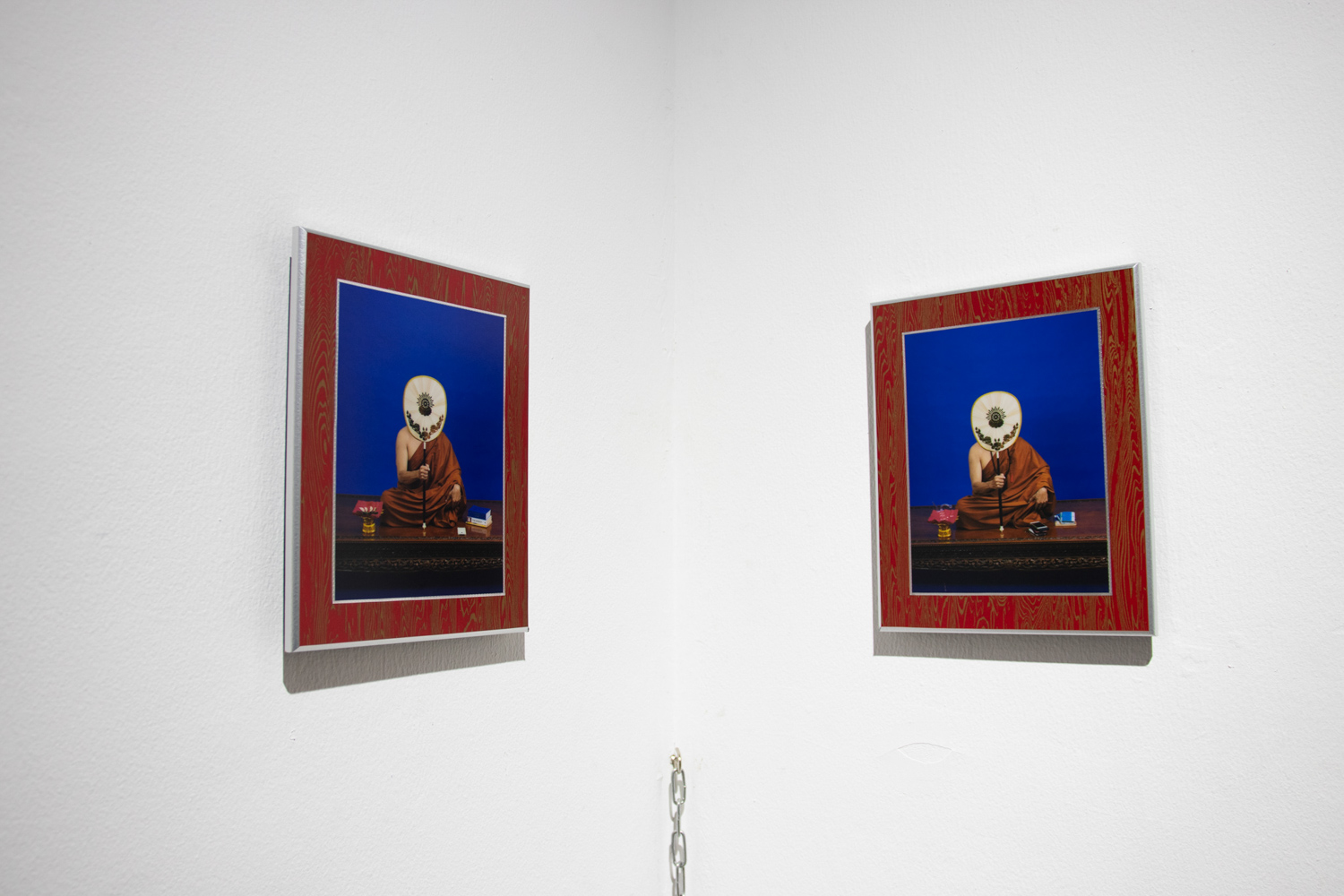
Double Seated Portrait
 Double Seated Portrait
Portrait of a Standing Man Holding a Mobile Phone
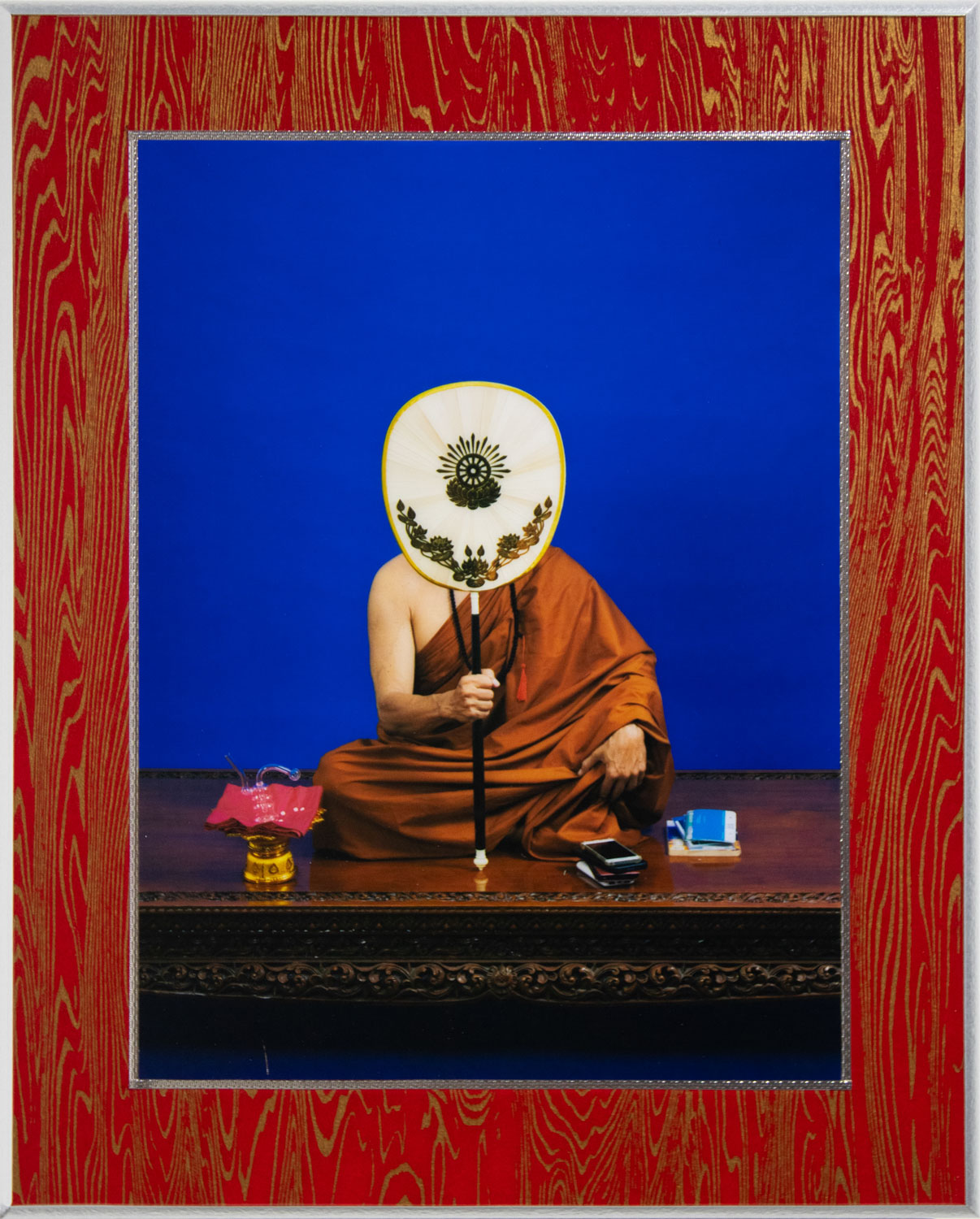
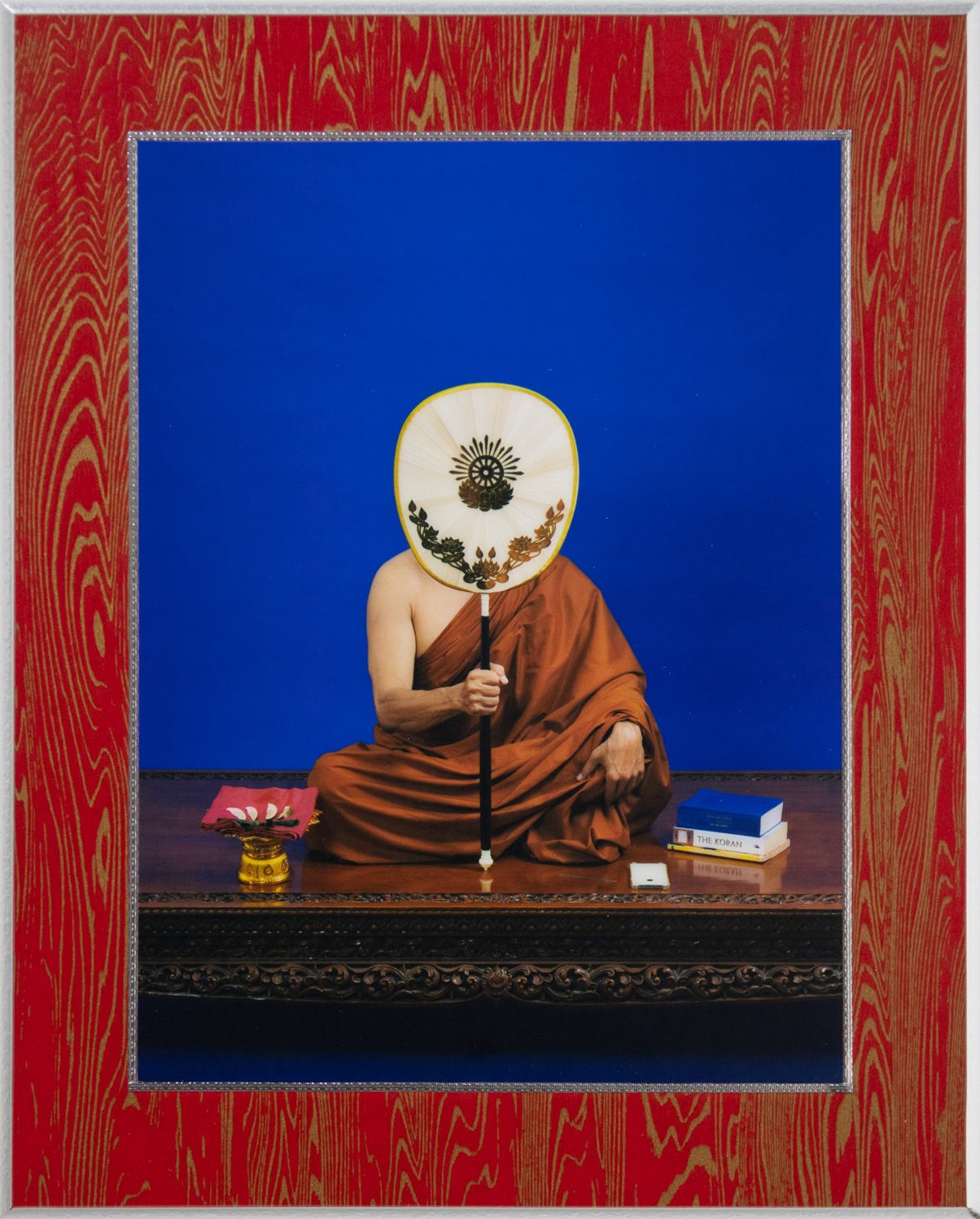
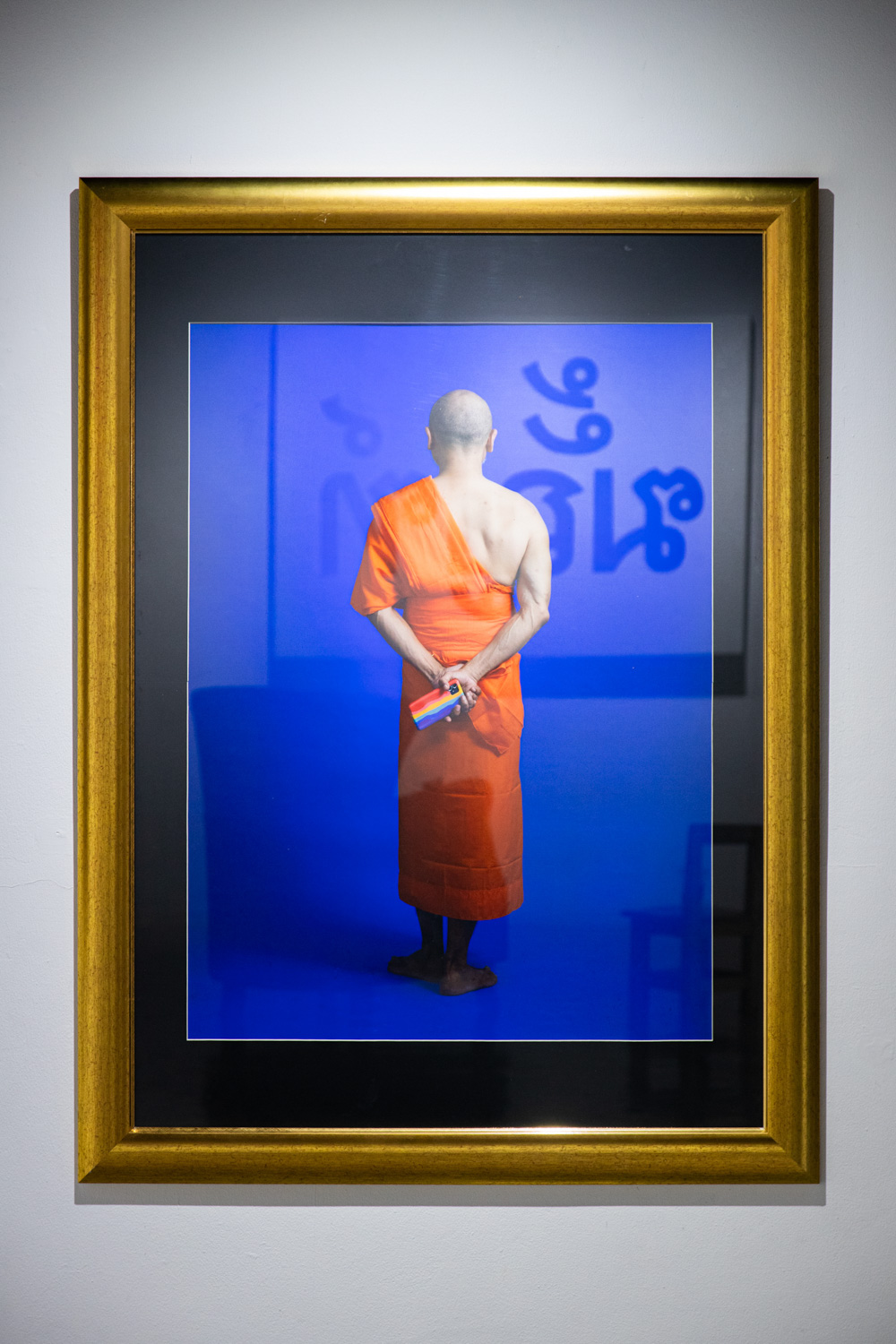
Then there are the works that take a jab at ‘Thai-style’ Buddhism. Double Seated Portrait plays with the contradiction between two monks who hide their faces behind ceremonial fans in accordance with the same prescribed convention. One seeks wisdom beyond the scriptures; the other is consumed by desire, worldly pleasures, and multiple mobile phones serving the interests of commercialized Buddhism. Similarly, Portrait of a Standing Man Holding a Mobile Phone depicts a monk with his back turned, secretly clutching a smartphone in a rainbow-colored case behind him. The image points to the dark irony of the moral framework surrounding the monastic establishment—an institution that tirelessly constructs standards of right and wrong as instruments of control, while beneath its saffron robes lie desire, lust, capitalism, and sexual identities that have never been included in those ‘standards’ at all.
KON-JOK
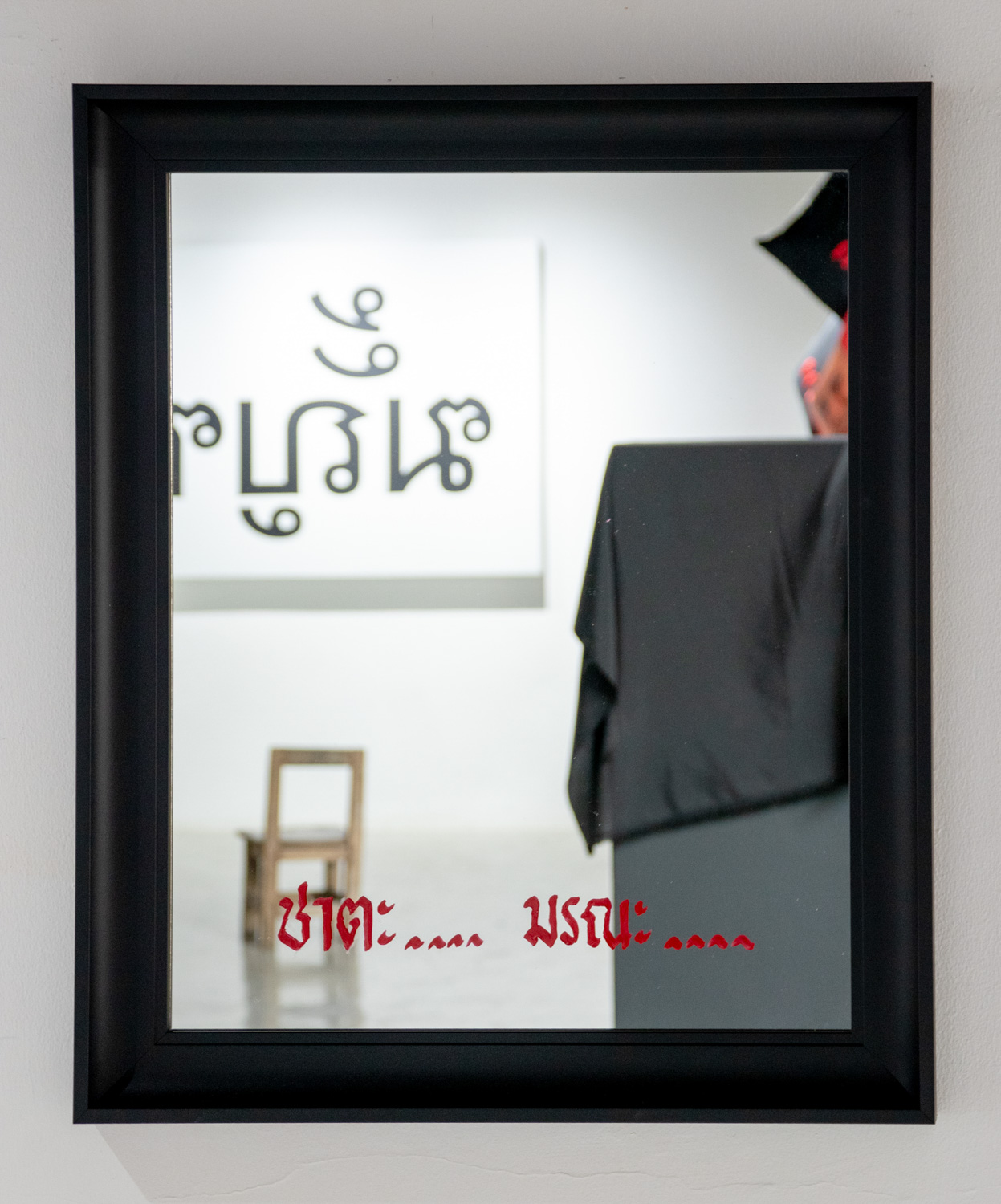
And perhaps everything comes to an end with KON-JOK: a sheet of mirror painted in red, bearing the trace of words that the living would rather not bear, but that every dead person eventually does—‘Birth… Death….’ Besides offering visitors a chic mirror selfie, the work distills the exhibition’s entire conversation onto its reflective surface. Amid all the rules, morals, and norms established to judge what is right and what is wrong, the only true standard—one that lies beyond anyone’s power to dictate—is death: the final extinguishing that everyone in the world must inevitably confront in their own reflection.
After taking it all in, you may find yourself exclaiming, ‘THIS IS FAAKKING AWESOME,’ ‘WHAT THE FAAK IS THIS?’ or anything else that comes to mind.
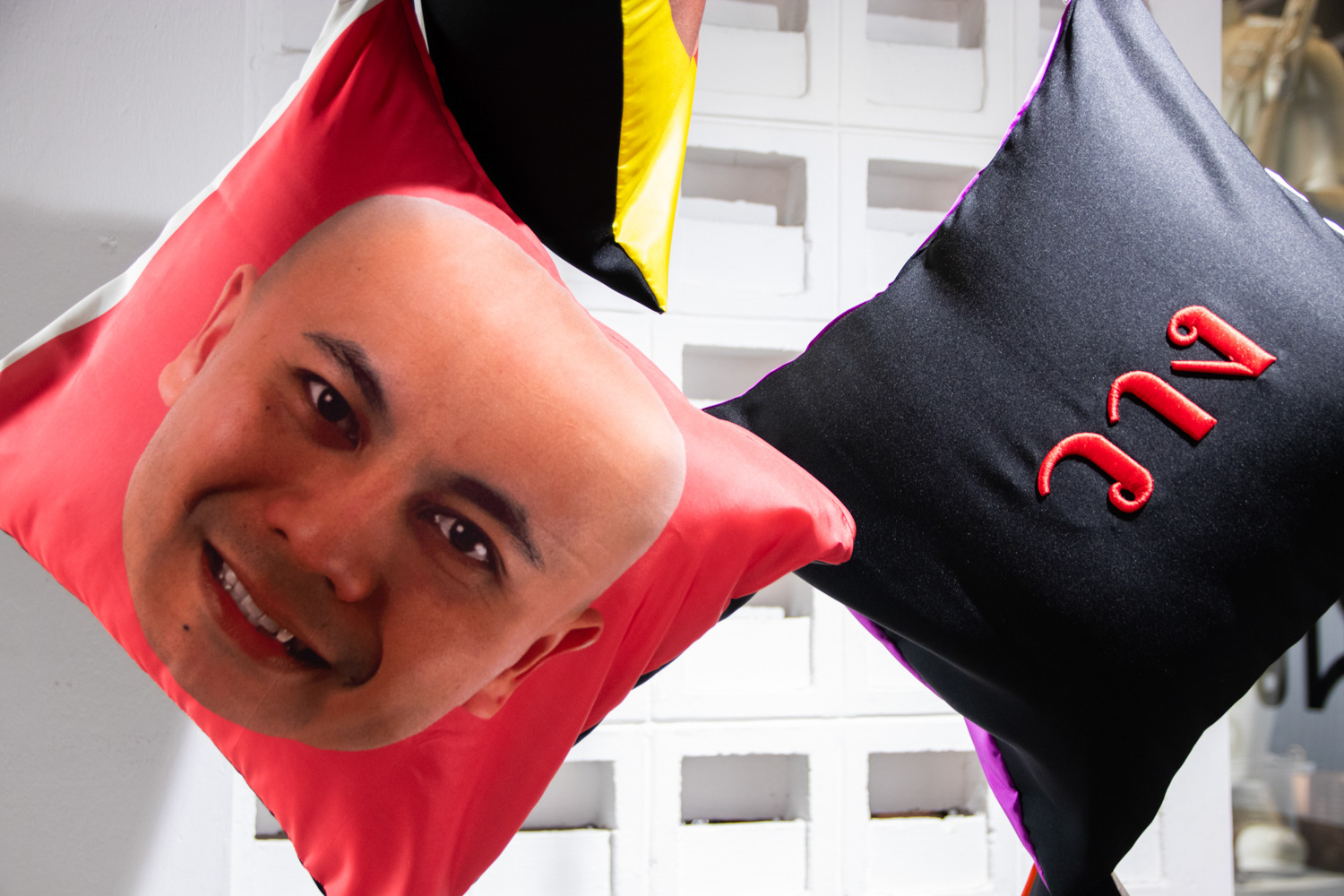
H’MON
But as Michael Shaowanasai puts it: “If you don’t understand it after looking at it, try asking yourself.”
FAAK, an exhibition by Michael Shaowanasai, is on view at MATDOT Art Center from August 24 to September 30, 2026.