
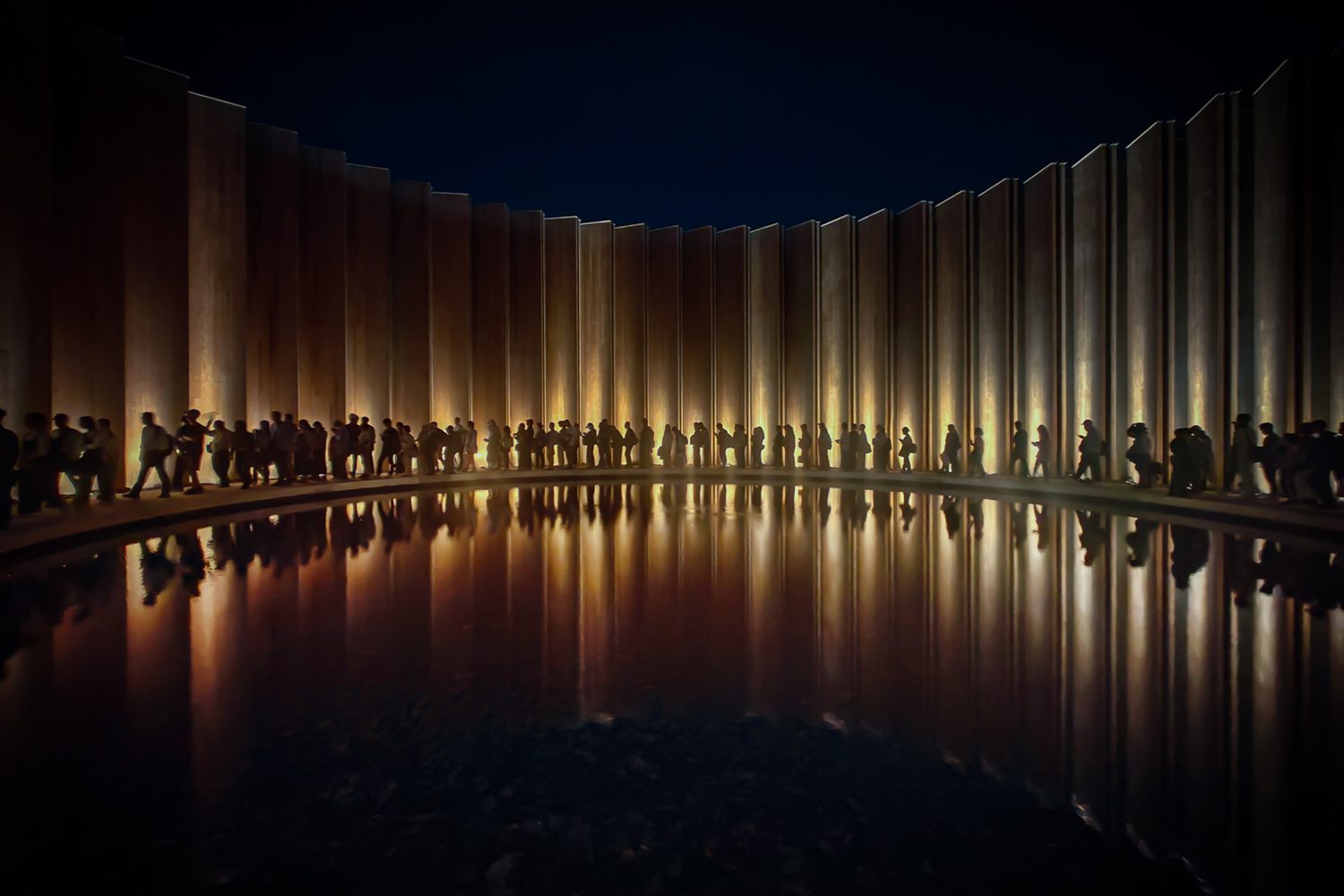
 The Grand Ring
 EXPO 2025 OSAKA TURNS ARCHITECTURE INTO A DIALOGUE BETWEEN HUMANITY, FRAGILITY, AND THE POSSIBLE HOPES OF THE FUTURE
TEXT & PHOTO: PHAITHAYA BANCHAKITIKUN
(For Thai, press here)
In a world fraught with crises, from an environment pushed to its tipping point to technology racing ahead of human emotion, and social inequalities that deepen fractures across the globe, the World Expo can feel like something detached from reality, filled instead with dreams, imagination, promises, and hope.
A visit to Expo 2025 Osaka is not merely about admiring striking buildings or catching sight of toys from the future. It is a search for inspiration and hope, woven through subtle dialogues between technology, architecture, and human emotion. Amid the crowds and the resonant hum of countless pavilions, there are moments that leave one silent, heavy with thought; moments so profound they draw tears to the surface.

Held under the theme ‘Designing Future Society for Our Lives,’ the Expo’s concept appears simple in words yet unfolds with layered complexity. It prompts us to ask: Can the future of society truly be designed? Who designs it? For whom? And built upon whose beliefs? Spread across more than 1.55 square kilometers, each corner tells stories from distant parts of the world. The light scent of the sea drifts in and mingles with the aroma of timber rising from the spectacular Grand Ring structure. Long queues are not just for glimpsing the latest technologies; they represent a yearning to touch something people hope might become real. But the future on display at the Expo raises a lingering question: are we witnessing what is to come, or merely stepping into a fleeting vision designed to draw us along?
The Pavilion as a Nation’s Theater
An Expo can be seen as a grand stage on which each country performs its own play. Every pavilion becomes an expression of national identity through distinctive architectural forms; some clad in materials that feel as if they’ve slipped straight from a sci-fi world, telling stories of wonder through the power of technology and imagination. In many ways, each pavilion and its content reflect the character and worldview of its country. Nations with ‘much to show’ make their presence felt; others, sadly, reveal too little. In this sense, the pavilion becomes a soft instrument of influence, a space to demonstrate whose vision of the future is more advanced, more moving, more astonishing, or more hopeful. This question has less to do with architecture and facts than with measuring which nation’s dreams will linger longest in the minds of those who visit.
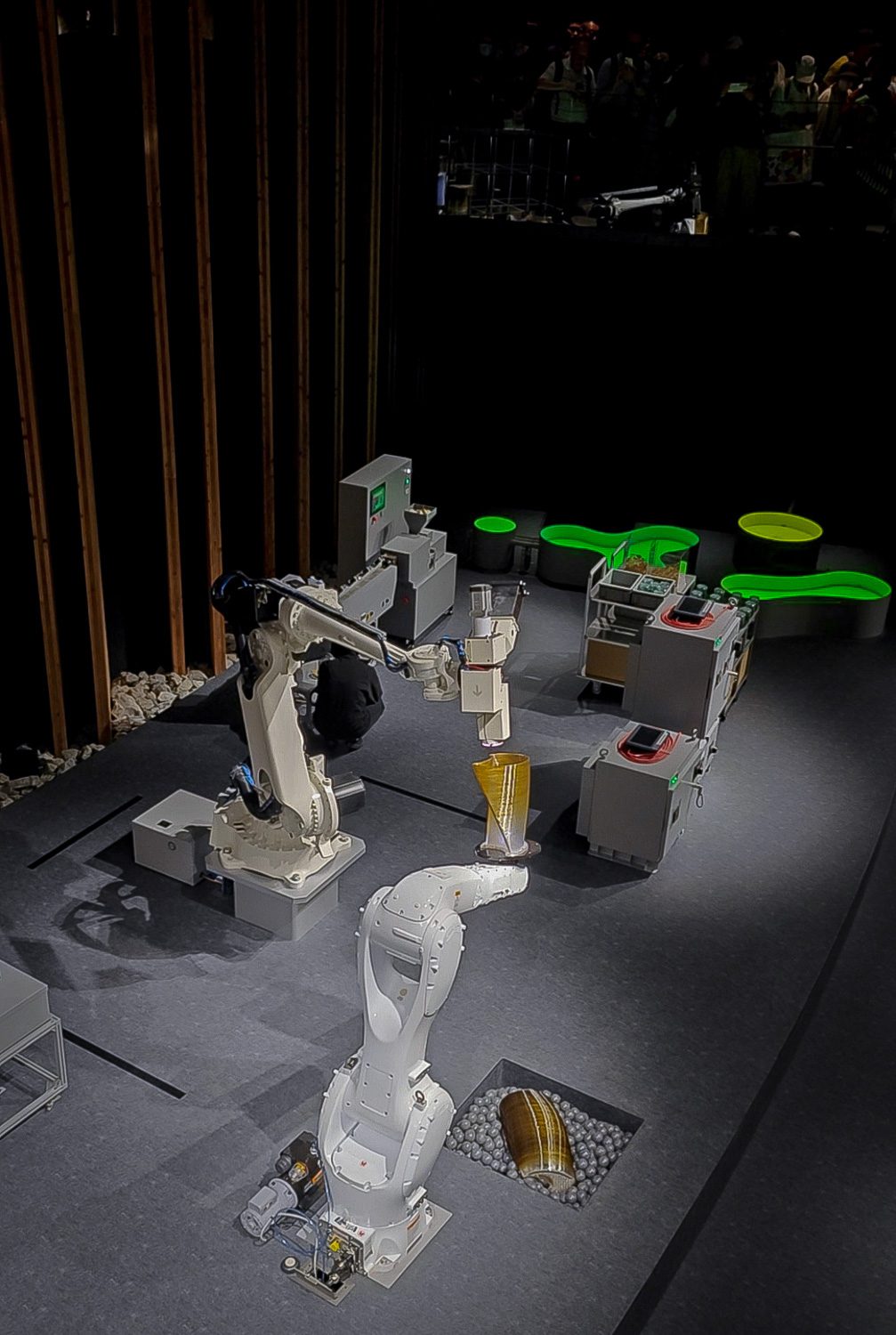
Factory area in Japan pavilion
Yet this stage is never permanent. These structures will be dismantled in just a few months, their beauty intentionally ephemeral, meant to stir visitors to think of what lies ahead and carry those feelings home. For some, it may be no more than fleeting entertainment; for others, perhaps a peek into new possibilities, wrapped the promise of a sustainable future. How one engages with it rests with each individual.
Many might already have had the chance to experience the Expo firsthand, while much of it can still be explored through countless media. It isn’t hard to find out which pavilion or exhibit deserves one’s time. Instead, perhaps it is worth sharing only a few impressions that linger most vividly: the ideas that provoke, the questions that stay with us. In the end, it may be up to each visitor to decide what answers they take away with them.
The Fragility of Every Life
Many pavilions tell stories of life transformed by technology, sustainability rendered tangible, and the promise of collaboration between humans and machines. Yet within that beauty, a quiet fragility always seeps through. One striking example is the ‘Future of Life’ Pavilion, which invites visitors to confront an unsettling vision: the idea of preserving the essence and memories of those who have passed by transferring them into androids—’stand-ins’ for the departed, as if the scenes were pulled from a sci-fi film.

Future of Life Pavilion
At a time when nations across the world are racing to advance robotics, Japan may be the only country that devotes itself so deeply to developing ‘robots’ capacity for emotional expression,’ achieving this in ways both uncanny and moving. These are robots that can smile with sadness, gaze with loneliness, sit in silence imbued with meaning. It is something beyond cutting-edge technology. It is a drama that may well unfold within our lifetimes. In this pavilion, innovation does not merely propel us forward; it turns gently back toward us and asks: ‘When someone we love is gone, would we want a stand-in to take their place?’ And deeper still: ‘If we can bring longing to life, can it ever truly replace the one we miss?’ For those who have known the loss of someone beloved, this moment can bring tears without warning.
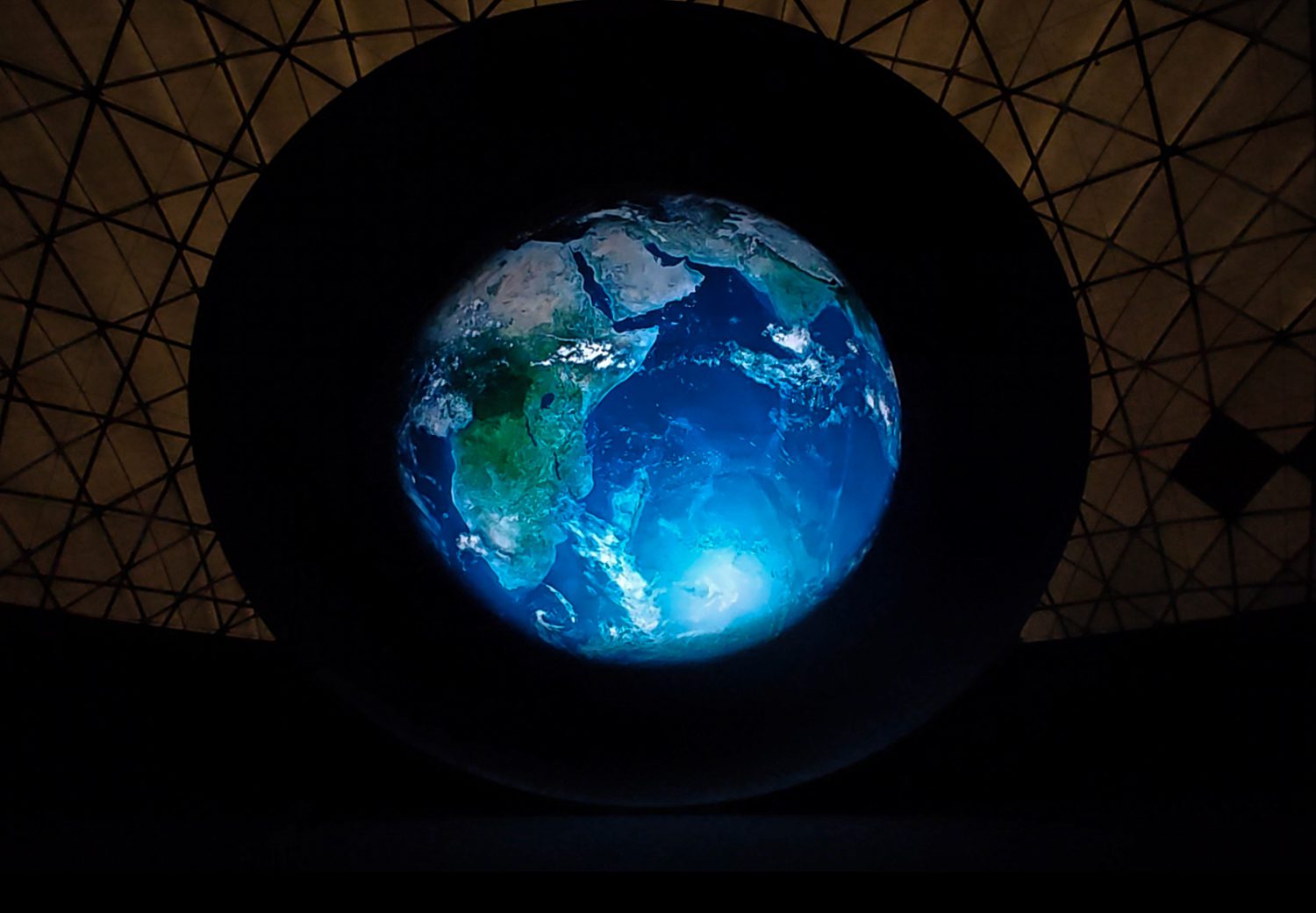
BLUE OCEAN DOME
BLUE OCEAN DOME is another signature pavilion that lingers in the mind long after. A massive black hemisphere, its imposing form looms in the dim light, arresting visitors at first sight. Inside, moving images unfold across a spherical LED screen, telling a wordless story that begins with the Earth glowing in the light of sunrise, seen from space. The narrative then dives deep into the vast ocean, only to darken as it is slowly consumed by an immense tide of plastic waste. The ending leaves one with a heavy sense of despair and the stark fragility of our world before leading visitors toward a final chamber of light. Here, a gentle message emerges: the Earth is fragile, and paper can be part of the solution. This five-minute tale, warm and unexpectedly tender, follows two charming cardboard-box characters through separation and reunion in a circle of lives. (Personally, I found this pavilion profoundly moving, and no summary could do it justice. It’s one you simply have to experience for yourself.)

Elsewhere across the Expo, many other pavilions speak to the world’s fragility in different forms, acting as quiet reminders that the future we design remains full of challenges and questions rather than easy answers. They leave us with a vital thought: as global citizens, will we each play our part in seeking these answers together?
Architecture of Hope
Though an Expo may appear to be a space for dreams and visions, architecture itself is a language that humanity uses to express how we wish to live together. More than that, it asks us how we want to coexist with nature.
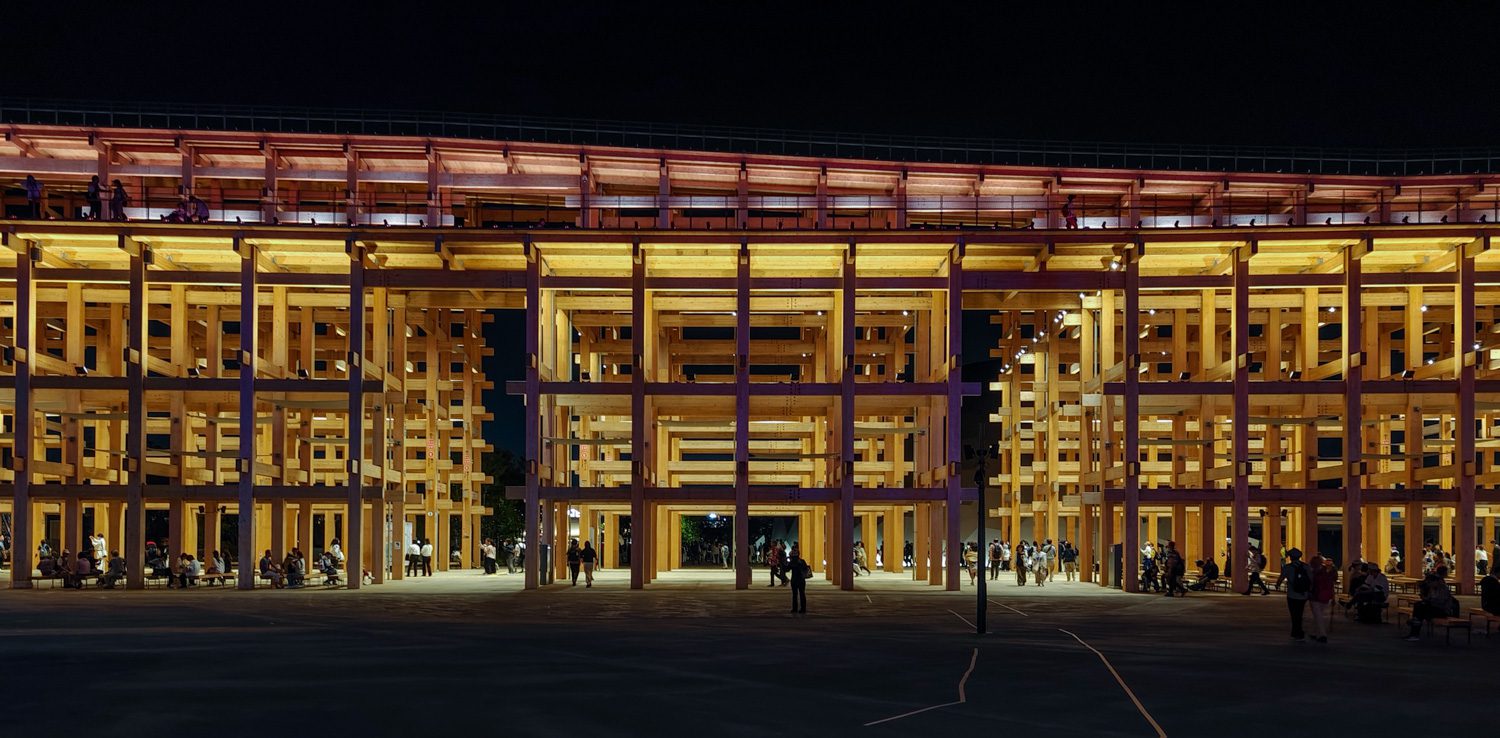
The Grand Ring
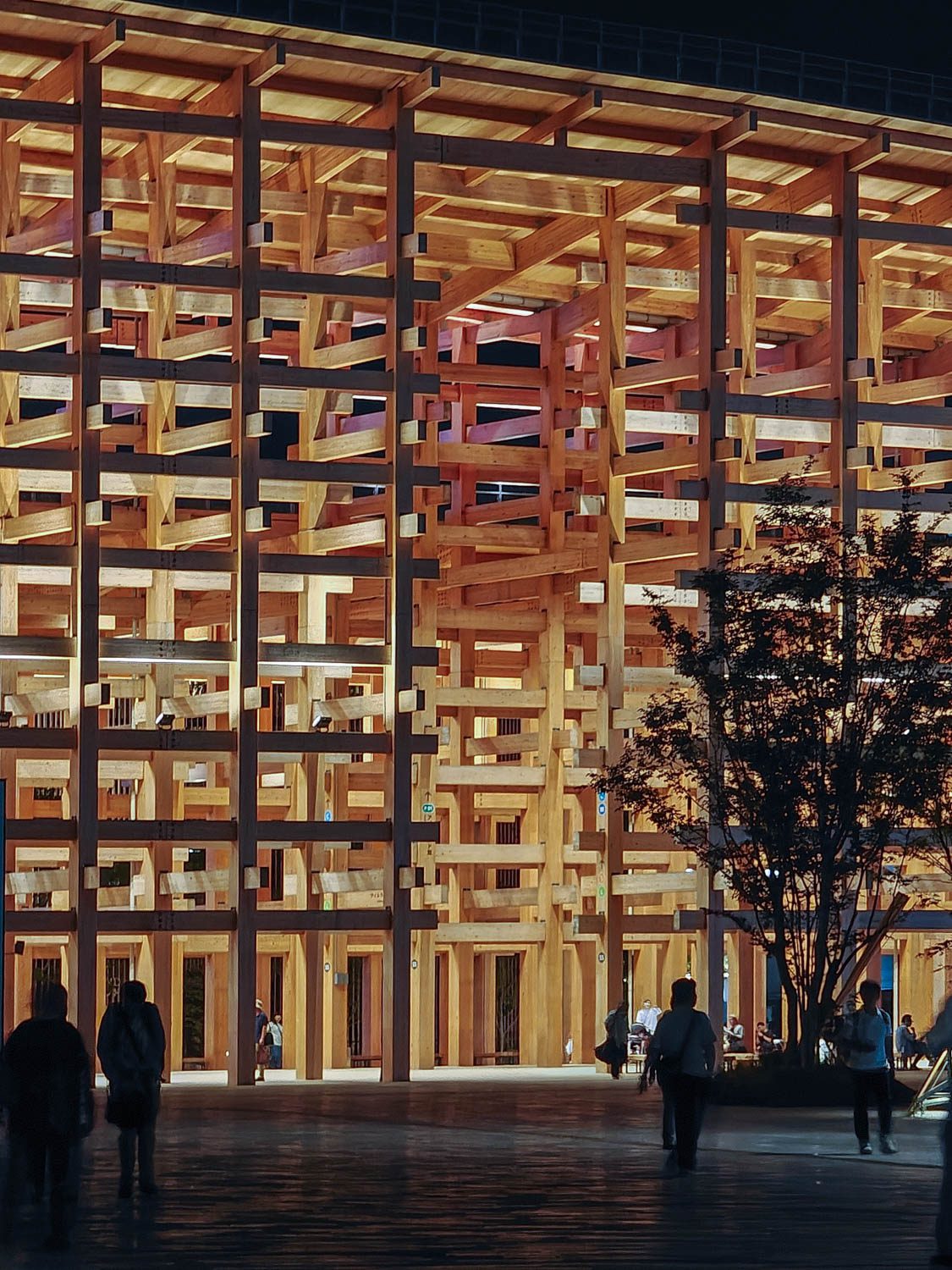
The Grand Ring, a vast structure of ‘Glulam’ (glued-laminated timber, or GLT), designed by Sou Fujimoto, is the world’s largest of its kind. With a circumference of about two kilometers, it is built using Nuki Joint traditional Japanese joinery, combined with modern construction methods. This ambitious project makes a clear statement to the world: wood can indeed be the future of construction. As a renewable material, timber embodies principles of carbon offsetting and environmental responsibility, from cultivation to use, helping reduce resource consumption sustainably. Beyond its technical achievement, walking along the Grand Ring, both above and below its sweeping arc, which forms the beating heart of the Expo, offers a quietly moving experience. The scent of timber that lingers along the path becomes another dimension of the architecture’s power to captivate and inspire.
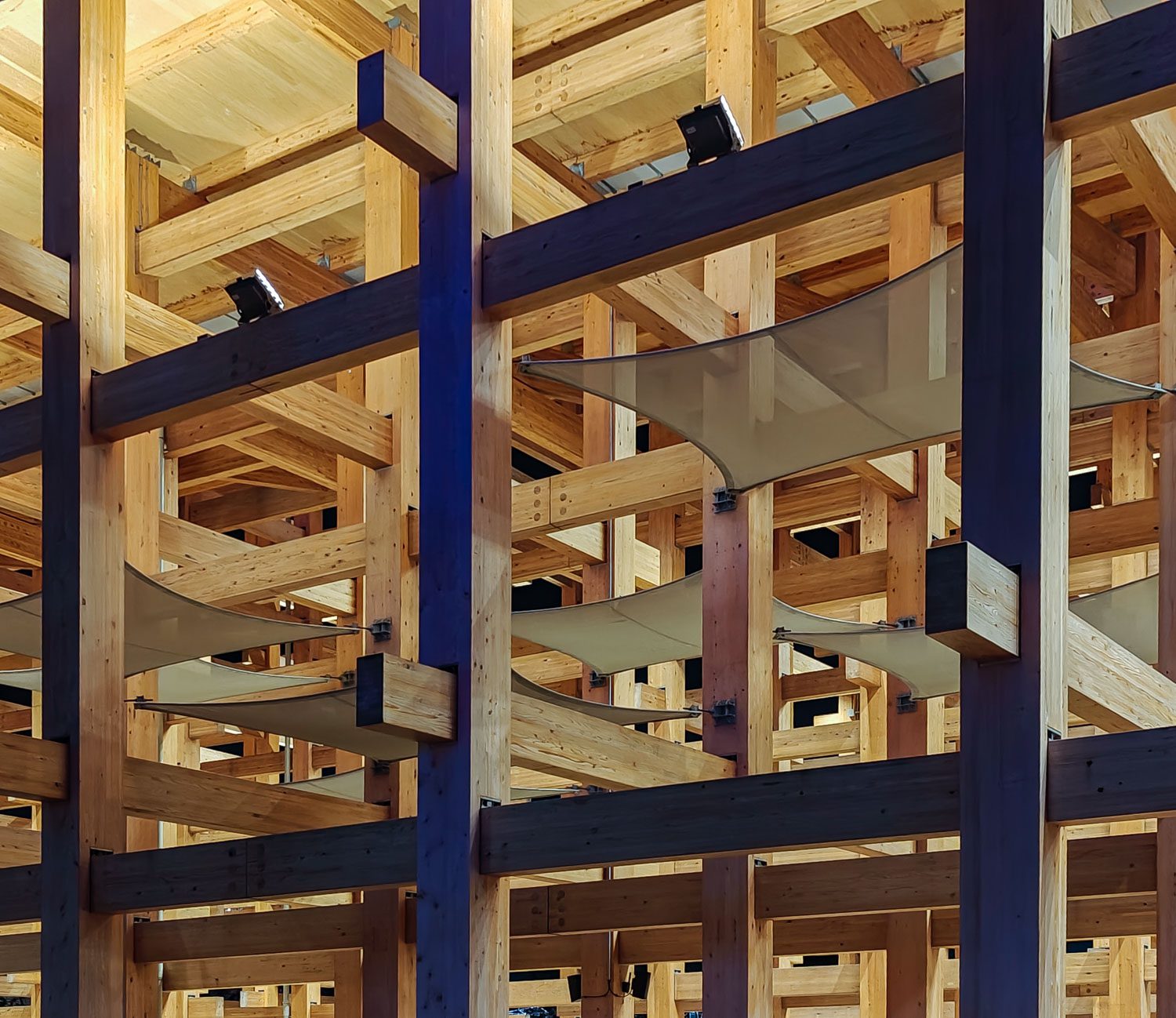
The Grand Ring
Alongside the Grand Ring as the Expo’s centerpiece, the Japan Pavilion stands as a kind of conclusion and culmination of the entire event. From its circular plan and reusable materials to its easily dismantled construction and thoughtfully curated content, it embodies a story at the heart of it all: a hope for sustainability. Themes like the circular economy and the circle of lives find expression here through deep cultural roots. They echo a spirit of sustainability embedded in Japan’s traditions long before the modern world recognized the urgency of this word.

The Grand Ring
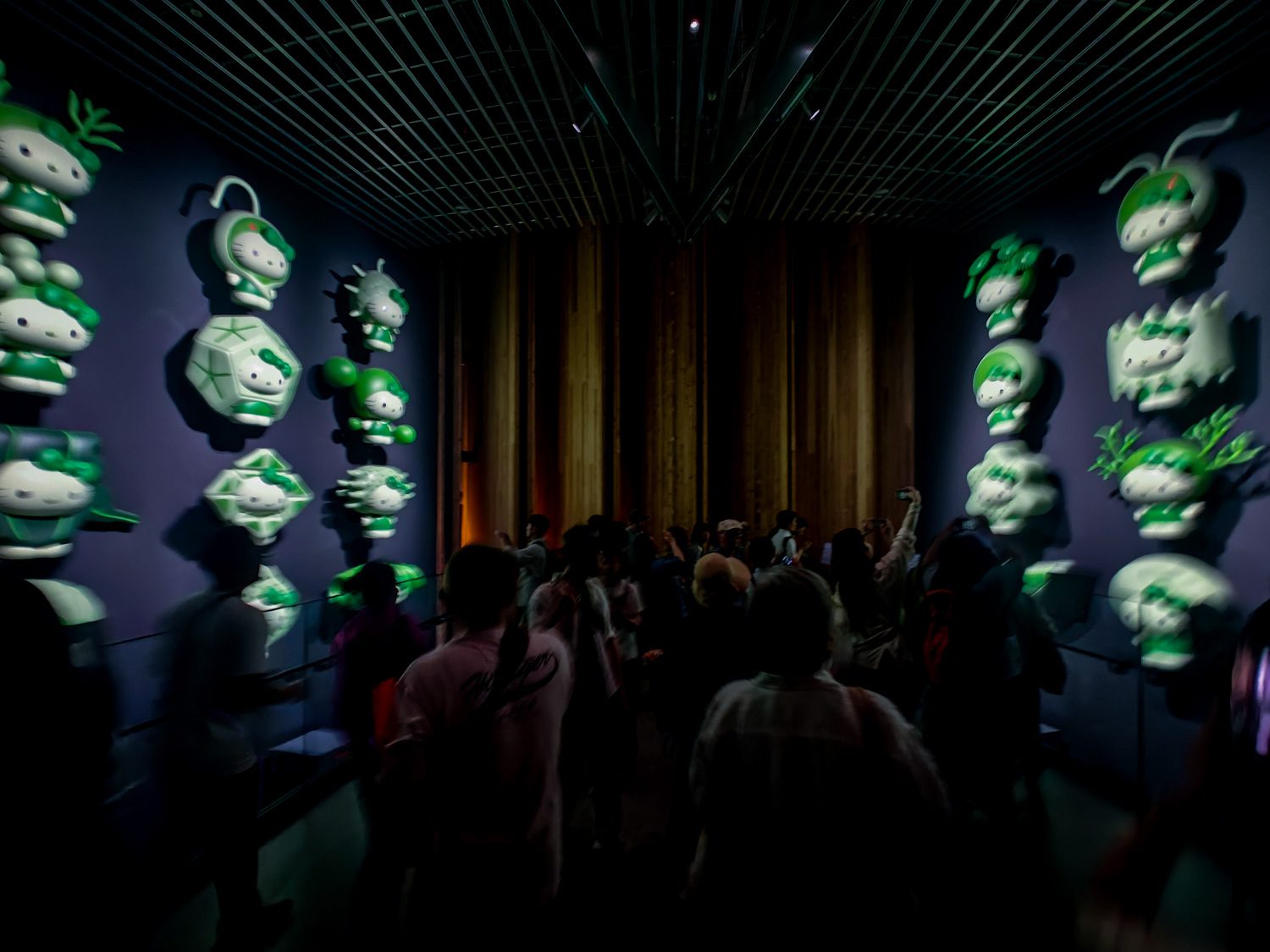
Farm area in Japan pavilion
A depth of thought runs through the design of the Japan Pavilion, flowing from traditional wisdom to futuristic ideas. Softness becomes a strategy for sustainability; permanence is drawn from impermanence; waste is reframed as a precious resource; seaweed becomes an all-purpose material. Through beloved cartoon characters like Doraemon and Hello Kitty, content rooted in sophisticated knowledge is made accessible, and complex ideas become easy to grasp.
The Japan Pavilion’s exhibition seamlessly loops from end to beginning, effortlessly mirroring the philosophy of life’s endless cycles: created to be used, used to dissolve, and reborn to create again. This vision of an endlessly regenerative future, designed for sustainable living, stands as Japan’s offering of inspiration to the world. It’s an example of hope and sustainability already in motion.

Farm area in Japan pavilion
While some countries’ pavilions confront environmental questions directly and present experimental solutions, others invite visitors to write down prayers and wishes, or communicate wordlessly through light, shadow, and stillness. None of these spaces claim to present a single vision of the future. Instead, they offer us moments to imagine, to reflect on our own lives, and perhaps, in some quiet corner of the heart, to spark a small, enduring hope.
The future…
This Expo once again serves powerfully as a testing ground for ideas, perhaps more so than ever before. Its architecture, its content, and every part of its design do not claim to hand us clear answers. Look closer, and you see they are asking us to pose the most important questions of our time: What should the future look like? Does hope still have a place? What do we still dare to believe in? None of these questions would matter if no one was brave enough to say: ‘Yes, we still want to hope.’
One of the most heartening impressions throughout the grounds is the simple presence of smiles. From morning to dusk, through scorching sun and sudden downpours, through long queues and weary feet, people still wear smiles. Children run and play with abandon. Visitors of every kind lean eagerly into every experiment. The elderly move lightly through the pavilions, curiosity in their eyes as vivid as any child’s. It is a world worth looking at—full of hope, full of dreams. This, more than anything, is what makes an Expo truly an Expo for humanity.
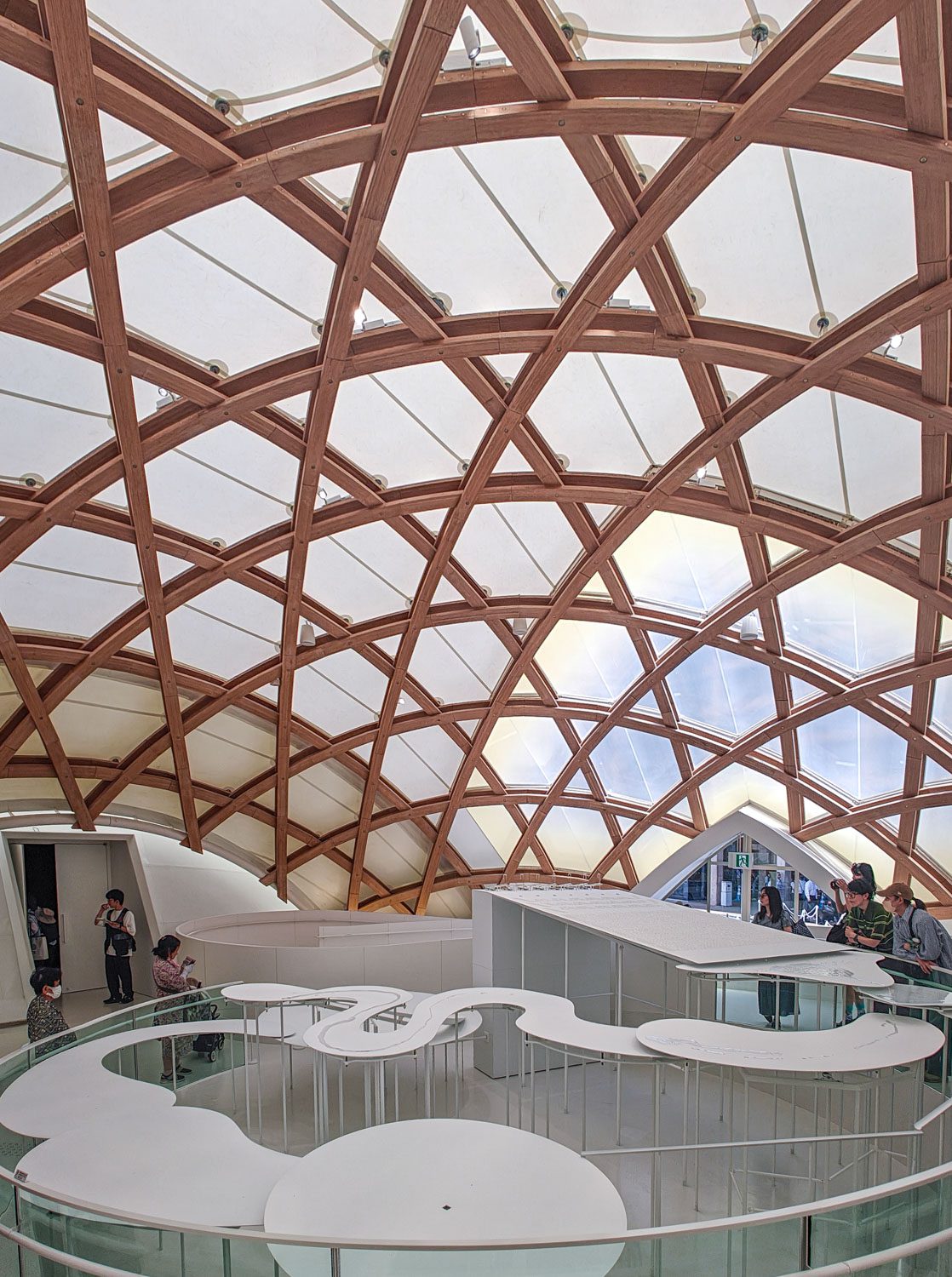 BLUE OCEAN DOME
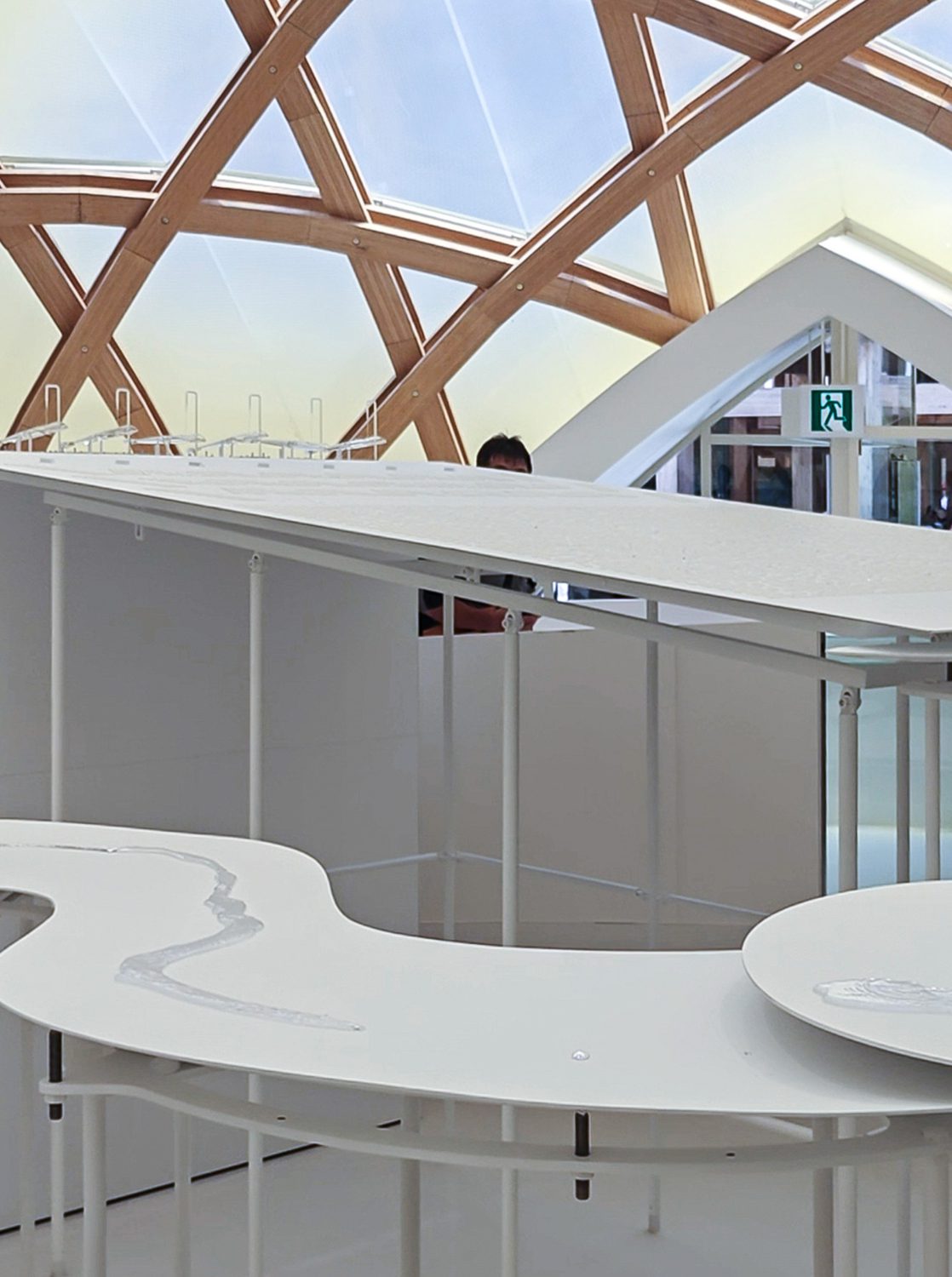
Architecture of possibility is not defined by a single form. It is not just about futuristic structures or the greenest materials we can imagine. It is, above all, the courage to ask questions that refuse simple, definite answers. In a world heavy with doubt, perhaps the most precious thing architecture can offer is its quiet conviction that hope may be the most precious thing to hold on to.
Though destined to stand only for a short while, soon to be dismantled and carried away, these structures exist long enough to give us space to pause and ask ourselves: What kind of future do we wish to create together? They kindle the thought that anything might still be possible. They remind us that hope can inspire, that daring to dream may always be the true beginning of change. In the end, simply put, Expo 2025 Osaka has done just that, and done it beautifully.
The Grand Ring