
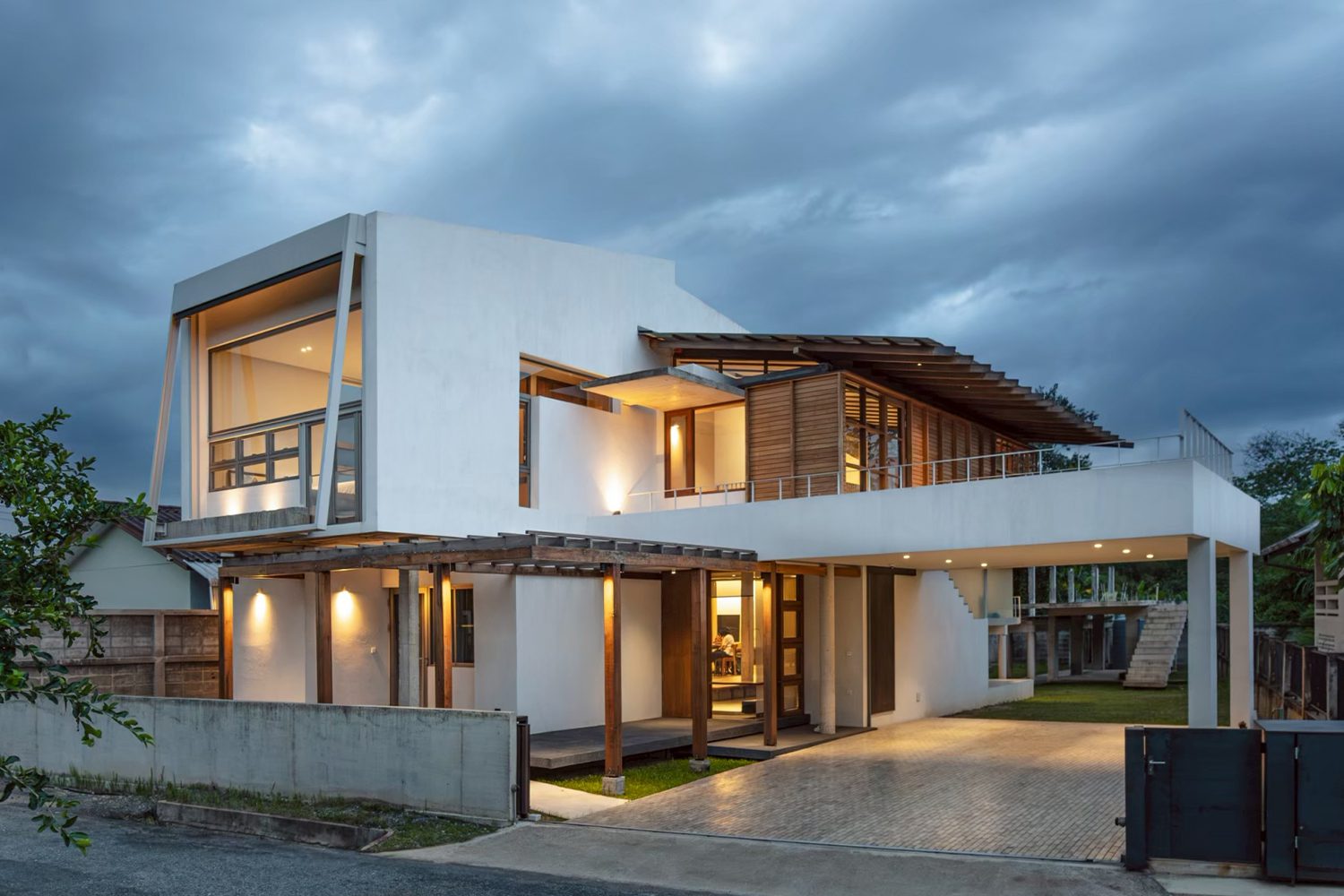
COMET HOUSE, A HOUSE THAT CREATES A DIALOGUE BETWEEN LIGHT, OPENINGS AND NATURAL CONTEXT THROUGH AN ARCHITECTURAL IMPROVISATION CONCEPT BY MITR ARCHITECTS AND STUDIO SIFAH
TEXT: SURAWIT BOONJOO
PHOTO: PLOYYARCH_SPACE
(For Thai, press here)
“The openings are imagined as voids within a framed picture, each carrying a narrative of its own. Instead of adorning the walls with paintings, we chose to carve into them, creating windows that frame and capture stories, both suspended and in motion, of the original structure, while drawing in the verdant atmosphere of nature and the distant silhouette of Doi Suthep Mountain as part of the living experience,” explains Studio Sifah, reflecting on the dialogue between the apertures and the surrounding landscape of Comet House.
Located in the village of Sajjatham in Mae Rim District, Chiang Mai, in northern Thailand, Comet House is the result of a collaborative design effort. The project was jointly led by Worarat Rattanatrai, architect at Mitr Architects, and Sifah Sornchaiyeun, interior designer at Studio Sifah. Working together with two architect friends who contributed to drafting and construction, they set out to create a new residence for Associate Professor Dr. Burin Tharavichitkun of Chiang Mai University’s Faculty of Architecture, positioned just across from his existing home.
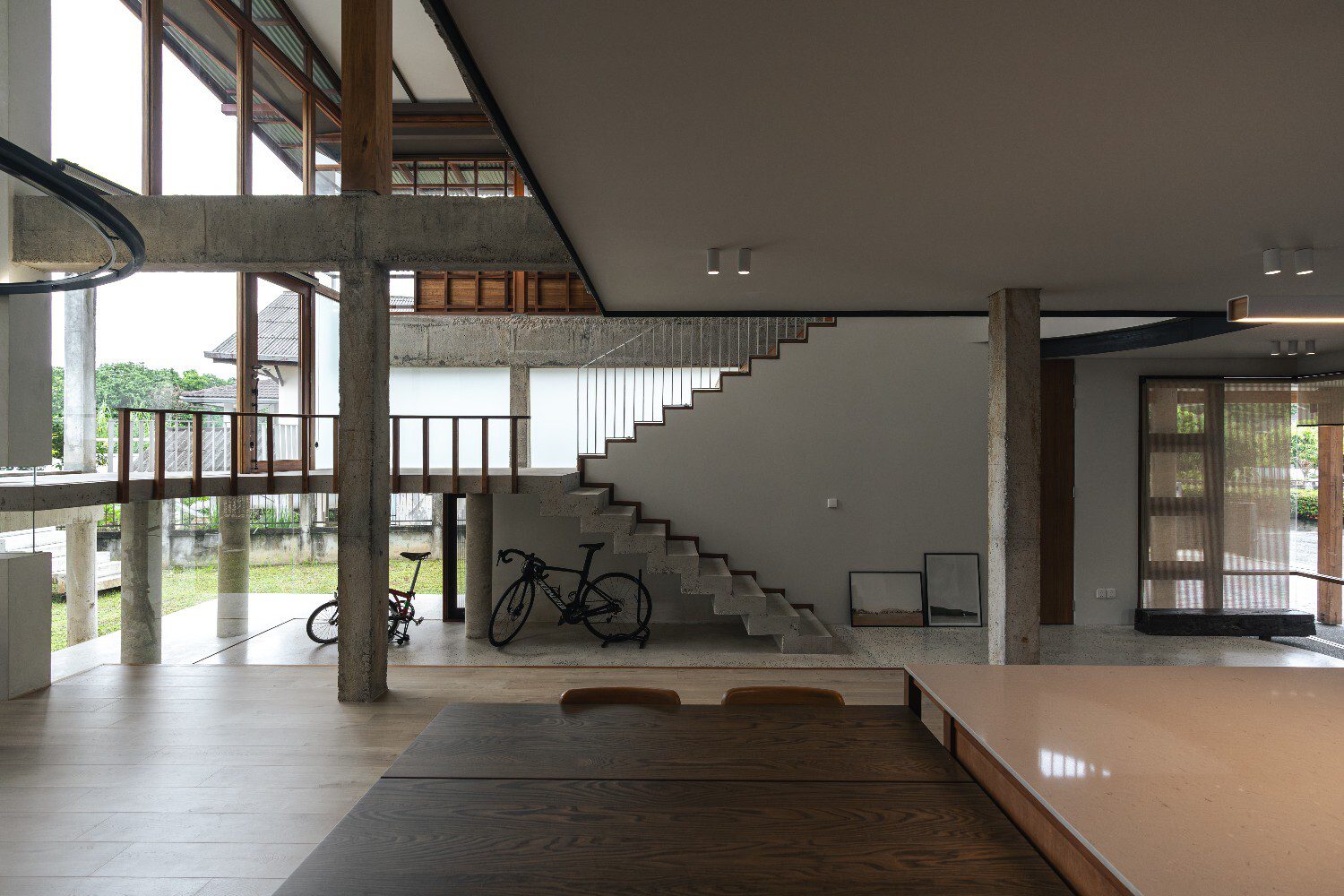
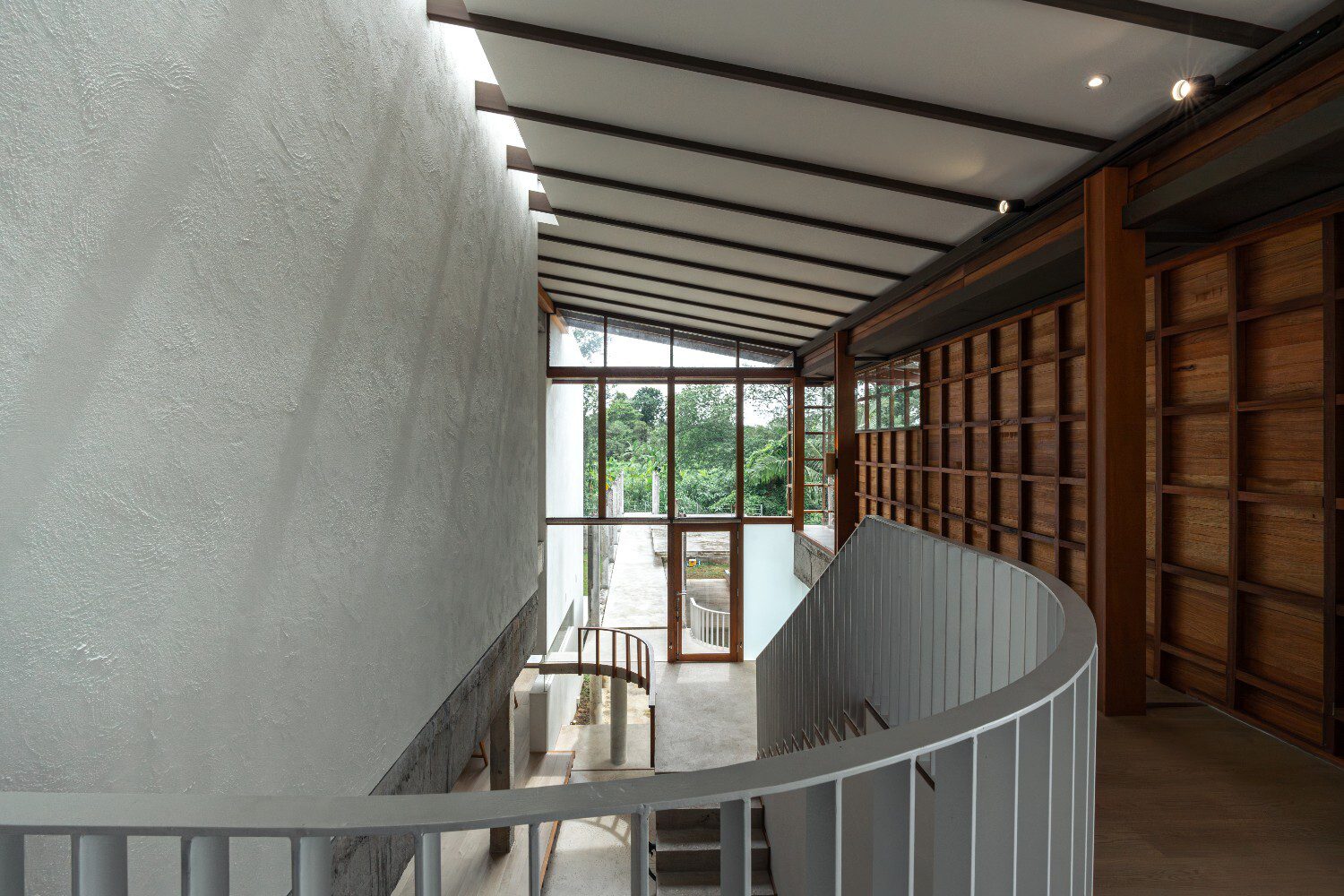
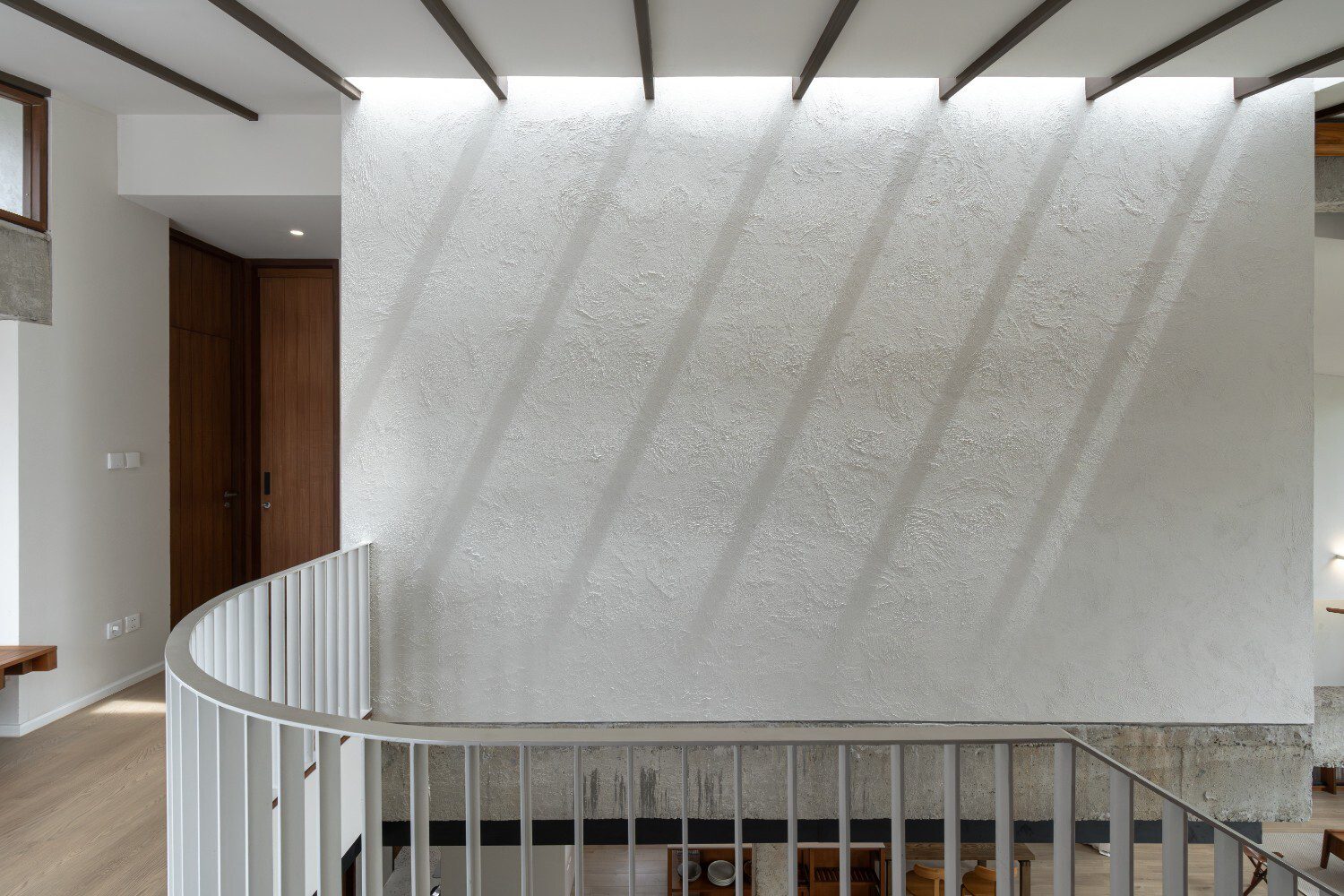
The project unfolded as a process of continual development and extension, shaped by shared participation at every stage—from building design, interior detailing, drafting, and construction. The design was never meant to be neatly finalized from the outset; instead, it remained open to allow for improvisation and co-creation with fellow designers on site. This openness gave rise to an architectural language that evolved in real time, exploratory and alive, yet always attuned to the homeowner’s sensibilities. Certain areas were even left deliberately unfinished or open to ‘play,’ enabling the spaces to shift and transform in dialogue with the act of building itself.
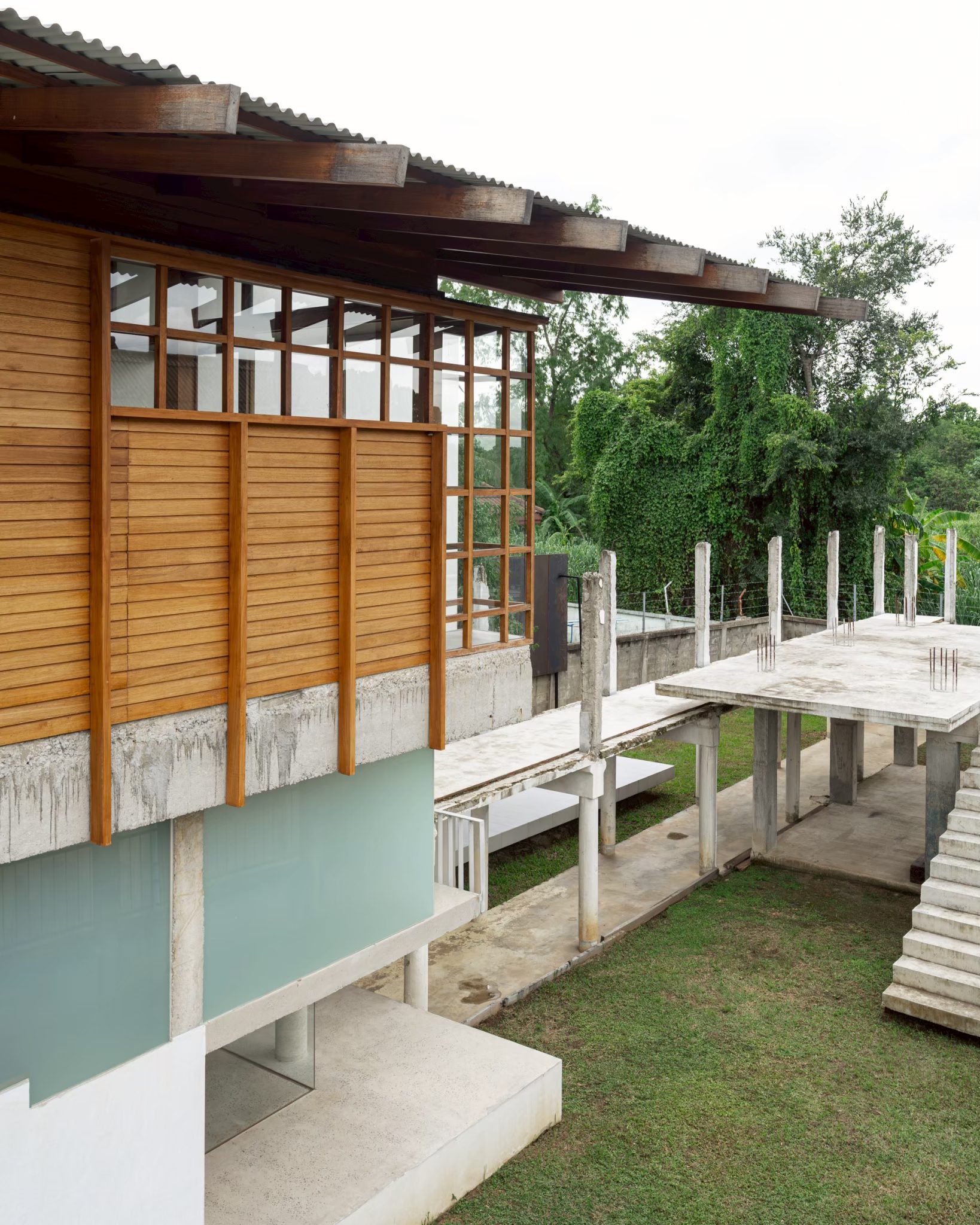
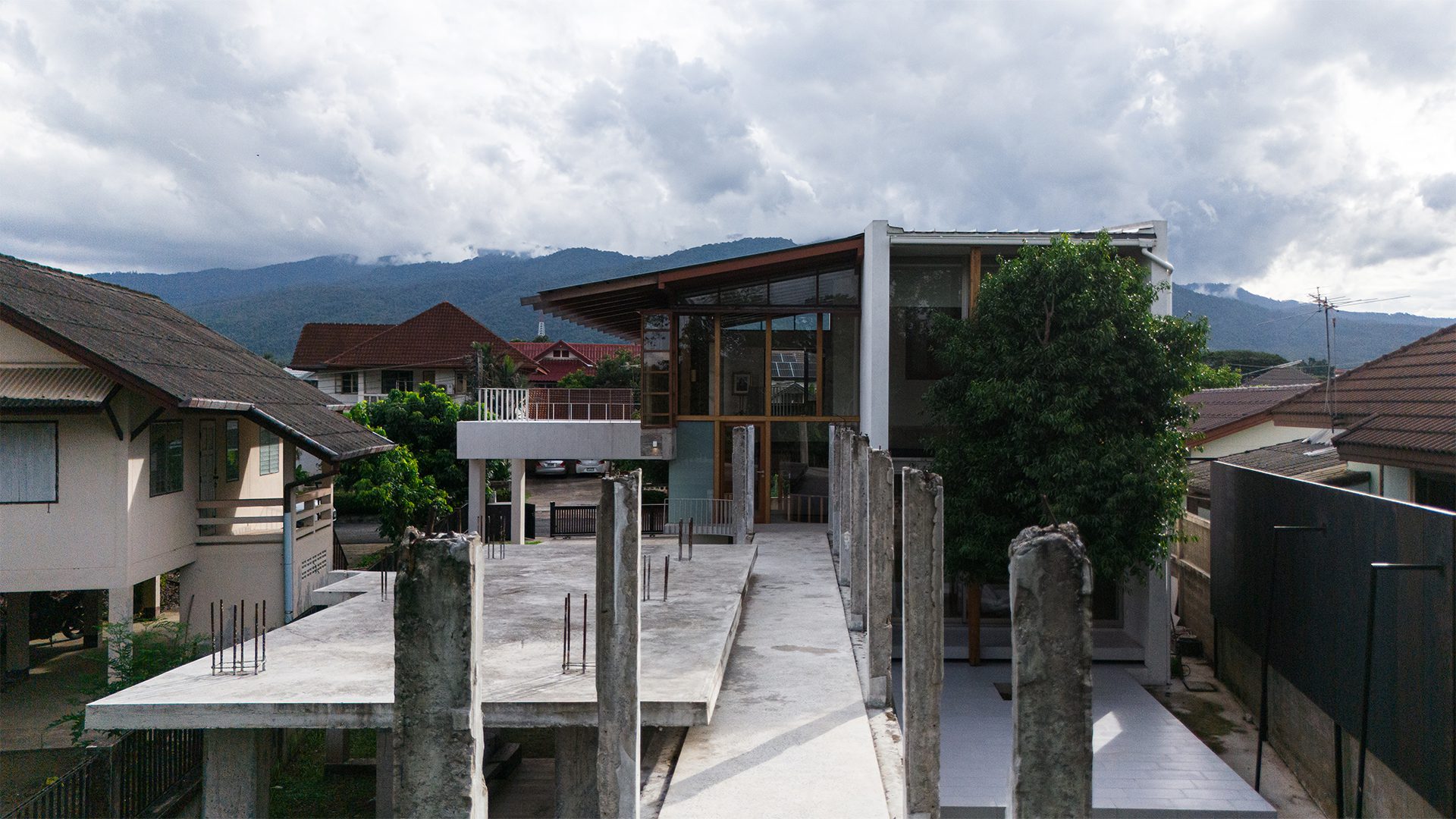
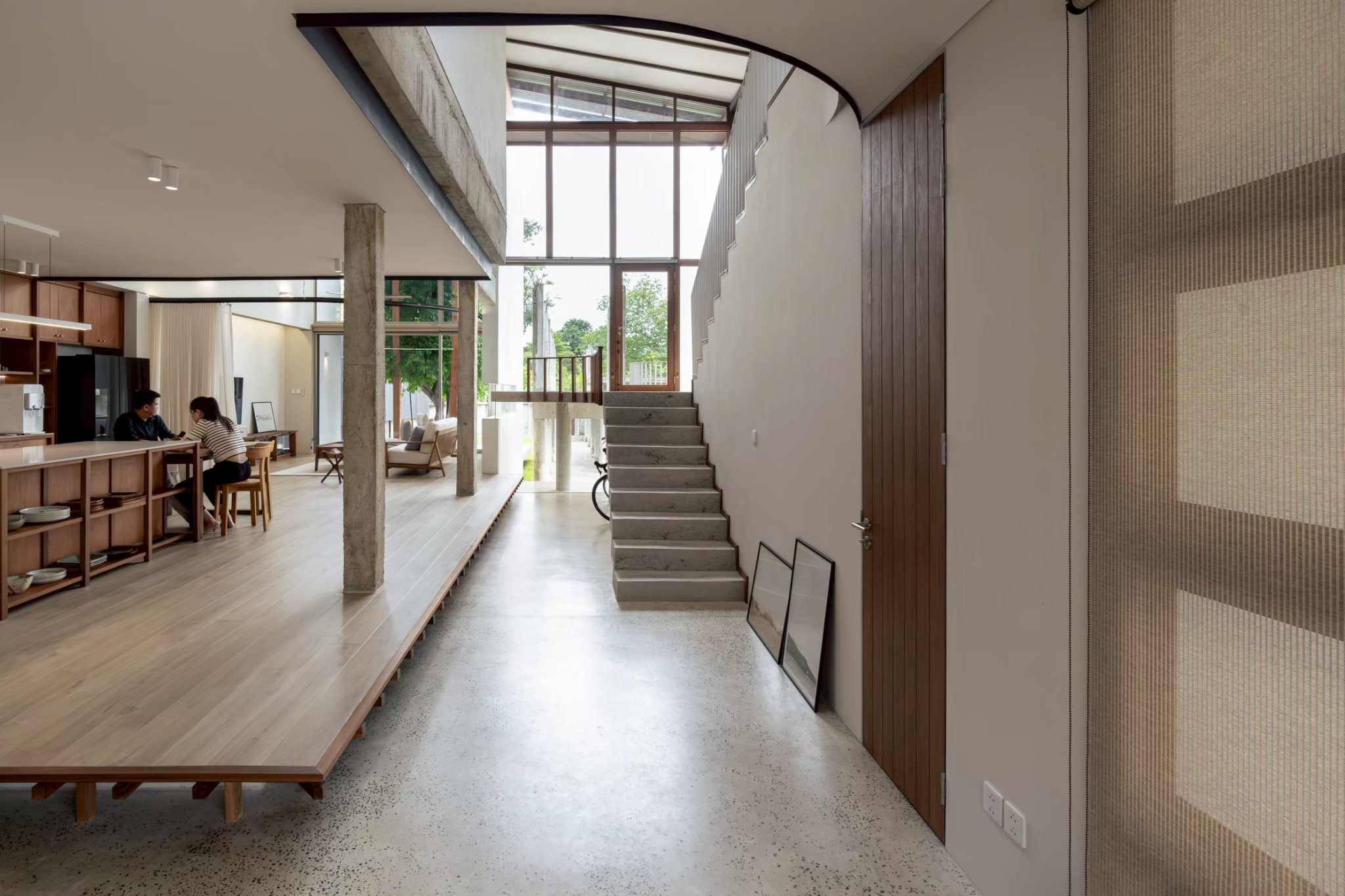
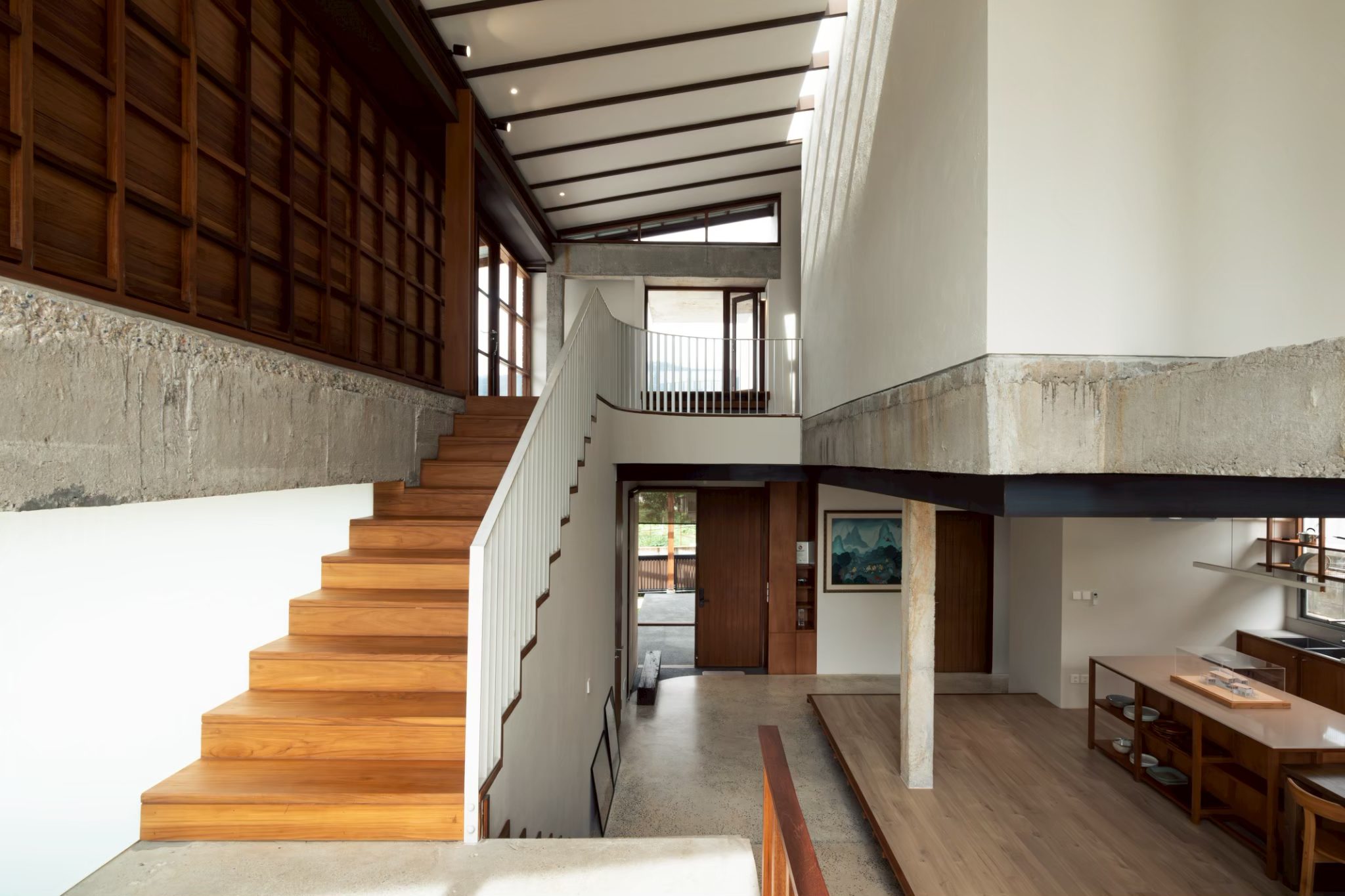
The original house was a raised structure with an elevated jongkrom walkway, a meditative path that characterizes every home in the village. The design began with a dialogue around preserving this walkway at its original height of 1.80 meters, reconstructing it while maintaining the spirit of the old architectural language. In many ways, the house was conceived with the walkway as its starting point and central focus. Beginning from its connection to the existing stair landing, the walkway establishes a one-point perspective that profoundly shapes the architecture, becoming a focal axis that generates a powerful sense of energy throughout the home. Flowing curves were introduced to temper the thrust of straight lines, softening their rigidity into forms that are more relaxed, dynamic, and fluid, while also diversifying the spatial planes. At the end of this visual axis, the eye is drawn to a tall, broad-canopied tree rising from a white open courtyard to the left, just beyond the living room.
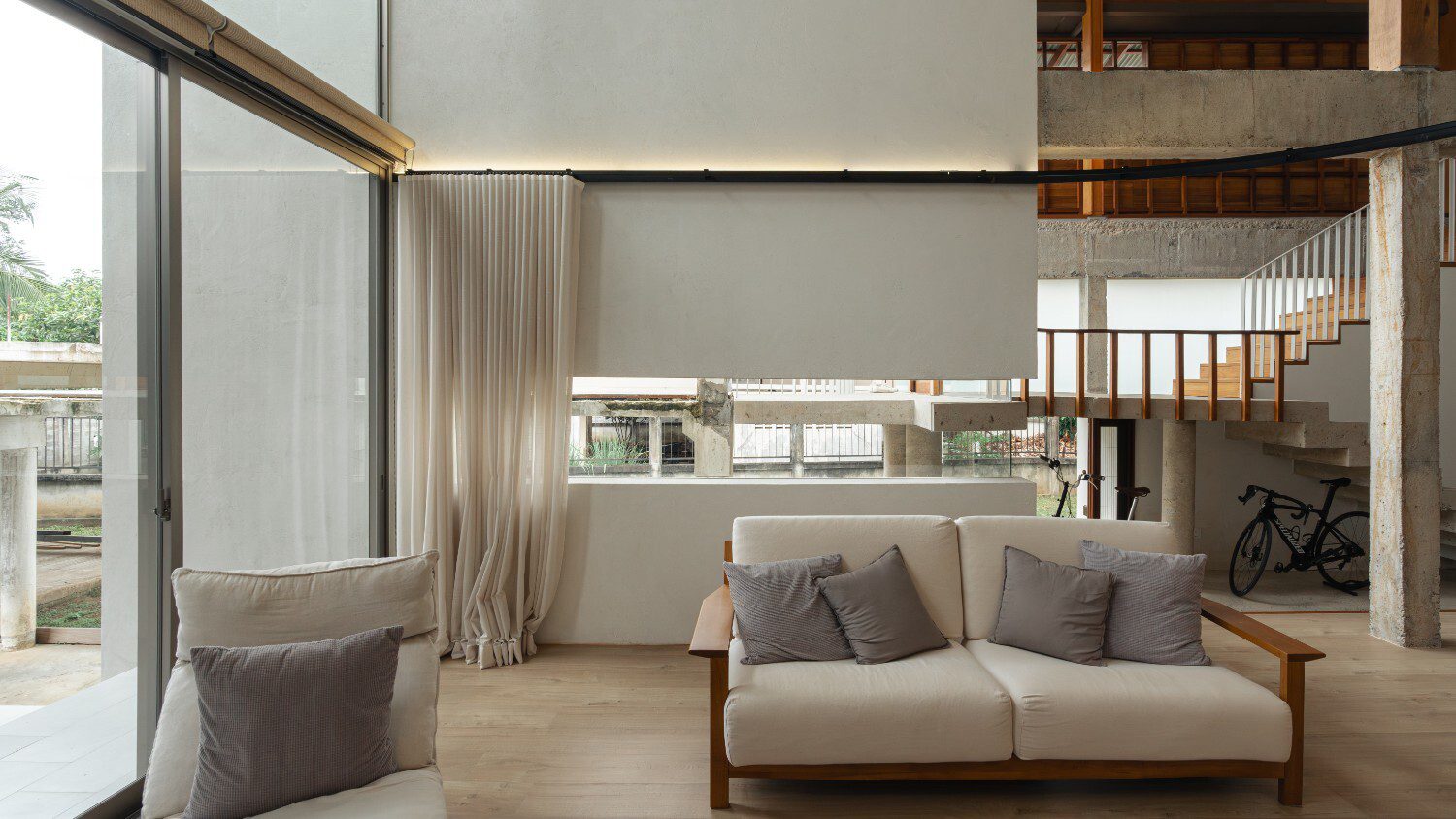
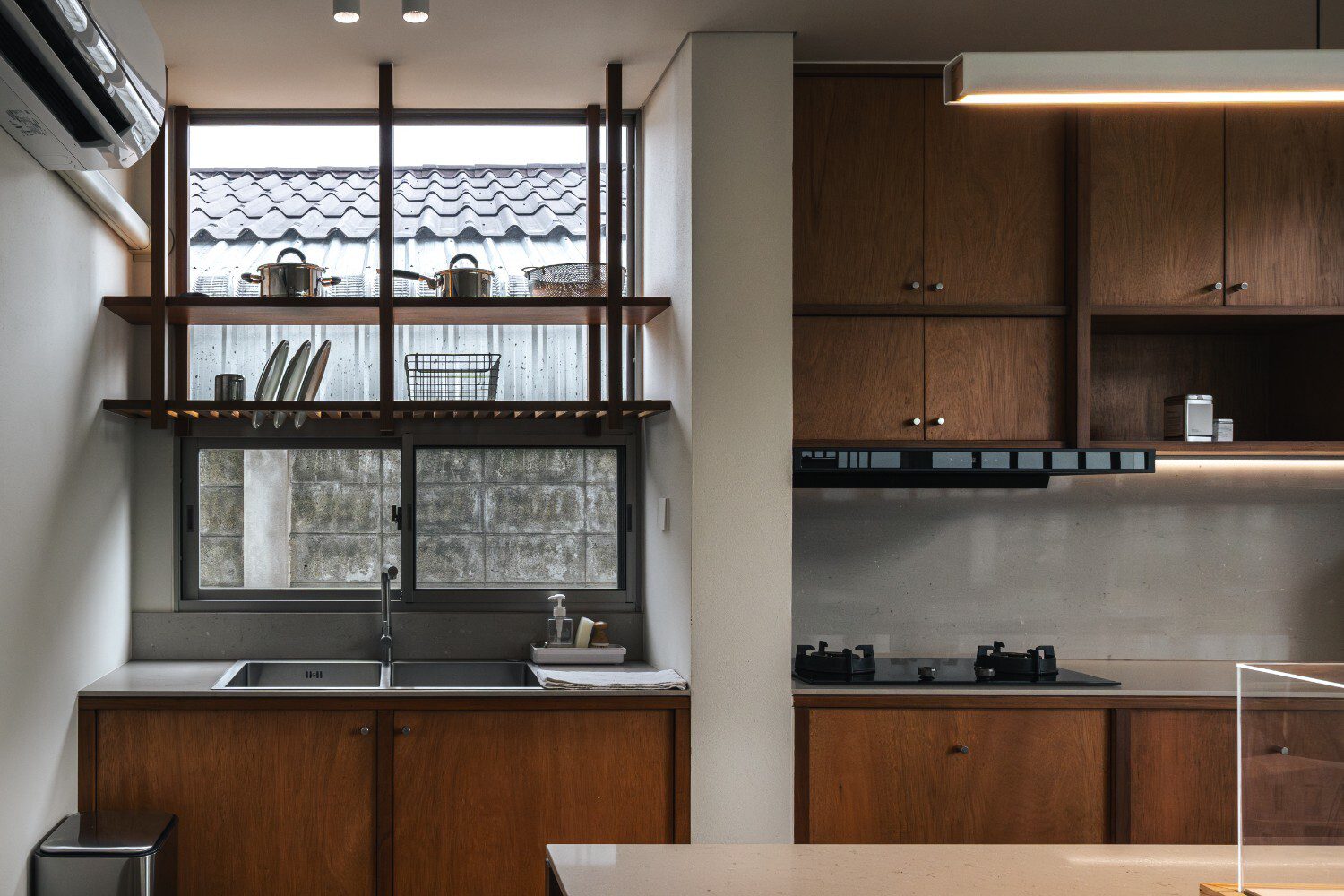
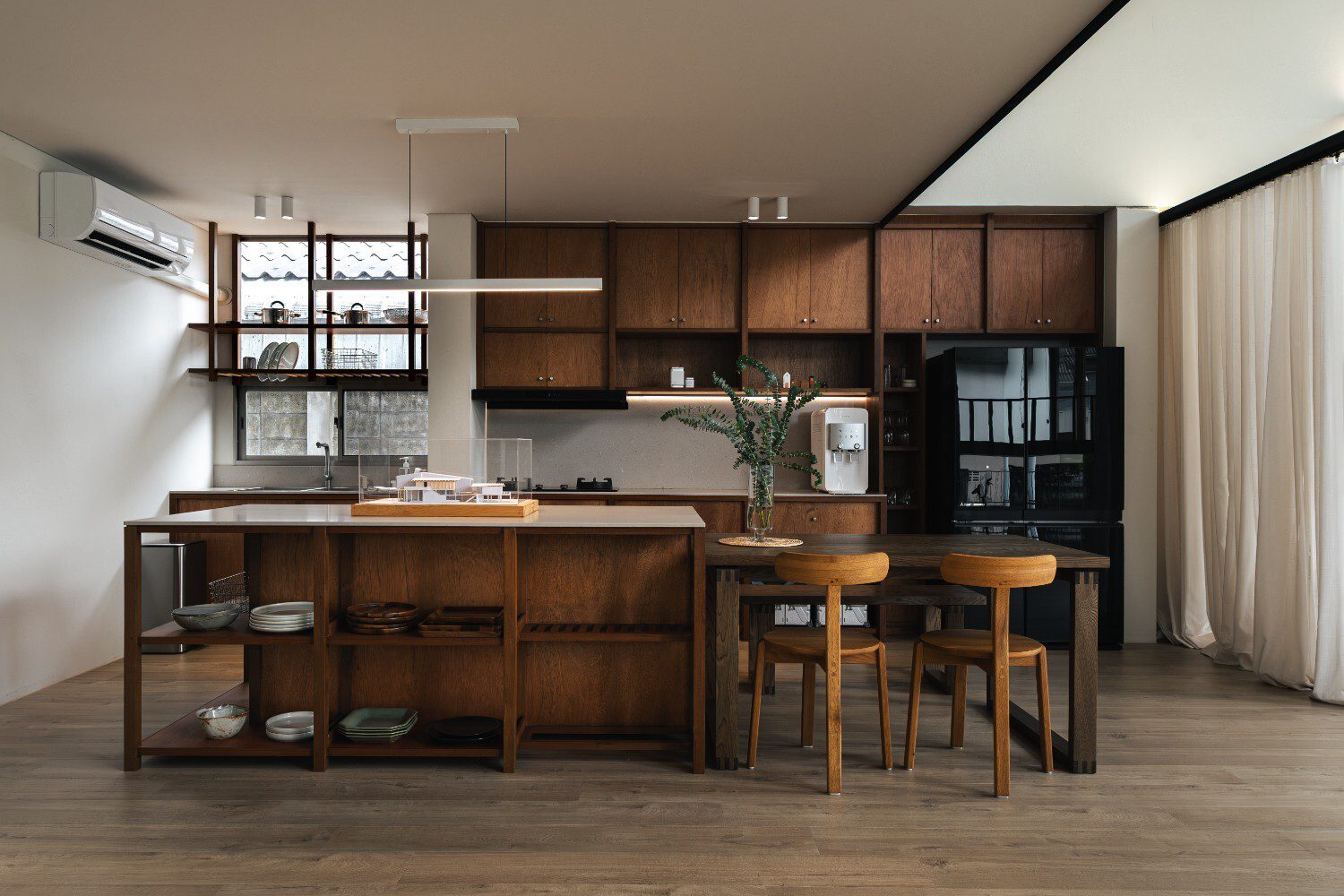
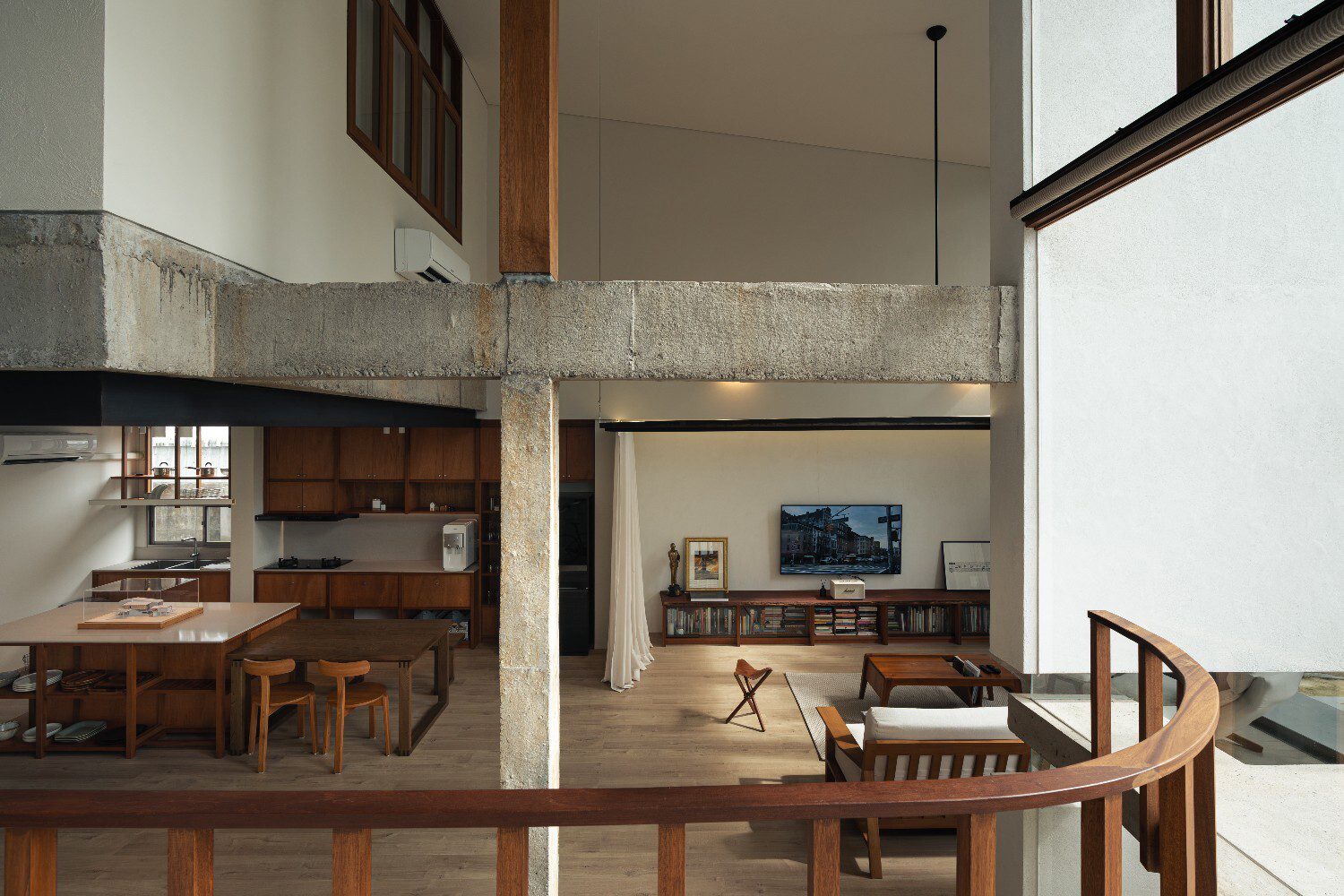
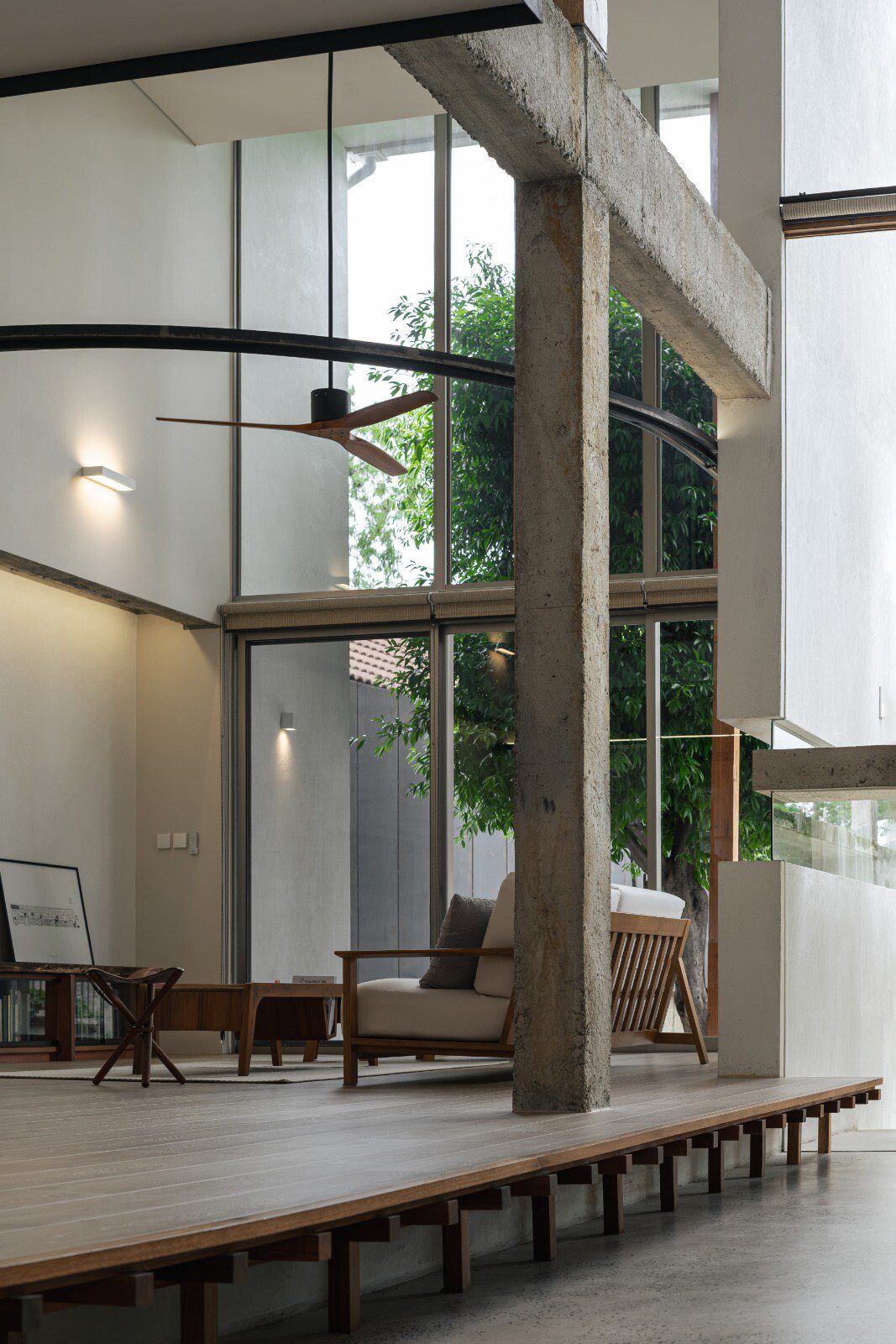
The honest expression of structure, surface, and materiality works in concert to define the dimensions and atmosphere of the interiors. Cabinets are designed with recesses and protrusions, their vertical and horizontal axes aligned within a consistent visual plane. The skeletal lines of the interior correspond with the architectural framework itself, recalling the raised floor, where the underlying structure is exposed. Accordingly, the furniture, from cabinets to counters, and built-ins, was conceived to preserve this vocabulary of design, sustaining an ongoing dialogue between elements. The interplay of partial openness and enclosure in the furniture resonates with the character of the timber wall panels, which alternate between transparent and solid. Consideration was also given to carving out voids through additional openings, extending the architectural approach of introducing light and openness along both vertical and horizontal planes. In the double-height space, lighting is carefully orchestrated into three principal sources: direct light positioned above the television; indirect light along curved tracks casting illumination upward; and a pair of wall-mounted fixtures completing the composition.
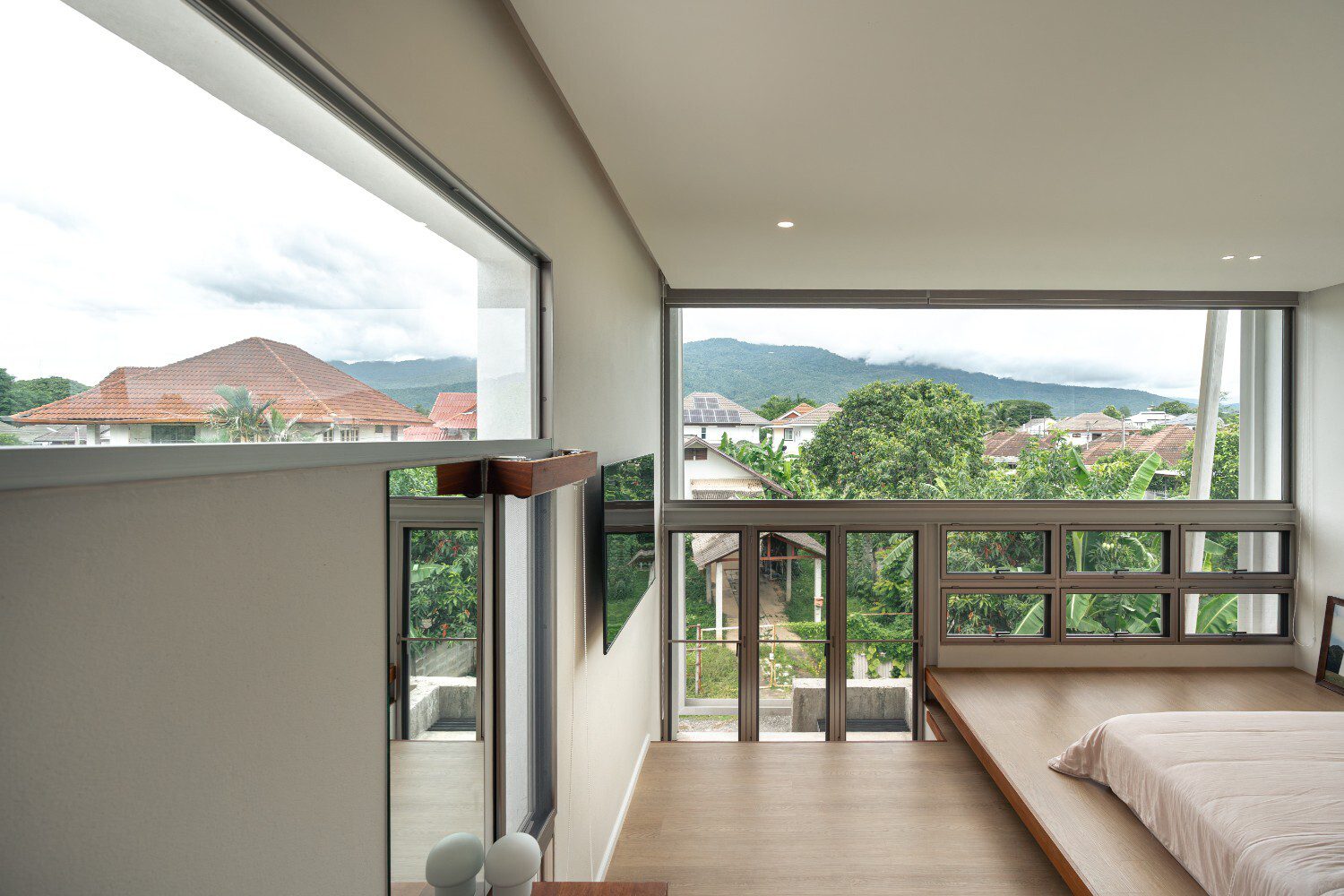
“When we created this architecture through an improvisational process, it led to apertures being carved into the building that addressed the most fundamental needs—lightness and comfort. Yet what also emerged was the ability to connect, to borrow from the spaces on the other side of the glass, allowing them to flow seamlessly into the interior. Here, transparency was considered less as mere airiness than as a condition of continuity, something that weaves spaces together,” explain Mitr Architects, reflecting on the on-site adaptations that introduced compelling forms of connection within the house.
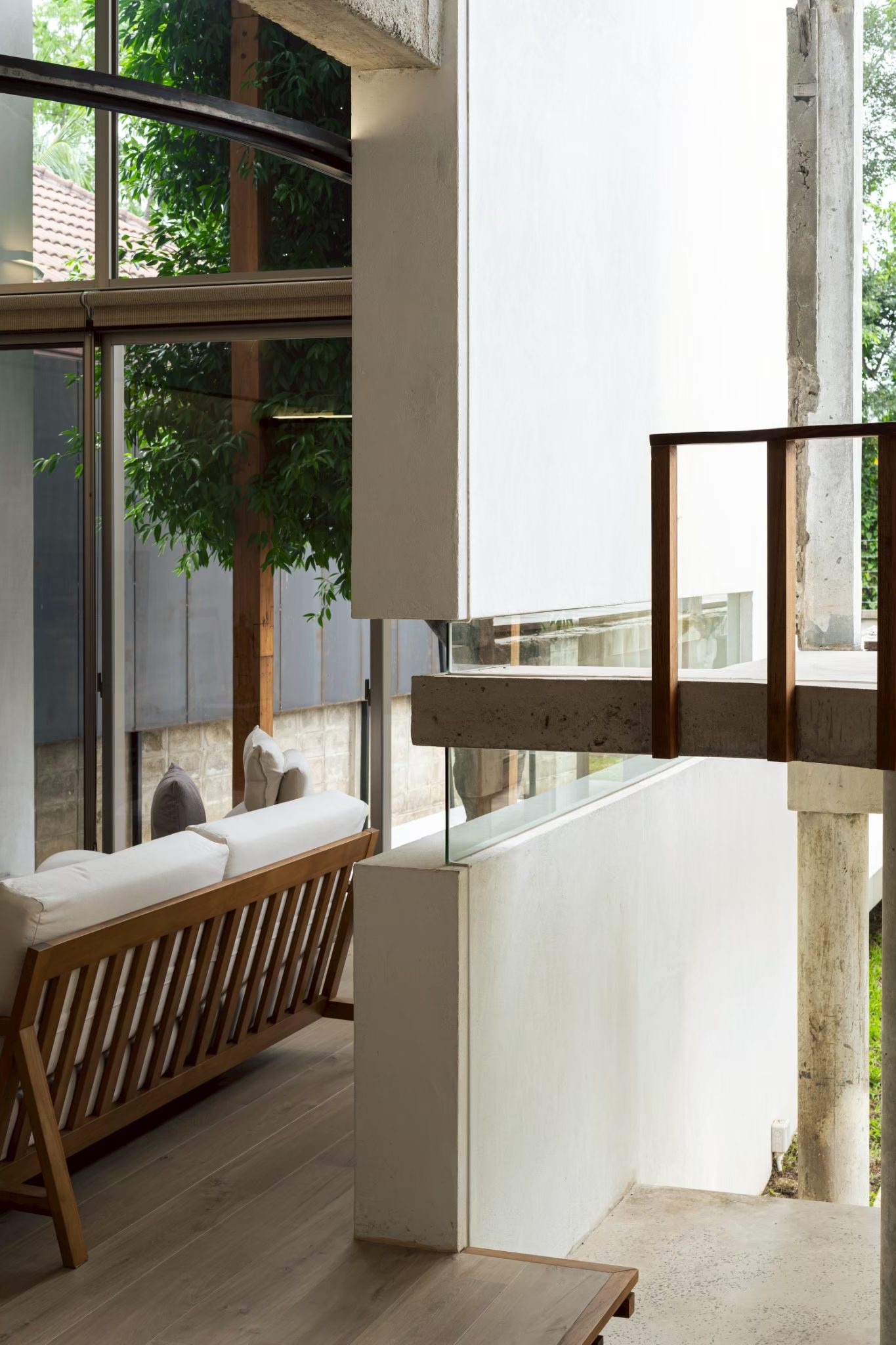
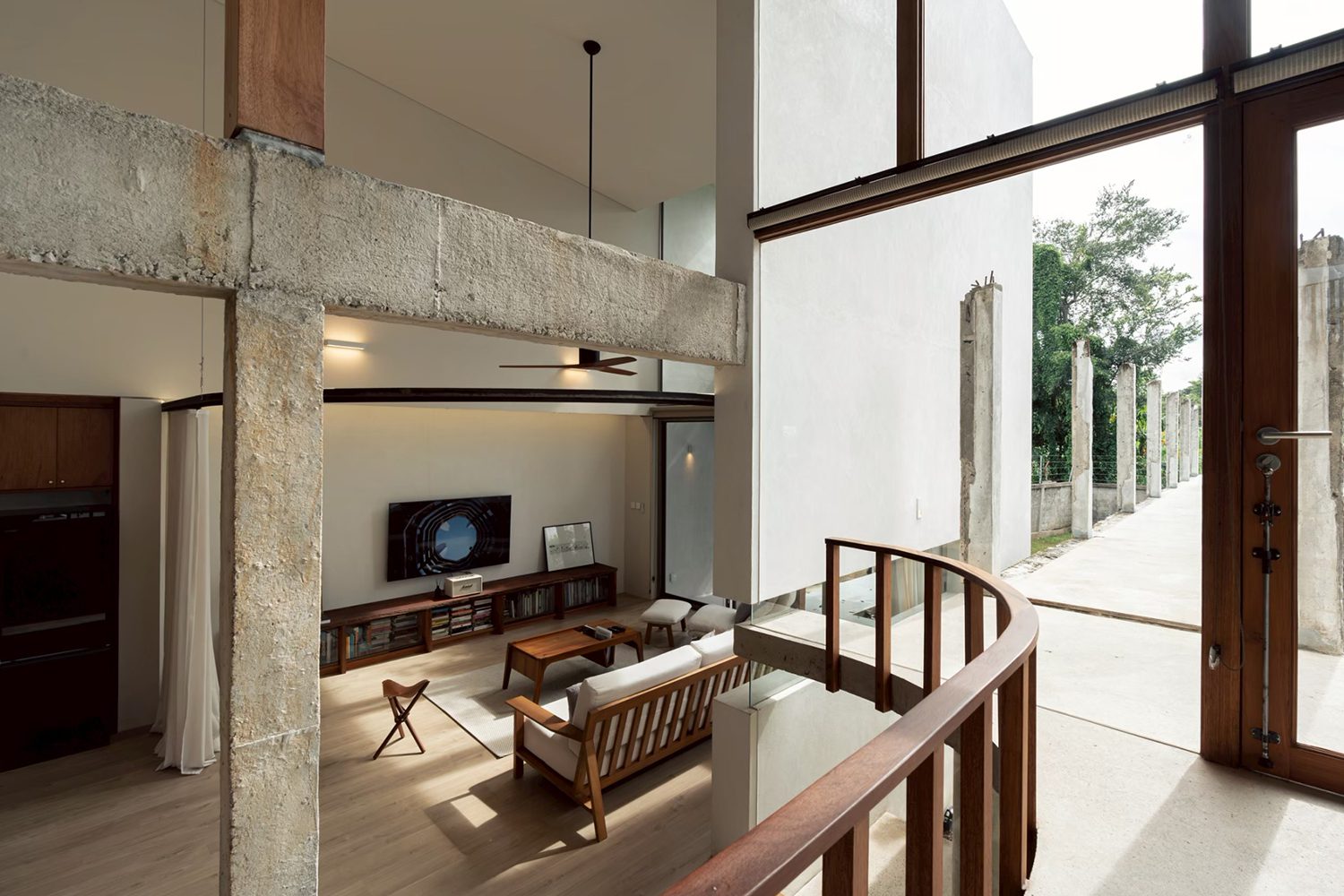
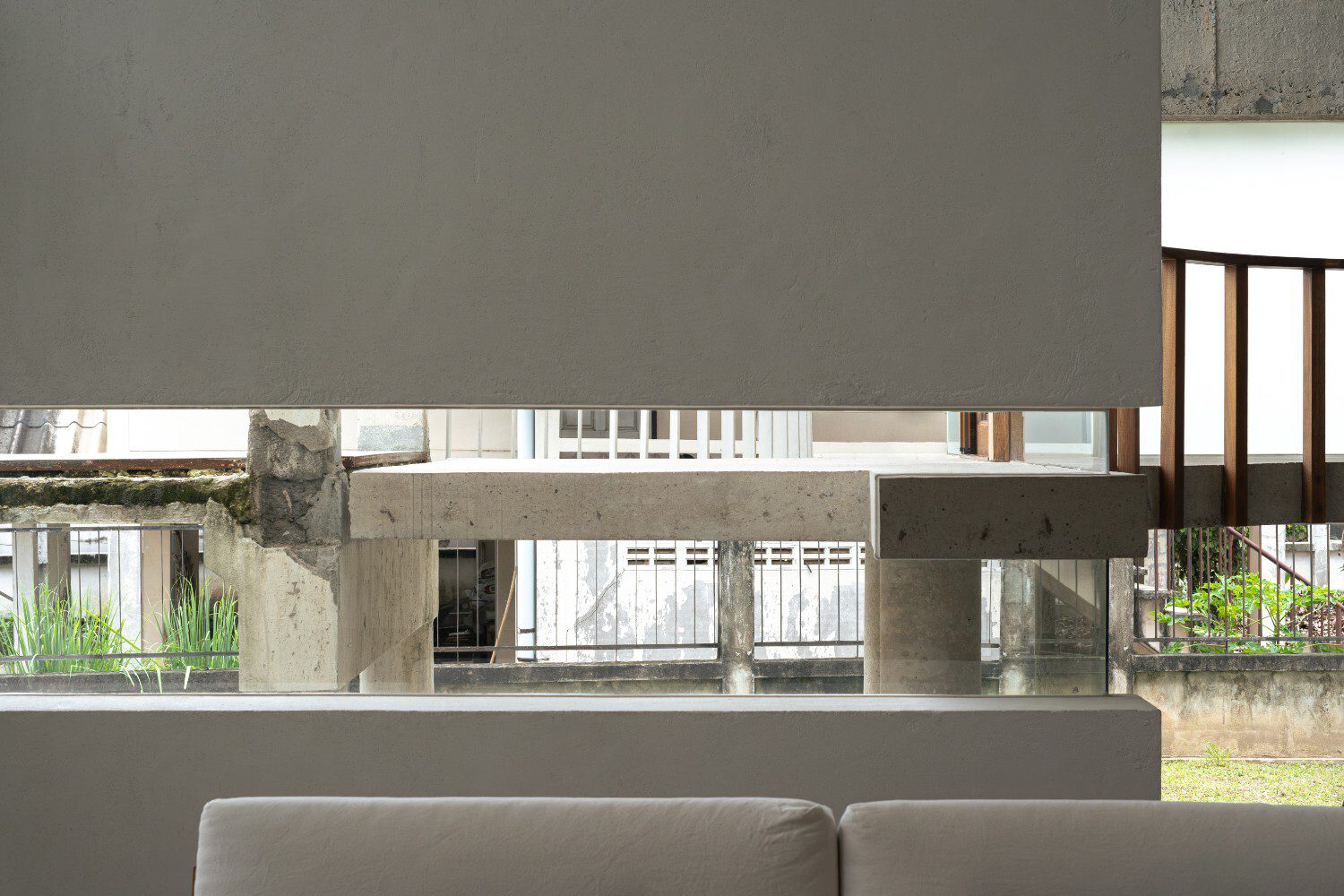
Take, for example, the wall behind the seating area in the living room, where an additional opening was carved. This intervention lends the mass of the wall an almost floating quality, while at the same time revealing the distinctive atmosphere created by the contact between the original jongkrom walkway structure and the newly built landing. Initially, the intention was for it to be accessed only from the exterior. Yet once the wall was separated and perforated, the subtle beauty of the imperfect junction between the two structures became equally visible from within. This play of adjacency is echoed in the way different materials meet throughout the house: a concrete column seemingly resting atop a timber floor; a tall wooden partition cutting across the rhythm of plaster walls and large glass panes set within timber frames. Such juxtapositions of material heighten the architecture’s quiet yet potent presence, reinforced by the vertical and horizontal lines that articulate its many planes, inviting a slow and thoughtful reading of the space.
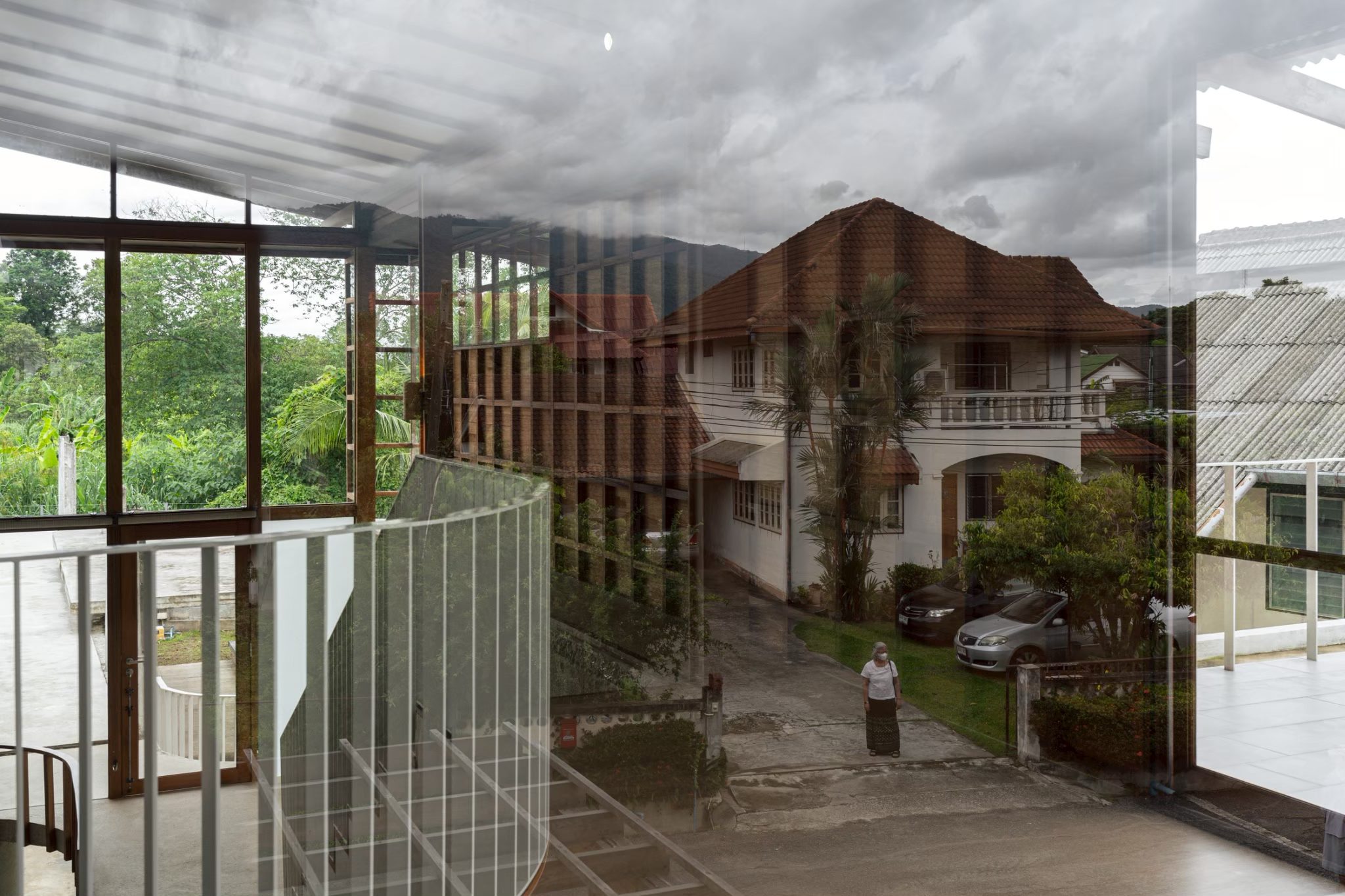
Comet may be read as a metaphor for flow: a continuous force that strikes upon entering the space, before slipping through apertures or along lines that carry the rhythm forward, their curves guiding movement outward like an orbital path. At times it is a sudden flare of light streaming through an opening, casting itself briefly across a surface, like the fading trace of a solid body—fragments of something glimpsed only for a moment, appearing as a softened glow.