
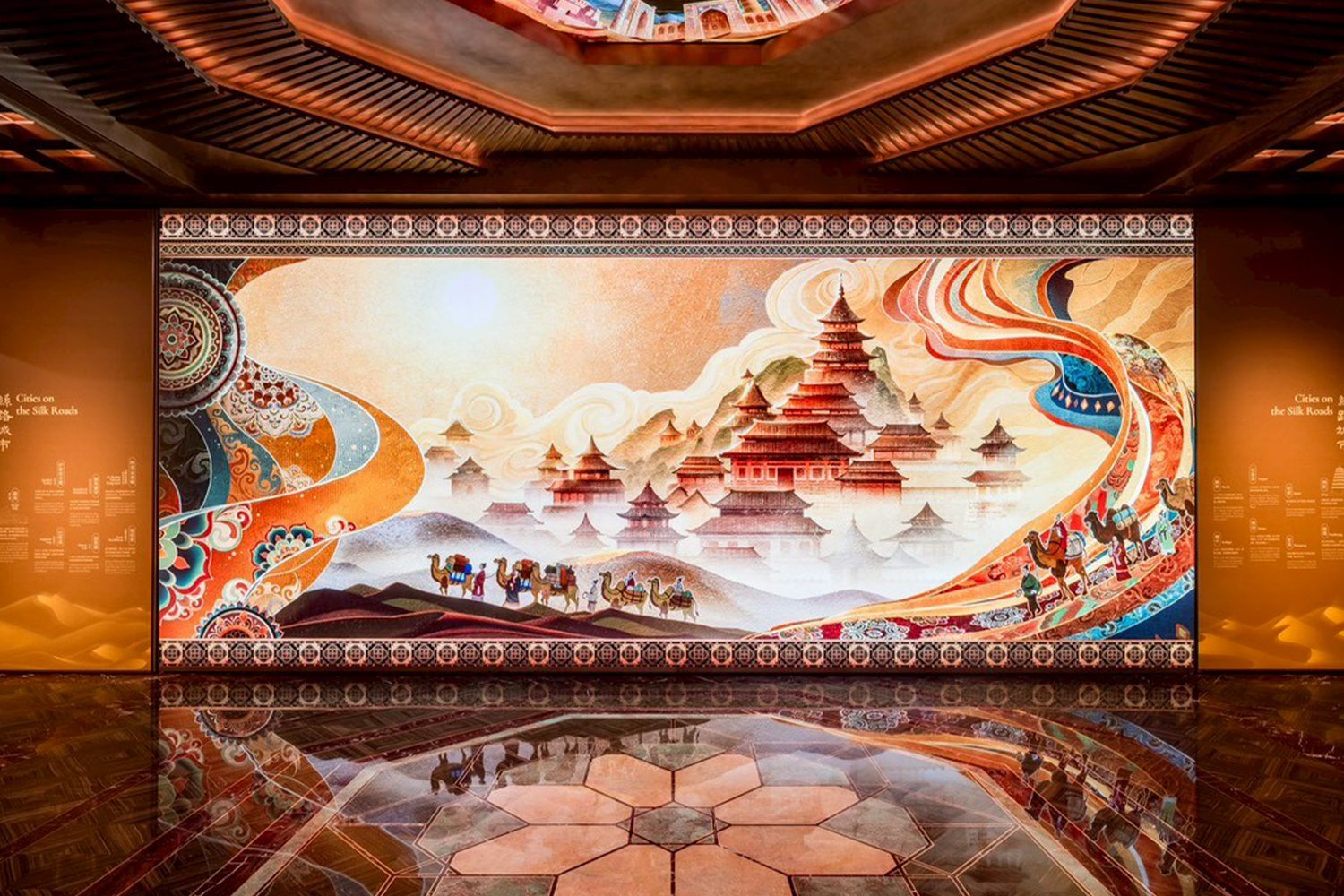
POLY MGM PRESENTS ‘SILK ROADS BEYOND BORDERS,’ AN EXHIBITION THAT TAKES VIEWERS ON A JOURNEY THROUGH THE LAND-BASED SILK ROAD, EXPLORING ITS HISTORY, ART, AND CONTEMPORARY TECHNOLOGY AS A SPACE FOR CULTURAL, ARTISTIC, AND SPIRITUAL EXCHANGE
TEXT: SARUNKORN ARTHAN
PHOTO COURTESY OF POLY MGM MUSEUM EXCEPT AS NOTED
(For Thai, press here)
In the accounts of global economic history, the Silk Road stands as perhaps the most influential ancient trade route of all. Stretching across thousands of kilometers over land, it linked China with Central Asia and parts of Europe as early as 200 BCE. Its primary purpose was the exchange of a wide range of goods, most notably silk. Yet beyond commerce, the Silk Road also fostered shared ways of learning and cultural exchange grounded in peaceful interaction. Alongside the overland Silk Road, a ‘maritime’ counterpart emerged during a similar period. This sea route facilitated the exchange of spices and other commodities, further expanding networks of trade and cultural contact across regions.
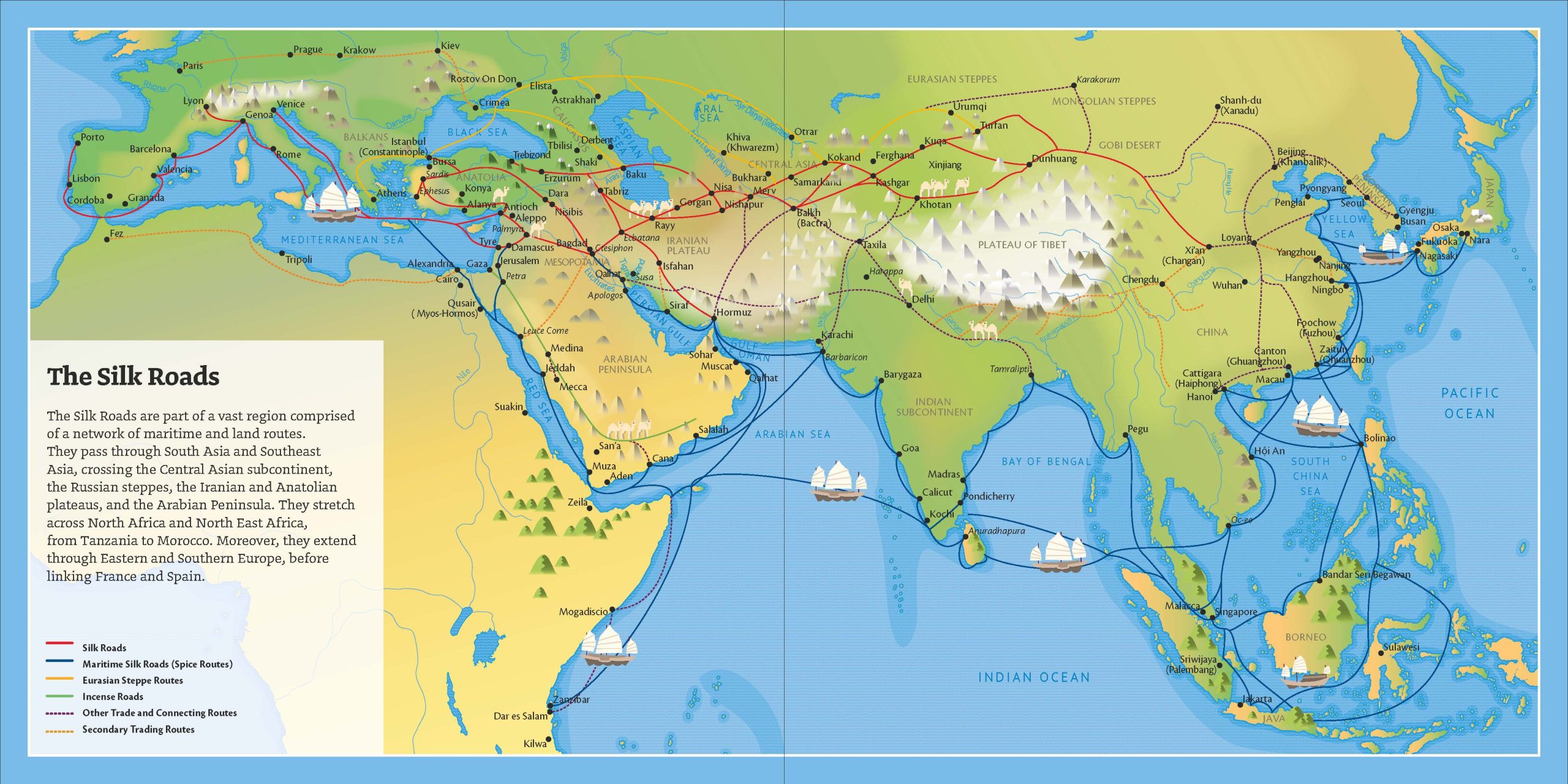
Silk Road Map | Image courtesy of UNESCO
Last year, art4d explored Maritime Silk Road, the inaugural exhibition of the POLY MGM Museum, which invited audiences to voyage through multiple dimensions of the sea-based Silk Road. This year, POLY MGM returns to the subject with a new exhibition that continues to probe the enduring significance of the Silk Road, shifting the focus from fleets of spice ships to caravans traversing the ‘overland routes.’ Titled Silk Roads Beyond Borders, the exhibition unfolds its narrative across four chapters.
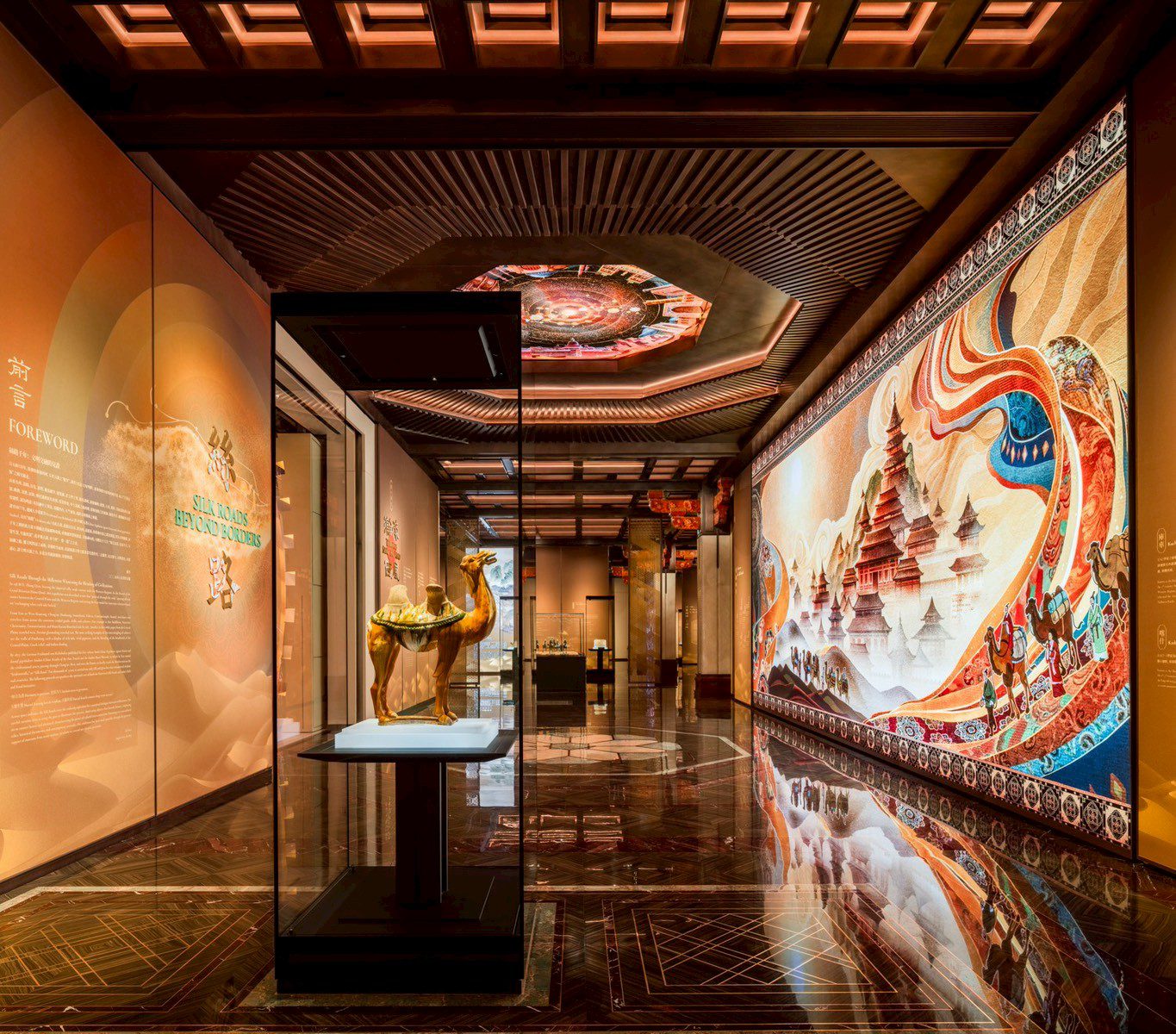
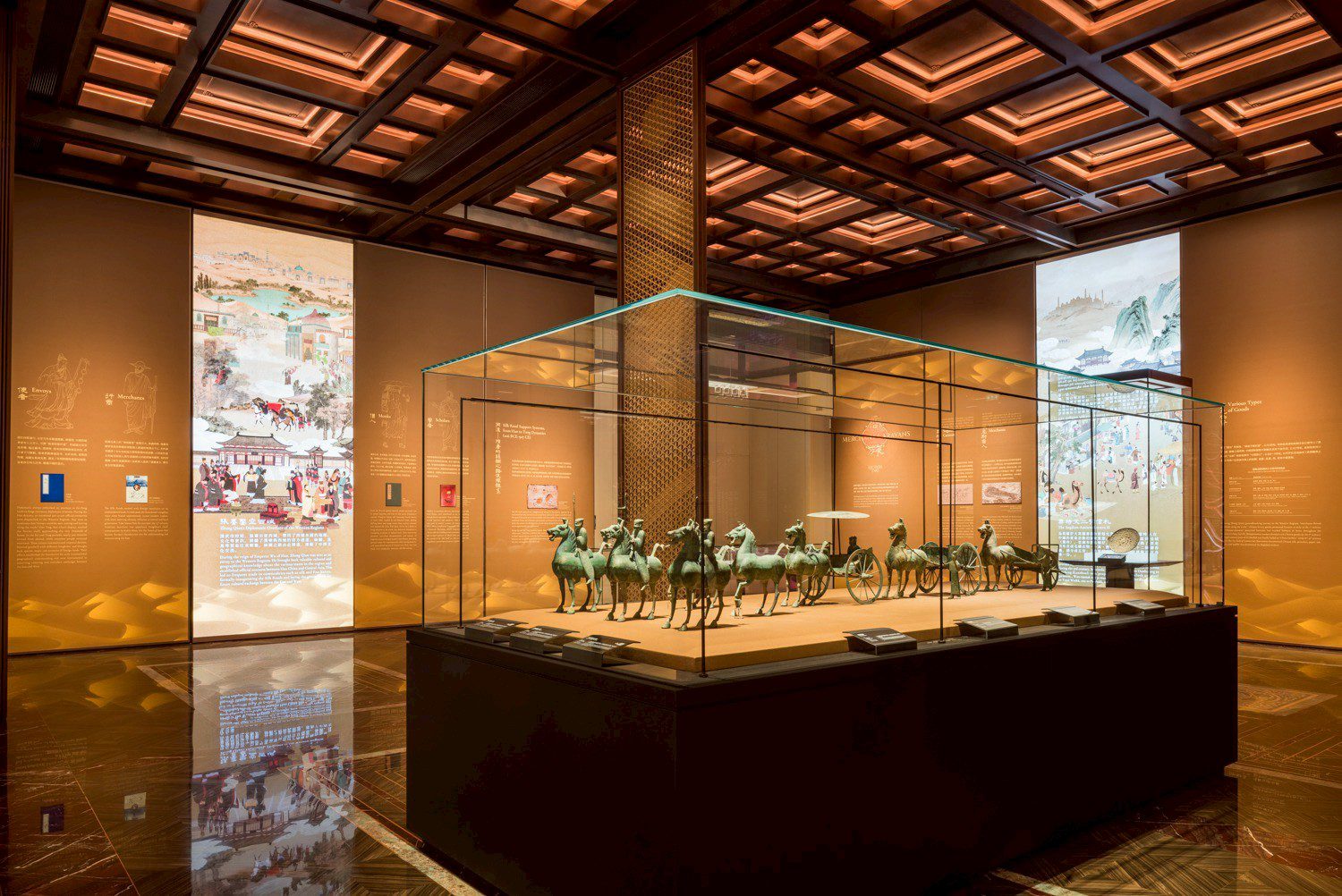
‘Through Sand and Wind’ opens the exhibition by taking viewers back to the very beginnings of the Silk Road, tracing the pioneering journeys of early travelers who first forged this vast network of routes. It foregrounds the importance of key trading cities and the long history of movement and exchange that allowed the Silk Road to endure as a living corridor of commerce and connection for thousands of years.
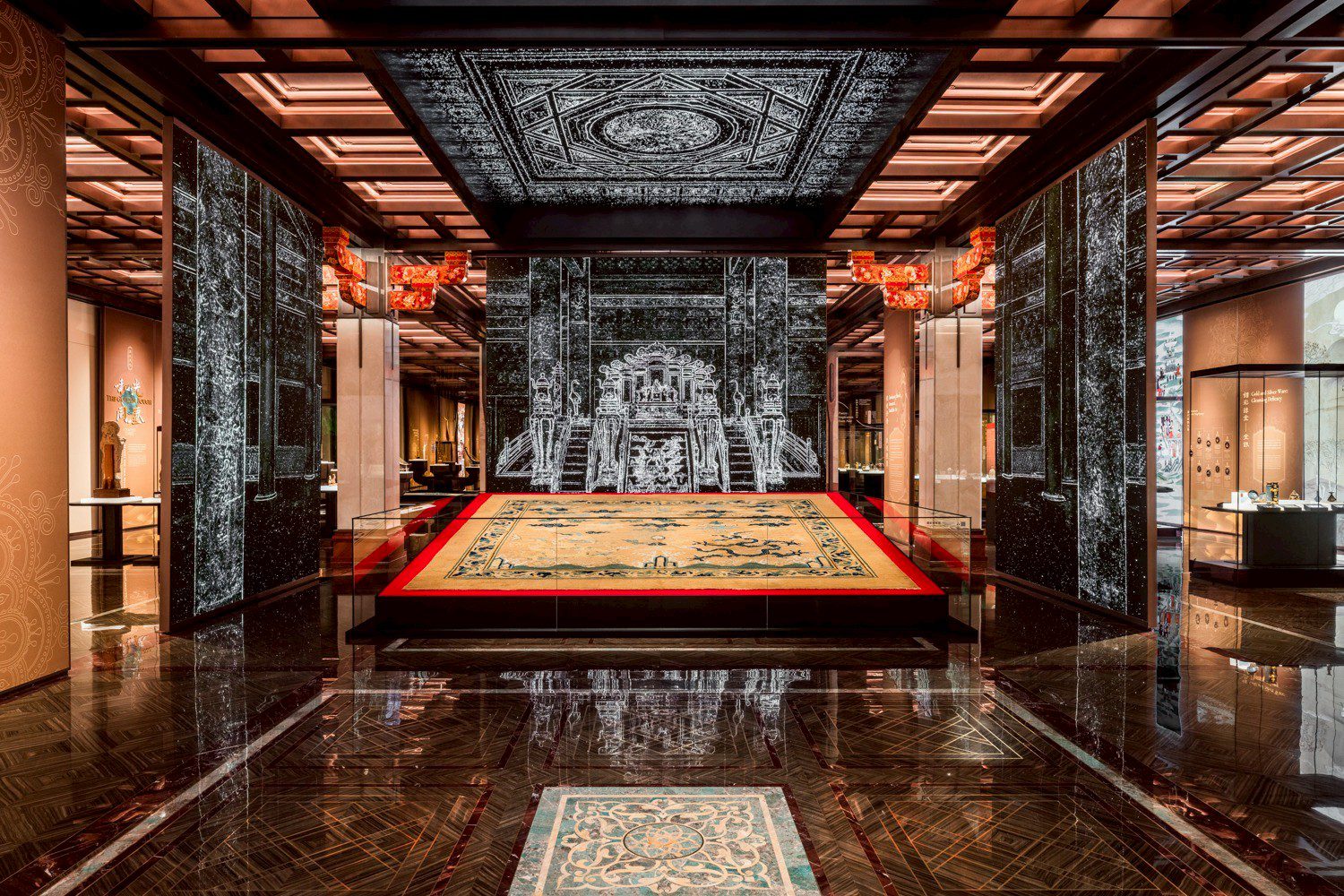
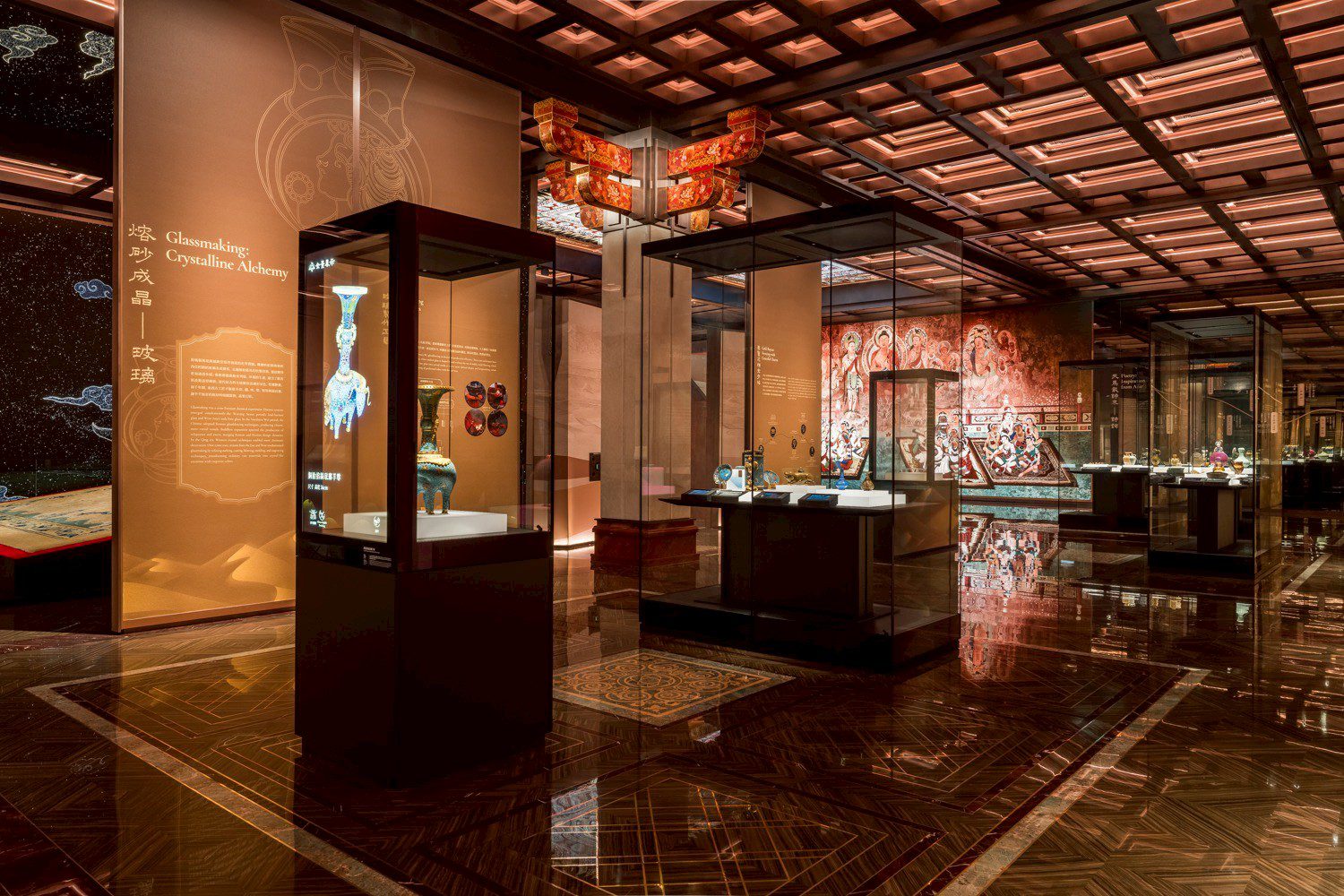
‘Gilded Threads’ shifts the focus from the history of travel to the rhythms of everyday life shaped by the Silk Road. Through an ‘East meets West’ lens, it explores exchanges of goods, currency, and artisanal knowledge, revealing how craftsmanship and trade transformed the route into a cultural crucible in which influences from multiple states and civilizations were interwoven.
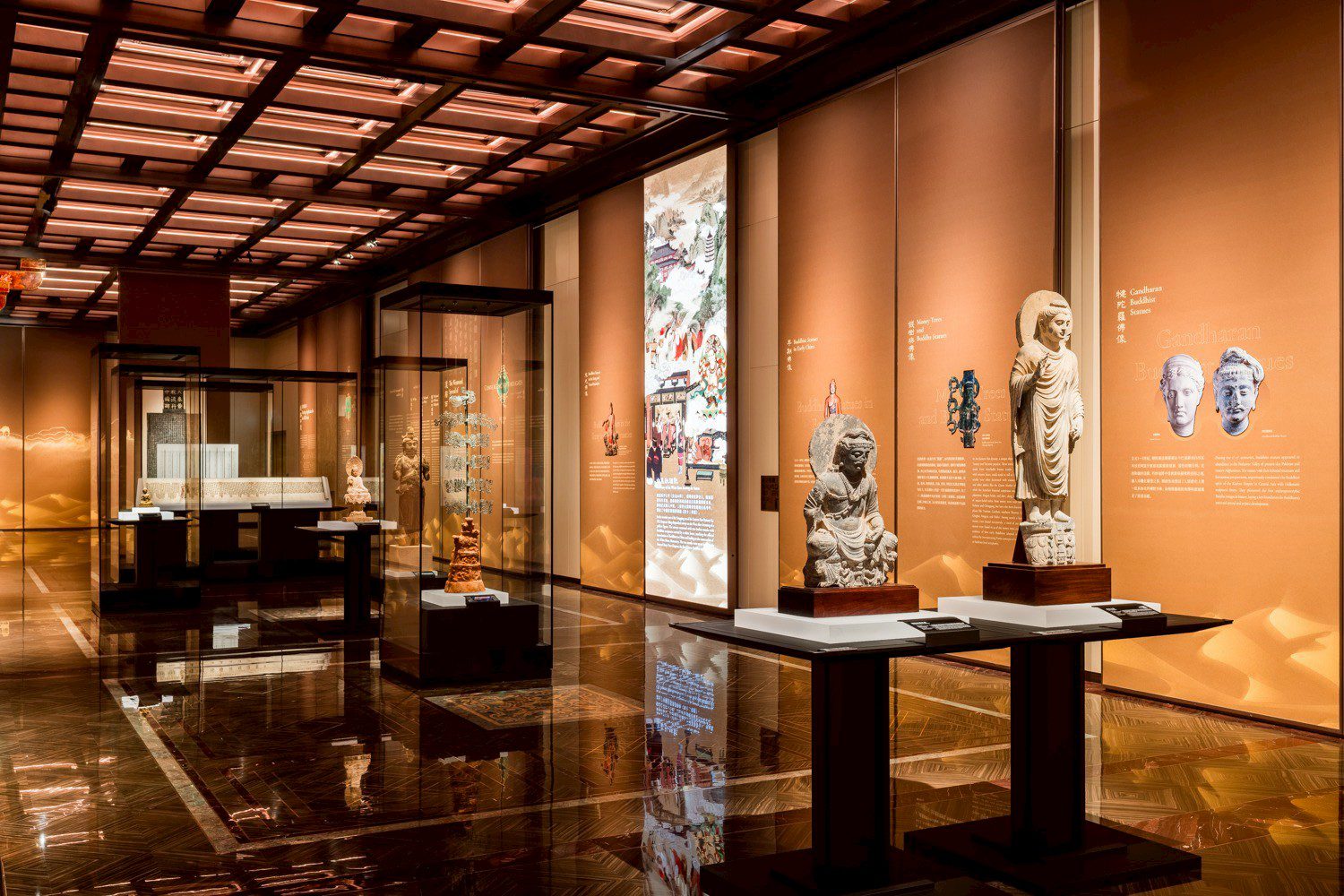
‘The Golden Bough’ turns to the saffron-robed Buddhist tradition as it traveled along the Silk Road, interlaced with artistic expression and refined craft practices. Through this convergence, the section reflects the philosophies and spiritual values that took root and flourished across the vast network of routes.
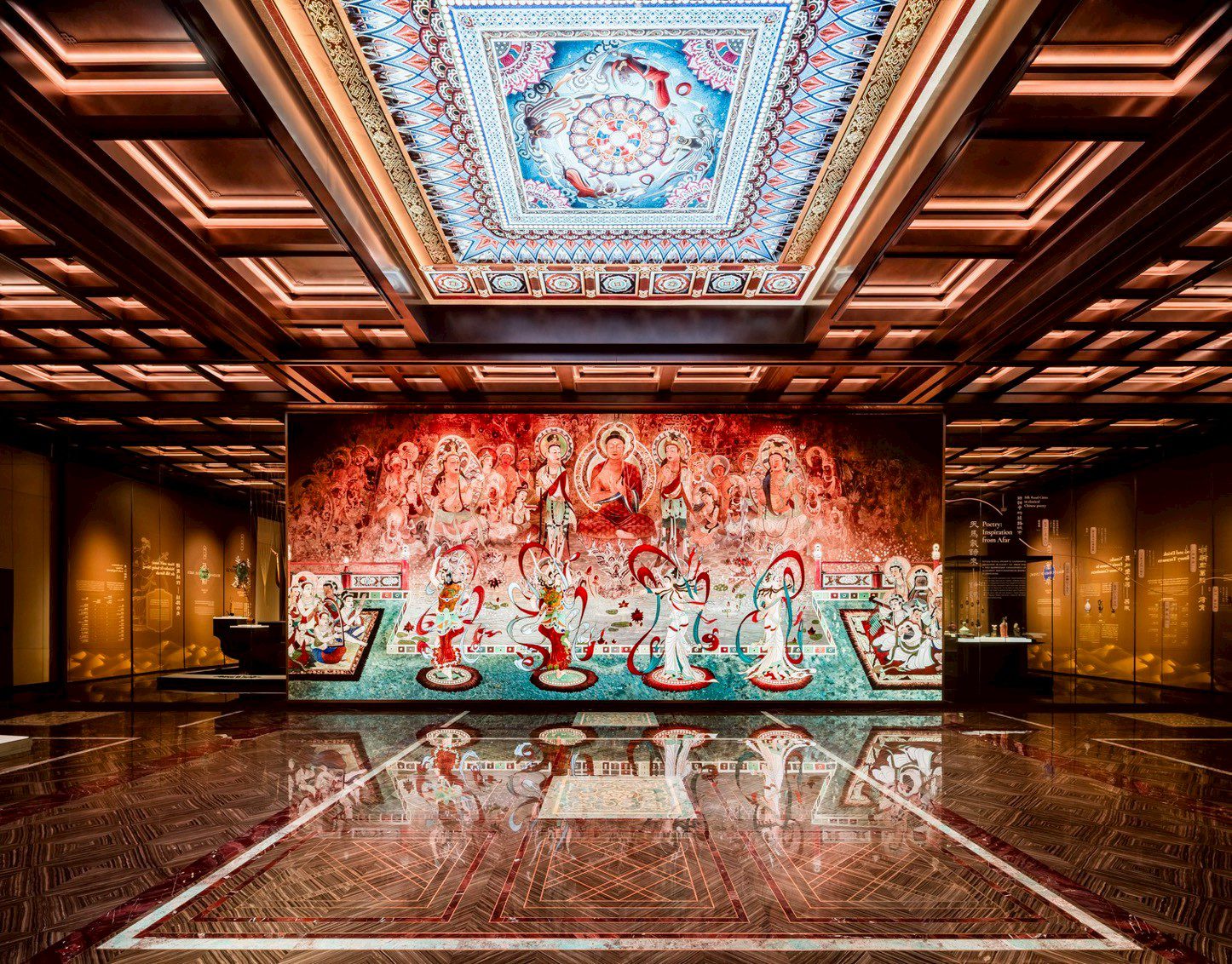
Across its first three chapters, while the exhibition addresses ancient narratives and presents artifacts that are more than a thousand years old, POLY MGM resists pushing the past into a distant, untouchable realm, at least in conceptual terms. Instead, it renders history accessible and grounded, interpreting the Silk Road through a contemporary lens. This approach is expressed through large-scale LED screens, dozens in total, surrounding the exhibition with moving imagery, as well as OLED installations that allow younger audiences to engage with artifacts in immersive, virtual form.
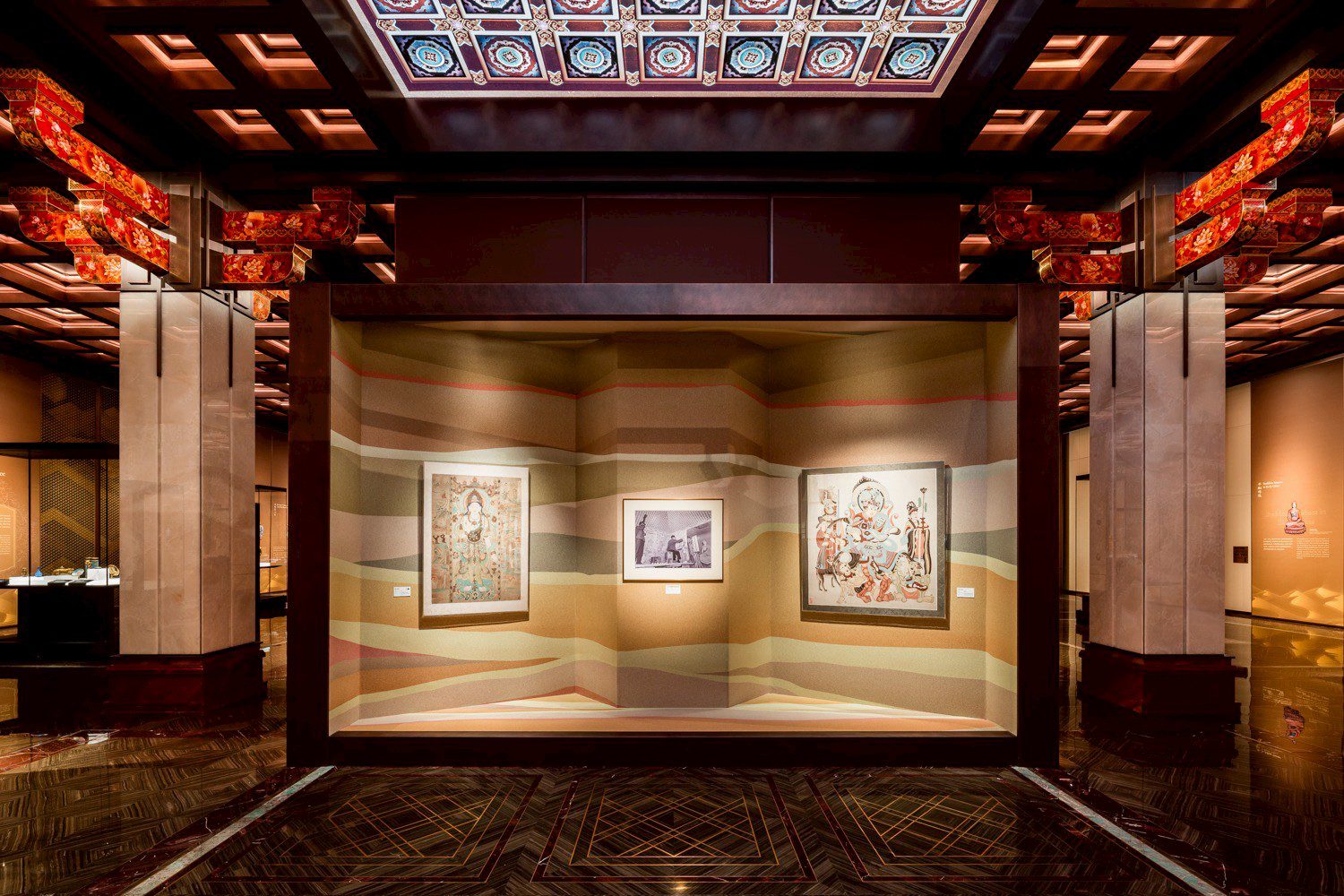
The exhibition also extends into more recent history shaped by interactions along the Silk Road. These include the meticulous replication of mural paintings from the caves of Dunhuang by the painter Chang Shuhong, often hailed as the ‘Guardian of Dunhuang,’ and the revival of long-lost ancient Chinese musical instruments through research led by Tan Dun, the internationally acclaimed composer.
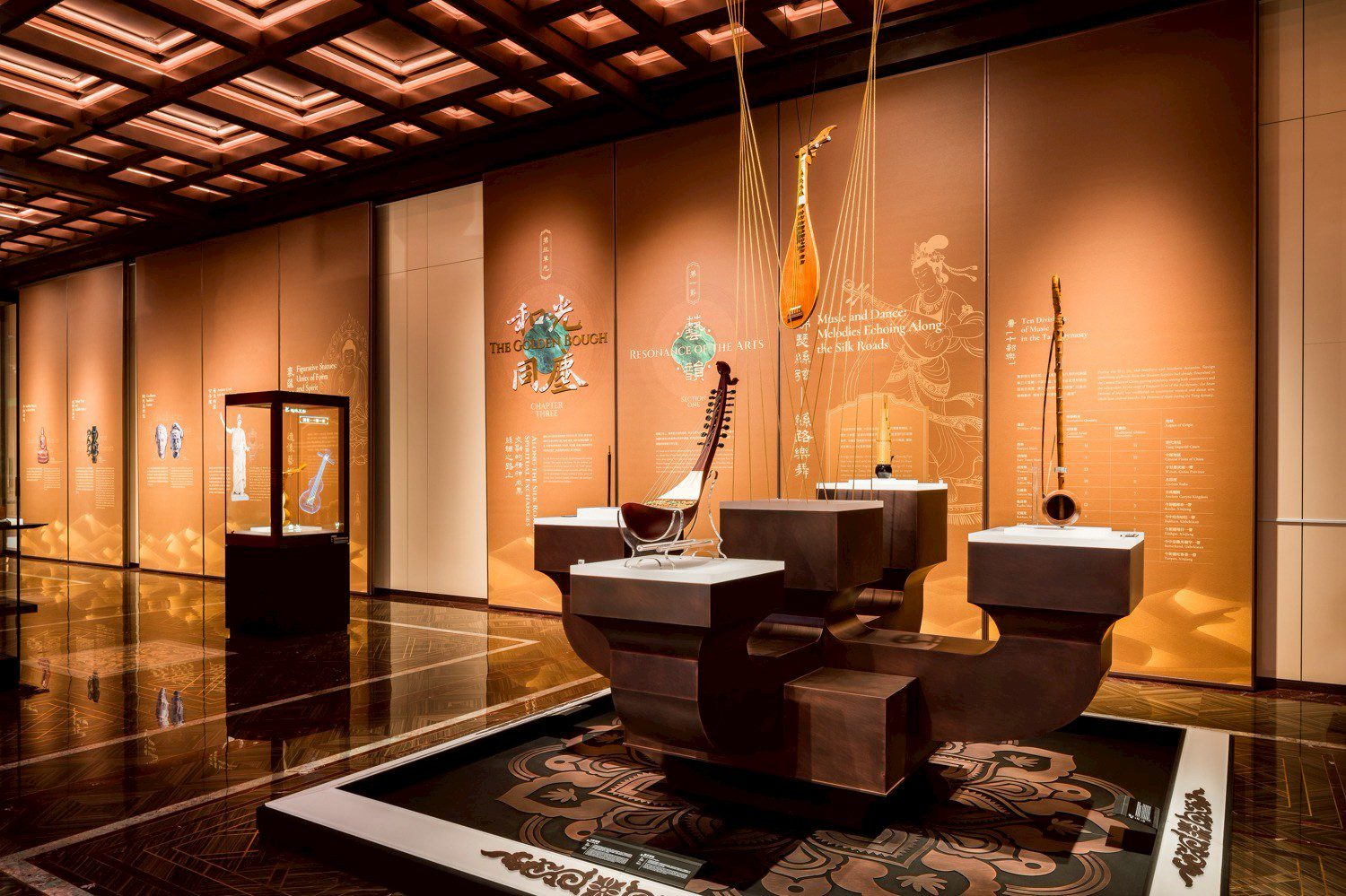
Contemporary art likewise enters the narrative in the final chapter, ‘Road to the Future,’ which bridges the past and the present through artistic expression. Here, the Silk Road is reimagined as a living spirit, distilled into works of art that advocate for a future built on mutual trust, interconnected trade, and cross-cultural understanding on a global scale.
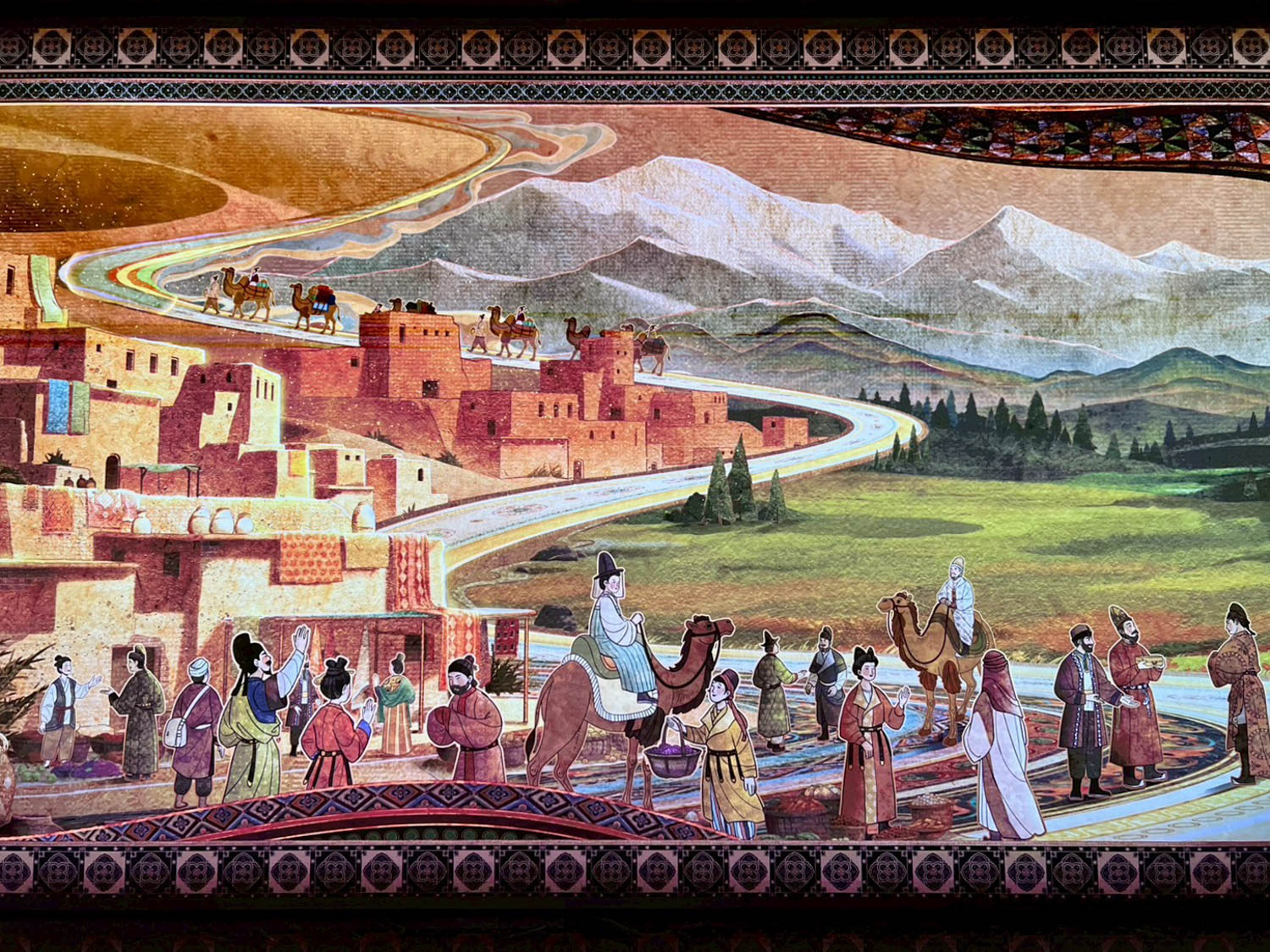
Photo: Sarunkorn Arthan
Taken as a whole, Silk Roads Beyond Borders succeeds in articulating a clear central premise: in an era when the world was still ‘borderless,’ before the emergence of modern nation-states, people from different realms and empires were able to learn from one another and, at the same time, freely exchange and derive mutual benefit along a shared route. That route was the Silk Road, both overland and maritime, sustained by peaceful coexistence over the course of millennia.
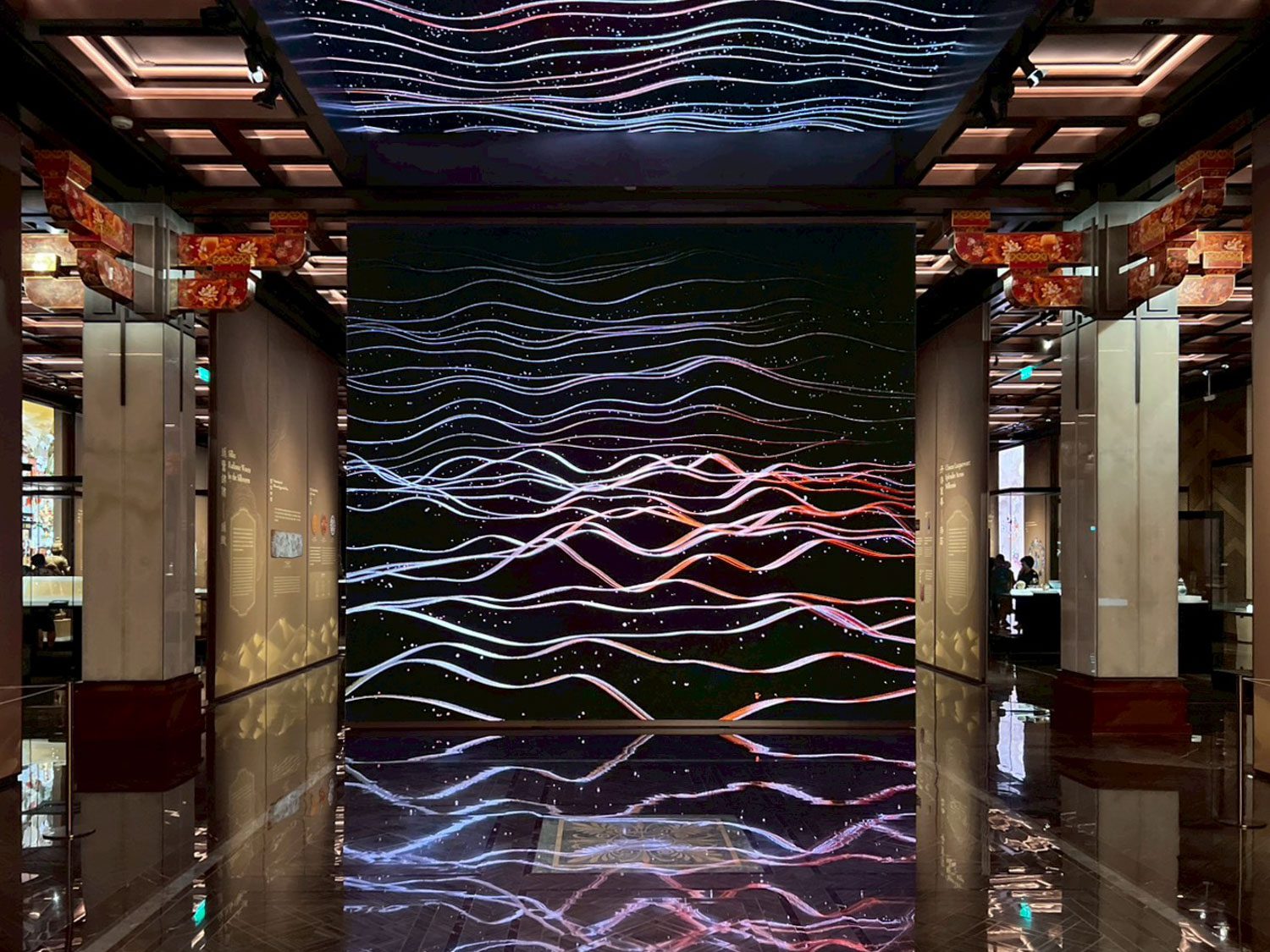
Photo: Sarunkorn Arthan
What makes Silk Roads Beyond Borders particularly compelling is that it is not merely an exhibition that shares the past with its audience. It also forms part of the celebration marking the completion of one full zodiac cycle of the Belt and Road Initiative (BRI), launched under the vision of President Xi Jinping. This raises an intriguing question: how might the cultural politics of a global superpower such as China continue to shape understanding, dialogue, and reconciliation along the Silk Road on an international scale?
Silk Roads Beyond Borders is on view from October 1, 2025, to August 31, 2026, on Level L2 of MGM Macau Hotel, Macau Special Administrative Region of the People’s Republic of China. Admission is free, with reservations available at https://museum.mgm.mo/en/.