
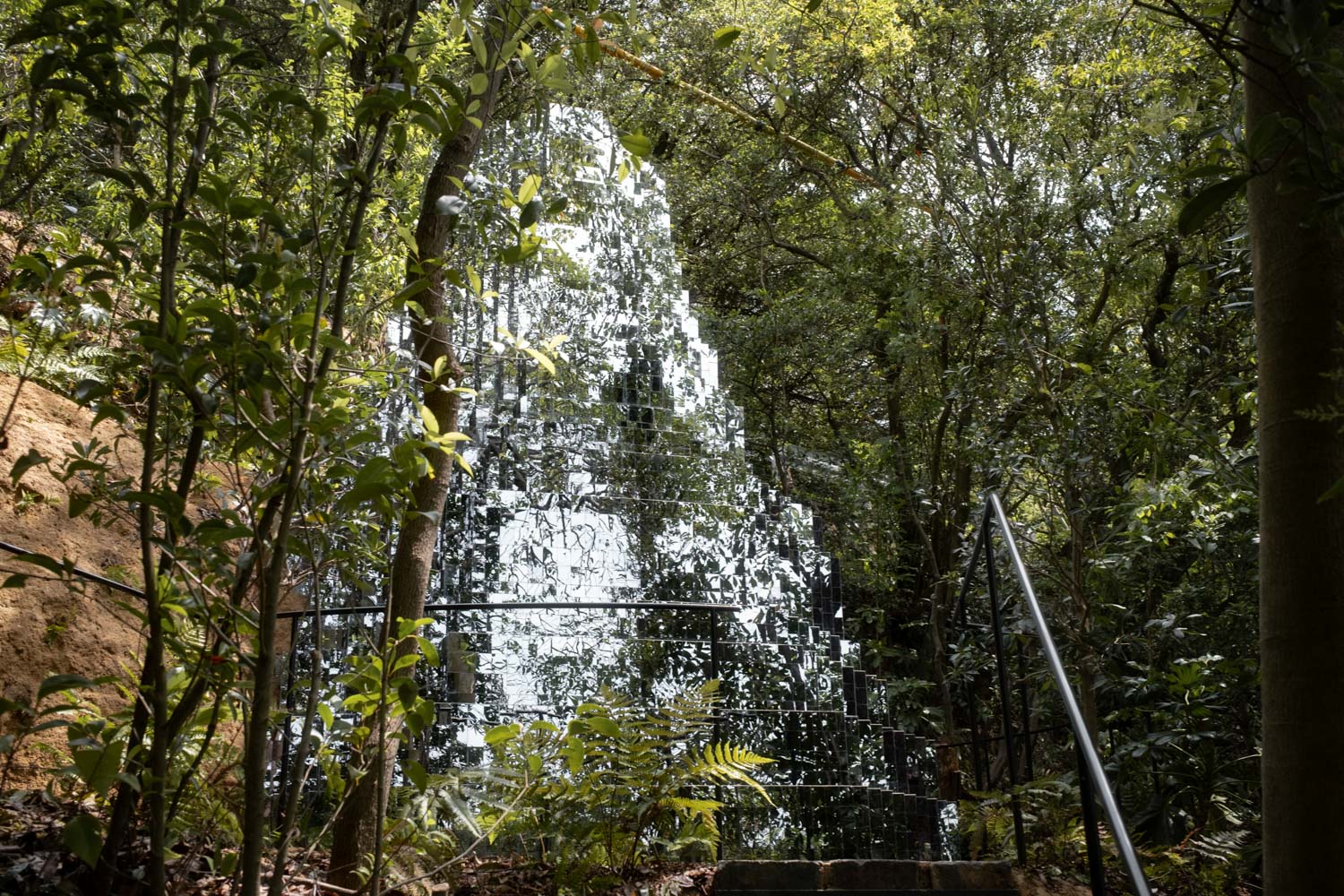
 The Sound of Naoshima (2026) | Photo: Peeraphat Kittisuwat
 WHISPERS FROM THE FOREST DRAW US INTO SILENCE. ‘THE SOUND OF NAOSHIMA’ WHERE ART, NATURE, AND PERCEPTION GRADUALLY GUIDE US BACK INTO OUR INNER SPACE
TEXT: PRATARN TEERATADA
PHOTO CREDIT AS NOTED
(For Thai, press here)
Mention Naoshima, and most people immediately think of an island devoted to art. Museums and art sites are scattered across its landscape, from Yayoi Kusama’s Pumpkin to the Chichu Art Museum, ANDO MUSEUM, Lee Ufan Museum, Benesse House Museum, and the newly opened Naoshima New Museum of Art.
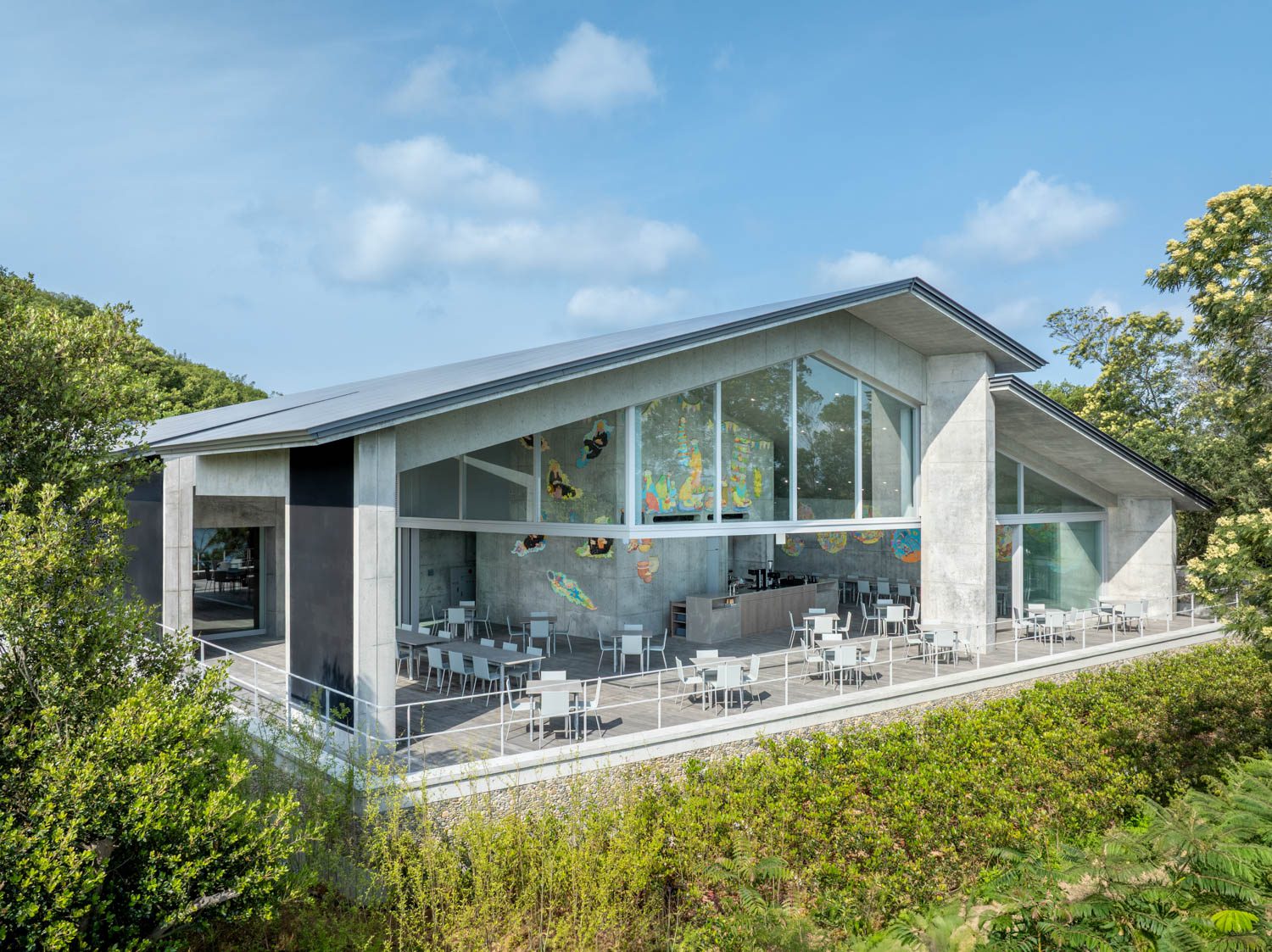
Naoshima New Museum of Art | Photo: GION
Naoshima New Museum of Art opened in 2025 as part of Benesse Art Site Naoshima, an art initiative that has unfolded across the islands of Naoshima, Teshima, and Inujima in the Seto Inland Sea since 1992. Like many of the island’s landmark buildings, the museum was designed by Tadao Ando. The three-level structure comprises two basement floors and one above ground, with four galleries and a café overlooking the Seto Inland Sea. Ando places particular emphasis on the harmony between architecture, nature, and community, creating a poetic interplay of light and concrete in which the power of art becomes one with its surroundings.
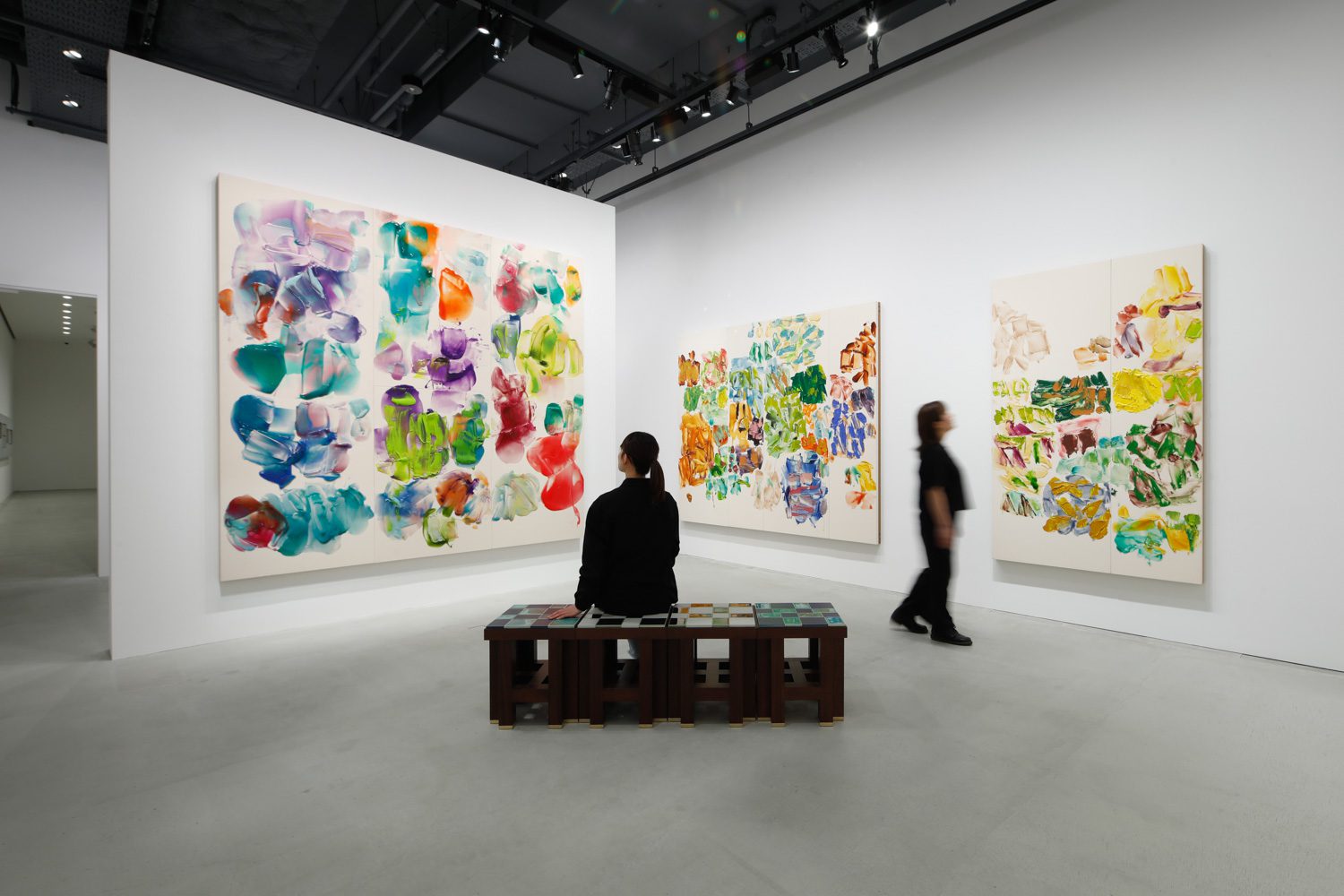
In 2026, the museum announced ‘Flow, Recurrence, Rebirth’ as the theme for its summer and winter exhibitions. The summer program features The Sound of Naoshima, an outdoor installation by Sanitas Pradittasnee, founder of Sanitas Studio, a landscape architect and Thai contemporary artist whose practice moves between art and architecture. Also on view inside the gallery is Tender Buttons, an exhibition by Kenjiro Okazaki, the 70-year-old Japanese contemporary artist and theorist with a wide-ranging practice that spans sculpture, painting, landscape design, and architecture.
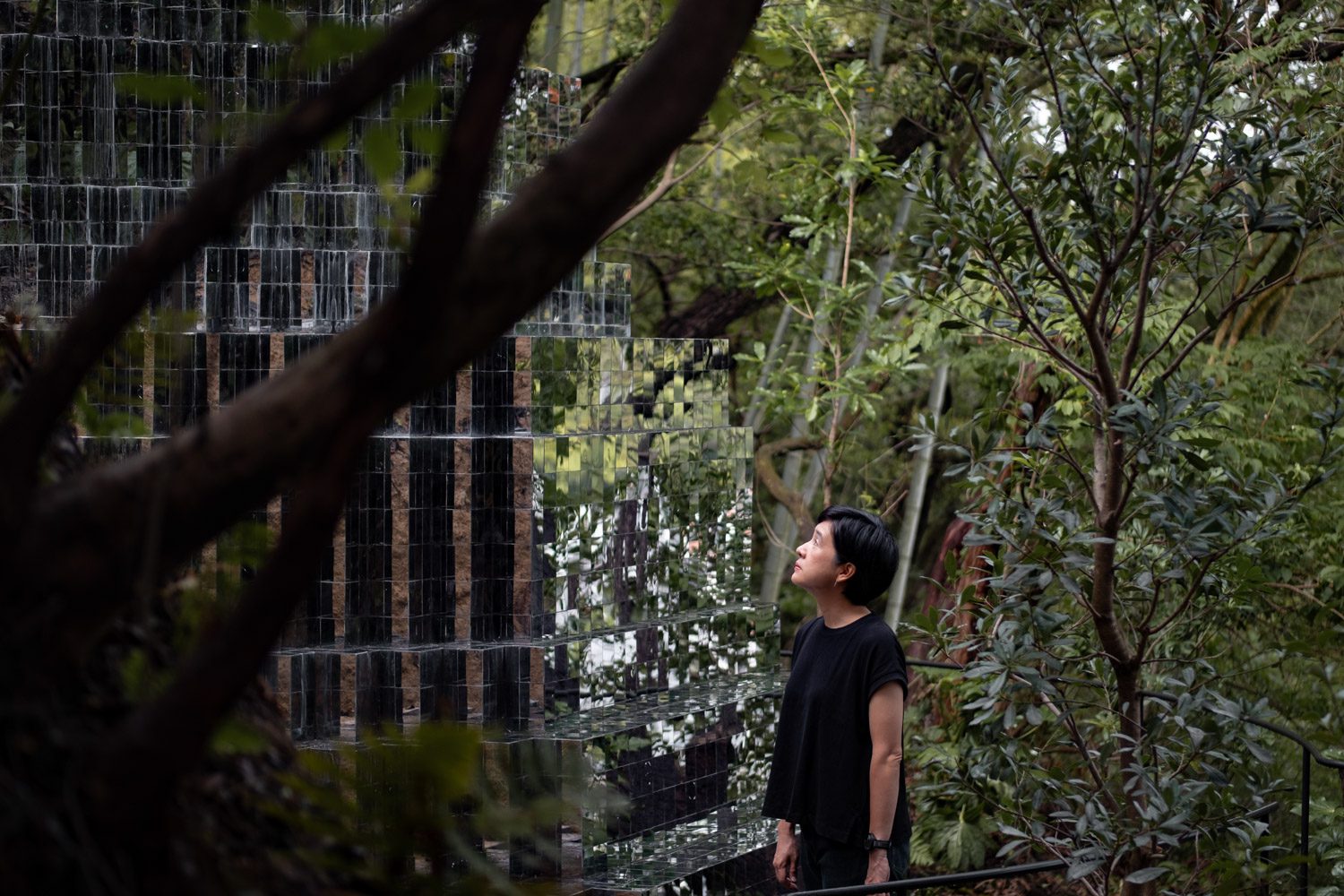
Sanitas Pradittasnee, founder of Sanitas Studio, a landscape architect and Thai contemporary artist | Photo: Peeraphat Kittisuwat
The collaboration between Naoshima New Museum of Art and Sanitas began with a research trip to Thailand in early 2024 by Soichiro Fukutake, Honorary Chairman of the Fukutake Foundation, and Akiko Miki, Director of Naoshima New Museum of Art. During their visit to Sanitas Studio, they exchanged ideas about the museum’s vision of creating a space for artistic and cultural exchange between Japan and the wider Asian region. After hearing Sanitas’s ideas and seeing her portfolio, Fukutake told her, “You have to go to Naoshima.” That invitation marked the beginning of their shared research on the island.
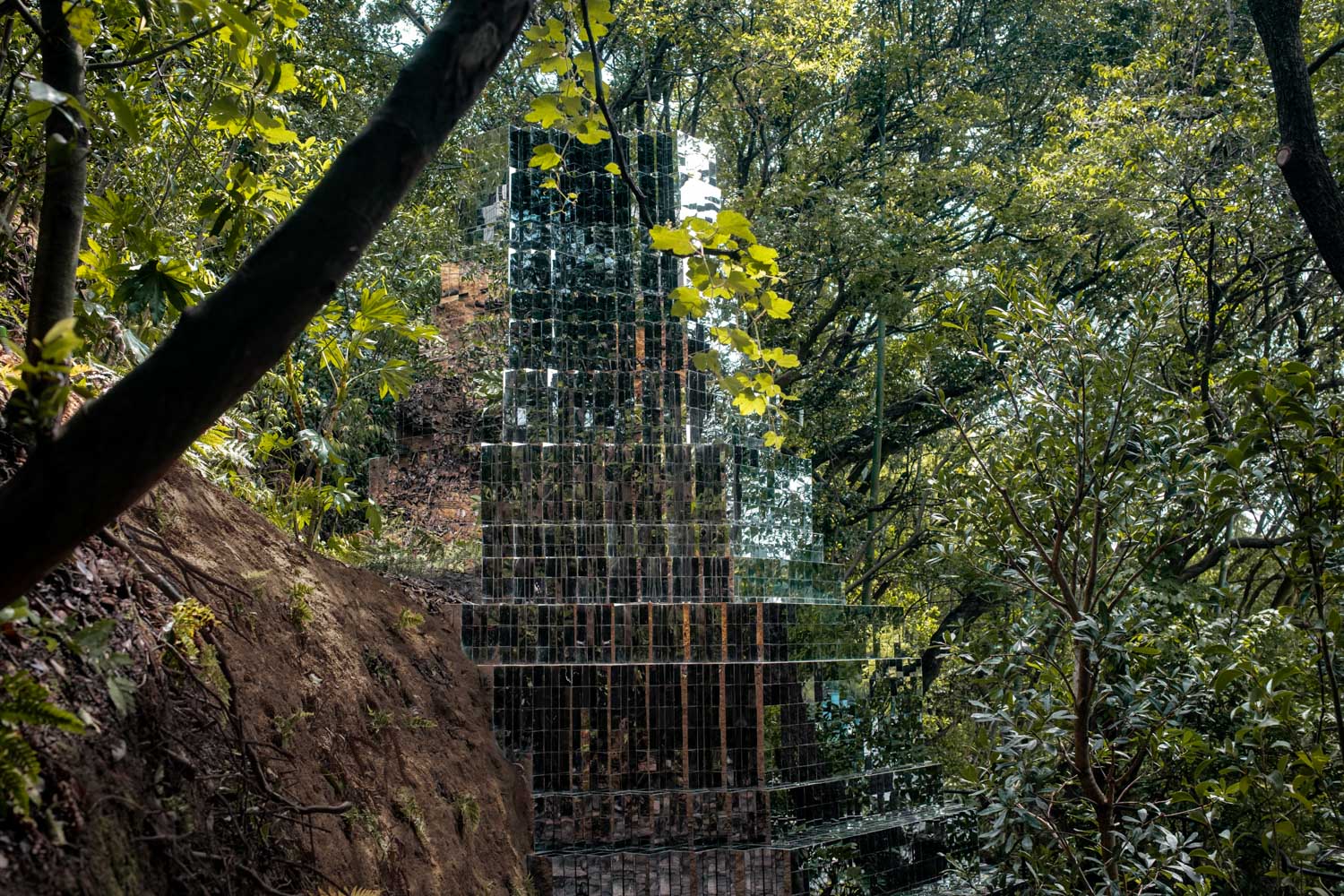
The Sound of Naoshima (2026) | Photo: Peeraphat Kittisuwat
On this occasion, art4d also spoke with Sanitas about how the project took form and the ideas behind the work.
“I think what connected us was the artistic language and ideas found in my previous bodies of work, including Garden of SILENCE at the Thailand Biennale, Chiang Rai 2023, and Across the Universe and Beyond at the Bangkok Art Biennale 2018. Both works raise questions about space, spirituality, and the profound truths of the natural world.”
“As an artist, I have long found Naoshima both inspiring and deeply memorable. I am particularly interested in the relationship between art, architecture, and nature within the Naoshima project. When I first heard about this opportunity, it felt like an enormous and genuinely exciting challenge.”
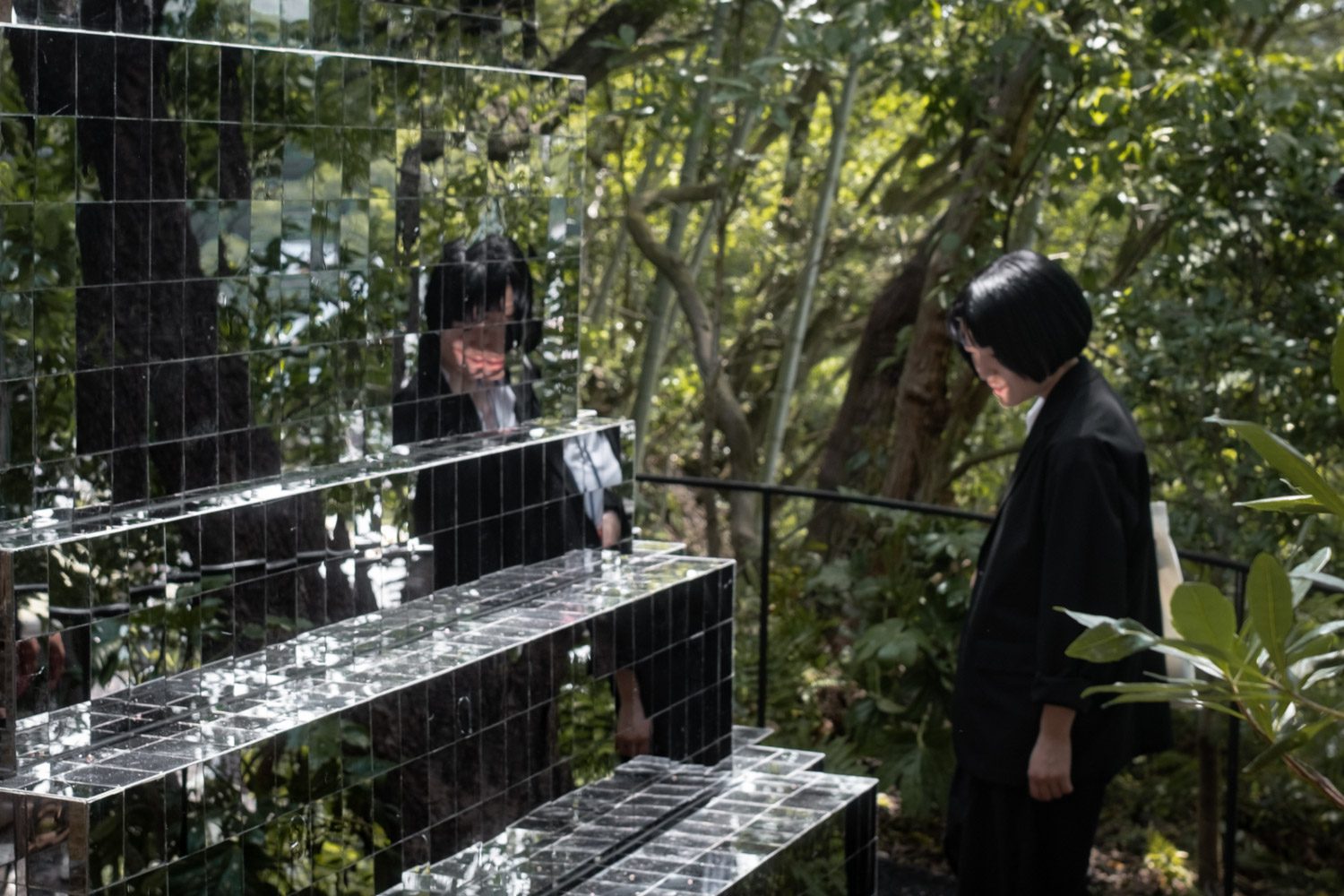
The Sound of Naoshima (2026) | Photo: Peeraphat Kittisuwat
“The Sound of Naoshima was selected as a permanent site-specific commission for the museum. It was originally scheduled to be unveiled alongside the main museum building in 2025. But because the work is context-responsive and directly shaped by its forest setting, we felt it would have the greatest impact once the surrounding forest and ecosystem had reached greater maturity. We therefore agreed to postpone its full unveiling until 2026.”
“During the museum’s opening in mid-2025, however, we presented a smaller-scale work titled Meditation Pavilion as part of the Meditation Program. The pavilion served as an introductory chapter, inviting visitors to attune their senses before entering the complete world of The Sound of Naoshima,” Sanitas explained.
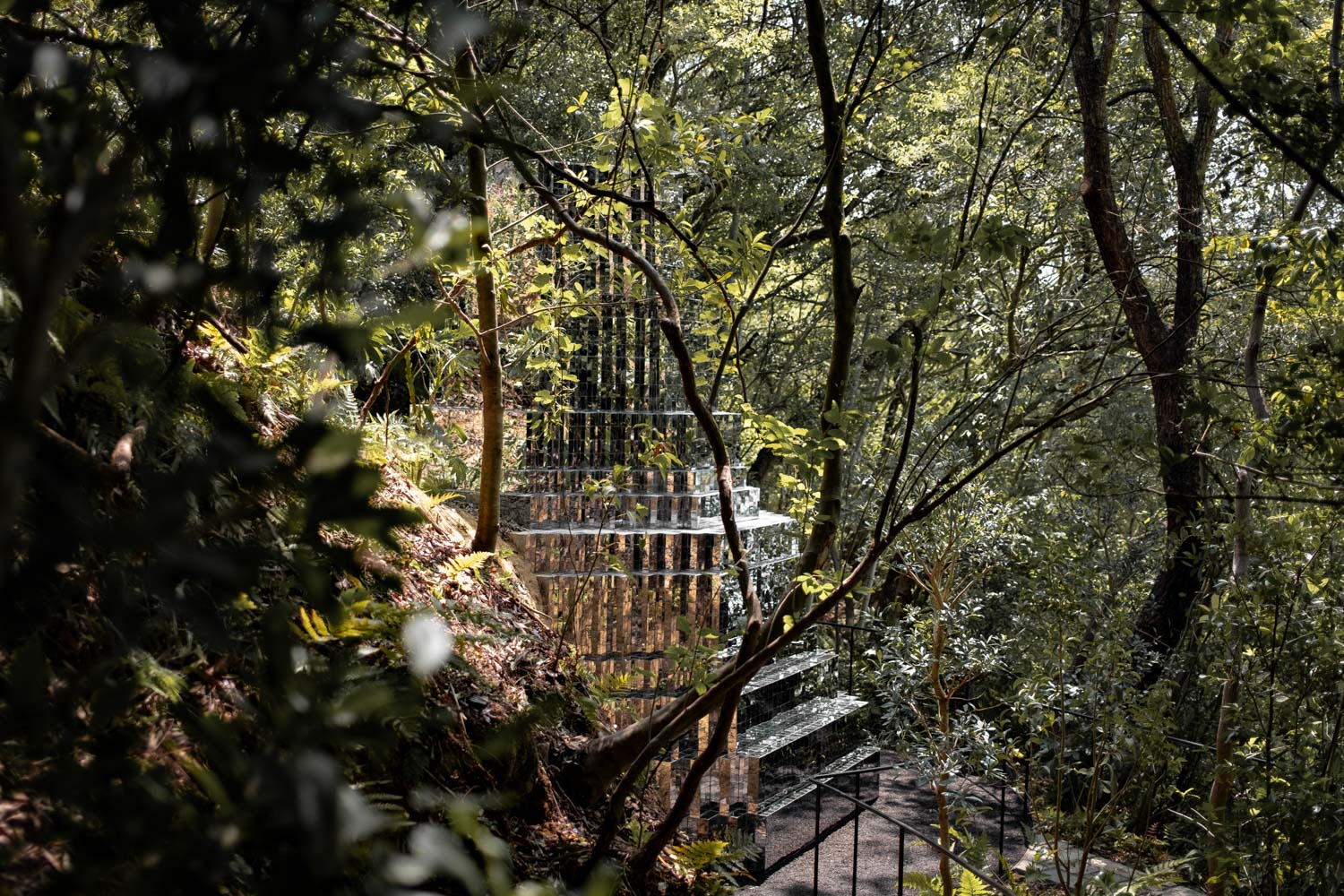
The Sound of Naoshima (2026) | Photo: Peeraphat Kittisuwat
The research process unfolded across two dimensions. On a physical level, the team examined spatial connectivity and the phenomenology of perception, seeking to understand how visitors experience the island of Naoshima as a whole. On a more abstract level, they explored the idea of the sacred forest and the particular character of Japanese belief systems. Although Thailand and Japan share similar foundations in Buddhist philosophy, the team was interested in both the affinities and distinctions between their cultural identities. The aim was to develop a universal language capable of communicating with local communities and visitors from around the world in the most nuanced and meaningful way possible.
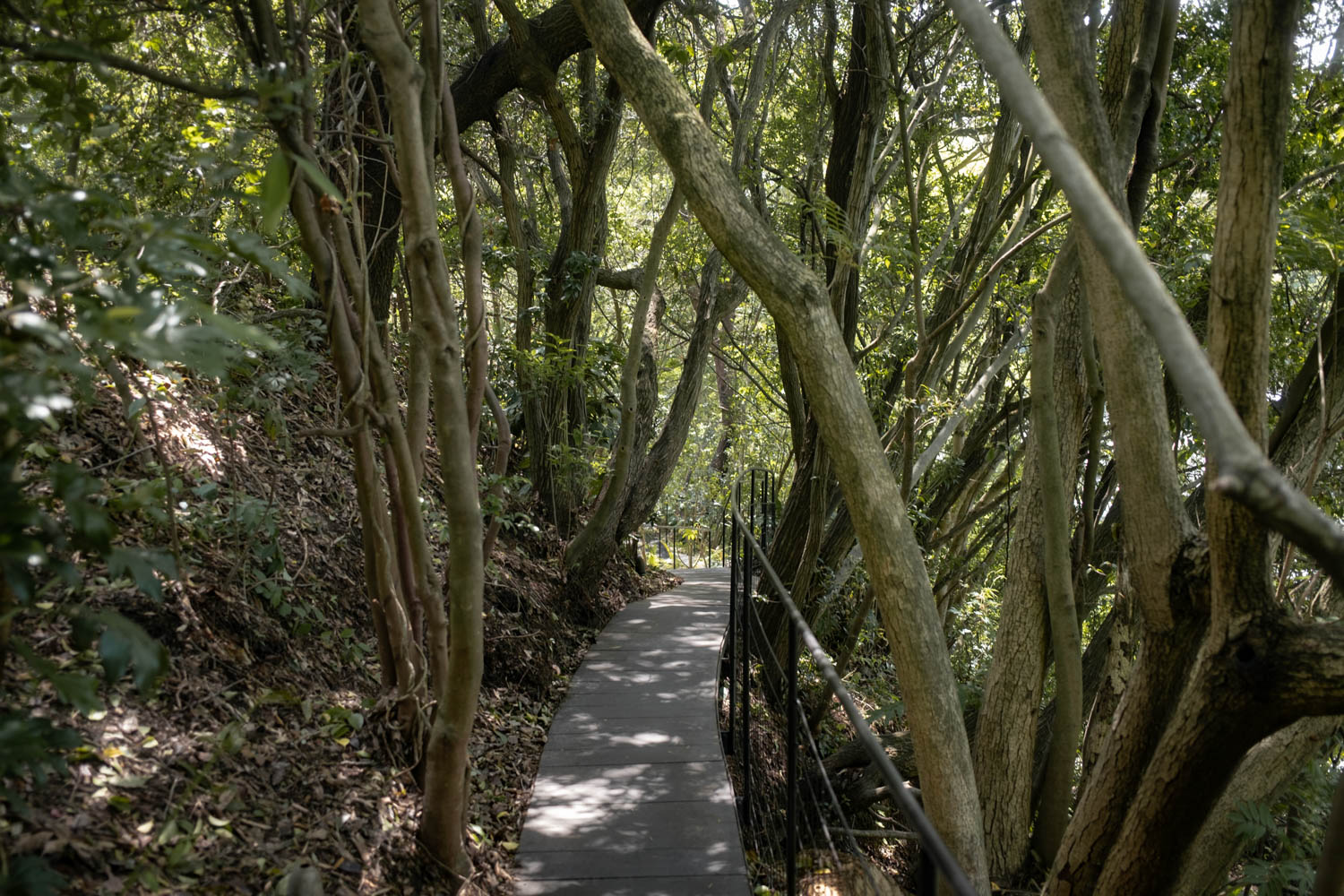
The Sound of Naoshima (2026) | Photo: Peeraphat Kittisuwat
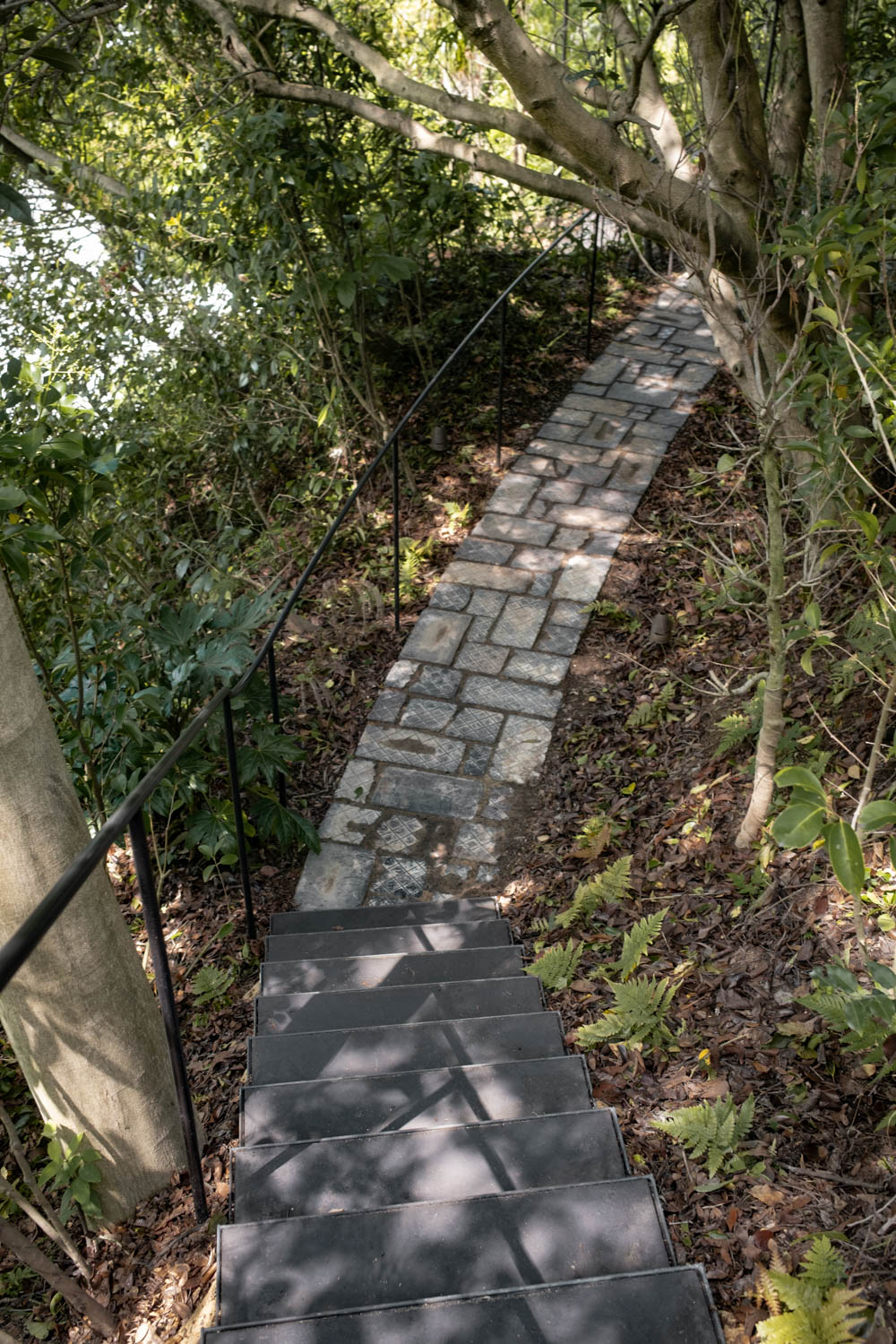
The Sound of Naoshima (2026) | Photo: Peeraphat Kittisuwat
“During the site exploration, I visited the island’s shrines and followed the Naoshima 88 Pilgrimage Sites. I was deeply moved by the experience of passing through the natural landscape of the sacred forest. It felt as though I had entered another world. It reminded me of practicing Dhamma in the forests of Thailand, where I learned that ‘Dhamma is nature.’ It is a place where we can learn about and understand the Buddhist principles of impermanence, suffering, and non-self through the fundamental truths of nature.”
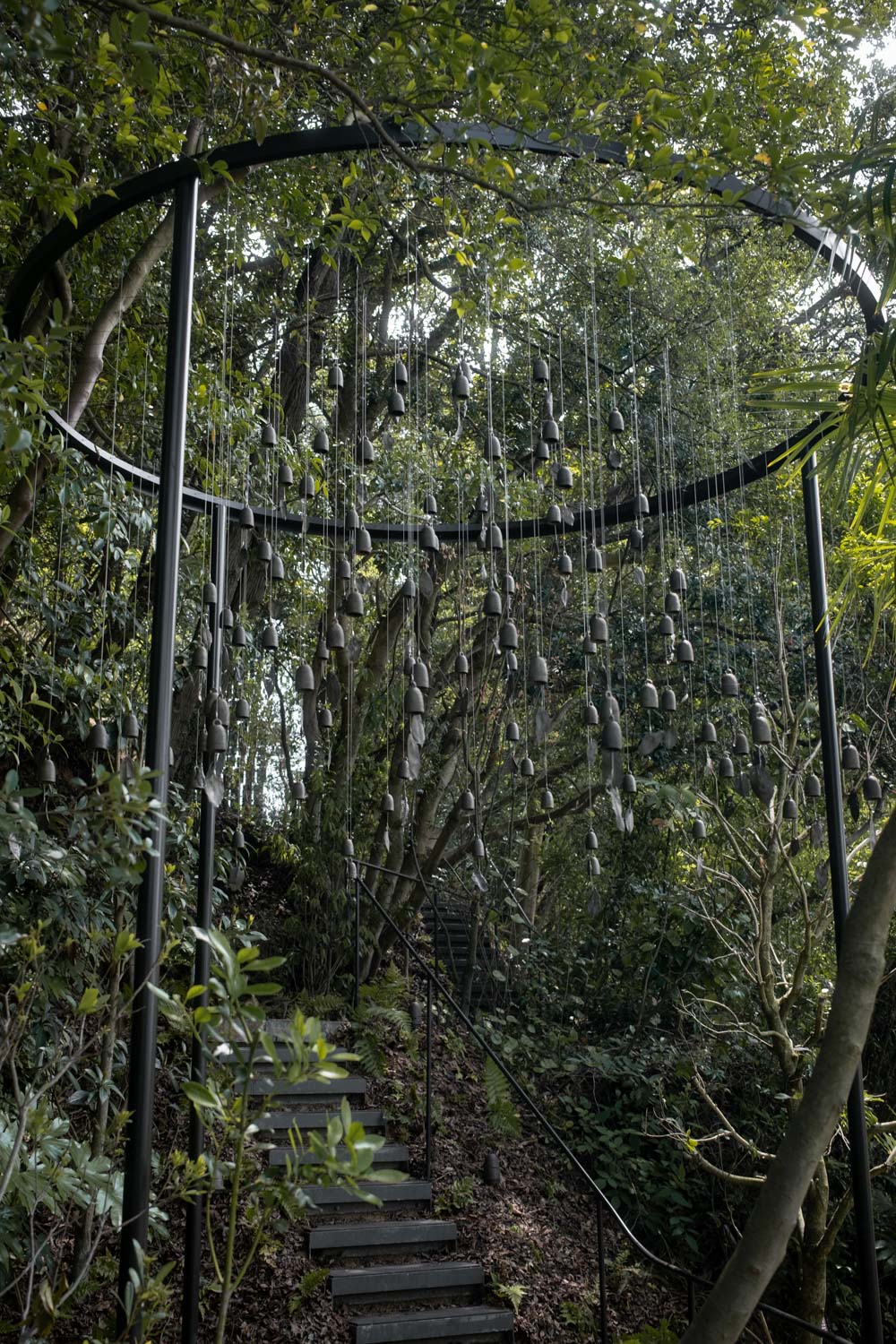
The Sound of Naoshima (2026) | Photo: Peeraphat Kittisuwat
“The work also draws inspiration from the Zen Koan ‘What is the sound of one hand clapping?’ It points to a state of mindfulness that cannot be understood through logic alone, but must be reached through direct experience. Like the koan, ‘The Sound of Naoshima‘ is an entirely experiential work of art. It invites visitors to return to ‘listening with the heart.’”
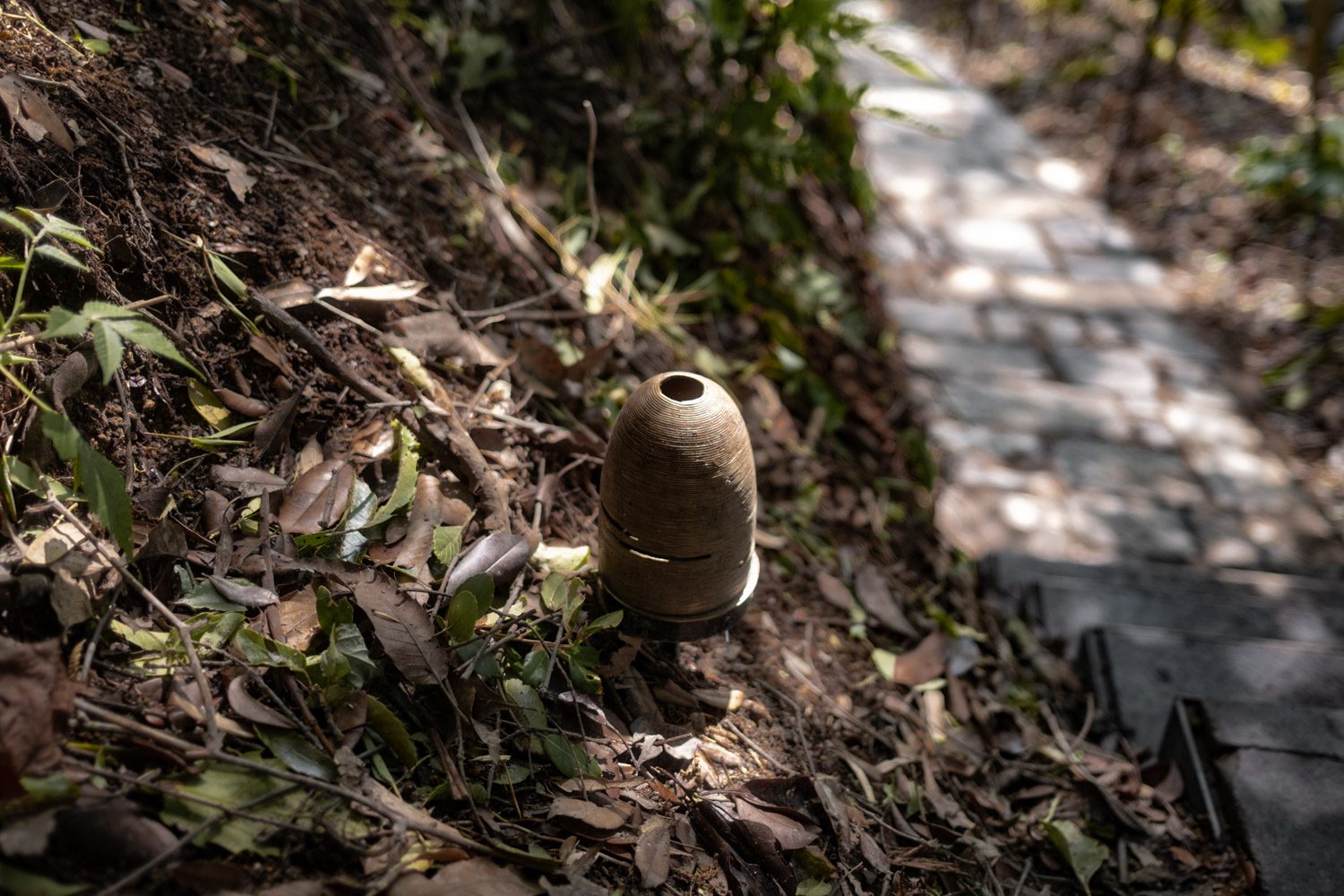
The Sound of Naoshima (2026) | Photo: Peeraphat Kittisuwat
“I was equally inspired by the setting itself: a lush forest at the entrance to the museum. I wanted to preserve the landscape’s natural character as fully as possible, allowing visitors to encounter the work through sound, scent, and sight. The experience begins with this heightened sensory awareness. Yet as visitors reach the heart of the work, these perceptions gradually recede, creating a space in which they can slow down, pause, and turn inward. They may close their eyes and simply remain with themselves for a while.”
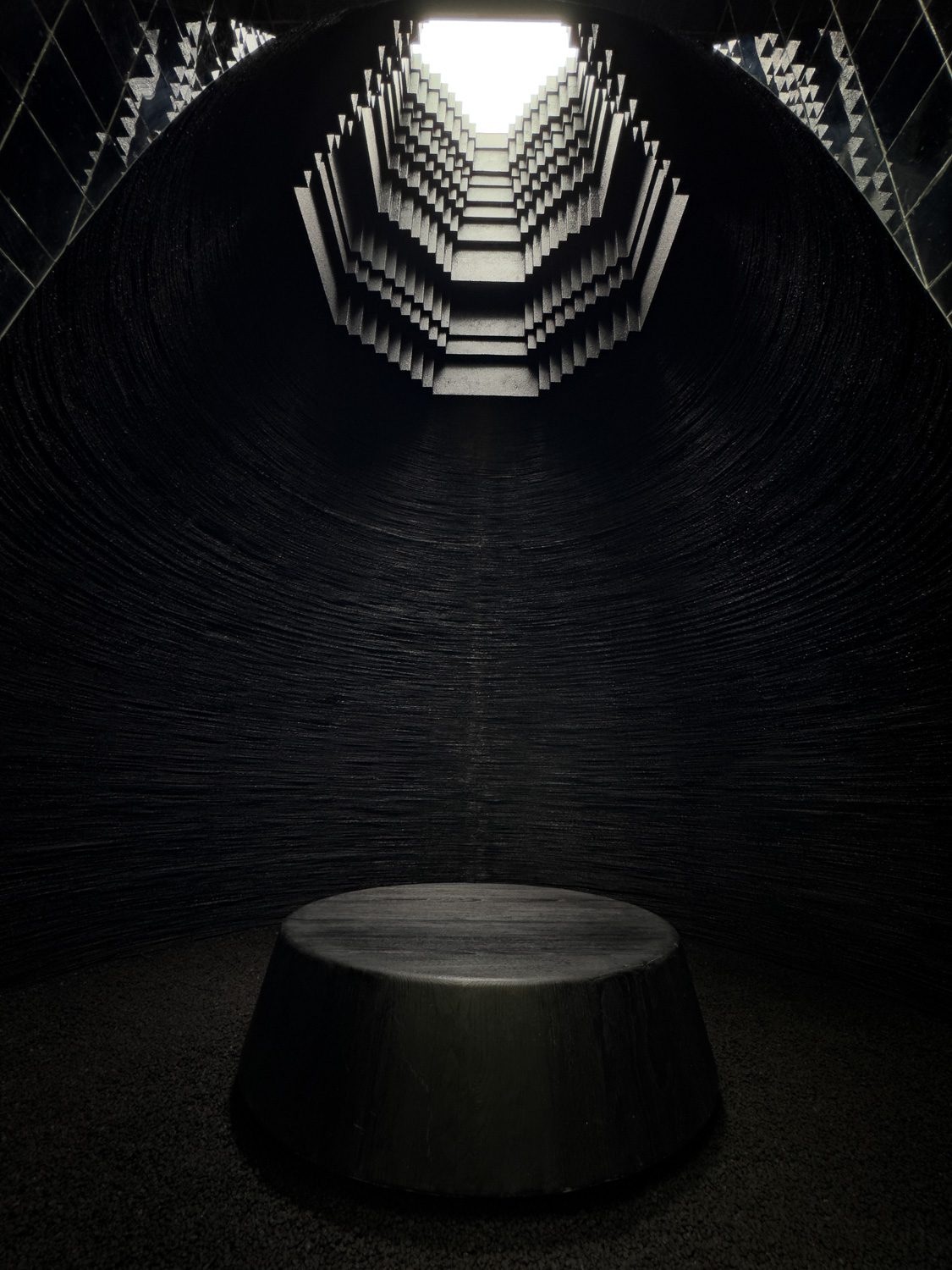
The Sound of Naoshima (2026) | Photo: Peeraphat Kittisuwat
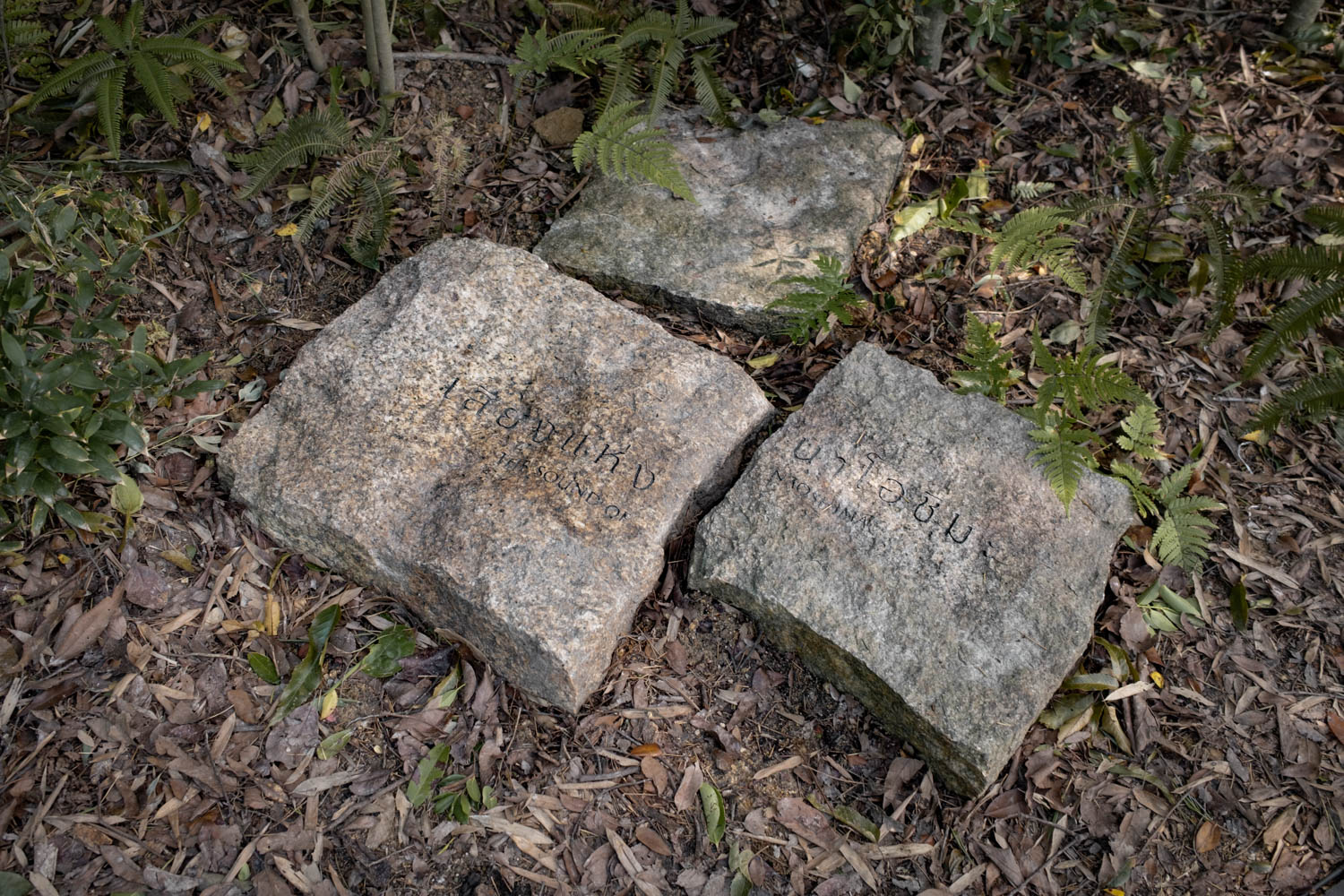
The installation process proved a vital point of connection, bringing Thai architects and craftspeople into close collaboration with the Fukutake Foundation’s art management team. As The Sound of Naoshima is experienced through spatial experience, it unfolds as a carefully sequenced narrative. The journey begins along a forest trail conceived as the Walking Thinking Path, continues into the installation Echo of SILENCE, and culminates in the work’s innermost space, SILENCE.
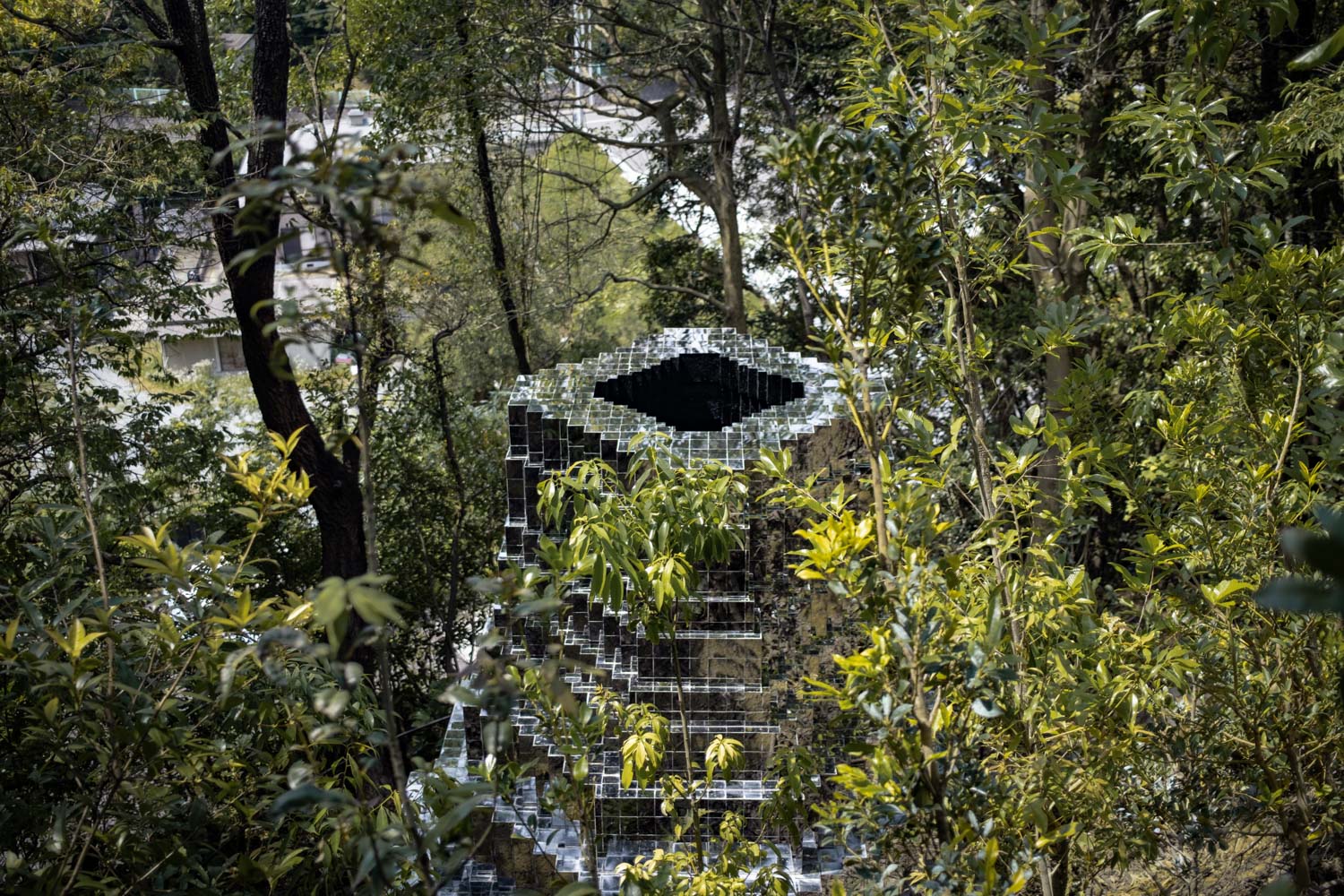
The Sound of Naoshima (2026) | Photo: Peeraphat Kittisuwat
“In terms of process, we planned the system together in meticulous detail well in advance. Our Japanese counterparts prepared the in-situ, or cast-in-place, foundations and pathways on site to receive the sculptural elements, which we completed and shipped over for assembly. We began the installation in March this year and faced constant challenges posed by the unpredictability of nature. Temperatures fell to 5 degrees Celsius, though it felt closer to minus 3. Working outdoors in such cold conditions meant that we had to continually adapt and resolve problems in response to the environment. Throughout the process, the Fukutake Foundation supported us with an exceptional level of professionalism.”
The Sound of Naoshima (2026) | Photo: Peeraphat Kittisuwat
“What impressed me most as an artist was witnessing the dialogue between two distinct working cultures. The head of the Japanese team had previously worked on the construction of Chichu Art Museum and brought a sense of rigorous precision and discipline to the process. Our Thai team, by contrast, brought together craftspeople with great flexibility and an instinctive responsiveness to conditions on site, creating an organic fluidity. When these two energies met, they generated a powerful process of cross-cultural exchange and mutual learning. Everyone was wholly committed to achieving the best possible outcome for the work.”
“Watching the work gradually take root in its setting, at the seasonal threshold between winter and spring, and celebrating ohanami, the Japanese tradition of gathering beneath the cherry blossoms, with both the Thai and Japanese teams was more than a precious memory. It was the moment when the work, the artist, the entire team, and the setting of Naoshima truly came together as one.”
Tender Buttons (2026) | Photo: Takeru Koroda
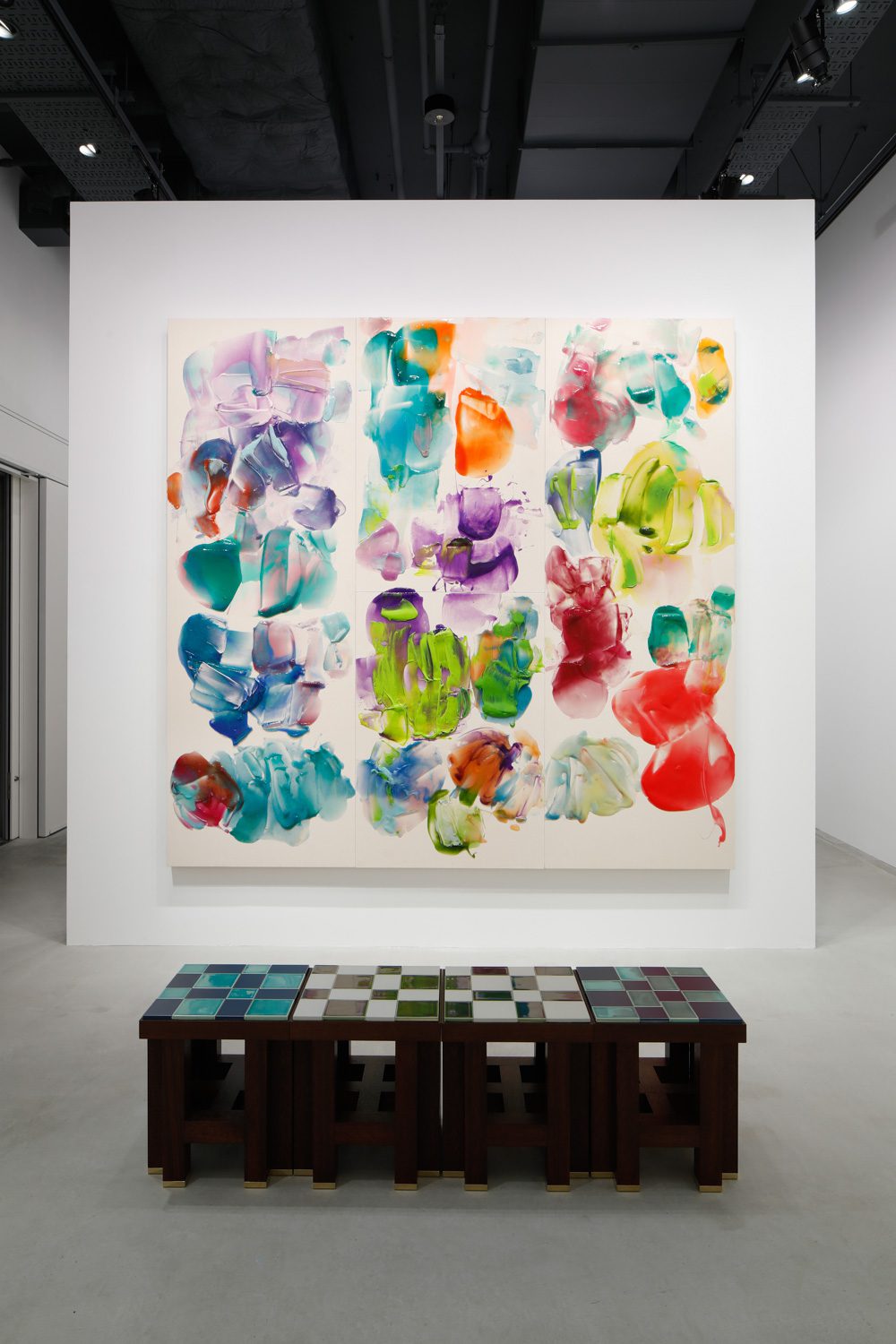
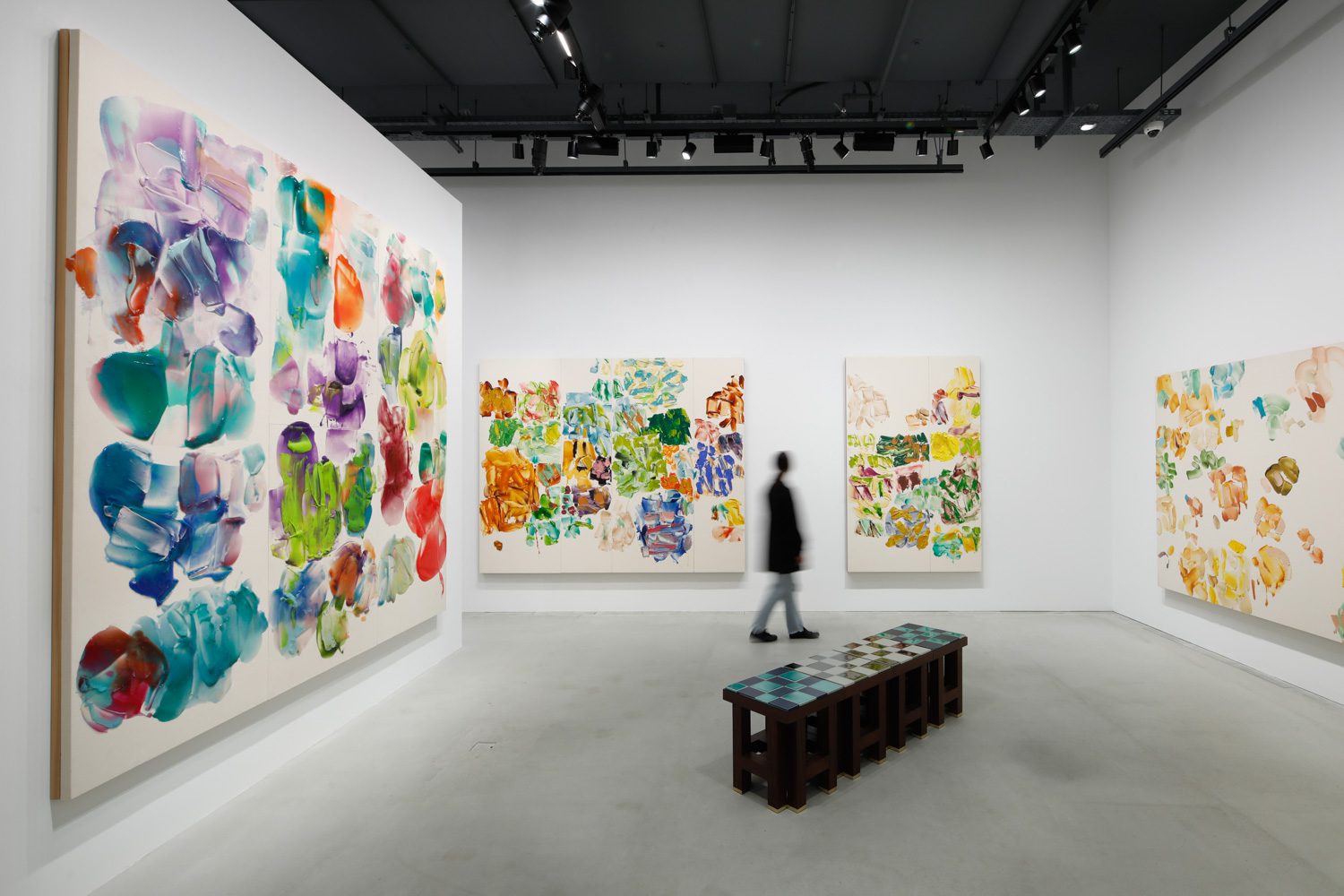
Inside the museum, another exhibition unfolds alongside Sanitas’s outdoor installation. Tender Buttons brings together earlier and newly created works by Kenjiro Okazaki, one of Japan’s leading contemporary artists and a progressive critic and art theorist known for exploring the relationships between space, time, and human perception.
“For me, the works in Kenjiro Okazaki’s Tender Buttons represent a painting practice grounded in profound conceptual and philosophical thinking. Much of his work invites us to move beyond the limits of the image before us, drawing viewers into an open-ended process of contemplation and interpretation.”
“What I find especially compelling, and what opens up entirely new perspectives, is the way he titles each work. The titles function as Poetic Extensions, almost like abstract poems, entering into a powerful and sophisticated dialogue with the paintings themselves.”
Tender Buttons (2026) | Photo: Takeru Koroda
“Okazaki’s practice also extends into architecture and landscape architecture, which makes me feel particularly connected to his work as someone whose own practice moves across similar fields. His works are not simply paintings on canvas. They are distillations of philosophy and poetry that prompt us to re-examine our surroundings, while opening our perception toward another dimension of abstraction with extraordinary beauty and force.”
Naoshima has played a pivotal role in reshaping the contemporary art world, transforming a once-degraded industrial and mining island into a global center for contemporary art. Here, major works of art, nature, and contemporary architecture come together in remarkable harmony, making the island an essential destination for art lovers from around the world. The evolution of Naoshima’s art landscape also reflects the broader shifts now taking place across the global contemporary art scene.
Tender Buttons (2026) | Photo: Takeru Koroda
“I find the contemporary art world today full of fascinating contradictions. It feels both near and distant, small and immense, all at once, because we are all standing in the midst of a paradigm shift, at the threshold of a profound structural transformation in the world.”
“I think contemporary art serves both to open up dialogue and to act as a mirror that responds directly to the social realities and spirit of the era. Geopolitical conflicts, wars, the climate crisis, AI-driven disruptions, and the transition into an aging society are no longer distant concerns. They have become a collective experience, confronting people around the world with shared questions at the same moment. We are therefore seeing these concerns connect and intersect through artistic perspectives across the globe.”
“At the same time, amid the clamor and volatility of the world outside, another clear and powerful movement is beginning to emerge. Both the global art world and the public are signaling a growing desire for an internal sanctuary, a space for contemplation. This call for stillness and SILENCE is becoming ever louder within contemporary art today.”
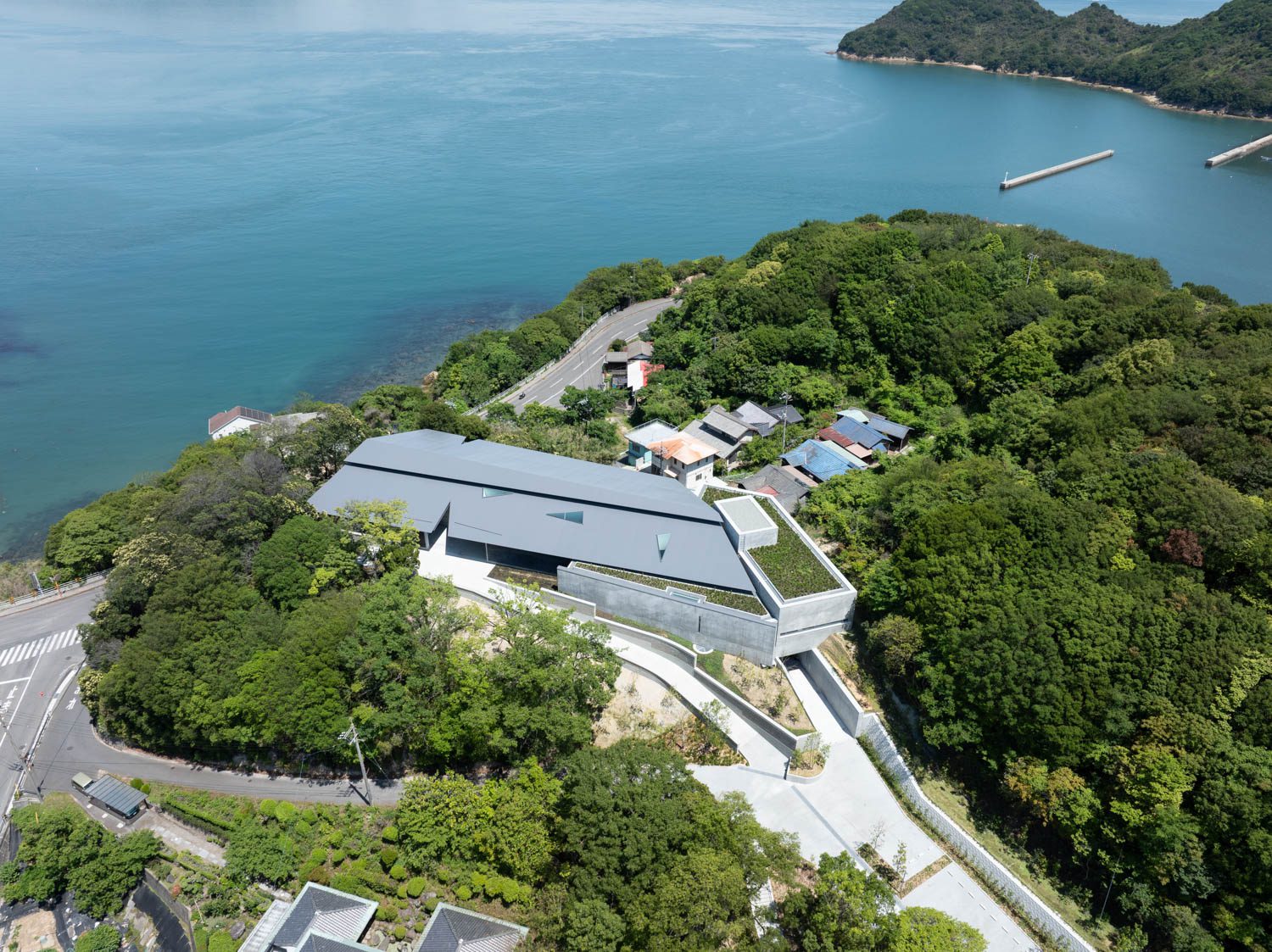
Naoshima New Museum of Art | Photo: GION
Sanitas Pradittasnee’s outdoor installation ‘The Sound of Naoshima‘ and Kenjiro Okazaki’s solo exhibition ‘Tender Buttons‘ are on view at Naoshima New Museum of Art as part of its Summer Rotation under the theme ‘Flow, Recurrence, Rebirth.’ Sanitas’s work remains on view as a permanent exhibition. Come this winter, the museum will also present Currents without Anchors, an exhibition by Kei Imazu & Bagus Pandega — stay tuned.