‘WE CAN’T DO IT ALONE.’ SINGORAMA ART FEST 2026 LAYS ITS FOUNDATION IN THE HEART OF THE COMMUNITY—BOTH PEOPLE AND PLACE
TEXT: TUNYAPORN HONGTONG
PHOTO: KIJPIMUK THAWORNSUK EXCEPT AS NOTED
(For Thai, press here)
Navin Rawanchaikul has long worked with community-based art practices. Meanwhile, Aey Pakorn Rujiravilai, founder of a.e.y. space, has a similarly sustained connection to the community. Those who work closely with him say much the same thing: ‘Aey’s art has always been connected to the community.’ So when Navin’s StudiOK joined forces with a.e.y. space to organize Singorama Art Fest, there was every reason to expect a festival in which the community would play a genuine part.
As it turned out, even that expectation fell short of what was to come.
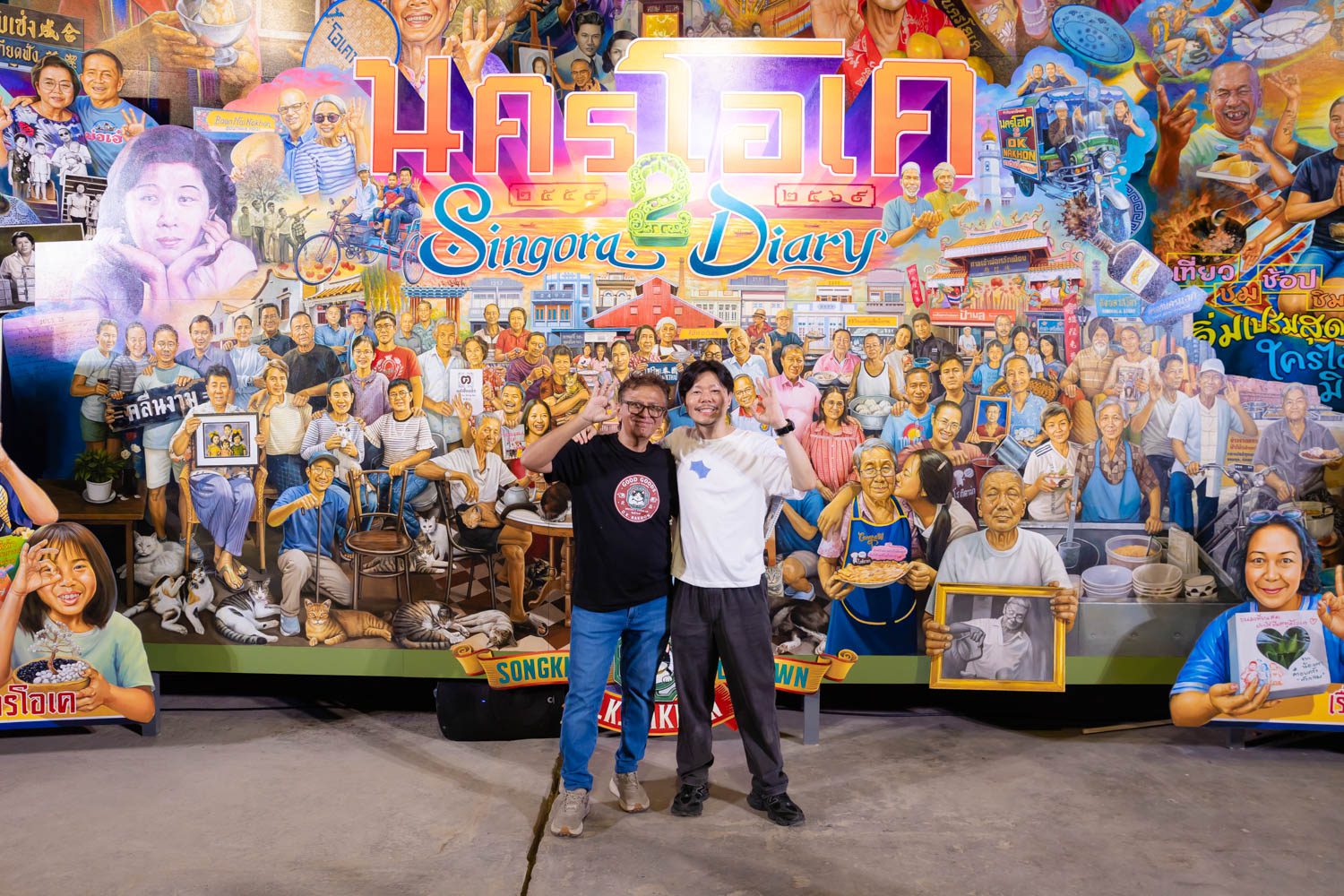
Navin Rawanchaikul (Left) and Aey-Pakorn Rujiravilai (Right)
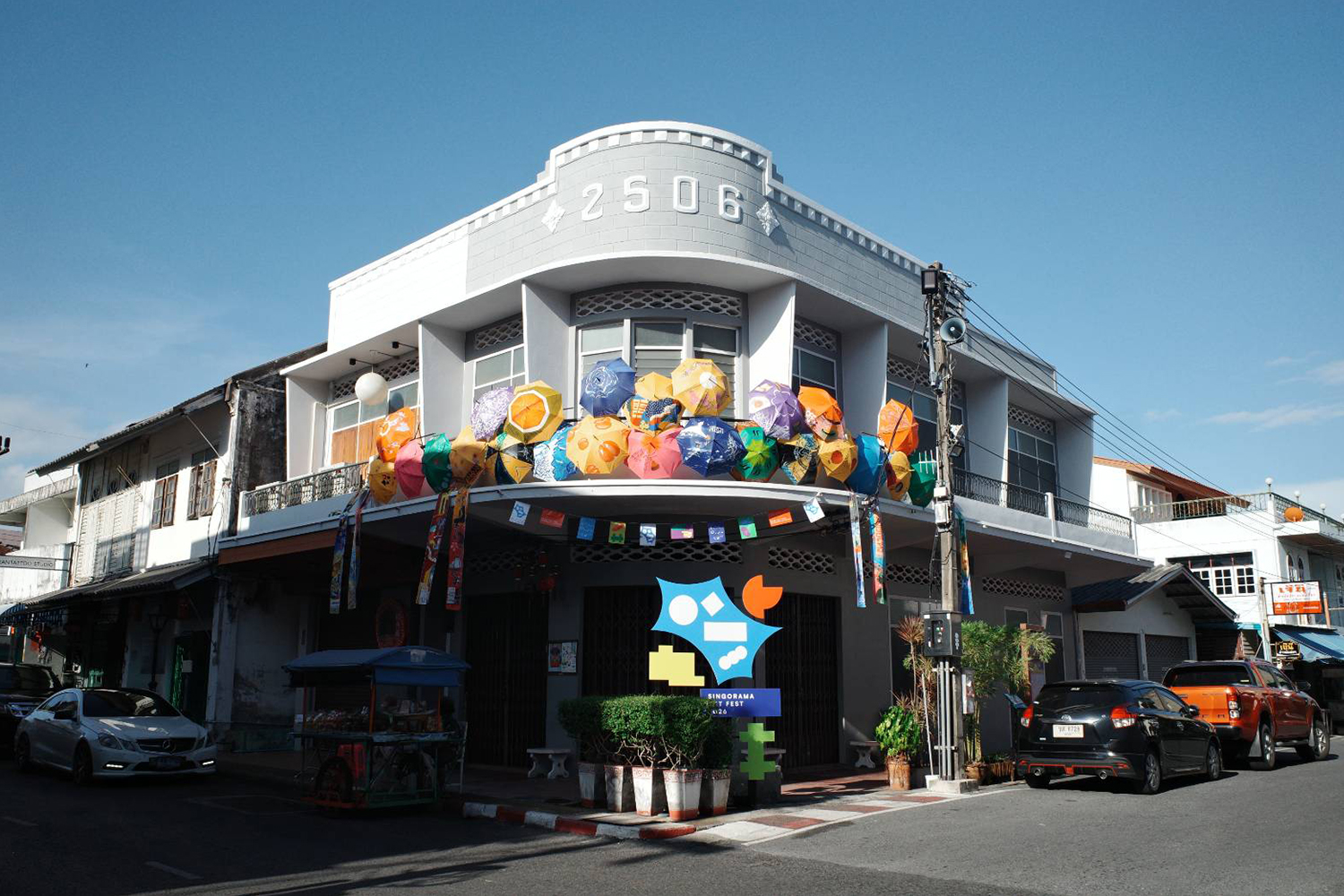
Singorama Art Fest unfolded over three days, from July 24 to 26, 2026, across Songkhla Old Town, along Nakhon Nok, Nakhon Nai, and Nang Ngam Roads. The three narrow streets run parallel to one another, with Songkhla Lake forming a backdrop to Nakhon Nok Road. Returning to Songkhla after ten years away, we found the old town dramatically transformed. What had once been a quiet, modest town with only a handful of long-established businesses has grown into a lively destination, with restaurants, galleries, bookstores, cafés, retail spaces, and even creative community hubs established by a younger generation. Visitor numbers have grown as well, particularly on weekends, when the three narrow streets fill with traffic and pedestrians find themselves constantly looking over their shoulders.
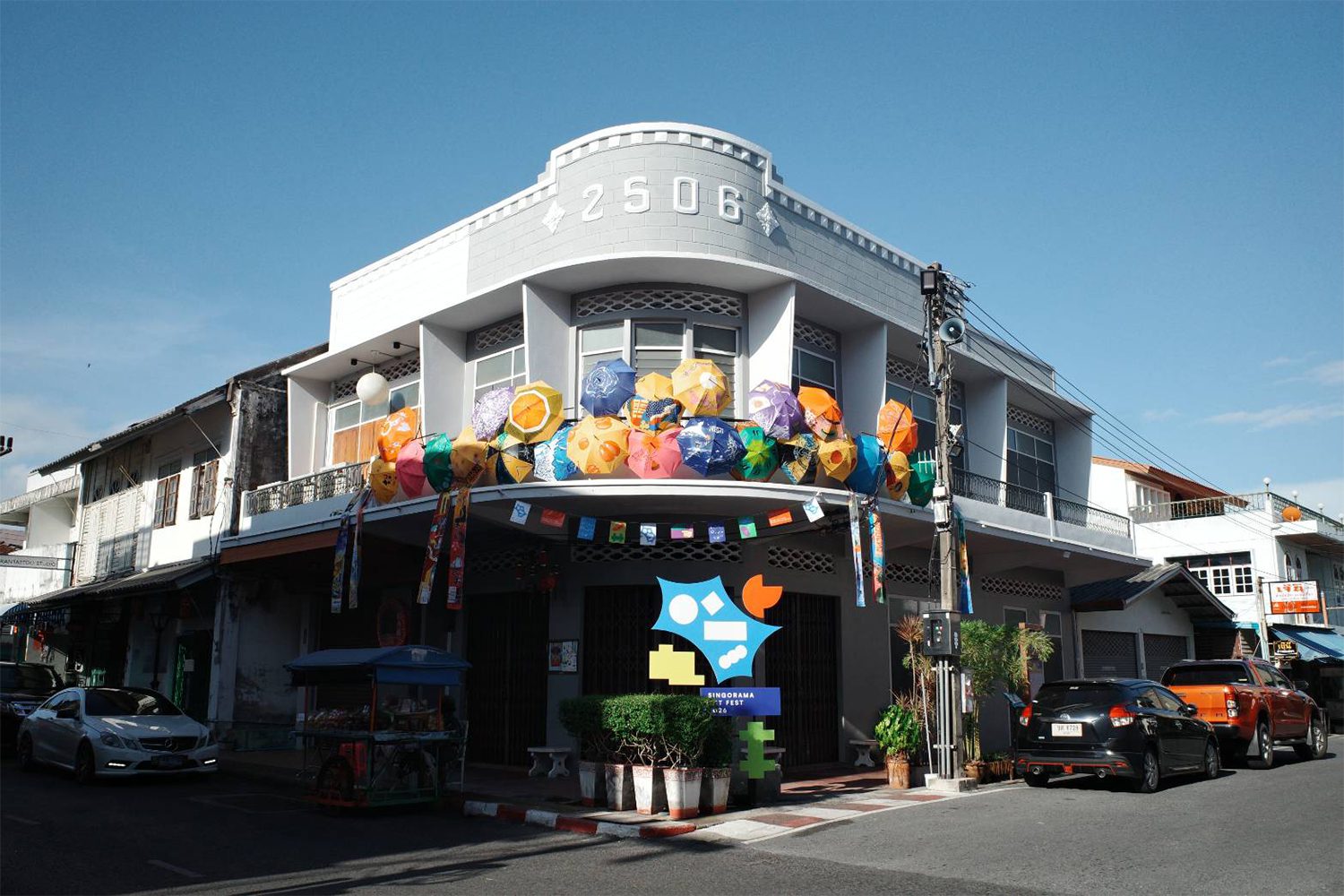 Photo: Kita Thapanaphannitikul
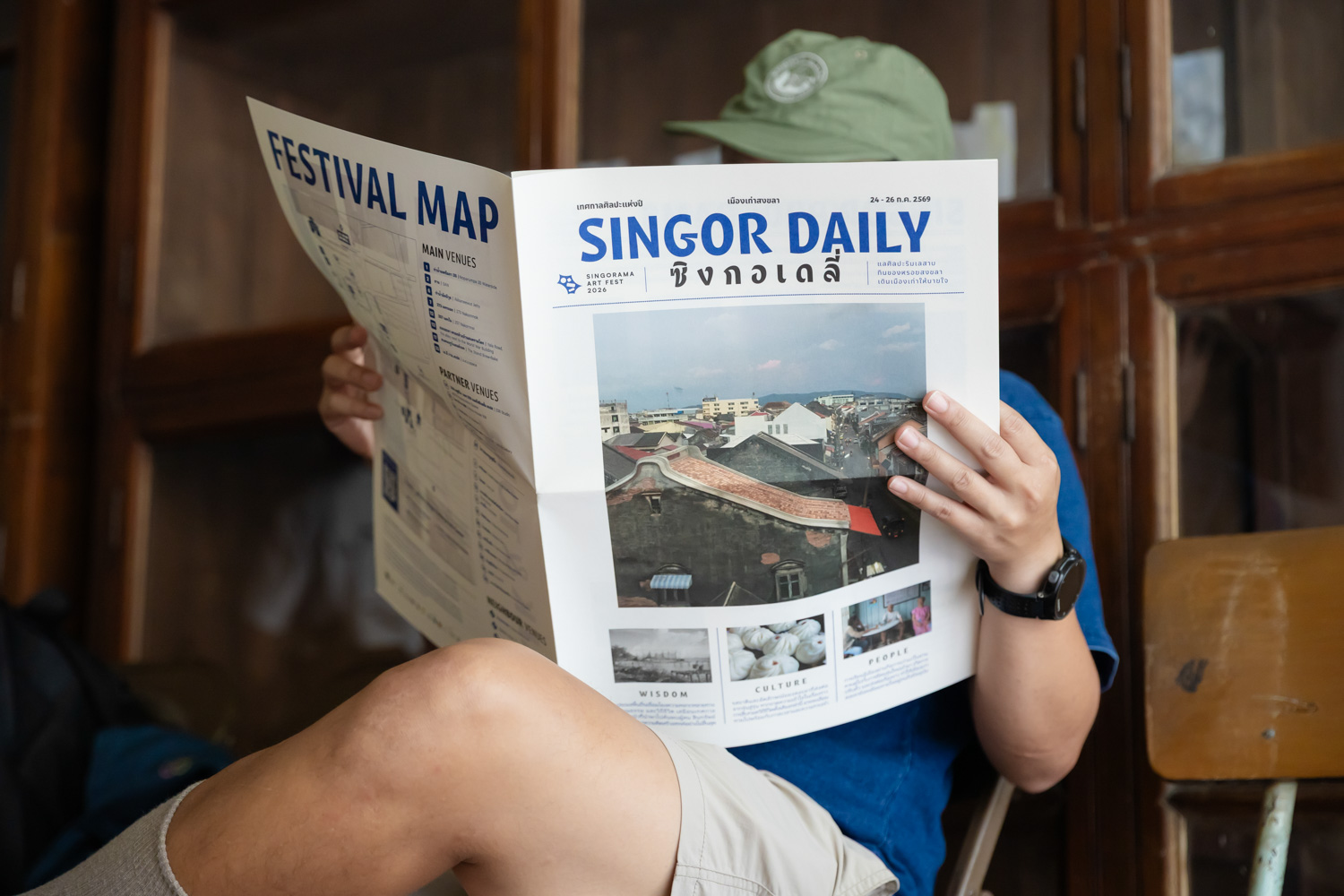
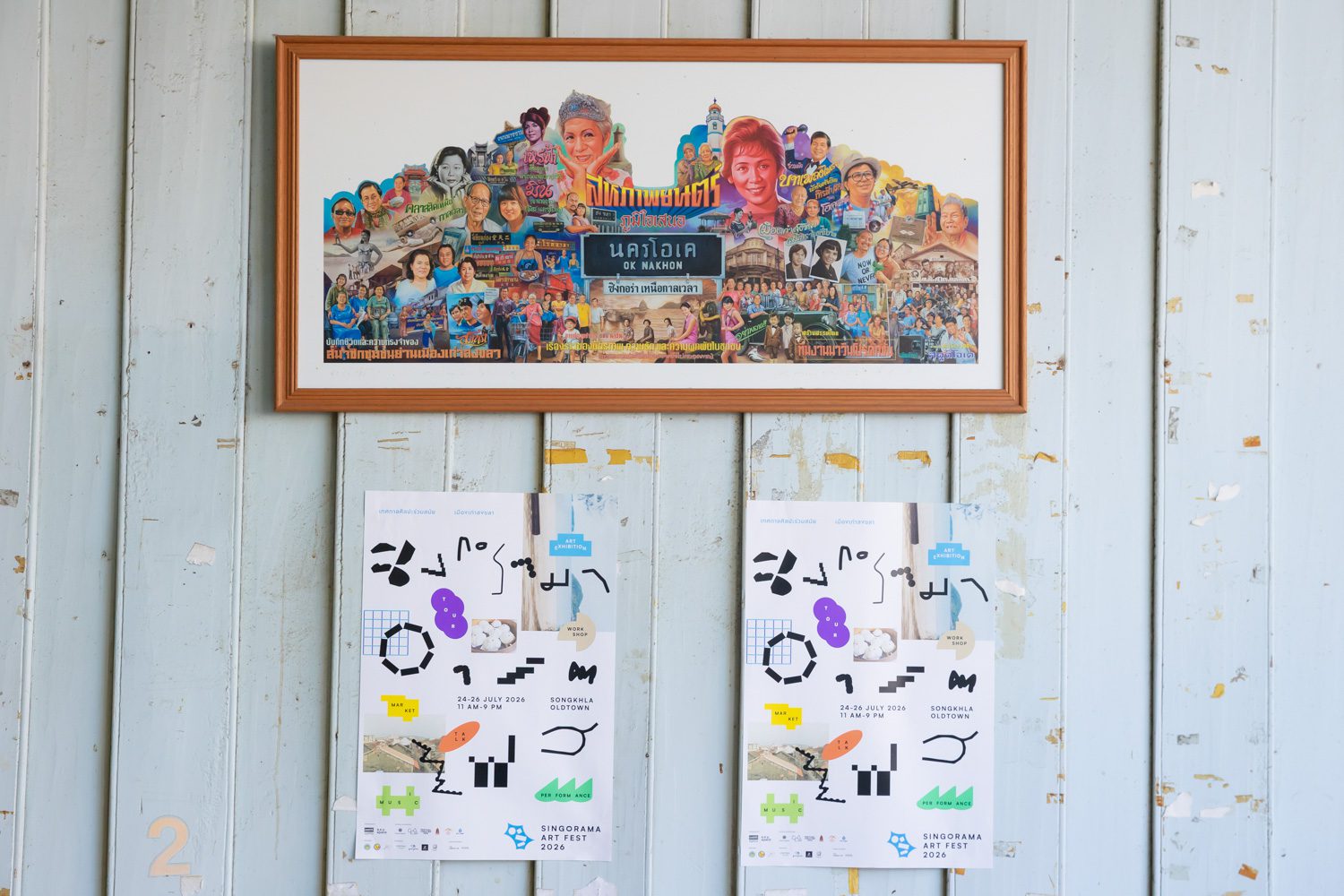
Yet amid the proliferation of new cafés and storefronts, the same old kanom karoji cart is still there, as is the elderly woman selling her thong ek sweets. Many other older establishments continue to keep their doors open to visitors. And against a backdrop of construction noise throughout the neighborhood, as old buildings are renovated into new commercial spaces that have yet to open, strains of Nora music can still be heard drifting through the streets. It is a trace of traditional culture that has never quite faded from Songkhla, despite the extent of the city’s transformation.
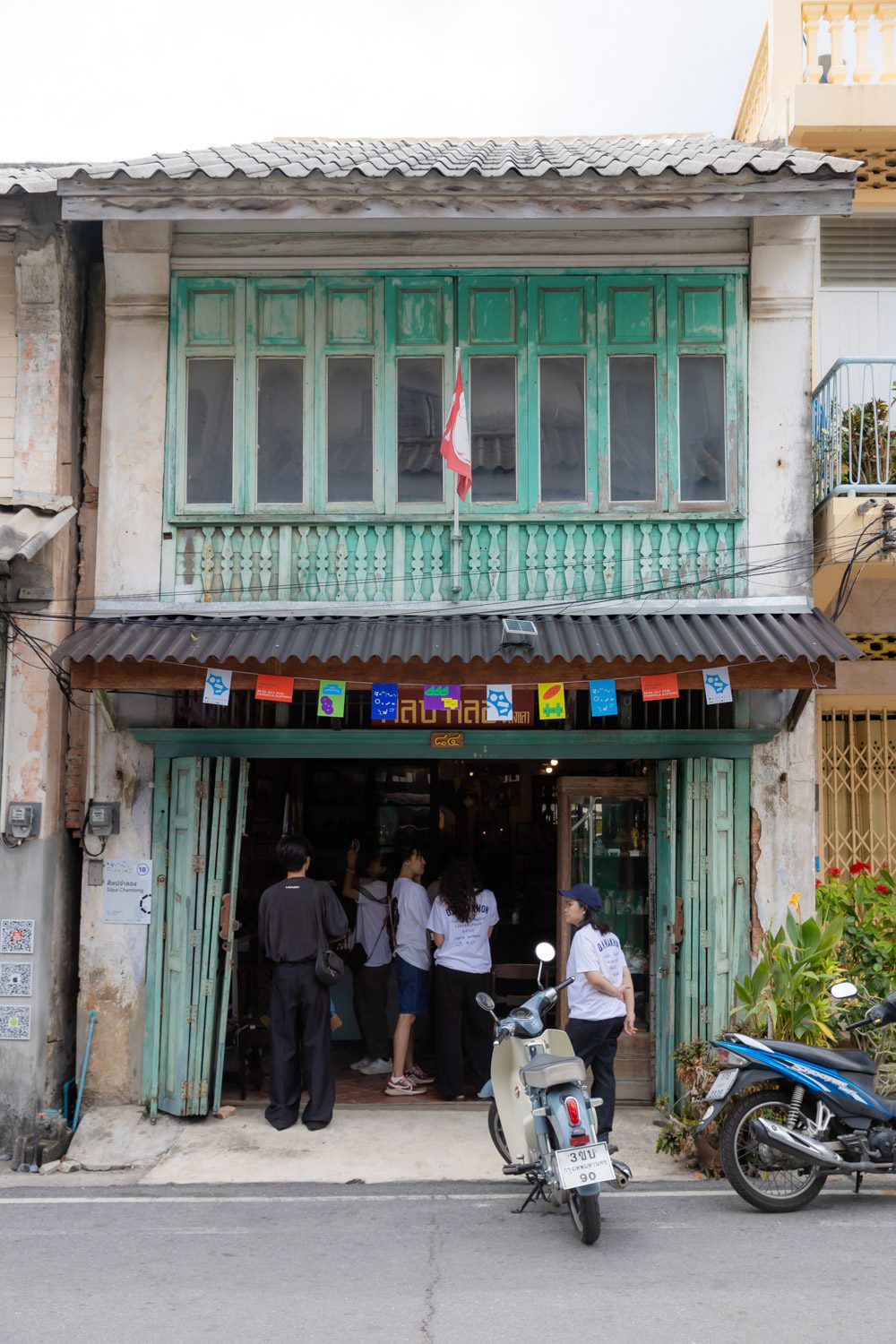
‘Many of the younger generation came back home during COVID.’ Pakorn, who moved back to Songkhla more than a decade ago and has since played an active role in shaping the old town’s creative scene, traces the beginnings of the changes that have taken place there over the years. It is perhaps only natural that a younger generation, shaped by a changing world and different ways of living, should gravitate toward careers in the creative industries, from running cafés to working as tattoo artists, rather than following their parents into more conventional retail businesses or fishing.
Aey-Pakorn Rujiravilai
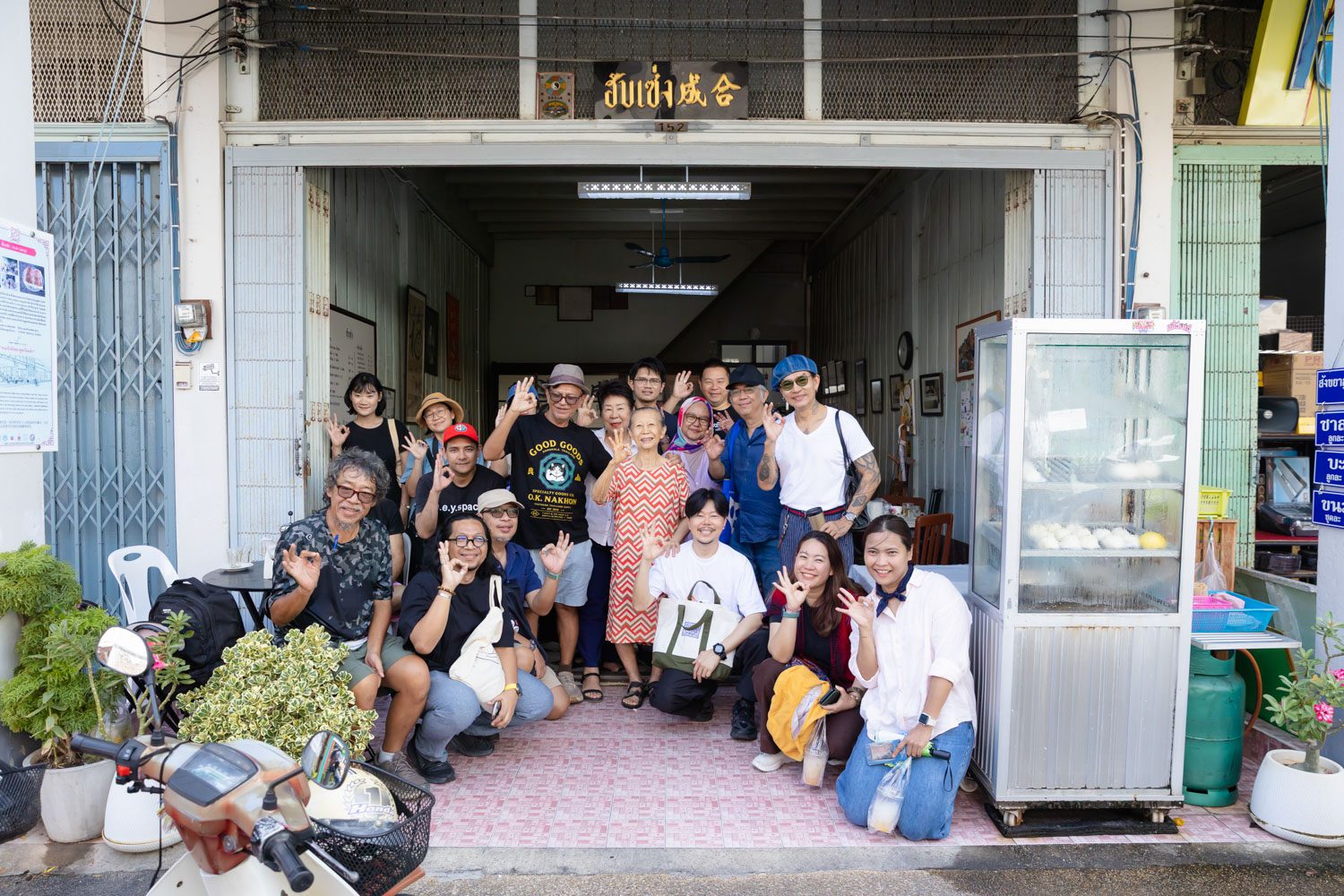
Recognizing that the city already had both the potential and the people needed to support an arts and creative festival, the organizers launched Singorama Art Fest. Artists, designers, and creative entrepreneurs based in Songkhla Old Town were invited to contribute works and activities grounded in their respective practices. Among them was Aekaphong Saransate, director of the documentary Breaking the Cycle (2024), who presented his first art film, Never Fades Away (2026). Photographer Ratnakorn Piyasirisorost, meanwhile, continues to run his family’s ‘Song-Saen’ confectionery shop and has turned its second floor into an exhibition space. Boran Tattoo Studio also opened its doors, giving visitors a closer look at the artists’ practices and working processes.
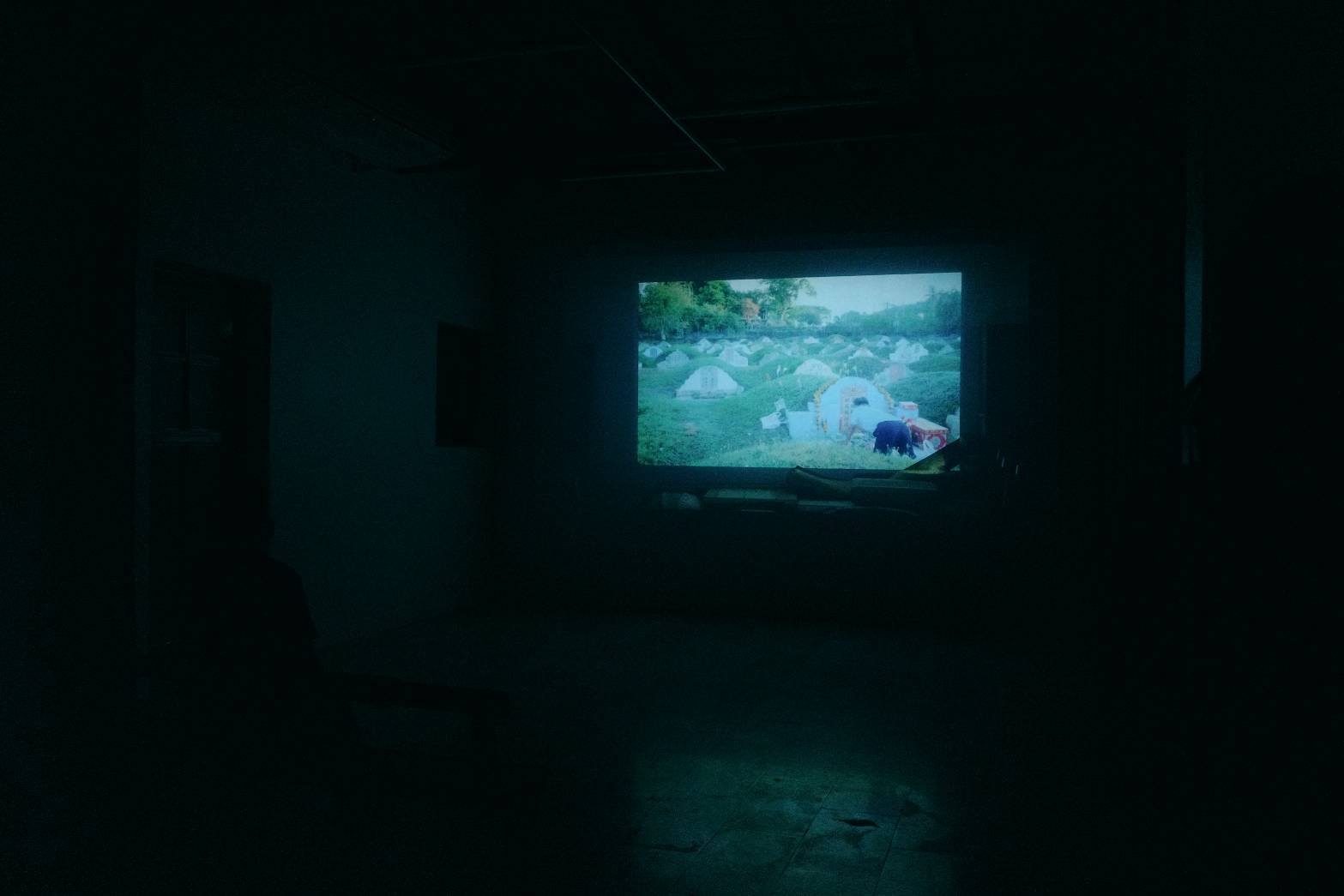
‘Never Fades Away’ (2026) | Photo: Kita Thapanaphannitikul
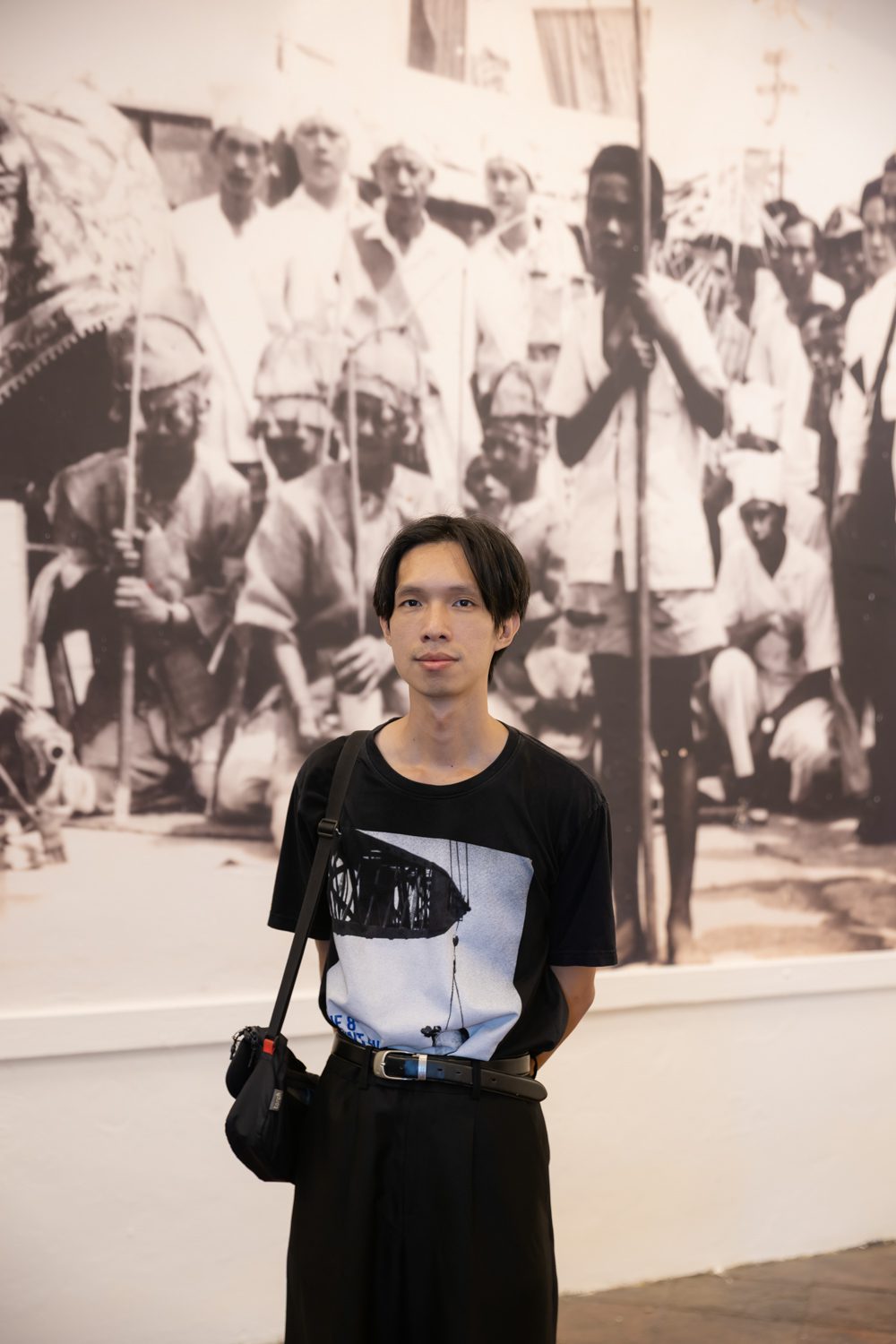
Aekaphong Saransate
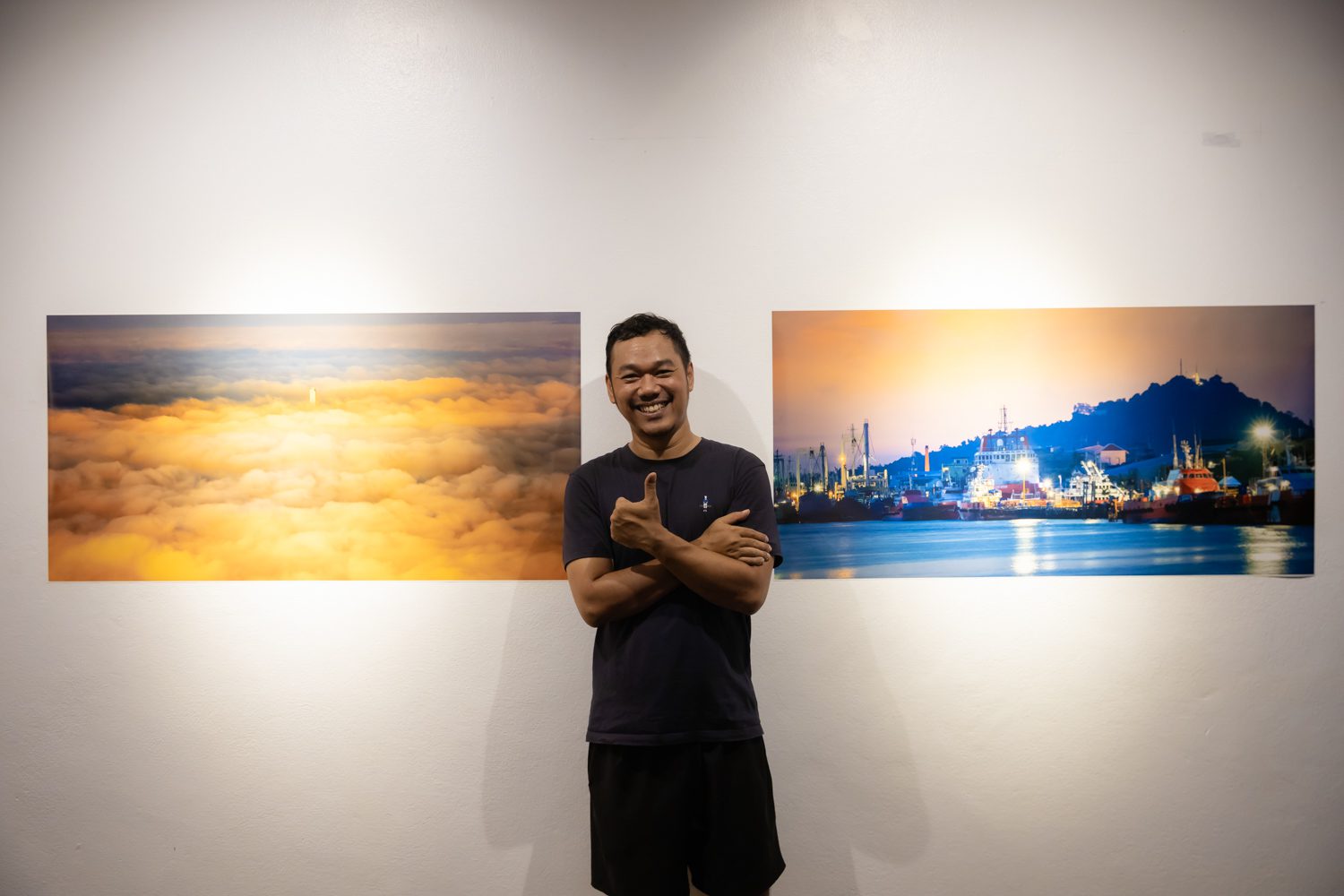 Ratnakorn Piyasirisorost
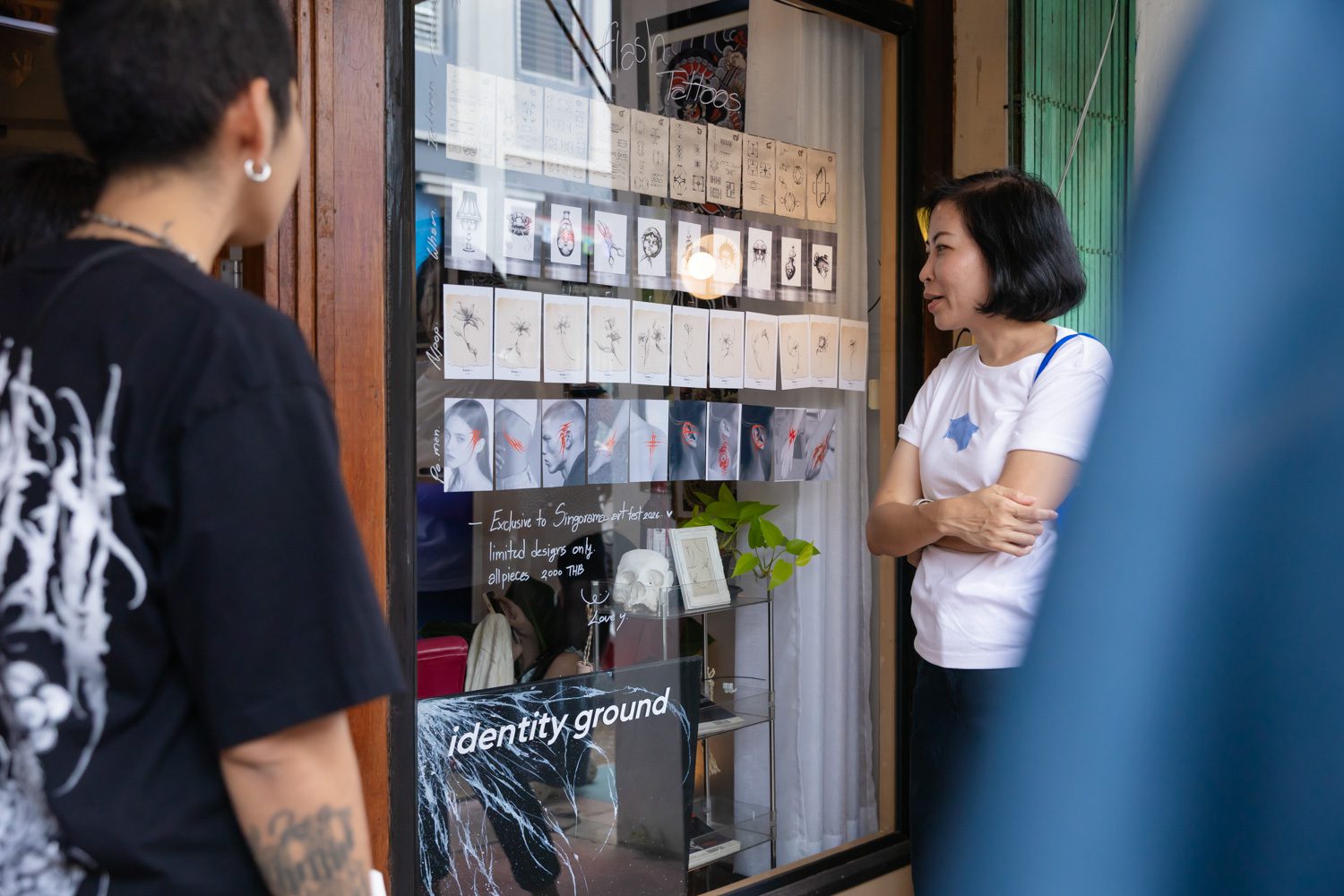
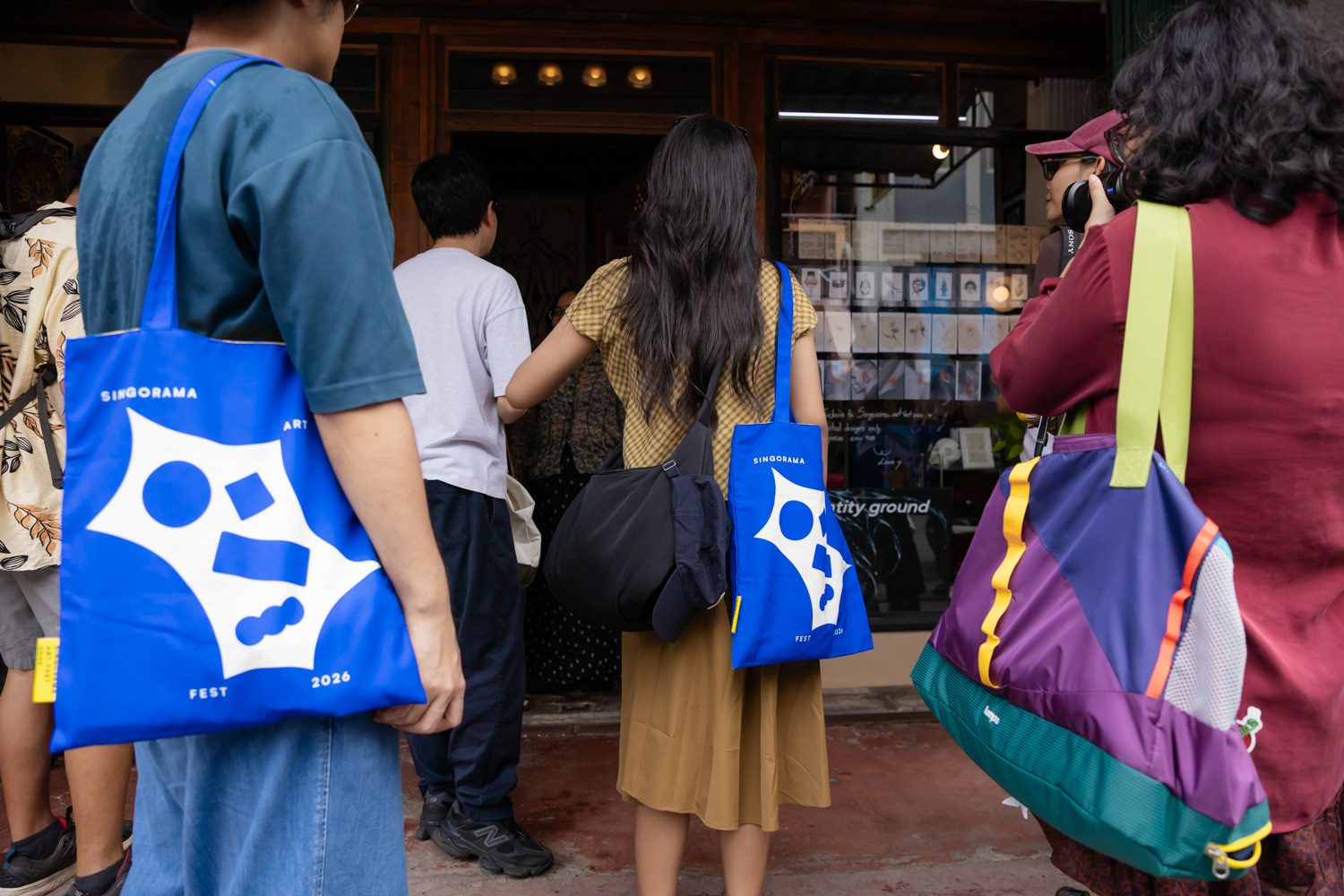
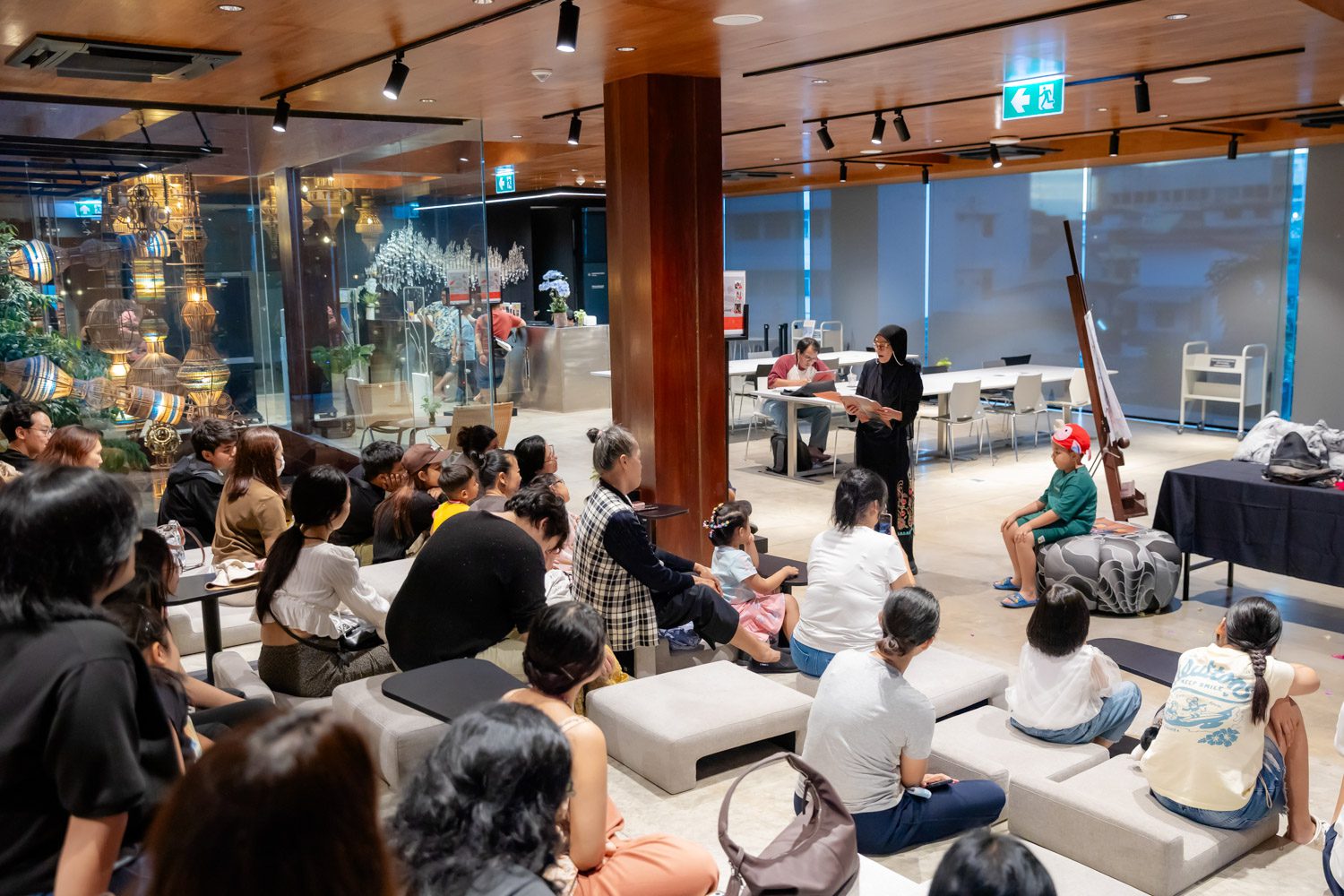
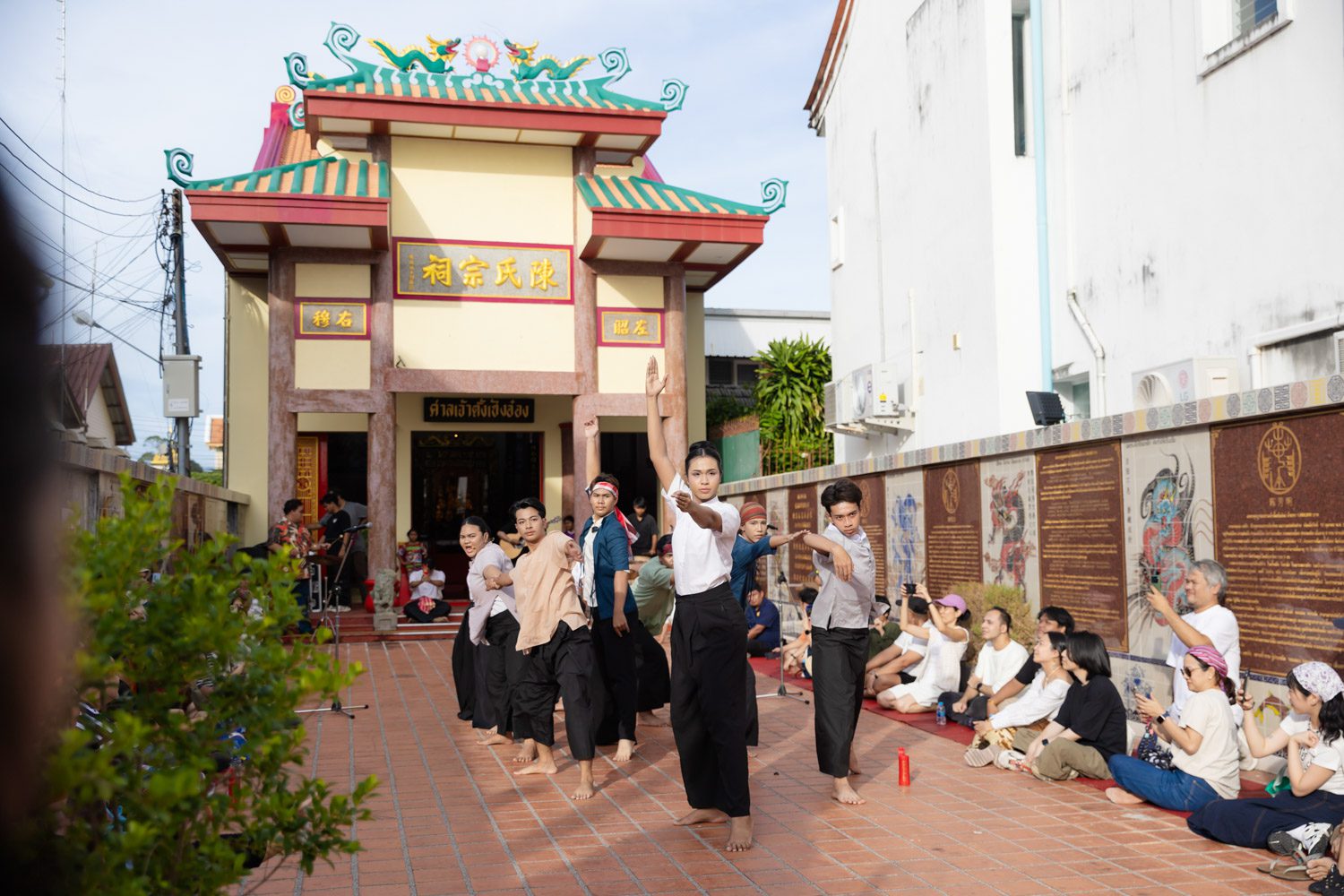
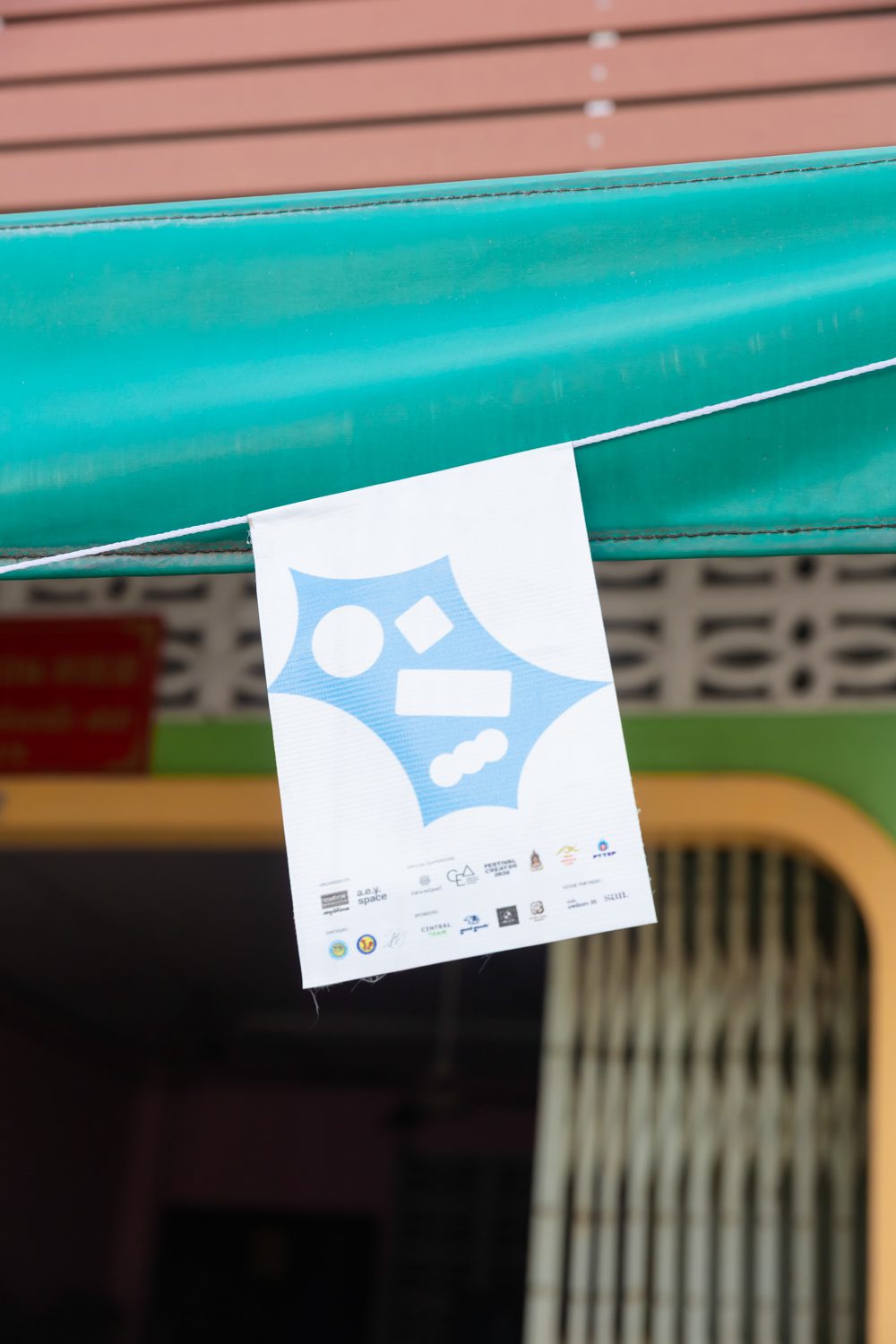
The program extended beyond the visual arts to other creative disciplines, in keeping with the broader framework the organizers had set out. That structure is reflected in the festival logo, which takes the form of a fishing net containing four distinct shapes, each representing a different artistic field. Theater was therefore also brought into the program, with performances including a Dan Sai–Songkhla community theater project by Cherry Theatre. Actor and theater director Farida Jiraphan, whose body of work spans numerous productions, also adapted Chao Ngin, a story by Songkhla-born SEA Write Award winner Binlah Sonkalagiri, into a storytelling performance accompanied by hand puppets.
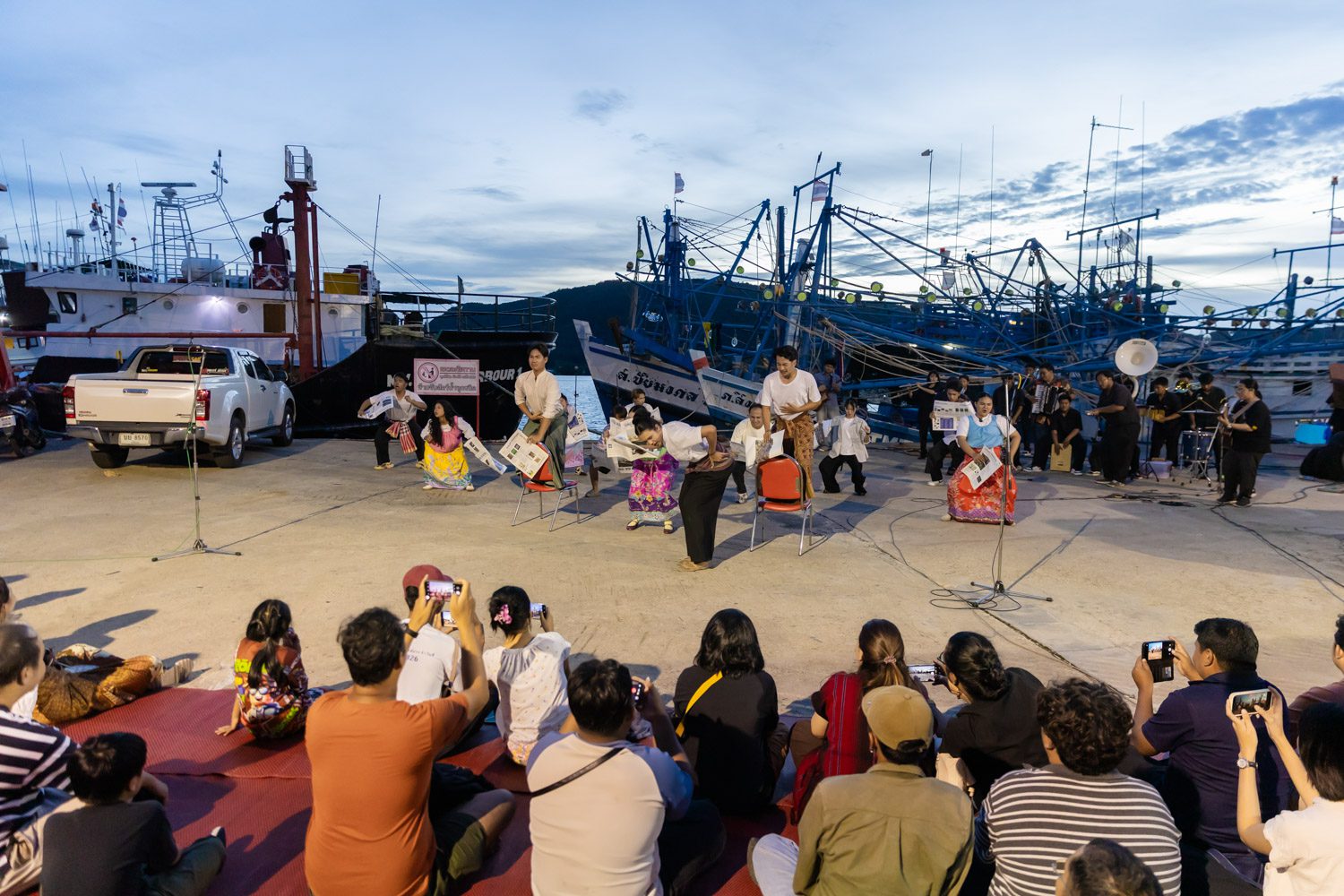
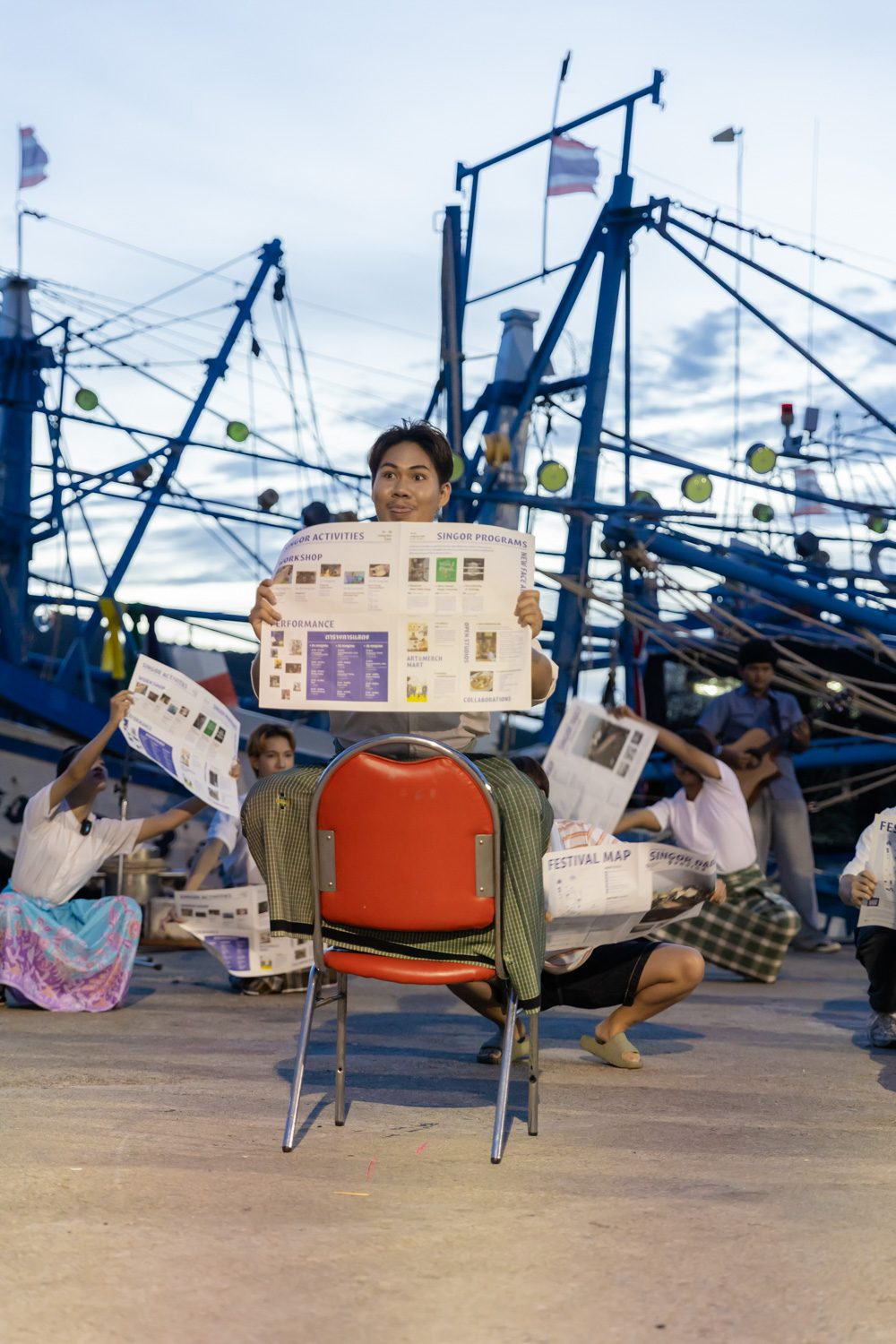
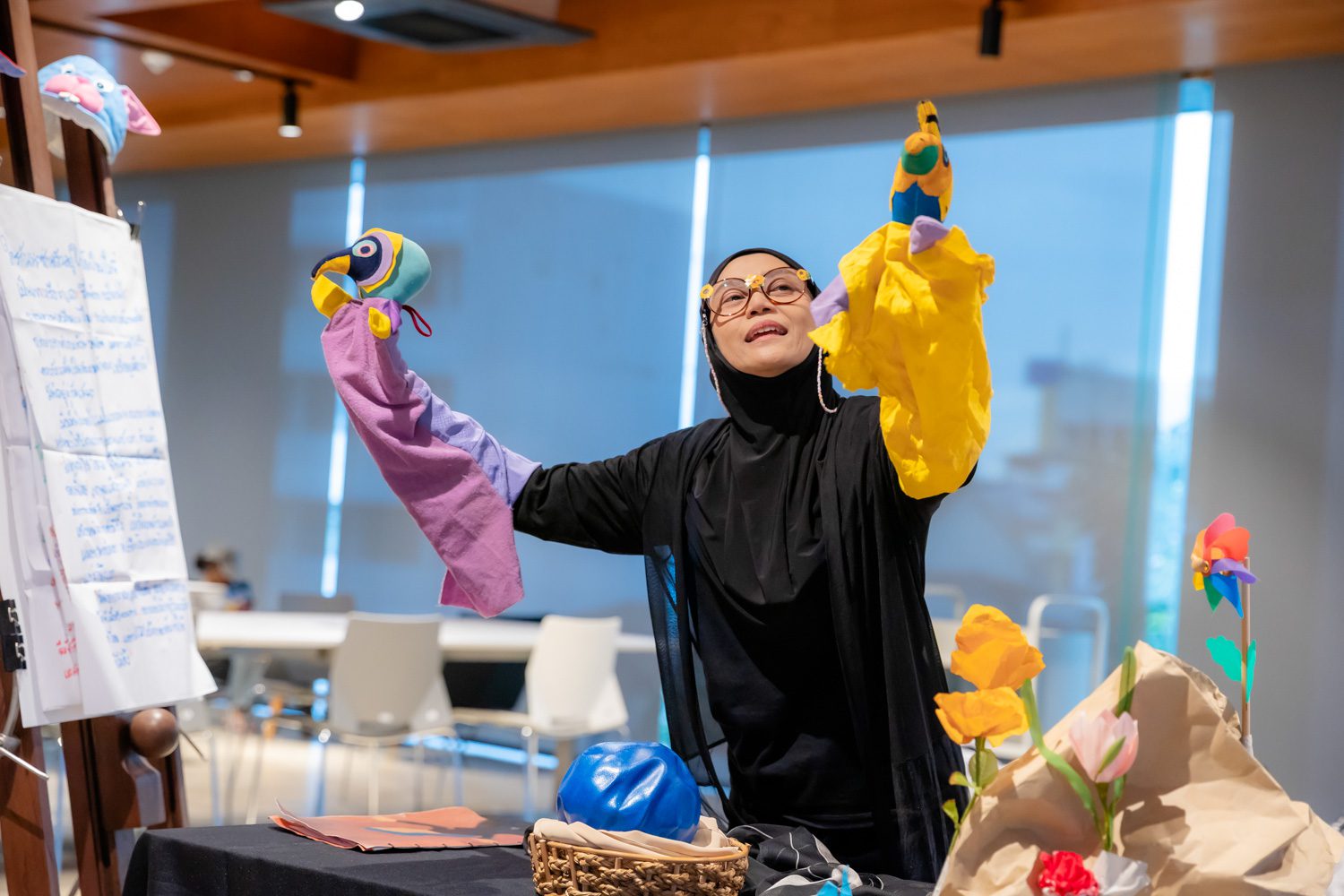 Farida Jiraphan
A number of local shops, restaurants, bars, and cafés joined in by creating special menus available only during the festival’s three-day run. Paradis Pizzeria, for example, served pasta with khai khrop and Yindee Songkhla chili sauce, as well as a pizza topped with Hat Yai–style fried chicken, while Heart Made offered palm-sugar coffee and a savory pie filled with phak liang, a leafy vegetable closely associated with southern Thai cuisine, and khai khrop, Songkhla-style steamed duck egg yolks.
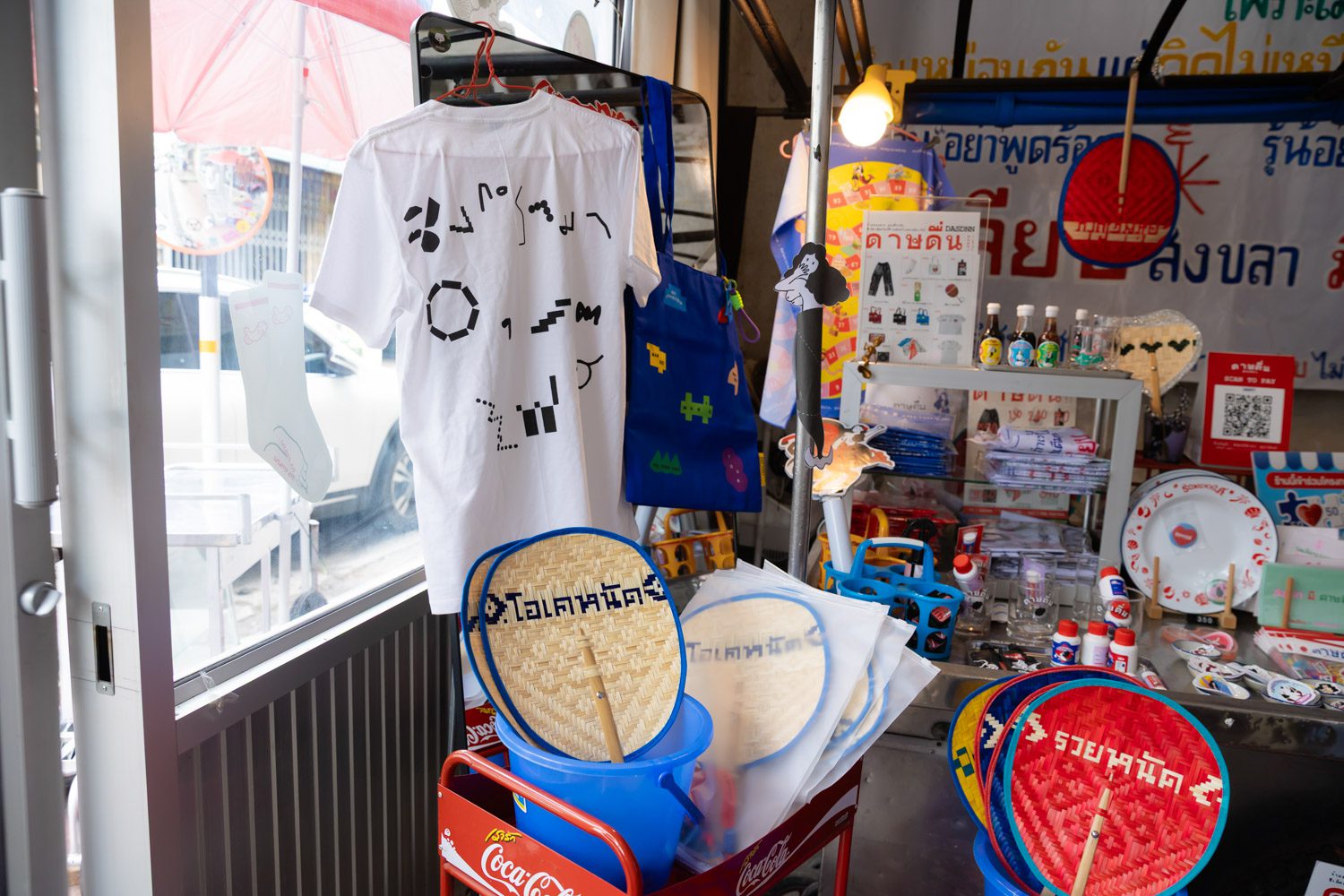
Design shop DASDNN, known for transforming elements of Songkhla culture and its small local idiosyncrasies into contemporary products, also created a special edition for the occasion. One of its earlier designs was a scarf patterned with the distinctive handwriting of the abbot of Wat Liap, echoing the lettering used on notices posted outside the temple. For the festival, the brand revisited its signature ‘Ruai Nat’ woven bamboo fan, whose wording combines ruai (‘rich’) with nat, a Southern Thai intensifier meaning ‘very.’ The original fan, its message effectively wishing its holder to be ‘very rich,’ gained wider attention after BLACKPINK’s Lisa was seen holding one. For this special edition, DASDNN replaced ruai with ‘OK,’ turning the phrase into the playfully emphatic ‘super OK’ while simultaneously referencing Navin Rawanchaikul’s OK Nakhon 2: Singora Diary (2026).
“People are the key factor in turning a city into an art city or a creative city,” Pakorn observes. As the festival’s organizer, he likens his role to casting a net: searching out compelling individuals across the city, drawing them together, and bringing their work into view.
“Navin’s work essentially takes on the main task of telling the story of the city. Organizing the festival alongside it helps fill in the other dimensions, showing why we believe Songkhla has the potential to become an art or creative city.”
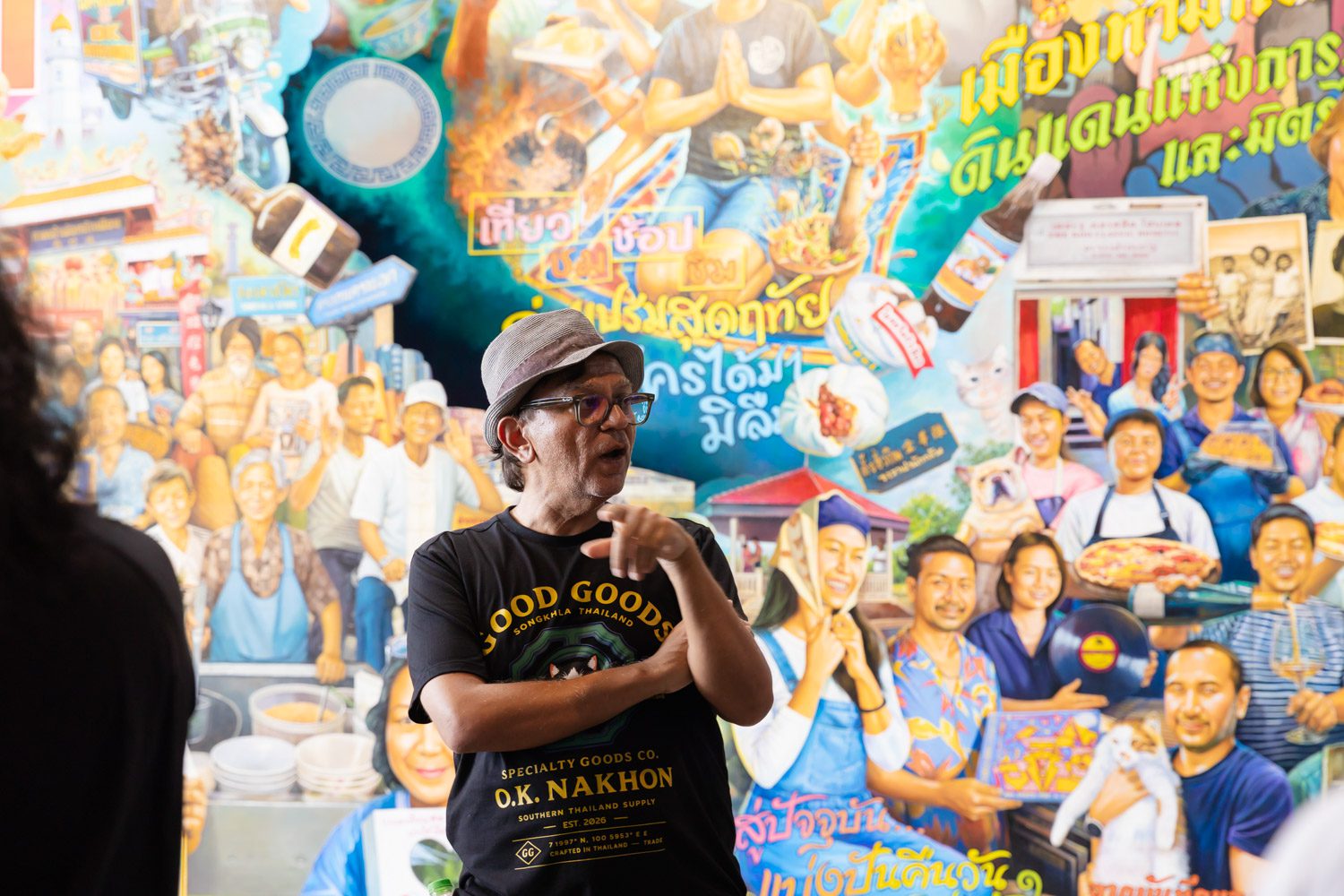
Navin Rawanchaikul
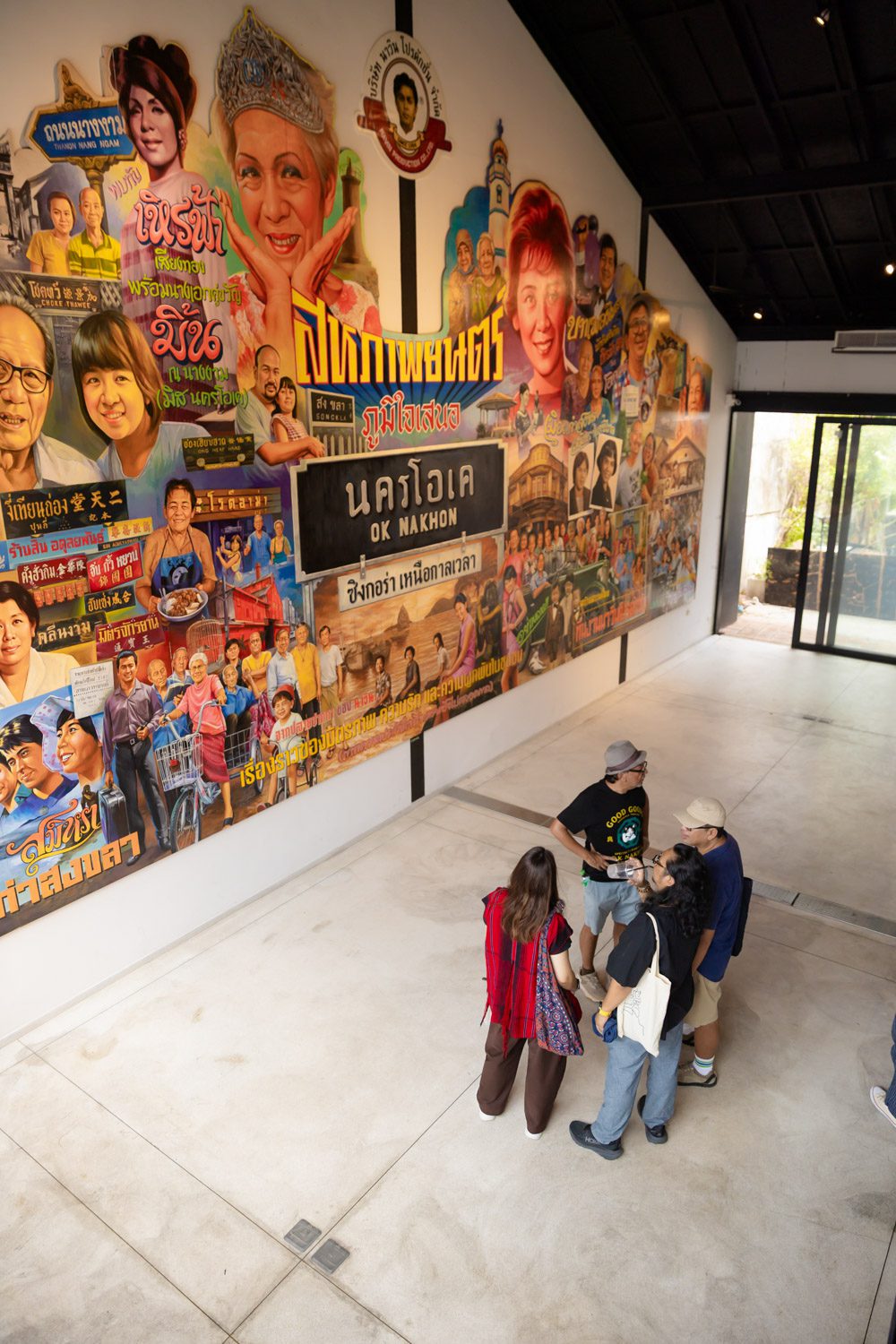
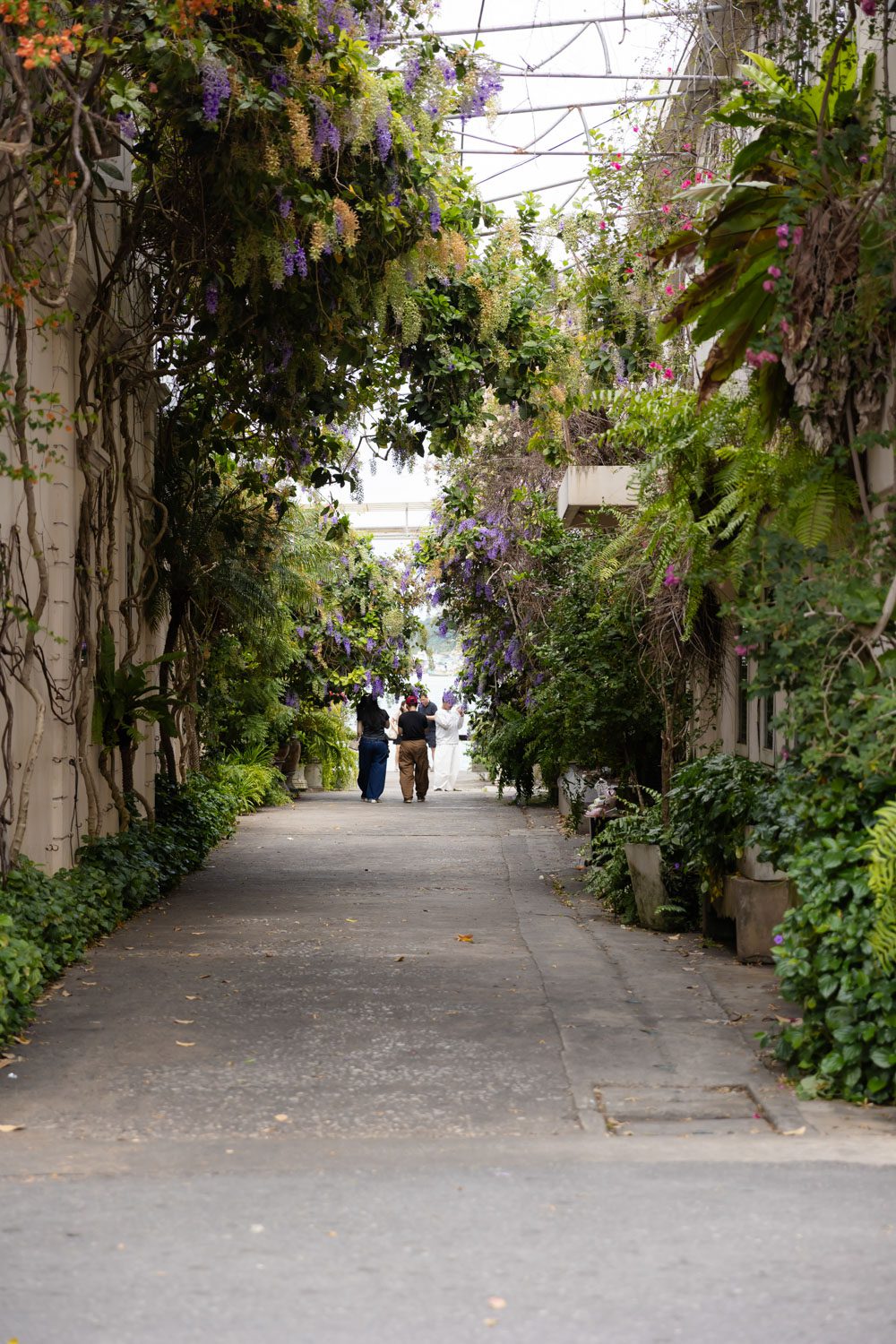
Yet people are only part of the equation. Pakorn also points to the physical character of Songkhla Old Town, with its historic architecture and setting along Songkhla Lake, as another factor that makes it possible to encounter art, the city, and nature all on foot, in a single experience.
The old-town character Pakorn describes can also be read in another way: Songkhla is a city rich in history and culture. At Singorama Art Fest, the net was cast not only to introduce a younger generation of artists and creative practitioners, but also to draw in a number of senior artists and other prominent figures from the city’s cultural landscape. Among them was National Artist and Nora master Thammanit Nikomrat, who performed at the festival’s opening and welcomed visitors into Nora Baan 168, a house more than 170 years old that now serves as a place for passing on the art of Nora to new generations. Portrait artist Saenee Kuanoon, meanwhile, opened his studio to visitors, sharing stories about the craft of hand-painted movie billboards from an earlier era.
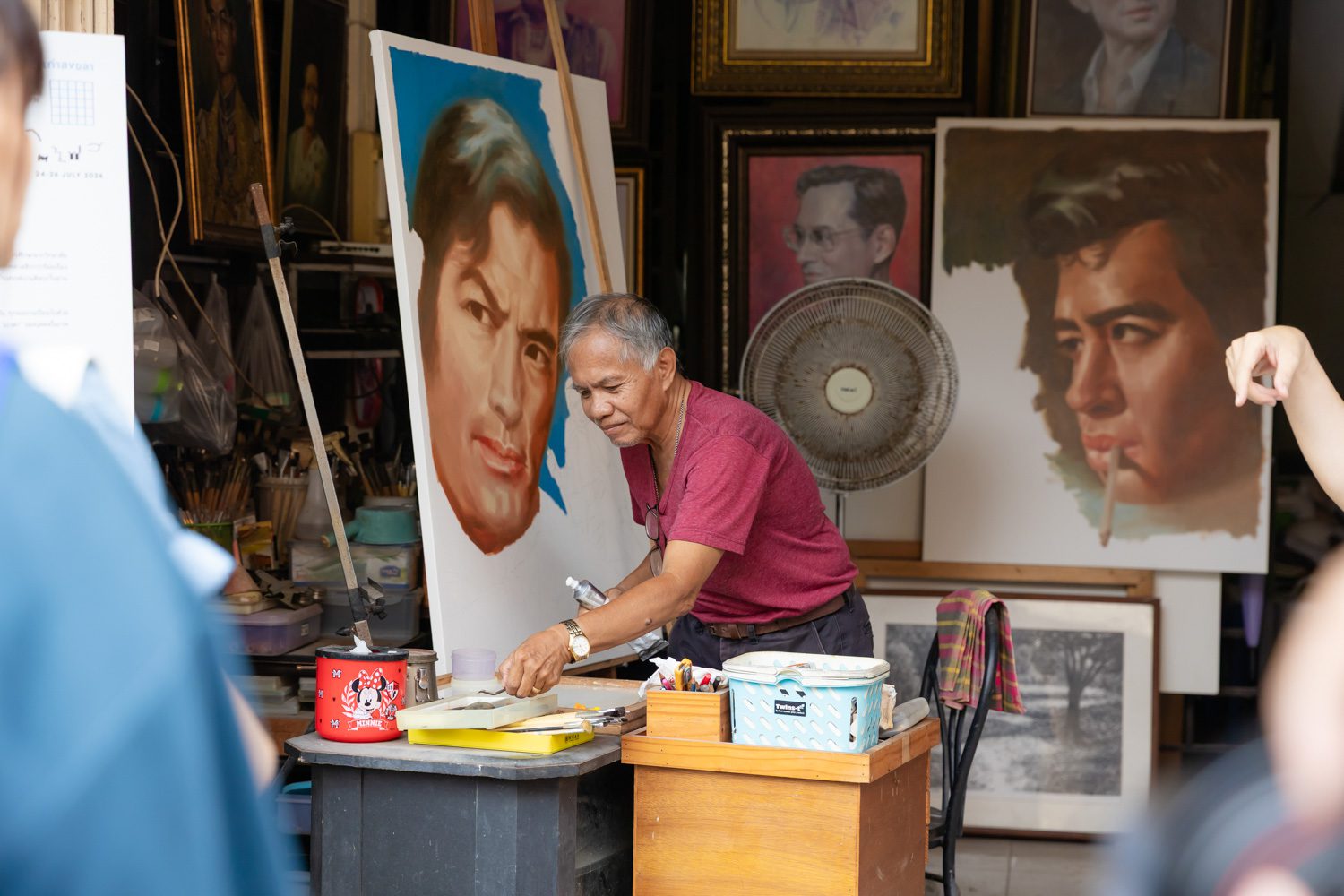
Senee Kuenhun
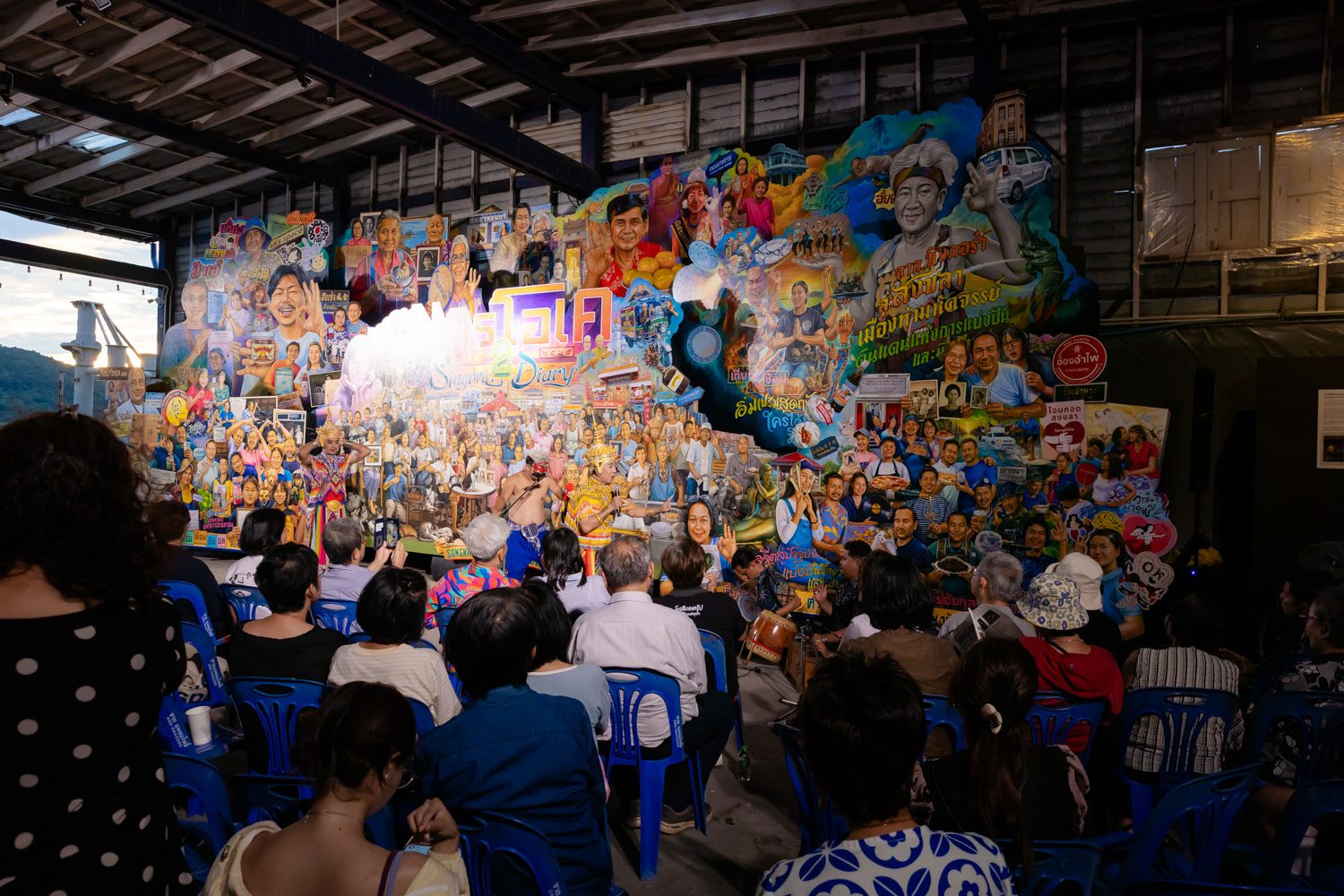
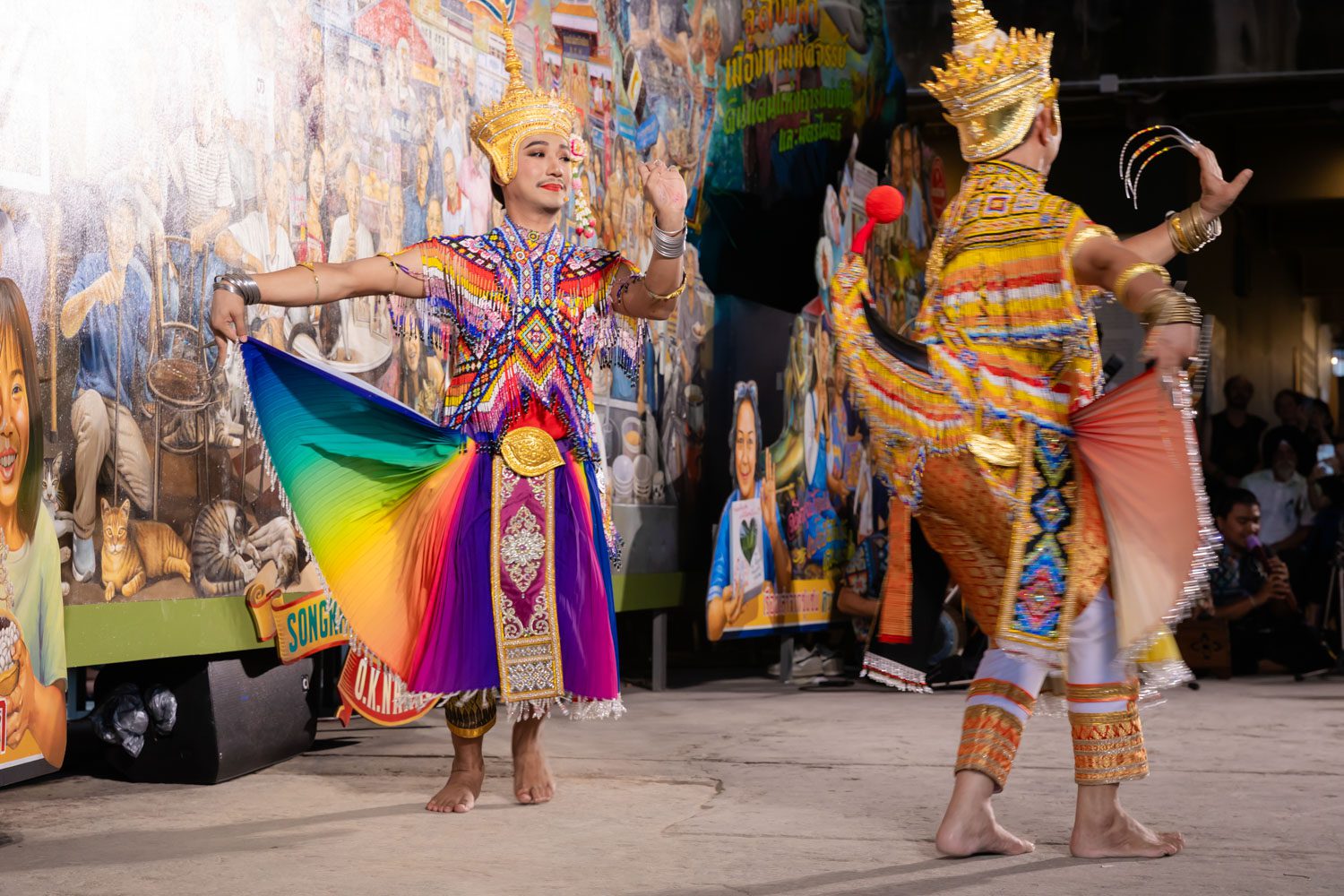
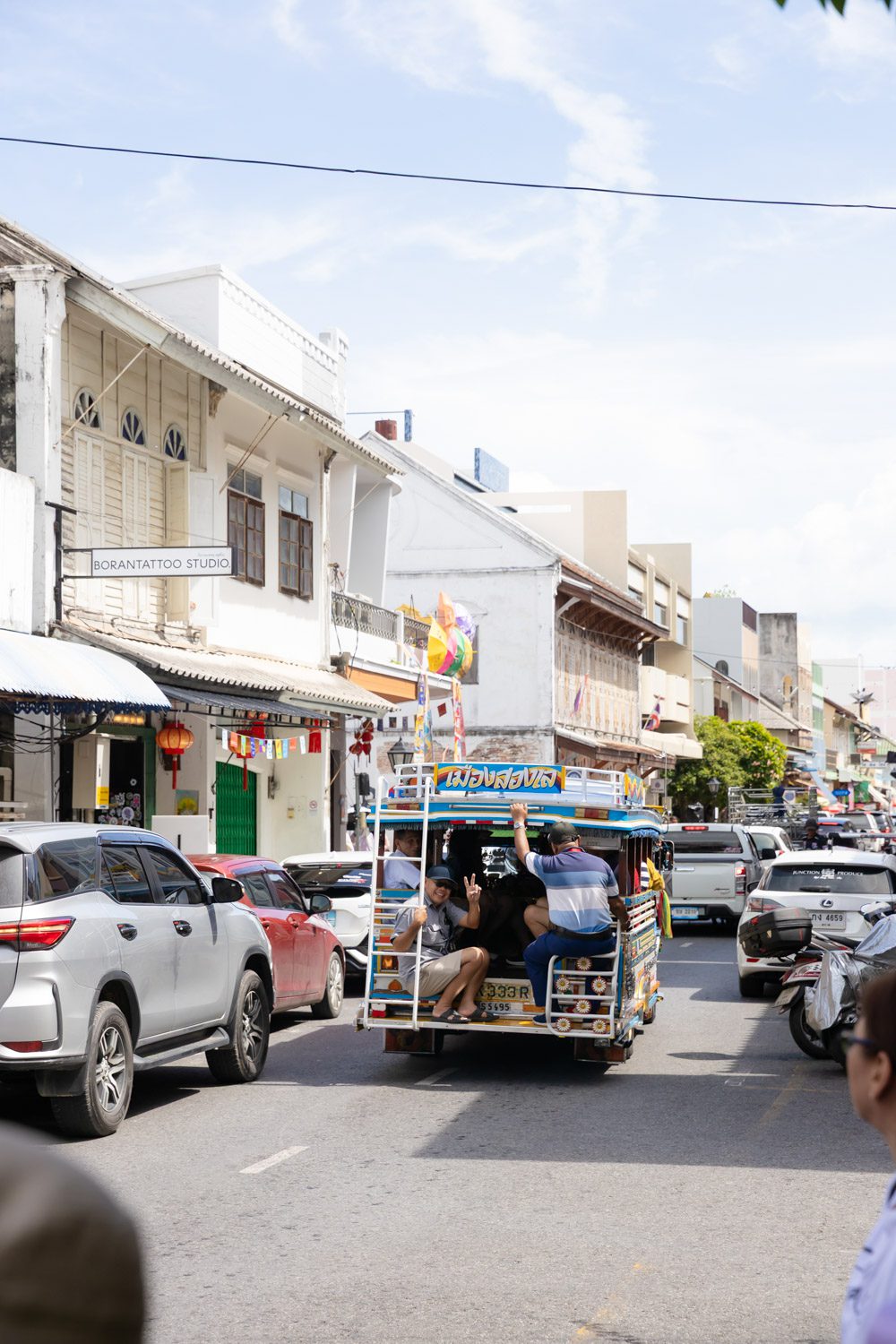
One of the festival’s more charming touches was its roving publicity vehicle, which made its way around town to promote Singorama Art Fest. The man behind it was Uncle Banthoeng, a local community volunteer who ordinarily rides his motorized three-wheeler through the streets, broadcasting news and announcements to residents.
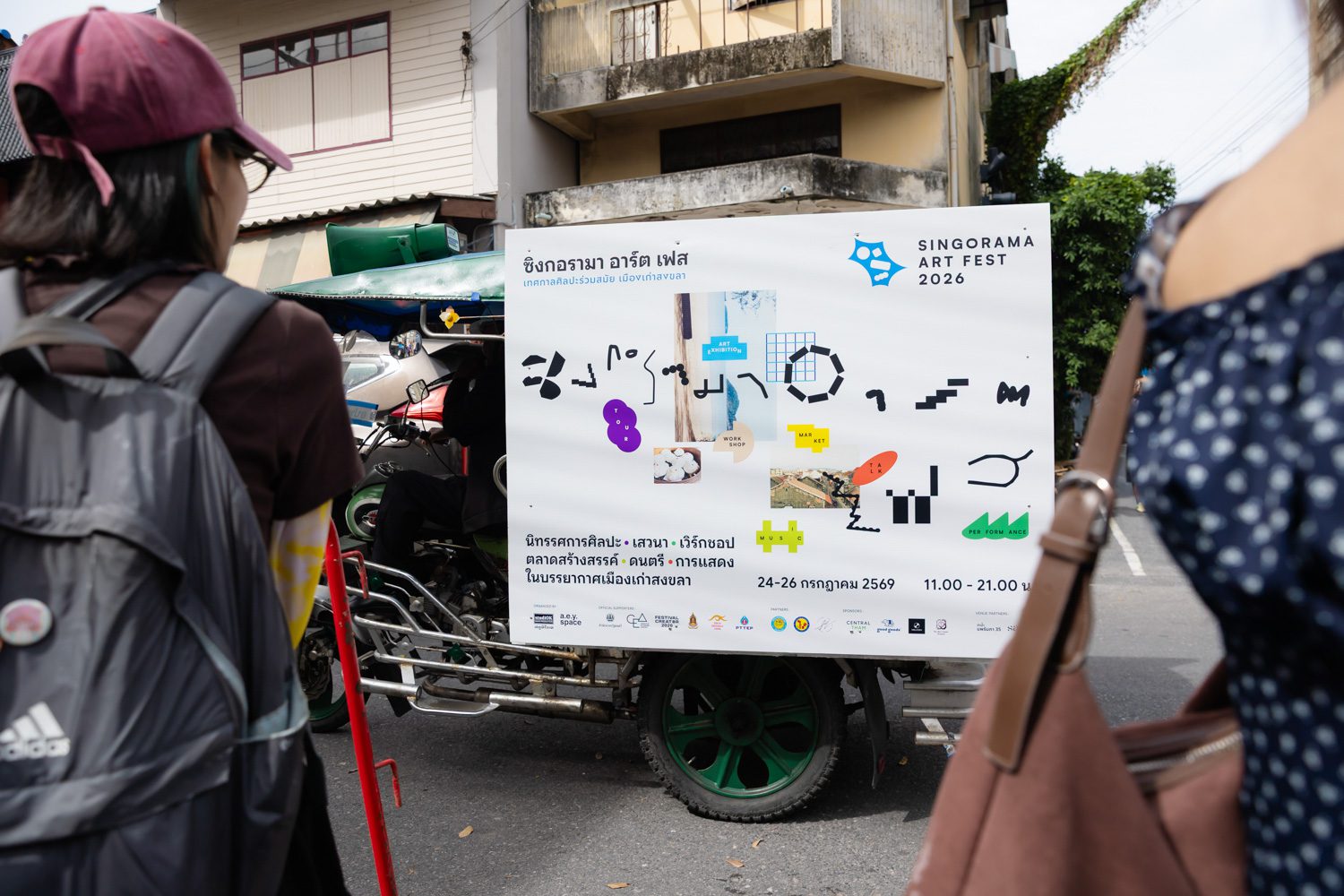
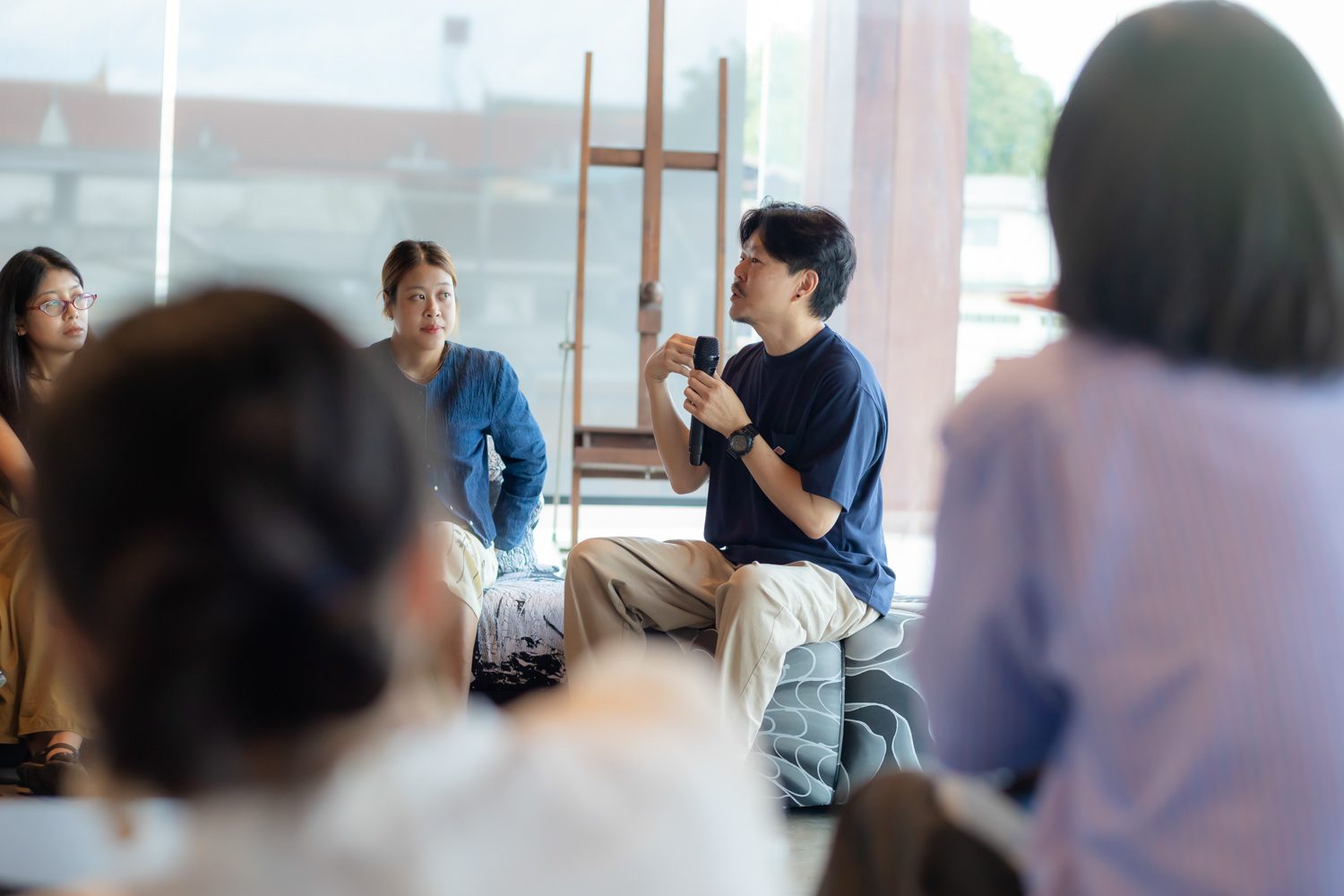
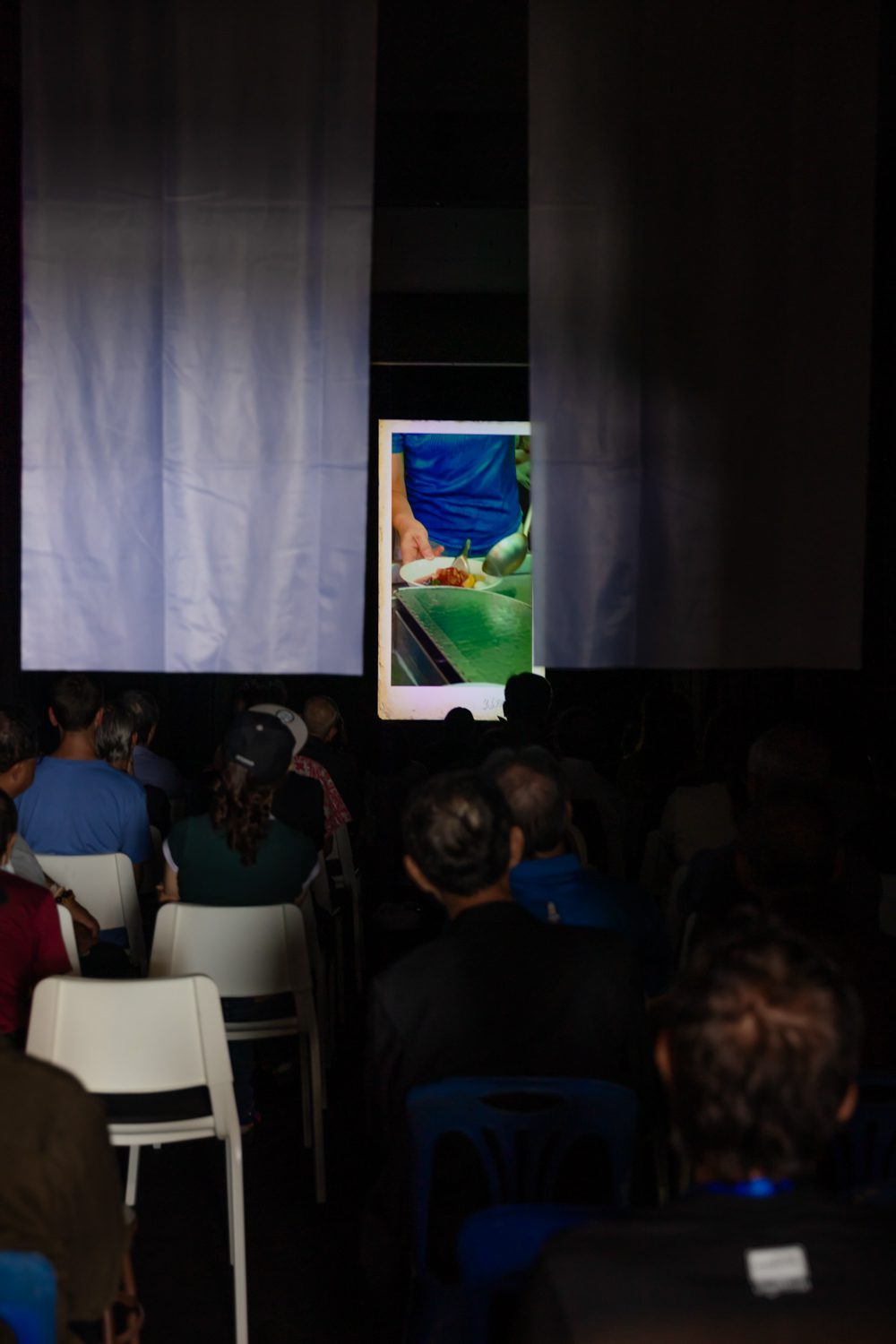
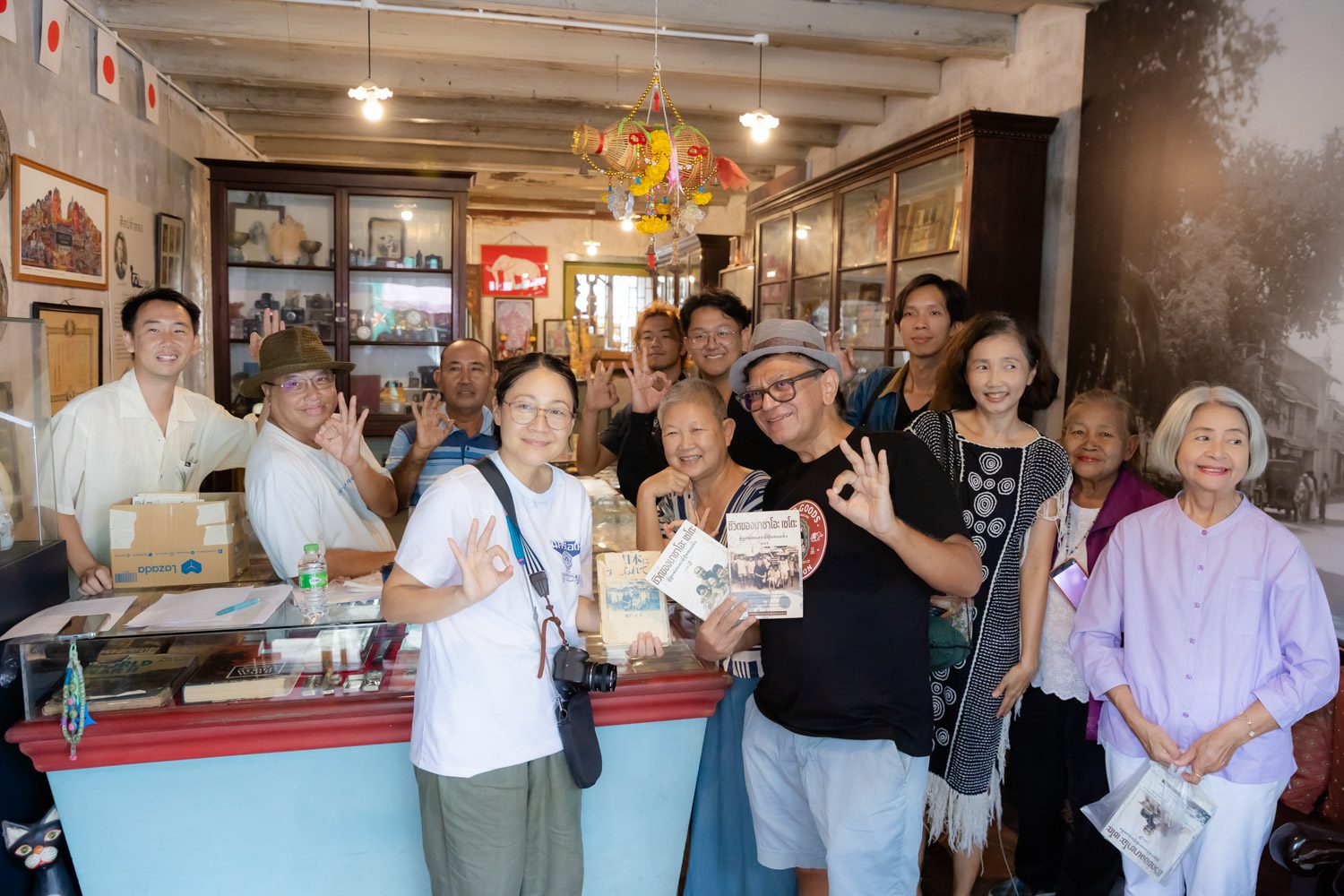
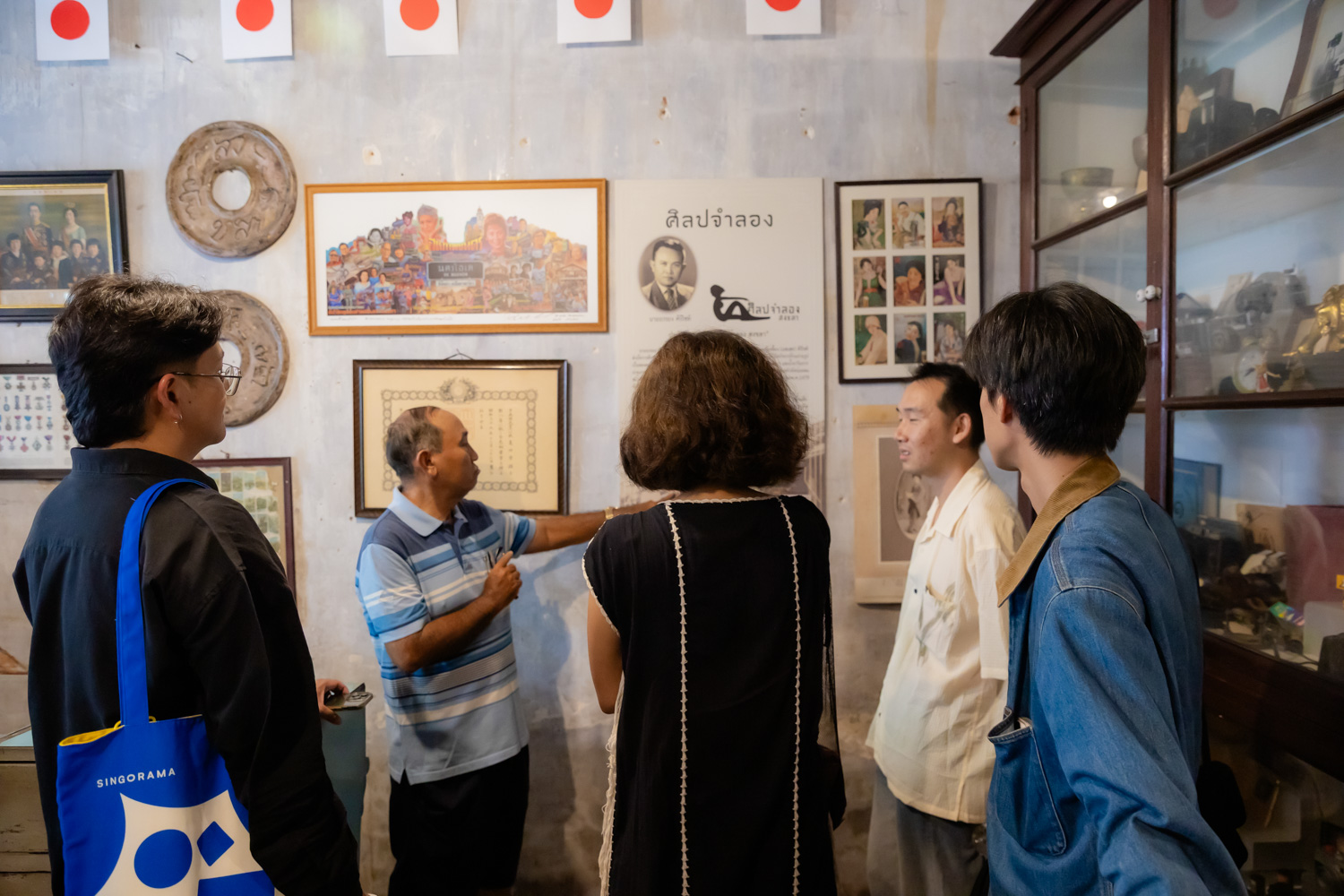
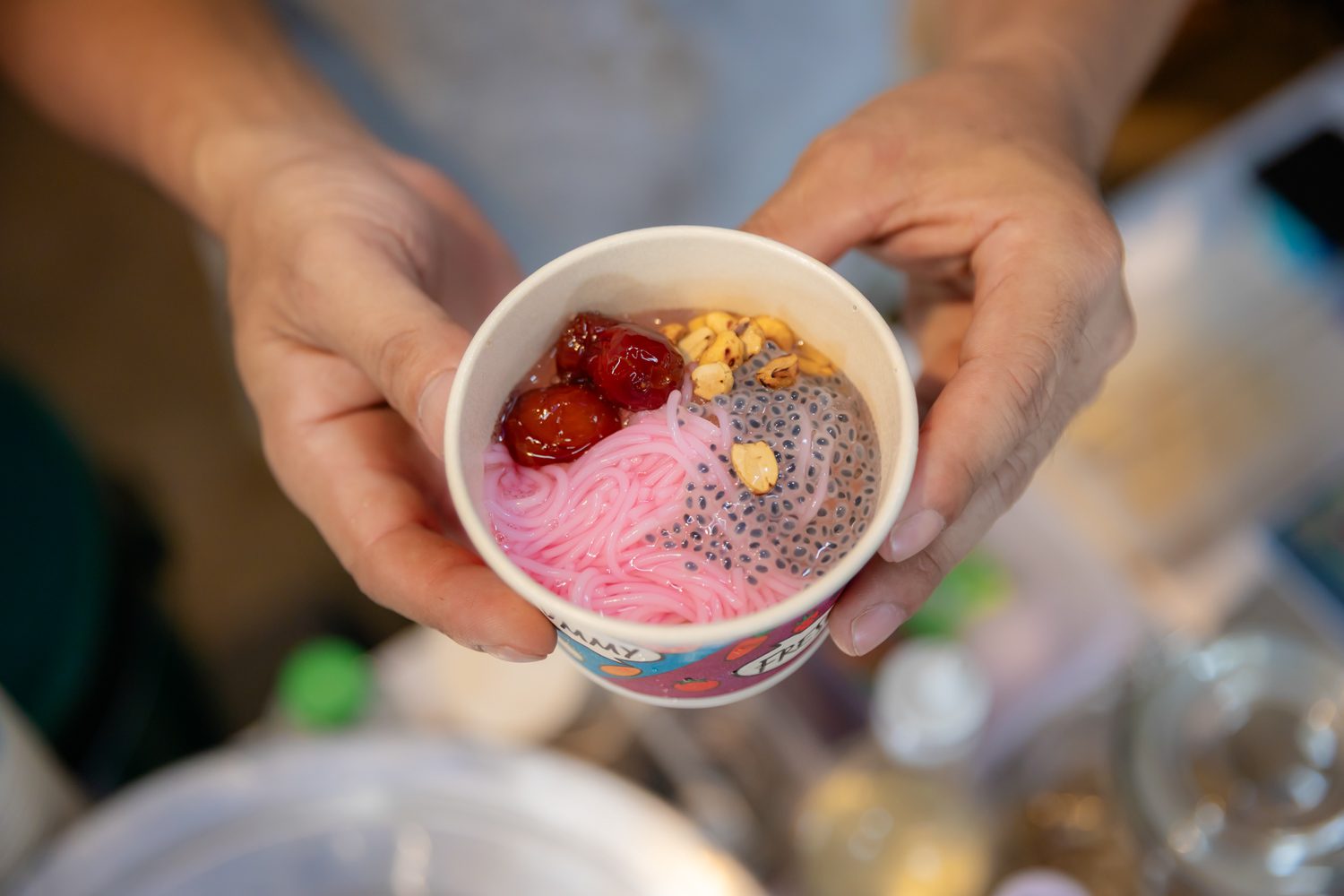
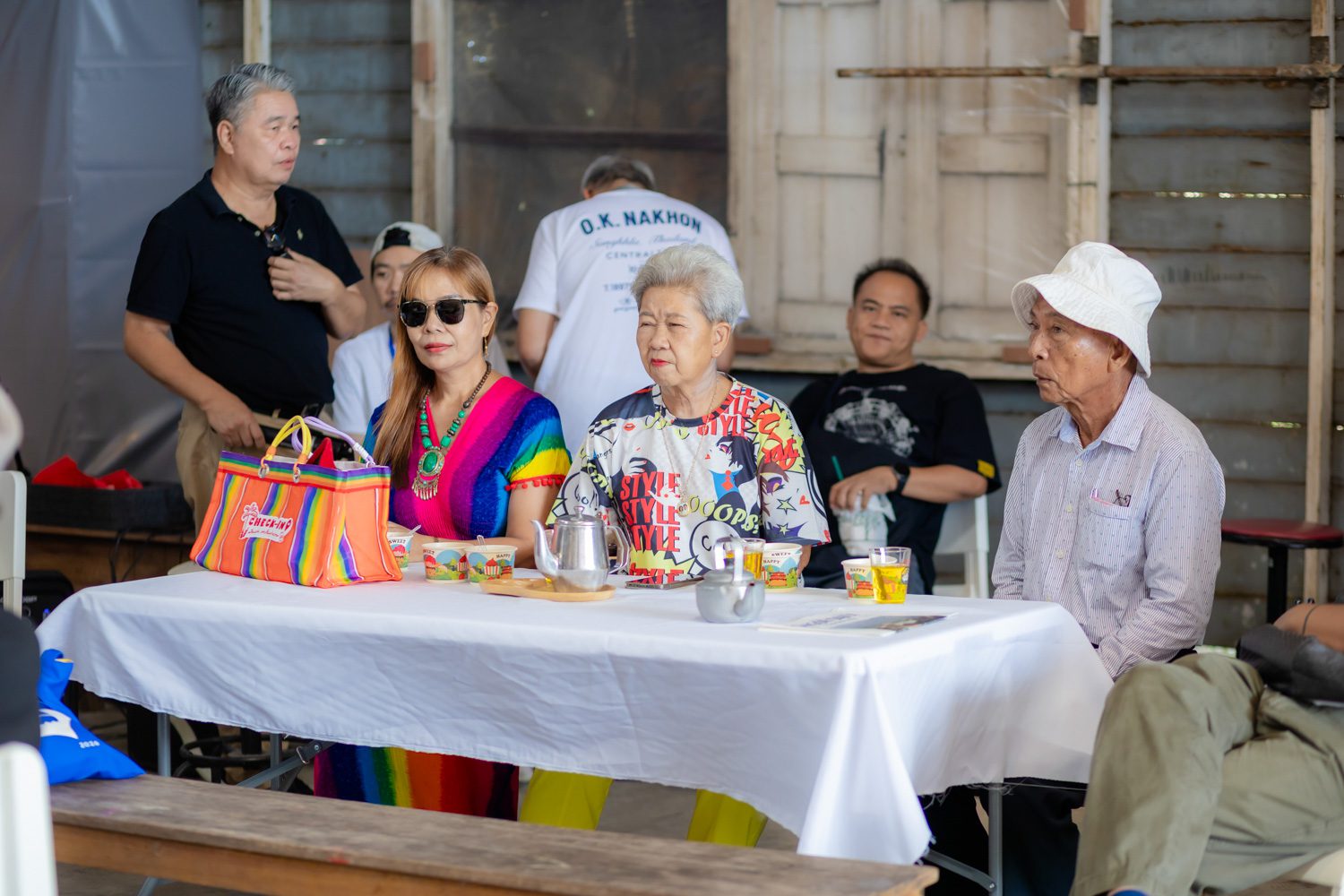
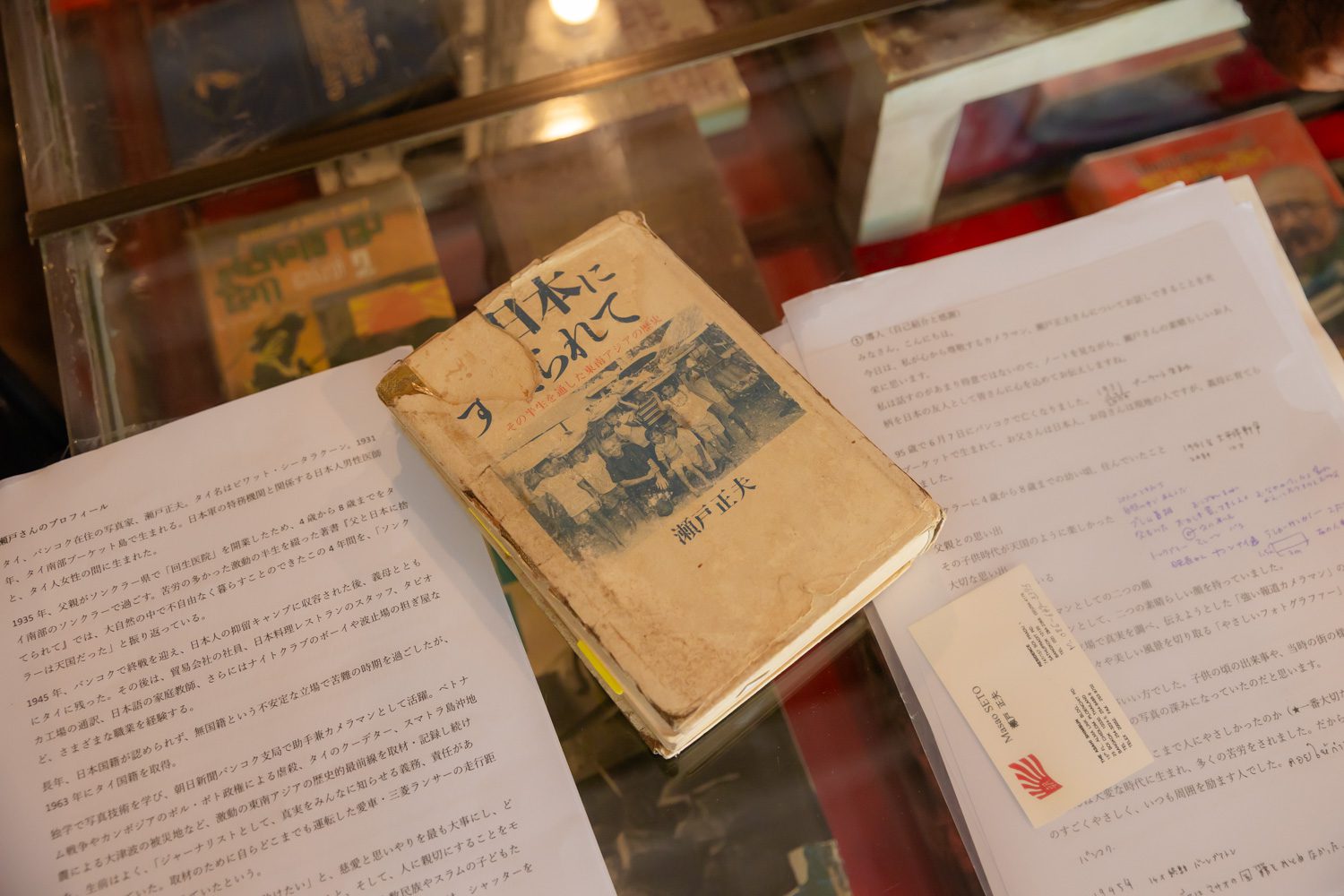
Across the three days, the festival also hosted a series of intimate talks featuring speakers from an older generation. One was a gathering held in memory of Masao Seto, the late Japanese writer, photographer, and journalist who spent several decades living in Thailand and documented Songkhla in his books. The event took place at Silpa Chamlong, the shop of Jaras Chanpromrat, who has himself amassed and preserved a wealth of material relating to the city’s history. Another conversation unfolded by the lakeside over tea and a local dessert with the curious name phi tai wak, a southern sweet of noodle-like strands served with syrup and ice. There, Sodsai Khantiworapong invited fellow longtime residents to share memories of Songkhla’s past and their thoughts on how the old town should be cared for and managed as change steadily makes its way in.
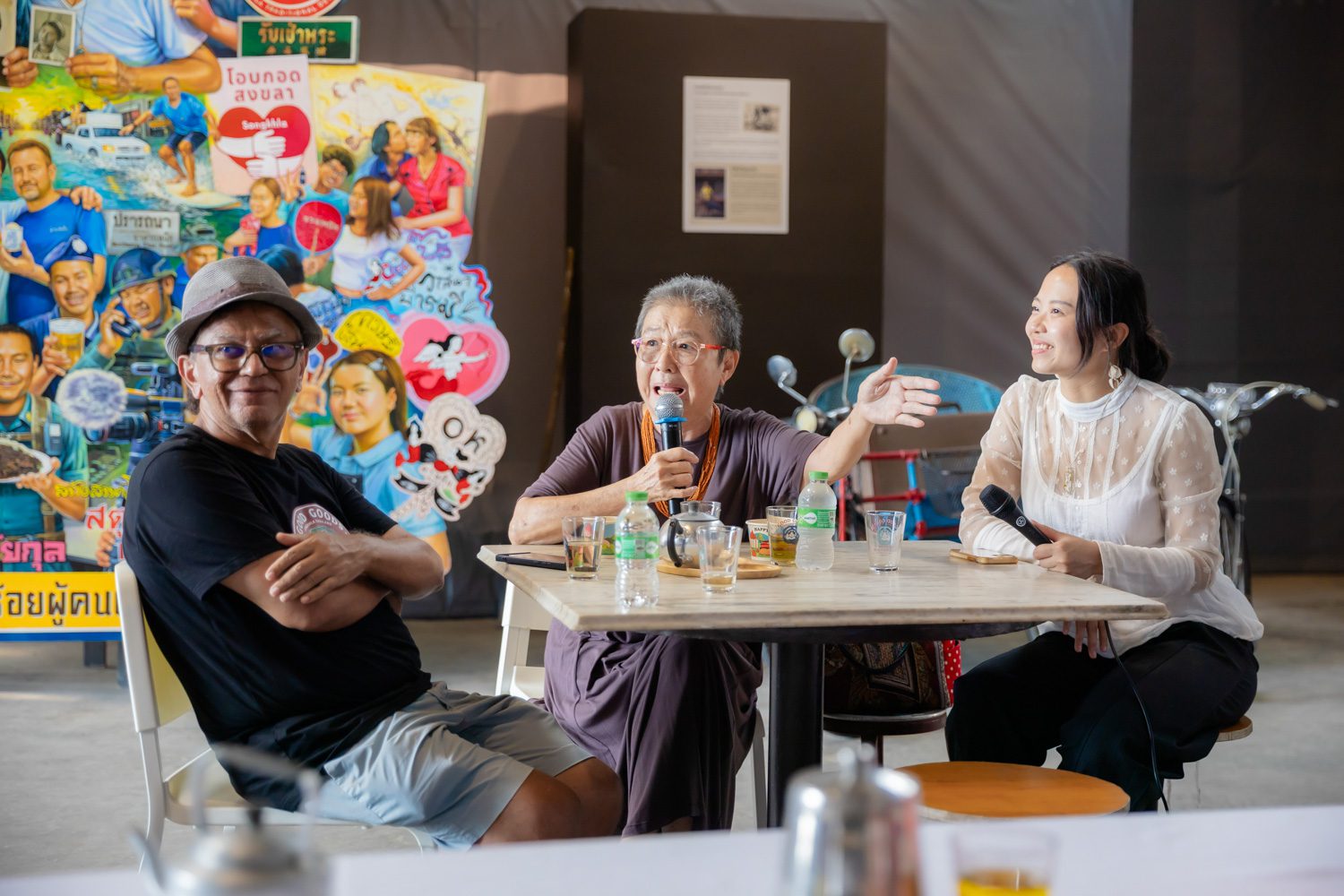
Sodsai Khantiworapong
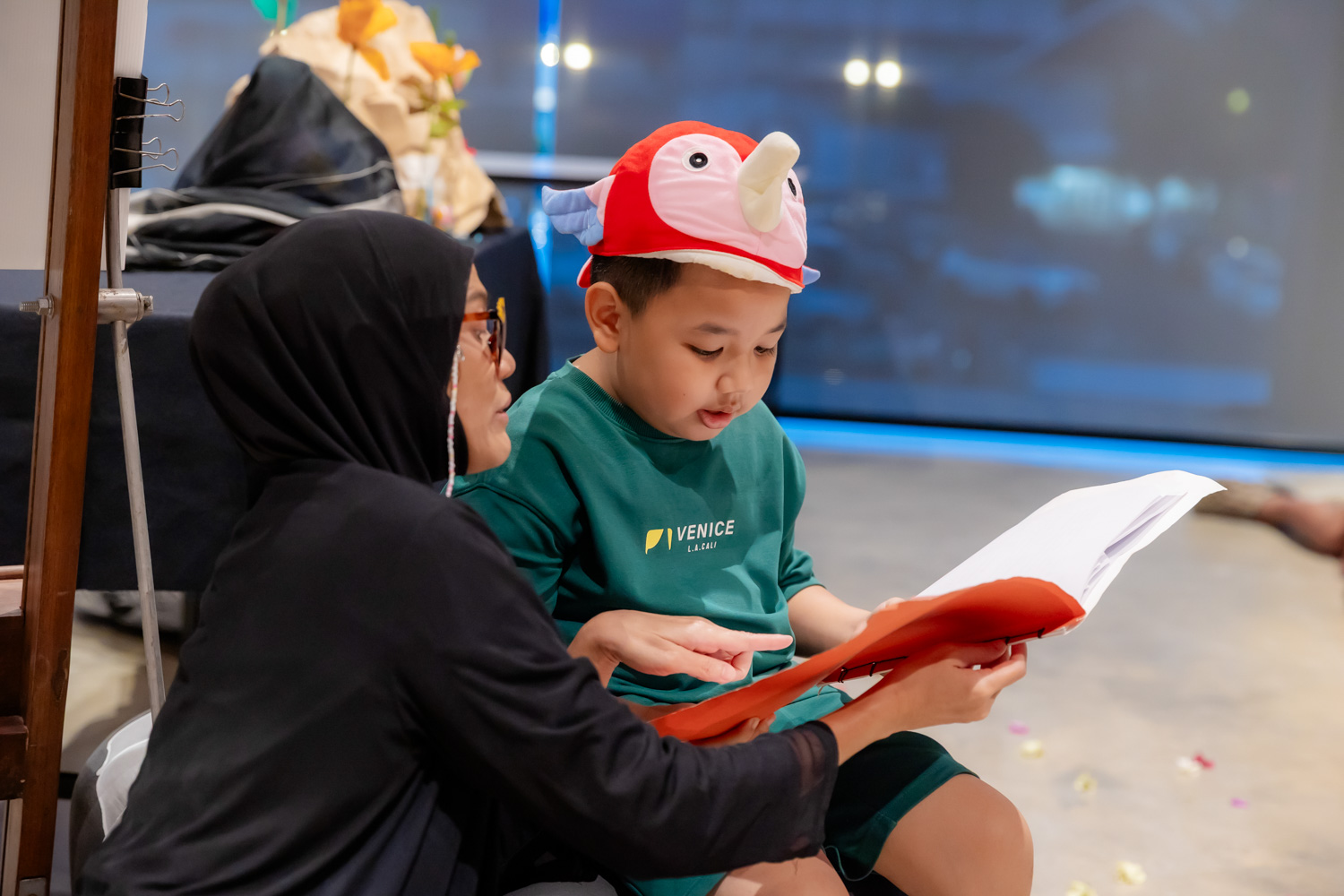
The festival brought senior artists and cultural practitioners together with mid-career and emerging creatives, while also making room for participants as young as primary-school children. Among the youngest were the three Banjongpru siblings, who drew and wrote an endearing handmade picture book titled Bantuek Songkhla Tee Ki. This multigenerational mix neatly embodies the organizers’ idea of ’continuity: connecting and carrying forward,’ or the passing of knowledge and culture from one generation to the next. More than that, it provides the missing piece that makes Singorama Art Fest genuinely an exercise in community art: one in which the community is not merely the setting for the festival, but is actively involved in it, whether as creators or audience members.
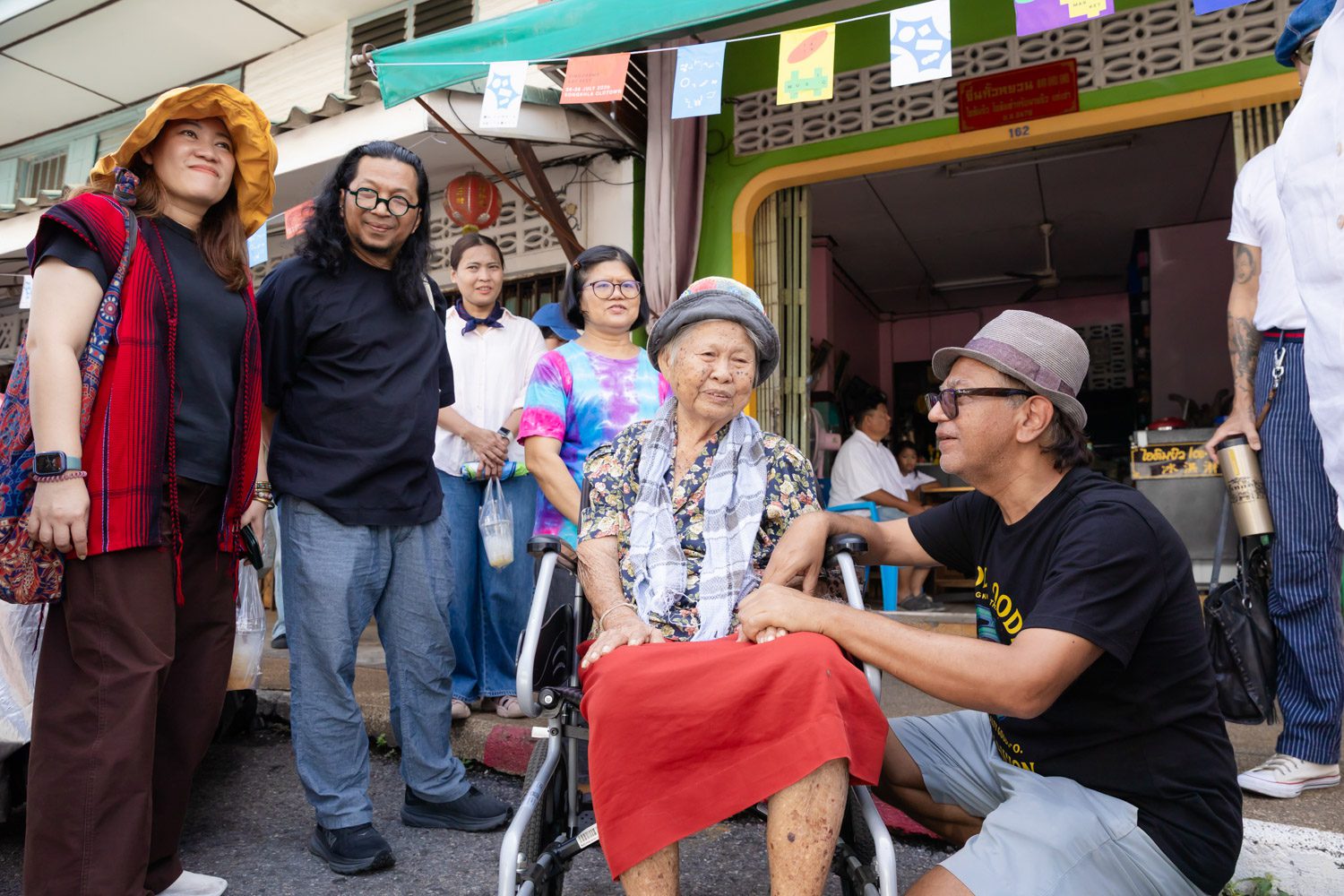
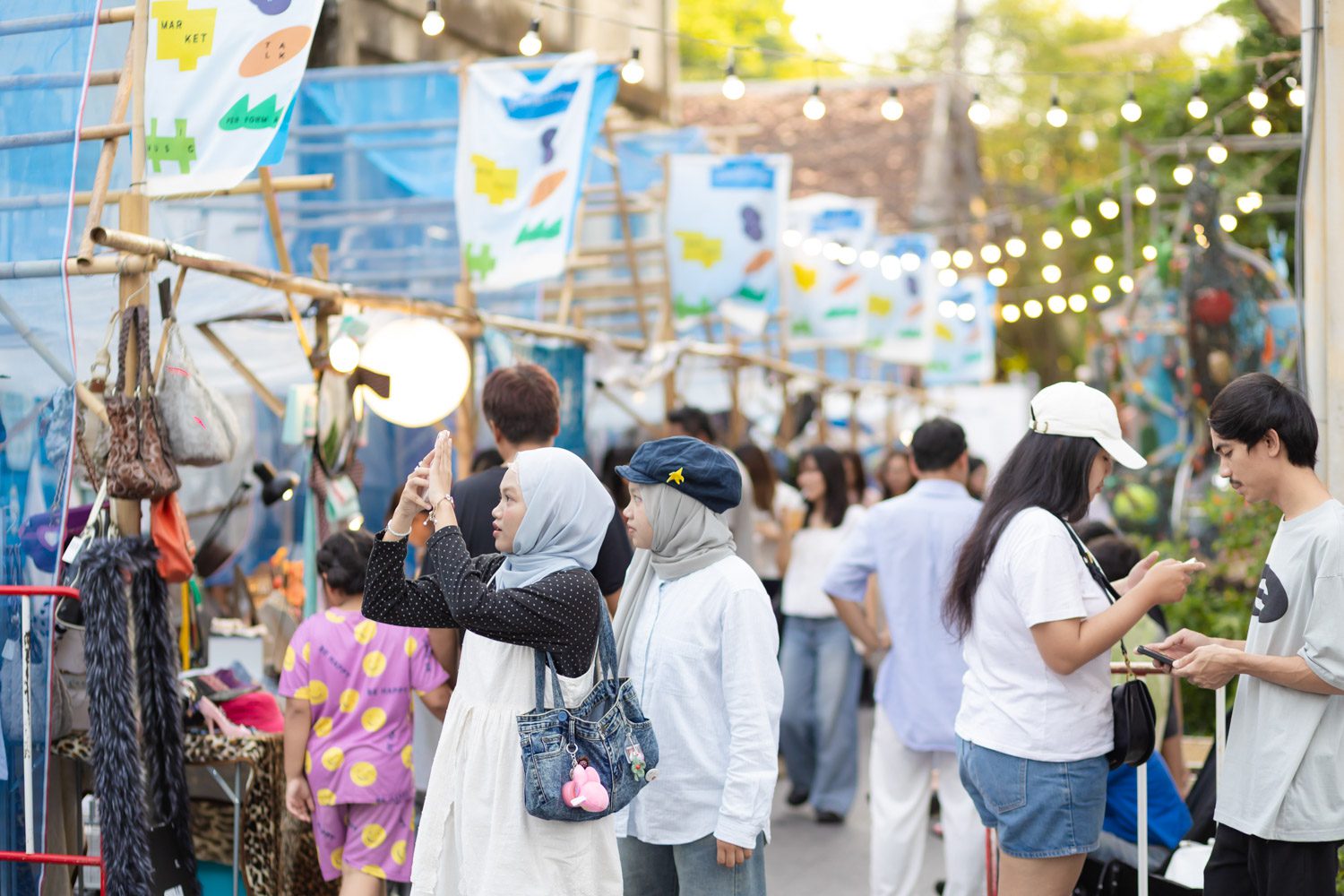
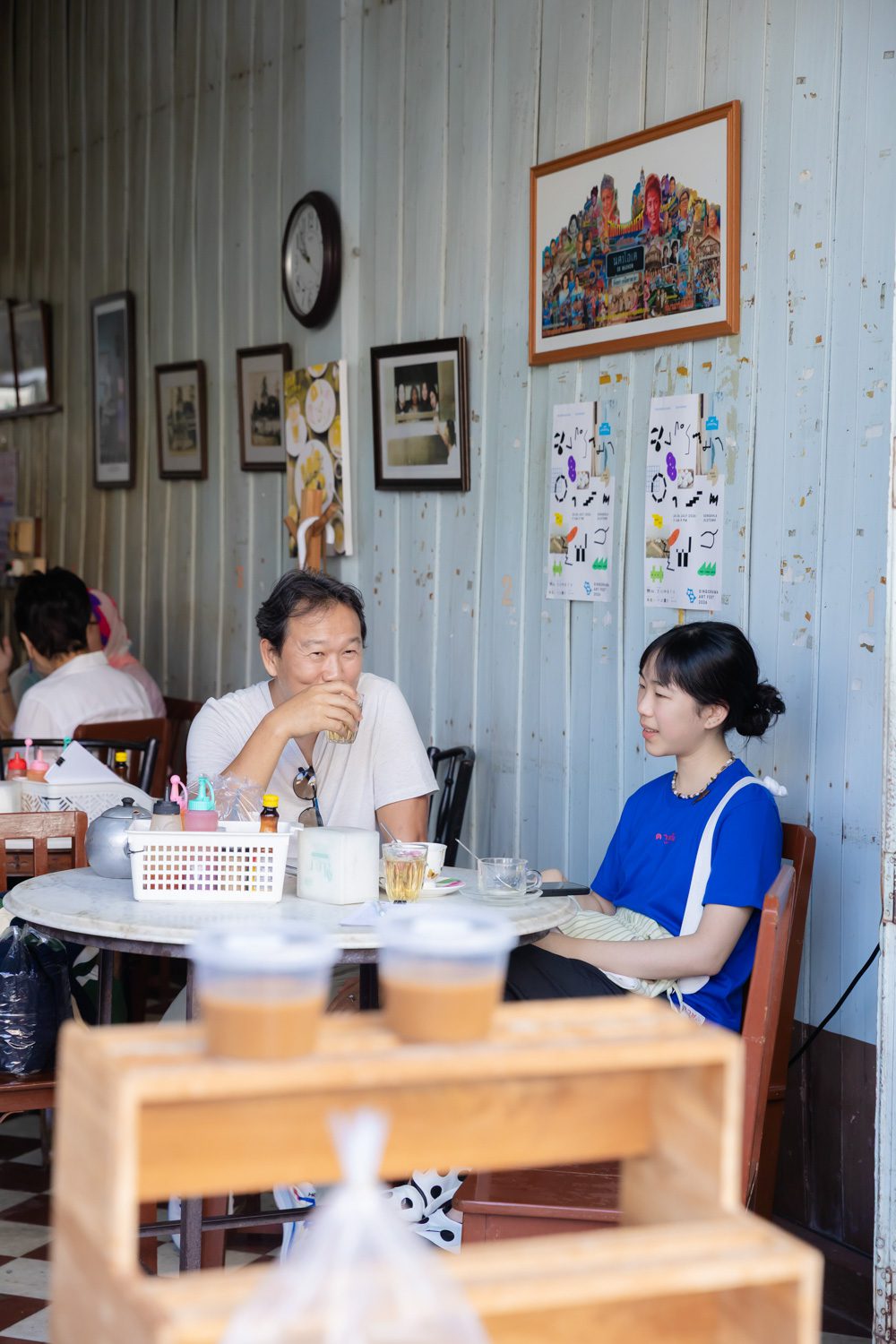
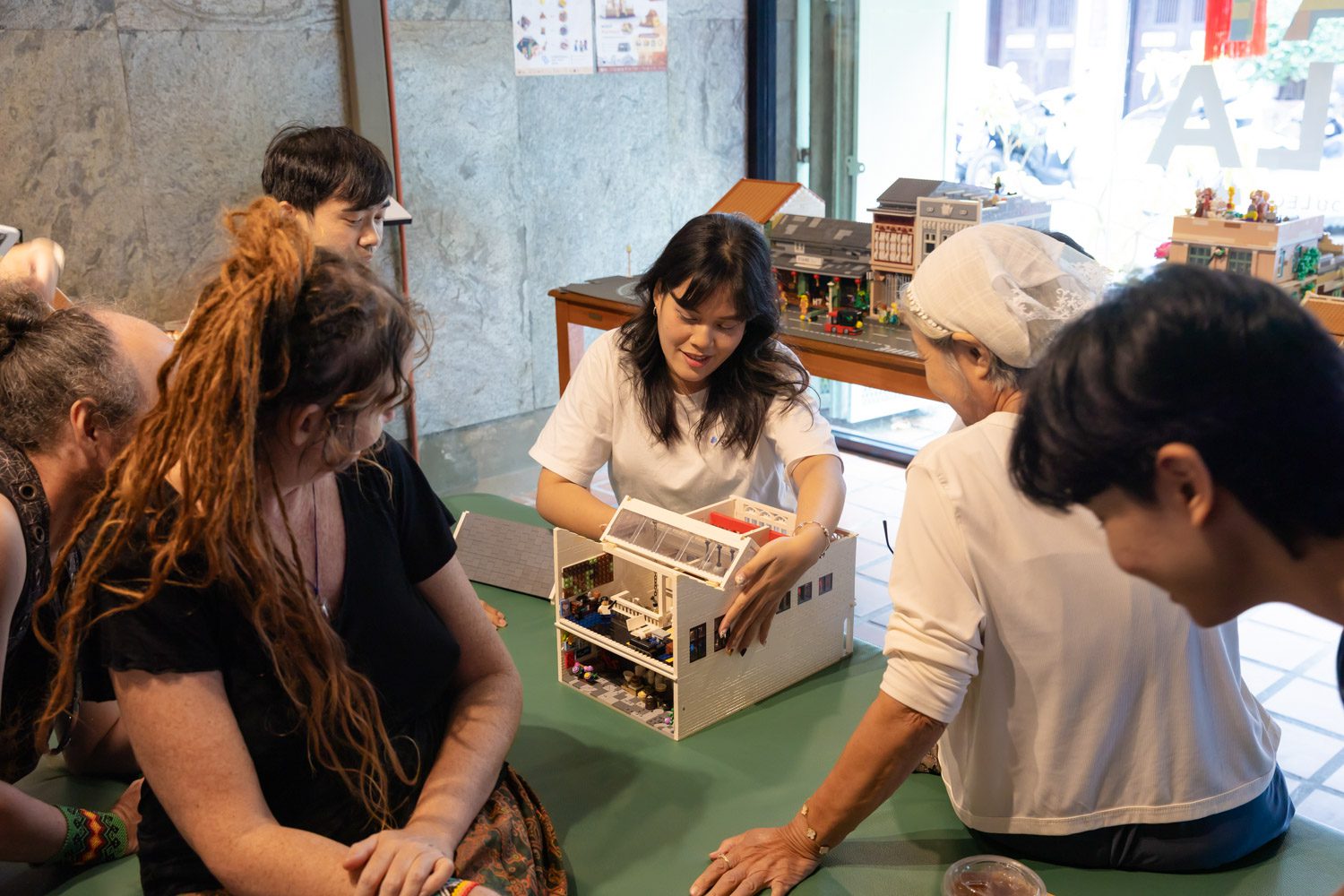
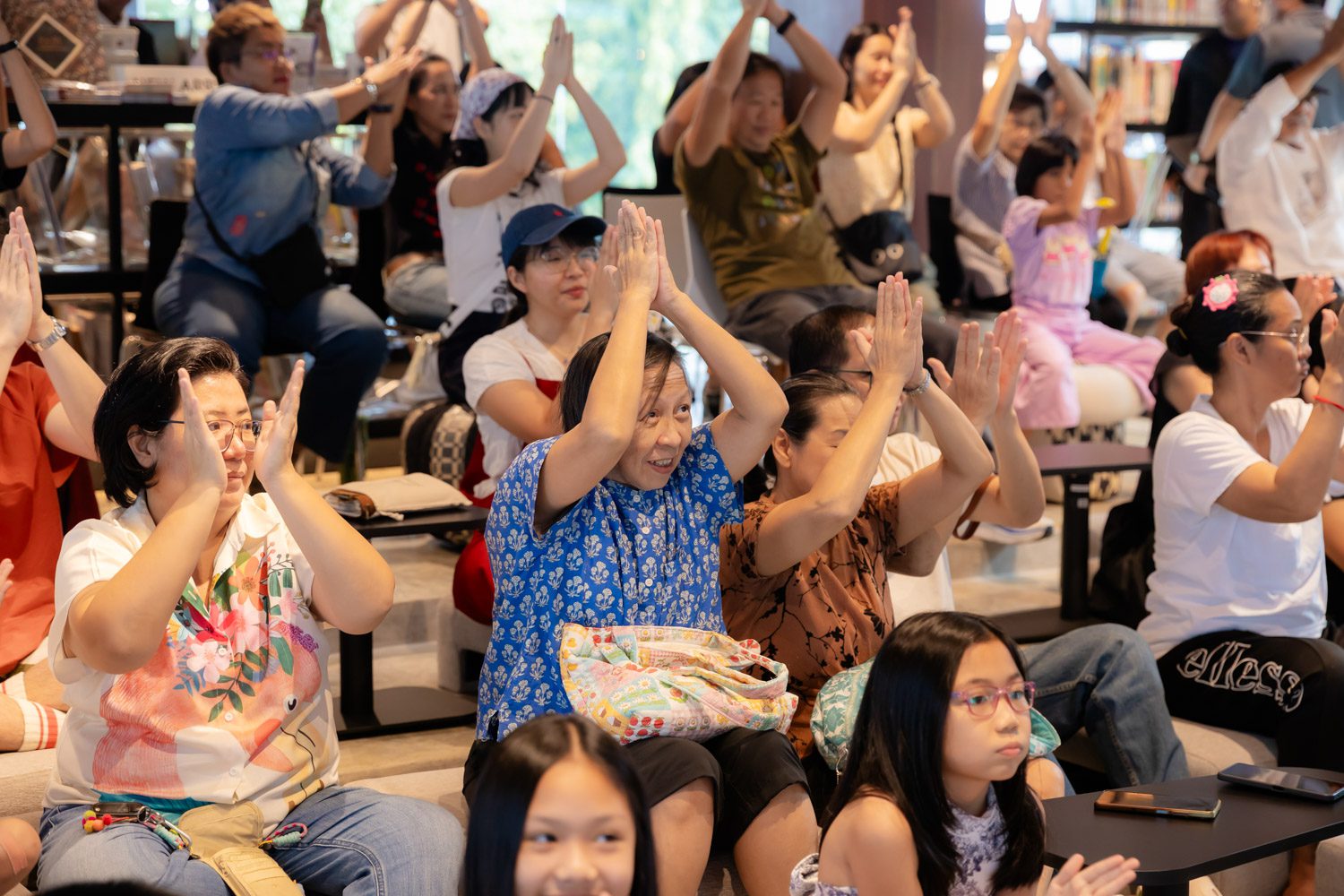
Throughout the festival’s three days, we saw local residents and visitors from elsewhere, across generations, enjoying the event in their own ways: children laughing during the hand-puppet storytelling performance, younger crowds browsing the craft and design market, and older residents stepping out of their homes to join lively discussions or smiling as they revisited the past and shared its stories with those who came after them.
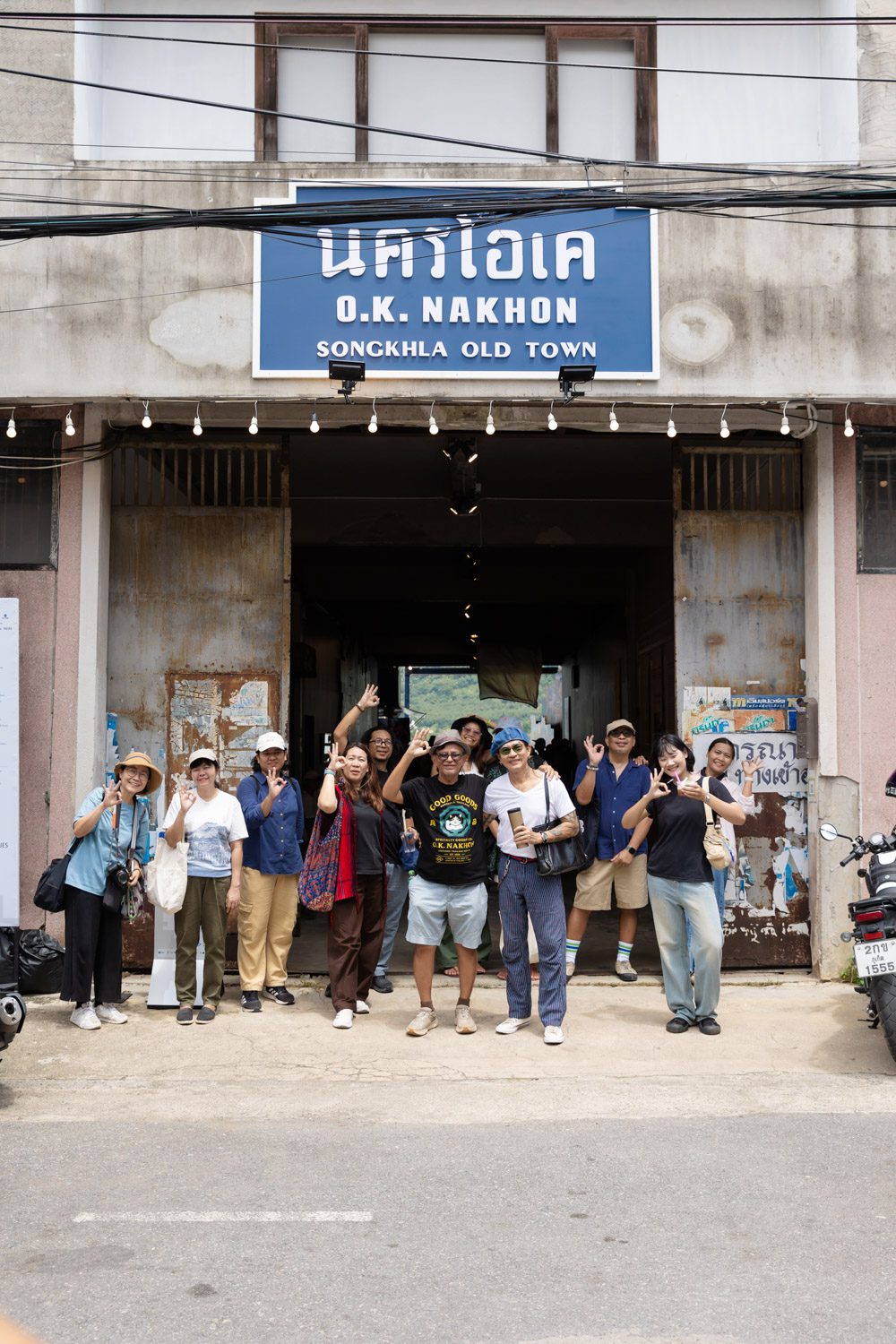
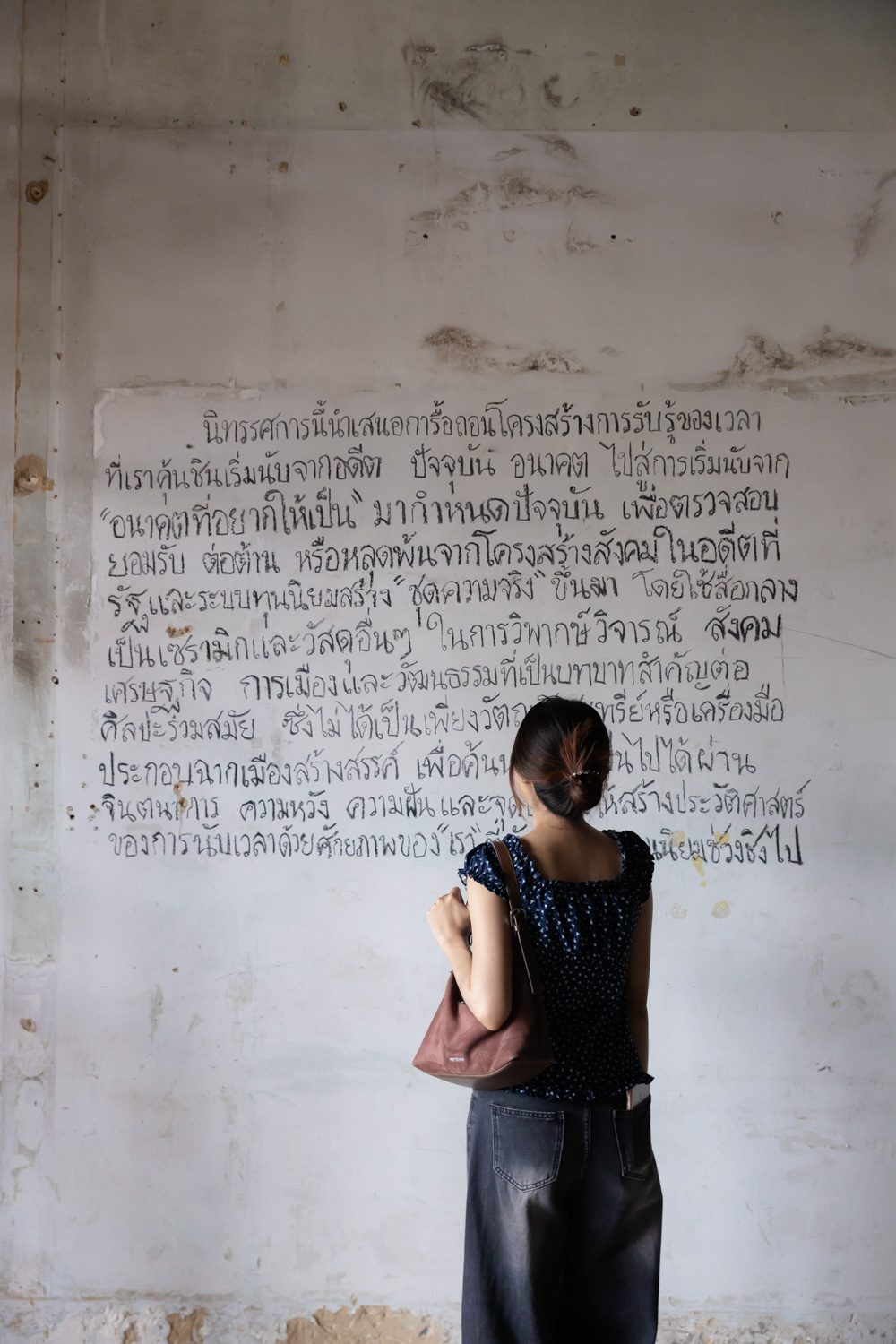
One artist in the festival we have yet to mention is Pajon Naythes, whose work was shown at 238 Studio @ 219 Inspiration Space, a Hokkien Chinese house more than two centuries old. Pajon’s practice ranges from large-scale painting to intricate mosaics made by cutting seashells into tiny pieces and assembling them into images of the sea, nature, and wildlife. His work also incorporates Arabic calligraphy used to inscribe words and passages associated with the Islamic faith.
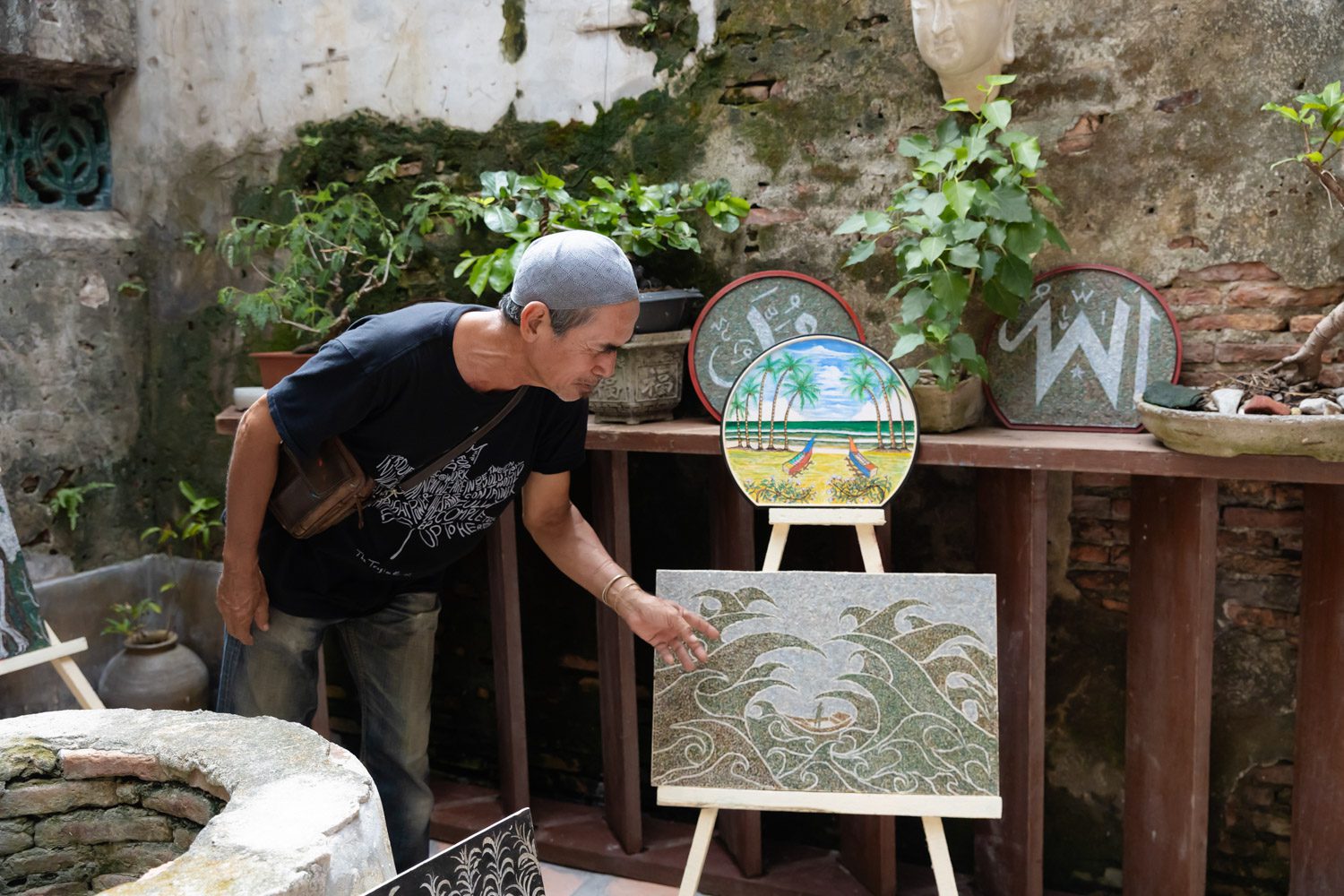
Pajon Naythes
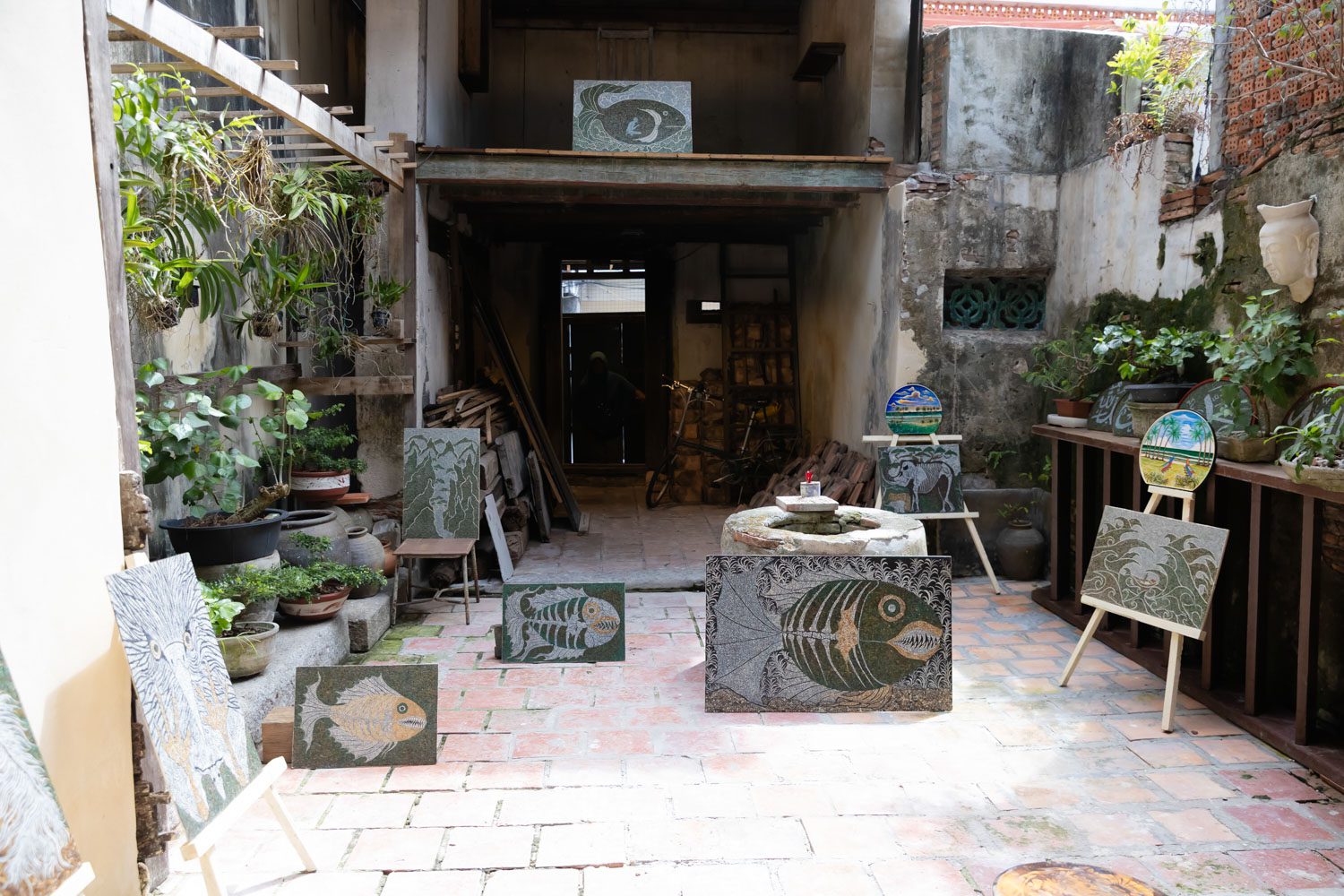
Although the festival was centered primarily in the old town, an area whose cultural roots are largely Thai-Chinese, Pajon’s participation broadened the picture of Songkhla Old Town as a culturally diverse community. His own story also speaks to Singorama Art Fest’s open-ended understanding of art. Having never received formal art training, Pajon taught himself in his spare time while working as a fisherman and raising goats, eventually developing a substantial body of work.
“I think the moment we start putting boundaries around art, we won’t get the results we are looking for. That is why we want everyone to be themselves as fully as possible. I believe that when people are truly themselves, art can realize its fullest potential.”
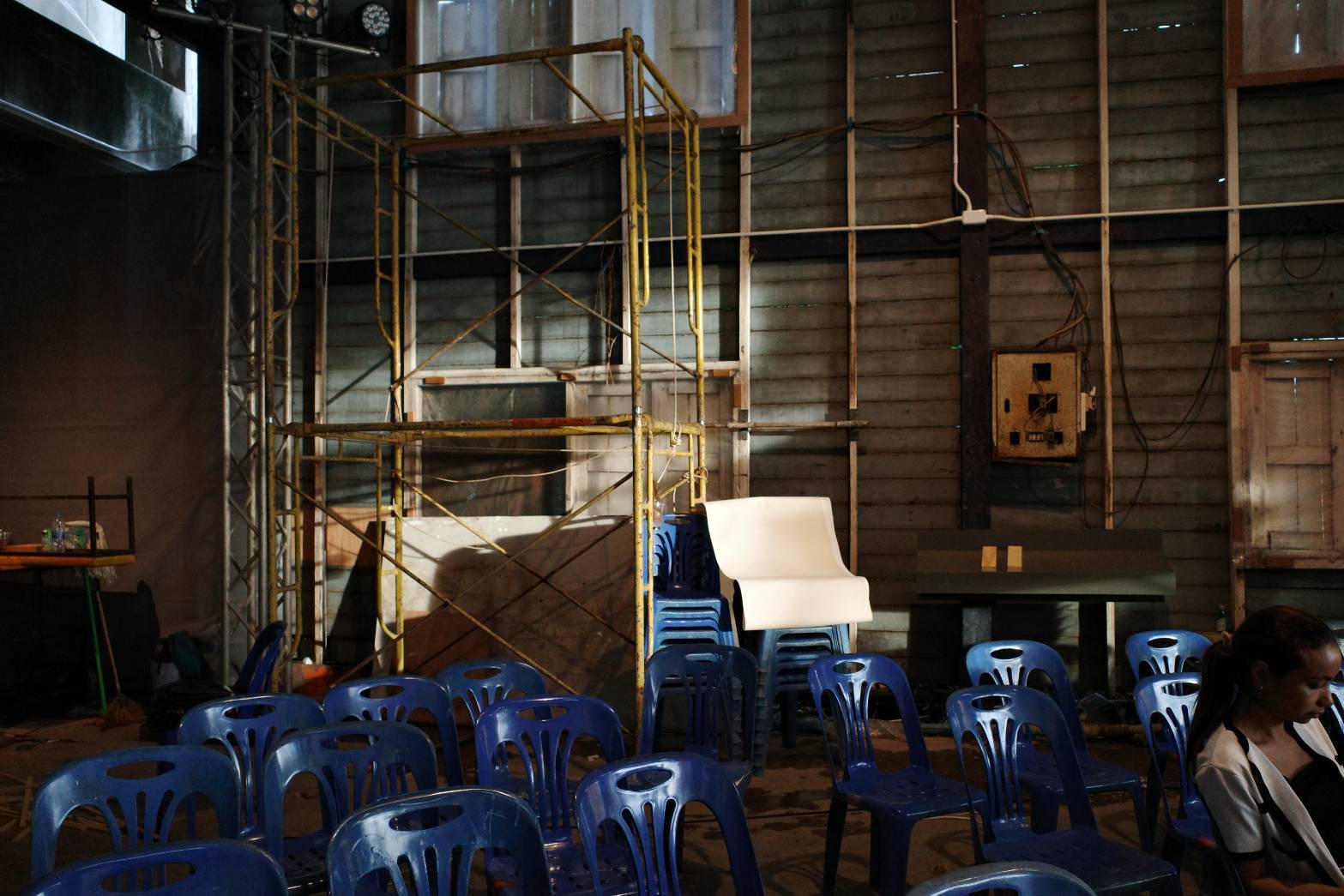
Photo: Kita Thapanaphannitikul
As for the future of Singorama Art Fest, Pakorn says neither its format nor its timing has yet been fixed. If possible, however, he would rather not see the festival remain static. He hopes instead to explore new directions and new formats, with one consideration taking precedence over all others: listening to what the people of Songkhla themselves want the festival to become.
“Community art depends on the community’s participation and cooperation if it is to continue. We cannot do it alone.”