
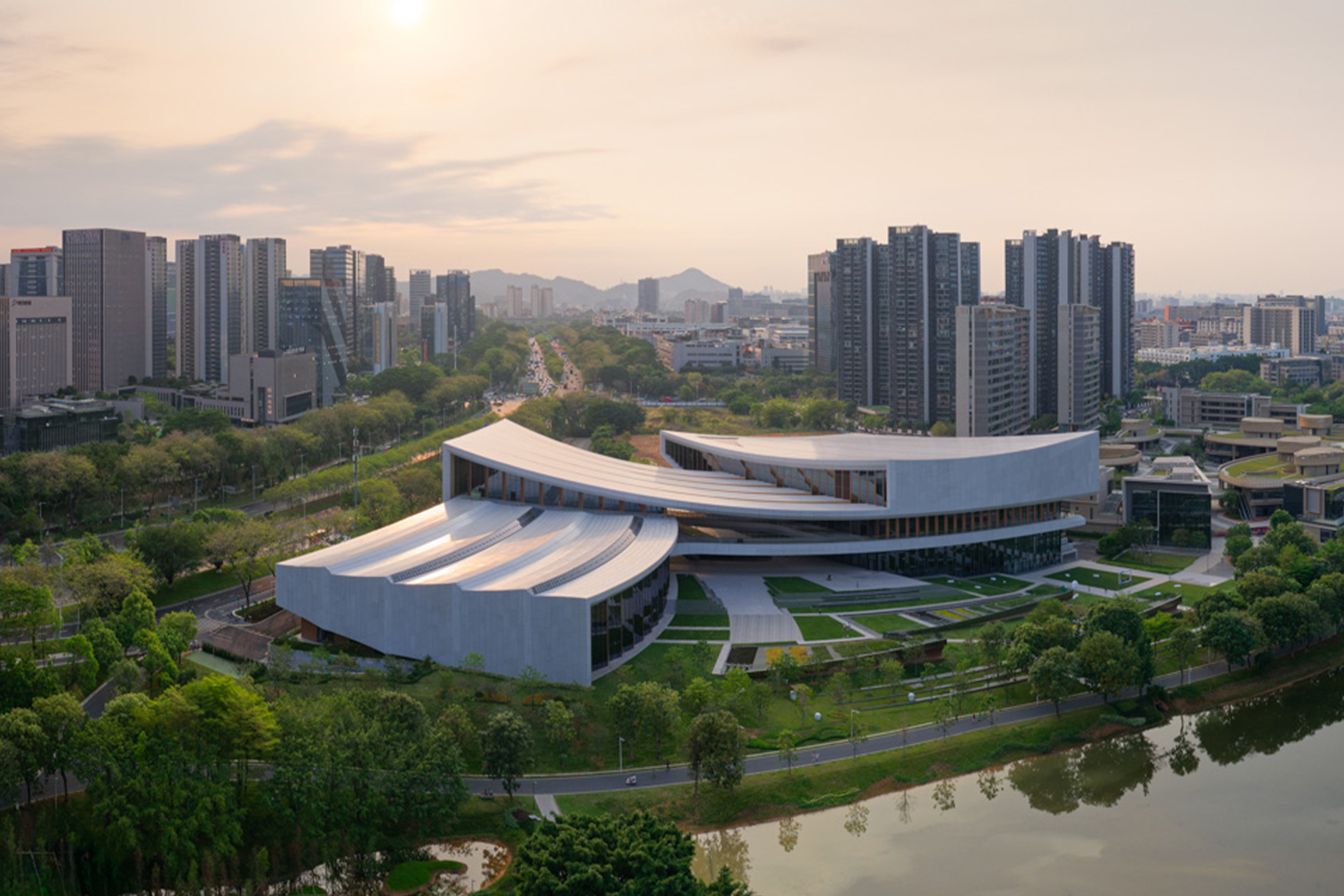
INSPIRED BY WATER SLEEVES, ZHA’S LATEST PERFORMING ARTS CENTER RISES, SPREADS, AND FANS OUTWARD: AS THOUGH A MOMENT OF MOTION WERE SUSPENDED IN BUILT FORM
TEXT: BHUMIBHAT PROMBOOT
PHOTO: VIRGILE SIMON BERTRAND
(For Thai, press here)
The Songshan Lake Exhibition and Performance Centre has been unveiled at a time of transition for Zaha Hadid Architects, as the practice adopts the abbreviated name ZHA and announces the beginning of ‘a new chapter, or a new challenge.’ Yet the project draws on the architectural vocabulary long associated with the firm: fluid, unbroken lines; volumes that appear to be in motion; and contours with scarcely discernible beginnings or ends. More compelling, however, is what ZHA’s conception of this new chapter might articulate through the project, and how such an established design language may be extended in directions yet unexplored.
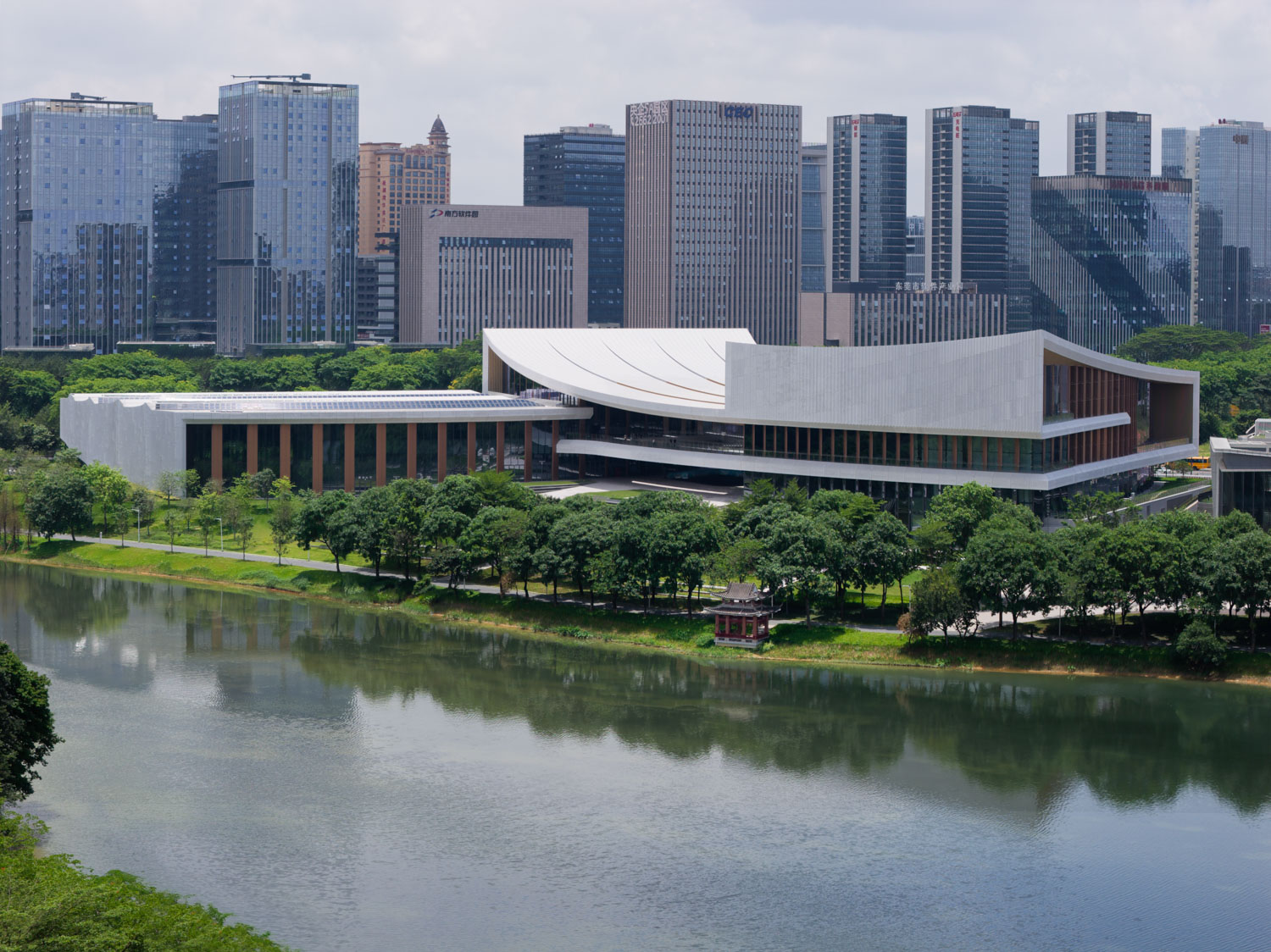
The city, the public realm, and the waterfront define the project’s context. Located in Dongguan, within southern China’s Greater Bay Area, the site forms part of a mixed-use master plan intended to regenerate the Yuehe Lake waterfront. The commission therefore concerns more than the design of an isolated building. The centre is woven into a surrounding network of waterfront promenades, parks, landscaped terraces, and public plazas. Through this engagement with the public realm, the building assumes a role beyond that of an exhibition venue or theatre. Its outdoor spaces are conceived as integral to the architecture, inviting local residents and visitors to use them throughout the year. Paths and transitional spaces between inside and out dissolve the boundary between built form and landscape, guiding people through and around the complex in an uninterrupted sequence.
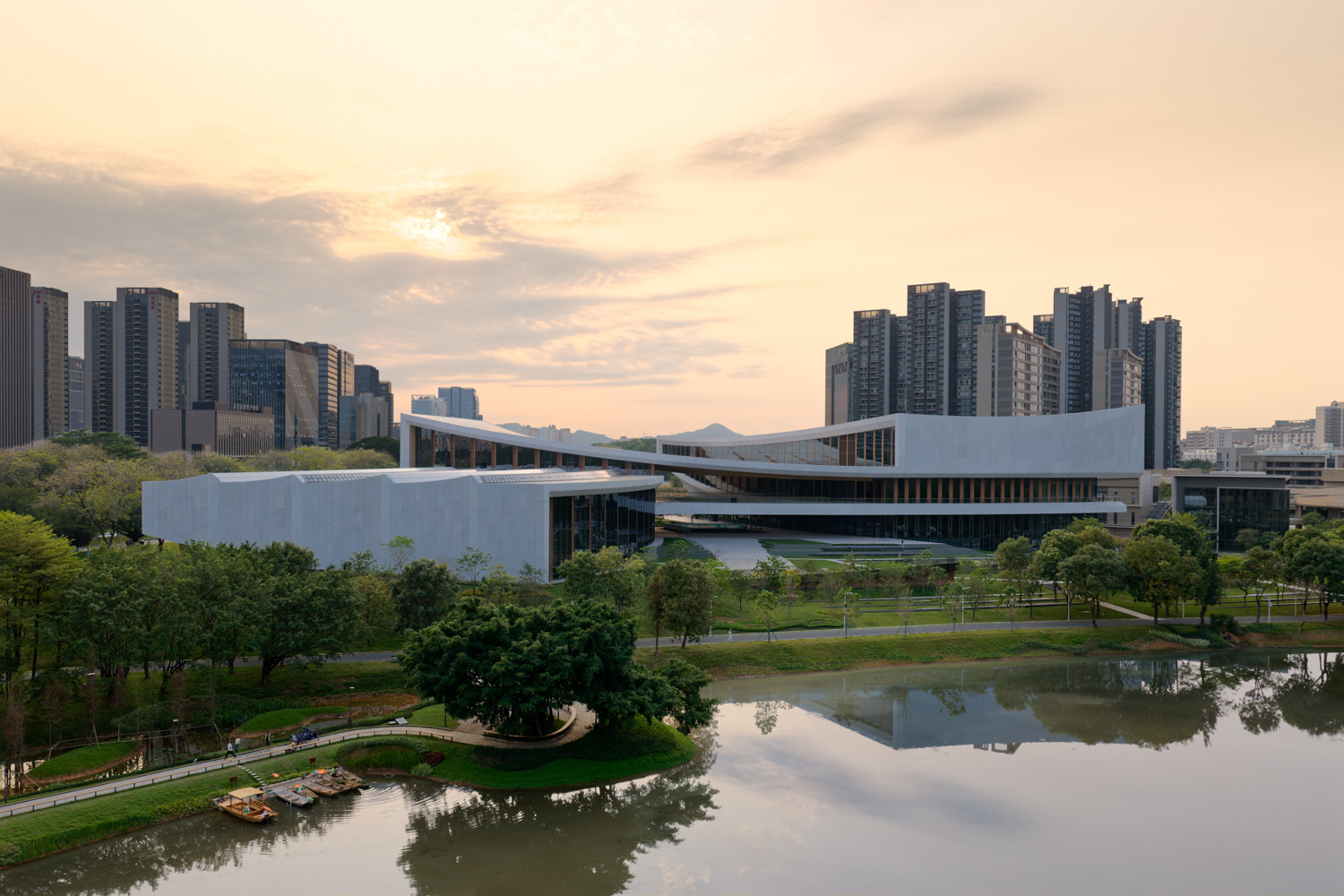
The Songshan Lake centre comprises several interconnected structures that stretch horizontally before gradually stepping upward toward the western end of the site, where the Grand Theatre and Exhibition Hall are located. This configuration brings the building’s distinct volumes together as a coherent architectural whole. The resulting coherence extends beyond the plan to different levels, encompassing circulation routes, terraces, and public areas. As the architecture rises, its ascending profile establishes a hierarchy among the programs housed within. Form, then, does more than generate a distinctive silhouette. It also organizes the spatial relationships that bind the project’s interior and exterior realms.
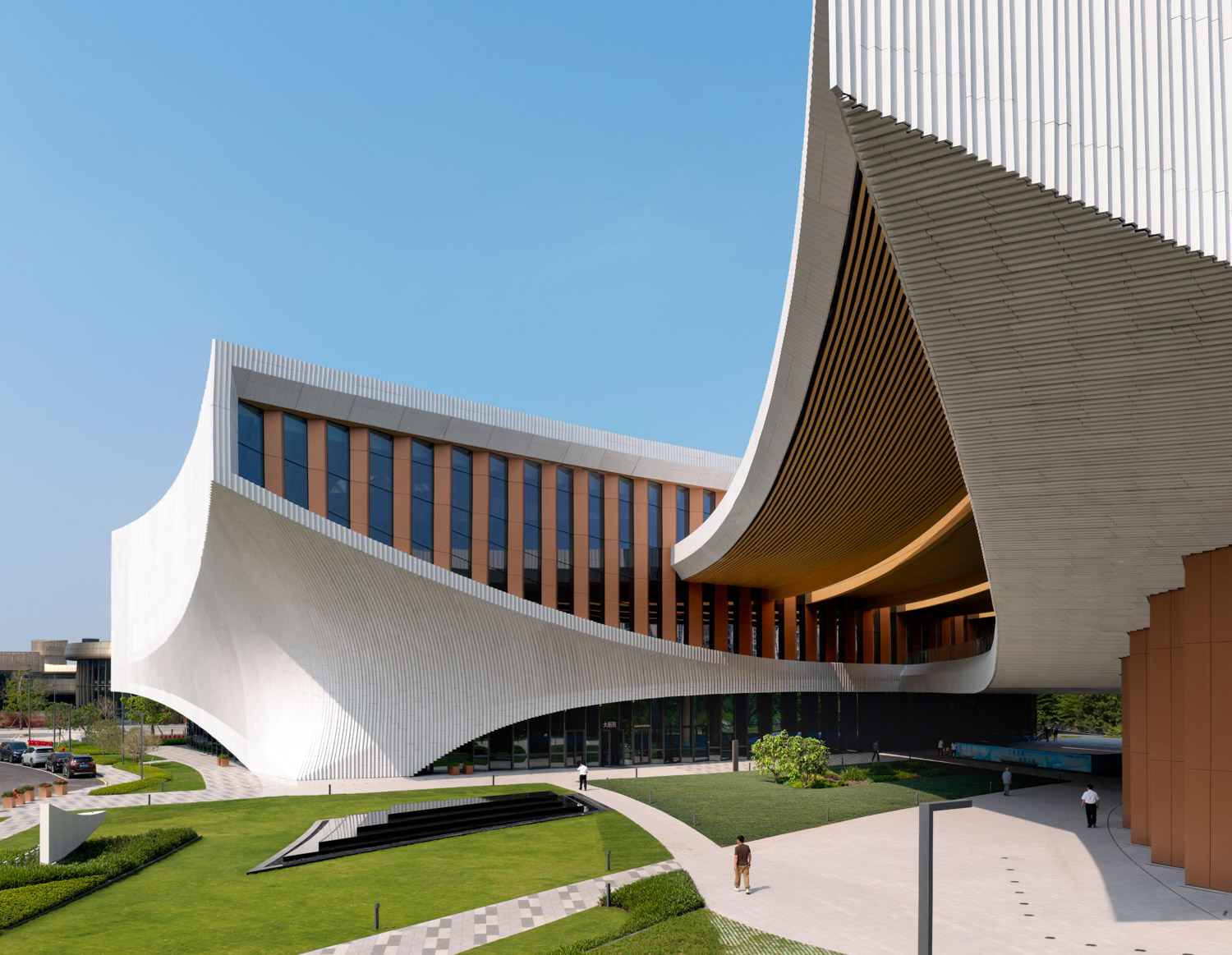
For this expressive architectural language, ZHA turned to Cantonese opera, a performance tradition that has spread among Chinese communities across numerous regions and countries. Dongguan itself is regarded as one of its places of origin, with a history spanning over 700 years. The architects translated the art form’s choreography into the building’s constituent elements, drawing particularly on traditional costumes and the ways performers convey emotion through gesture. Central to this interpretation are water sleeves, flowing extensions of the performers’ silk sleeves that articulate feeling and amplify bodily expression. The reference bears a direct relationship to the building’s program. Far from serving as decorative embellishments, water sleeves are integral to the performance, magnifying physical gestures so that they register more vividly for the audience. Bodily movement is thus rendered as an image through material, acquiring shape and contour as motion is translated into stillness.
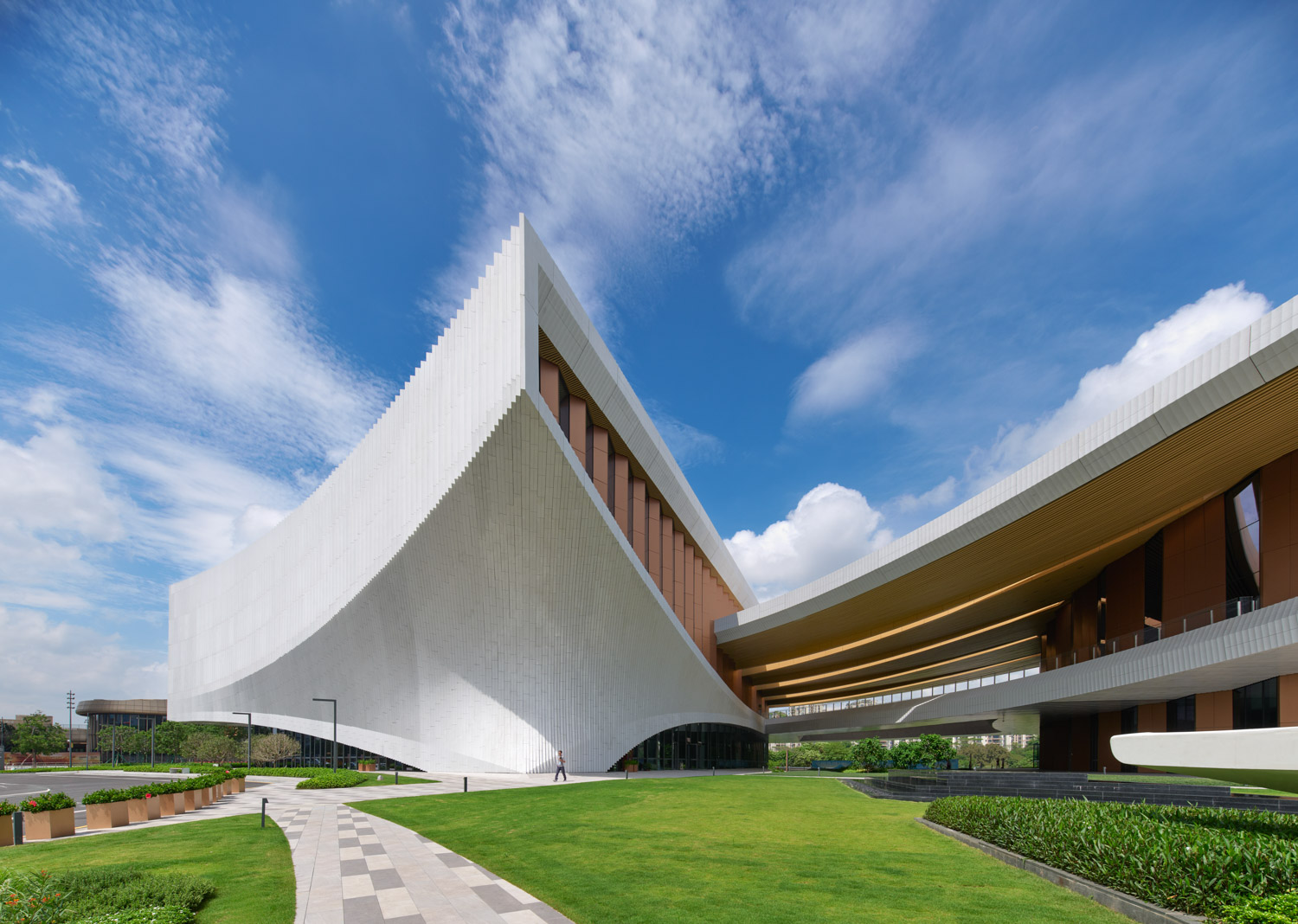
The architecture consequently rises, spreads, and fans outward, as though a moment of motion had been suspended in built form. Rather than replicating water sleeves literally, the design recasts their fluidity, expansion, and kinetic character as a geometry of sweeping curves and uninterrupted surfaces.
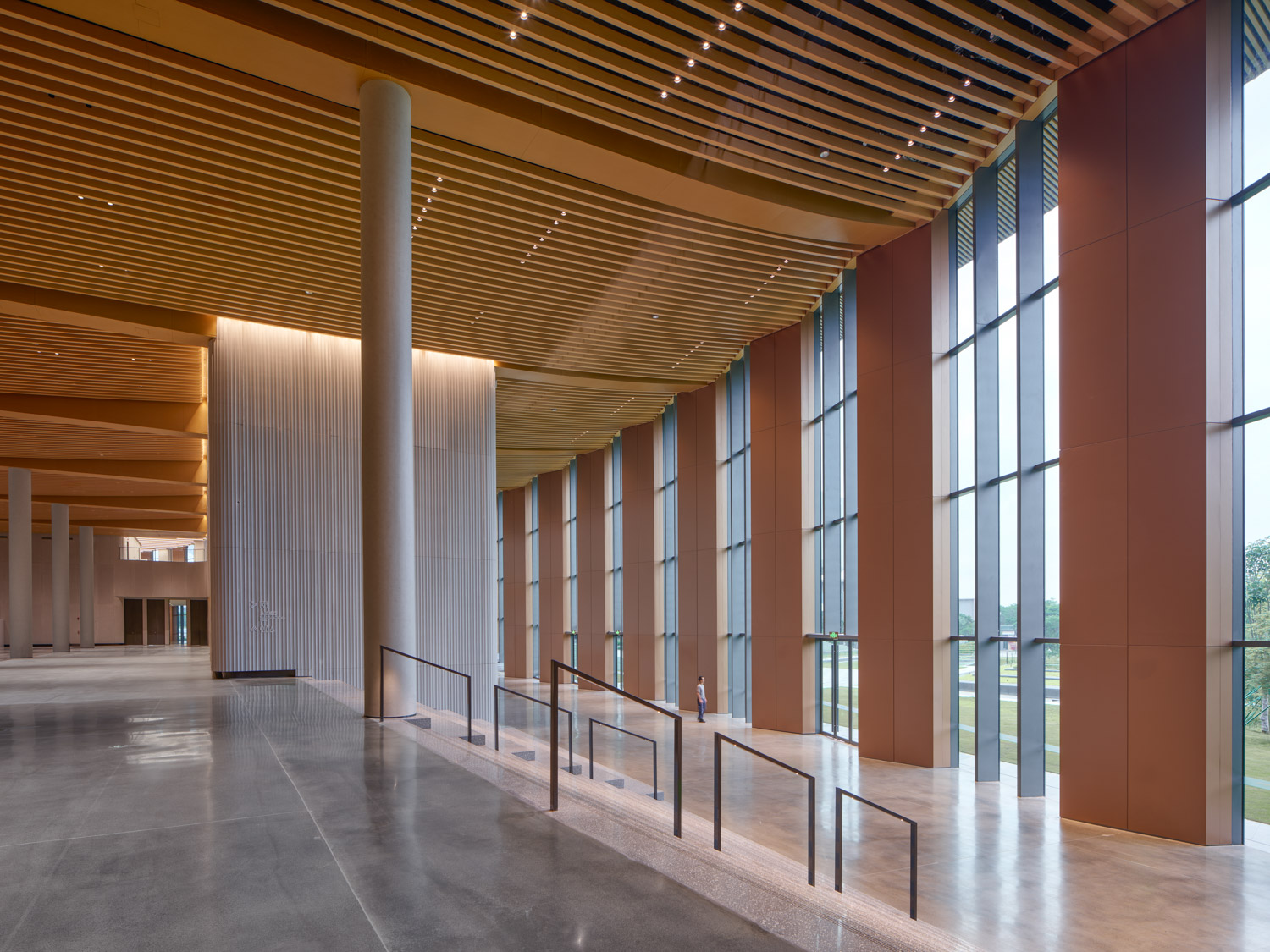
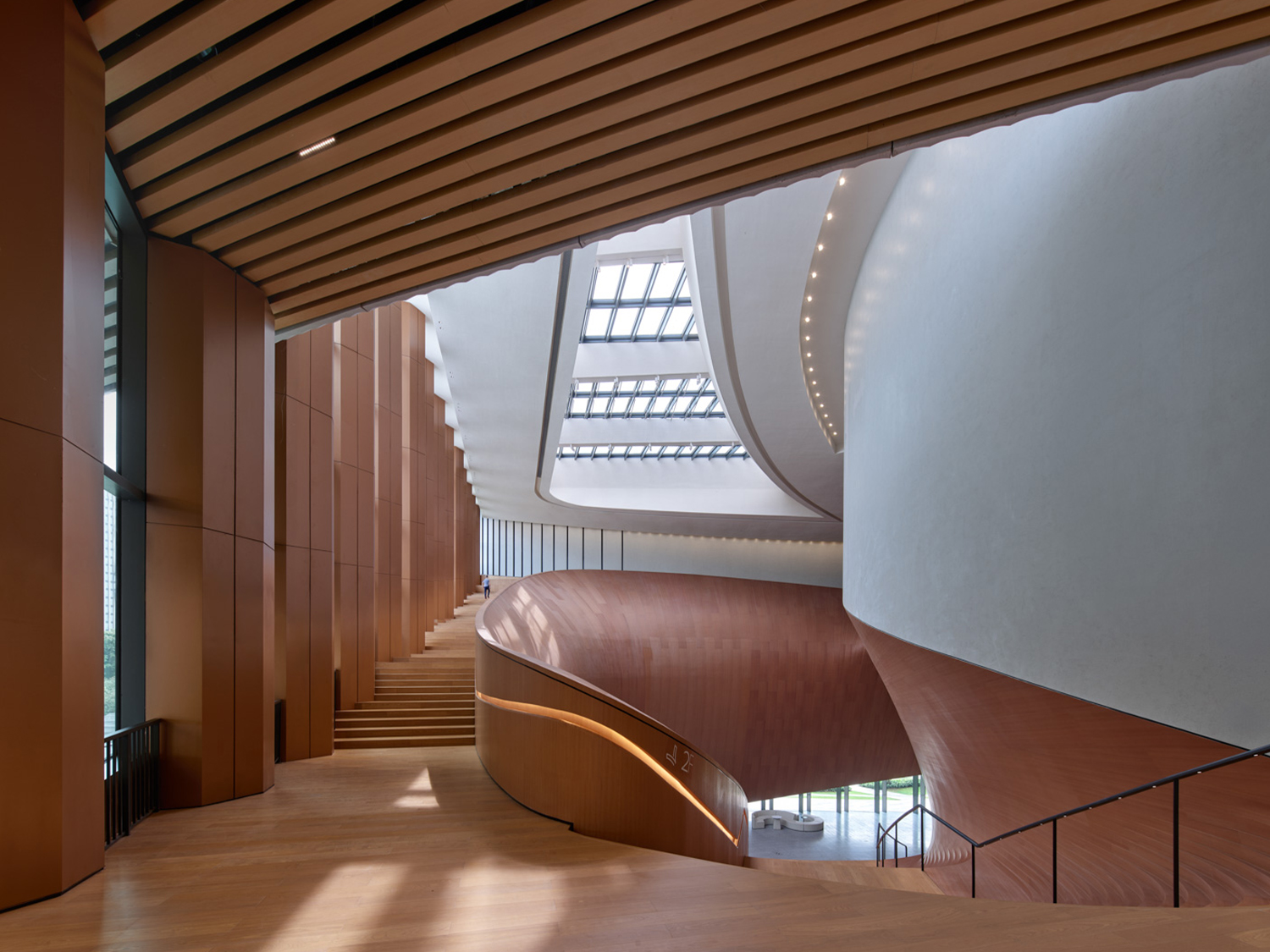
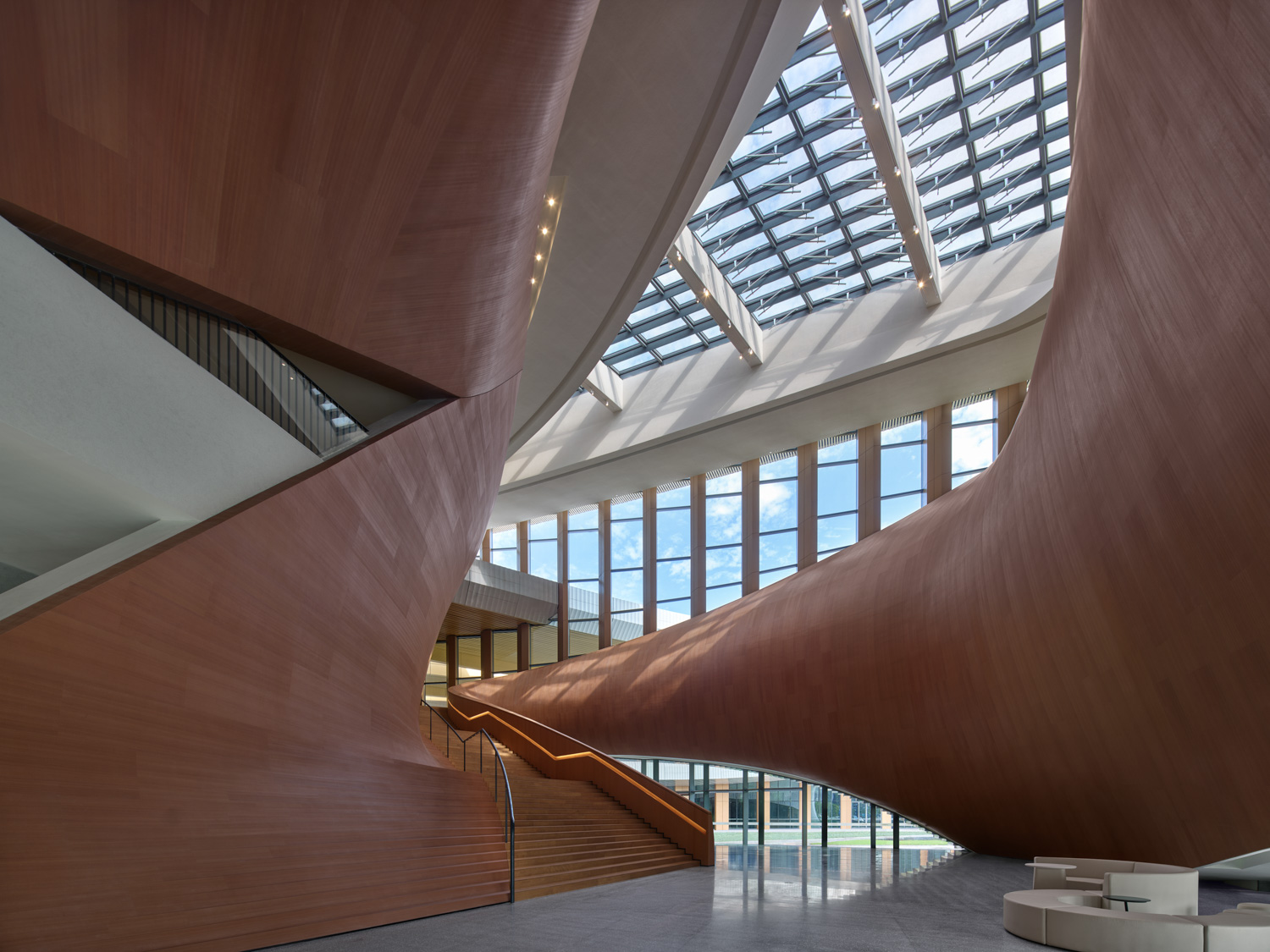
The exterior’s sweeping geometry carries through to the interior. A spacious hall receives natural light through openings in the roof, while reddish-brown walls frame the staircases and circulation routes. Here, the curves are not merely visual surfaces but instruments for directing movement through the building. Rather than passing through a succession of clearly divided rooms, visitors encounter spaces that gradually reveal themselves, with sightlines shifting as they advance. These walls flow into a timber staircase, whose warm tone and tactile quality temper the building’s formal dynamism, shaping a more measured atmosphere as visitors approach the Grand Theatre.
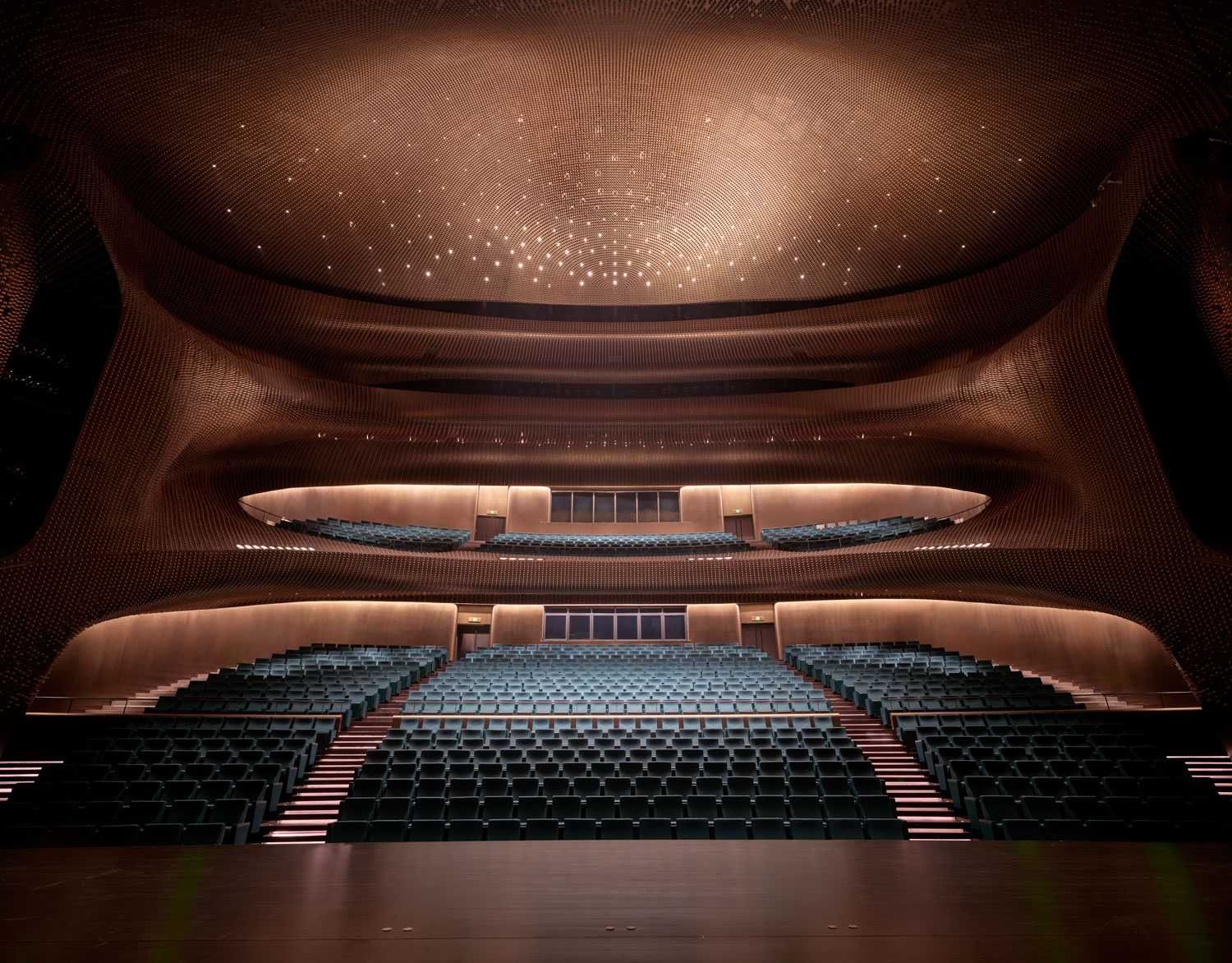
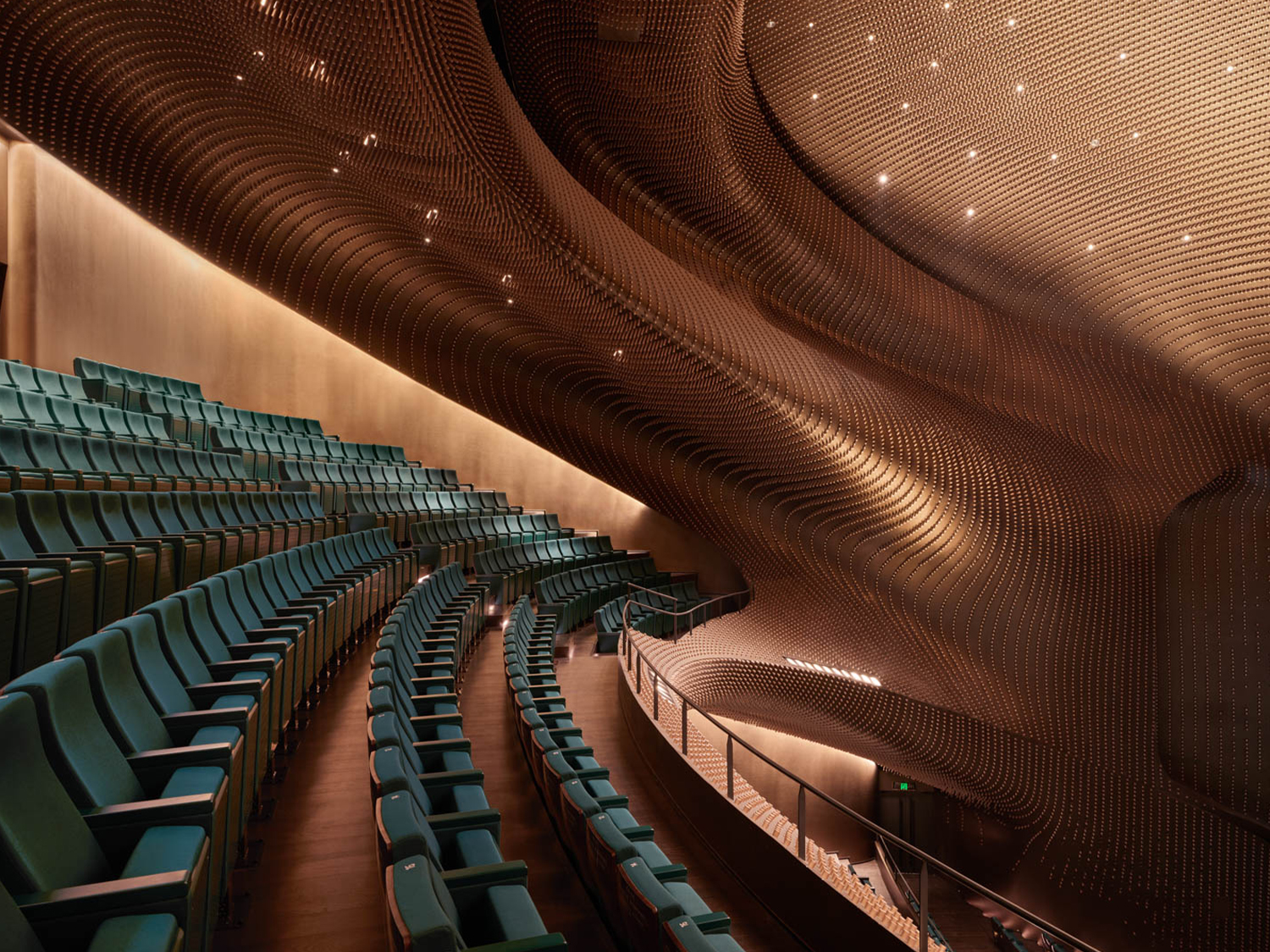
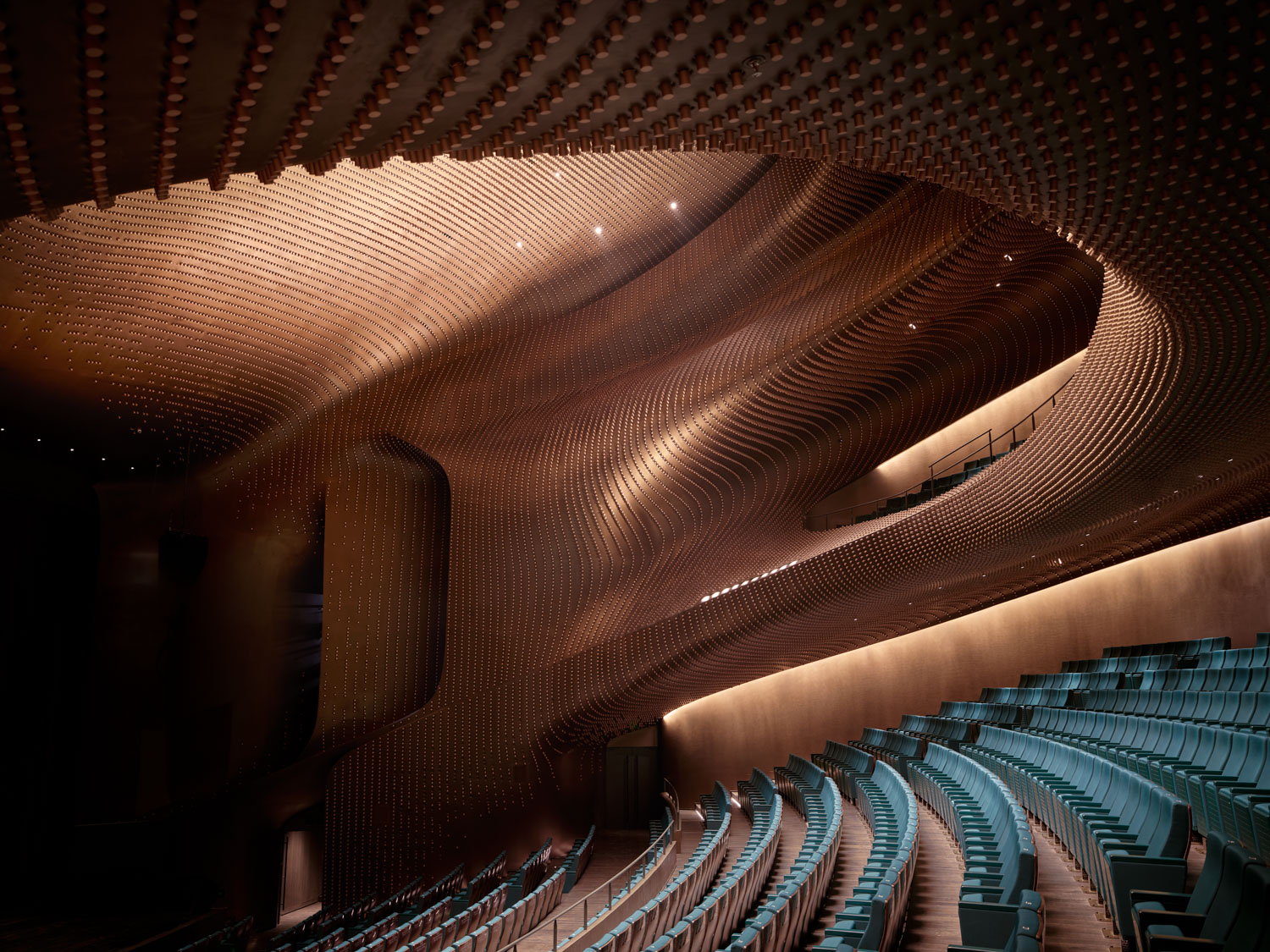
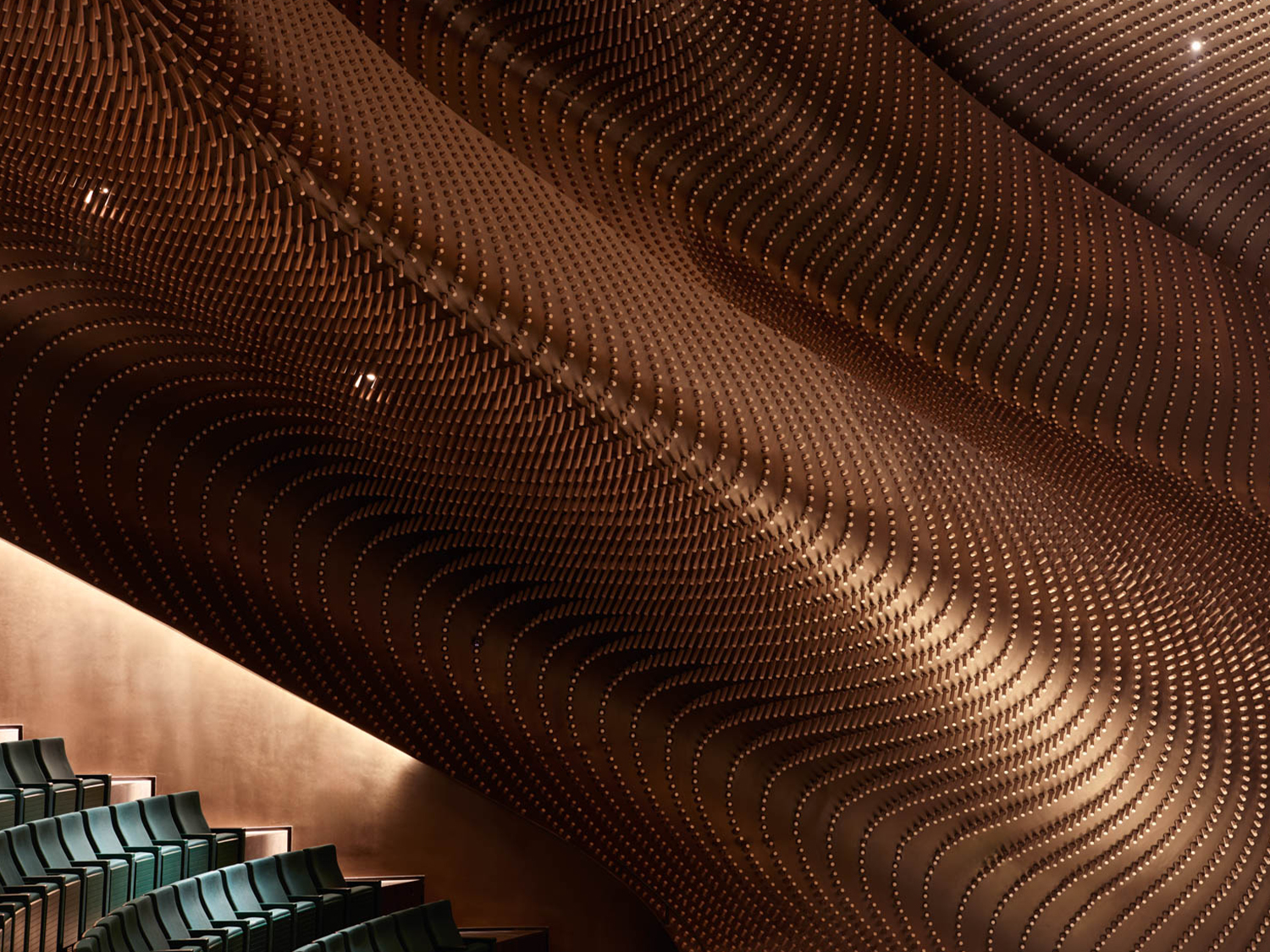
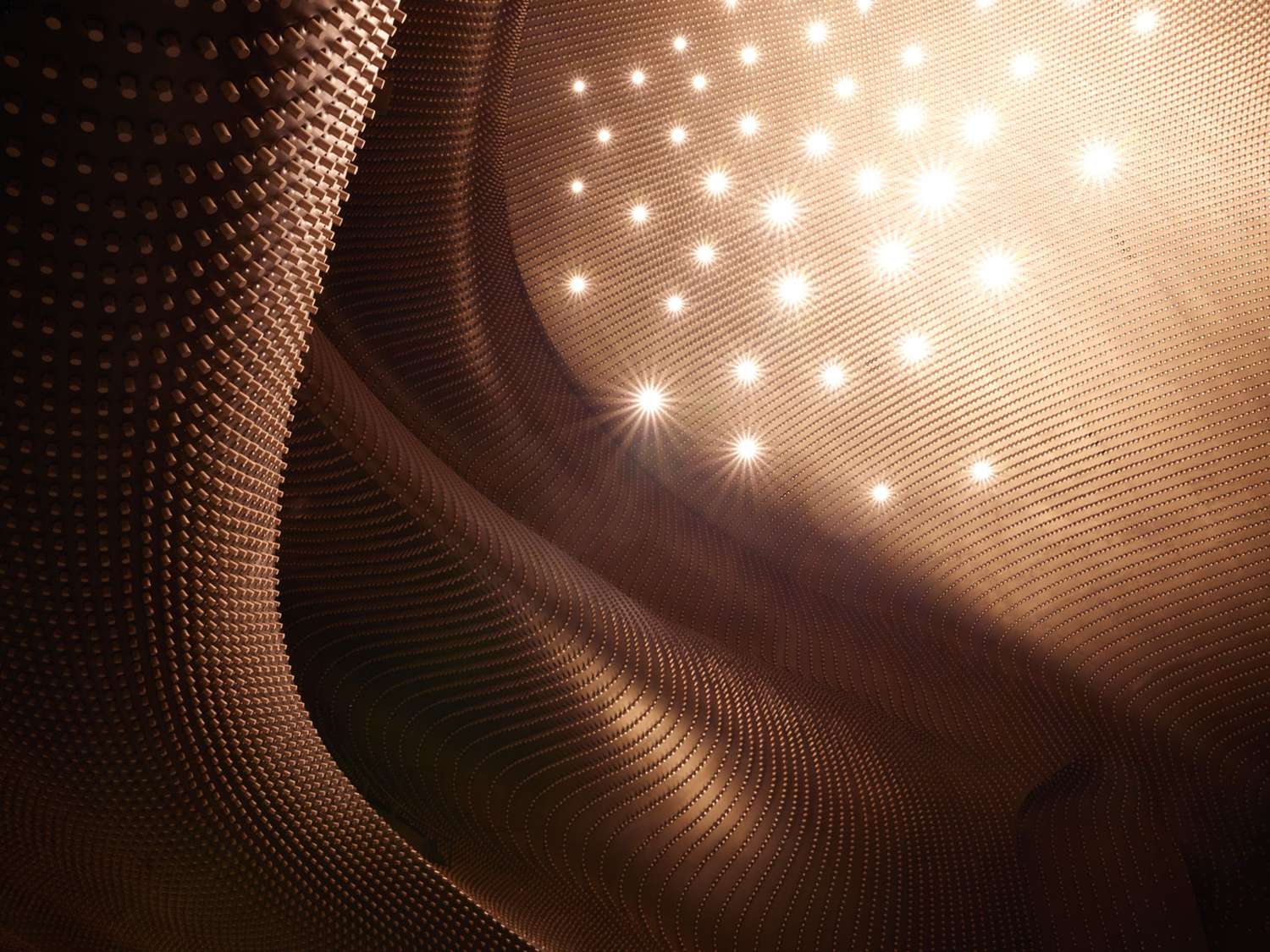
Within the Grand Theatre, the building’s curves move beyond visual dynamism and contextual allusion to assume an acoustic role. Its walls and ceiling are lined with some 100,000 ‘spines,’ varying in length, density, and tone. These elements improve sound diffusion, control reverberation, and break up standing waves, ensuring clarity and a consistent acoustic experience across the auditorium. The curving surfaces that appear to define the architecture are thus recalibrated as a functional system. This shift from sculpted surface to acoustically tuned enclosure makes the architecture more than something to be ‘seen’; it actively shapes what is ‘heard.’
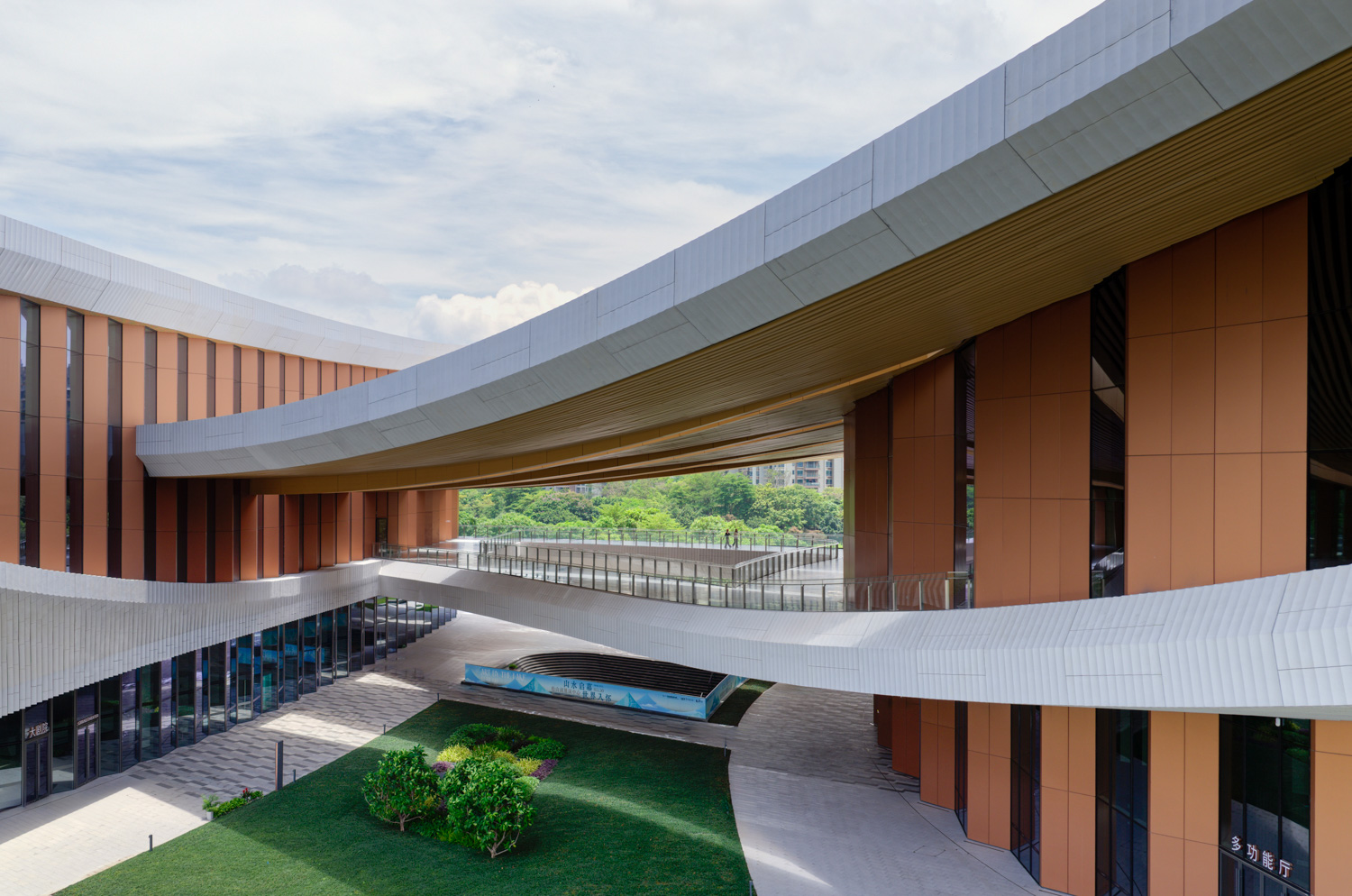
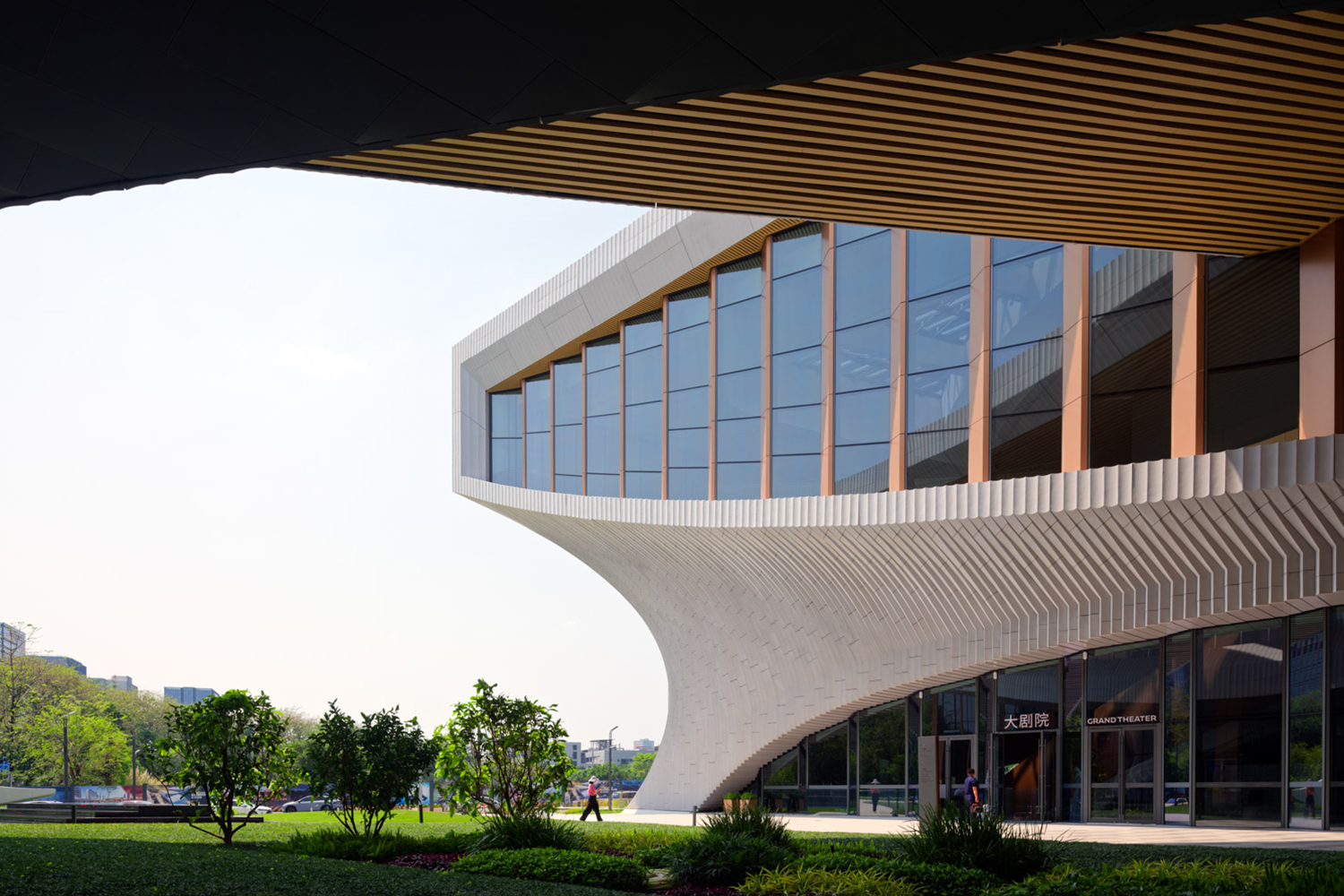
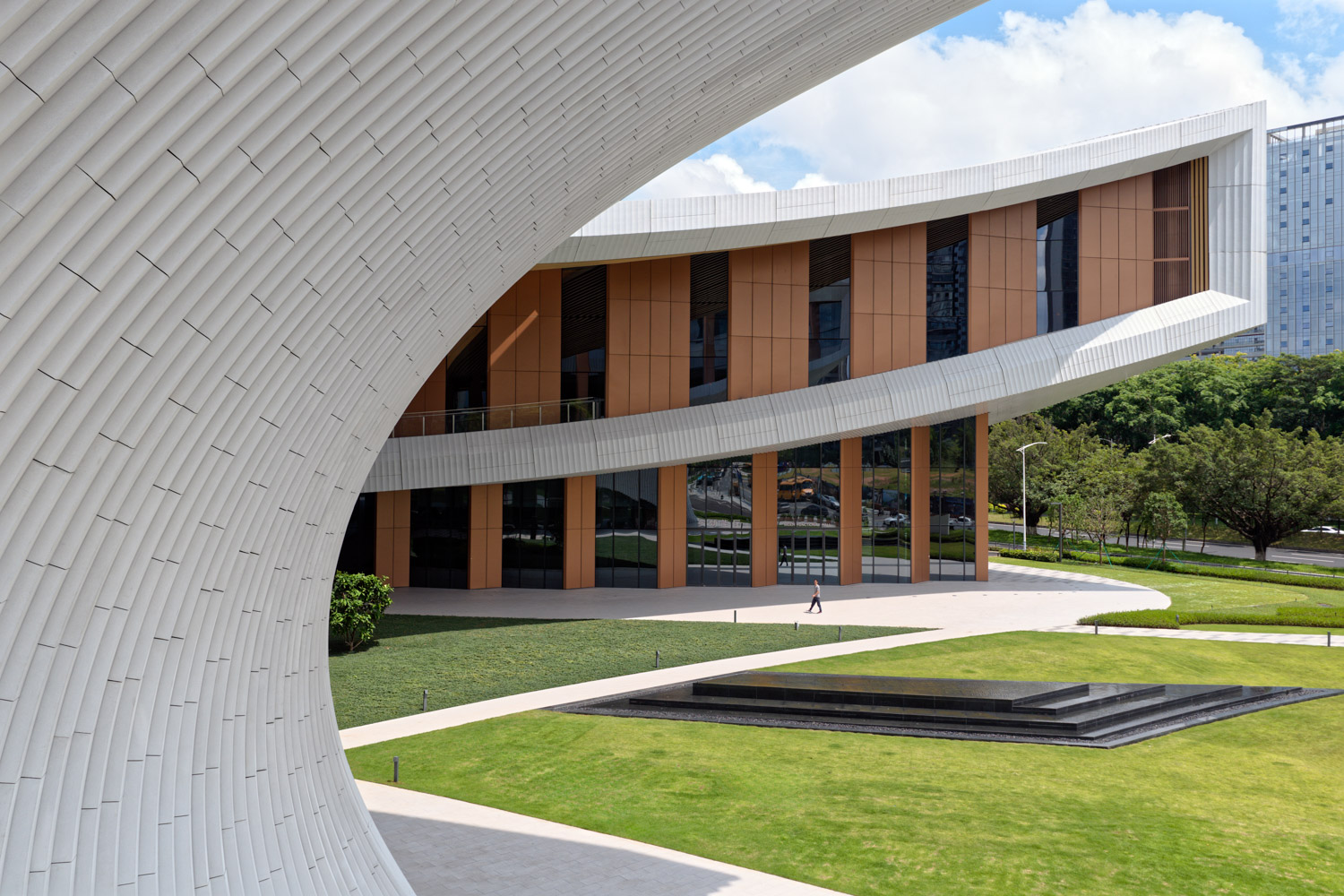
Songshan Lake can therefore be read as a project that remains unmistakably ZHA while seeking to extend the meaning of its familiar idiom beyond formal expression, toward a broader relationship with the city, its culture, and its communities. This broader role is supported by an array of technological systems, including a high-performance façade, intelligent HVAC, photovoltaic panels, rainwater harvesting, and permeable surfaces that allow water to infiltrate the ground and help restore wetlands. Such measures are less readily visible, and far less immediately arresting, than the building’s sculptural presence.
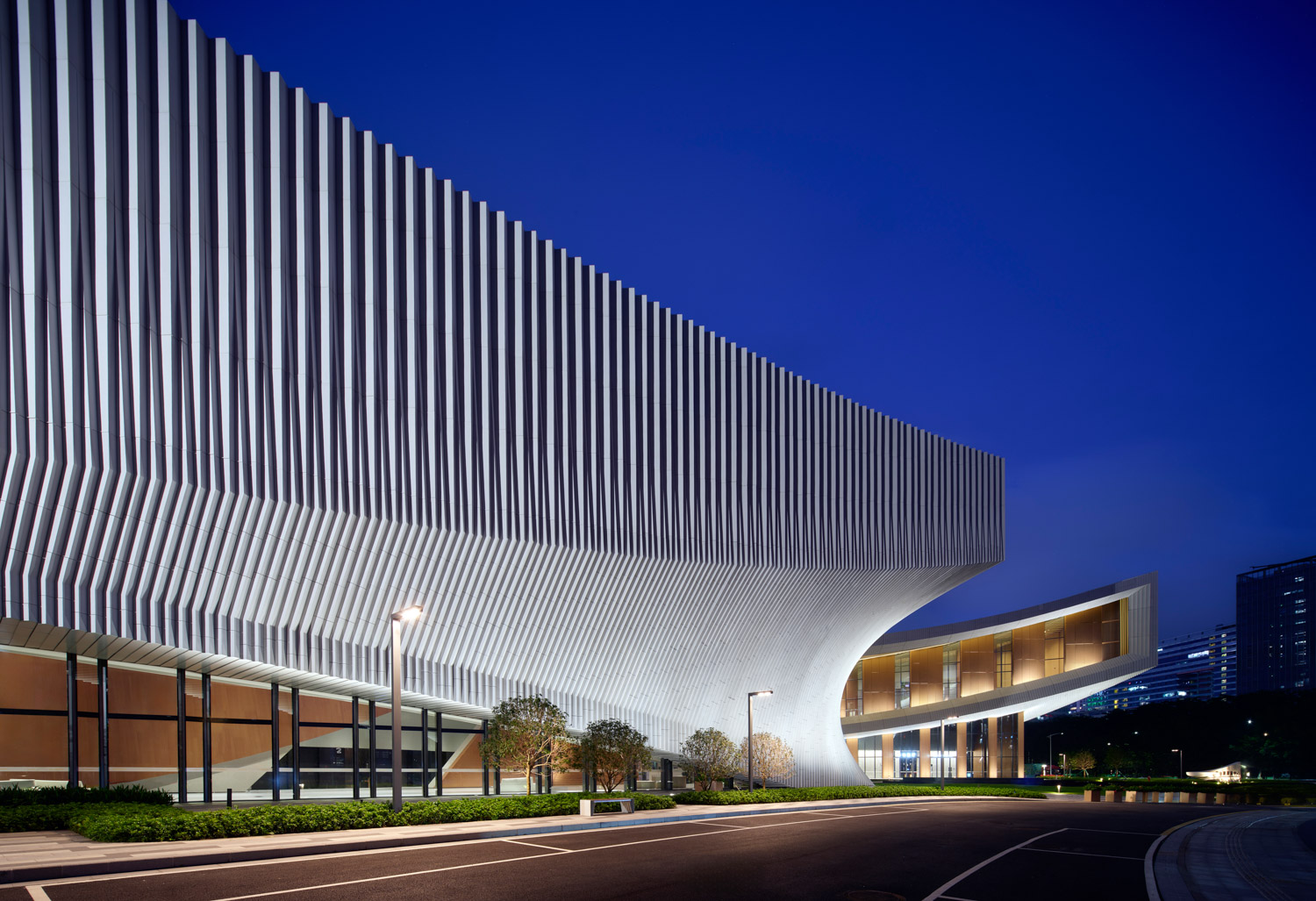
Perhaps, then, ZHA’s ‘new chapter’ does not lie in changing its formal vocabulary, but in asking whether that vocabulary can do more than produce an image. Songshan Lake may not depart from what we recognize as Zaha Hadid Architects. Rather, it tests how far those familiar lines can become public space, acoustic systems, climatic mechanisms, and an architecture that assumes a more active role in the life of the city, its communities, and its people.