

EXPLORE BANGKOK’S MODERN ARCHITECTURE THROUGH PHOTOGRAPHS AND STORIES IN WALTER KODITEK’S BOOK ‘BANGKOK MODERN’
TEXT: CHIWIN LAOKETKIT
PHOTO: KETSIREE WONGWAN
(For Thai, press here)
Bangkok Modern: Architecture of the 1950s-1970s
Walter Koditek
River Books, 2025
9.65 inch x 9.65 inch
520 Pages
ISBN 978-616-45-1101-9
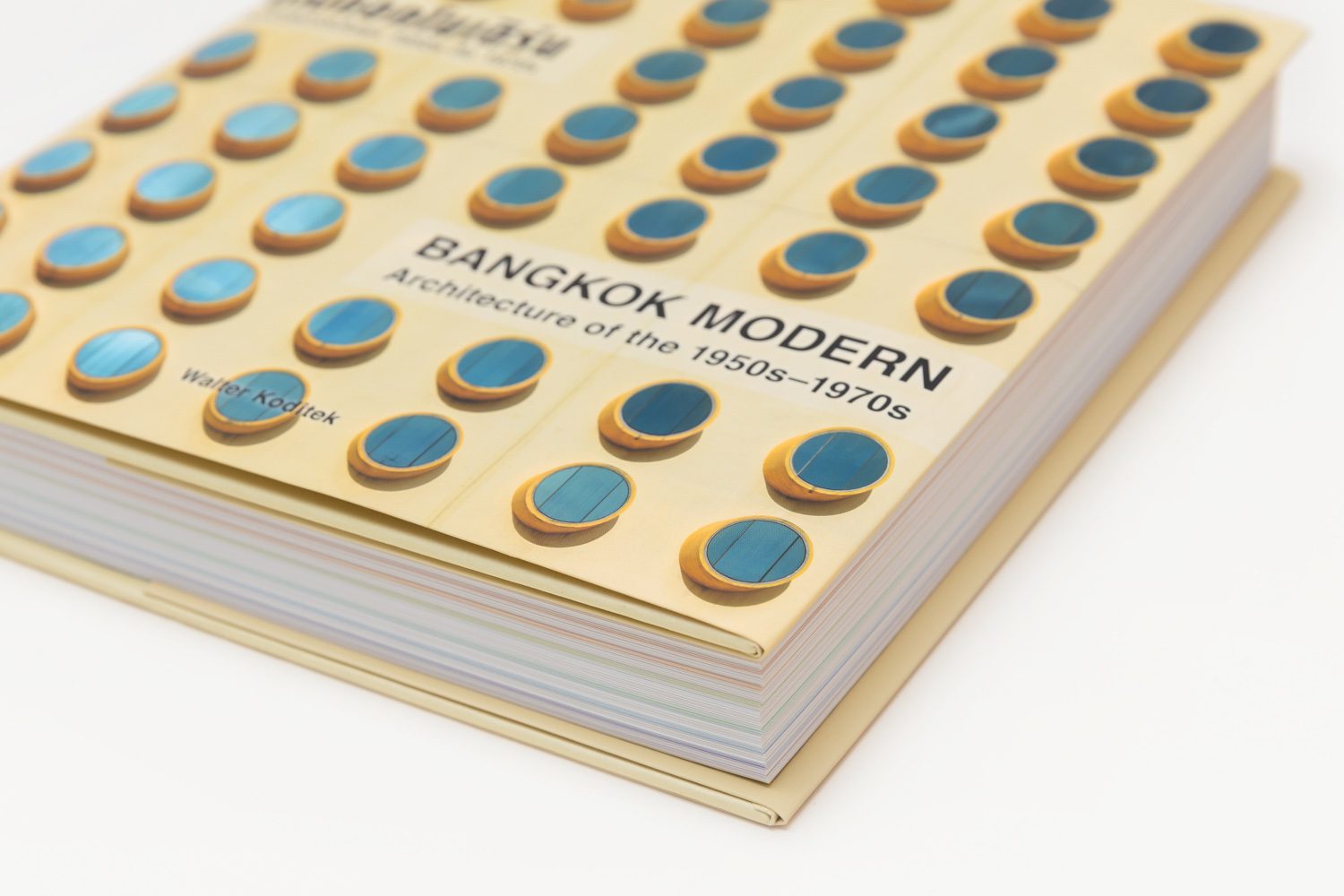
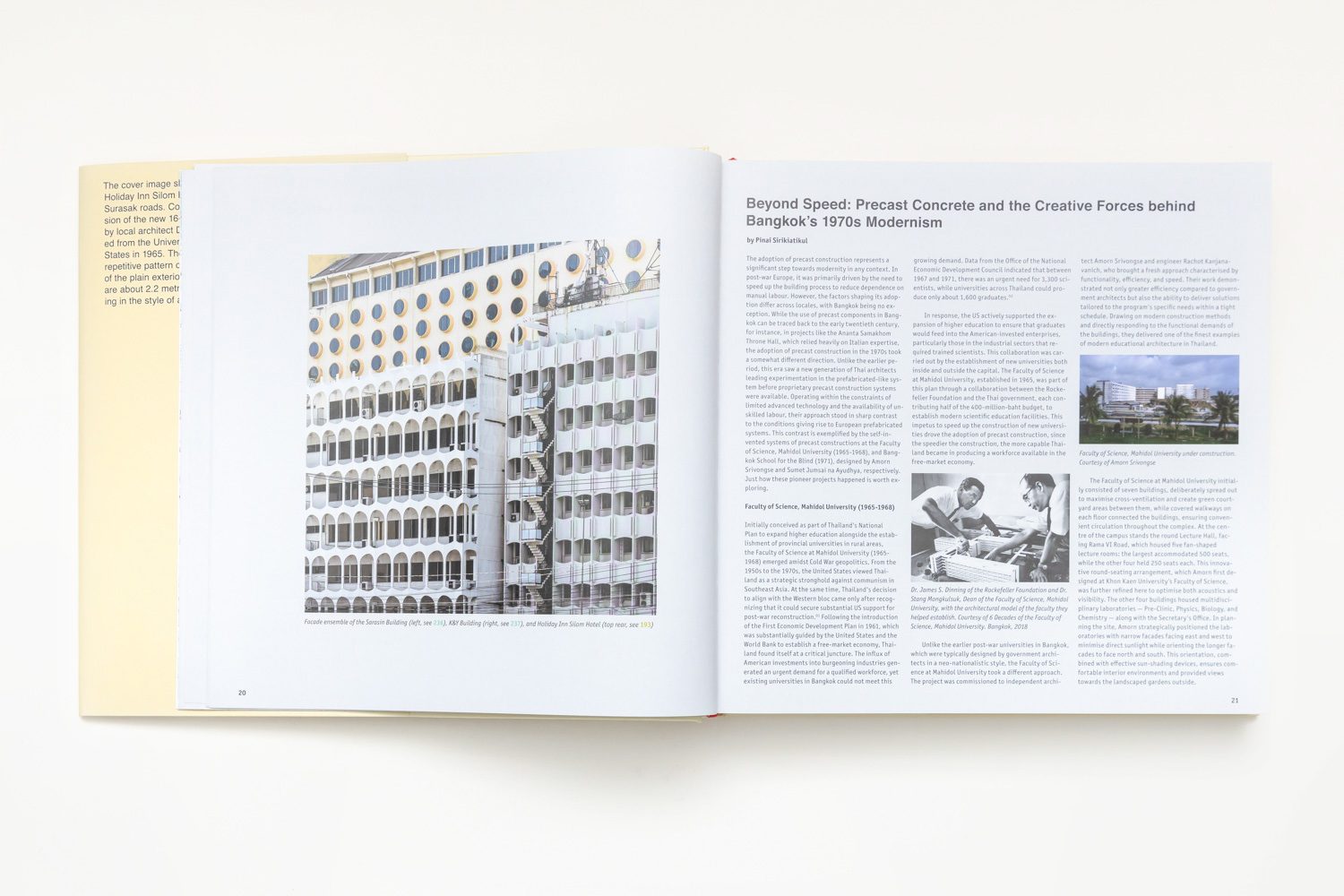
Even before turning to the first page, the cover alone signals the book’s modernist essence, featuring the façade of the Holiday Inn Bangkok Silom.
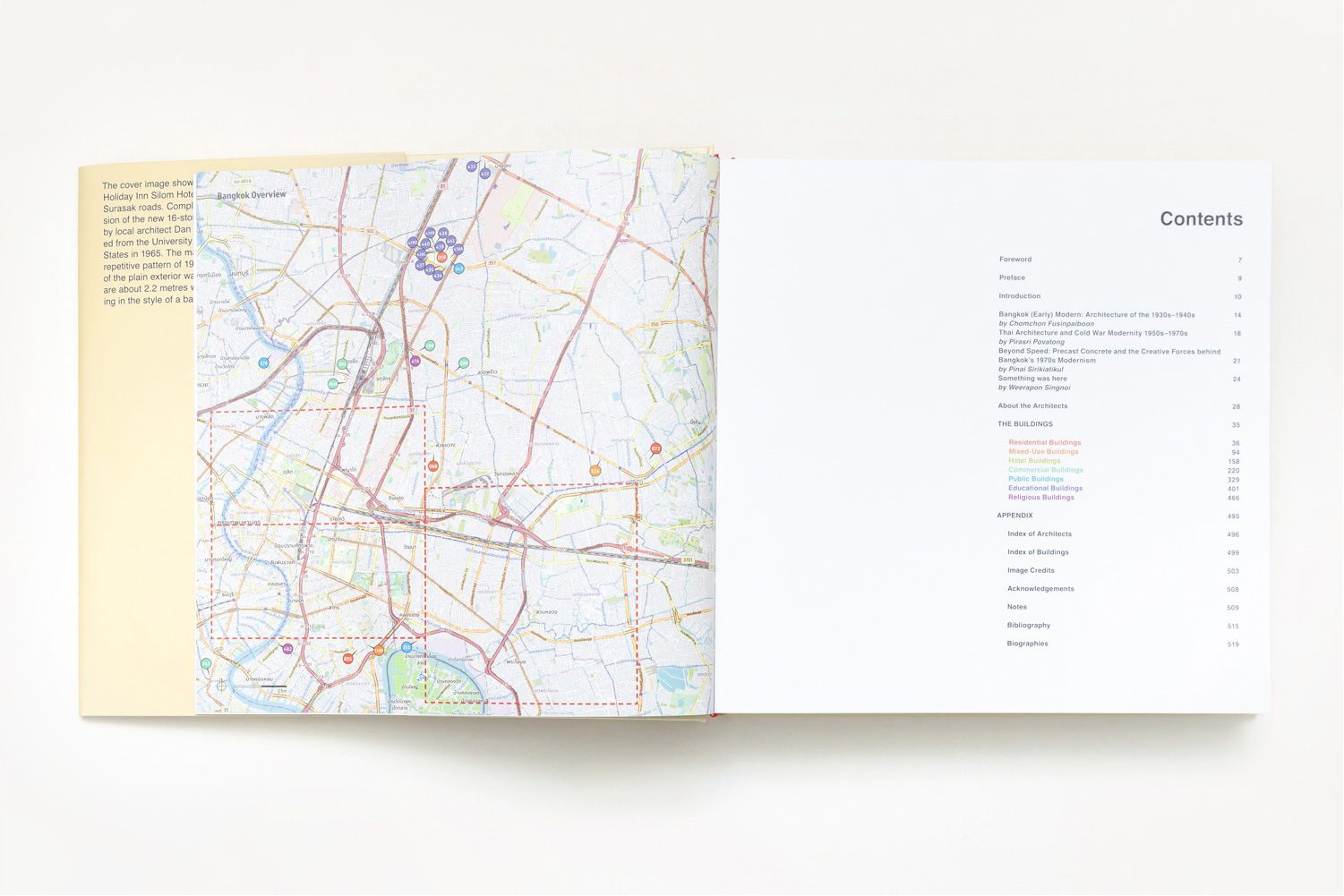
‘Bangkok Modern: Architecture of the 1950s–1970s’ is a visual and narrative chronicle of Bangkok’s modernist architecture captured through the lens of German urban planner Walter Koditek. A passionate observer of the built environment, Koditek has previously published architectural studies on cities such as Hong Kong and Phnom Penh. His approach goes beyond documentation; he maps the locations of the buildings, encouraging readers to explore the city for themselves. In this latest publication, he turns his camera toward the modernist façades of Bangkok, capturing buildings from a period of rapid urban development influenced in part by U.S. anti-communist policies. This was an era when clean water flowed, streets were lit, roads expanded, and industry thrived.

In the preface, Koditek recounts a memory from around 1987, when he was about 22 years old. He had the chance to see a film at Scala Theatre, a standalone cinema in Siam Square. He was immediately struck by the prominence of its façade, as well as the structure of its columns and dome. These architectural elements had been thoughtfully refined and embellished by the architect to reflect Thai aesthetics. The result was a building that felt grand, elegant, and enduring, drawing clear inspiration from the modernist Art Deco style that defined Scala’s design.
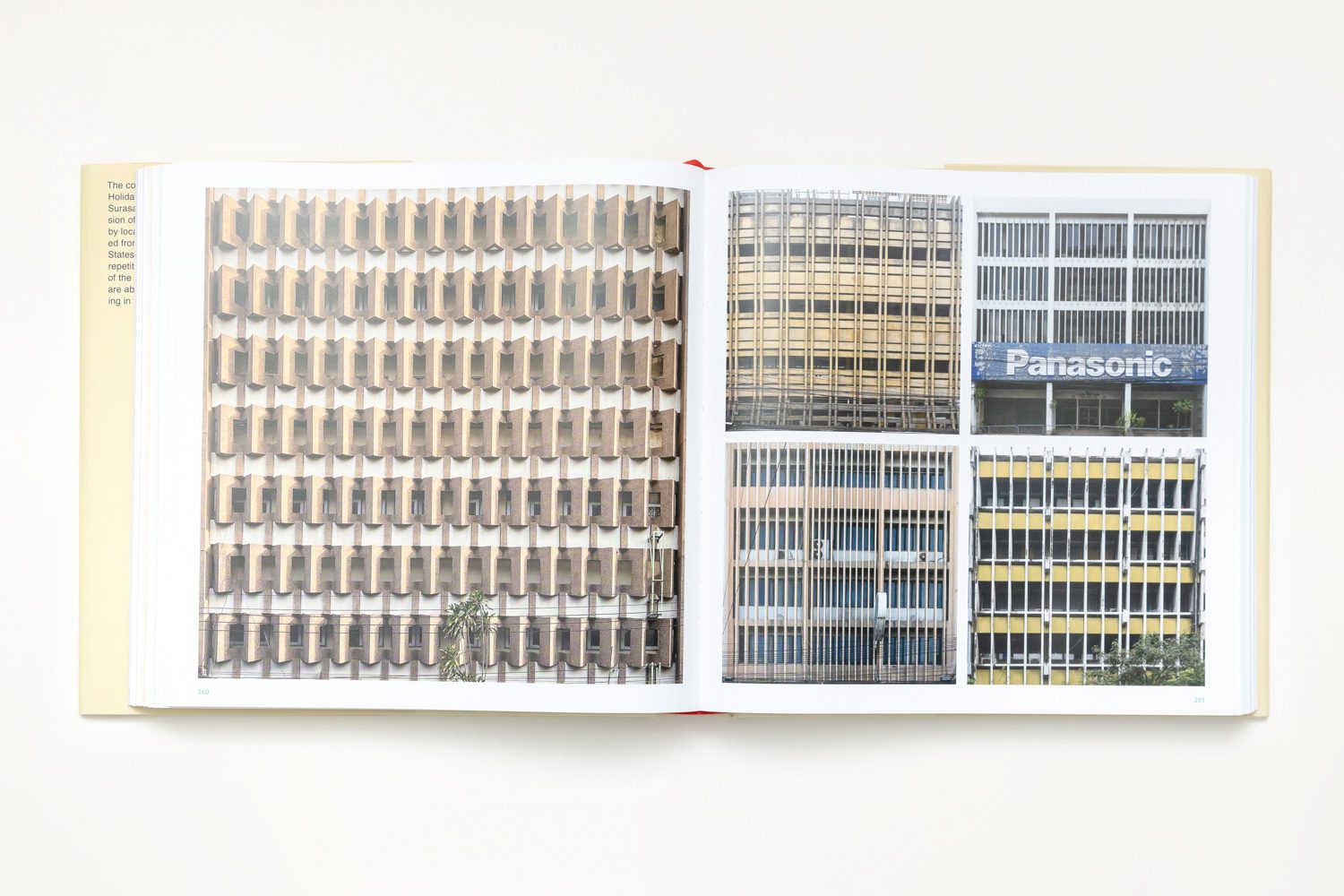
Years later, Koditek returned to Bangkok, camera in hand, to walk the streets and reconnect with the city’s spaces—not as a tourist, but to immerse himself in the moods and meanings embedded in specific urban locales. For longtime residents, Bangkok may feel anything but romantic; it’s often puzzling, ever-changing, and unpredictable. Yet to Koditek, the streets and alleyways are lined with postwar modernist buildings; many of which, at first glance, may seem similar. But on closer inspection, these buildings reveal bold architectural ideas, strikingly varied façades, and a rich diversity of design languages that mirror the city’s evolution. To capture this, Koditek undertook two major rounds of documentation: the first between 2017 and 2019, and the second from 2022 to 2024.
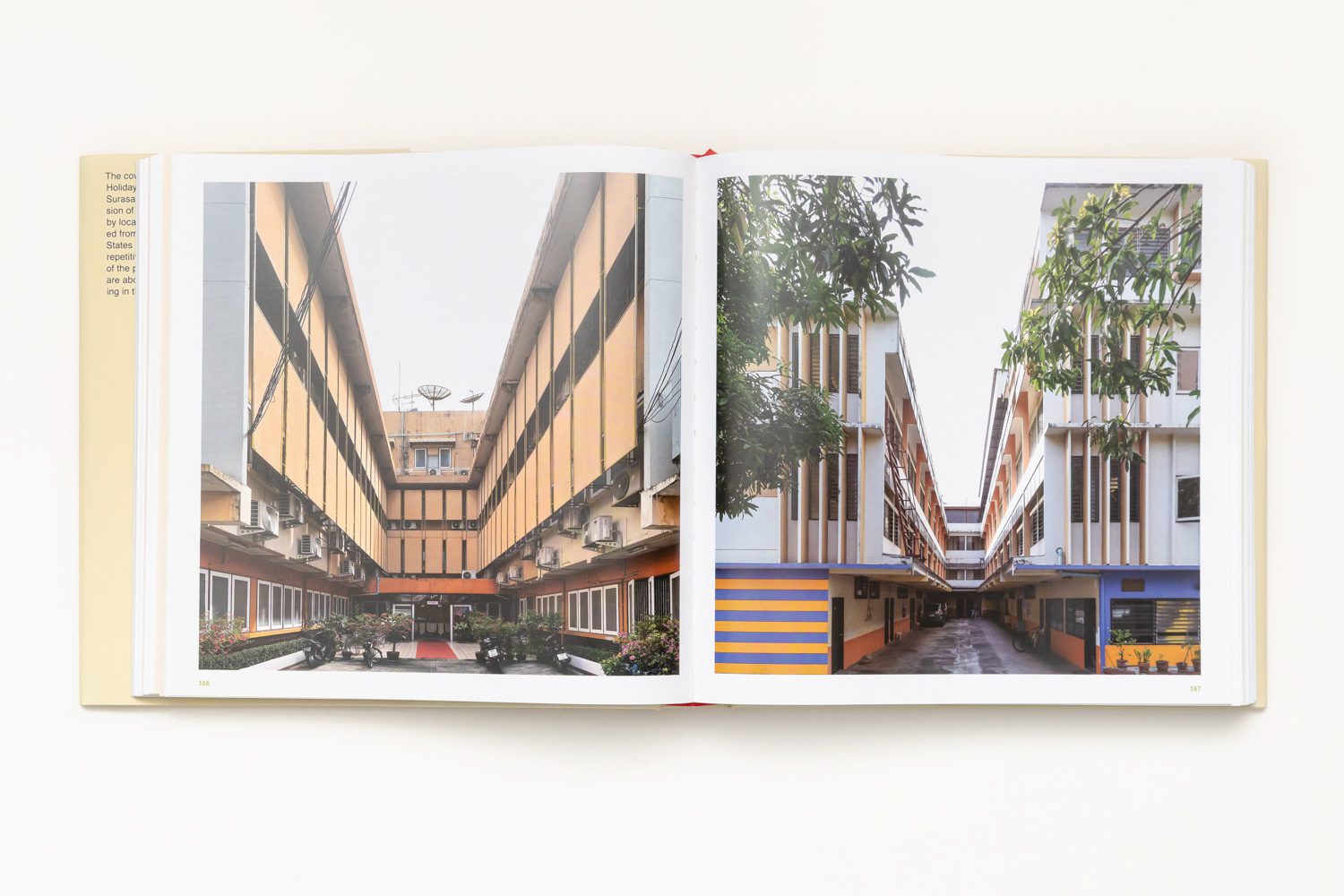
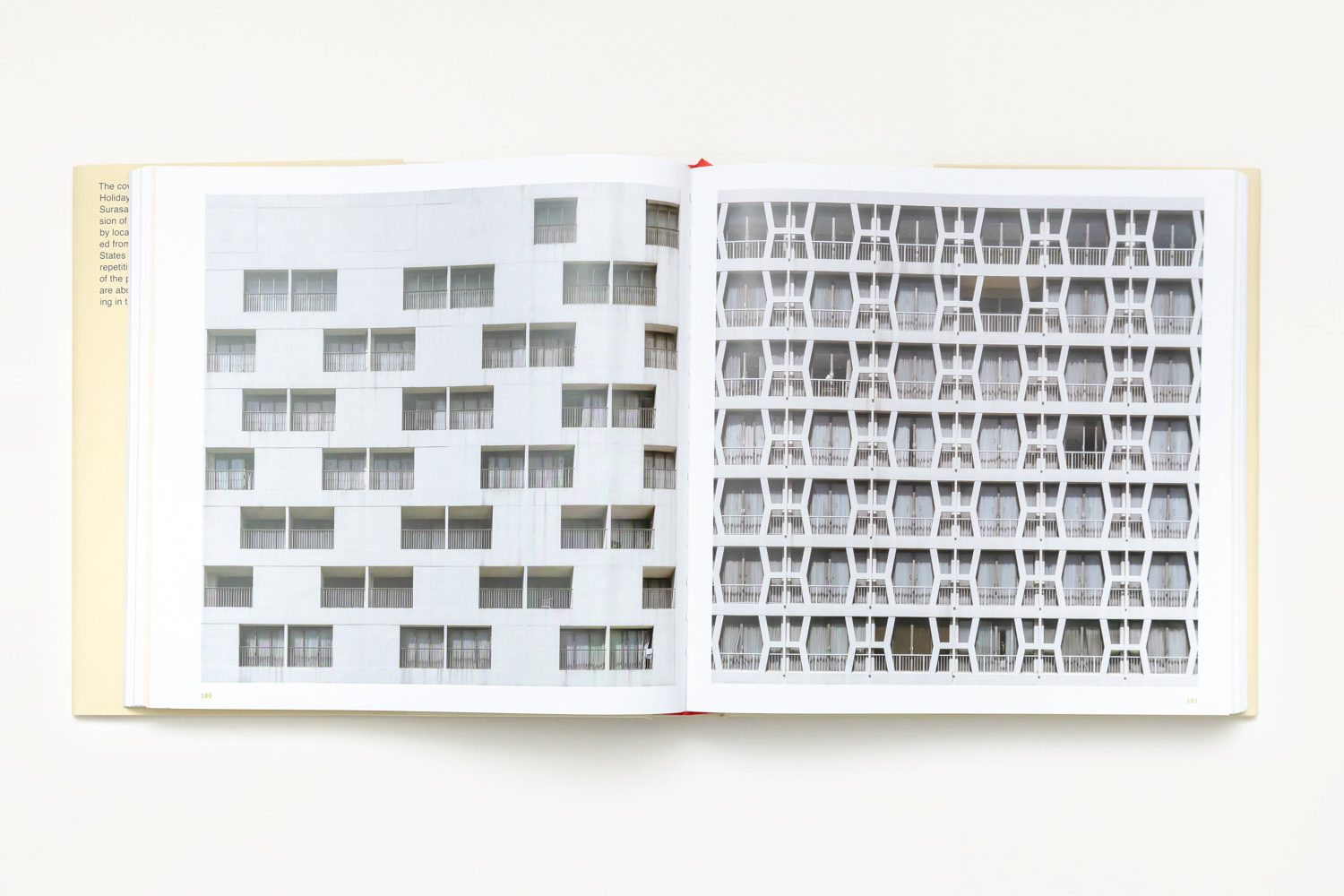
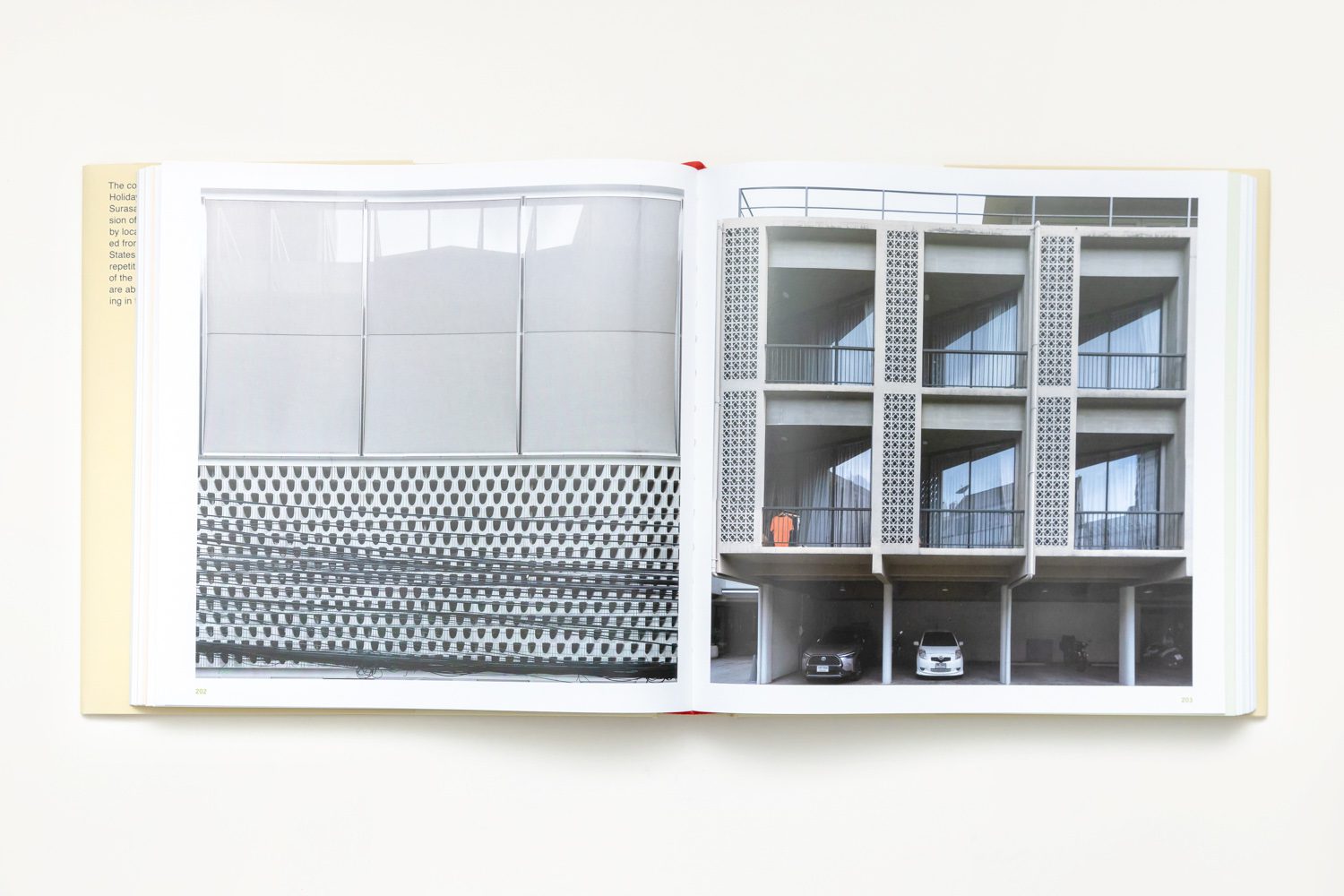
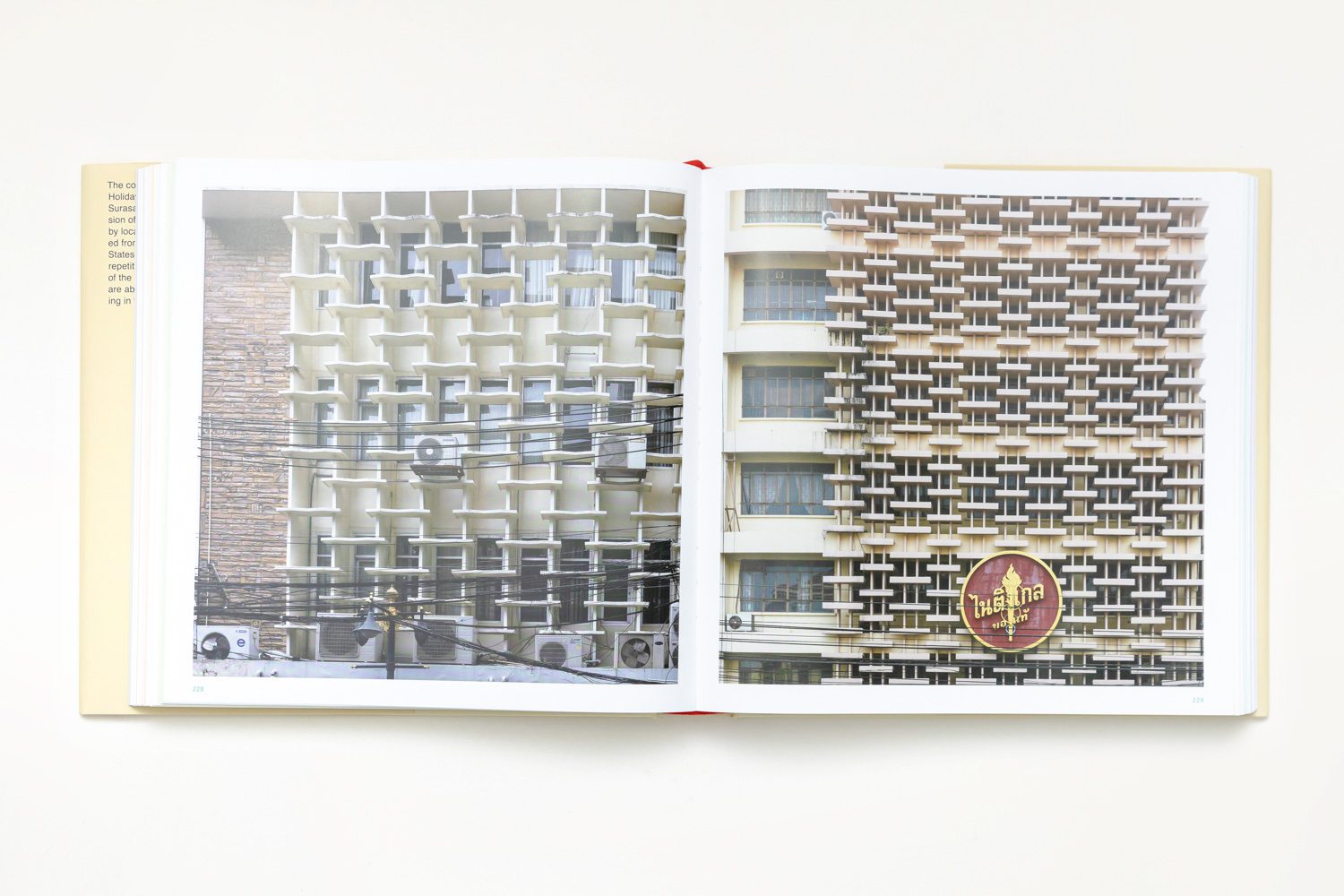
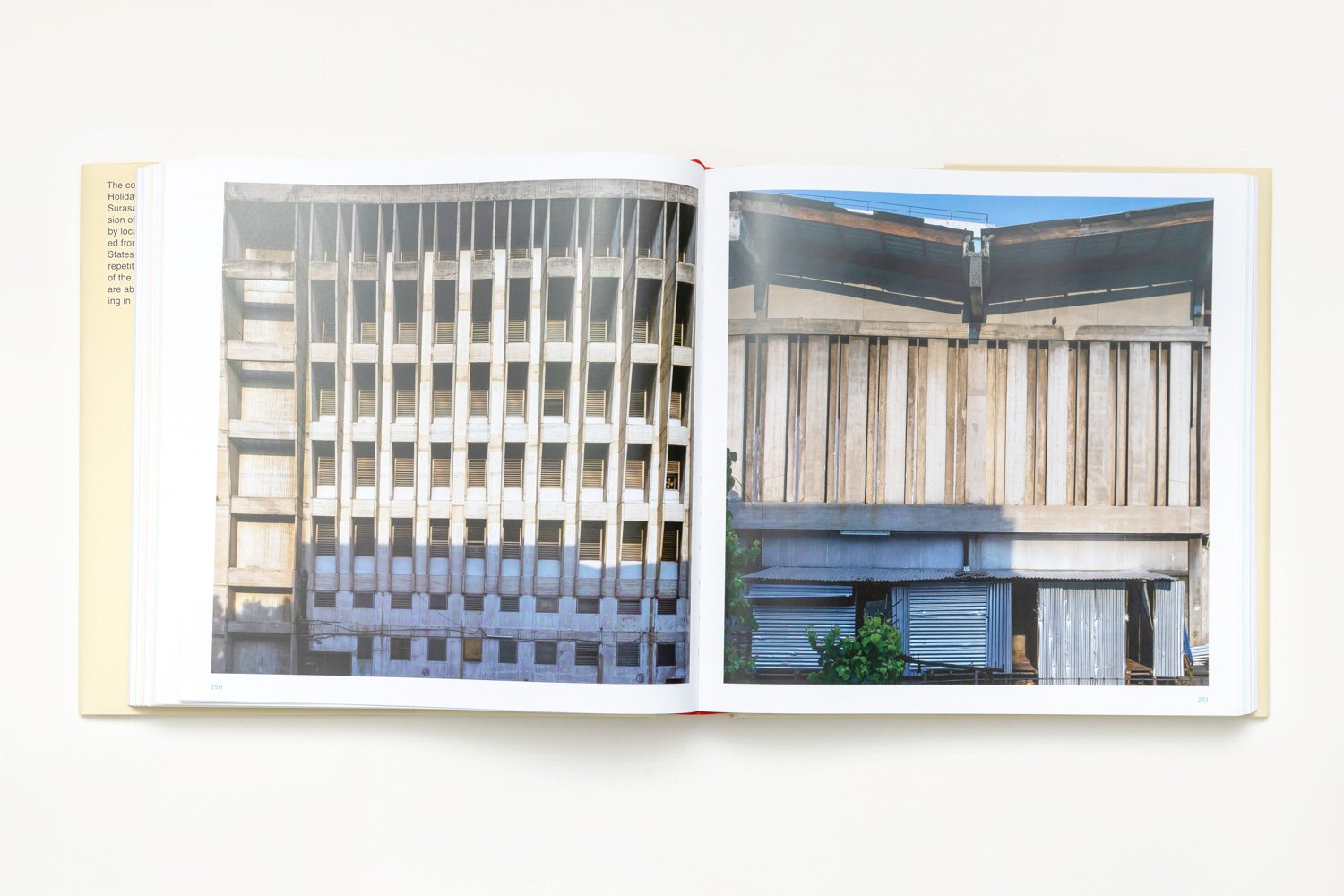
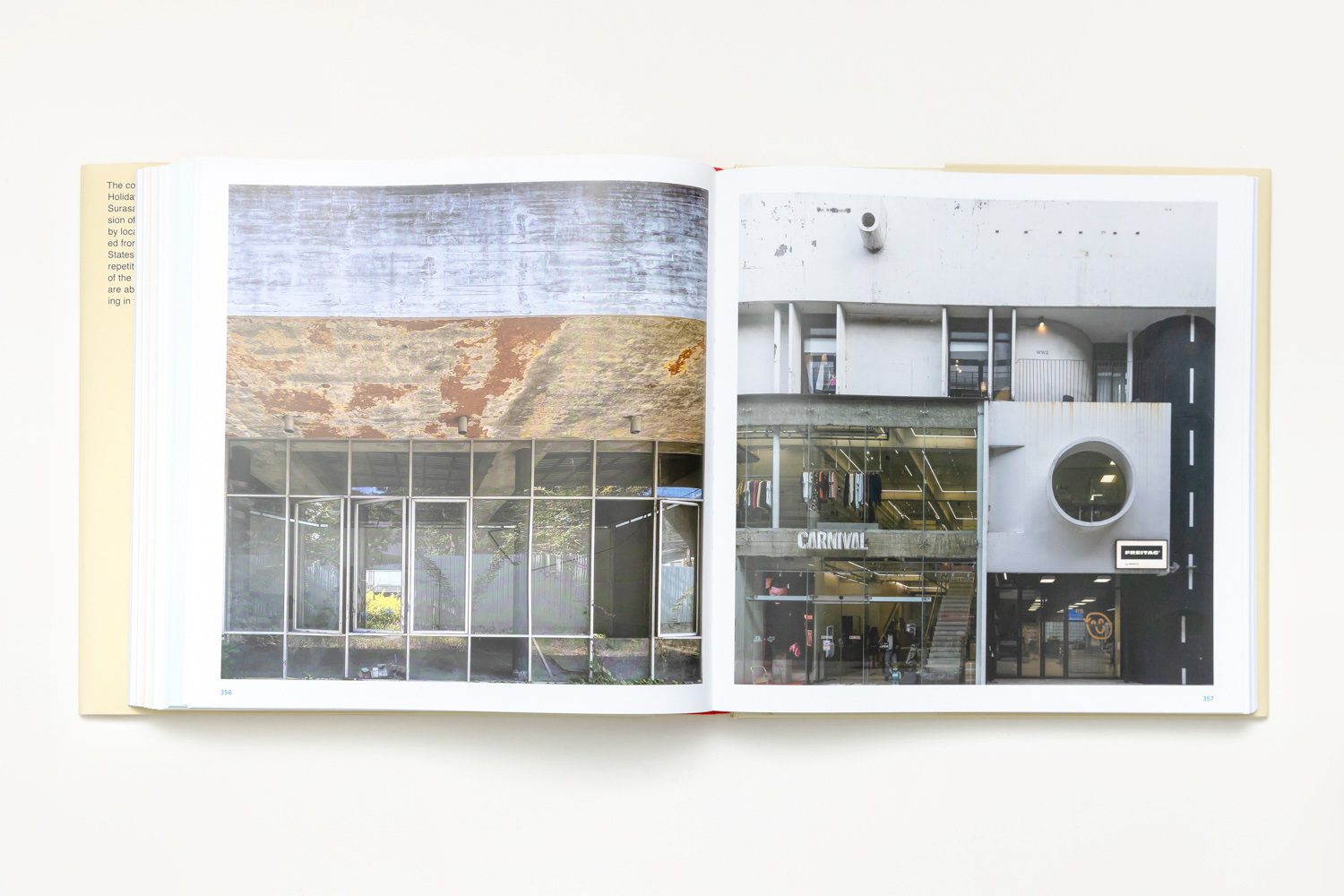
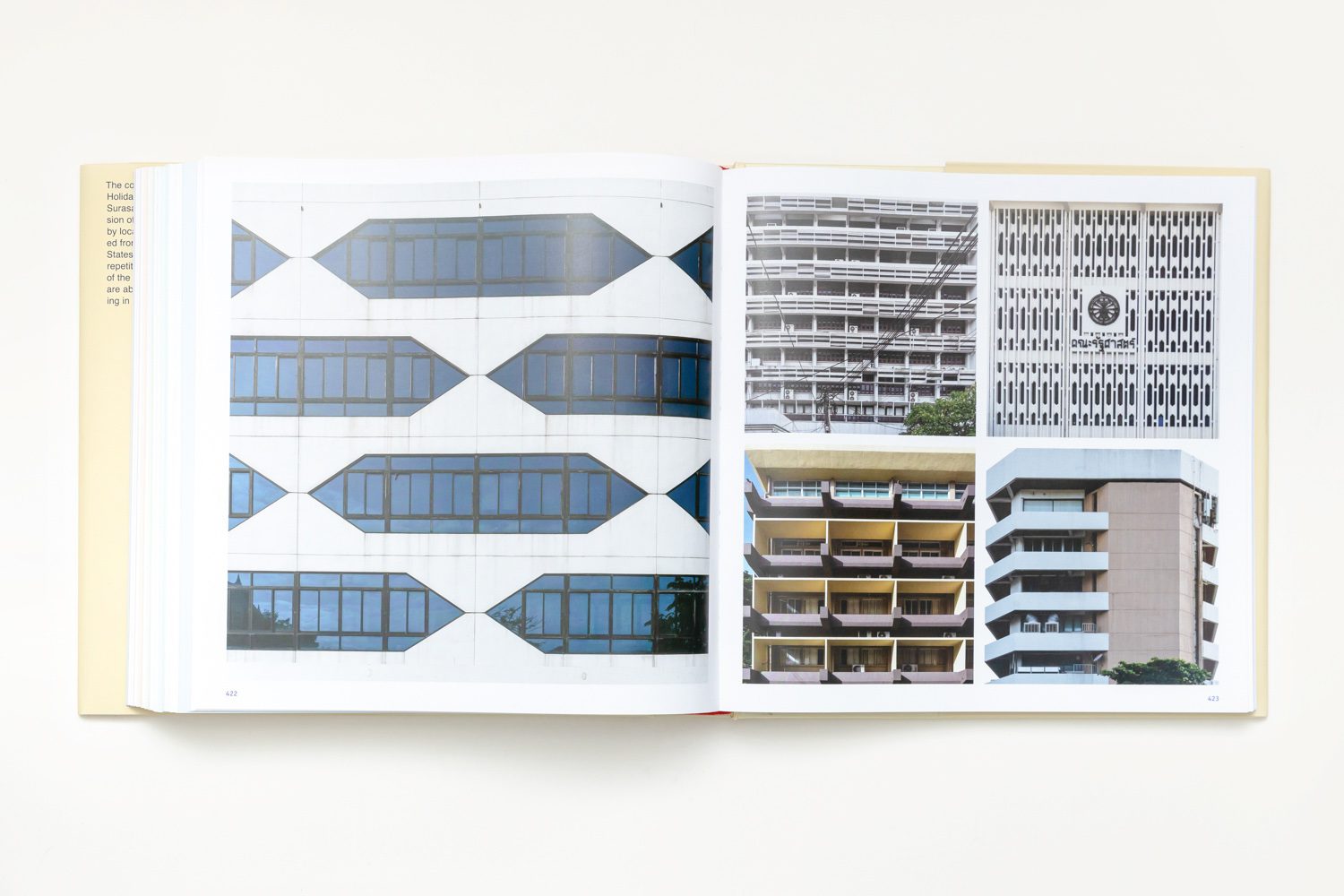
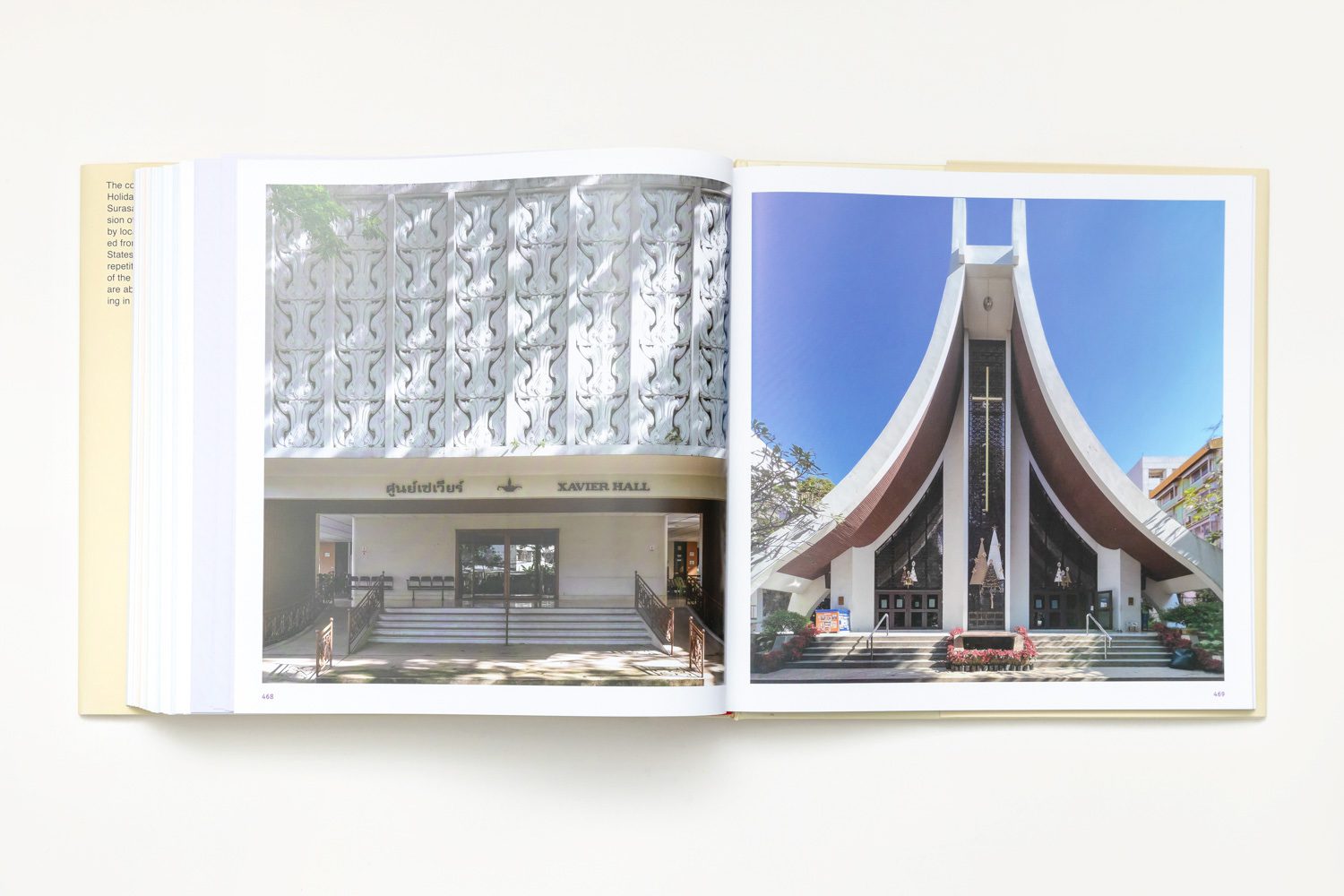
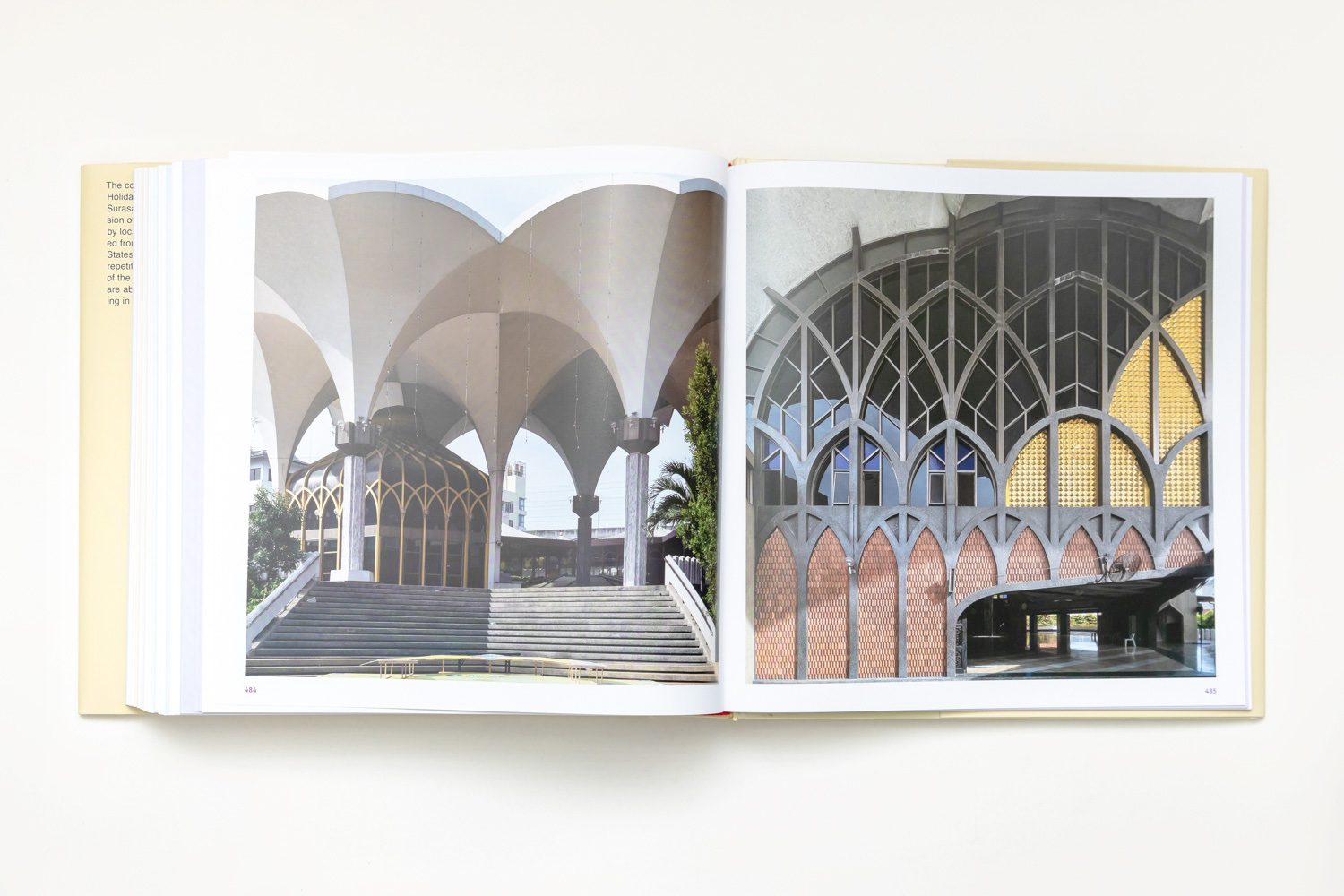
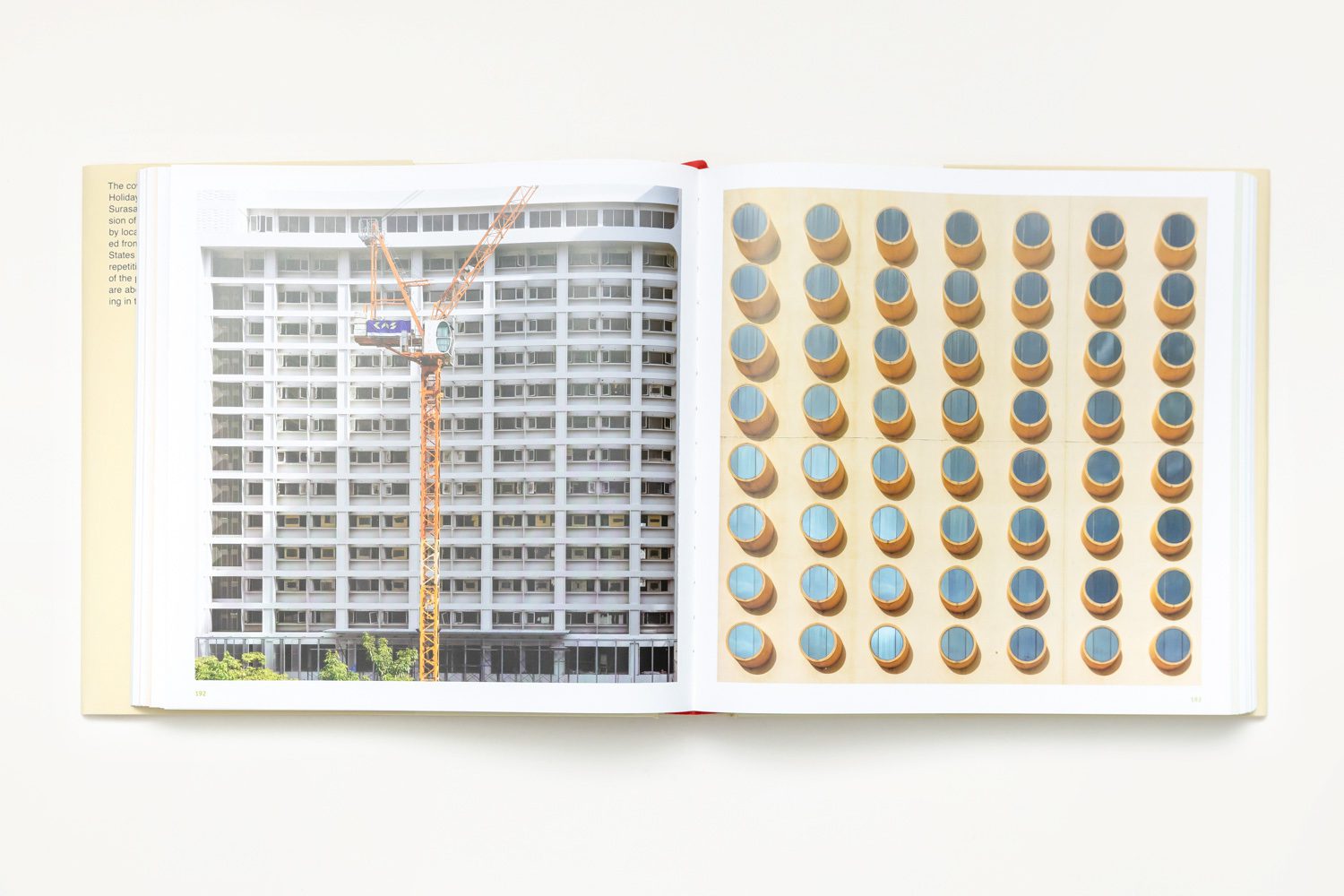
The book opens with a historical overview that sets the context for the architectural content. It traces Thailand’s political transition to democracy around 1932, followed by a shift in global power from war-torn Europe to the United States in the aftermath of World War II. This geopolitical realignment brought modernization and Cold War policies to Southeast Asia, which in turn led to widespread economic development and infrastructure expansion across the region.
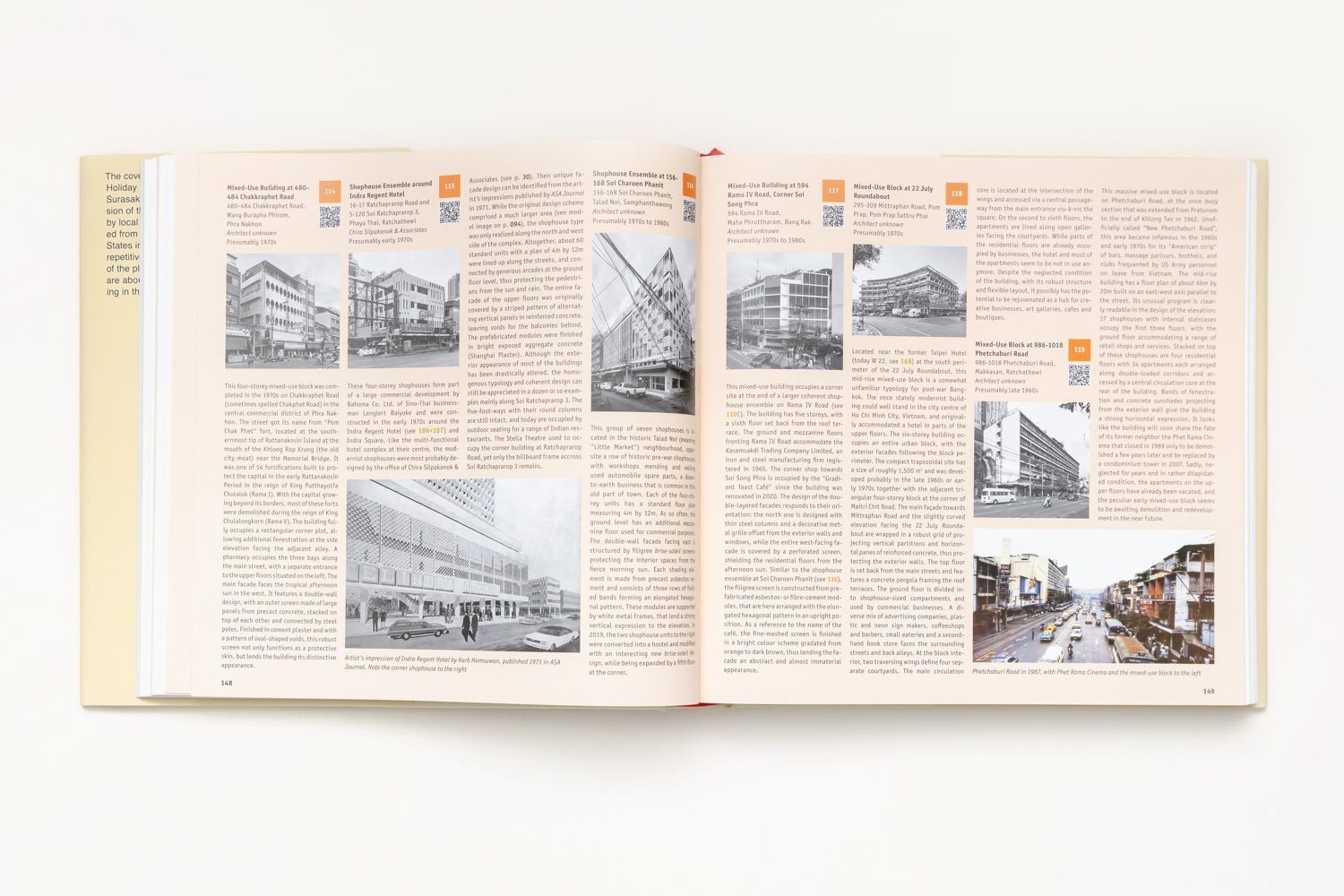
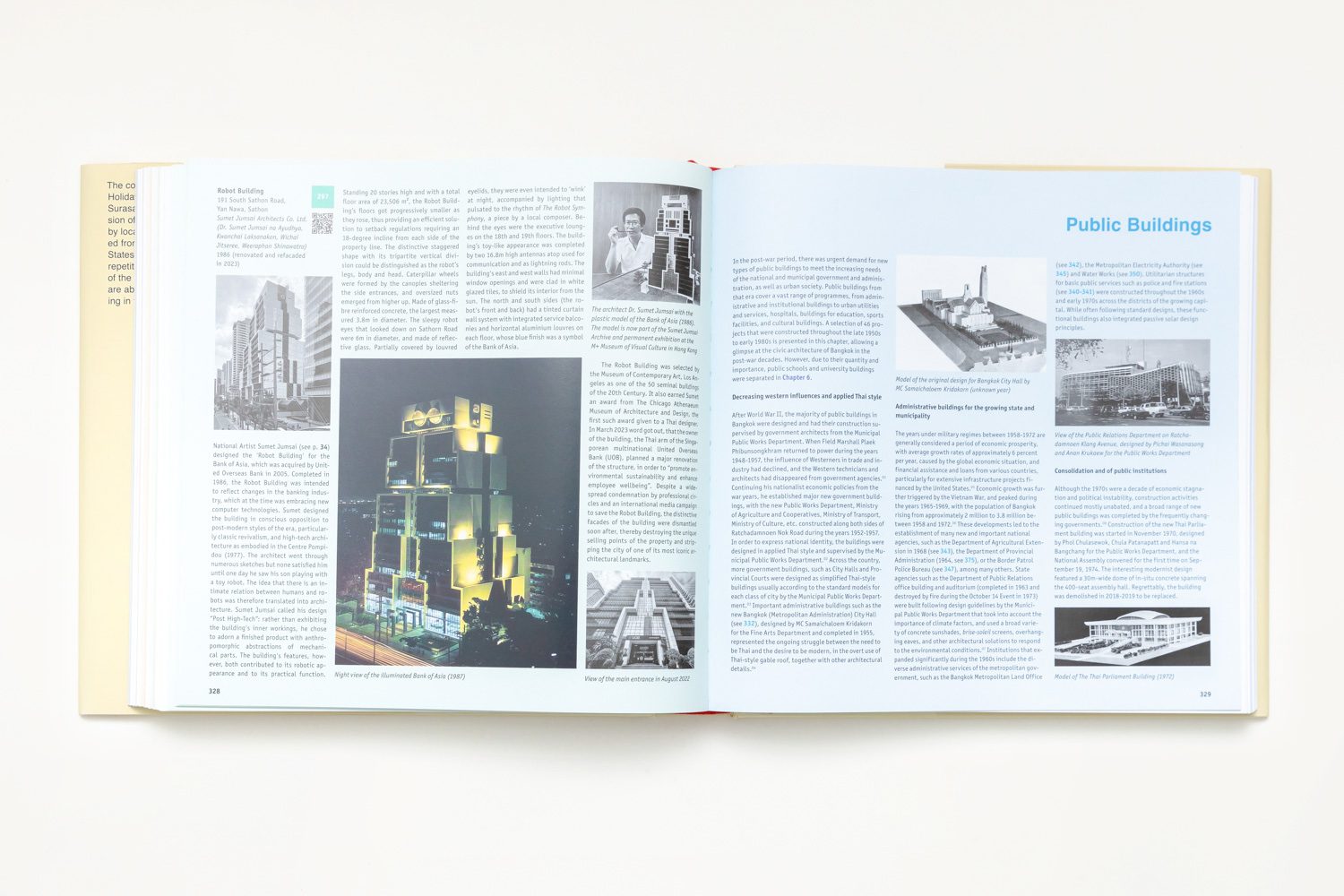
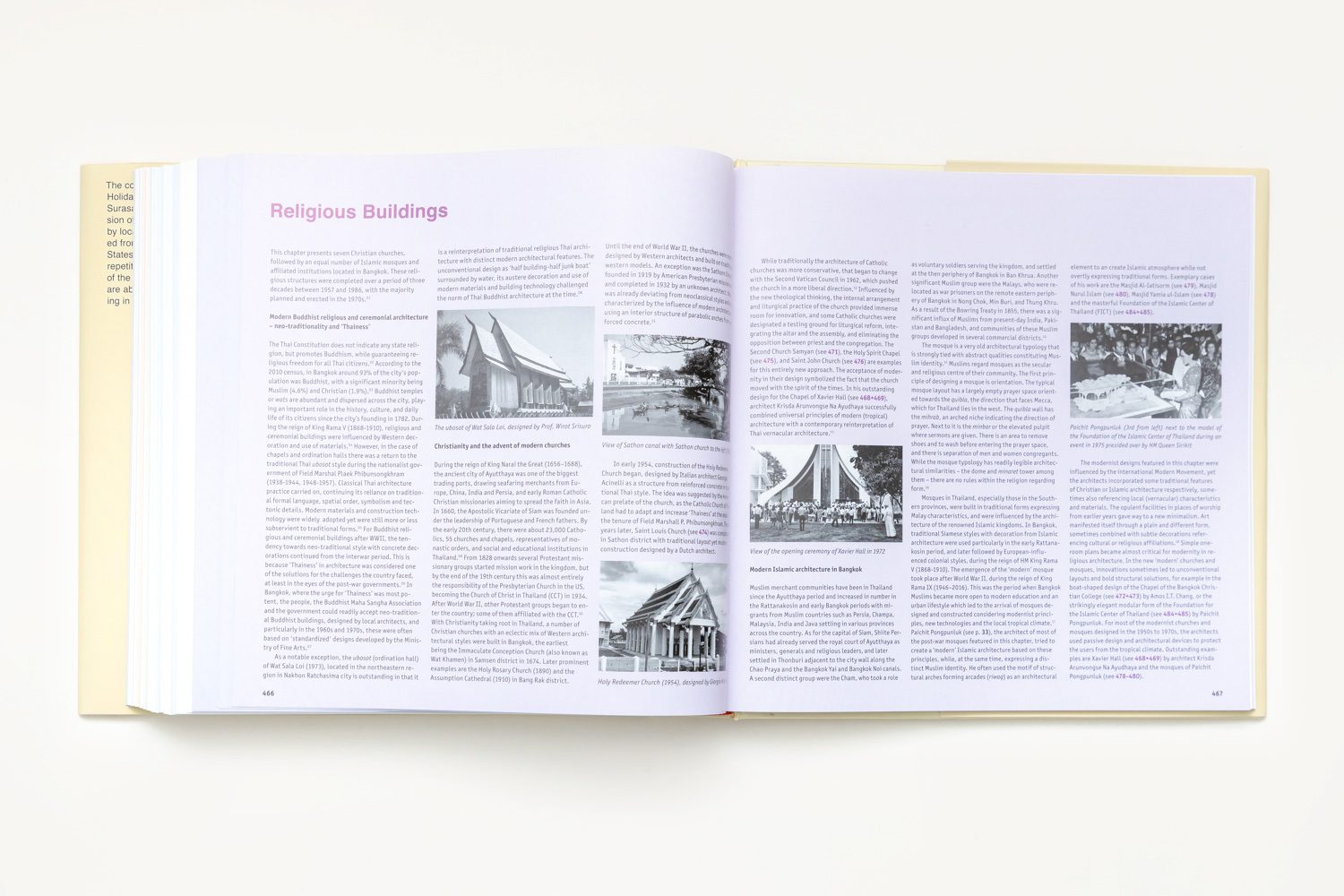
The core of the book lies in its central highlight, which unfolds through a categorized photographic survey of modernist architecture constructed in Bangkok between the 1950s and 1970s. The images are organized by building type—residential buildings, hotels, commercial structures, mixed-use buildings, public buildings, educational institutions, and religious architecture, with each category marked by a distinct color. The narrative is threaded together through a combination of archival photographs, original construction plans, and recent images of façades. This thoughtful presentation allows readers to understand the architectural character of each building type across different areas of Bangkok. On one level, it reveals the academic grounding of modernist proportions and their integration with widely used materials of the time, such as cement and concrete. On another, it draws attention to the hidden beauty within the façades – unexpected, rhythmic details that may initially escape notice but ultimately form a visual language uniquely attuned to the city’s hot and humid tropical climate.
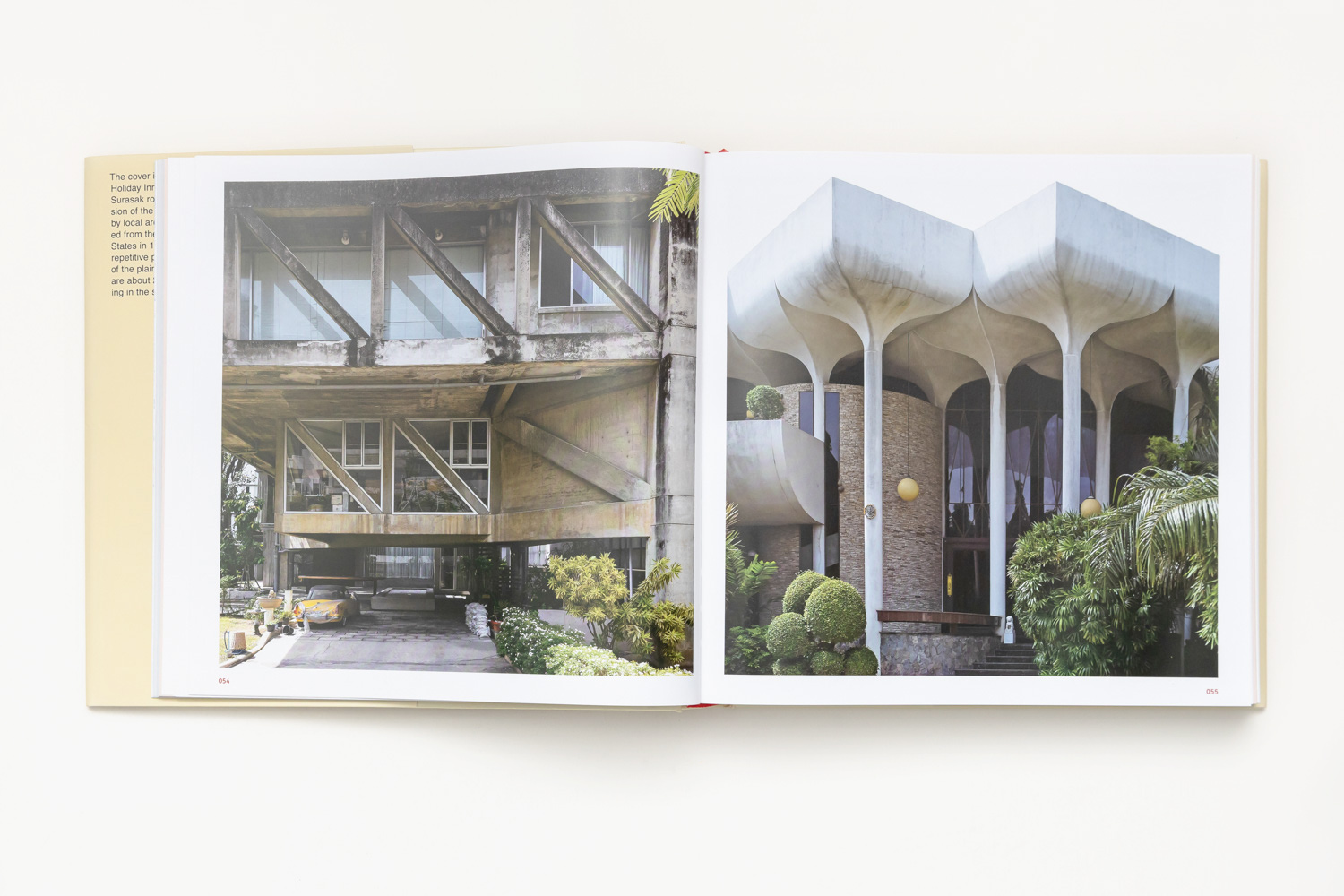
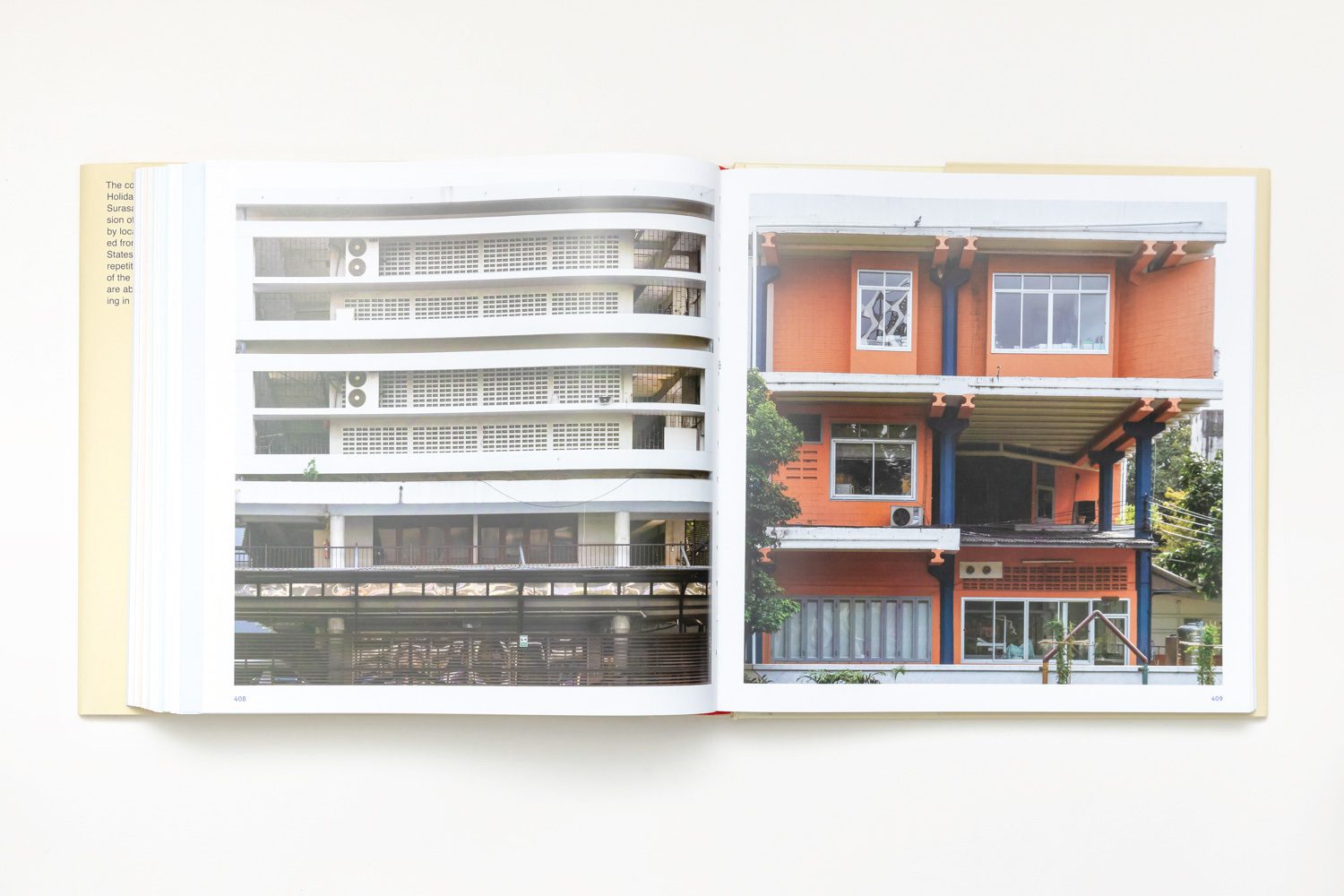
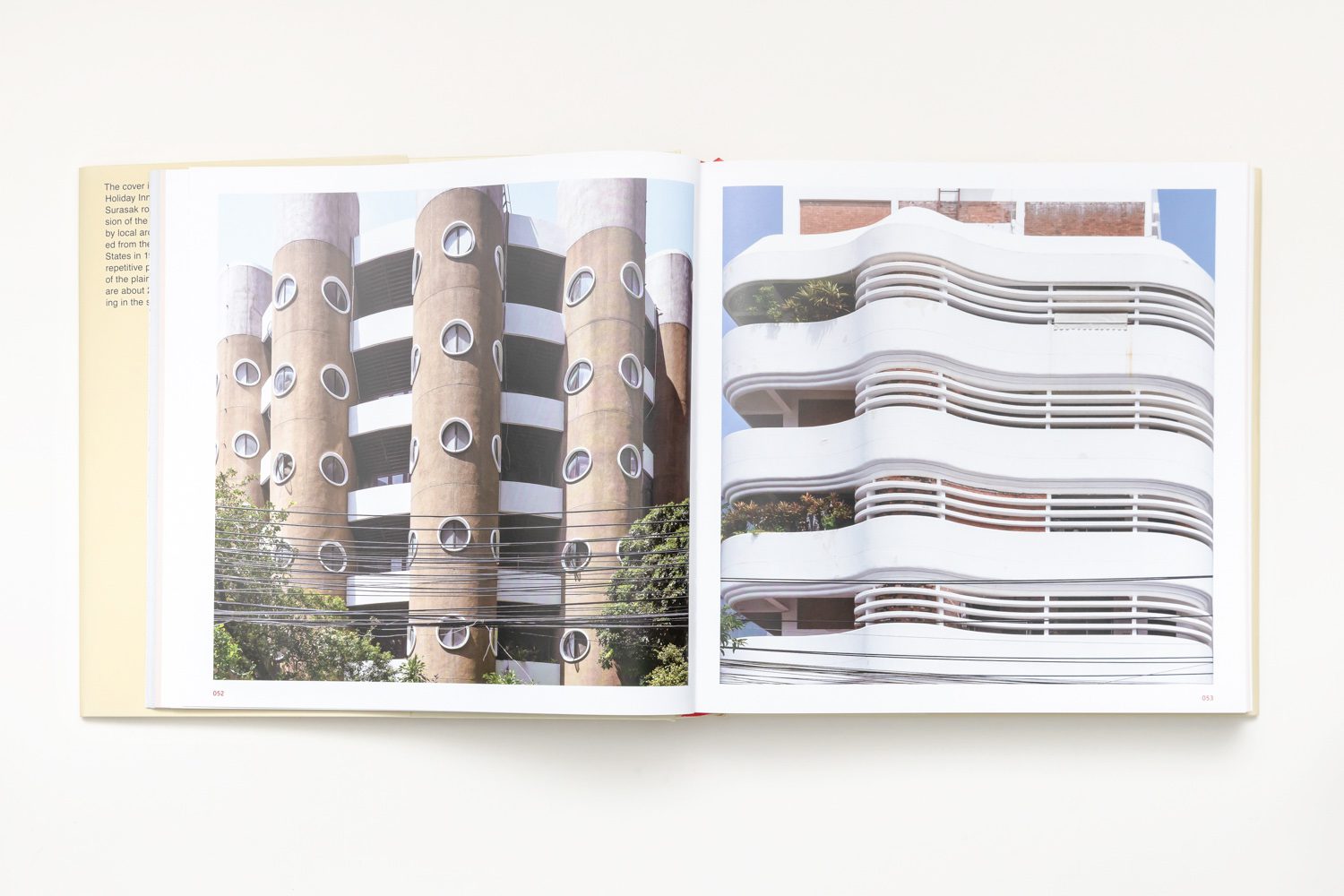
One of the book’s equally compelling qualities is the way it invites readers to question and contemplate the ideas embedded within the structural and façade elements of what were once considered cutting-edge architectural forms. It prompts a deeper inquiry into the intellectual foundations of Thai architects whose practices were shaped by international education, particularly from the United Kingdom and the United States—and into the careers of key figures such as Amorn Srivonge, Dan Wongprasat, Krisda Arunvongse na Ayudhaya, Rangsan Torsuwan, Sumet Jumsai na Ayudhaya, along with numerous architectural firms that together marked a golden era in Thai architectural design.
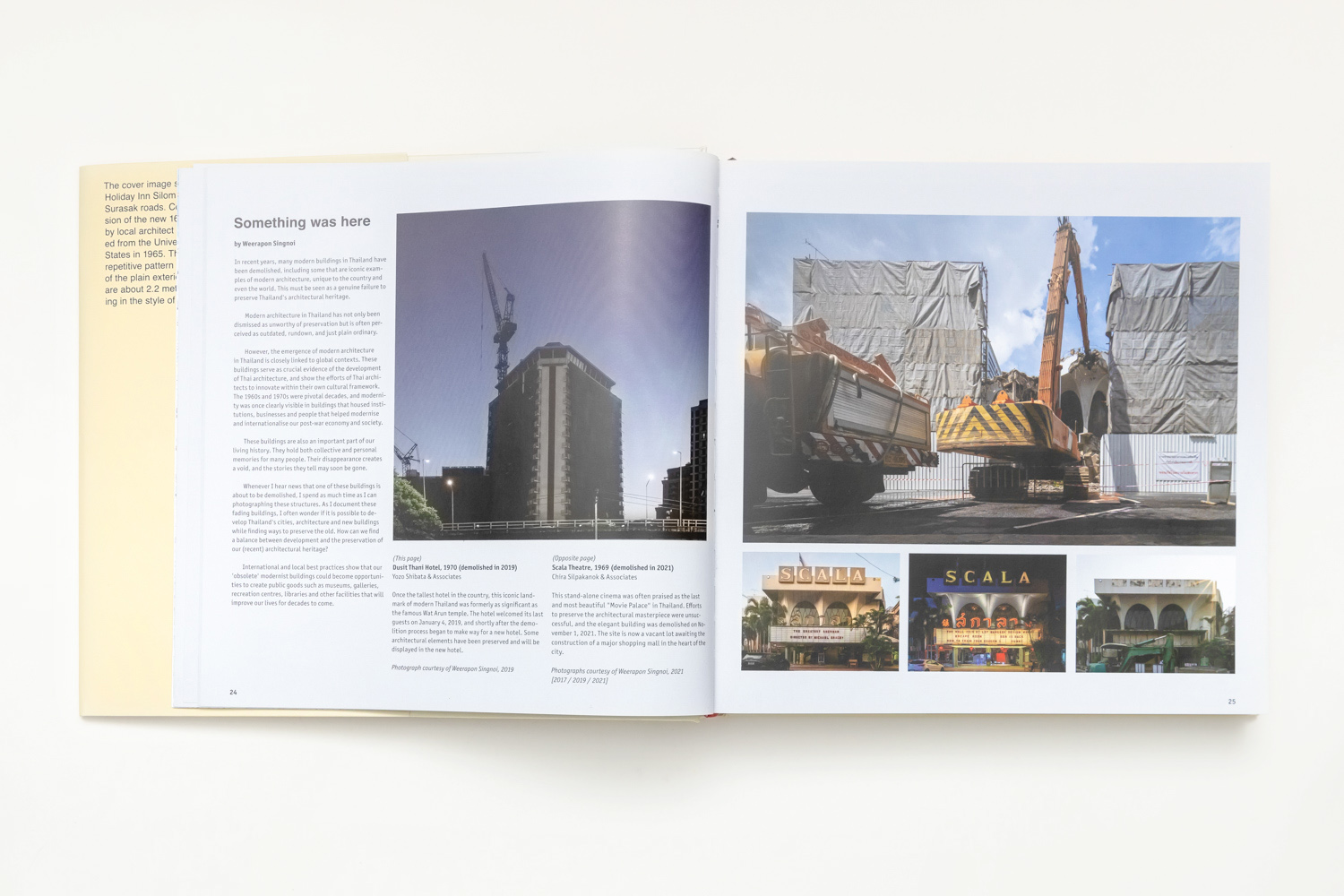
Layered throughout the book is a rich contextual framework presented through a series of essays. These explore the broader economic and political currents, especially those tied to American influence, and their imprint on Thai architecture and the urban evolution of Bangkok during the pre-Cold War and Cold War periods, as articulated by Chomchon Fusinpaiboon and Pirasri Povatong. The expressive potential of concrete within the Thai architectural landscape is examined by Pinai Sirikiatikul, while Weerapon Singnoi offers a poignant chronicle of the demolition of modernist landmarks such as the iconic Scala Theater and the Dusit Thani Hotel in Bangkok, resulting in a textured and comprehensive portrayal of modern architecture as both a creative milestone and a marker of urban economic growth. Simultaneously, the book casts a discerning eye on contemporary efforts to preserve these modernist structures, many of which now face the threat of erasure. For those with an interest in architecture and Bangkok’s urban heritage, the book extends an invitation to explore the city firsthand: readers can simply scan the geolocated map embedded in its pages with a mobile device and embark on an architectural journey across the capital.
facebook.com/walter.koditek
instagram.com/wkoditek
facebook.com/riverbooksbk
instagram.com/riverbooks_bangkok