
PHILIPPE STARCK TURNS IMAGINATION INTO REALITY WITH MAISON HELER, A HOTEL IN THE HEART OF METZ’S HISTORIC CENTER
TEXT: KARN PONKIRD
PHOTO COURTESY OF STARCK
(For Thai, press here)
“What is your inspiration?” — a question so familiar it often opens conversations in designer interviews. It’s a natural starting point, since design encompasses a wide range of approaches and countless techniques for a designer to draw upon: from deconstructing history and studying contextual surroundings to analyzing market demands and consumer behavior using mathematical formulas. But in this case, Philippe Starck’s process is less analytical and more imaginative. The Maison Heler, a nine-story hotel with 104 guest rooms, two restaurants, and two bars, was conceived from short stories, fairy tales, poems, and the whimsical spirit of fictional characters; all born from Starck’s own imagination and a patchwork of literary works, graphic art, and product designs he admires.

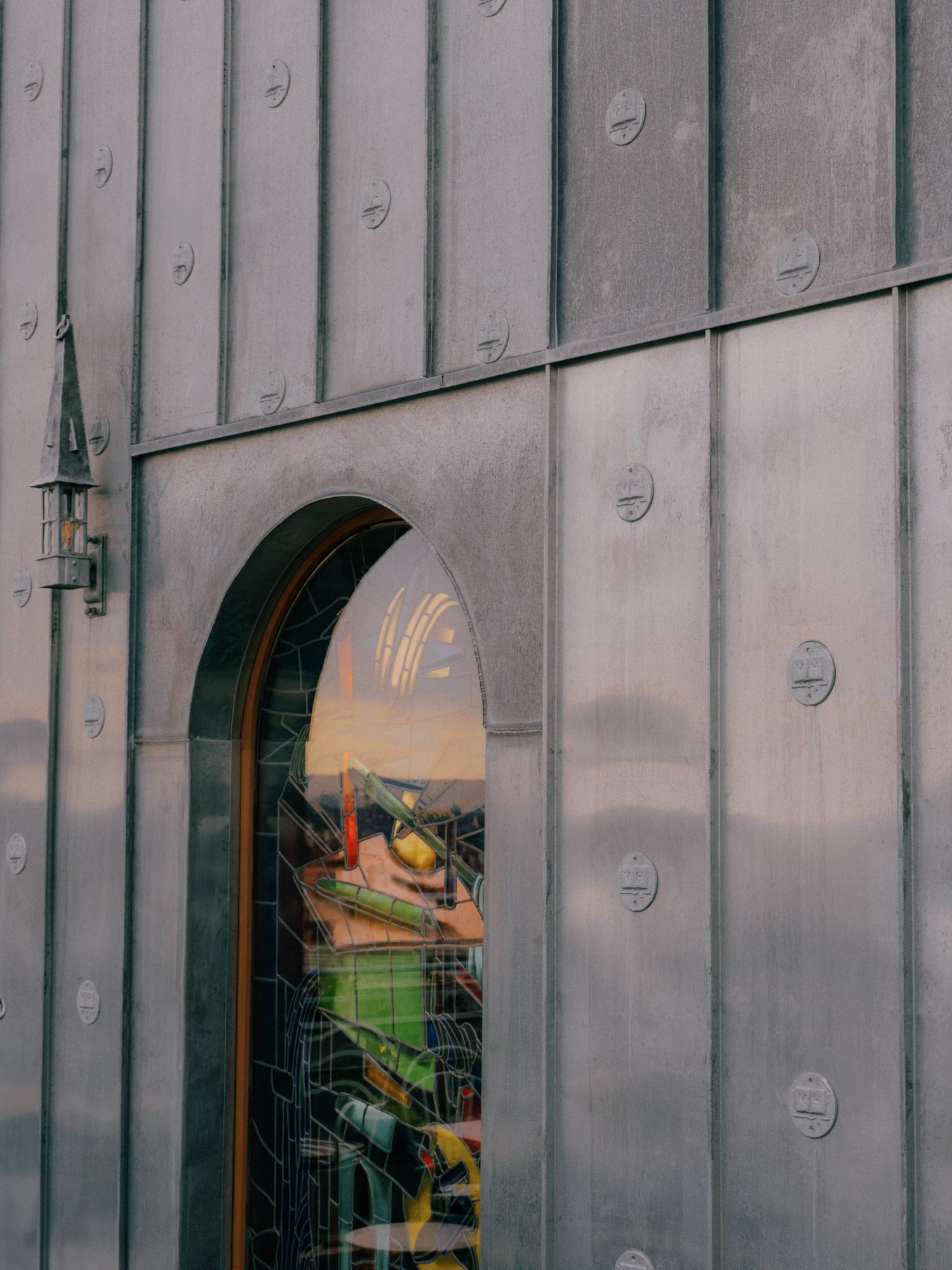
The Maison Heler is a project over a decade in the making, shaped through delays in construction, shifts in investors, a fire, and even the disruption of the COVID-19 pandemic. Located on Avenue Foch in Metz, the capital of France’s Lorraine region, the hotel rises like a towering gray monolith. Perched atop it is a traditional 19th-century Lorraine-style house, draped in greenery and climbing vines. This curious rooftop garden, surreal and dreamlike, transforms the structure into something both peculiar and utterly captivating.
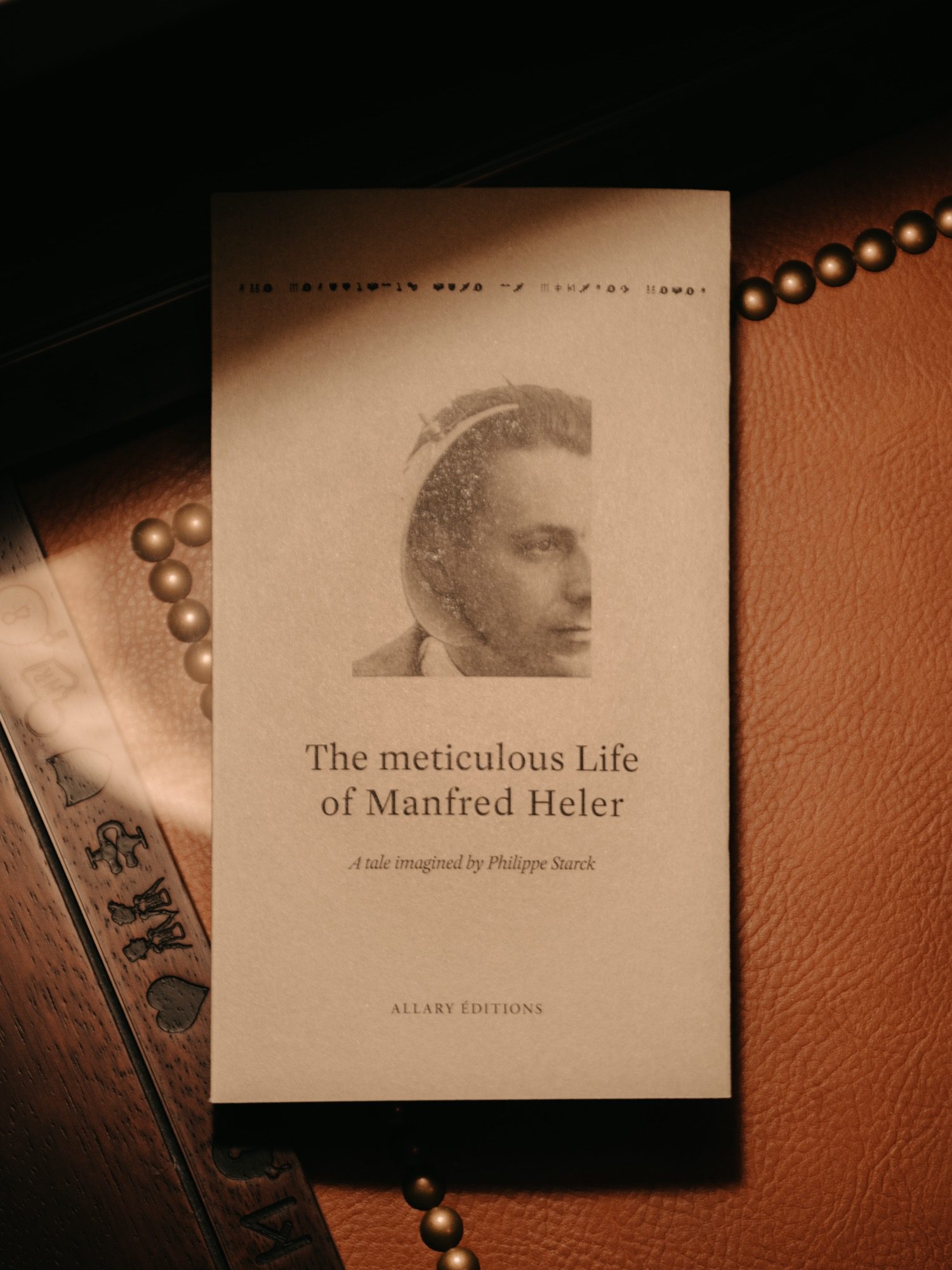
To present a fantastical world sprung from a surreal vision, Philippe Starck had to be more than just an architect or interior designer. By seeing himself as a creator, Starck refused to confine himself or his team to tangible design alone. He also delved into the craft of the intangible: stories and experiences. One month before the hotel’s opening, a book titled La Vie minutieuse de Manfred Heler (The Meticulous Life of Manfred Heler) was published by Allary Editions. It is a fairy tale imagined by Starck, telling the story of Manfred Heler — an eccentric, dream-filled inventor. One day, the ground beneath his house begins to tremble and slowly lifts. Manfred, his home, and his tiny garden rise into the sky. The patch of earth elevates cleanly, as if cut out by a cookie cutter. That moment gave birth to Maison Heler: a little house floating above the skyline of Metz, ready to welcome travelers with an atmosphere full of delight and playful charm.
Given the lengthy period of design and construction, Starck has never revealed whether the idea for the fairy tale came before the concept for the building, or vice versa. What is certain, however, is that the core inspiration behind La Vie minutieuse de Manfred Heler was deeply influenced by Impressions of Africa (1909), a novel by Raymond Roussel (1877–1933), the French poet and writer whose posthumous fame positioned him as a key figure in the literary surrealist movement.
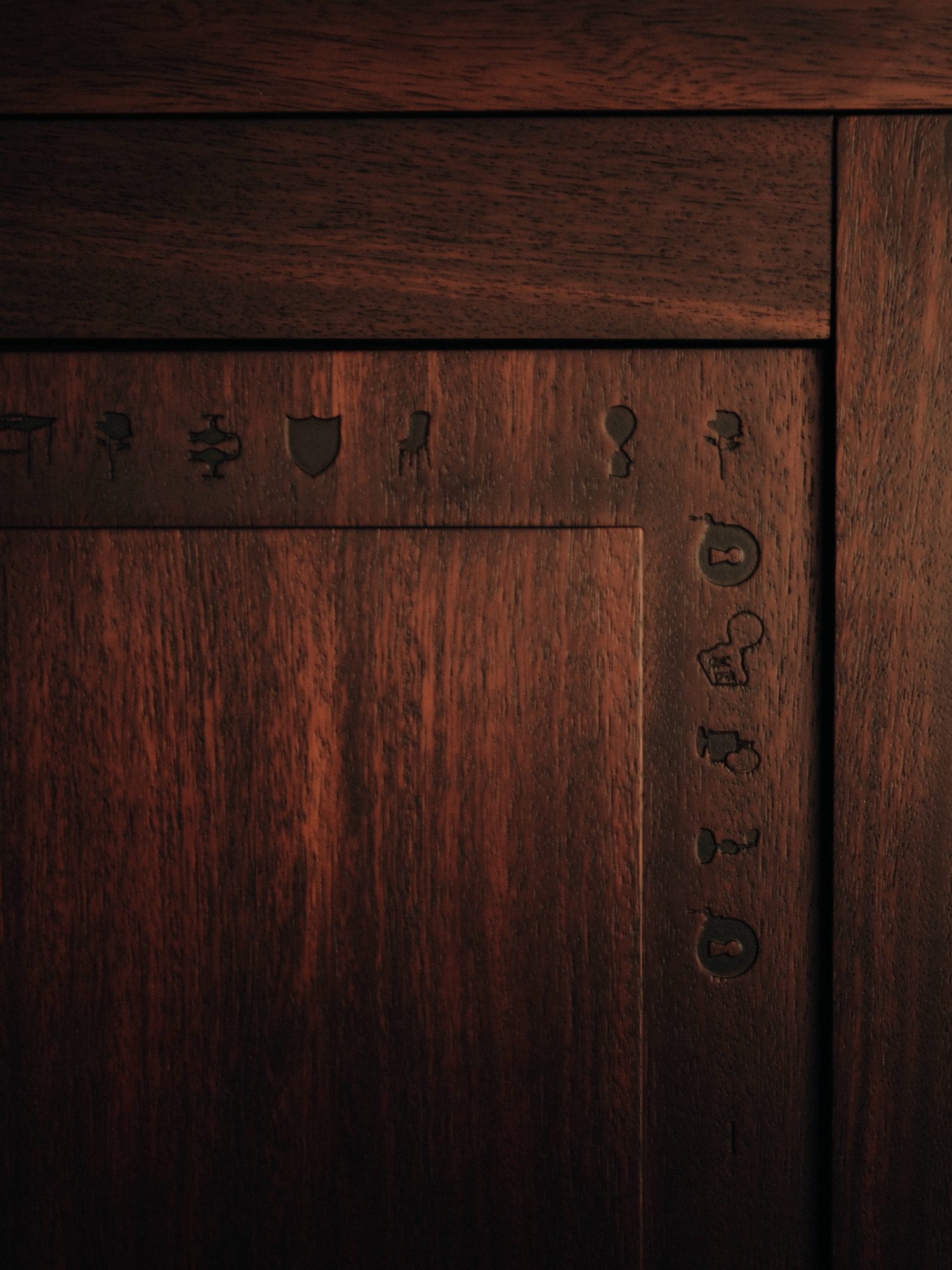
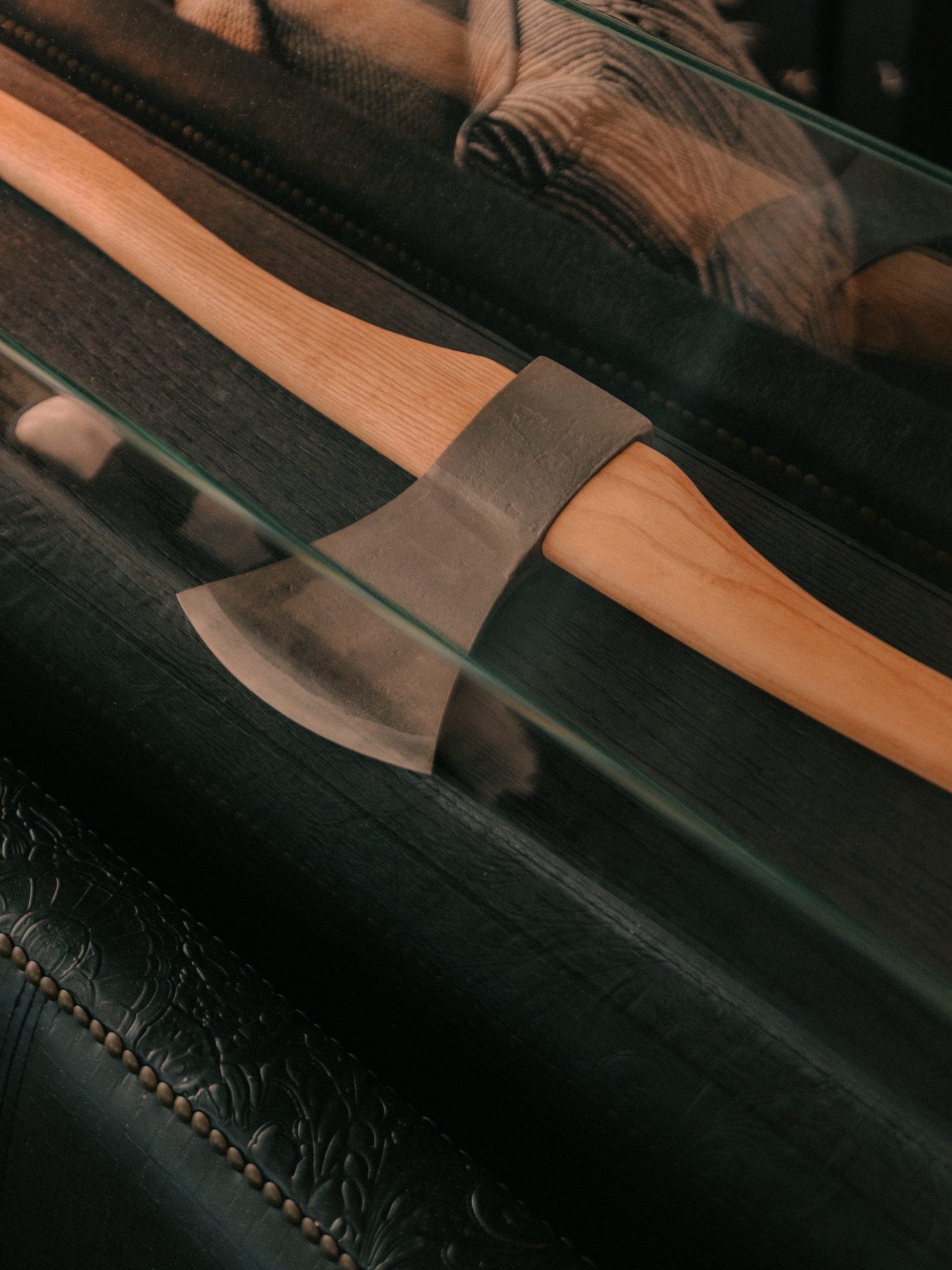
Starck embraced Roussel’s signature storytelling techniques; adventurous plots, disjointed chronology, clever wordplay, and descriptions of bizarre, delightfully illogical situations, and fused them with the visual absurdities found in Catalogue of Extraordinary Objects (1969), a picture book by painter and illustrator Jacques Carelman (1929–2012). The book features outlandish inventions whose functions defy common sense (such as a double-handled axe, a three-wheeled bicycle, a gutter-equipped umbrella, and a two-headed toothbrush), and served as a springboard for shaping the personality of Manfred Heler, the hotel’s fictional host obsessed with perfecting fantastical inventions. This obsession, rooted in unrestrained imagination and relentless experimentation, spills over into the hotel’s interior. The space is filled with curious objects for guests to discover, including a cabinet that holds a real double-handled axe. Even secret codes are embedded throughout, with cipher keys provided in each room to help decode hidden messages. Together, these elements enrich the stay with layers of discovery, offering both memorable experiences and conversation starters.
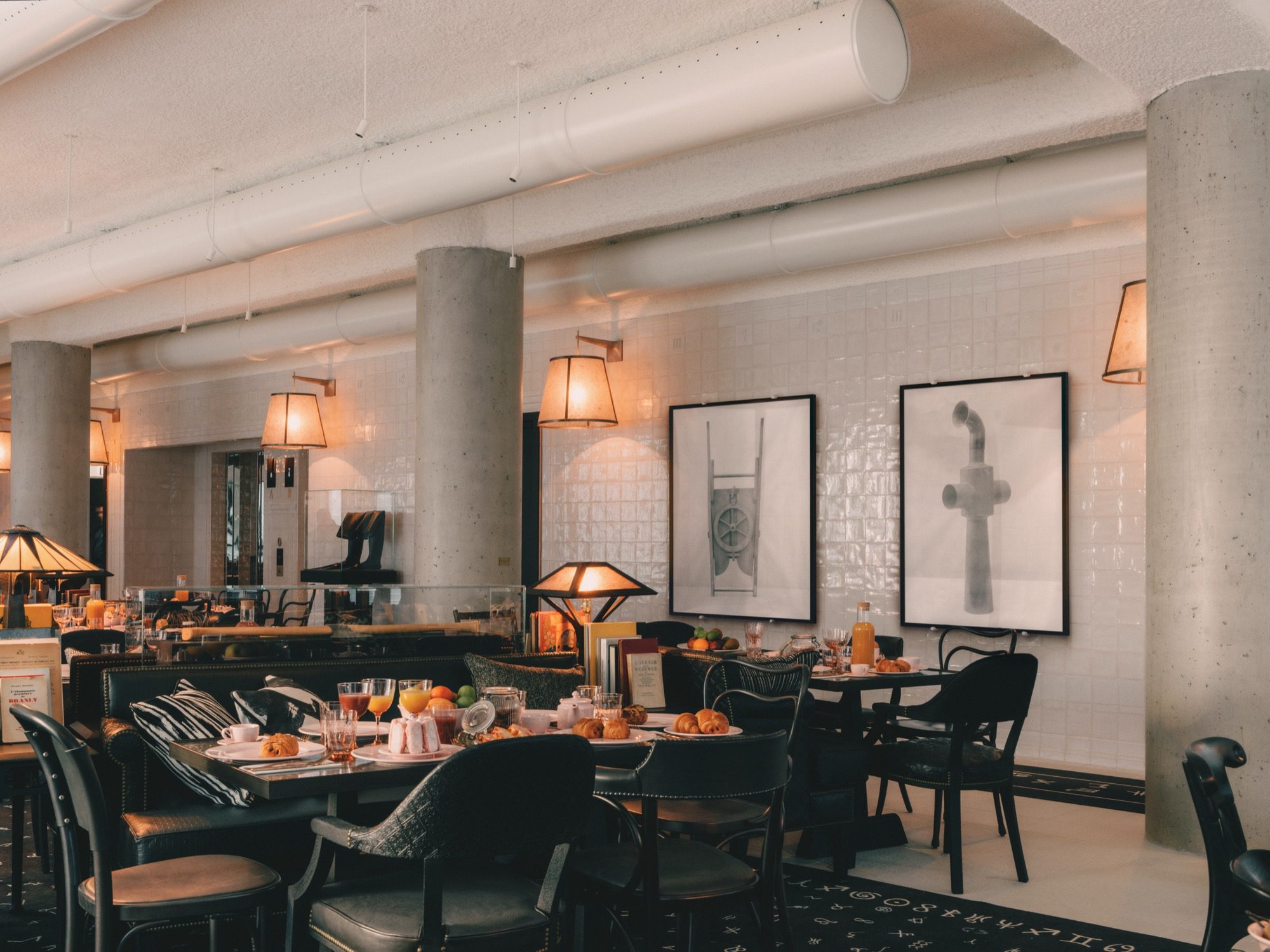
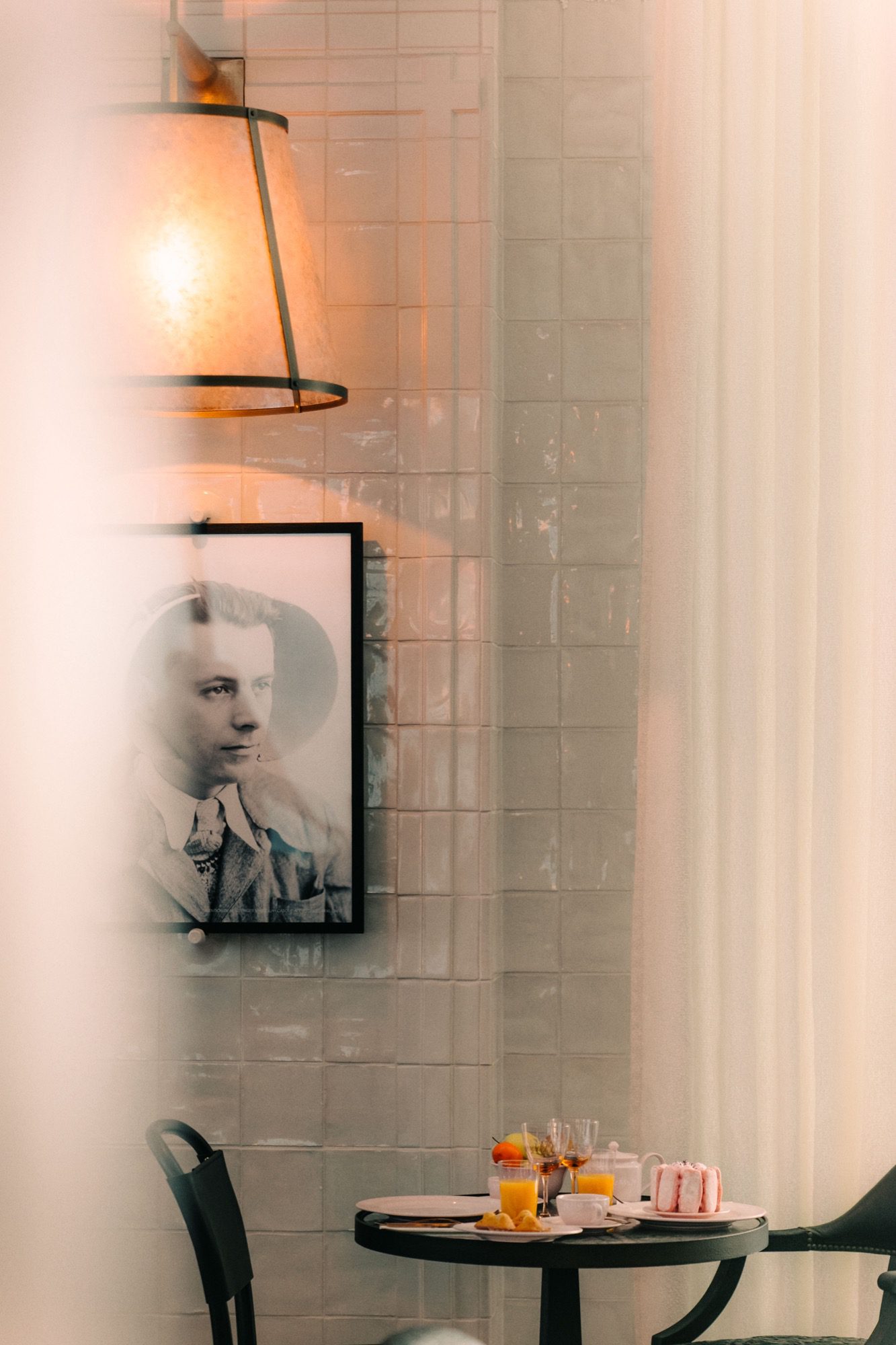
Starck couldn’t resist weaving a romantic thread into the story through La Cuisine de Rose, a restaurant imagined as a gift from Manfred to Rose, a woman born from his imagination and, it seems, the object of his unrequited love. Located on the ground floor, the restaurant is open all day and enveloped in white walls and deep-toned furniture, with delicate pink tableware in various shades that symbolically represent Rose herself. The menu is designed to invigorate diners with dishes prepared using fresh, locally sourced ingredients from the Lorraine region, accompanied by seasonal beverages.
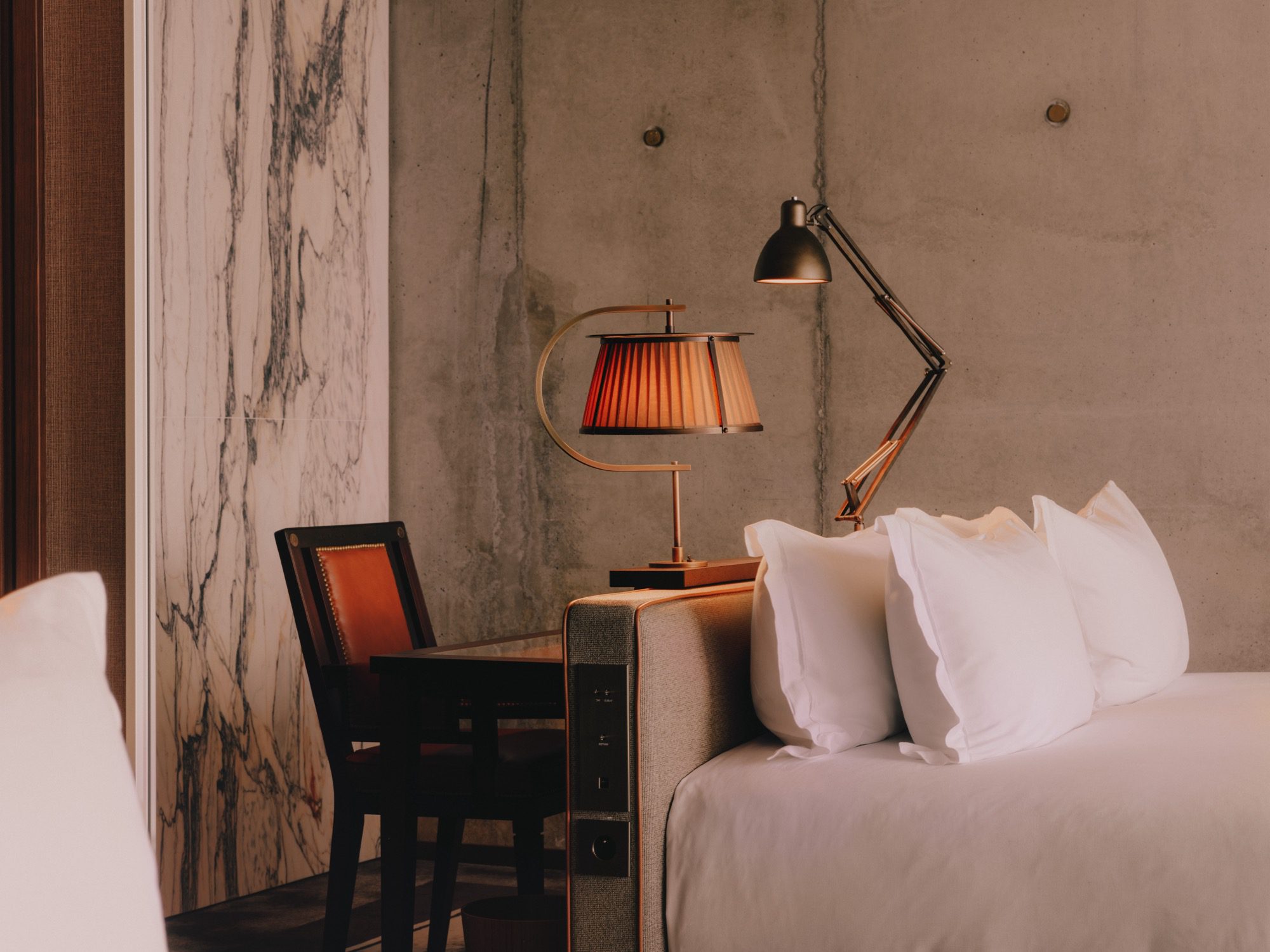
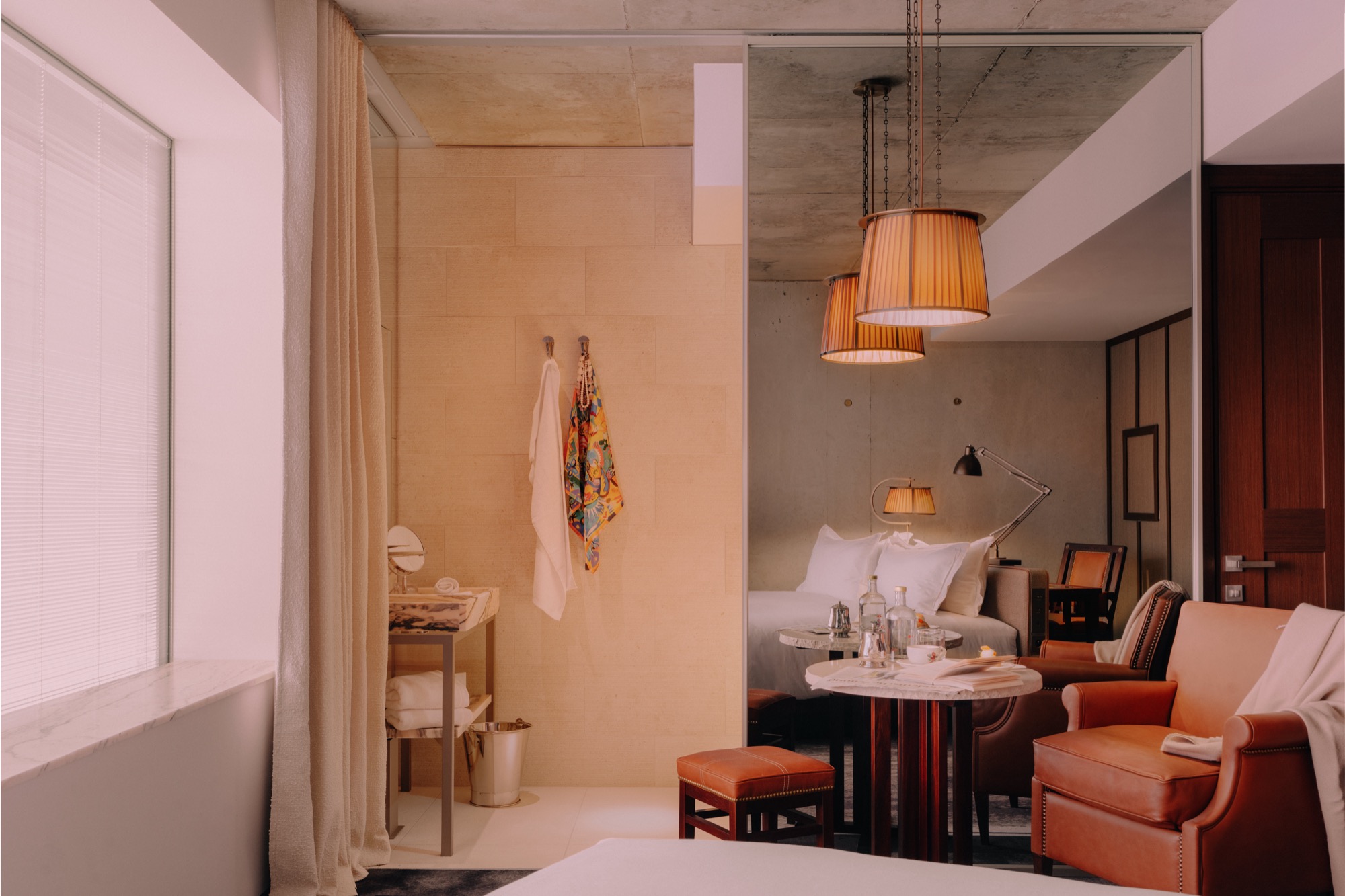
Moving upstairs, the hotel’s 104 guest rooms feature a blend of industrial-style furnishings, such as bedside lamps paired with dark wood desks and leather-upholstered chairs that lend a warm, tactile atmosphere. Each material is allowed to express its natural color and texture: crisp white cotton, muted grey concrete, and intricately veined marble. Tucked discreetly into corners are tiny cipher clues, waiting to be decoded. The furnishings, which seem to have journeyed from various corners of the world yet fit together in seamless harmony, echo the eccentric but thoughtful nature of Manfred, the ever-curious inventor with a mind full of marvelous ideas.
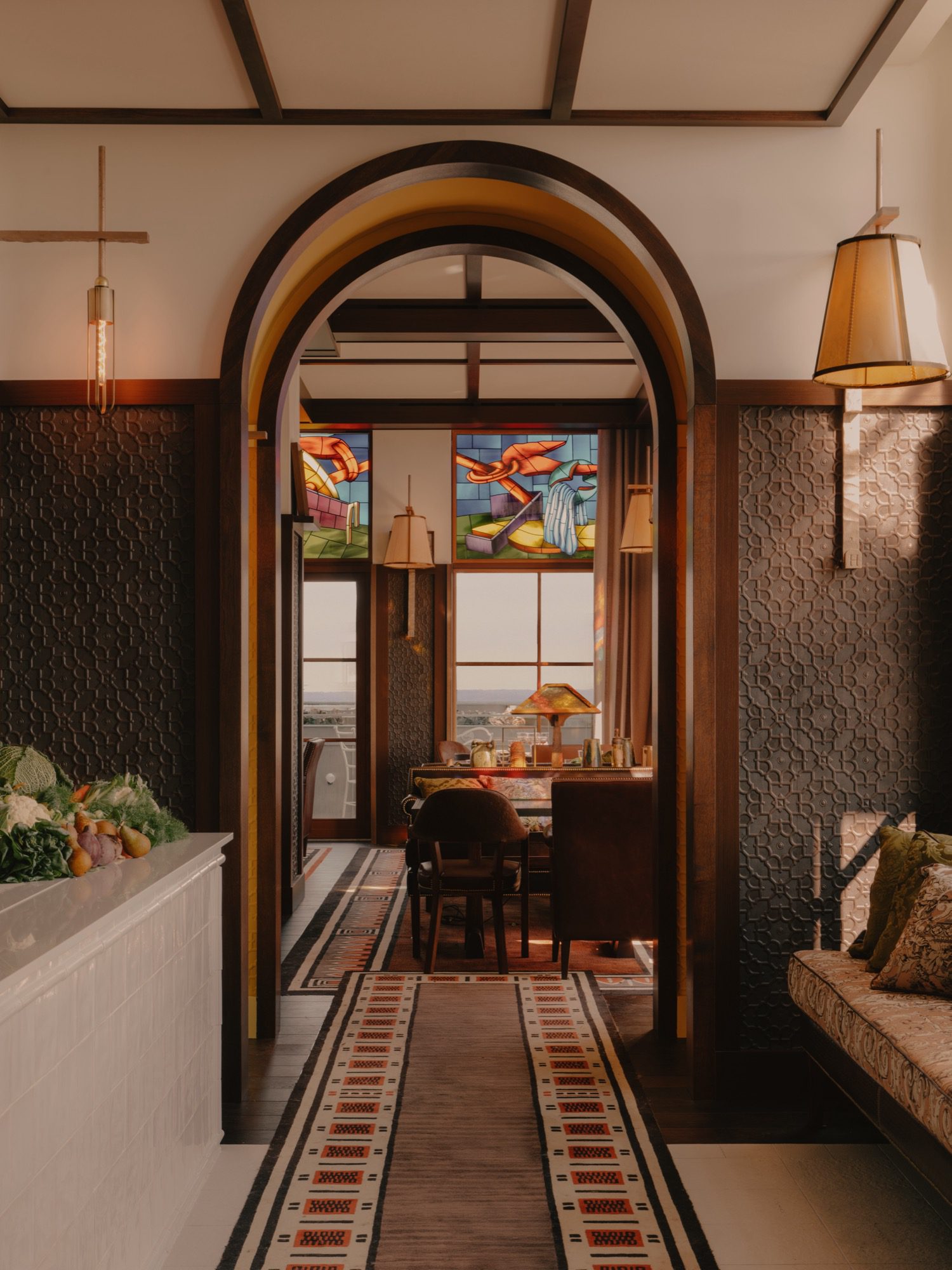
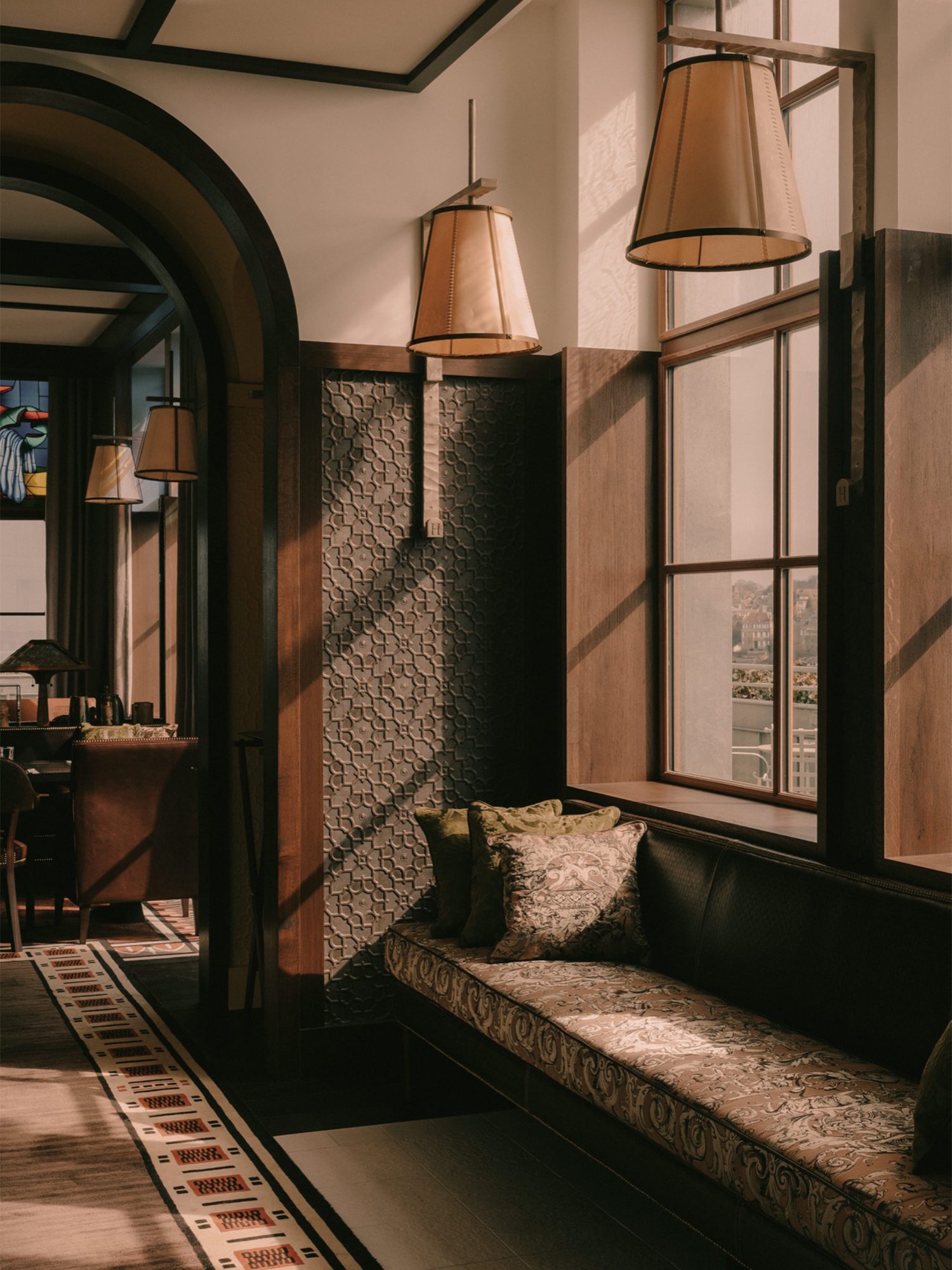
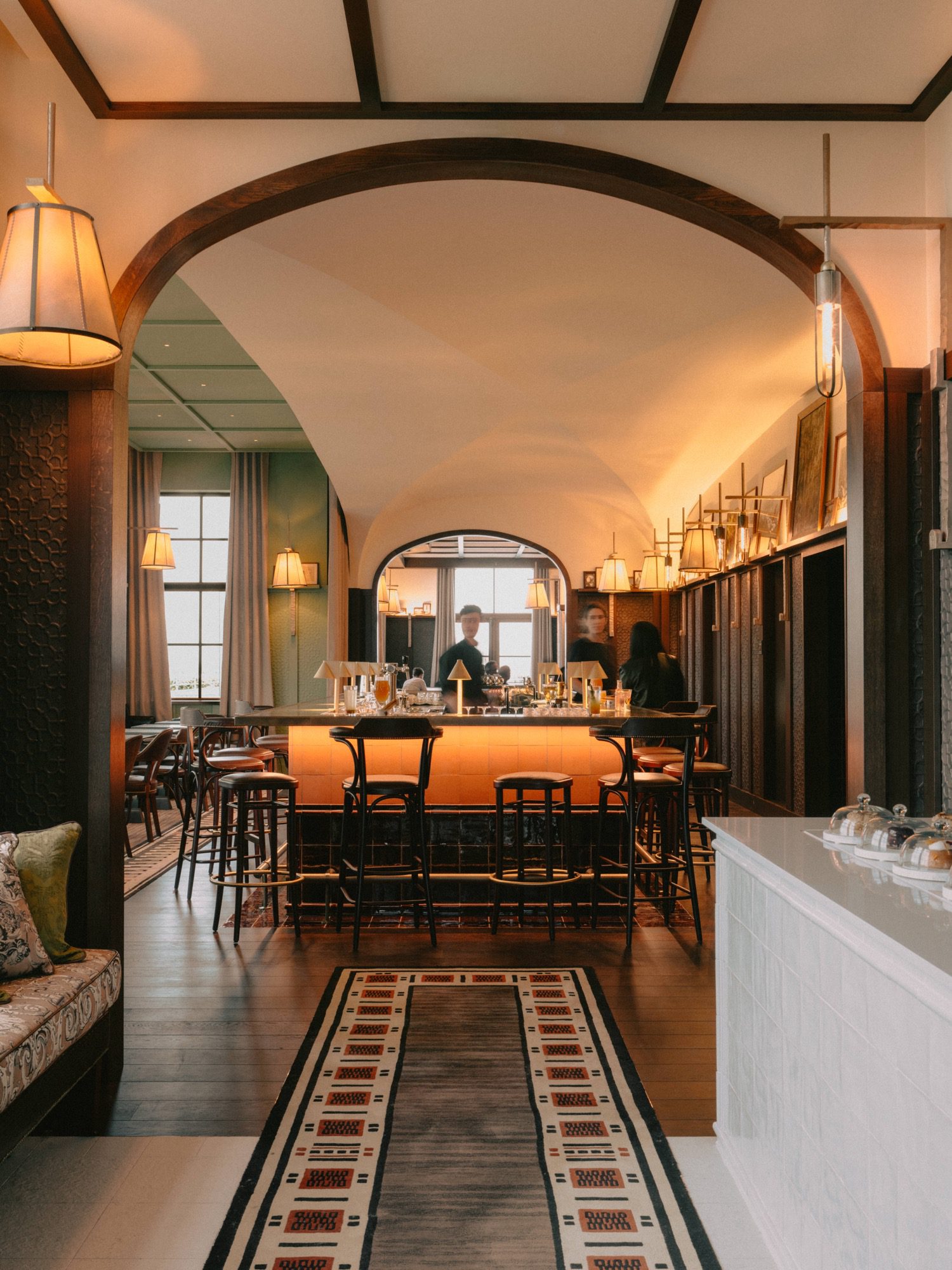
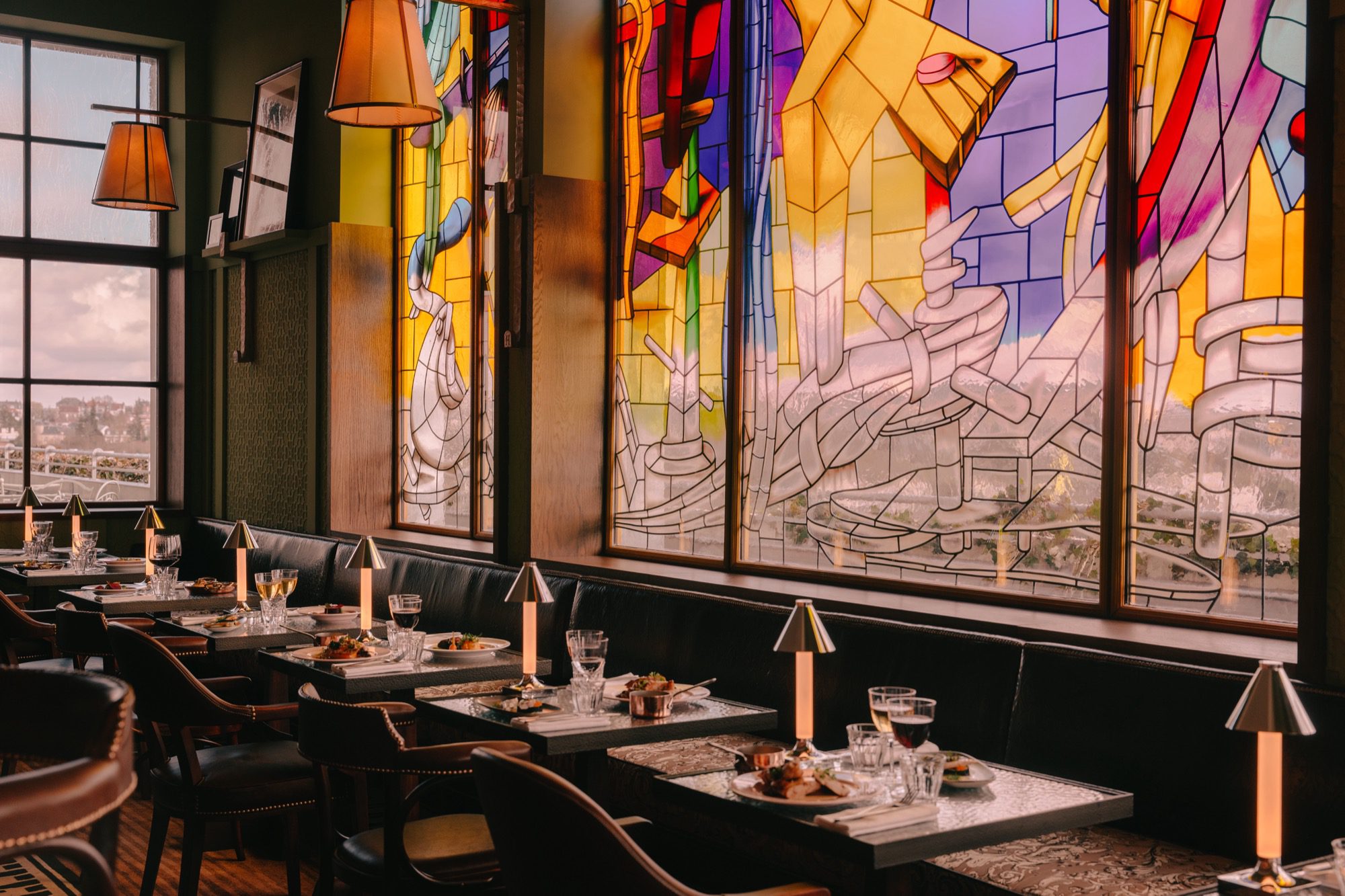
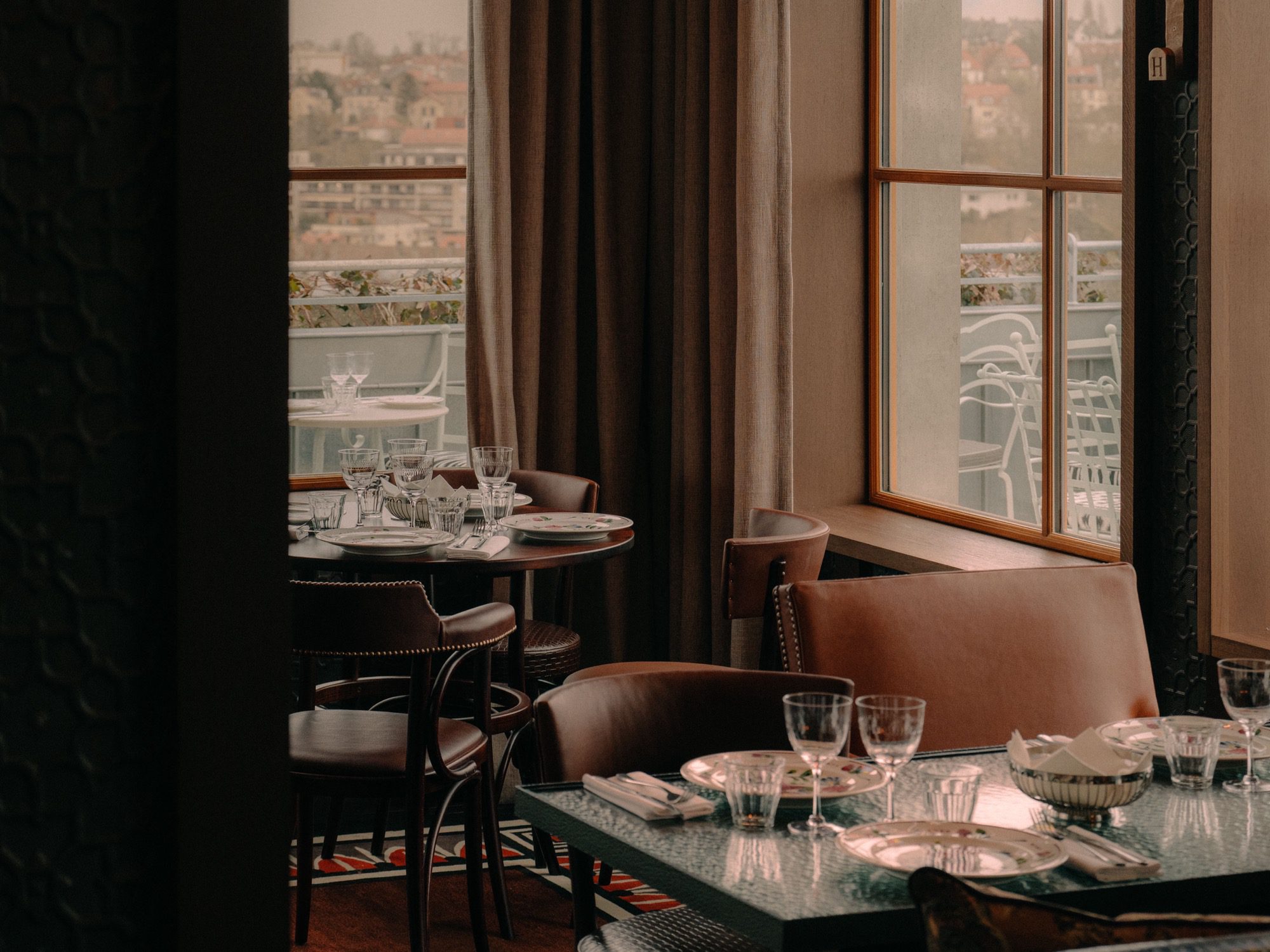
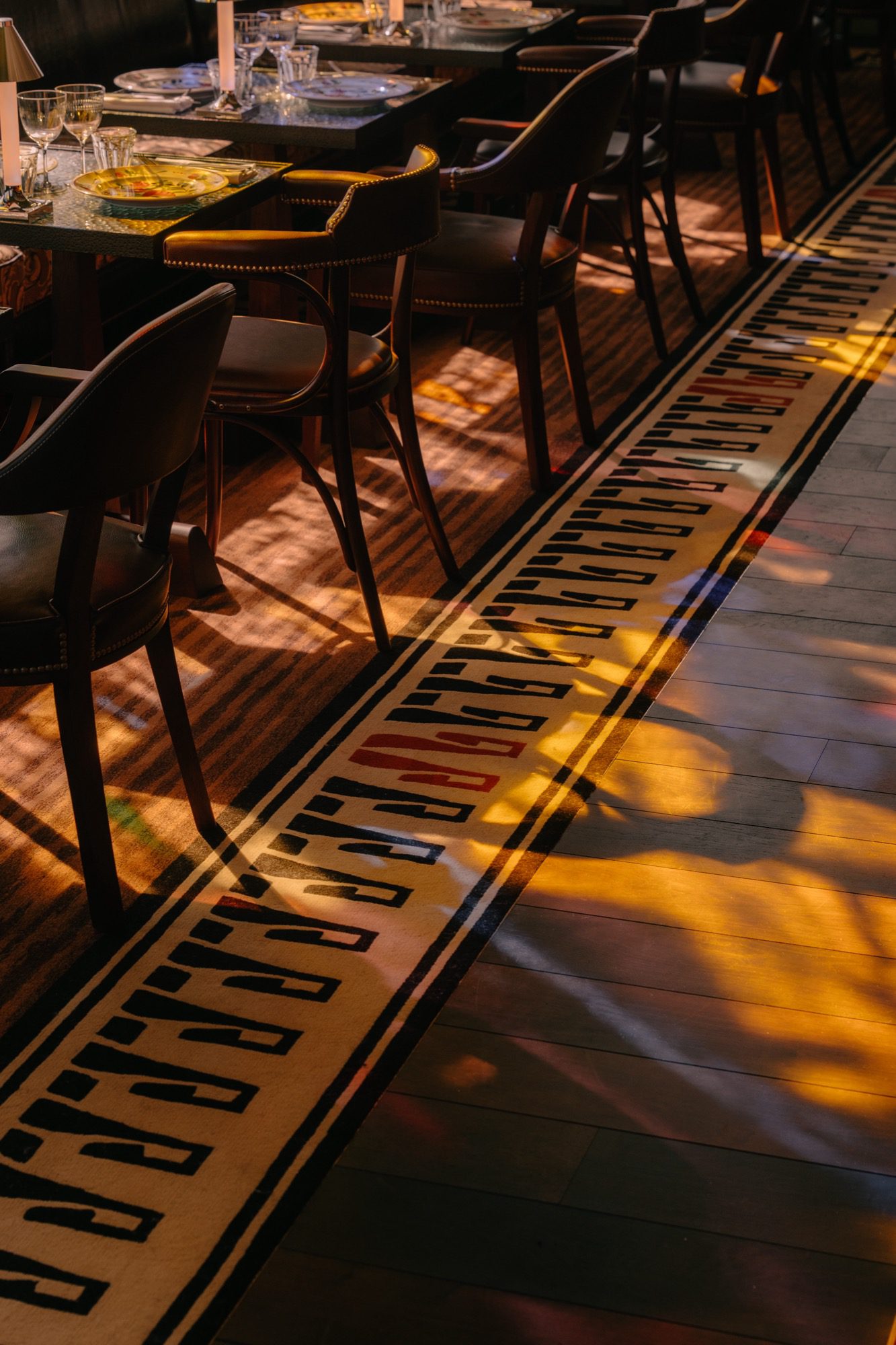
And if you make your way to the very top of the hotel, you’ll arrive at Manfred’s residence, now transformed into La Maison de Manfred, an inviting restaurant designed to feel warm and familiar. It’s a space made for gathering and celebration, whether among family or with a loved one. The interiors are adorned with wooden furniture and green embossed leather seating, set against dark terracotta-tiled walls. Sunlight filters through 19 stained-glass windows (created by glass artist Ara Starck, daughter of Philippe Starck) each one telling a story of place and memory. As evening falls, the restaurant glows with soft light, offering guests a charming view of Metz by night. From this lofty perch, one can even glimpse the distant silhouette of the Centre Pompidou.
Maison Heler is a manifestation of a creator’s ambition – a response to the question of how far a designer can stretch the very definition of design. It stands as a fusion of past, present, and future, a declaration of imaginative possibility. Philippe Starck and his team constructed the hotel by weaving together bits of history, culture, and literature, recomposed through humor, precision, and attention to detail. The result is a destination steeped in narrative, richly layered with artistry, and evocative of a world one might expect to find only in a fairy tale.