

BY OBSERVING THEIR SURROUNDINGS, ARCHITECTS JENCHIEH HUNG AND KULTHIDA SONGKITTIPAKDEE DISCOVER IDEAS THAT EVOLVE INTO CREATIVE, DISTINCTIVE, AND CULTURALLY INSPIRED DESIGNS
TEXT: CHIWIN LAOKETKIT
PHOTO: KETSIREE WONGWAN
(For Thai, press here)
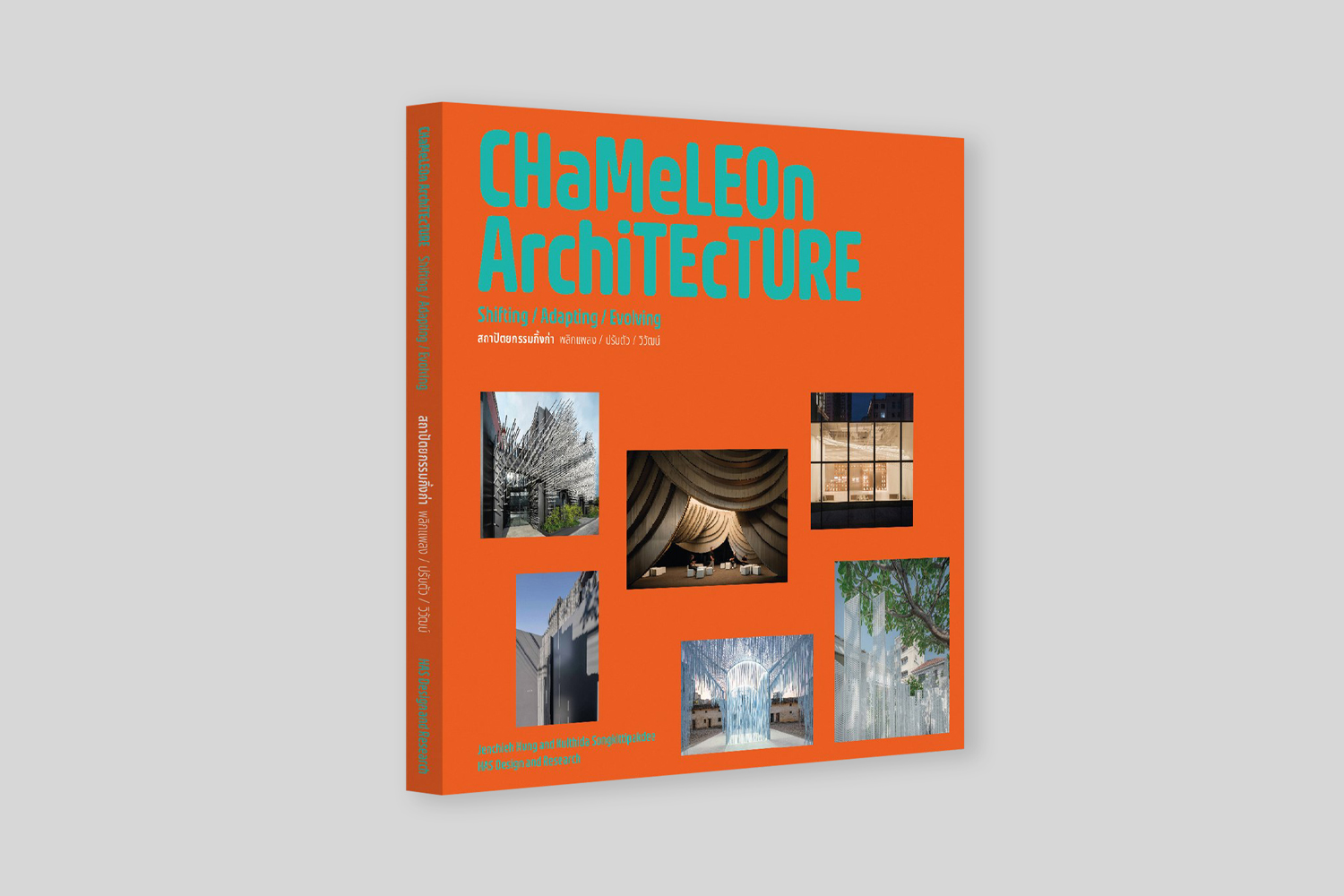
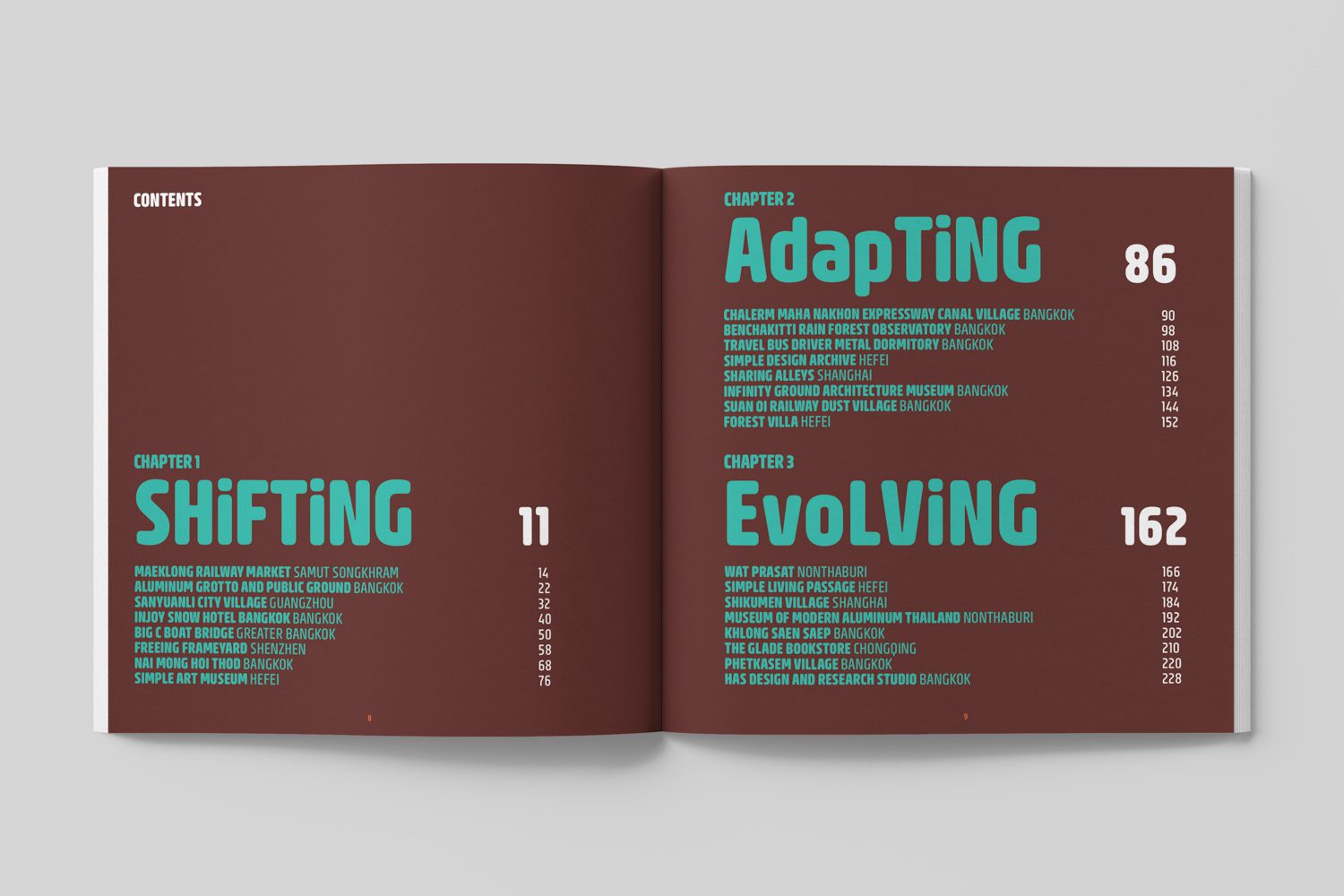
Jenchieh Hung and Kulthida Songkittipakdee have launched a new book titled Chameleon Architecture: Shifting / Adapting / Evolving, which explores the built environment in Asia and the inspiration behind the concept of chameleon architecture, as envisioned by HAS Design and Research. The launch took place at the ASA Architect Expo 2025 – The Association of Siamese Architects under Royal Patronage Exposition, Thailand.
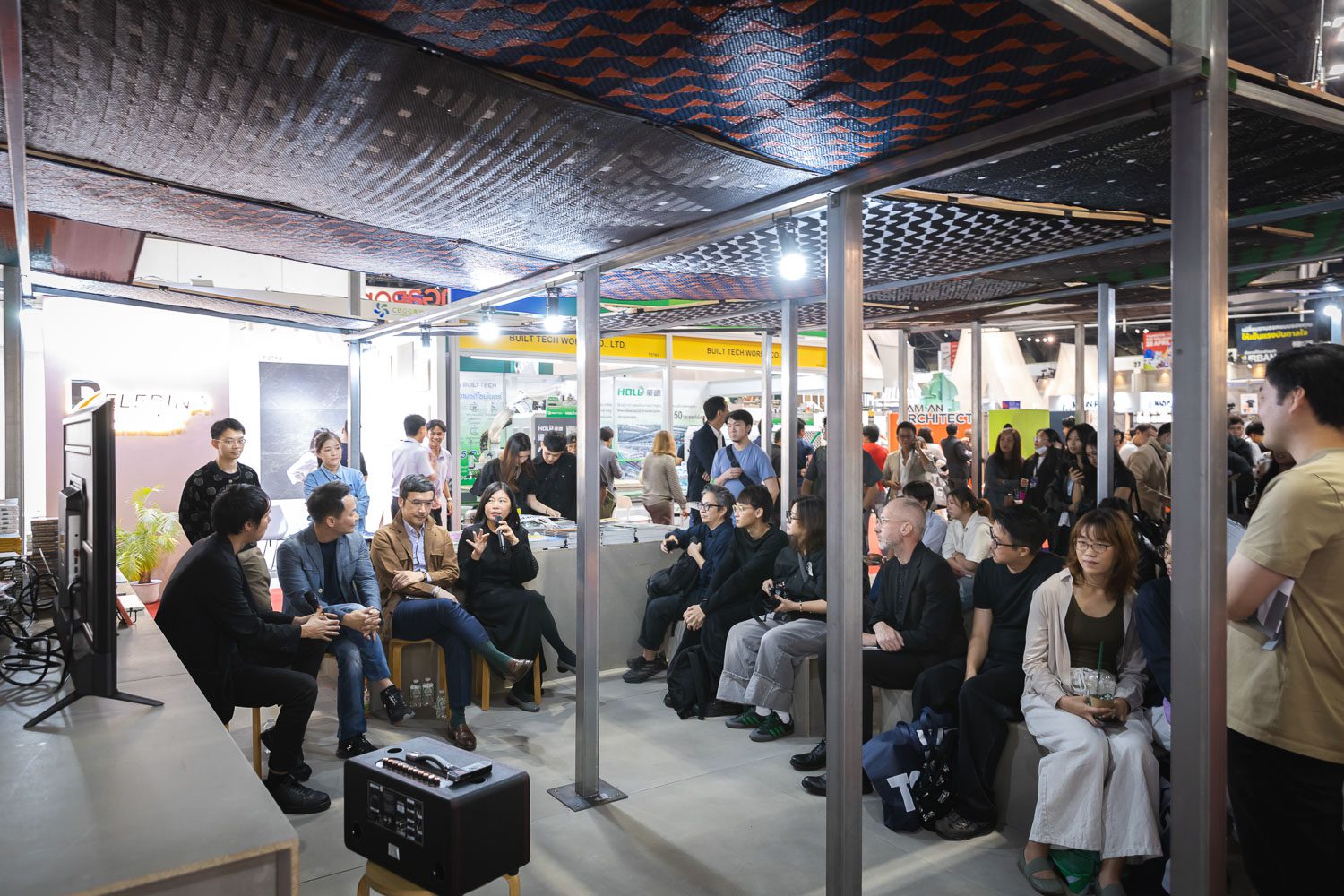
The book launch of Chameleon Architecture by Jenchieh Hung and Kulthida Songkittipakdee
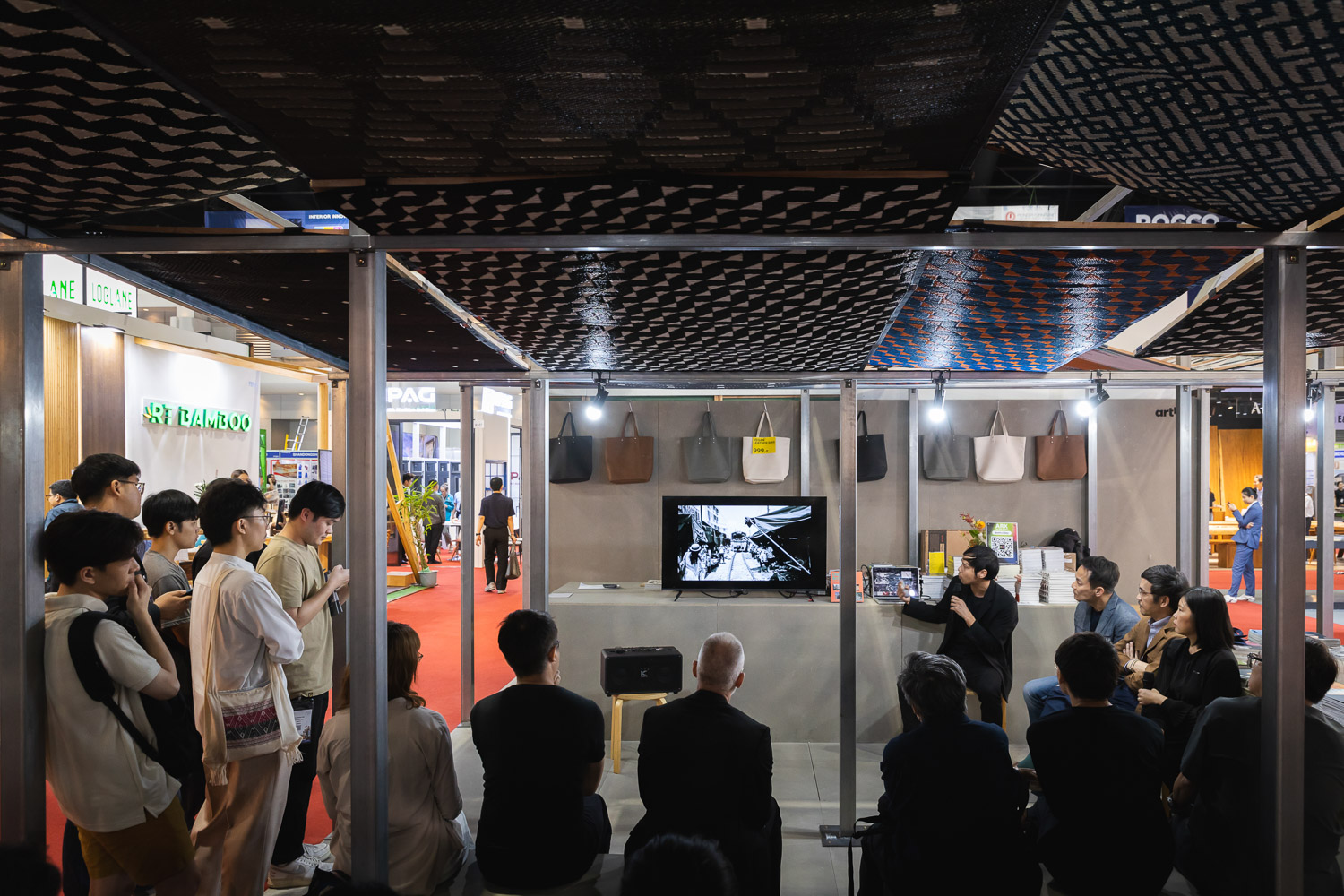
At the book launch event for Chameleon Architecture: Shifting / Adapting / Evolving, Jenchieh Hung and Kulthida Songkittipakdee of HAS Design and Research discussed three core design concepts: shifting, adapting, and evolving. These themes were derived through research, exploration, and the synthesis of phenomena observed in local culture and spatial usage in Thailand. Their work presents new perspectives on architectural design within the Asian context. The event also featured a lively discussion forum with two guest architects, Amata Luphaiboon, architect and co-founder of Department of ARCHITECTURE Co. and Attaporn Kobkongsanti, landscape architect and founder of TROP : terrains + open space; it showcased architects Jenchieh Hung and Kulthida Songkittipakdee’s new book, drawing a crowd to the art4d booth at the ASA Architect Expo 2025.

Jenchieh Hung, Amata Luphaiboon, Attaporn Kobkongsanti and Kulthida Songkittipakdee
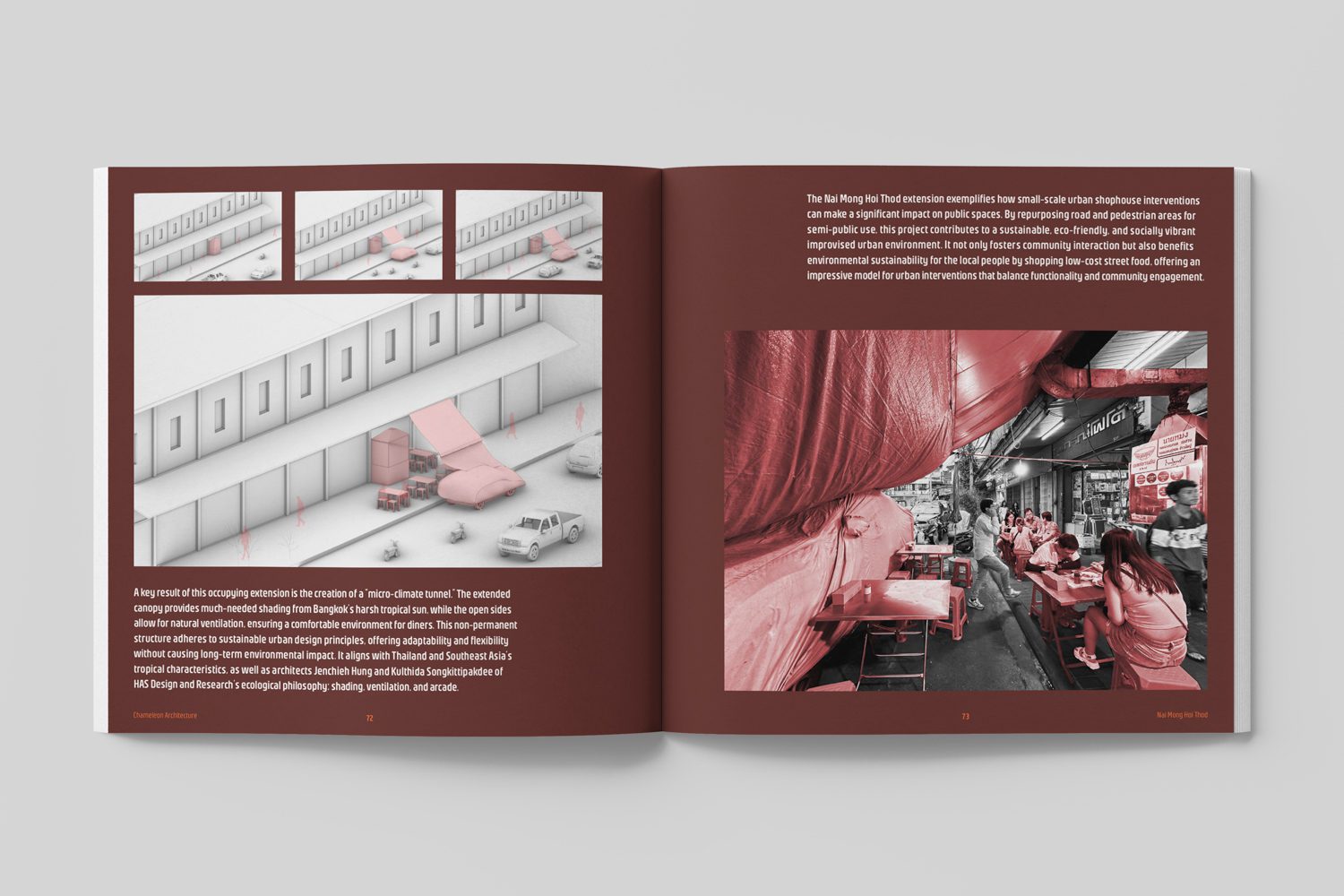
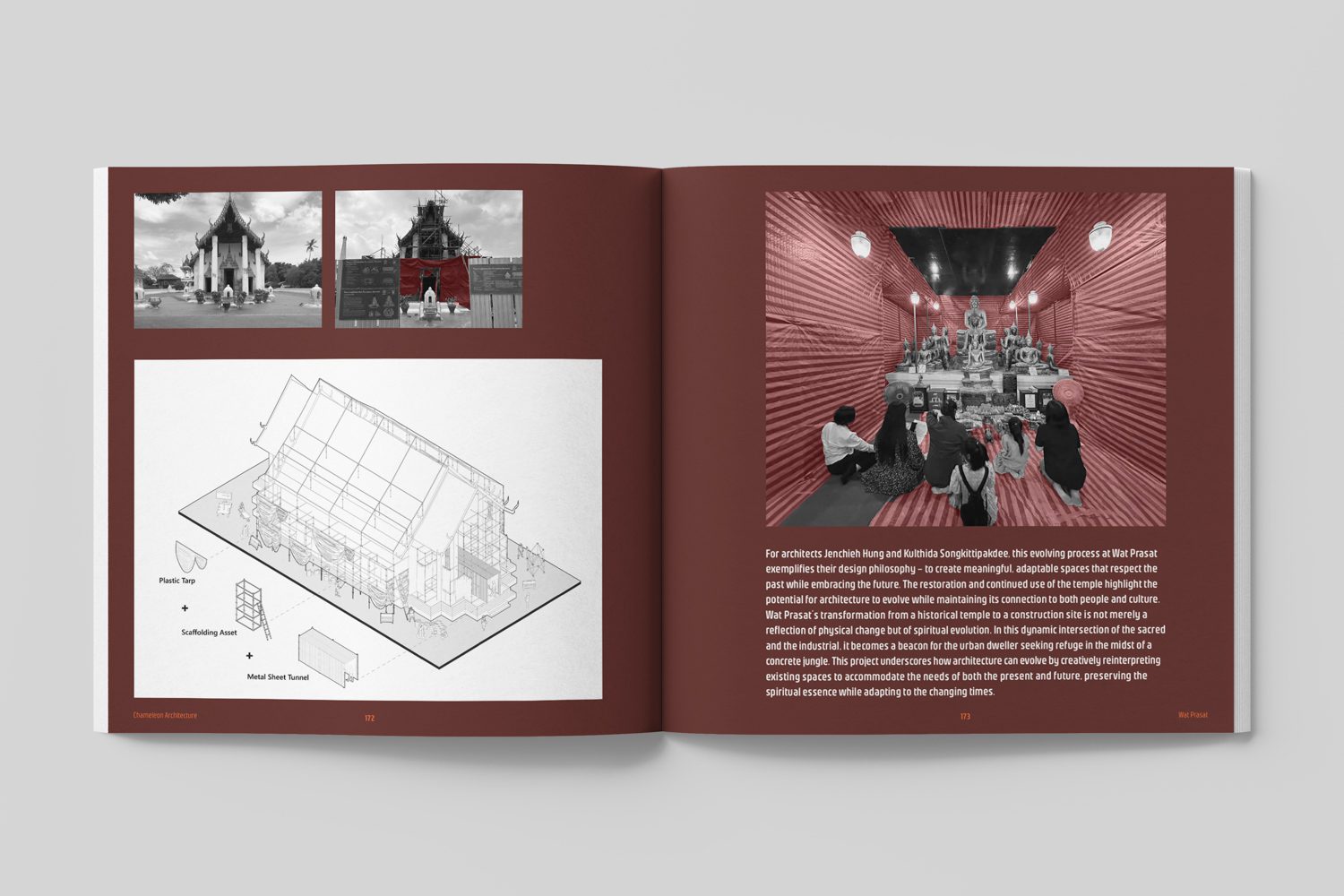
The seminar opened with architects Jenchieh Hung and Kulthida Songkittipakdee, founders of HAS Design and Research, offering an overview of the philosophy and identity behind their concept of ‘Chameleon Architecture.’ They shared insights from various projects in Thailand and China that demonstrate adaptability, whether it’s a shophouse restaurant with an awning extending over the sidewalk, Mae Klong Railway Market, the restoration of Wat Prasat, or residential buildings that have evolved in response to local conditions and created interesting phenomena in their use. These are the elements that the two architects analyzed and which have inspired participants along the way. By venturing outdoors to observe or simply by taking time to notice the surrounding environment, architects can discover new ideas that inspire creativity in design. Over time, these inspirations evolve into distinctive architectural signatures.
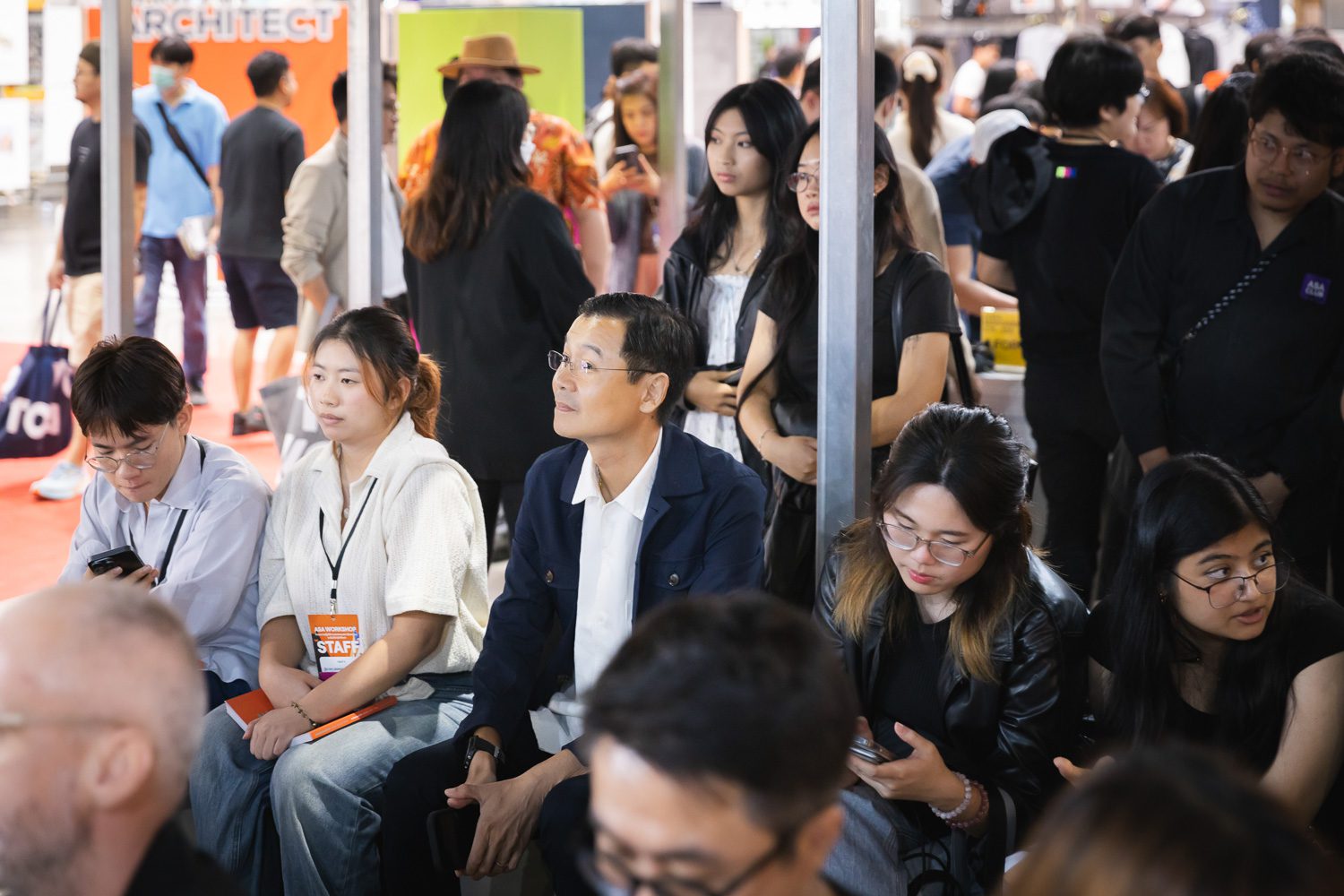
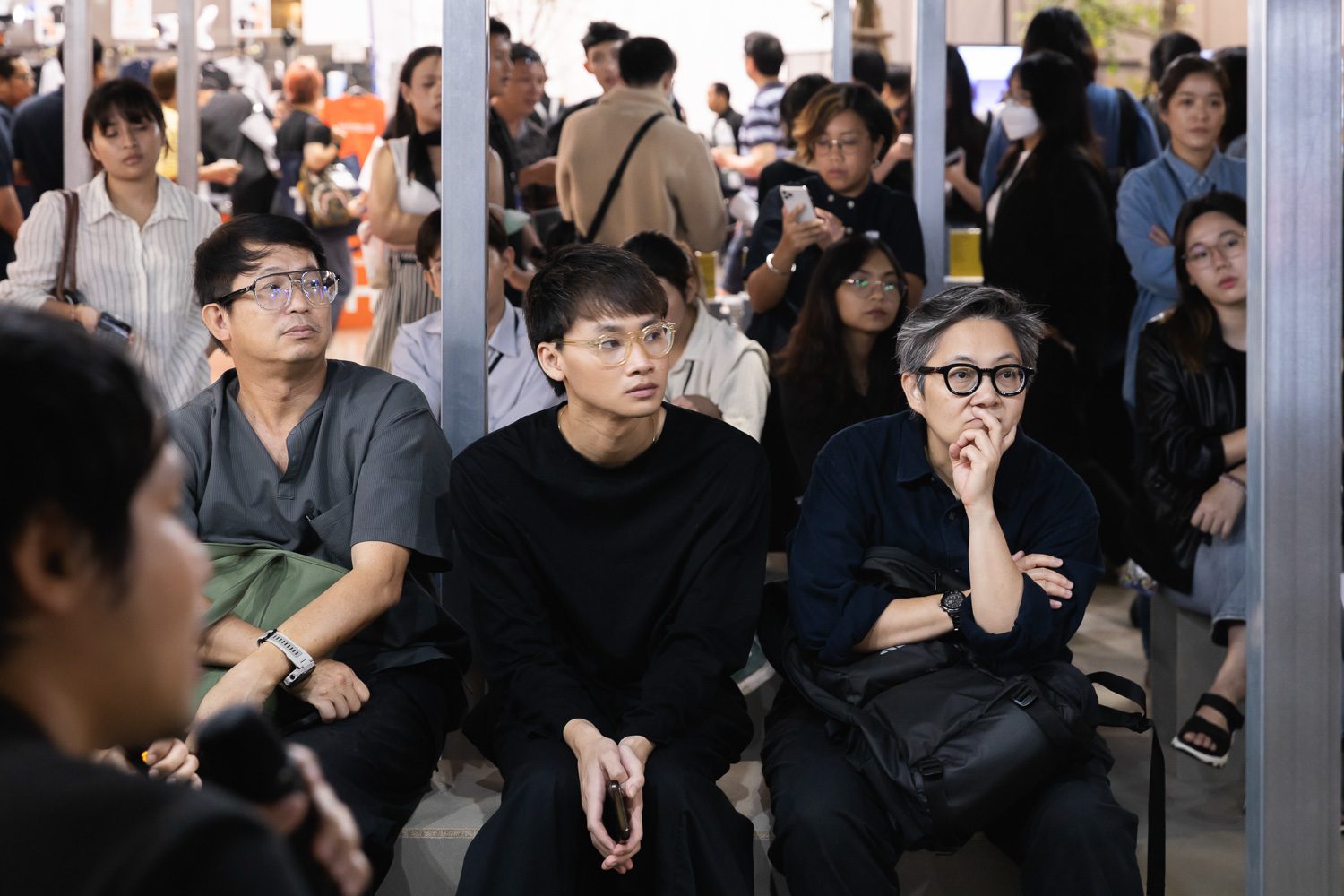 The atmosphere of the seminar by HAS Design and Research at ASA Architect Expo 2025
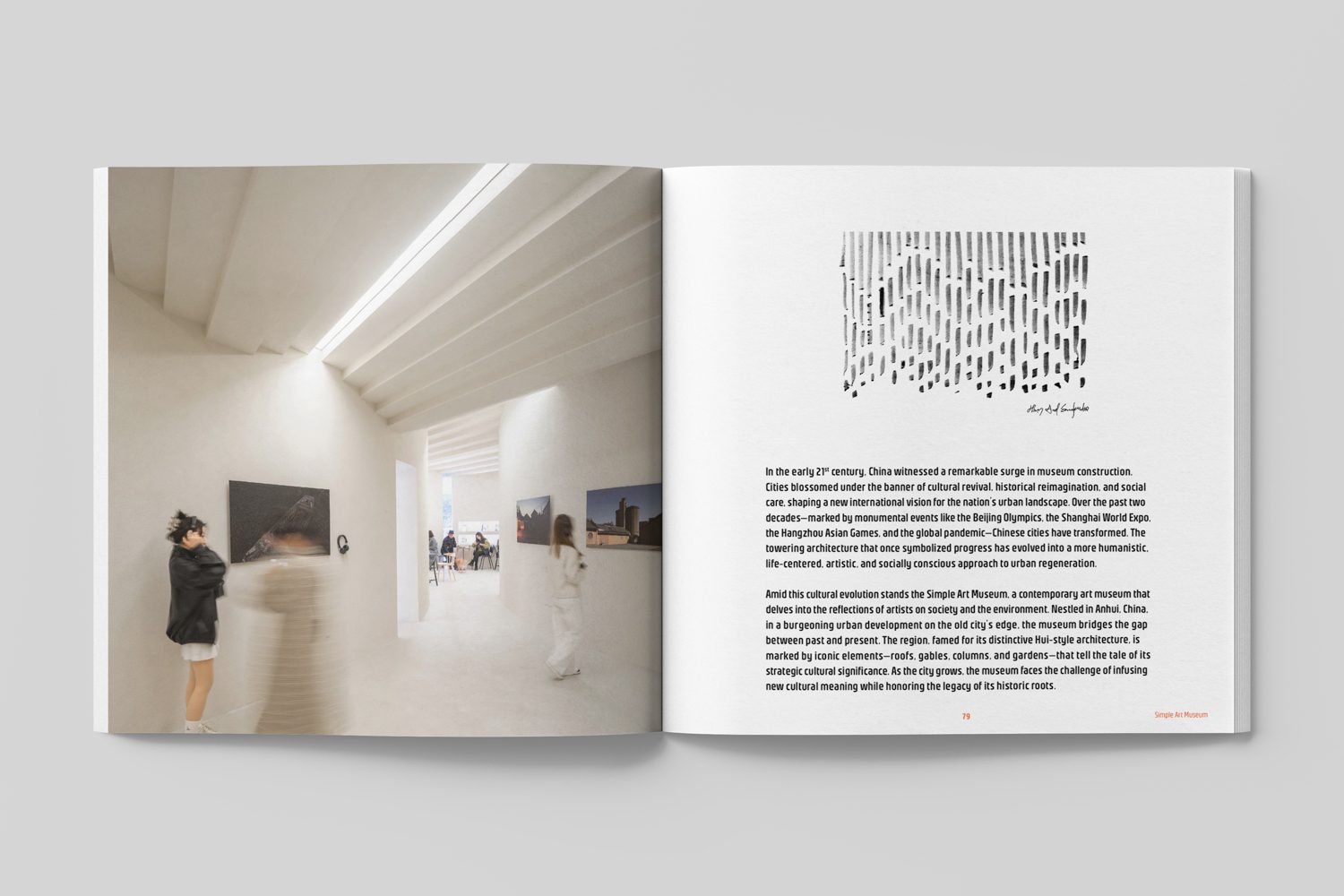
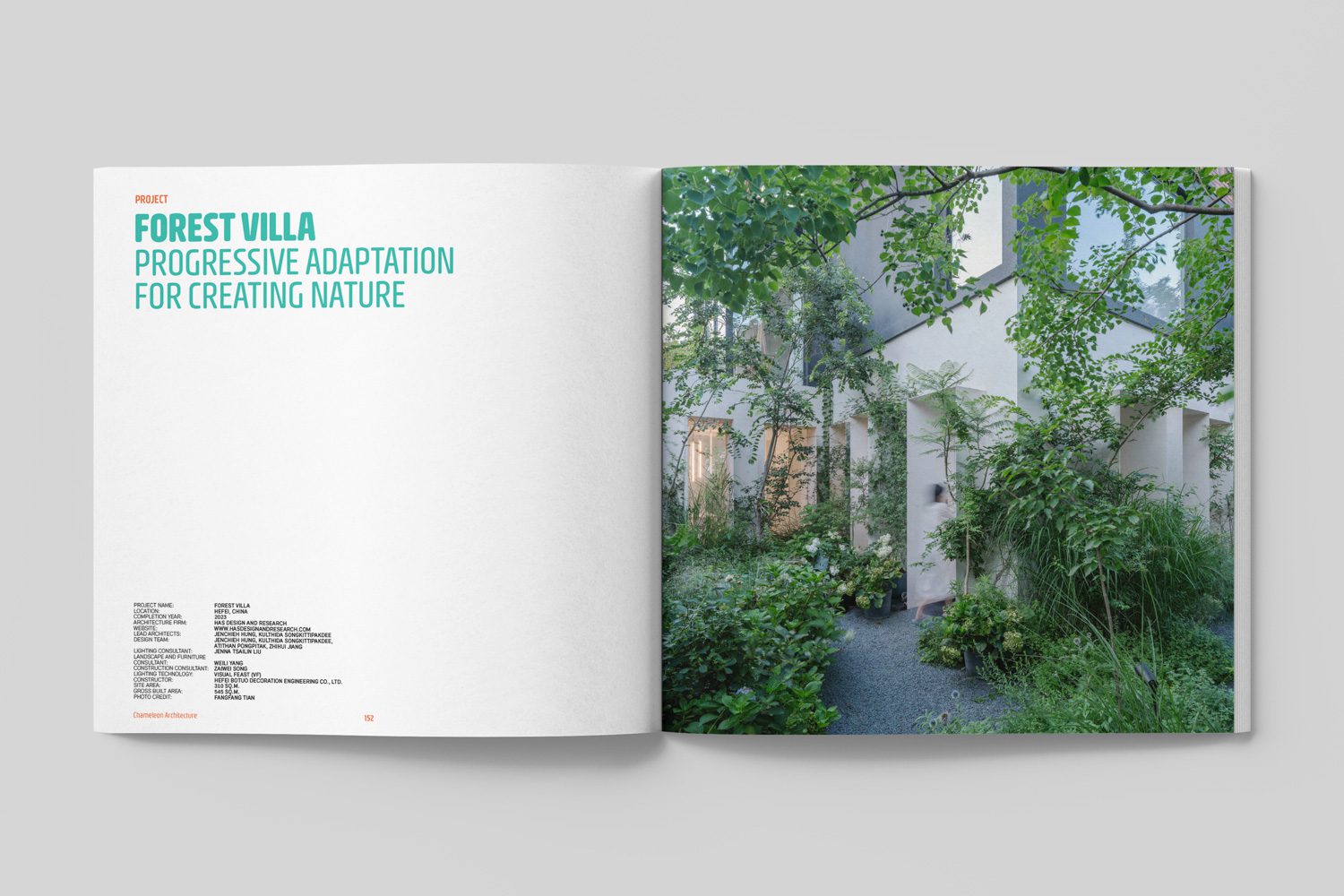
Hung And Songkittipakdee (HAS) also discussed the influence of everyday signage and materials commonly found on local streets and in homes. Drawing from these observations and their accumulated design knowledge, they have developed innovative architectural solutions in projects like the Museum of Modern Aluminum Thailand, the Simple Art Museum, and the Forest Villa. These works emphasize material sustainability and harmonious integration with nature and urban culture.
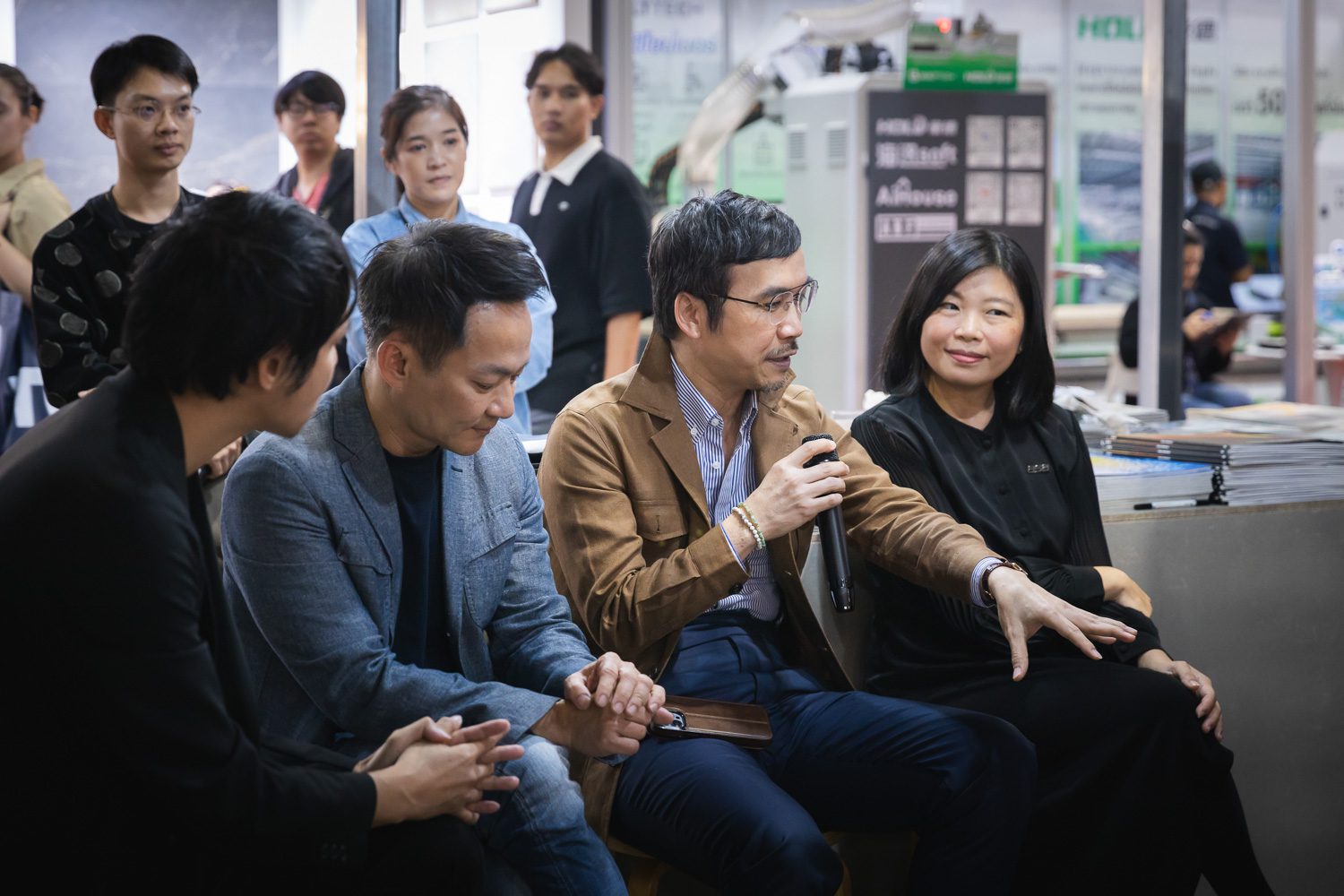
Jenchieh Hung, Amata Luphaiboon, Attaporn Kobkongsanti and Kulthida Songkittipakdee in the discussion
During the exchange session, architect Amata Luphaiboon posed thoughtful questions about how HAS Design and Research uniquely combines vision and identity in its architectural approach. Attaporn Kobkongsanti also shared his professional journey, reflecting on the challenges of developing a personal design style while adapting to global standards. These are the very standards that Jenchieh Hung and Kulthida Songkittipakdee exemplify through their work.
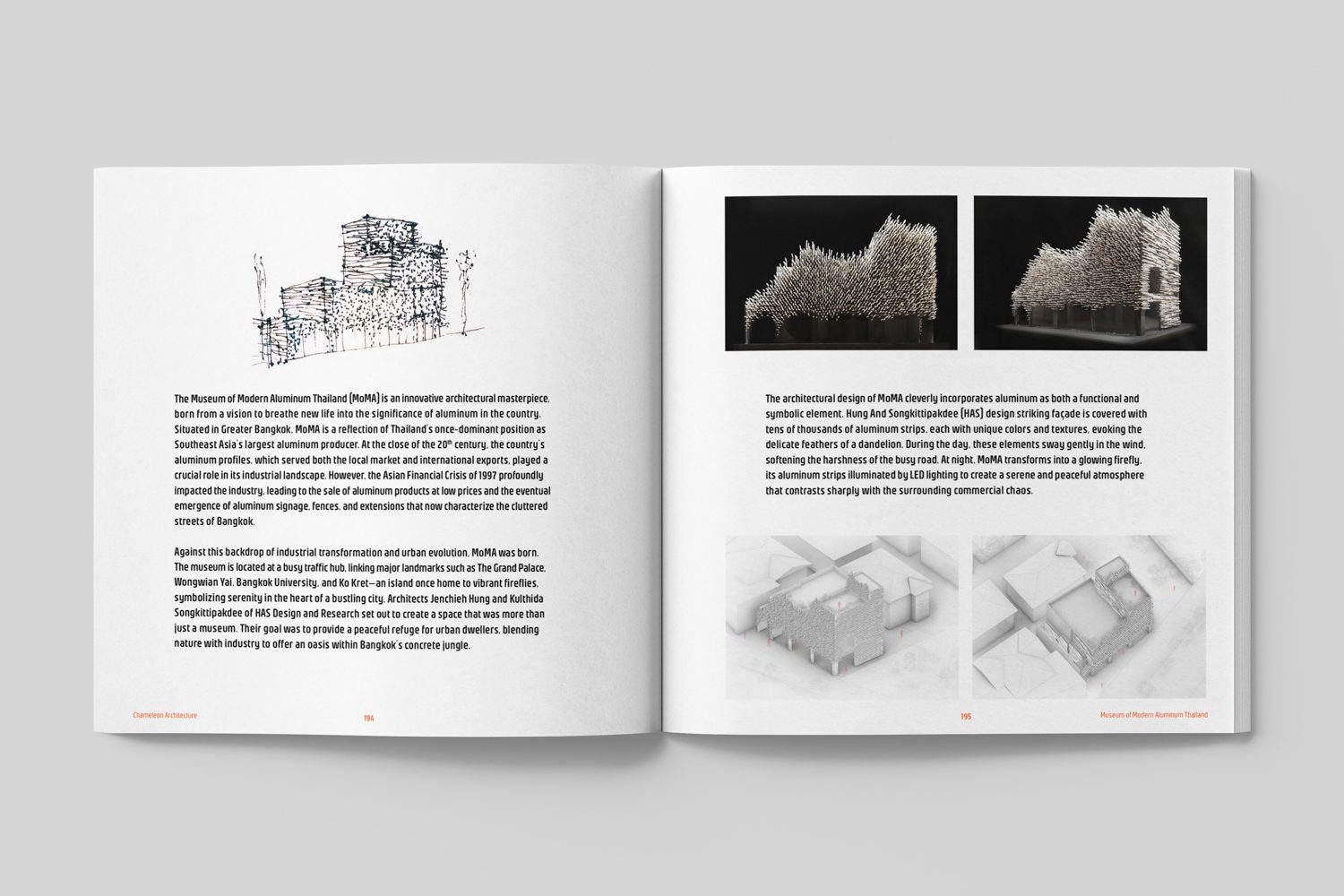
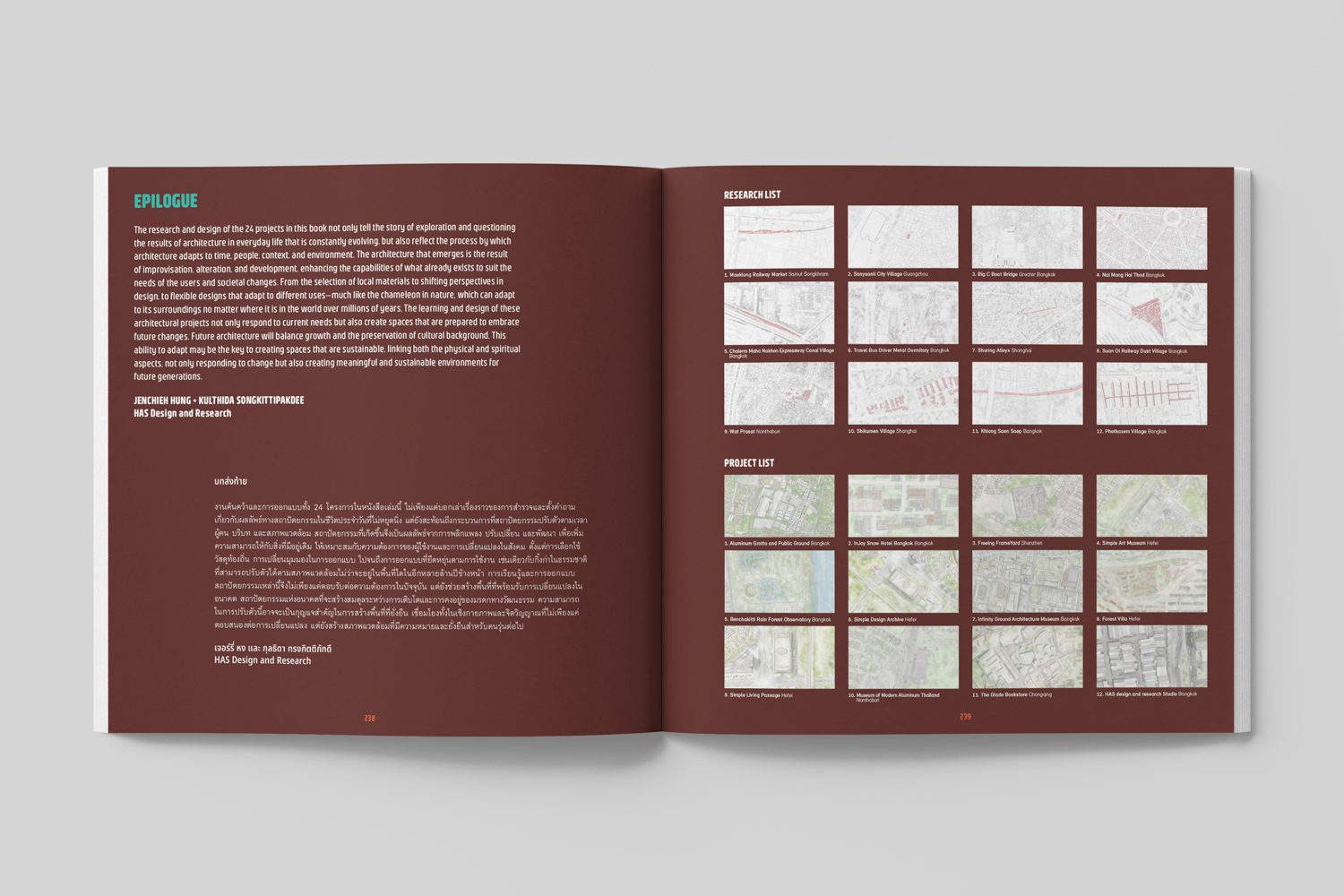
As Jenchieh Hung and Kulthida Songkittipakdee stated in the concluding words at the end of the book “The research and design of the 24 projects in this book not only tell the story of exploration and questioning the results of architecture in everyday life that is constantly evolving, but also reflect the process by which architecture adapts to time, people, context, and environment. The architecture that emerges is the result of improvisation, alteration, and development, enhancing the capabilities of what already exists to suit the needs of the users and societal changes.” And certainly, this ability to adapt may be the key to creating sustainable spaces connecting both physically and spiritually not only responding to change but also creating meaningful and lasting environments for future generations.
art4d.com/product/chameleon-architecture
hasdesignandresearch.com