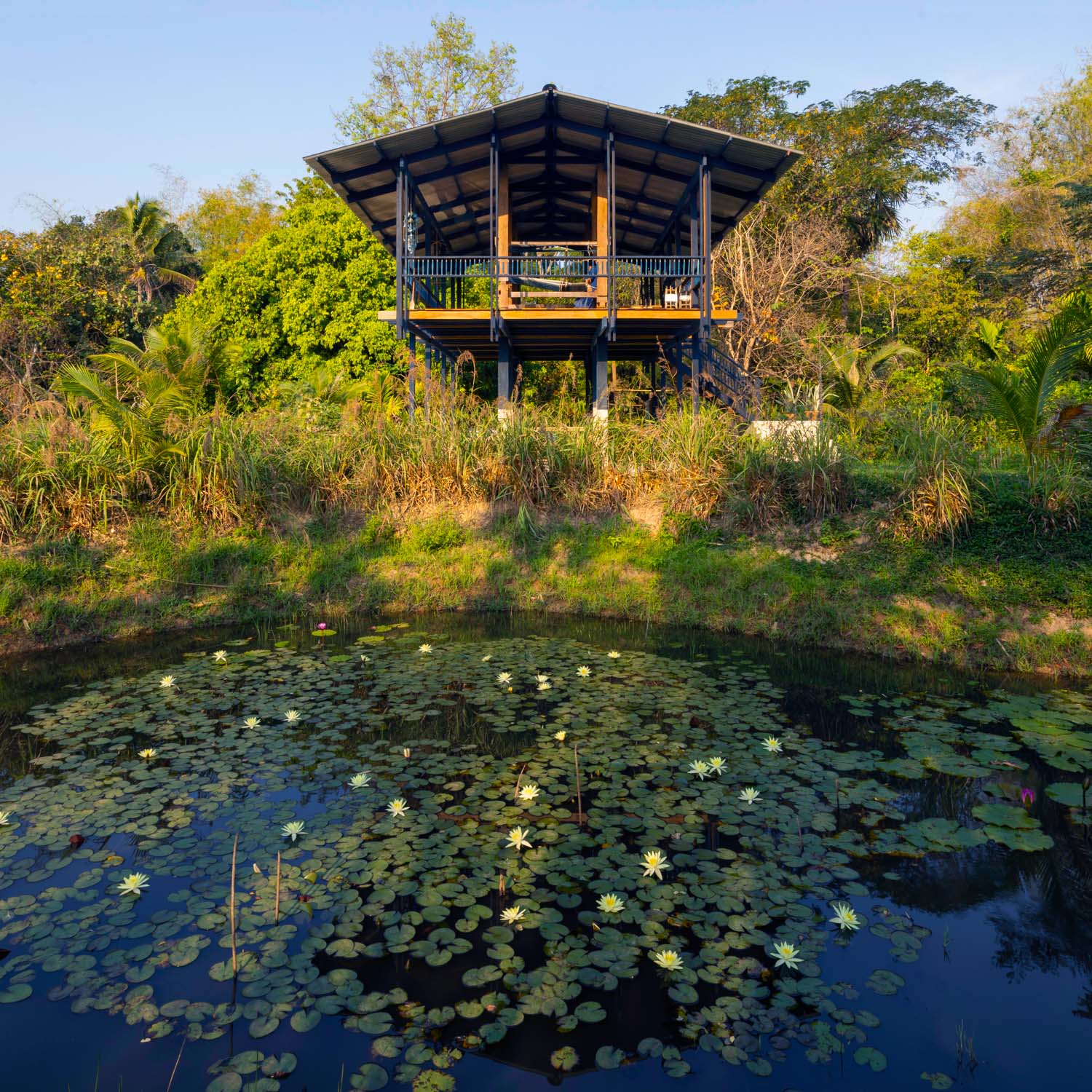
INDIGO LOOM HOUSE, A CONTEMPORARY ARCHITECTURE THAT BORROWS THE STRUCTURE OF A LOOM AND COMBINES IT WITH A RAISED HOUSE IN THE STYLE OF CHAT ARCHITECTS
TEXT: SURAWIT BOONJOO
PHOTO: W WORKSPACE EXCEPT AS NOTED
(For Thai, press here)
“The first thing I noticed was how similar the structure of a loom is to that of a local stilted wooden house. I started from this curiosity about the relationship between the two—even though one is a tool and the other, a form of architecture. Around the same time, a local carpenter in Sakon Nakhon told me that, in reality, there isn’t a separate group of craftsmen for building Thai houses and making looms. It’s the same people doing both,” says Chatpong Chuenrudeemol.
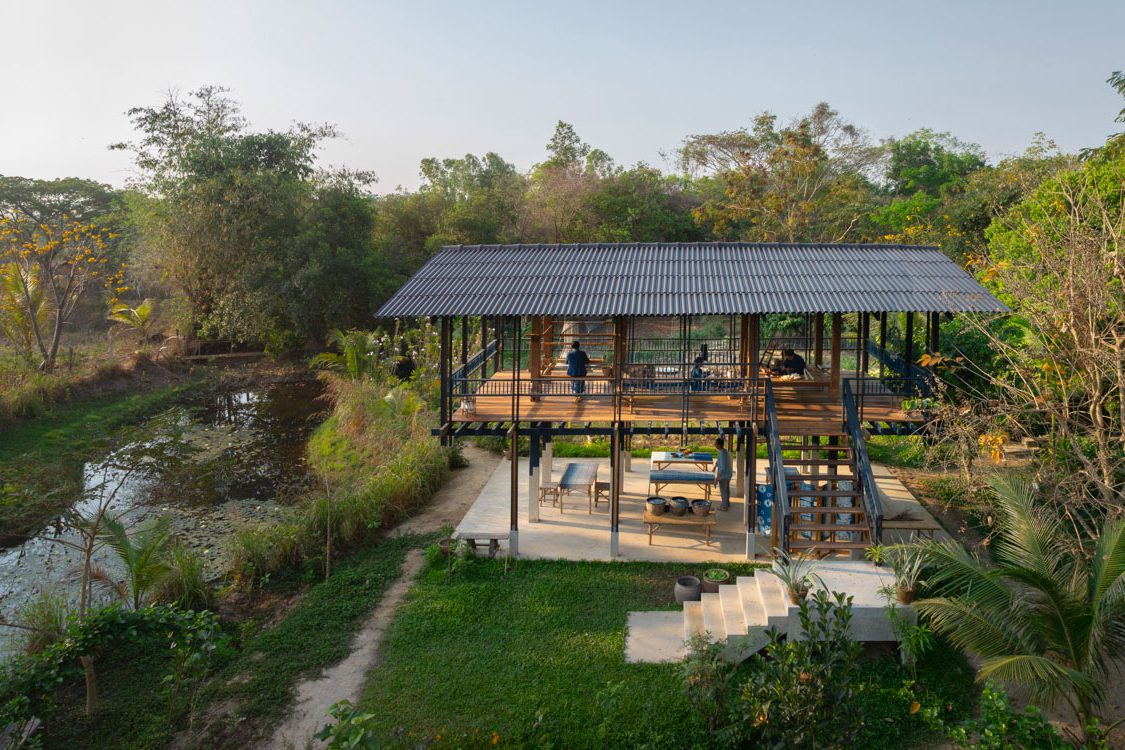
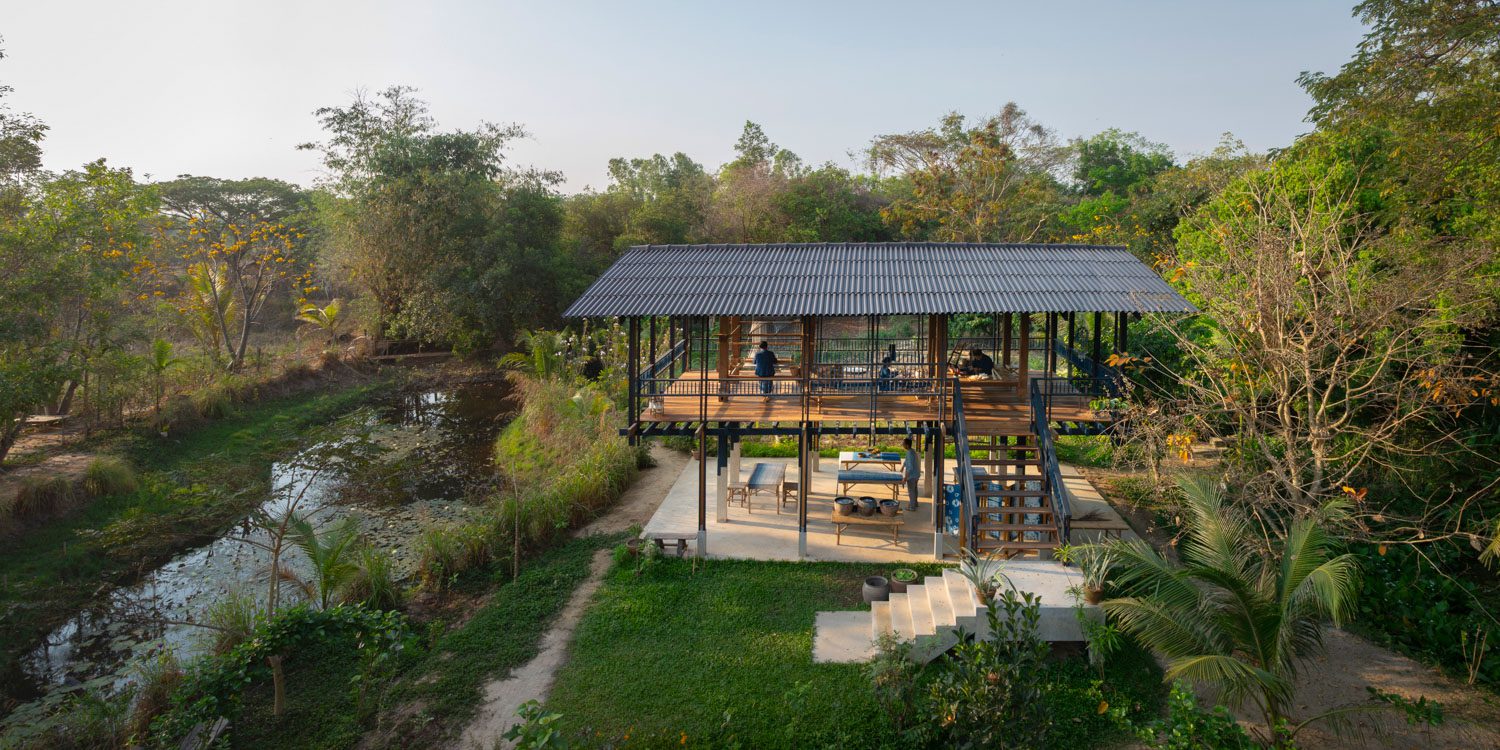
This observation became the starting point for Indigo Loom House, a compact, elevated timber structure that draws from the vernacular architecture of Northeastern Thailand. Its appearance is both striking and unfamiliar, with streaks of indigo dye running across the wood to create distinctive lines and patterns. The design also intentionally leaves the upper level open, allowing natural light and the surrounding tranquil atmosphere to flow through, dissolving spatial boundaries between interior and exterior spaces. Located within Man Gardens: Creative Crafts Center in Mueang District, Sakon Nakhon, Indigo Loom House functions as a space for learning about indigo, encompassing the full process from dyeing to weaving. The project is the work of Chatpong Chuenrudeemol of CHAT Architects, created in collaboration with Prach Niyomka, the center’s founder, artist, and a pioneer in natural indigo dyeing. The design was further developed through the involvement of students from Indigo Loom Studio, a community design studio course under the International Program in Design and Architecture (INDA), Faculty of Architecture, Chulalongkorn University. Supported by the Office of Contemporary Art and Culture, Ministry of Culture, and INDA, the project emerged from Chatpong’s ongoing inquiry into the structural parallels between everyday objects and architecture. Chatpong began developing this unique architectural concept in 2017, before returning to it years later to further explore vernacular architecture as a medium for artistic expression.
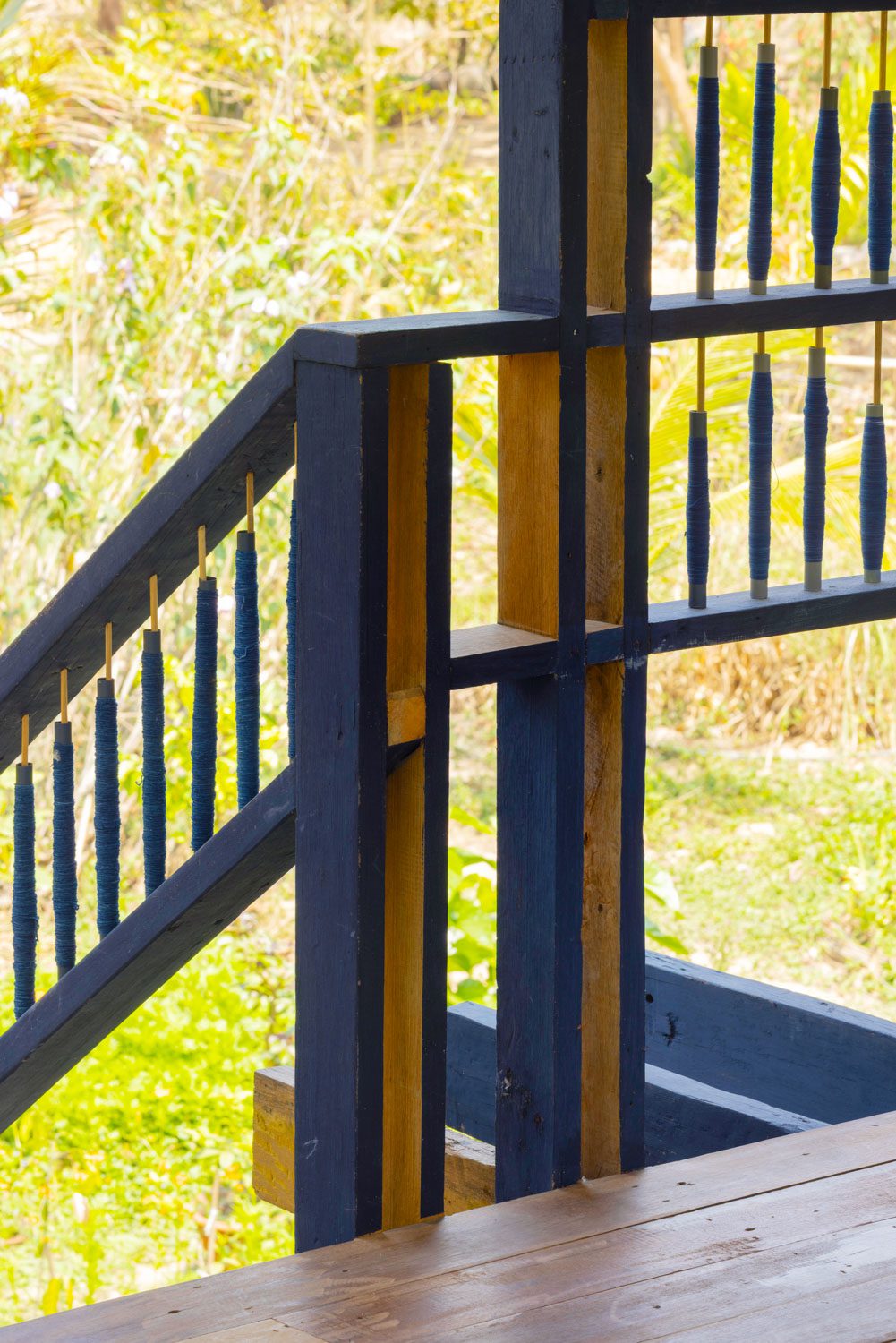
 Photo courtesy of CHAT architects
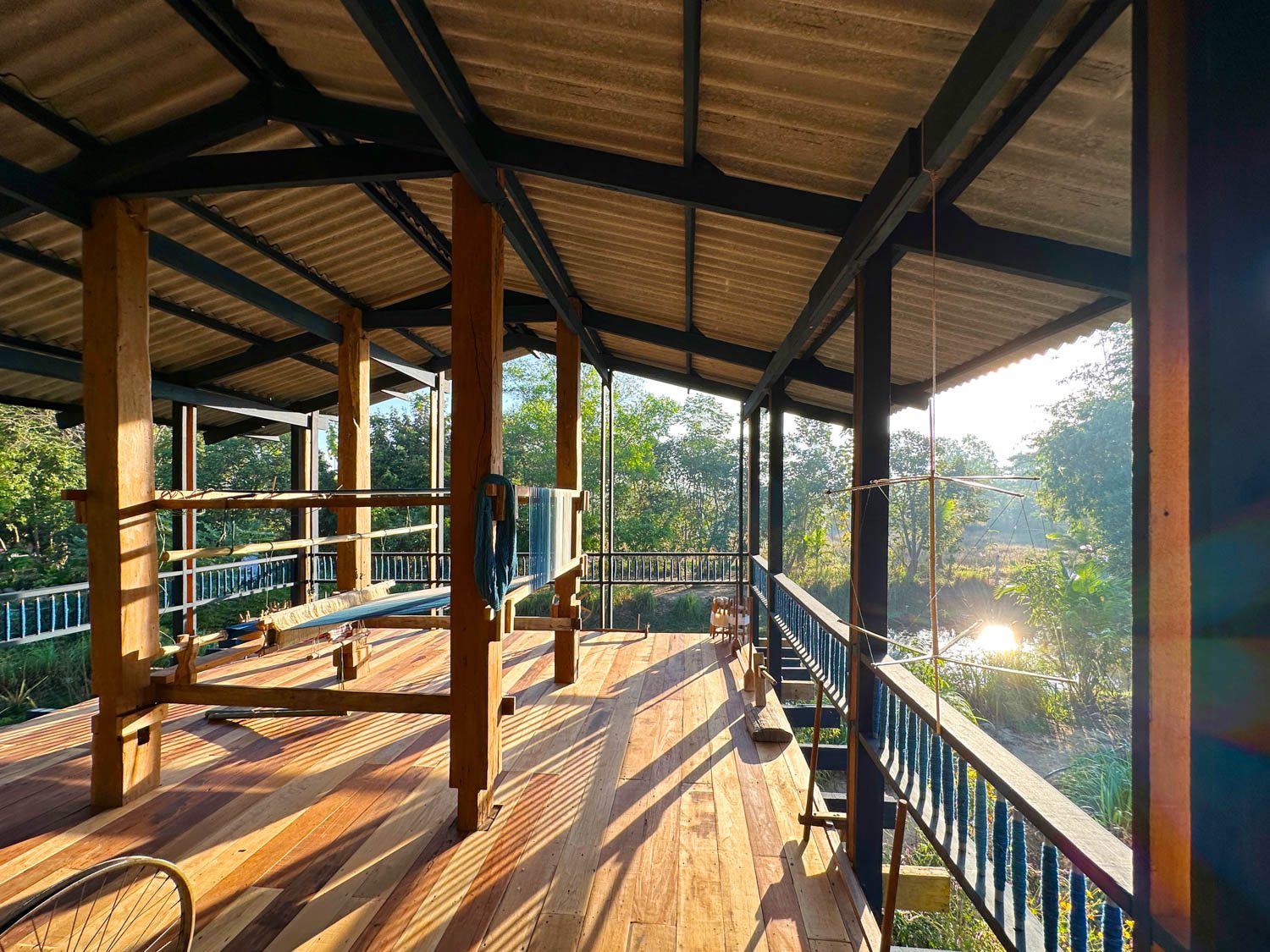
‘Condo-Kee’ / ‘The Loom Condo,’ the idea of vernacular architecture as a means of accommodating development and adaptation, while sustainably preserving local identity, forms the foundation of this project. It began with Chatpong conducting field research into the everyday lives of people in the area, alongside a study of local residential architecture. His approach was guided by a perspective he calls ‘Bastard Architecture’ —a framework that emphasizes the intersection of architectural identity with the identity of its users, and embraces the ordinary, even the profane, aspects of context. He started by deconstructing the loom, analyzing each component through an architectural lens, before disassembling, reconfiguring, and integrating elements of the loom’s structure with those of vernacular wooden architecture. The initial design envisioned the building as a modular, stackable system intended to support various functions: weaving activities for elderly women, a space for learning, and a communal area for knowledge exchange among local housewives and others interested in the craft. The design was later adapted to better suit the site and construction constraints, resulting in a stilted vernacular structure dedicated to the study and practice of indigo dyeing and weaving.
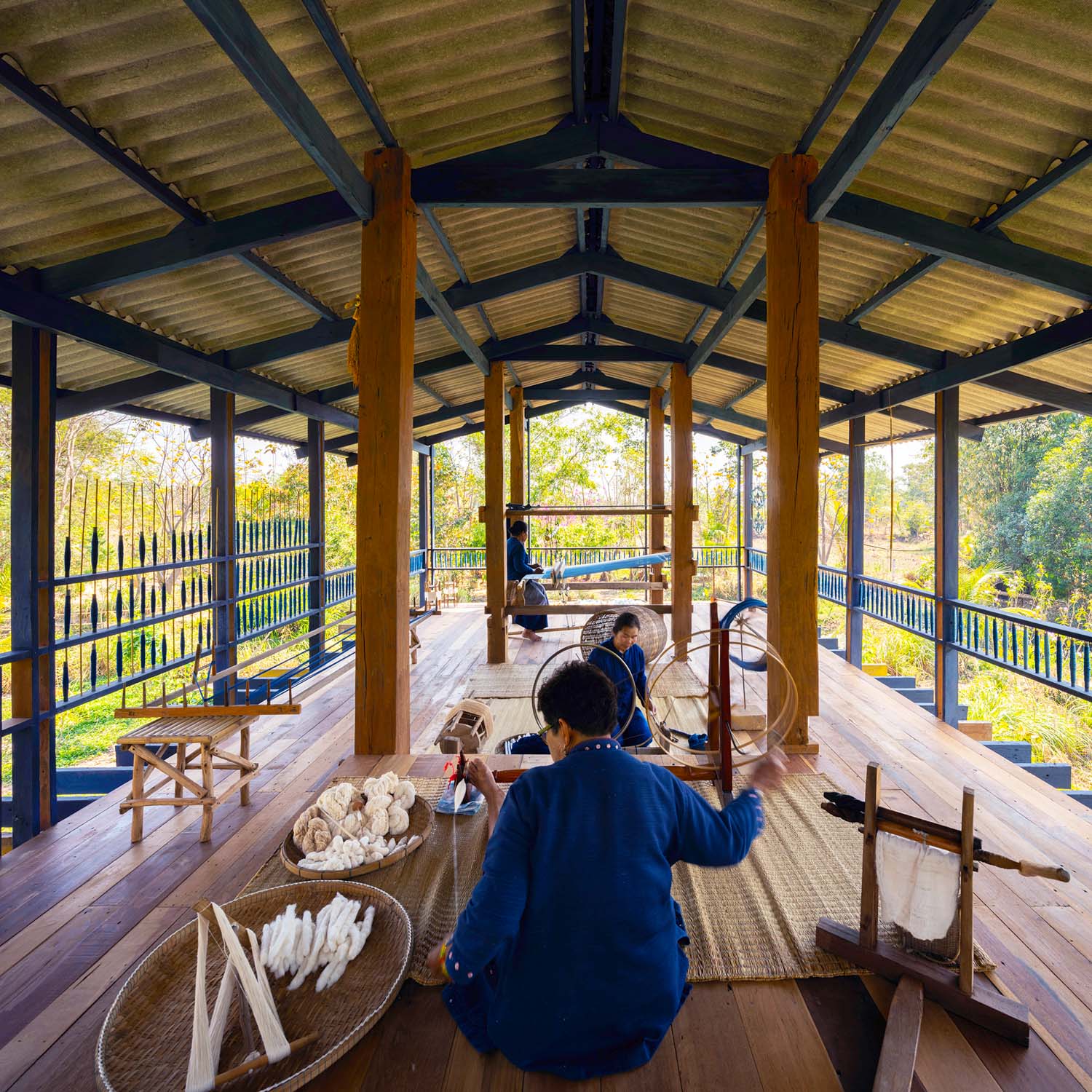
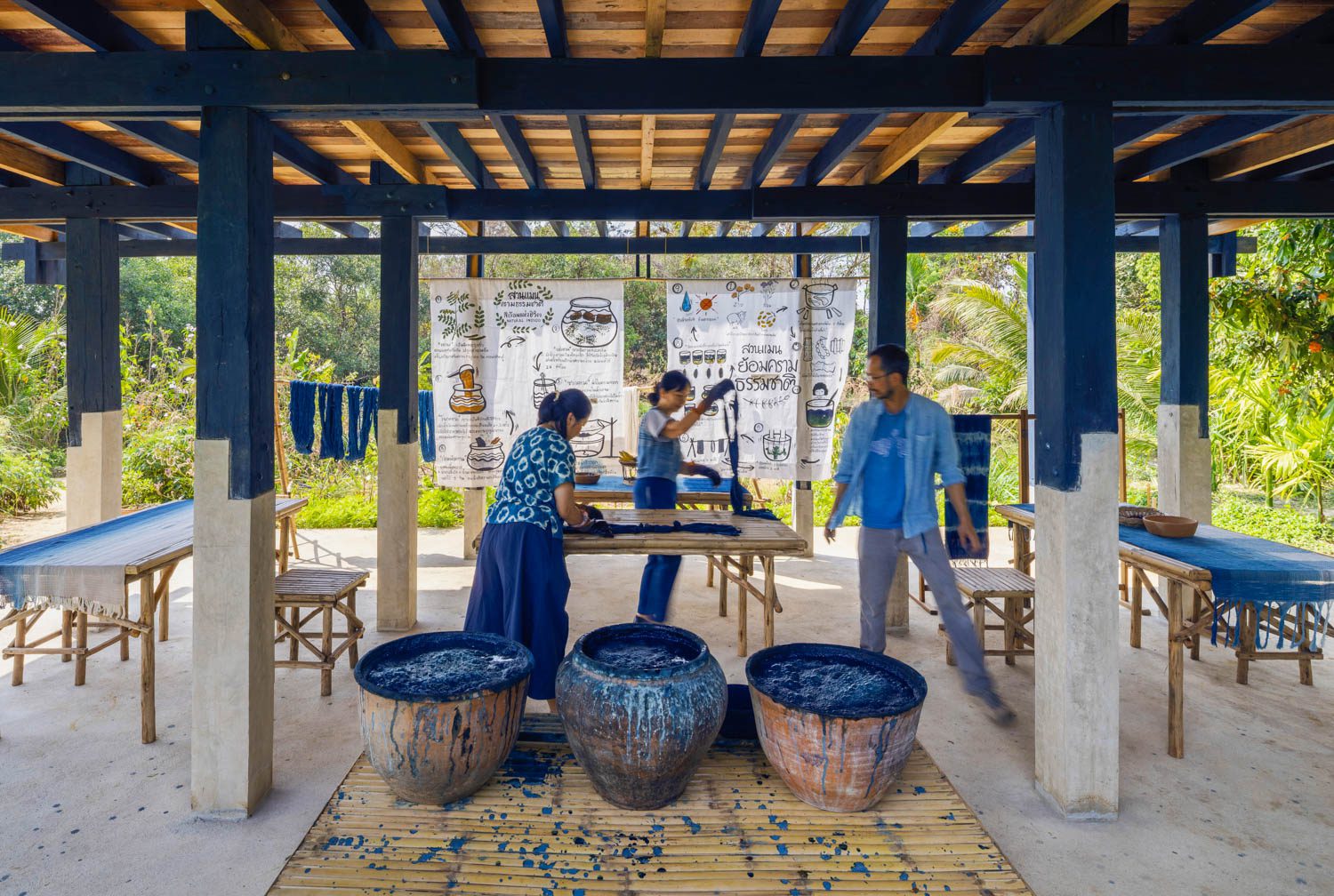
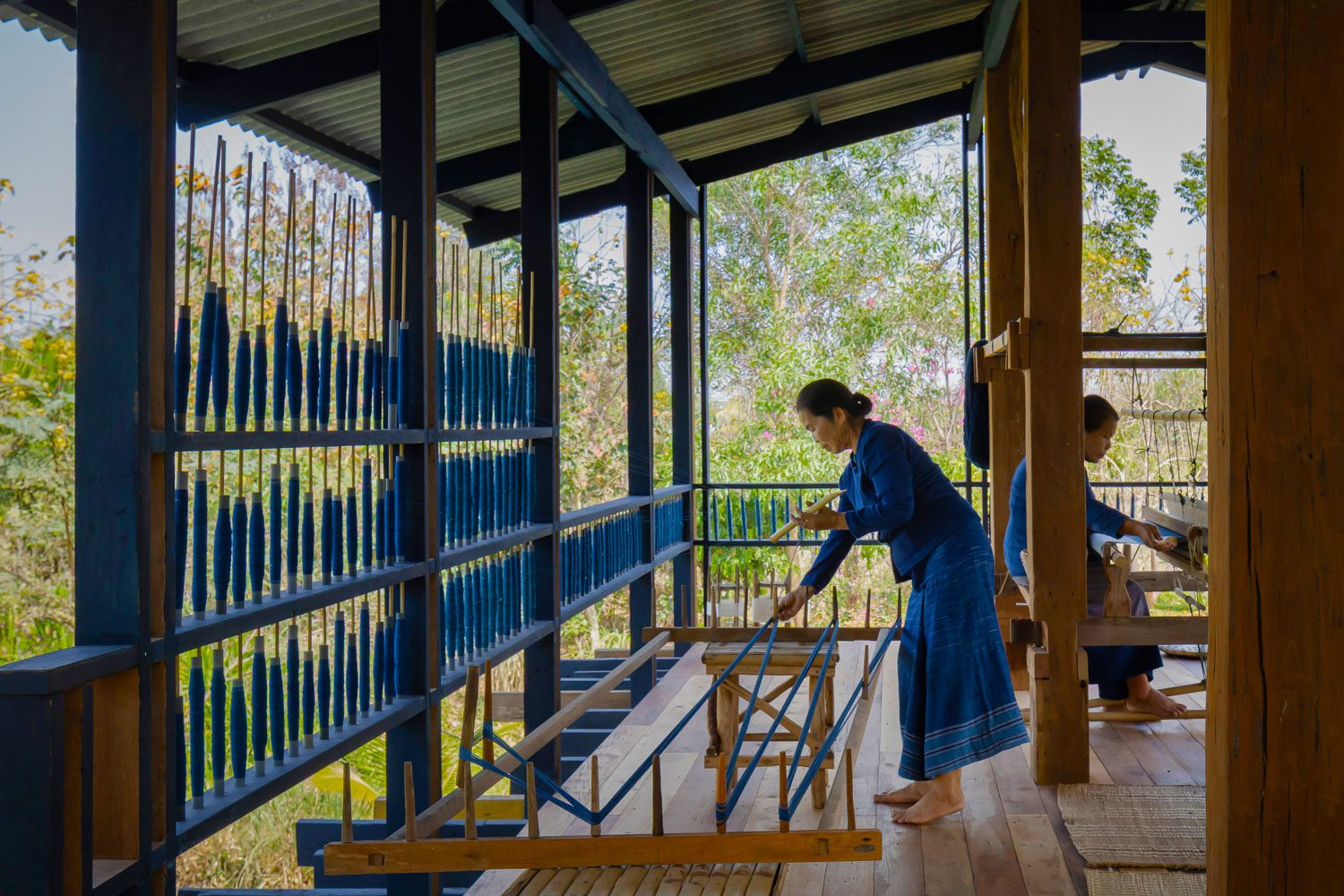
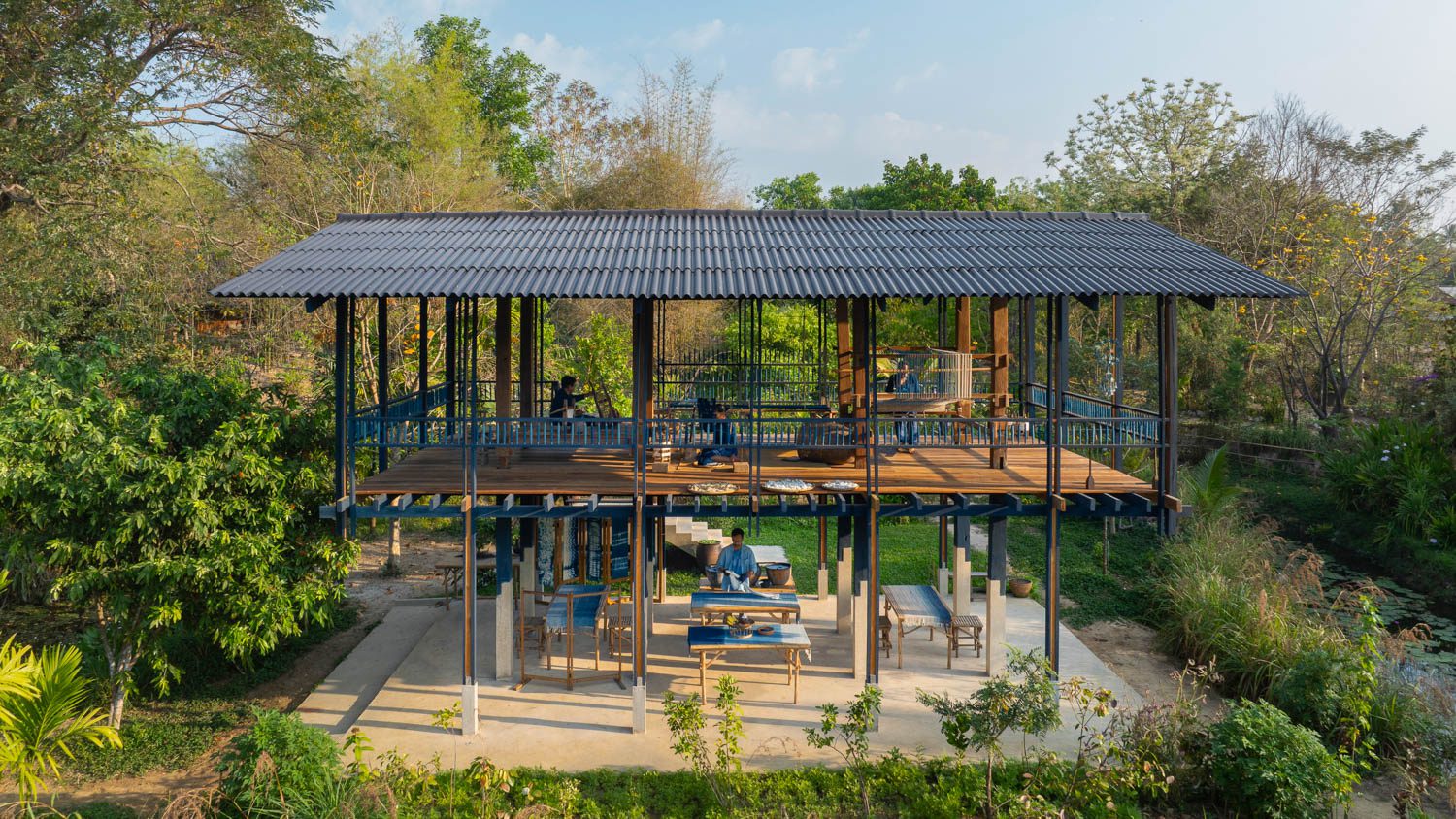
The loom and the building were both deconstructed and collectively reinterpreted as an assembly of wooden components. In this reconfigured syntax, structural parts were not merely swapped or replaced, but rather reimagined in new roles. Even the ‘lak pia’—a tool used for preparing warp threads in the weaving process—was integrated into the architectural composition. This multipurpose structure, designed to support both weaving and indigo dyeing activities, represents a new, compact iteration of Condo-Kee or Loom Condo—a hybrid form of ‘bastard architecture’ situated within a micro-ecosystem of dye plants and small rice paddies. Reclaimed wood was carefully selected and combined with leftover household materials found on-site, minimizing the need for newly fabricated components. The stilted building, raised on a concrete base, clearly delineates between wet and dry zones, separating dyeing from weaving activities. Traces of the wood’s past, such as notches left on columns from earlier use, were intentionally preserved and repurposed within the new context, serving as joinery points that connect the house structure to the loom framework. Similarly, functional components of lak pia were reused as both wall cladding and a railing for the building.
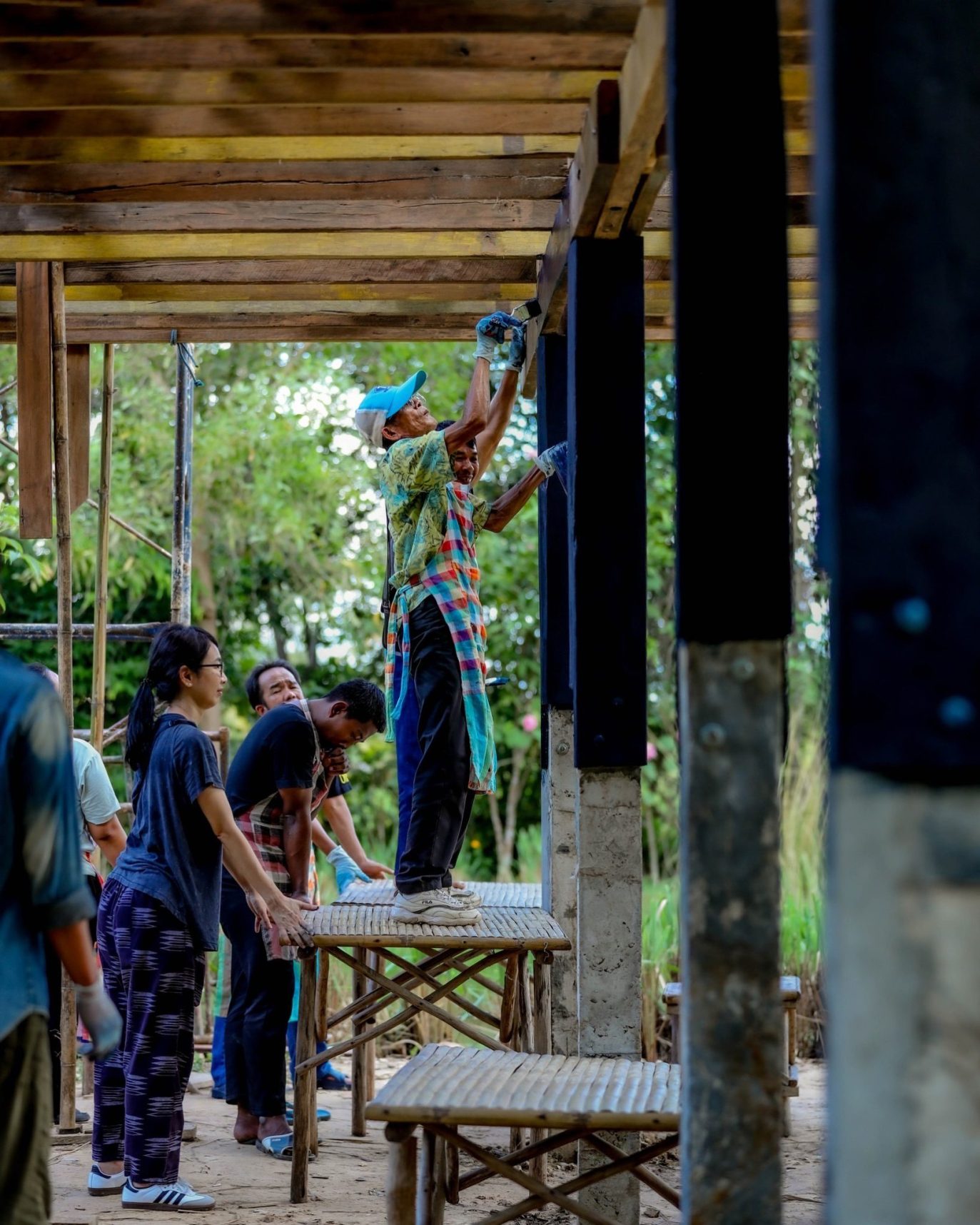 Photo: Kittiphat Phaited
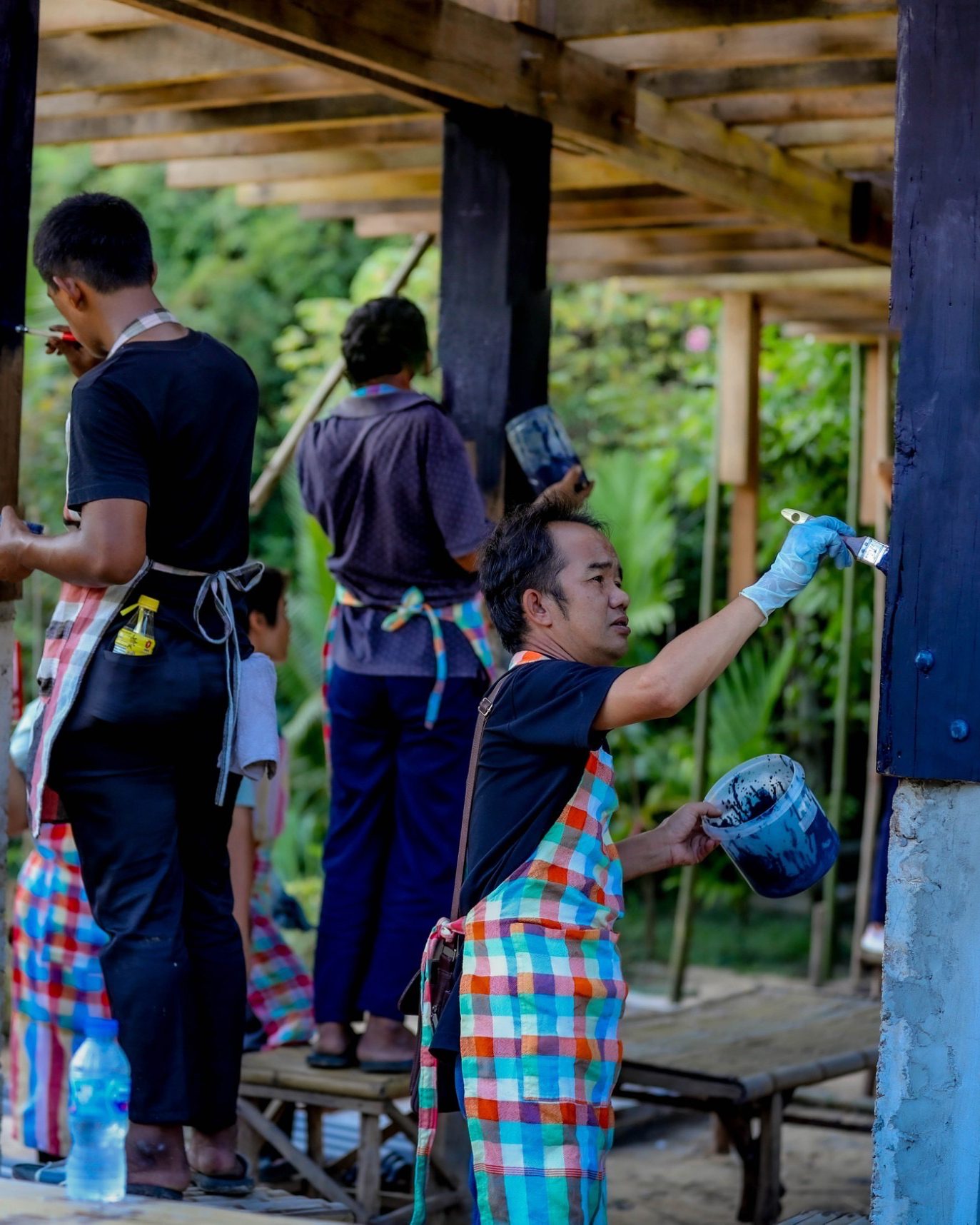
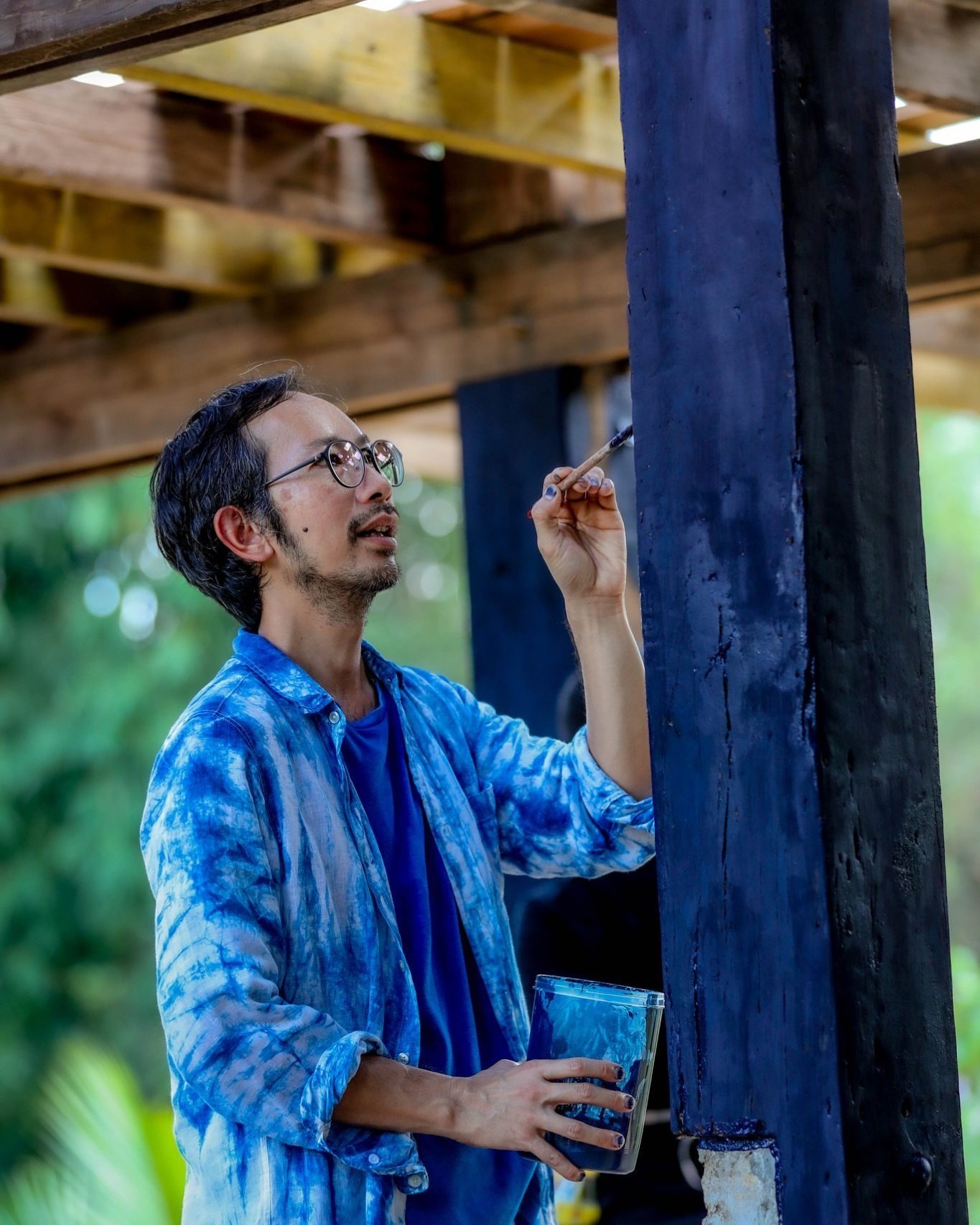
This contemporary vernacular timber structure goes beyond simply functioning as a space for learning; it actively embodies its role as a learning center from the outset. Even during the construction phase, it became a site of community engagement and shared knowledge. Local residents were invited to participate by applying indigo pigment to parts of the building, embedding the spirit of collective learning into its very material. From the beginning—and at every stage since—its educational intent has been deliberately emphasized. The experience of the building is also deeply sensory: the scent of indigo, the sound of threads being drawn taut, the overall atmosphere. These qualities are not only seen and felt, inside and out, but registered by those who use the space. Such tactile richness is matched by an architectural strategy that is both poetic and pragmatic—components that are not only expressive but functional, responding directly to the context in which the building is situated. For example, a wall panel serves both as a protective railing and a surface for preparing threads in the weaving process. The openness of the building invites a constant dialogue between interior space and the surrounding natural landscape. This is the moment when the limits of how design language is defined, and the boundaries of vernacular wooden architecture itself, begin to expand.
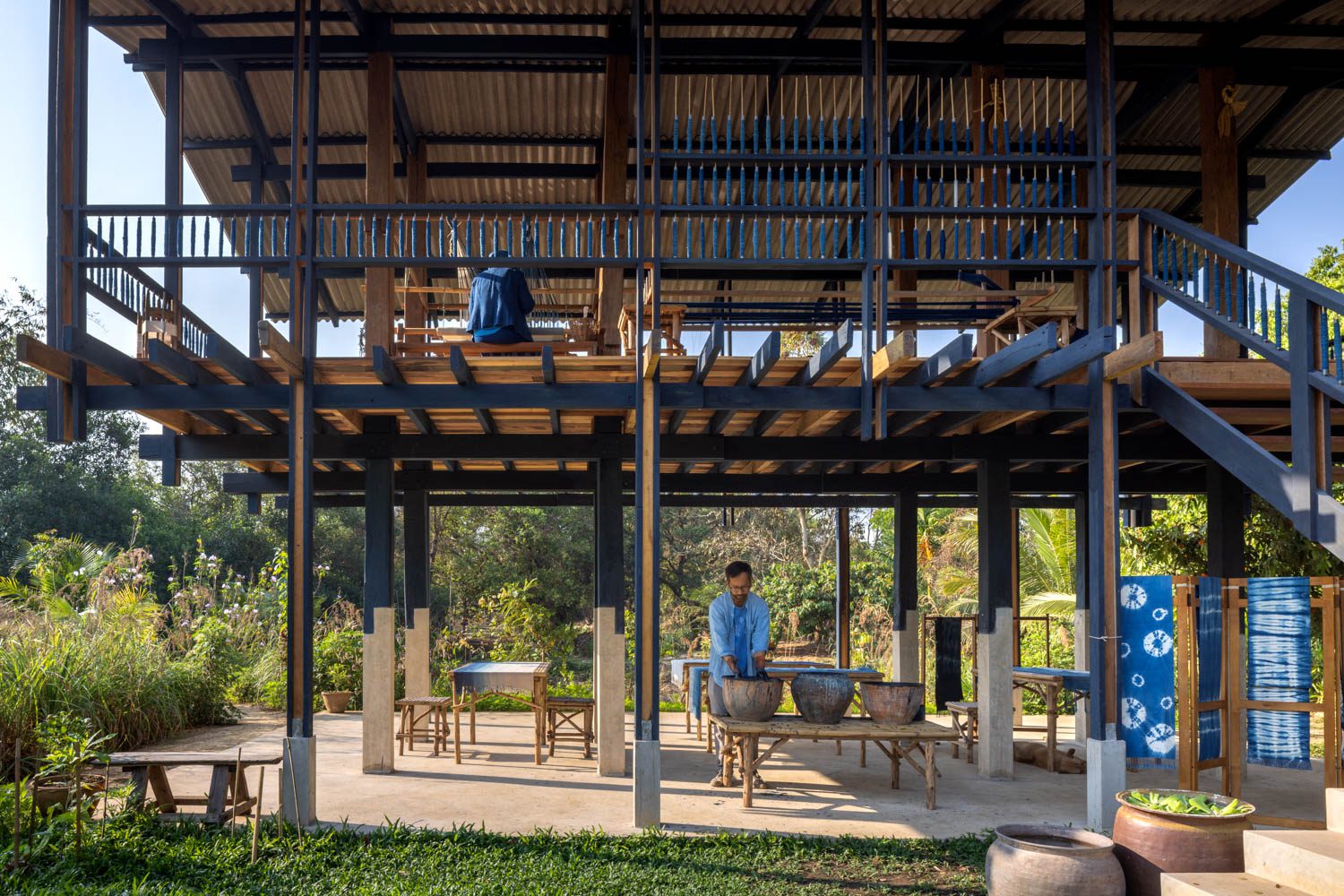
Beyond its unconventional structure, the building’s rhythmic indigo palette is just as striking. Chatpong explains the origin of the building’s color: “The type of indigo used for dyeing textiles can’t be applied directly to wood. So Prach had to adapt and develop a new indigo formula specifically for timber. He drew on knowledge from traditional painting techniques, incorporating high-quality pigments that are both durable and vibrant. The result isn’t a dye, but a paint formulated for surface application rather than absorption.” The use of indigo was deliberately reserved for specific areas of the building, serving both functional and expressive roles. Rather than acting as decorative detail, the color enhances spatial reading and subtly extends the presence of the architecture. “If you look closely,” he notes, “you’ll see the indigo appears primarily along the lower part of the building, while the upper areas are left in their natural wood tone. The idea was to contrast the indigo on the exterior ‘shell’ with the exposed timber above, like an egg yolk tucked inside a shell, drawing attention to the inner space where the loom sits. In a more symbolic sense, it also reinforces the interlocking relationship between the loom and the house’s structural columns, highlighting the loom’s role as both a support and a defining presence within this Indigo Loom House.”
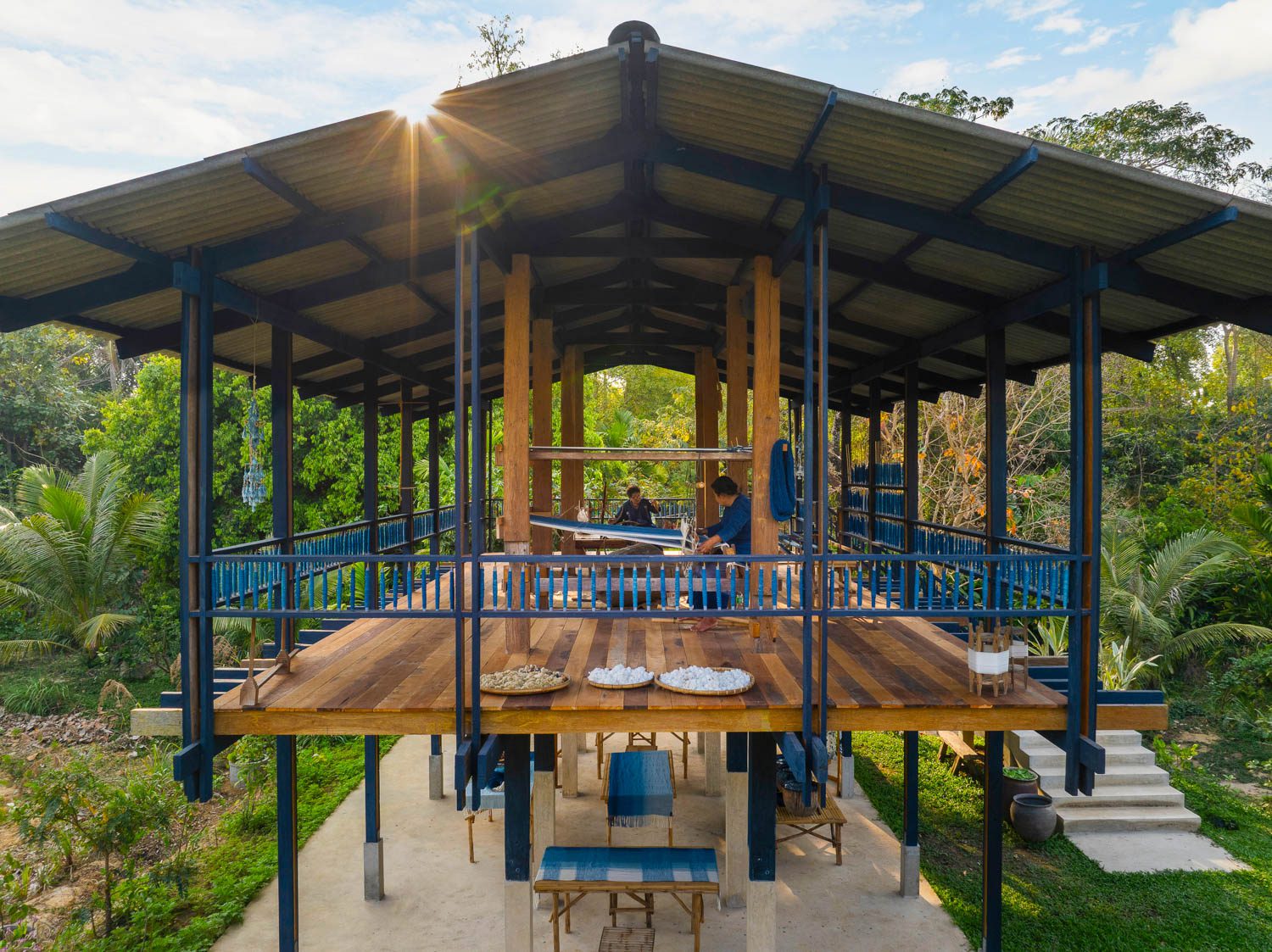
The interplay of deep wood browns and striking indigo running across both horizontal and vertical planes evokes the warp and weft threads of woven cloth. Seen through this lens, Indigo Loom House itself might be imagined as a piece of indigo-dyed fabric. In this way, it becomes both textile and architecture—a well-crafted creation both visually compelling and conceptually astute.