A MACHINE FOR STORYTELLING BY MVRDV GALVANIZES PEOPLE TO CONNECT WITH THE PAST, PRESENT AND FUTURE OF EUROPE’S LARGEST PORT CITY
TEXT: PRATCHAYAPOL LERTWICHA
PHOTO: OSSIP VAN DUIVENBODE
(For Thai, press here)
“When you live in Rotterdam, the port sits on the horizon – it’s ‘over there’ and many people don’t really know what goes on there,” wrote Winy Maas, co-founder of the architectural studio MVRDV. In an article on the firm’s website, he reflects on Portlantis, a new visitor center and exhibition space at the Port of Rotterdam, co-designed by MVRDV. “Portlantis gives people a way to investigate, to see how things are changing in the port, how that relates to the city, and how it affects the life they live in the city. It does this extremely efficiently – like a machine for storytelling.”
As the largest seaport in Europe, the Port of Rotterdam serves as a vital hub for logistics and industry. Yet, situated over 40 kilometers from the city center with its presence reduced to a distant silhouette on the horizon, the port often remains an abstract and remote concept in the minds of most residents. Portlantis was conceived to close this gap, offering the public a lens into the port’s inner workings, its relevance to urban life, and its role in shaping a more environmentally conscious future.
The project replaces FutureLand, a temporary visitor center that operated from 2009 to 2014. The new facility is located along the shoreline of Maasvlakte 2, a reclaimed extension of the port’s westernmost edge. Unusually, the Port of Rotterdam did not begin by commissioning an architectural design. Instead, it first engaged the Dutch exhibition design studio Kossmanndejong, renowned for crafting immersive visitor experiences, to develop the narrative arc and visitor journey. Only after this conceptual foundation was laid did the port authority launch an architectural competition to select a building that would embody and enhance the proposed storyline. Kossmanndejong’s narrative encompasses the post–World War II evolution of the port, its impact on the regional economy and environment, and its projected future.
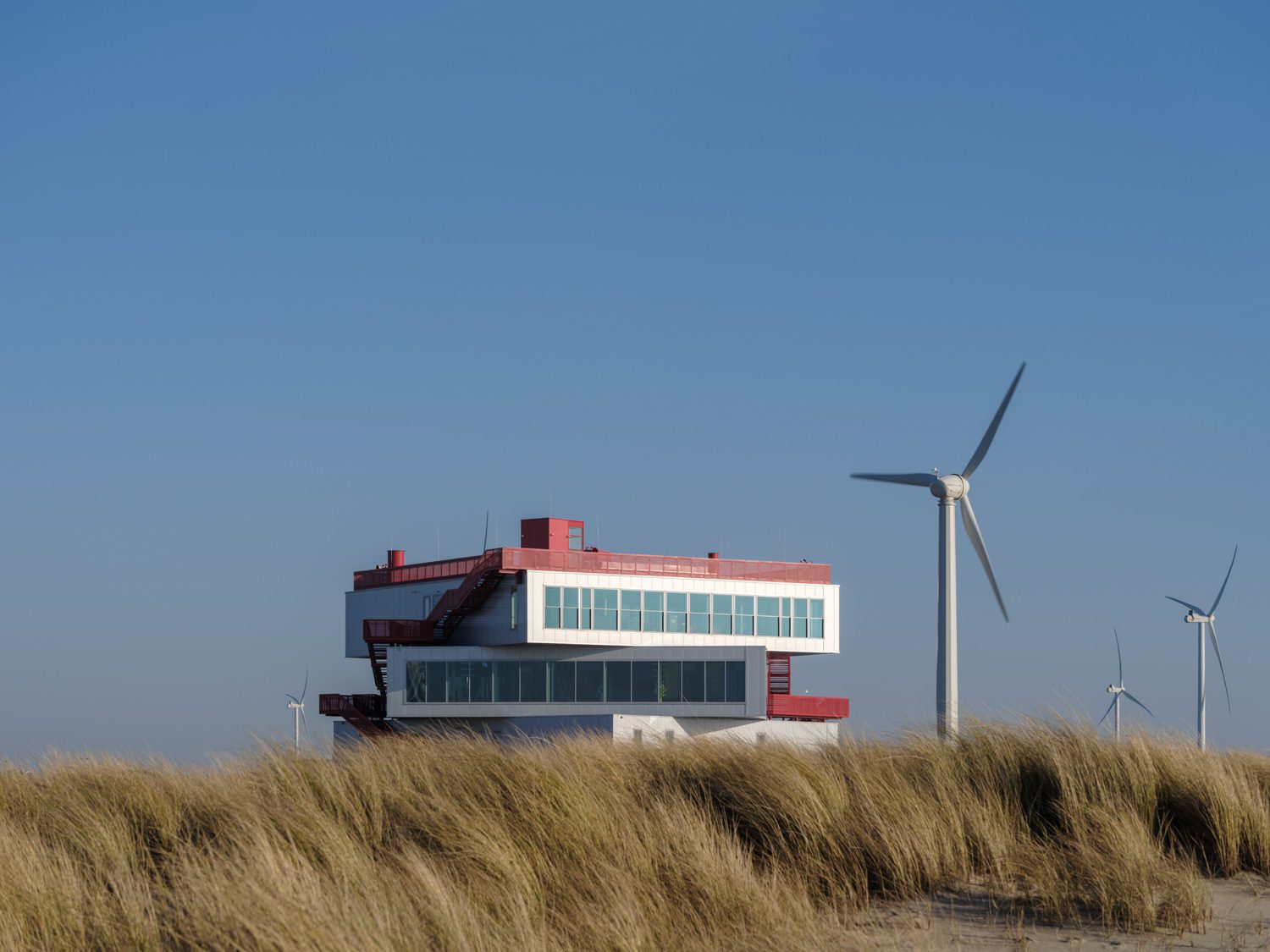
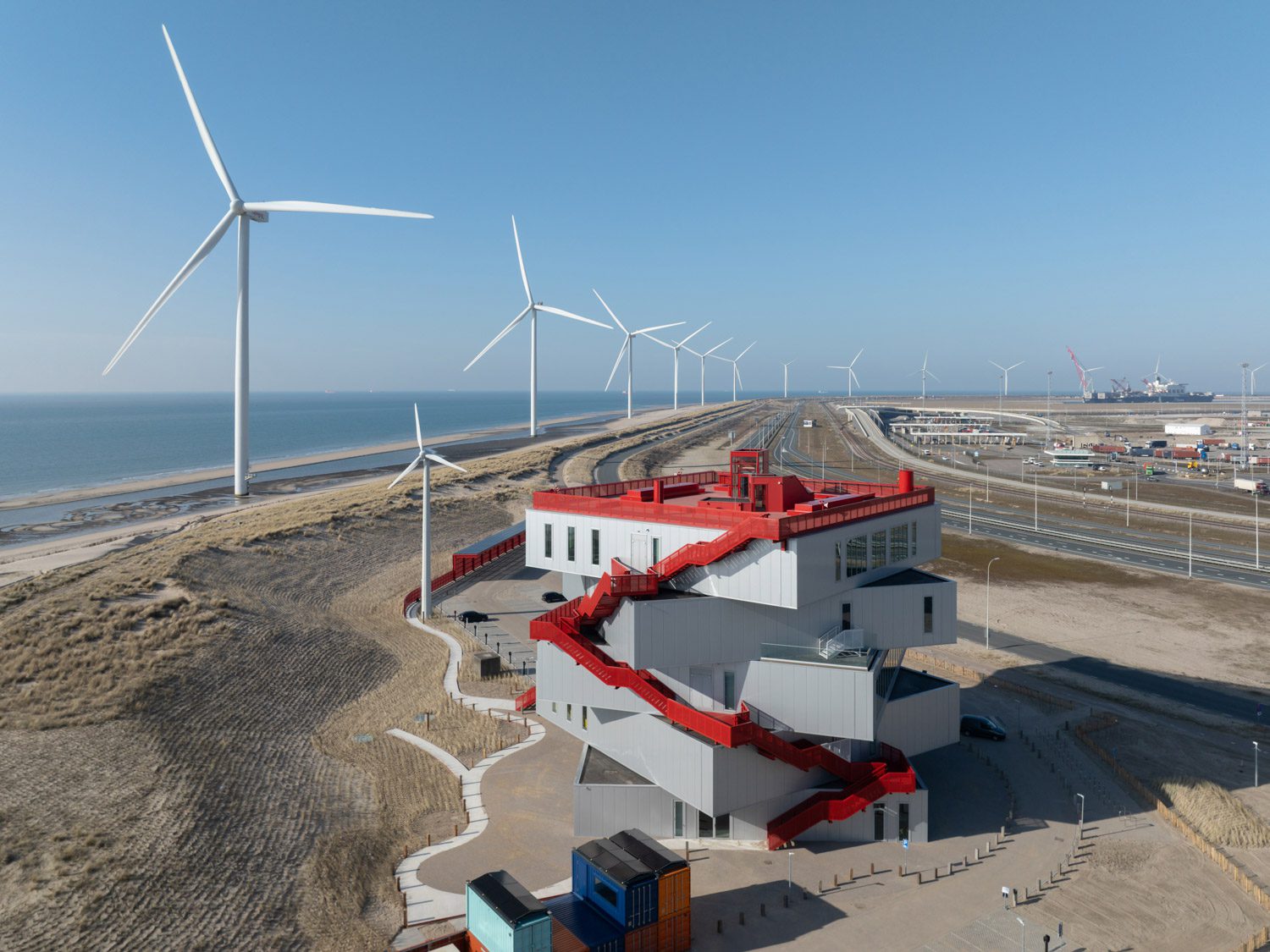
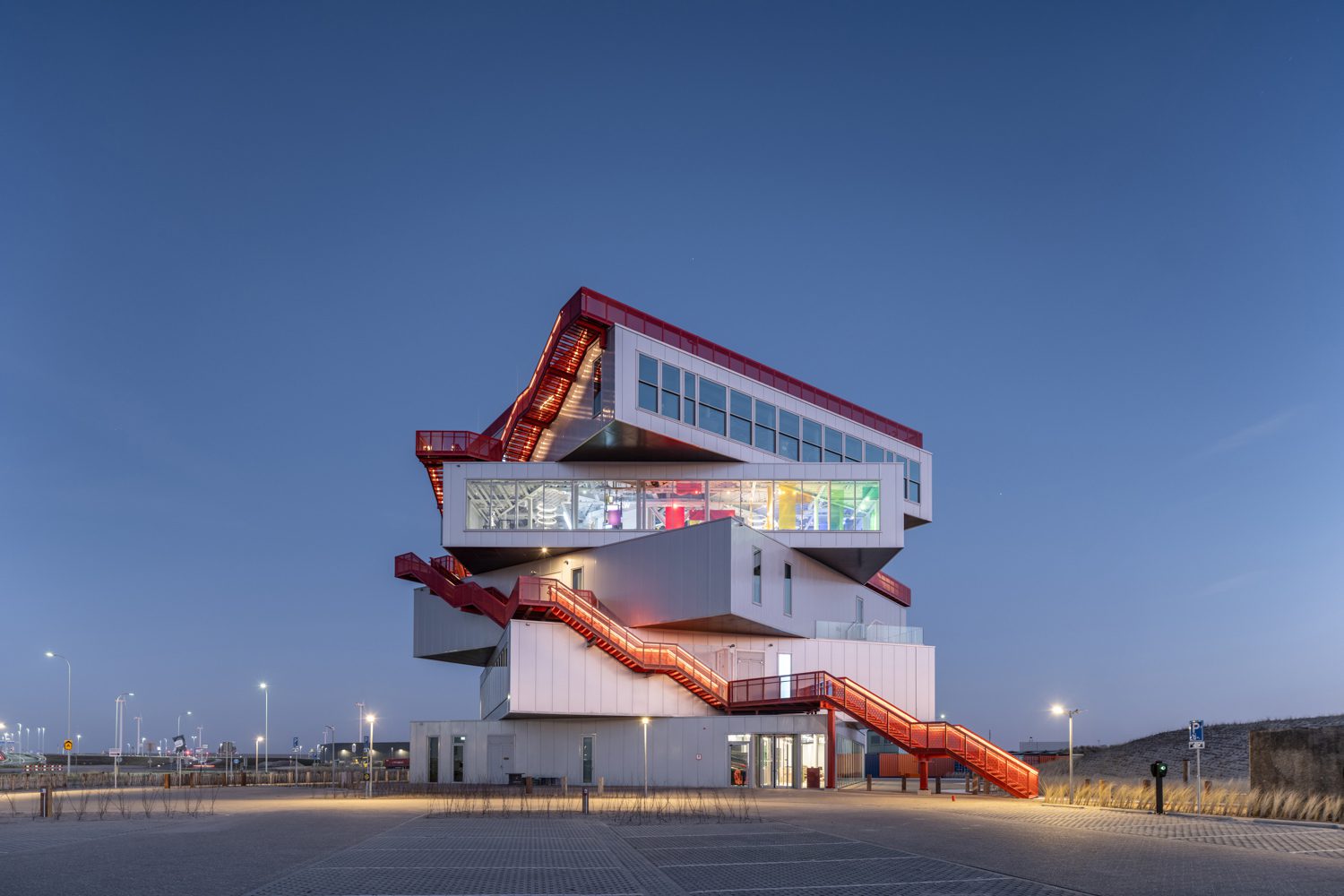
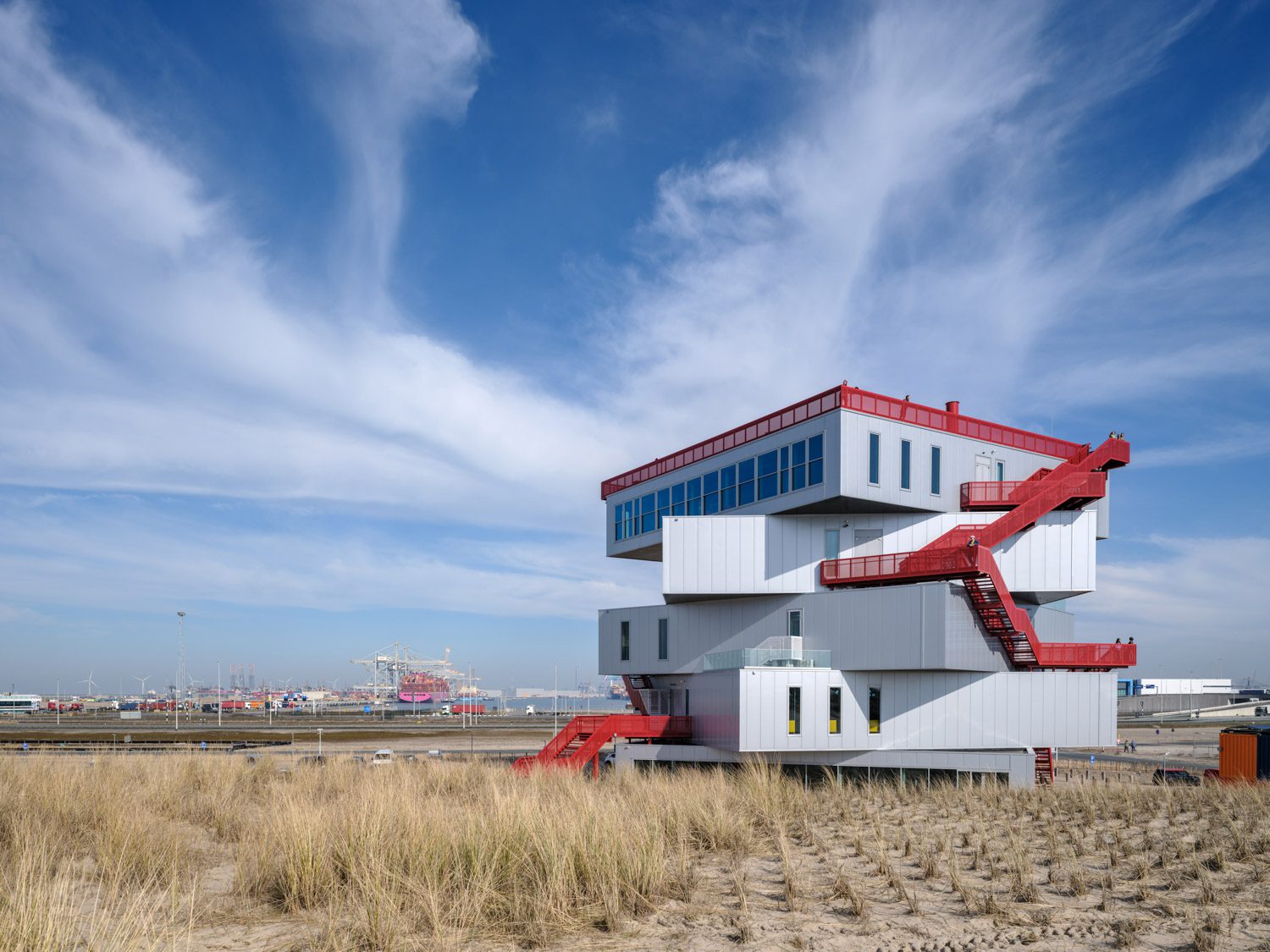
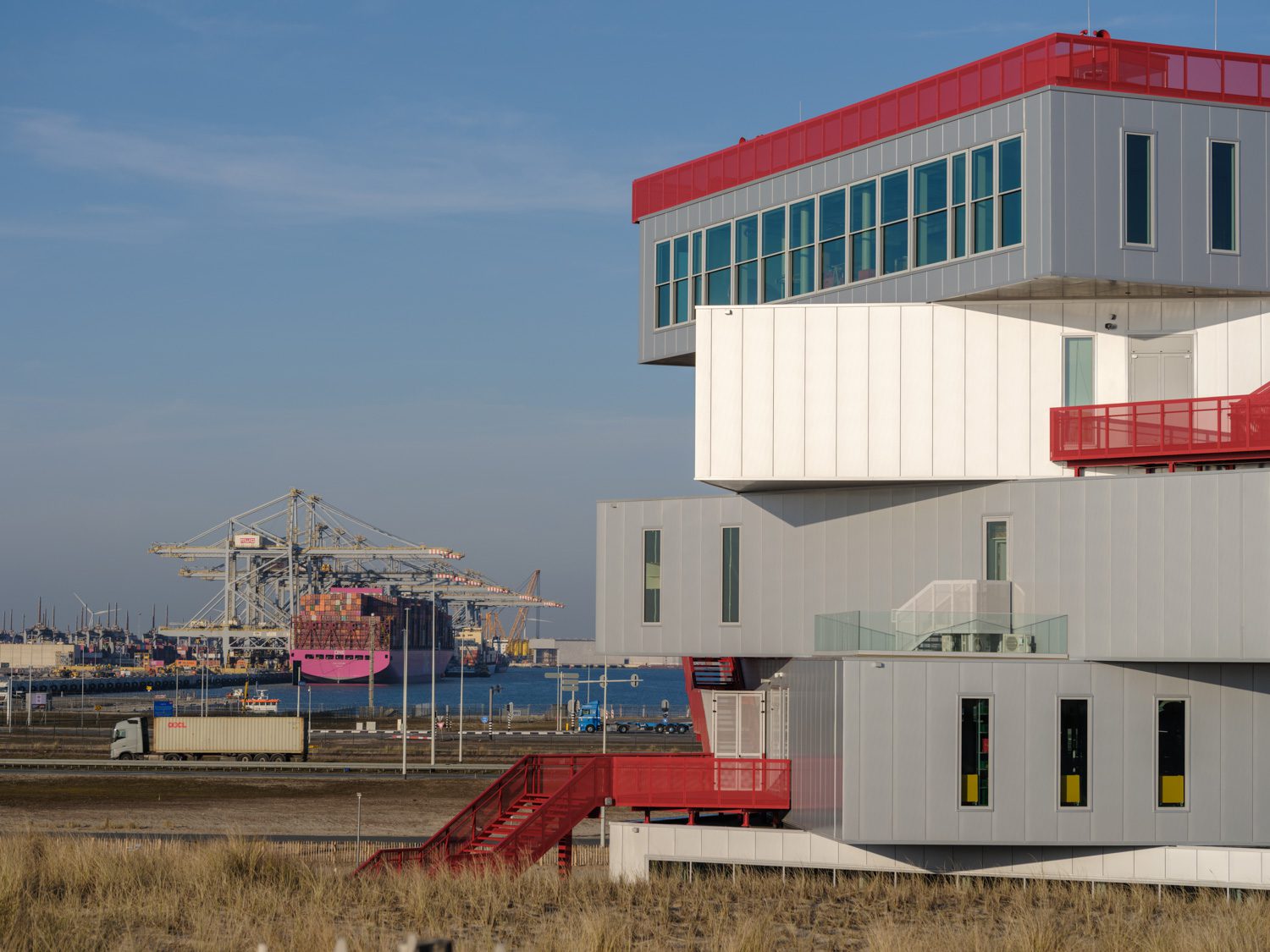
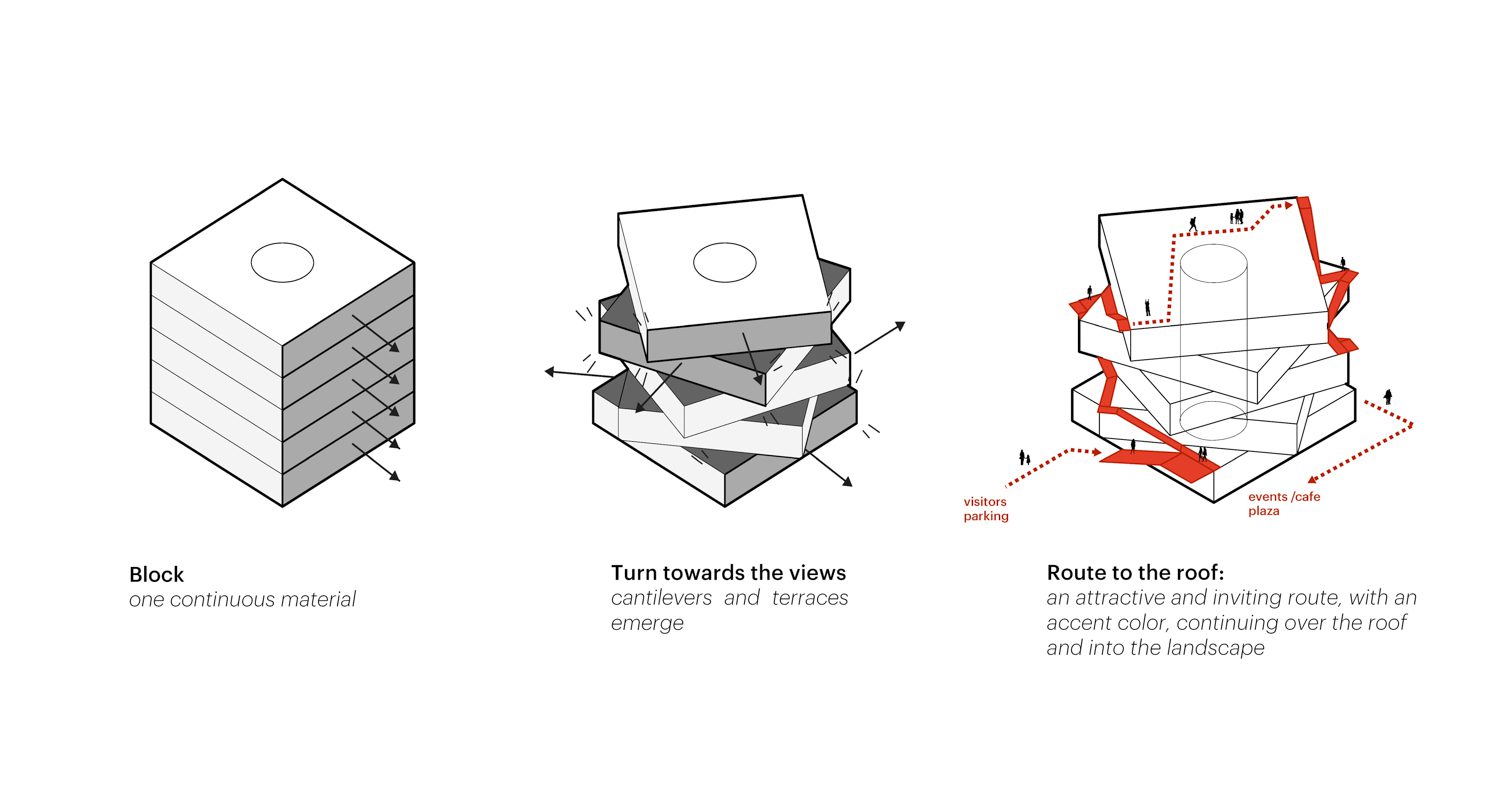
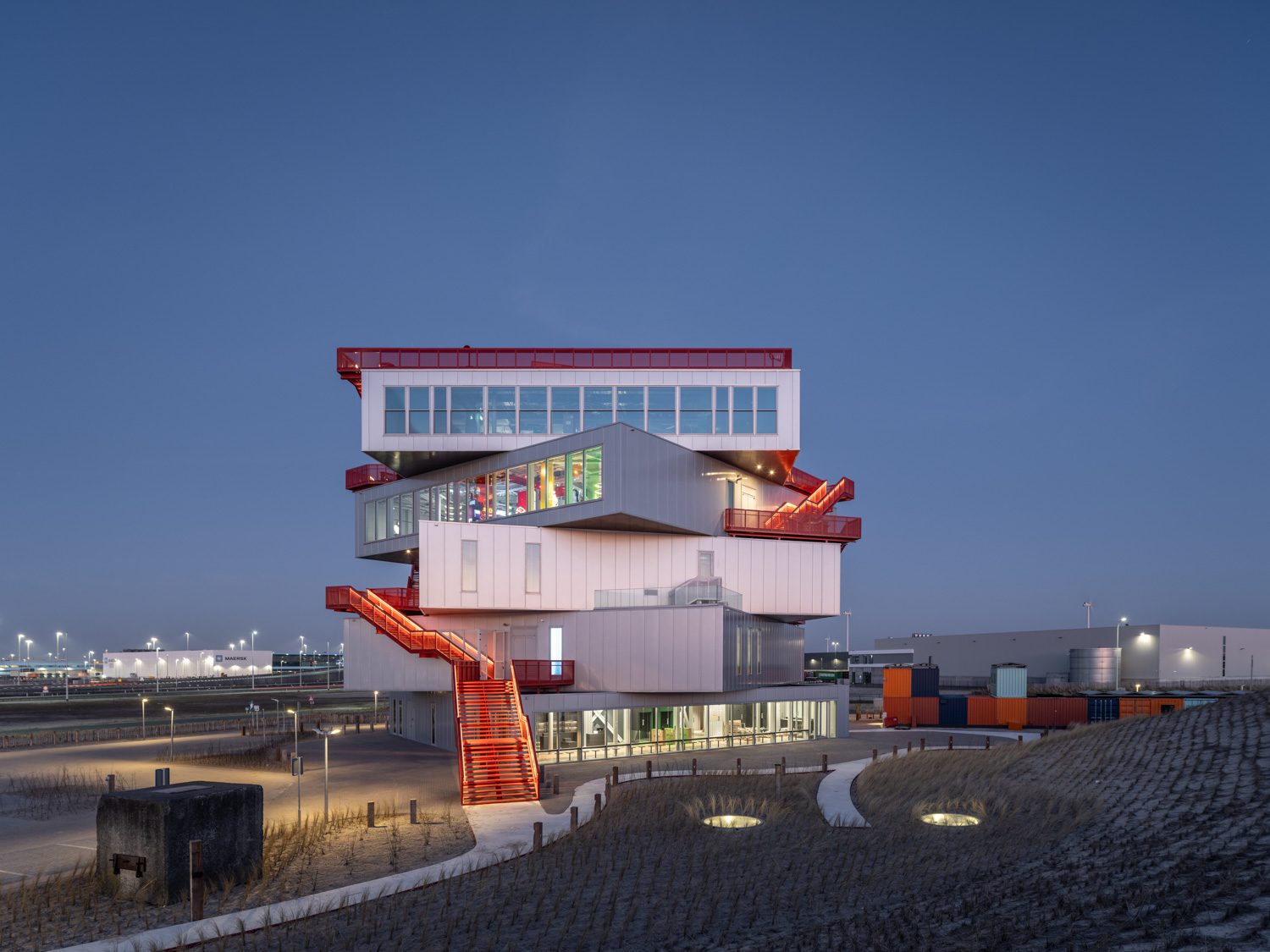
MVRDV ultimately won the architectural competition with a striking design composed of five stacked rectangular volumes, each slightly rotated, reminiscent of shipping containers. Wrapped around this stacked form is a vivid red external staircase, lending the structure a playful and instantly recognizable character—very much in line with MVRDV’s signature approach to design. Each floor features large windows, and the varying angles of the stacked volumes allow these windows to frame views of different elements within the port that align with the themes explored in the exhibitions inside.
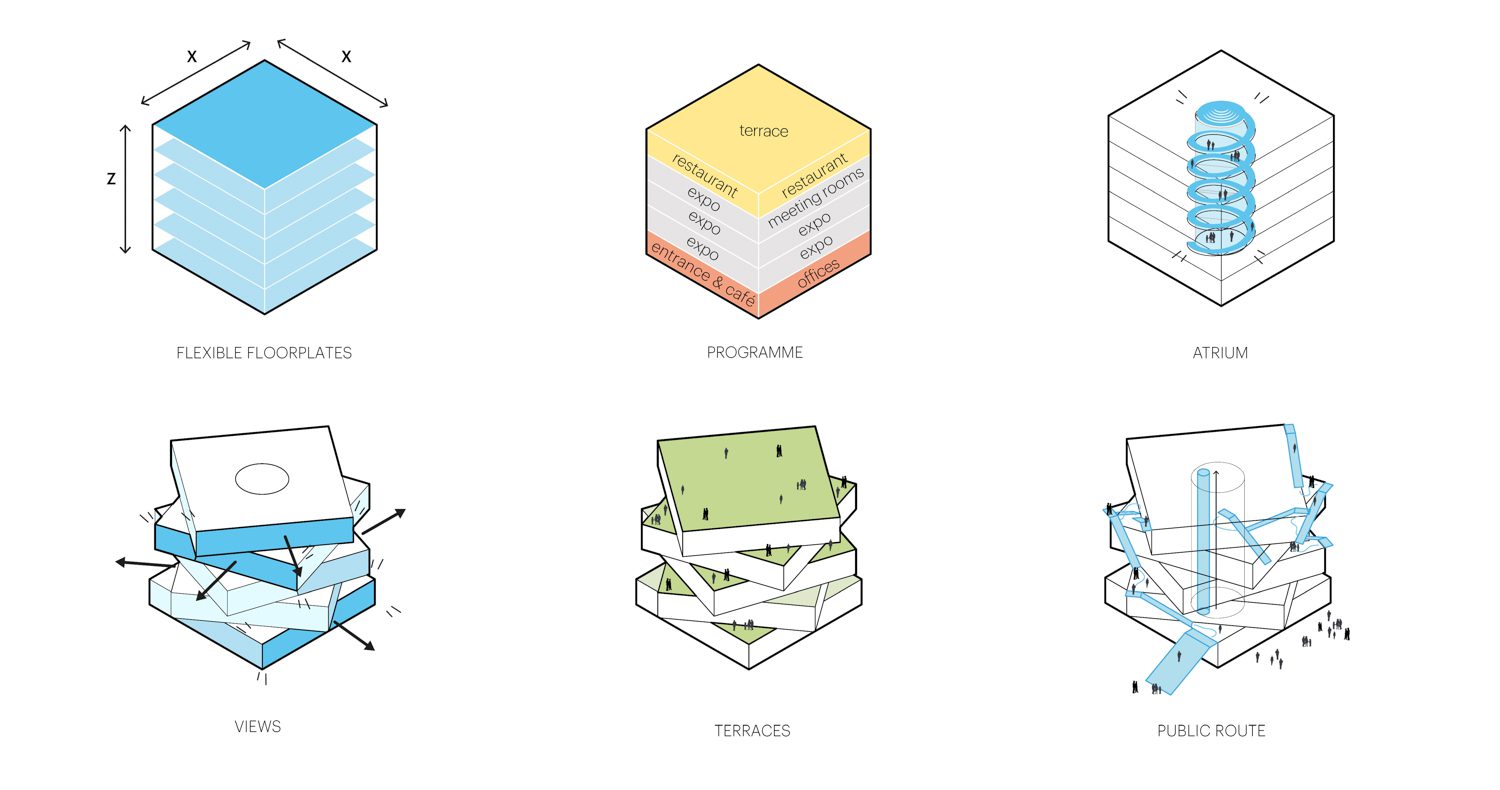
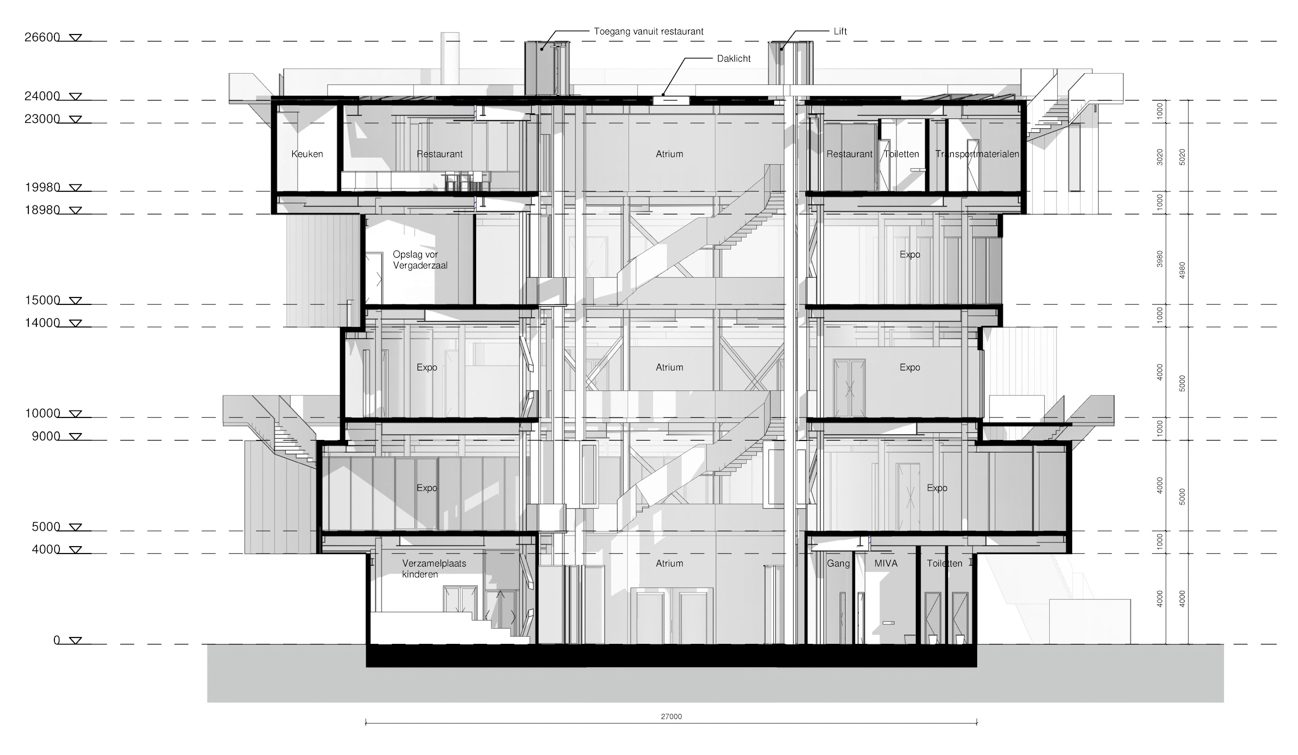
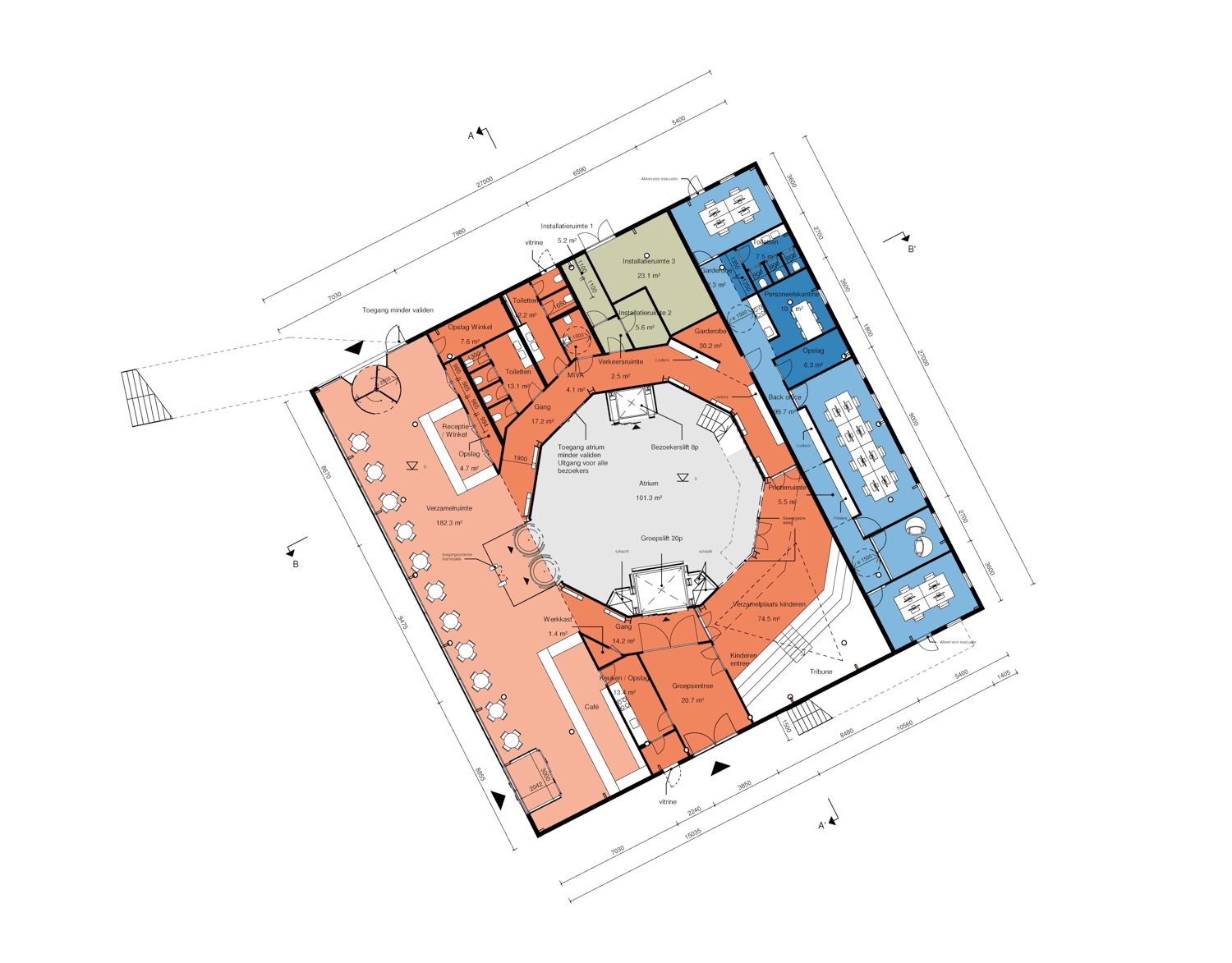
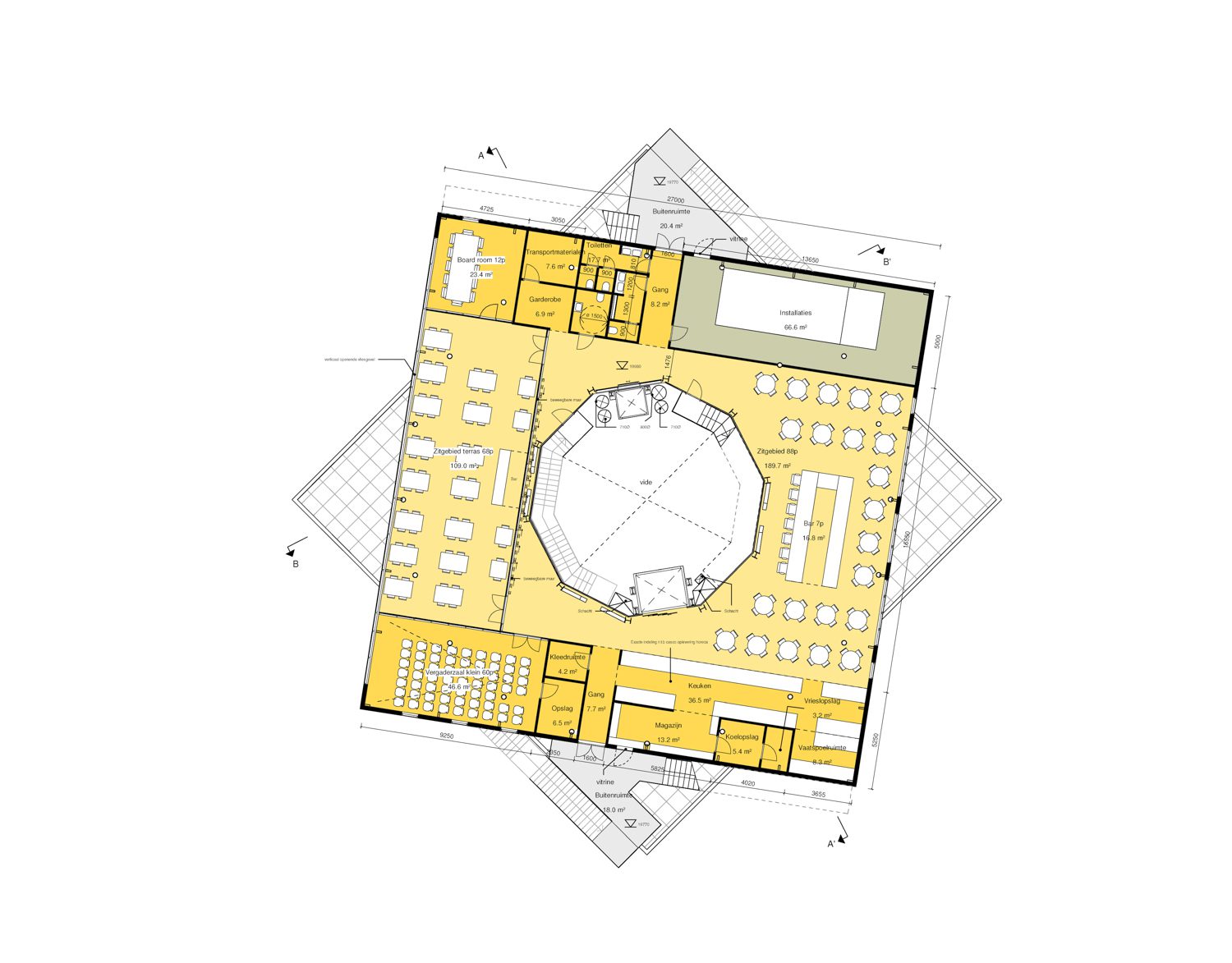
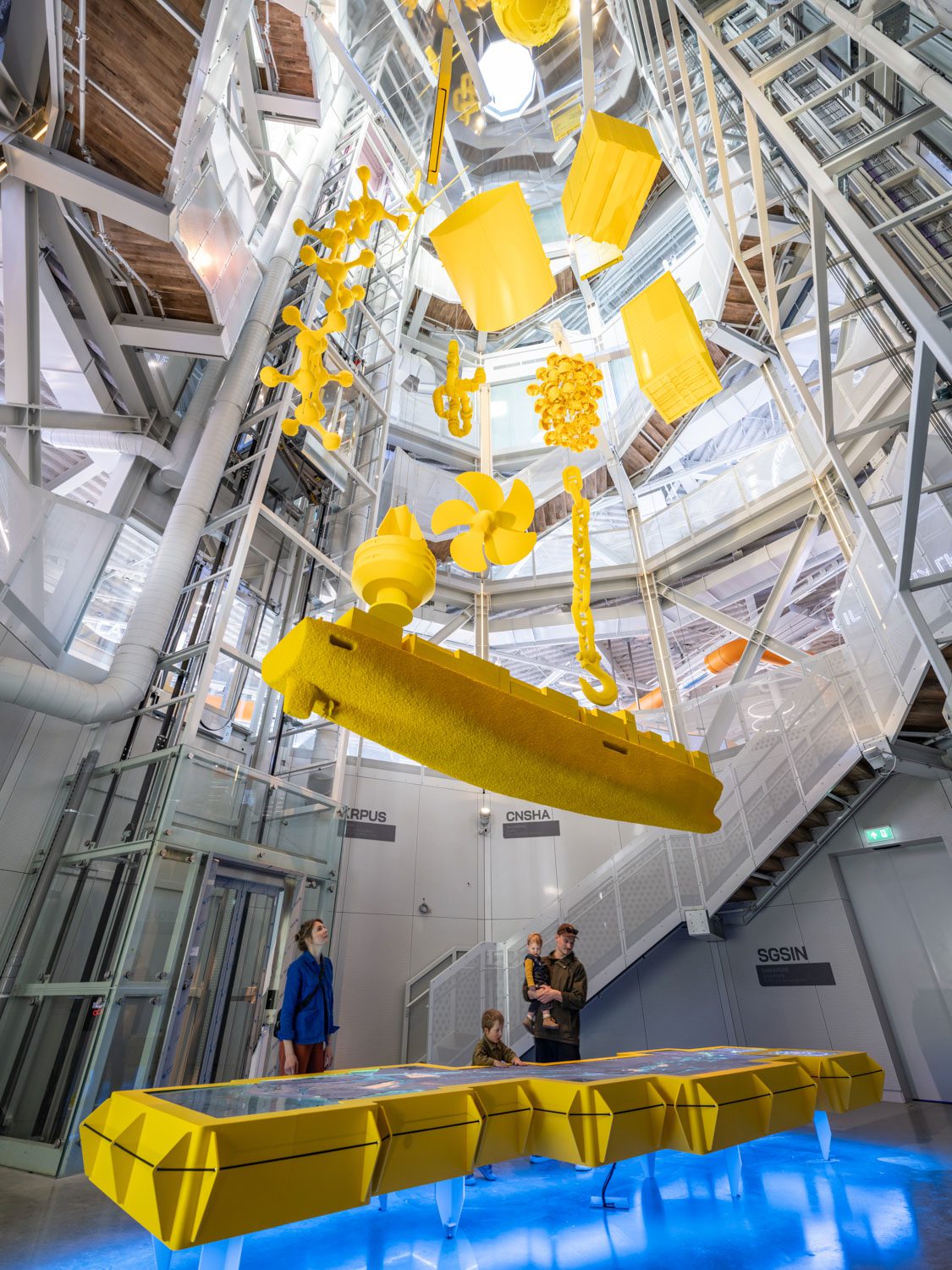
The building’s interior reveals its raw structure—steel beams, air ducts, and exposed undersides of concrete floors—serving as an effective backdrop for the vibrant exhibition elements. The ground floor opens up to a dramatic central atrium over 22 meters tall, anchored by a standout installation: a bright yellow sculpture constructed from mock ship parts. These parts move up and down in a lively, dynamic rhythm, continuously reshaping the sculpture throughout the day. This floor also houses a café, offering panoramic views of the nearby dunes through expansive glass walls.
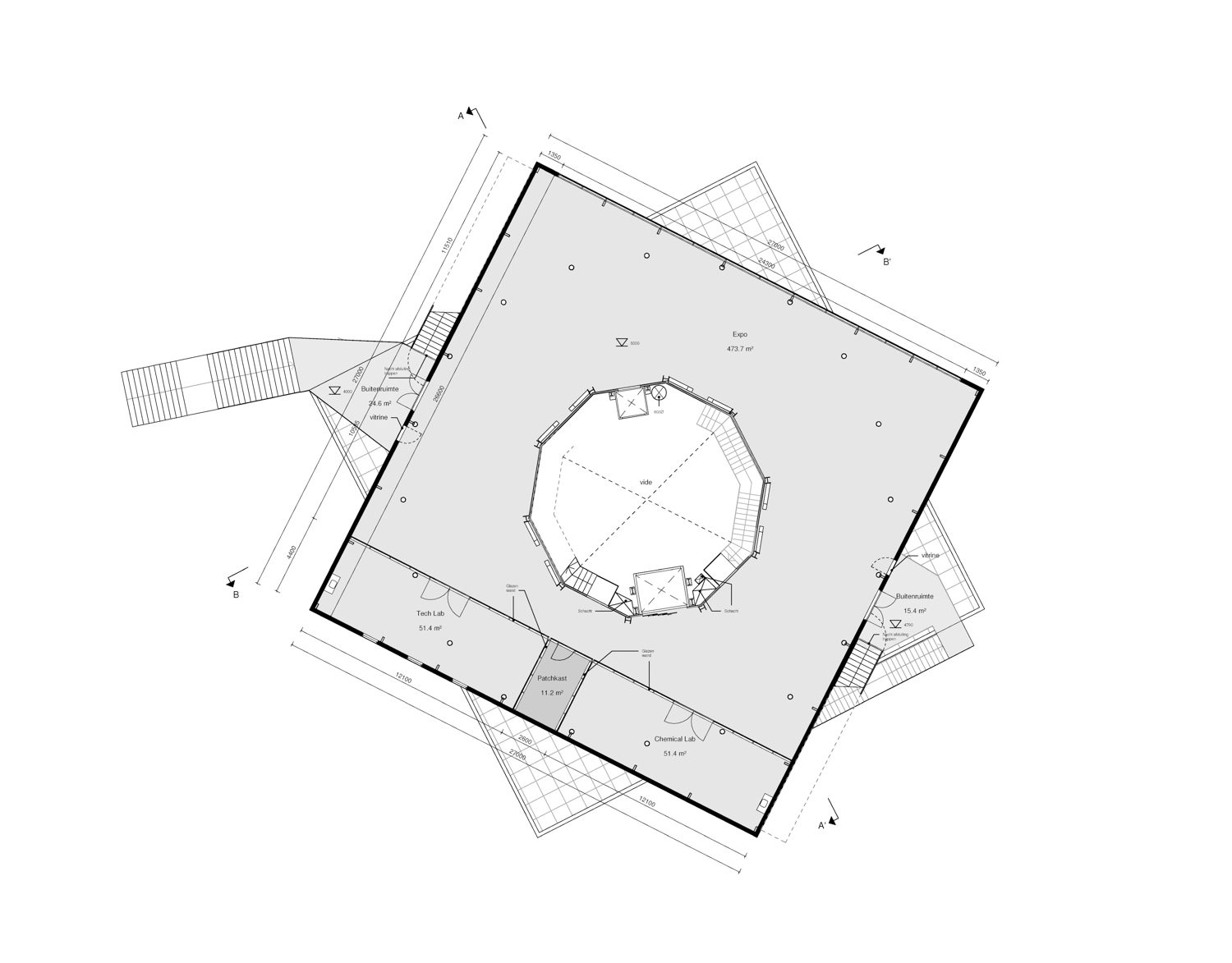
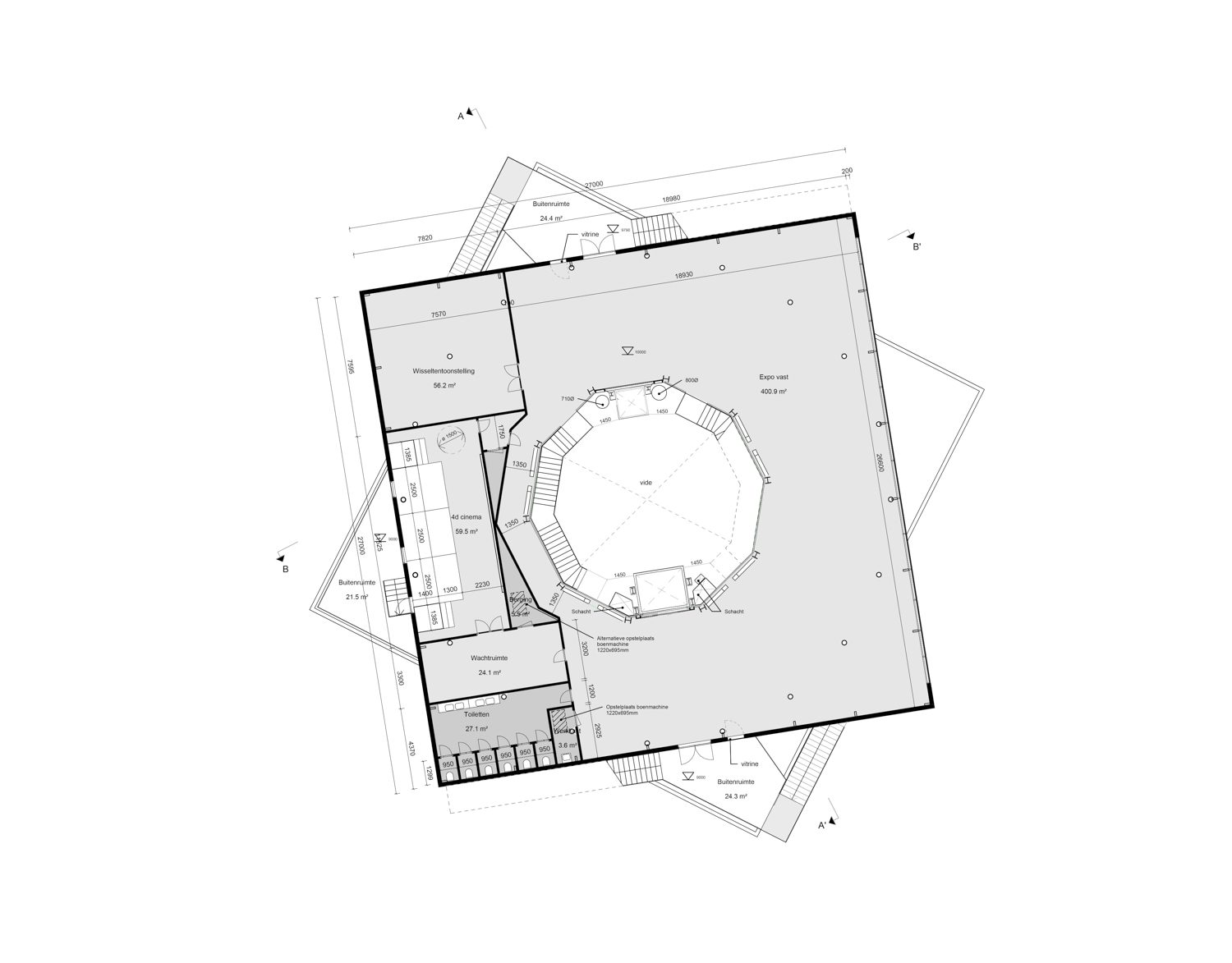
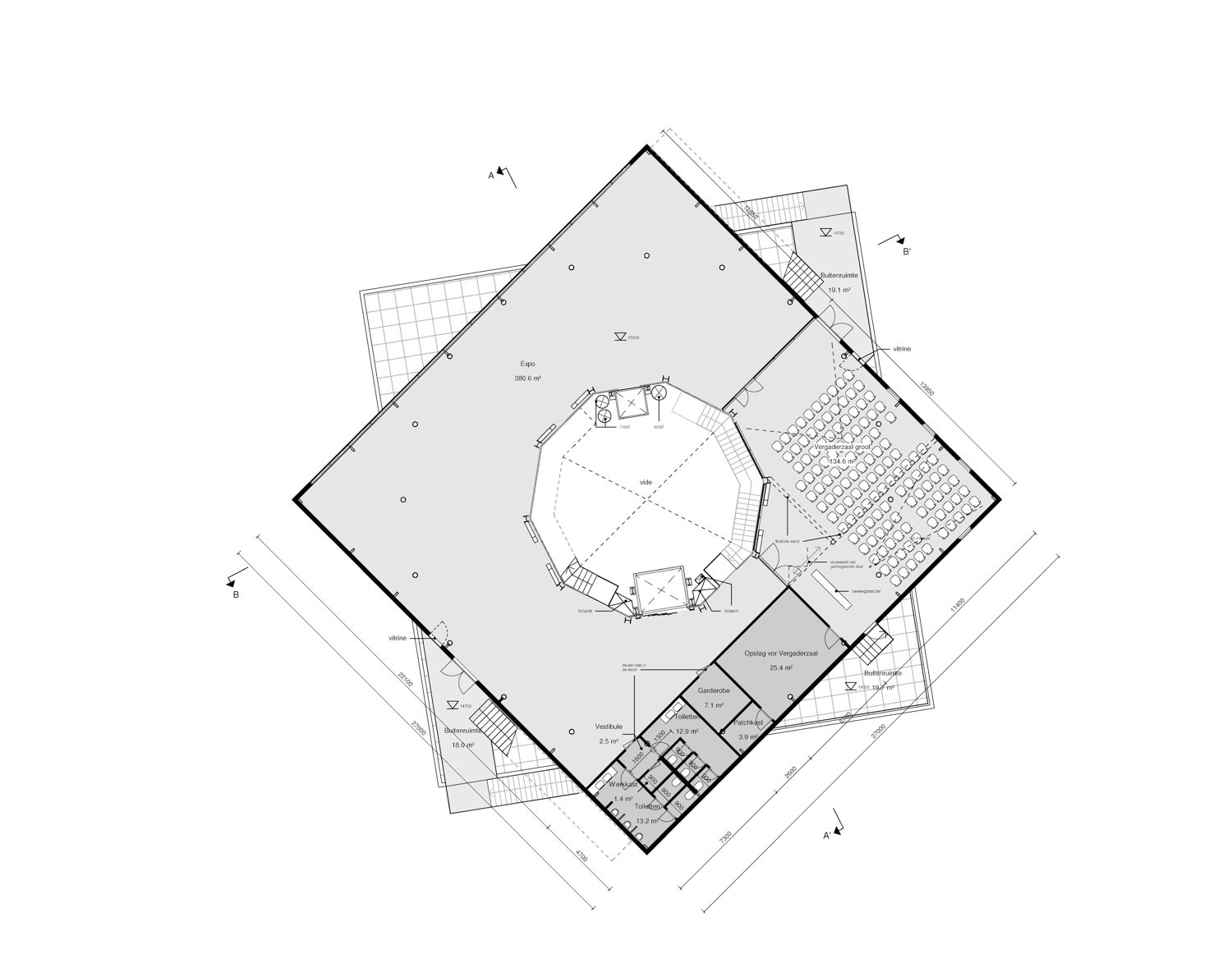
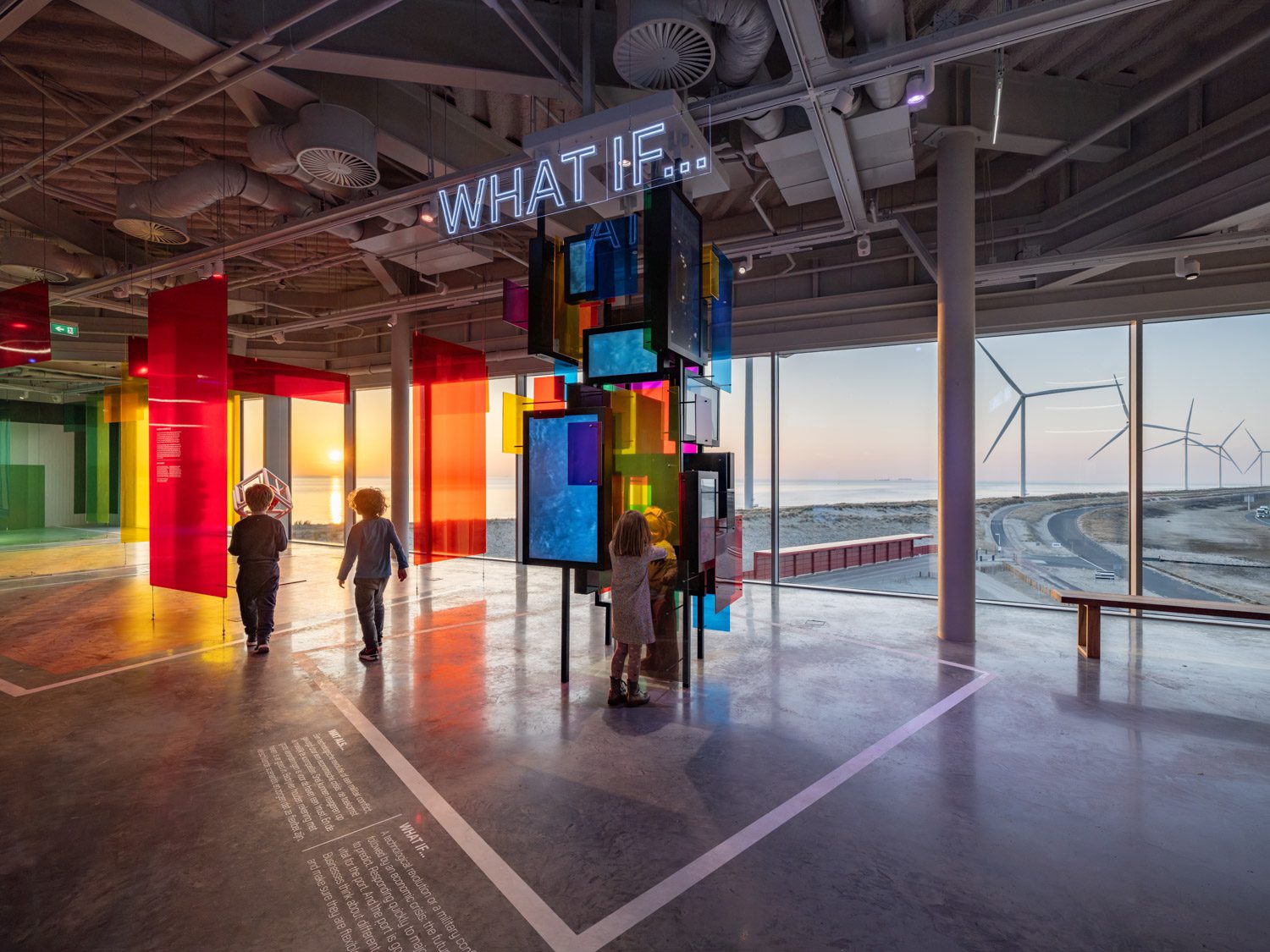
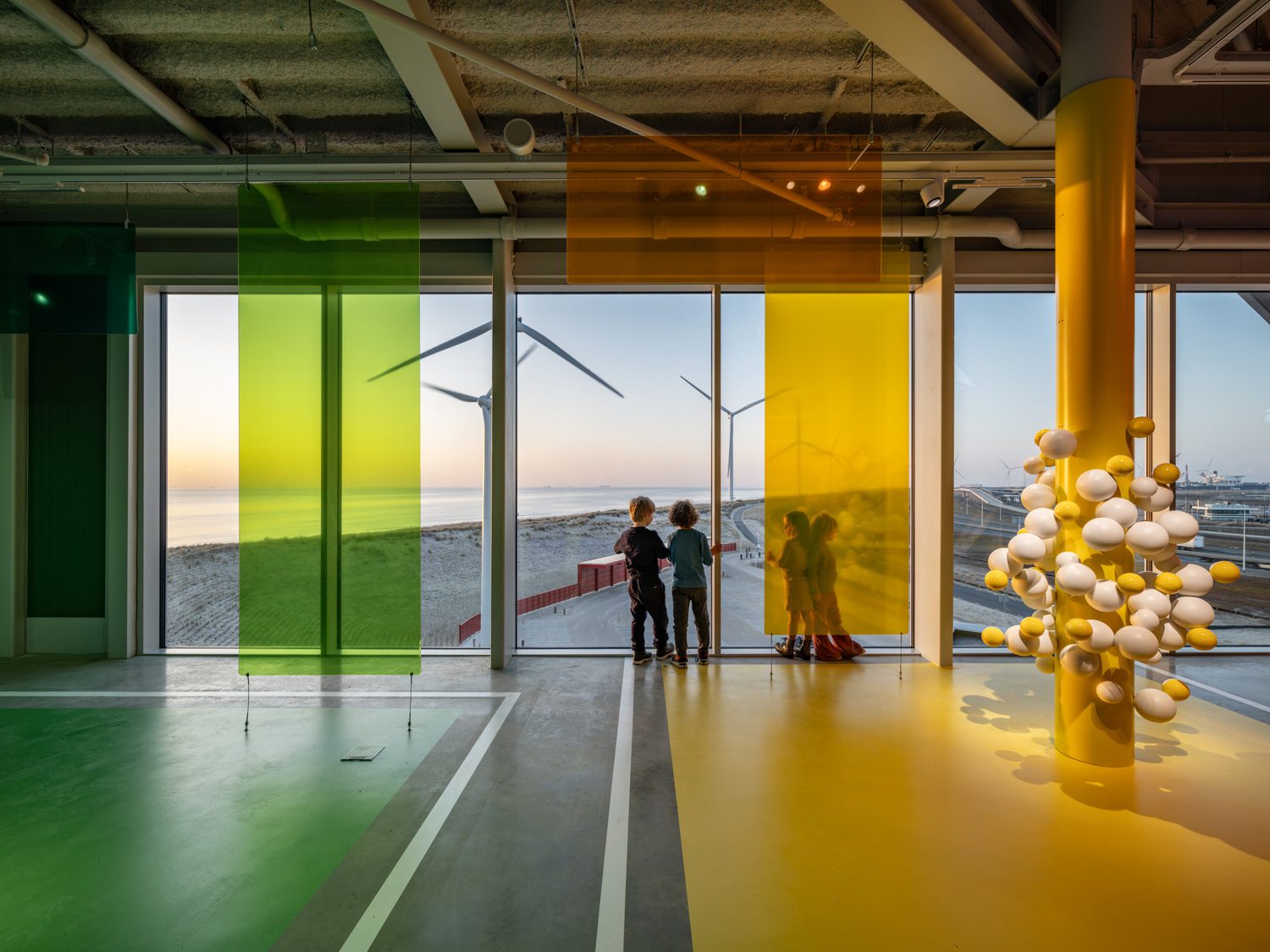
The second through fourth floors are dedicated to exhibition spaces designed by Kossmanndejong. Here, clusters of objects are arranged throughout an open-plan hall, surrounded by the building’s raw industrial shell. The exhibition experience is conveyed through games, workshops, and immersive environments that are accessible and engaging for all ages. There is no prescribed route, allowing visitors to explore and learn based on their own curiosity. On the third floor, which focuses on the port’s various regional impacts, the windows open directly onto live scenes of port activity, offering a real-time connection to the content being presented. The fourth floor, with its views over the port landscape, enhances the section of the exhibition that addresses energy transition and shifting geopolitical dynamics, making these themes more immediate and tangible.
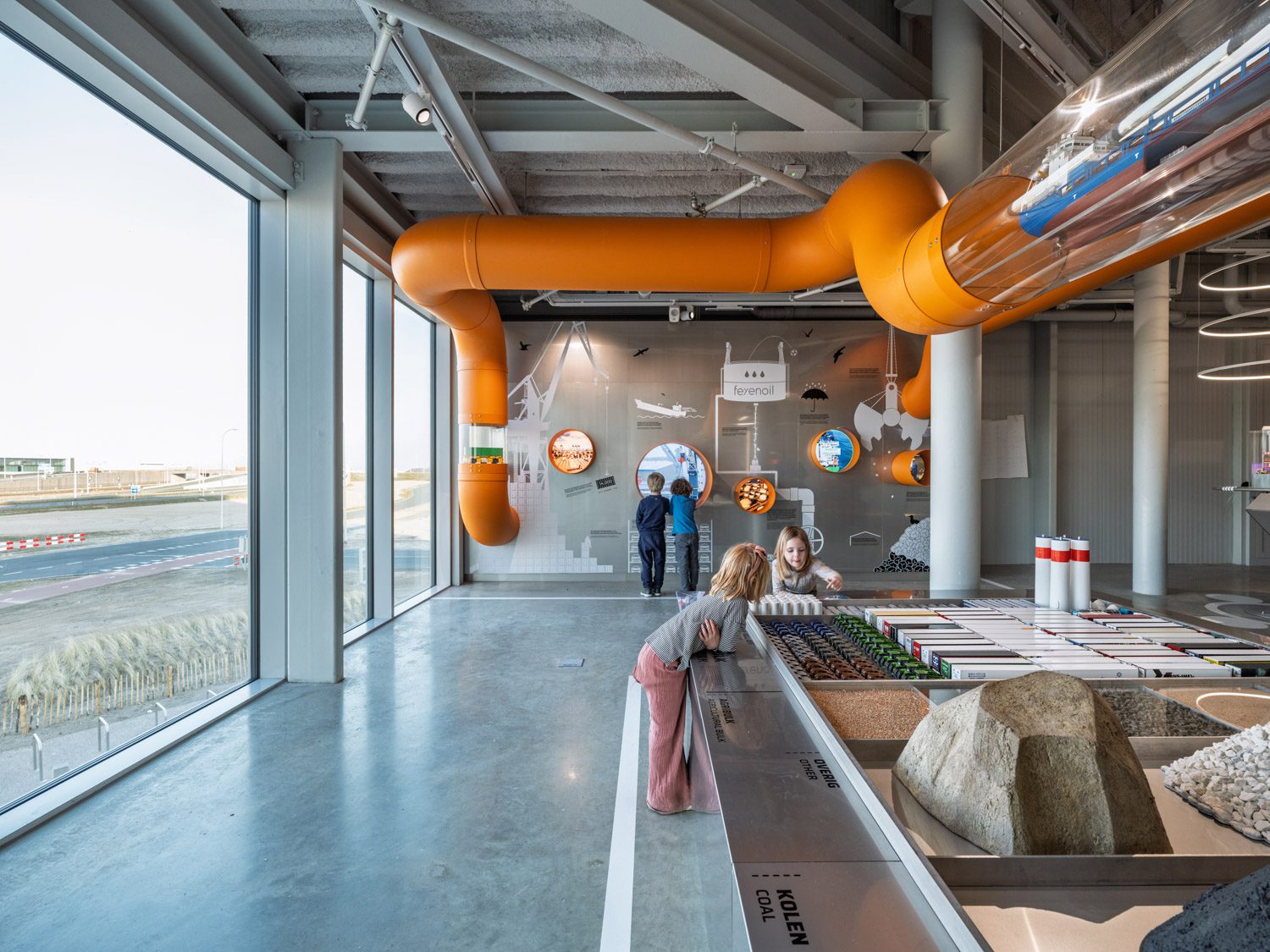
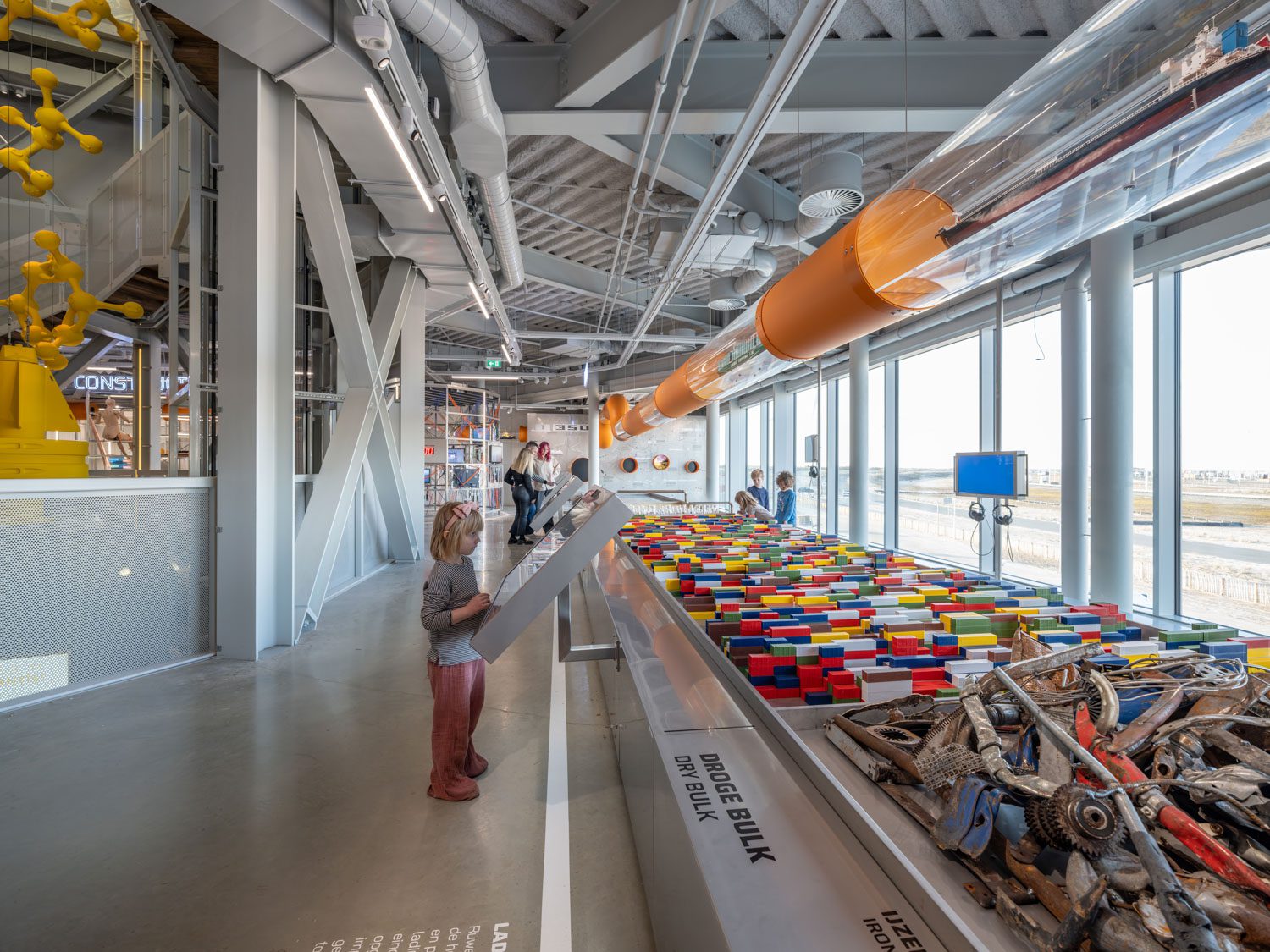
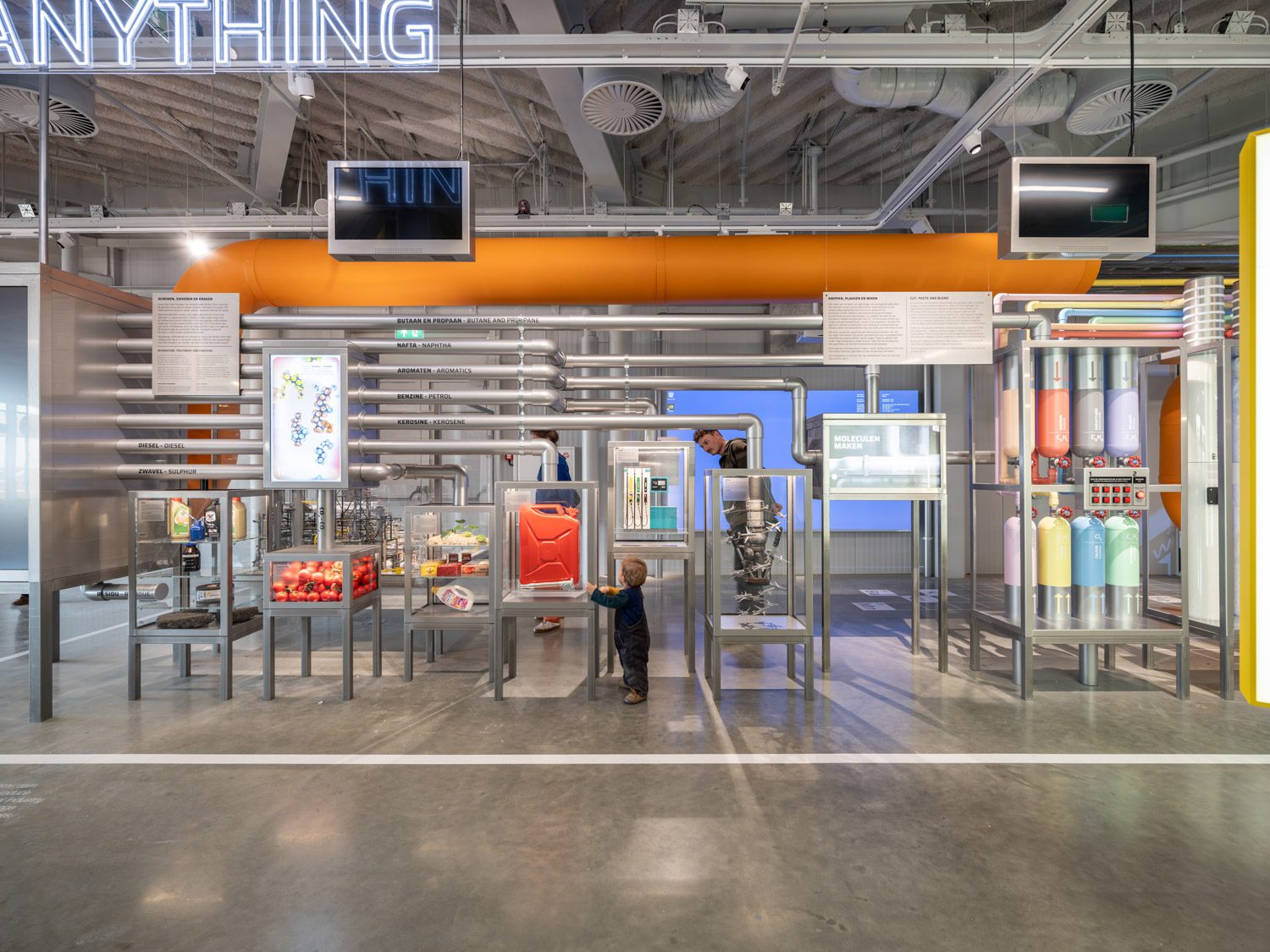
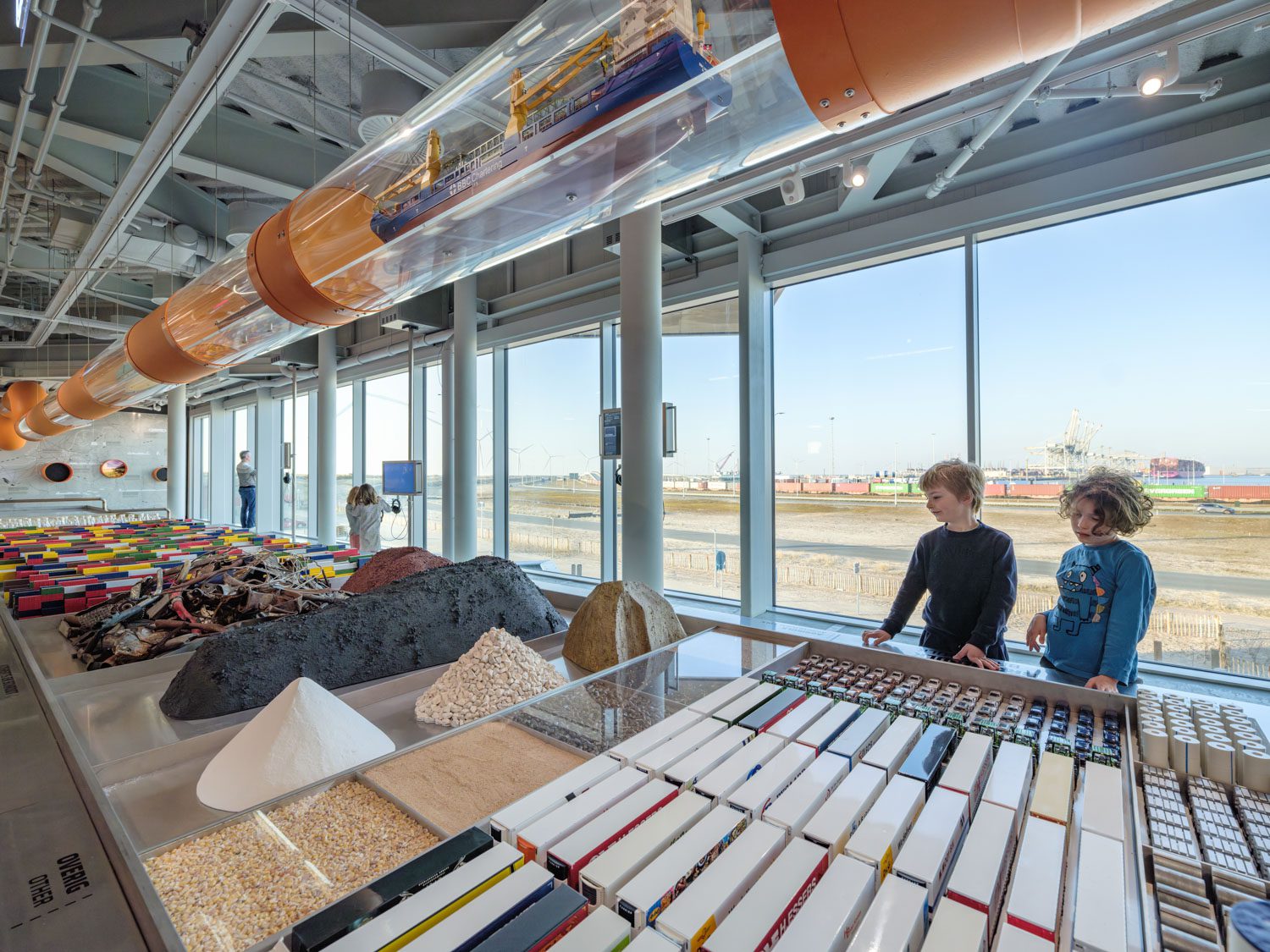
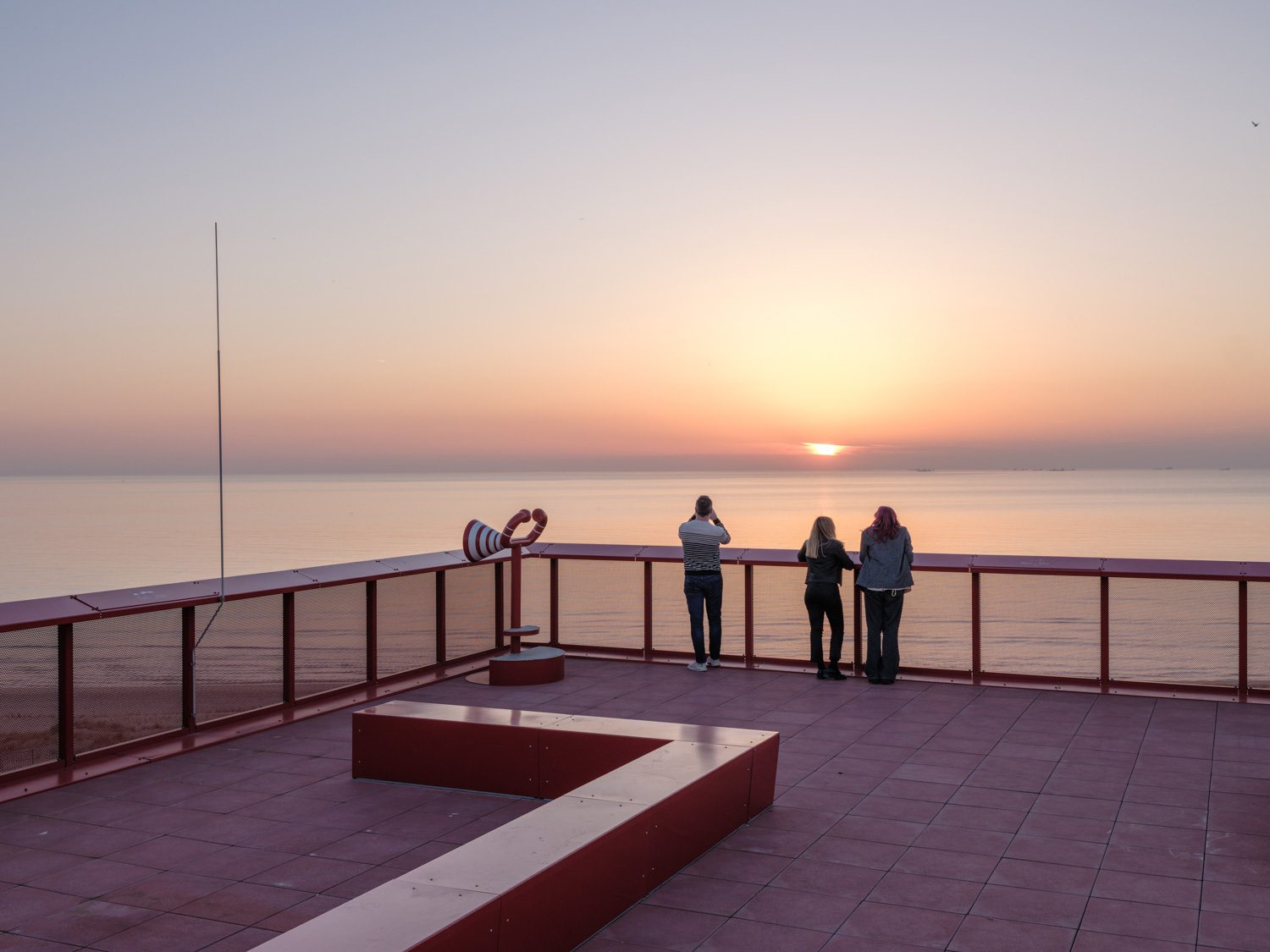
The fifth floor of the building houses a restaurant, where large windows frame sweeping views of the sunset over the North Sea and the glittering lights of the port at night. The staggered arrangement of the stacked volumes creates outdoor terraces on each level, linked by the red external staircase that extends all the way to the rooftop. From here, visitors can fully immerse themselves in the atmosphere of the North Sea and reflect on the exhibition content while gazing out at the real-world scenes unfolding before them.
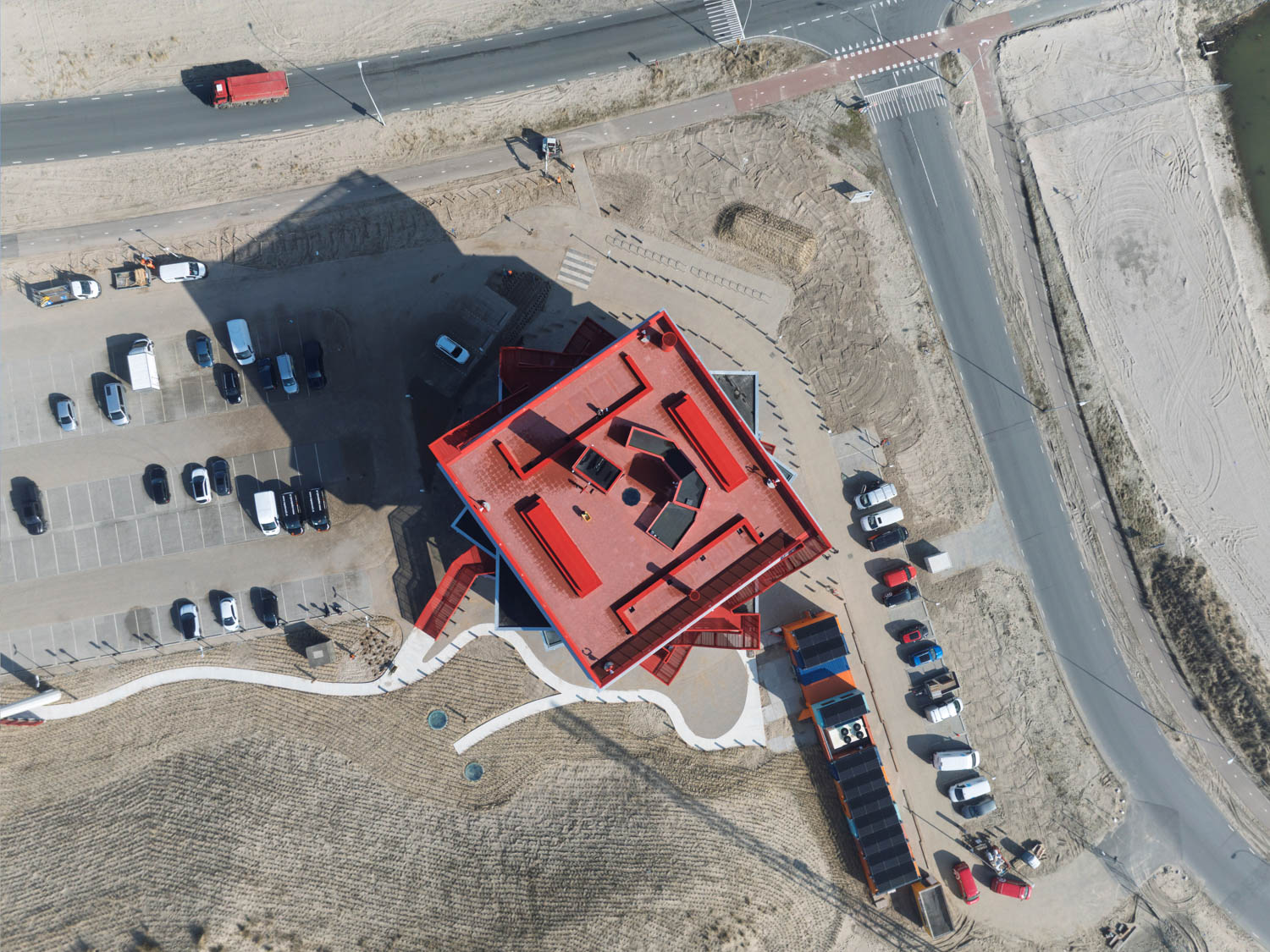
The building is constructed using simple industrial materials, in line with the port’s sustainability goals. Its exterior is clad in sandwich panels—durable and weather-resistant, suitable for the harsh seaside climate. The panels’ bright silver sheen allows the structure to shimmer against the vast, open beach. Both the facade and structural components are designed for disassembly and reuse after the building is decommissioned. Efficient insulation and heating systems help reduce energy consumption, while the addition of wind turbines and 266 solar panels enables the building to generate 30% more energy than it consumes.
The Port of Rotterdam has set an ambitious goal to become a fossil fuel–free green port by 2050. Currently, about 50% of the energy used still comes from fossil fuels. Communicating the port’s story to the people of Rotterdam; fostering understanding, encouraging participation, and shaping a shared future, is therefore crucial. That story is told through a building intentionally designed to interweave exhibition content with its surrounding context, creating a truly complete ‘machine for storytelling.’