
 © Marina Tabassum Architects (MTA), Photo: Iwan Baan, Courtesy of Serpentine
 MARINA TABASSUM’S SERPENTINE PAVILION 2025, ‘CAPSULE IN TIME’, AND THE SPIRIT OF THE GLOBAL SOUTH THAT WAS LOST EN ROUTE
TEXT: KRAIPOL JAYANETRA
PHOTO CREDIT AS NOTED
(For Thai, press here)
My first encounter with Marina Tabassum’s Serpentine Pavilion came through a promotional video on YouTube, in which she references the image of the Shamiana—a makeshift canopy commonly seen across South Asia, used for temporary events (‘Serpentine Pavilion 2024: Marina Tabassum,’ YouTube, 2024). The tent is a vibrant gesture full of emotion: lively, communal, ephemeral, and dynamic.
© Marina Tabassum Architects (MTA), Photo: Iwan Baan, Courtesy of Serpentine
As someone familiar with Tabassum’s tactile, site-sensitive work in Bangladesh—often using brick, filtered light, and air in the lineage of Louis Kahn—I was eager to see how she would translate her architectural language into the Serpentine Pavilion. Even before encountering the structure, I imagined a temporal structure that reflects the local spirit of South Asian community like the poetic work of Bijoy Jain’s Studio Mumbai. What emerged, however, succeeding in creating a decent place for community, yet the South Asian spirit of community seemed to be lost in the design translation.
© Marina Tabassum Architects (MTA), Photo: Iwan Baan, Courtesy of Serpentine
© Marina Tabassum Architects (MTA), Photo: Iwan Baan, Courtesy of Serpentine
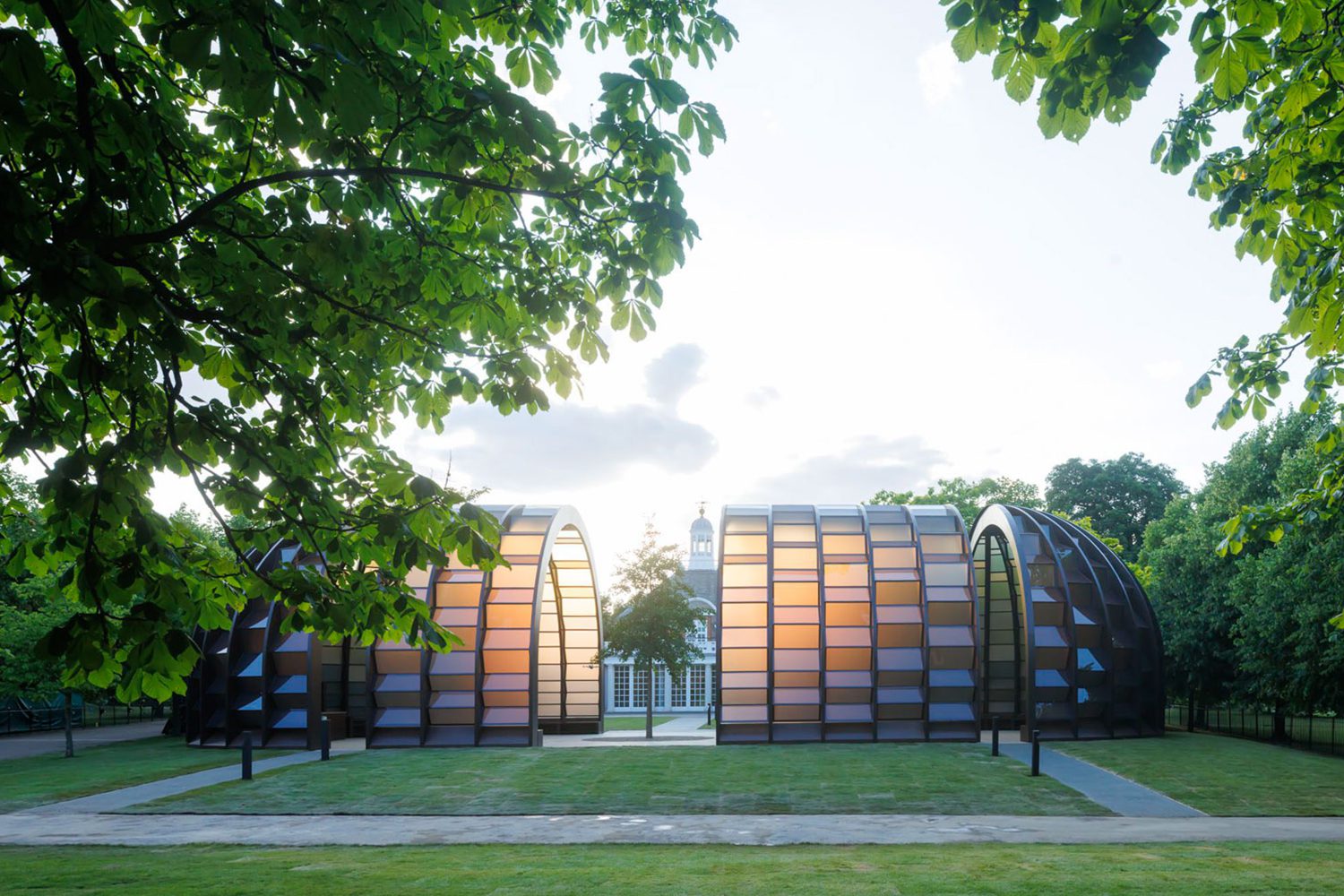
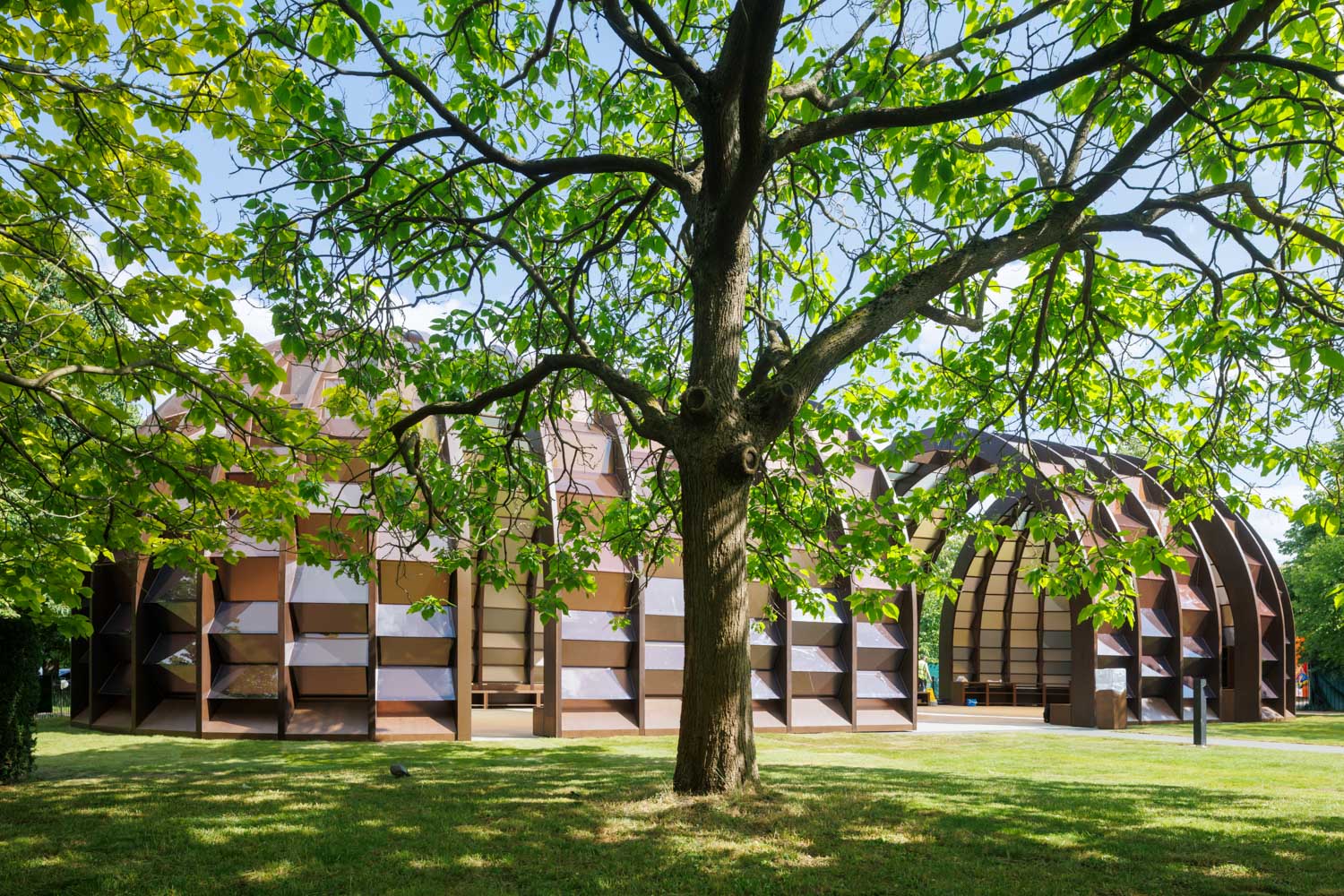
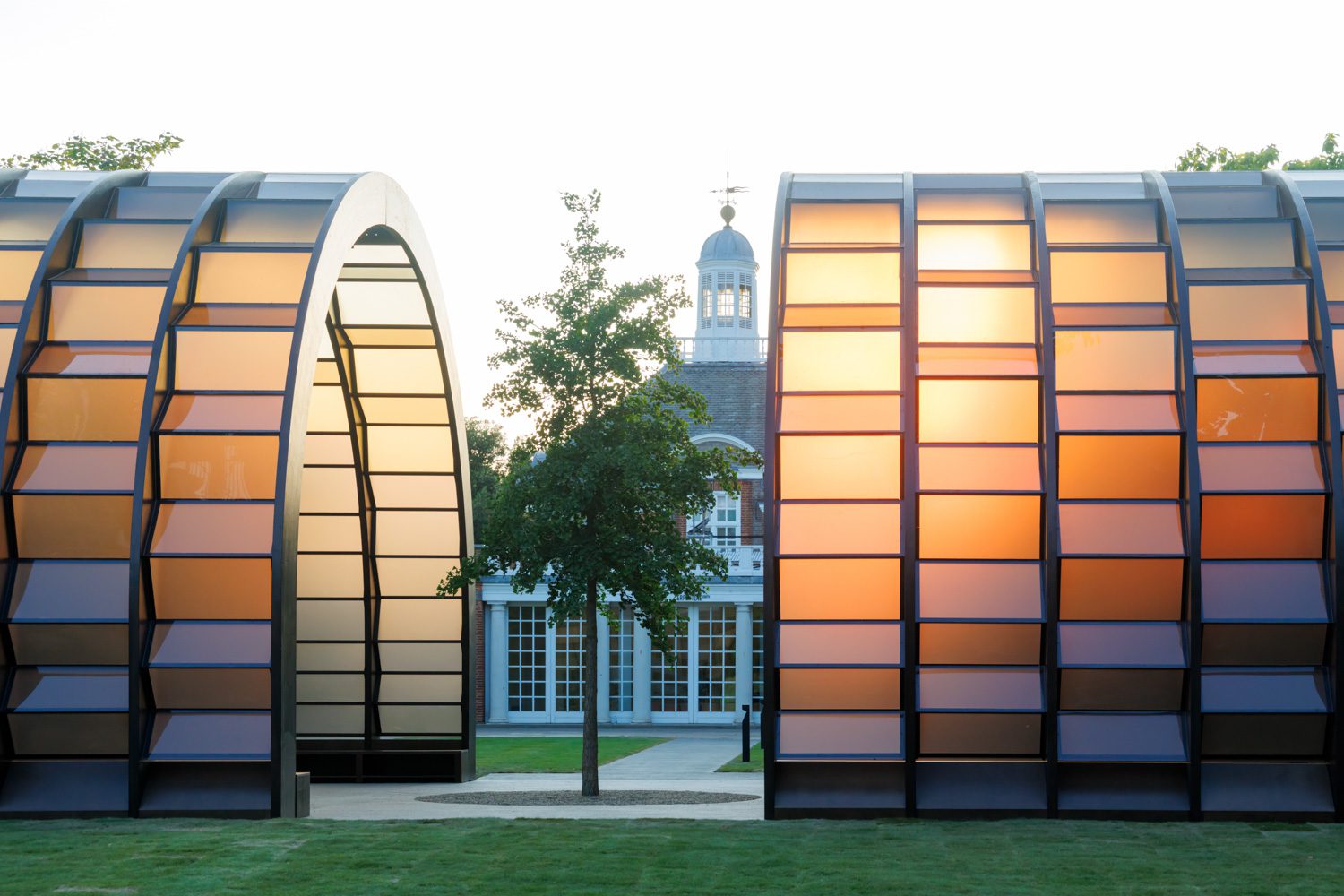
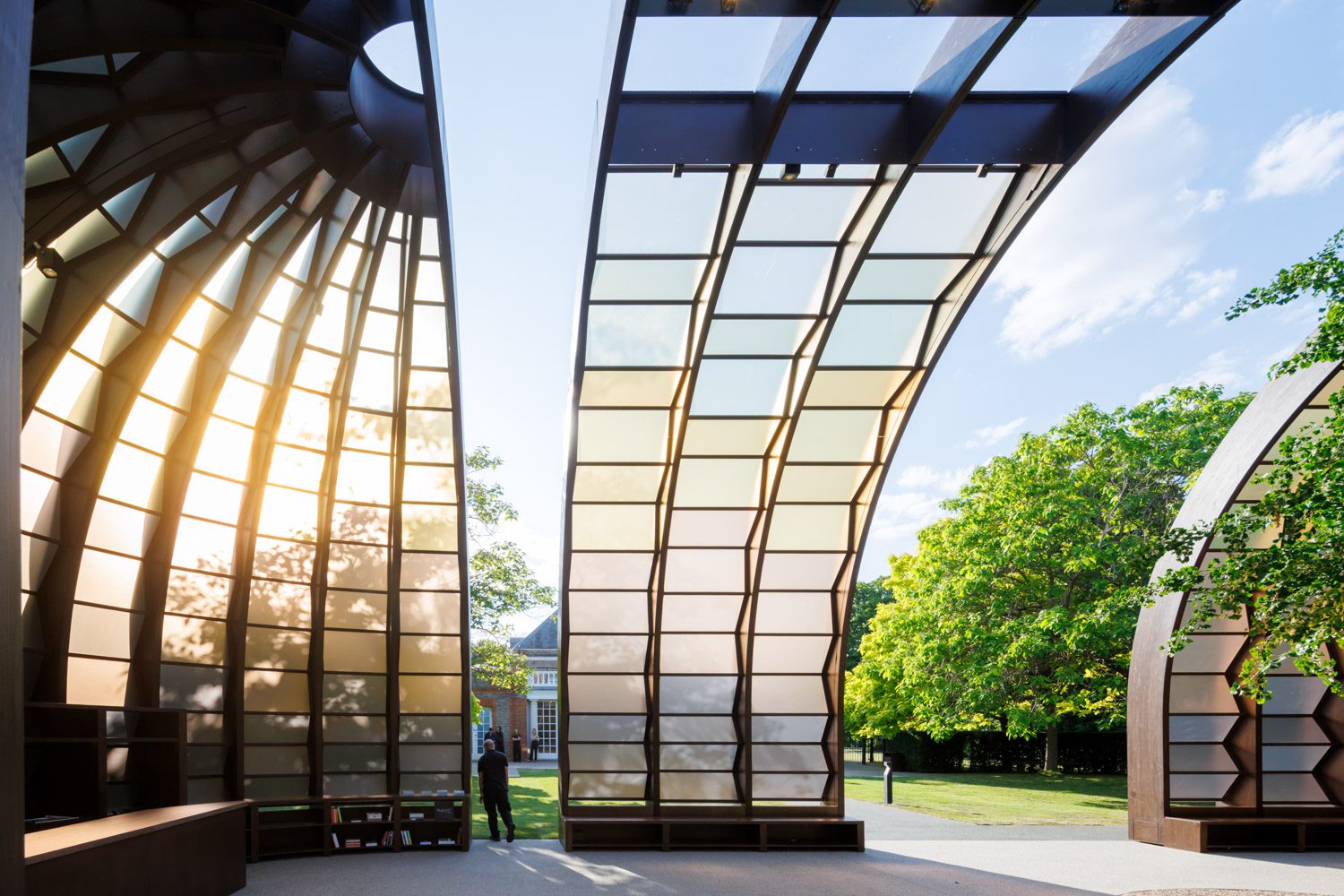
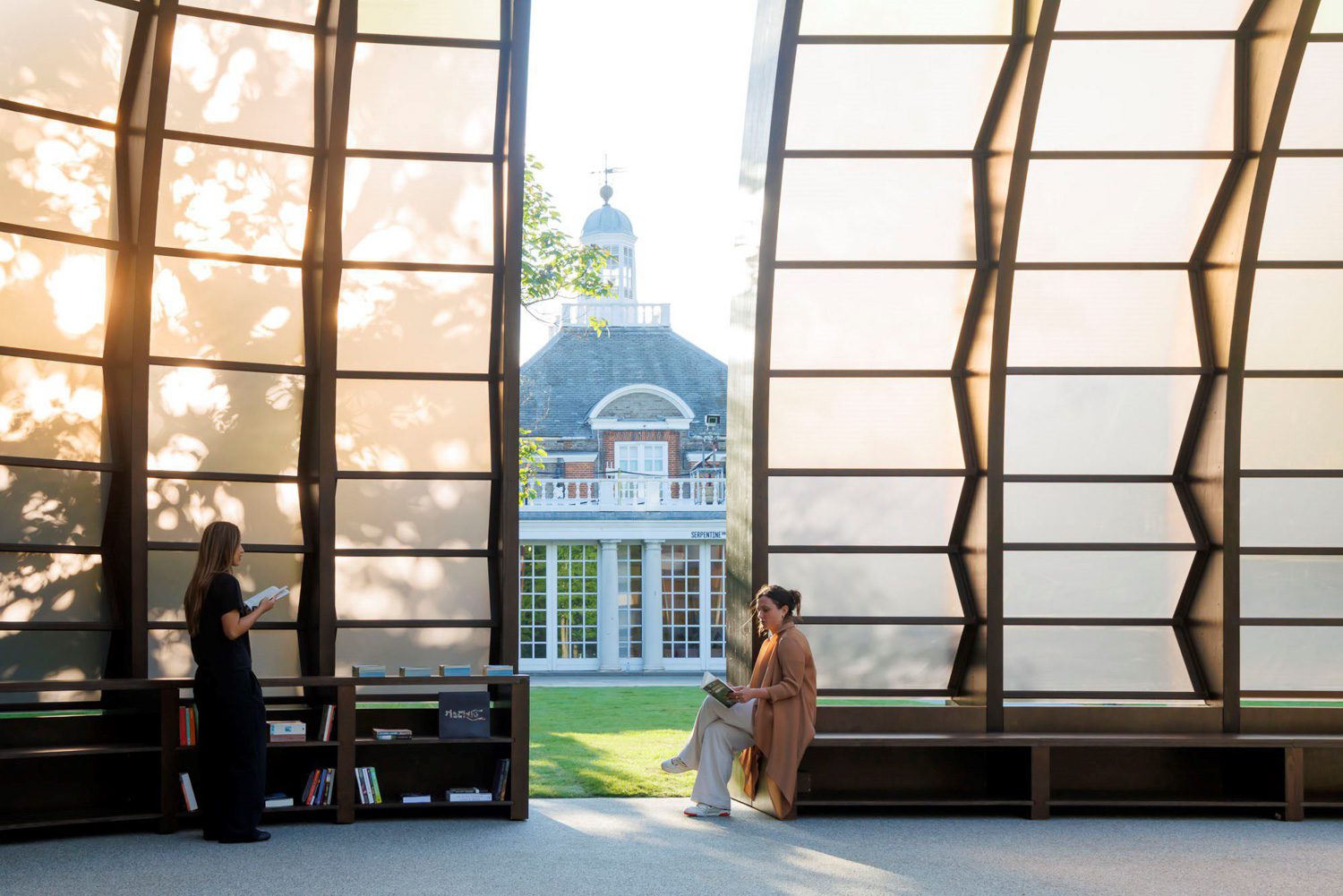
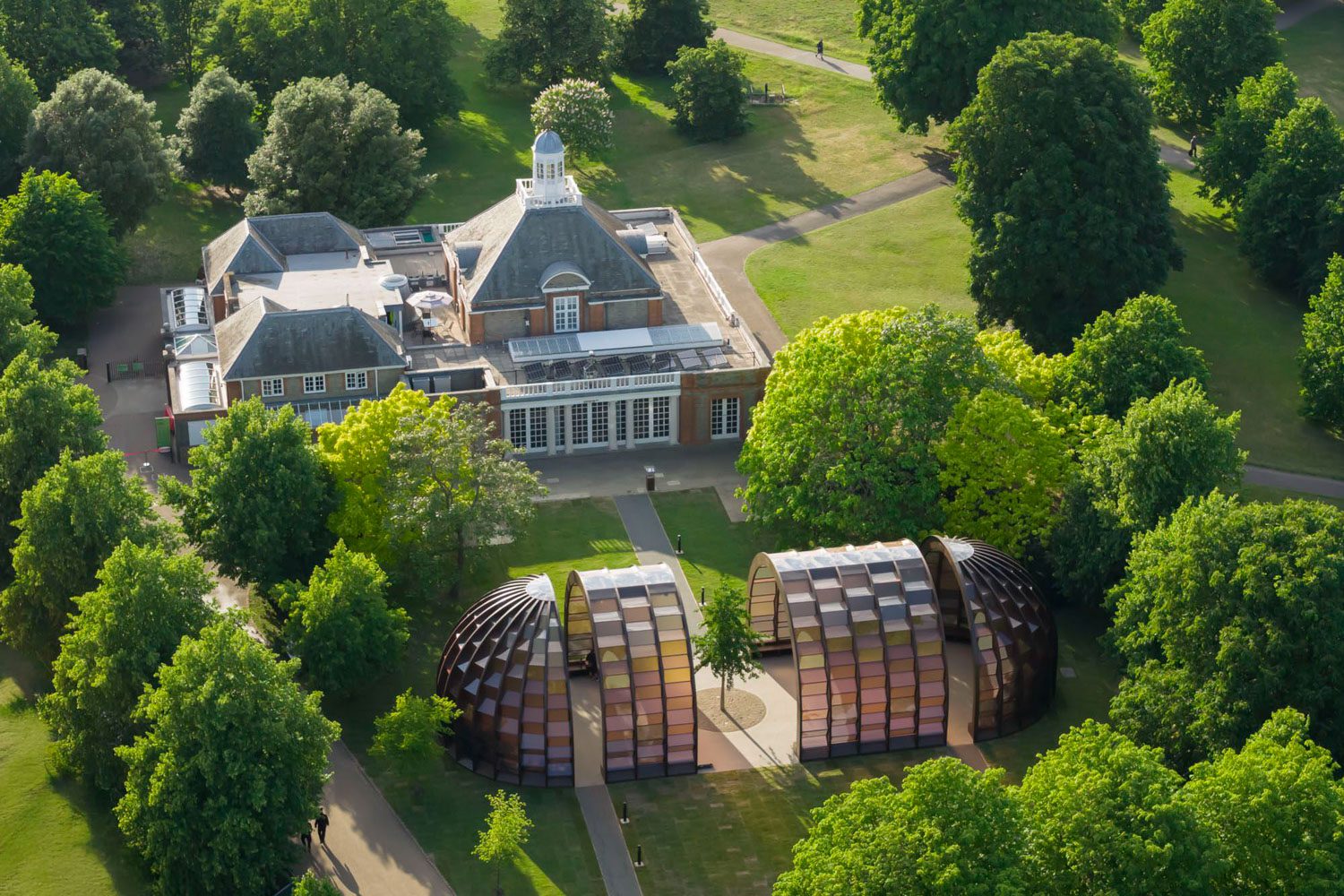
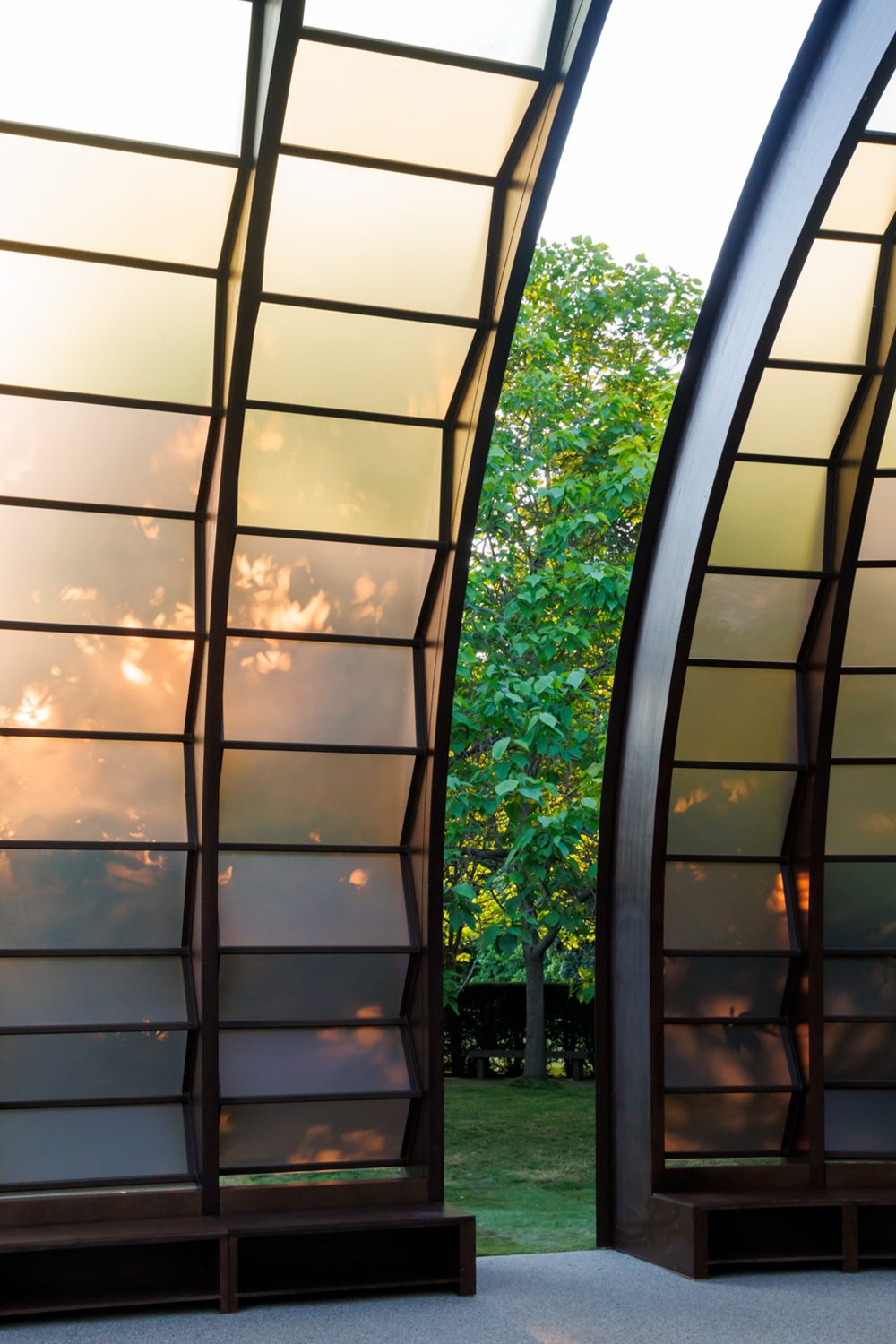
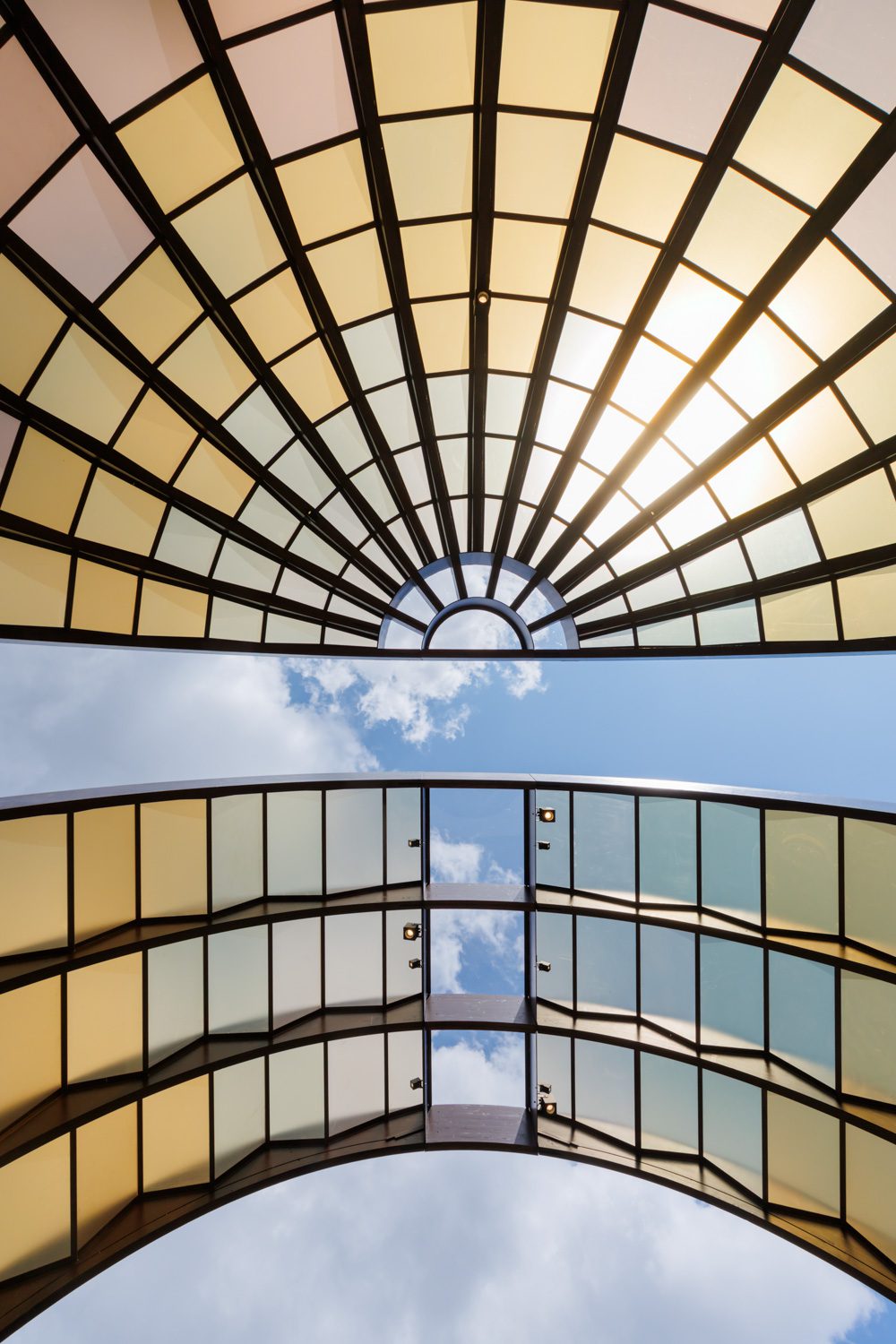
Tabassum designed the Serpentine Pavilion using a series of wooden arch frames, connected and covered with translucent plastic panels to create a barrel vault–like space. The ends of the structure are enclosed with half-dome arch frames. It’s a simple form—true to its name, Capsule in Time. It echoes the typology of the basilica, a building type historically used for public assemblies and debate since ancient Roman times. This form aligns with the current direction of the Serpentine Pavilion, which aims to position architecture less as sculptural spectacle and more as a ‘civic space’ for public use.
Under the leadership of current Serpentine CEO Bettina Korek, the institution has emphasized connecting art (and architecture) more directly to daily life (Dave Bennett, SERVICE95, 2023). Beyond encouraging public engagement, she has continued to elevate voices from the Global South—a direction that has gained momentum since the tenure of the previous CEO.
© Marina Tabassum Architects (MTA), Photo: Iwan Baan, Courtesy of Serpentine
This shift can be traced in the evolution of the pavilion since its early years, when avant-garde architects like Zaha Hadid, Toyo Ito, and Daniel Libeskind focused on formal experimentation and architectural spectacle, toward a more humble, more culturally diverse, and socially engaged tone. Recent commissions by architects such as Francis Kéré, Frida Escobedo, and Lina Ghotmeh reflect this change—embracing modest materials and a clear intention to create spaces for gathering. In this context, Tabassum’s Capsule in Time fits well into this new ethos: modest, grounded, and committed to the idea of building a dignified space for social engagement.
While the pavilion serves its curatorial purpose well—offering a space that invites pause, gathering, and quiet reflection—the spirit of South Asian community that inspired it feels somewhat diluted in the result.
© Marina Tabassum Architects (MTA), Photo: Iwan Baan, Courtesy of Serpentine
 © Marina Tabassum Architects (MTA), Photo: Iwan Baan, Courtesy of Serpentine
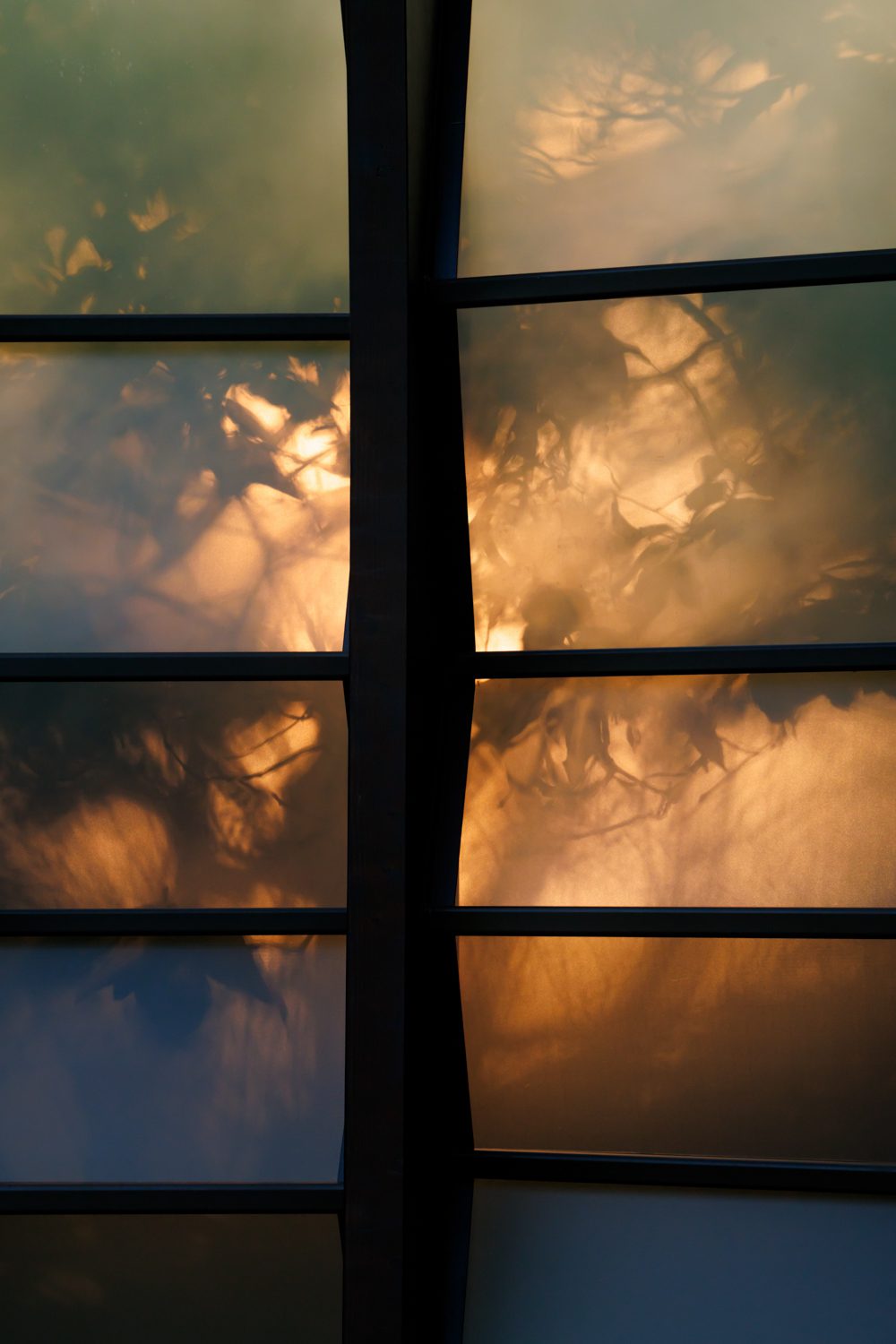
Still, much of that South Asian spirit seems to have been lost in translation. Tabassum originally intended to use coarse jute for the translucent skin—a direct link to South Asian material culture and the Shamiana’s filtered light. But due to fire safety regulations and the damp British climate (Wainwright, The Guardian, 2025), she was required to substitute the jute with brown-tinted plastic cladding. The result, while visually clean, evokes not the festive softness of a tent but a chunky brise-soleil on a tropical modernist façade. The tactile quality and cultural intent behind her design are muted by building codes. The message of architecture as a public forum remains, but the medium fails to carry the spirit of Shamiana.
The gap between Tabassum’s original vision and what was realized reflects some of the practical limits of the Serpentine’s current direction. While the institution now prioritizes global representation and civic utility, it still operates within the constraints of Global North standardization. It expects architects from the Global South to adapt their sensibilities to British codes, weather, and timelines. In this case, the result is a pavilion that feels like a compromised version of a powerful idea. The intention behind the cultural reference is there, but the actual experience doesn’t come through.

© Peter Cook (Peter Cook Studio Crablab), Photo: Andy Stagg, Courtesy of Serpentine
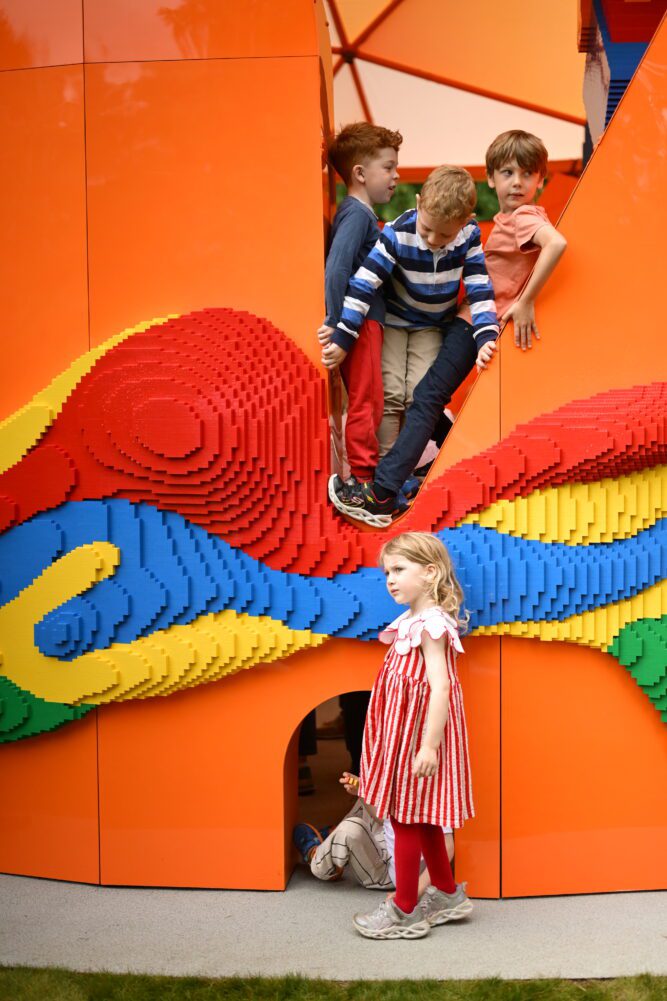
© Peter Cook (Peter Cook Studio Crablab), Courtesy of Serpentine
Further complicating the picture is the presence of Peter Cook’s Play Pavilion nearby. The institution positioned this pairing—Cook’s retro-futurist structure and Tabassum’s contemplative capsule—as a deliberate juxtaposition: joy and gravity in balance. But the effect is uneven. Cook’s pavilion, full of color and cartoonish curves, when placed beside Tabassum’s, introduces a conceptual contradiction—raising questions about whether this juxtaposition achieves a constructive pairing or undermines the mission to foreground Global South voices.
© Marina Tabassum Architects (MTA), Photo: Iwan Baan, Courtesy of Serpentine
I agree with the Serpentine’s shift toward civic relevance and ecological modesty. It is right for architecture to stimulate users to do more with less and act with humility. But architecture is still, ultimately, a spatial and sensory art. When we invite cultural voices from the Global South, we must also make room for their materials, their climate, their rules of making. Otherwise, we risk silencing the very qualities we claim to elevate. Marina Tabassum’s pavilion invites us to gather and reflect. It also invites us to ask: what might have been, had the architecture been allowed to speak on its own terms?
The Serpentine Pavilion is being held from June 6 to October 26, 2025, at the Serpentine Galleries in London.
_
References
Dafoe, Taylor. “The Serpentine Galleries Appoints Bettina Korek, Head of Frieze Los Angeles, as Its New CEO.” artnet News, December 10, 2019. https://news.artnet.com/art-world/bettina-korek-serpentine-galleries-1728144
Bennett, Dave. “The Way I Work: Bettina Korek.” SERVICE95, March 28, 2023. https://www.service95.com/the-way-i-work-bettina-korek
Wainwright, Oliver. “Marina Tabassum’s kinetic Serpentine pavilion – a canopy for coffee and revolution.” The Guardian, June 3, 2025. https://www.theguardian.com/artanddesign/2025/jun/03/serpentine-movable-pavilion-marina-tabassum
Architect Marina Tabassum on designing the Serpentine Pavilion 2025 | Serpentine. YouTube, https://www.youtube.com/watch?v=47WRRVEJBec