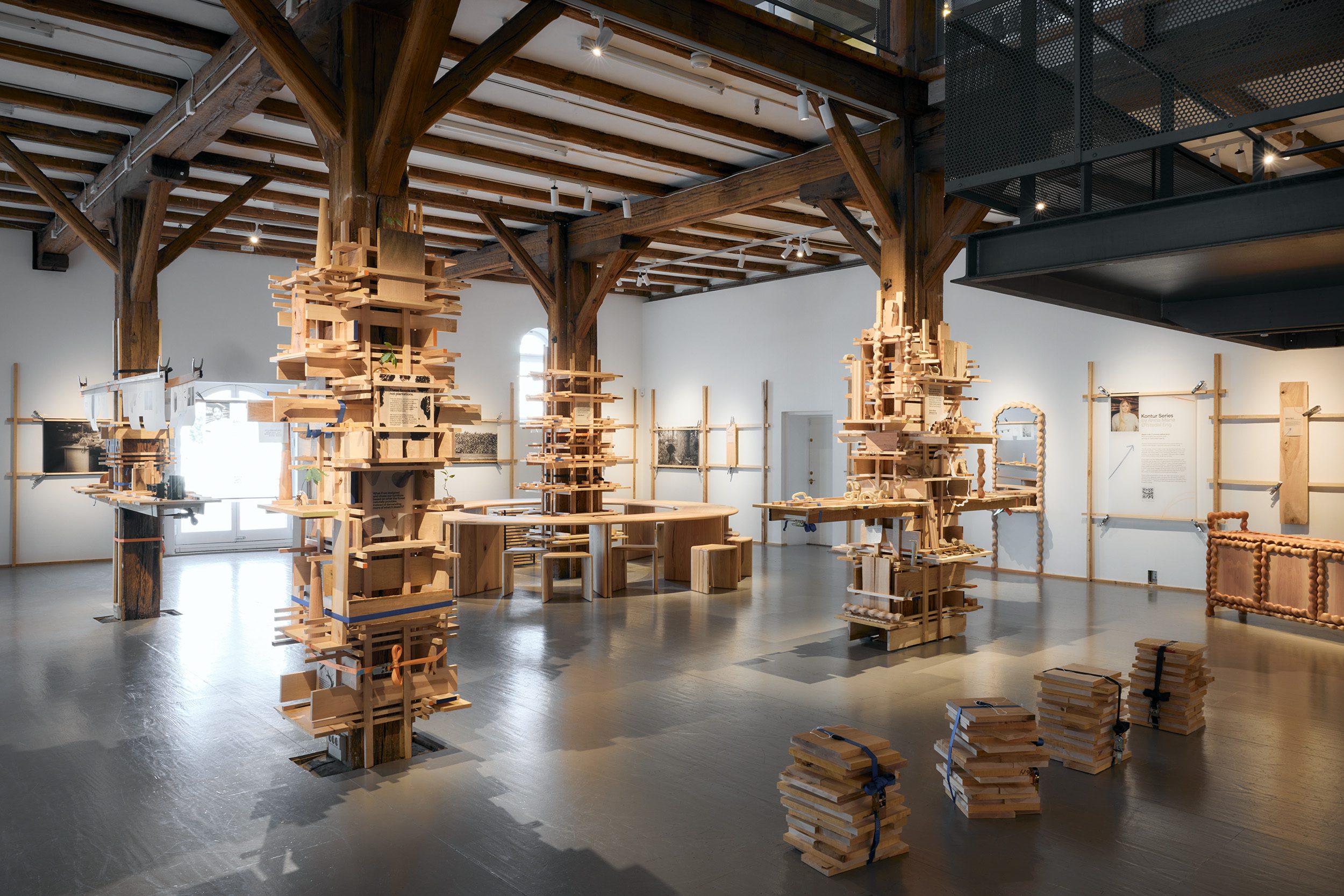
 ‘No.1 Common’ exhibition designed by KUF Studios
 ‘NO.1 COMMON’, AN EXHIBITION BY AHEC THAT TRANSFORMS COMMON WOOD INTO CONTEMPORARY DESIGN, AT 3DAYSOFDESIGN IN DENMARK
TEXT: NATHATAI TANGCHADAKORN
PHOTO COURTESY OF AHEC
(For Thai, press here)
American Hardwood Export Council (AHEC) is back to the annual design festival of Denmark ‘3daysofdesign’ in Copenhagen in 2025 with the exhibition ‘No.1 Common’ as a part of Material Matters fair, a platform that explores the vital role of materials in shaping the future of design.
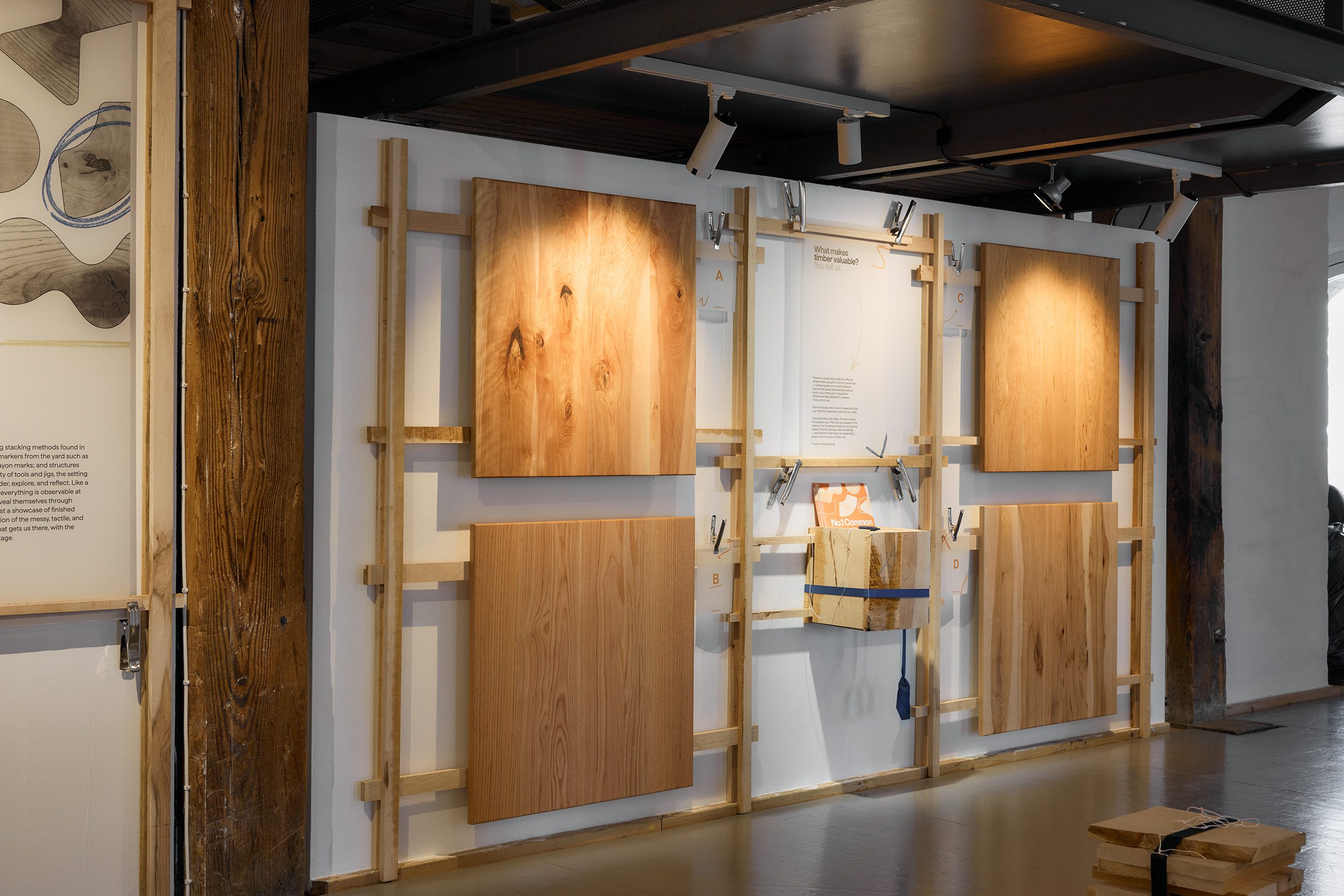
No.1 Common (No.1C) is often referred to as the ‘cabinet grade’ because of its adaptability to the standard sizes of kitchen cabinet doors used throughout the United States; it is not commonly used in Europe, in favour of clearer grades of timber like FAS or Selects. But believe it or not, No.1C hardwood generally comprises a similar amount of clear wood as upper grades but in smaller cuttings.
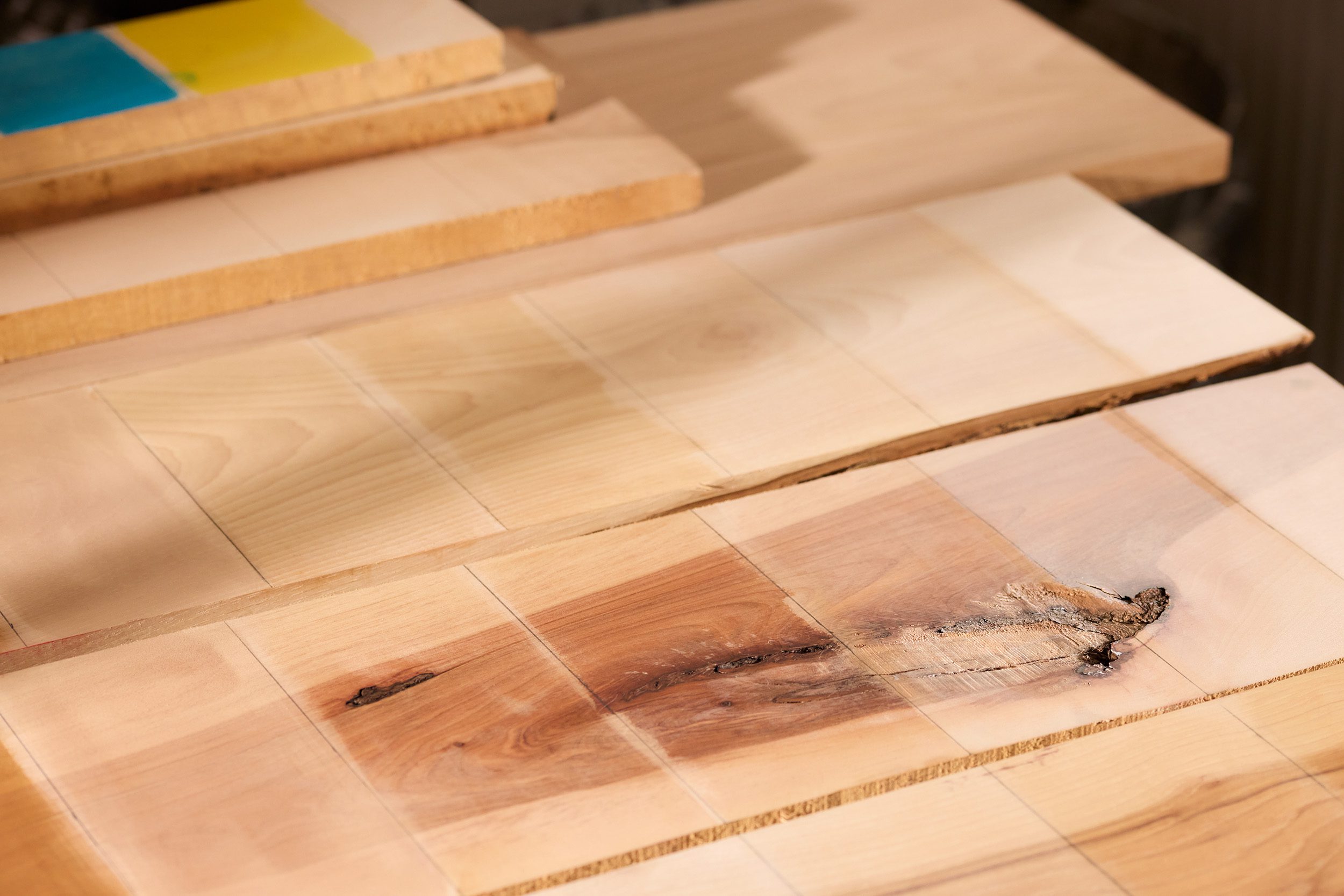
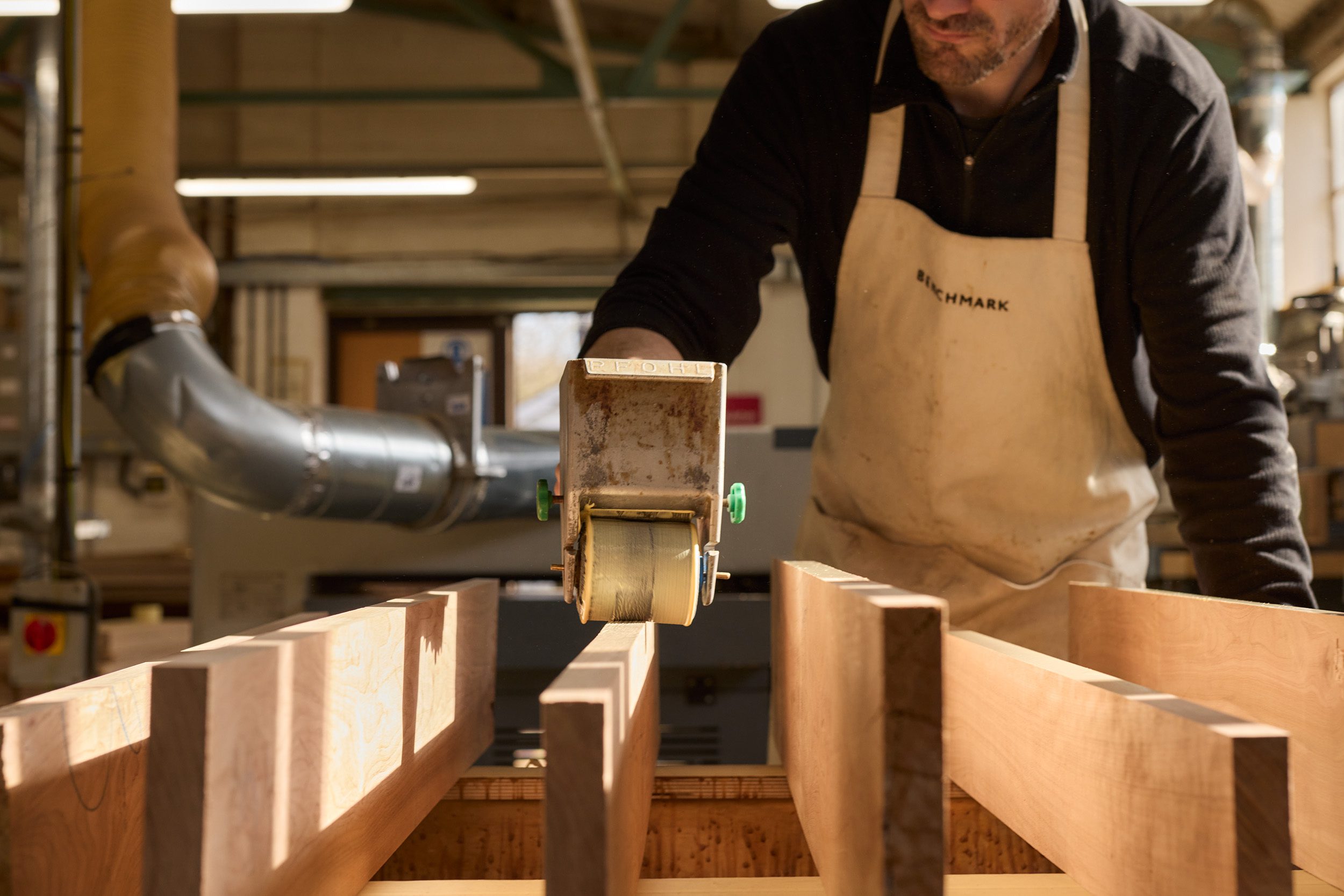
In this exhibition, AHEC works with the UK’s leading furniture-makers Benchmark to explore the potential of No.1C timber, while also commissioning three furniture designers including Andu Masebo who focuses on simplicity, accessibility and materiality; Daniel Schofield whose background is in graphic design and carpentry; and Anna Maria Øfstedal Eng who’s interested in how ‘contrasts’ can spark a dialogue within a design. Furthermore, the design of ‘No.1 Common’ is the work of KUF Studios, founded by Danish designer Kia Utzon-Frank.
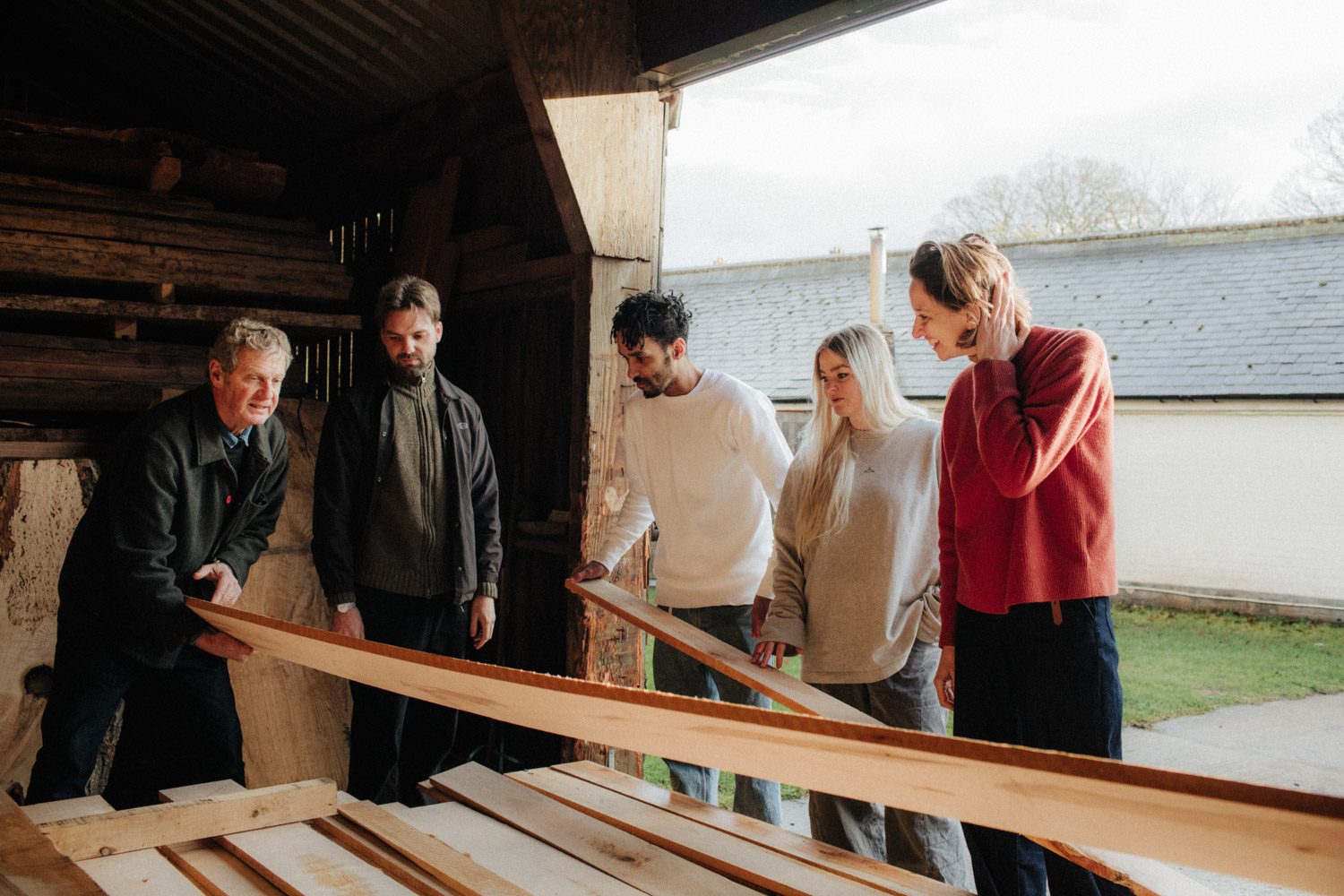
Daniel Schofield, Andu Masebo, Anna Maria Øfstedal Eng, and Kia Utzon-Frank during the material workshop at Benchmark
Around Table by Andu Masebo
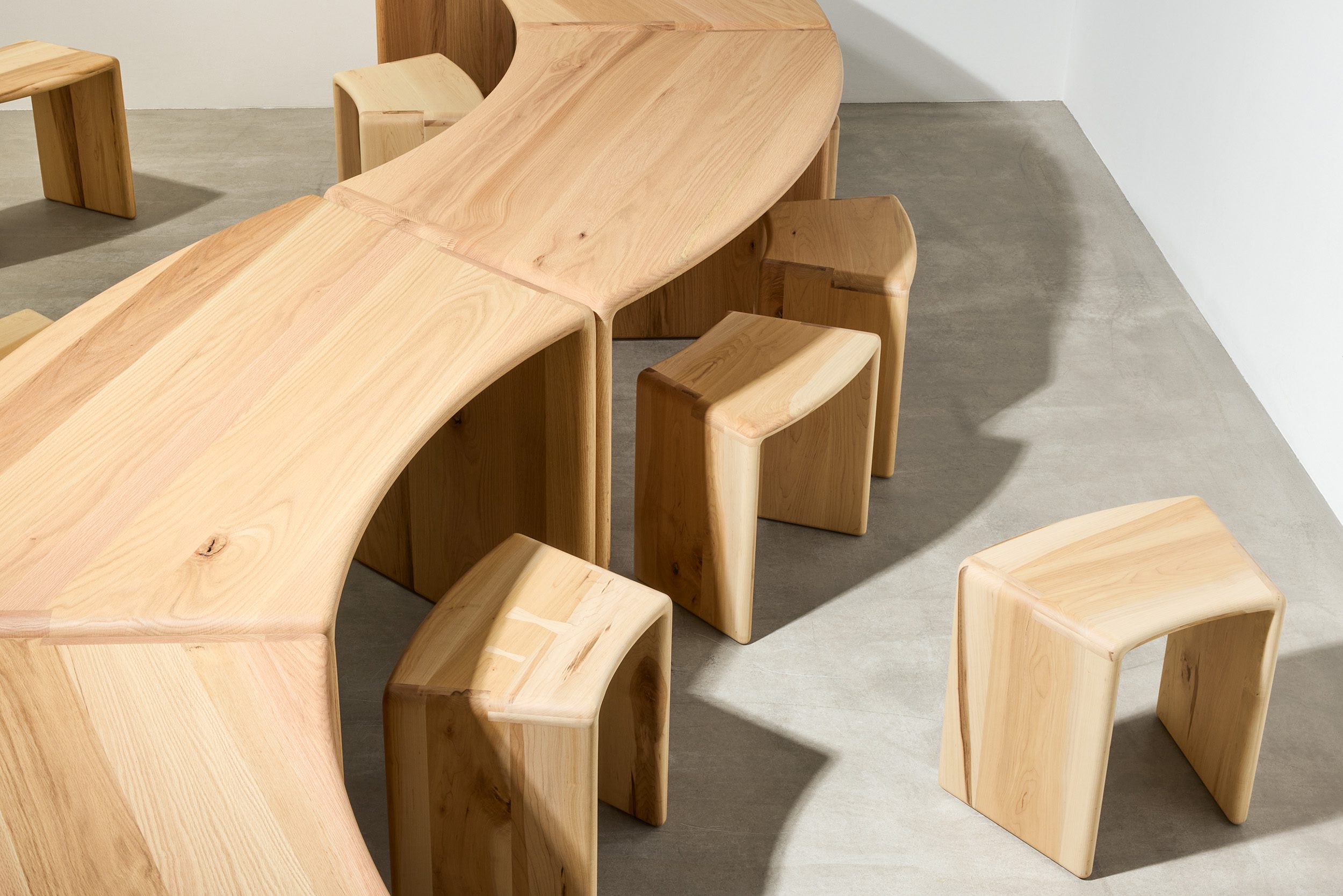
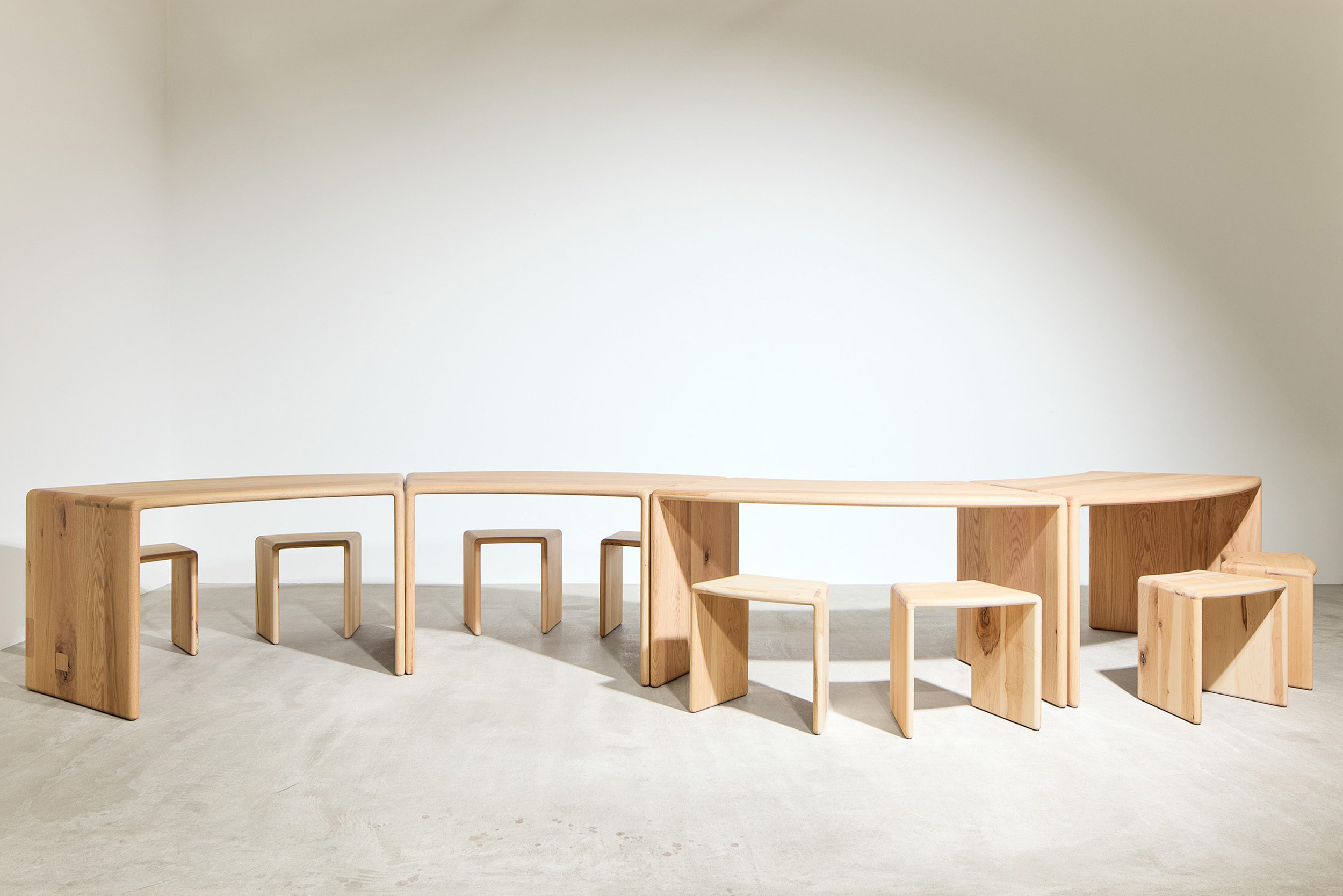
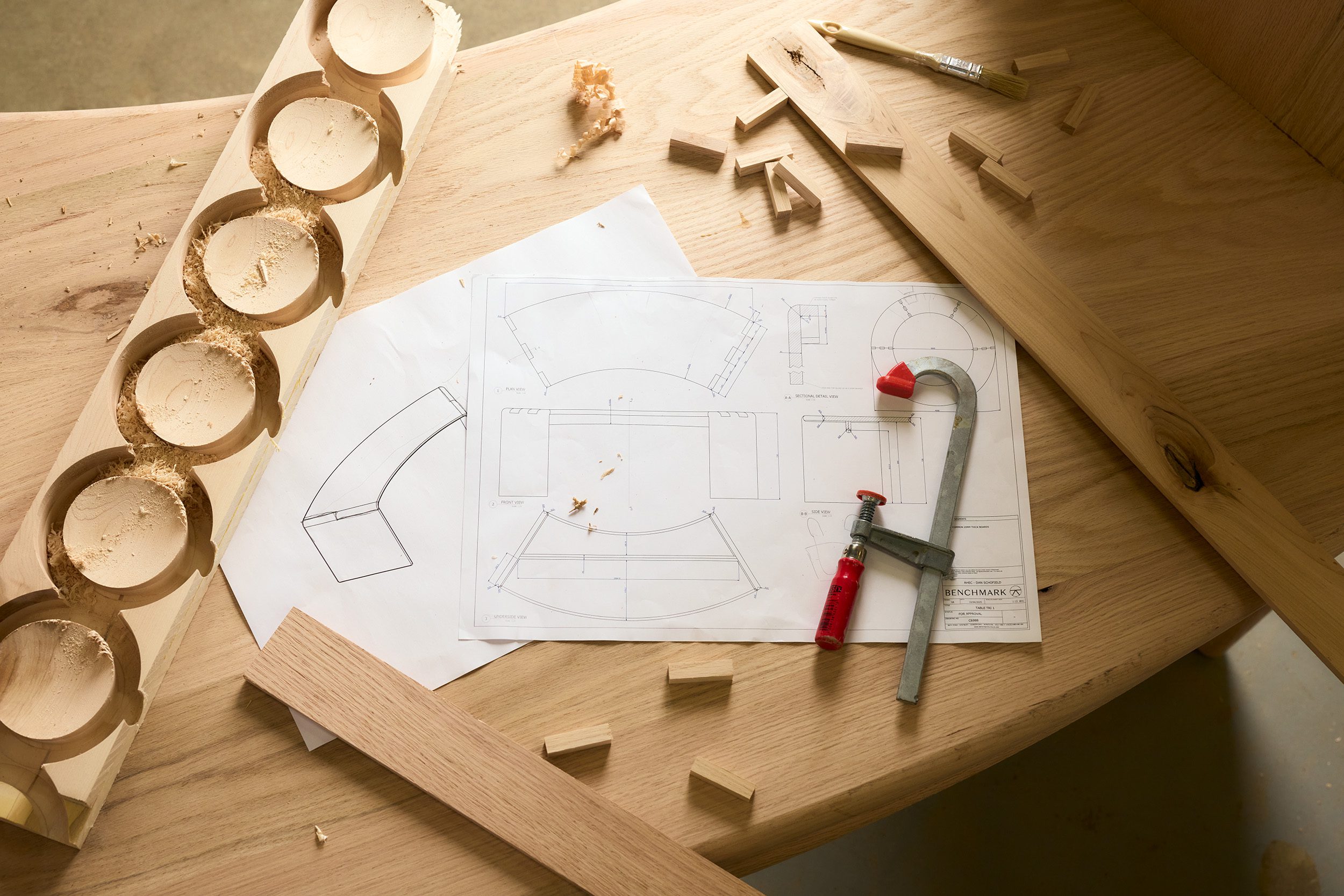
London-based designer Andu Masebo is interested in the things we make, the way we make them and the systems that they become a part of once they are made. For ‘No.1 Common,’ Masebo has designed the tables comprising eight curved segments that transform over the three days of the festival.
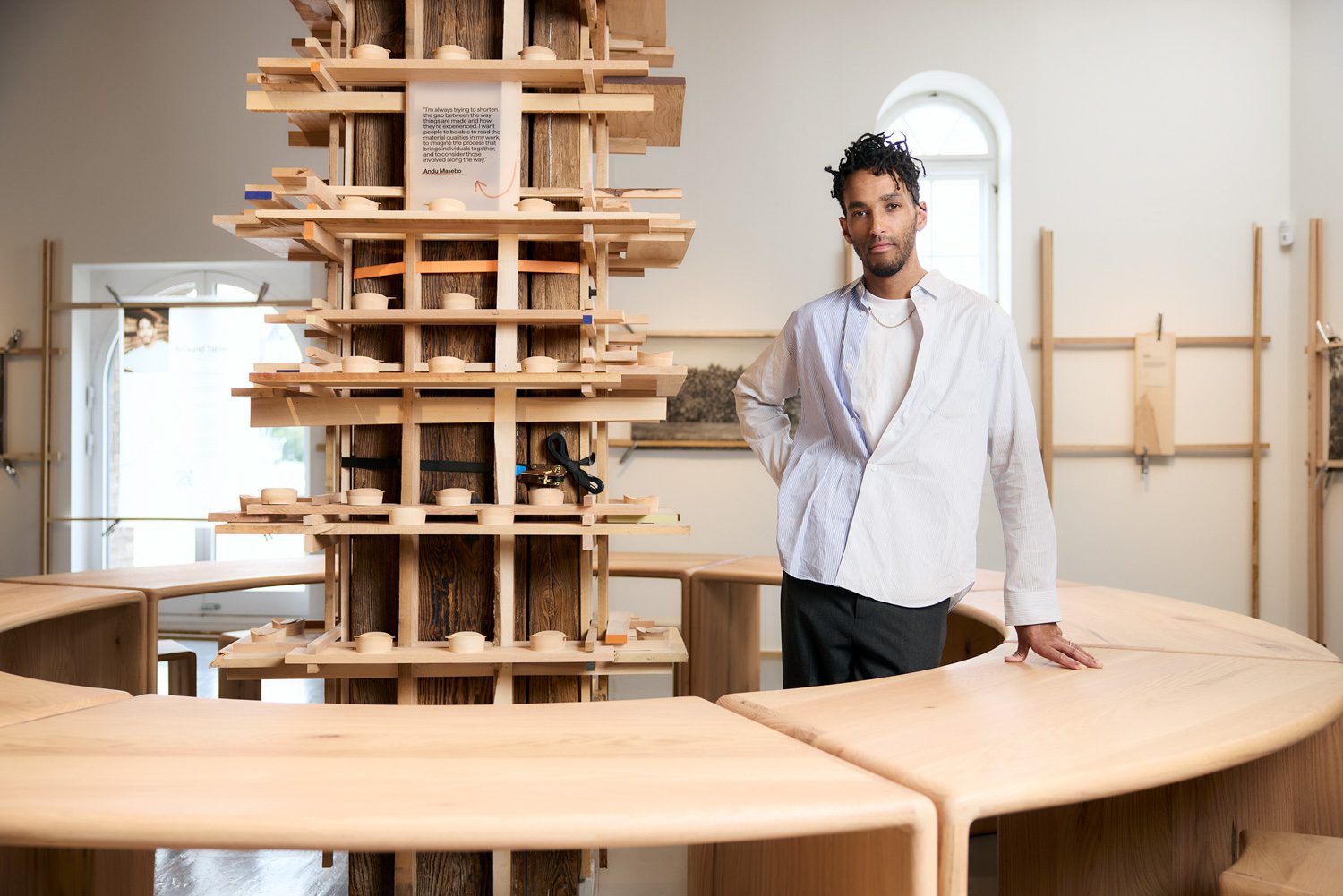
Andu Masebo
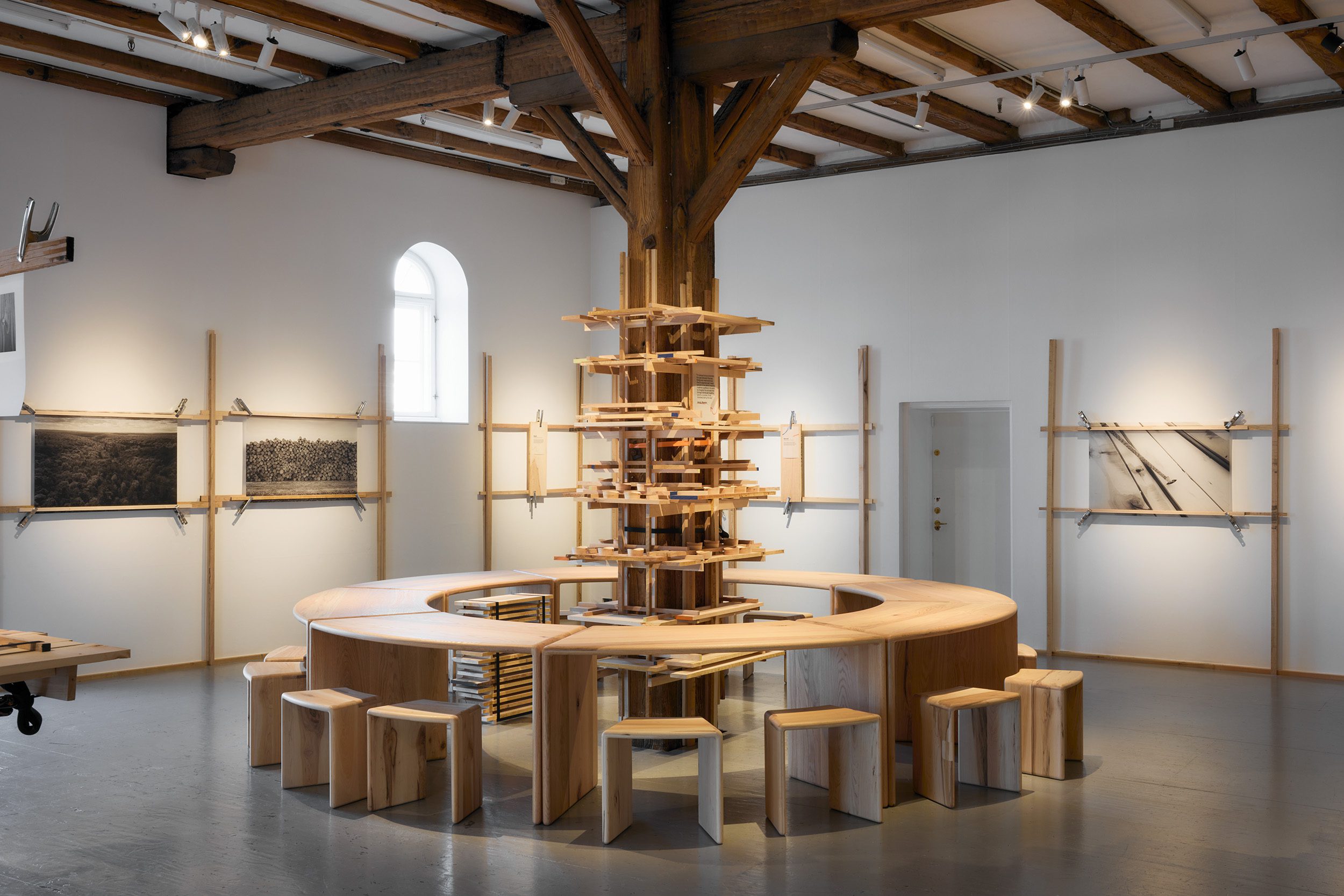
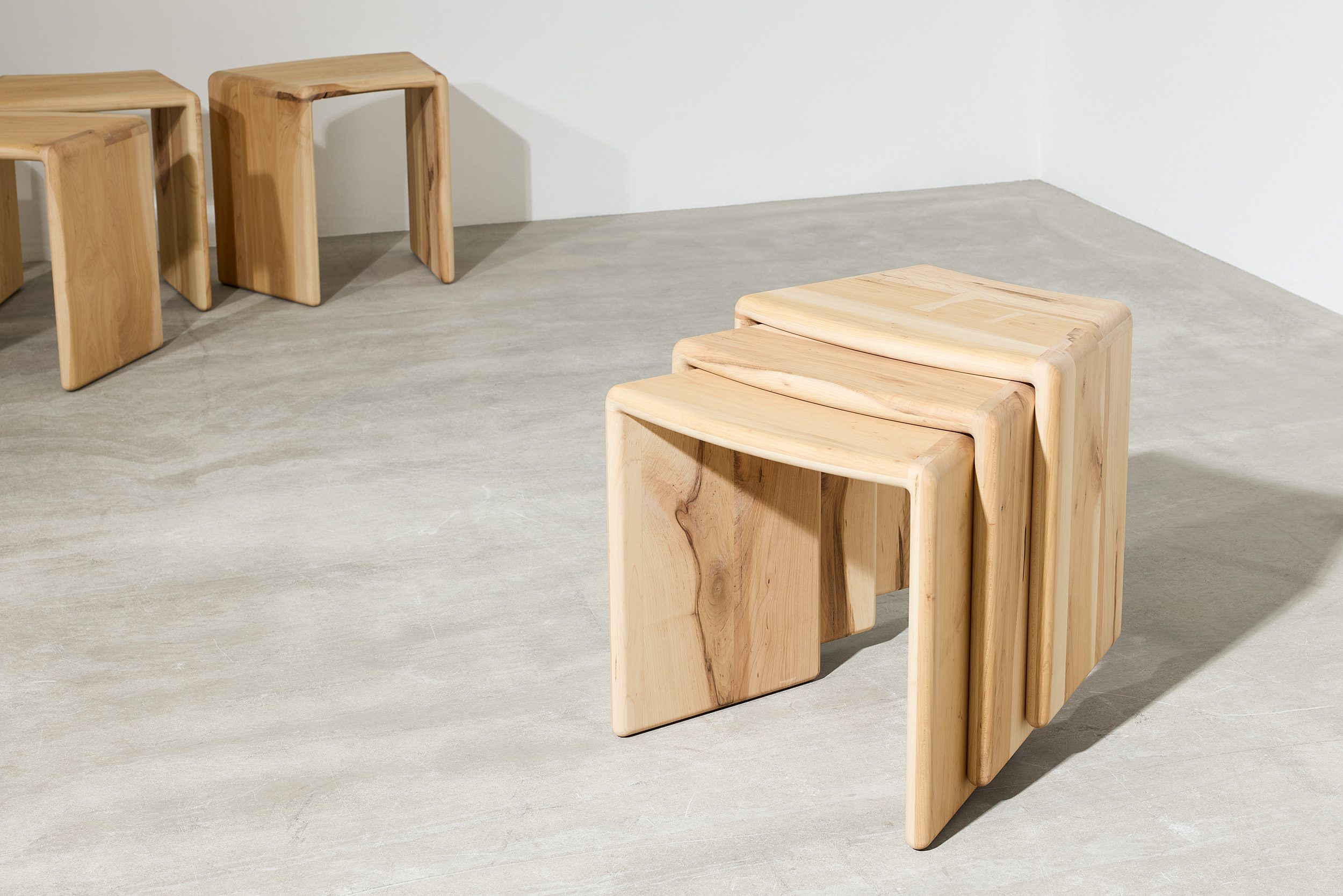
The tablescape was made in No.1C red oak while a set of semi-stackable stools was made from No.1C brown maple, echoing the table’s design language. In most homes, the dining table is a hub for social interaction, it provides a context for inviting people into spaces, a place to gather around. This project imagines the table as a centre of gravity and seeks to create moments that bring people towards it.
‘Common Room’ by Daniel Schofield
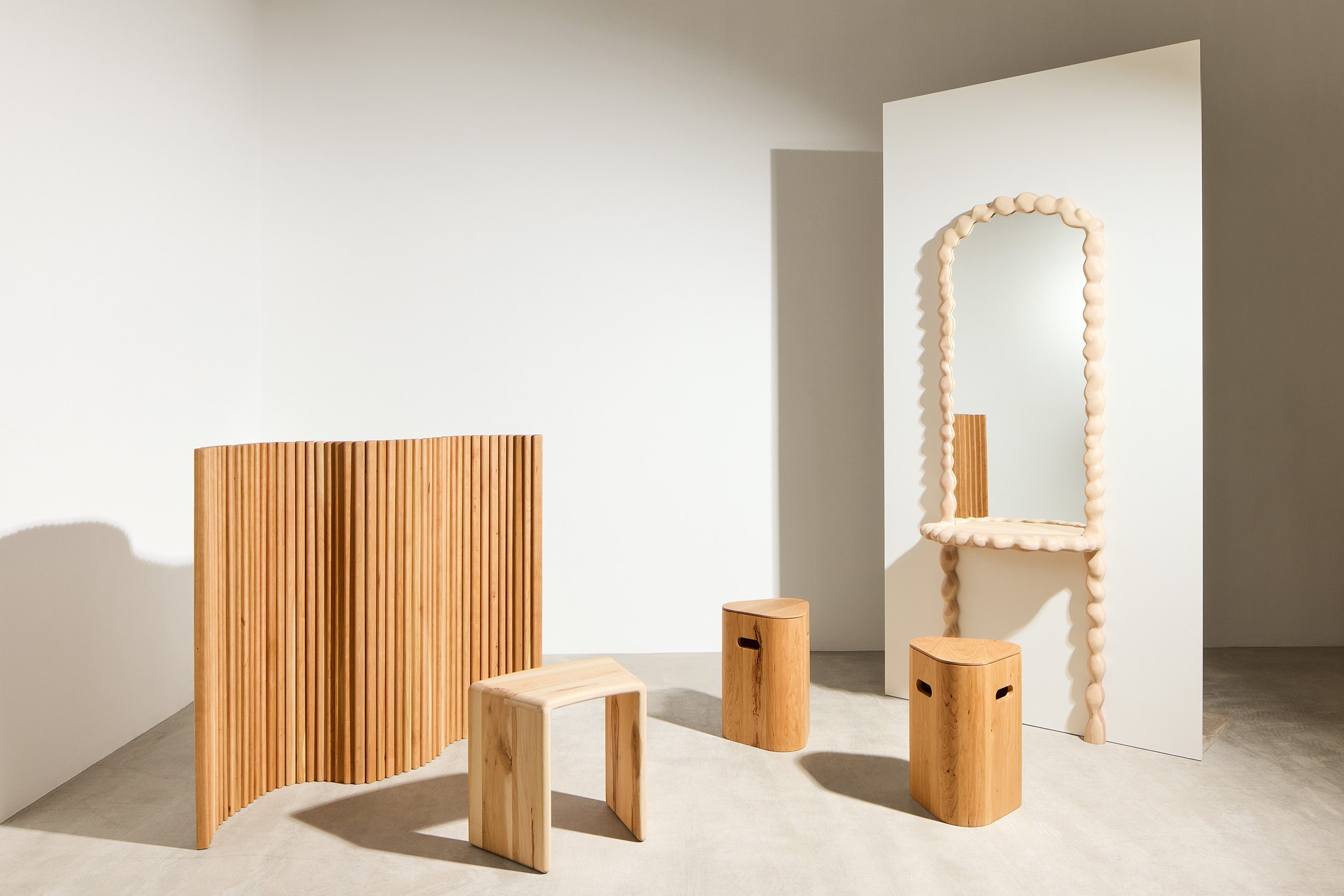
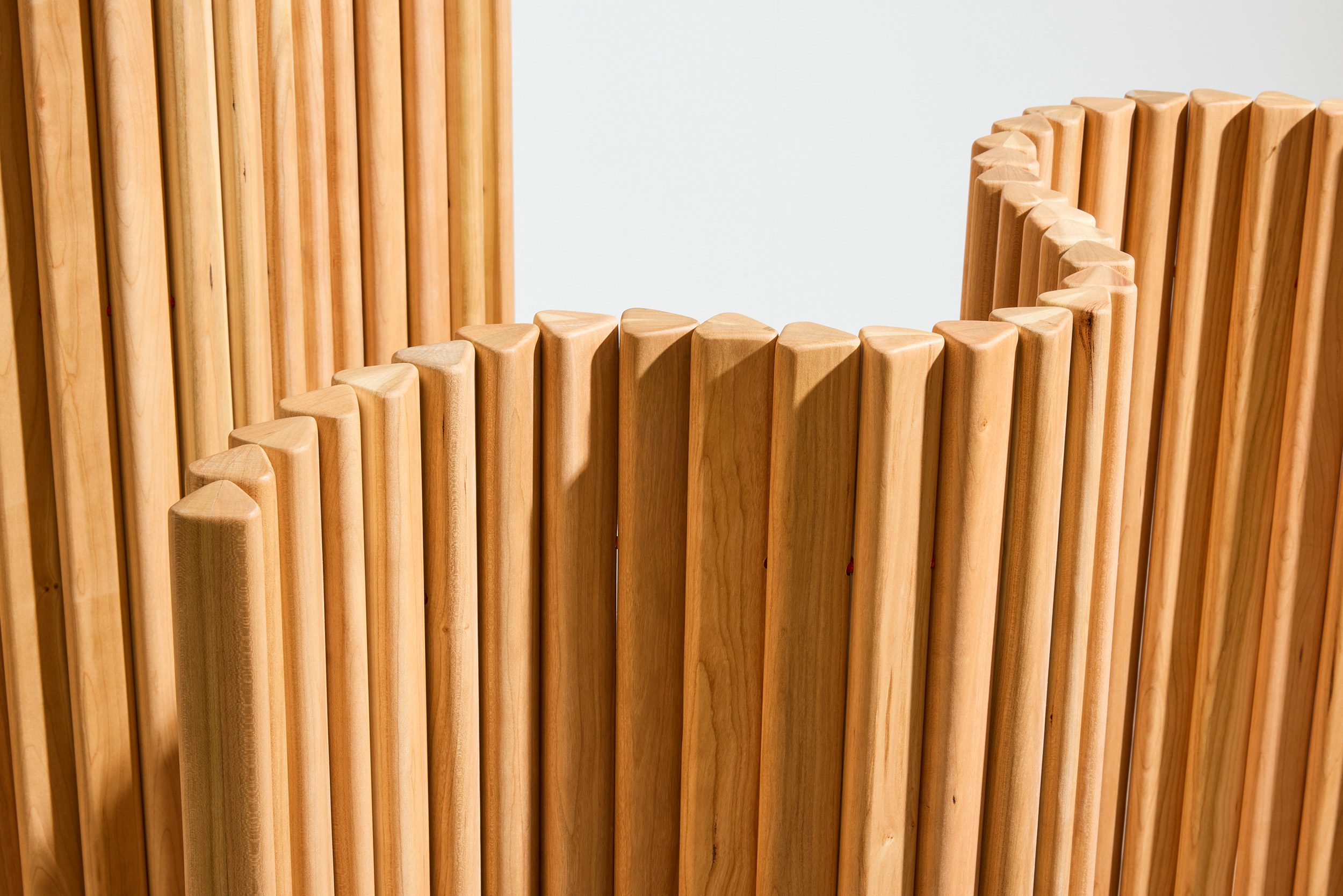
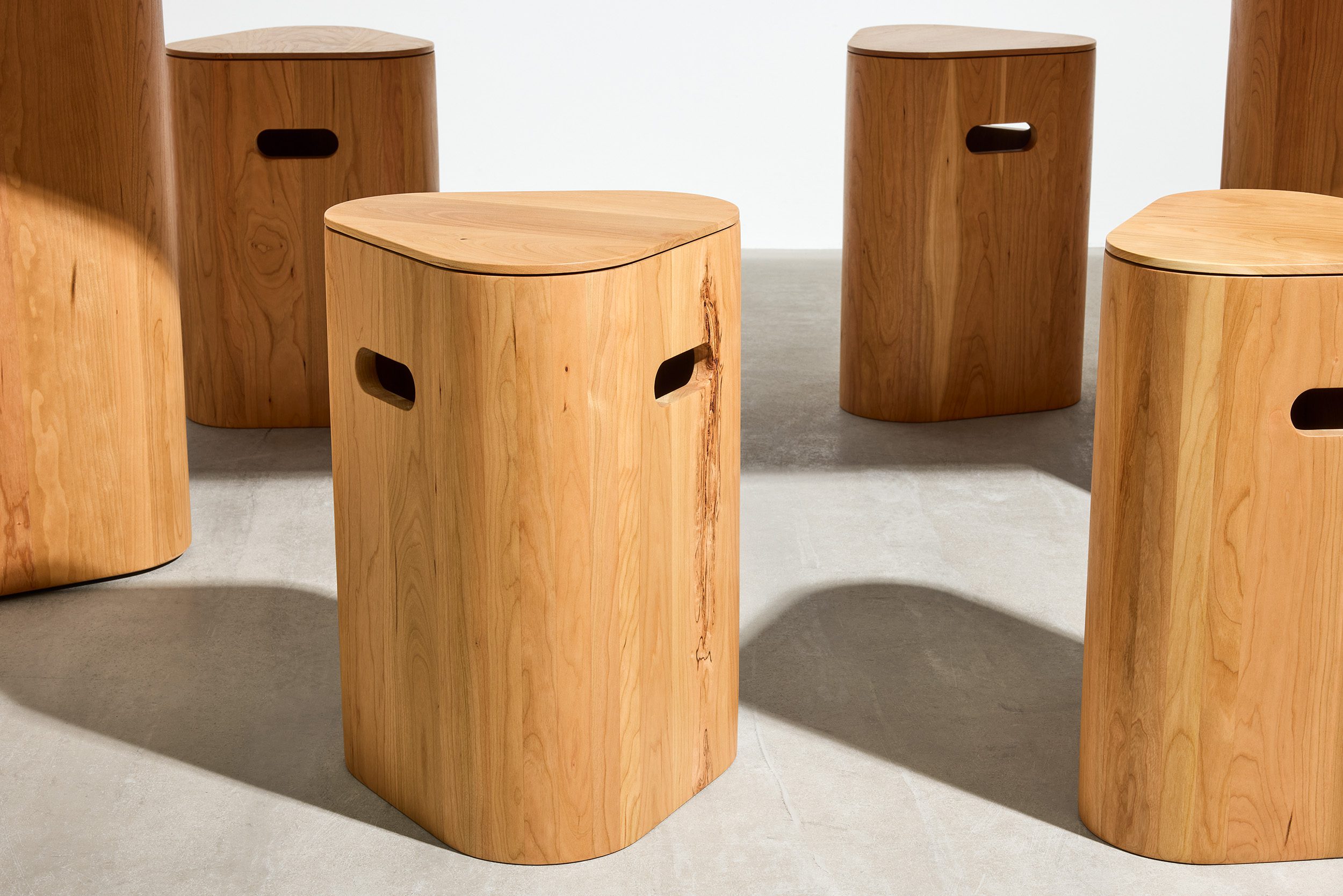
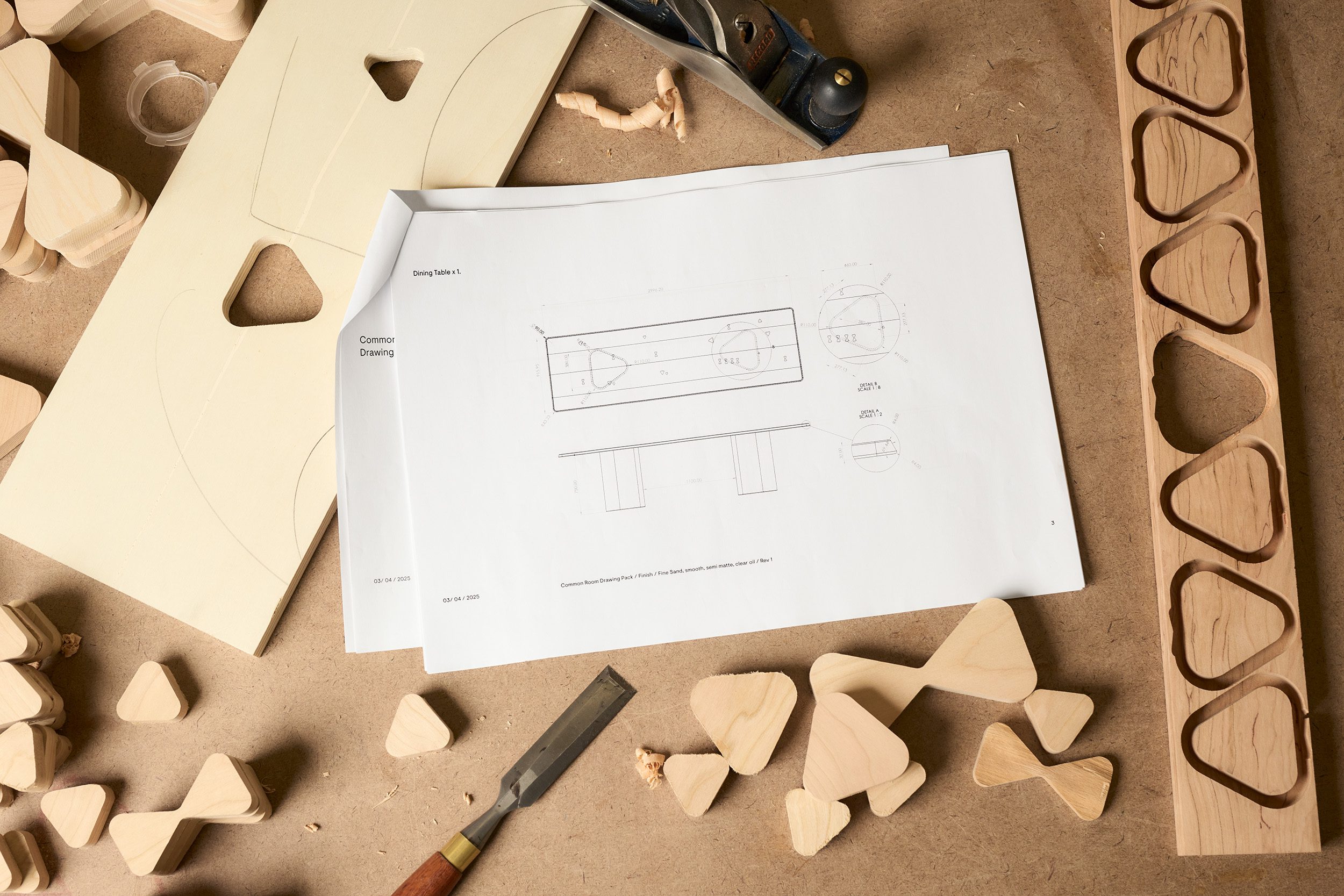
Schofield has used No.1C cherry wood to create a furniture family comprising a table, bench, stools, and screens of varying heights as demand grows for flexible workspaces. With its natural variation – knots, colour shifts, and irregular grain – No.1C often requires more work to make it viable for large-scale production. Rather than hiding these characteristics, Schofield has developed a system to embrace them. A simple yet effective approach to joining splits and patching knots maximises the potential of No.1C.
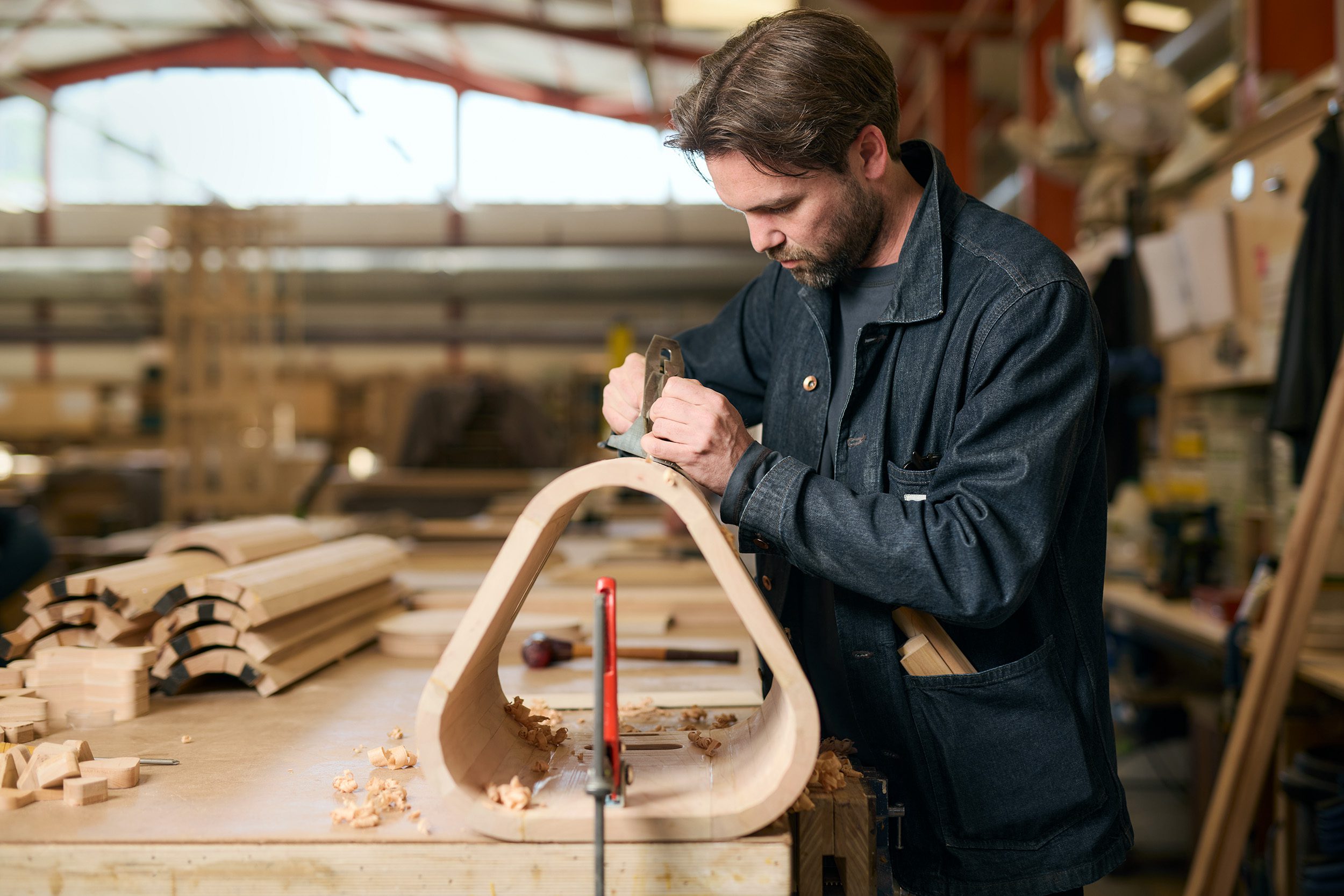
Daniel Schofield
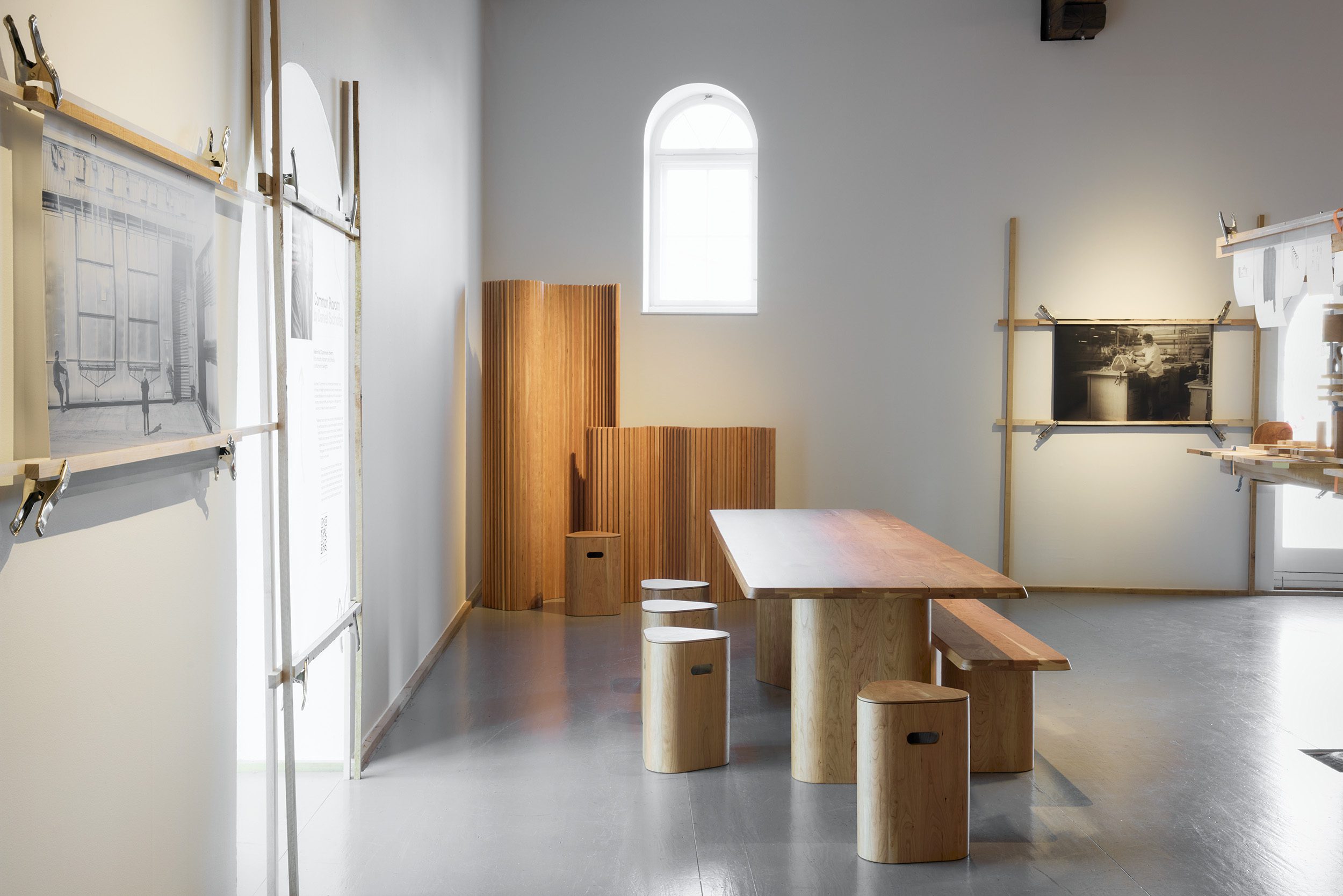
The butterfly joint, traditionally sharp-edged in handcraft, has been given rounded corners to speed up production and highlight its machine-made nature. This soft triangular form defines the collection’s design language, uniting function with expression.
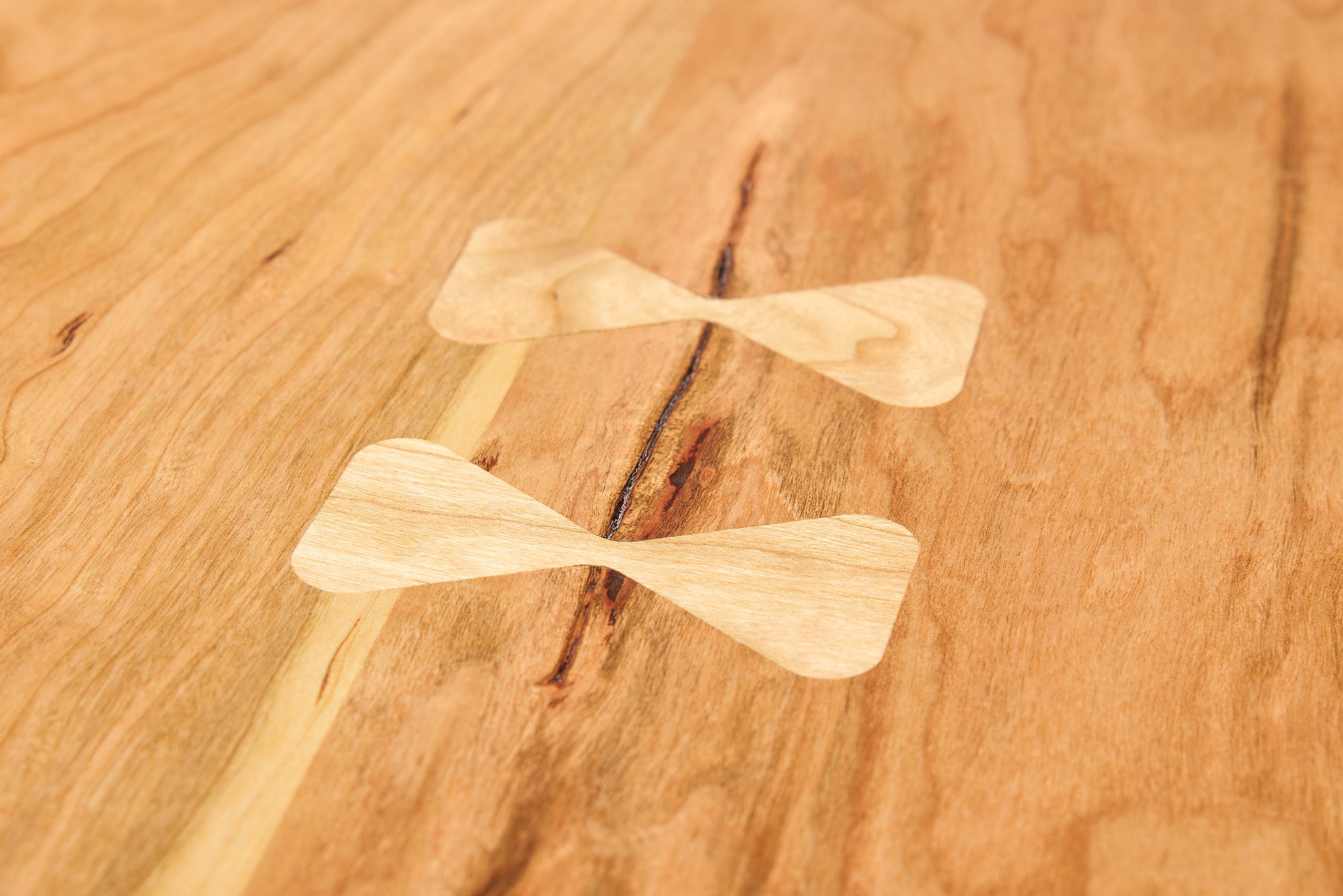
Kontur Series by Anna Maria Øfstedal Eng
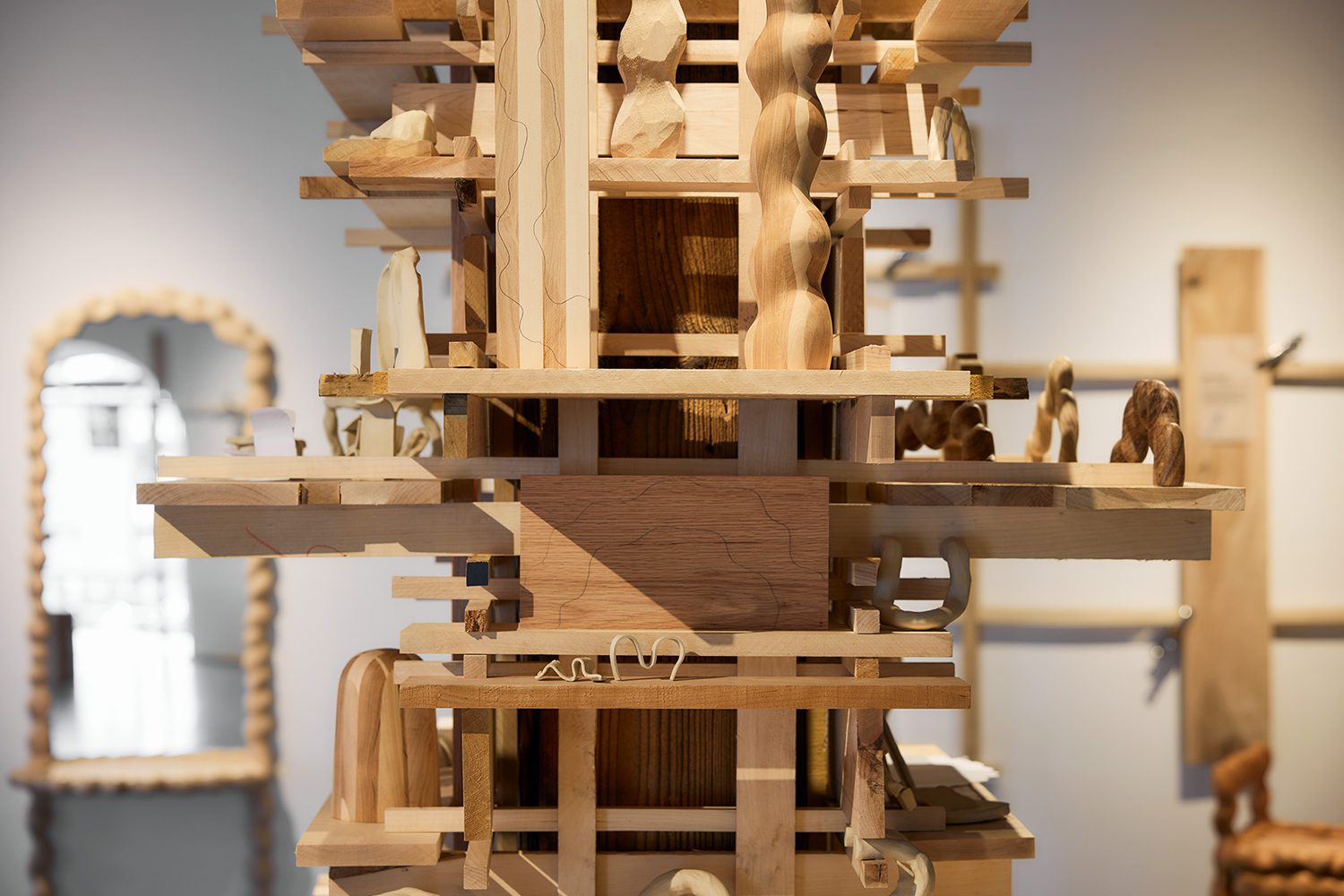
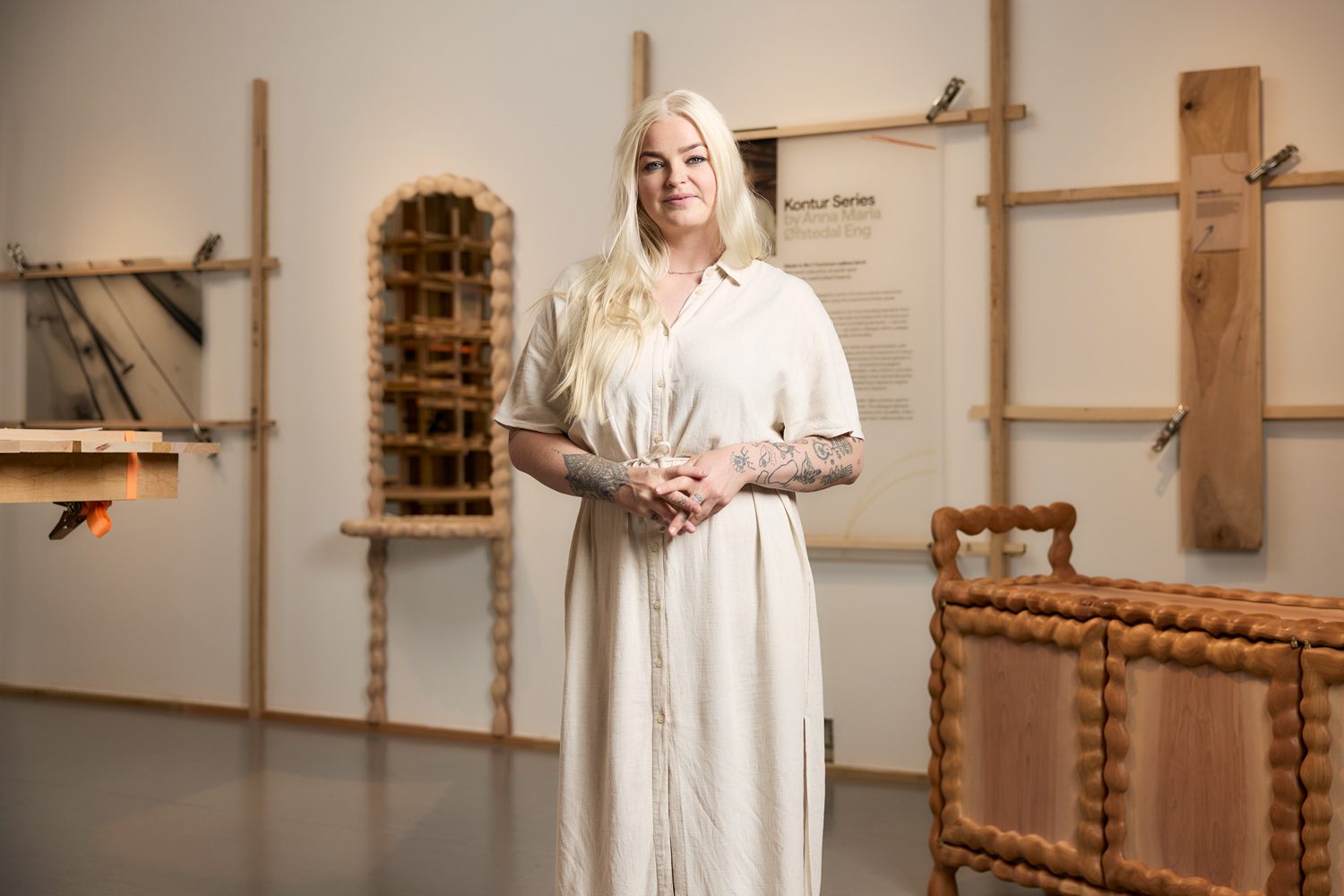
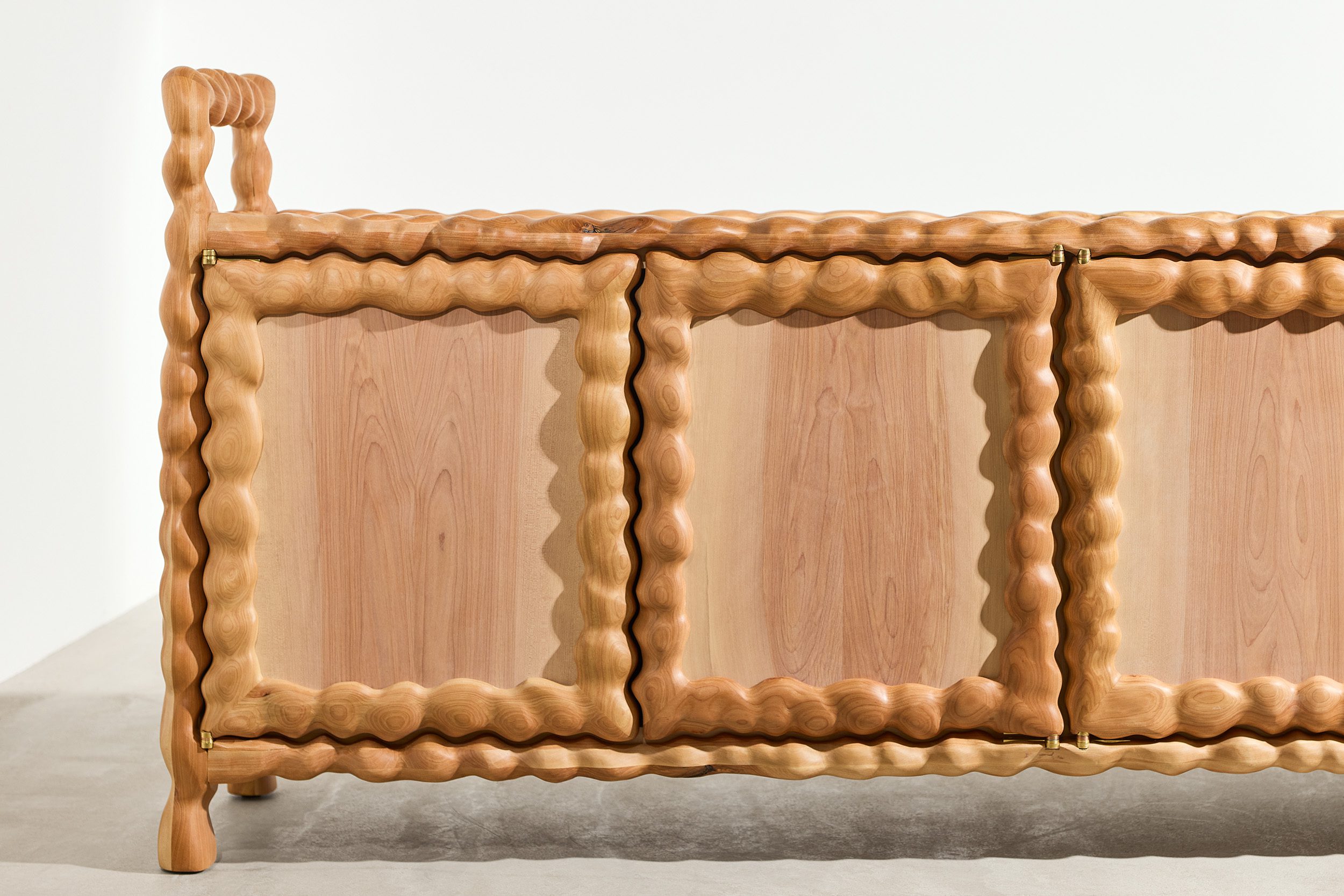
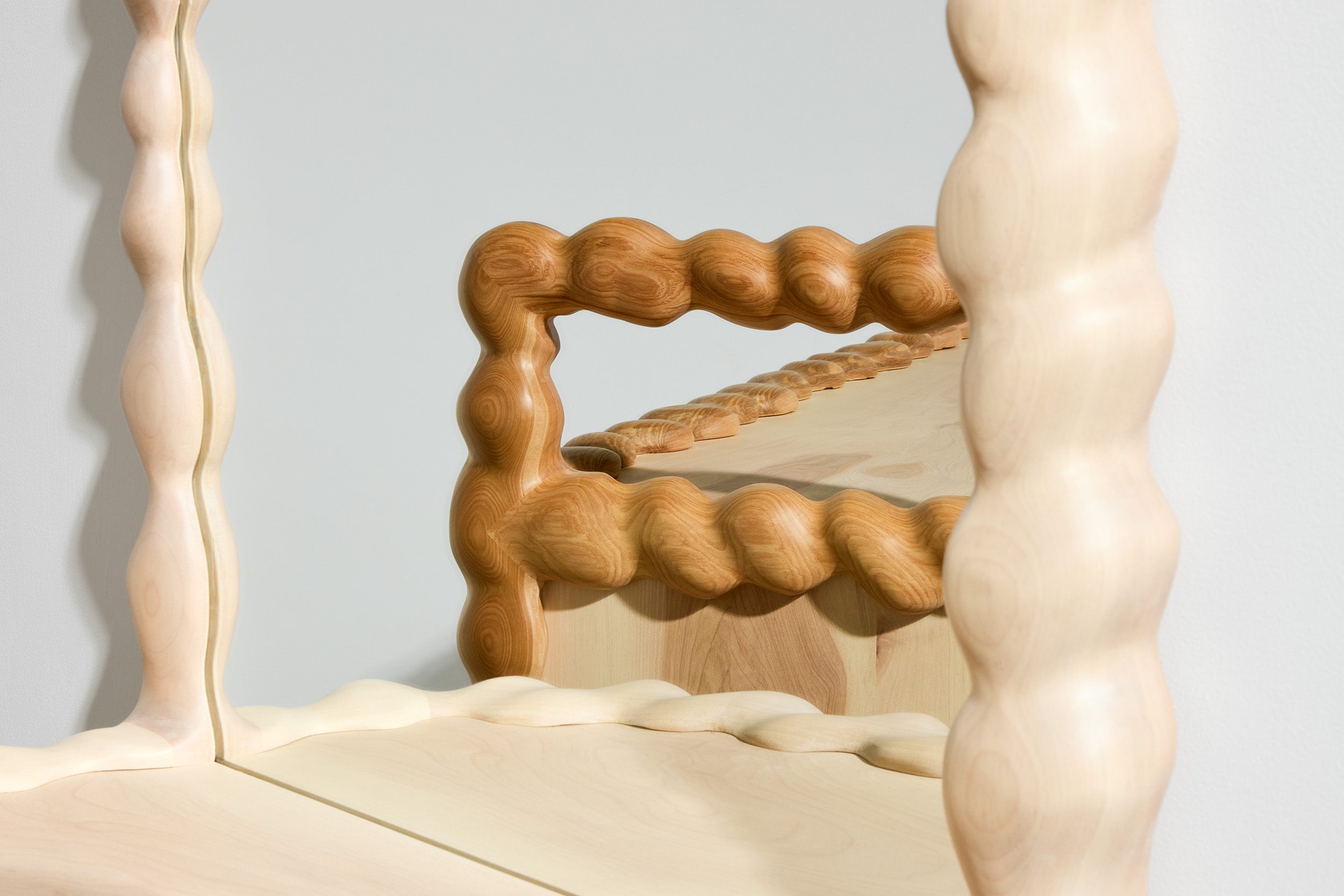
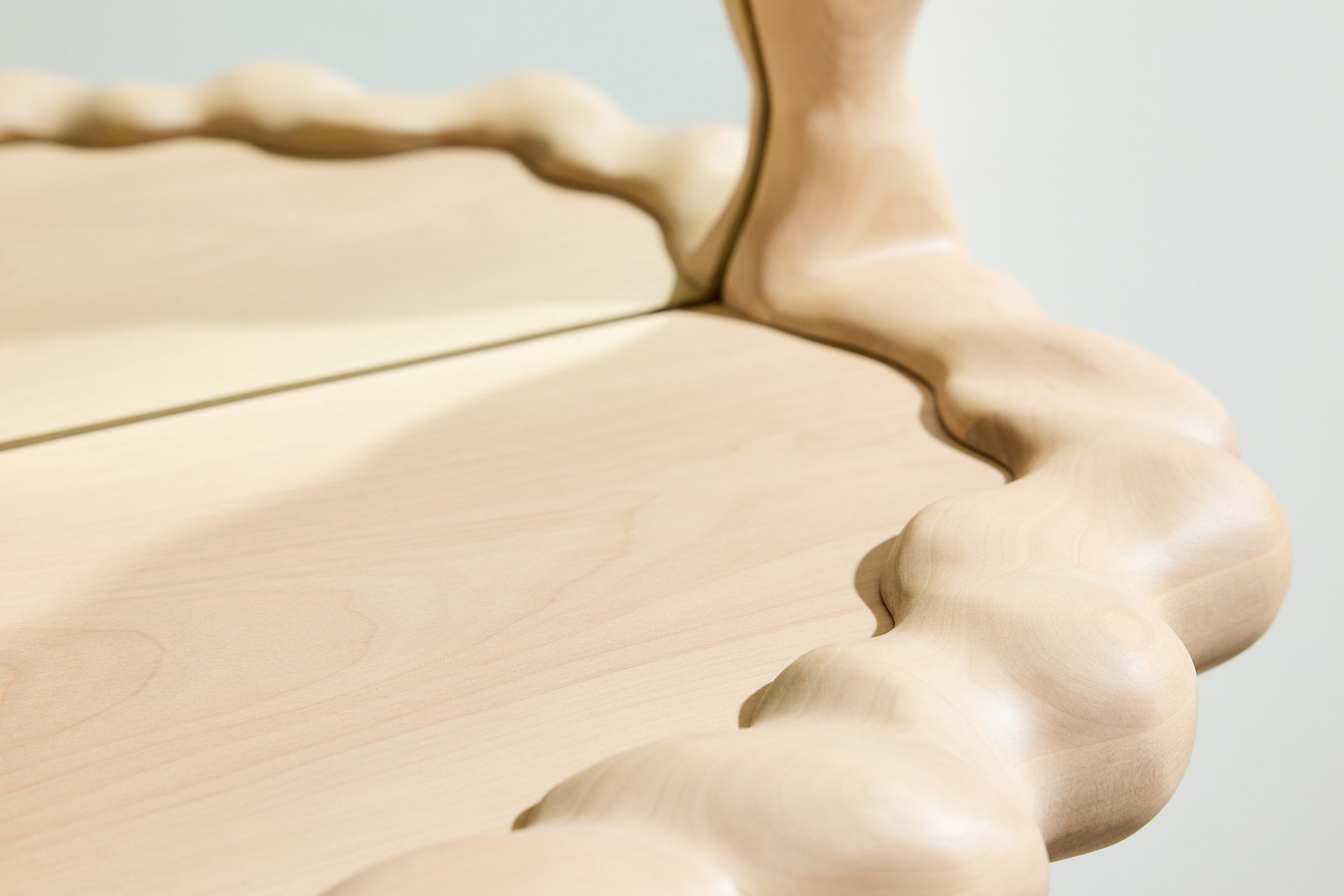
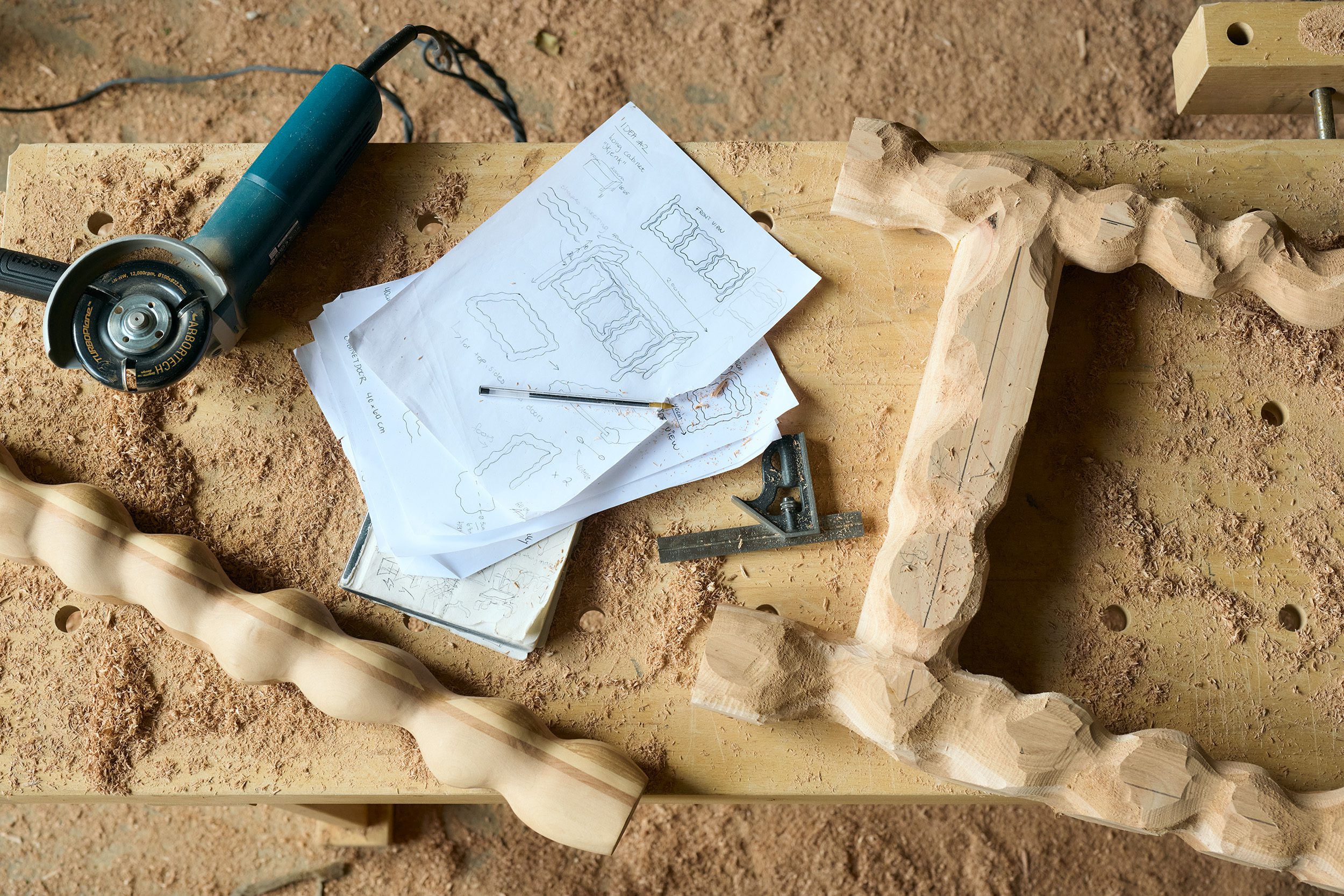
Anna Maria Øfstedal Eng embraces the hand of the maker in her creative process, celebrating imperfection as an emblem of honesty and transparency. Øfstedal Eng has designed a cabinet and wall mirror inspired by material experimentation using characterful yellow birch. Start with her longstanding inspiration she has found in roots and branches – forms that twist and shape both structure and silhouette. Its rich spectrum of colour variations led to laminating boards of the same species displaying different tones and grains to create a range of patterns.
Anna Maria Øfstedal Eng
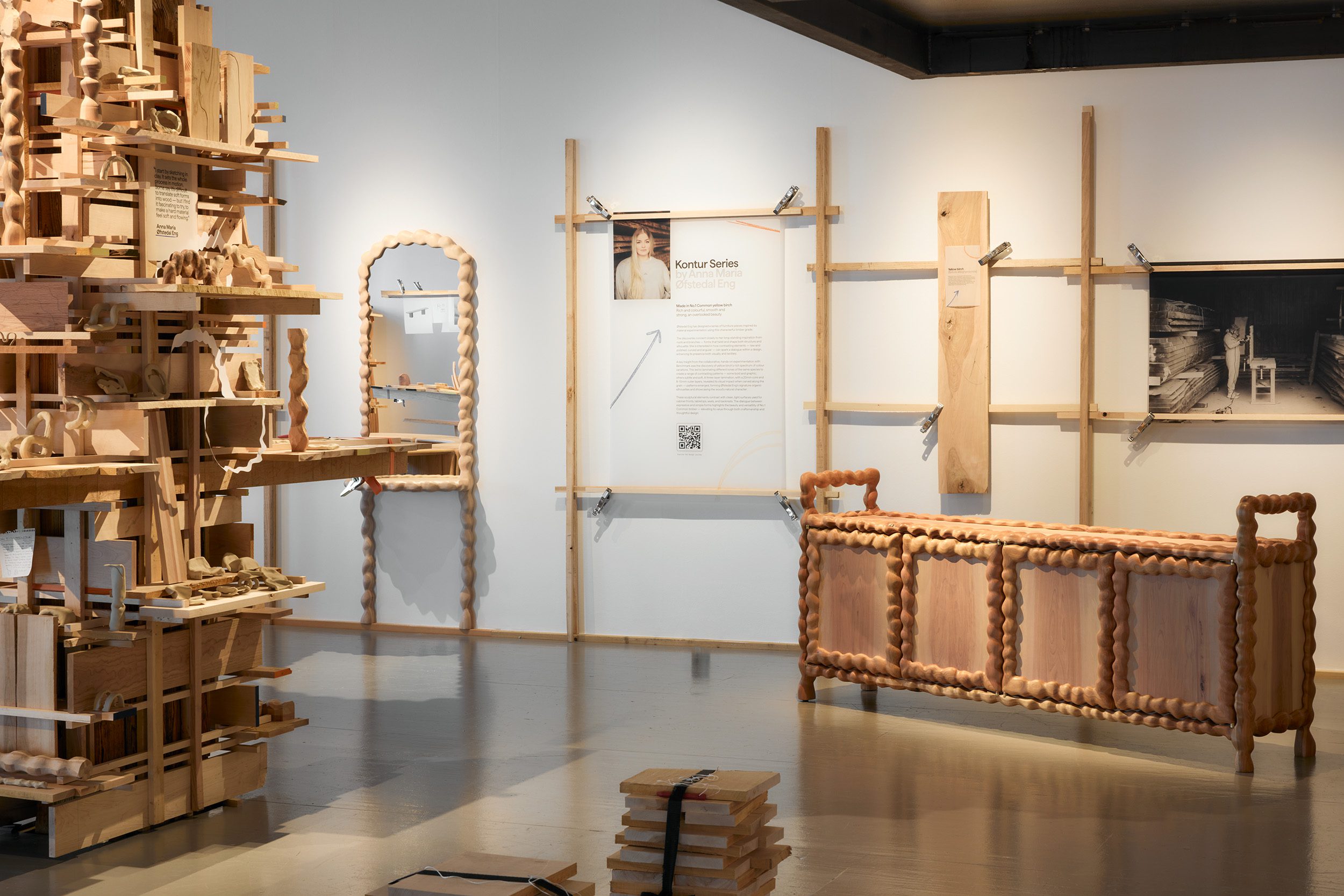
These sculptural elements contrast with clean, light surfaces used for cabinet fronts, tabletops, seats, and backrests. The dialogue between expressive and simple forms highlights the beauty and versatility of No.1C timber, elevating its value through craftsmanship and thoughtful design.
American hardwood forests contain more than twice the volume of standing timber today as 50 years ago. To maximise the potential of this natural resource, we need to rethink how we use timber – learning to appreciate and utilise not just the most ‘pristine’ cuts, which make up only up between 10 and 15% of the tree, but as much of the tree as possible.