
HWAY KA LOKE SCHOOL, A NEW SCHOOL BUILDING BY SIMPLE ARCHITECTURE, WAS CREATED WITH OPPORTUNITIES, PARTICIPATION AND COMMITMENT FROM THE COMMUNITY
TEXT: PRATCHAYAPOL LERTWICHA
PHOTO: JONATHAN WIEDEMANN EXCEPT AS NOTED
(For Thai, press here)
Before dawn broke on February 1, 2021, the quiet of Naypyidaw was shattered by the rumble of tanks moving into the city. Soldiers poured out and fanned across the capital, seizing Aung San Suu Kyi and rounding up other civilian leaders from their homes and offices. It was the opening act of a coup that would sweep away Myanmar’s fragile civilian government, placing power once again in the hands of Senior General Min Aung Hlaing, the Commander-in-Chief of the armed forces.
But the tanks did not bring calm. Instead, they lit the spark for a conflagration that has since engulfed the nation. What followed was not stability but a descent into bitter civil conflict, with entire regions consumed by war and ordinary lives hanging by a thread. Though the events took place within Myanmar, their shockwaves reverberated far across borders, reaching neighboring Thailand. According to a UNHCR report published in 2023, from the February 2021 coup through June 2023, more than 40,000 Myanmar nationals fled across the border into Thailand and settled in areas along the frontier between the two countries.
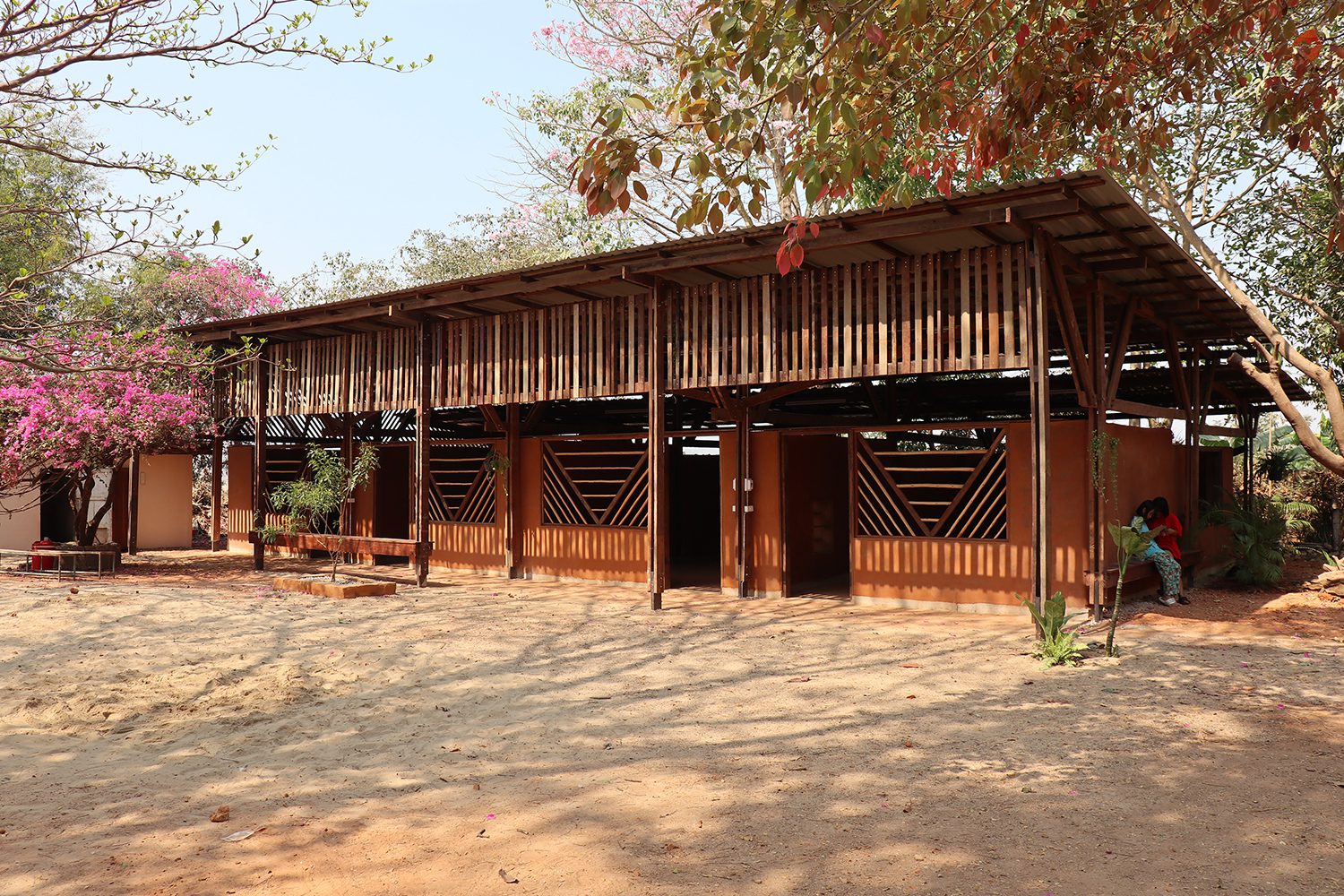
The unrest in Myanmar also left its mark on the Children’s Development Training Centre Hway Ka Loke, a school located in Mae Sot district, Tak province, less than three kilometers from the border. Established in 2000, the school has long served as a refuge for displaced children from Myanmar, providing education, meals, protection, and shelter. Following the 2021 coup, the school faced a surge in enrollment of more than 50 percent. Yet its aging classrooms were anything but prepared for the influx: cramped, deteriorating, with cracked walls and dim, airless interiors that stifled learning. It was here that Simple Architecture, the studio founded by Jan Glasmeier, stepped in to design and build a new classroom building to replace the old. The project was made possible with support from Stiftung Deutscher Architekten (the German Architects Foundation) and the architectural collective socialarchitecture e.V.
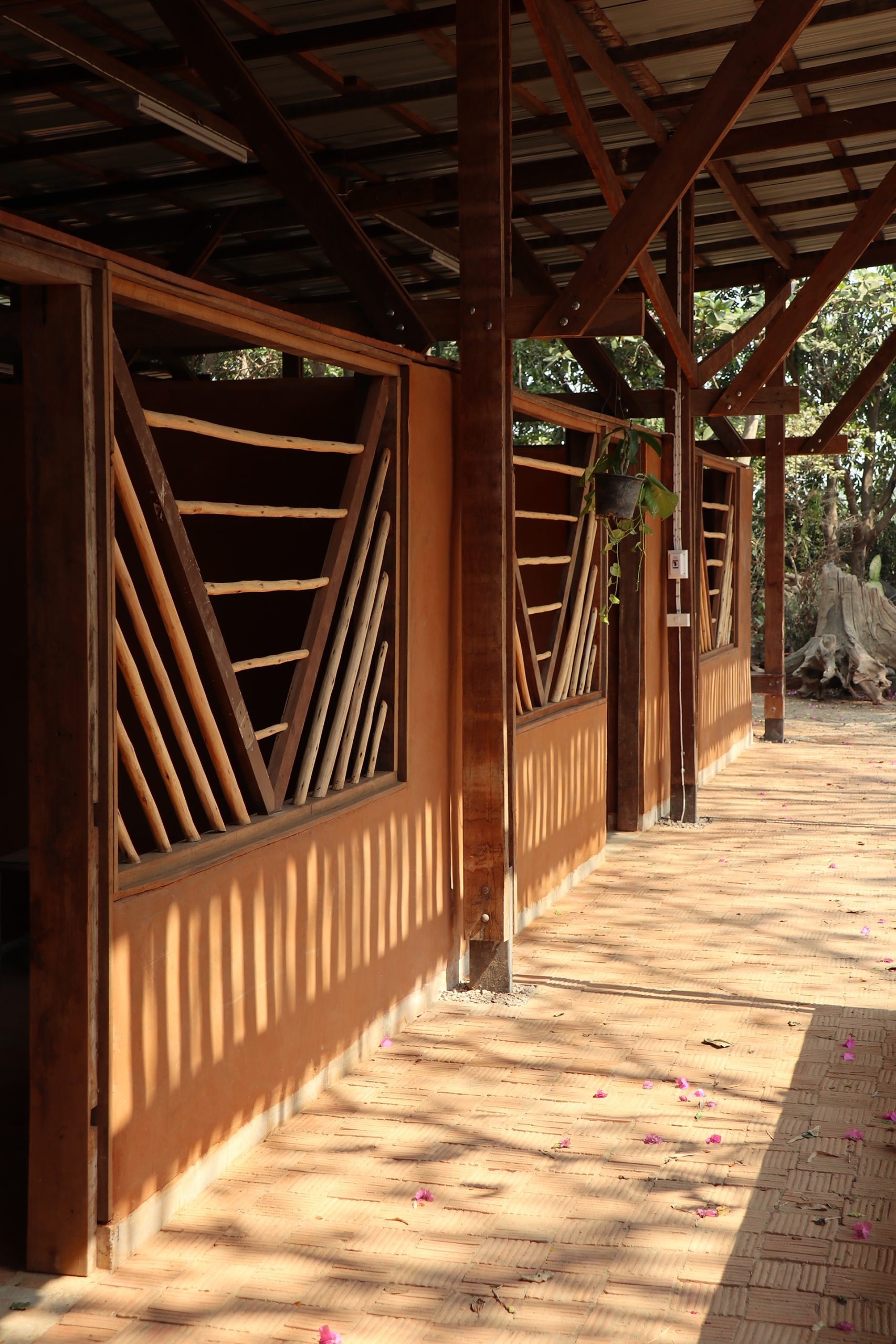
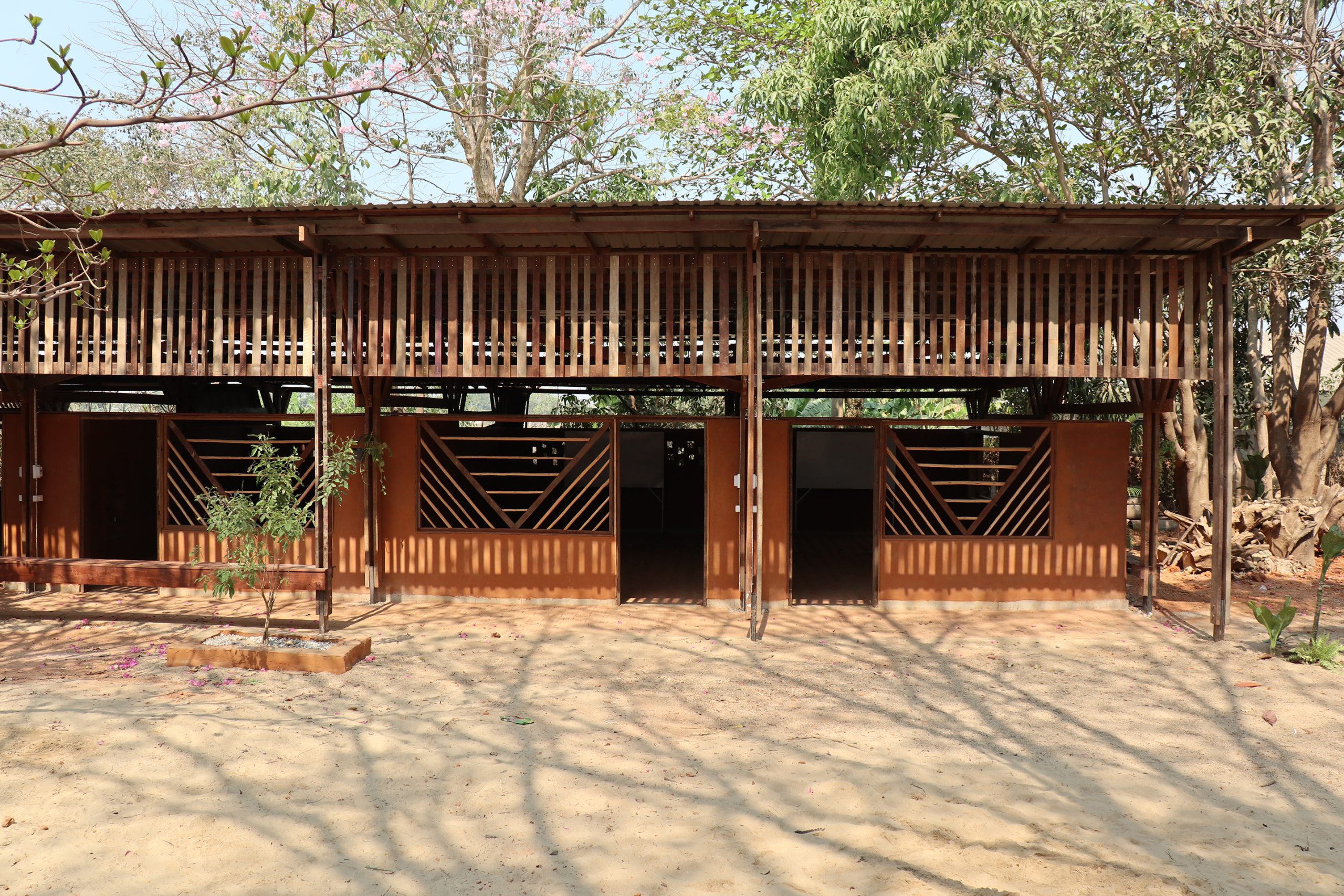
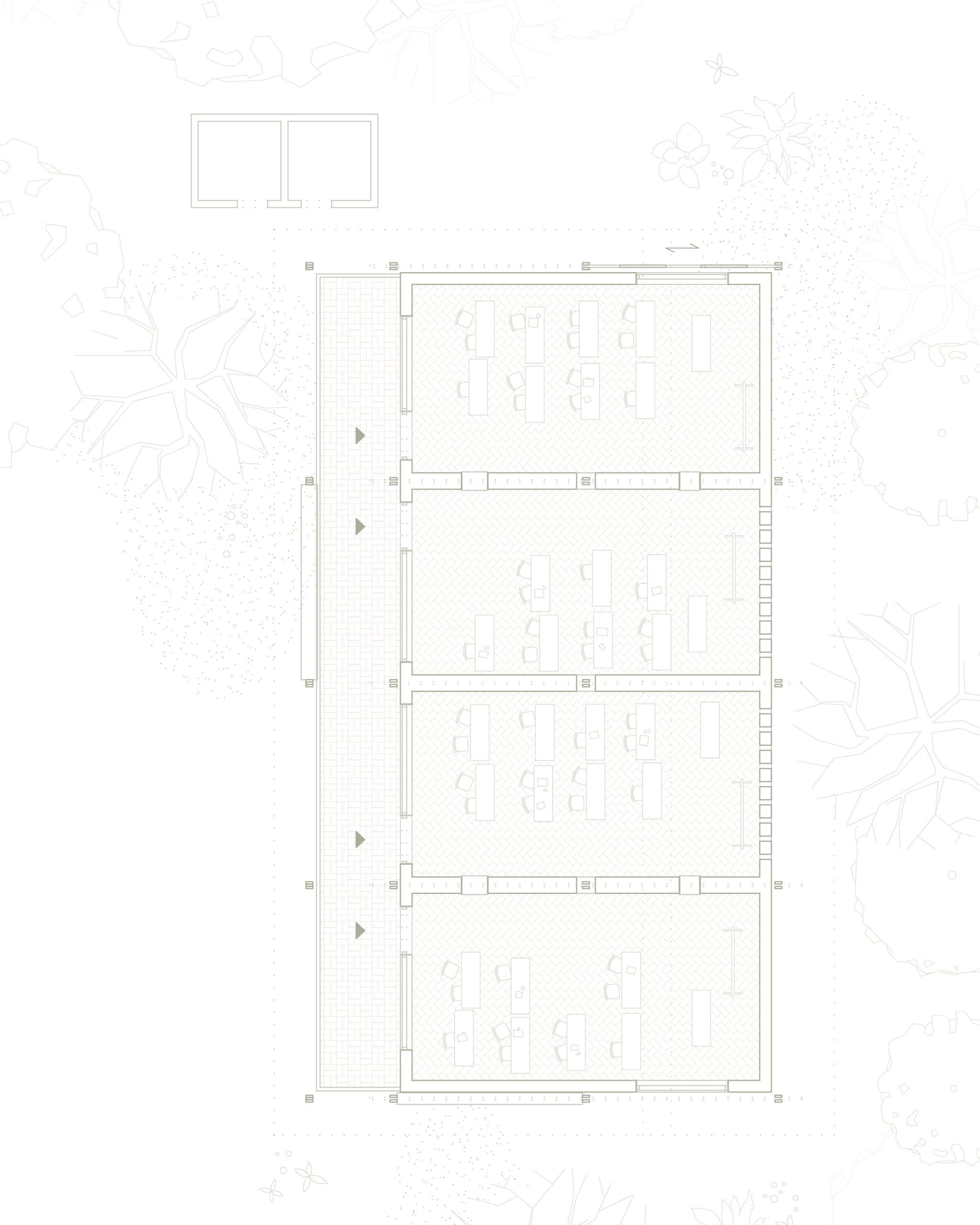
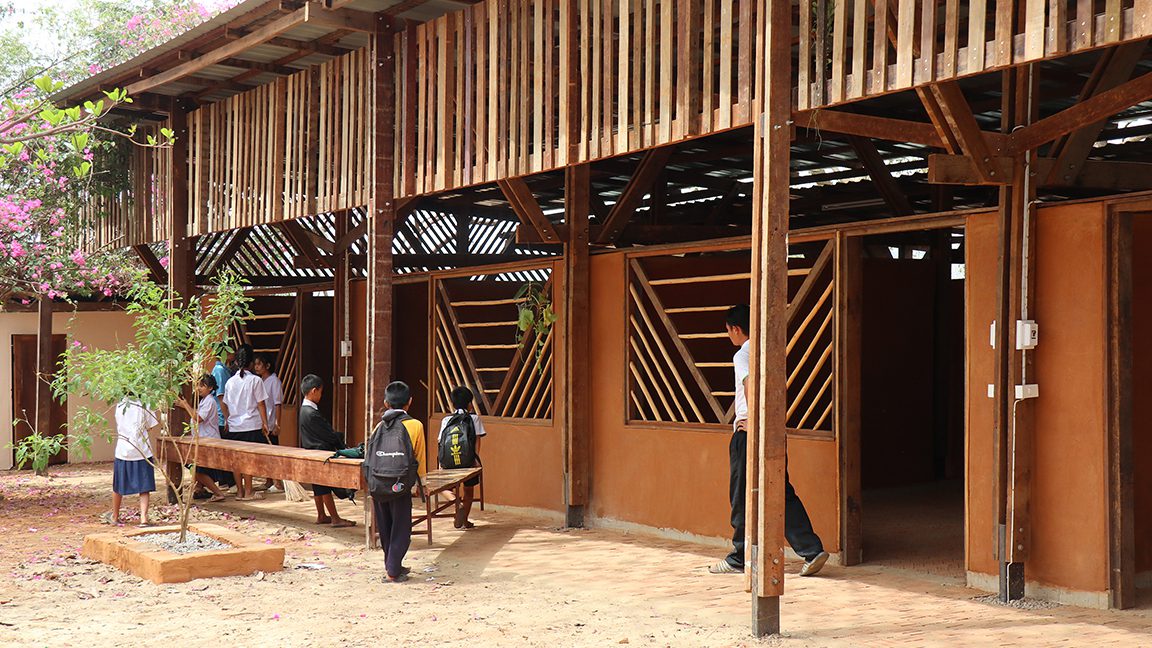
The new building rises on the northwestern side of the campus, following the footprint of the demolished structure. It comprises four classrooms arranged in a row, each offering about 30 square meters of space, nearly double the size of the original 16-square-meter rooms. A shaded veranda runs along the front, lined with small benches that encourage interaction and foster a sense of community among the students.
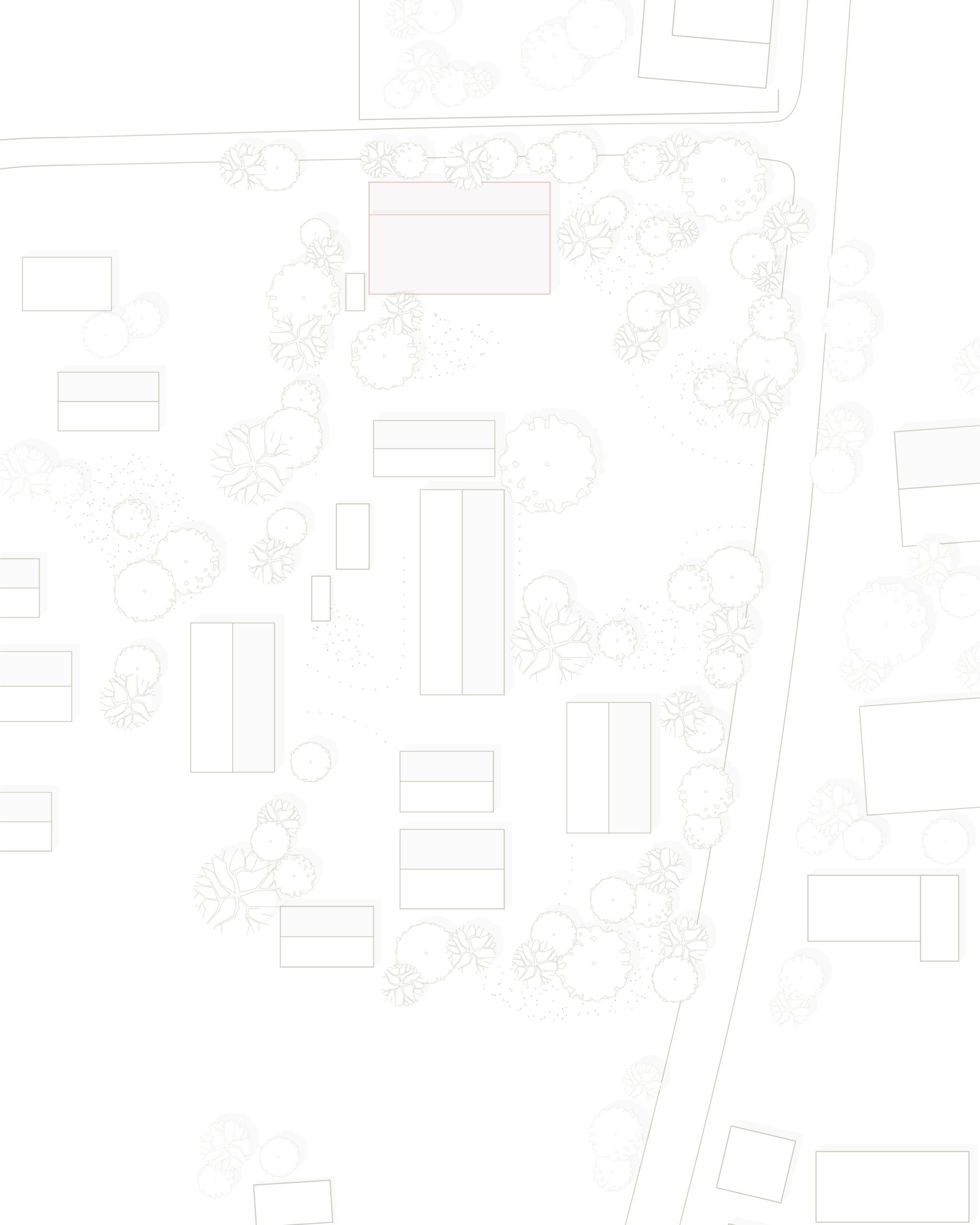 masterplan | Image: Leonie Beisler
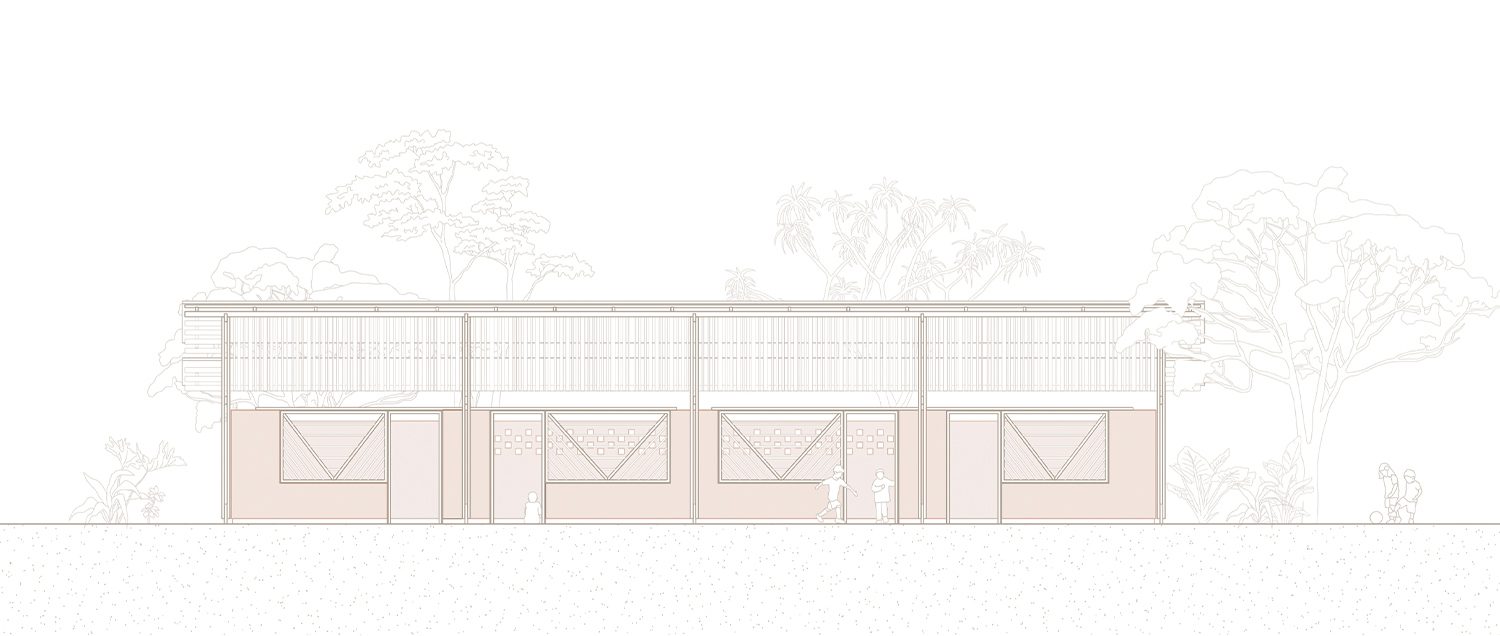
East elevation | Image: Leonie Beisler
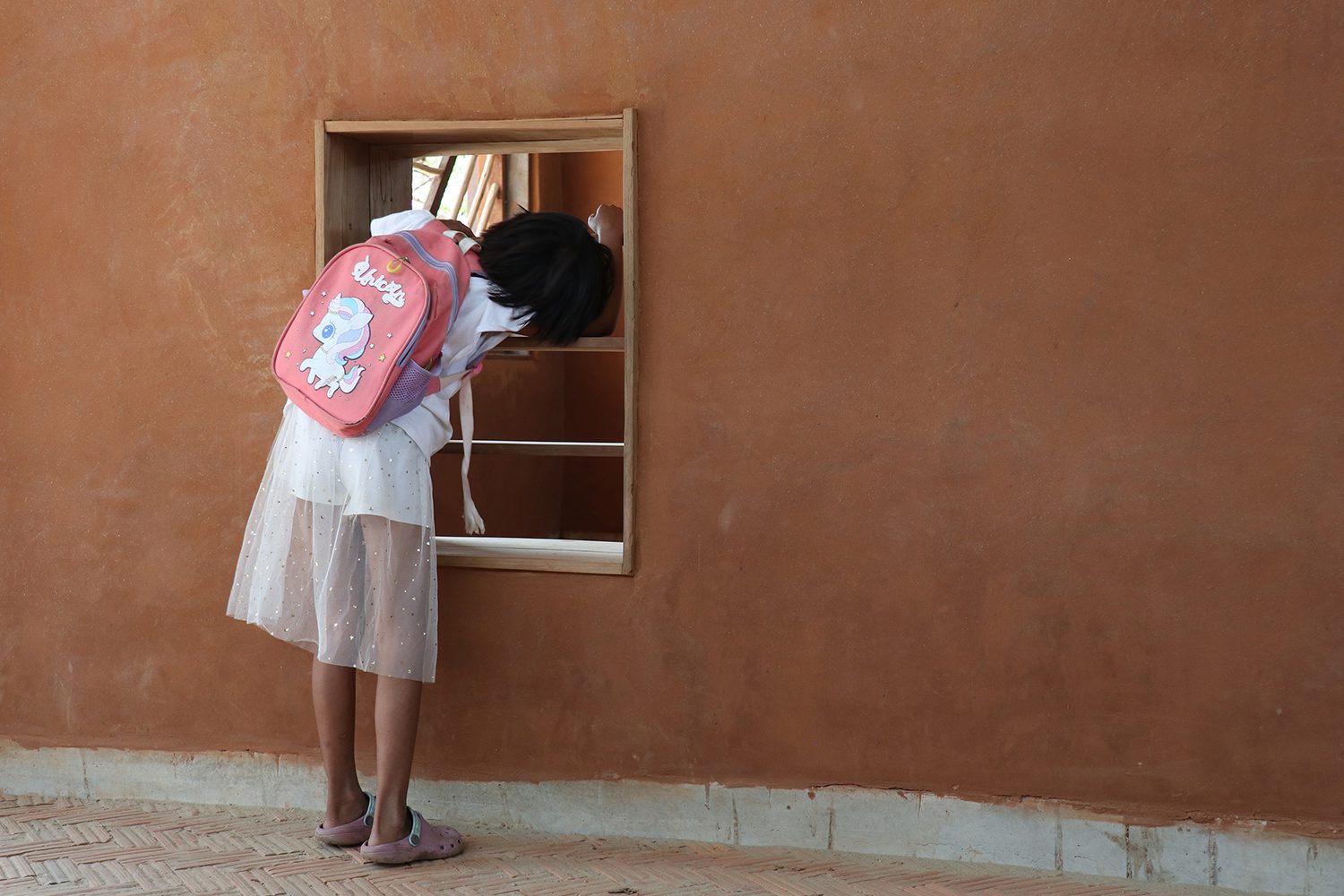
Working within the limits of a modest budget, the architects turned to local materials as the foundation of the project, chiefly earth and timber salvaged from old houses. Construction began with a reinforced concrete foundation to ensure stability, after which the earthen walls took shape. More than 4,500 compressed earth blocks were produced using a mixture of local soil and rice husks, pressed into form on-site. The walls were further coated with a plaster made from cassava starch, fine sand, and slag, a finish that enhances durability and provides a degree of water resistance. Because of earth’s natural insulating qualities, the walls help regulate indoor temperatures, keeping the classrooms cool and comfortable. To improve ventilation and daylight, openings were incorporated into the front walls and between classrooms, allowing air to circulate freely and natural light to filter into the interior.
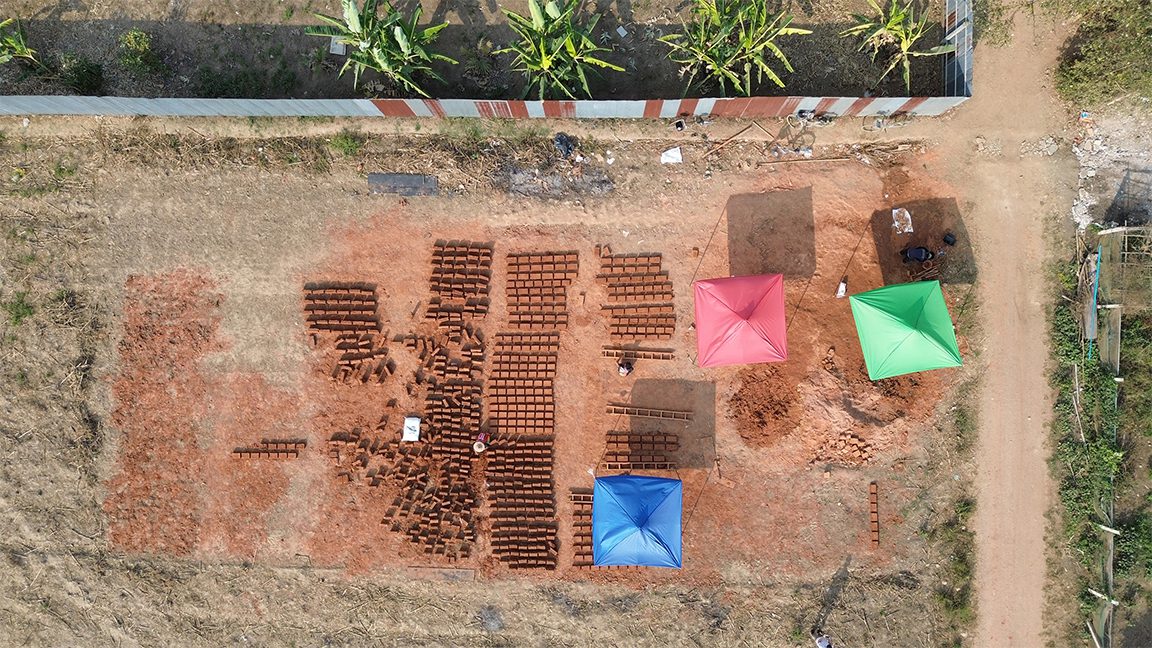 Photo: Oliver Giebels
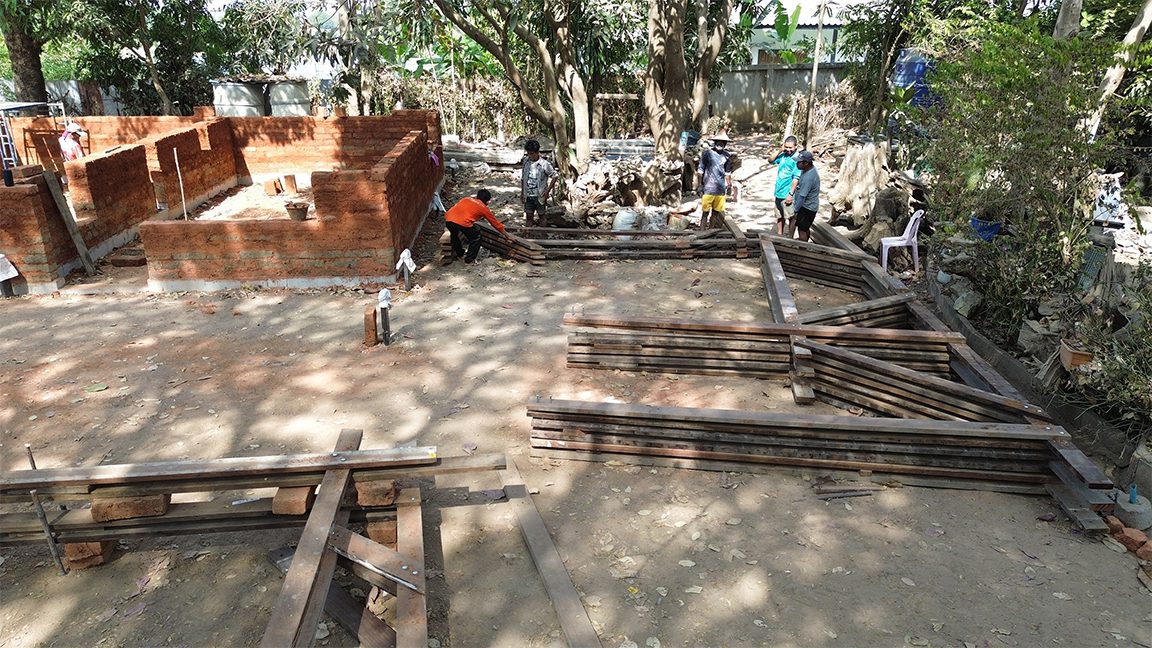
In certain sections, voids were deliberately left in the earthen walls to accommodate timber framing. By separating the wooden structure from the earthen walls, the builders were able to work on both systems simultaneously, reducing construction time. The roof was designed as a double-layered structure with a ventilated gap in between. This cavity not only admits natural light but also allows heat to escape, further cooling the classrooms. The use of reclaimed timber and earth not only helped cut costs but also minimized environmental impact. Should the building ever need to be dismantled, these materials can be reused, significantly reducing construction waste.
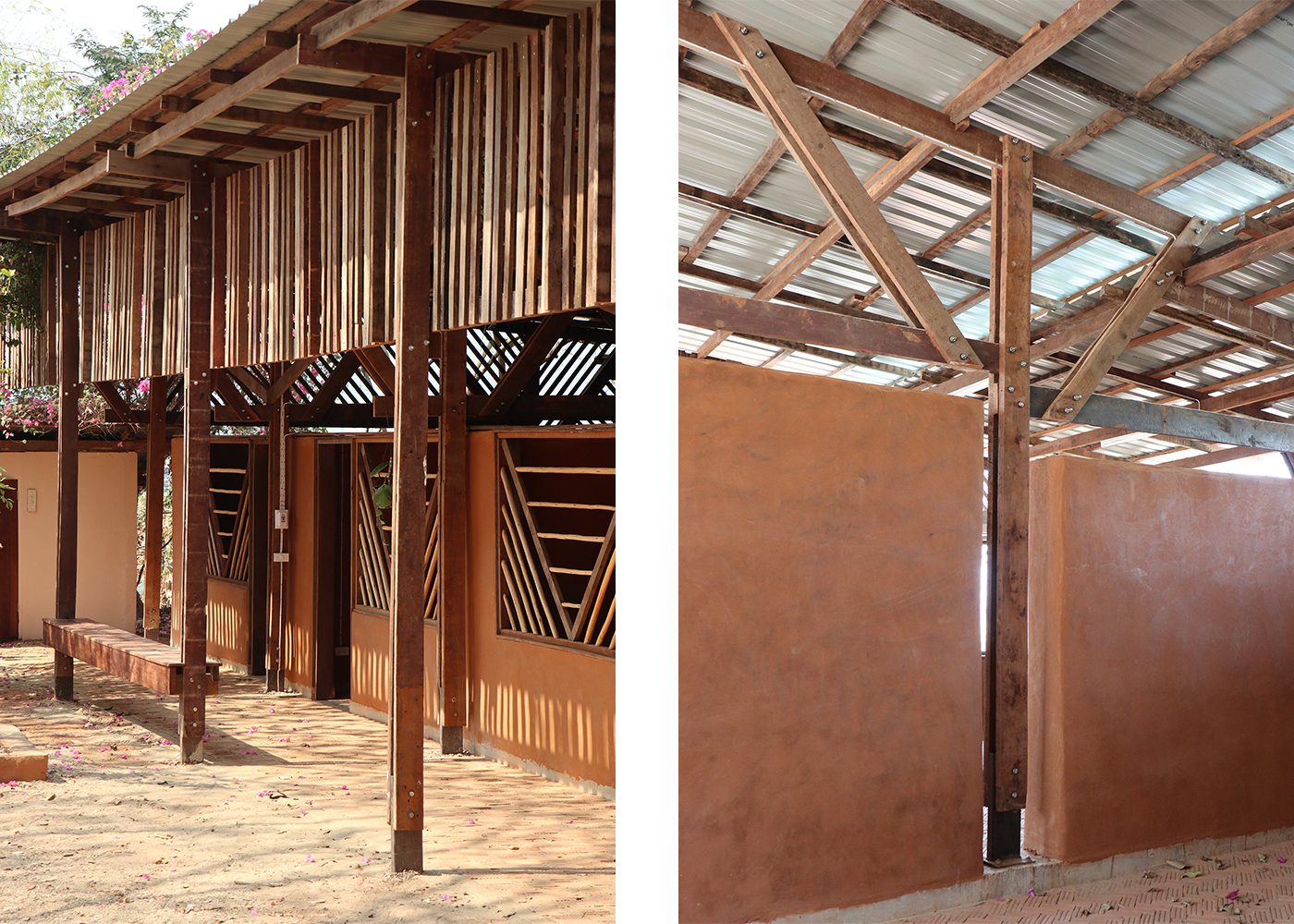
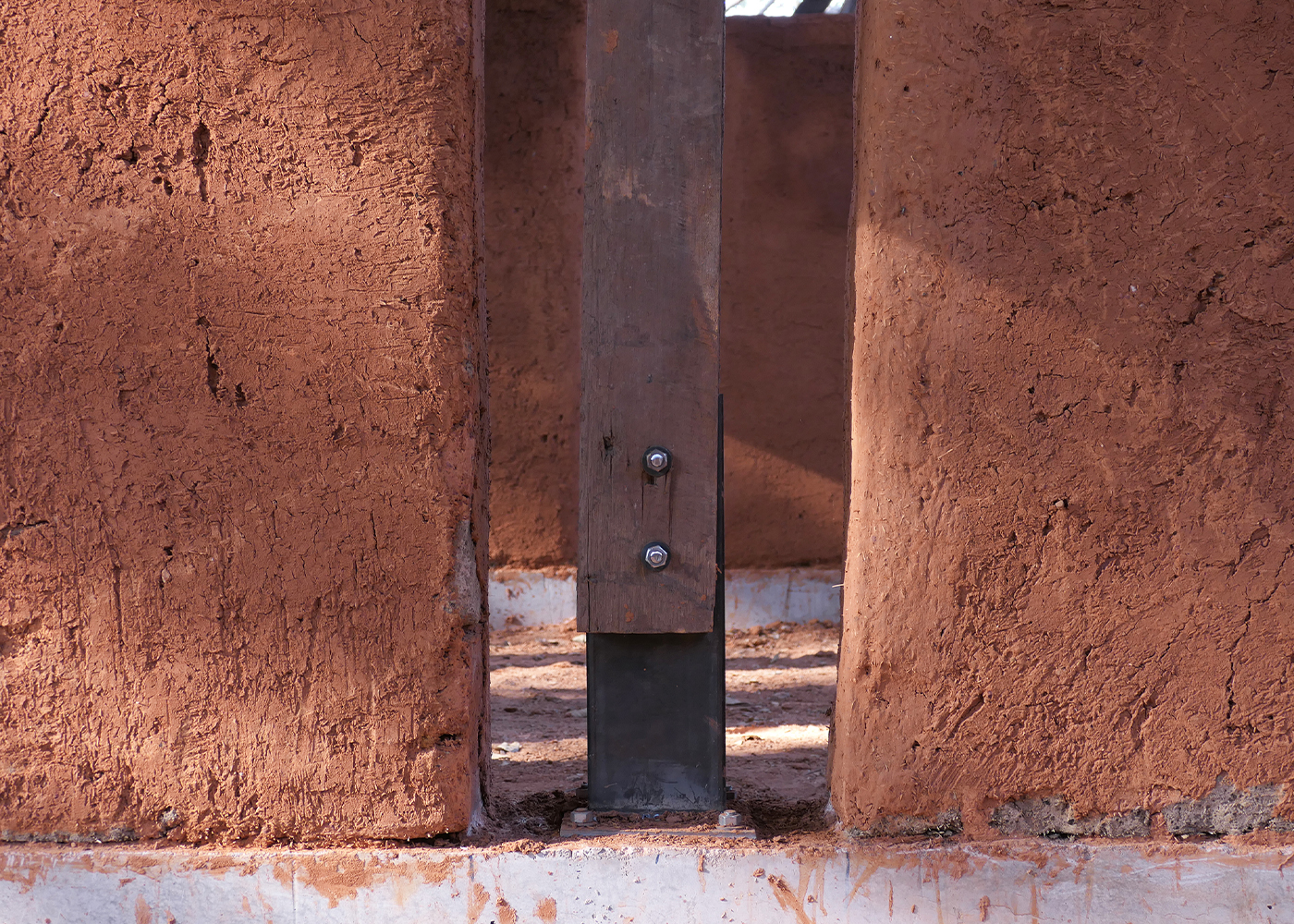
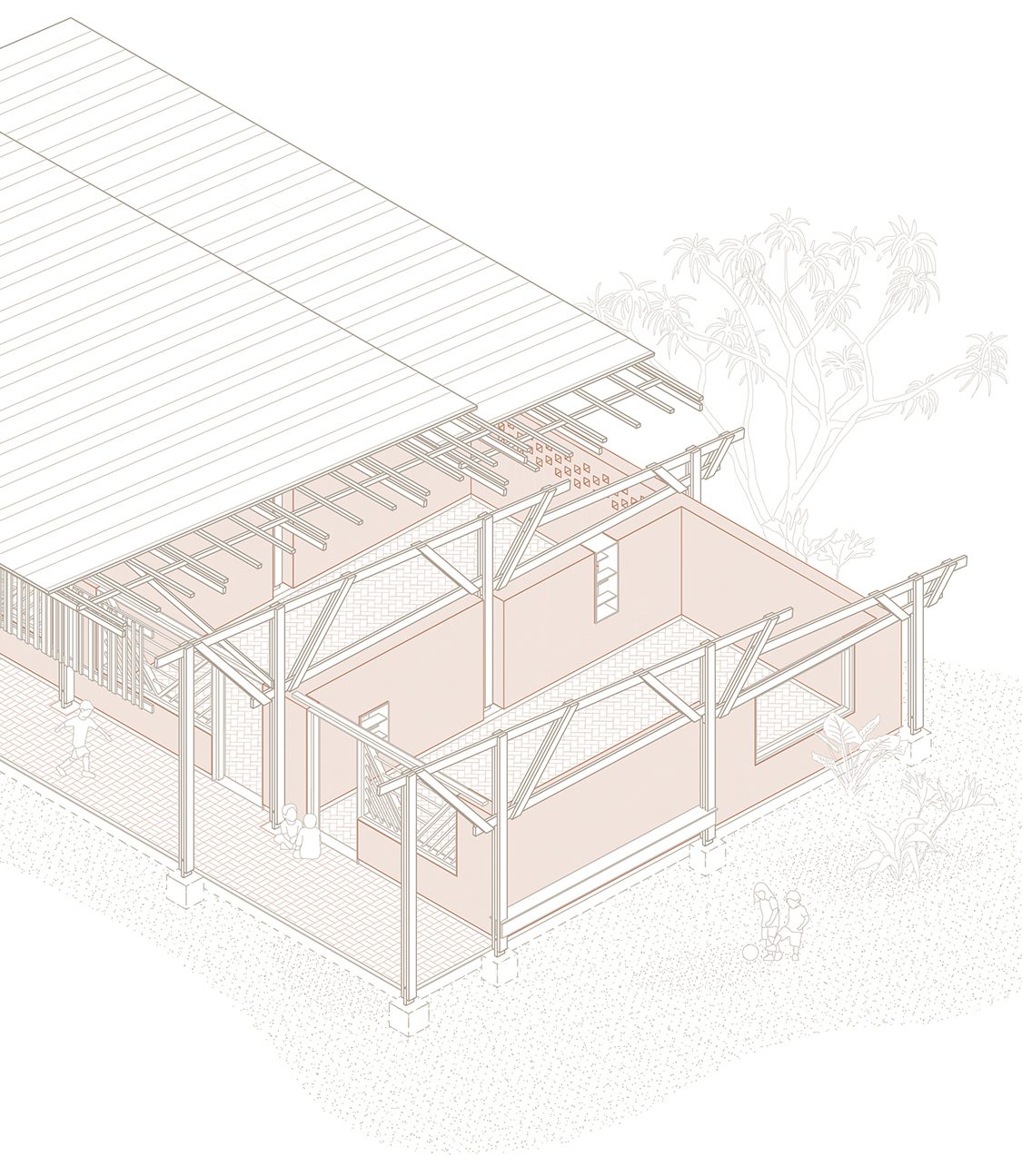
Image: Leonie Beisler
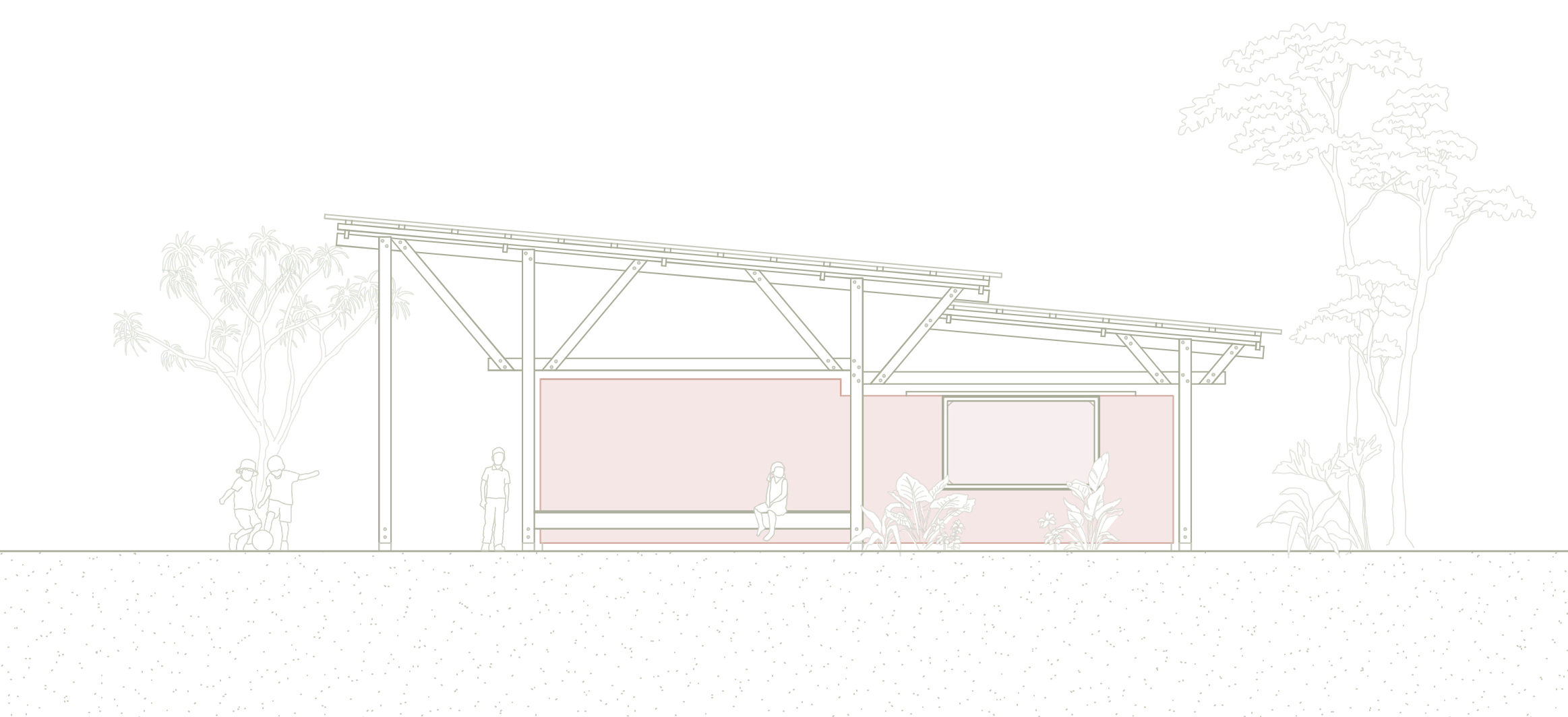
Image: Leonie Beisler
What distinguishes the project as much as the physical structure is the participatory process that brought it into being. Long before the first foundations were poured, Jan engaged in dialogue with the school’s administrators, the surrounding community, and partner organizations to collectively imagine what the new classrooms might become. Once consensus was reached, construction began with straightforward techniques that allowed everyone to take part, from students and teachers, local residents, and even outsiders such as university students and volunteers. The process fostered a sense of belonging and collective ownership, ensuring that the building would be cared for well into the future. Beyond functioning as a school, the project itself becomes a form of pedagogy, teaching through its very making a construction ethos grounded in environmental responsibility and the realities of life along the border.
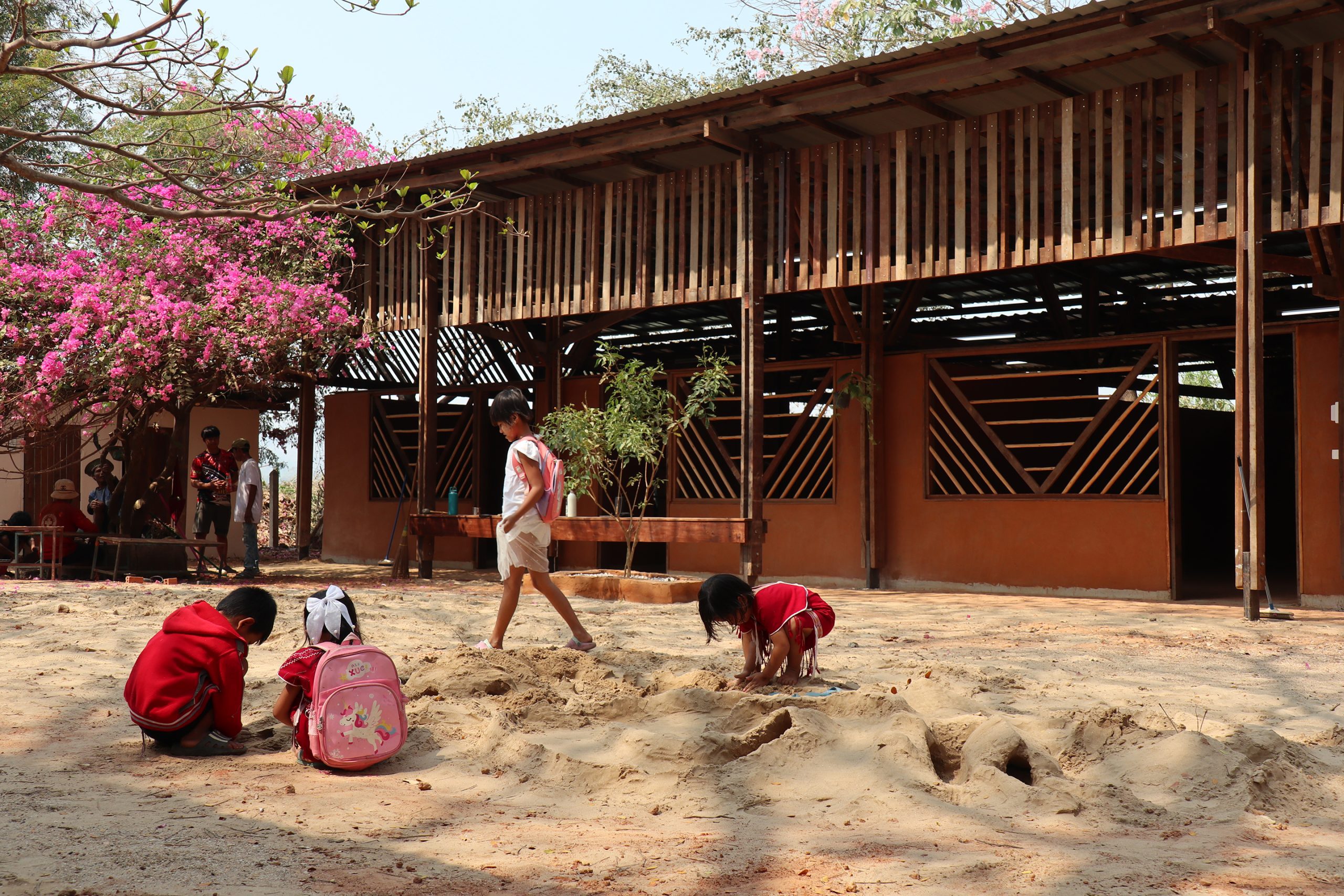
Remarkably, the building was completed in just six weeks and was soon ready to welcome students. While the structure may not dazzle with architectural bravura, for Jan, the school demonstrates an alternative practice of architecture; one that embraces constraint, works with limited resources, and remains inseparable from the people it serves.
“An architectural solution for the community does not require a crazy structure. It can also be very simple and straightforward, and can be achieved in a relatively short period of time.”
“And when the construction process involved a lot of people, the kids got their hands dirty building the school, they developed this feeling of ownership. That’s how is it became a true community building.”
simplearchitecture.net
instagram.com/its.simple.architecture