
BLANKSTUDIO CAPTURES THE BEAUTY OF WOODEN ARCHITECTURE IN THE CHIANG MAI CONTEXT THROUGH AKHA AMA COFFEE (THE NEW ORIGINAL), REFLECTING THE CONCEPT OF ‘HOME’ THAT COMBINES LOCAL AND CONTEMPORARY ELEMENTS
TEXT: SURAWIT BOONJOO
PHOTO: PANORAMICSTUDIO
(For Thai, press here)
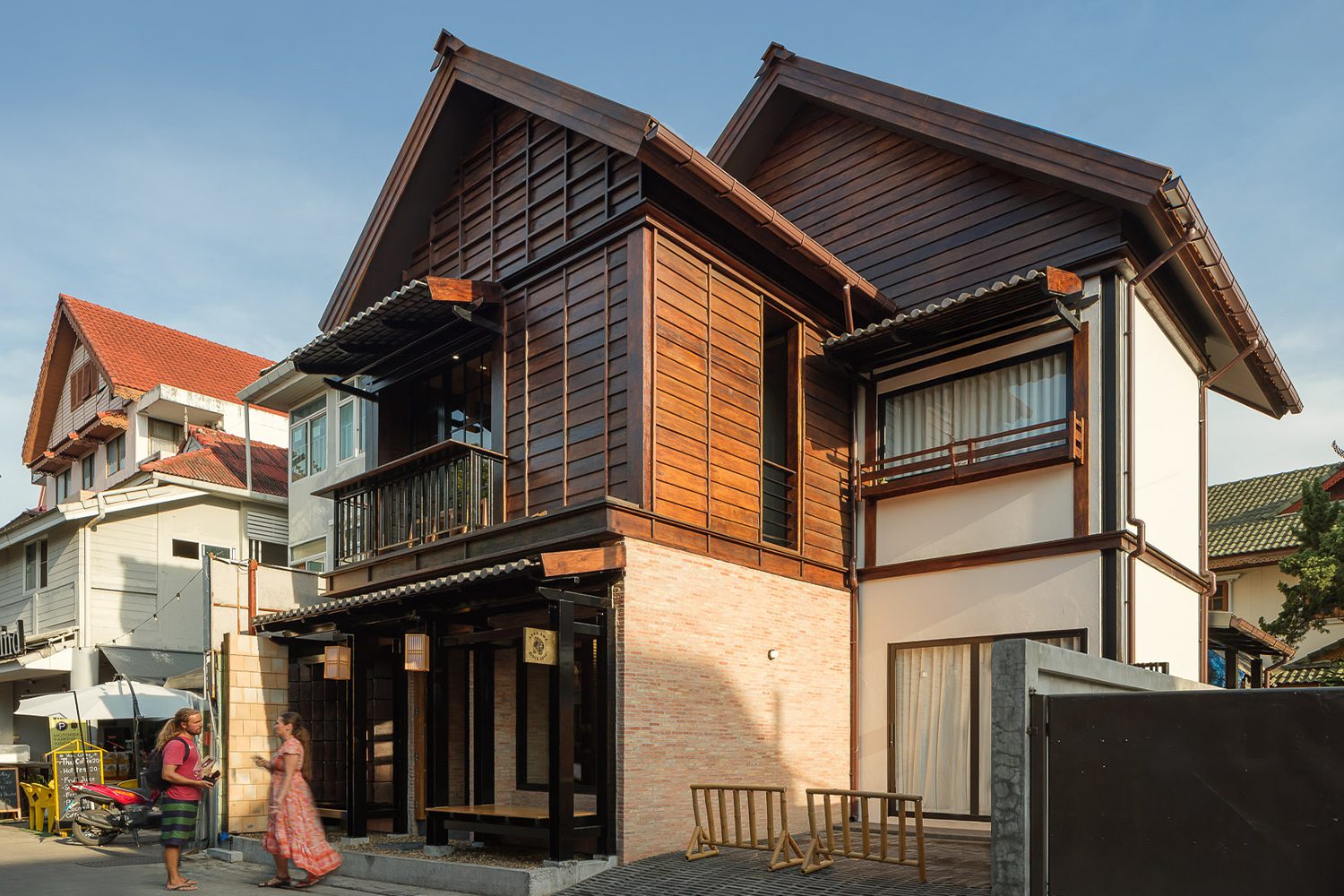
When Akha Ama Coffee’s first branch opened in Chiang Mai, it was warmly received for its design, that created a striking contrast between the exterior façade and the atmosphere within. Years later, the need to leave Chiang Mai’s Santitham neighborhood became an opportunity for reinvention. Once again, founder Satawatch Katlivong and the architects of blankstudio were called upon to reimagine the café. The new site, situated on Moon Muang Road Soi 9 along the city moat, is modest in scale and inherently residential in character. These conditions prompted the architects to anchor the design of Akha Ama Coffee (The New Original) in the idea of the ‘house,’ a deliberate return to the origins of the café, which itself began from a home. At the same time, the project signals a new chapter as the brand enters its fifteenth year, redefining and extending the notion of what it can be.
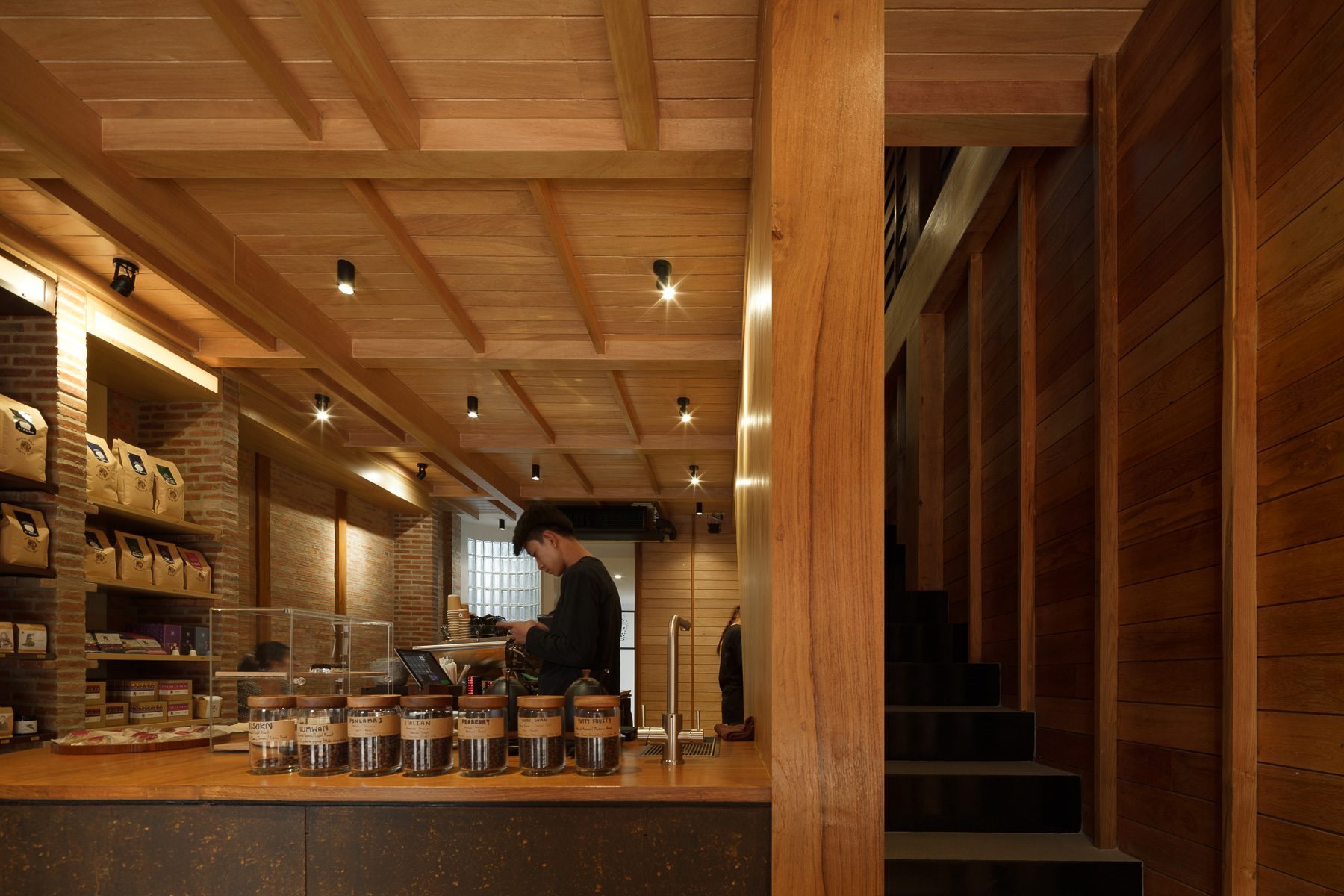
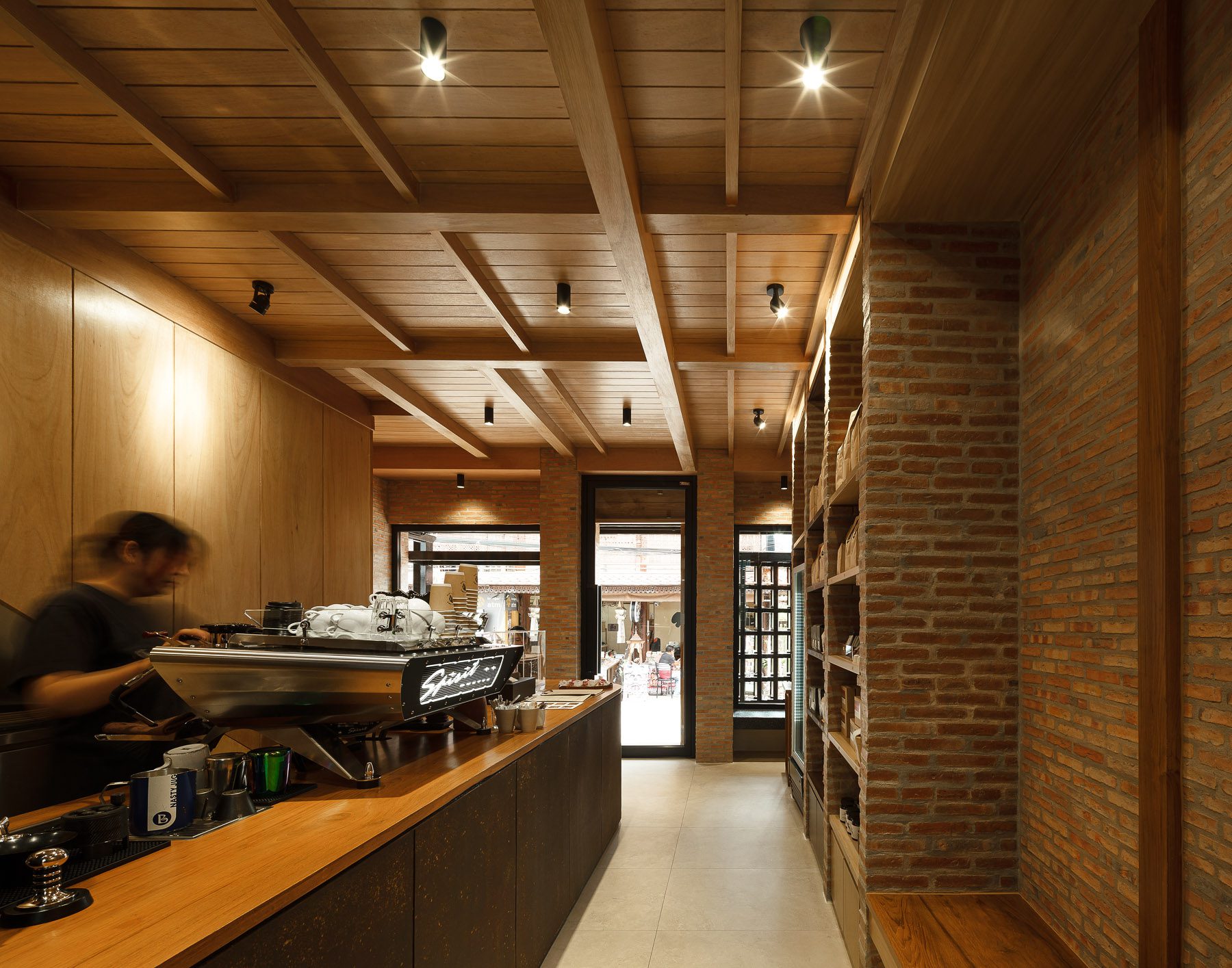
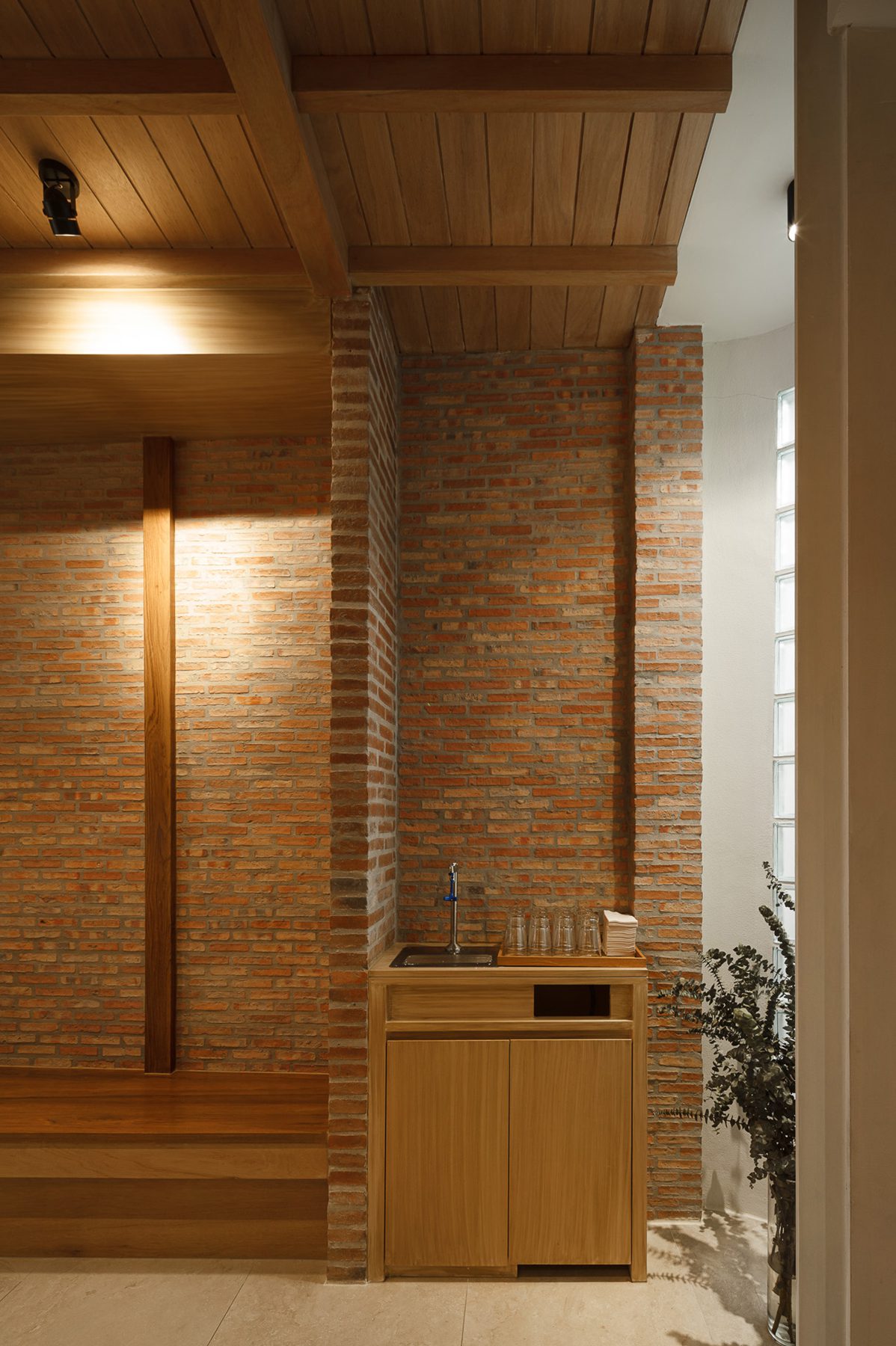
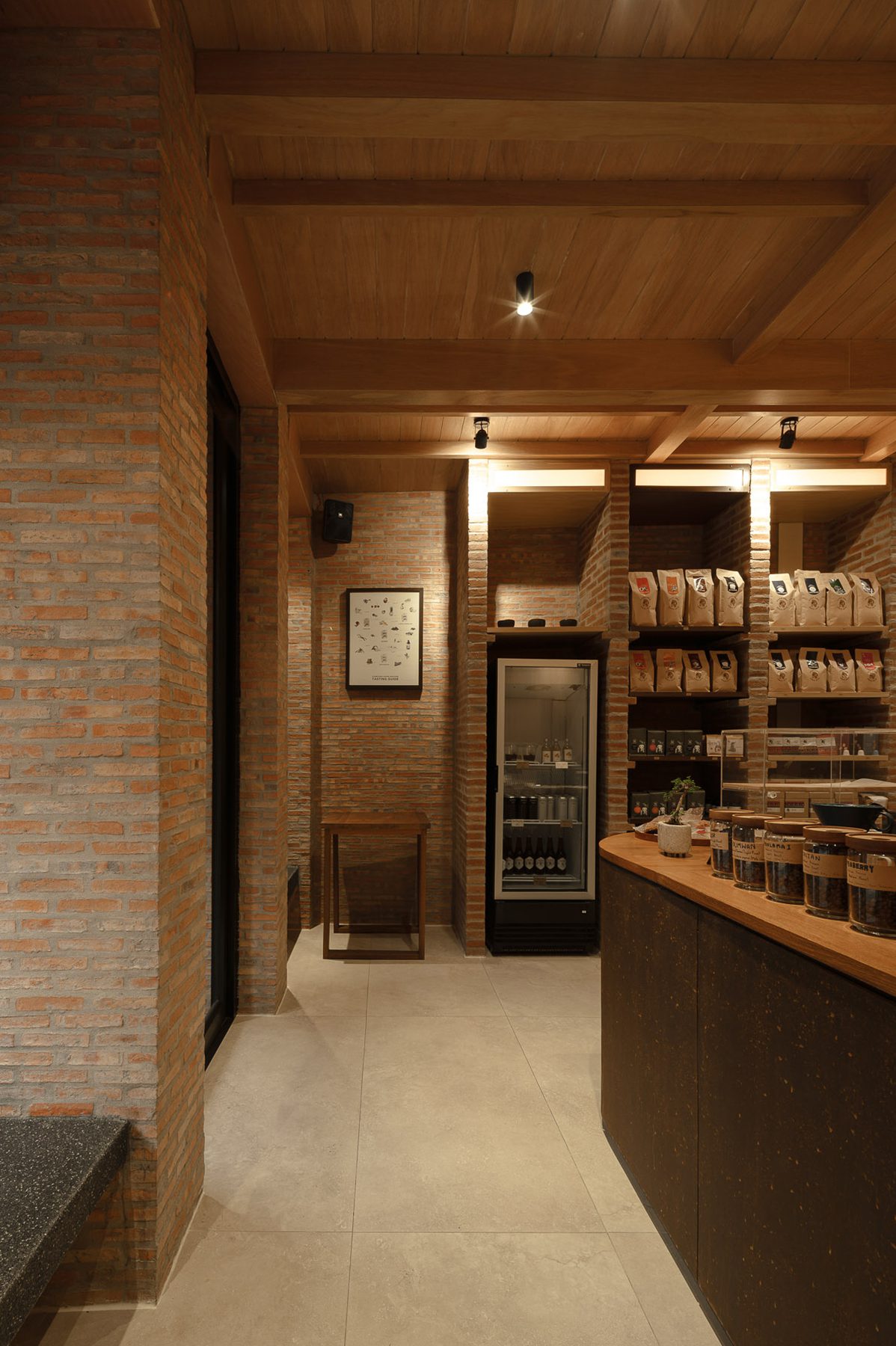
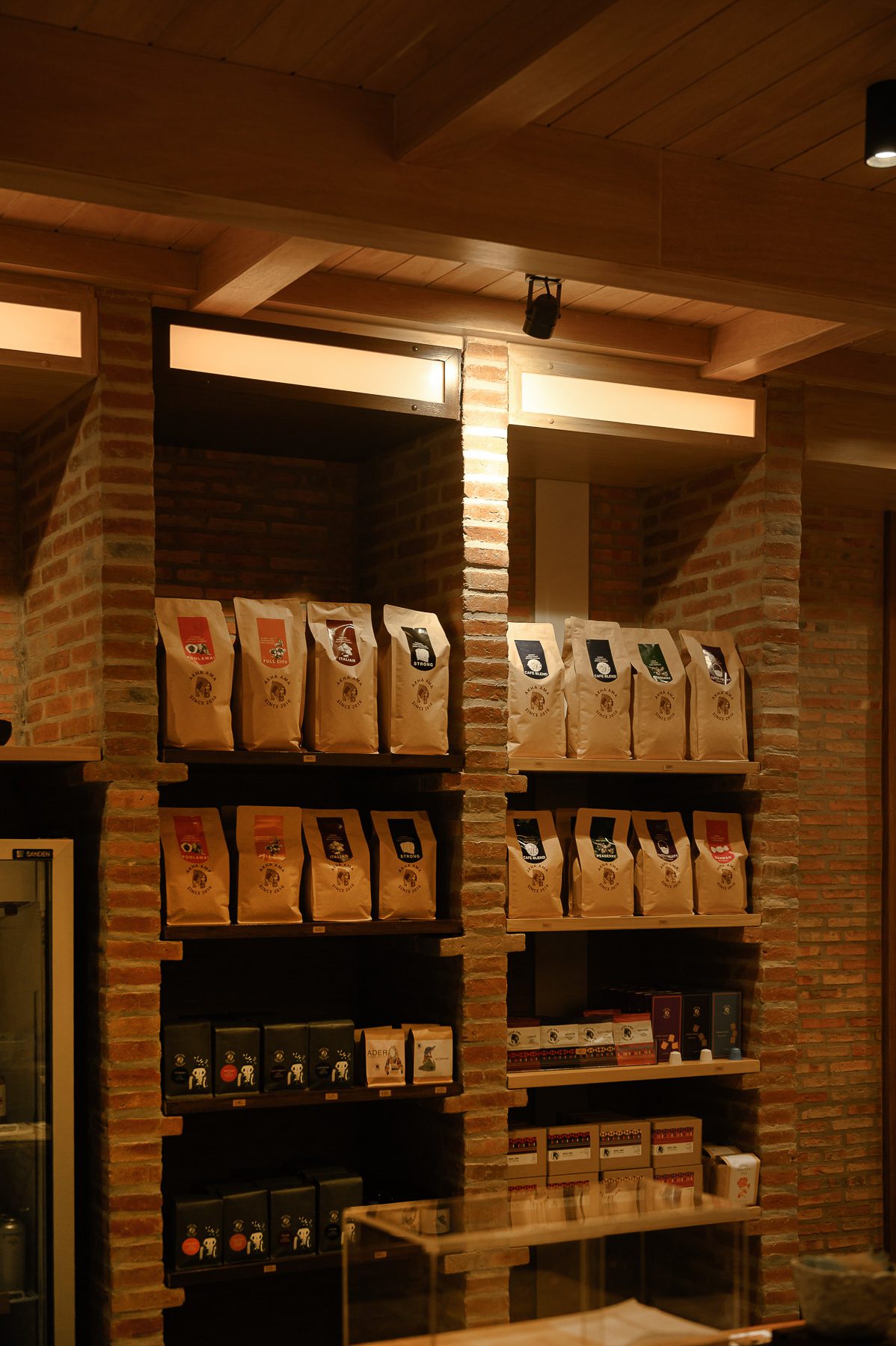
This trajectory is rooted in Akha Ama’s ethos: to bring coffee grown by ethnic communities to a wider world, to establish it on an international coffee market, and then back to uplift the very villages where it began. The notion of ‘home’ thus becomes the connective thread binding together the café, its customers, and its architecture. Expressed as a compact wooden house with dark, Japanese-inspired tones, the building embodies this narrative. Every element has been carefully selected and arranged to tell a story, offering an interpretation of ‘home’ that goes beyond a dwelling. It suggests a space of cultivation and growth, while simultaneously adapting to the practical needs of a contemporary café. Within its compact footprint, the program extends to include a coffee bean storage room, an office, and even a one-bedroom staff residence—functions that together mark an expanded definition of ‘home’ within the Akha Ama vision.
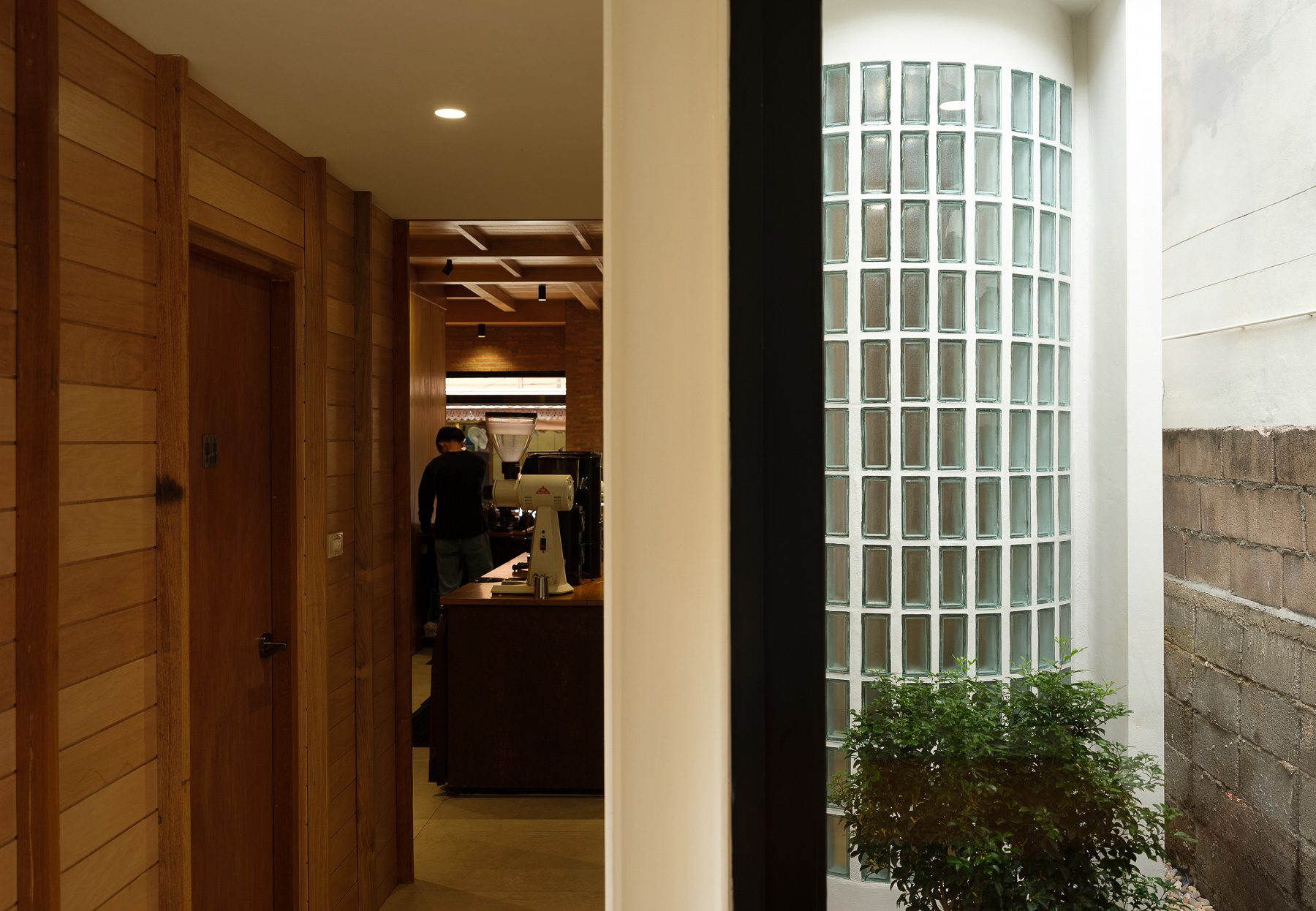
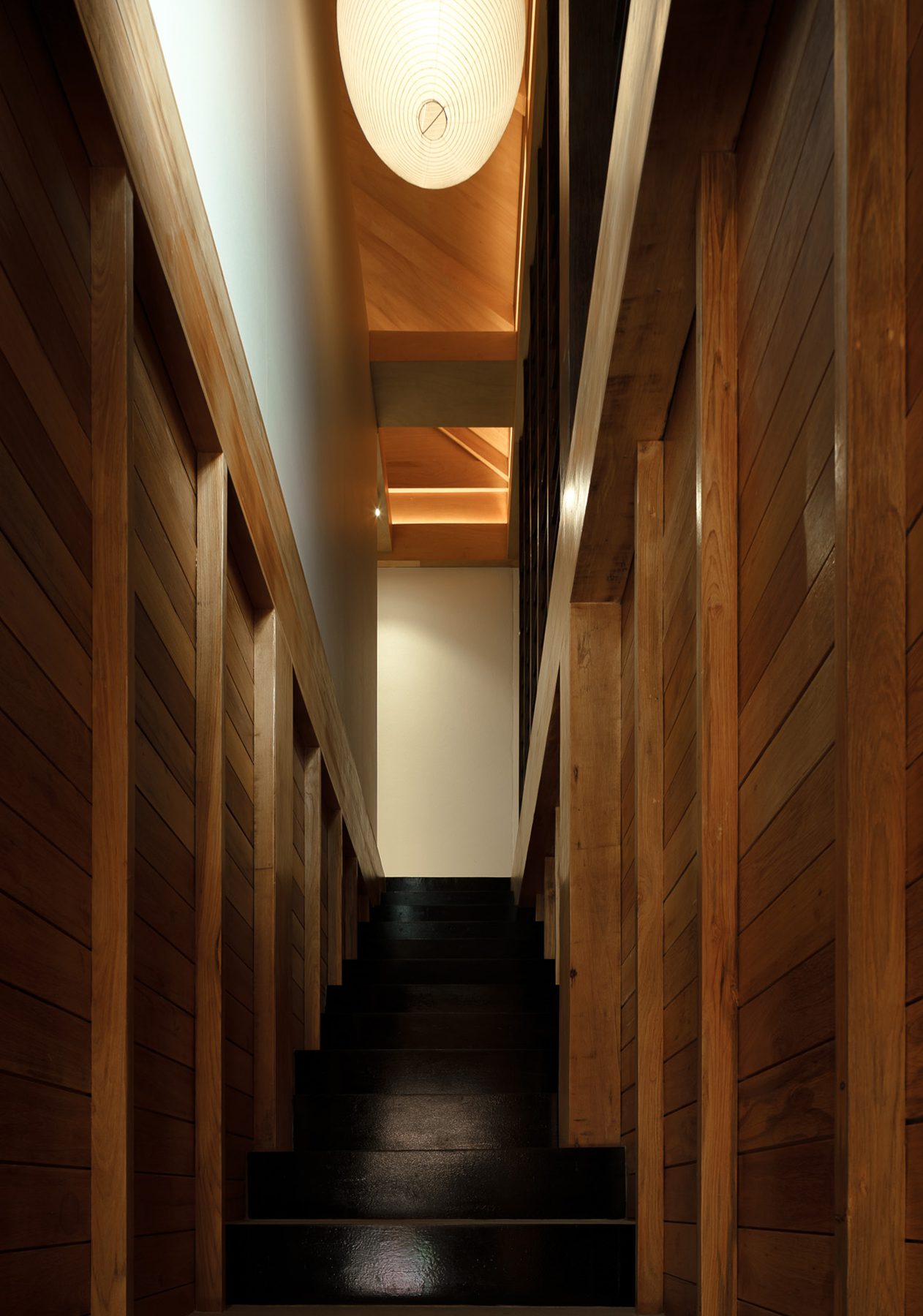
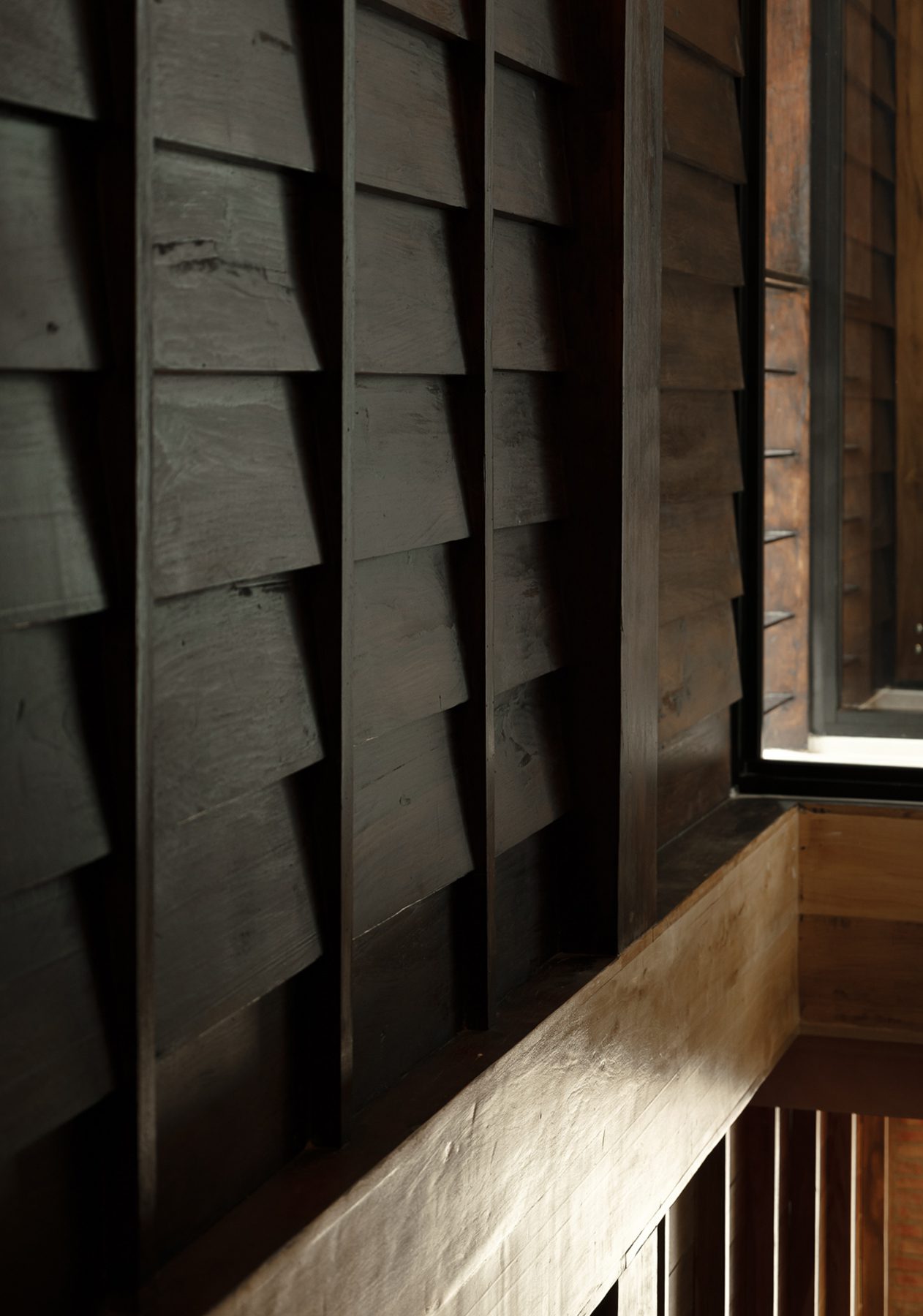
Amid a neighborhood of long-time residents and transient visitors, a plot of just 30 wah (approximately 120 square meters) was used to its fullest potential through spatial strategies drawn from the Japanese house. The result is not only a distinctive Japanese-inspired exterior visually tied to Akha Ama’s Tokyo outpost, but also a spatial identity rooted in careful management, a principle that Satawatch Katlivong deliberately adapted as the guiding principle of this building. “A space that is neither too small nor too large, yet fully accommodates all functions,” formed the foundation of the design, gradually articulated through architectural elements and subtle details. Together, they fuse multicultural narratives, forms, and the surrounding spatial context.
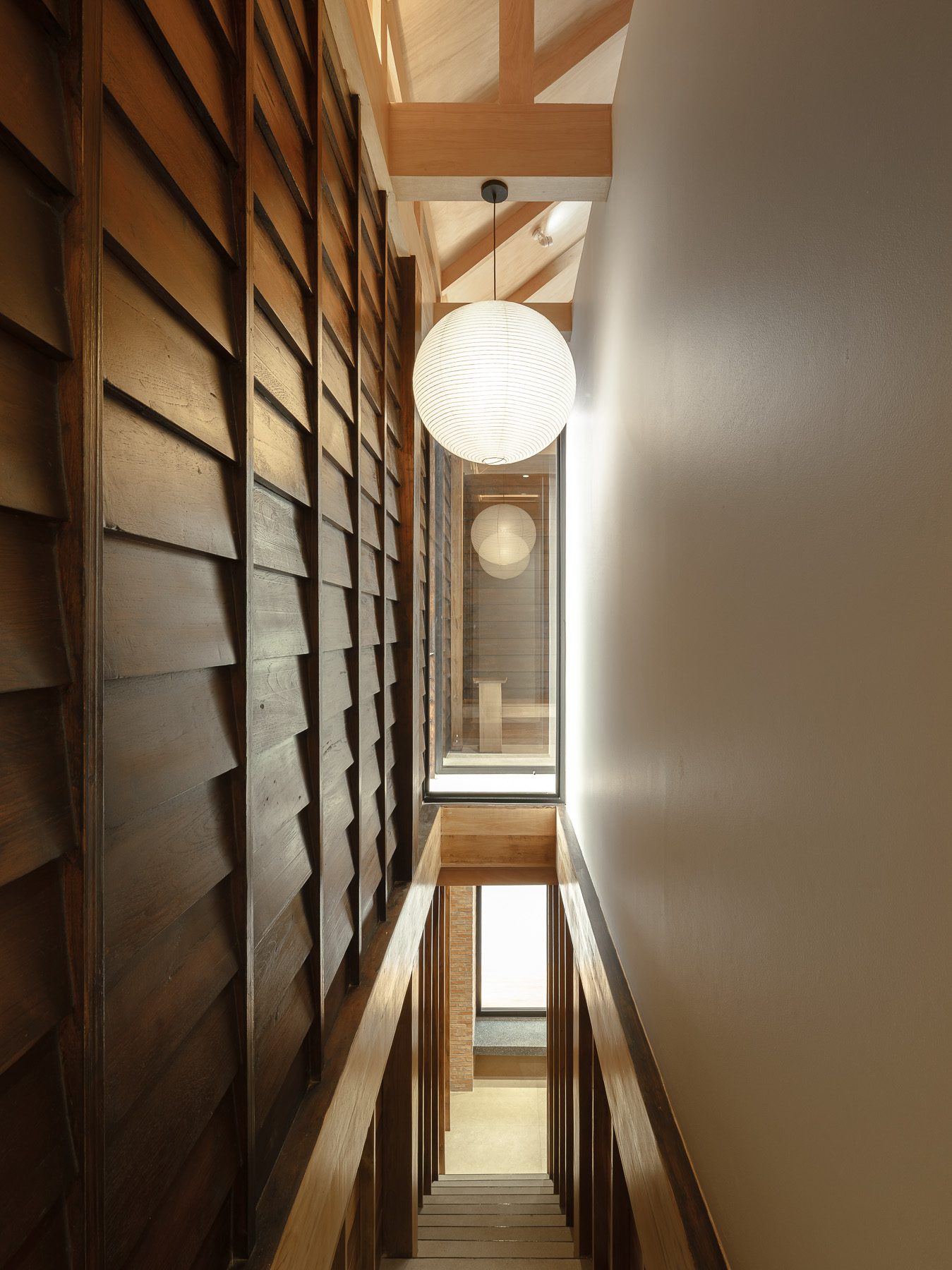
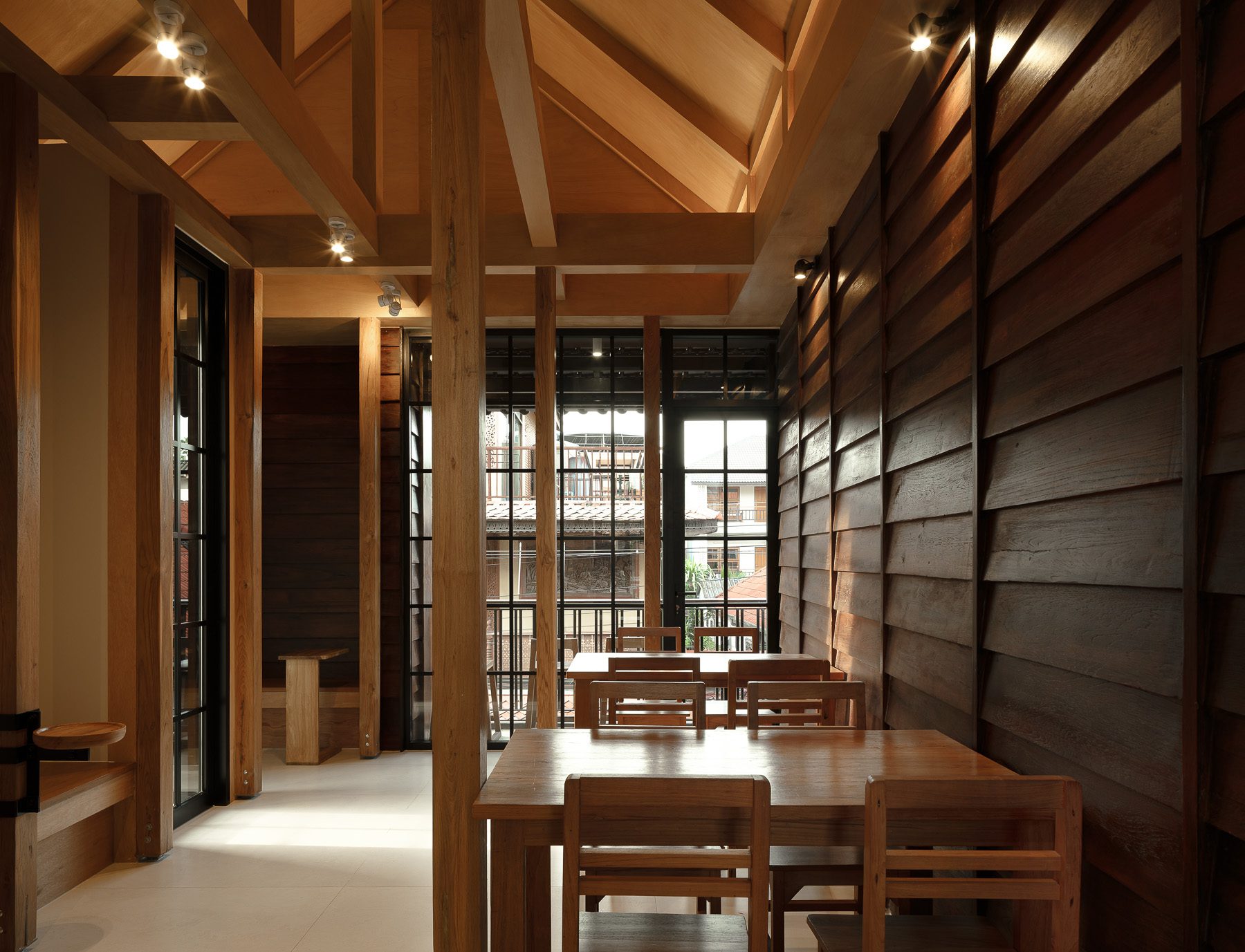
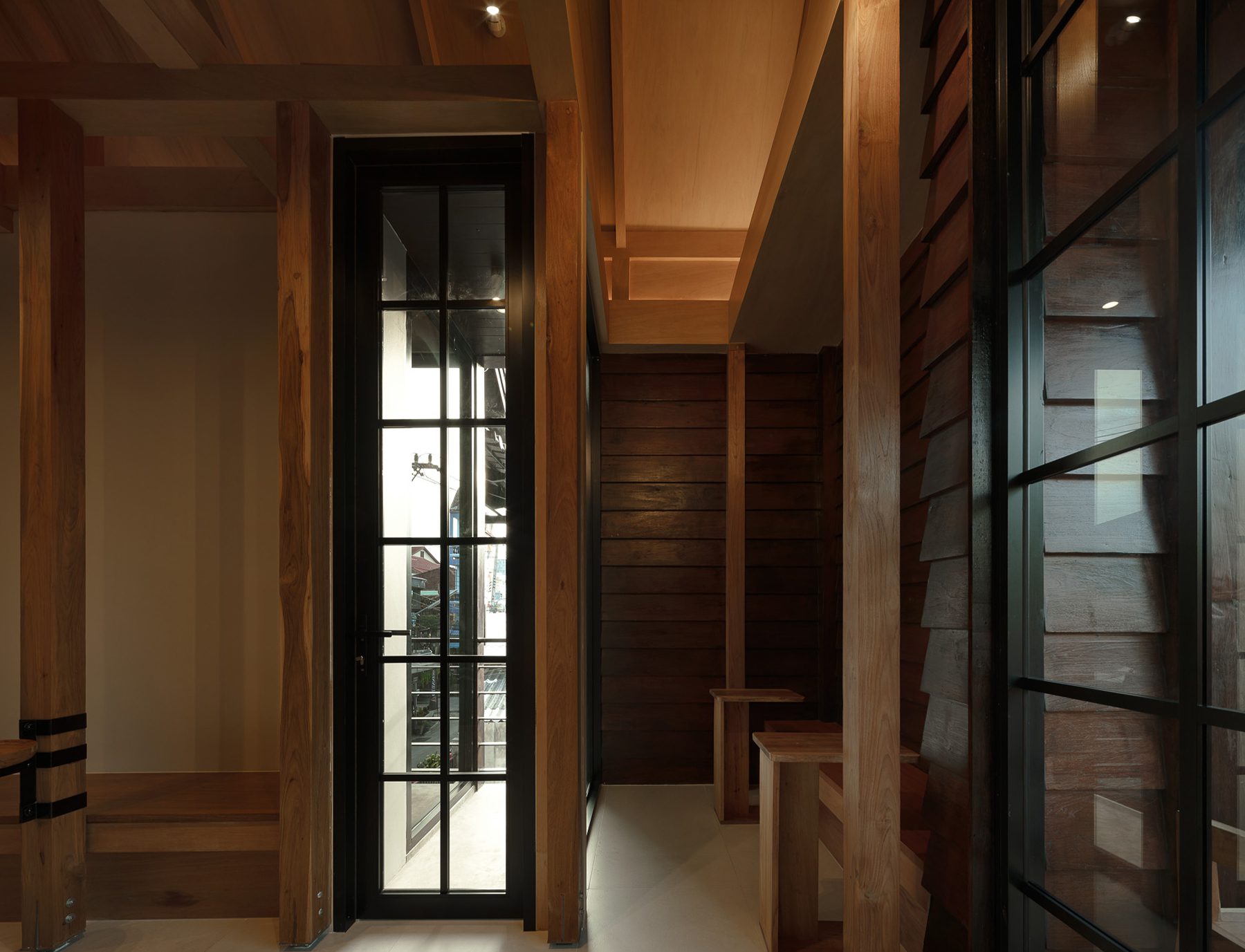
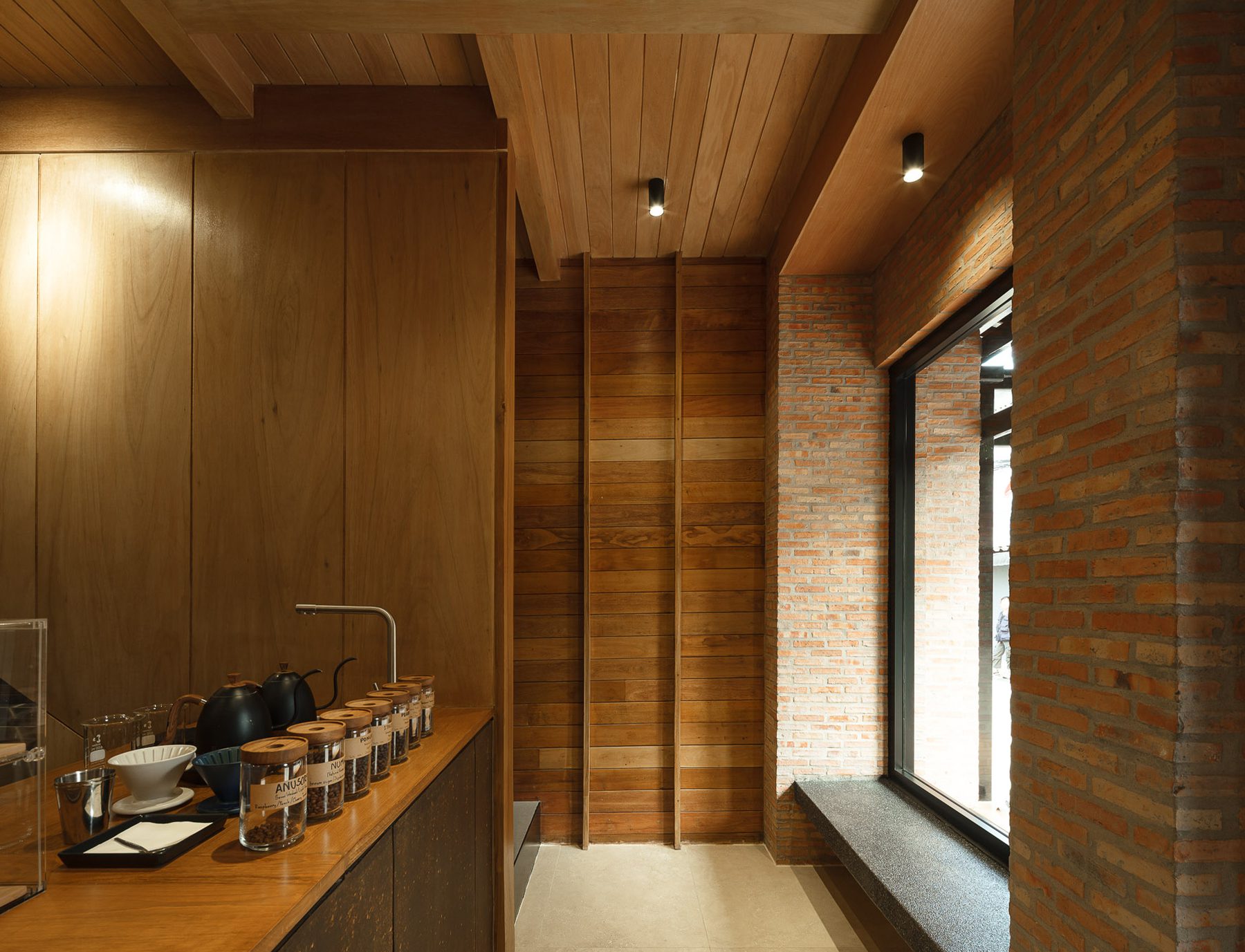
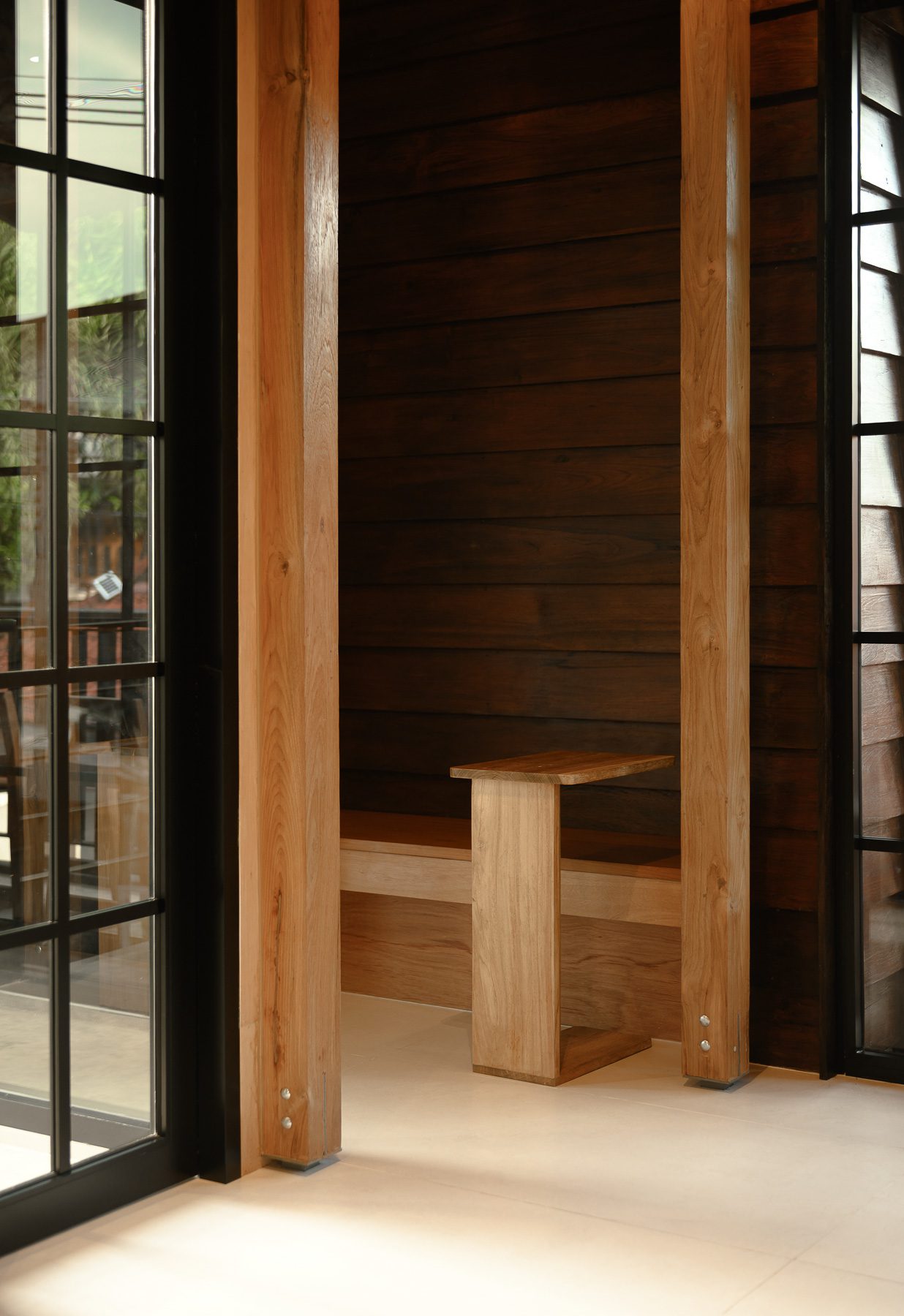
“There is a deliberate play with timber tones and building colors, ranging from light to dark,” Satawatch explains. “Even the white of the walls is not uniform but varies in shades, sometimes with a creamy depth. The wood surfaces shift between pale stains and darker finishes. To me, this is about orchestrating balance and emphasis through the colors of materials, giving the space a sense of flow and vitality rather than flatness. At the same time, it underscores the humility that lies at the heart of Akha Ama.”
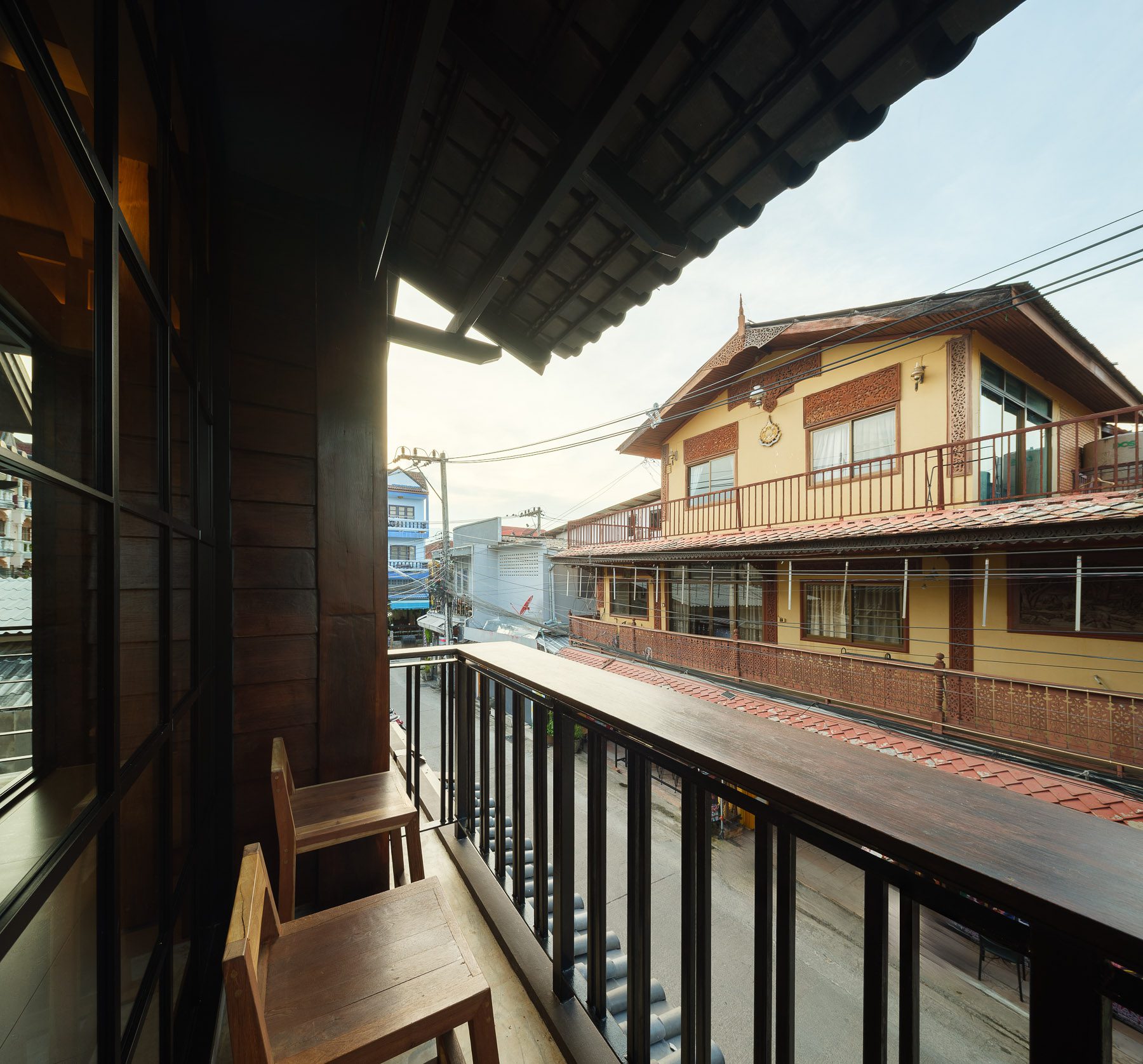
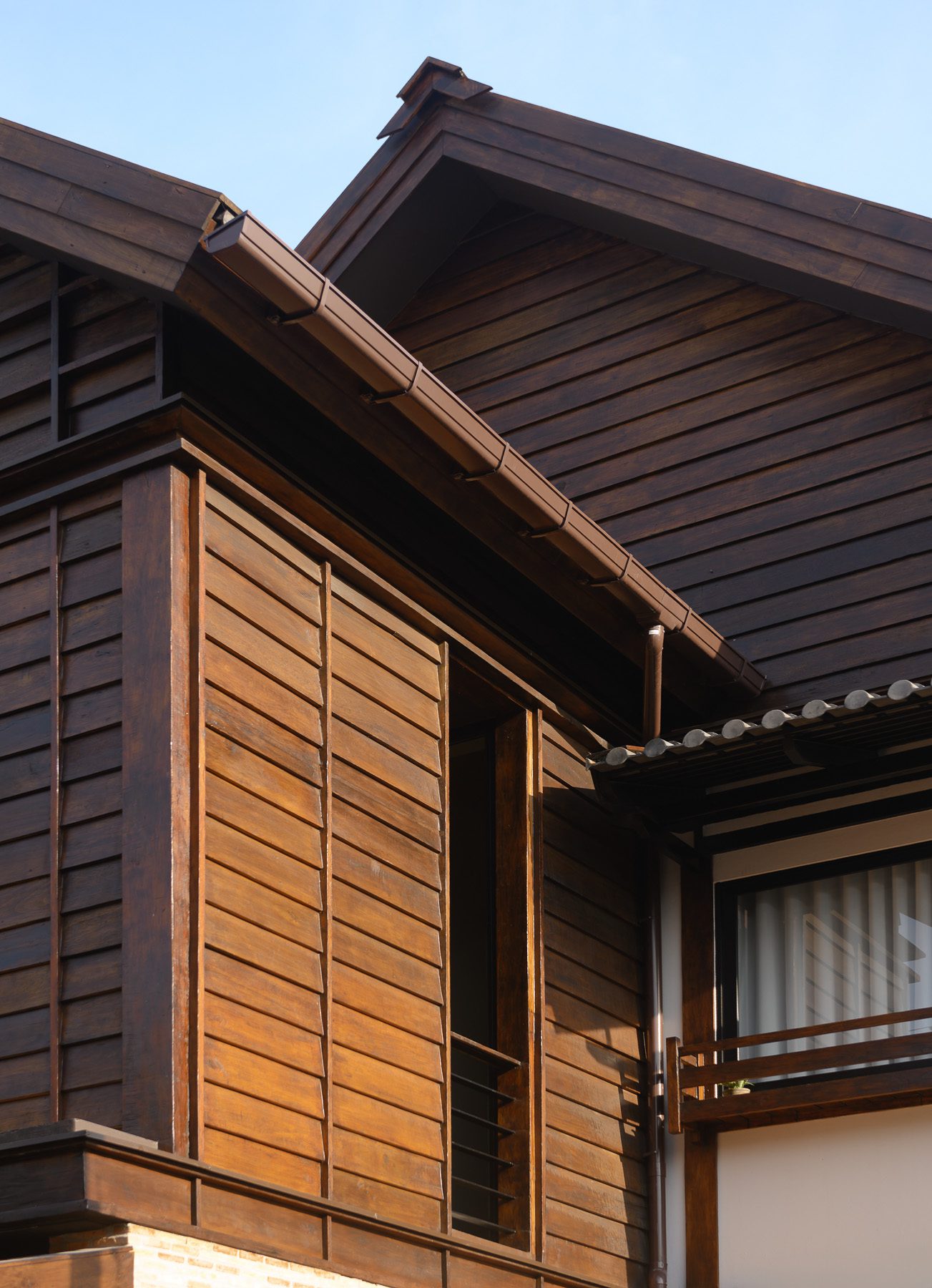
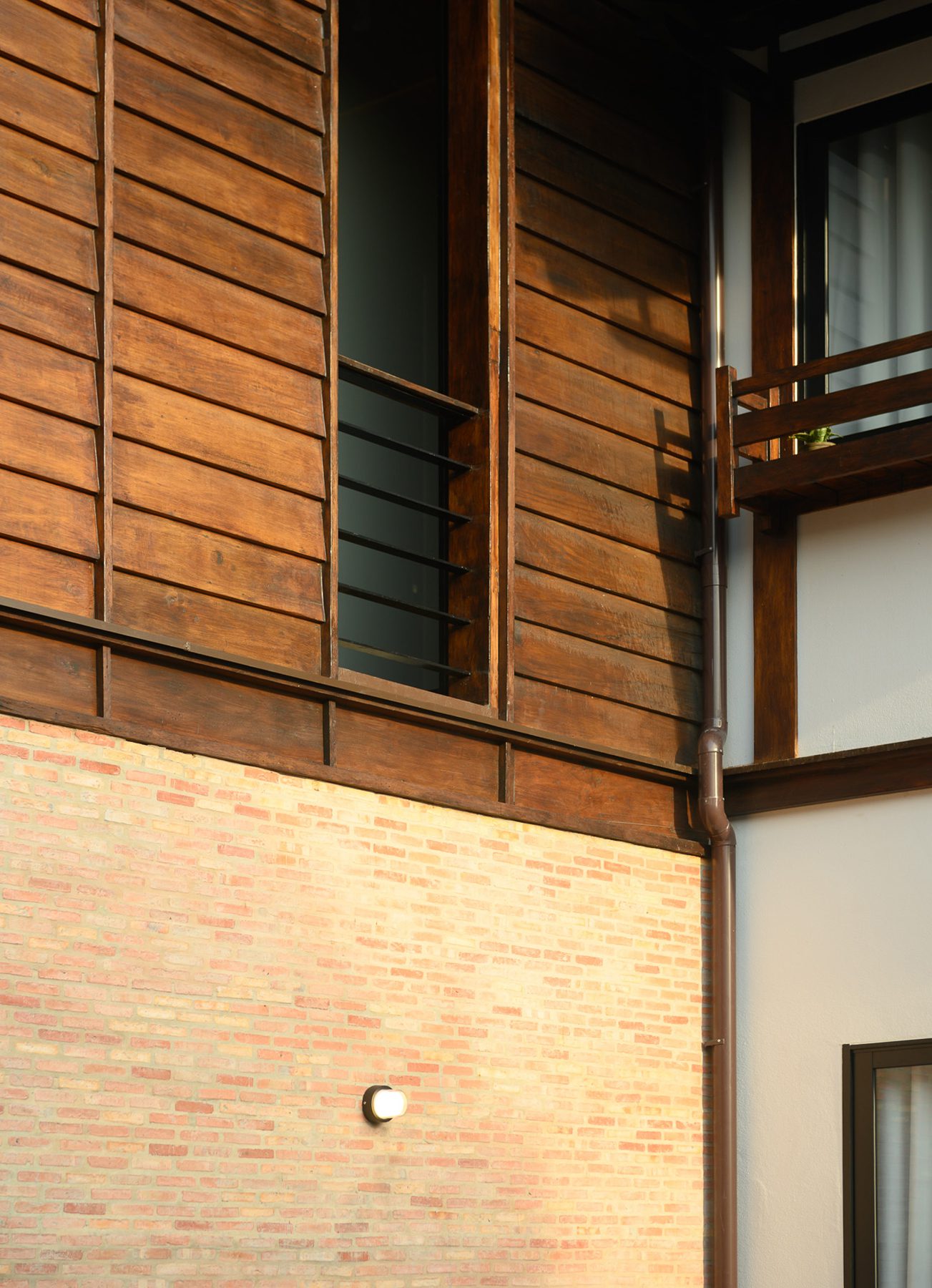
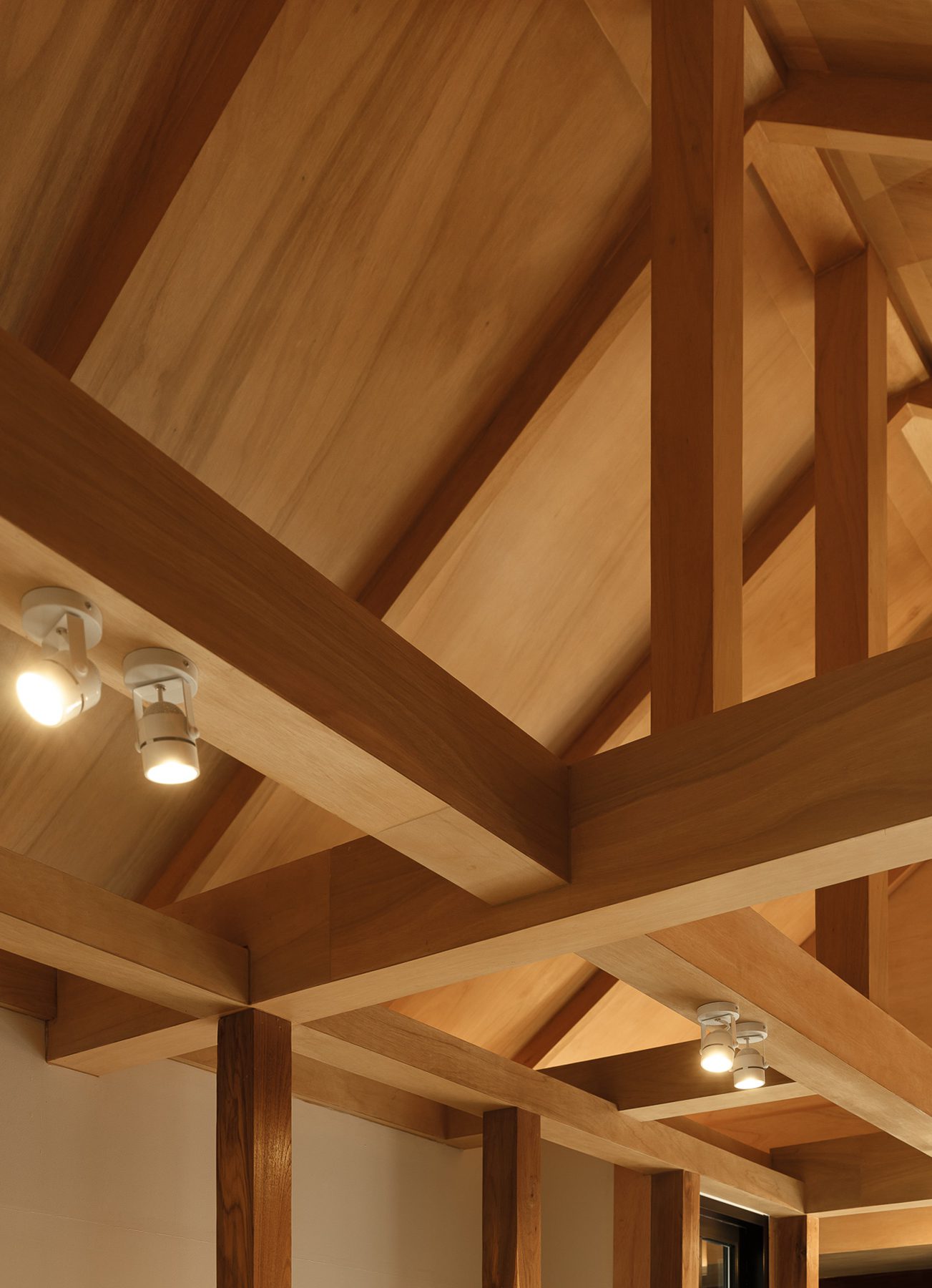
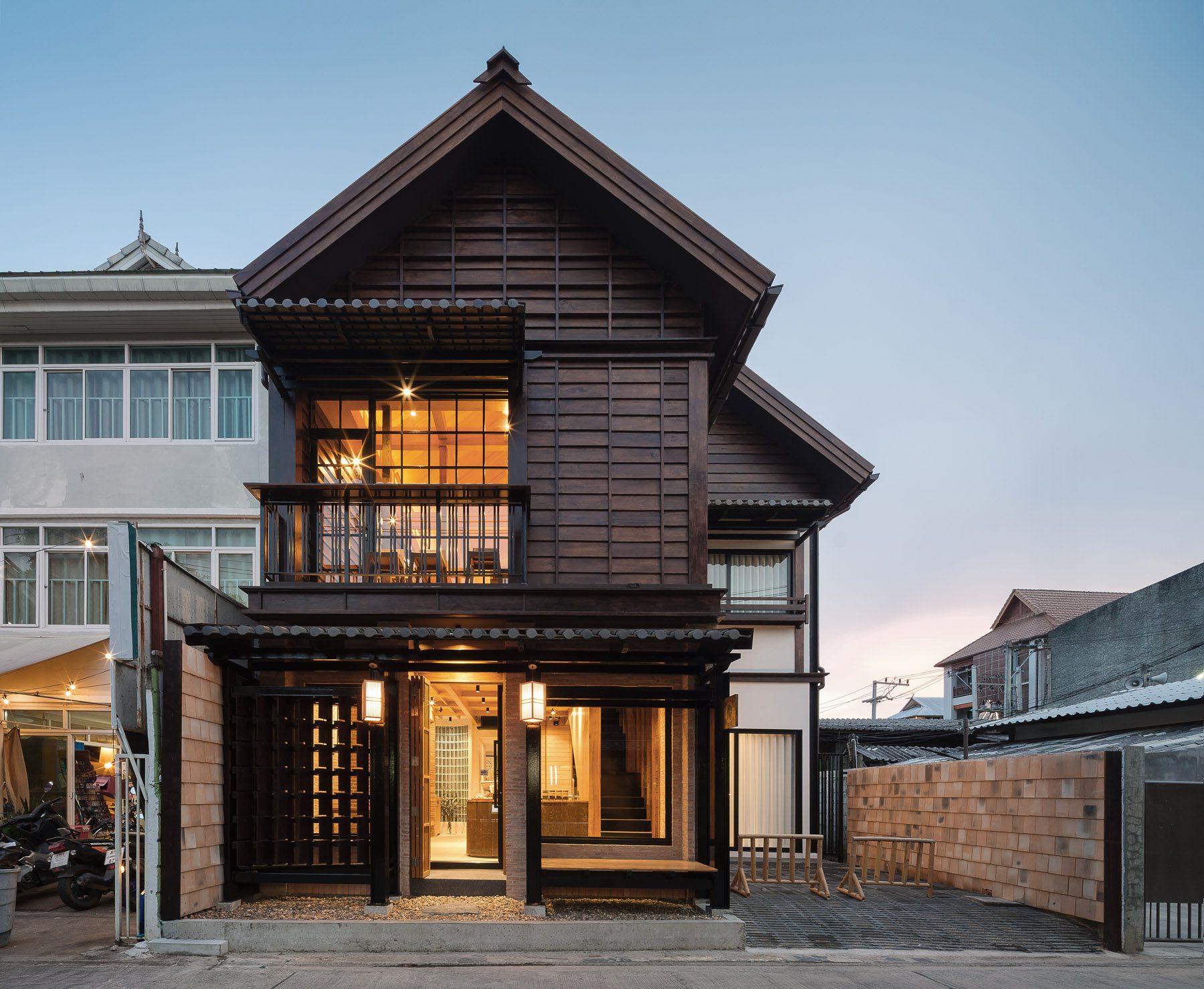
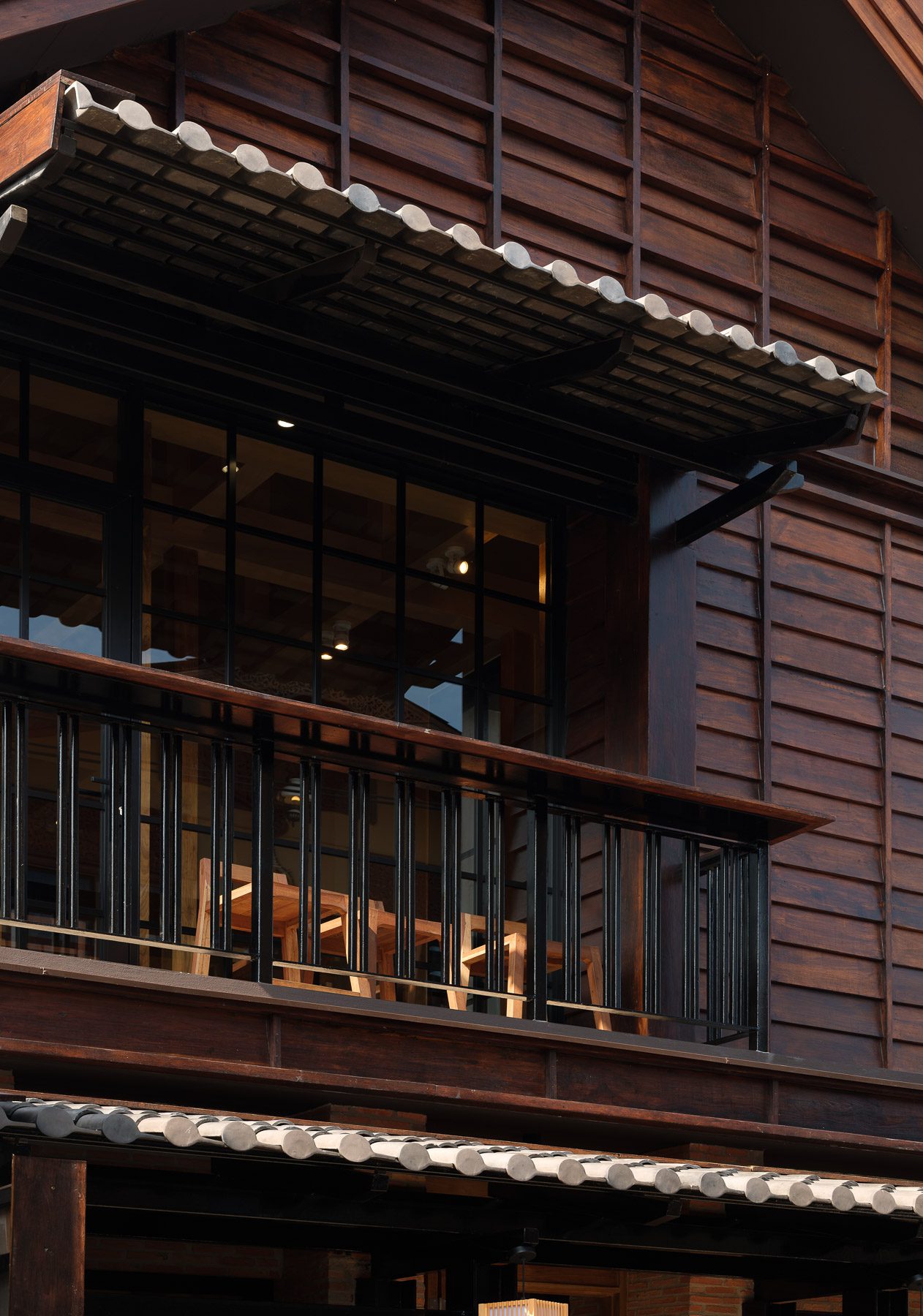
By regulation, buildings within Chiang Mai’s old city moat are required to incorporate certain architectural elements such as gables and eaves, as well as retain specific visual characteristics to ensure harmony with their surroundings. As a result, the new Akha Ama’s overall design blends seamlessly with the residential fabric, often leading passersby to mistake it for a renovated traditional house. In reality, however, it is a new construction, built with brick walls, steel beams, and concrete, and finished externally in dark-stained teak. The sense of gravitas created by these surfaces is softened in the functional interior areas through the use of lighter-stained plywood, becoming progressively paler at the ceiling, where exposed textures extend the perception of space. The architectural material palette reflects both the natural affinity and the traditions of the Akha people through its use of timber, while also incorporating elements drawn from the local vernacular. Most notably, a public sitting platform at the entrance borrows from the transitional space found in Lanna houses, reinterpreting a domestic feature as a welcoming gesture for the café.
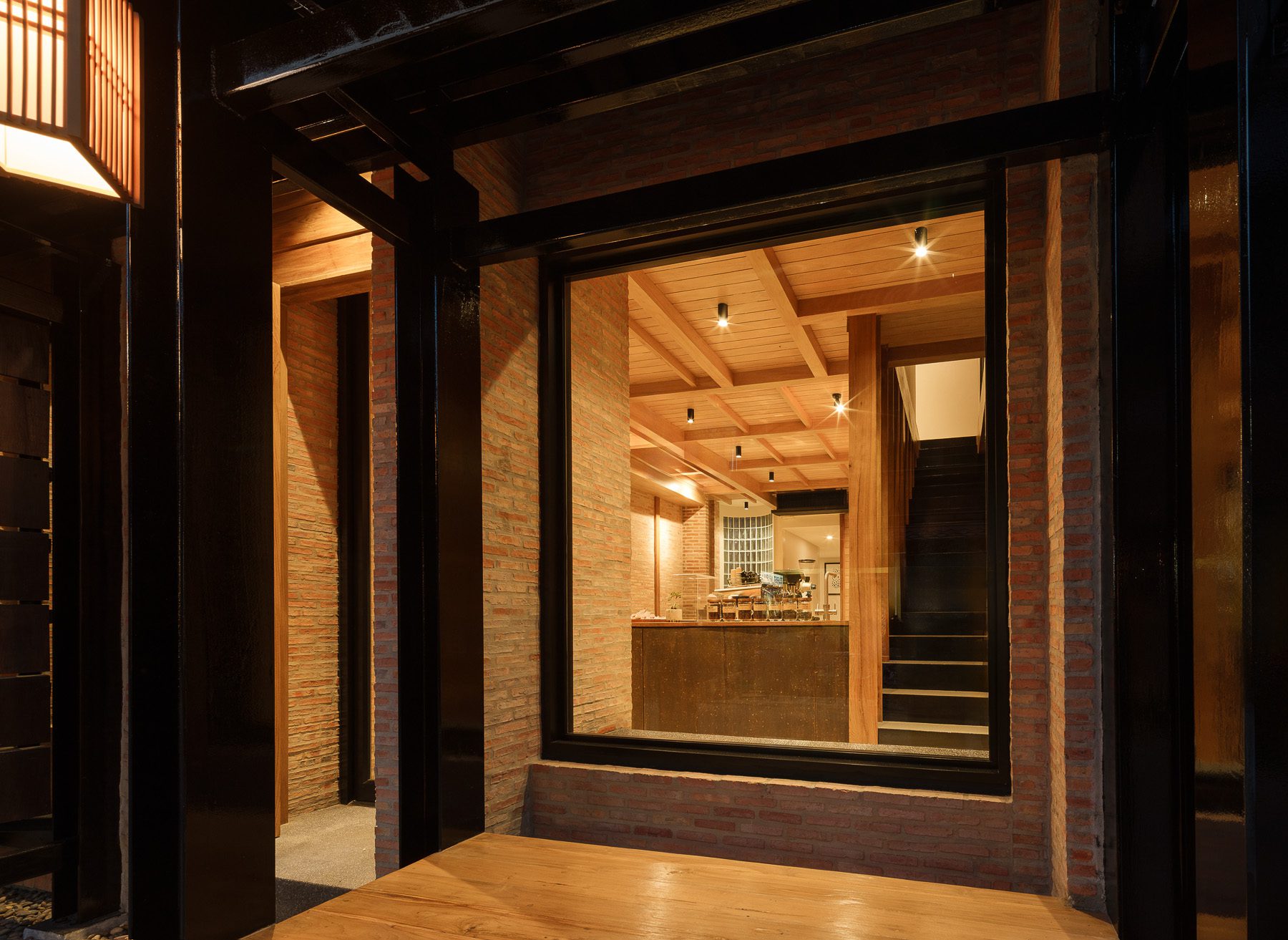
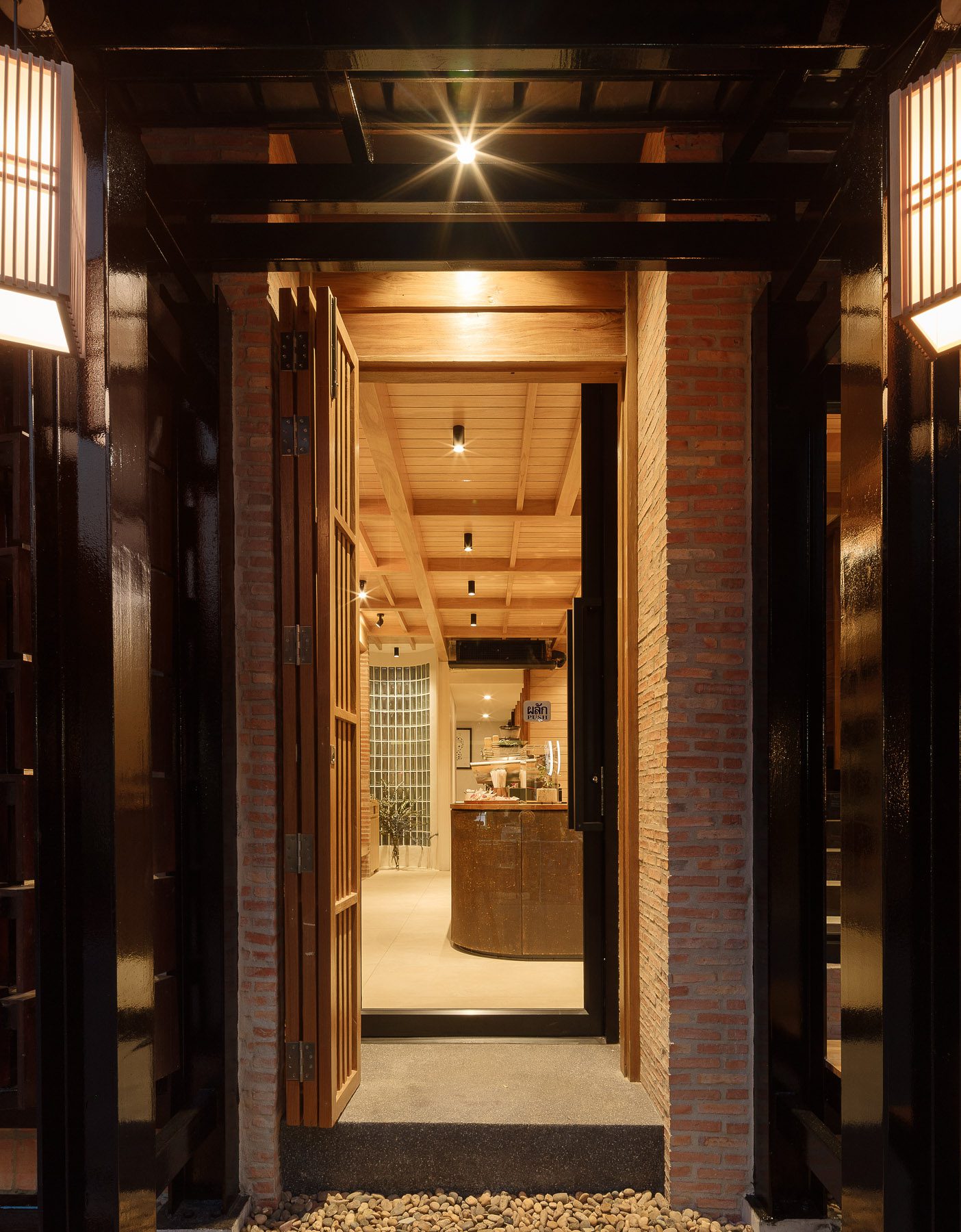
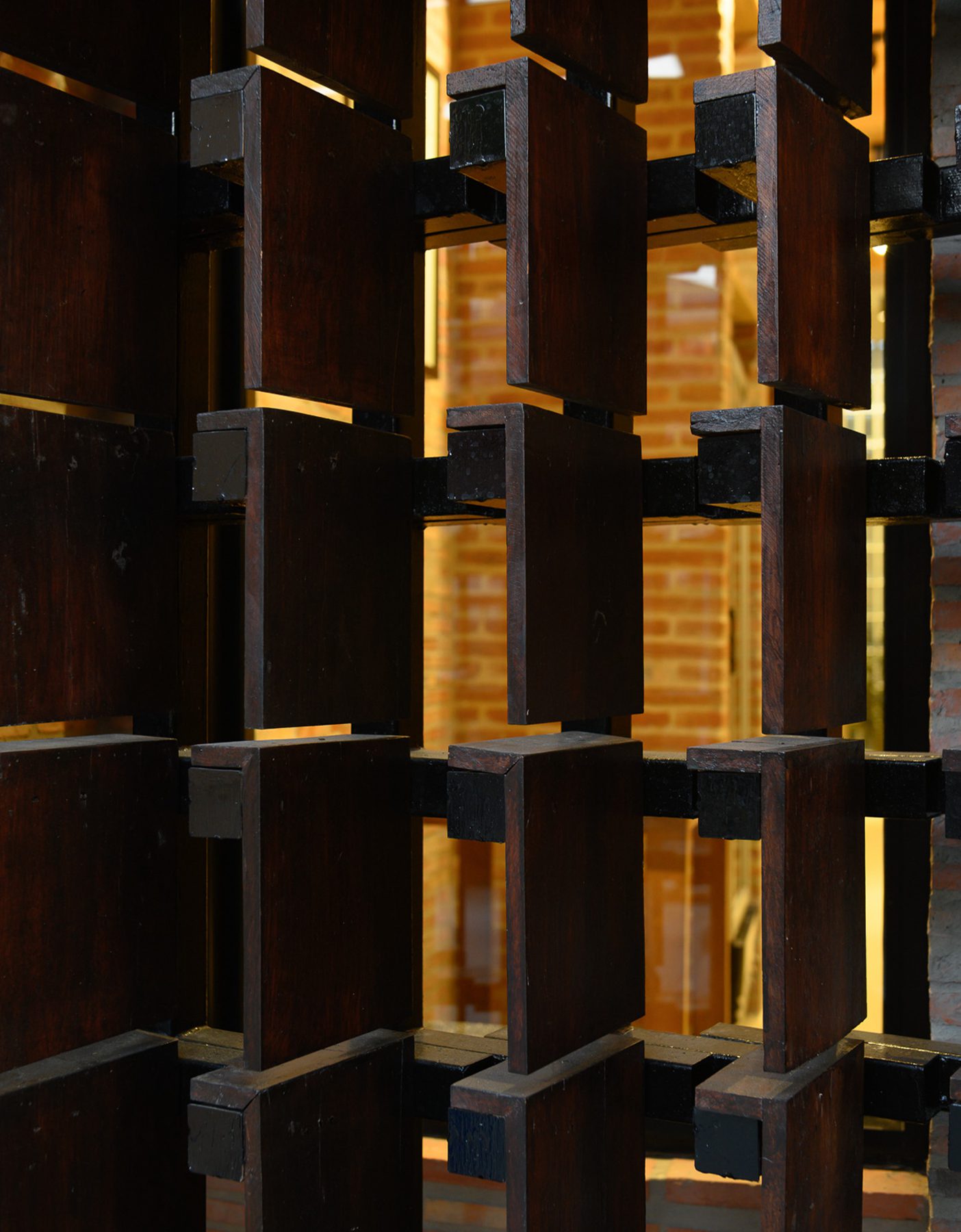
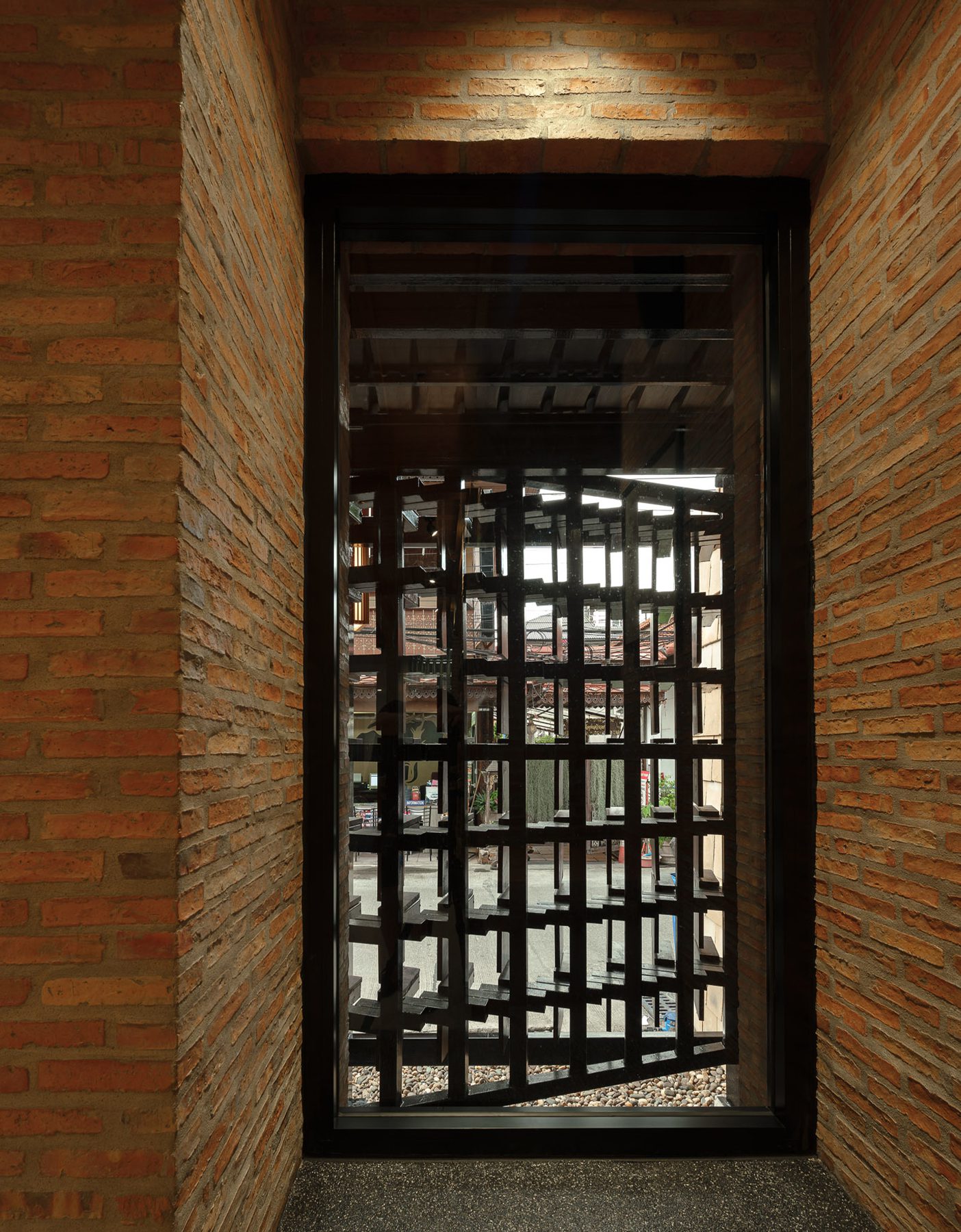
Flanking the entrance, one side opens into a large glass aperture while the other remains semi-closed, an element that invites curiosity as much as it frames experience. This interplay establishes a dialogue between exterior and interior; never fully exposed, yet suggestive enough to draw people in, encouraging them to seek out and encounter the ambiguity within for themselves. What makes this element particularly compelling is its material treatment: leftover timber was repurposed to emulate the clay roof tiles commonly found in Chiang Mai houses, but enlarged in scale and reassembled in a new configuration visible along the side elevation. Beyond blending seamlessly into the architecture, this gesture prompts reflection, reversing the usual hierarchy by bringing what is typically overhead down to the façade. In doing so, it repositions an often-overlooked element as a vehicle of expression, while also recalling the straightforward, almost uniform assembly of local vernacular architecture built from similar materials throughout.
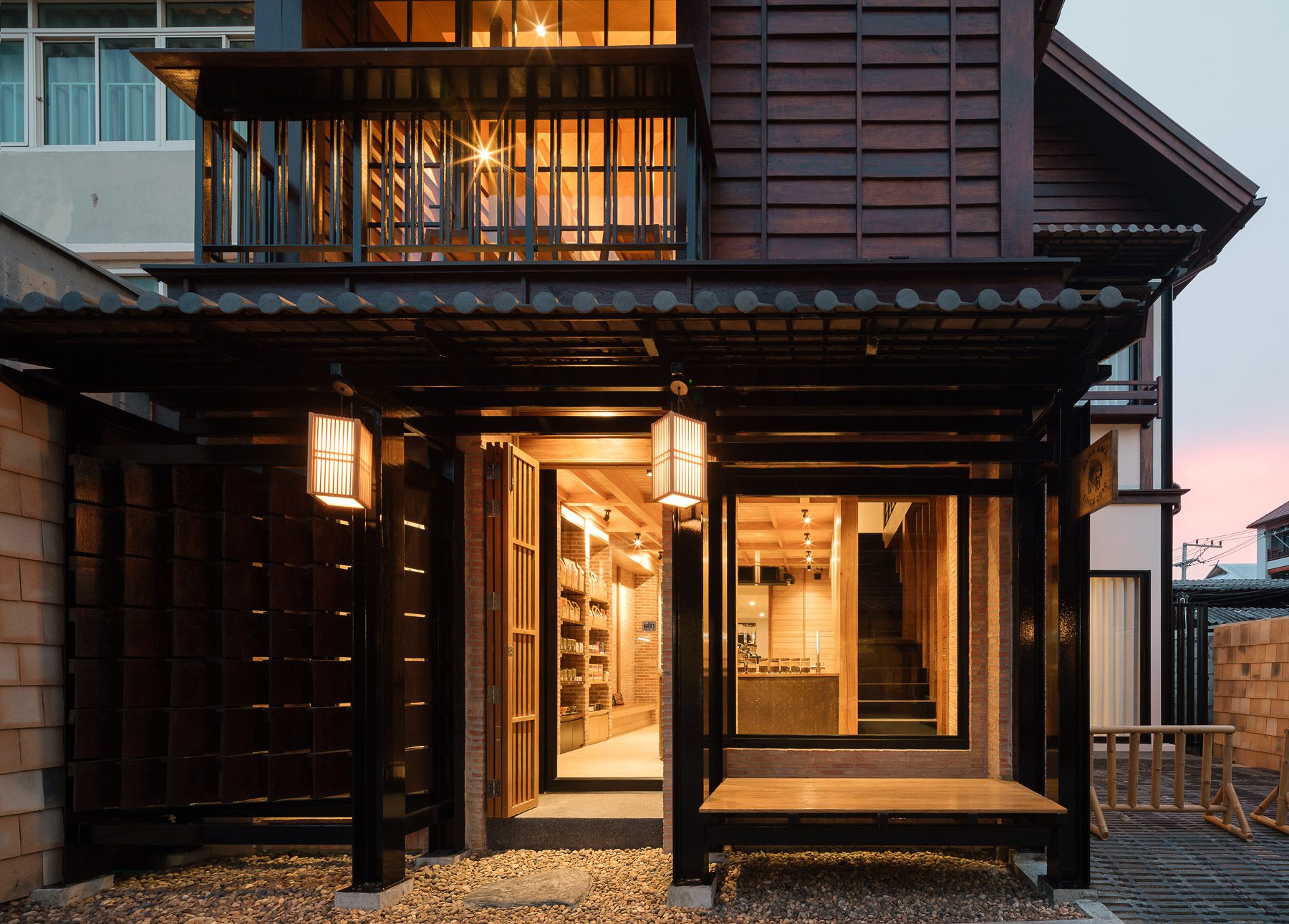
The layering of multiple identities reflects more than just the evolving meaning of ‘home’ within a shifting context. It is expressed through a careful orchestration of rhythm, emphasizing a dynamic flow born from asymmetry: the exterior cultivates a sense of casual familiarity, while the interior resonates with the warmth of natural materials and a variety of service areas. This interplay extends outward to the front terrace, which serves as a distinctive strategy that invites passersby to pause, sit, and converse, even if they do not step inside for coffee. Such an approach reveals the owner’s intent to honor both the neighborhood and its people, reaffirming the cyclical presence of the terrace as part of the architecture and anchoring the café in the true spirit of a home.