
ARCHITECTS JENCHIEH HUNG AND KULTHIDA SONGKITTIPAKDEE OF HAS DESIGN AND RESEARCH EXPLORED HOW THAI TARPS TRANSFORMED WAT PRASAT INTO A SACRED, INTROSPECTIVE SPACE DURING RESTORATION
TEXT: JENCHIEH HUNG & KULTHIDA SONGKITTIPAKDEE
PHOTO: HAS DESIGN AND RESEARCH
(For Thai, press here)
Jenchieh Hung and Kulthida Songkittipakdee of HAS design and research reveal a distinctive example of evolutionary architecture—where tradition and innovation meet. Despite ongoing construction, worship continues undisturbed, offering spiritual refuge in the urban concrete jungle. This reflects themes explored in their latest book, Chameleon Architecture: Shifting / Adapting / Evolving.
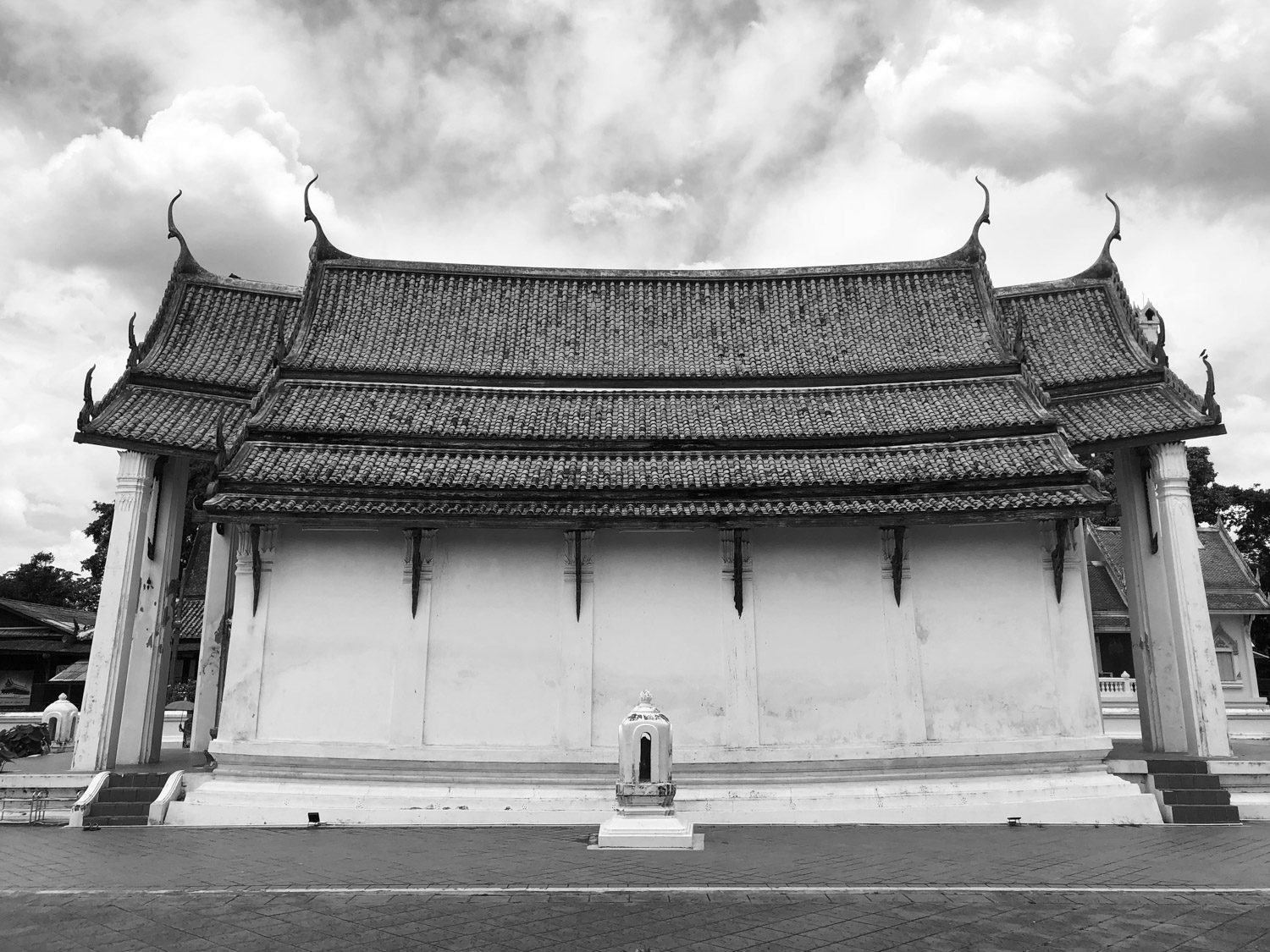
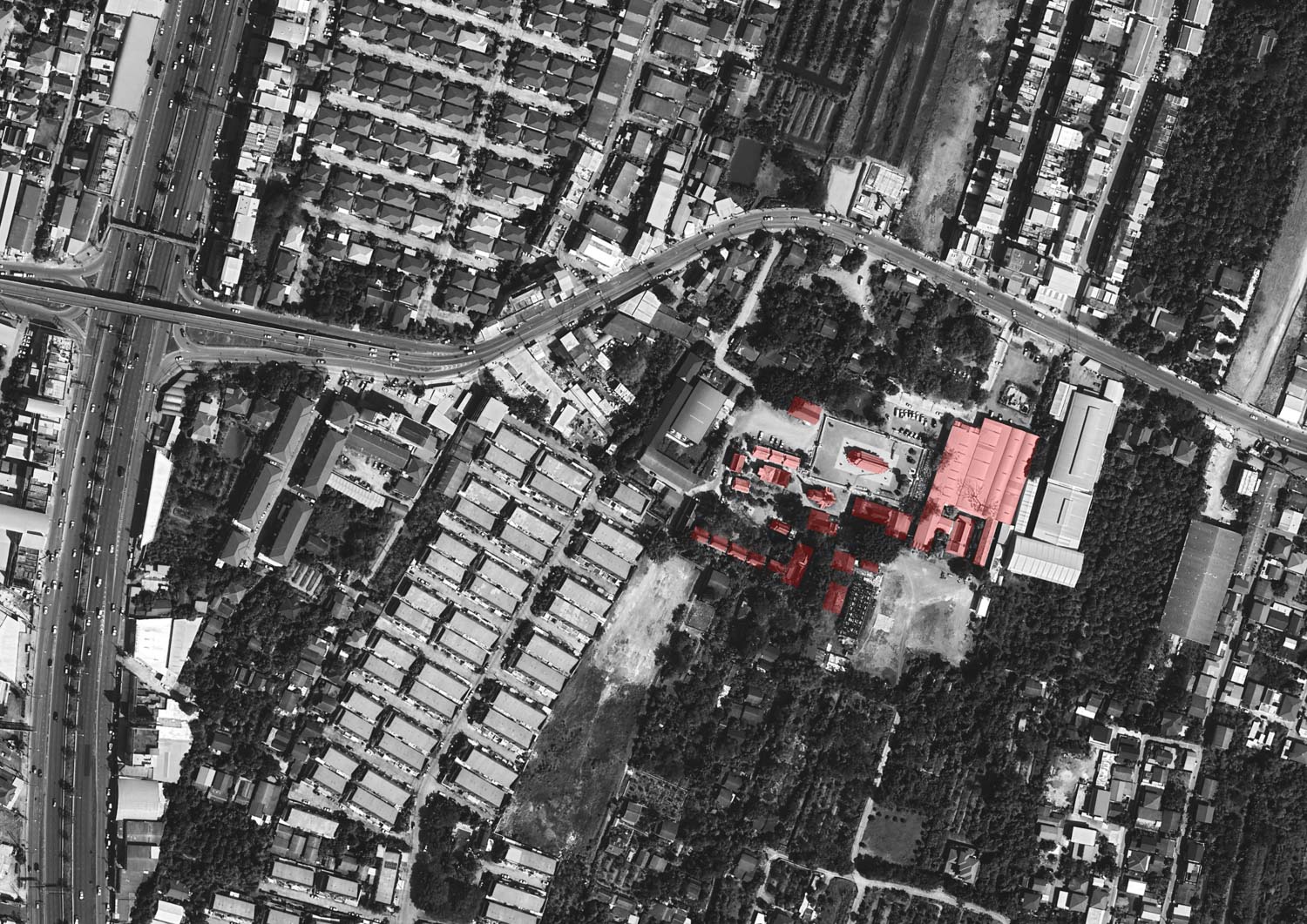
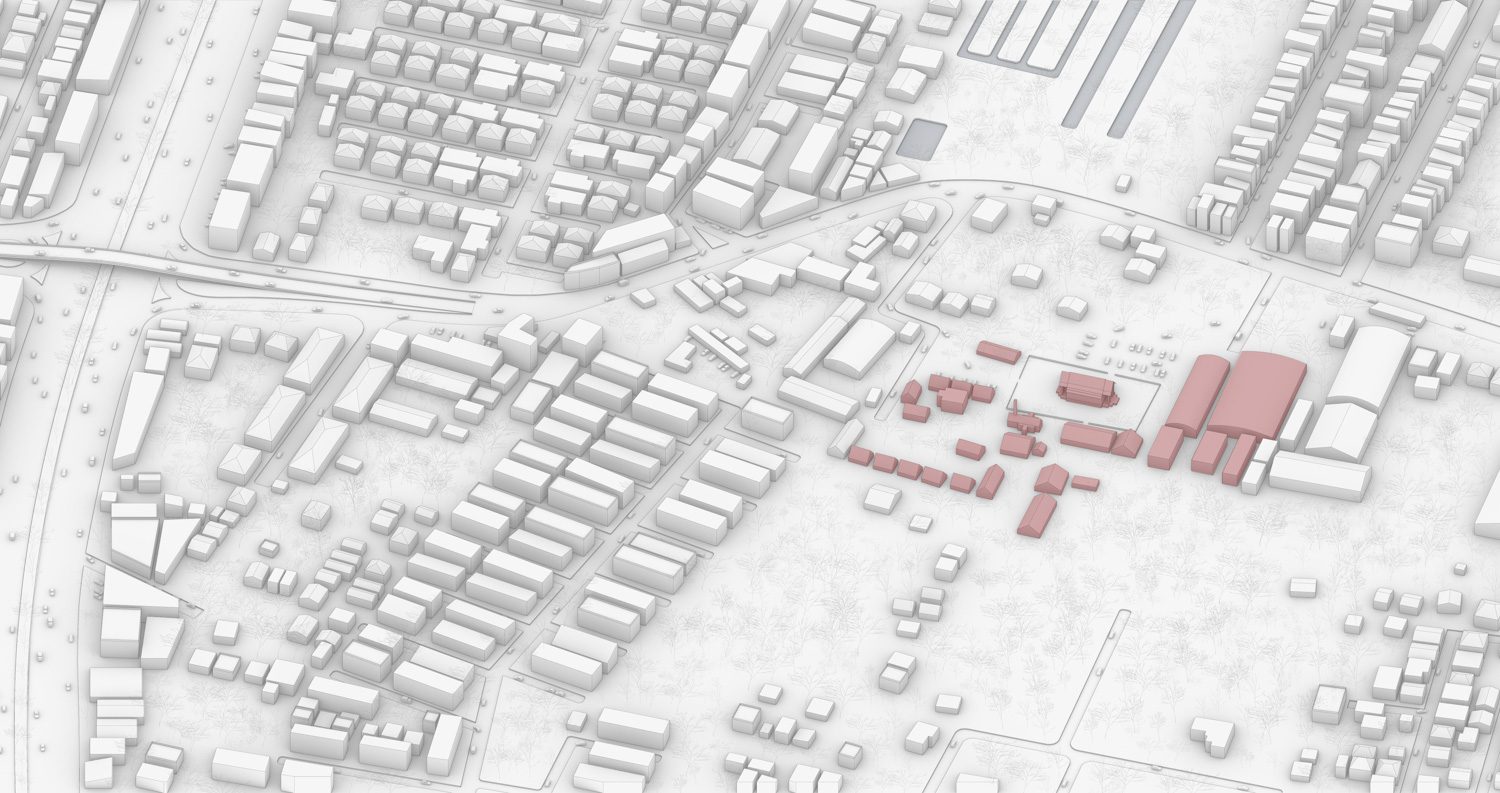
Wat Prasat, a revered temple located in Nonthaburi—a province neighboring Bangkok—stands as a significant spiritual and cultural destination for both Thai locals and international visitors. Known for its deep spiritual resonance, Wat Prasat has long attracted pilgrims seeking a connection to the divine and to their cultural heritage. Nonthaburi itself, home to many historically significant temples, offers a rich landscape for spiritual reflection. Among them, Wat Prasat stands out for its distinctive architectural beauty, combining traditional Thai design elements with the quiet solemnity that draws the faithful and curious alike.
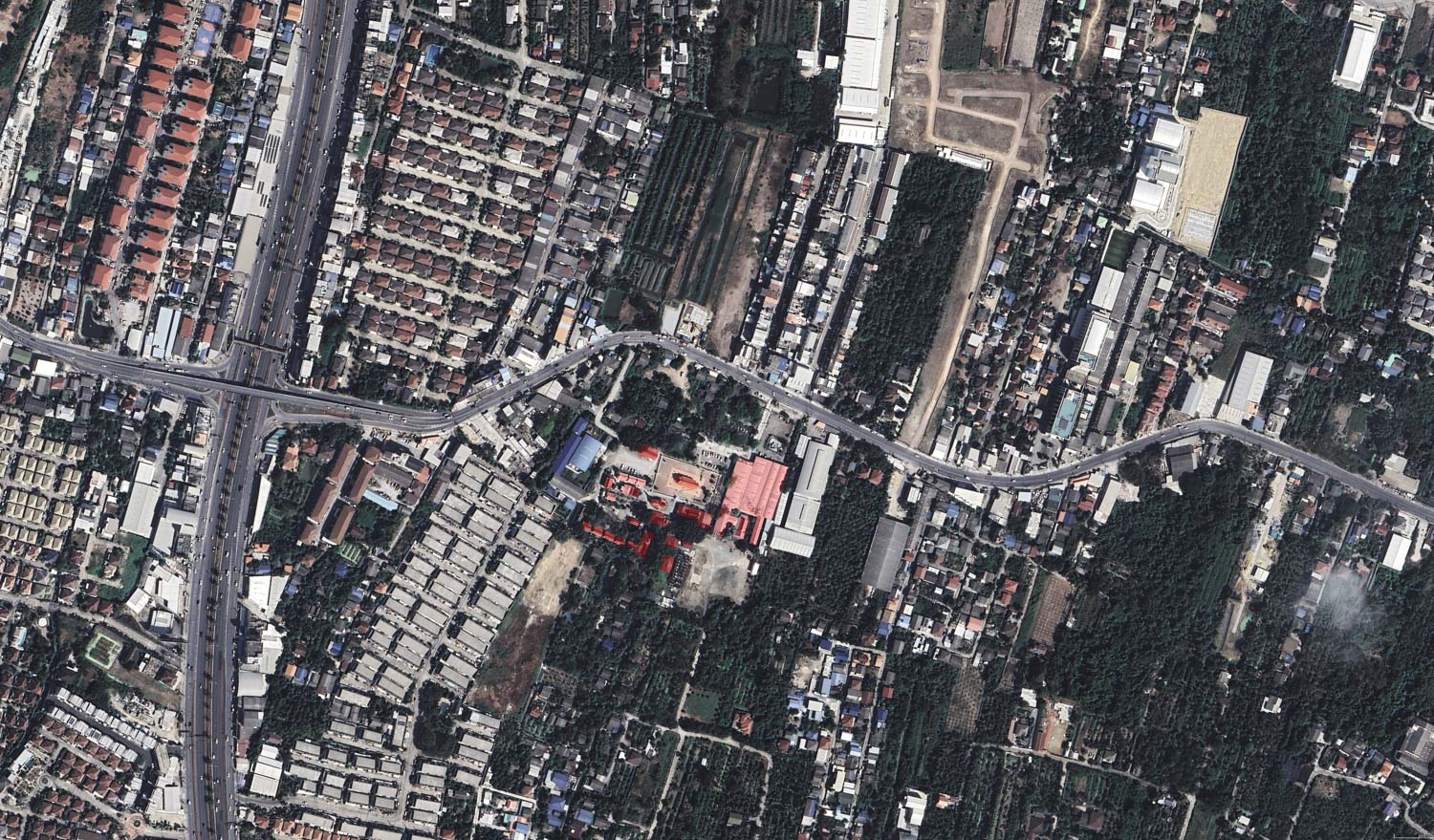
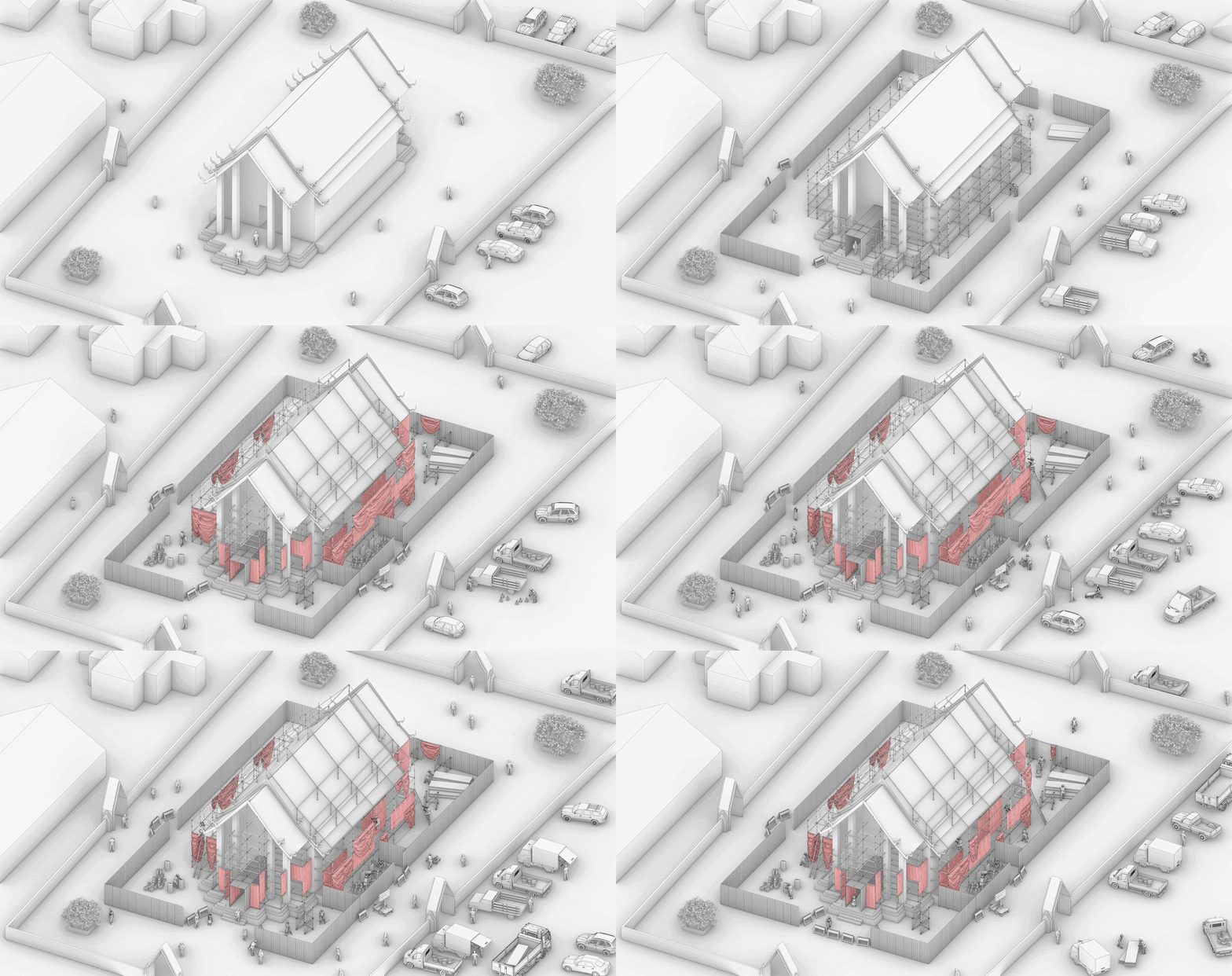
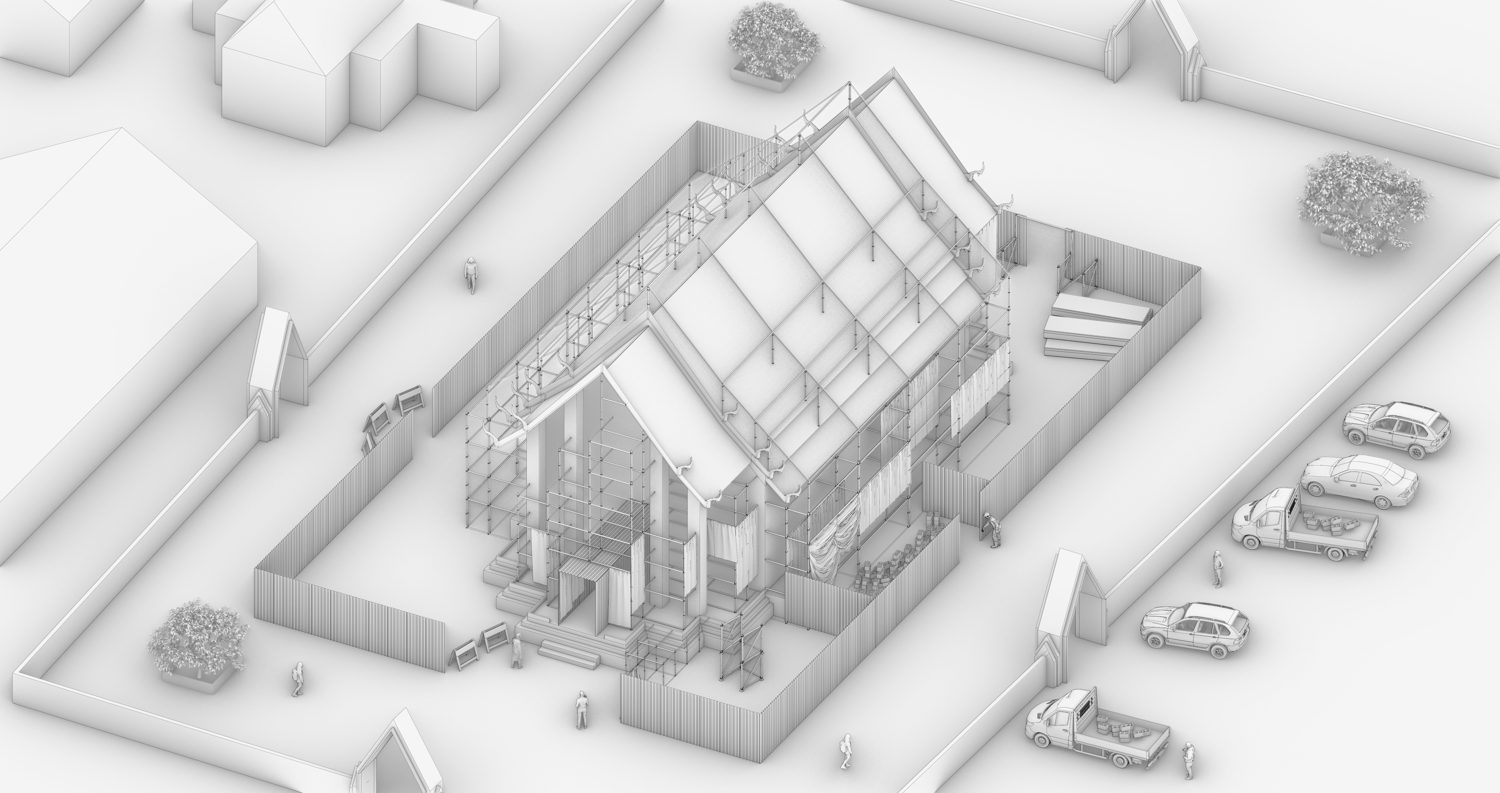
Three years ago, architects Jenchieh Hung and Kulthida Songkittipakdee of HAS design and research visited Wat Prasat to conduct research. They were captivated by the temple’s spatial proportions, roof design, and intricately detailed facades. These features, they believed, held a timeless quality that blended seamlessly with their modern surroundings. Their meticulous documentation revealed a structure that not only represented sacred geometry but also represented a living cultural heritage that had endured alongside the community for over 400 years. However, upon their return three years later, they discovered that the temple was undergoing restoration. Enclosed in scaffolding and draped with black and blue-white tarps, Wat Prasat seemed, at first glance, to be dormant—caught in a state of suspended animation amid the renovation.
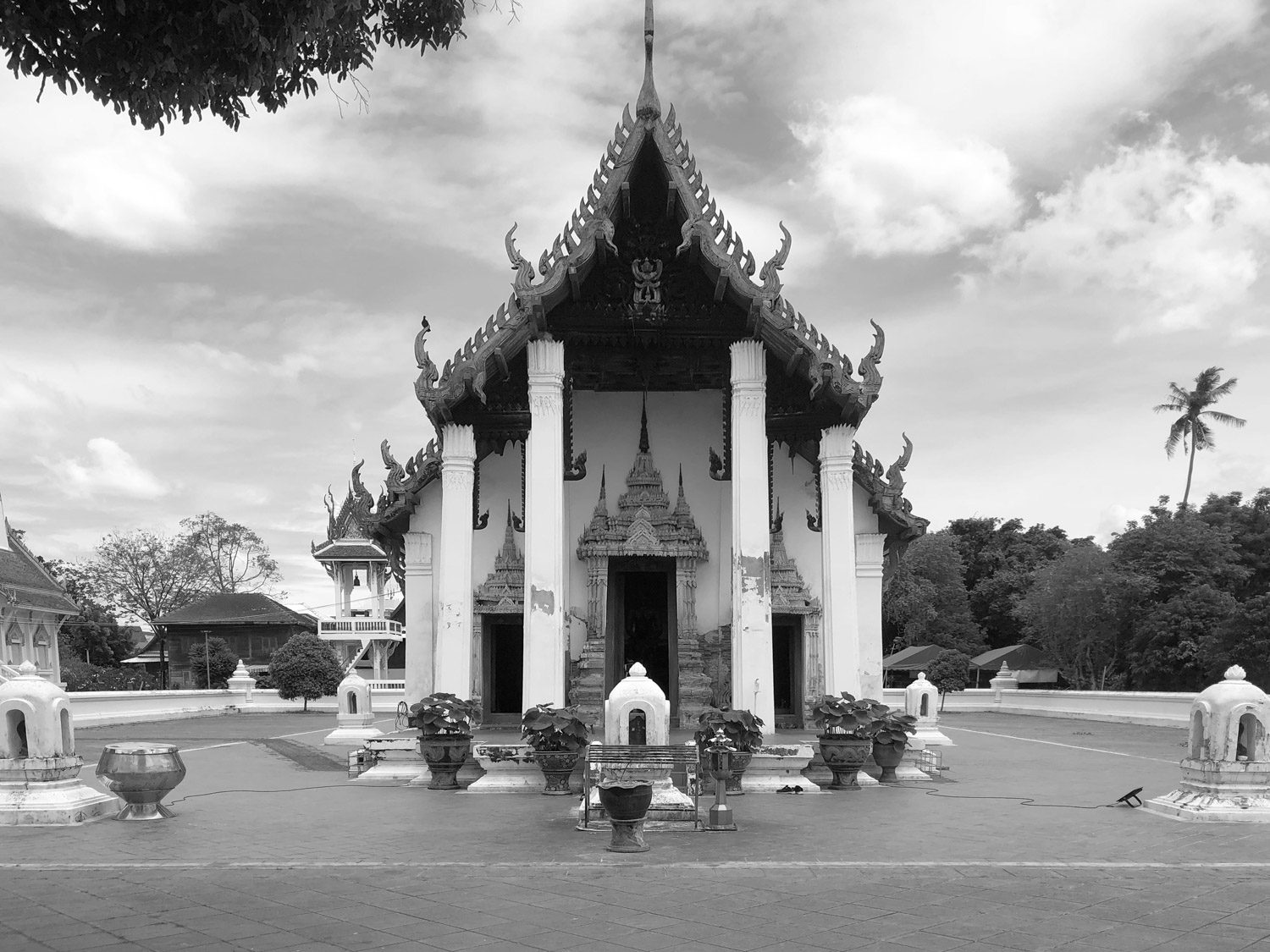
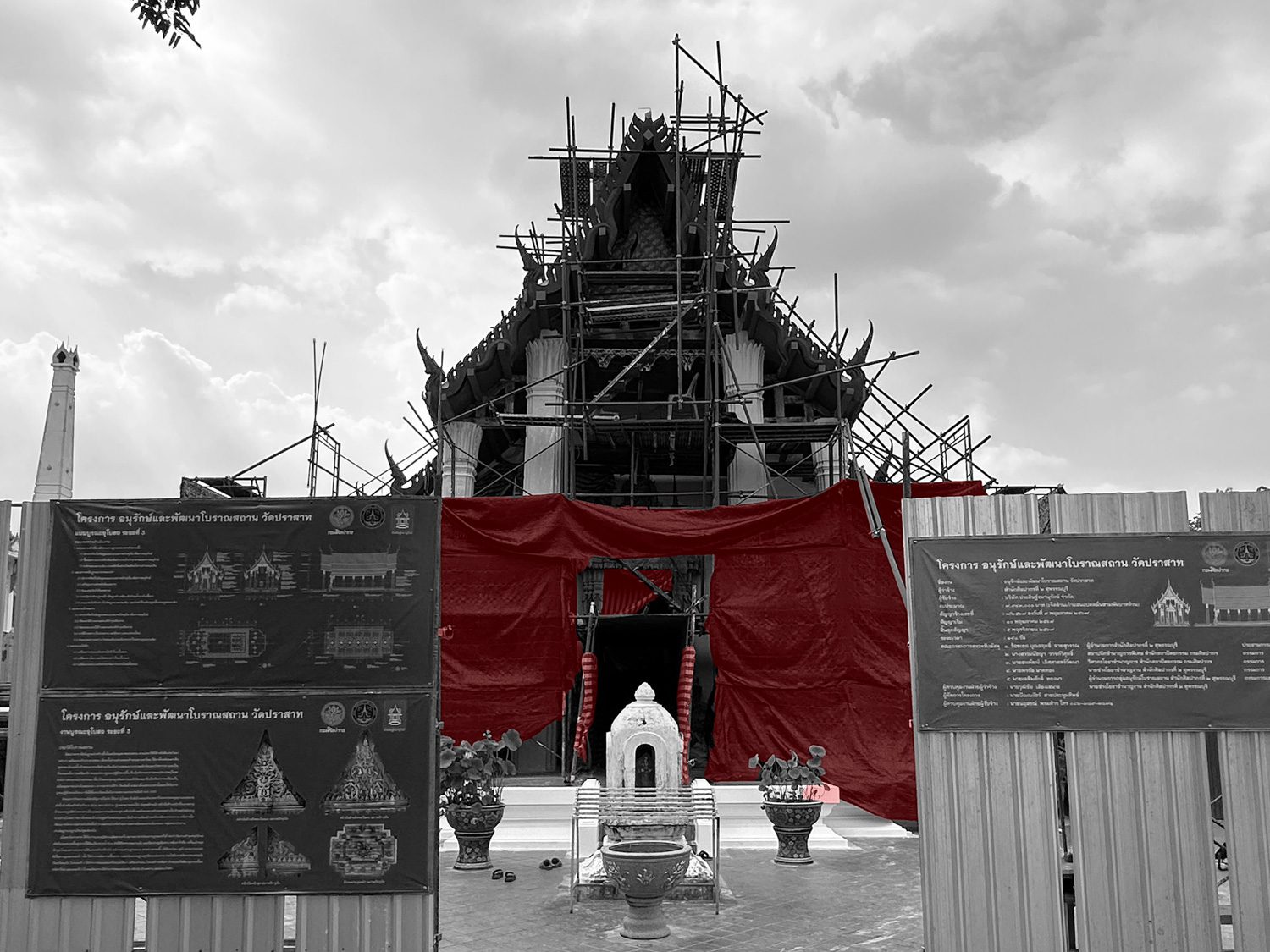
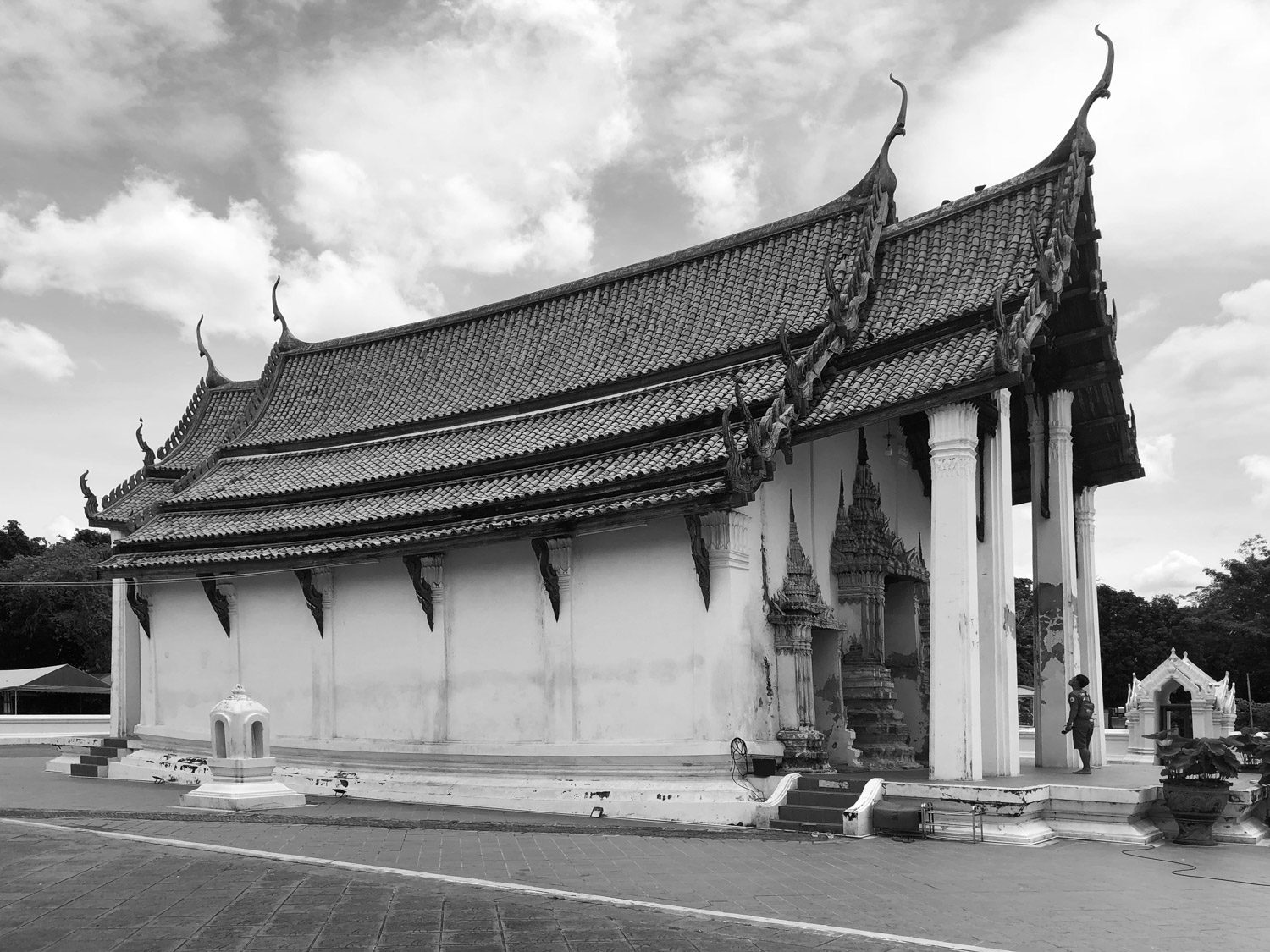
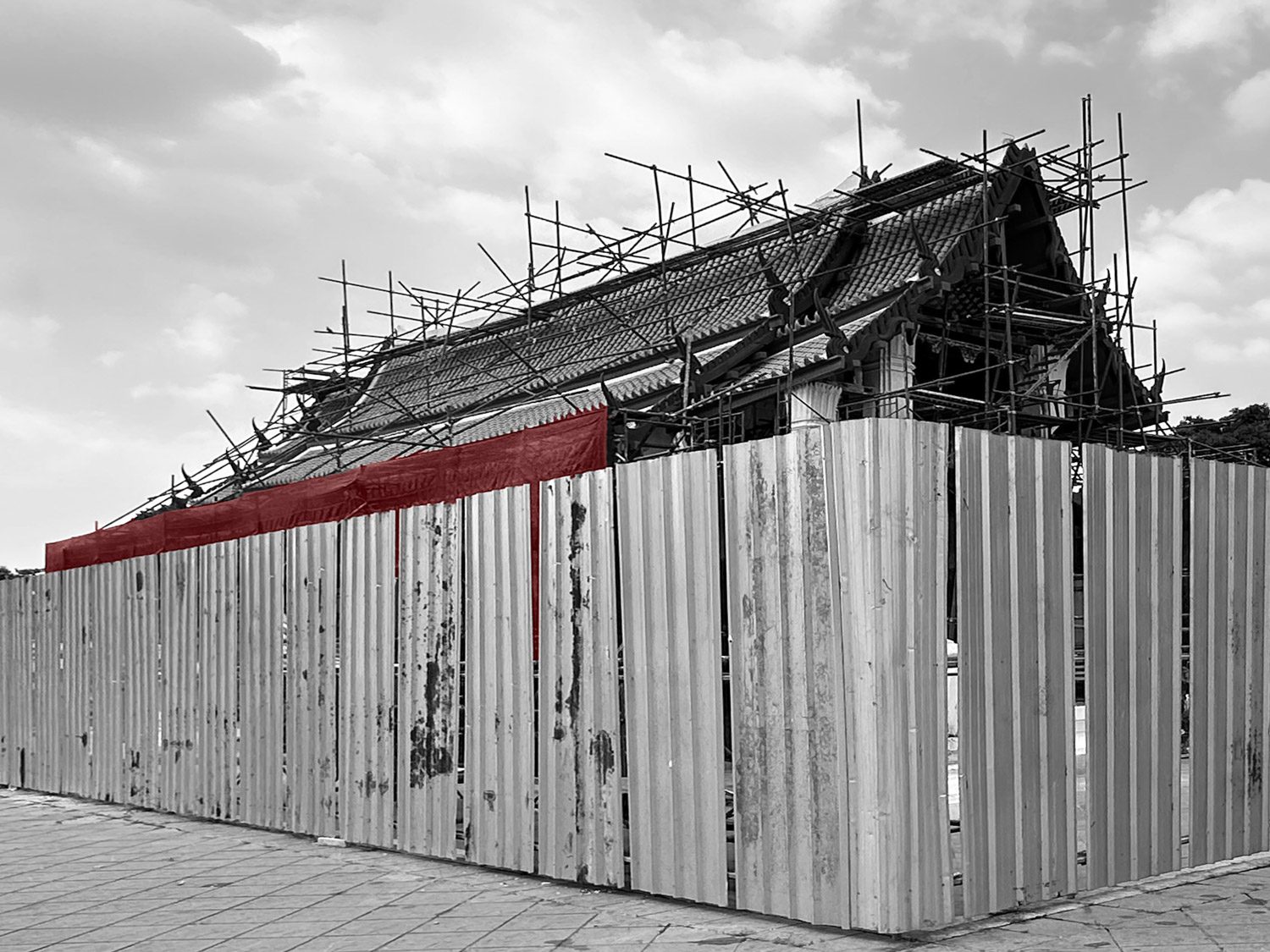
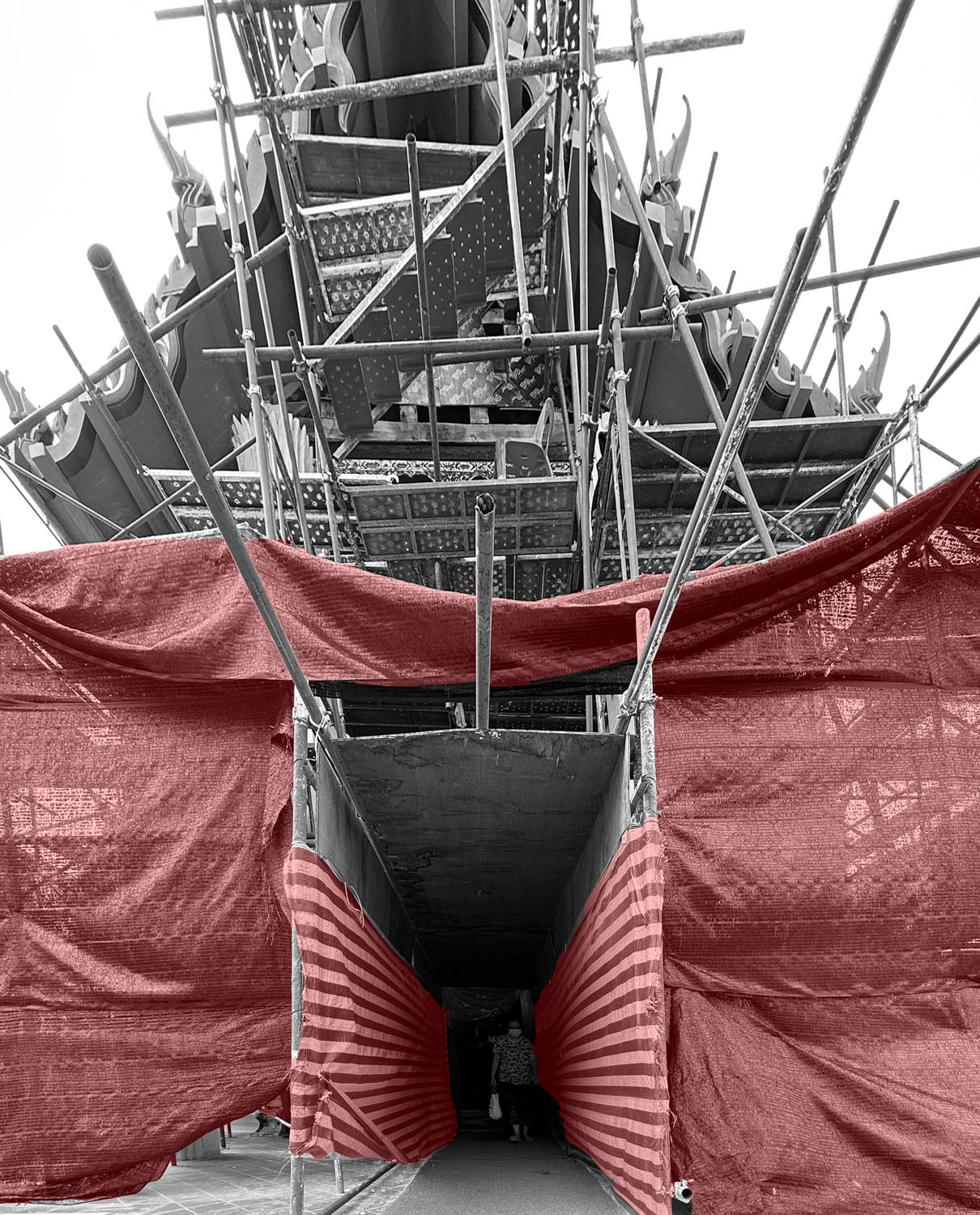
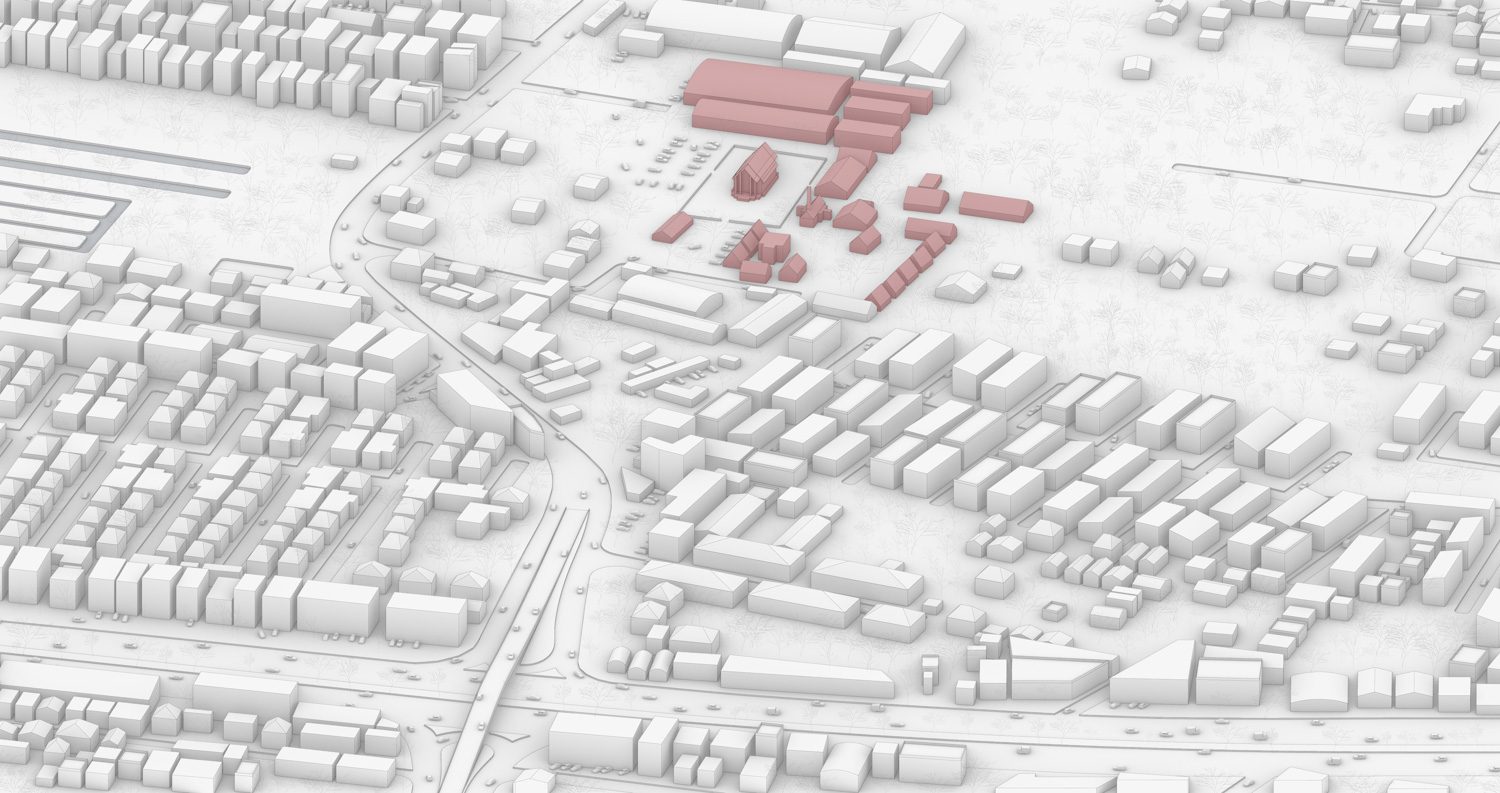
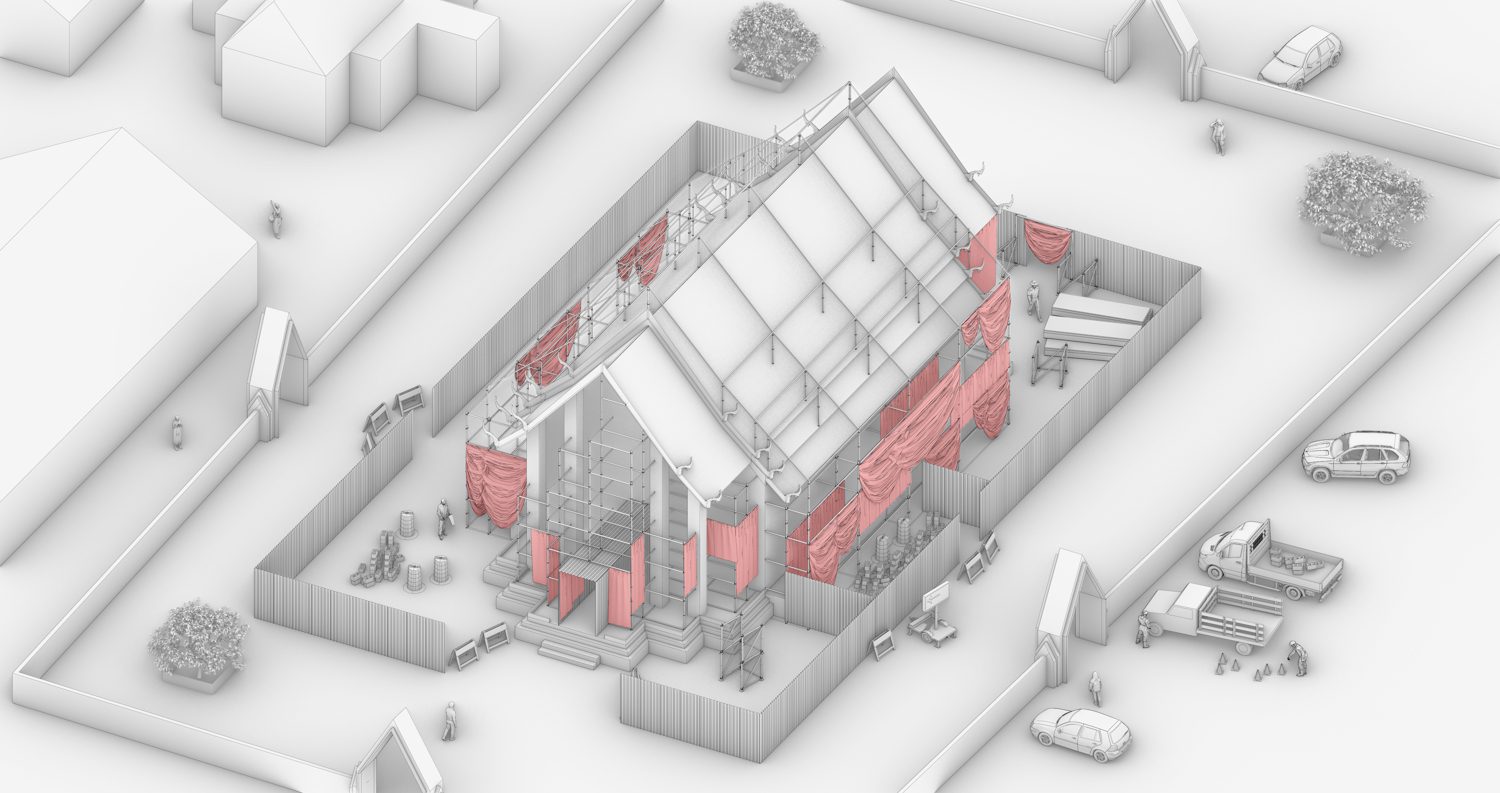
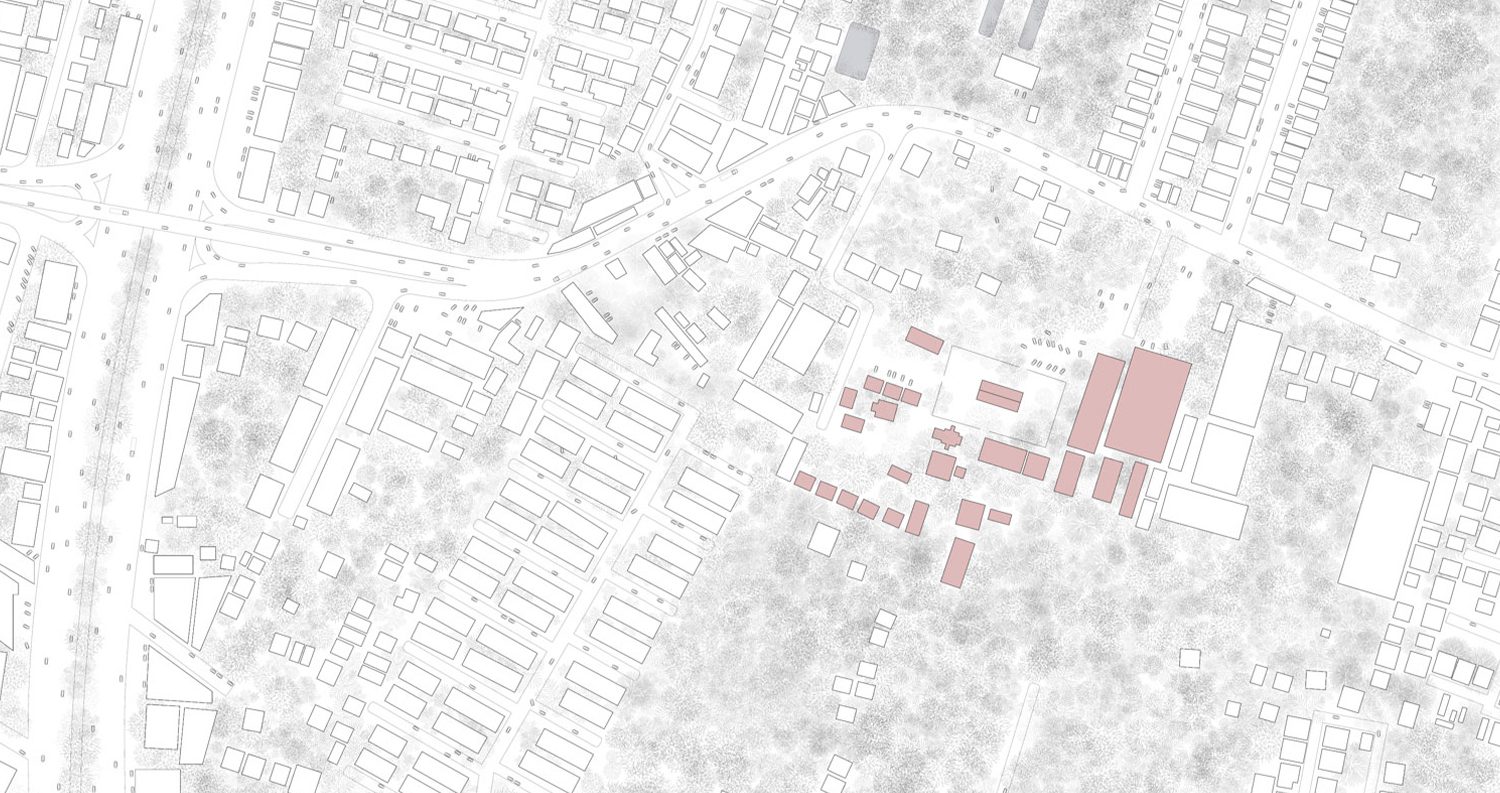
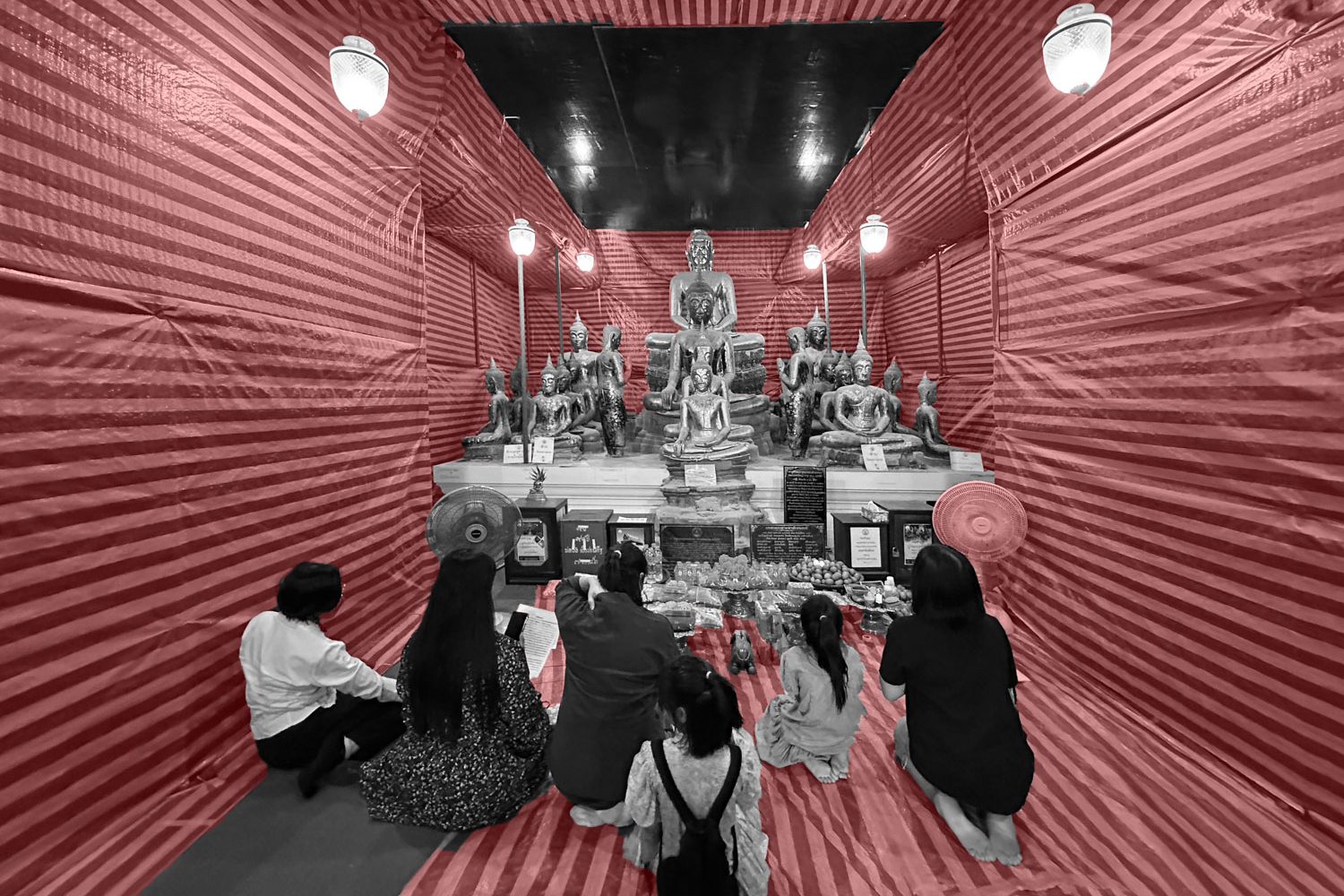
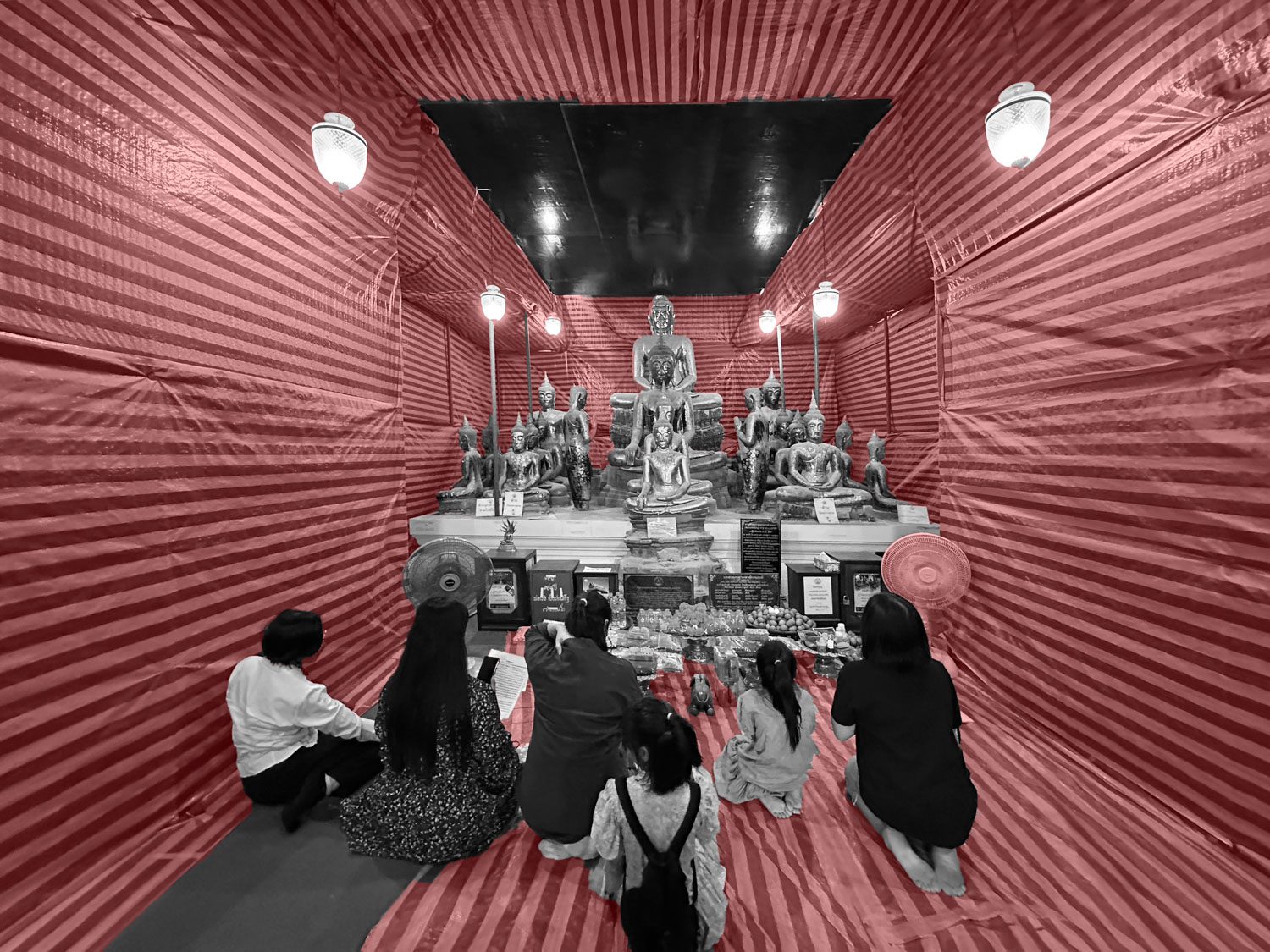
Amidst the apparent disruption, an unexpected experience awaited visitors. Walking along the side of the temple, one could discover a long passage extending from the temple’s interior, threading through the scaffolding and tarps. Rather than resembling a construction site, this corridor evoked the feeling of a natural cave or sacred tunnel, offering a moment of introspection and spiritual pause amid the city’s noise. Inside, the space had been subtly yet powerfully transformed—the construction tarps, typically used for protection during renovations in Thailand, were reimagined to create a functional and sacred interior. Despite the ongoing work, worshippers continued their rituals undisturbed, finding peace within this improvised sacred space. This reveals how Wat Prasat continues to play a vital role in the dense urban landscape, offering relief from the pressures of city life and serving as a sanctuary for the soul, even in the midst of renovation.
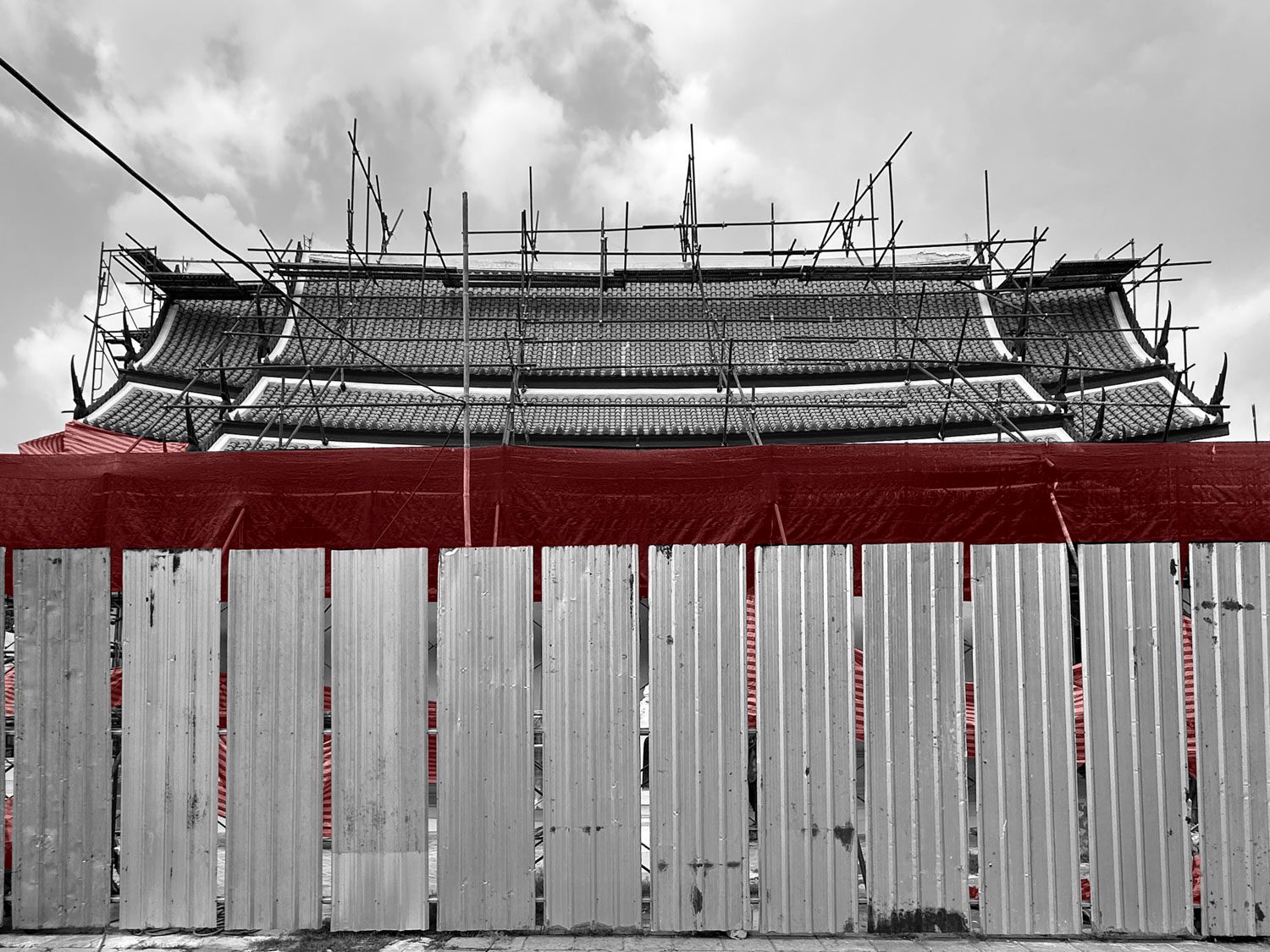
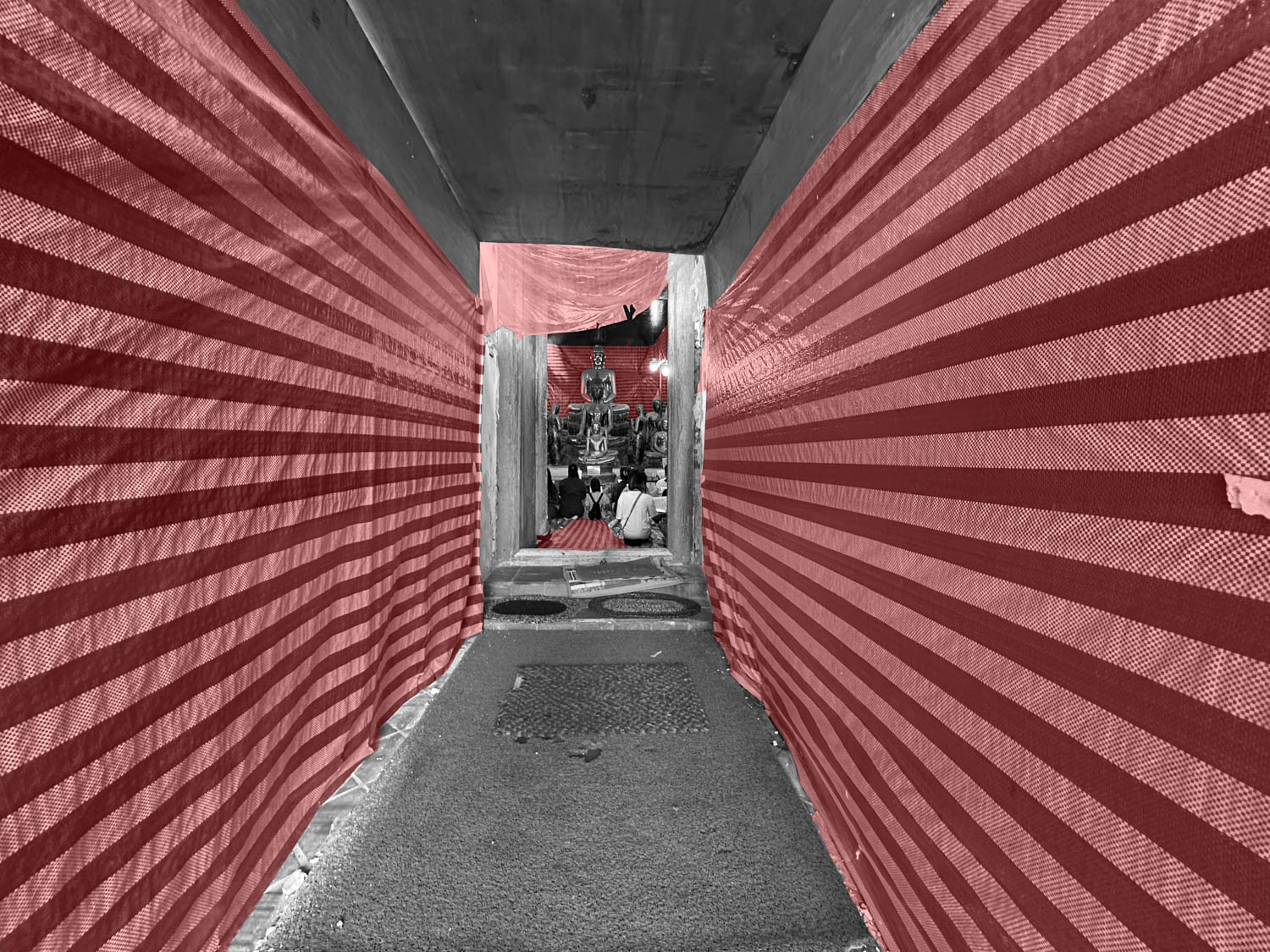
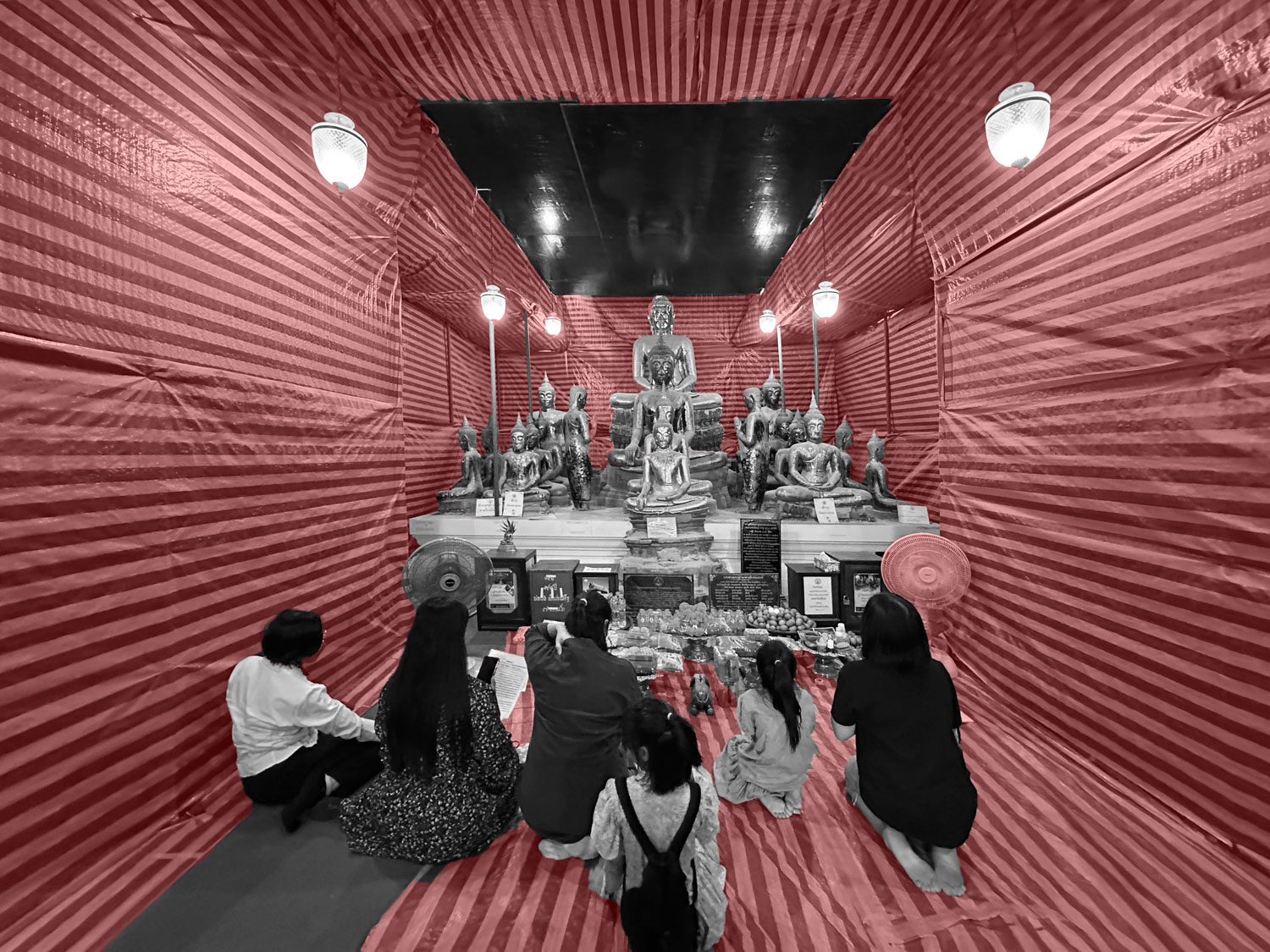
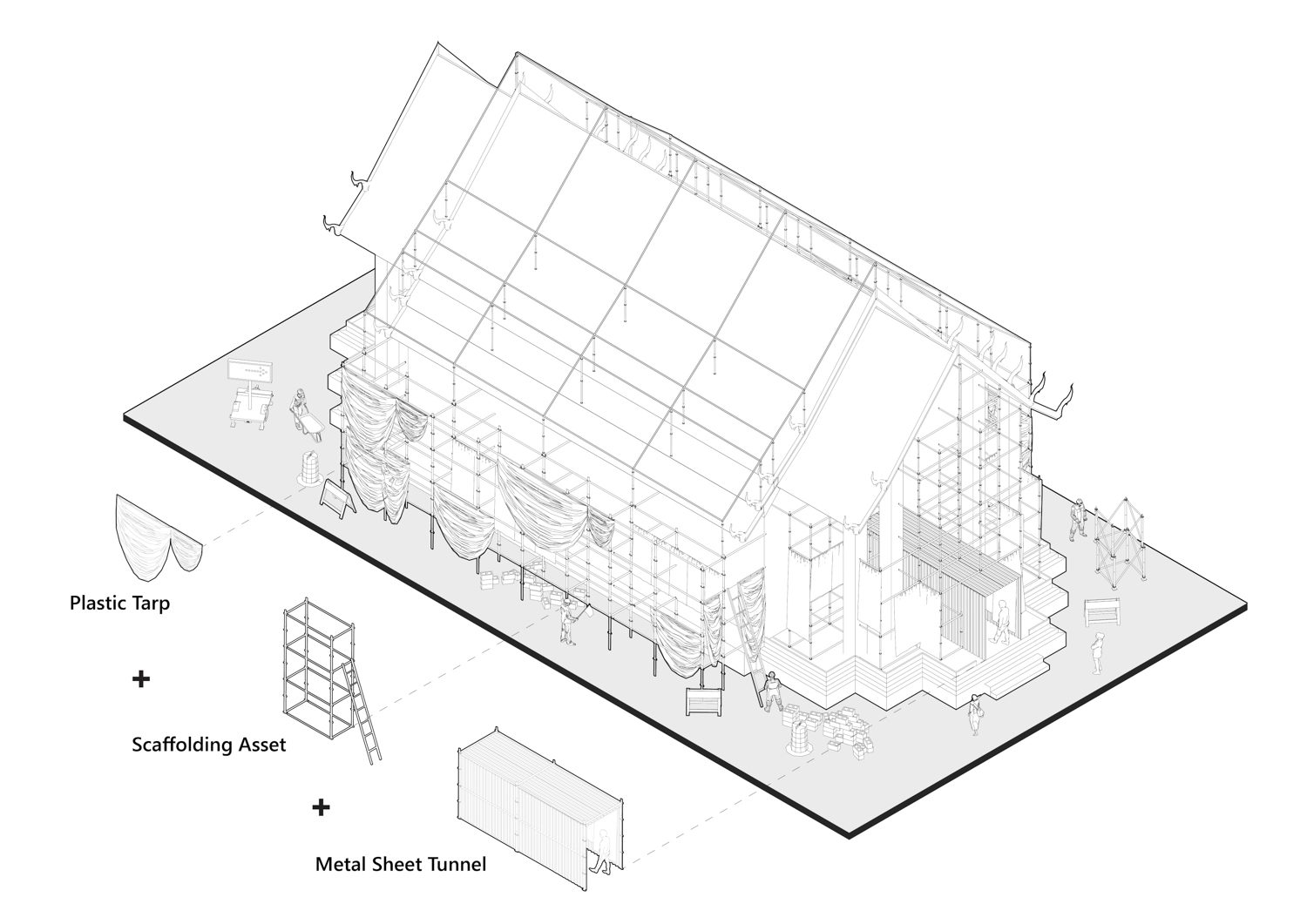
This remarkable transformation highlights how Wat Prasat remained spiritually alive, even during its physical transition. The creative use of simple, locally available materials—such as tarps—to preserve religious functionality is a testament to adaptive architecture that meets both practical and spiritual needs. It demonstrates a sensitive approach to society, where minimal intervention can lead to a profound impact. For Hung and Songkittipakdee (HAS), this temporary evolution perfectly illustrates the relationship between humanity and spirituality: the creation of meaningful, adaptable spaces that honor the past while embracing the future. Wat Prasat’s restoration process is more than a structural update; it is a spiritual evolution. At the intersection of the sacred and history, it stands as a beacon for those seeking refuge and meaning in a rapidly changing world. The temple’s ability to maintain its sacred essence amid transformation offers a powerful example of how architecture can evolve without losing its soul.
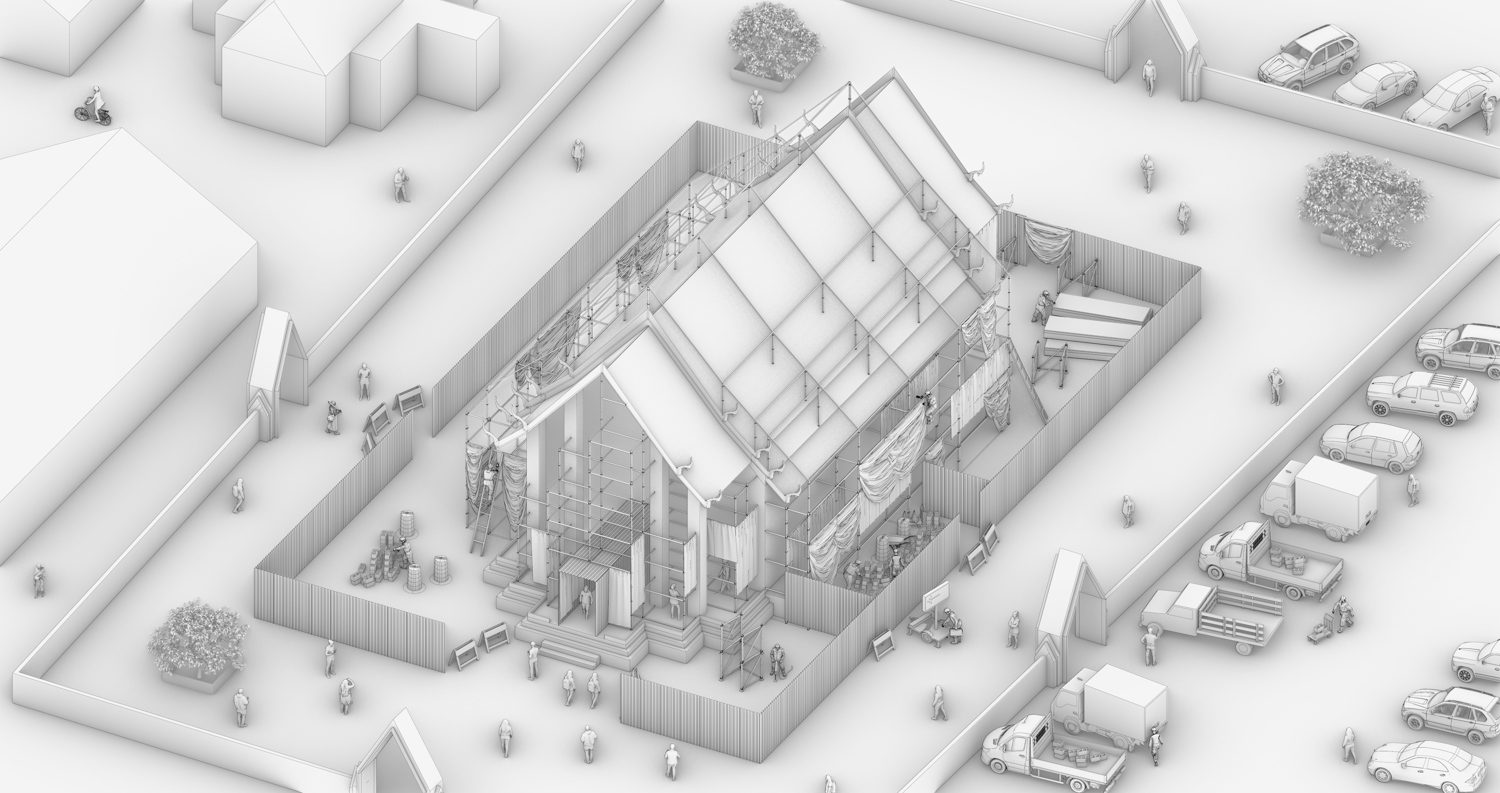
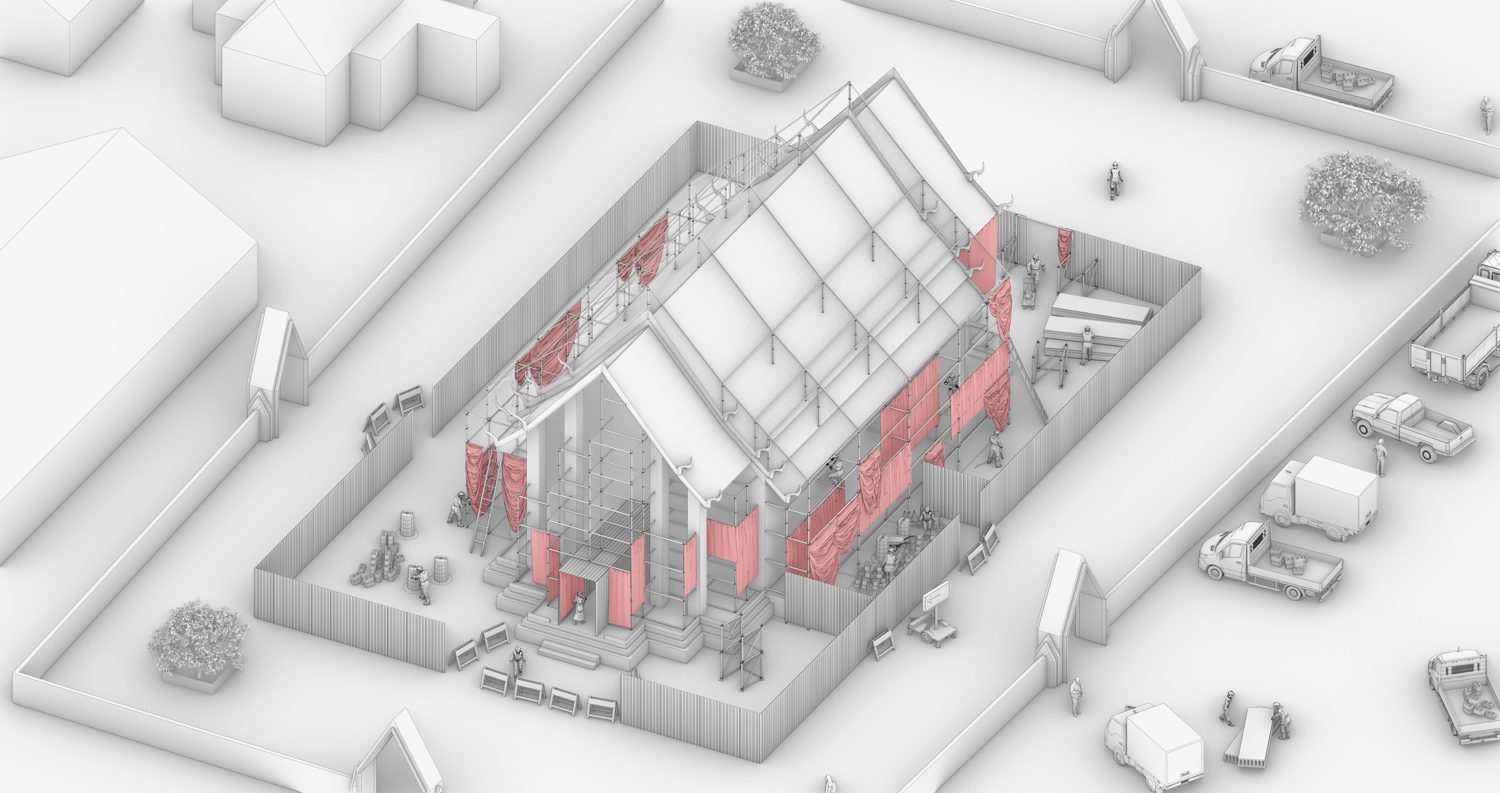
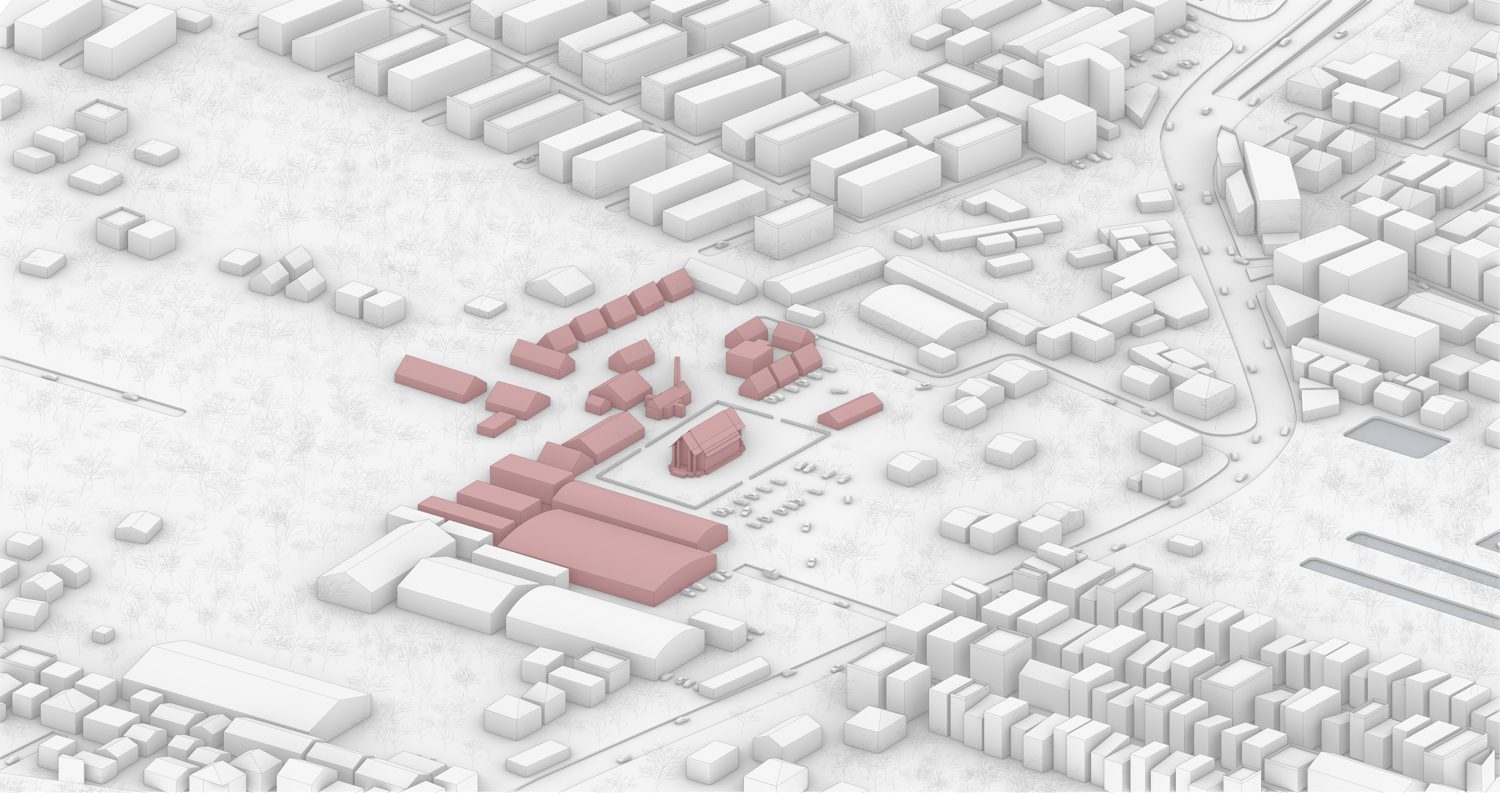
This article content is an excerpt from the book ‘Chameleon Architecture: Shifting / Adapting / Evolving,’ authored by Jenchieh Hung & Kulthida Songkittipakdee / HAS design and research, available for purchase at: https://art4d.com/product/chameleon-architecture
facebook.com/hasdesignandresearch
instagram.com/has.design.and.research