POAR DESIGNED VOWS VILLA, A RESORT AND WEDDING VENUE ON KOH SAMUI, UNDER THE CONSTRAINTS OF LIMITED LAND, CREATING A PLACE WITH A BEACHFRONT ATMOSPHERE AND FLEXIBLE USAGE
TEXT: NATHATAI TANGCHADAKORN
PHOTO: KUKKONG THIRATHOMRONGKIAT
(For Thai, press here)
Vows Villa is a resort located on Thaweerat Phakdi Road on Koh Samui, designed by POAR following a brief from the owners of The Humble Villas on the adjacent site. From the outset, the project was conceived to distinguish itself from conventional resorts that focus solely on short-term accommodation within guest rooms. The design team drew upon Koh Samui’s identity as a renowned destination for beachfront weddings, developing the project into a seaside wedding venue rich in atmosphere while offering a high degree of flexibility in use.
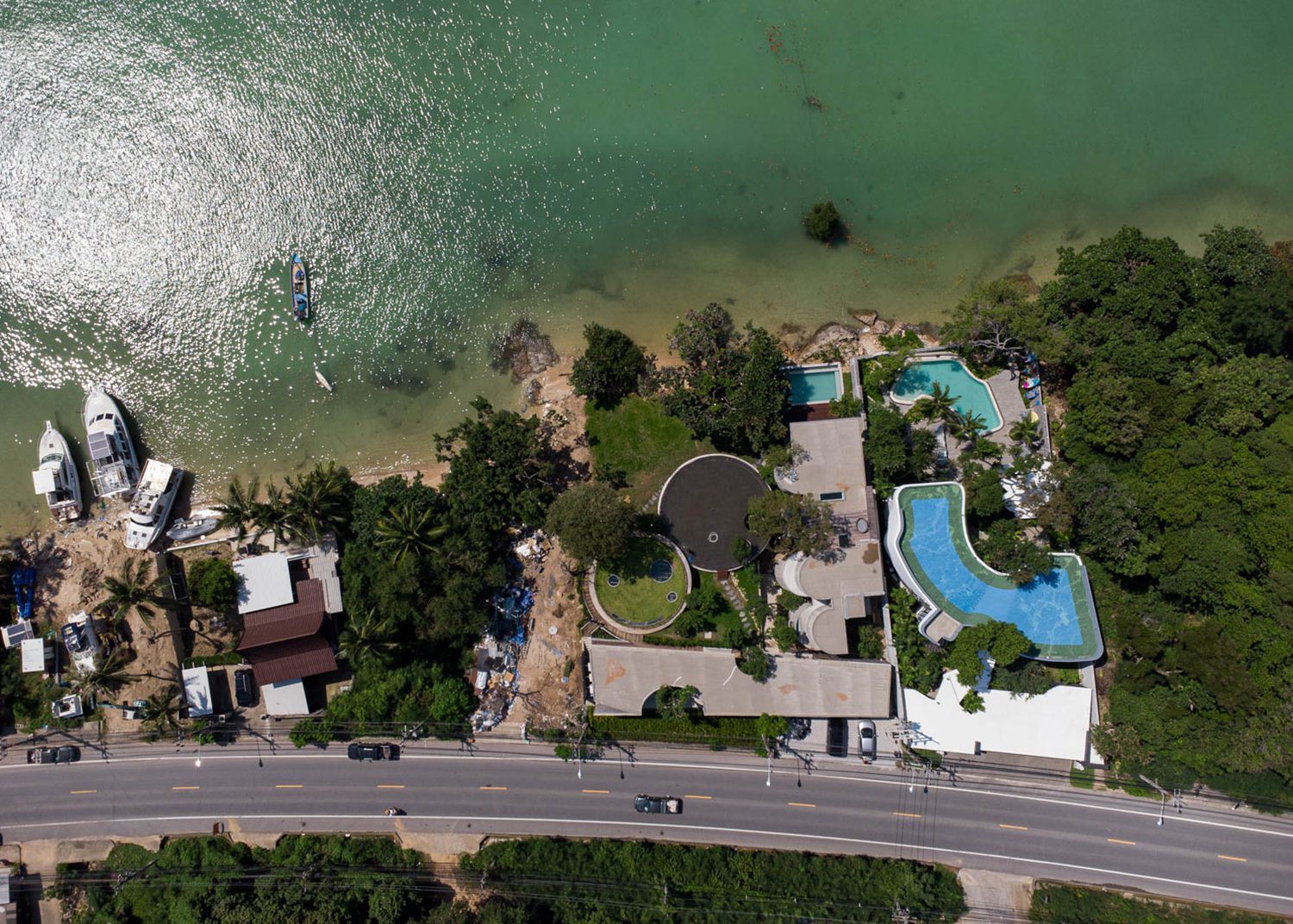
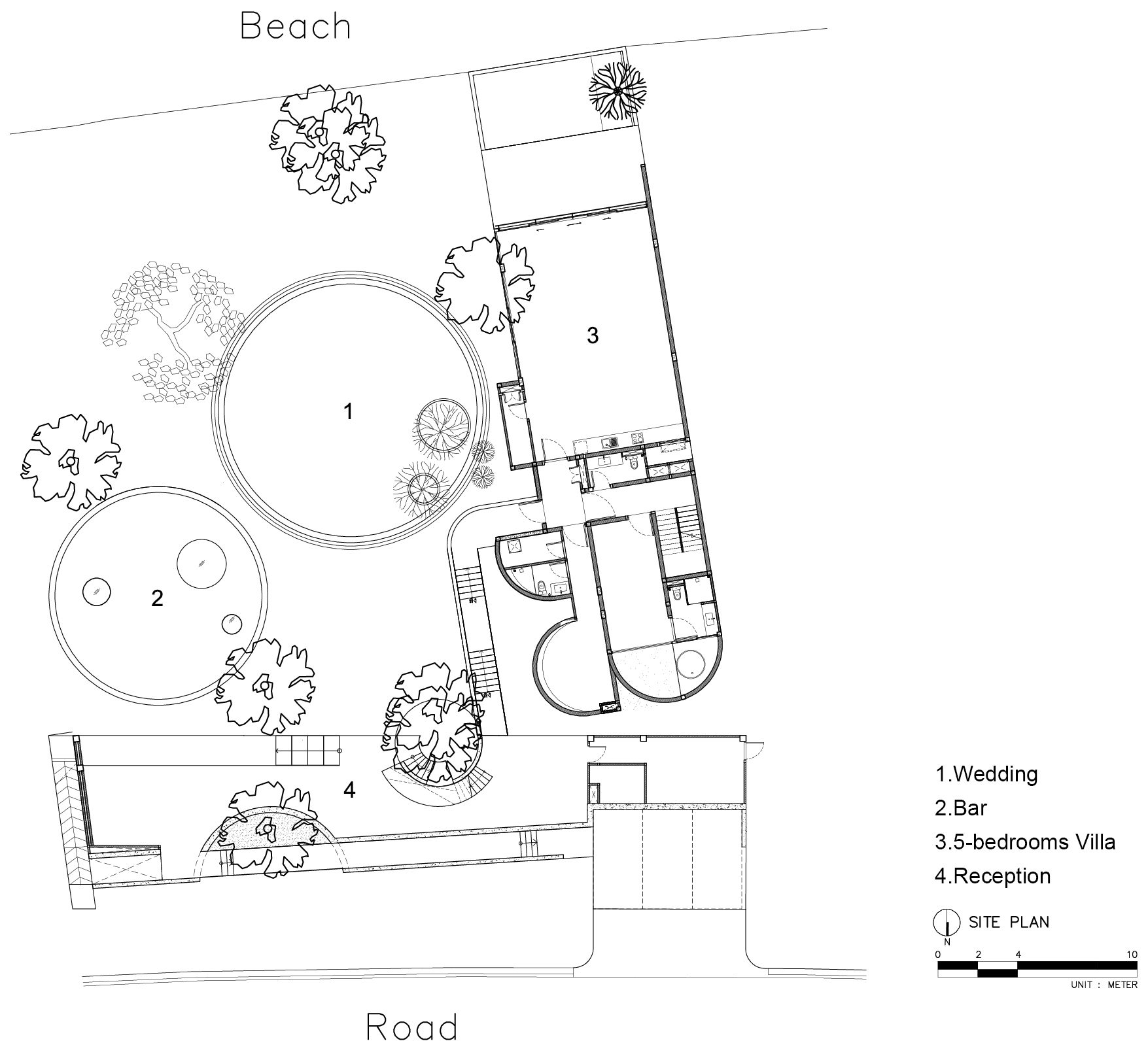
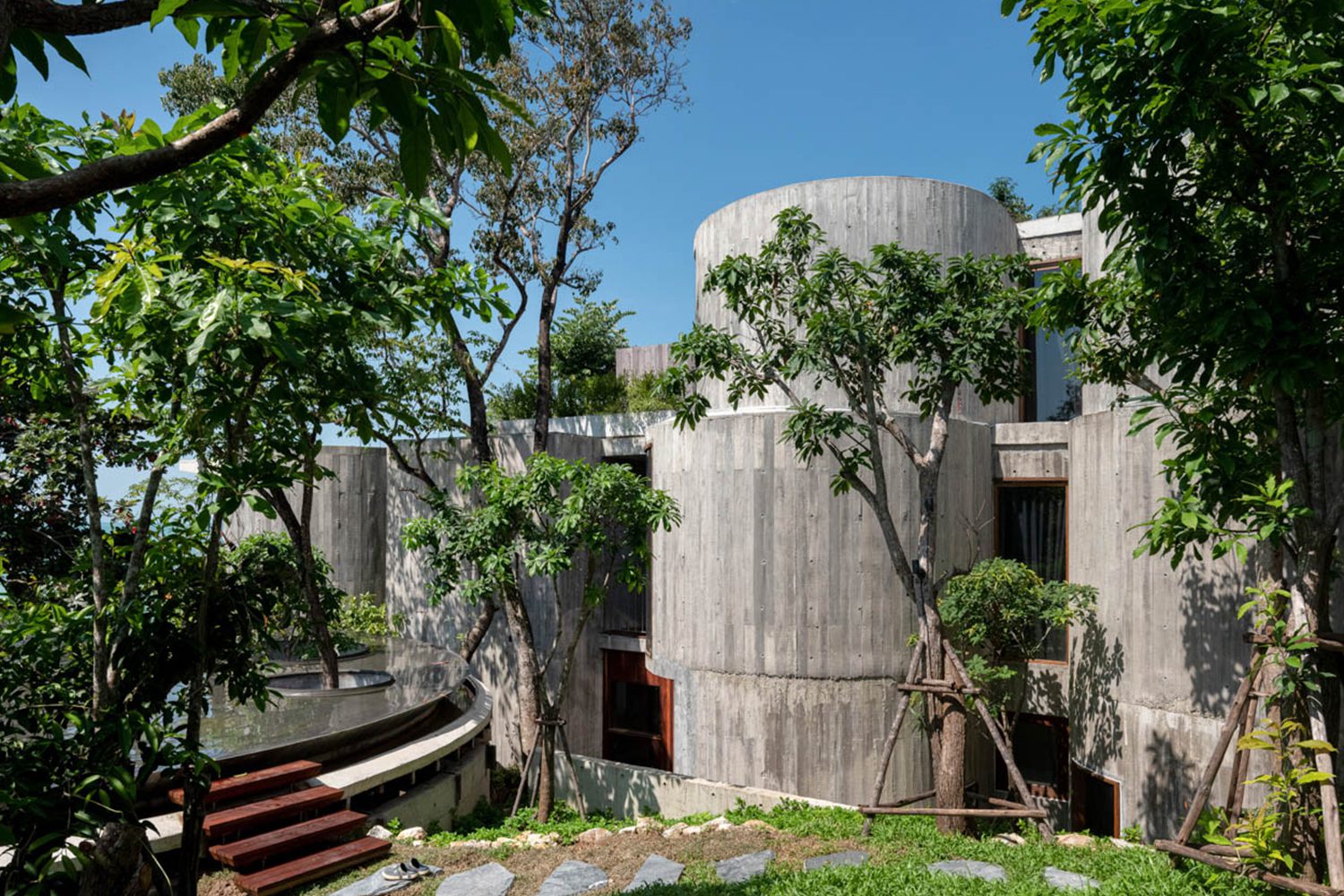
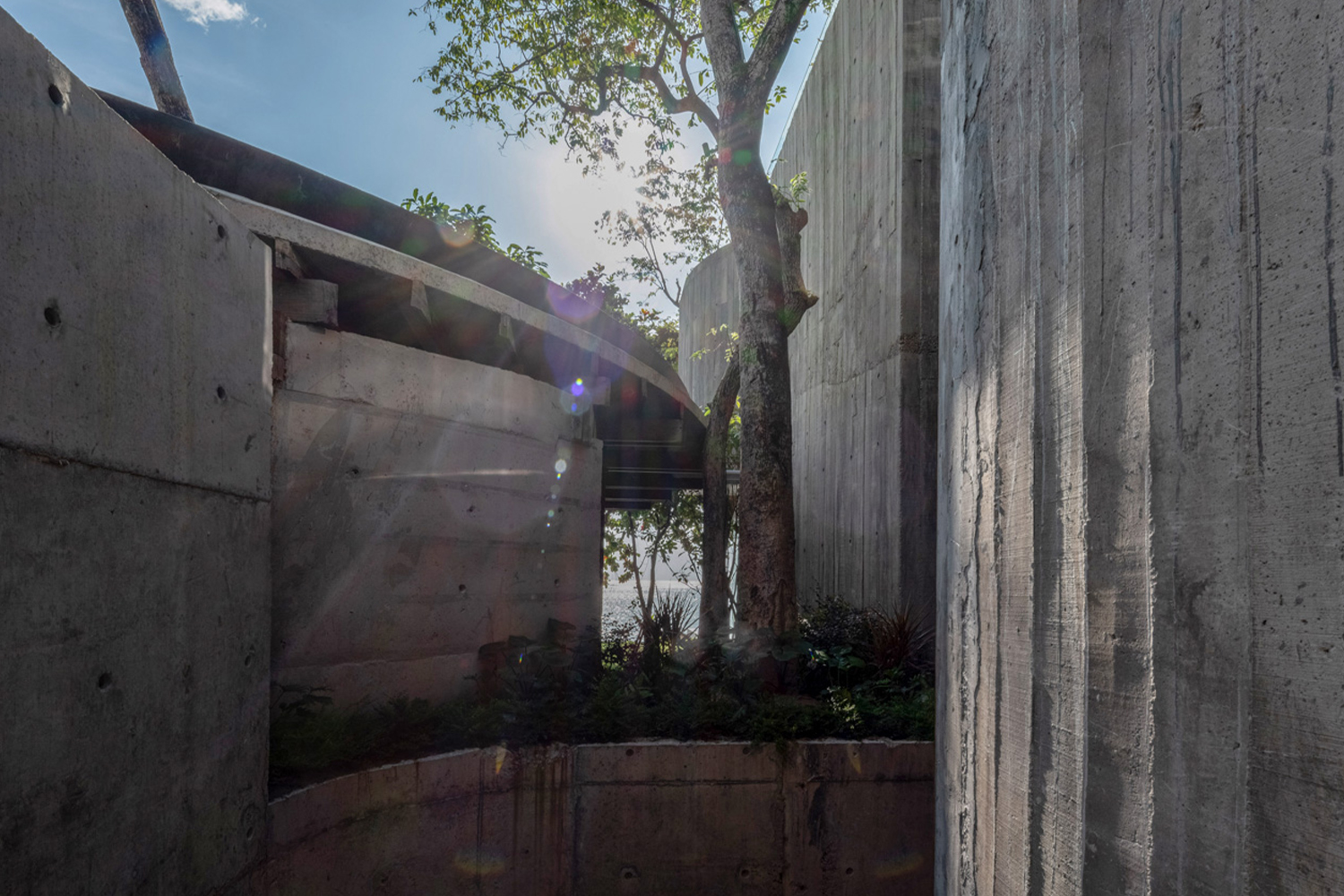
Examining the trapezoidal plot, sandwiched between the road and the beach, reveals a limited depth of only around 40–60 meters. Establishing privacy therefore begins with the placement of a long reception building along the road edge, acting as a buffer against noise and visual disturbance. This enhances the sense of seclusion for the interior spaces, which gently slope toward the shoreline. The villa zone is positioned adjacent to The Humble Villas, allowing for operational convenience and ease of movement for staff who work between the two properties. The remaining corner of the site, where setback distances are insufficient for new construction, unexpectedly becomes an advantage. Preserved in its natural state, this area opens up wider views from Vows Villa, creating the impression that the site enjoys beachfront exposure on two sides rather than one.
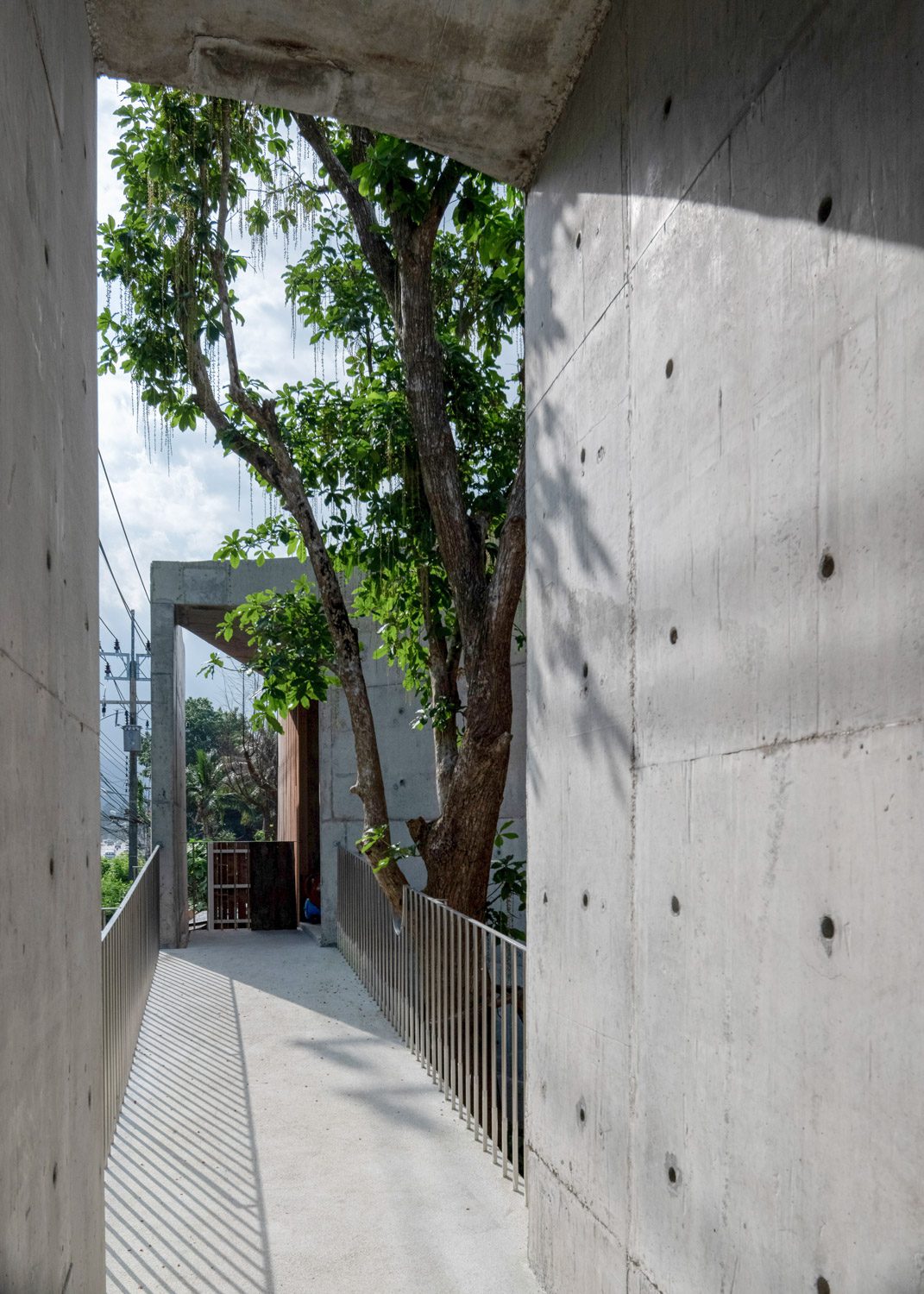
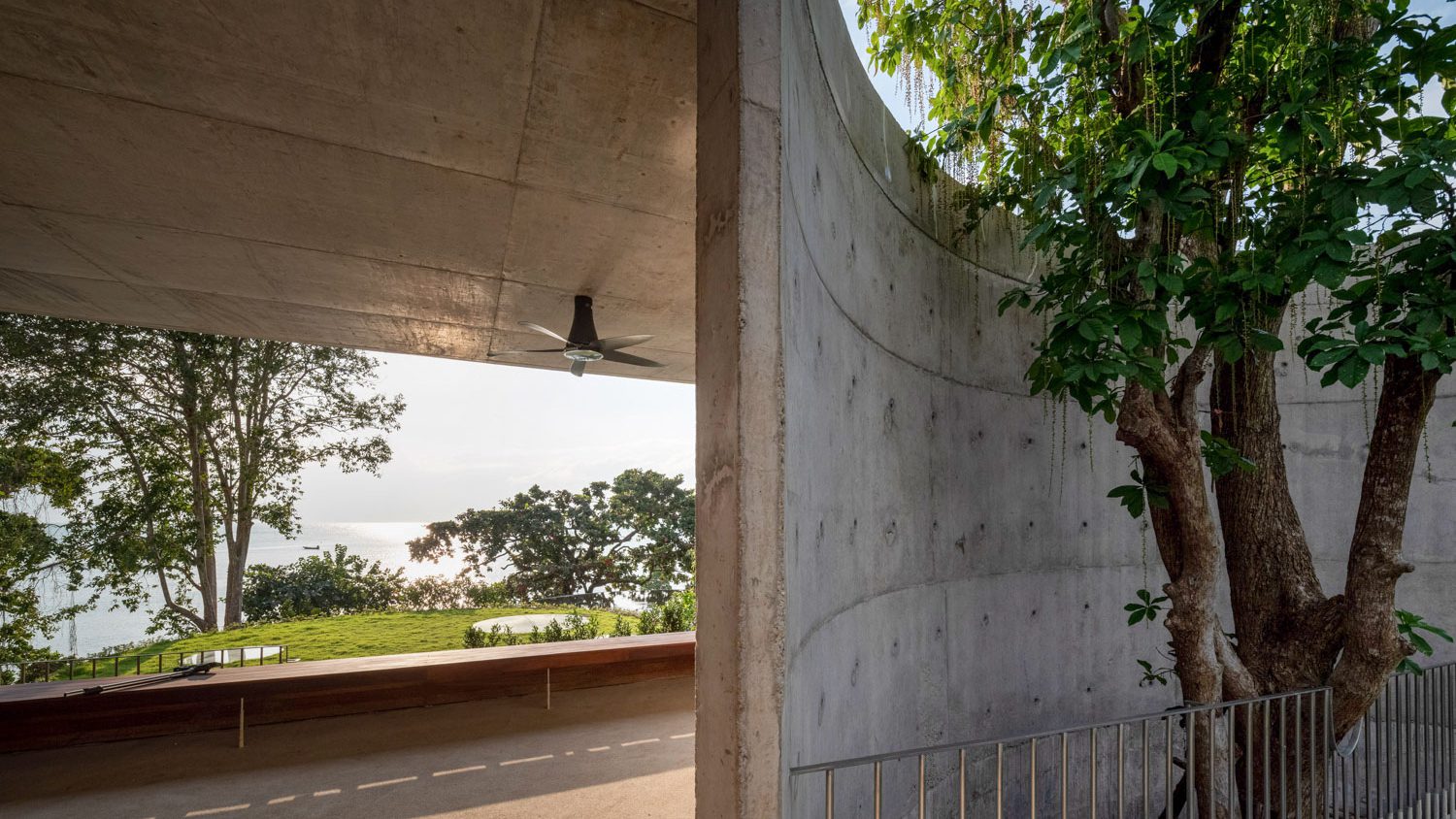
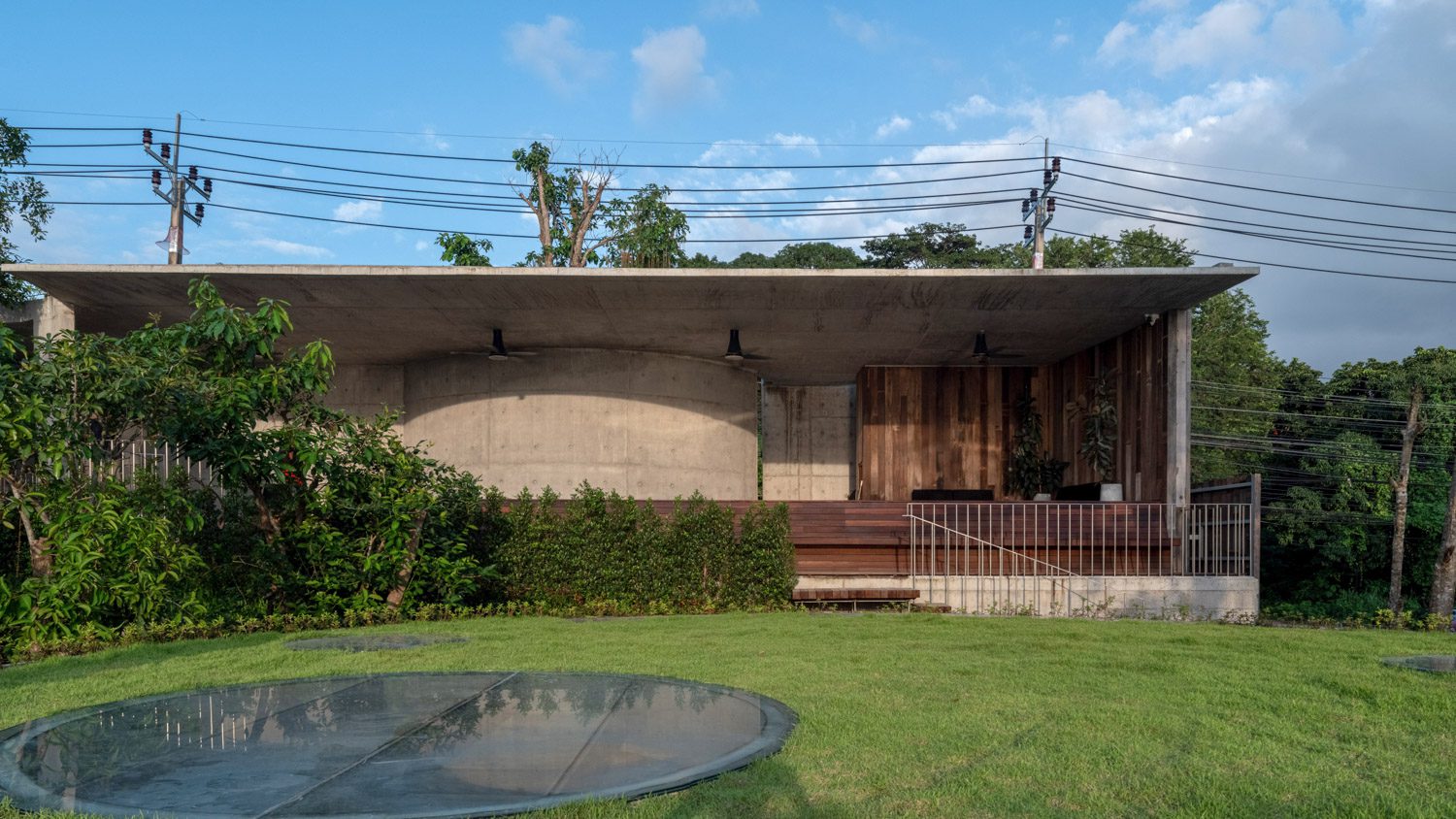
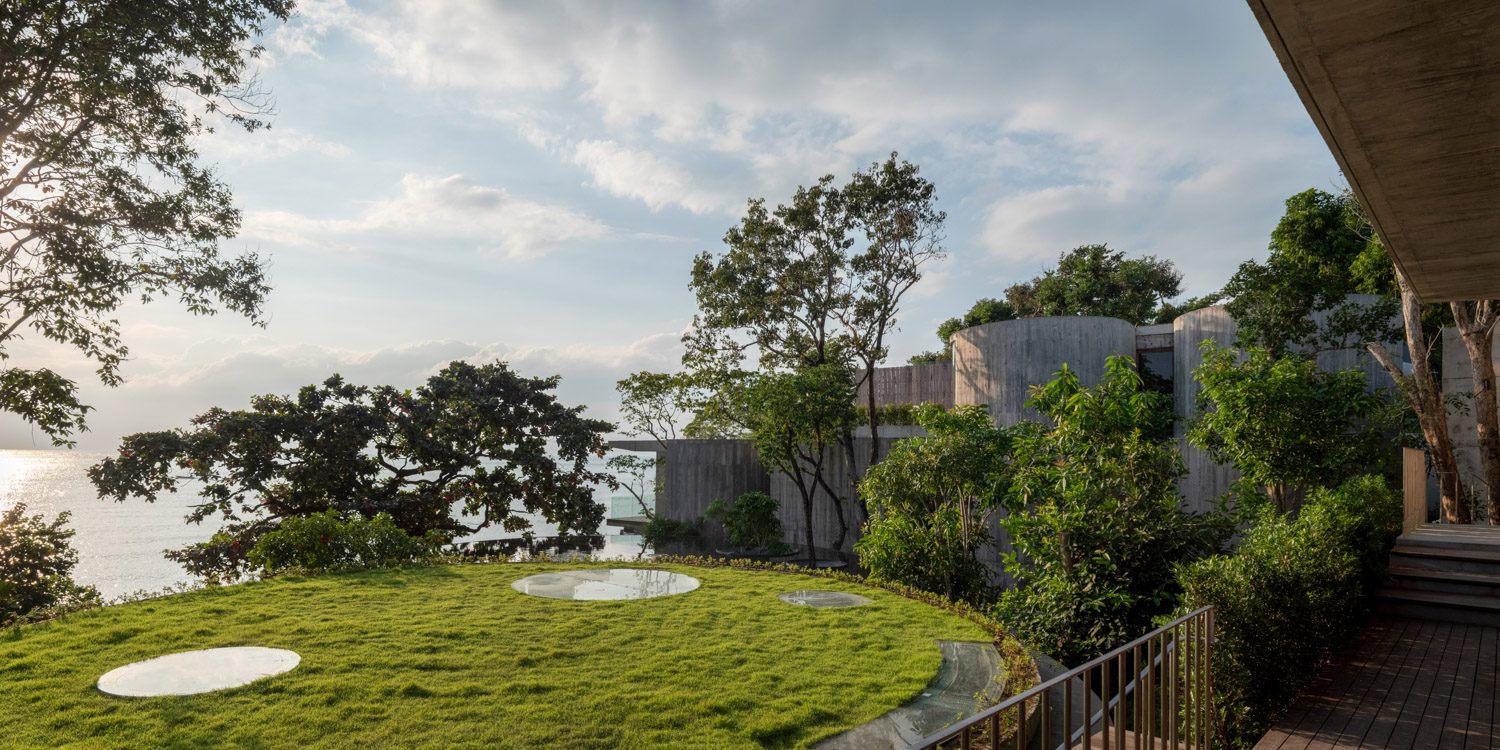
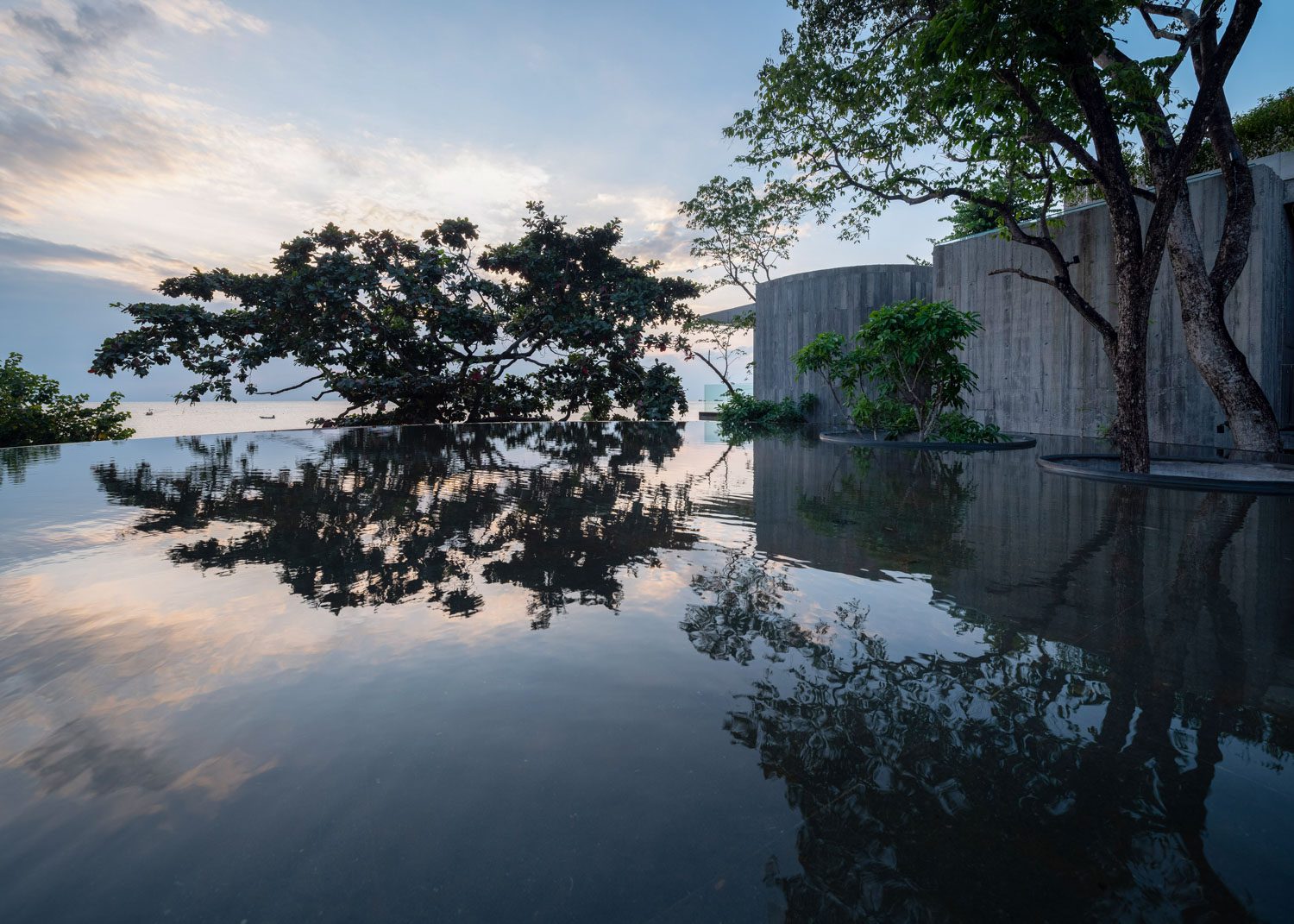
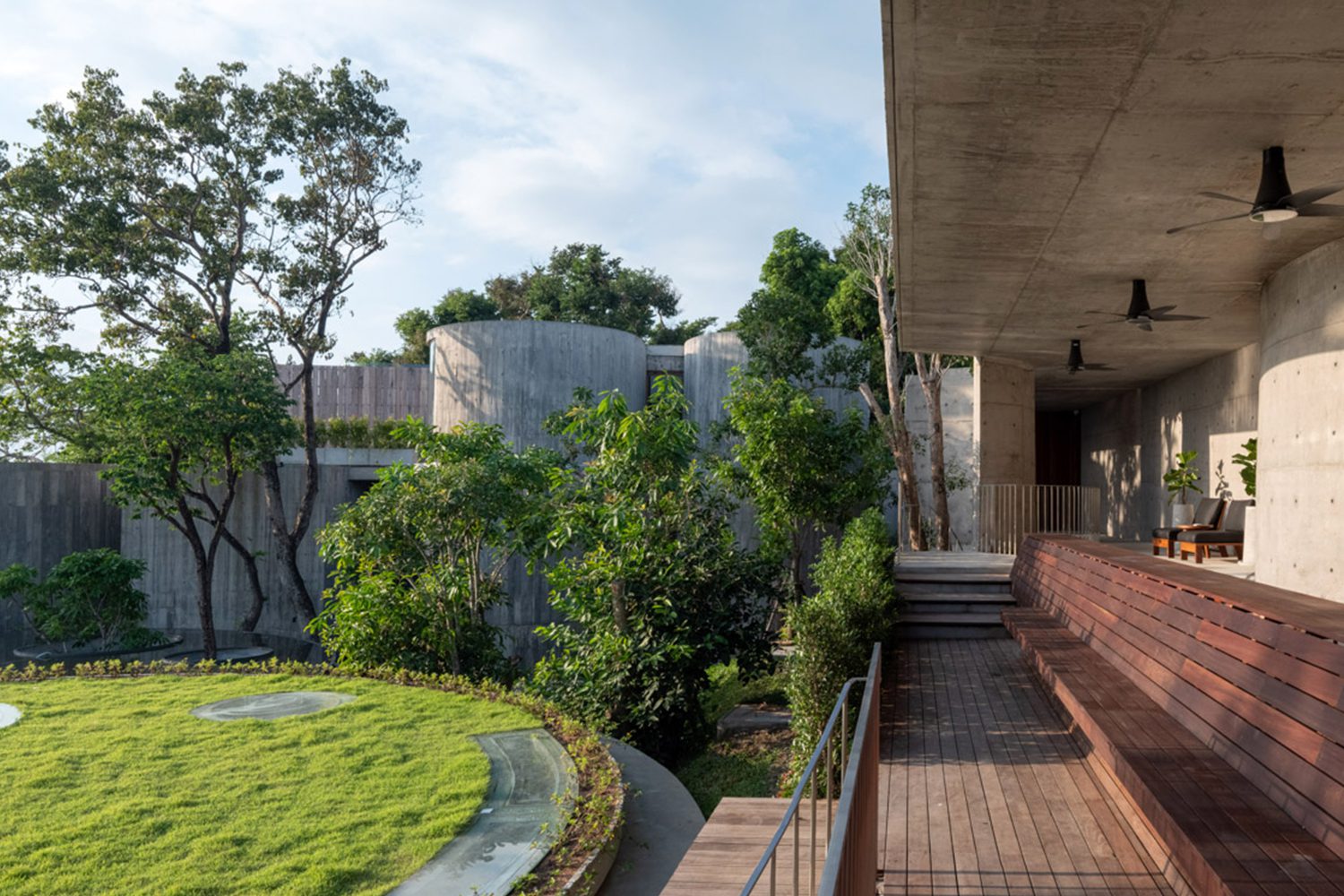
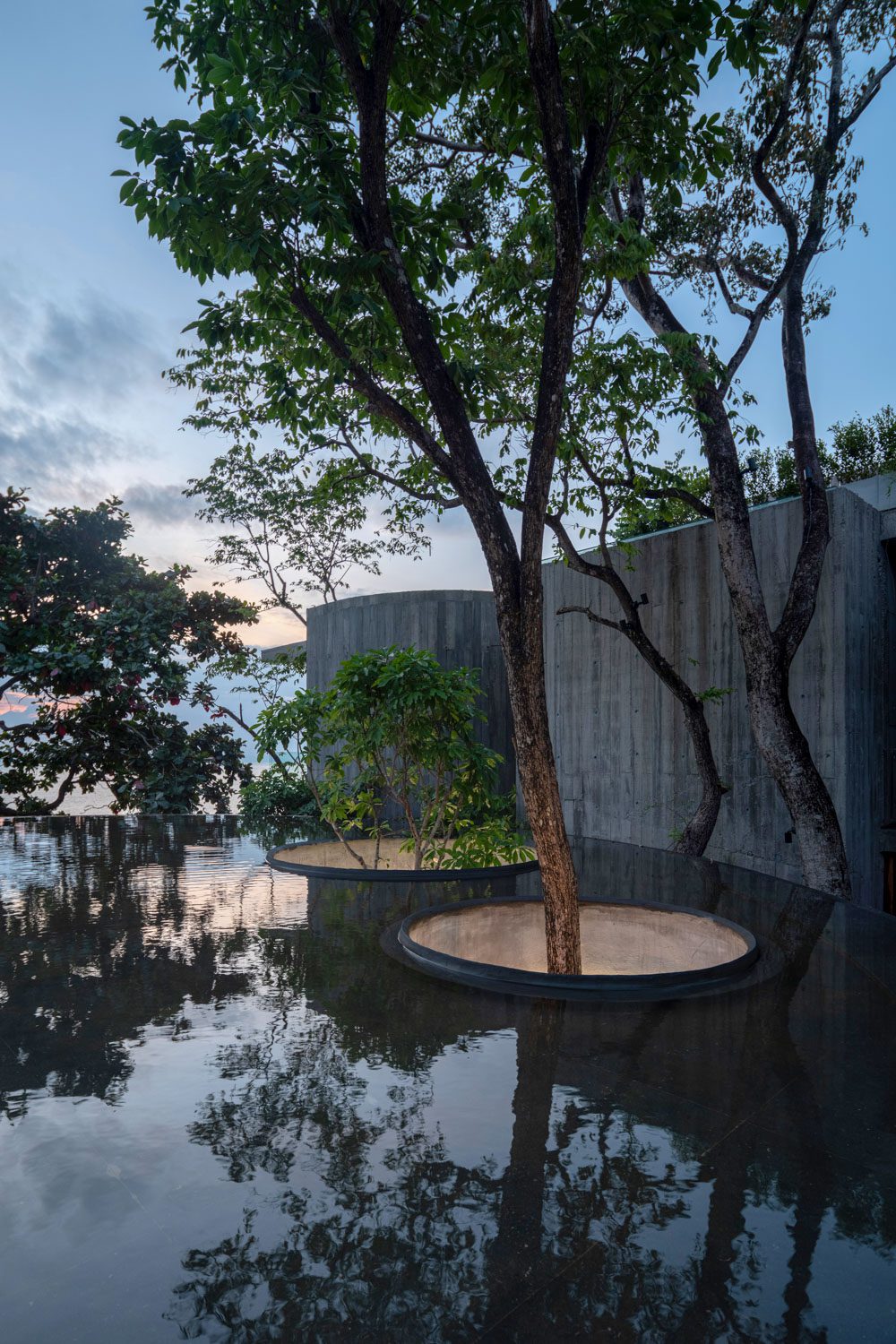
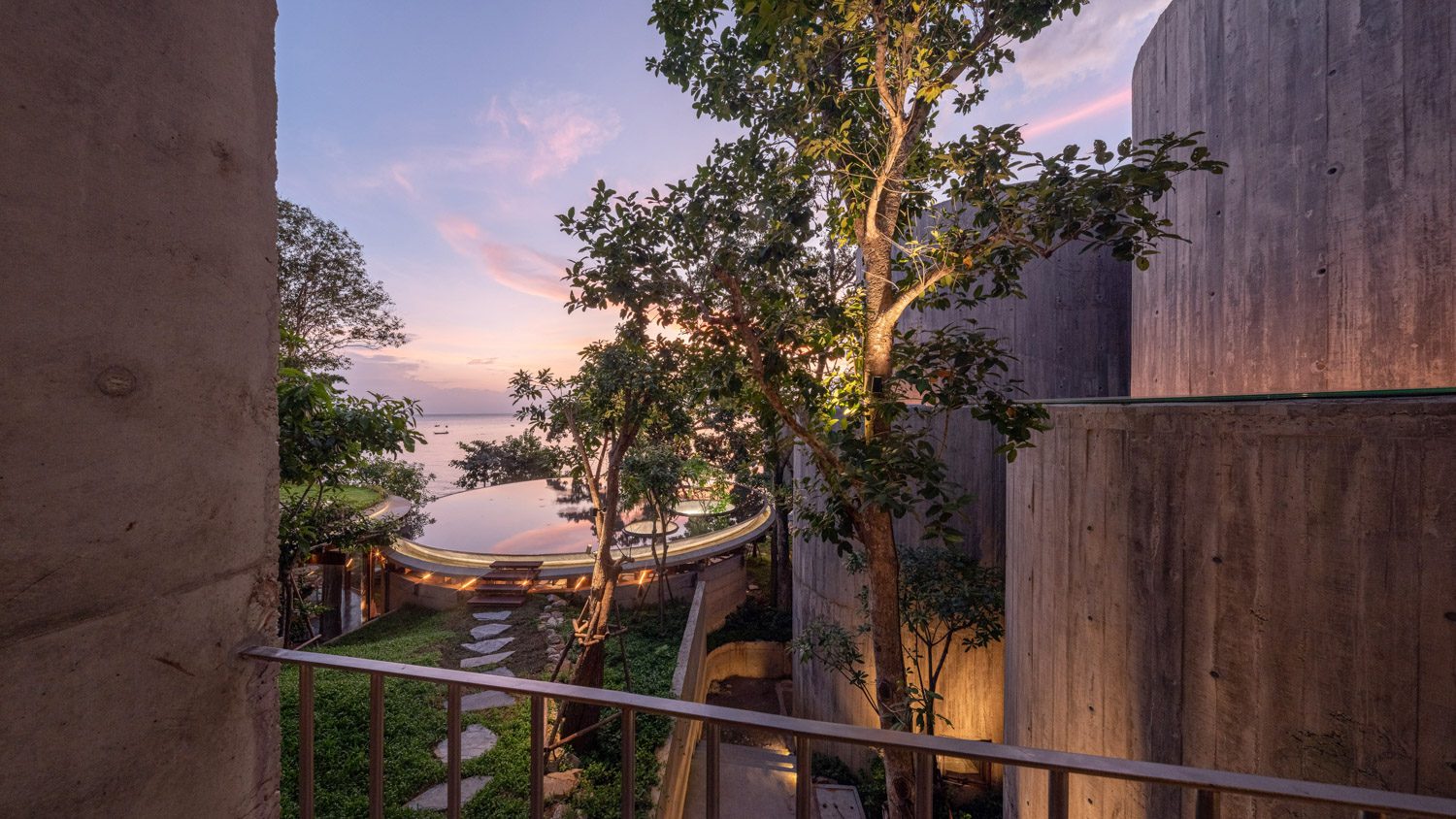
The relationship between the individual buildings and the guest experience is handled with clarity and restraint. The reception building, positioned transversely at the front of the site, gently redirects visitors into a long, linear walkway before releasing the view at its far end. This intervening wall subtly extends the duration of the approach, not as an obstruction but as a means of anticipation, allowing the architects to carefully frame the very first scene encountered upon arrival. That sequence culminates in one of the project’s defining moments: a circular lawn and reflecting pool set within a grove of trees.
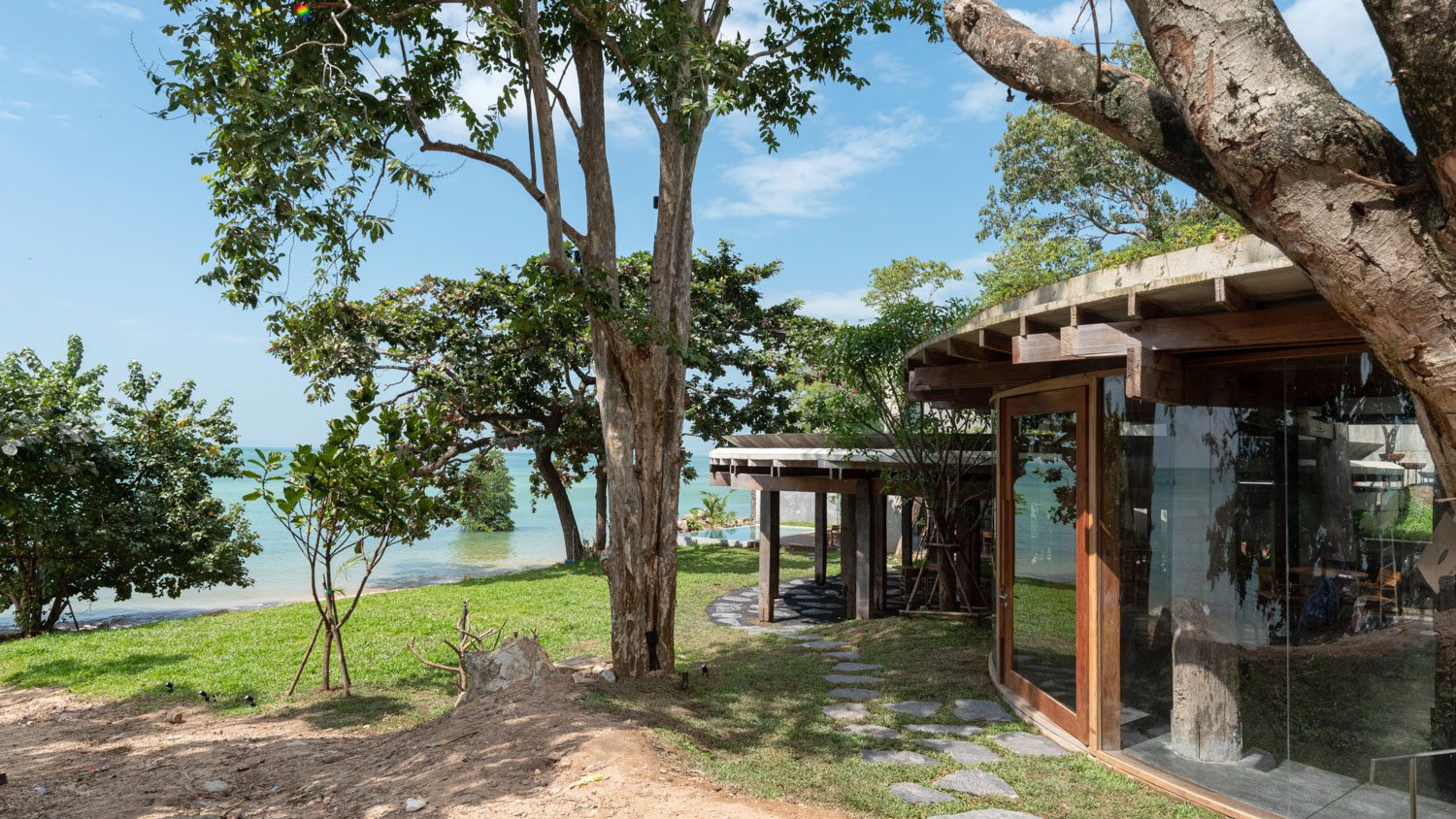
Conceived as the heart of the resort, this space embodies the ambition to create a versatile ‘wedding venue’ capable of accommodating a wide range of ceremonial formats. Its adaptability responds directly to the climatic realities of southern Thailand, where high humidity and the possibility of rain persist throughout the year, even on the most carefully planned occasions. While the lawn and reflecting pool serve as the two primary event settings, they are far from the only options. Beneath each of these open-air spaces lie two shaded stone courtyards, offering sheltered alternatives. Together with the expansive lawns, the beachfront, and the living room of the adjacent main villa, the resort allows wedding programs to expand and shift fluidly across multiple settings, extending the possibilities of use well beyond a single, fixed scenario.
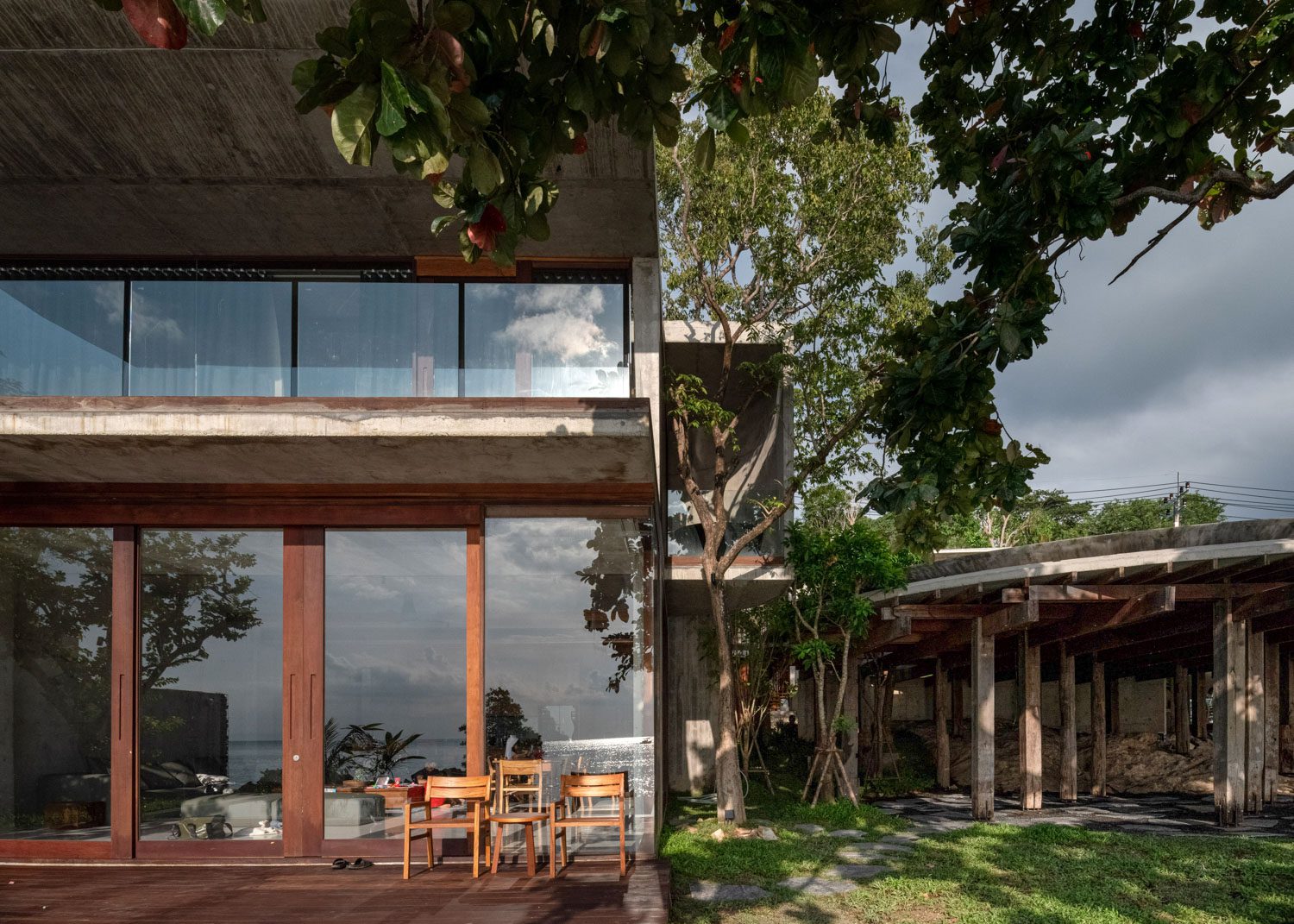
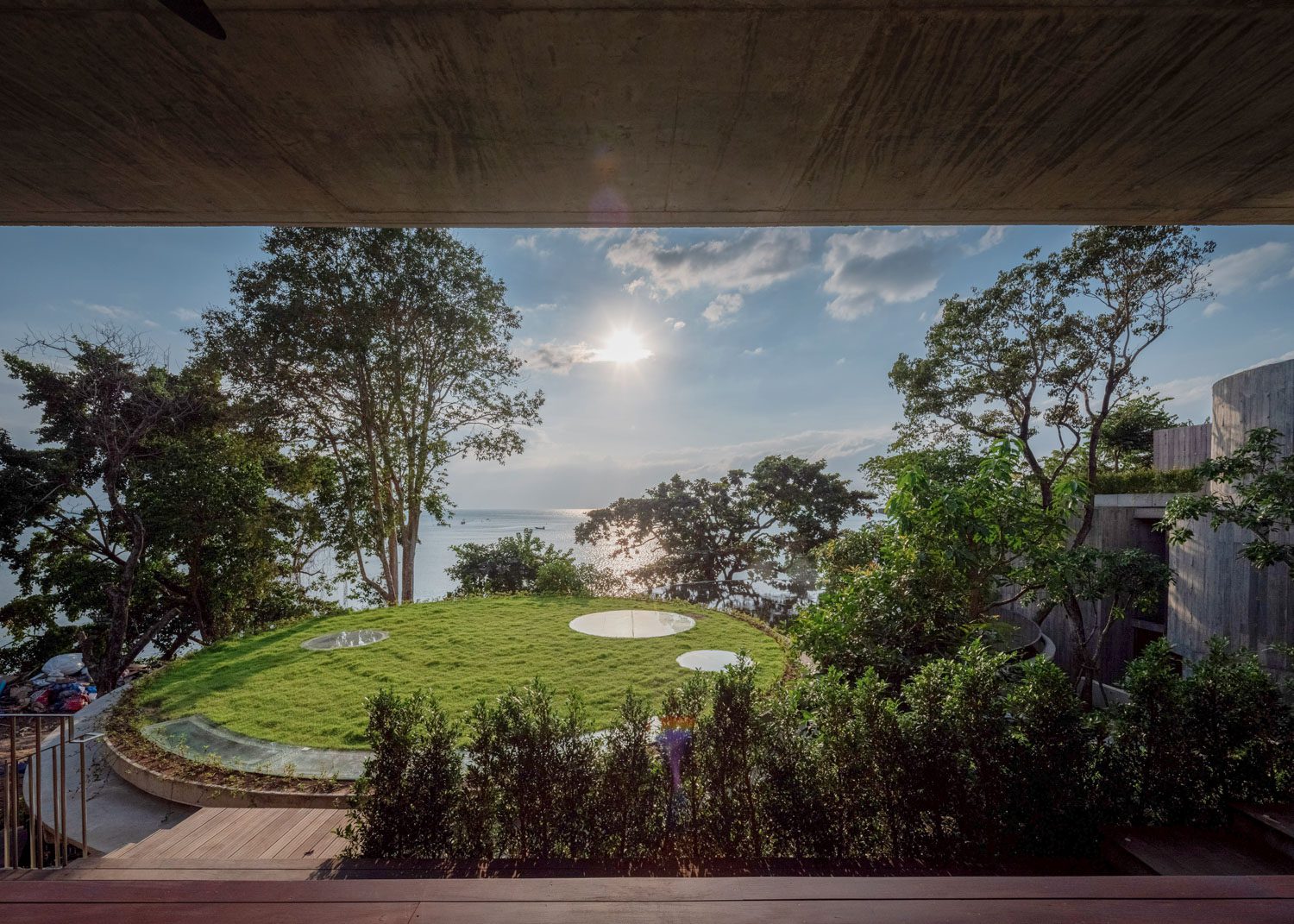
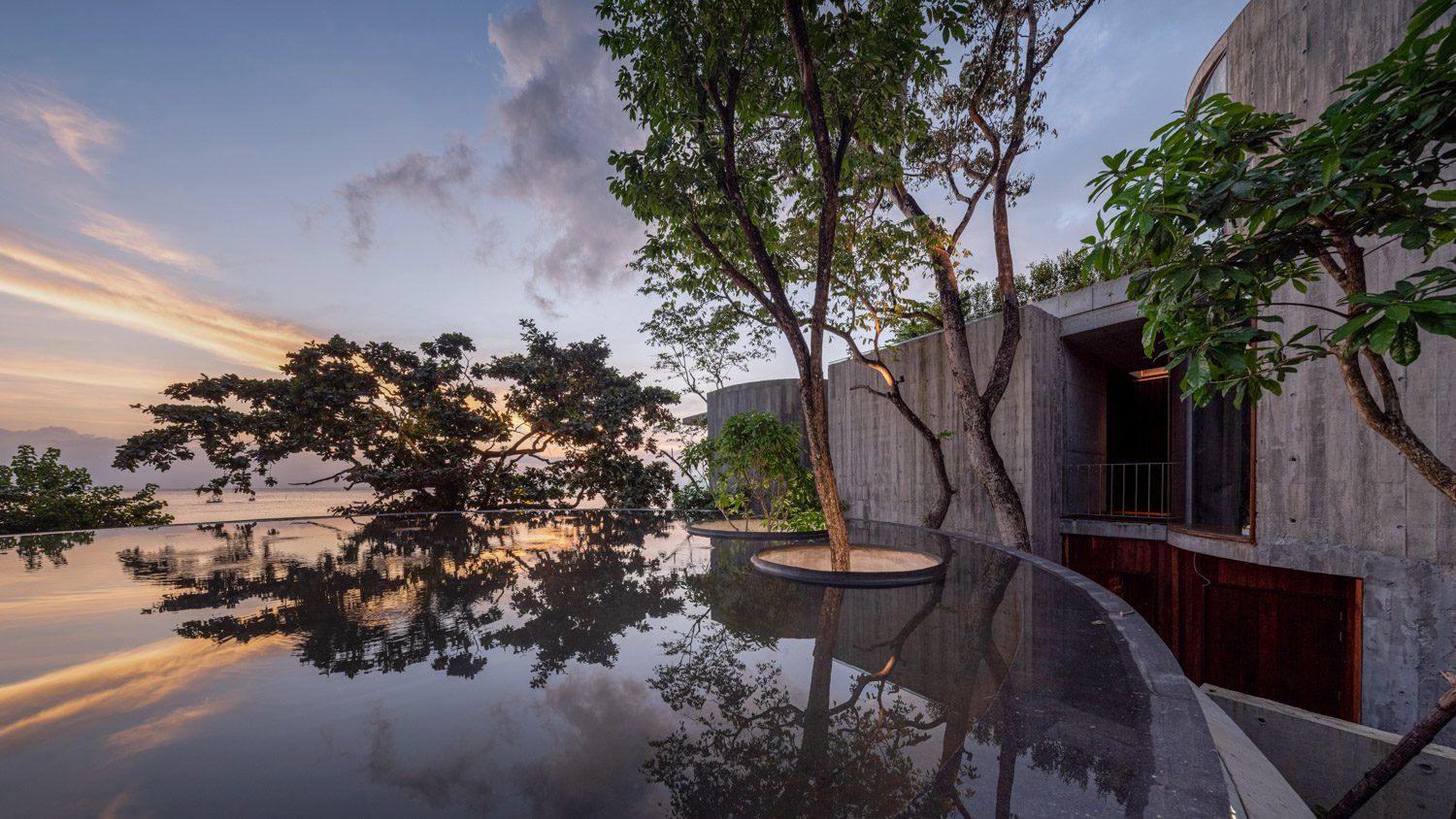
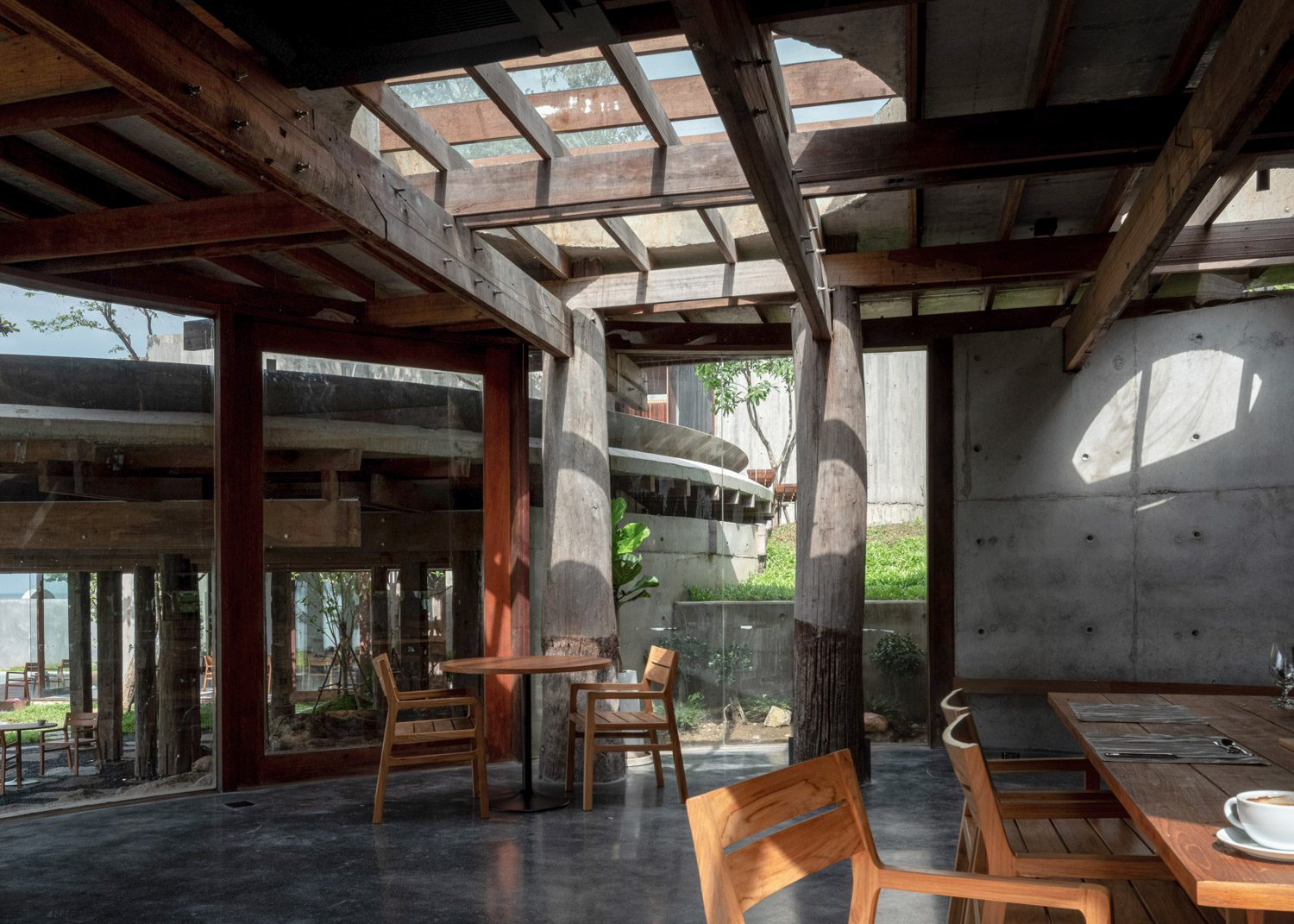
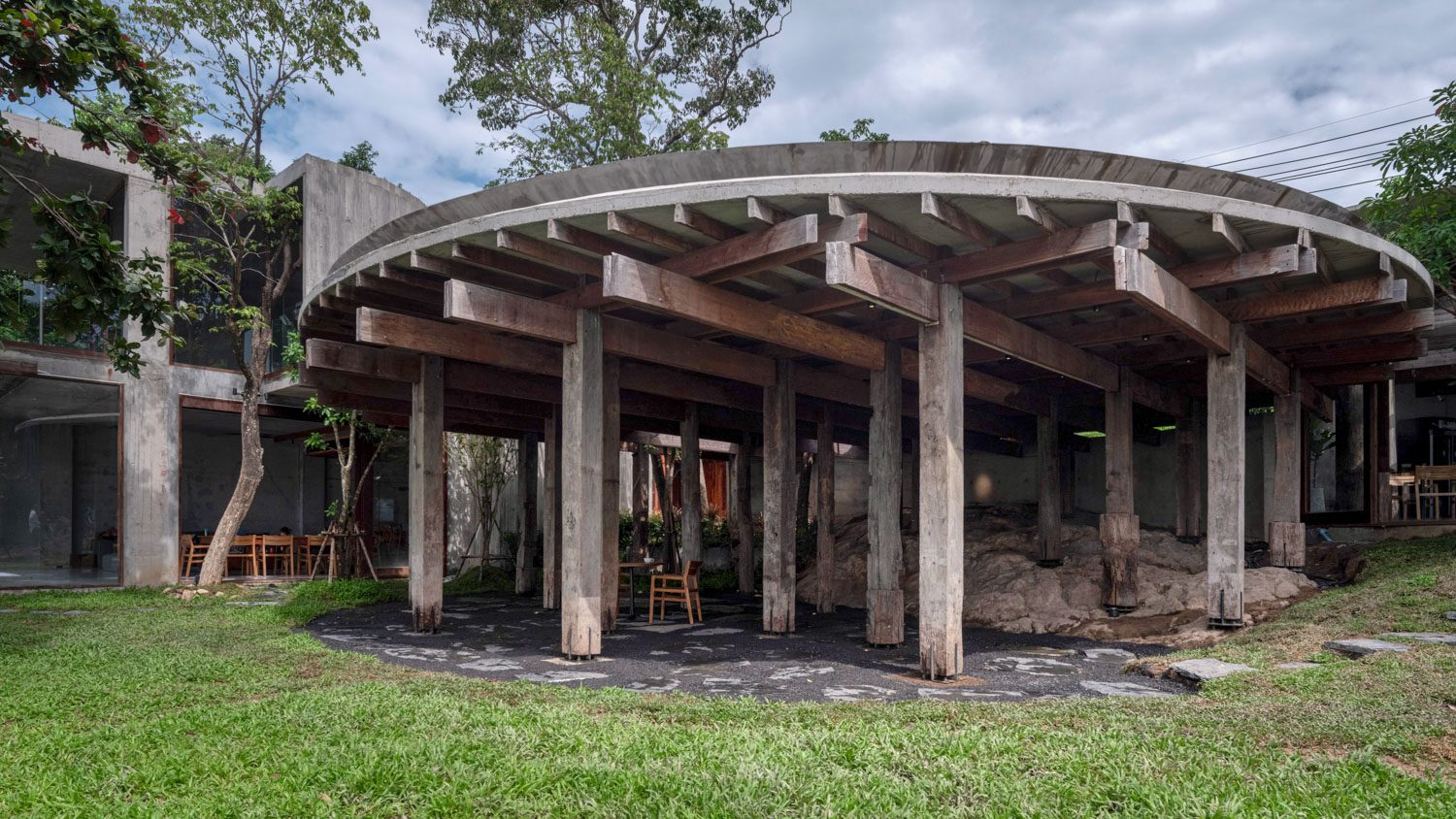
Originally, the site was densely layered with vegetation, from ground cover to tall, slender trees. Yet after the initial site clearing, the design team realized that the sensation of being ‘enveloped by greenery’ was precisely what had been lost. The reflecting pool was introduced as a means of restoring this missing layer of green, reconstituting the landscape as an immersive, enveloping presence. Metal plates are installed atop the flat slab roof to conceal the pool’s edges, while carefully placed openings allow trees to grow up through the structure, blurring the boundary between architecture and landscape. Equally compelling is the structural strategy employed to support both courtyards. Rather than conventional solutions, the architects chose timber, specifically reclaimed timber.
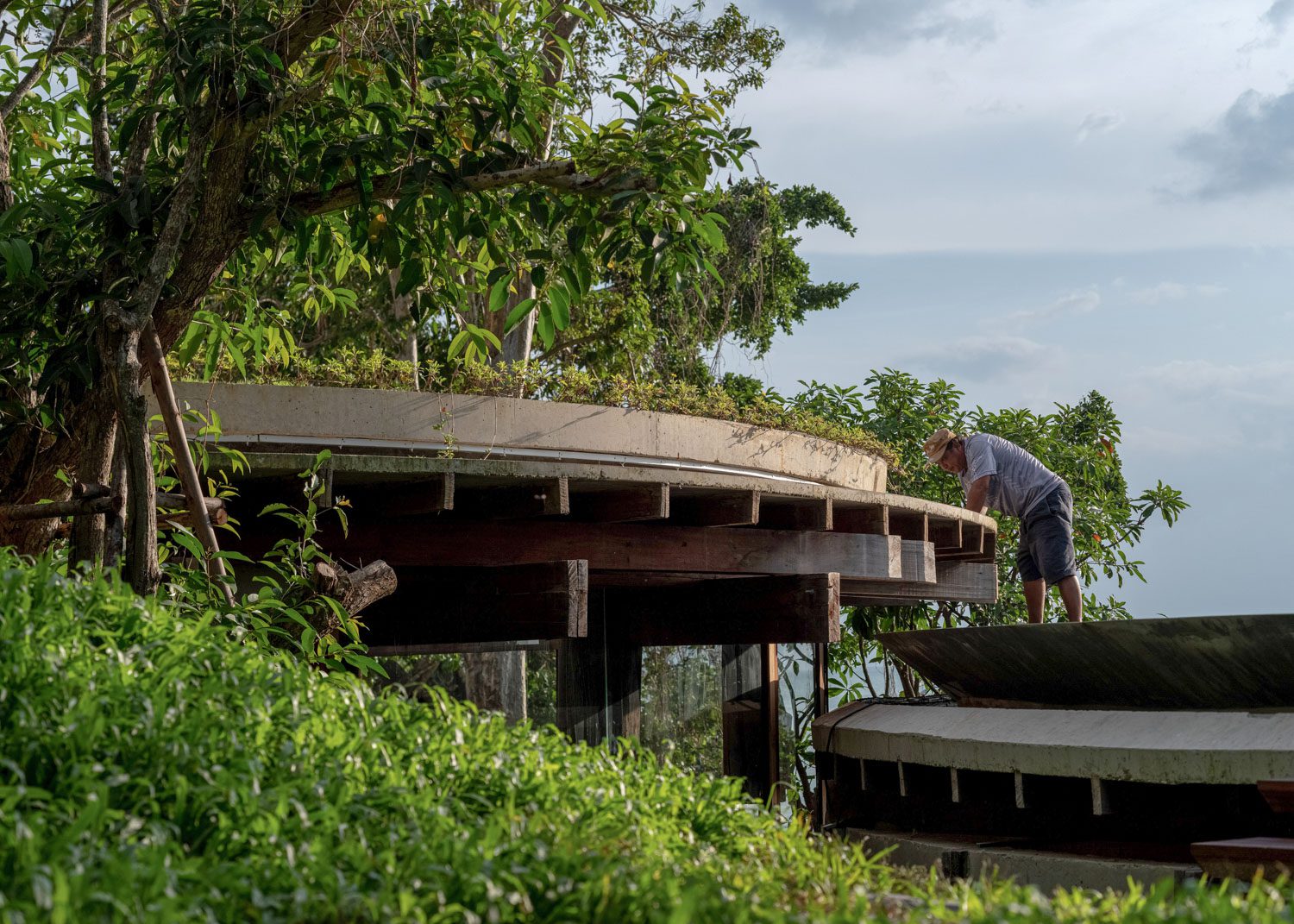
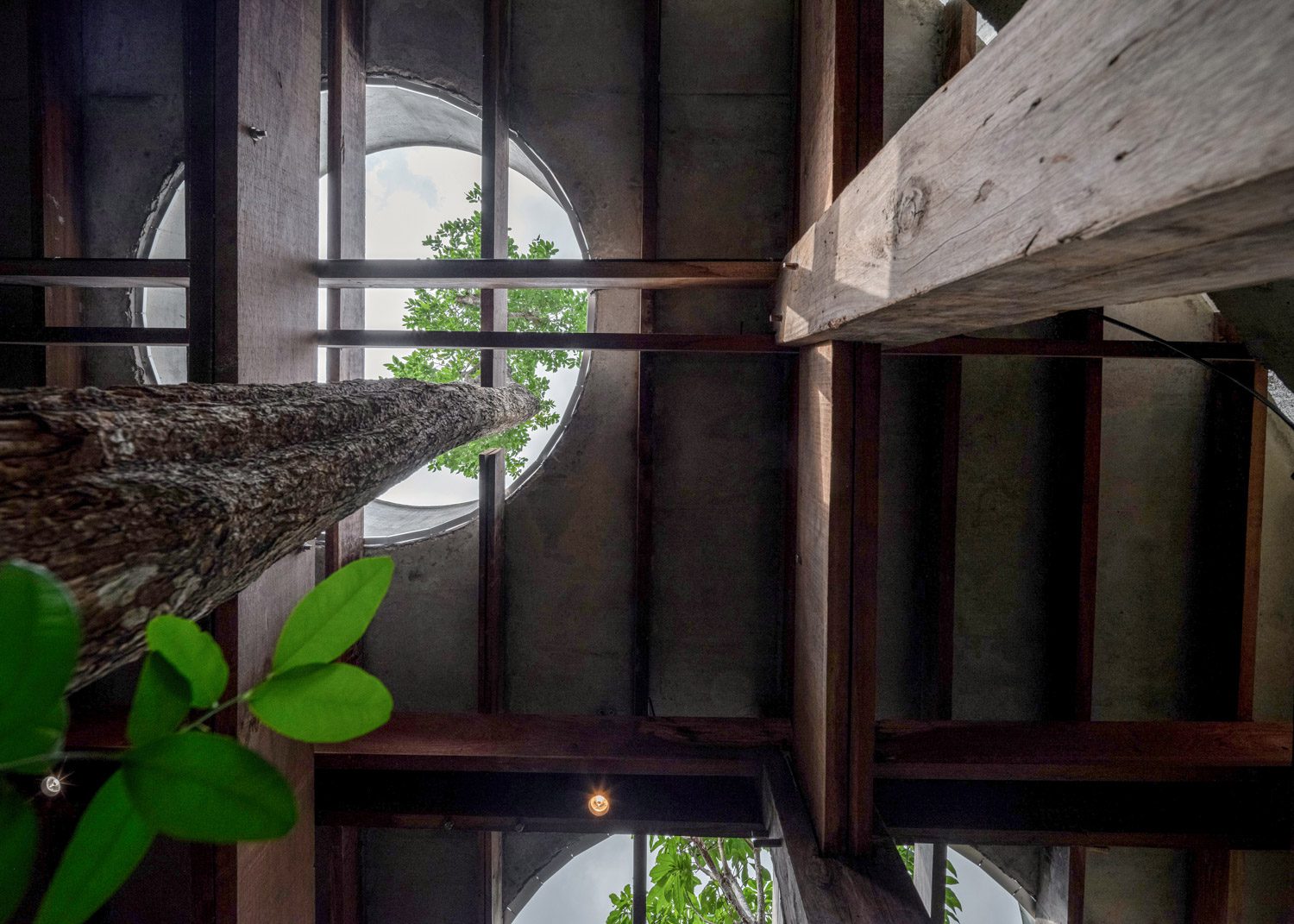
“We began by asking how a building could exist by the sea, with wind and rain, without deteriorating,” explains Patchara Wongboonsin, co-founder of POAR. “When we started researching, we realized that structures along the coast that endure are often wooden buildings. In the past, sea communities drove wooden posts directly into the water and they lasted. We were confident in this, yet timber is still widely perceived by both architects and the public as the weakest material. In reality, wood has been fundamental to architecture from the very beginning. With this project, we wanted to demonstrate its durability and reveal its true potential. We placed concrete directly on top of the timber structure, without using any steel beams at all.”
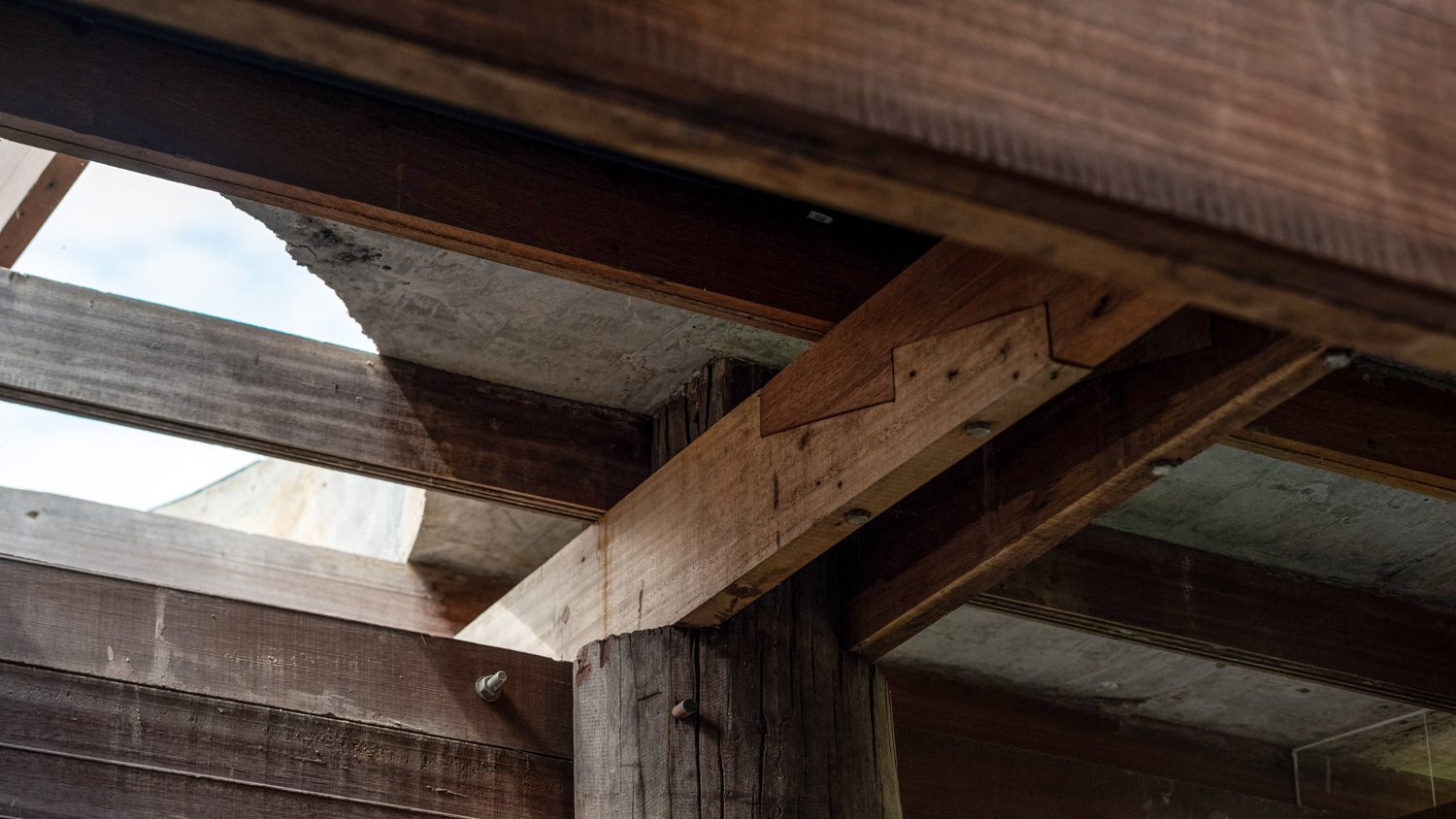
The owner of Vows Villa is a local contractor specializing in doors and windows, with deep knowledge of timber and an established team of carpenters already in place. By chance, he came across a stock of teng wood salvaged from a school in Phayao. Teng wood, particularly from Phayao Province, is known for its exceptionally high oil content, which makes it resistant to termites and prevents water penetration. Yet these very qualities, its hardness and density, also make it difficult to cut, shape, or repurpose into furniture, resulting in remarkably low market prices for the reclaimed columns.
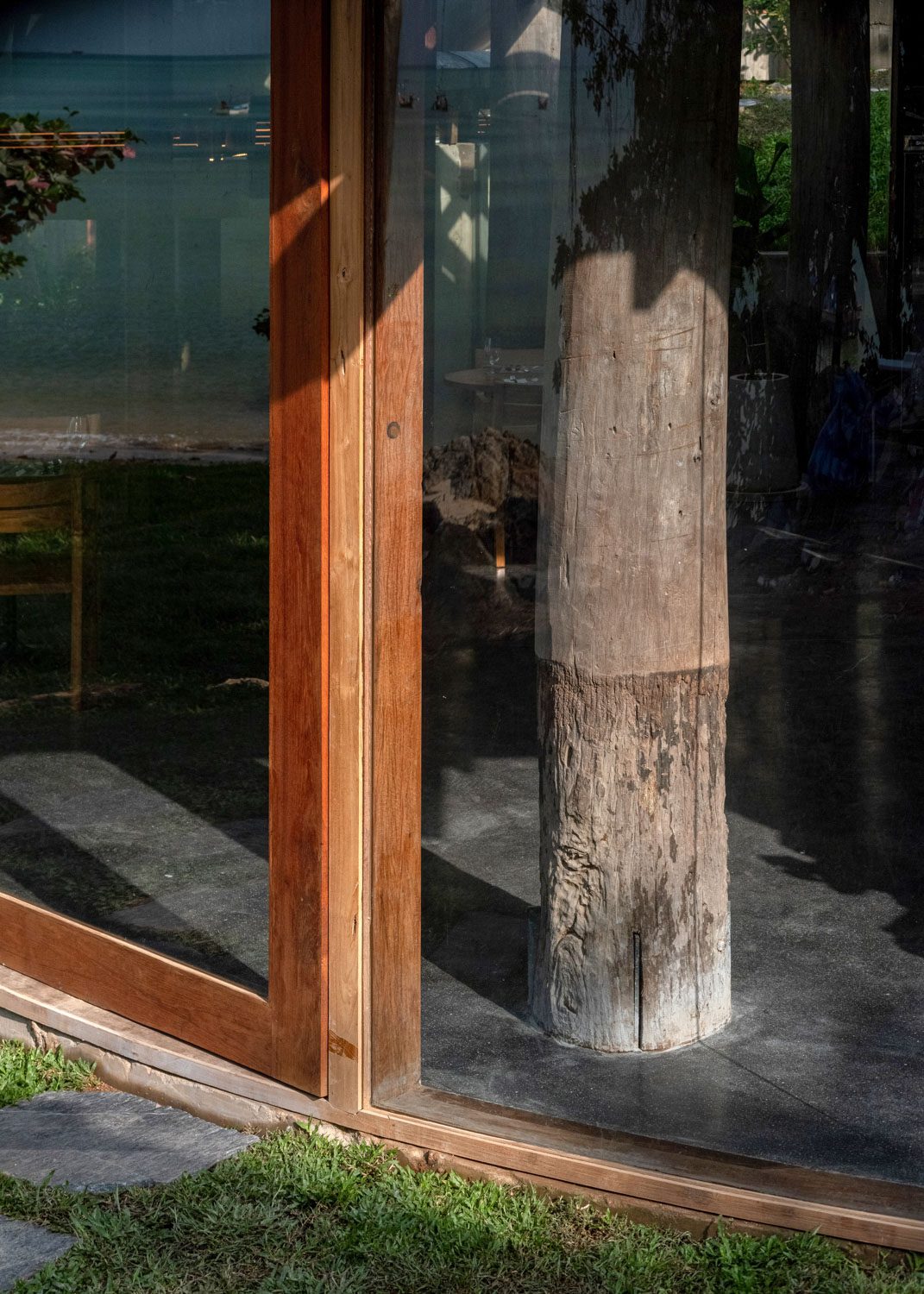
“Although the wood is rich in oil, its density is so high that it does not easily catch fire. When we choose to use timber in architecture, we have to prove why it performs better,” the architect explains. “Steel may be stronger than wood, but once exposed to fire, its strength is almost entirely lost; its tensile capacity disappears. Concrete, too, relies on steel reinforcement inside. Timber behaves differently. Even if fire burns away the outer surface, the inner core, where its true strength lies, often remains intact and structurally sound. Wood performs best when it is properly understood.”
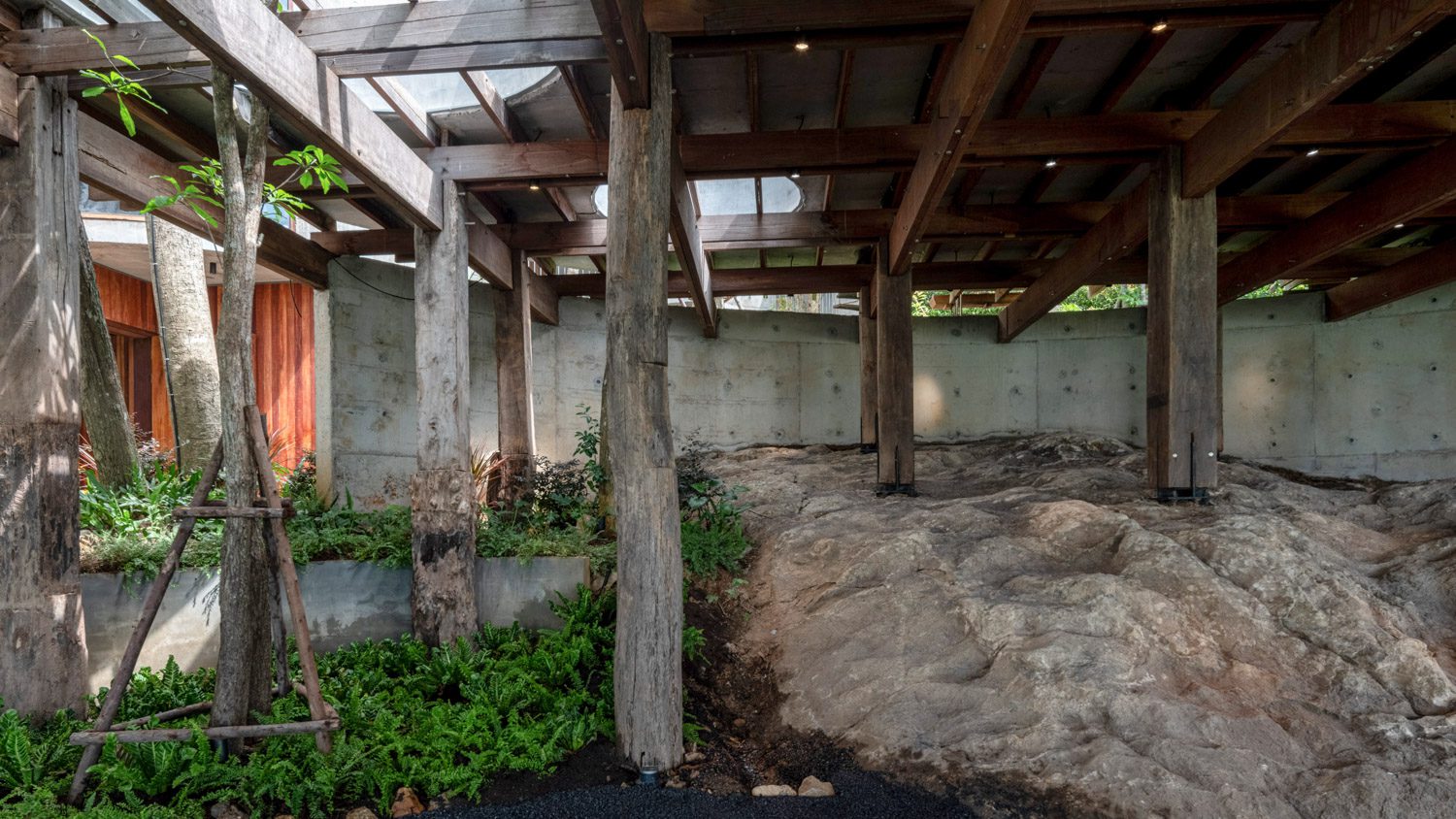
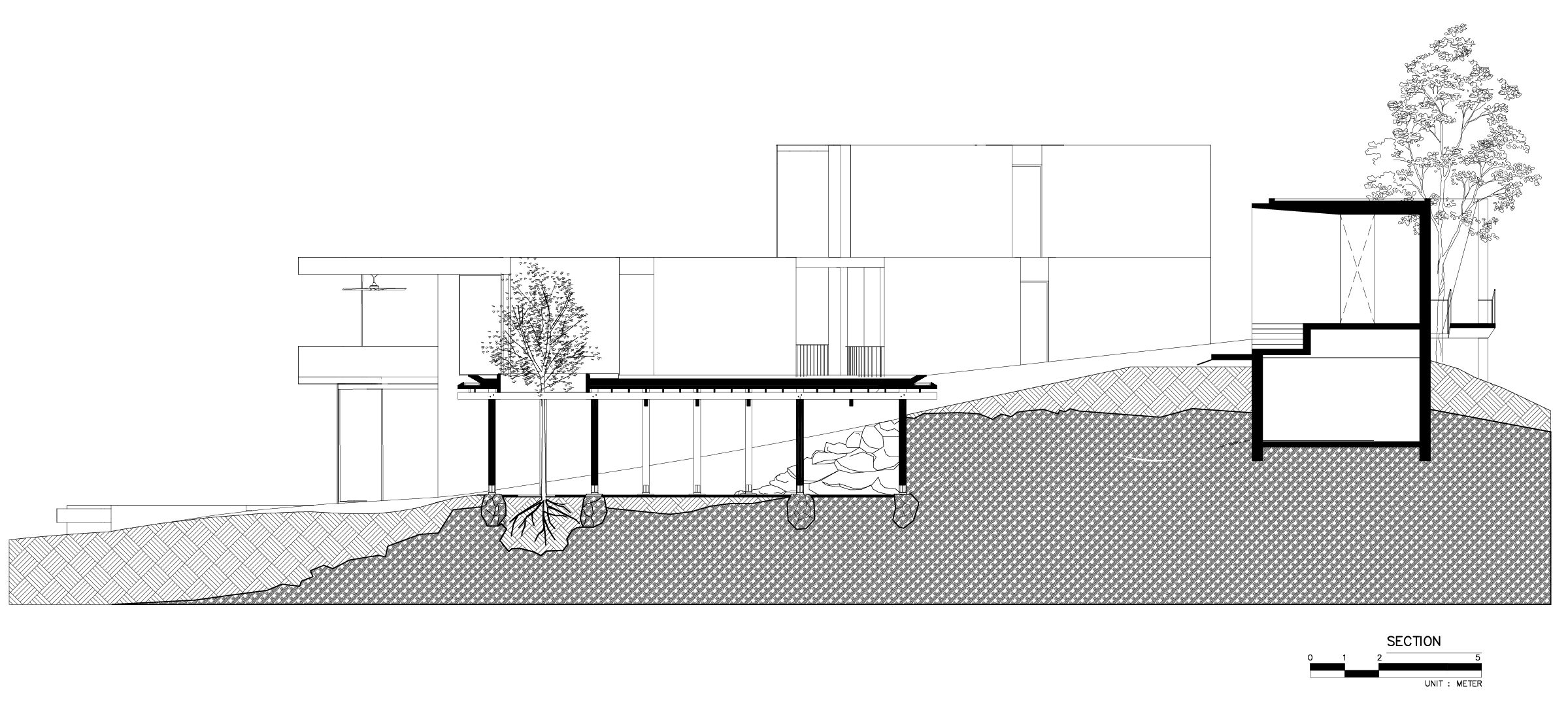
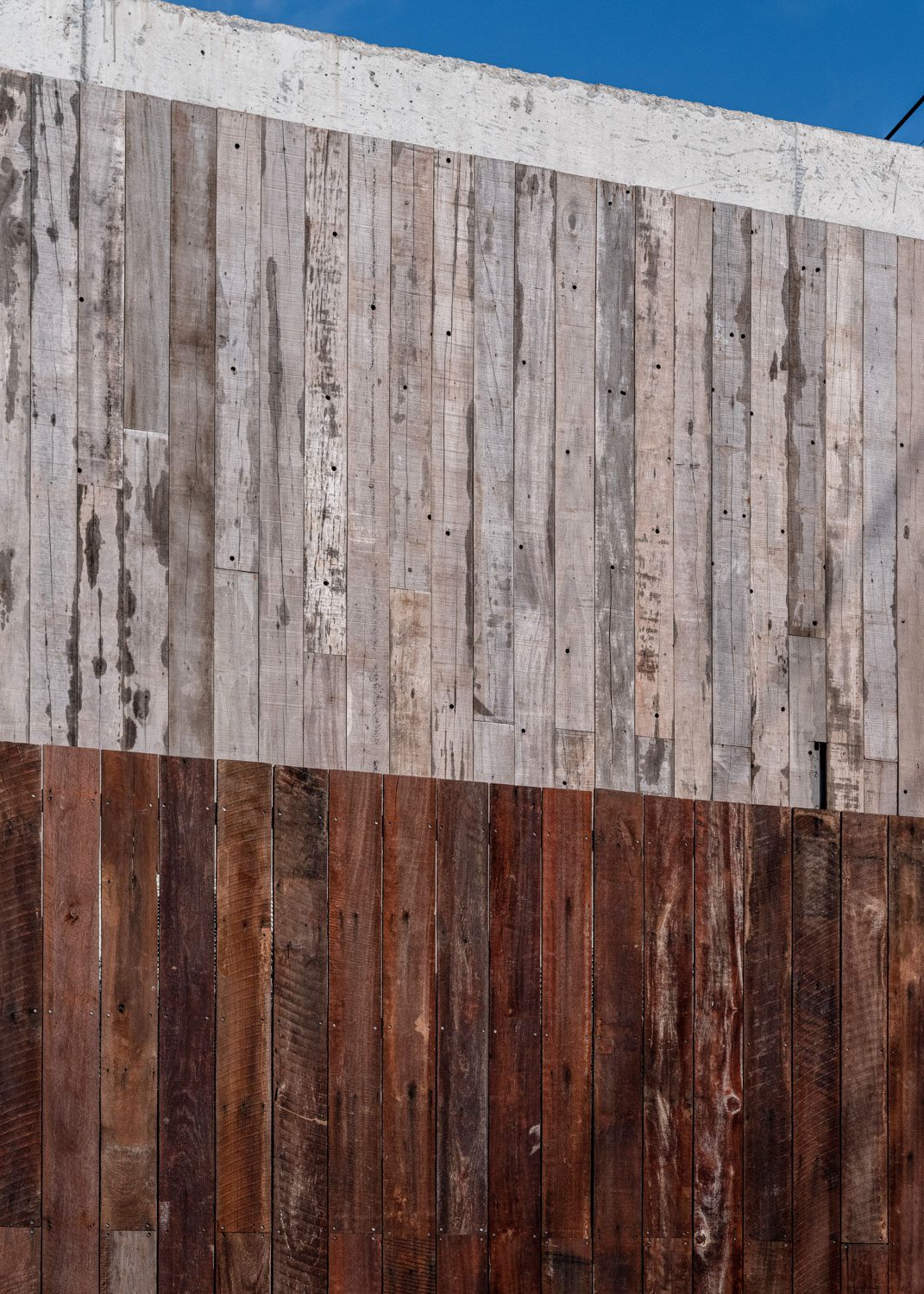
For this reason, the wedding pavilion, which is constantly exposed to sea breezes and coastal conditions, was ultimately conceived as a timber structure. Reclaimed wooden columns are set on steel bases for level adjustment, without deep foundations or piles embedded in the ground. This approach allows the columns to be positioned closely alongside existing trees on site, preserving the natural landscape. Other architectural details are likewise sourced from reclaimed door and window frames, recognizable by the beveled cuts once used to fit traditional jamb corners.
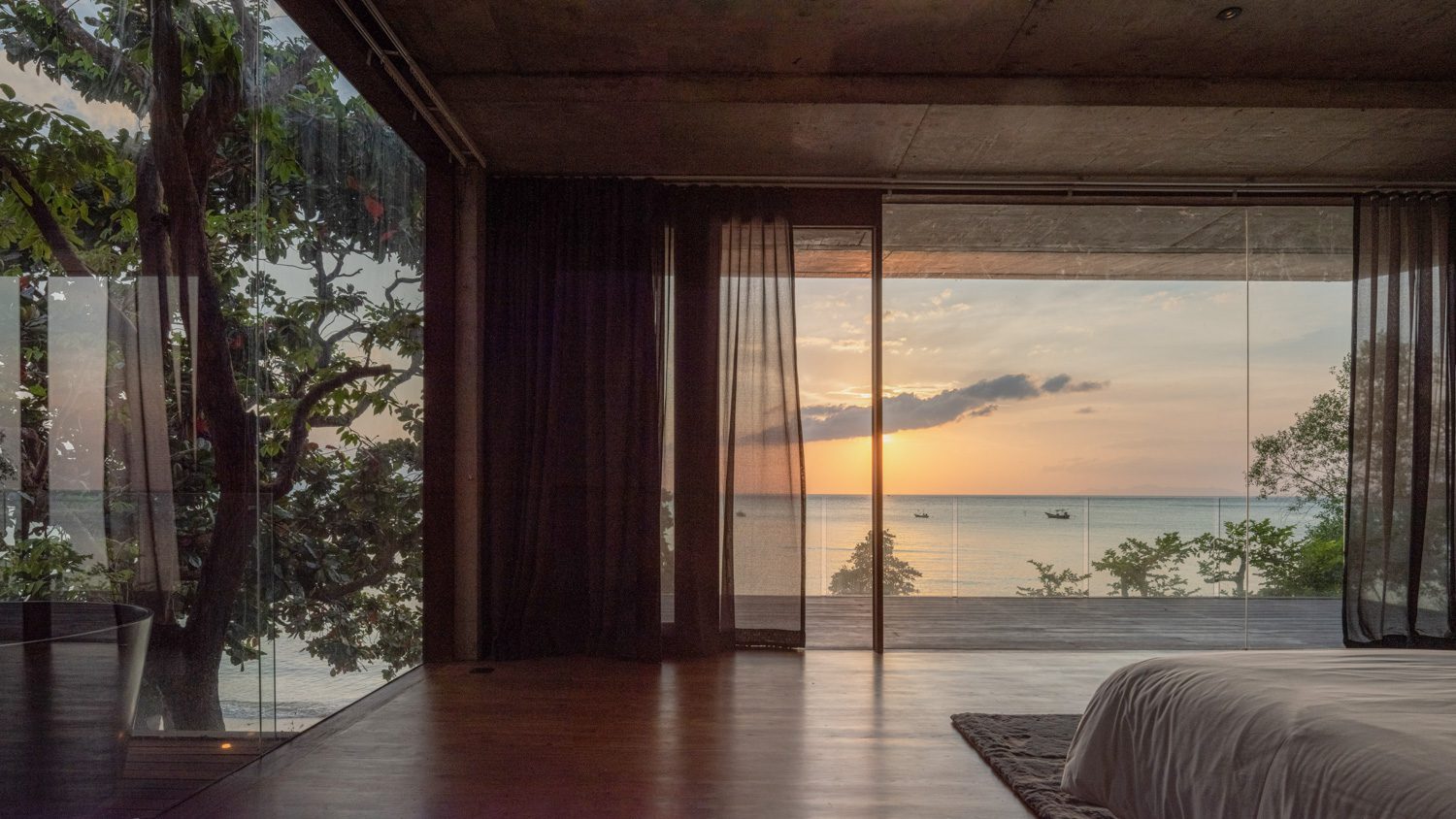
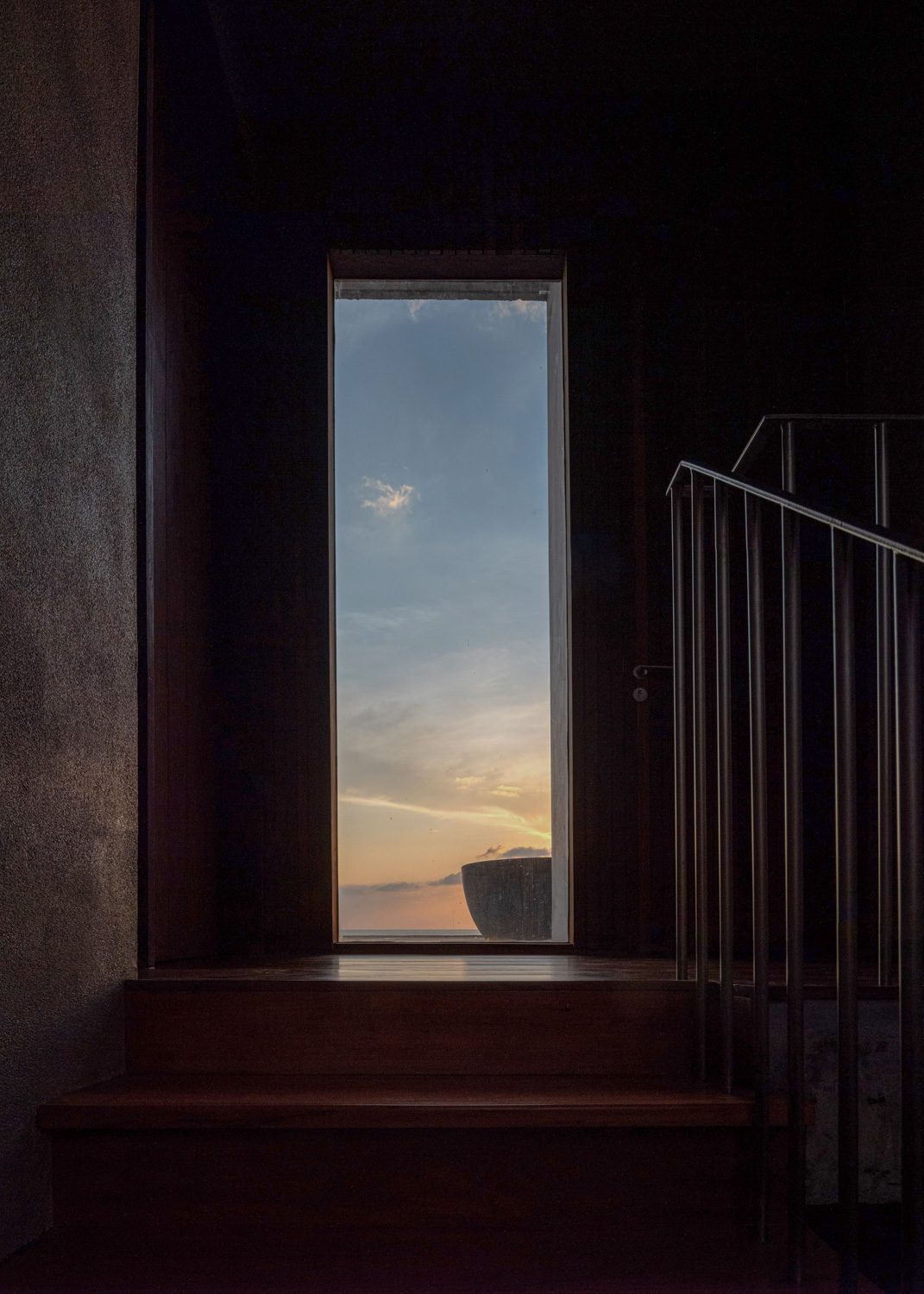
The guest accommodations are likewise conceived around flexibility, though of a different kind from that required of the wedding venues, which must respond primarily to weather conditions. Here, flexibility serves the users themselves. During the high season, when weddings may take place almost every other day, extended families often arrive together and occupy an entire villa. Designing all units as a single building would naturally offer a greater sense of convenience and togetherness. Yet from another perspective, such an arrangement could limit the resort’s ability to accommodate smaller groups during the low season.
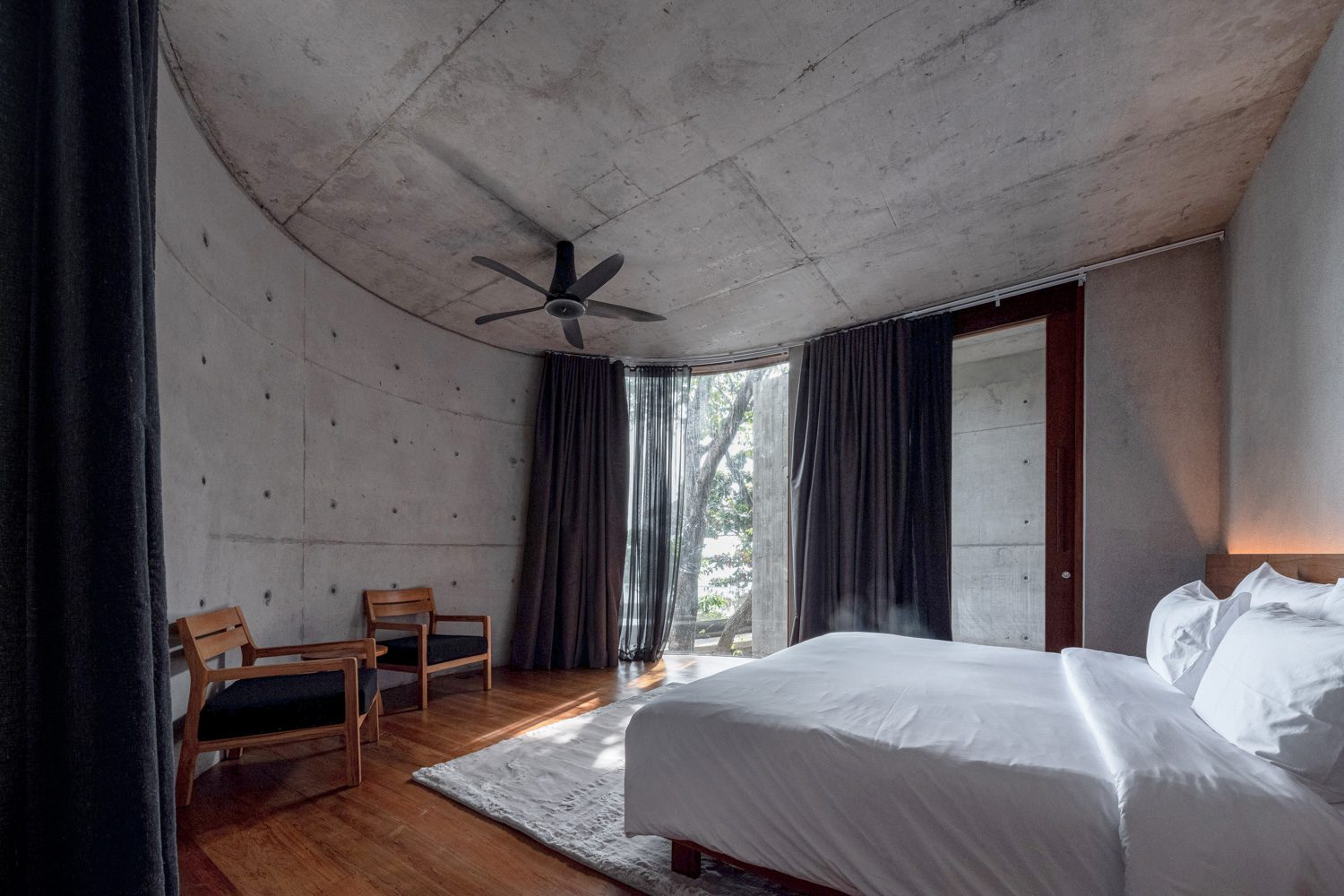
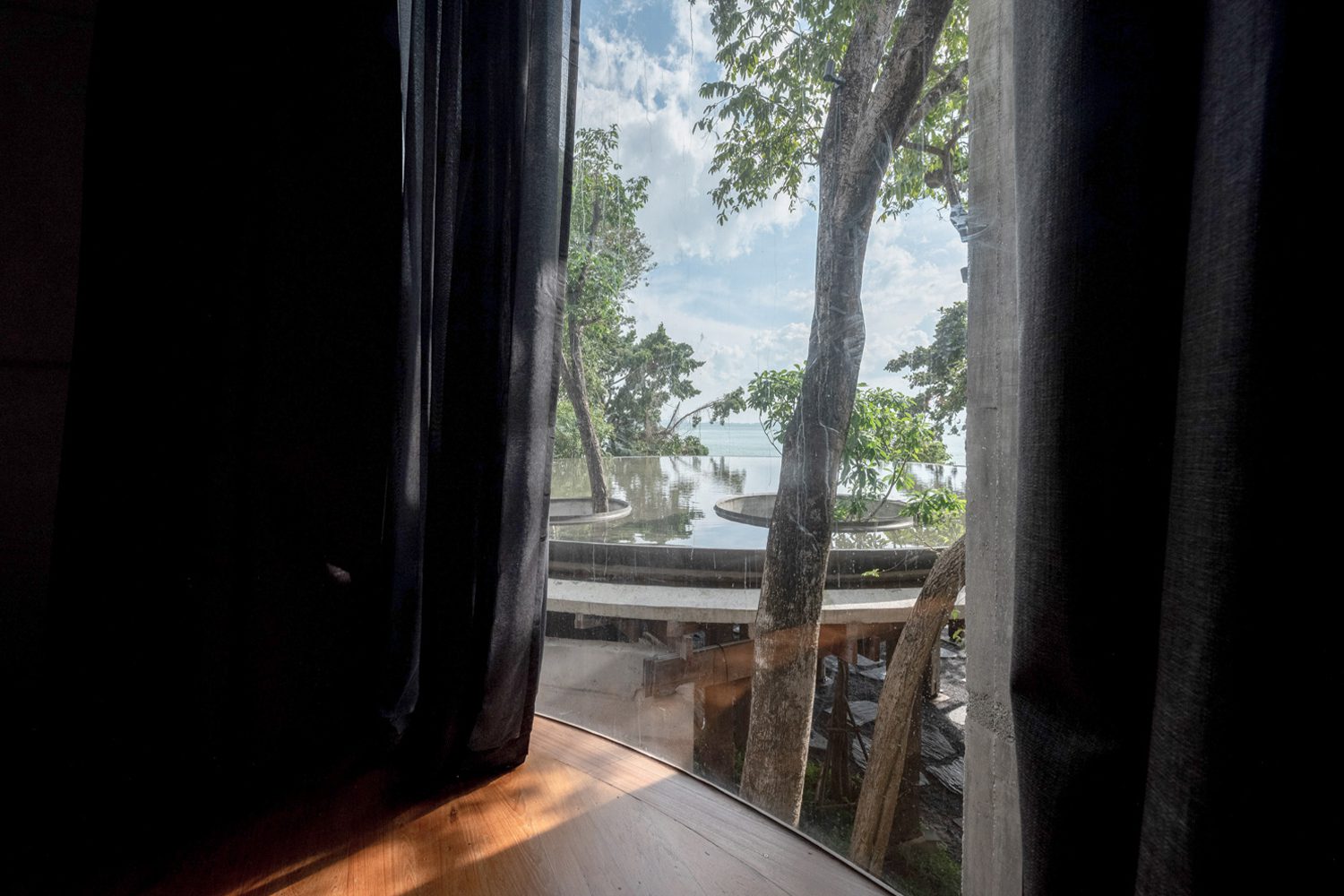
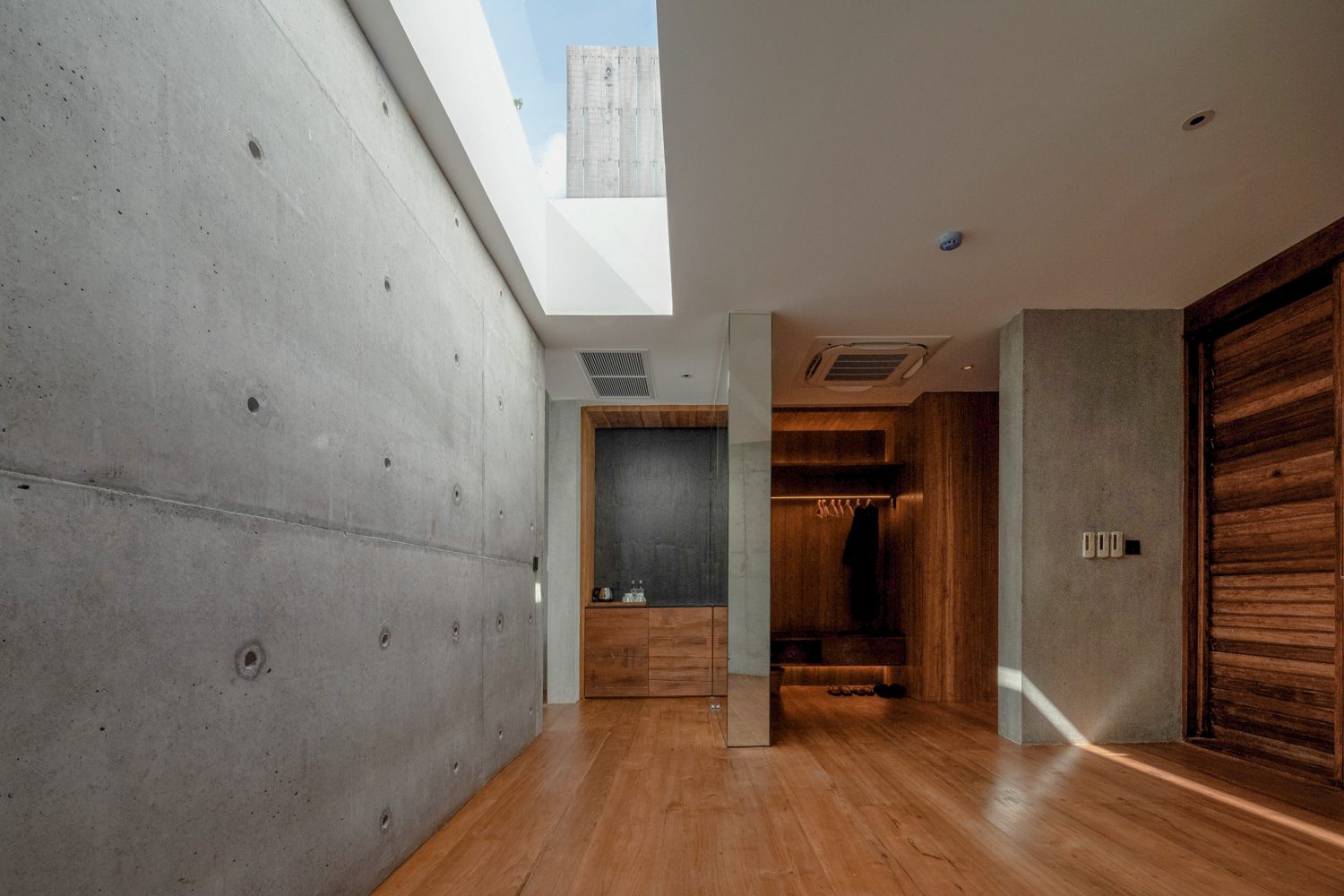
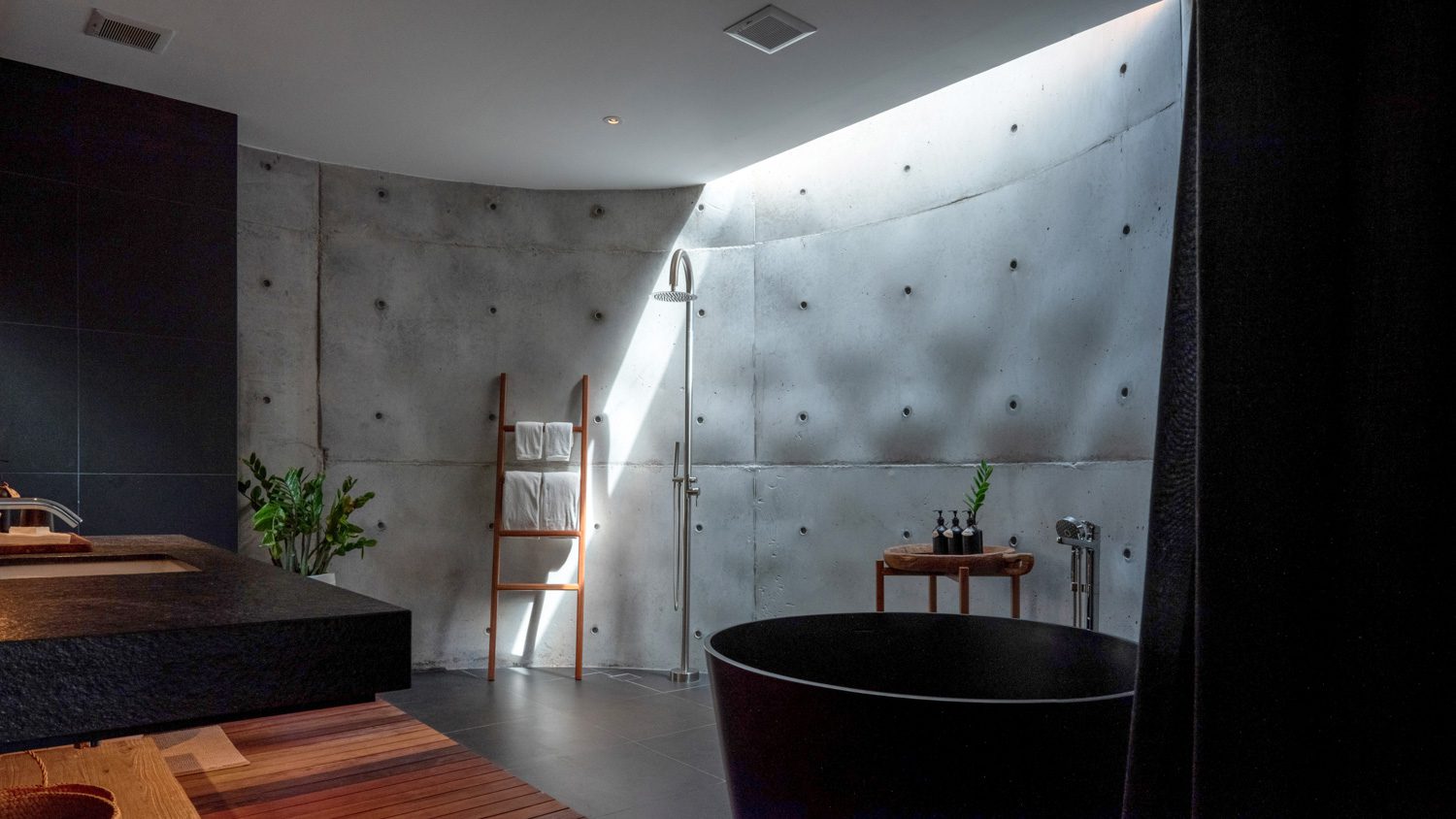
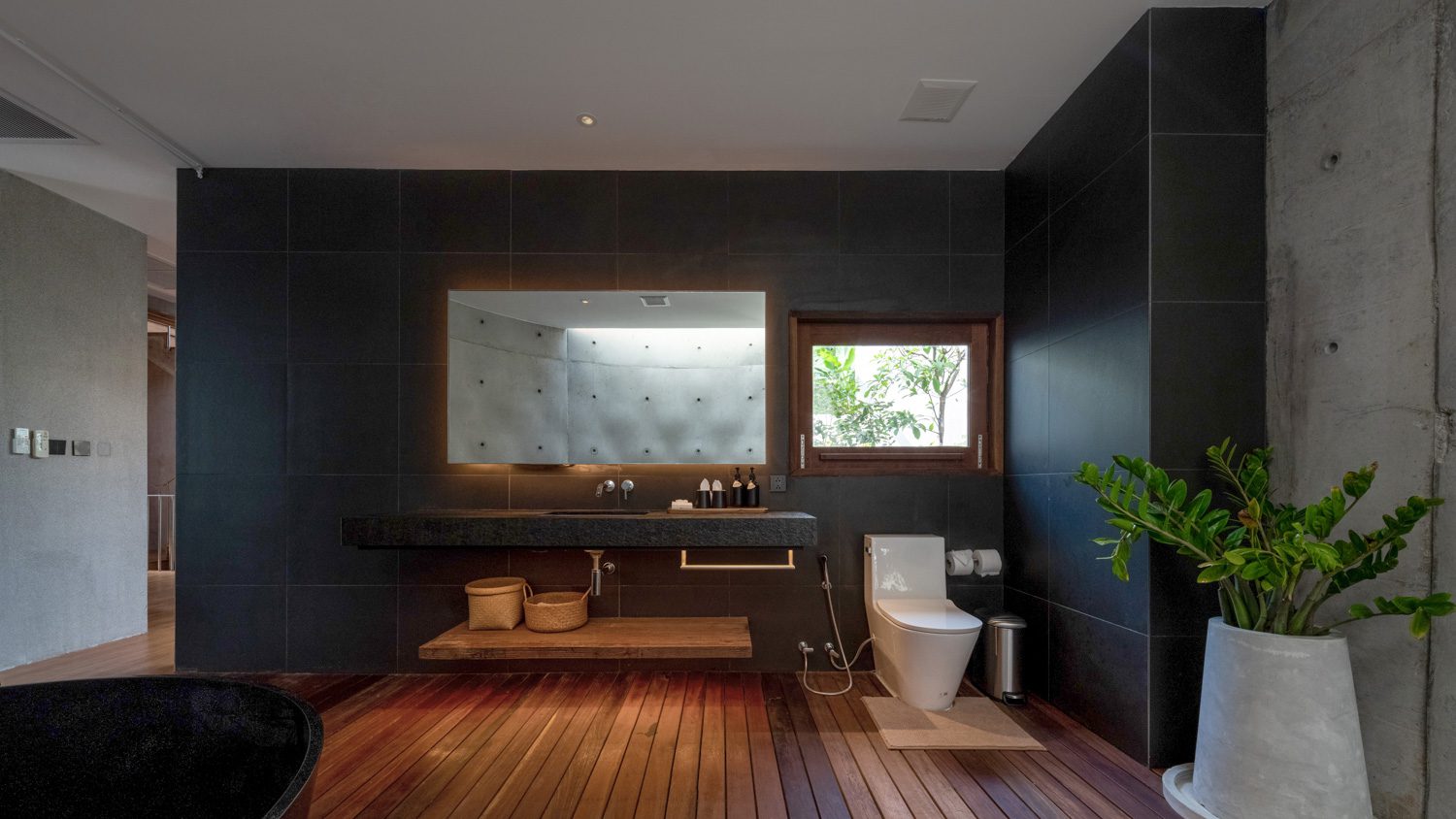
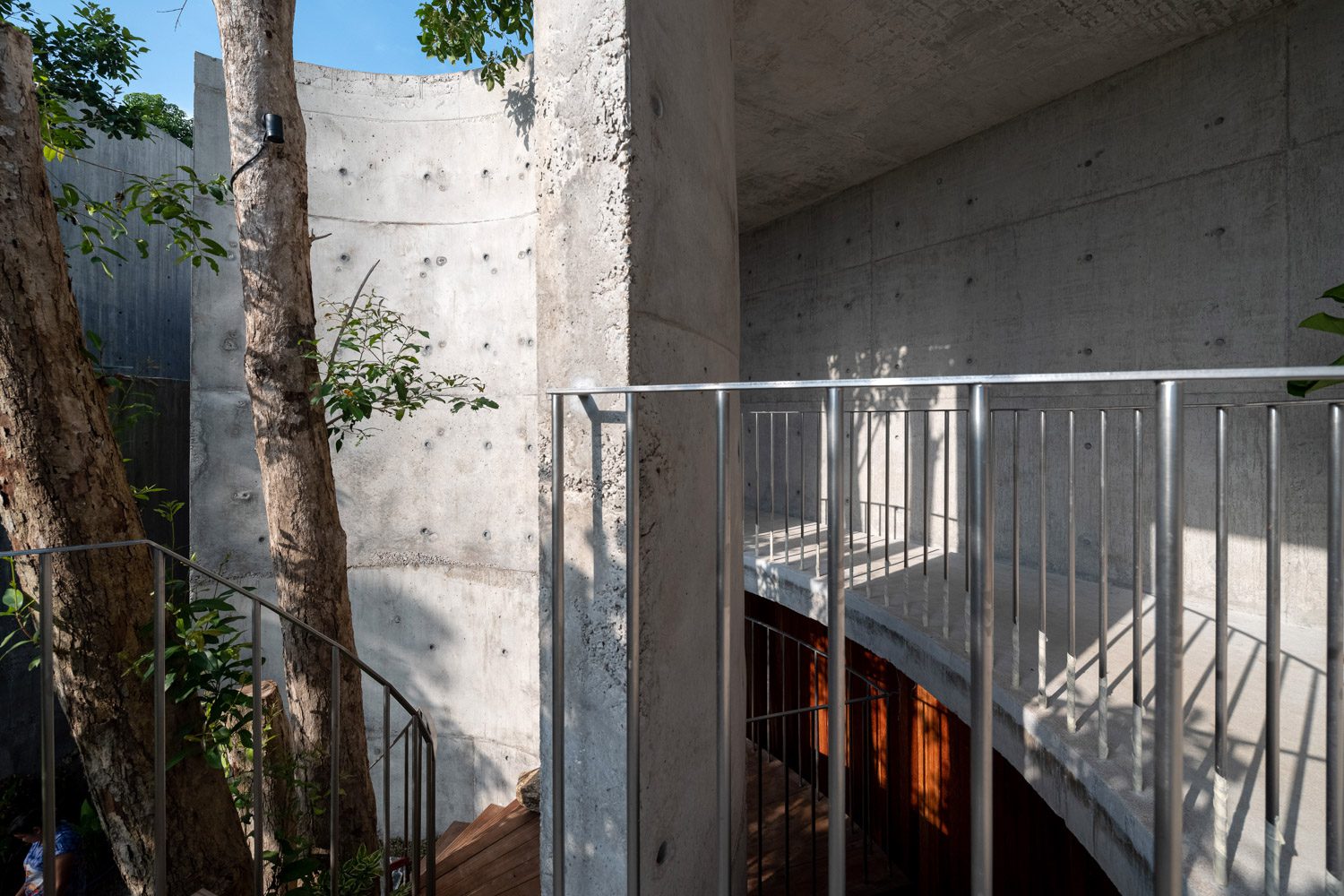
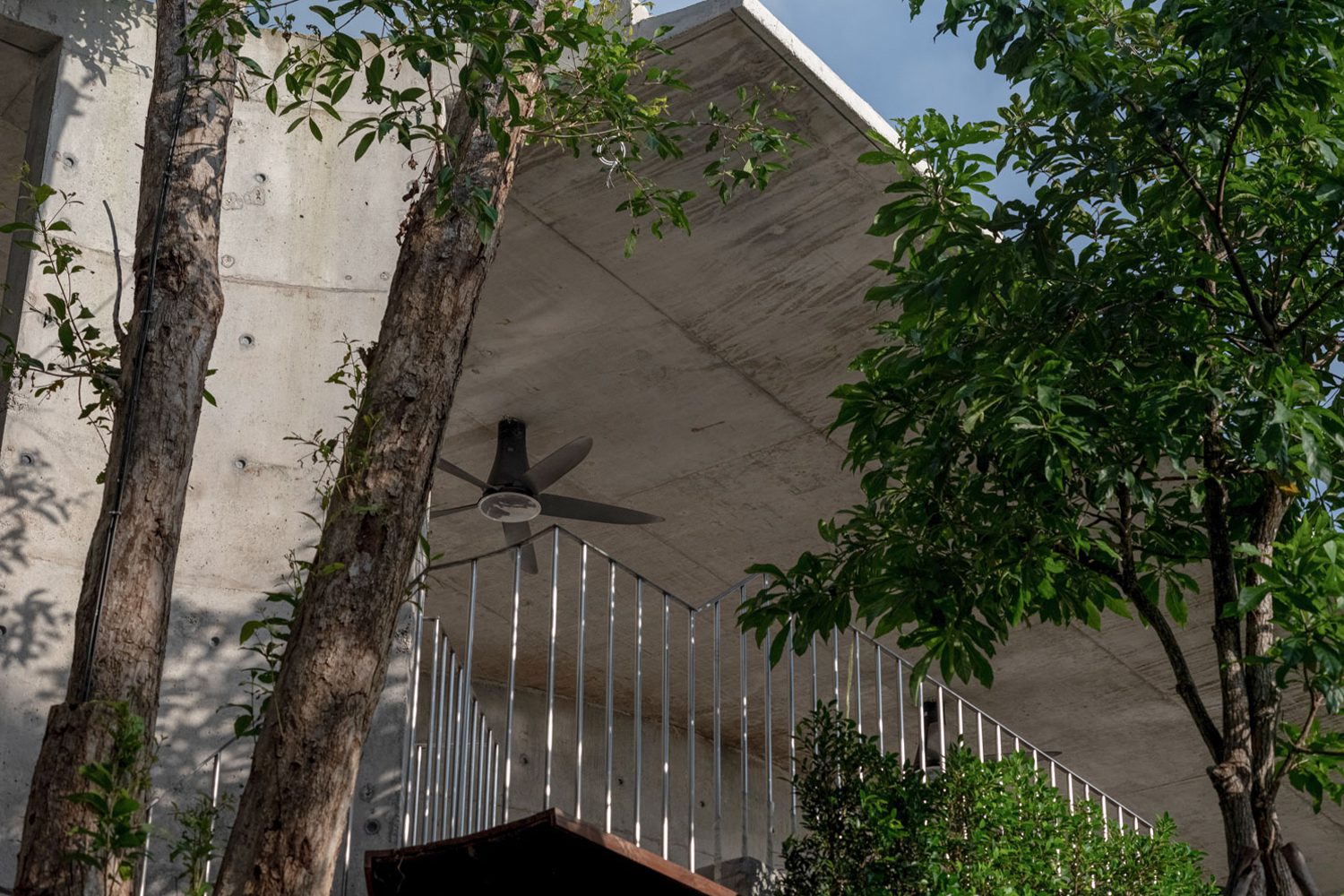
POAR therefore arrived at a calibrated solution. Five-bedroom villas are grouped together as a single cluster to serve the primary clientele, while still acknowledging that many guests prefer to rent an entire villa as a standalone unit for reasons of privacy. Within the three-story accommodation building, skylights are introduced into bathrooms, and semi-outdoor spaces are carefully inserted, reinforcing the presence of ‘in-between’ zones that clearly articulate spatial thresholds. Each room is further distinguished not only by its interior character but also by its outward-facing views. The deliberate orientation of openings ensures that the experience of staying here never feels repetitive, even within the same building, whether looking out toward the sea, the lawn, or an internal courtyard.
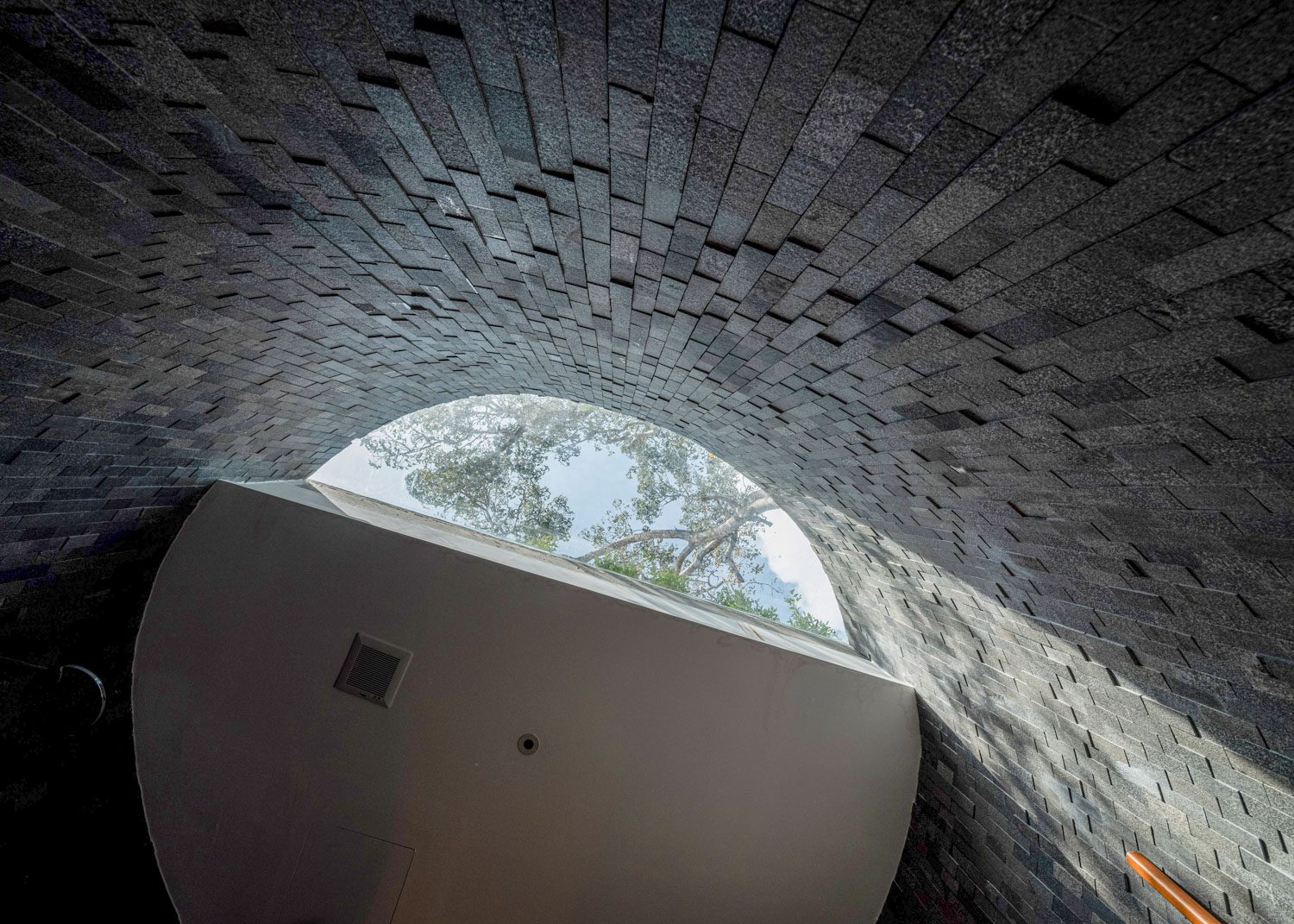
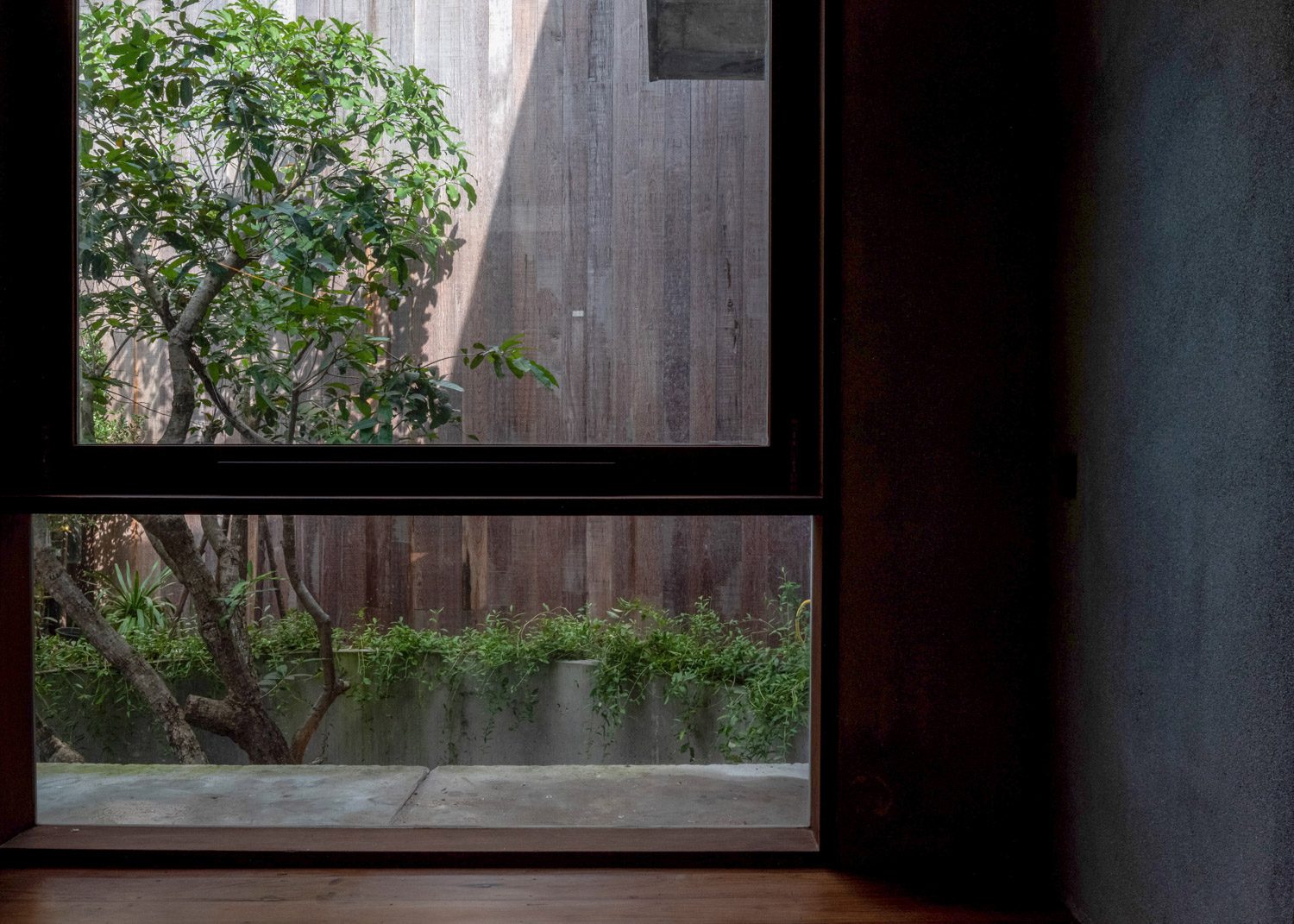
It is difficult to deny that Vows Villa is often read as an architecture defined by the expressive use of concrete. Many are drawn in by the striking image of curved concrete walls standing in contrast to slender metal railings and timber elements. Yet in this account, concrete is scarcely mentioned at all. For the writer, Vows Villa serves as a reminder that the substance of architecture and its visual appeal do not always need to be articulated as one and the same. Against the habit of setting a singular destination and moving directly toward it, Vows Villa distinguishes itself by fully gathering in the surrounding landscape, embracing its context in a way that feels complete and unforced.