
 Photo: Ketsiree Wongwan
 SPACELY AI, AN INTELLIGENT DESIGN PLATFORM FROM A THAI TEAM THAT DEVELOPS AI TO EFFECTIVELY ENHANCE THE ARCHITECTURE INDUSTRY
TEXT: POOKAN RUENGWES
IMAGE COURTESY OF SPACELY AI EXCEPT AS NOTED
(For Thai, press here)
Artificial intelligence is evolving at an astonishing speed, and architecture is no stranger to its transformative potential. The field now has dedicated platforms tailored to its unique demands, and among them is Spacely AI, a Thai-developed system rapidly gaining attention. Defined as a Design and Automation Platform, Spacely AI integrates artificial intelligence and a suite of advanced tools to support designers, architects, and interior specialists. Its purpose is clear: to streamline workflows, accelerate image generation in alignment with creative thinking, and deliver finished concepts faster, without the long nights once spent building models and rendering visuals.
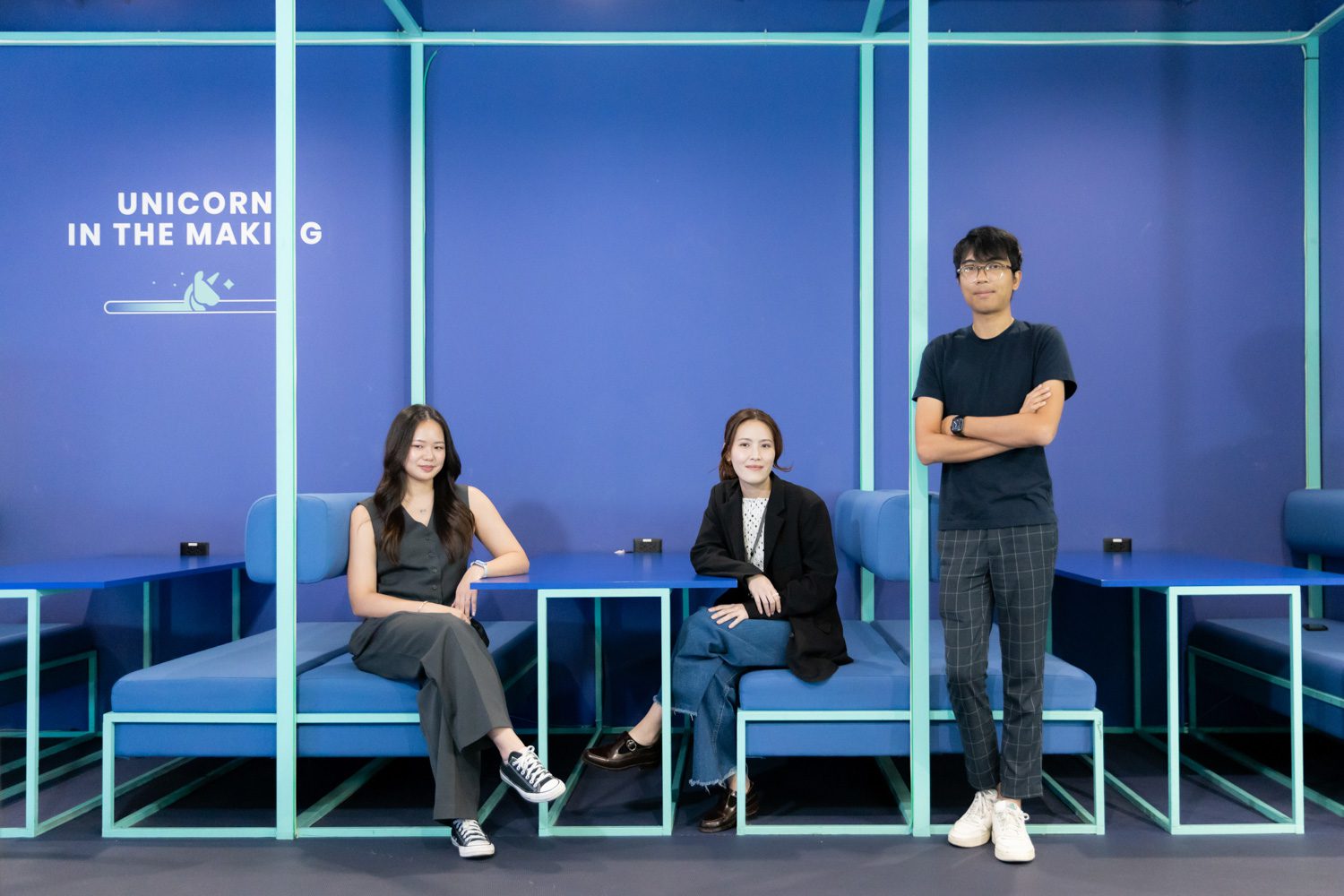
Spacely AI is currently driven by a compact team of around ten, divided between business strategy and research and development. Sharing insights into its creation and vision are Thanatcha Pojthaveekiat, Co-founder and Head of Commercial; Thanapong Somjai, Head of Technology; and Chayada Chalekarn, Senior UX/UI Designer.

Debates around the role of AI in creative practice continue to unfold, with questions of quality, authorship, and the displacement of human labor never far from the surface. Yet amid these discussions, Spacely AI has been steadily expanding its reach, now drawing designers from more than 50 countries around the world.
This raises a set of pressing questions: What, in practical terms, does Spacely AI offer to designers? If AI is destined to play a greater role in the profession, how might the place of the human designer evolve? And why does Spacely AI maintain that AI can never truly replace the work of a living, breathing creative mind?

Photo: Ketsiree Wongwan
The story of Spacely AI begins with Thanatcha and Thanapong, who first crossed paths at SCB10x and discovered a shared interest that became the foundation for the venture. From there, the team gradually expanded, later joined by Chayada, whose expertise added further depth to its growth.
“It began with an awareness of the pain points within the architecture profession. Existing software rarely enabled work to move faster. Around that time, the first wave of AI was beginning to crest. We thought: if an AI could generate images directly from a simple prompt, how much could that transform the field?” reflects Thanatcha, whose background is in architecture.
From this idea, Spacely AI was born. The platform entered the market in 2023, alongside the broader wave of text-to-image AI systems.
“Spacely AI is focused on addressing the specific challenges of design,” the co-founder explains, drawing a distinction between this particular AI and others.

Chayada Chalekarn | Photo: Ketsiree Wongwan
“This platform was created with the persona of the professional designer in mind. For example, we use the term ‘Render’ for the image, which is essentially the visualization feature in order to resonate with users,” adds Chayada, who was also trained in architecture. “Other AI tools may be used simply to experiment with mood or tone. Spacely AI, however, allows for more precise minor adjustments. Beyond that, our tools can be integrated into a designer’s workflow. We studied the software they already use instinctively, such as Lumion or V-Ray, to understand how masking functions work there, and then incorporated those conventions into the AI. This way, designers do not have to dramatically change the way they work.”
Thanapong, Head of Technology, elaborates that the platform’s distinctiveness lies not only in its interface but also in the way its models have been trained specifically with design-related data.
“We wanted to understand who our users actually are, so we tracked where the traffic was coming from and how people were engaging with the platform. That gave us a clearer picture of what they expect from the product. Different groups of users tend to make use of different features,” he explains.
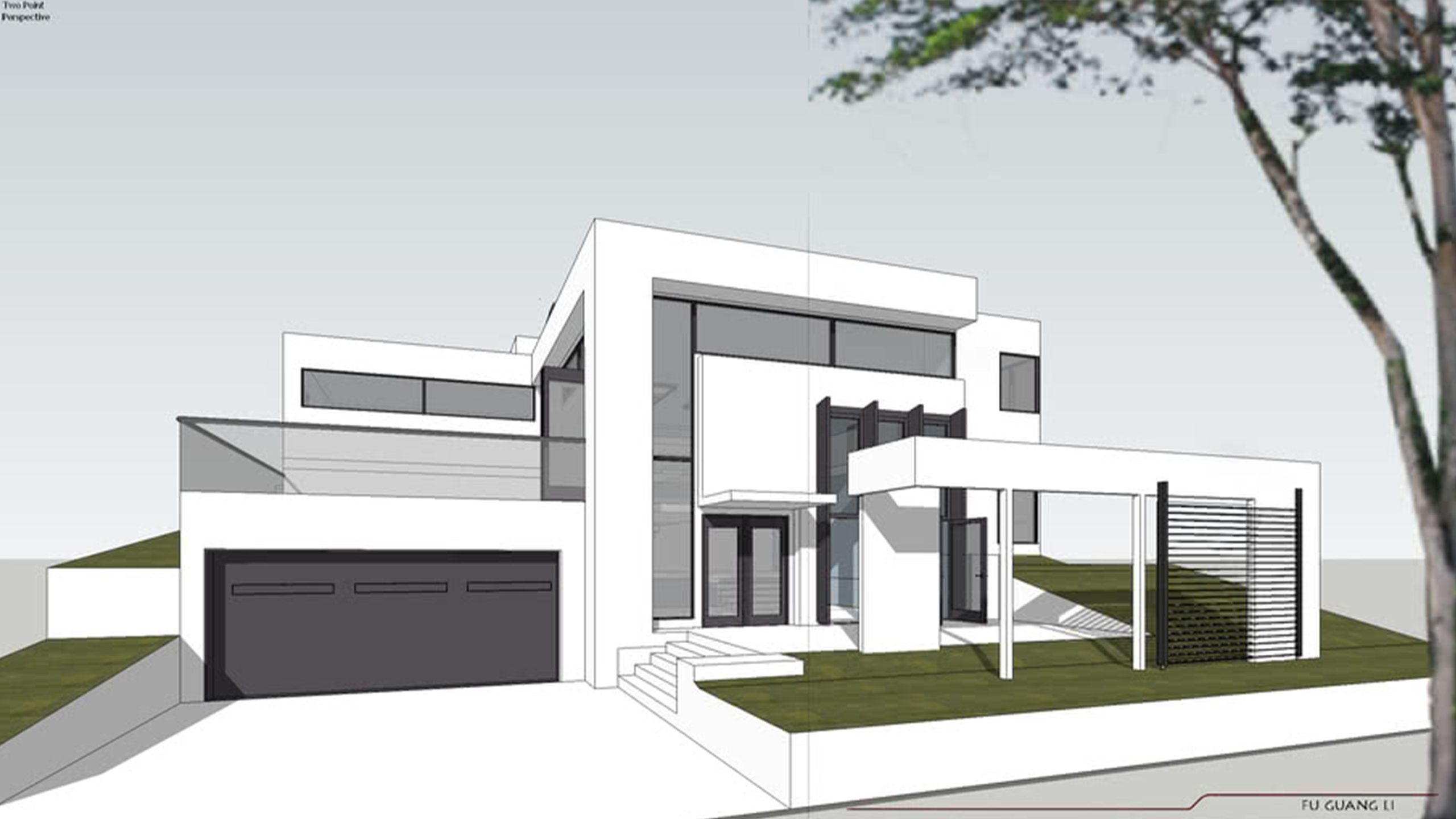

The first pain point Spacely AI set out to address was the question of time in the visualization process.
“For designers, the design process alone already takes a considerable amount of time. Once the thinking is done, producing rendered images requires long hours as well. Sometimes we may have three options in mind but only the energy to execute two. If the time required to produce just one image can be shortened, it could open the way for more ideas to be explored,” notes Thanatcha.
What once demanded days, if not weeks, of revising drawings after client meetings can now be resolved in minutes. Instead of painstakingly reworking models and waiting for renders, Spacely AI allows designers to produce updated images almost instantly.
Viewed this way, AI does not necessarily make designers ‘think less.’ Rather, it allows the ideas already formed in the mind to emerge more quickly and with greater ease.
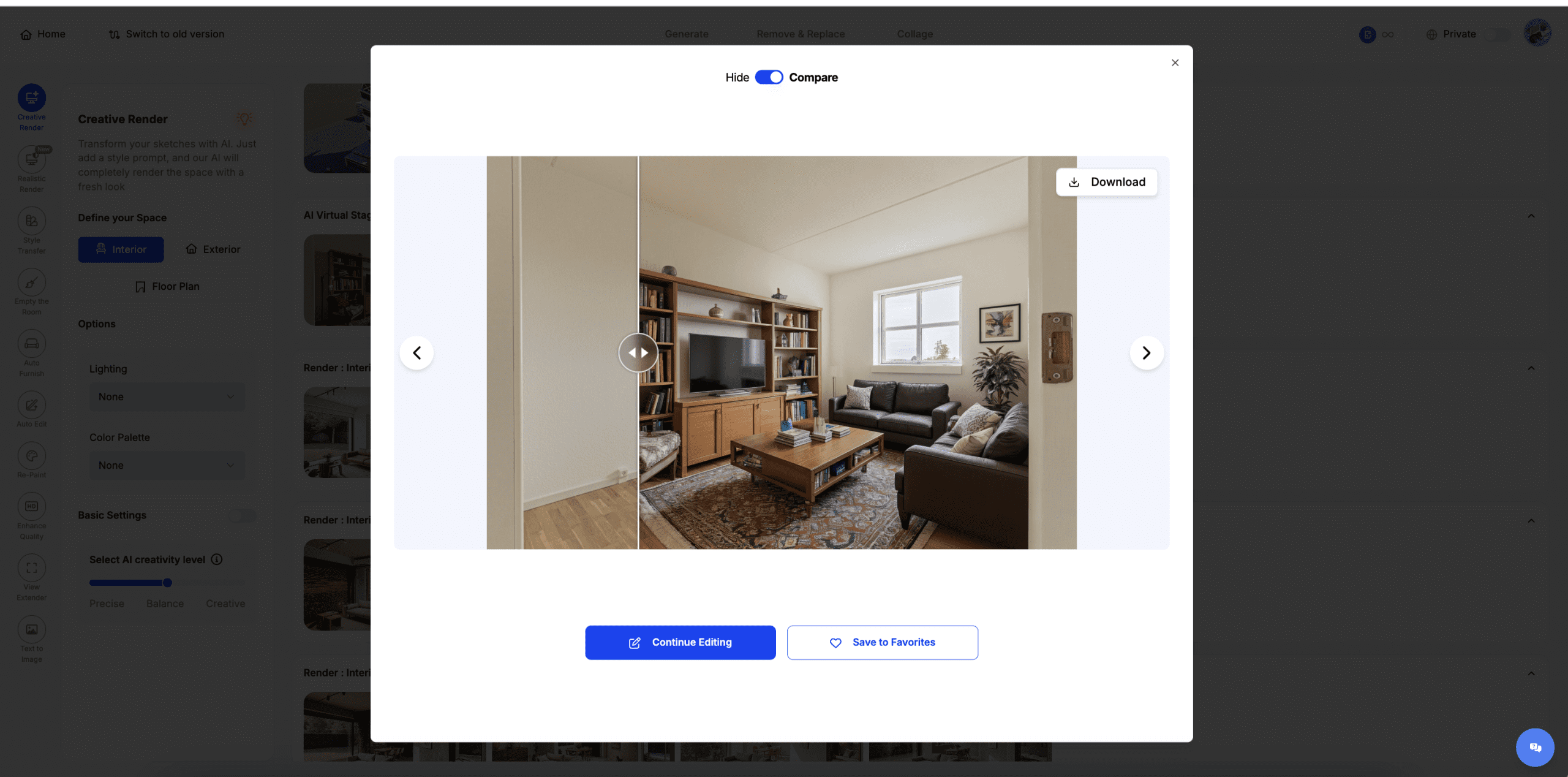
Beyond architects and designers, other groups have also found value in Spacely AI. Realtors, for example, can take images of empty rooms and instantly generate visualizations of how they would look fully furnished. Similarly, a paint manufacturer has used the platform to show clients how a room would appear with different wall colors, rendered in realistic light and shadow.
Different types of users bring different approaches and levels of expertise to Spacely AI. According to the developers, prompts that are too vague, such as “Make it beautiful”— rarely produce results that align with expectations. By contrast, users who know and apply the specific keywords of the design profession are able to generate images much closer to what they envision. Even with AI, the system still depends on the user’s knowledge and expertise.
“Because AI is still relatively new, most people assume it can solve everything. In reality, we would like it to be seen as an assistant, one that requires a clear and detailed brief,” says Thanatcha.
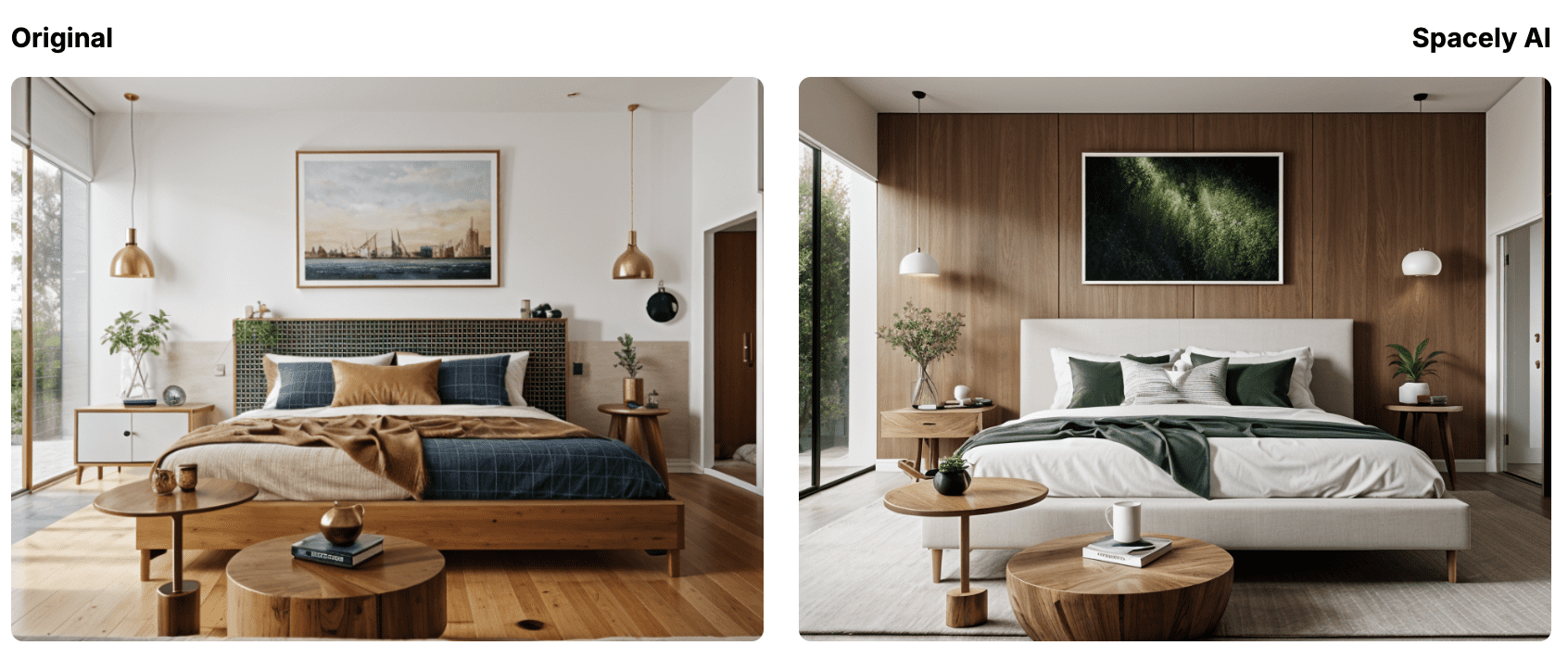
When asked whether Spacely AI can help move ideas forward even if a designer or user does not yet have a fully formed concept, the team is confident it can. For instance, if someone is considering how to renovate a room but is unsure about the style, the program offers more than 50 presets to explore.
The profile of Spacely AI’s user base has also evolved since its launch. At first, many tried the platform out of curiosity. Over time, clearer patterns began to emerge.
“Homeowners who are not using the platform for professional purposes often do not want to pay. They may generate two or three images, stop once they get what they need, and never return. But once we positioned Spacely AI as a tool for professional practice, the business became more sustainable, giving us the resources to continue researching and developing new features,” Thanatcha explains.
Today, Spacely AI operates as a B2C business with a subscription-based model offered on both monthly and annual plans. Its users span 50 countries around the world, with strong uptake in the United States and Europe.
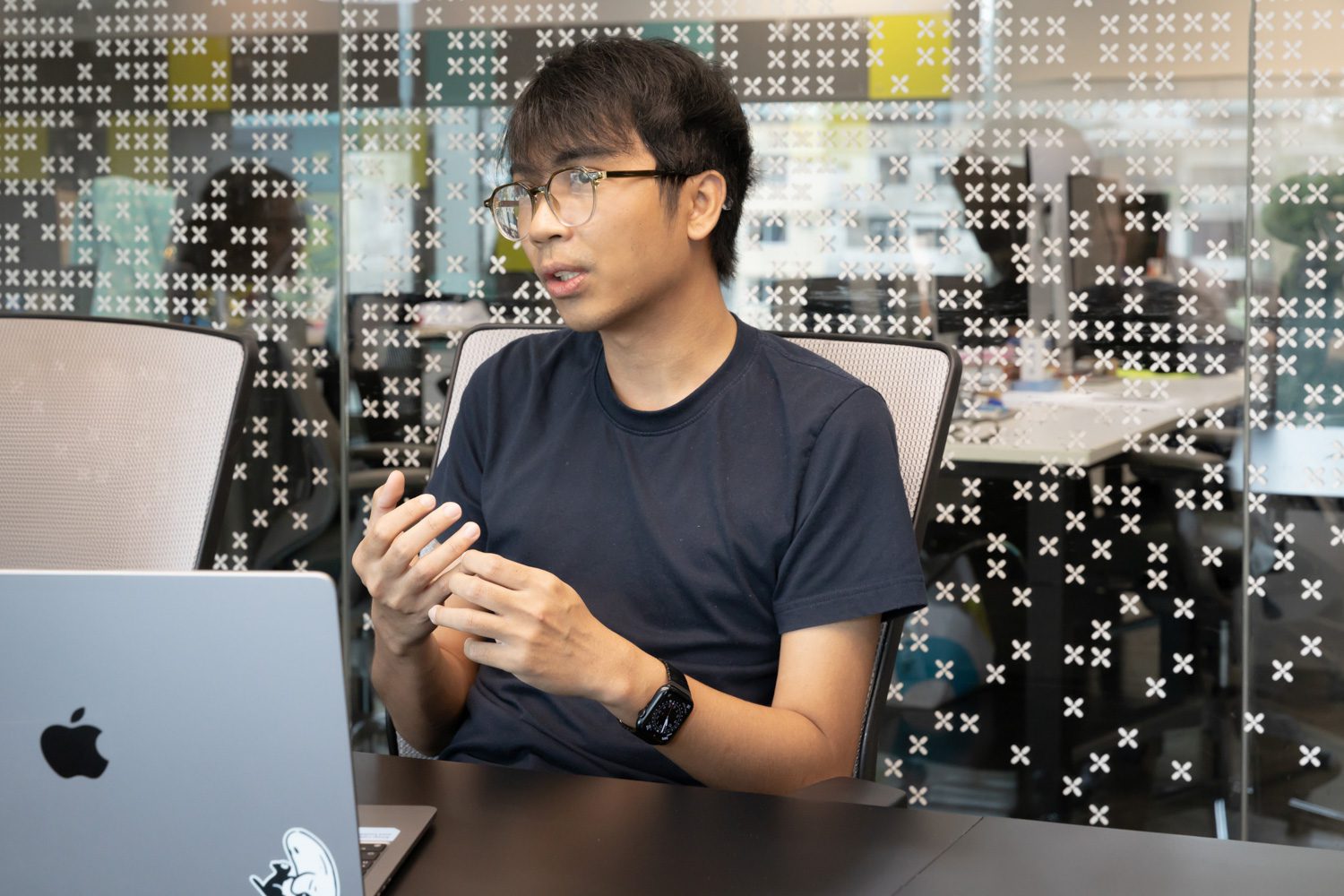
Thanapong Somjai | Photo: Ketsiree Wongwan
“Our next step is to focus more on the business side, to see how we can help reduce overall costs. At the same time, we are developing new features that will better respond to future client needs and further improve the platform,” explains Thanapong.
“Spacely AI aspires to become the primary tool for architects, interior designers, and design professionals,” adds Thanatcha with determination. “That is what we aim to achieve.”
The past year has seen AI play a far greater role in professional practice, while sparking serious questions about its relationship to human creativity. For a platform like Spacely AI, which is positioned as a design-support tool, such questions are inevitable. After all, design is a creative discipline, one long considered the natural domain of human intelligence rather than machine computation.
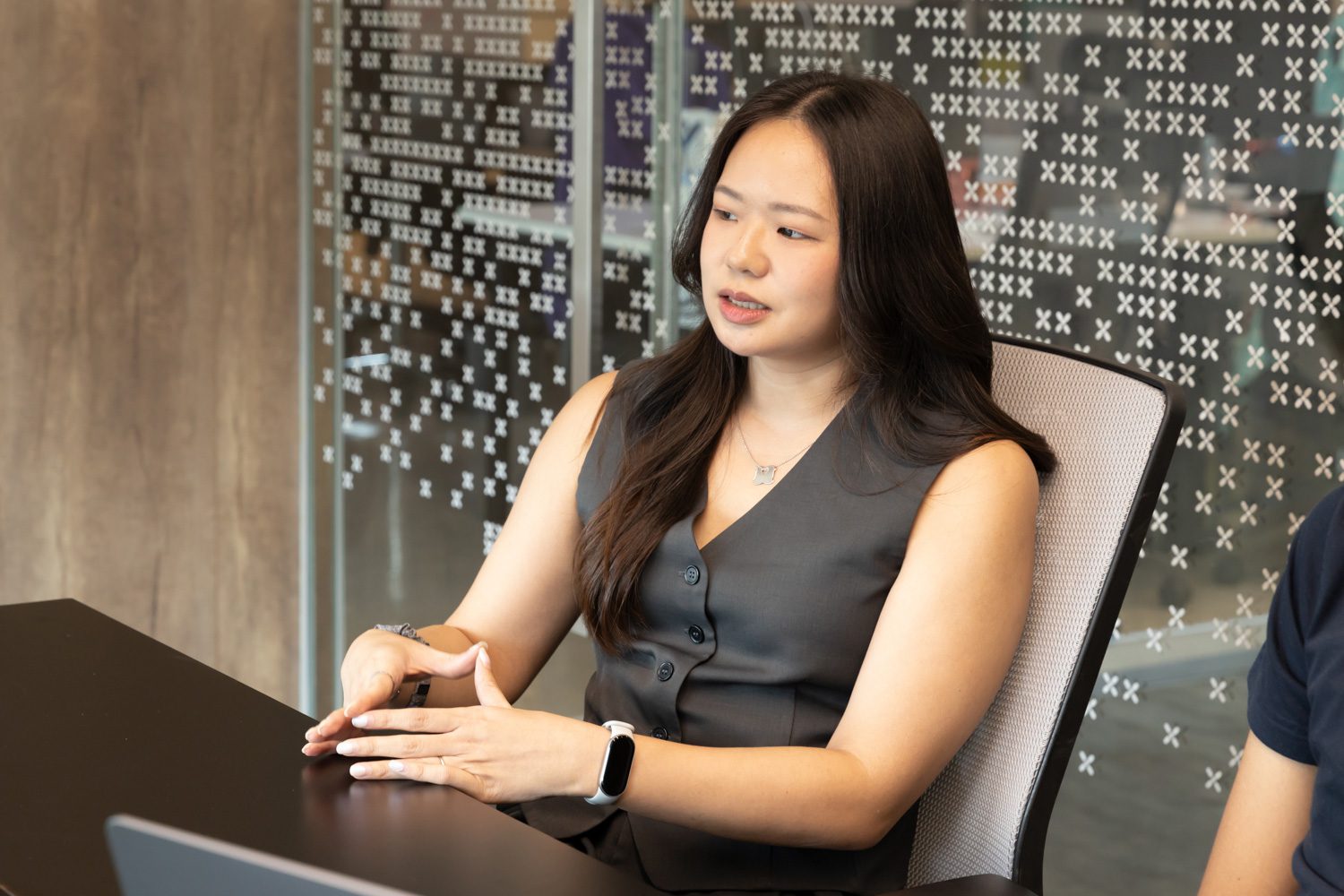
Thanatcha Pojthaveekiat | Photo: Ketsiree Wongwan
“Compared to when we first started, I think people’s attitudes have become much more positive,” Thanatcha tells us. “In the beginning, resistance was strong. Many believed AI would replace designers, and that traditional tools would always offer more control over detail. But over time people have come to see that AI is not here to replace them. It is one more tool that helps them work faster. This shift has allowed everyone to recognize their own ‘place’ alongside AI.”
In a world where AI plays a role in design, how might the role of the designer change? We asked.
“We believe designers will need to establish their position as skilled curators. In the past, they rarely saw themselves in that light, which made it difficult,” Chayada comments. “Now we know that even when using the same tool, outcomes can vary widely. Expertise is still essential in creating compelling images.”
“Absolutely,” Thanatcha adds. “We feel it empowers designers, giving them a sense of control. No tool can replace them, because they are the ones who know how to use it best, drawing on their own expertise.”

Photo: Ketsiree Wongwan
What is striking is that participation in Spacely AI workshops has not been limited to younger generations. Designers over the age of forty, many of whom still create drafts by hand, have also taken part. By learning to use AI, they are able to generate perspective images without investing the time to master complex 2D or 3D software. In this way, technology that once seemed forbiddingly difficult no longer feels inaccessible or excludes experienced practitioners whose skills and potential remain vital to the profession.
Beyond the question of how designers and AI will coexist, the Spacely AI team also emphasizes the importance of work–life balance. Because the platform shortens working hours, sleepless nights are no longer an obligation. If a designer chooses to stay up late in pursuit of additional design options, it becomes a matter of preference rather than necessity.
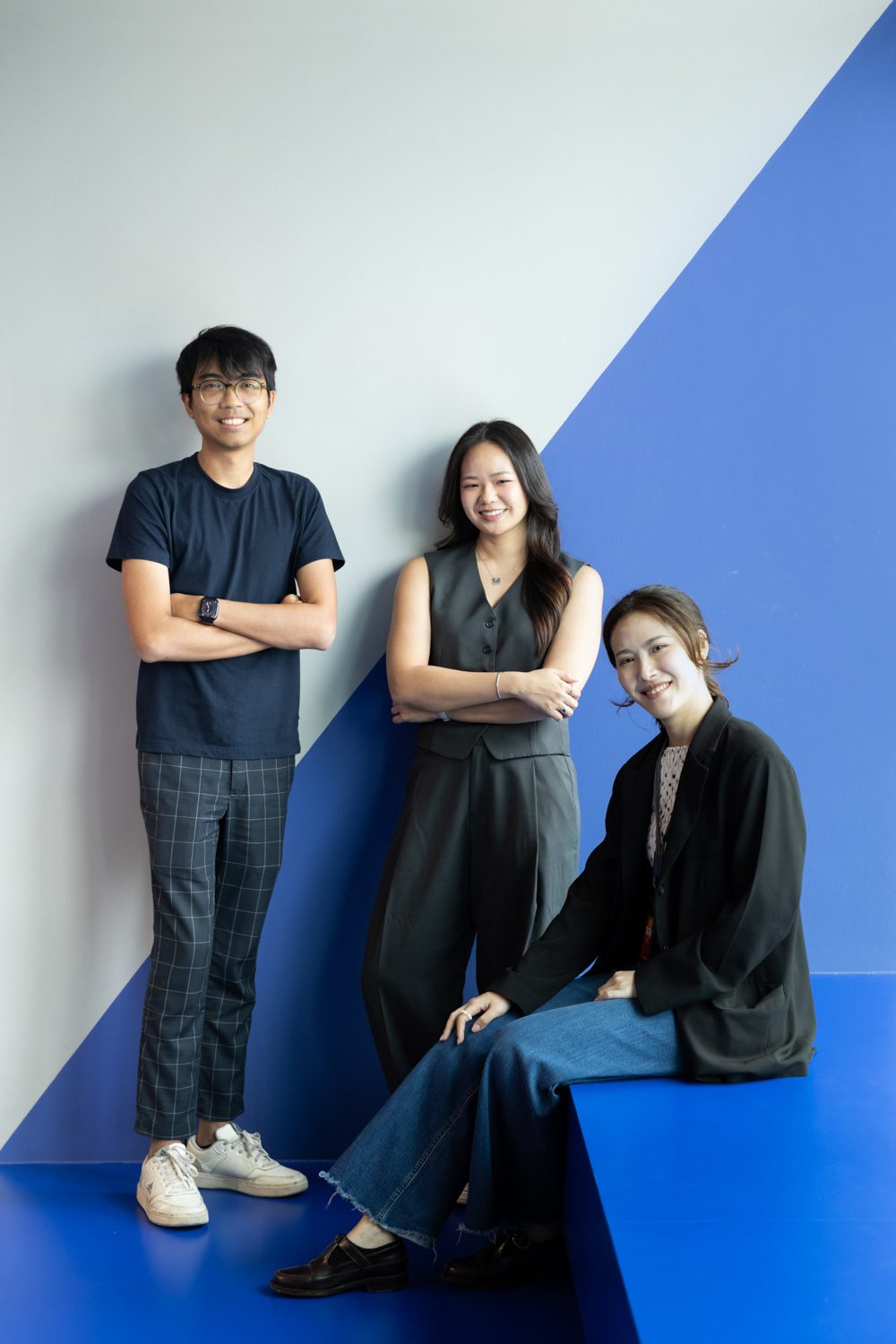
Photo: Ketsiree Wongwan
The team has also been invited by universities in Thailand and abroad to introduce Spacely AI to design students, a sign that architectural education is beginning to take AI seriously.
It raises a compelling question: how will a new generation of designers, trained from the outset alongside AI, approach their work differently from their predecessors? What advantages and drawbacks will emerge, and how might the direction of design itself evolve under their stewardship?
“The design process will likely remain the same, but it may allow them to go deeper into their ideas and work with greater precision,” reflects Thanatcha.
No one can know the definitive answers until the future arrives. What is certain, however, is that the world is spinning faster than ever before, and there is no stopping its momentum.