
A MATCHA CAFE WHERE JUTI ARCHITECTS OFFER SENSORY DETACHMENT AND TEMPORAL SUSPENSION THROUGH FANTASTICAL ARTIFICIAL NATURE
TEXT: SURAWIT BOONJOO
PHOTO: PEERAPAT WIMOLRUNGKARAT
(For Thai, press here)
Following the warm reception from patrons who delight in the immersive matcha experience and the distinctive white, cave-like interior of Ksana’s first location at One City Centre (OCC) , an office tower in Bangkok’s Ploenchit district, JUTI Architects, led by Juti Klipbua, returns with a new spatial narrative.
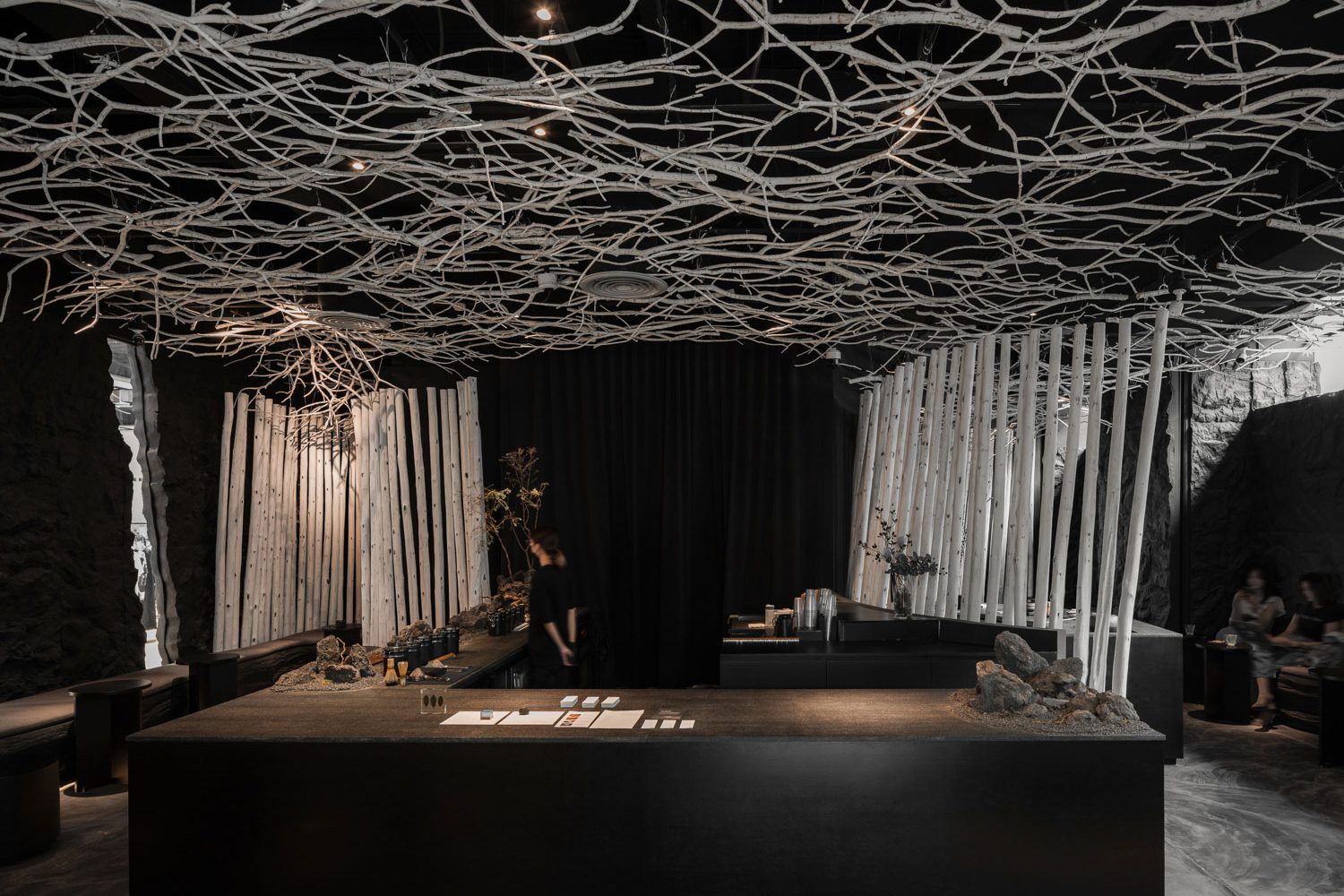
This latest iteration, unveiled at Ksana’s centralwOrld branch, continues Klipbua’s exploration of sensory detachment and temporal suspension, while offering a striking conceptual counterpoint. Whereas the first location evoked the luminosity and openness of a sculpted white cavern, the new space plunges into the atmospheric depths of a dense, shadowed winter forest. Although the narrative arc and rhythm remain consistent, the tone of the design language shifts in intriguing ways, particularly in how it thoughtfully and seamlessly responds to its immediate surroundings.
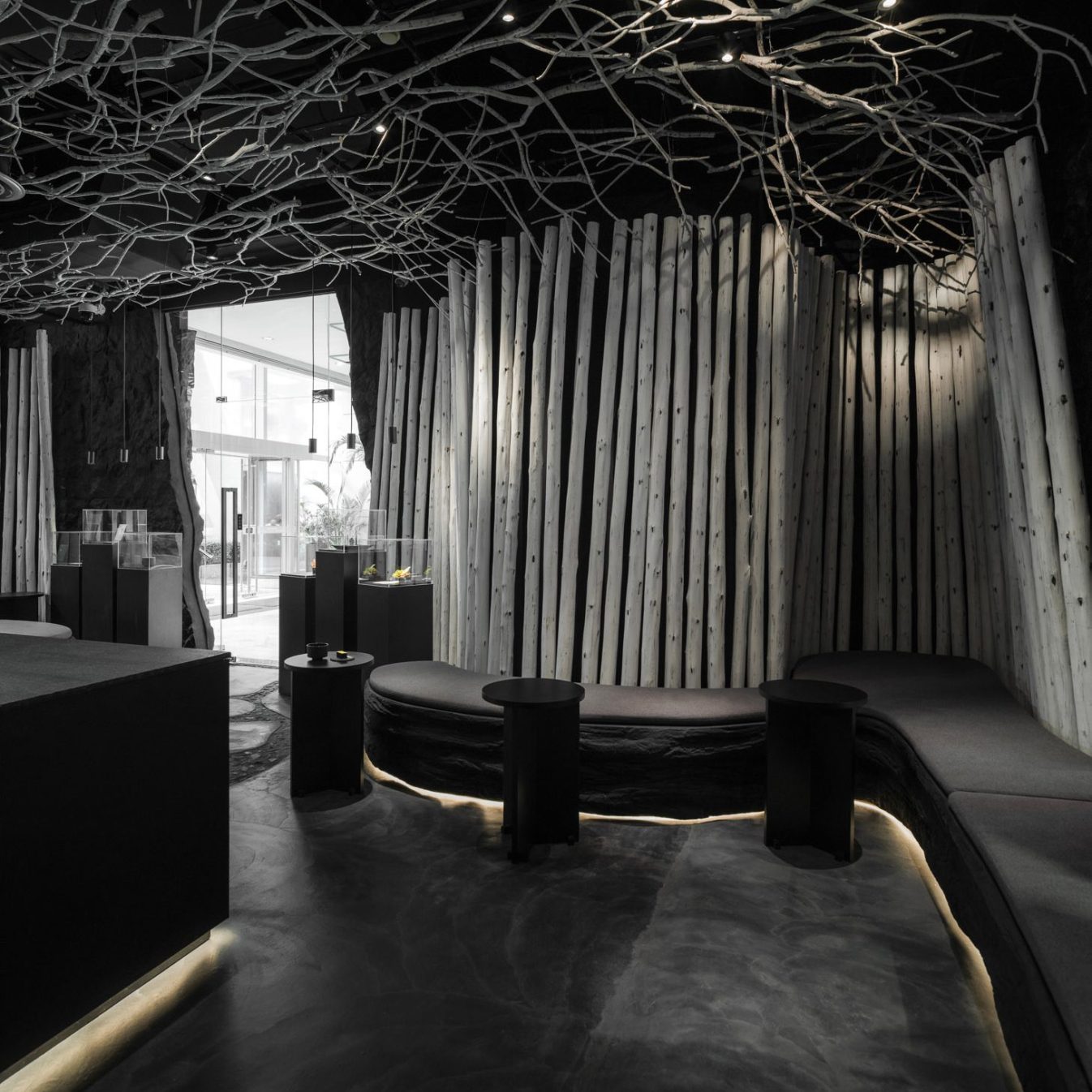
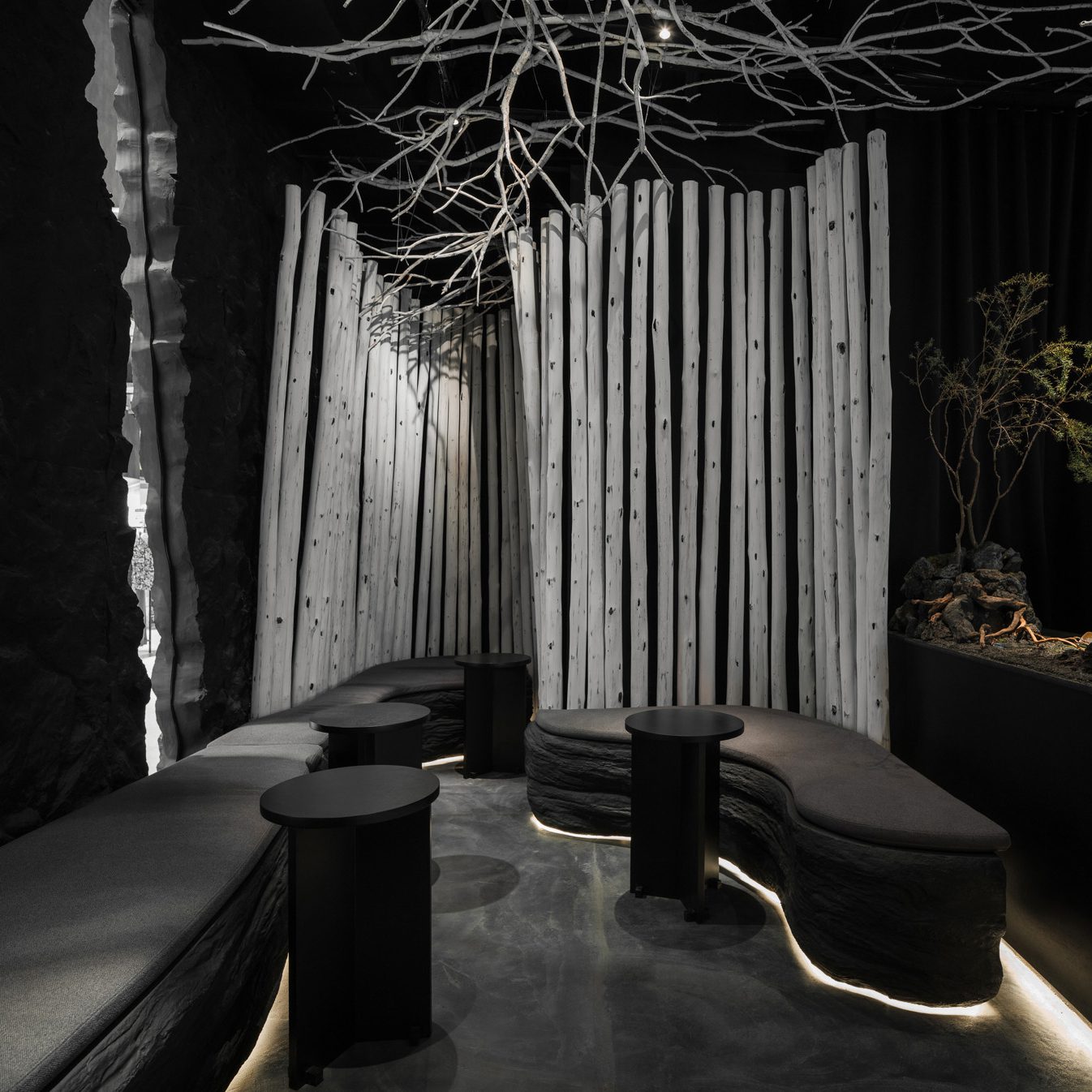
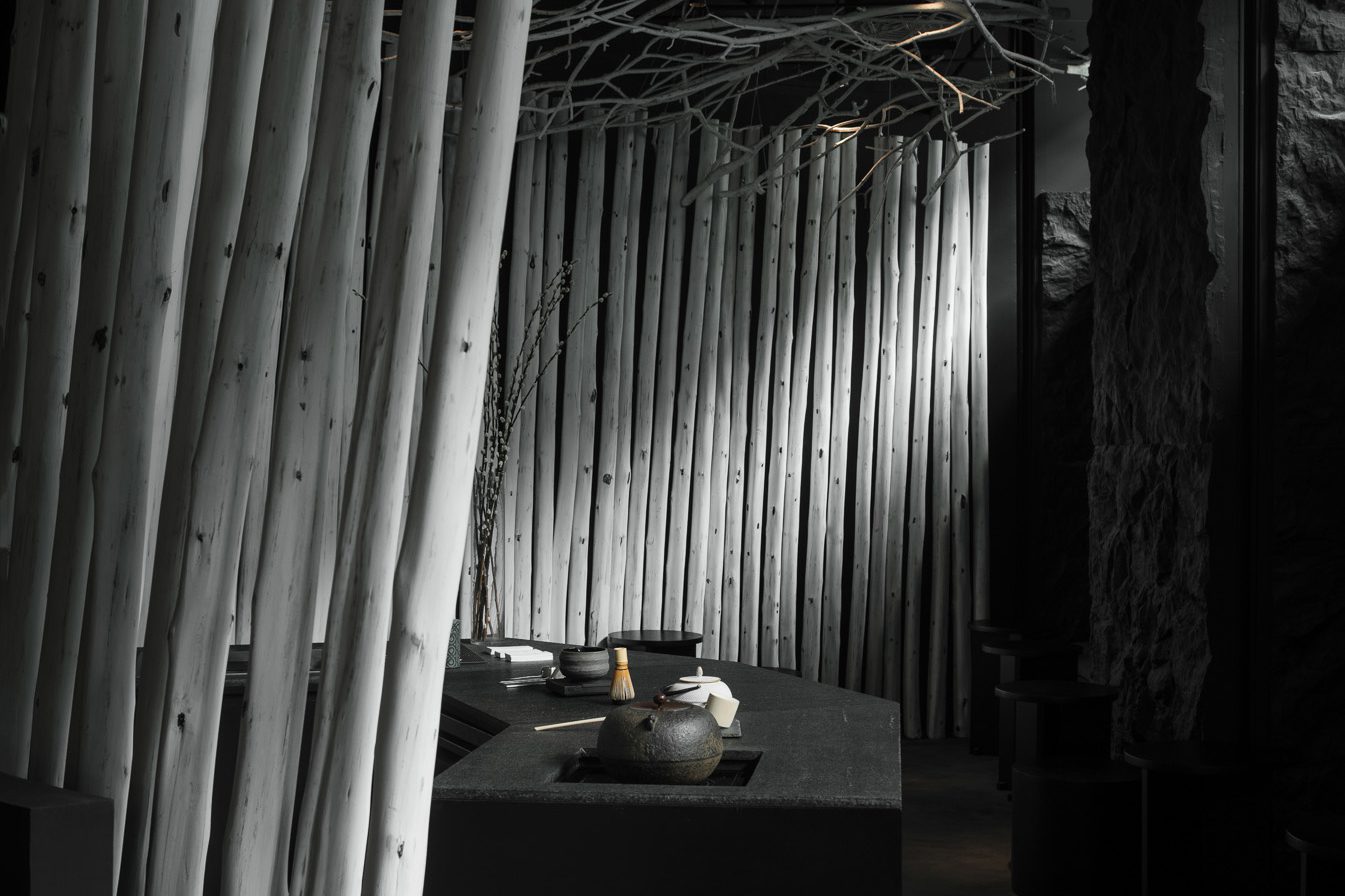
The architect meticulously selects para rubberwood logs, arranging and suspending branching limbs to form undulating surfaces that stretch along the walls and cascade from the ceiling. Set against a deep black background, these sculptural elements conjure the atmosphere of a winter forest veiled in soft, blinding snow, its form partially concealed within a serene, hushed landscape. Throughout the space, lines continue to ripple and twist with organic fluidity. Expansive zones subtly compress into narrower passages, their shifting volumes echoing the natural tension and release found in the wood itself. The architecture does not merely imitate nature in a conventional sense. Instead, it invites reflection on how natural elements might be abstracted to construct an entirely otherworldly terrain. This is a forest rendered distant, its stillness displaced and reimagined as a fantastical setting shaped from familiar materials. Branches are inverted, no longer upright but suspended downward like falling snow. Timber surfaces, once seemingly solid, appear dusted with scattered ice crystals – strangely beautiful, quietly uncanny evoking, a sense of wonder and disorientation.
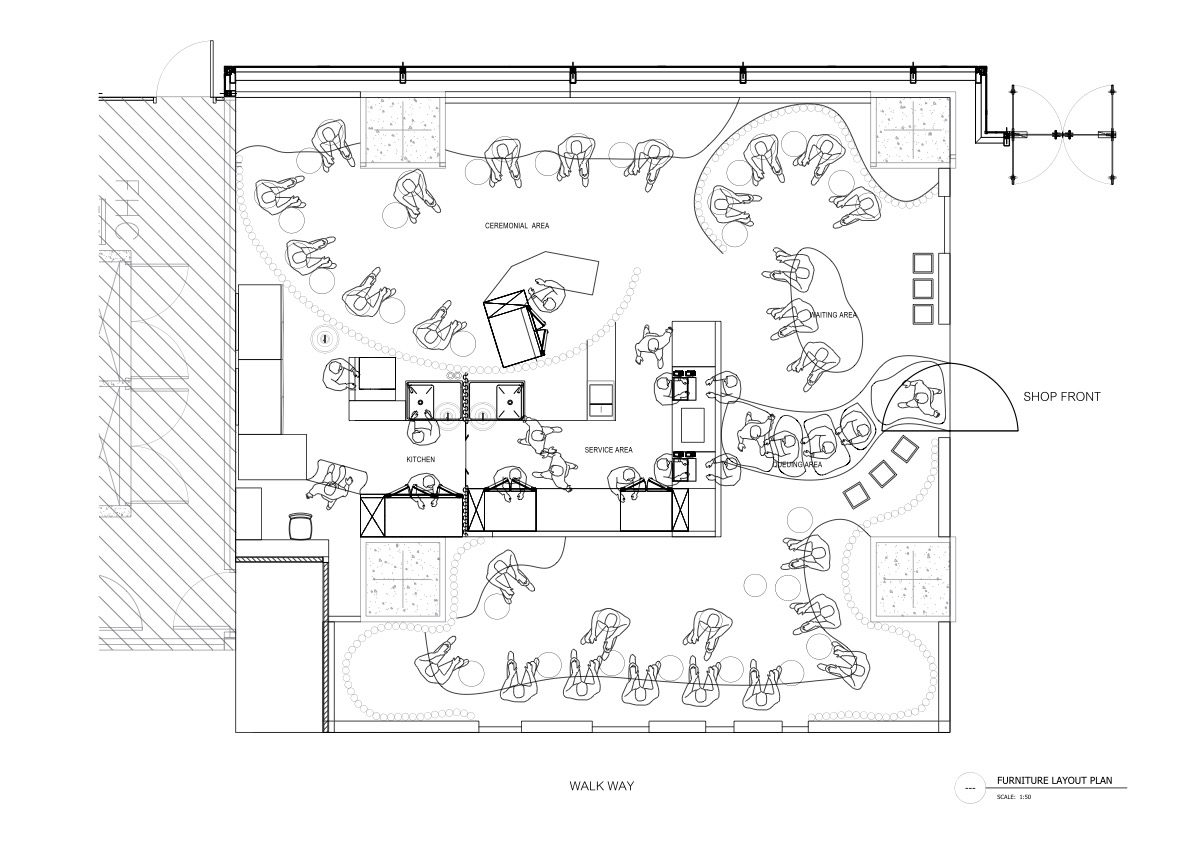
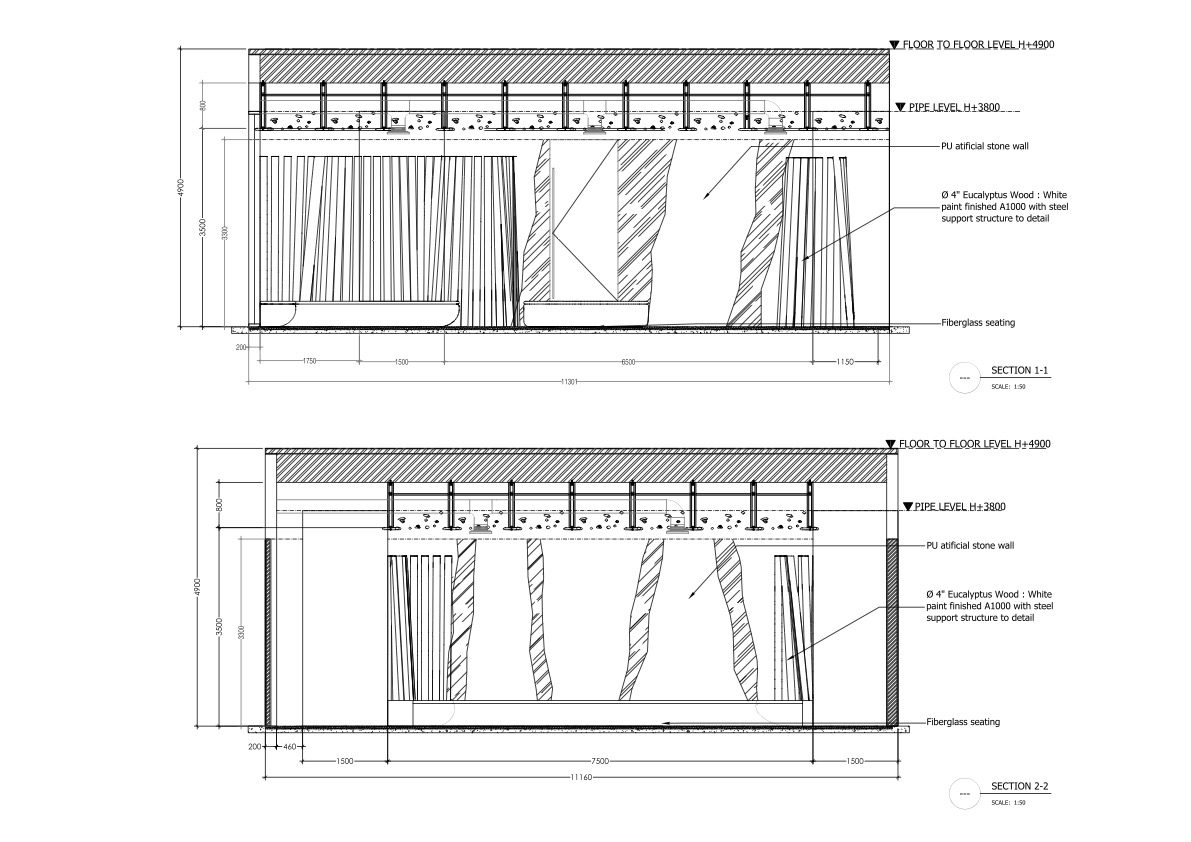
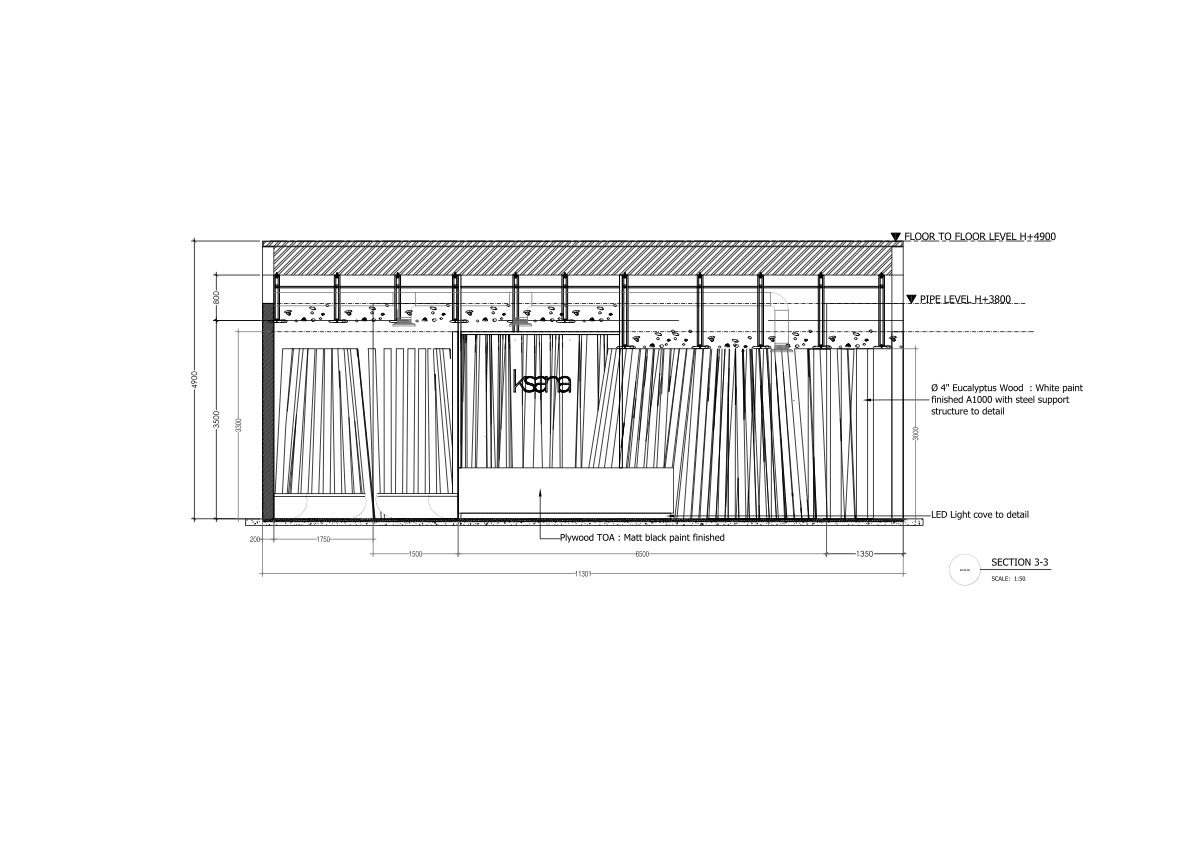
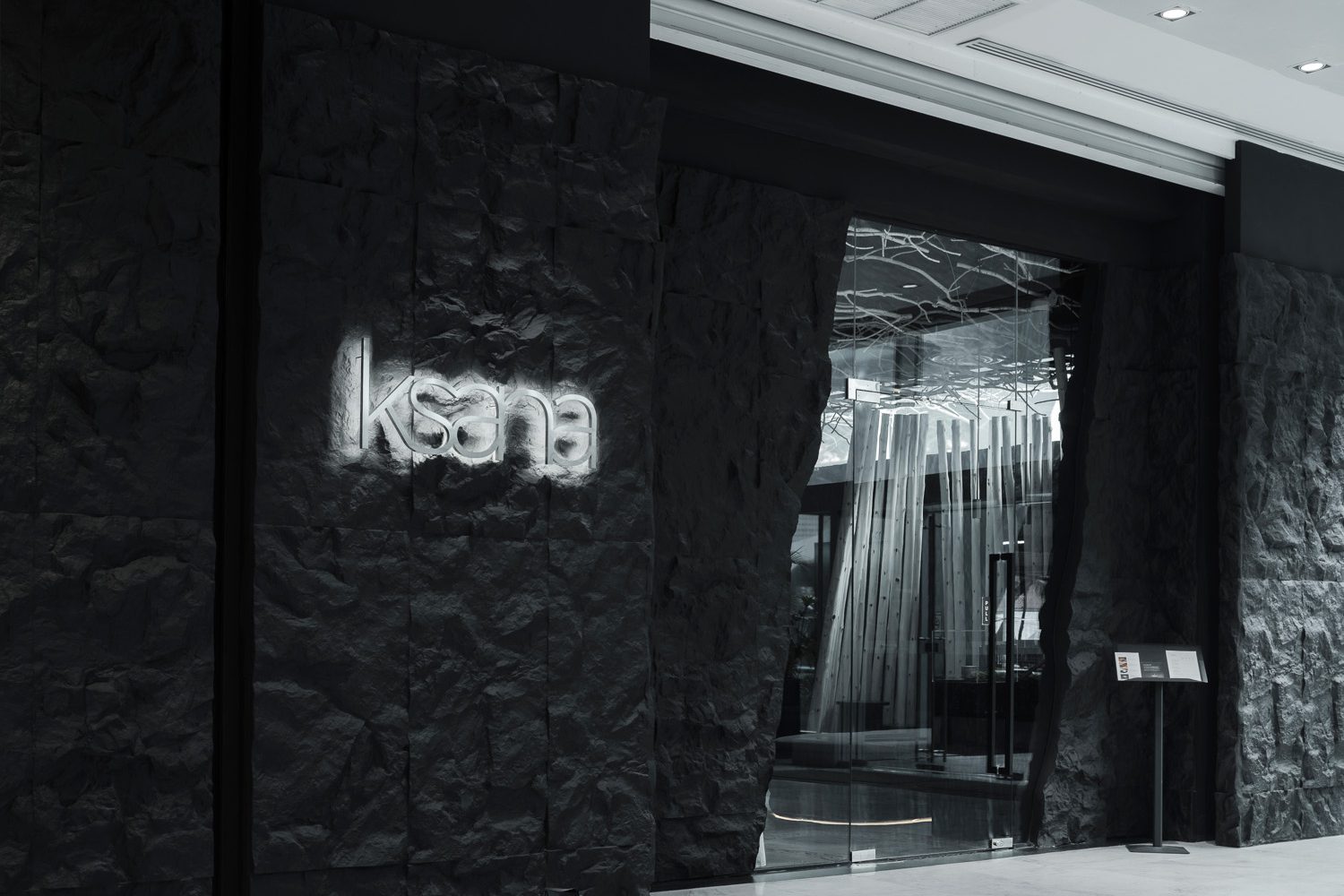
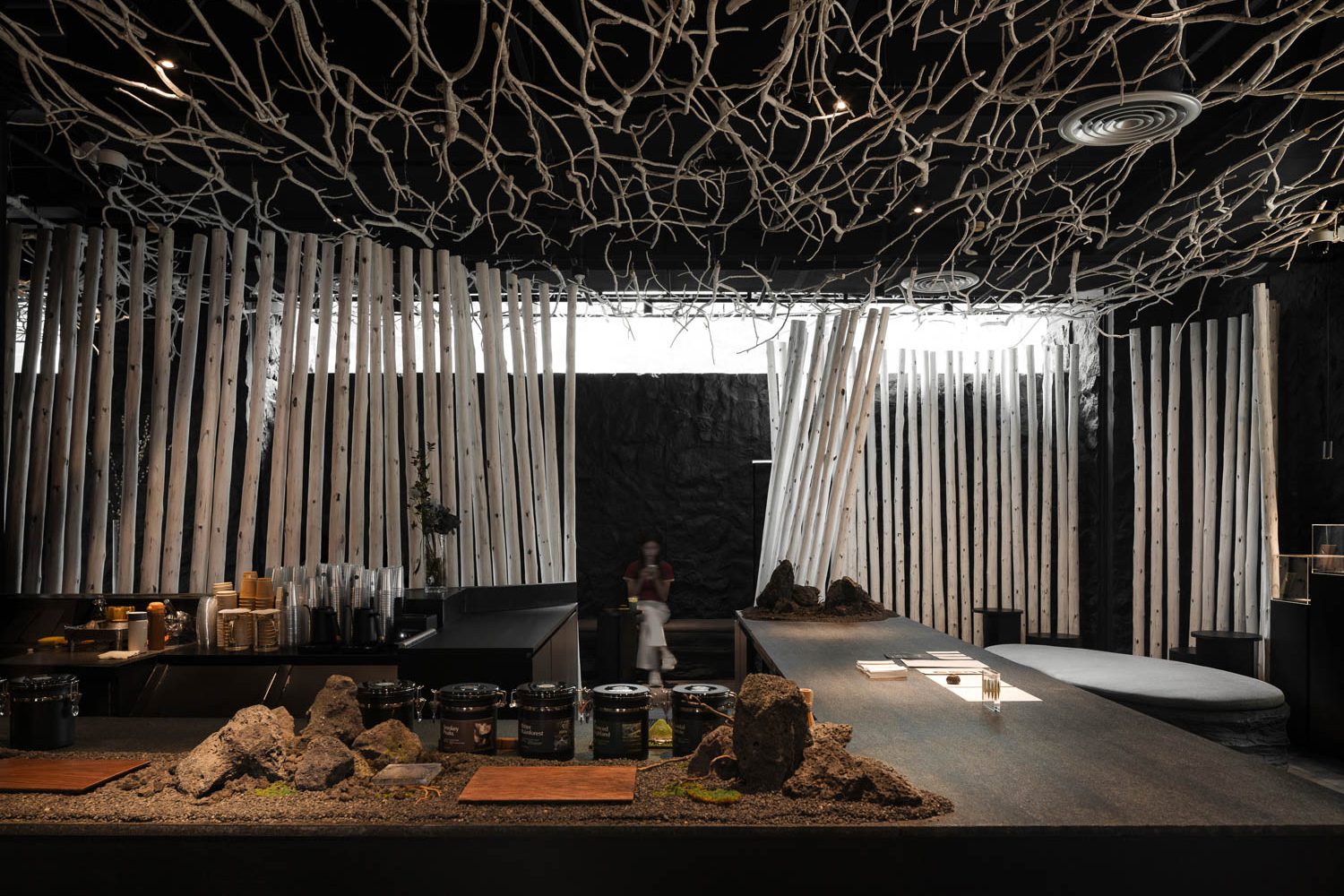
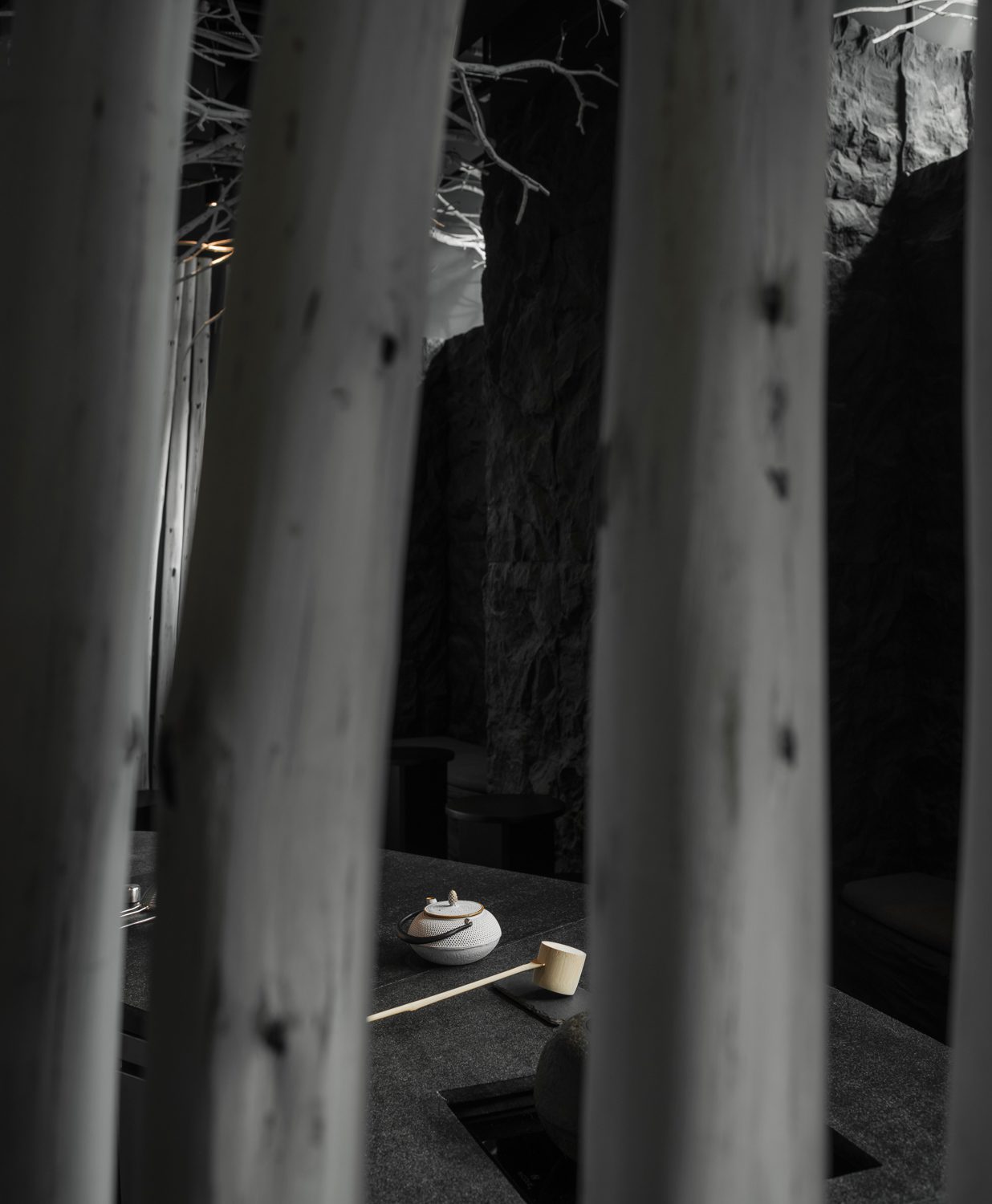
To create a sense of separation from the bustle outside and to support both service and workflow, the designer began by reexamining the existing spatial landscape for new possibilities. With a significantly larger interior space, he chose to divide the layout into three smaller zones. This approach not only addressed practical challenges in preparing each tea order, but also allowed the dispersed tea stations to play a role in shaping a spatial experience that unfolds in distinct ways across the café. Each zone possesses its own unique character. At the entrance, visitors are welcomed by the ordering counter. Beyond that, a larger and calmer seating area accommodates more guests in a relaxed setting. Deeper within, a quieter and more secluded corner offers refuge from the surrounding activity. Material selections, such as dark-stained plywood, stone, and fiberglass chairs, reflect a thoughtful balance of practicality and long-term durability. One subtle yet effective detail is the use of stone-like molded blocks set into the floor. These guide the rhythm of customer queues while adding texture and visual intrigue to the surface of the interior.
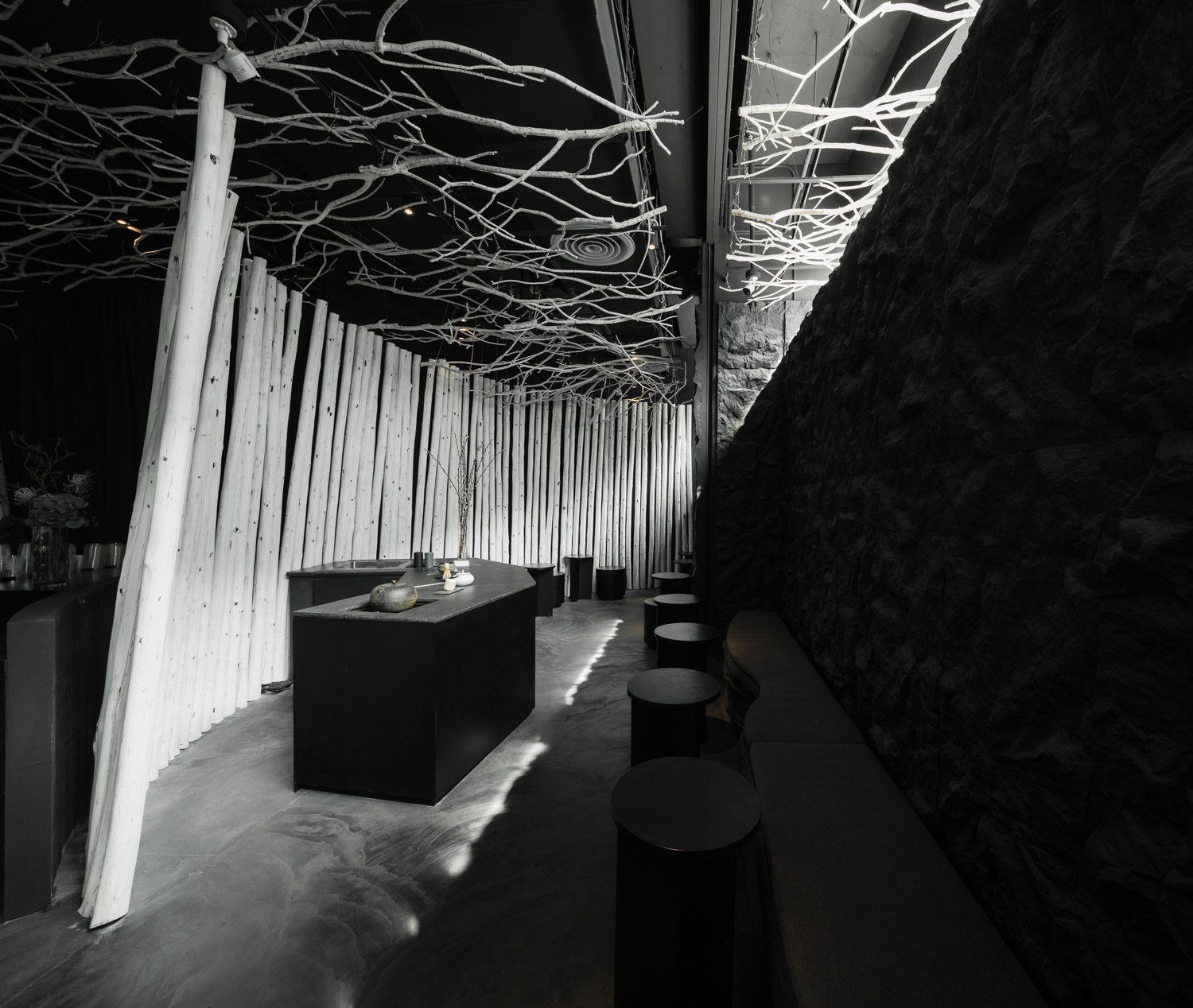
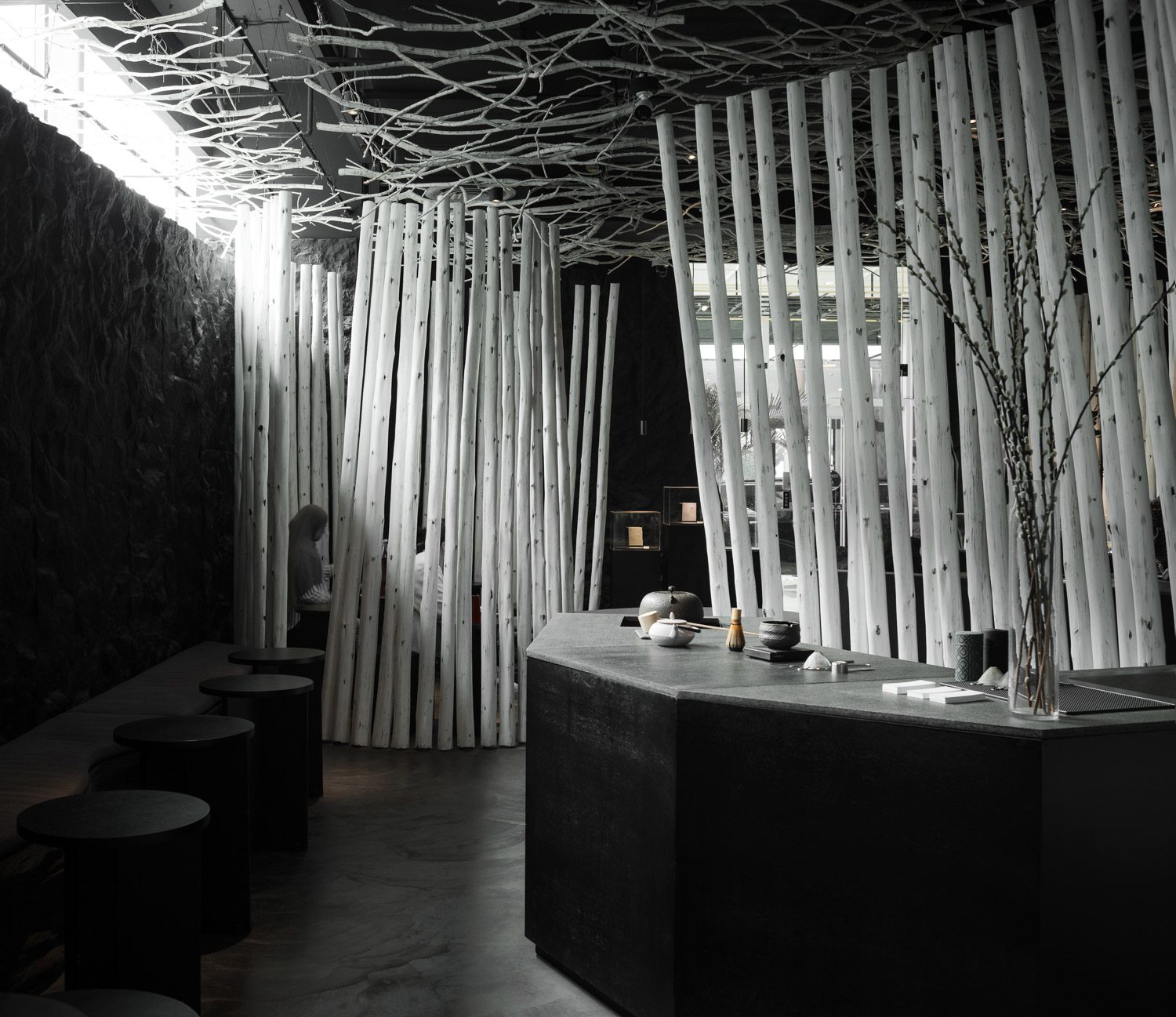
“Between 1:00 and 3:00 PM, the open section we intentionally left vacant was originally conceived in response to safety requirements set by the shopping mall, as well as to mitigate the intense sunlight entering through the window display. This constraint, however, became a point of departure for further design exploration. By introducing a lightweight wall to direct the light, we created an effect where, each afternoon, a shaft of sunlight passes through the upper opening above the wall and falls across the artificial stone surface. As the afternoon wears on, the beam gradually narrows. This subtle interplay of light aligns perfectly with the concept behind the café’s logo, which is inspired by the shifting shadows of a sundial.”
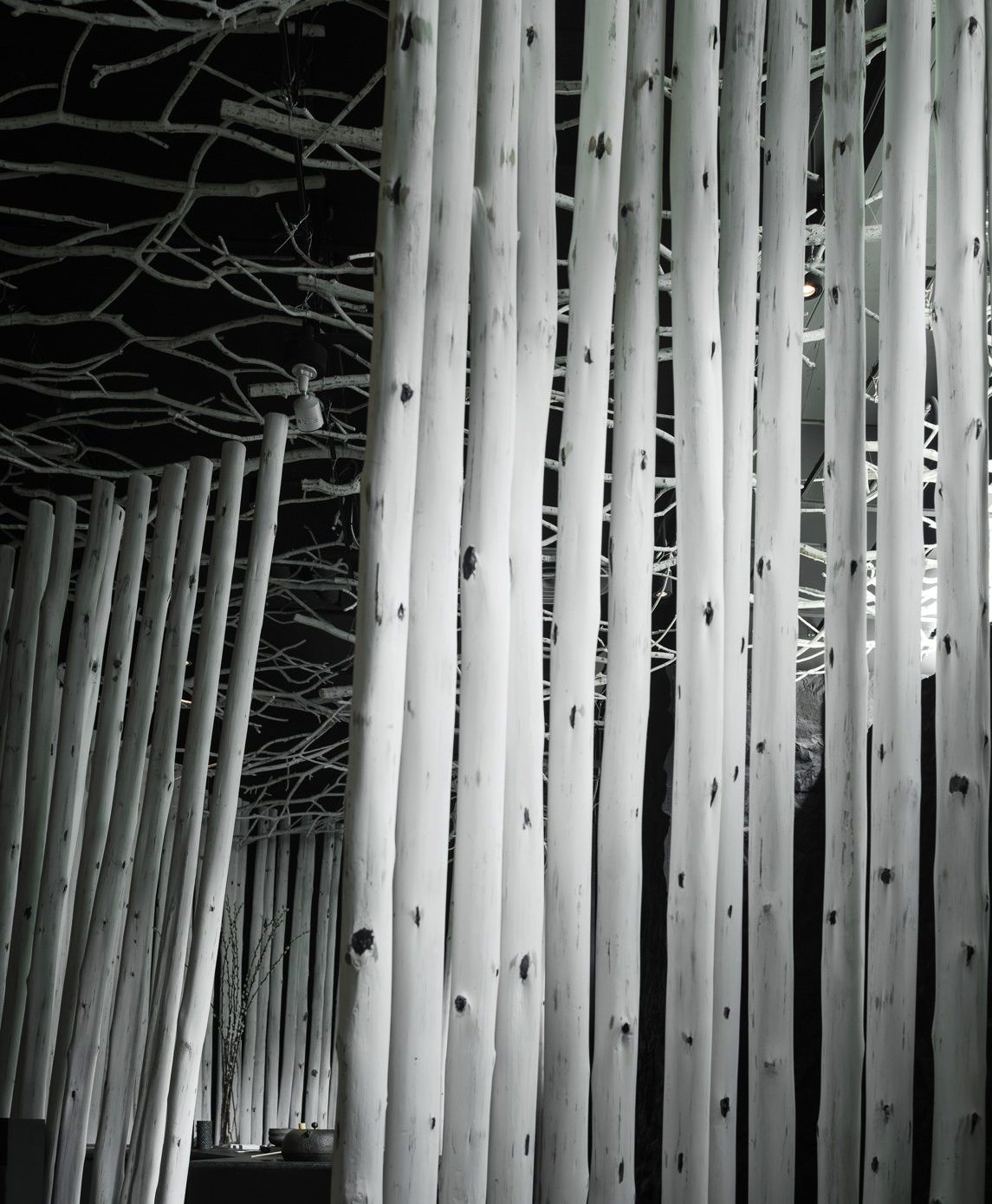
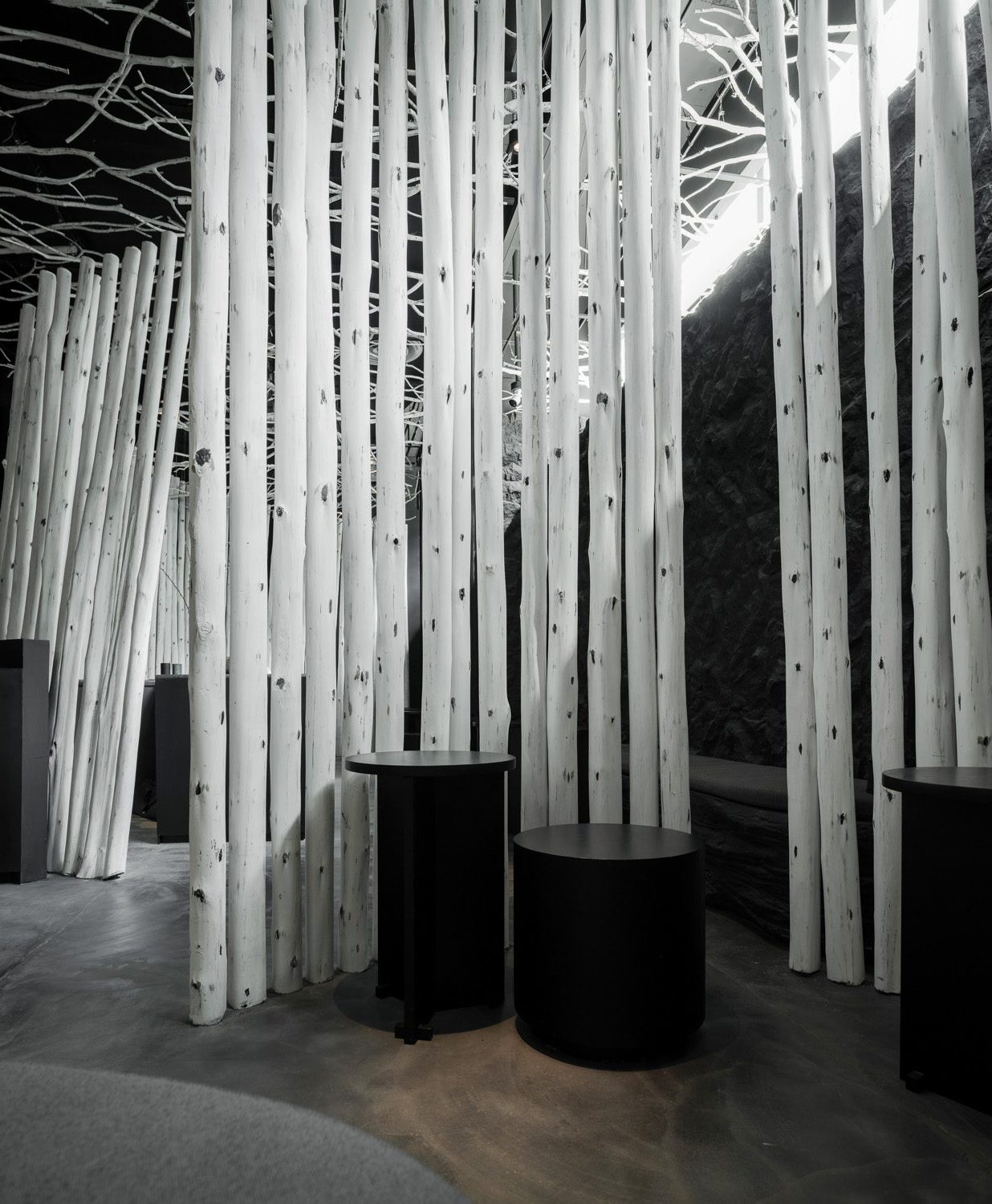
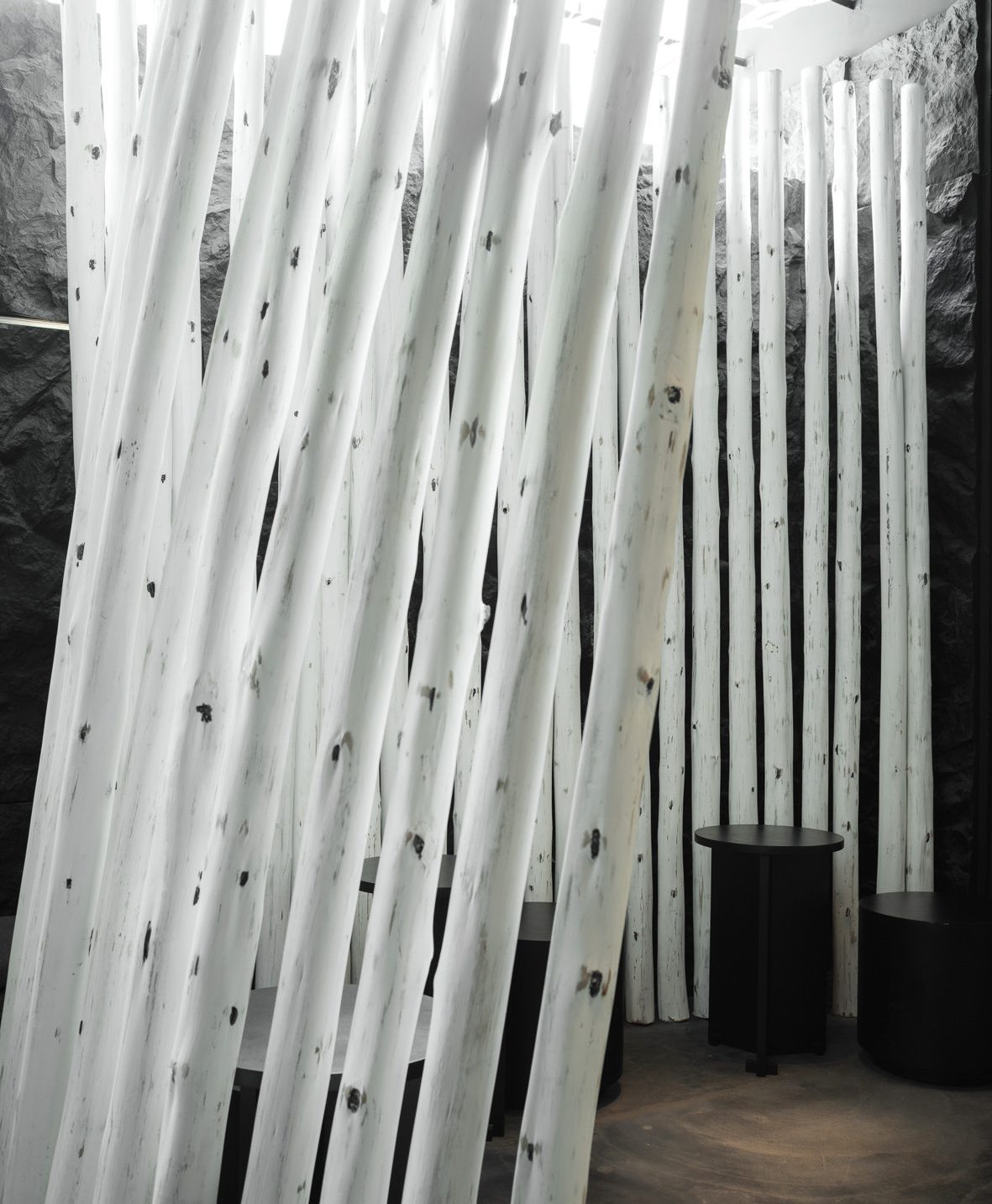
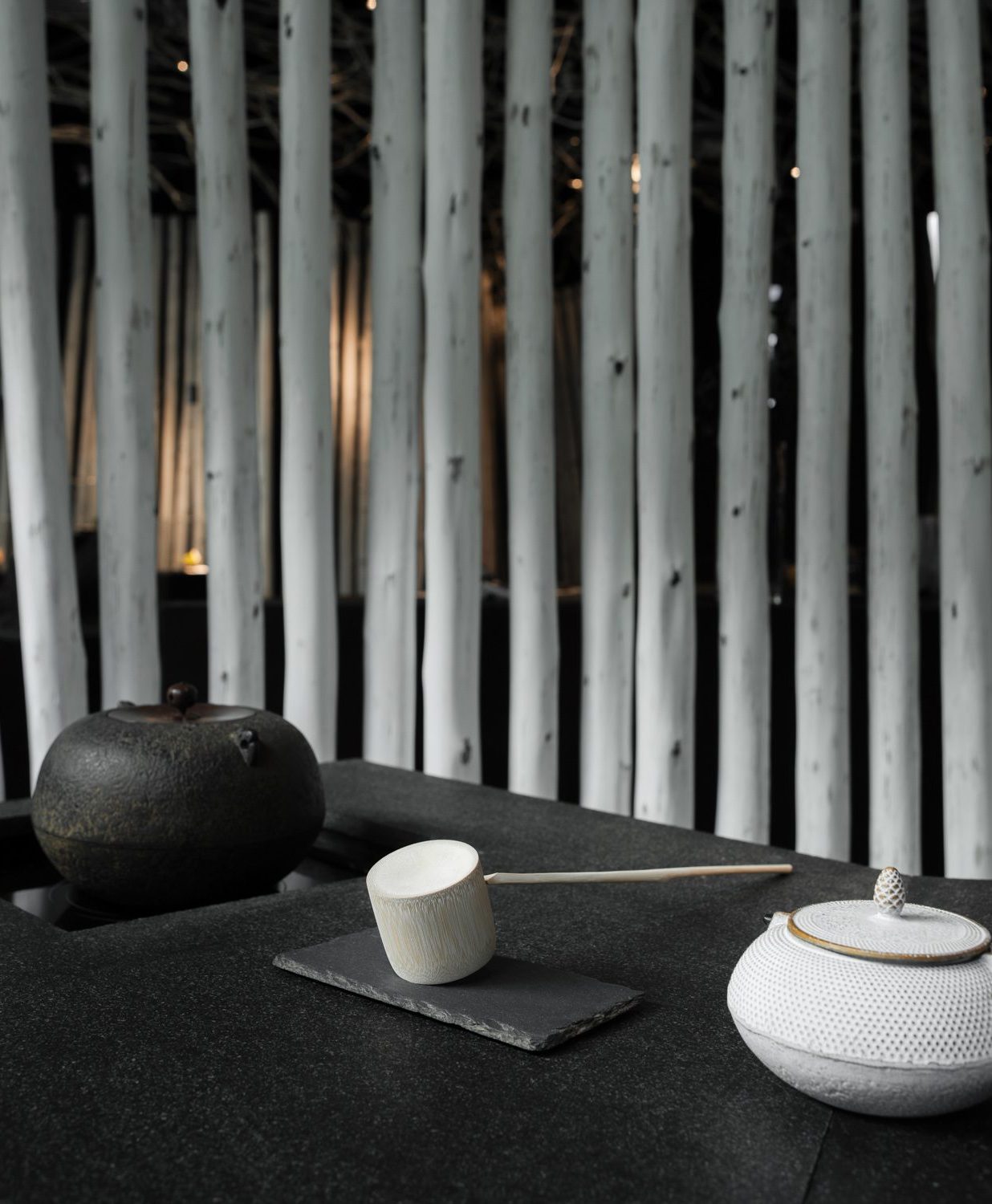
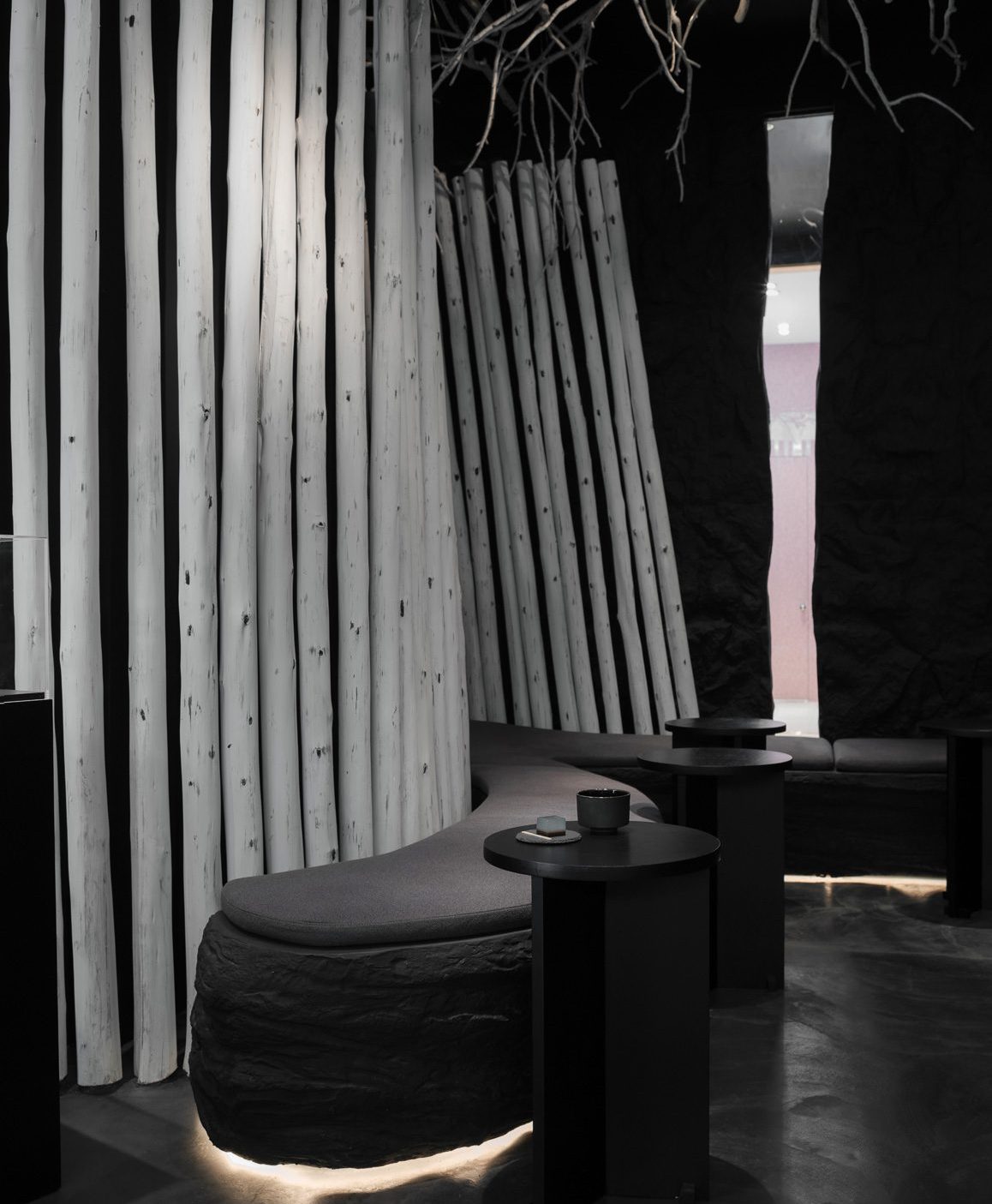
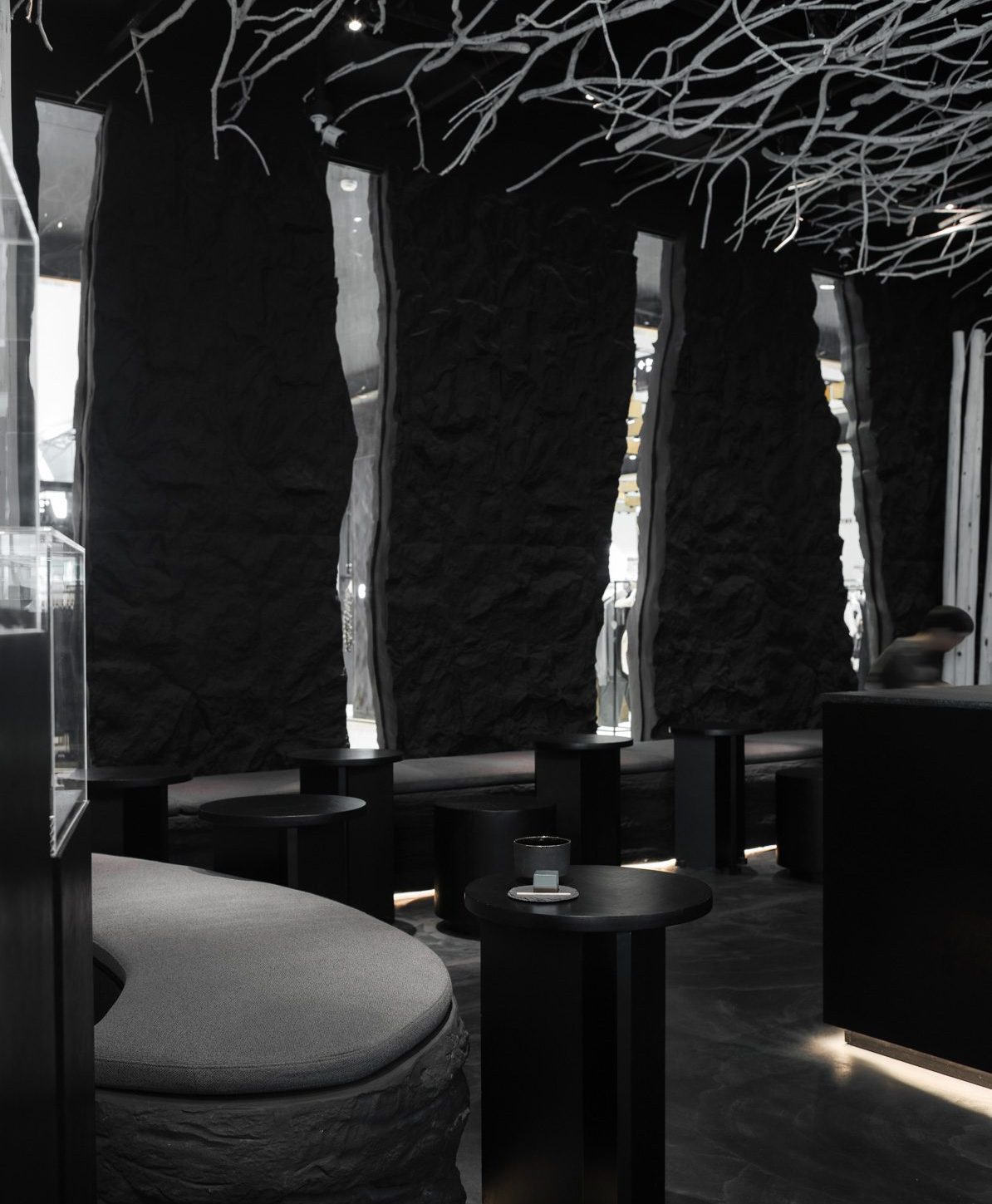
This stands out as one of the most compelling highlights of the new branch. While the café intentionally distances itself from the surrounding context (although there are corners where openness is needed to facilitate dialogue with the outside), the act of withholding, paradoxically, creates a deeper sense of openness. This quiet reversal is handled with subtlety and precision. Another point of interest, and one that continues the spatial syntax first established at the original location, is the attentively crafted design elements. For this project, Juti turned to parametric design techniques to generate the fluid, sweeping lines of the white rubberwood walls. These digital designs were then handed over to skilled installers, who meticulously bent and secured each piece of wood to the structural framework. He notes that one of the main challenges during this process was reconciling the inherent irregularities of natural wood with the precision of the digital model. Wood, by its nature, behaves freely, unlike the rendered lines of the parametric plan. Although adjustments were needed to bring the timber closer to the intended form, this unpredictable quality of the material ultimately enhanced the outcome. It allowed the dynamic flow of the design to embody a sense of natural movement, blending organic spontaneity with deliberate construction in a seamless and dynamic way.

In one space, the spatial complexity contributes to the layered experience of the forest-like installation of real wood and the artificial stone surfaces. Together, they construct a virtual ecology that draws the viewer in and invites deeper contemplation. By using synthetic materials to echo the essence of nature, the design blurs the line between the real and the replicated. This merging of natural and artificial elements creates the atmosphere of a dense, fantastical forest – silent, immersive, and imagined. And from here, the question emerges: what might the next landscape reveal?