

‘NON-BELIEF: TAIWAN INTELLIGENS OF PRECARITY’, A TAIWANESE EXHIBITION AT THE VENICE BIENNALE 2025, PROMOTES THE CONCEPT OF ‘NON-BELIEF’ AND SUGGESTS THAT ARCHITECTURE DOES NOT HAVE TO START FROM STABILITY
TEXT & PHOTO: ALEXANDRA POLYAKOVA
(For Thai, press here)
Taiwan’s contribution to the 2025 Venice Architecture Biennale, titled NON-Belief: Taiwan Intelligens of Precarity, carves out a quietly radical position within the Biennale’s wider conversation on Intelligens: Natural. Artificial. Collective. Curated by Cheng-Luen Hsueh alongside co-curators Ping-Sheng Wu, Meng-Tsun Su, and Sung-Chang Leo Chiang, and organized by the National Taiwan Museum of Fine Arts, the exhibition takes place at the historic Palazzo delle Prigioni. In contrast to louder spectacles of techno-optimism, Taiwan’s pavilion turns precarity into a lens for architectural reflection—one shaped by geopolitical fragility, environmental flux, and cultural ambiguity.
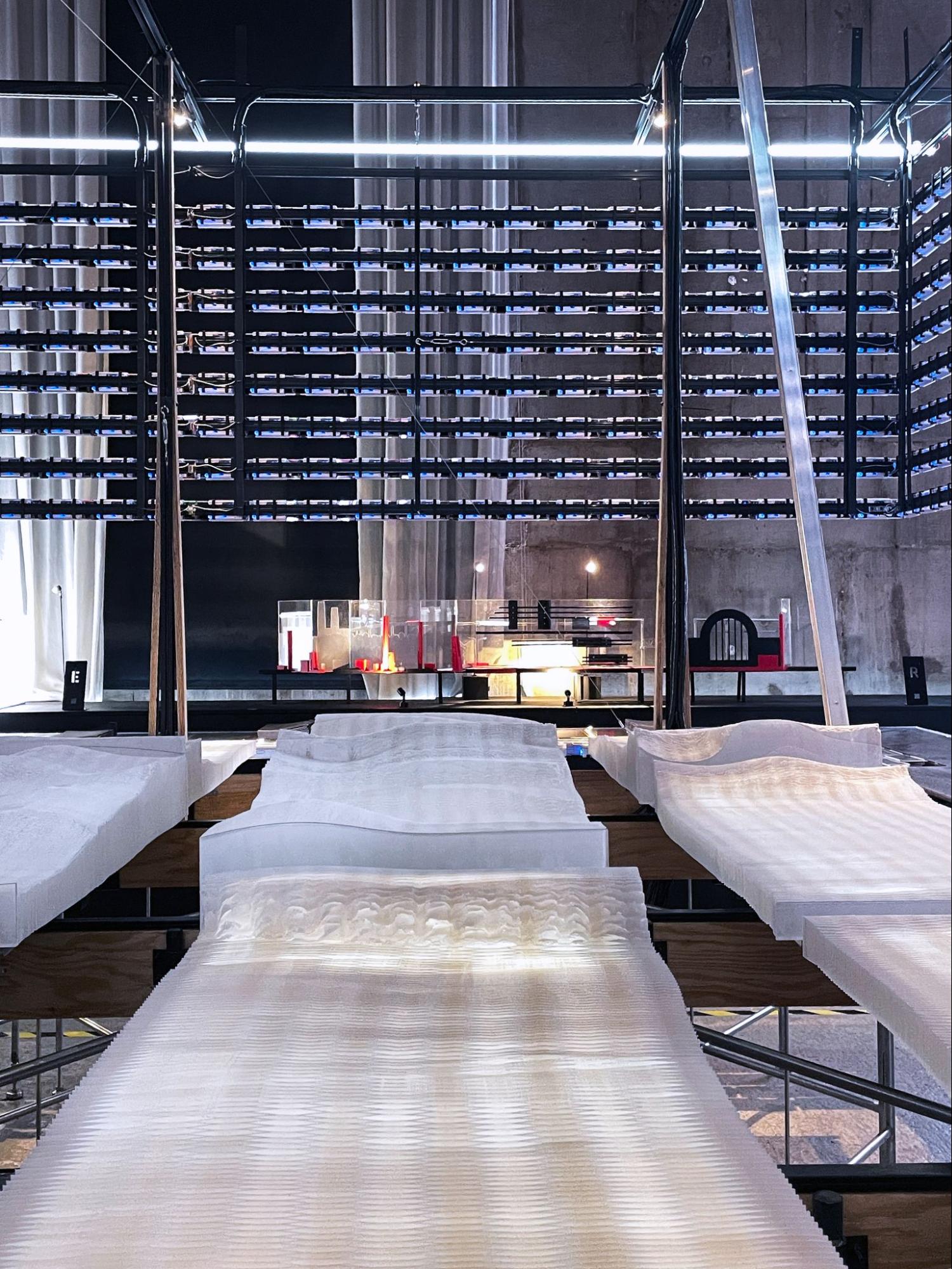
Rather than portraying precarity as failure, the curators propose it as a generative condition—an ‘intelligens’ rooted in the capacity to adapt, absorb, and invent under constraint. Set against the backdrop of Taiwan’s uncertain political status and its hyper-technological island context, the exhibition asks what kinds of spatial intelligence emerge when survival itself becomes a design imperative.
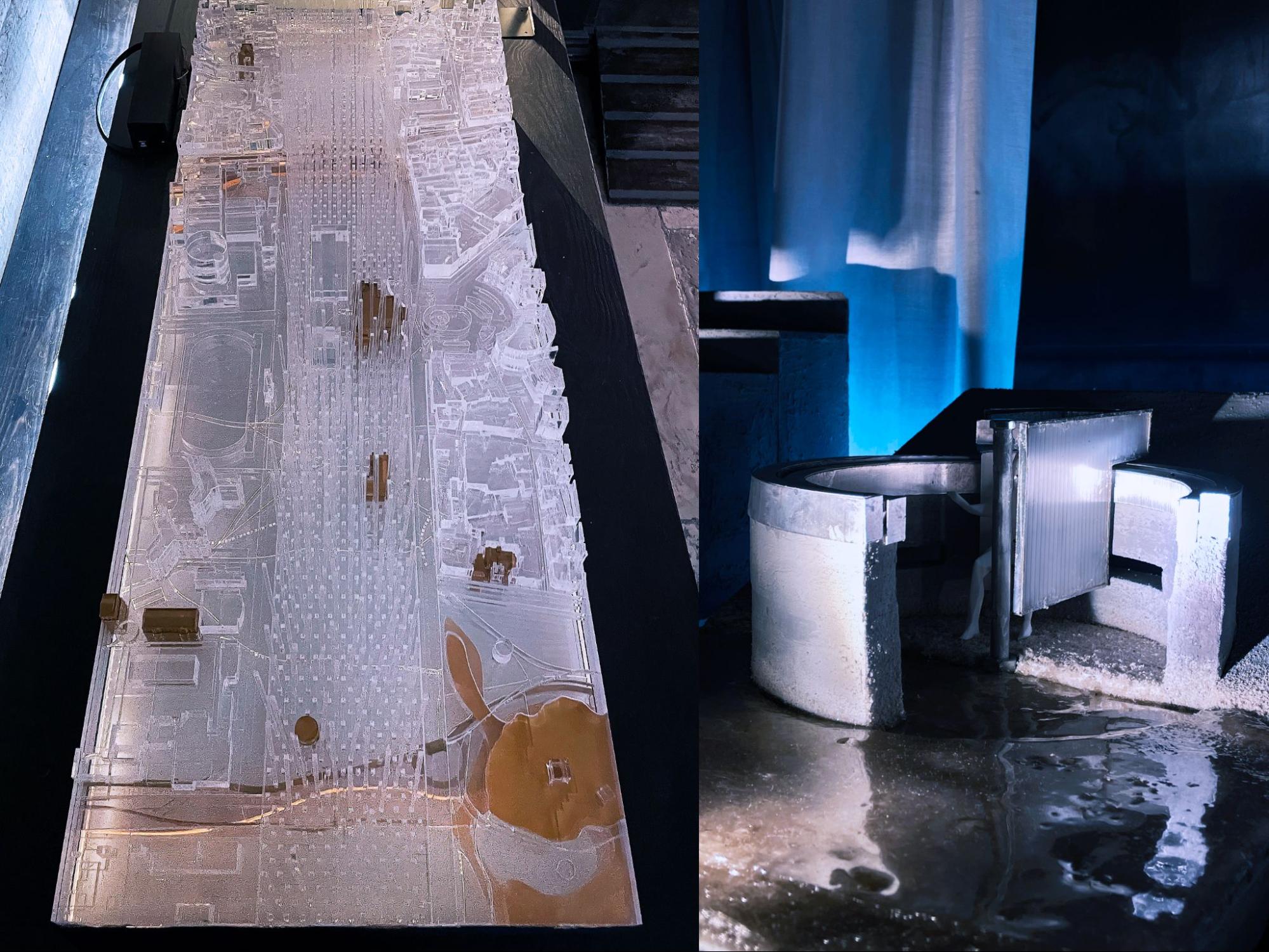
The show unfolds through four thematic frameworks—Tactical Interdependence, Infrastructural Flux, Embodied Resilience, and Adaptive Assemblage—which collectively explore how architecture can negotiate instability through speculative prototypes, landscape research, and lived experiences. It is not a showcase of finished icons, but a layered ecosystem of collaborative projects developed by architects, researchers, and students from National Cheng Kung University and H2O Studio.
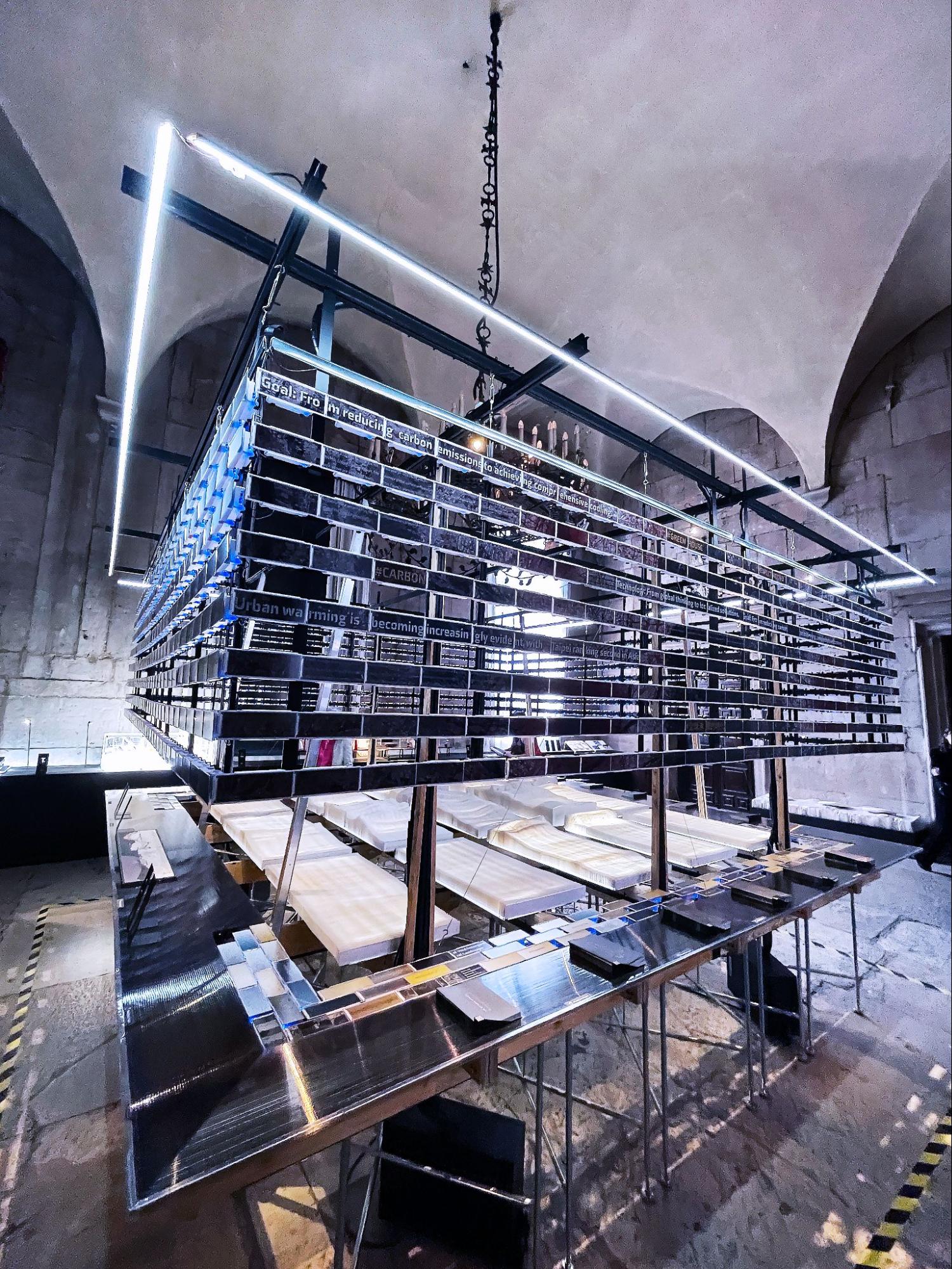
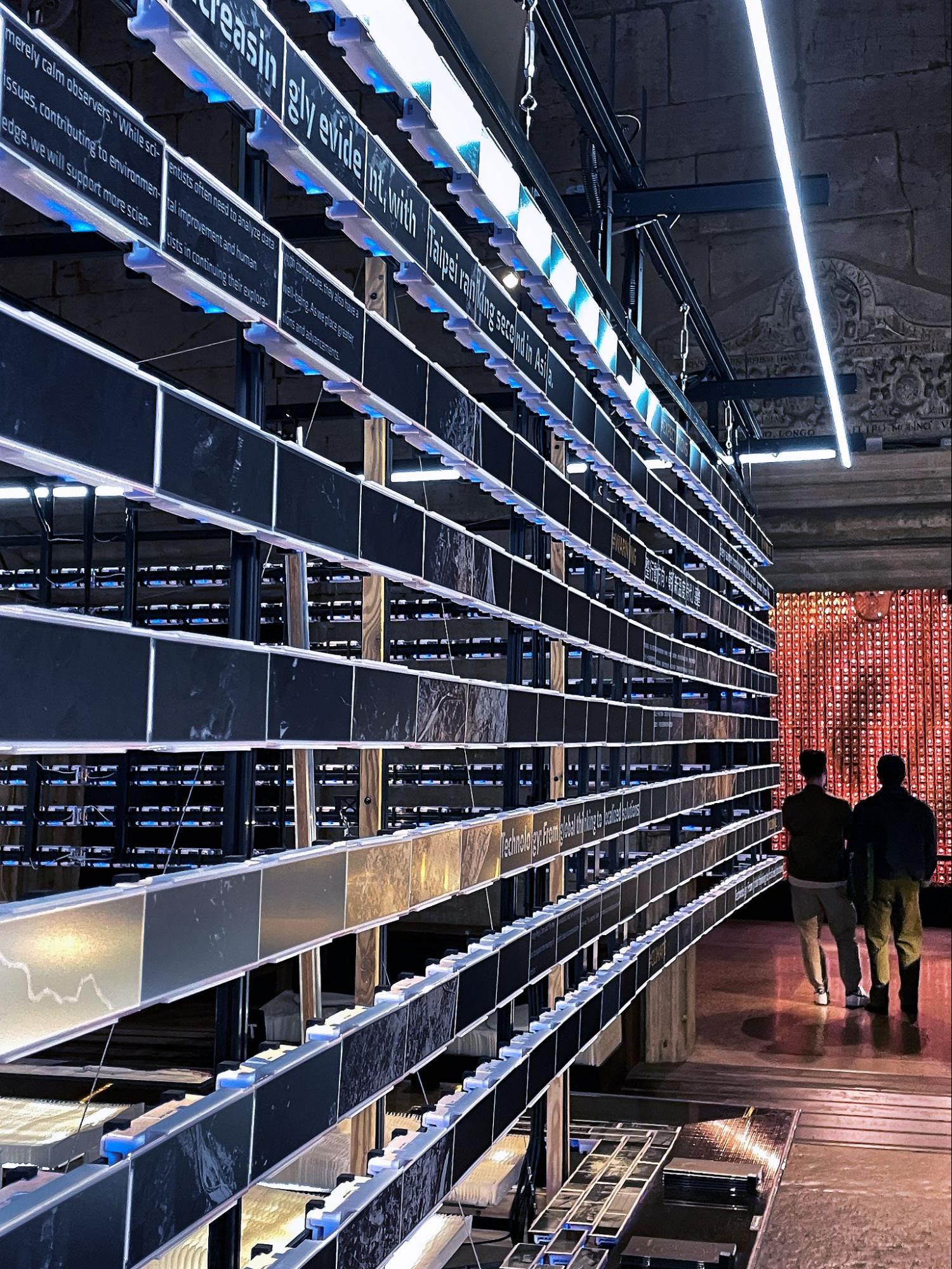
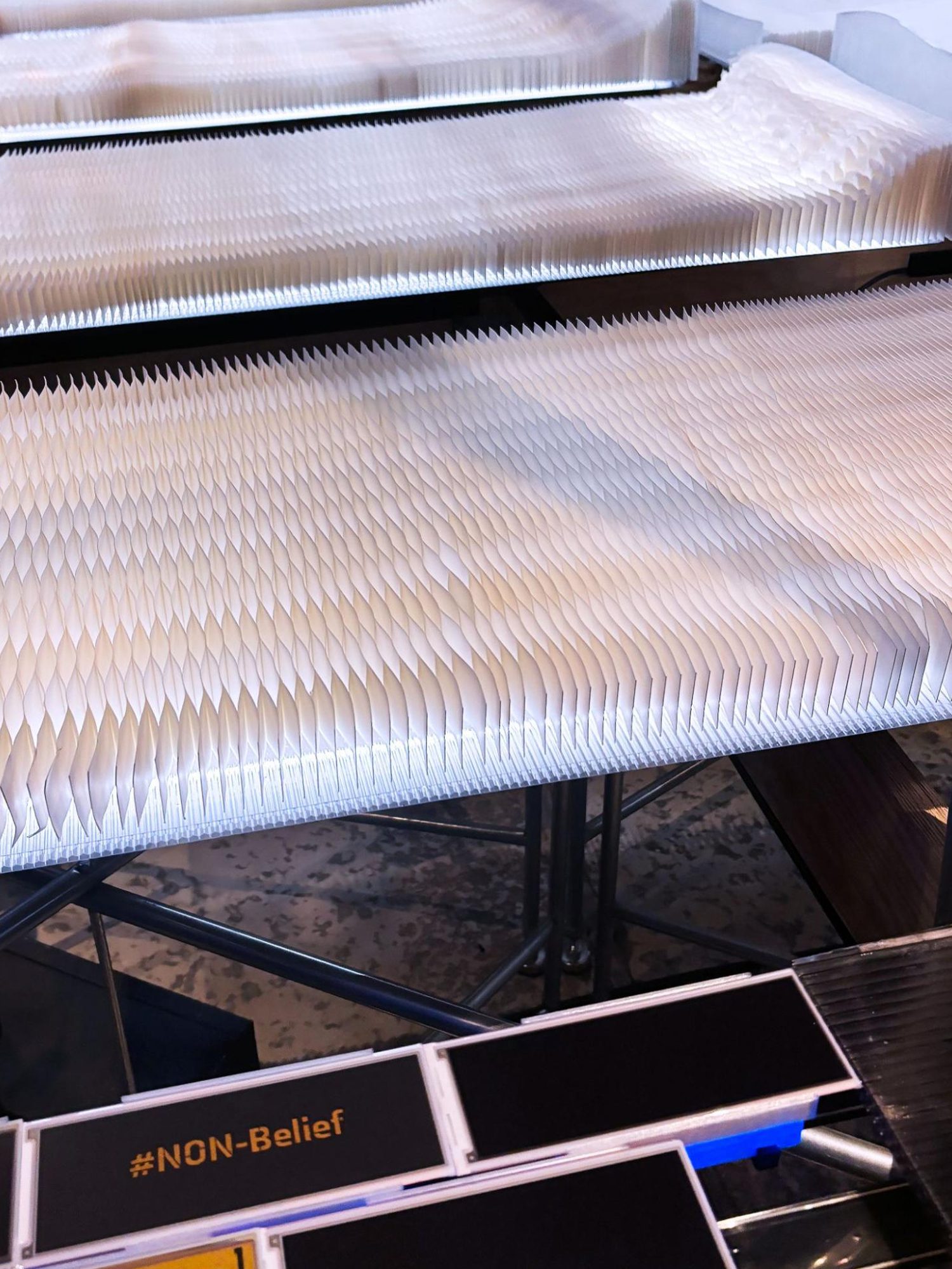
One standout piece, Landscape In-Between by Ping-Sheng Wu, Shih-Hua Yen, and Po-Min Kung, maps Taiwan’s transitional spaces—the interstices between rural terrains and urban sprawl—where ambiguity becomes a condition for experimentation. Through diagrammatic and physical models, the project renders visible the informal, ephemeral, and often overlooked spatial practices that define Taiwanese life on the margins.
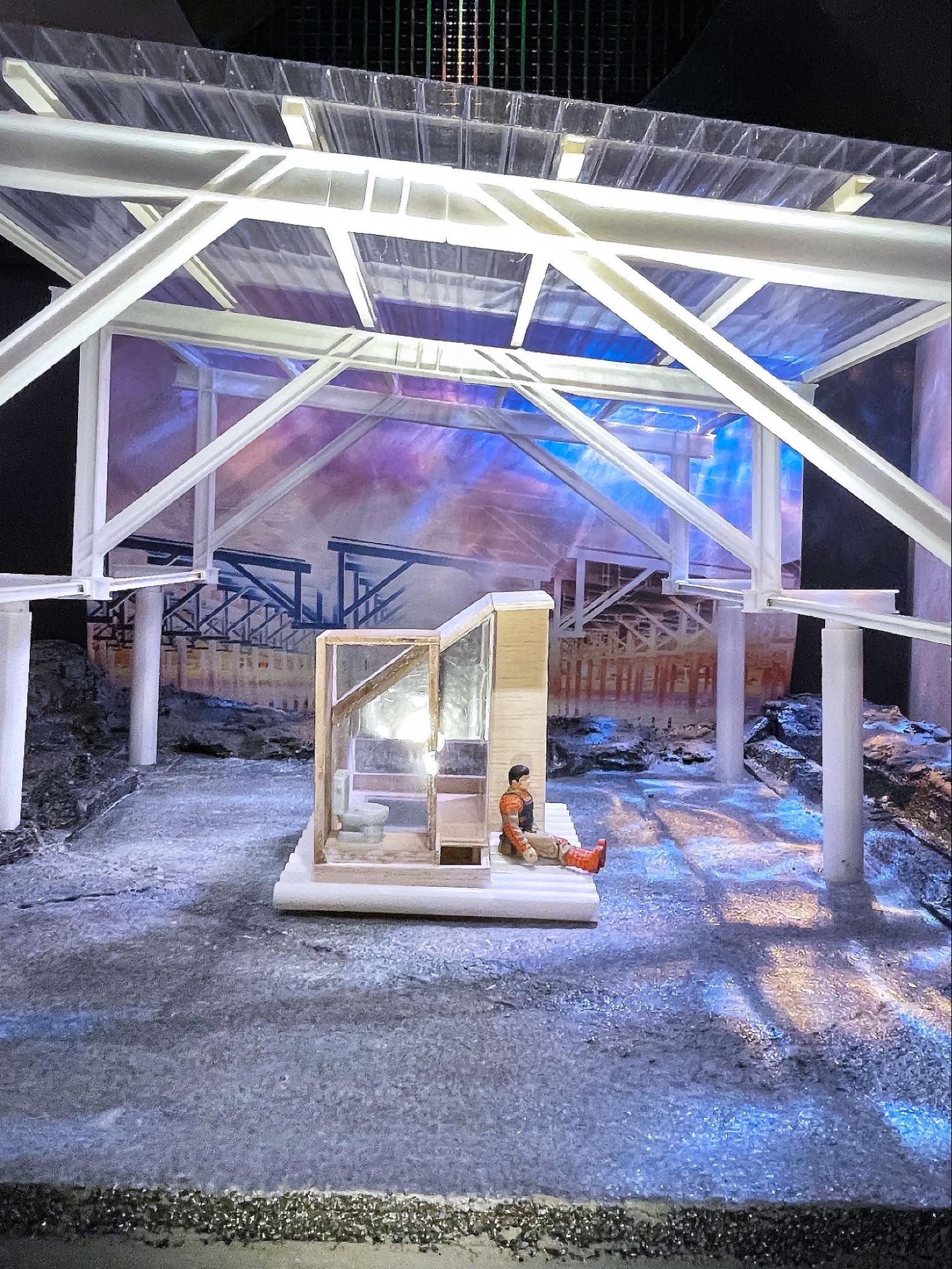
Another key work, Urban Spectacle by Wei Tseng and Jeong-Der Ho, critically unpacks the spectacle of rapid urban development. Amid the globalizing forces reshaping Taiwan’s cities, the project asks how cultural identity can be preserved—and reimagined—without lapsing into nostalgia or erasure. Its visual language is both analytical and affective, pairing data with sensory cues to provoke a more nuanced understanding of urban transformation.
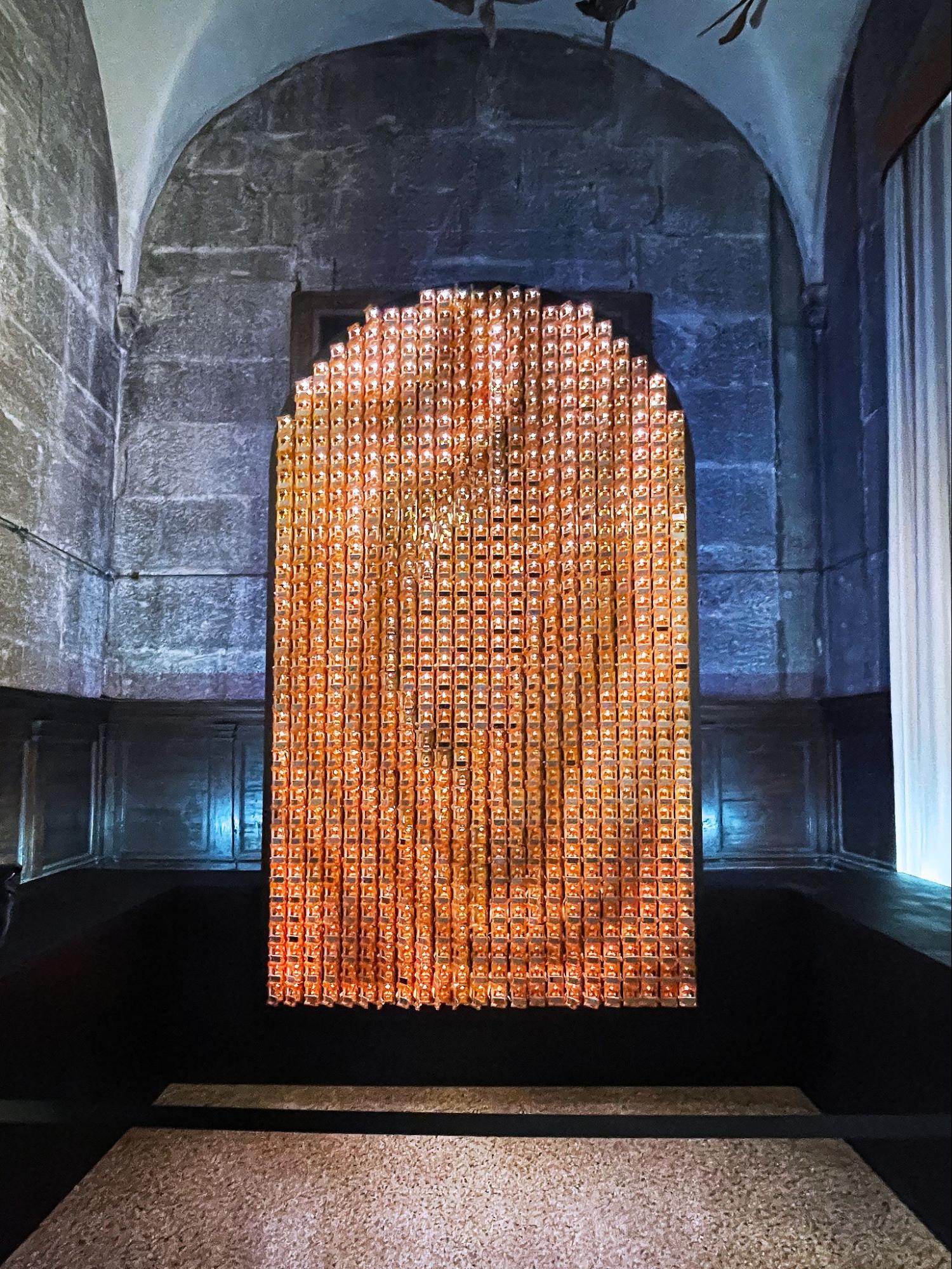
TECH-island, a research-based installation by H2O Studio, draws attention to Taiwan’s position as a global hub for electronics and digital innovation. Yet, rather than celebrating technology in isolation, the work interrogates its material consequences and spatial politics. Multi-scalar studies and design prototypes point to how technological systems shape everything from domestic interiors to geopolitical landscapes, blurring the lines between infrastructure and interface.
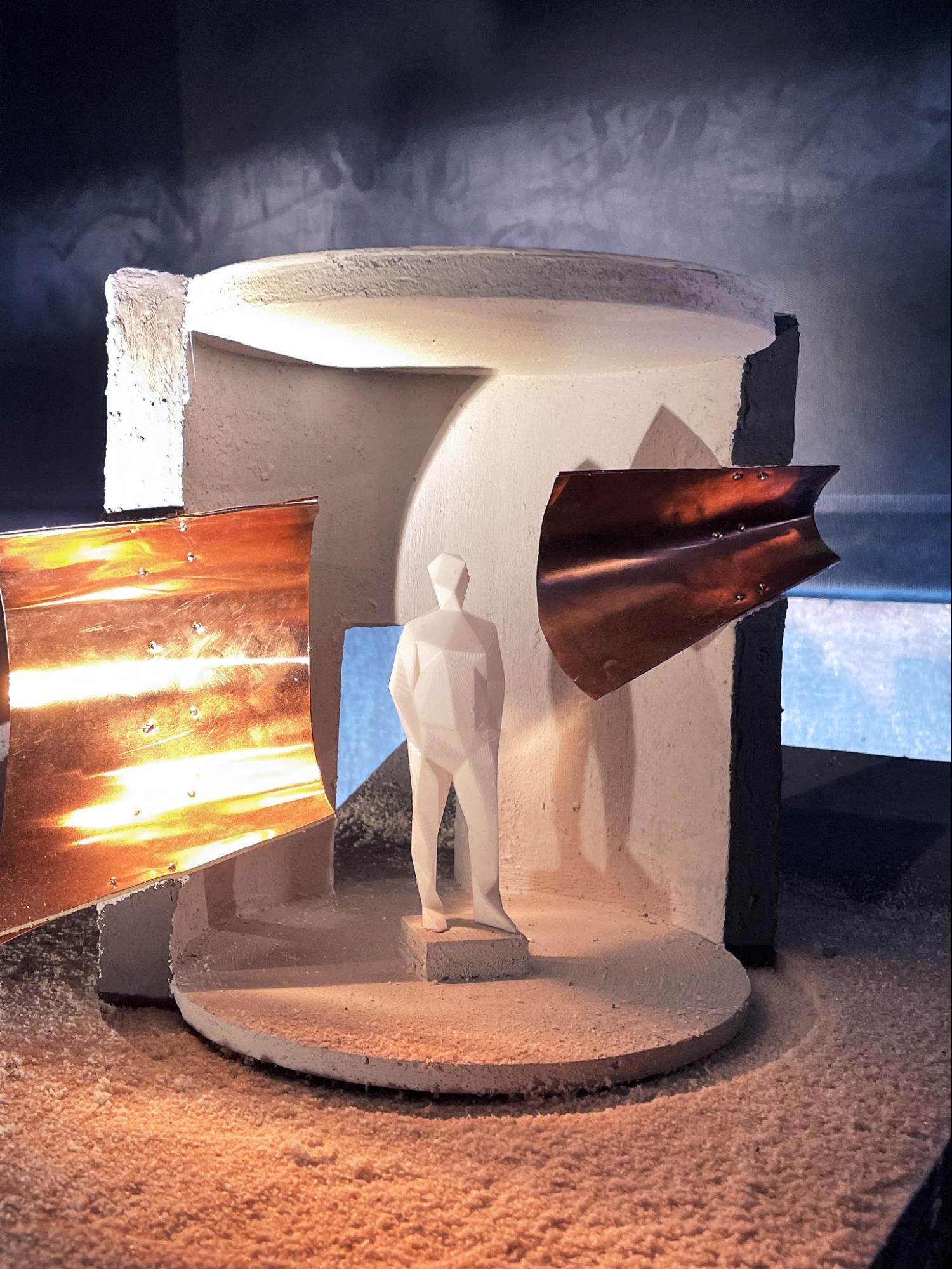
Throughout the exhibition, belief systems—whether political, environmental, or technological—are subtly deconstructed. In this context, ‘non-belief’ becomes not a negation, but a refusal of singular narratives. It is a space of questioning, where architecture becomes a form of situated critique rather than a solutionist gesture.
The Taiwan Pavilion’s curatorial stance also functions as a quiet provocation within the Biennale itself. In a global forum often dominated by national branding and spectacular scenography, NON-Belief insists on ambiguity, multiplicity, and lived precarity as valid architectural foundations. It pushes against the assumption that stability is a prerequisite for design, suggesting instead that instability may generate the most inventive forms of architectural intelligence.
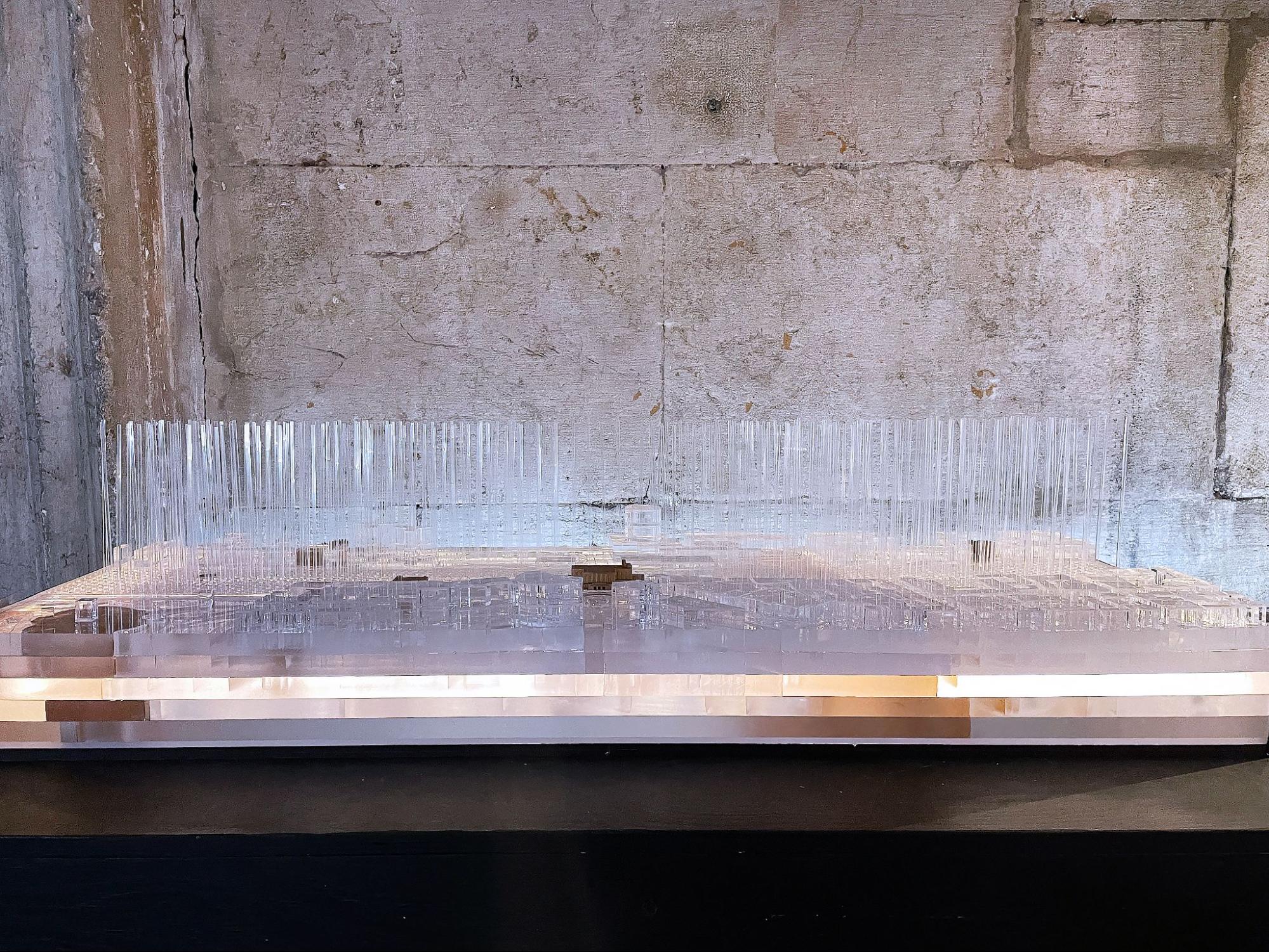
In doing so, Taiwan’s pavilion situates itself not just as a geopolitical case study, but as a conceptual proposition for how to build in an age of crisis. Whether responding to climate volatility, cultural erosion, or systemic surveillance, the works on display suggest that architecture must move beyond permanence and mastery—and toward resilience, improvisation, and interdependence.
NON-Belief: Taiwan Intelligens of Precarity resonates with broader questions faced across the Biennale: What does it mean to design for the unknown? How can architecture act with care in unstable conditions? And what forms of intelligence—natural, artificial, or collective—are needed to survive, and thrive, in a precarious world?
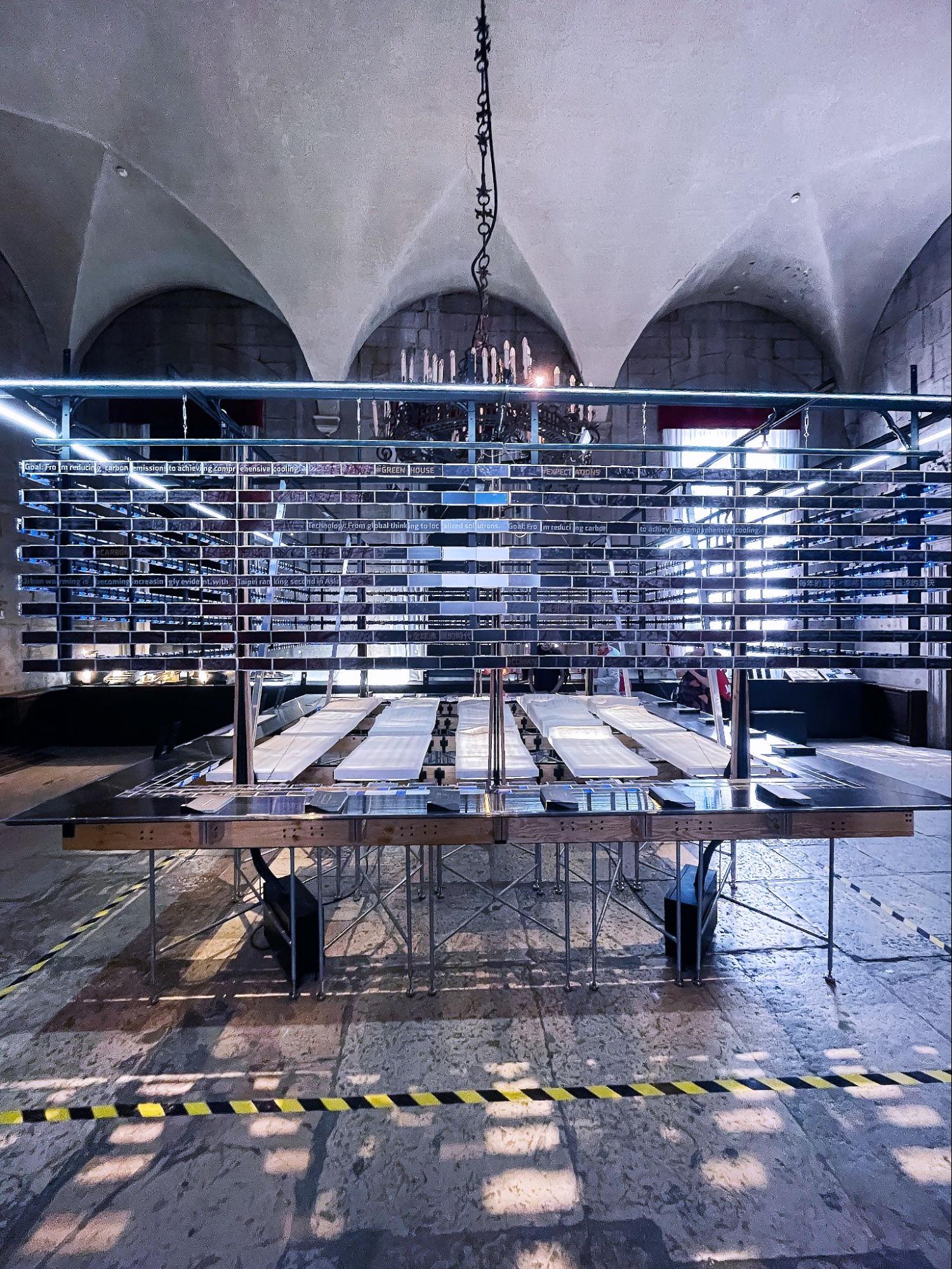
In the quiet halls of the Palazzo delle Prigioni, Taiwan’s contribution does not shout. It listens. And in that act of listening, it offers a model of architecture not as imposition, but as adaptation. Not as a monument, but as a gesture. Not as a belief, but as an invitation.
The Venice Biennale of Architecture 2025 is held from May 10 to November 23, 2025, in Venice, Italy.