 Photo: Iwan Baan
 SUN TOWER, A SEASIDE BUILDING IN YANTAI, DESIGNED TO ORBIT THE SUN, CONVEYING THE RHYTHM OF LIFE IN THE UNIVERSE THROUGH ITS SHAPE AND MATERIALS, BY OPEN ARCHITECTURE
TEXT: PRATCHAYAPOL LERTWICHA
PHOTO: JONATHAN LEIJONHUFVUD EXCEPT AS NOTED
(For Thai, press here)
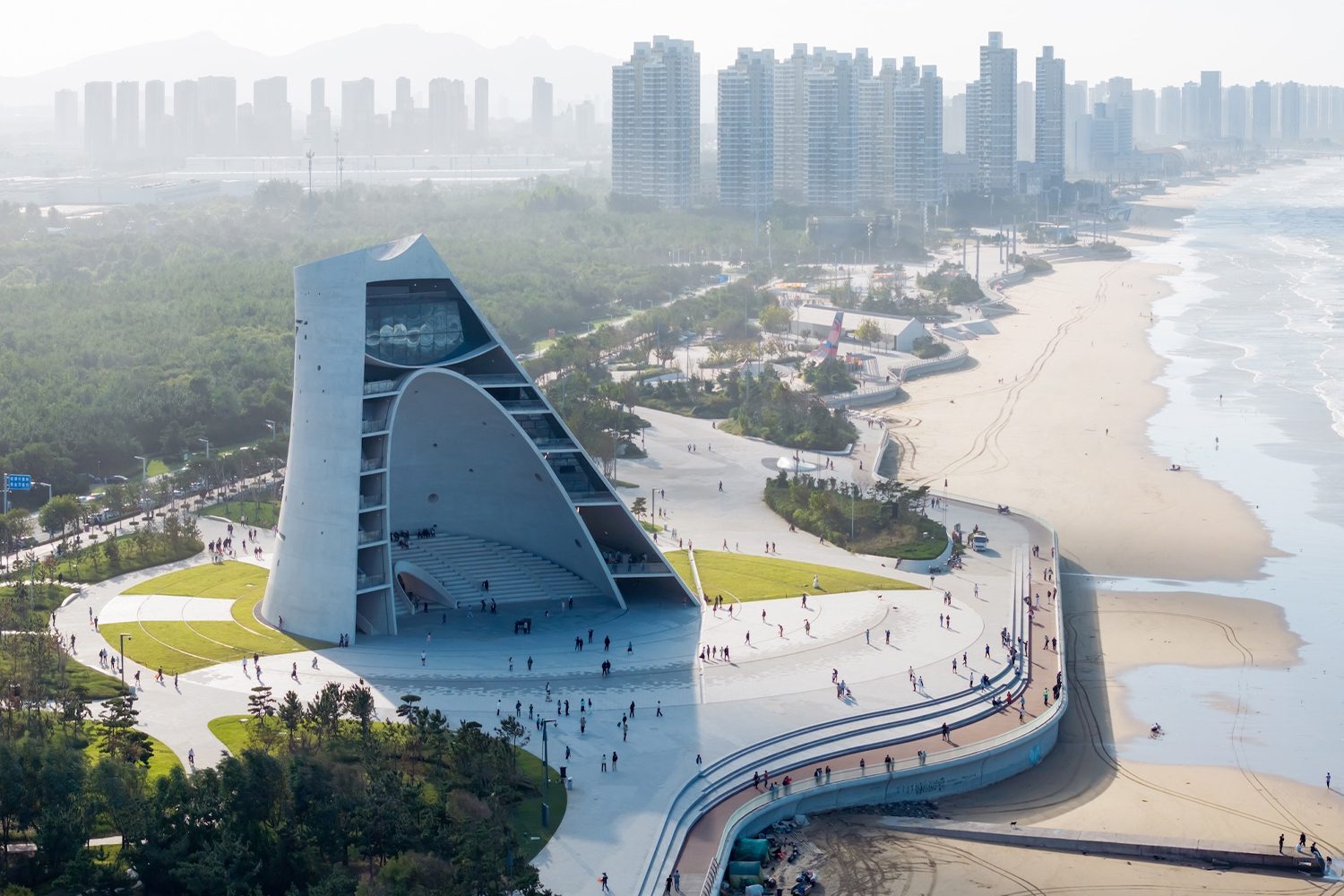
Today, Yantai, a coastal city on China’s eastern seaboard, thrives on a robust economy driven by high-tech manufacturing and a fast-growing service industry. With prosperity and a rising population, the municipal government sought to create a new cultural landmark on the shoreline: a civic space for its people and a contemporary symbol of the city. After a rigorous competition, the winning scheme was awarded to OPEN Architecture, a Beijing-based studio.
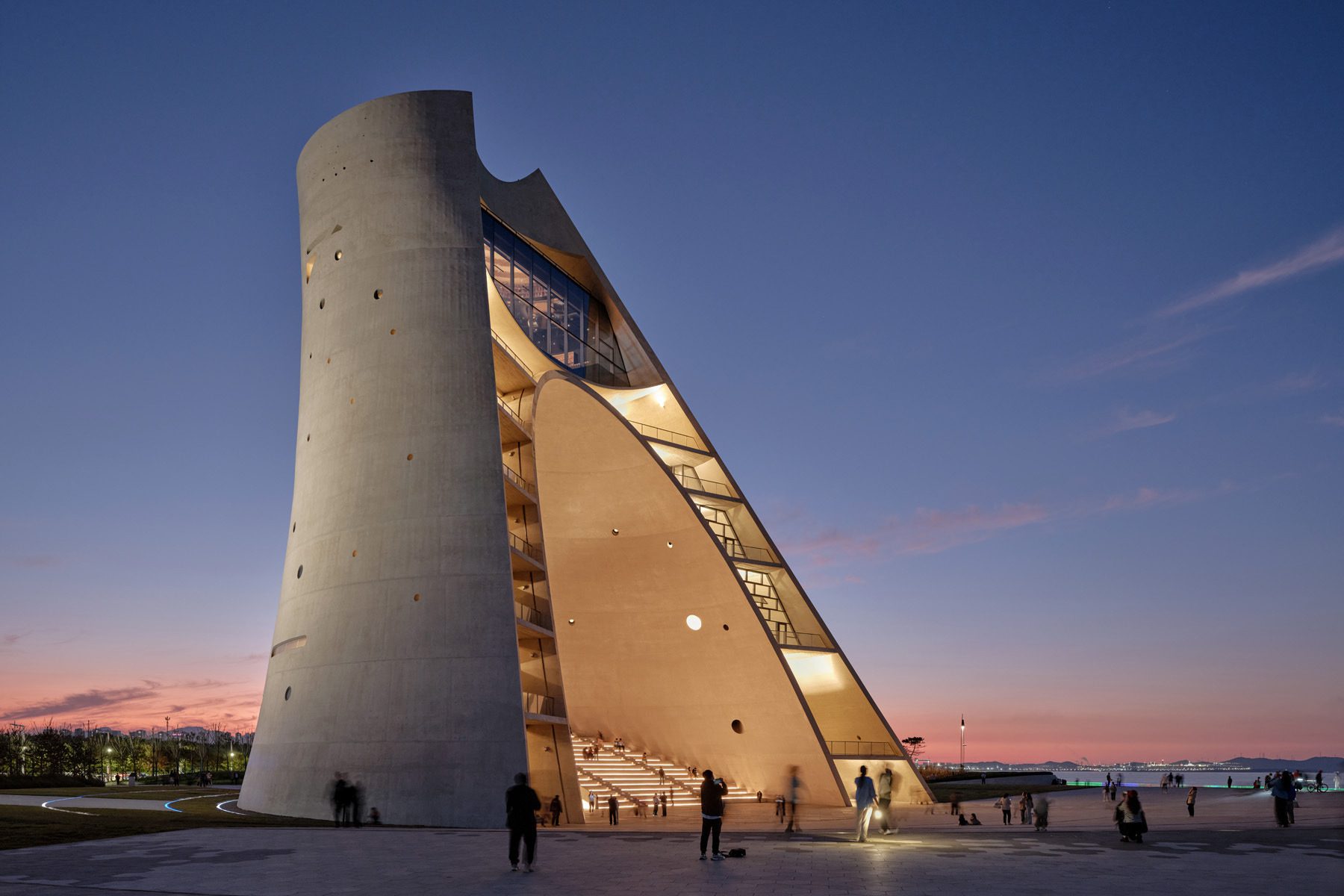
In the past, Yantai was home to a culture of sun worship, deeply rooted and said to be among the oldest such traditions in China. Over time, this ancient practice faded into obscurity. OPEN Architecture reimagines it as the inspiration for a striking new civic monument: a 50-meter-tall conical structure named the Sun Tower.
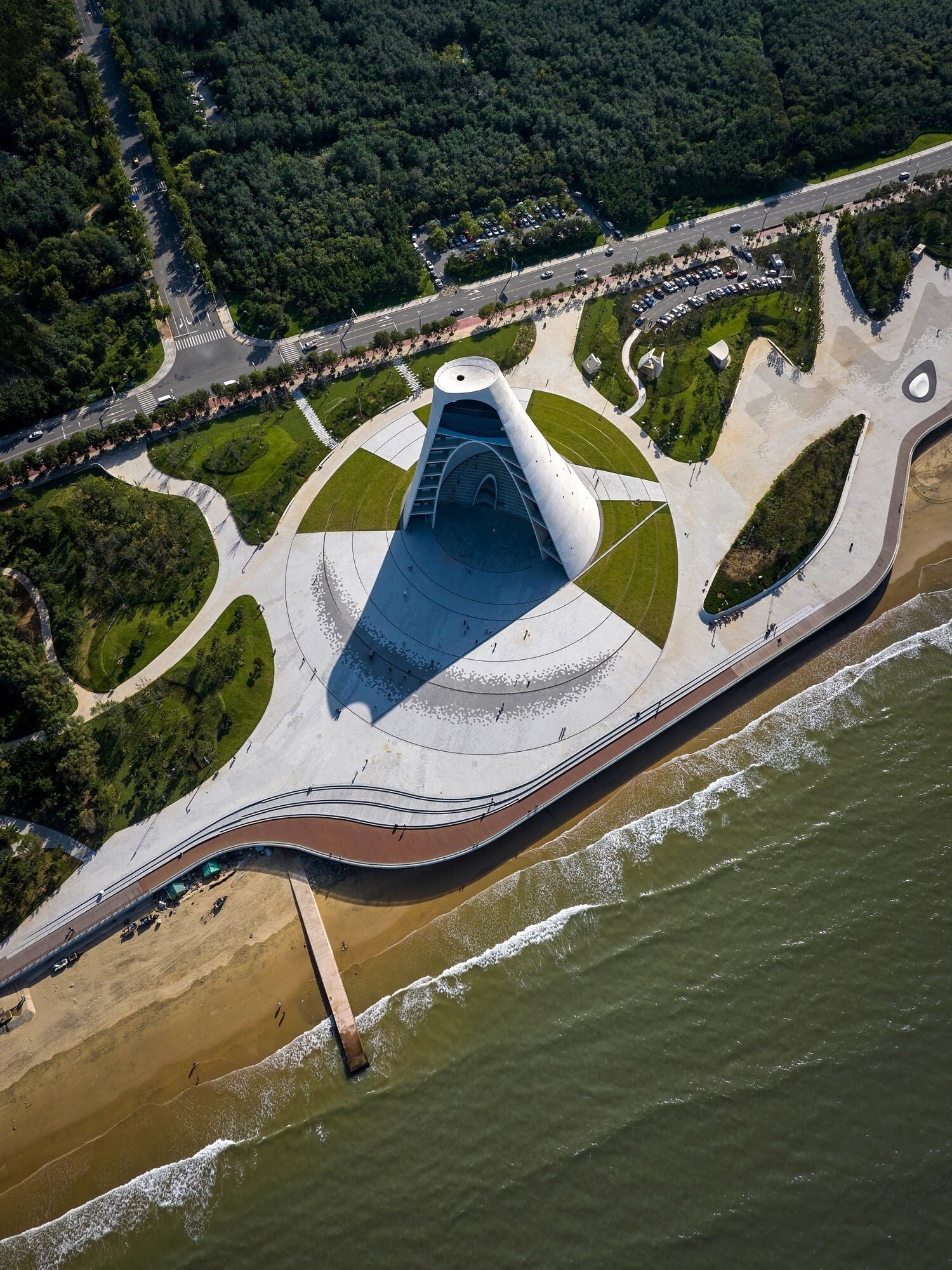
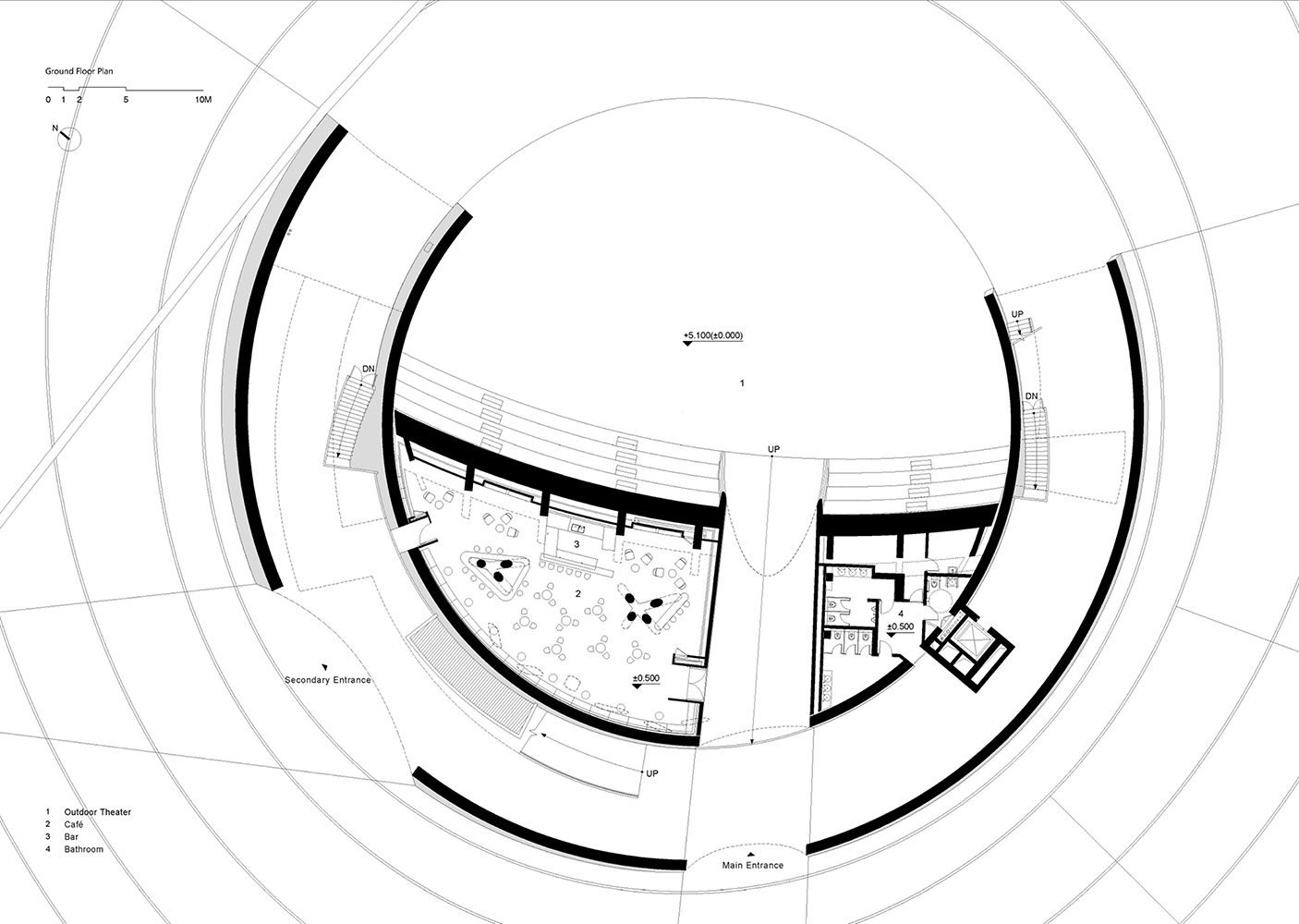
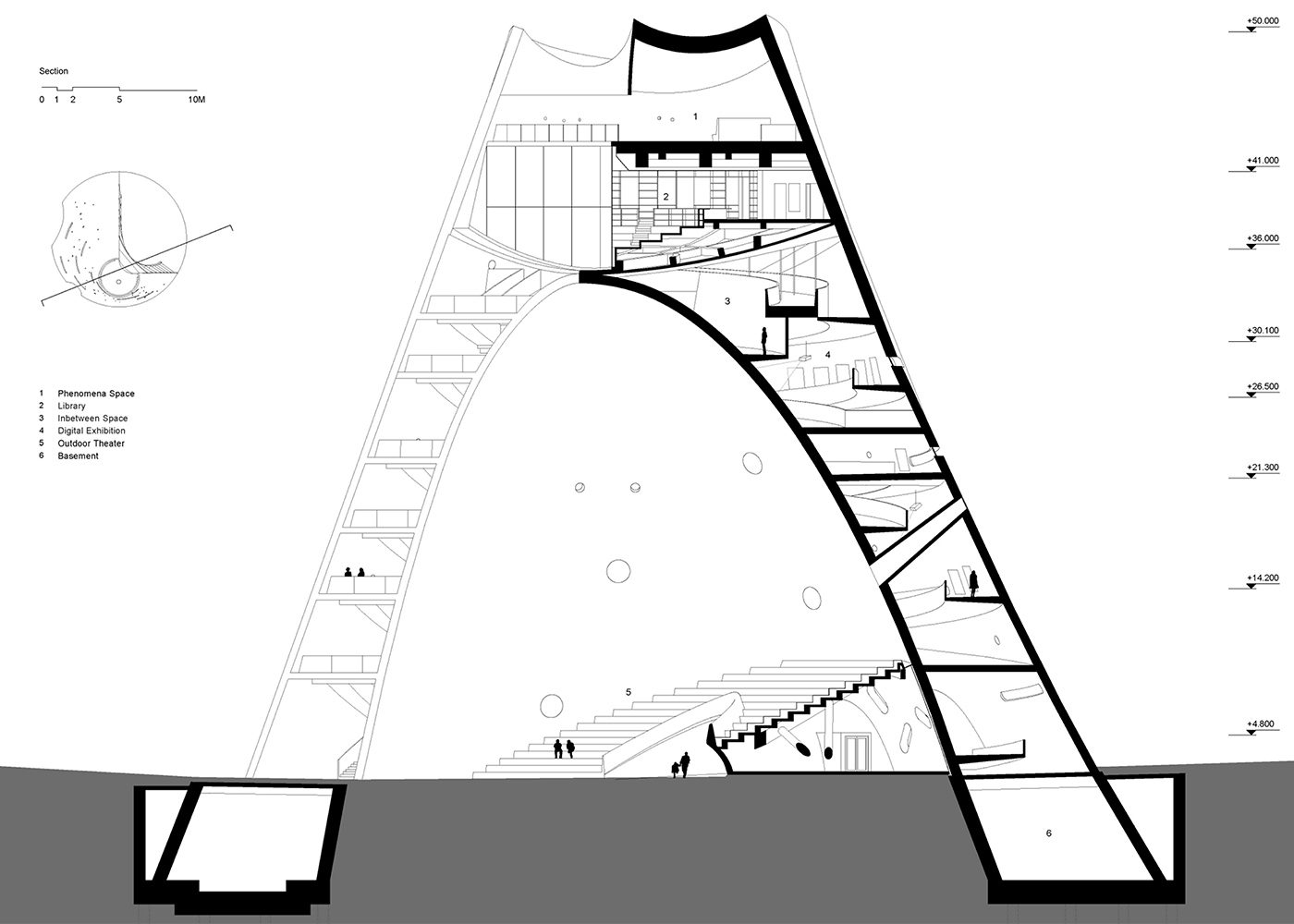
Rising on the waterfront within the Yantai Economic and Technological Development Area (YEDA), the tower contains exhibition halls, a semi-open theater, a library, a café, and an observation deck. It functions as a contemporary lighthouse, composed of two interlocking layers of concrete shell, tied together by spiraling ramps and stacked floor plates. On the seaward side, a vertical cut slices through the volume, exposing the interior to full view while framing expansive vistas of the surrounding landscape and drawing daylight and sea air deep into the building.
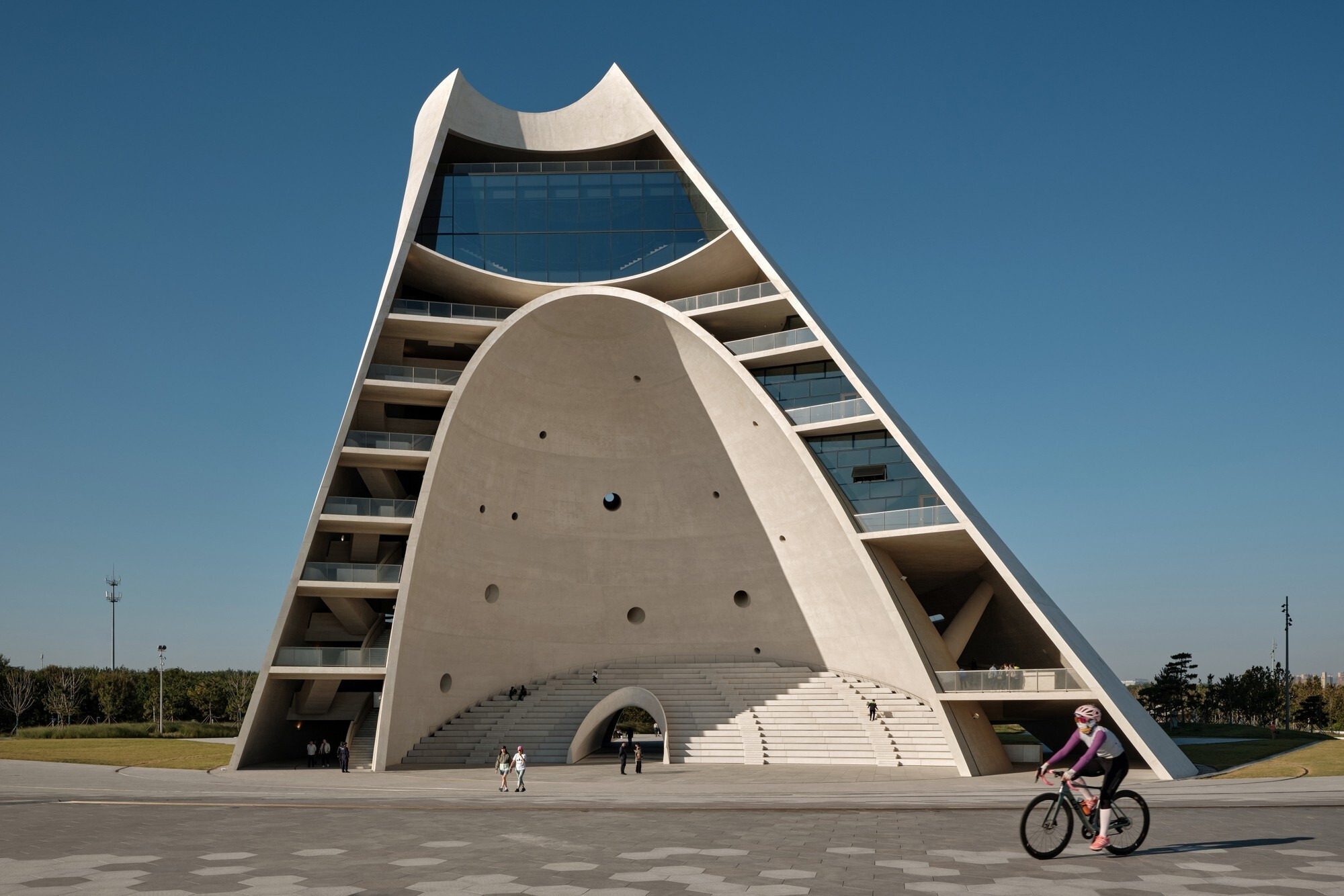
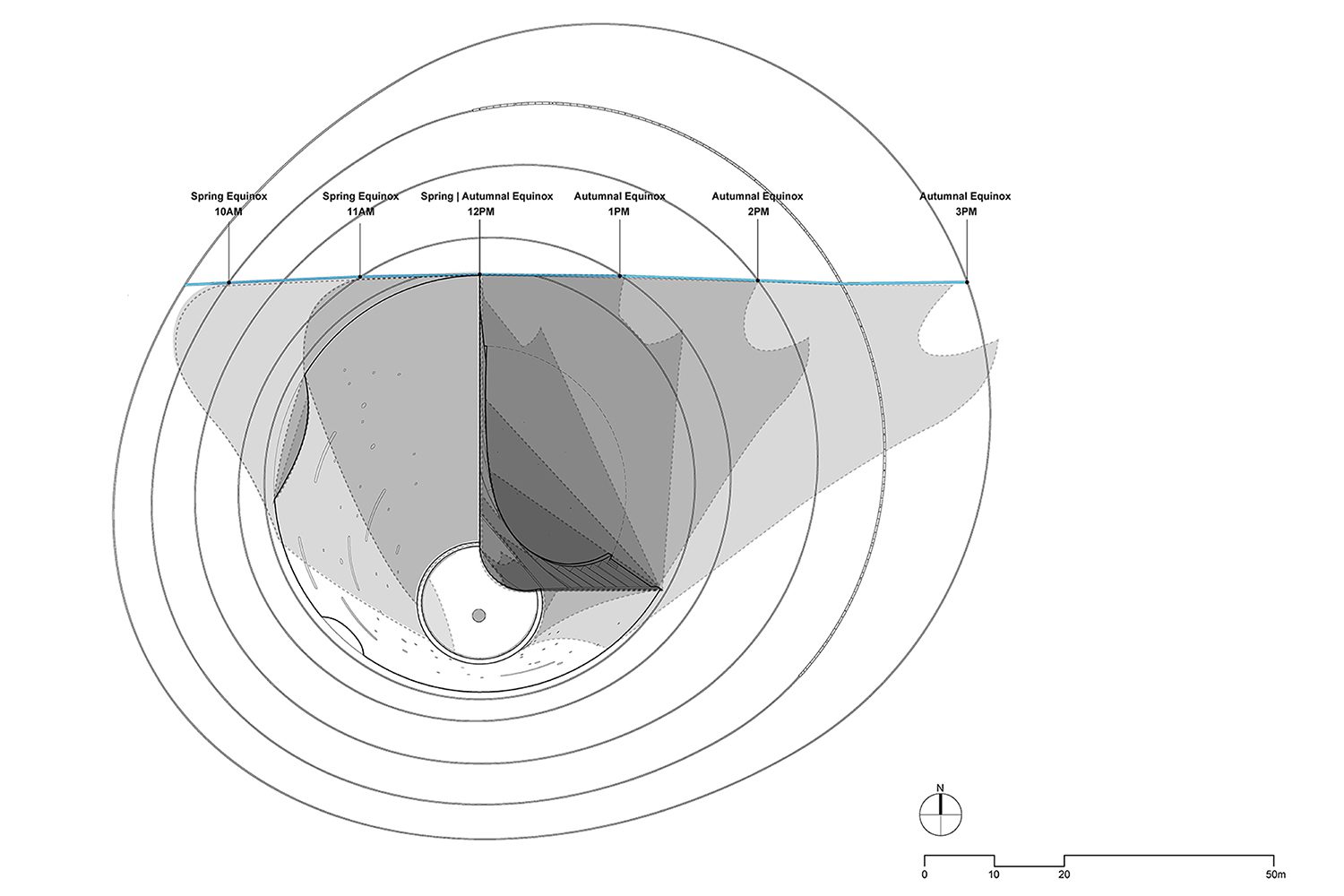
The design engages directly with the sun’s path, treating the celestial body as part of the architecture itself. The tower’s northern edge aligns with the sun’s trajectory at noon on the equinox, when day and night are equal in length. The axis of the tunnel entrance on the lower level is oriented toward the sunset on the winter solstice, the longest night of the year.
The orientation of the theater coincides with the sunrise over nearby Zhifu Island on the summer solstice, the longest day of the year. Its domed roof is also aligned perpendicular to the midday sun on that same day, reinforcing the sense of cosmic connection.
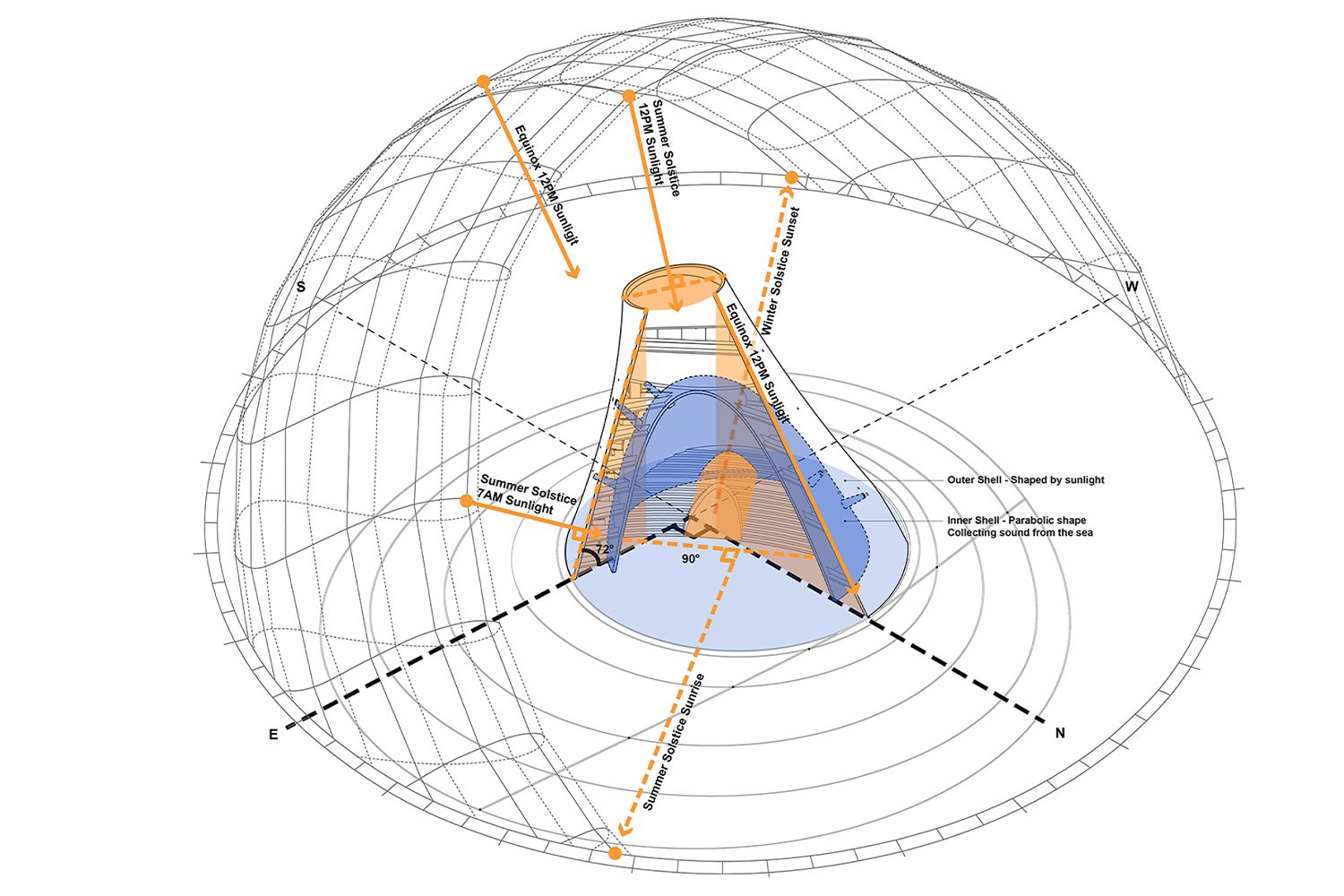
The concrete shells encasing the theater also amplify the sound of waves breaking on the shore, filling the semi-open auditorium with the rhythms of the sea. Between the inner and outer shells, a spiraling ramp creates a flexible exhibition space. Small perforations in the walls and suspension points on the ceiling allow for adaptable displays, ensuring the space can evolve with different programs over time.
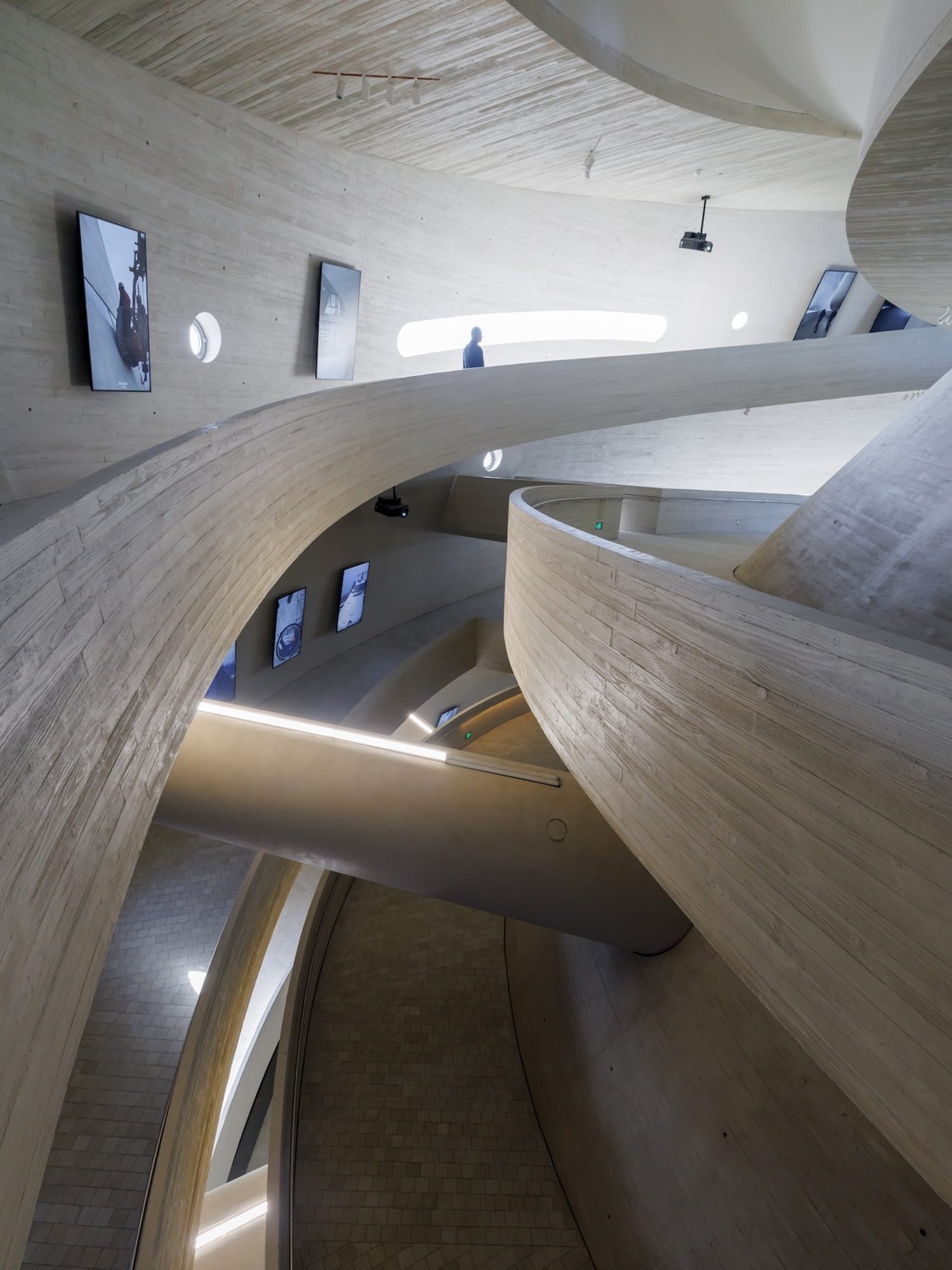 Photo: Iwan Baan
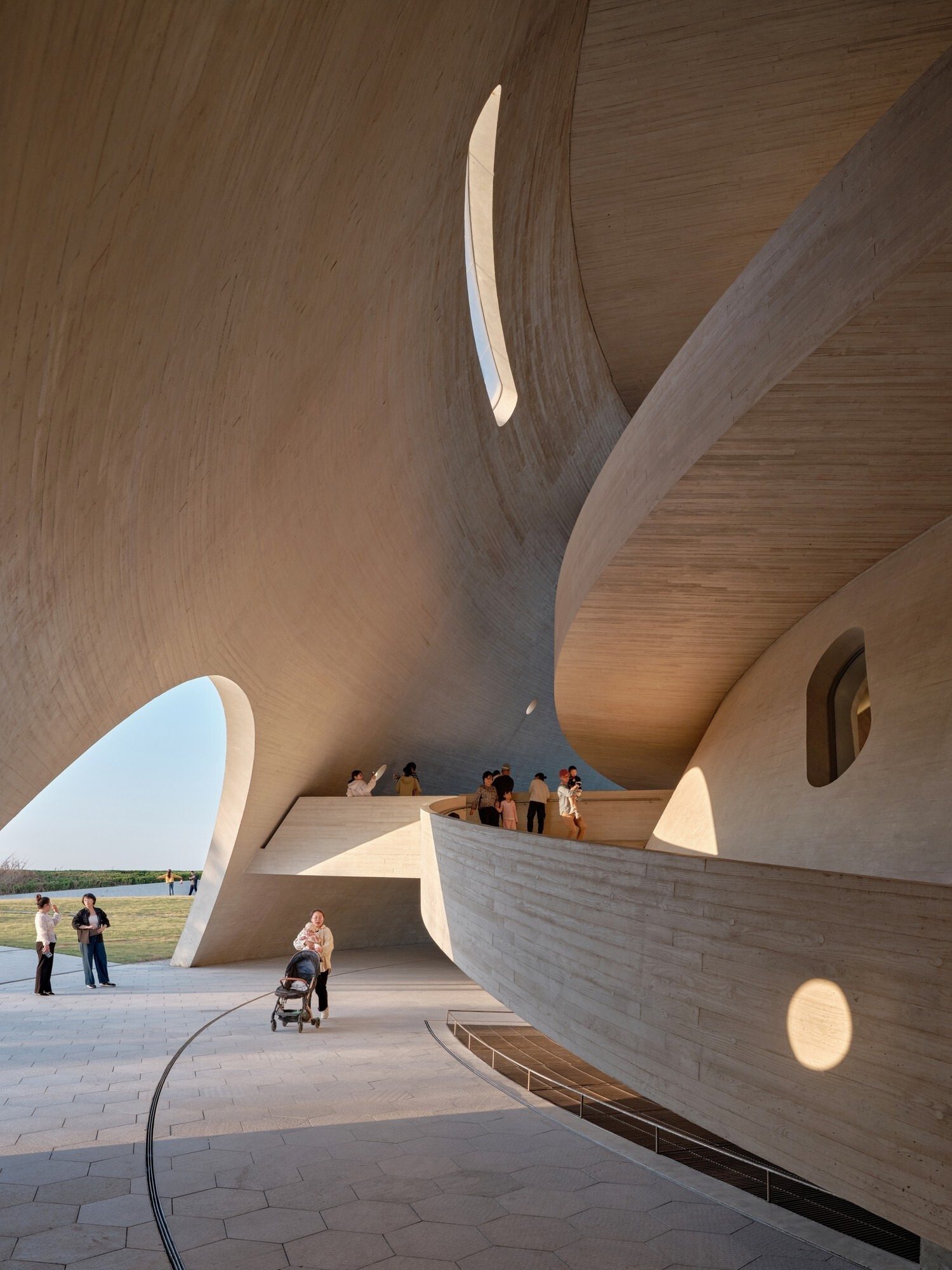
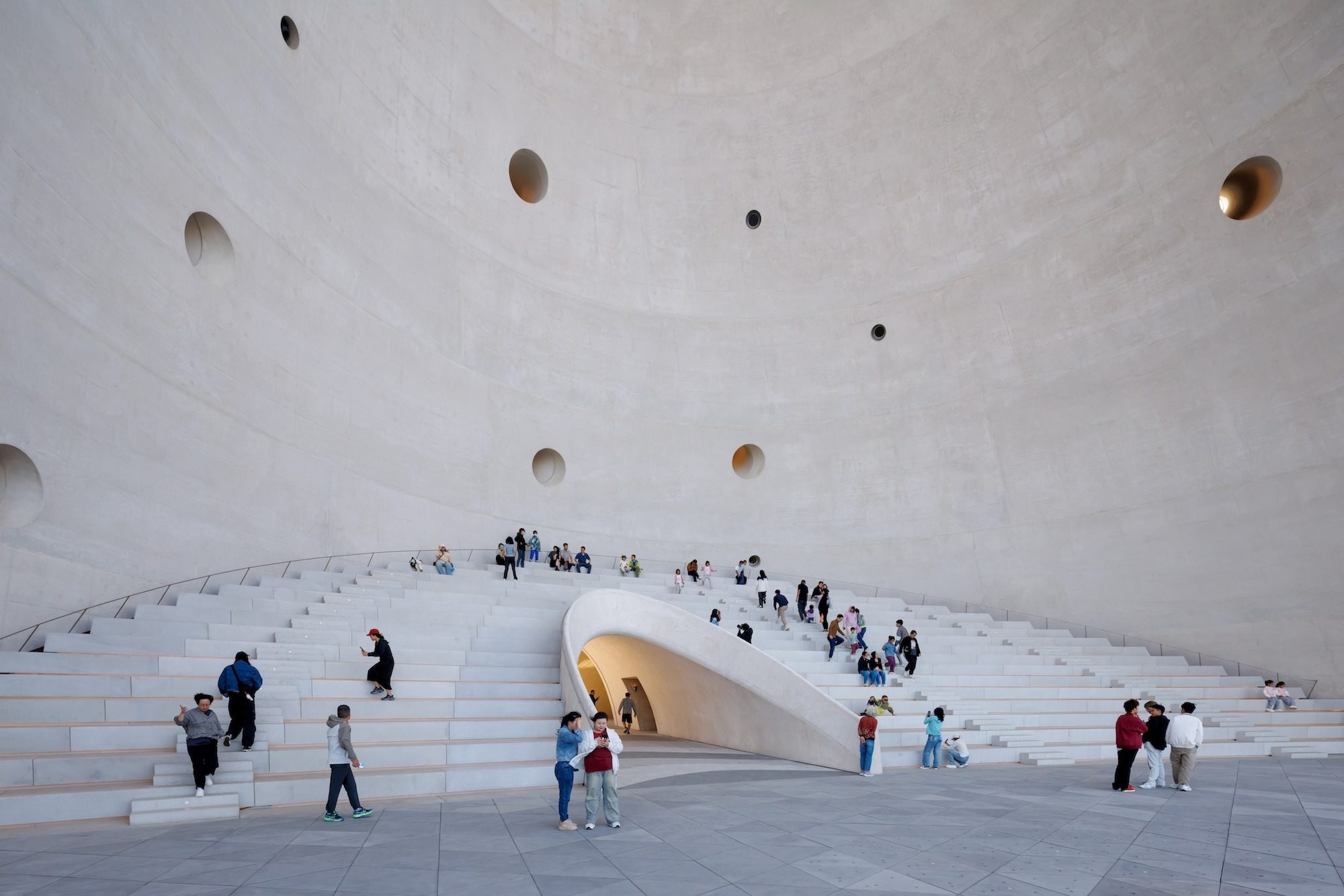
Photo: Iwan Baan
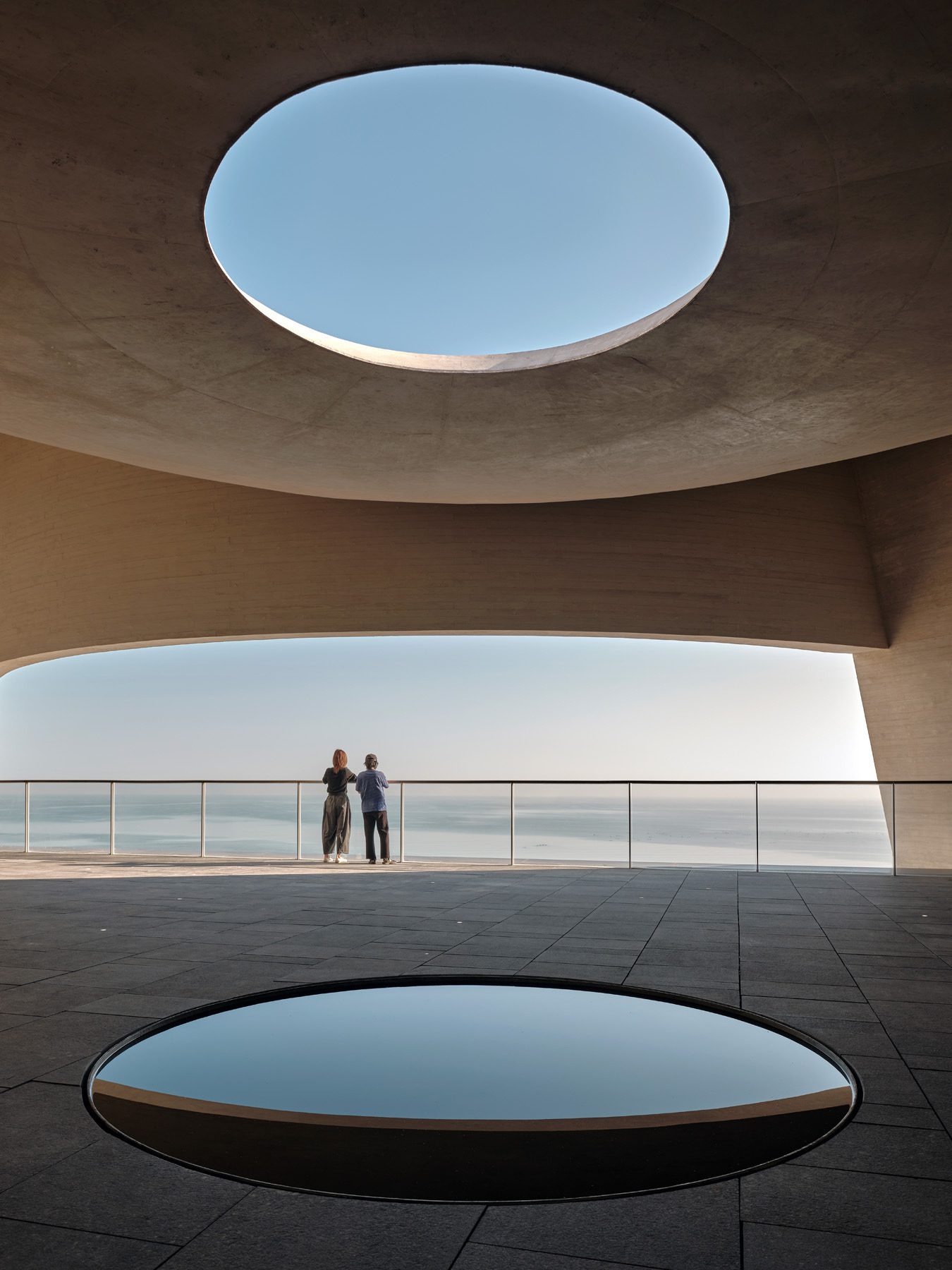
At the crown of the tower sits a glass-lined library, offering wide panoramic views of the sea. Above it, the observation deck is pierced by a circular oculus, admitting rain that falls into a pool below. The water swirls gently for nine minutes each hour, from 5 a.m. until 9 p.m., forming a quiet, contemplative artwork that doubles as a timekeeper.
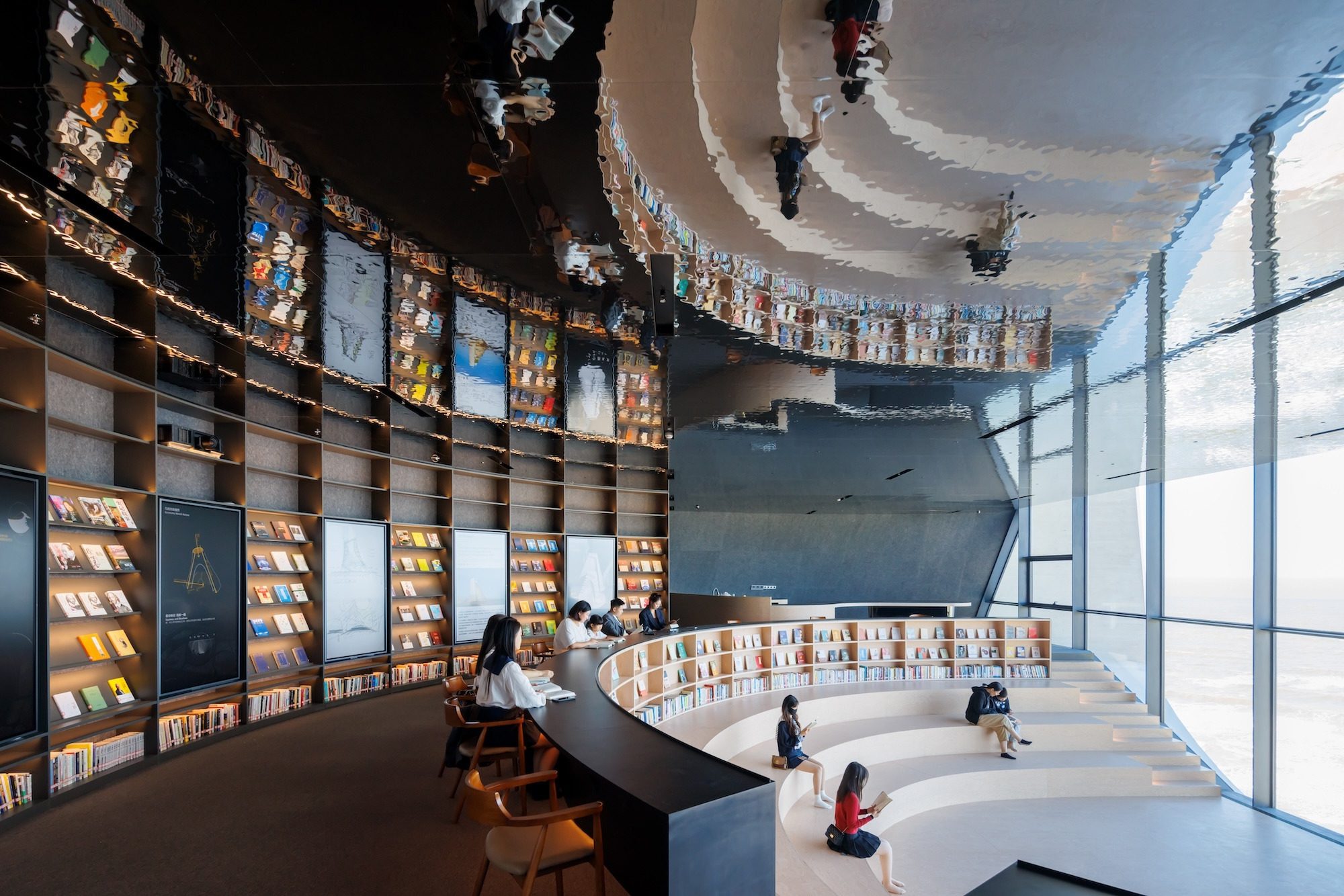 Photo: Iwan Baan
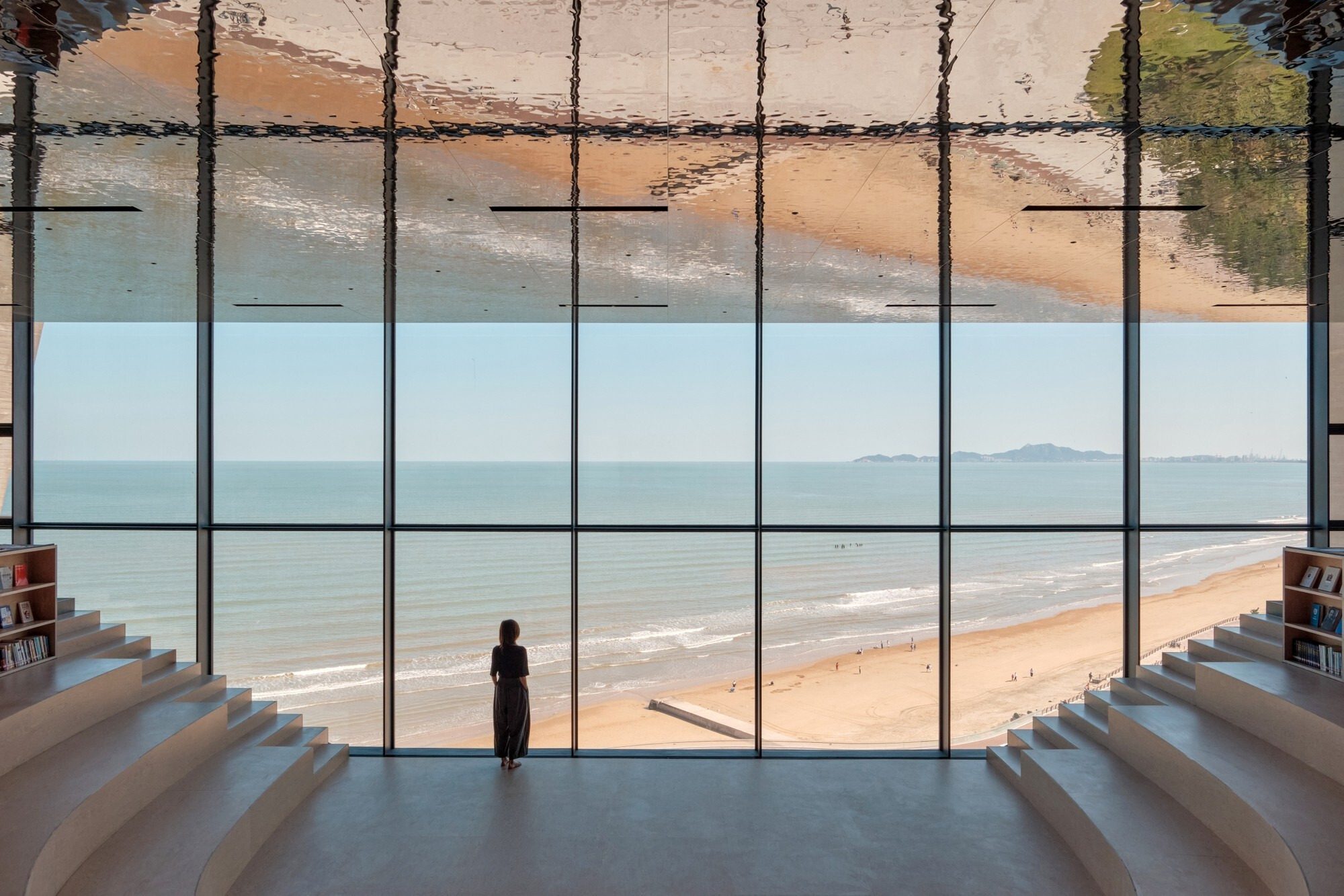
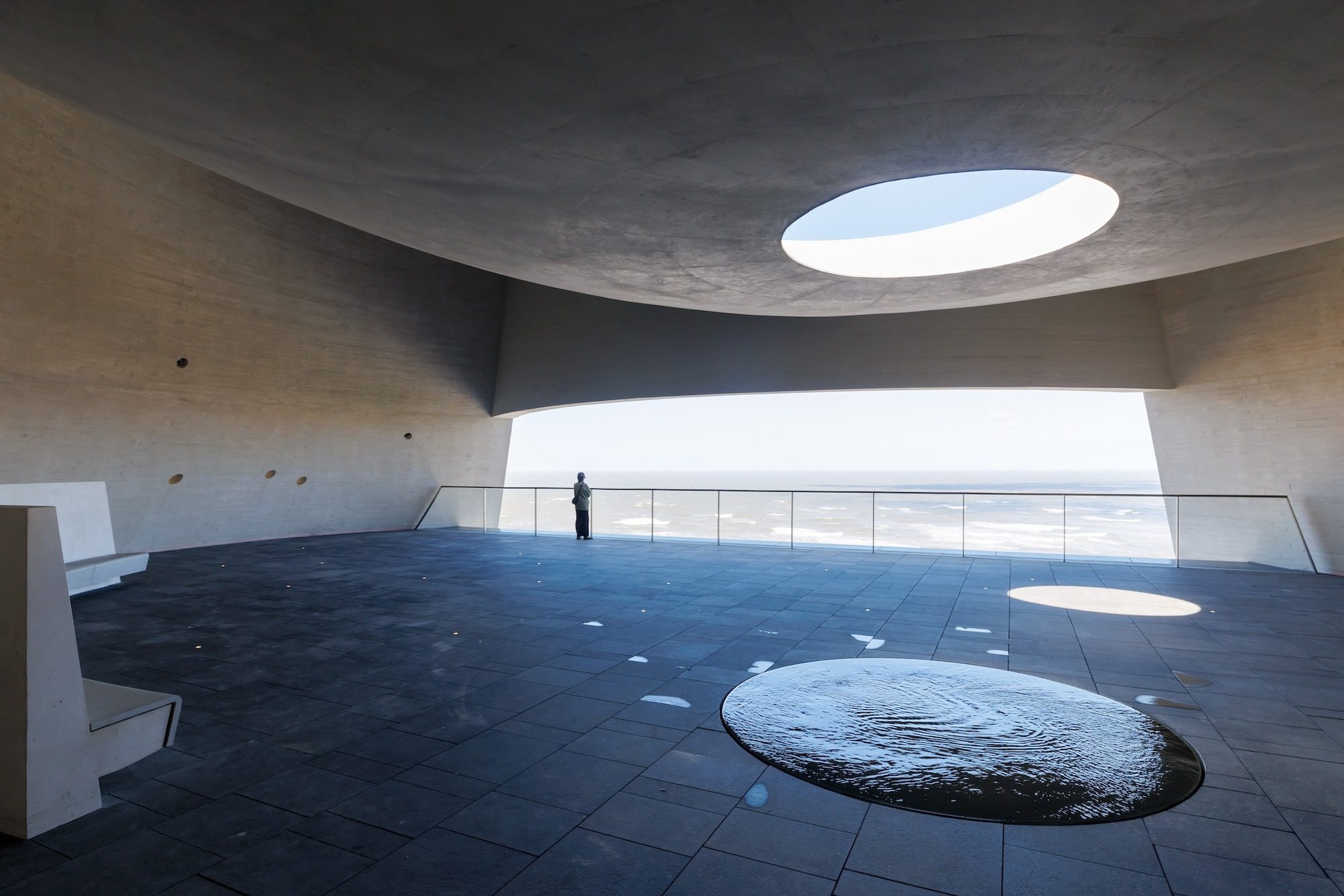
Photo: Iwan Baan
Outside, a broad plaza unfolds, inscribed with concentric elliptical rings radiating from a central point, evoking planetary orbits. Cutting across these rings, a slender water channel traces the plaza as both landscape element and a marker of time. On the equinox, the shadow cast by the tower’s northern edge glides precisely along this channel, intersecting each ellipse on the hour and transforming the plaza into a monumental sundial. Along the outermost ring, fountains celebrate the 24 Solar Terms, the traditional Chinese division of the year, rising and falling in rhythm with the ebb and flow of the sea.
Beyond its finely tuned solar alignments, the Sun Tower was also conceived with energy efficiency and environmental performance in mind. Ventilation tunnels and openings at the top of the structure allow air to circulate, drawing out heat and promoting natural airflow. The concrete shells act as highly effective thermal insulation, retaining coolness in summer and warmth in winter. Even without relying on air conditioning, the exhibition spaces remain comfortably temperate thanks to these strategies.
More than a civic landmark, the Sun Tower is envisioned by its architects as a communal hub for the city and a point of connection between people and nature. ‘The architecture frames and transforms invisible energies—air, light, sound, and natural phenomena—into tangible and visceral experiences, allowing people to establish moments of connection with the universe and its otherwise endless cycles of nature.’