
 Photo: DOF SKY|GROUND
 EXPLORE NOVA CONTEMPORARY’S NEW HOME, DESIGNED BY SKARN CHAIYAWAT ARCHITECTS, WHERE THE CONTEMPORARY ART SPACES INHERENTLY BLEND WITH THE DYNAMIC BACKGROUND OF BANGKOK
TEXT: SARUNKORN ARTHAN
PHOTO CREDIT AS NOTED
(For Thai, press here)
At the meeting point between Si Phraya, one of the old city’s historic arteries, and the busy Samyan–Rama IV business district, a nearly thirty-year-old building has been given new life as a home for contemporary art. It is a place that welcomes visitors of all ages, offering respite from the surrounding commotion and drawing them into an oasis of calm and aesthetic contemplation known as Nova Contemporary. Relocating from its former premises at Baan Somthavil, the gallery sought more than a simple change of address: it required a space capable of accommodating its growing ambitions while broadening the scope of what its exhibitions could become. Today, Nova Contemporary is no longer merely a white cube for hanging art. Through the understated architectural intervention of Skarn Chaiyawat of Skarn Chaiyawat Architects, developed in close conceptual collaboration with Nova Contemporary founder Sutima Sucharitakul, it has become an architectural presence that integrates itself seamlessly into the fabric of Bangkok.
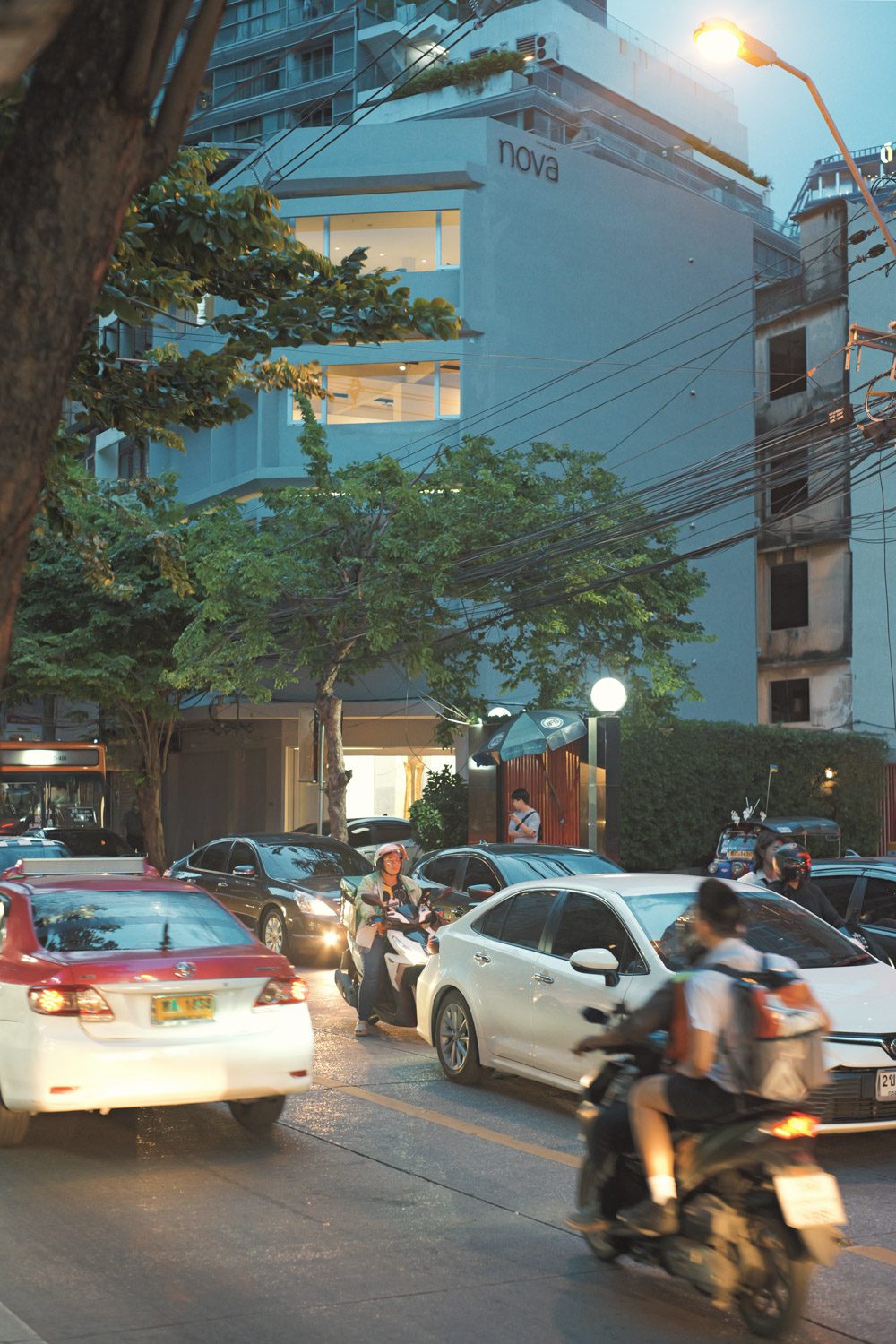
Photo: Lalina Kittipoomvong
The building selected as the gallery’s new home was a shophouse, one that had been left vacant for a period of time before being reimagined through adaptive reuse as an exhibition space. In response, Skarn Chaiyawat Architects proposed an architecture that would act as a restrained backdrop for contemporary art: not attention-seeking, yet memorable all the same. Just as crucial was the desire to shape a gallery whose appearance and atmosphere would feel accessible, naturally continuous with Bangkok’s urban life rather than set apart from it. Woven into this sensibility is also a degree of play, a subtle attunement to the city’s rhythms that makes the experience of entering and engaging with art feel unforced. This, too, reflects Sutima’s intention that visitors should be able to encounter the gallery without hesitation or self-consciousness.
Private Viewing Room | Photo: DOF SKY|GROUND
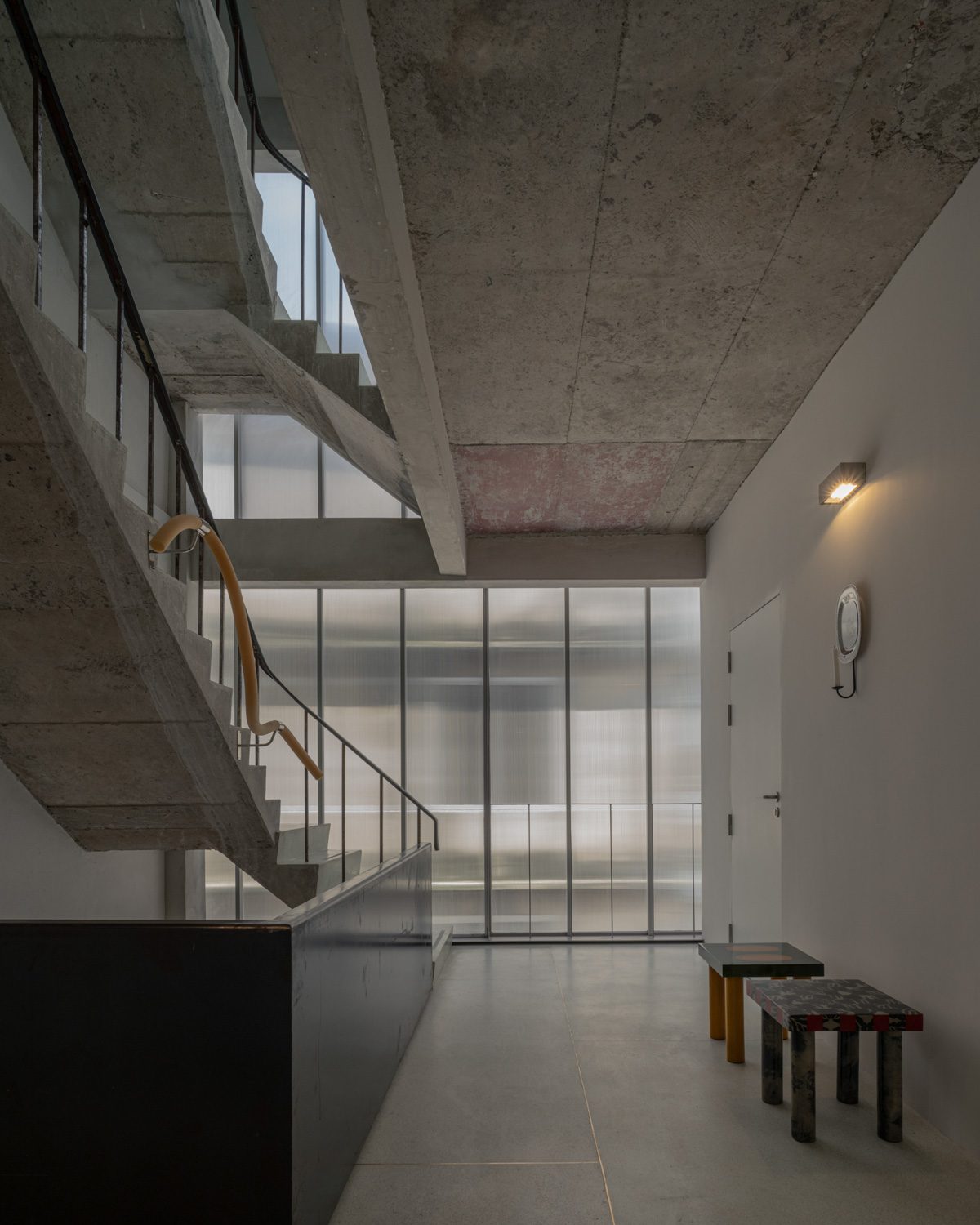
Photo: DOF SKY|GROUND
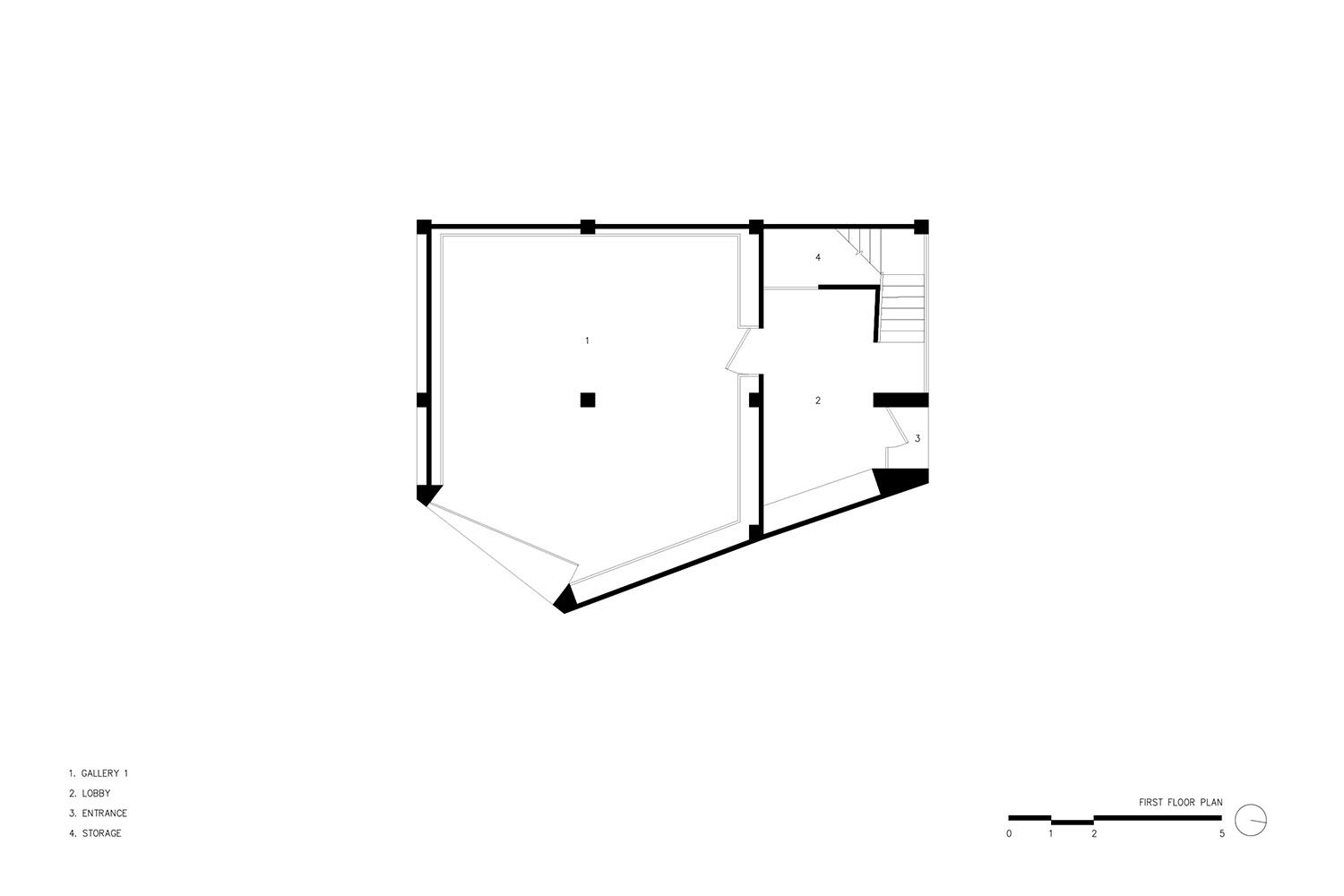
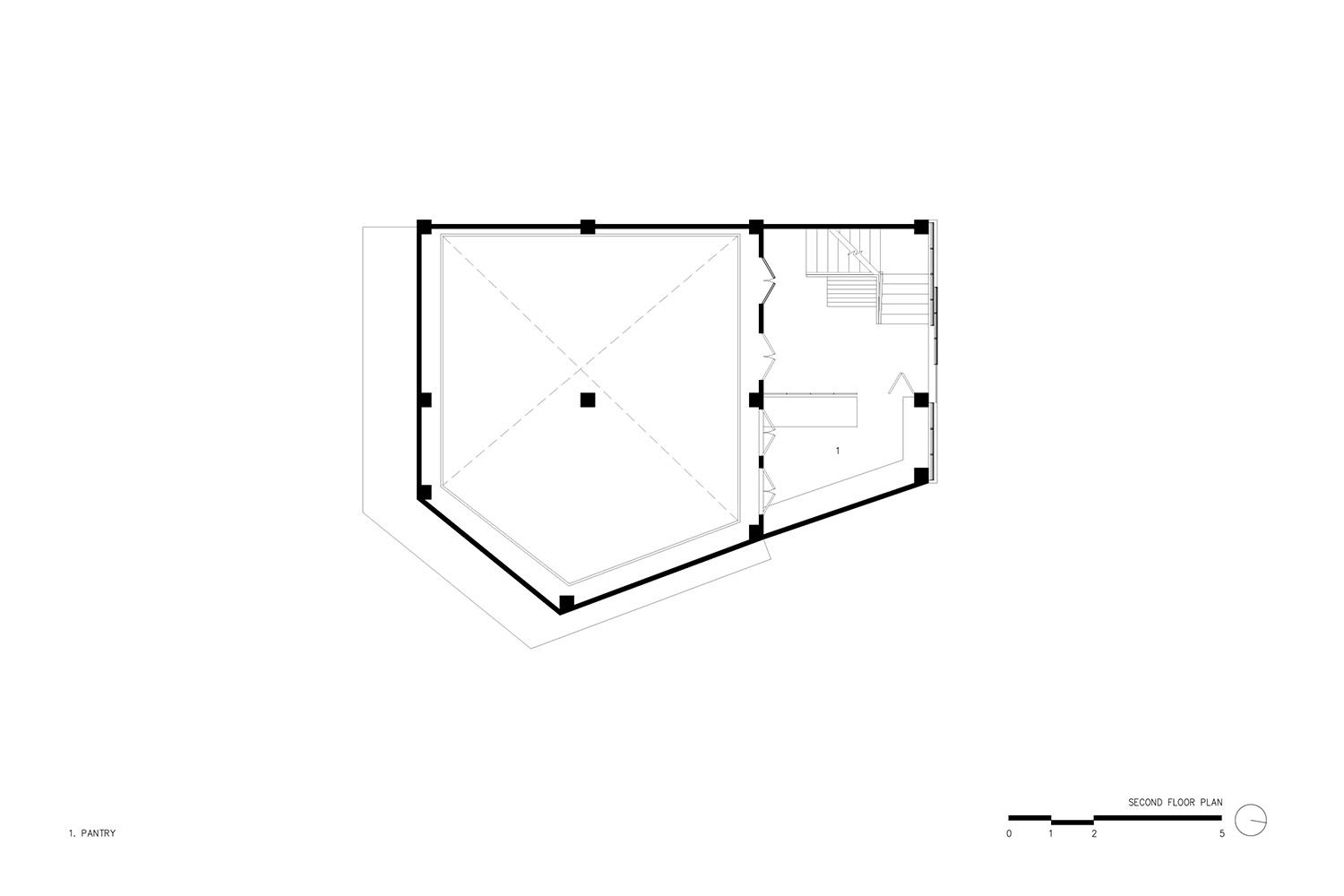
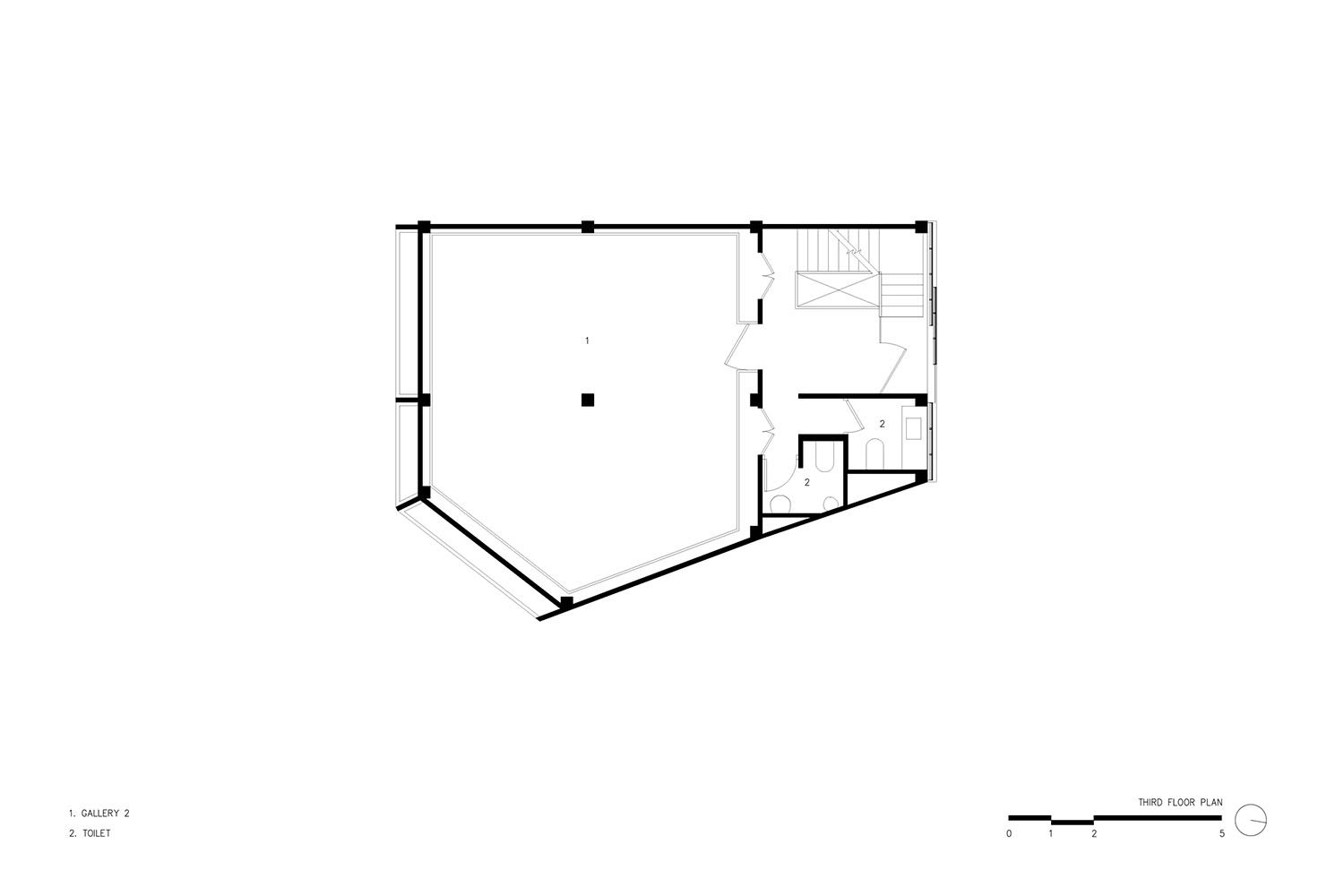
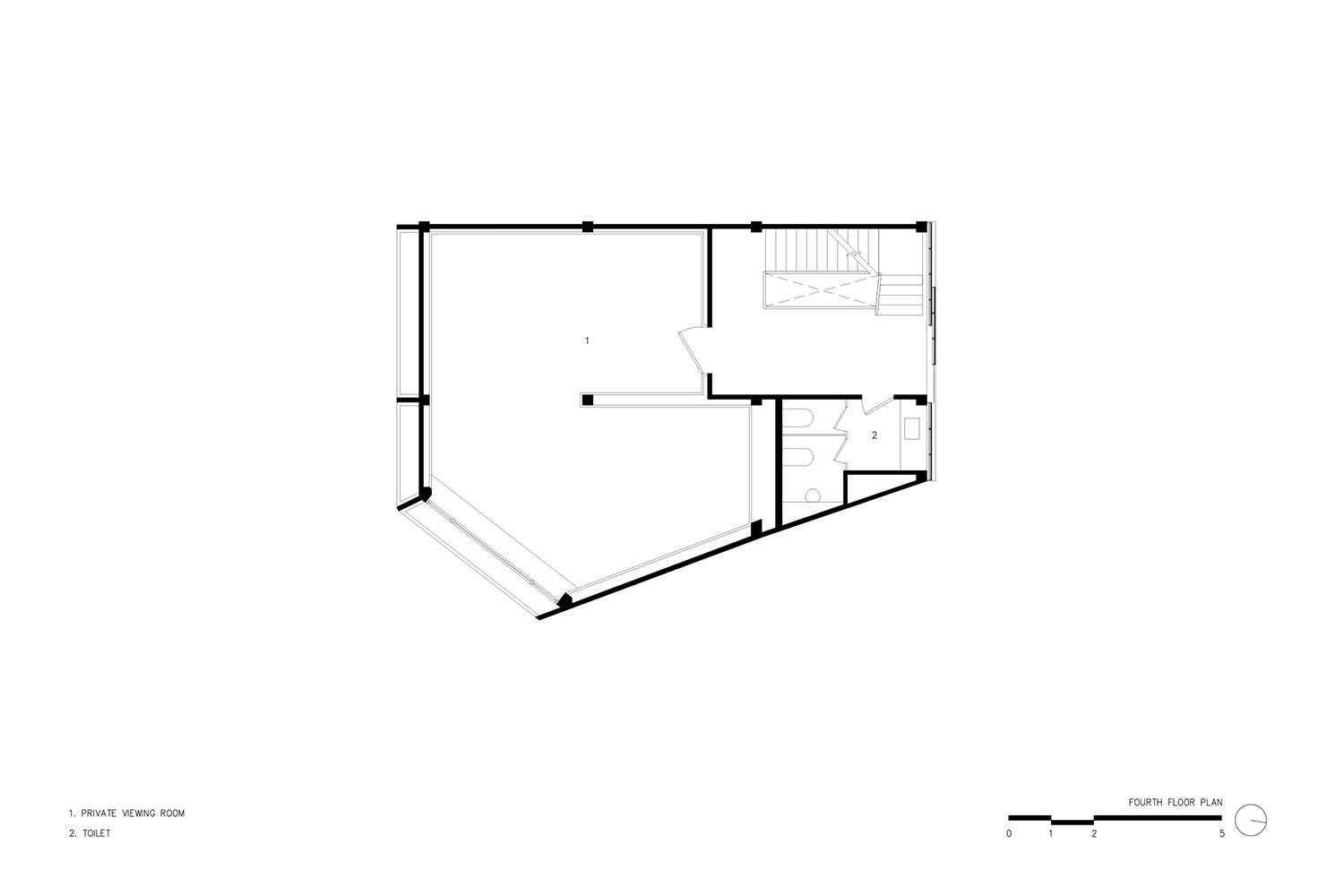
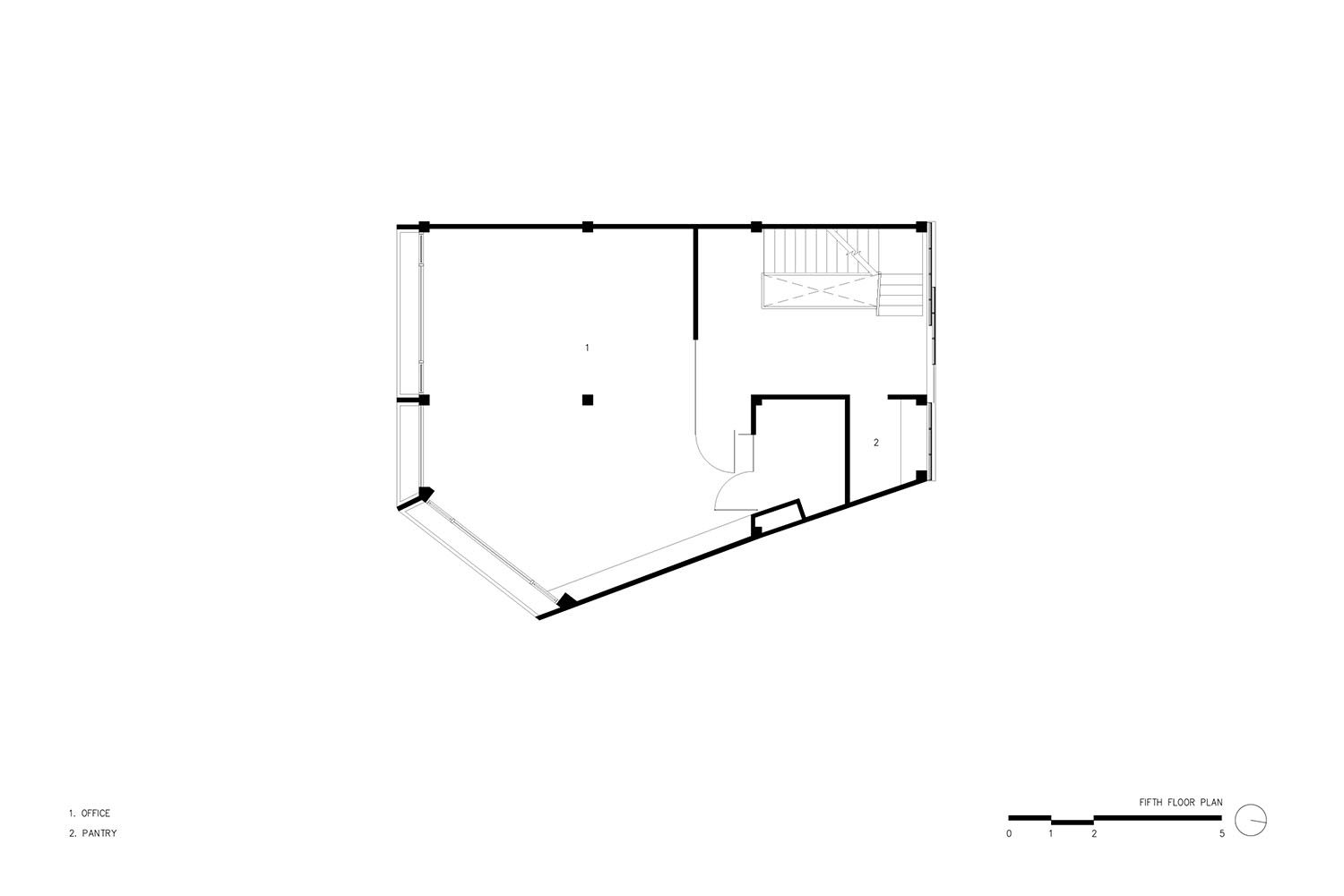
Working within the constraints of an asymmetrical pentagonal plan, Skarn treated the building’s irregularities as an opportunity to establish a new spatial order. The interior is reorganized through a precise programmatic logic, with service zones and circulation clearly separated from the principal spaces on every floor, and each level dedicated to a single, distinct function. The resulting program comprises Gallery 1 and Gallery 2, a private viewing room, and Nova Contemporary’s office. The service and circulation core, meanwhile, is structured around the original staircase, which has been retained as the building’s main vertical route, with supporting spaces such as restrooms and a pantry inserted to meet the needs of the new use. This disciplined planning not only makes the building legible and easily navigable for visitors, but also enables climate control to be concentrated solely within the primary occupied rooms, while service areas rely instead on natural ventilation.
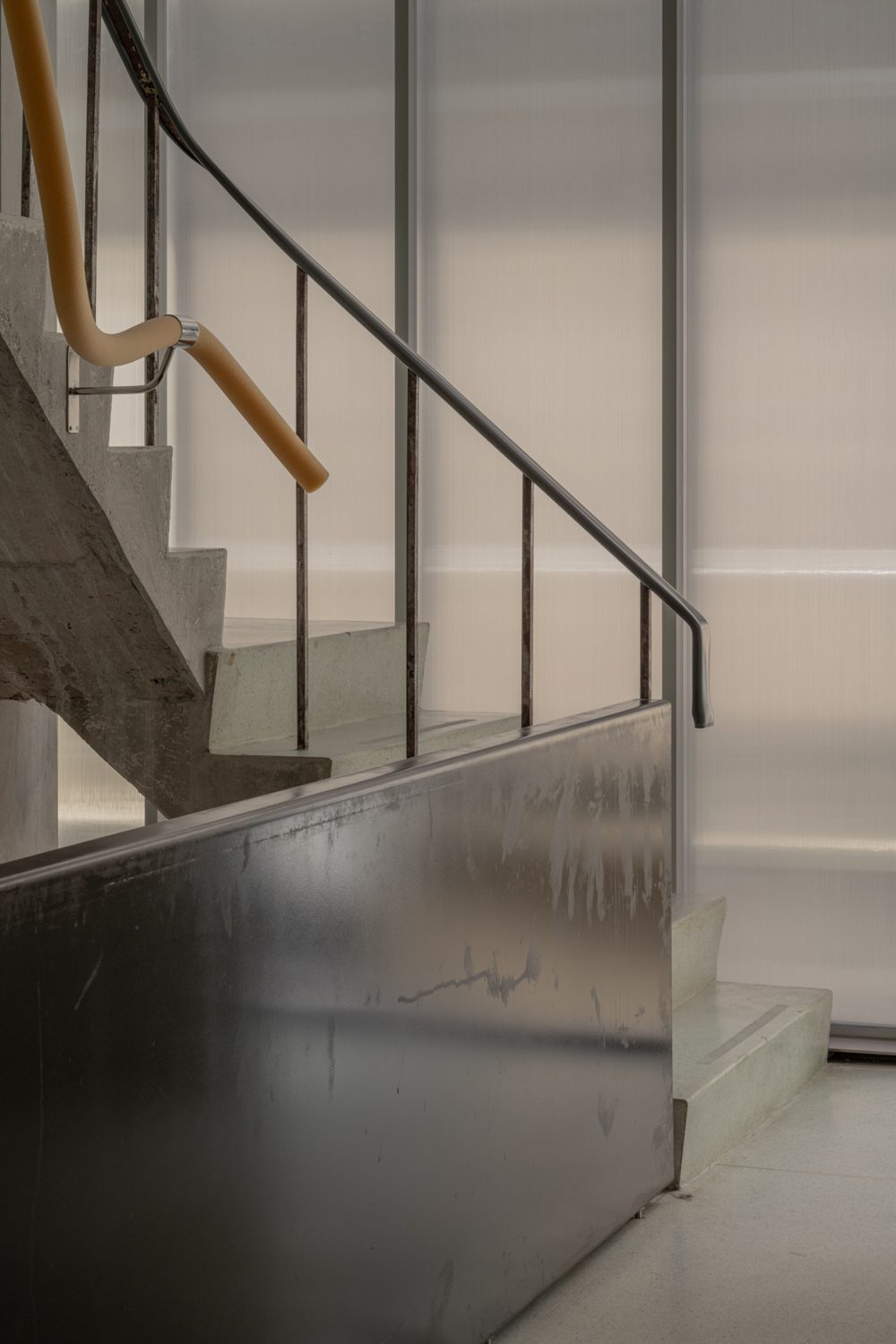 Photo: DOF SKY|GROUND
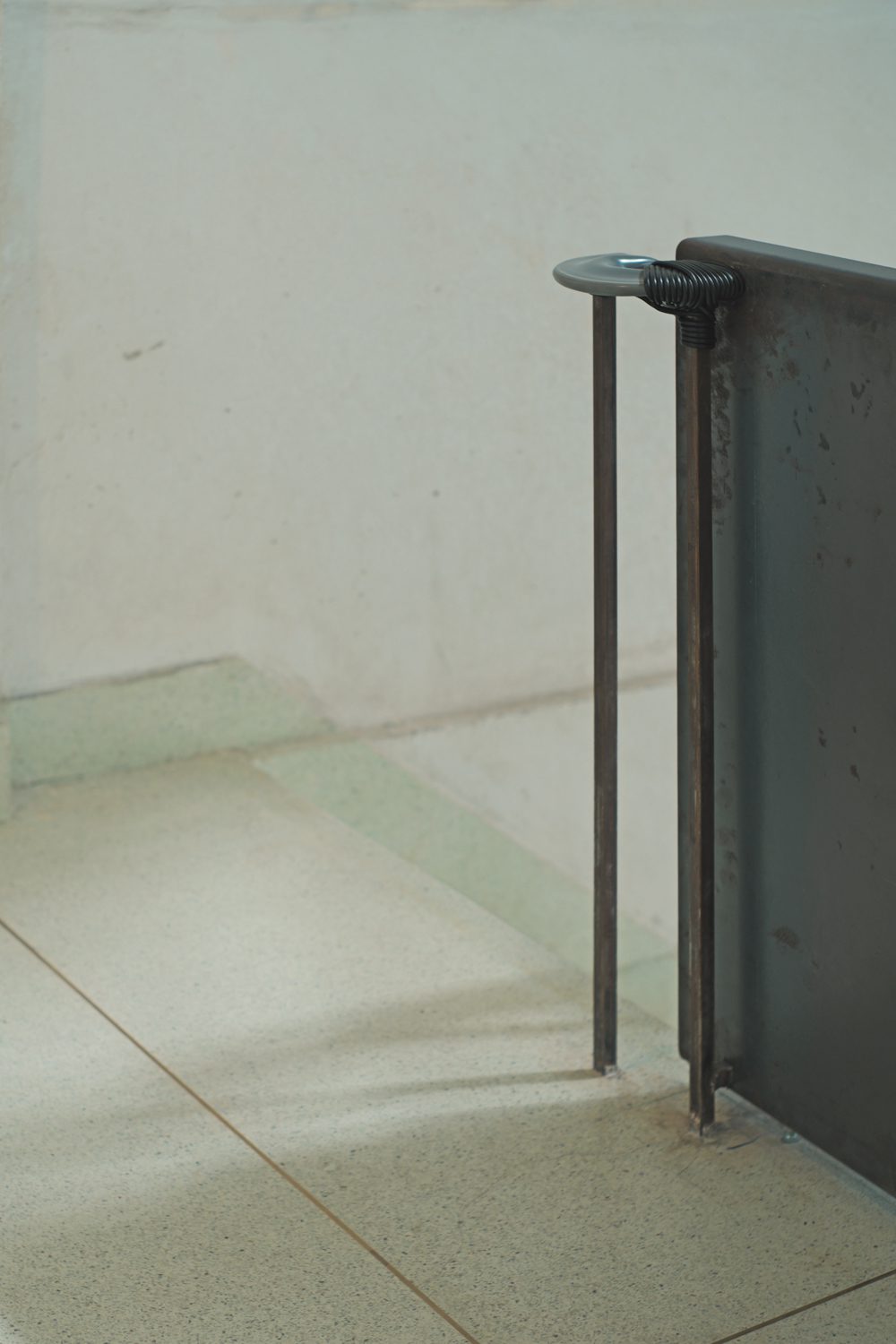

The design does not proclaim itself as ‘contemporary art’ or ‘gallery’ in any overt or emphatic way. Instead, it operates with restraint, settling into Bangkok with quiet assurance while allowing the existing building, aged but far from obsolete, to remain legible in its own right. The project preserves the ‘integrity’ of the original structure with notable sensitivity, guided by a principle of minimal intervention in which new insertions are kept to an absolute minimum. This is evident in the decision to retain the traces of time embedded in the columns, walls, ceilings, and staircase. What makes the project especially compelling, however, lies in the way the original structure has been reinterpreted through detail. The staircase, for instance, is fitted with PVC handrails whose familiar profile recalls the vernacular language of the traditional shophouse, yet this everyday element is subtly reworked through the artisanal gesture of leather-cord wrapping. The intervention introduces a new tactile quality while also resolving on-site constraints with considerable elegance, transforming imperfection into a value-adding detail and offering the user a more refined sensory experience. A similar sensibility informs the treatment of the building’s surfaces: rust-inhibiting chemicals were used to preserve them, while repainting was carried out only where strictly necessary. The marks left by time, carrying both the building’s past and present, are deliberately allowed to endure, continuing to tell its story.
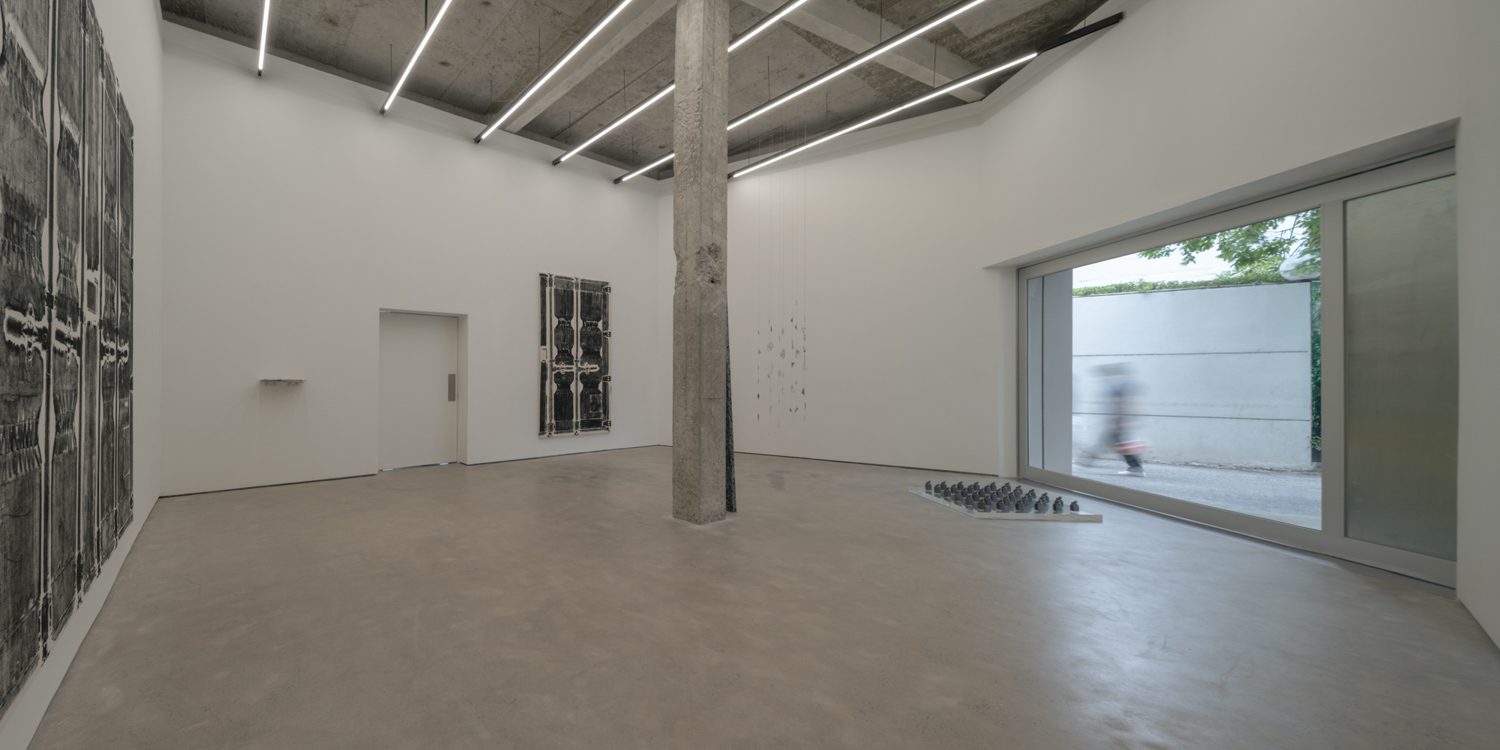
Photo: DOF SKY|GROUND
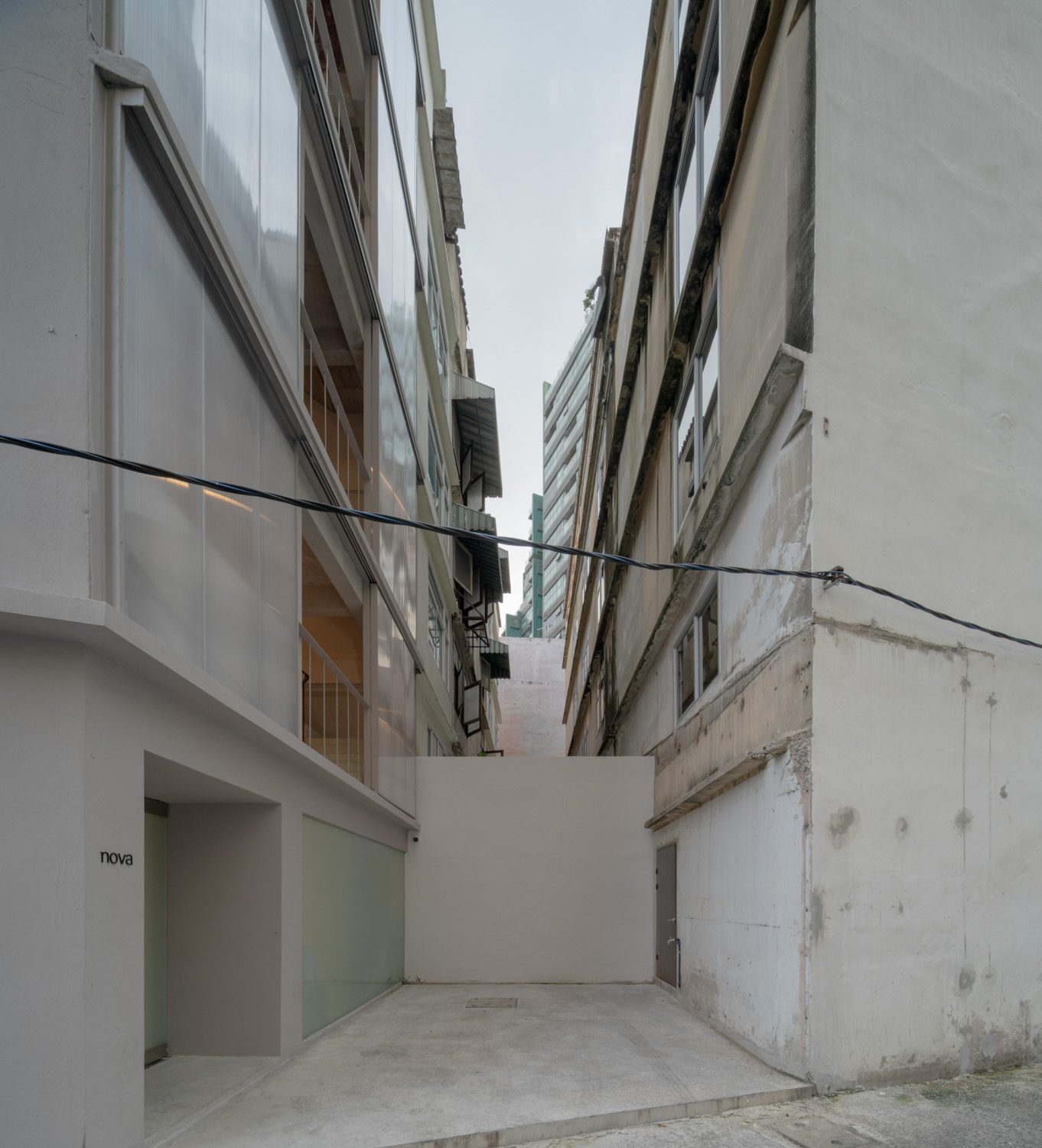
Photo: DOF SKY|GROUND
Yet the project is not only about preserving what already exists. Skarn Chaiyawat Architects also introduces new possibilities for design and new forms of experience, creating memorable encounters for visitors. This begins with the entrance, which is no longer the building’s original main access point. That frontage has been reworked as a large glazed opening, reserved only for the movement of oversized artworks. During exhibitions, it becomes a kind of window, drawing daylight into the interior by day and projecting the life of the gallery back out toward Si Phraya by night. At the same time, it establishes a subtle connection with the street, enticing passersby to step inside and momentarily withdraw into the quieter pleasures of art. The reassignment of the former main entrance means that visitors must now seek out the gallery’s true point of entry. Hidden in the narrow alley alongside the building is a small door. It is here that the visitor experience begins, shaping one’s first impression of the gallery from the moment of arrival.
Gallery 1 | Photo: DOF SKY|GROUND
Gallery 2 | Photo: DOF SKY|GROUND
Gallery 2 | Photo: DOF SKY|GROUND
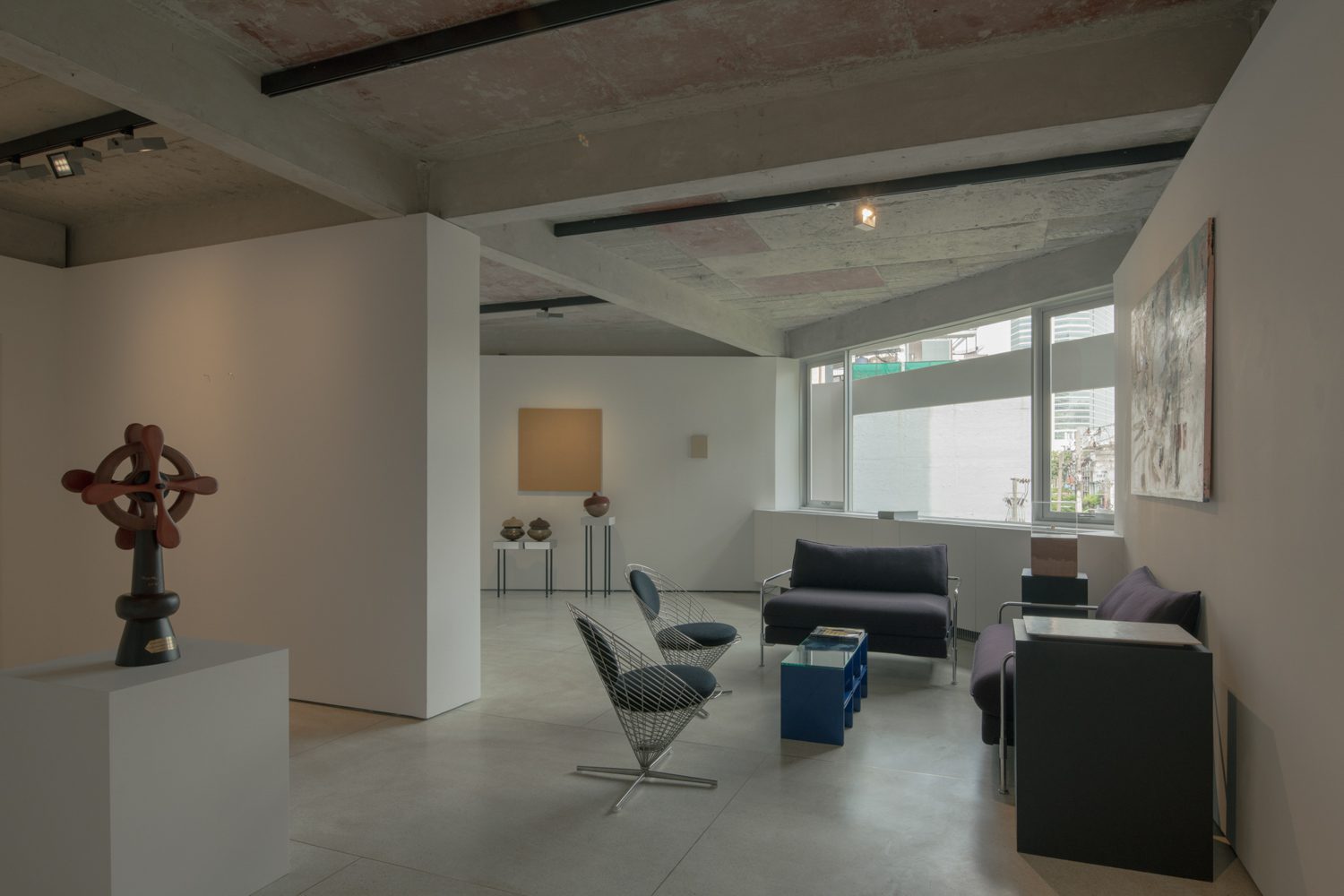
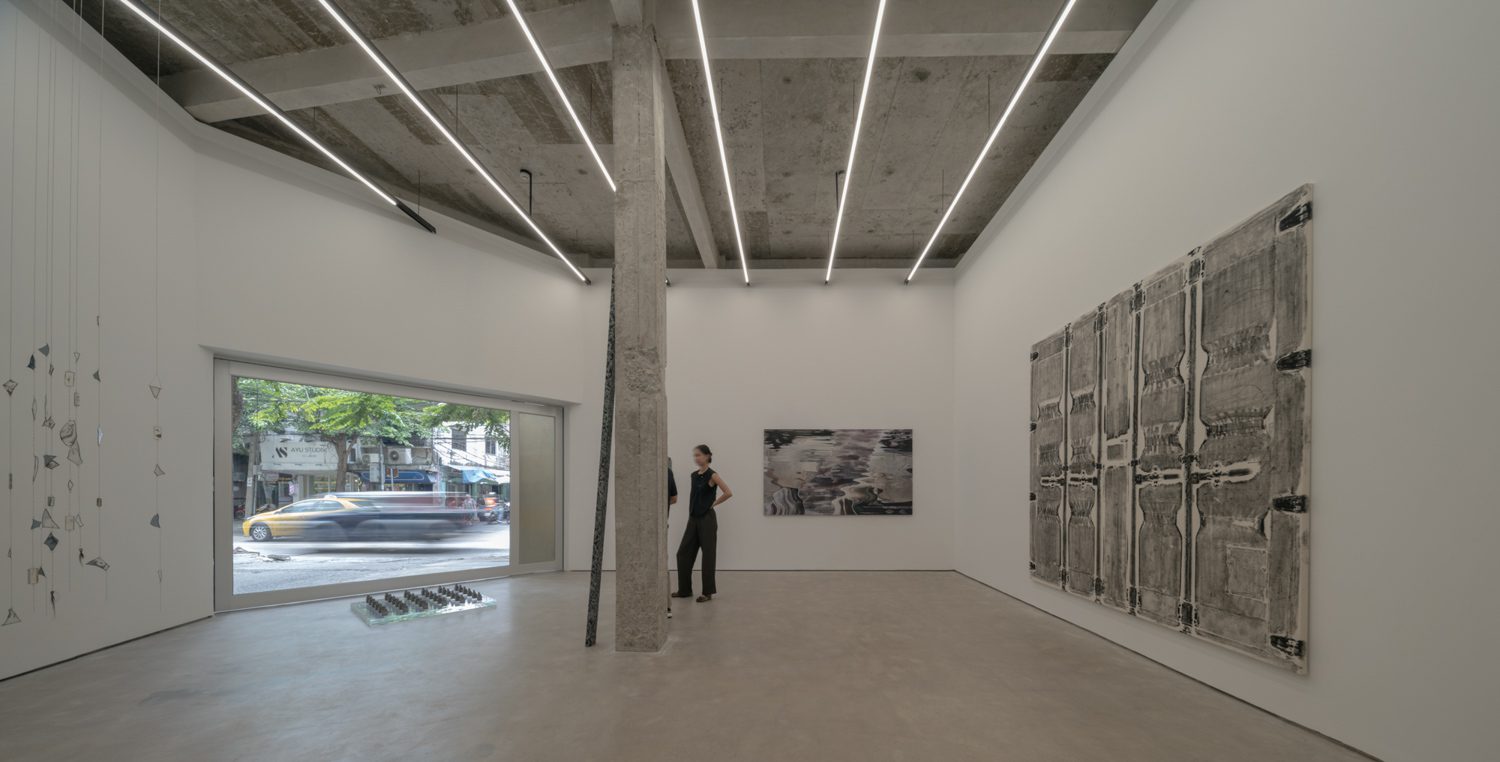
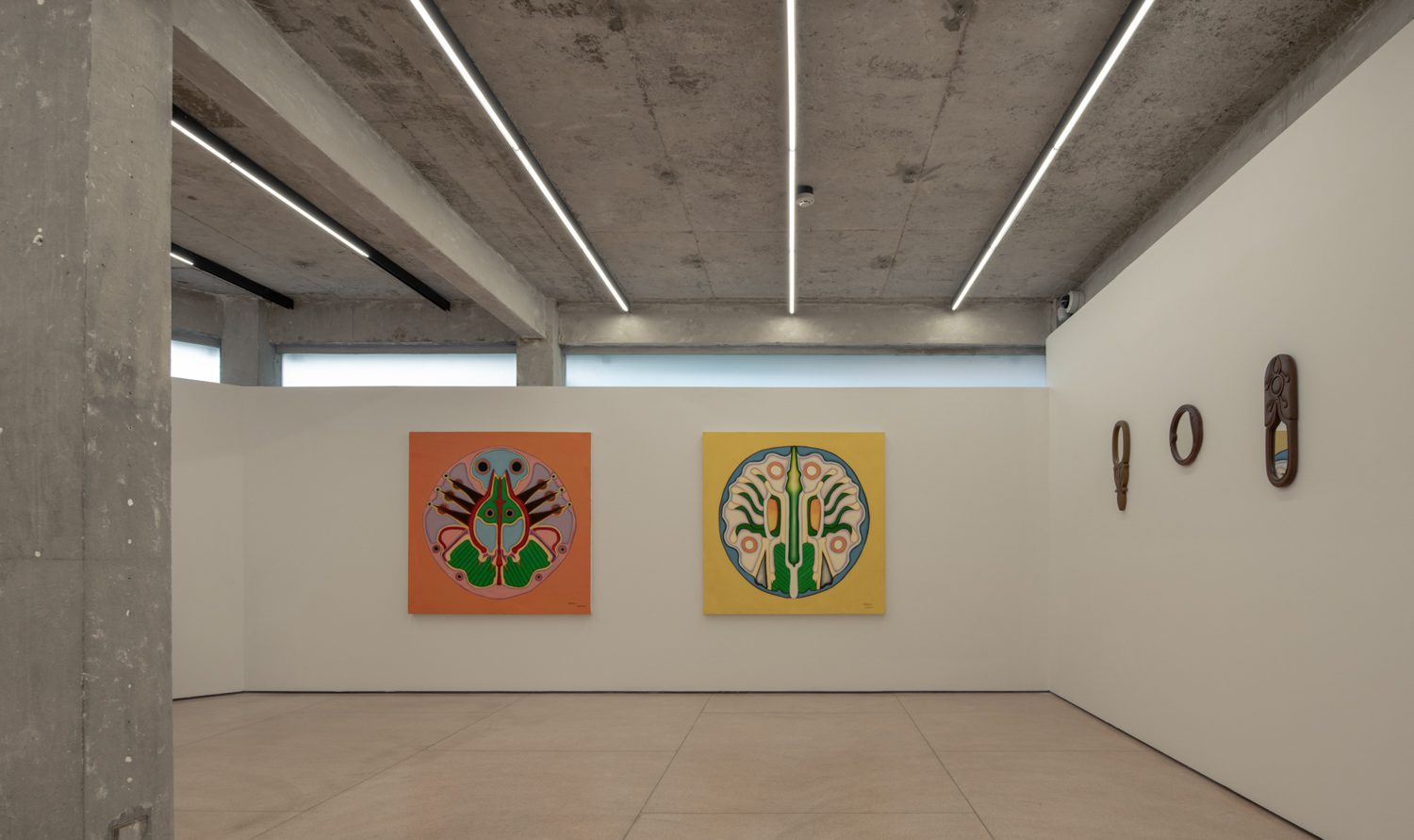
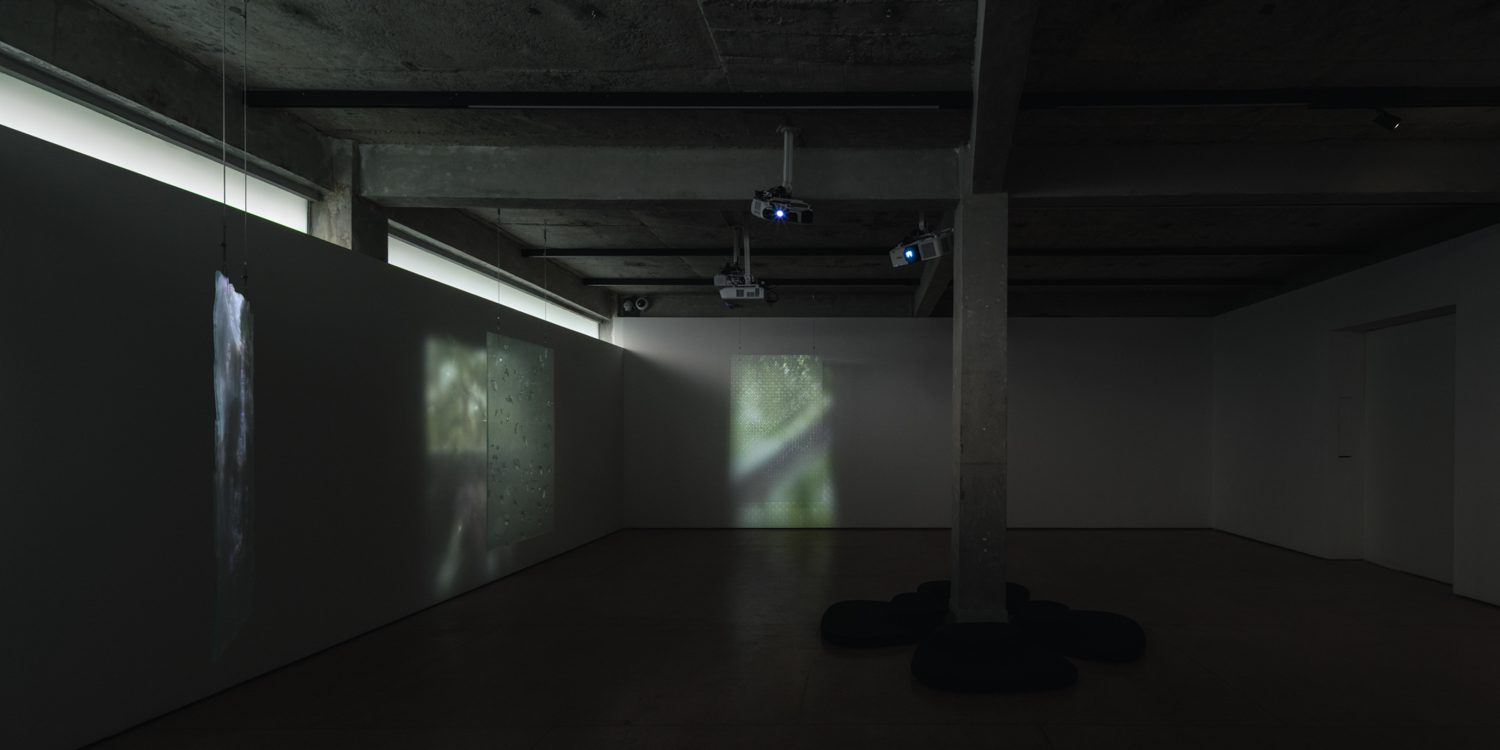
After entering the lobby and registering, visitors are welcomed into Gallery 1, a double-height space that feels at once expansive and intimate. From within, one can also look back out through the glazed façade toward the city beyond, preserving a subtle visual dialogue with Bangkok. Yet beyond its warmth and sense of ease, what is most striking about the gallery, as in the other principal spaces, is how little of the building’s technical infrastructure is immediately visible. Air-conditioning, lighting, even ventilation systems are all remarkably discreet. This reflects Skarn Chaiyawat Architects’ emphasis on the visitor’s sensory experience: the intention is for attention to remain on the artworks, rather than be distracted by exposed building services. To achieve this, considerable effort was invested in concealing various systems behind framing and lightweight partition walls. These partitions do not rise all the way to the ceiling, stopping just below the beams, not because of the viewer’s sightline, but in order to allow natural light to filter deeper into the gallery. Sutima was intent that Nova Contemporary should receive natural light on every floor in a way that felt carefully calibrated, and this brief in turn shaped Skarn’s approach. The lightweight walls, therefore, serve multiple purposes, functioning both as a means of concealing building services and as a device for controlling the quality and quantity of light in different areas. In Gallery 2, for instance, where exhibitions often encompass a wide range of media, the light is intentionally softened rather than allowed to enter directly. This is achieved through the addition of exterior shading, which diffuses the sunlight before it reaches the interior, ensuring that natural light remains present without overpowering the works on display.
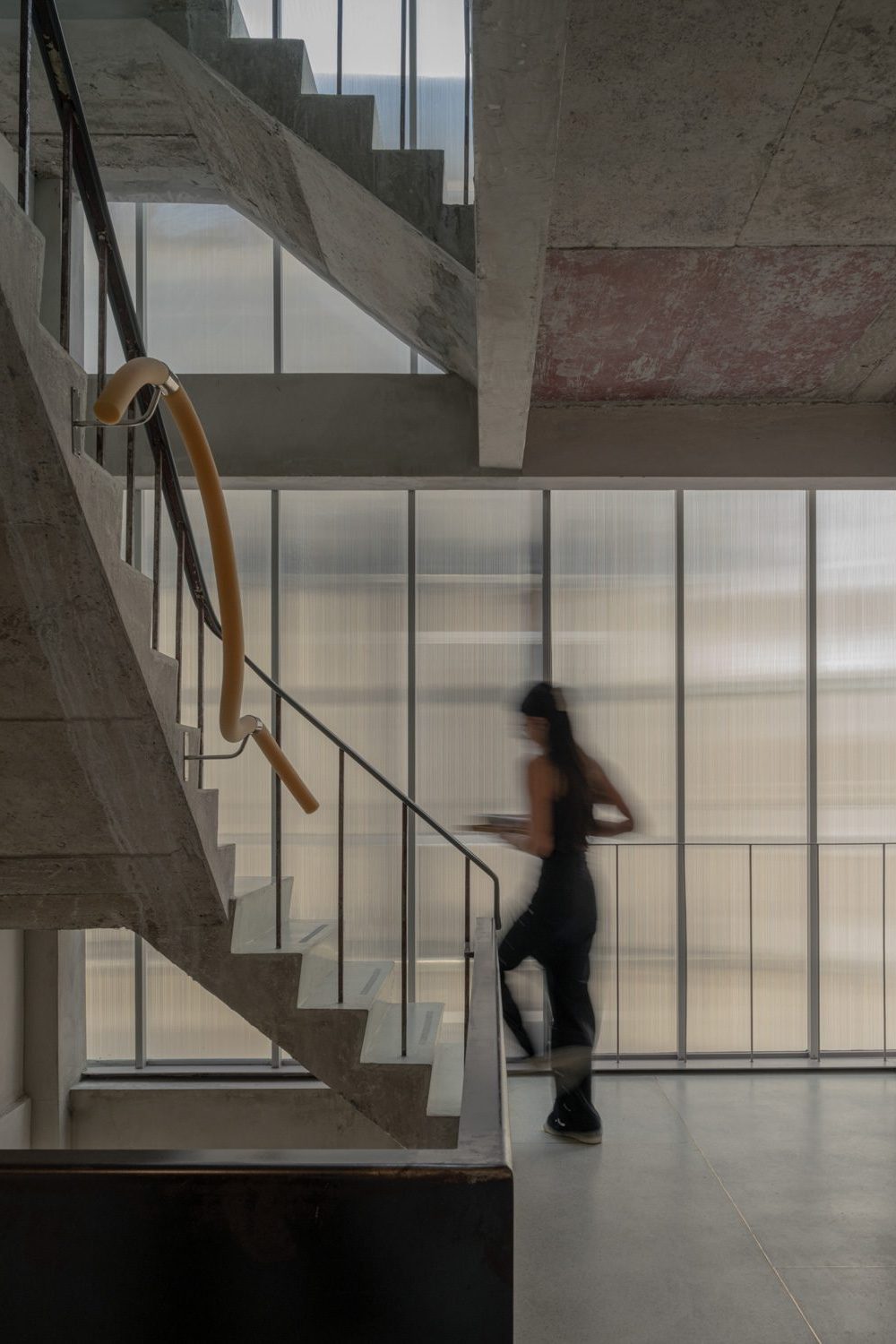 Photo: DOF SKY|GROUND
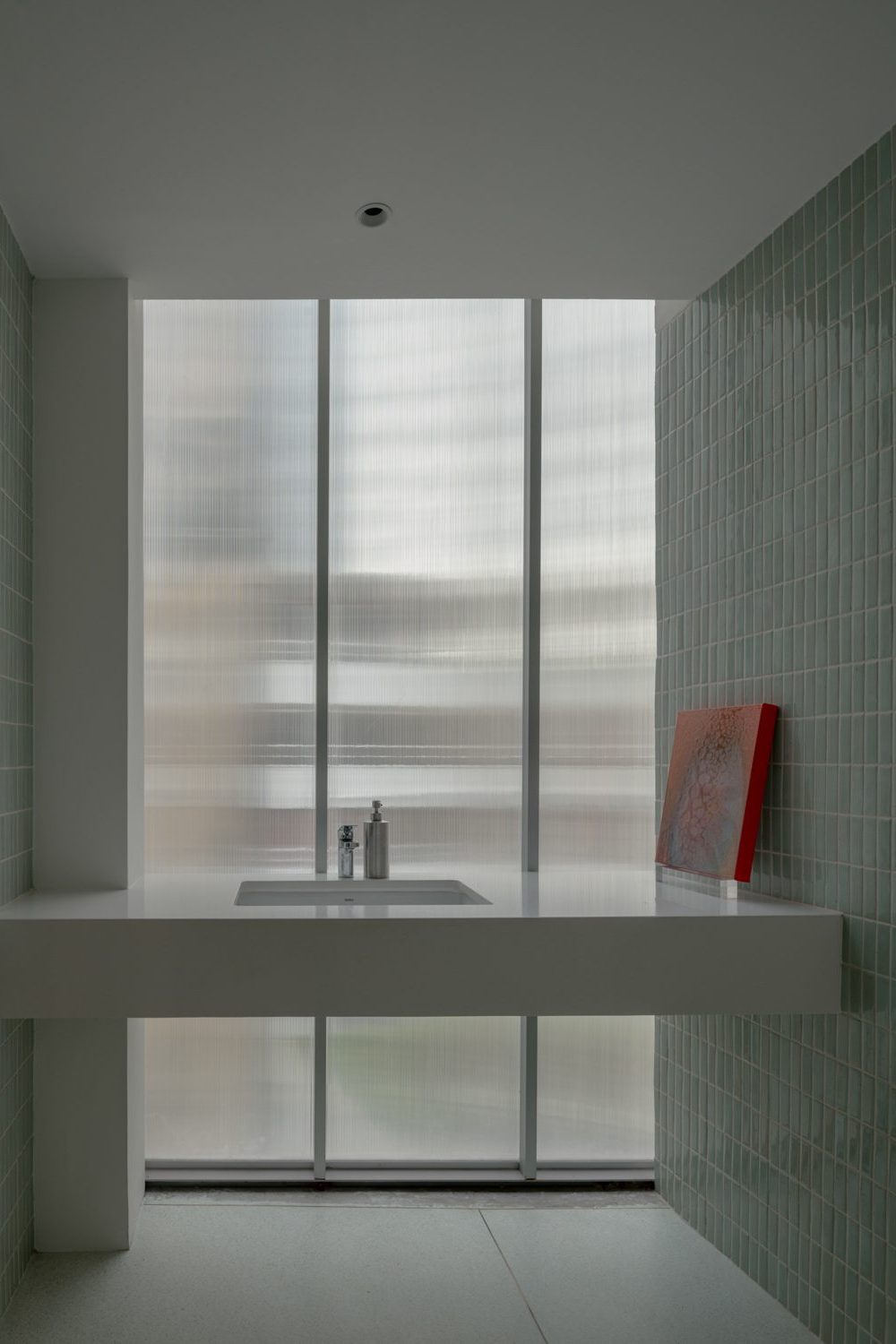
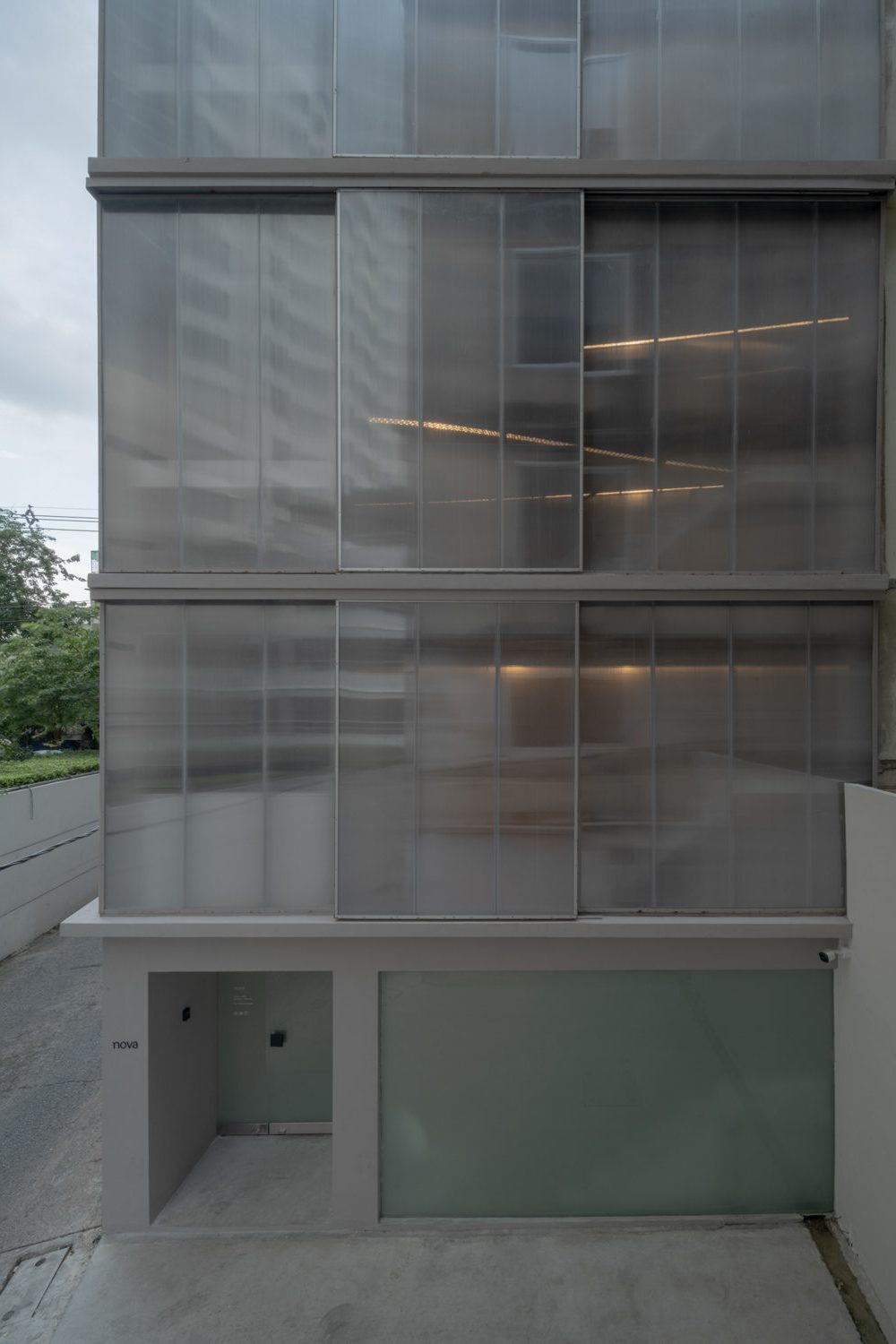
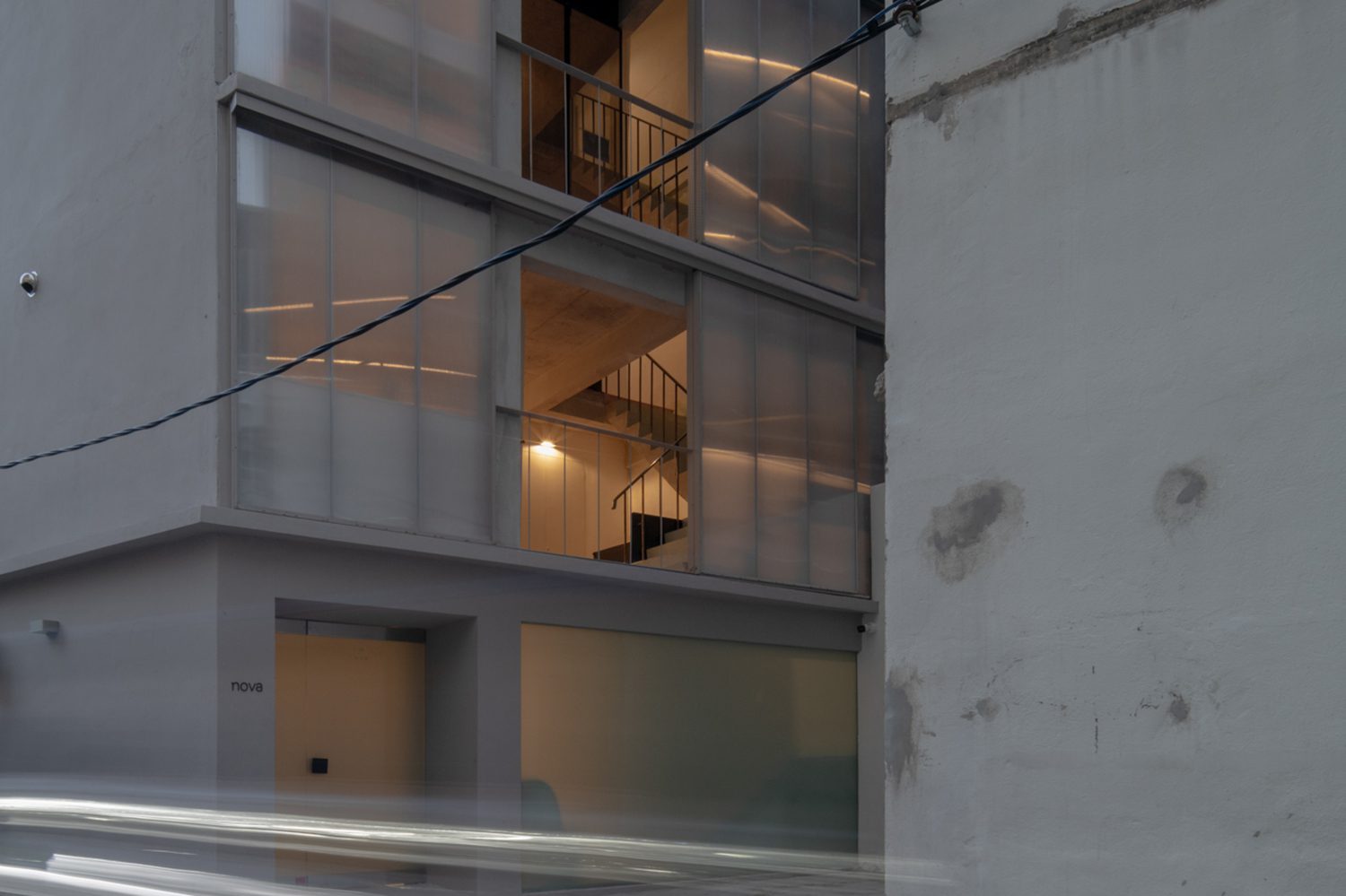
In negotiating the boundary between the privacy of exhibition viewing and the more public life outside, Skarn also sought to preserve the gallery as a spatial whole, allowing its volume to read as a continuous entity so that the experience of moving through exhibitions and encountering artworks unfolds with greater fluidity. Central to this strategy is the use of a translucent polycarbonate façade along the building’s northern side, which acts as a mediating layer between the architecture and the surrounding context of Si Phraya. Even when closed, the translucent surface allows those inside to register the movement and atmosphere beyond as blurred silhouettes, while passersby outside can likewise glimpse motion and illumination from within the gallery. The result is a visual reciprocity that keeps the building from ever feeling entirely closed off from its urban surroundings.
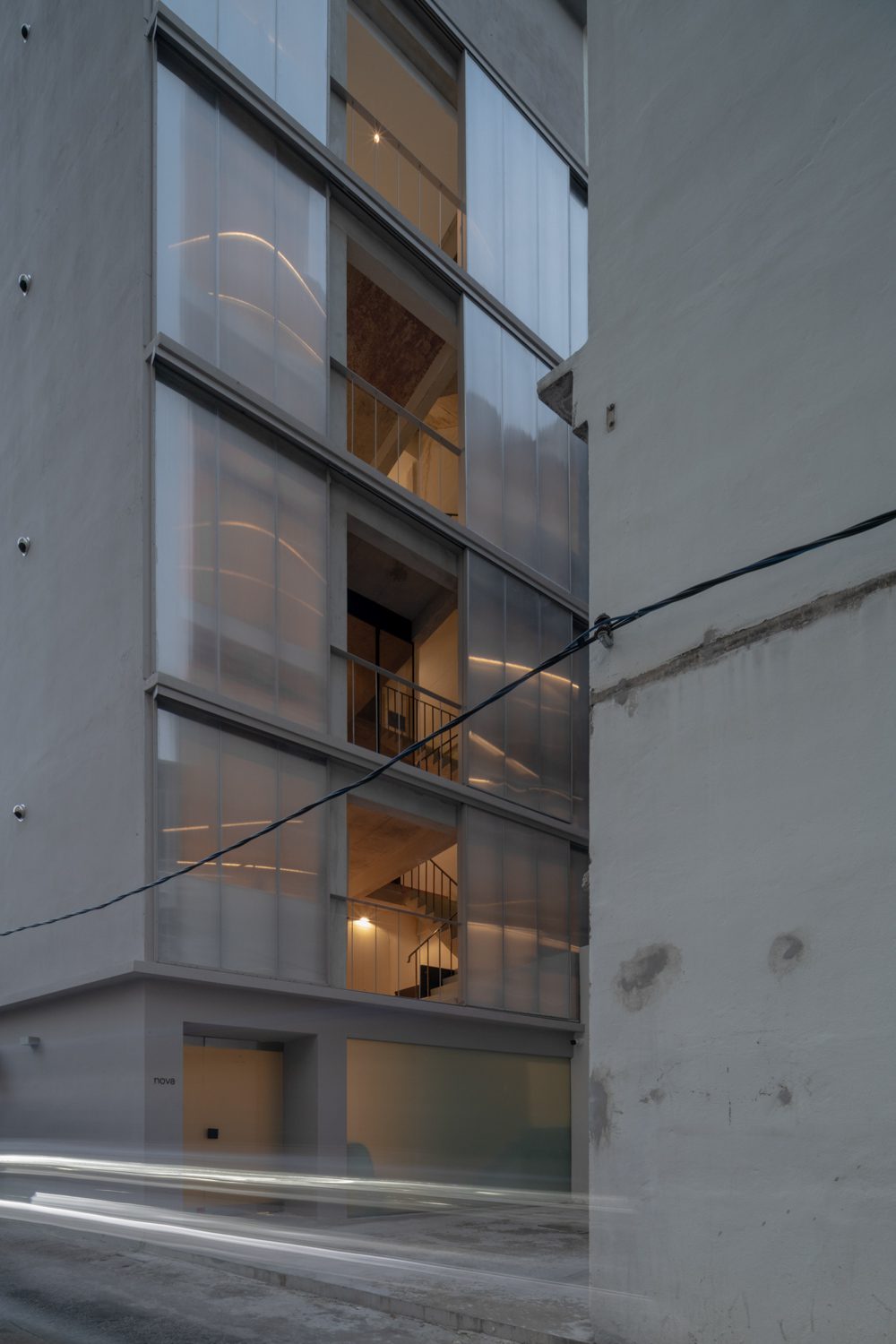
Photo: DOF SKY|GROUND
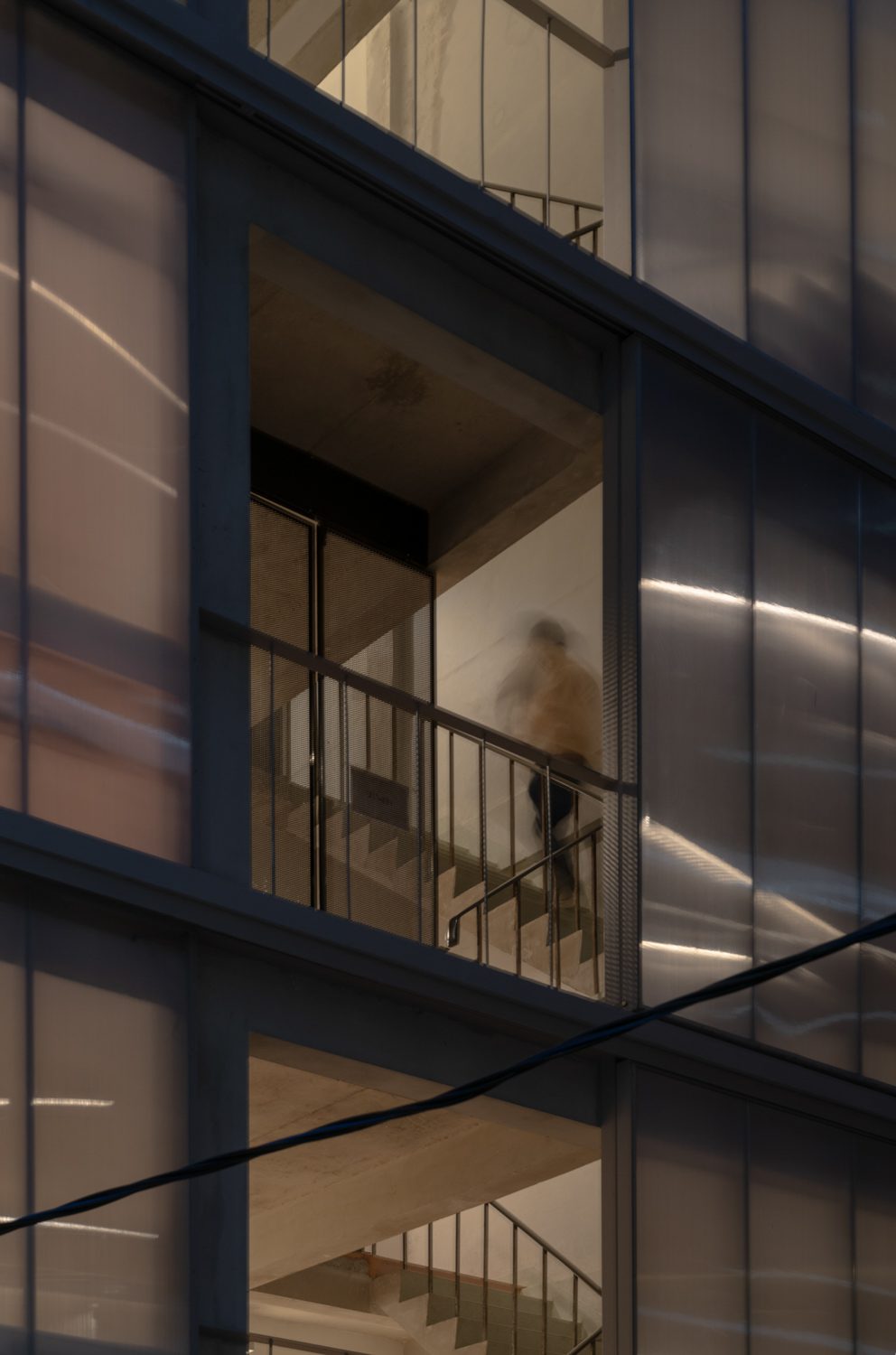
Photo: DOF SKY|GROUND
The polycarbonate panels were also designed as a system of sliding modules, allowing them to be opened for ventilation as needed. Just as importantly, they were conceived to connect the experience of those moving along the building’s internal staircase with that of people standing outside. This becomes especially pronounced during exhibition openings, when the sight of movement, gathering, and the rhythm of bodies passing behind the translucent façade lends the building a palpable sense of participation. In such moments, the gallery establishes a meaningful relationship between the space of art and the surrounding community.
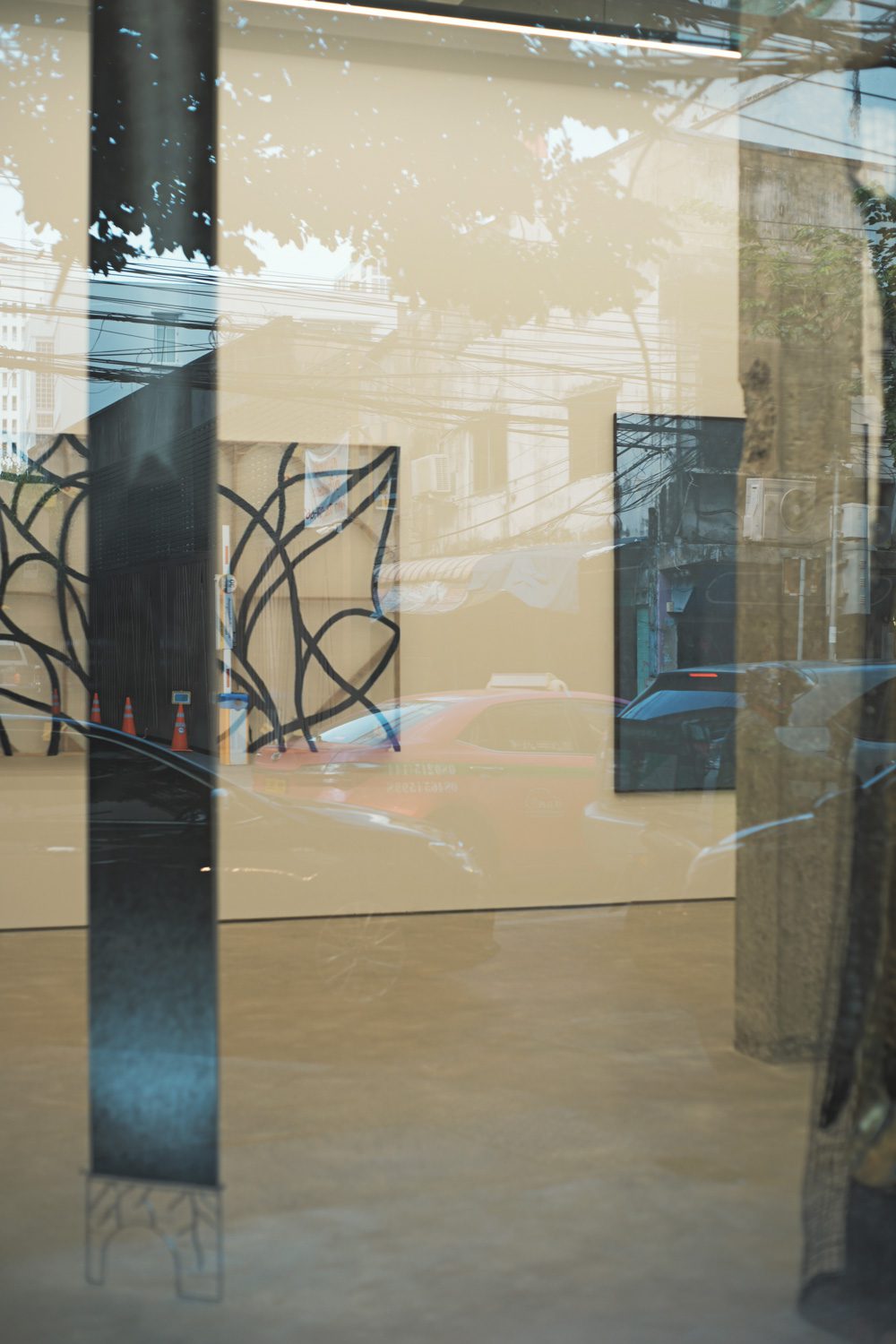
Photo: Lalina Kittipoomvong
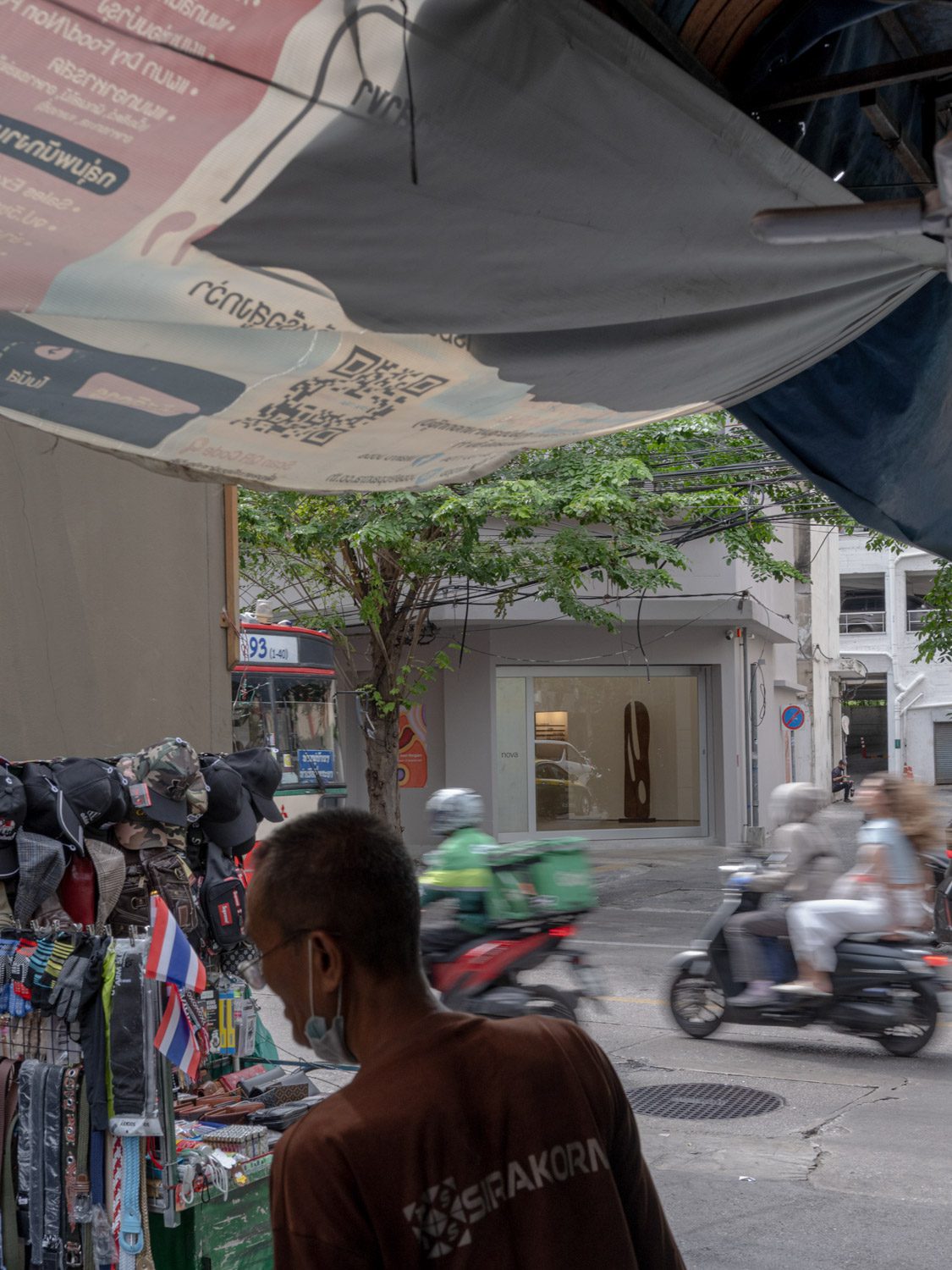
Photo: DOF SKY|GROUND
Ultimately, Nova Contemporary is far more than a self-contained venue for the display of art. It stands as a compelling example of renovation grounded in a deep understanding of both the building’s ‘spirit’ and the character of Si Phraya itself. In preserving the integrity of what time had already inscribed into the structure, while subtly refining it through carefully integrated building systems and calibrated openings for natural light, Skarn Chaiyawat Architects has created a ‘threshold’ of sorts, one that allows the turbulence of the city outside and the quiet aesthetic experience within to coexist in meaningful dialogue. It is this connection that prevents contemporary art from being sealed off in a vacuum. Instead, it gains new vitality and resonance through the living context of Bangkok that continues to flow all around it. In this way, the old shophouse becomes an oasis that does not seal us off from the world, but instead allows us to read art even as we feel, with equal immediacy, the rhythms of the city beyond, the two experiences unfolding as a single, continuous whole.
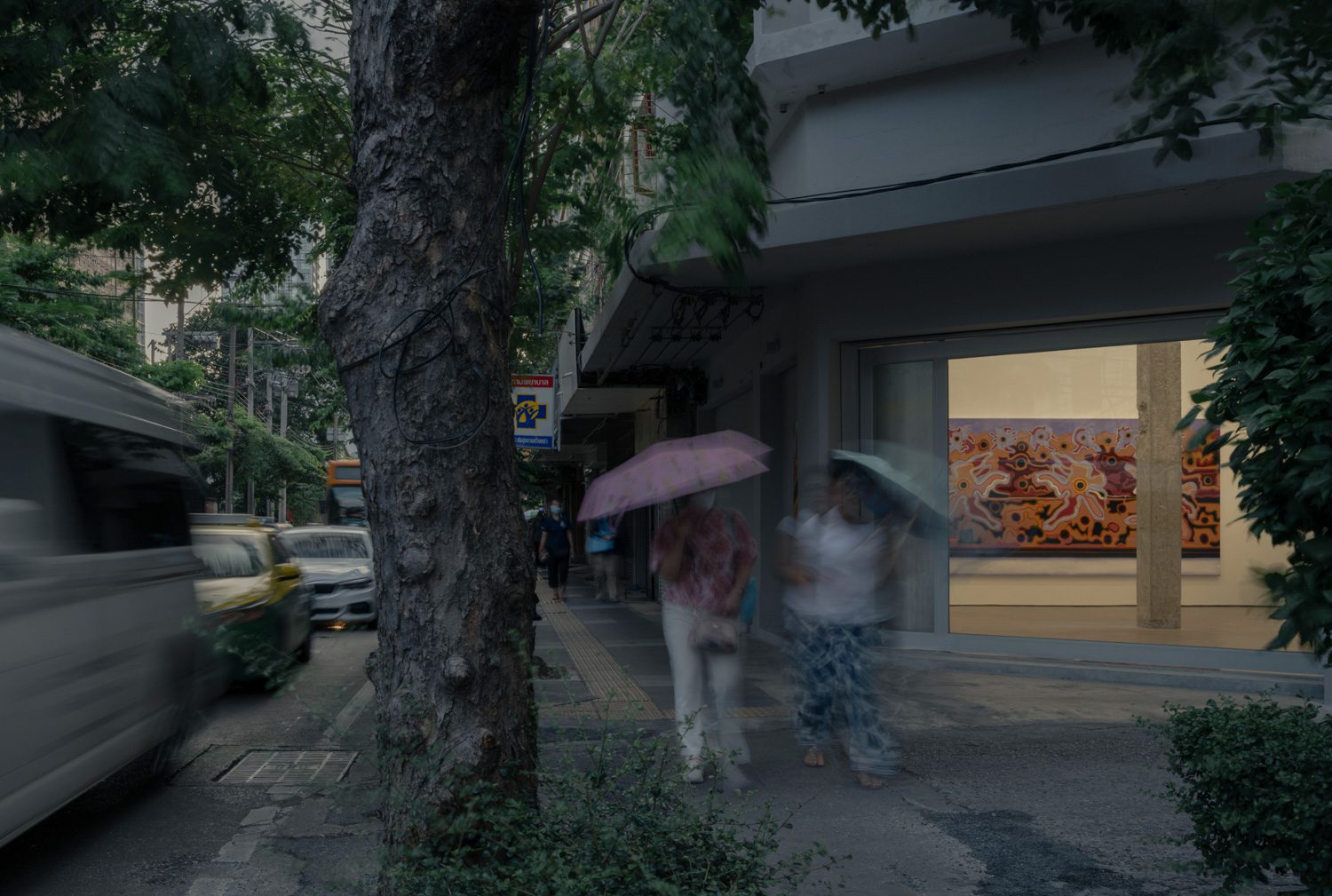
Photo: DOF SKY|GROUND