
‘MO NUM EN TS,’ AN EXHIBITION BY SOM SUPAPARINYA, DISMANTLES THE MEANING OF MONUMENTS, QUESTIONING HOW OUR REMEMBRANCE IS SYSTEMATICALLY CONSTRUCTED BY LATENT POWER
TEXT: TUNYAPORN HONGTONG
PHOTO: THAKUENG WITHUSUWAN
(For Thai, press here)
Som Supaparinya’s artistic practice often draws on contemporary media such as video, photography, and installation to examine the relationship between landscape, nature, and the structures of power that shape people’s lives. Her works often carry a quasi-documentary quality, yet are inflected with a poetic sensibility that invites viewers to see familiar terrains as sites of memory, authority, and ongoing transformation.
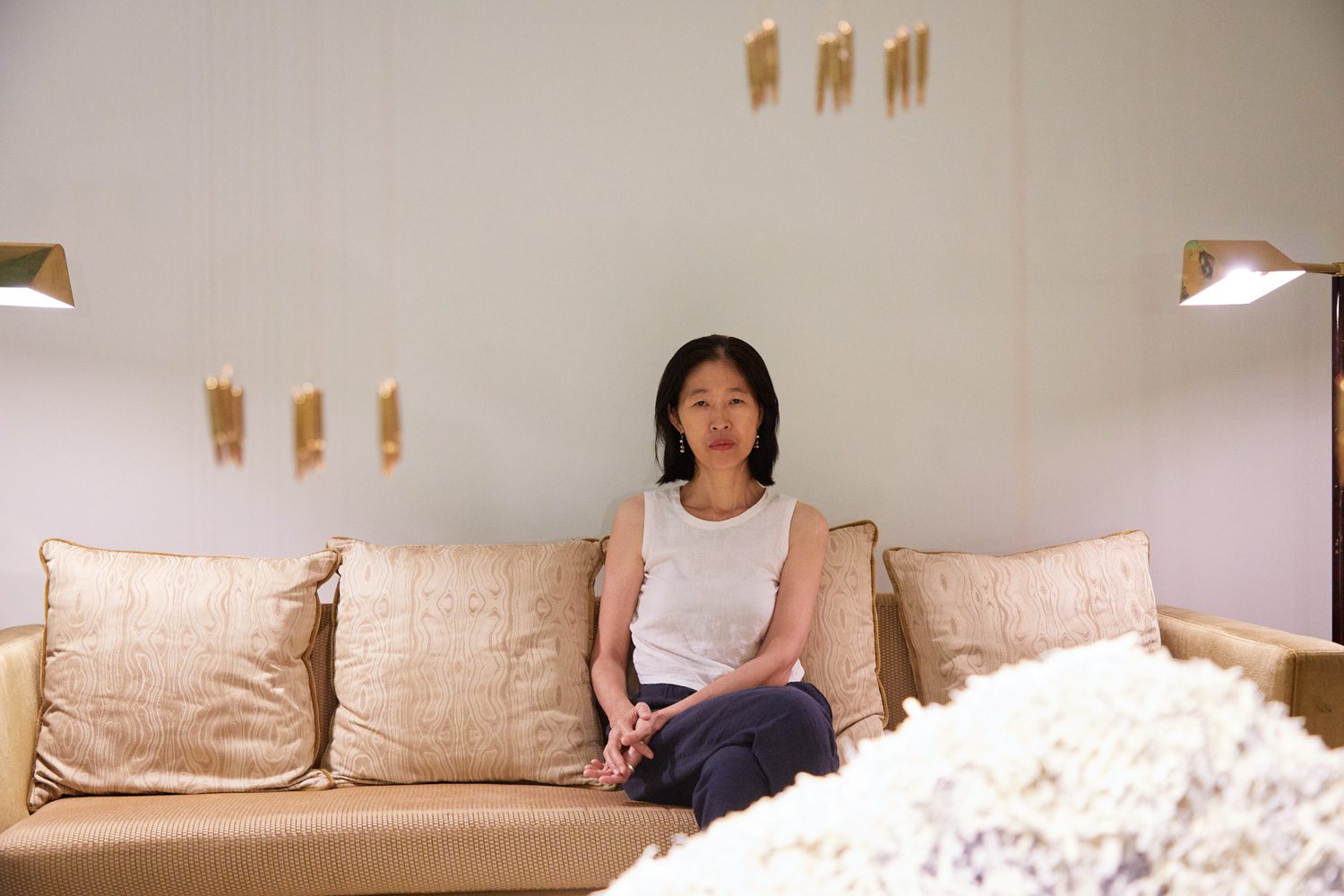
In 2024, Som was awarded the Han Nefkens Foundation-Southeast Asian Video Art Production Grant, a fund dedicated to supporting the production of new video work by artists in the region. She used the grant to develop her latest project, MO NUM EN TS, now presented as a solo exhibition at The Jim Thompson Art Center.
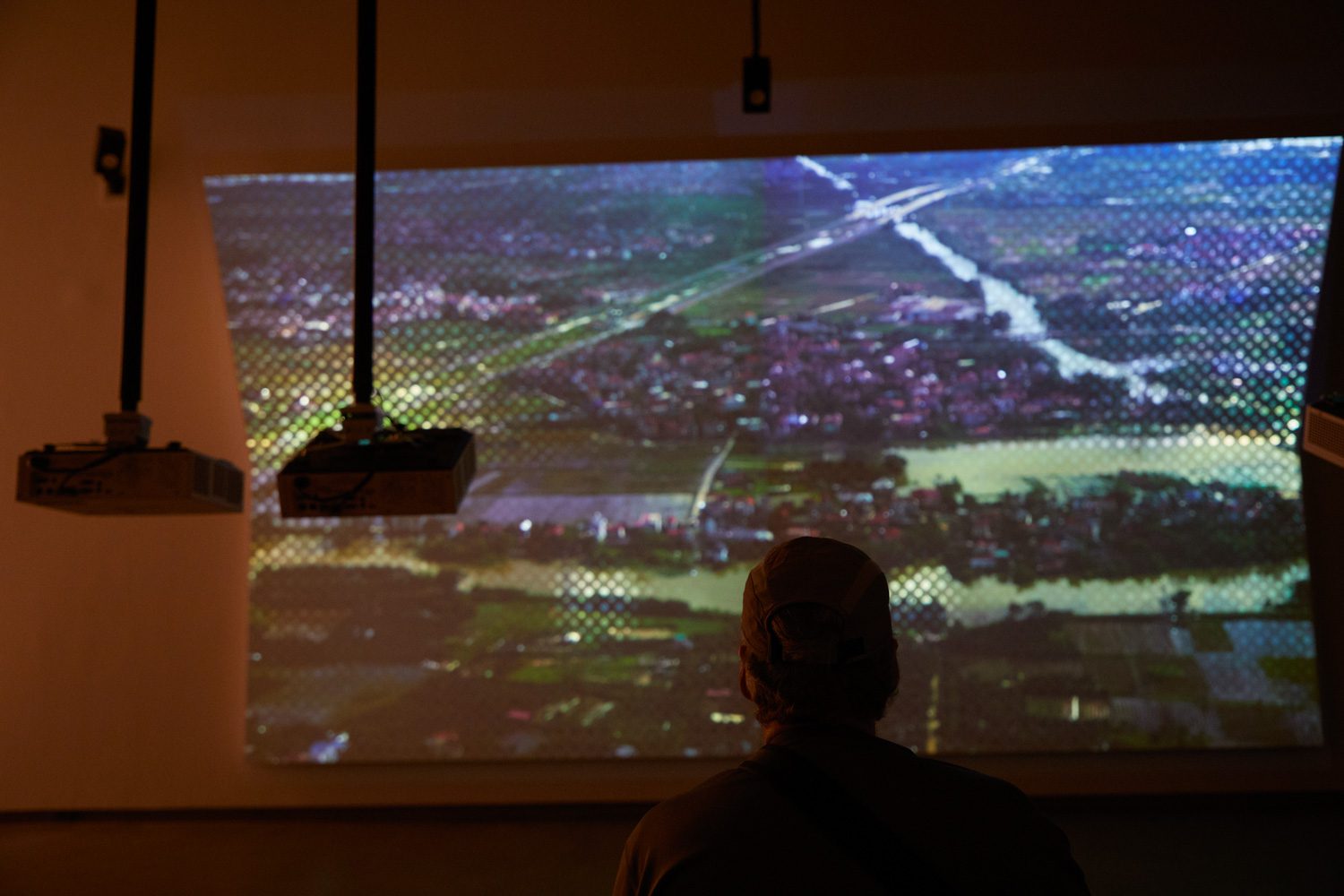
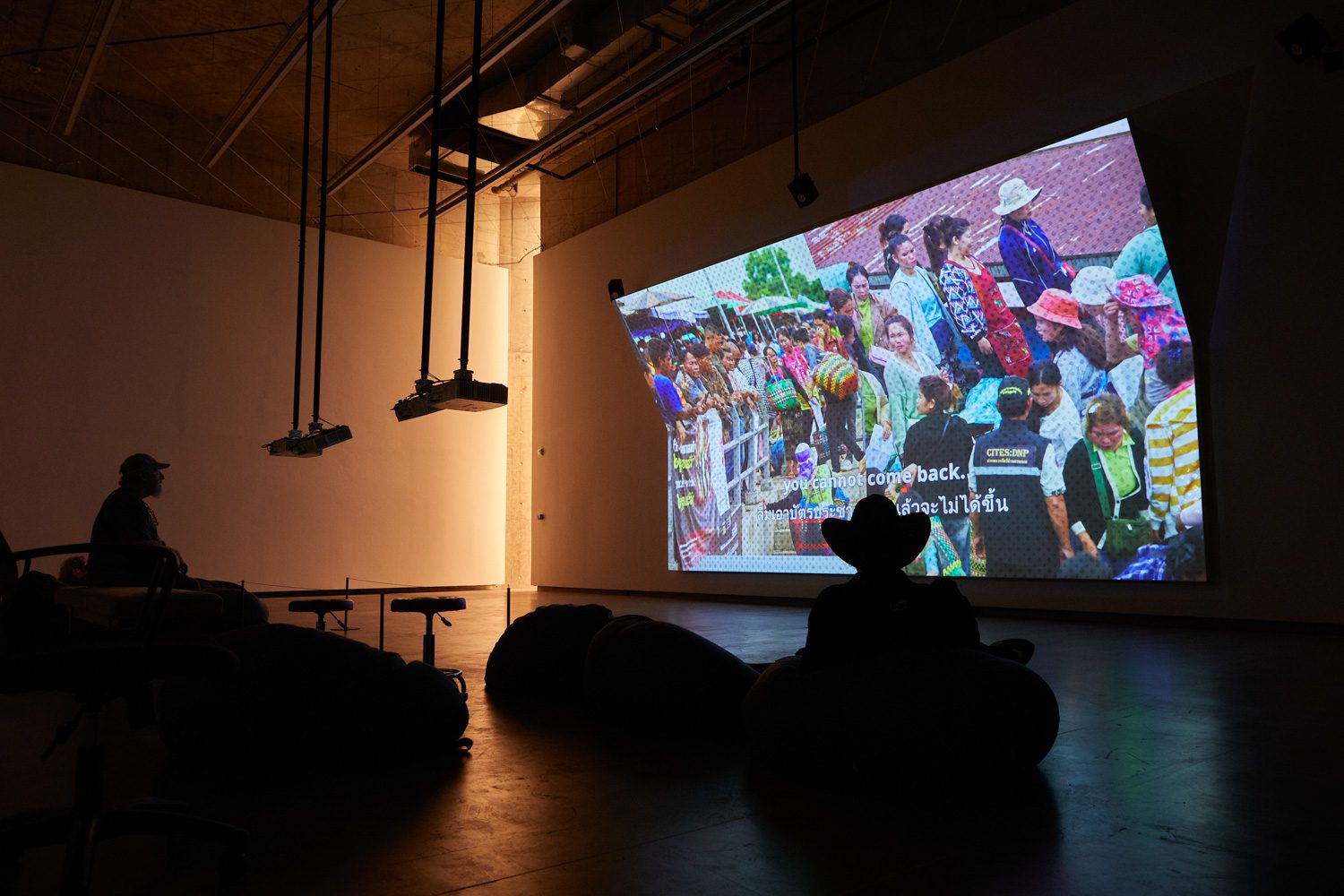
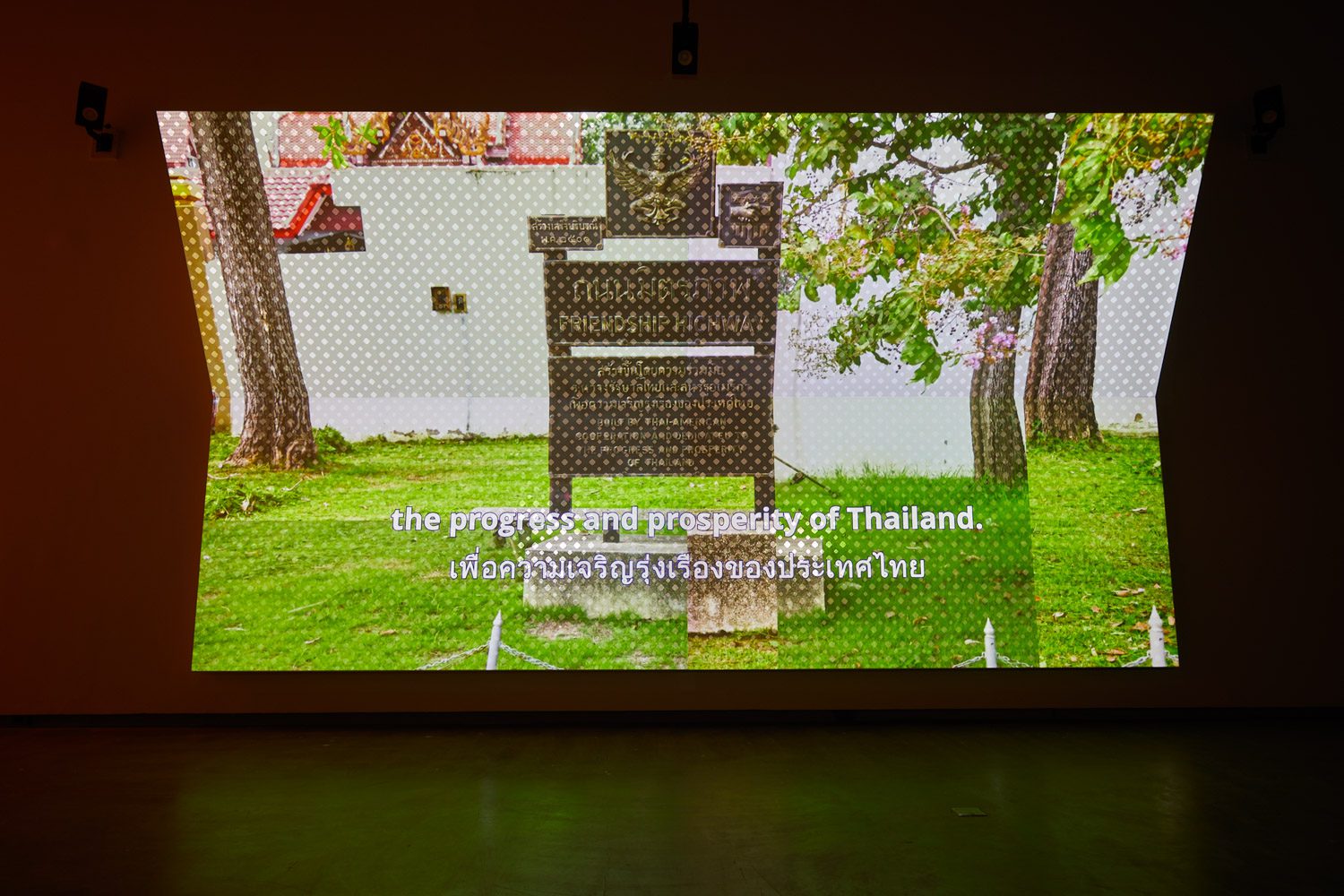
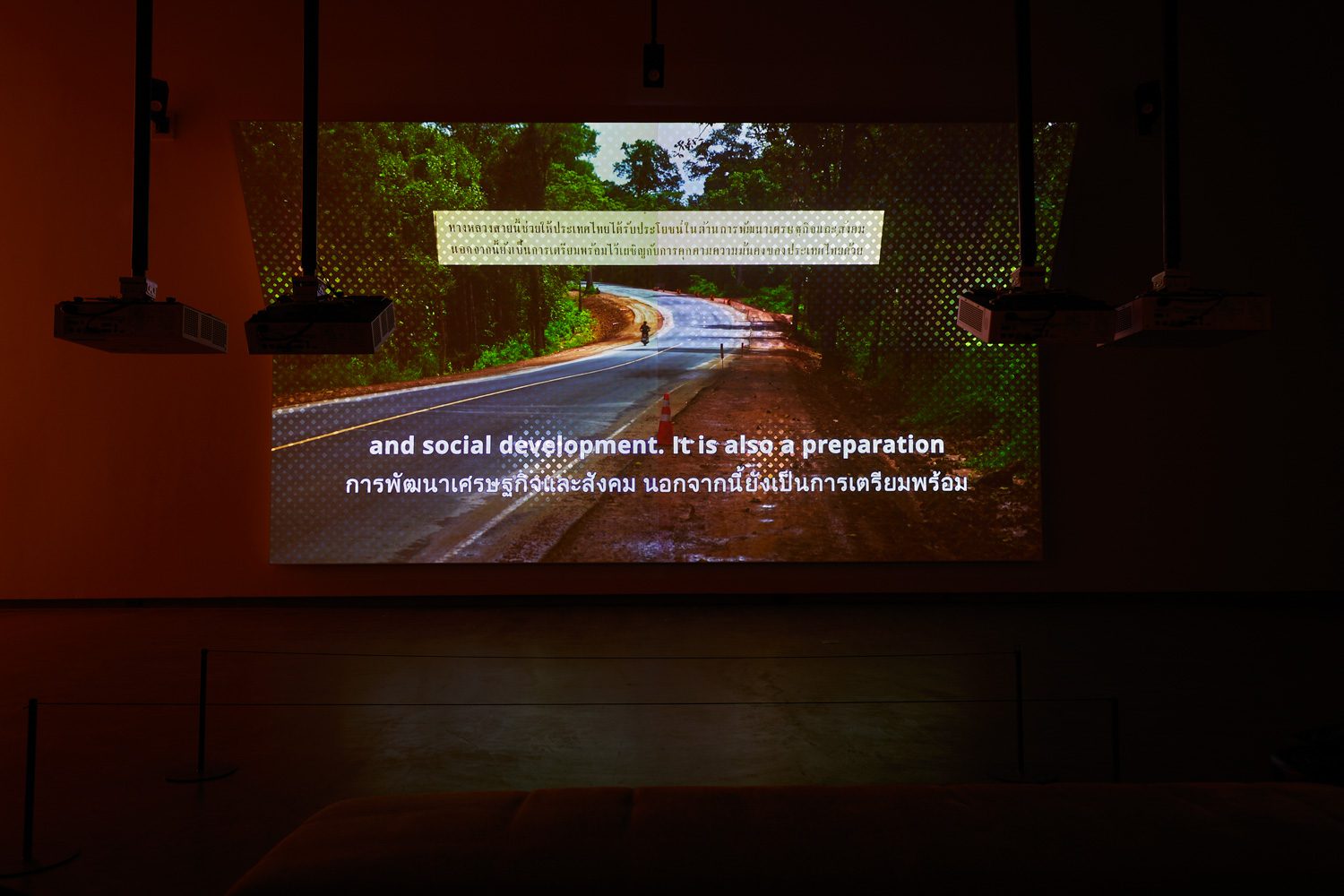
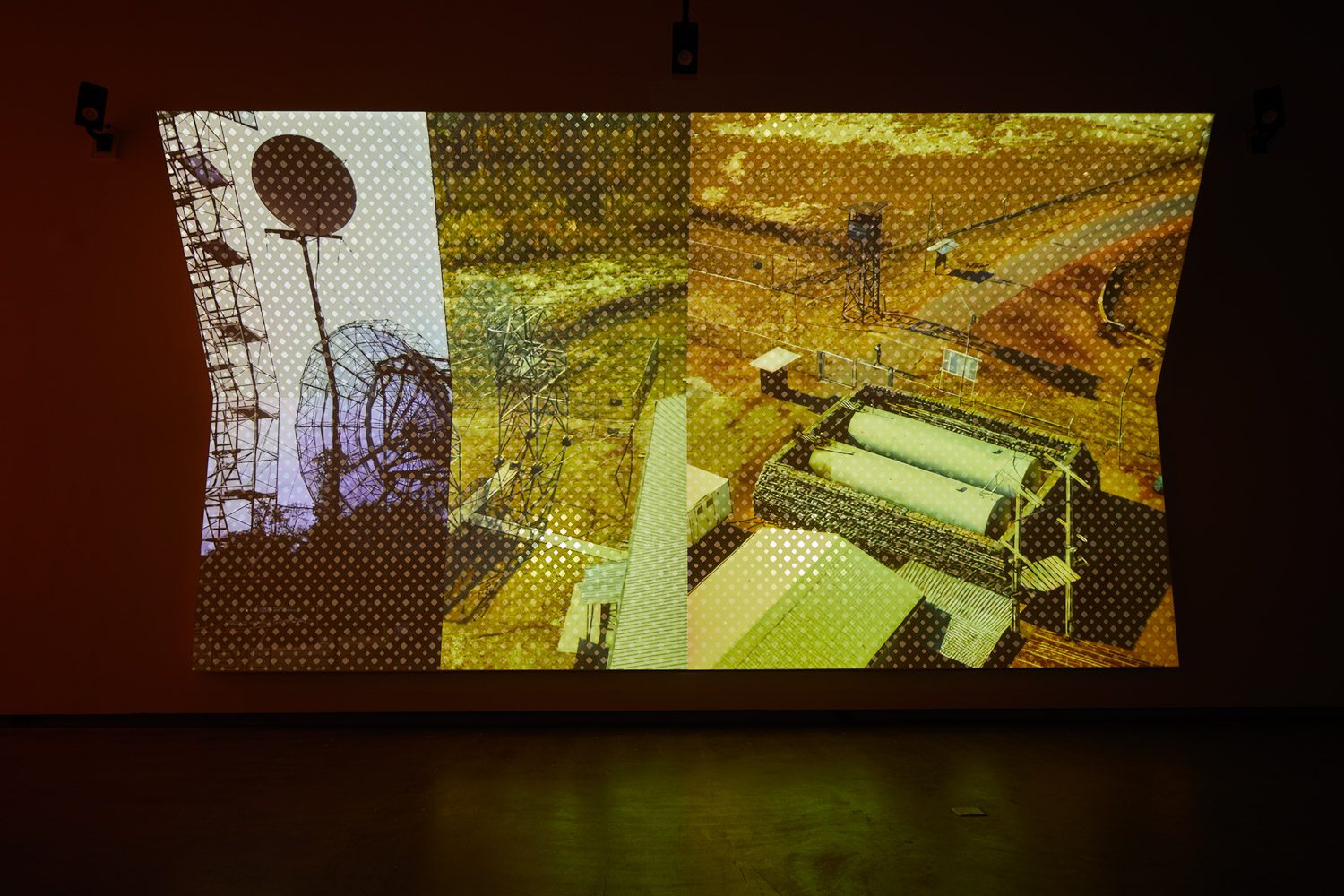
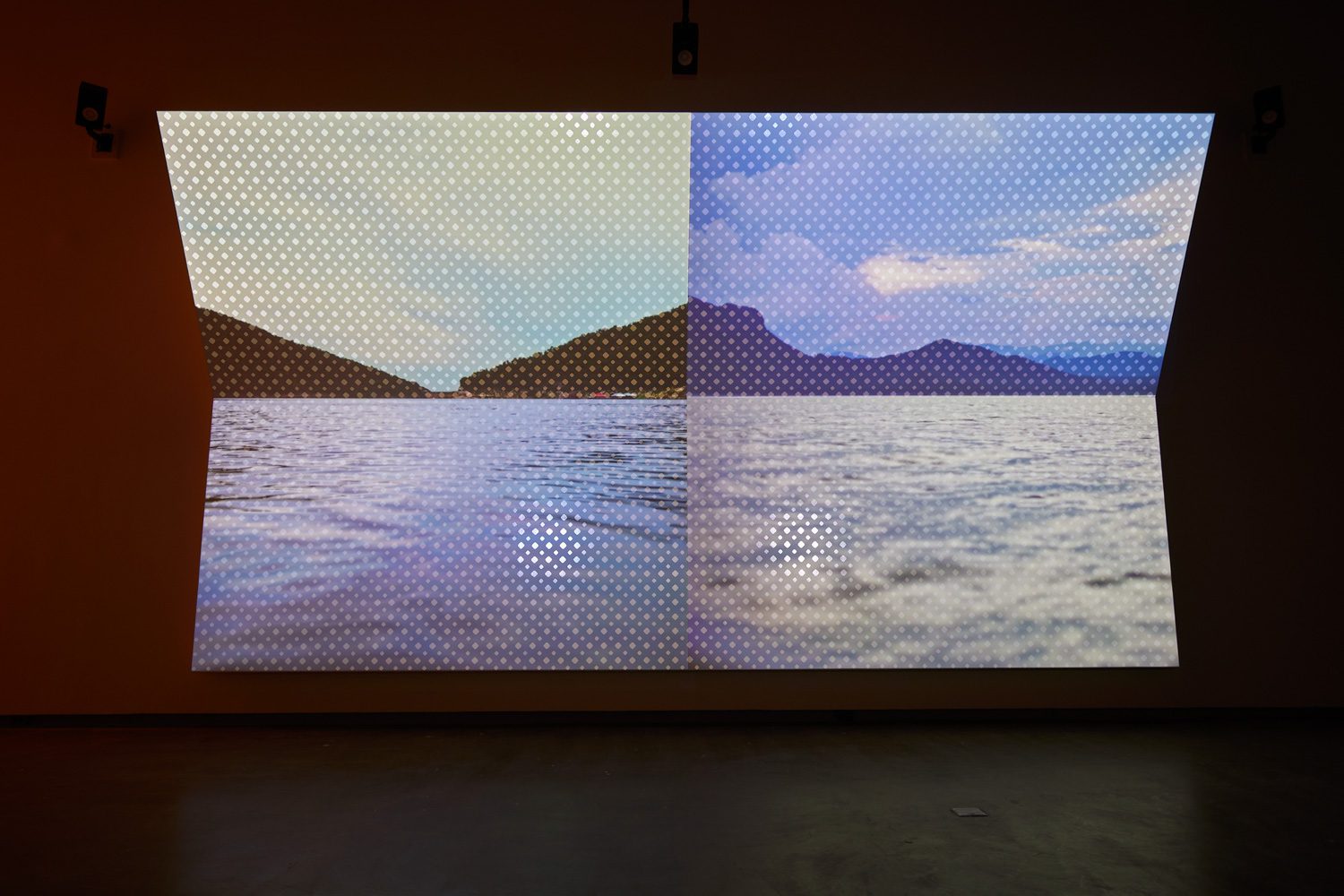
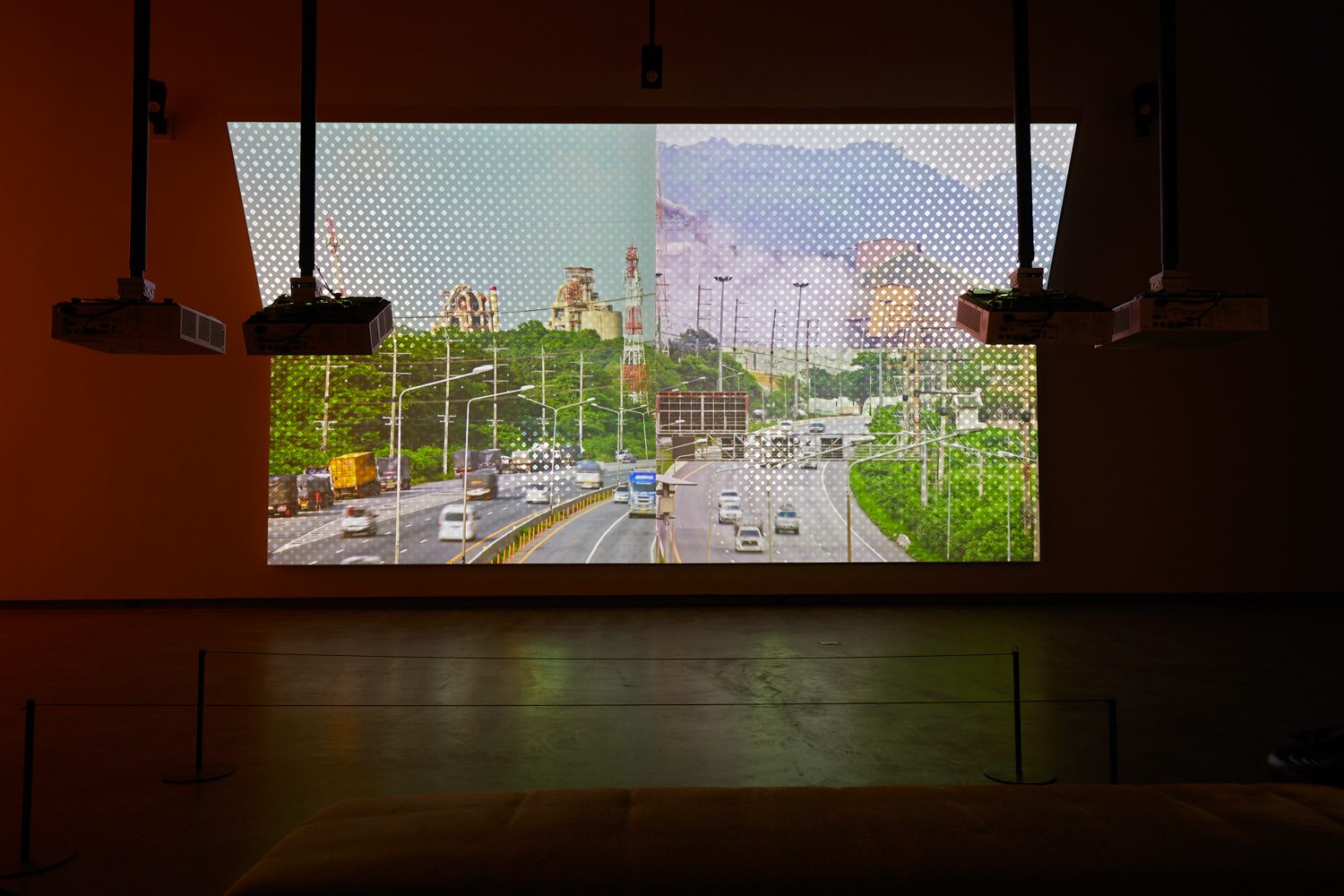
The exhibition unfolds across two gallery rooms. The first features a video installation bearing the same title as the exhibition, MO NUM EN TS (2025). Upon entering, one is immediately struck by a large, multi-angled screen structure composed of four screens, rather than a flat, wall-parallel projection surface. Installed lower than usual, the projector casts moving images of various landscapes and sites, many of them large-scale infrastructure projects, including Bhumibol Dam, Ubol Ratana Dam, Pak Mun Dam, Mittraphap Road, and Highway 304, as well as locations tied to military history, such as the Naval Aviation Museum at U-Tapao International Airport in Thailand’s Rayong province.
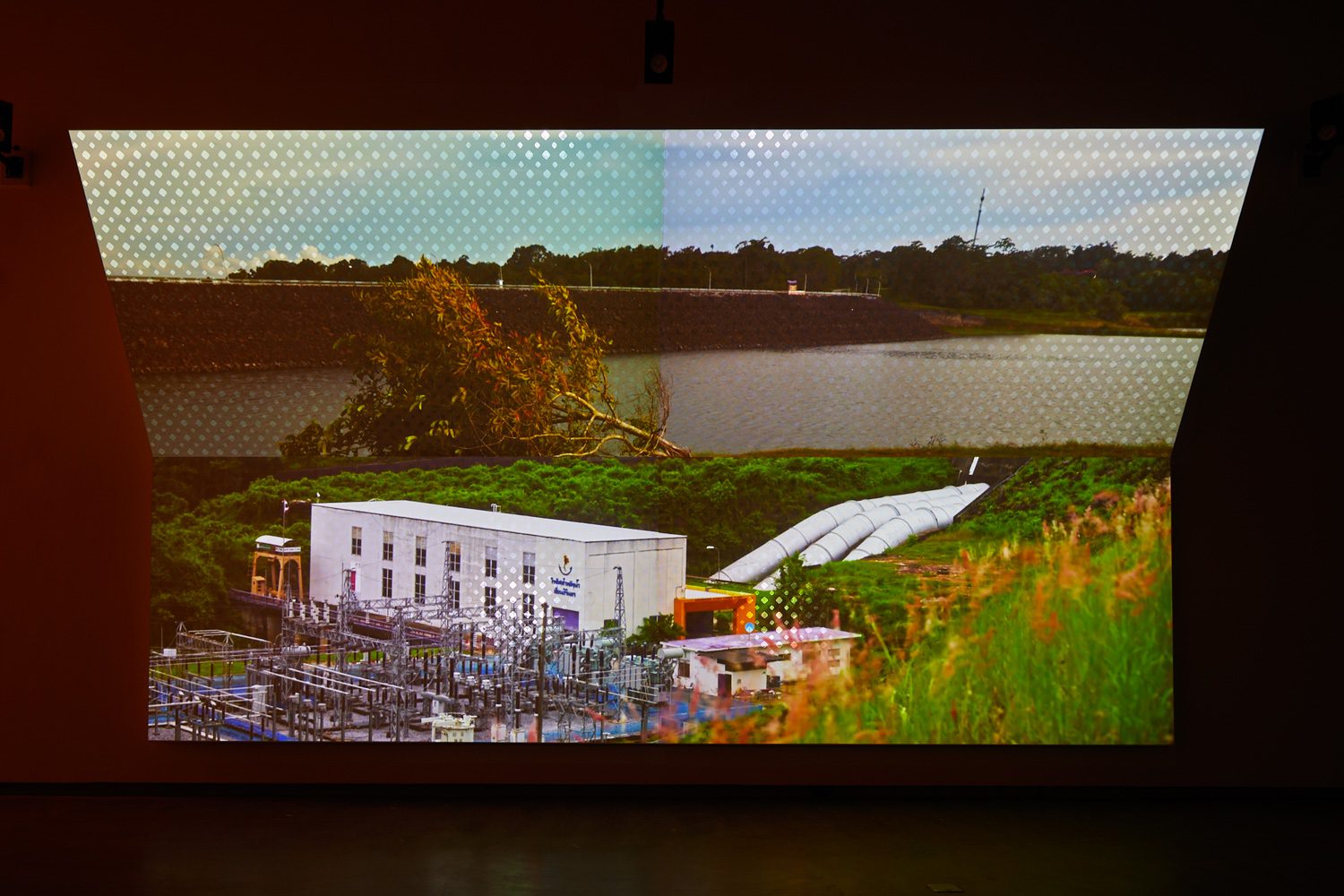
These images and histories will feel familiar to those who have followed Som’s practice. Over the years, she has pursued long-term research into state structures, development, and infrastructural networks, examining how these forces reshape land, nature, and the ways of life embedded within specific landscapes.
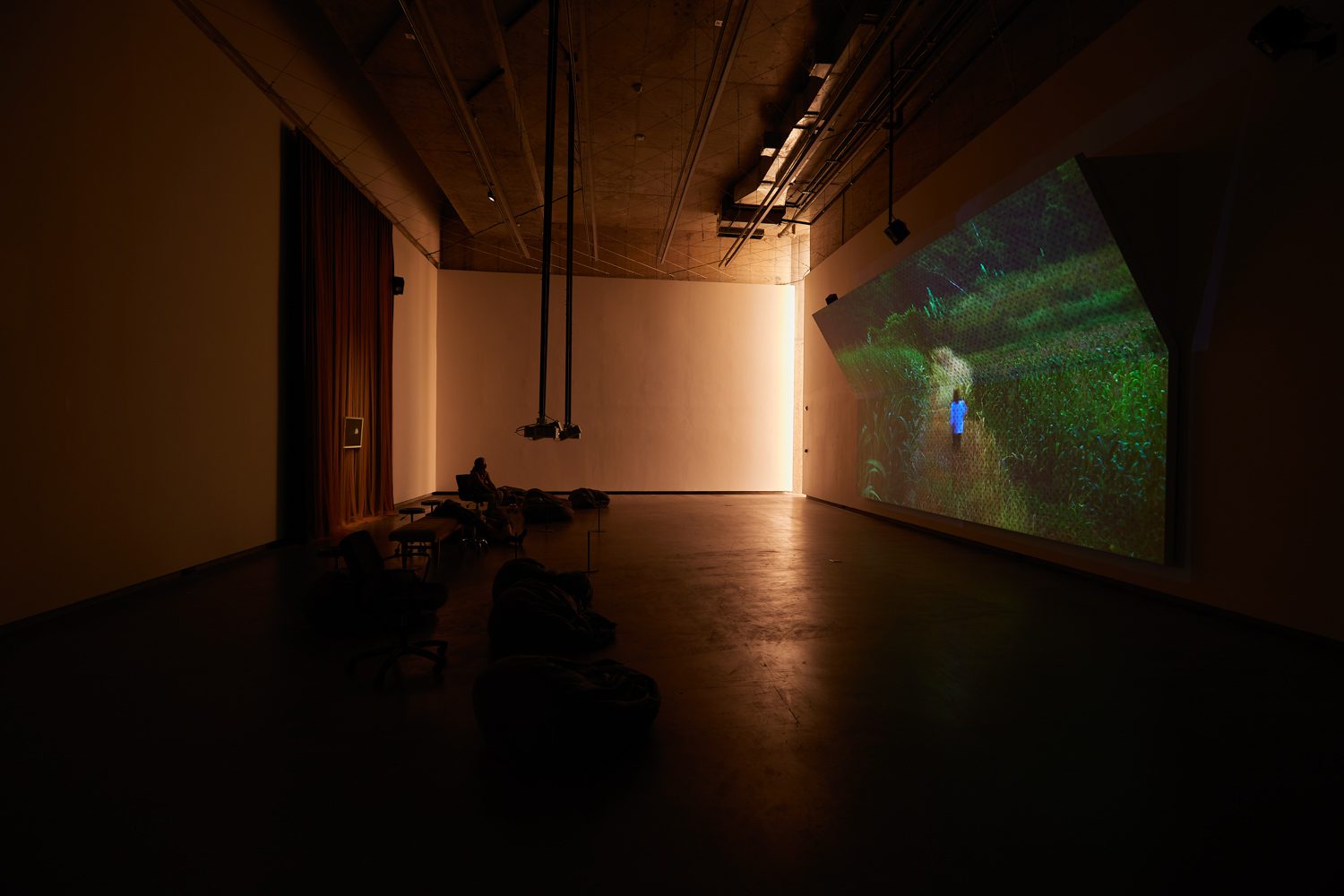
Beyond its unconventional form, which many viewers have read as evoking the silhouette of a dam, the screen’s surface is also overlaid with the same retroreflective material used on road surfaces and traffic signs. When struck by the projector’s beam, the light rebounds into patterns resembling pixels across the moving image. As a result, the projected scenes never appear fixed. Instead, they shift according to the viewer’s angle of vision and bodily movement. At one moment, the image appears blurred, at another it snaps into sharper focus, as though the artist were prompting us to question the narratives of development and infrastructure so often presented as emblems of progress, and to ask how true those narratives really are.
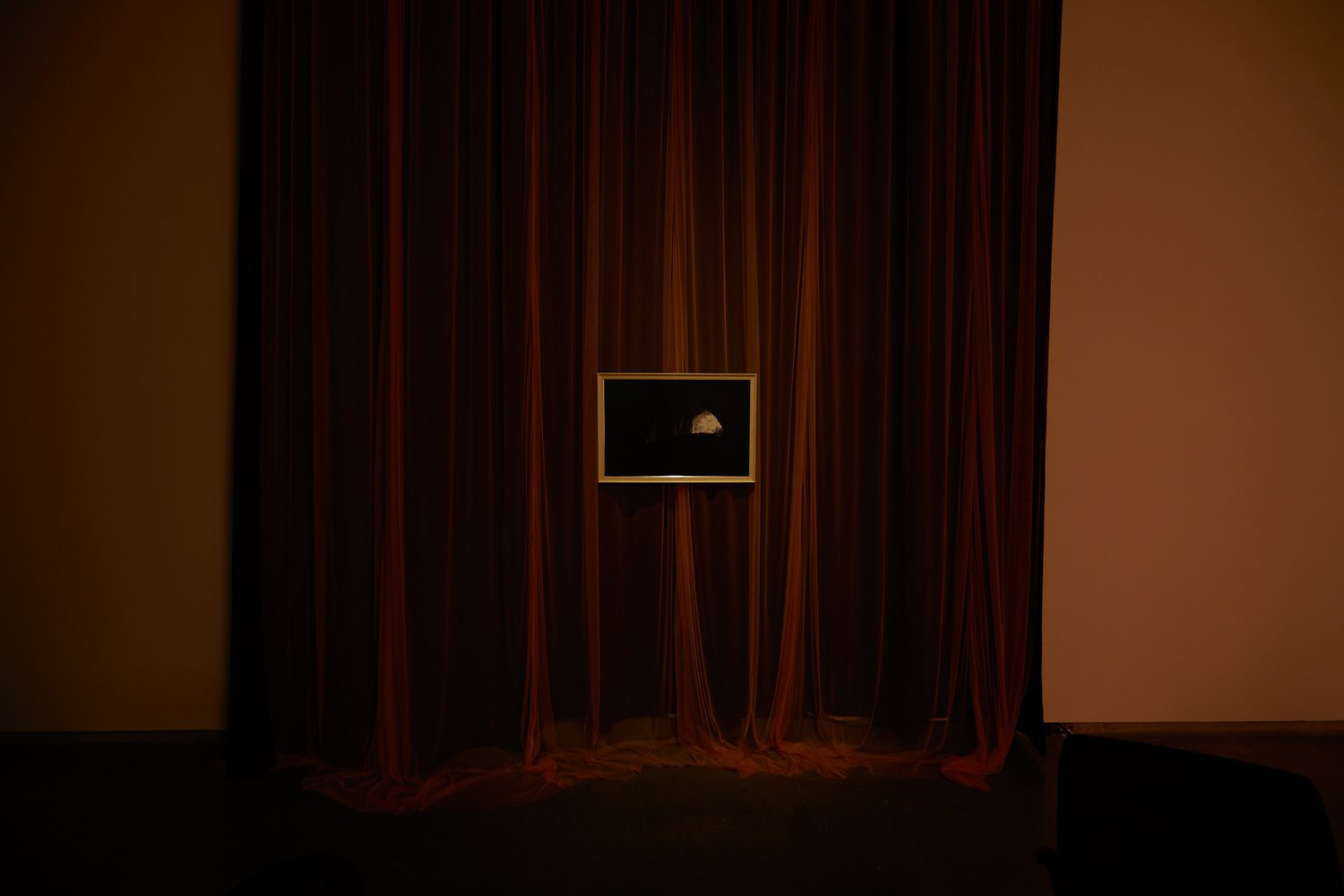
Also in this gallery are two black-and-white photographic works, Tham Piu Tragedy (2023) and Bomb scars on Pha Tok (2024). Both depict landscapes in the Lao People’s Democratic Republic, once significant sites during the Indochina War. On November 24, 1968, US fighter aircraft flew out of Thailand and launched missiles at Piu Cave, killing 374 civilians who had taken shelter inside. Pha Tok Cave, a limestone mountain formation that served as protection from US aerial bombardment, likewise bears the massive scars of explosions left by sustained attacks carried out between 1964 and 1973.
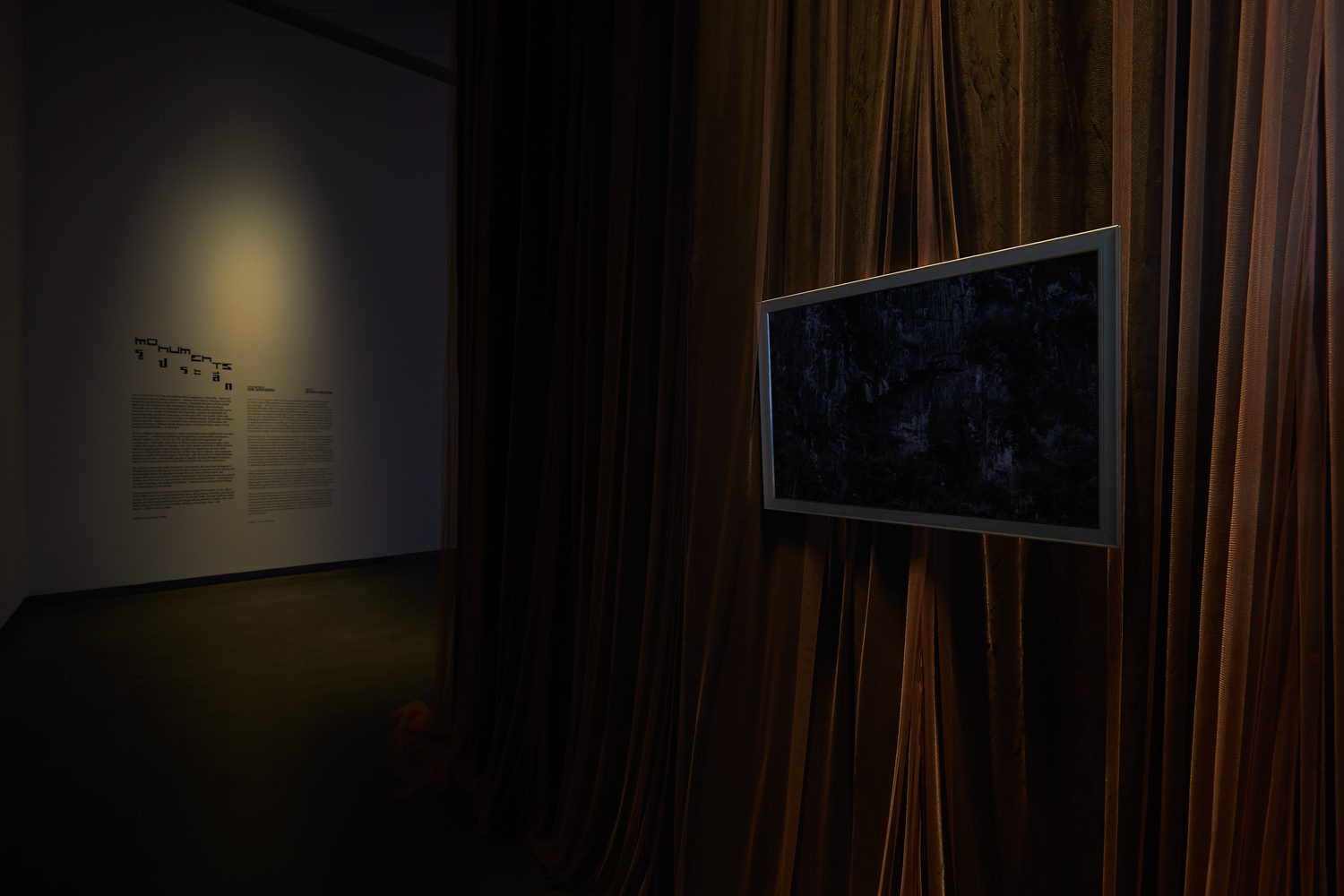
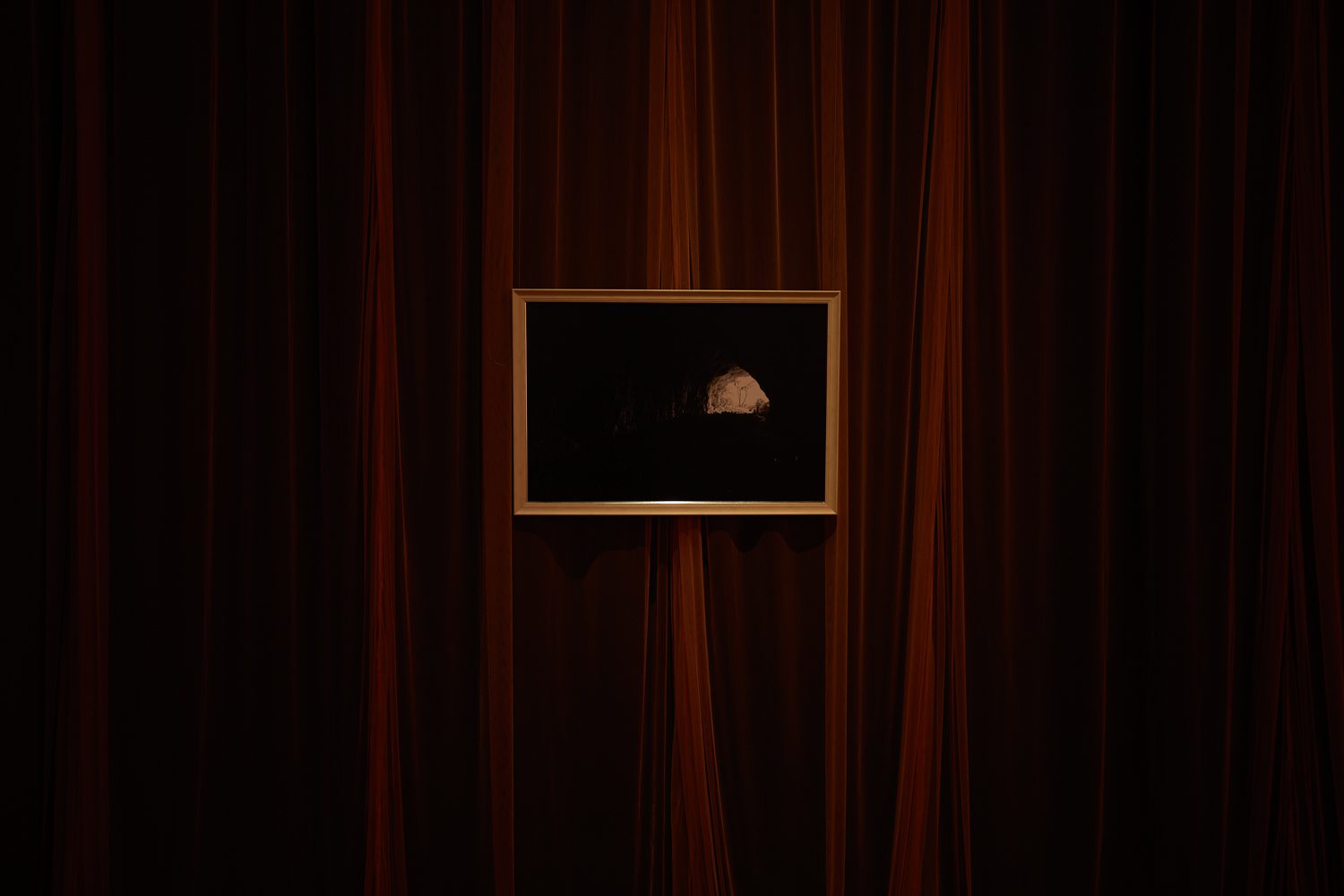
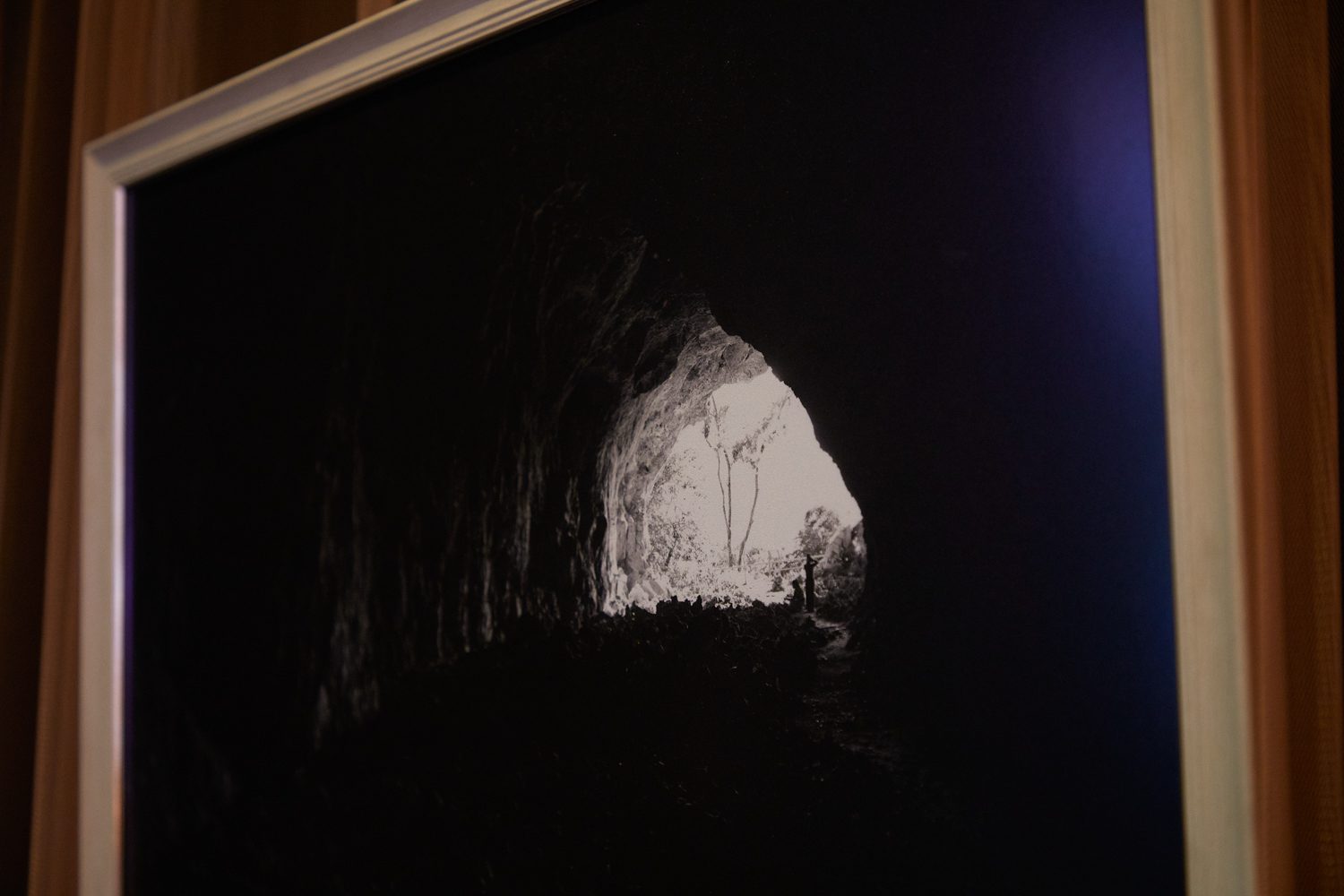
In truth, the two photographs are modest in scale, especially when set against the monumental screen of the video installation occupying the same room. Yet the artist has mounted them onto two large suspended sheets of fabric that descend from the gallery ceiling like theatrical curtains. Combined with the stillness and silence of the images themselves, the resulting aesthetic is profoundly overwhelming. This is especially so because the photographs do not approach the landscape as a scene of natural tranquility, but as a site inscribed with histories of power, violence, and the enduring aftereffects of war that remain embedded in the terrain itself. The mountains and caves that appear in the images thus seem to function as witnesses to a history still lodged within the very landscape where people continue to live today.
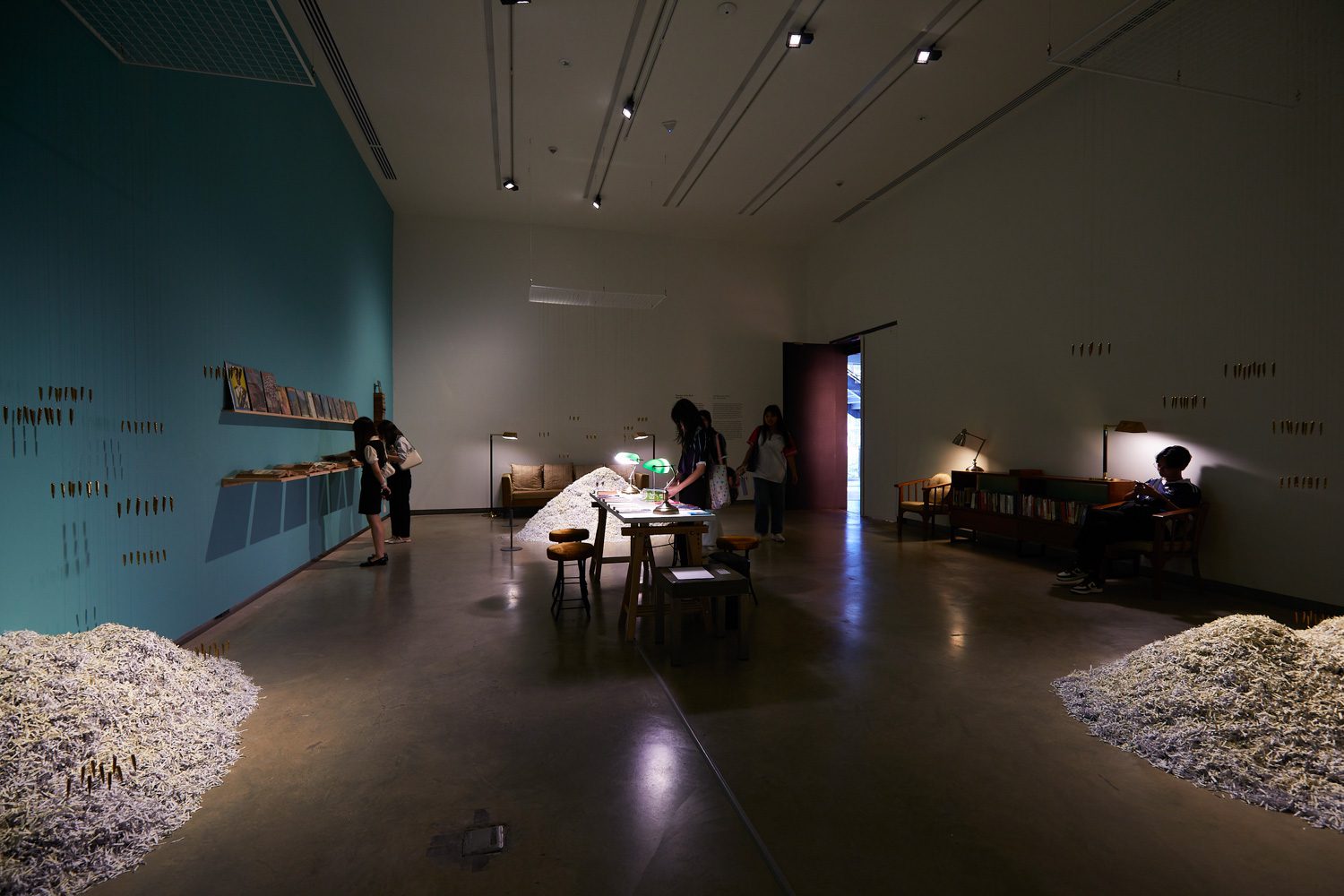
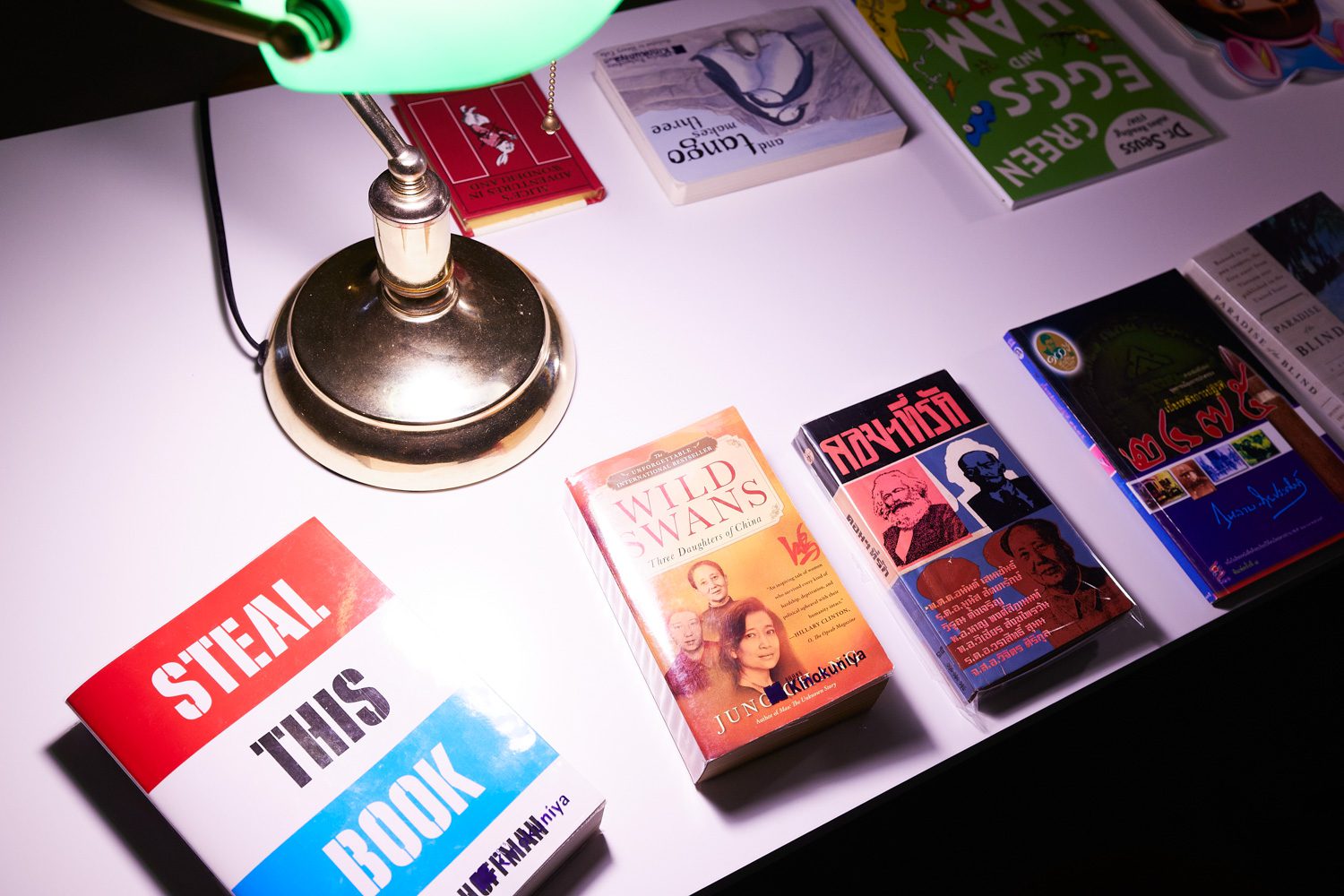
The second gallery presents Paradise of the Blind (2016–2025), an installation that forms part of Som’s Banned Book Series, a long-term research project she began in 2016 to examine book censorship and the control of knowledge across Asia and Oceania. Paradise of the Blind takes its inspiration from the novel of the same name by Vietnamese writer Duong Thu Huong, a literary work once banned in Vietnam for its forthright critique of the Communist Party.
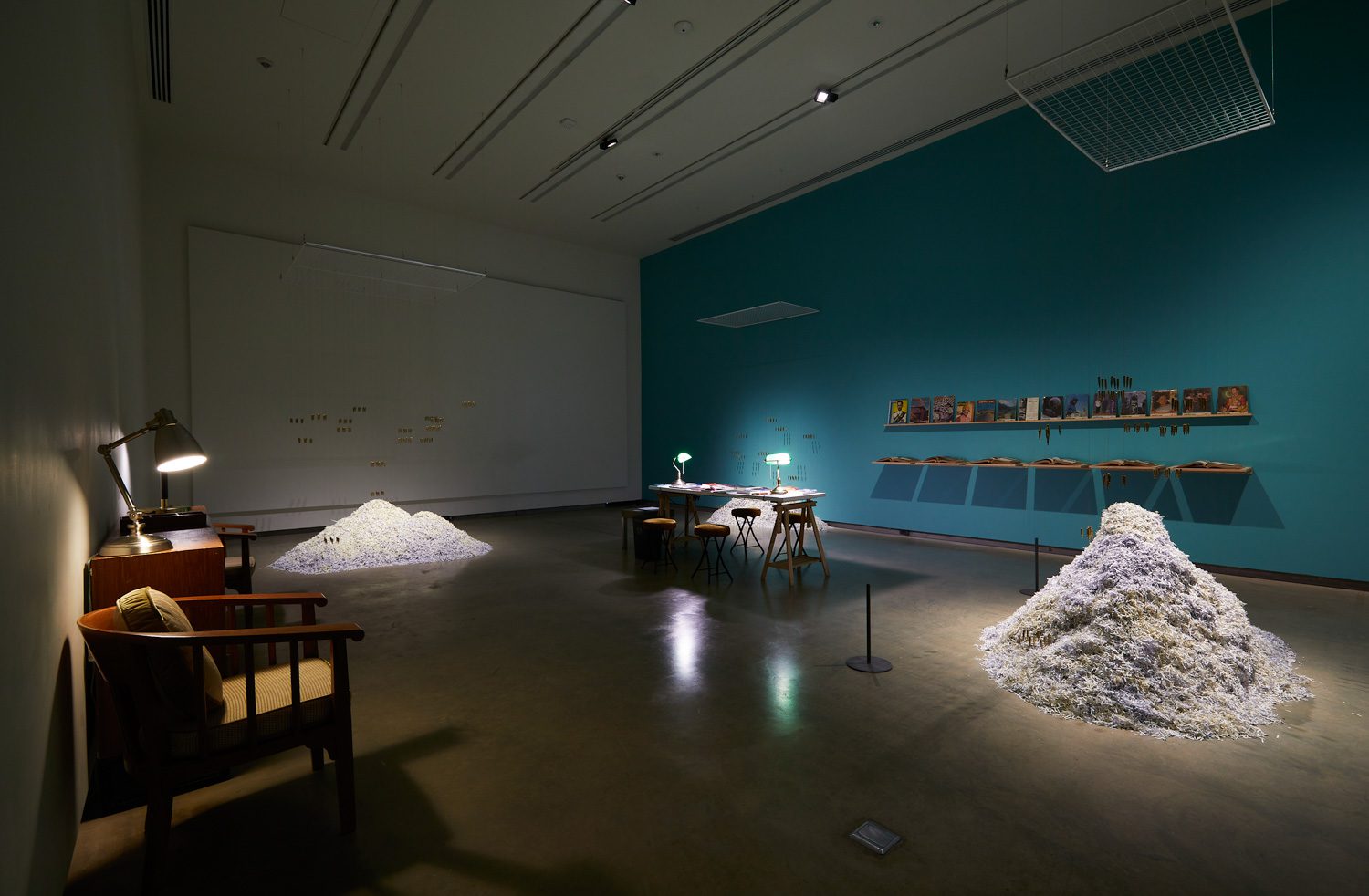
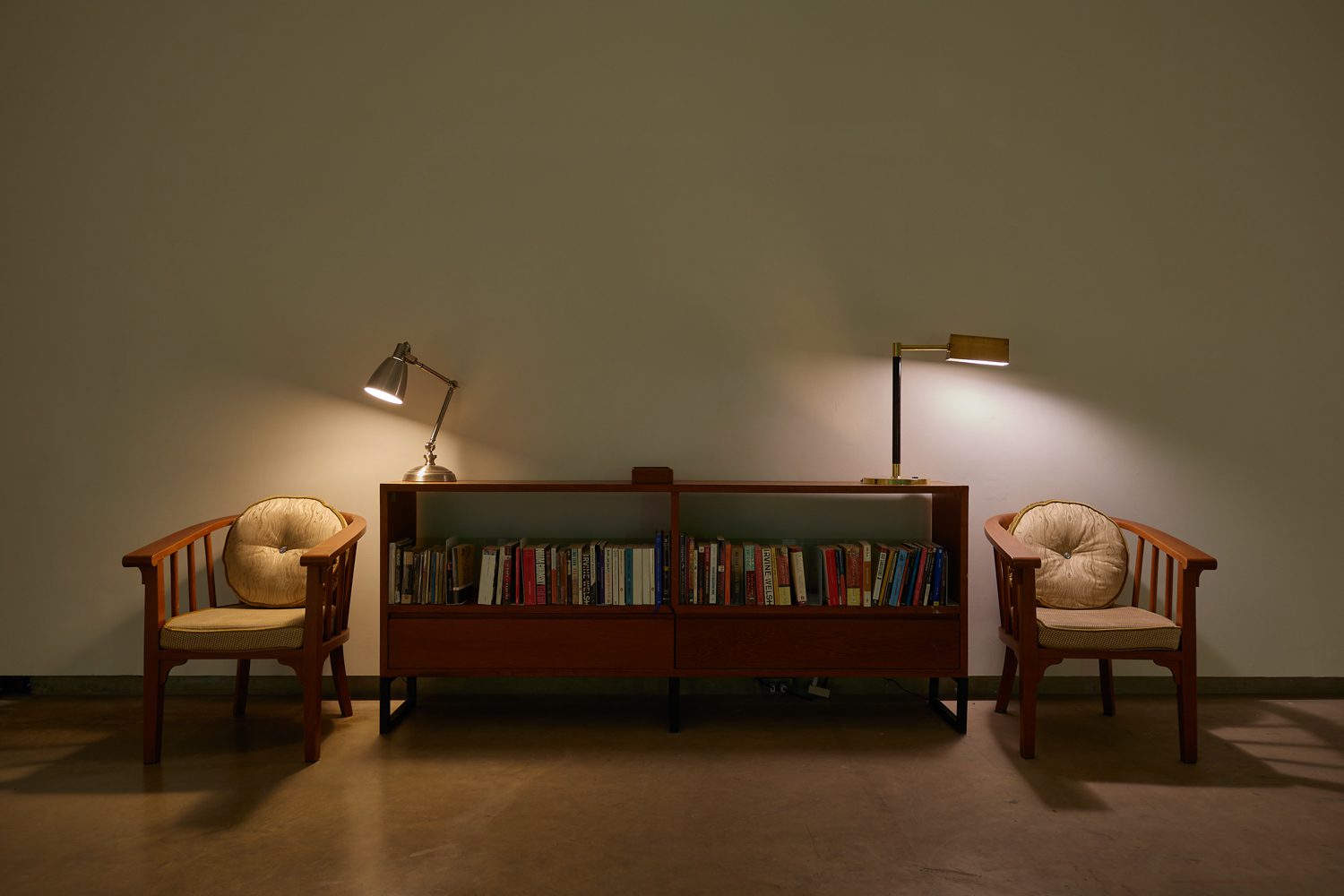
Within the room, the books are divided into two clearly distinct groups. Volumes that have been banned in different countries are arranged across a table, while those that have not been banned are placed on shelves. What makes the installation especially compelling is that many of the banned titles are children’s books, works that at first glance hardly appear dangerous in any obvious sense. One example is And Tango Makes Three by Peter Parnell and Justin Richardson, illustrated by Henry Cole, a picture book about two male penguins forming a family together, which was removed from certain public libraries in Singapore on the grounds that it promoted same-sex relationships. Another is Alice’s Adventures in Wonderland by Lewis Carroll, which was prohibited in parts of China in the 1930s because authorities considered the portrayal of animals speaking and thinking like humans to be a distortion of the proper hierarchy between humans and animals, and therefore inappropriate for young readers.
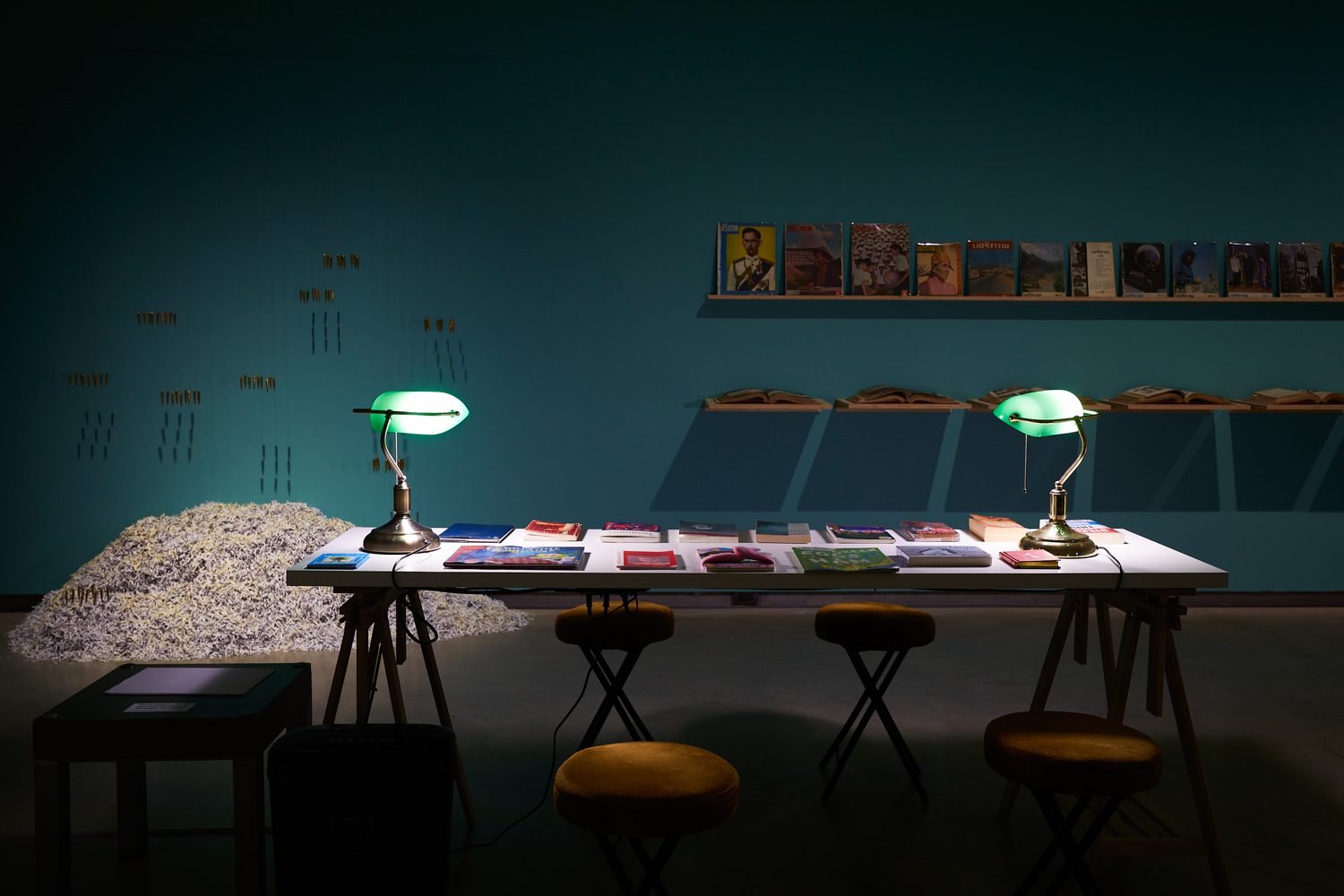
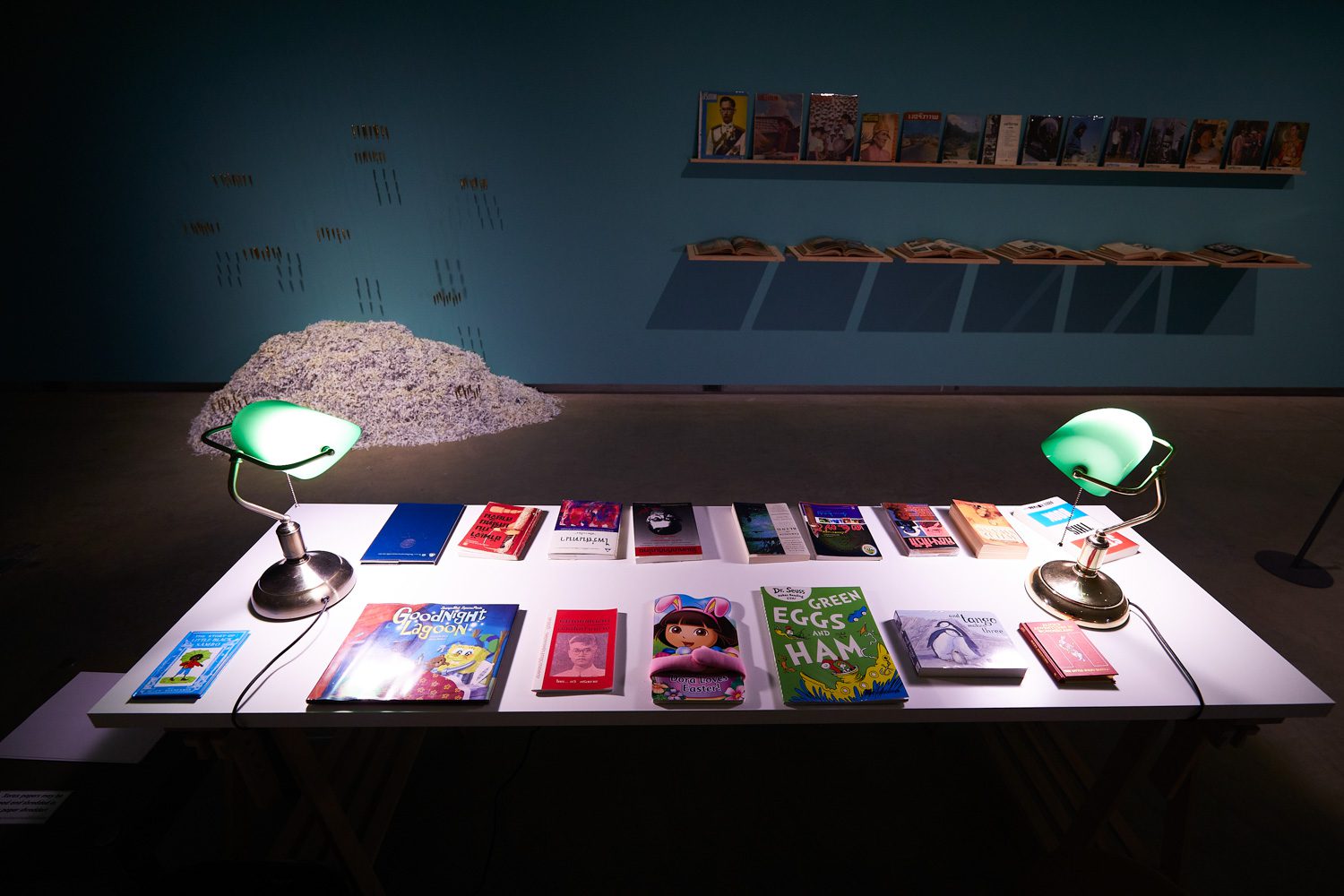
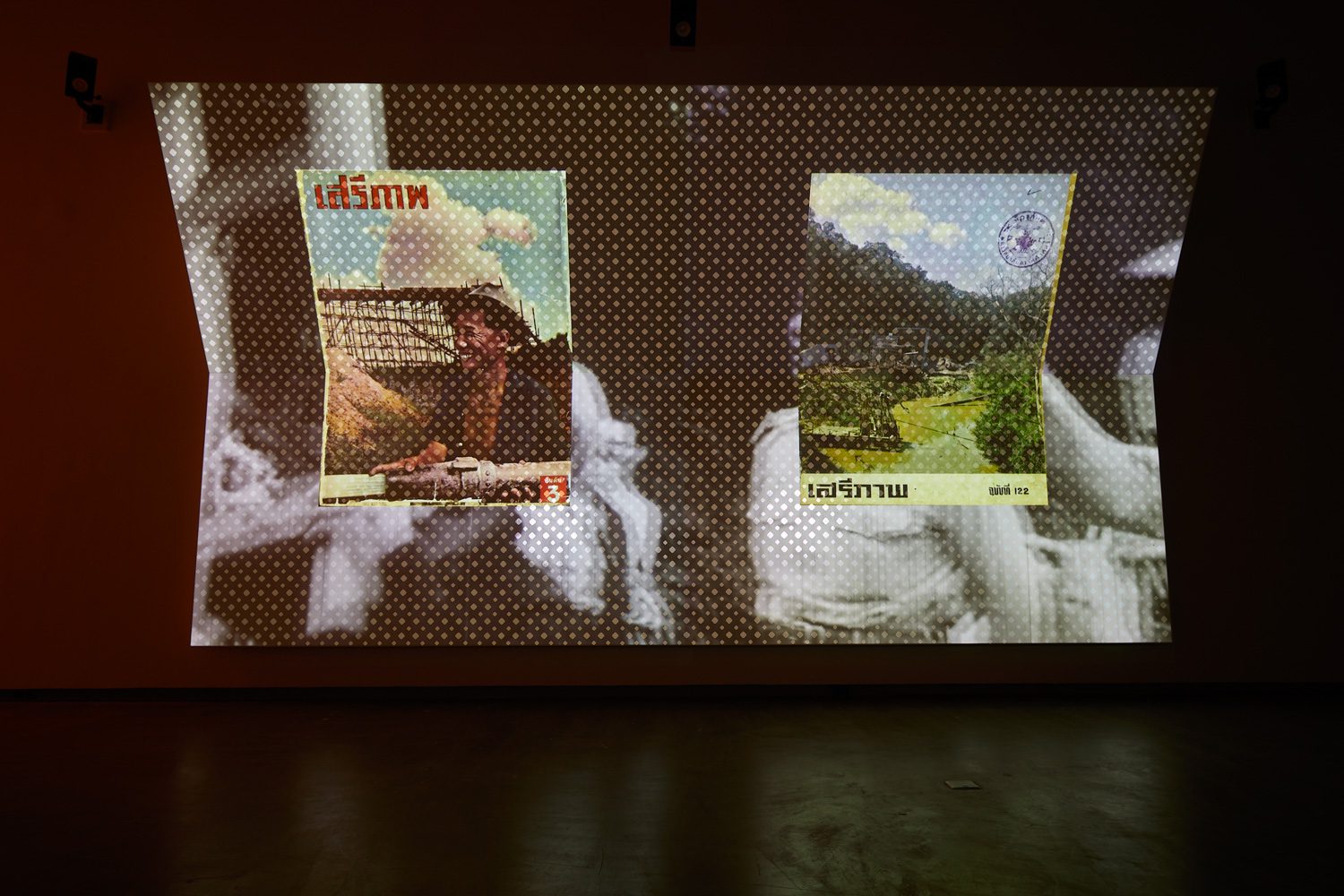
At the same time, the books deemed ‘not banned’ are in fact printed materials with an explicitly political function. These take the form of Seriphap (Freedom), a Thai-language periodical produced by the United States Information Service (USIS), the overseas arm of the United States Information Agency (USIA), which operated as a communications and propaganda apparatus for the United States during the Cold War. Its contents regularly presented an image of the free world through stories of scientific progress, pop culture, modern agriculture, and the role of women, while casting the communist world by contrast as backward and deprived of freedom.
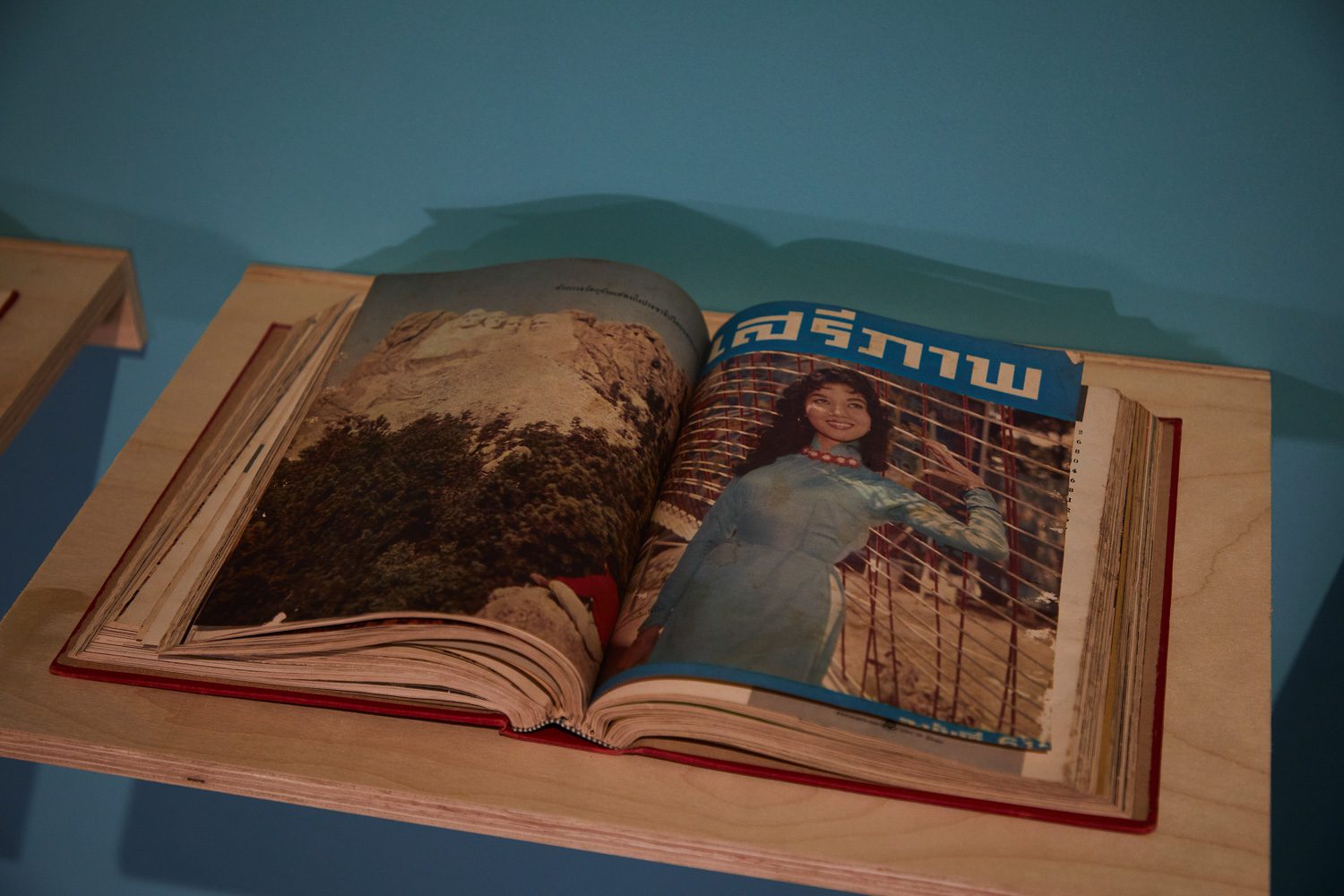
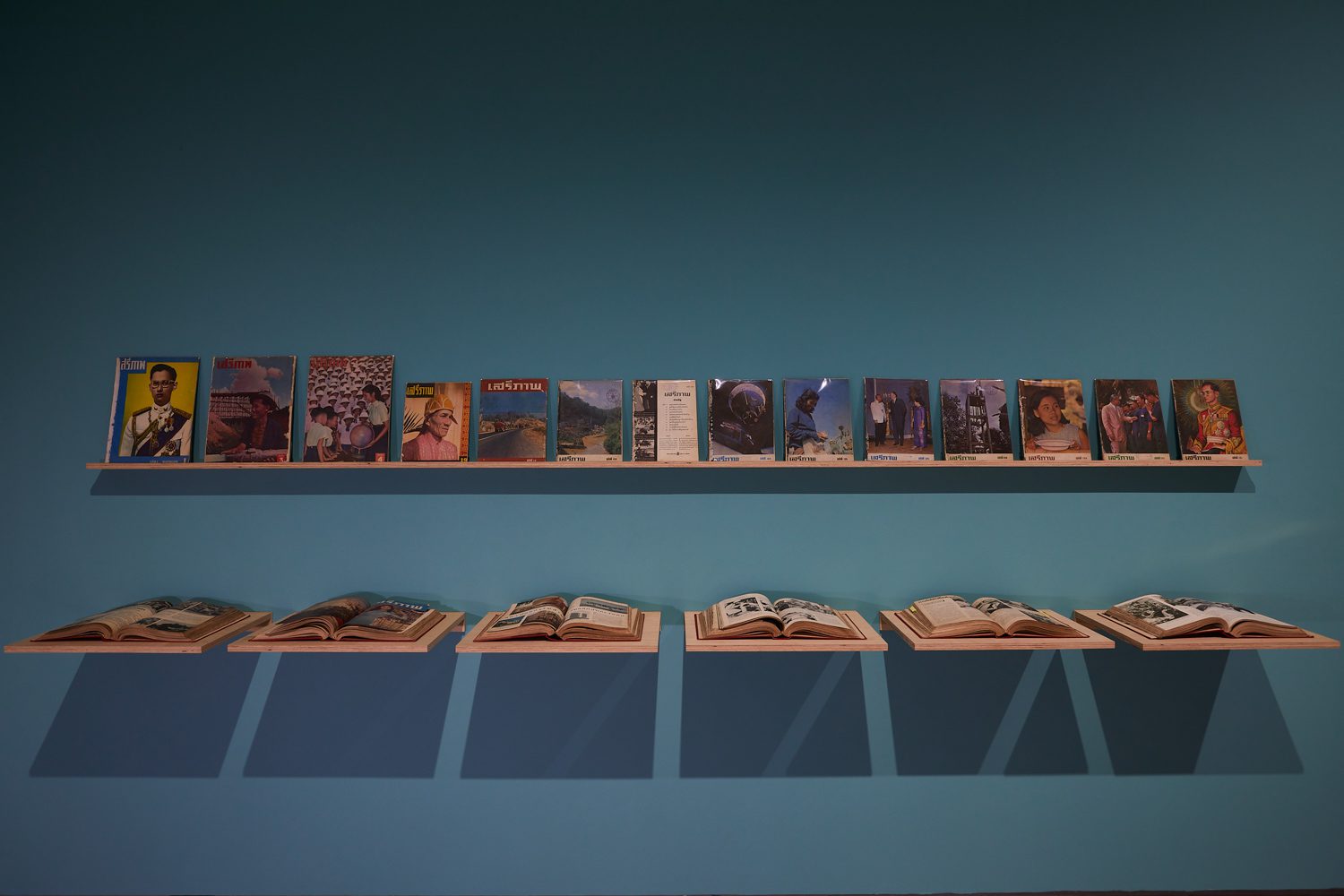
The paradox becomes unmistakable when one considers that Seriphap circulated at a time when Thailand was firmly under military dictatorship. In this context, Seriphap did more than disseminate American culture; it served as part of the Cold War apparatus that sought to construct the free world as a credible and desirable ideal. By placing these two groups of books within the same space, the installation encourages viewers to question what a society chooses to ban, what it allows to circulate, and who holds the authority to draw the line between the two. In doing so, it also reveals how public knowledge and understanding can be shaped, and even manufactured, under the mythology of ‘freedom.’
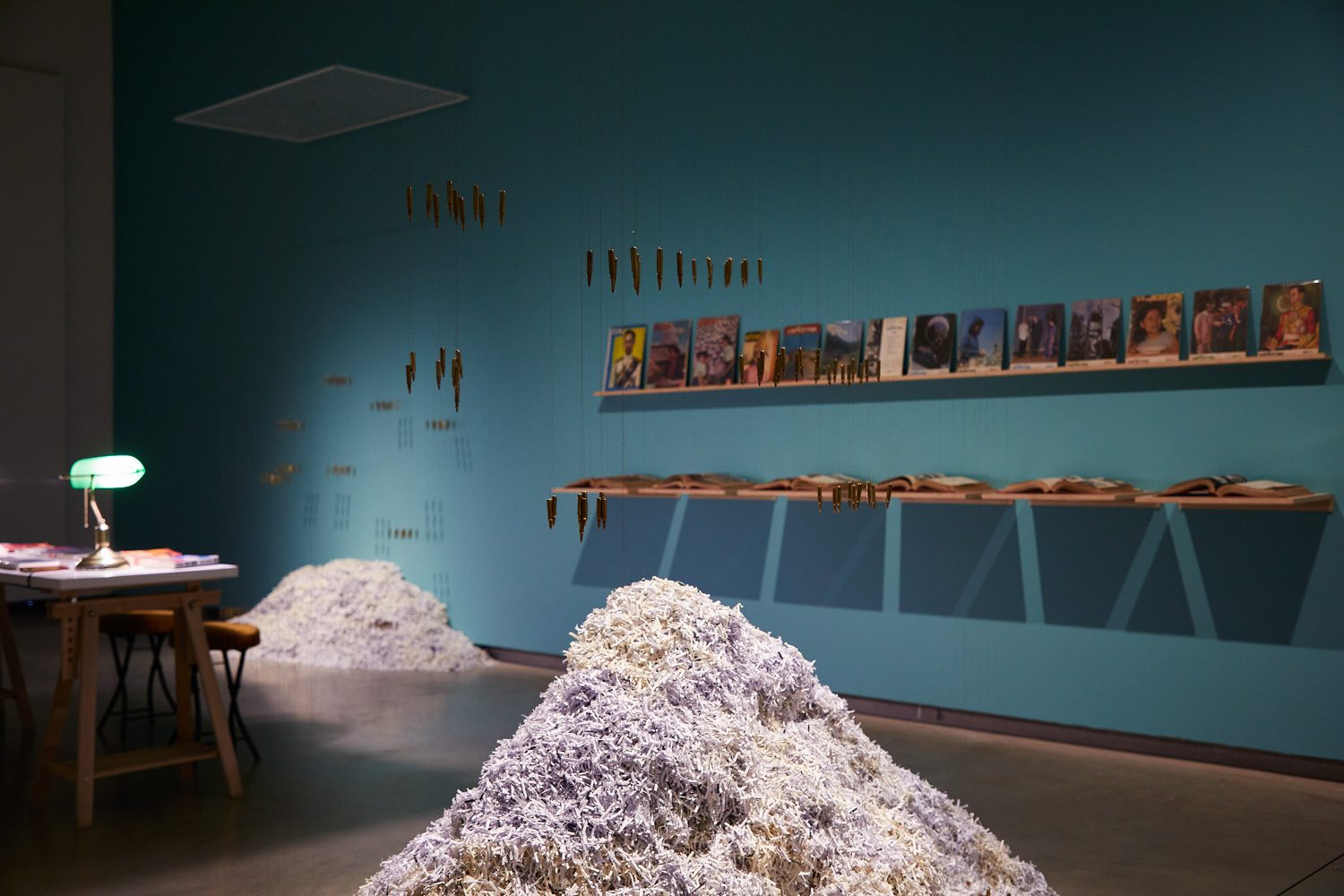
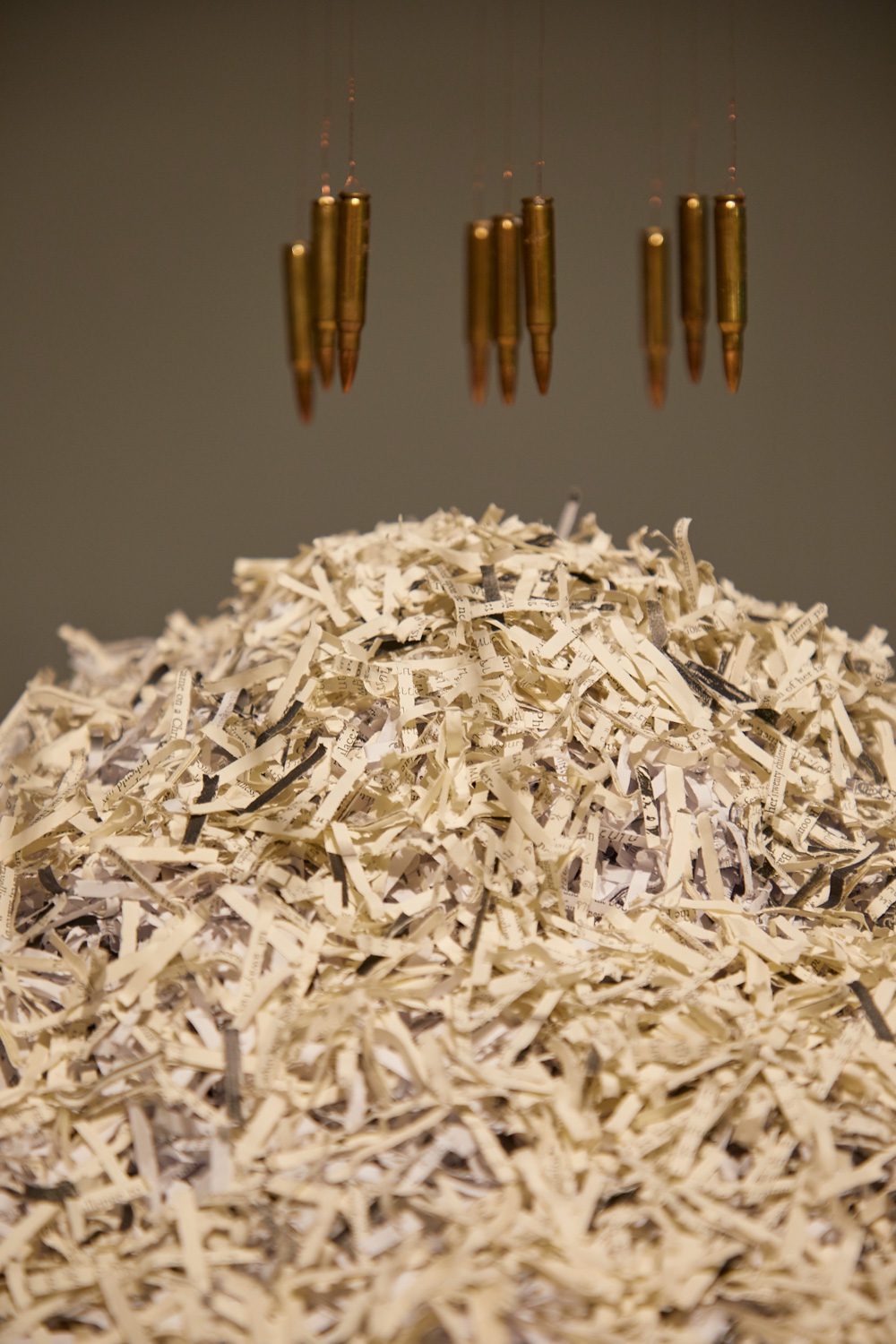
In Paradise of the Blind, viewers are also invited to take part in the work by feeding sheets scanned from the pages of once-banned books into a paper shredder installed in the gallery. As the pages are destroyed, exhibition staff gather the shredded fragments and pile them onto the floor, where the small scraps gradually accumulate into a large mound. Suspended above this growing mass of paper are bullets from the United States and the Soviet Union.
MO NUM EN TS has been on view since late last year and remains open through March 29. Over the course of its multi-month run, the exhibition has also hosted an ongoing series of public programs, including film screenings, workshops, and reading groups. These activities prompt viewers to return to questions of history, politics, and the production of knowledge in the region, while at the same time extending the meaning of MO NUM EN TS itself. In the exhibition title, the artist breaks apart the word monuments into discrete fragments, as if to unsettle its conventional meaning. Rather than treating monuments as structures erected by the state to commemorate certain state-sanctioned national memories, the exhibition suggests that their meanings may be far less stable than we have been led to believe, constructed through political systems, ideology, and power, much like versions of the past that societies continually choose to preserve or to forget.
MO NUM EN TS is on view at The Jim Thompson Art Center from December 4, 2025, to April 12, 2026.