
TAKE A WALK THROUGH THE WORKS AT ART JAKARTA 2025, A PLATFORM WHERE ARTISTS FROM OVER 16 COUNTRIES USE CONTEMPORARY ART AS A COMMON LANGUAGE TO EXPRESS STORIES OF IDENTITY, SOCIETY AND POLITICS
TEXT: SARUNKORN ARTHAN
PHOTO: SARUNKORN ARTHAN EXCEPT AS NOTED
(For Thai, press here)
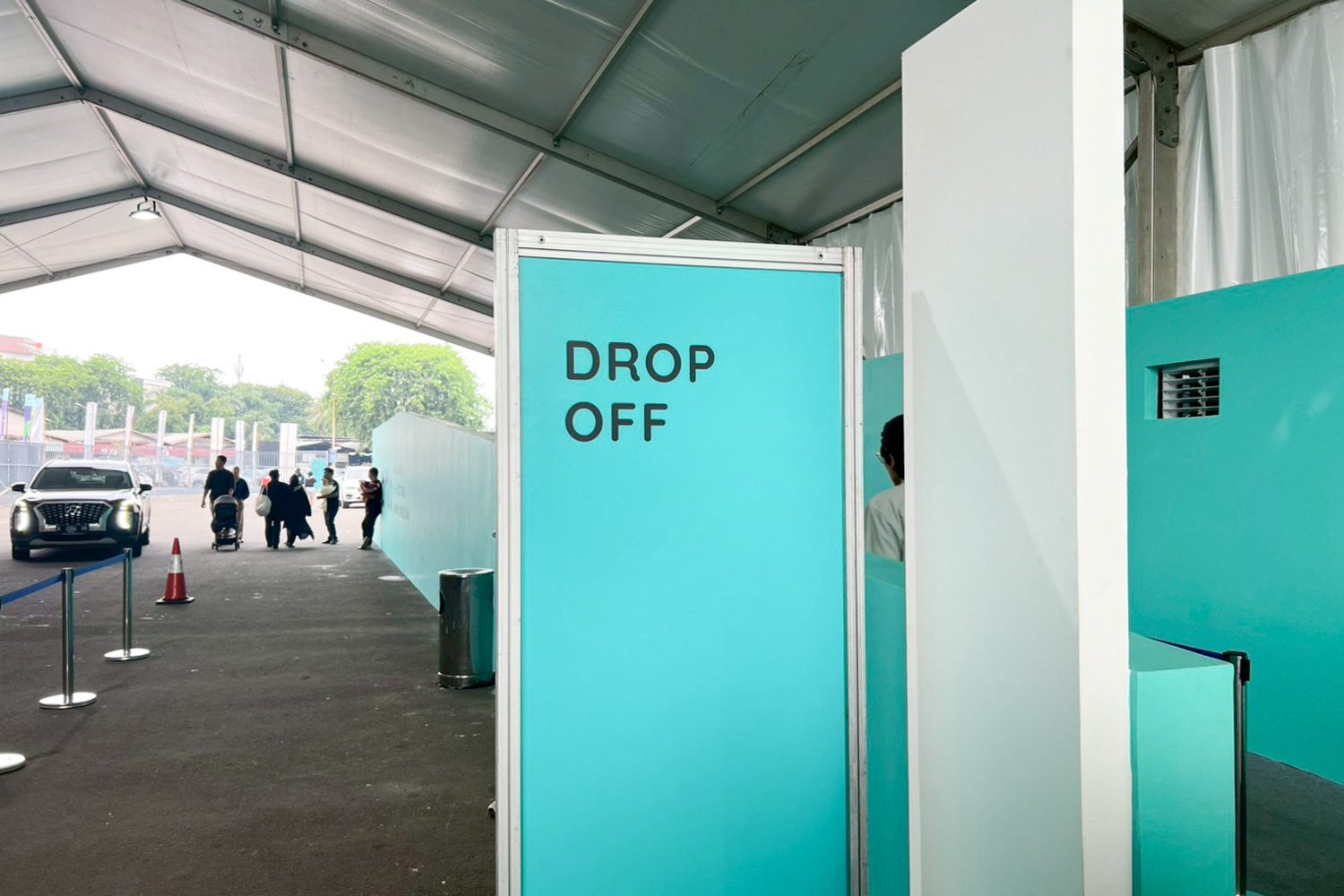
The first thing that catches the eye at the entrance to Art Jakarta, one of Southeast Asia’s largest art fairs, is the word ‘Drop off.’ The black letters rest against a bright blue backdrop, a combination that seems to hint at the vivid sense of discovery awaiting inside. It invites visitors to step in, look closer, and immerse themselves in the atmosphere of the Jakarta International Expo (JIExpo).
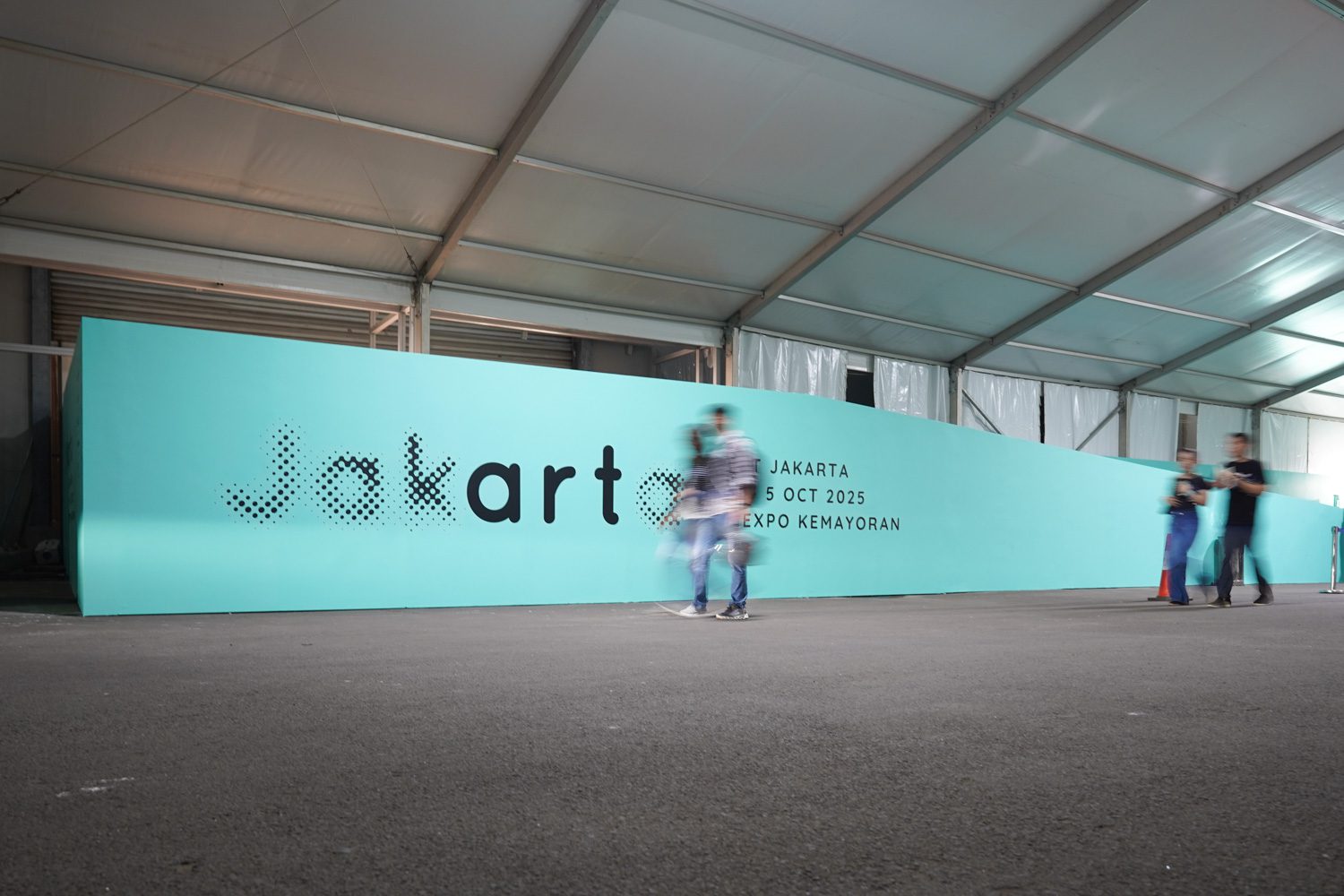 Photo courtesy of Art Jakarta 2025
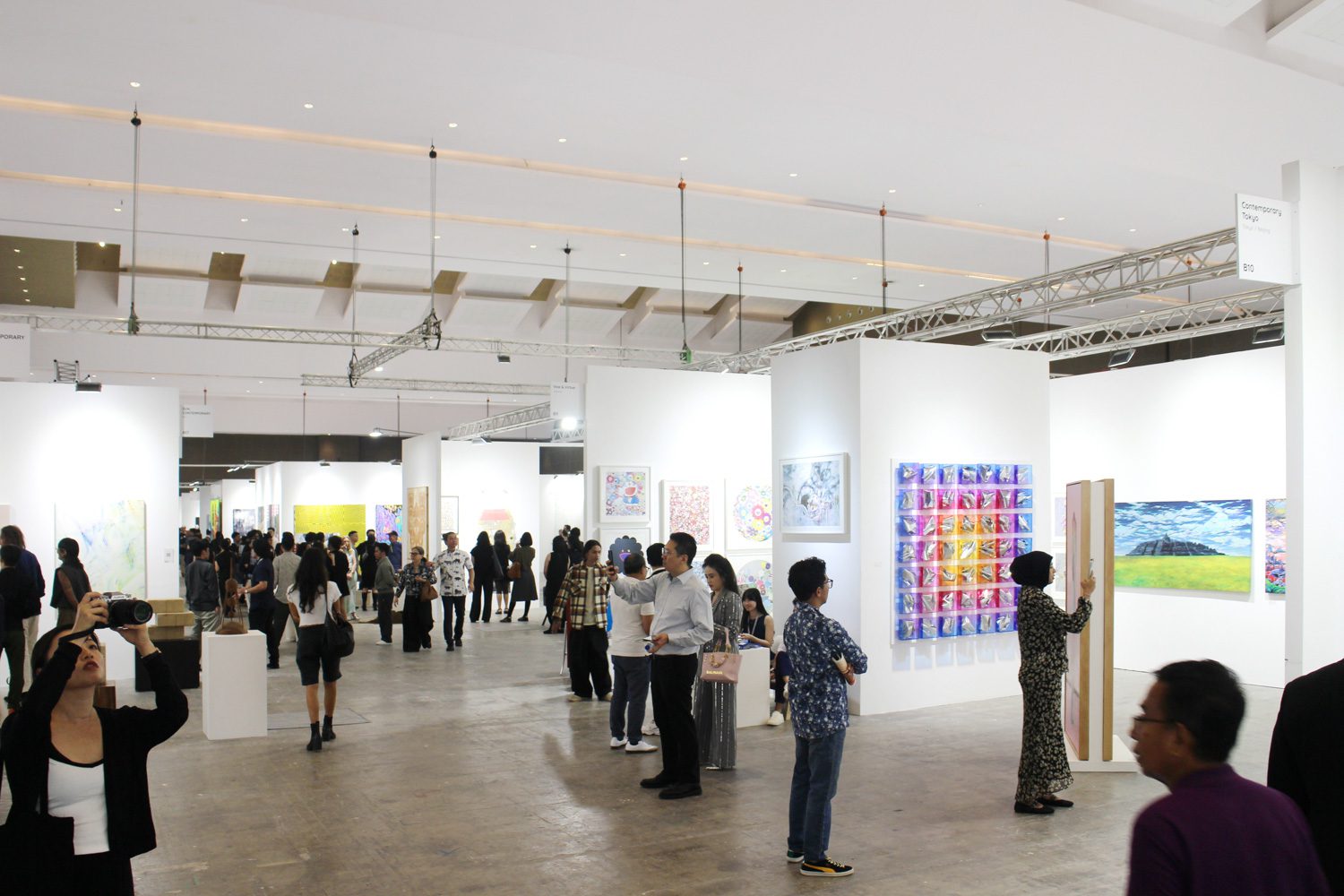
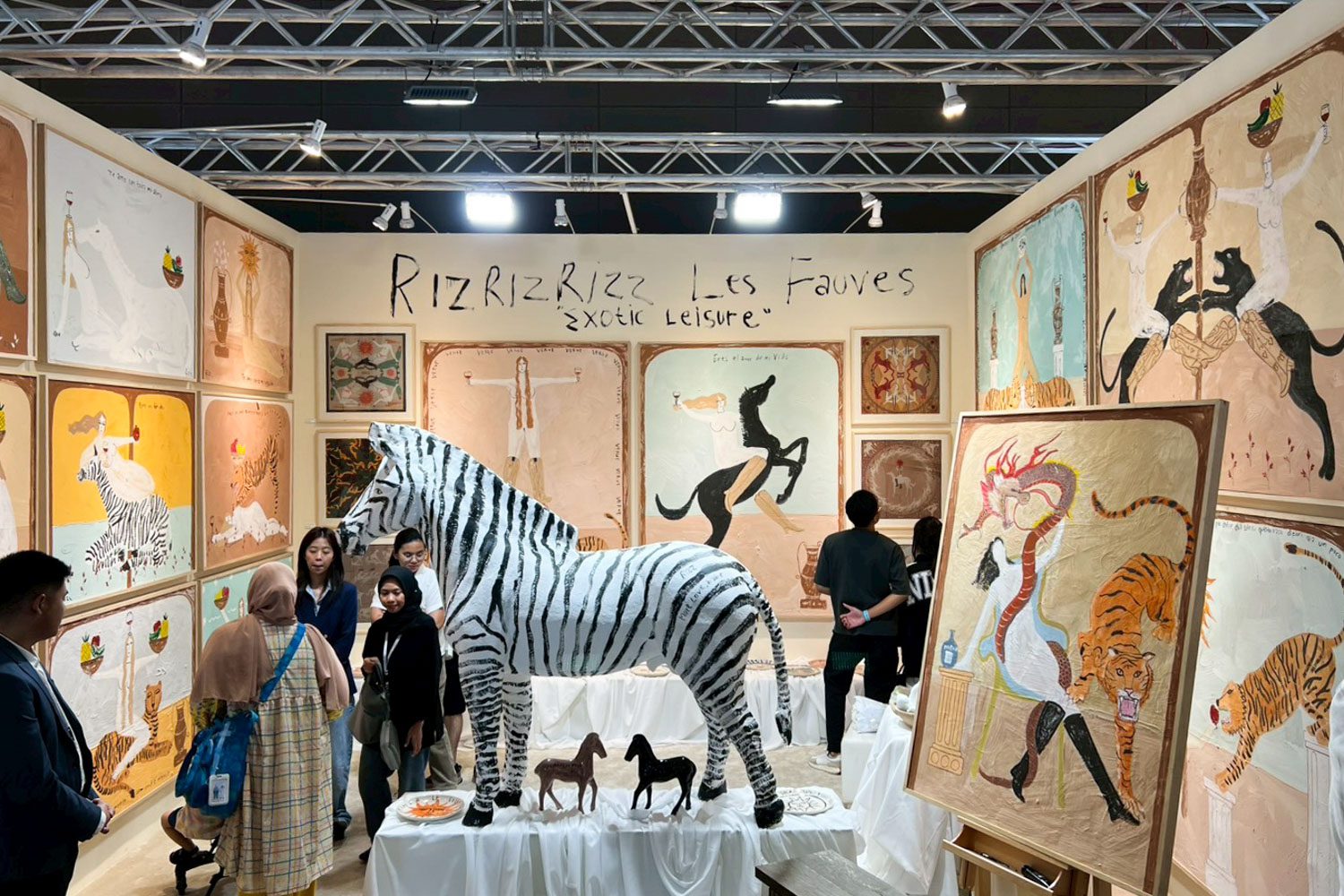
As one turns away from the sign, the cool rush of air-conditioning greets the body, followed by the comfort of a chilled complimentary drink in hand. Together, these small gestures set the mood, signaling through the senses that one is ready to be struck by art and by the energy of the crowd. Inside, the vast halls are filled to the brim with galleries both established and emerging, featuring artists of renown and rising talents alike from across Indonesia and more than sixteen other countries. The space hums with the presence of art enthusiasts, collectors, curators, and artists, as well as the art-scene regulars whose presence, in its own way, helps sustain this grand artistic ecosystem. Whether here to photograph, collect, contemplate, or simply take in the works on display, each person becomes part of the pulse that keeps Art Jakarta alive.
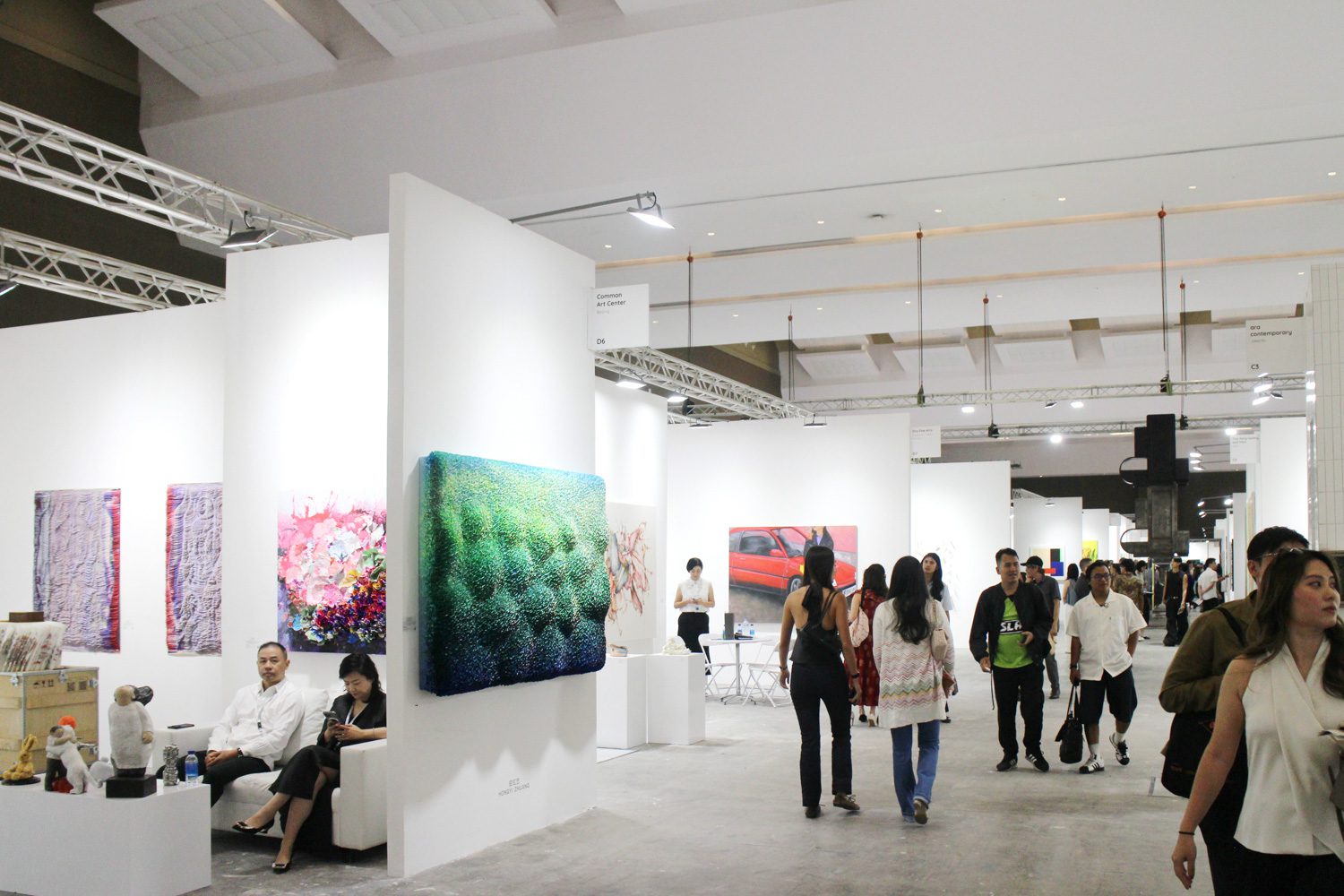
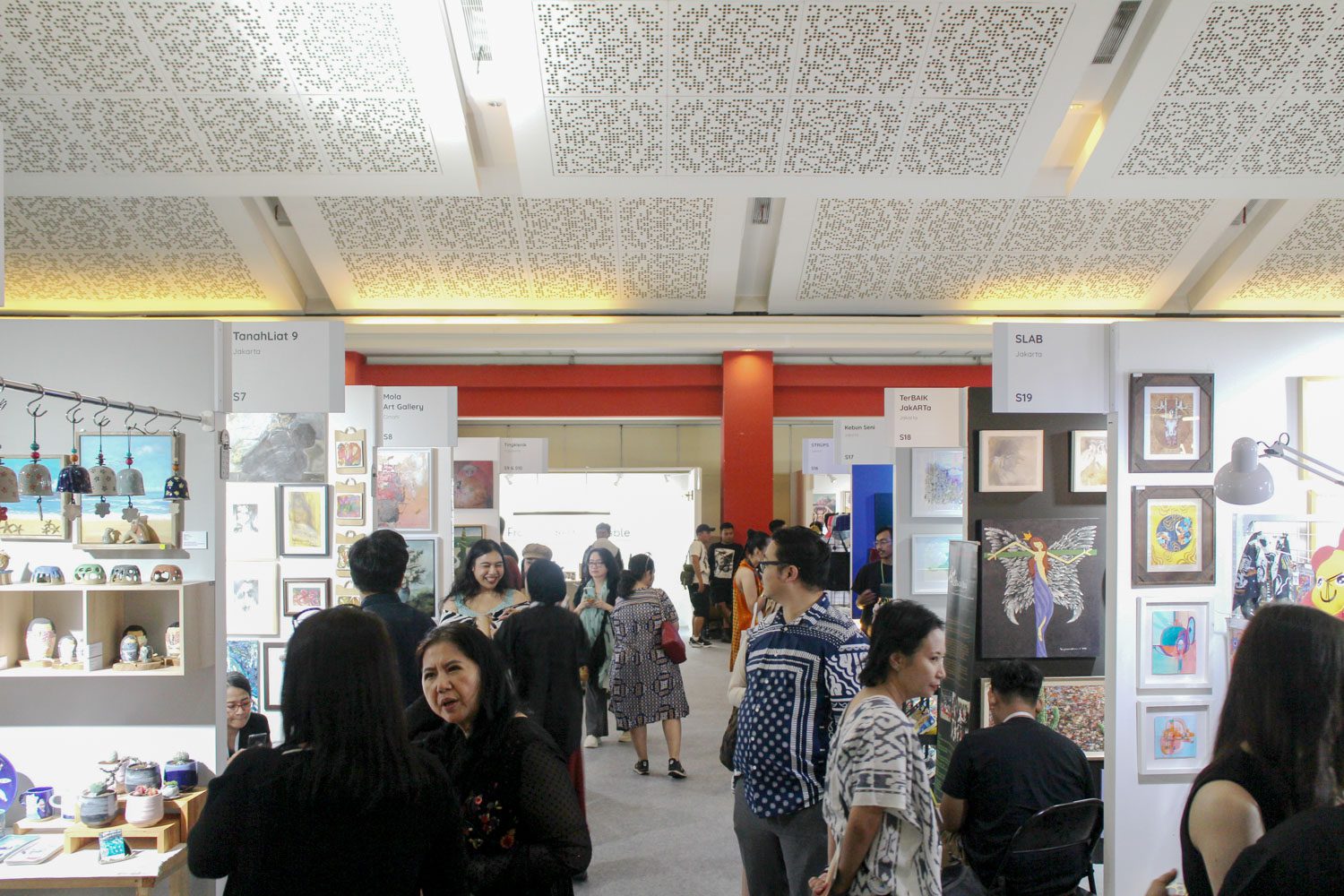
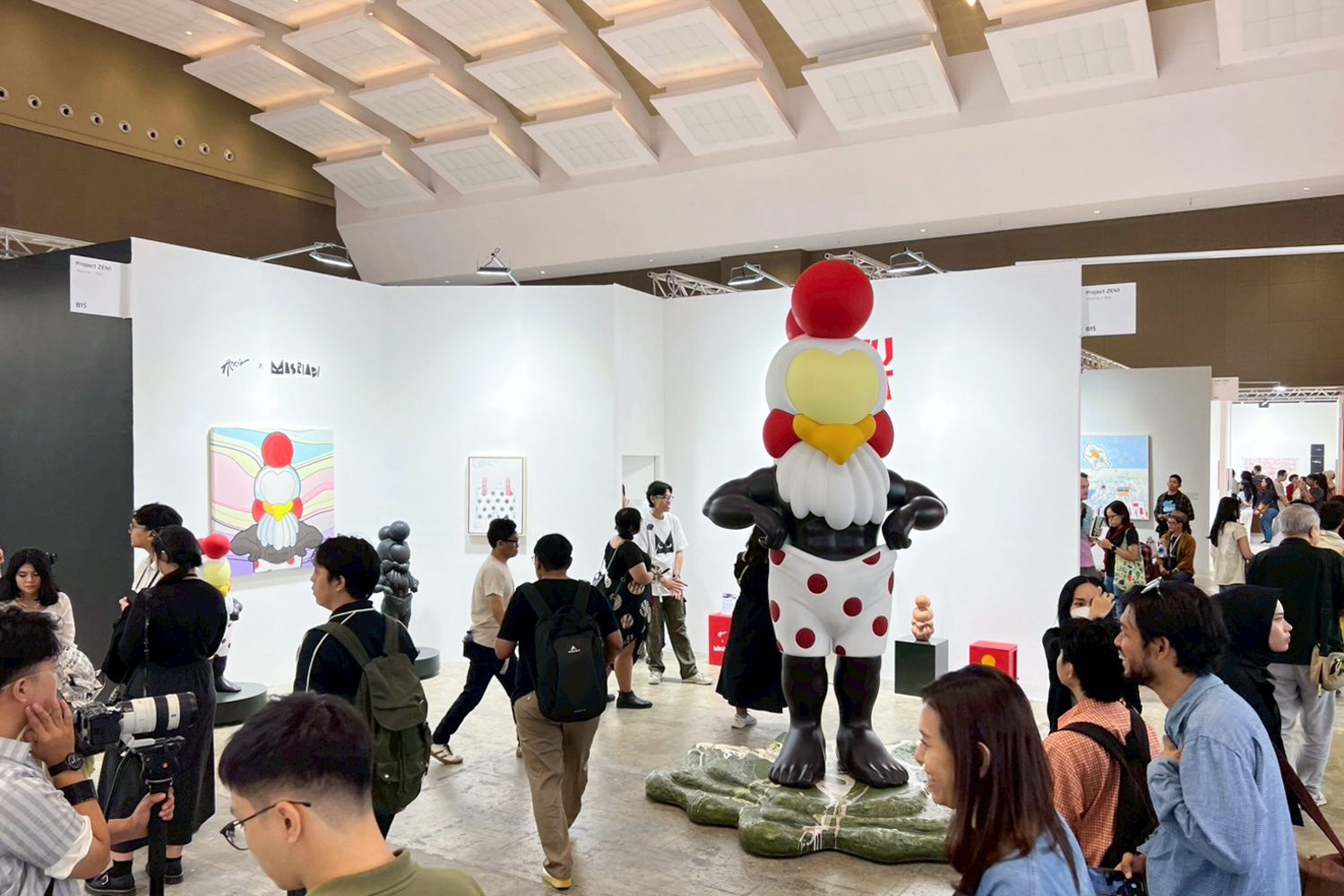
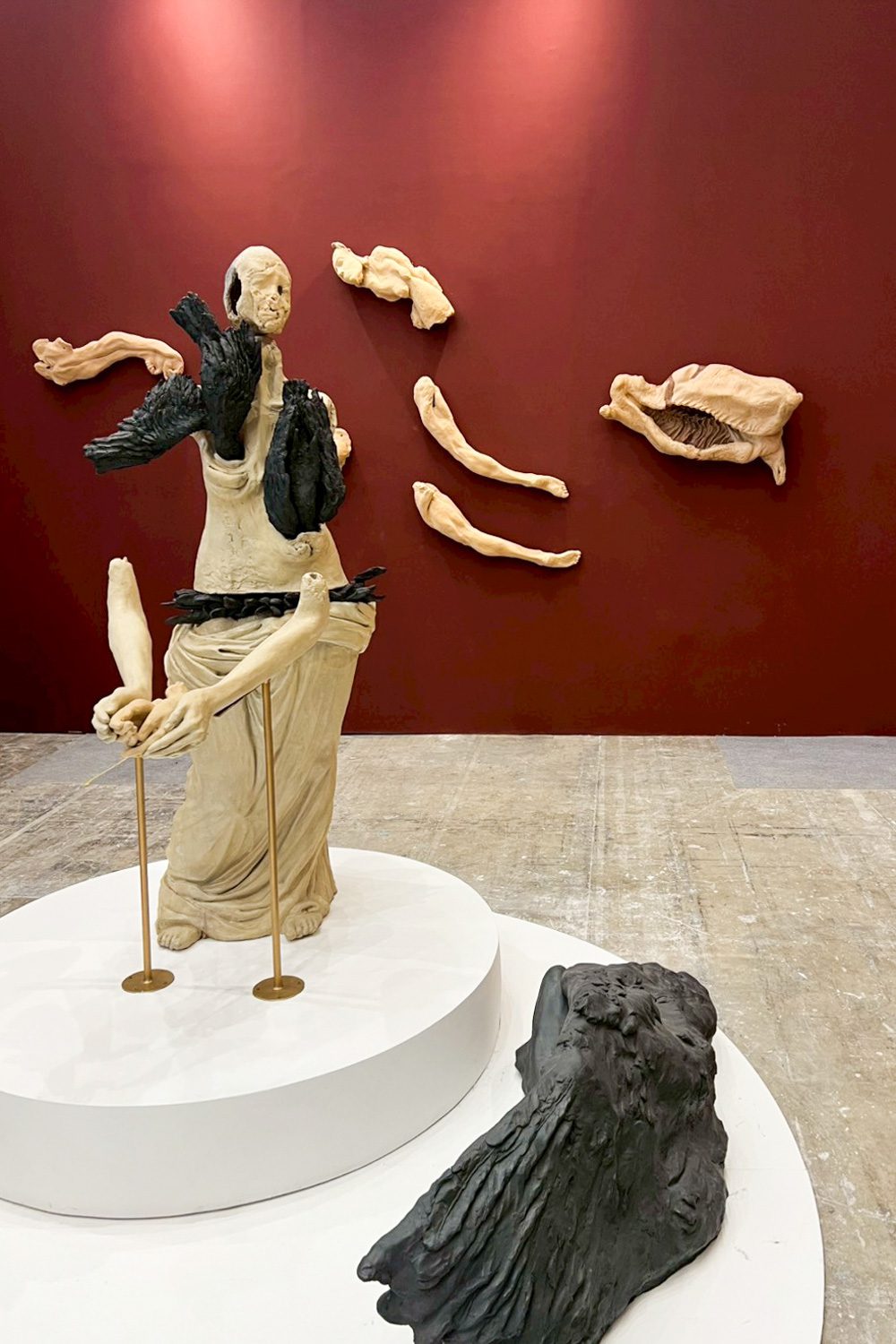
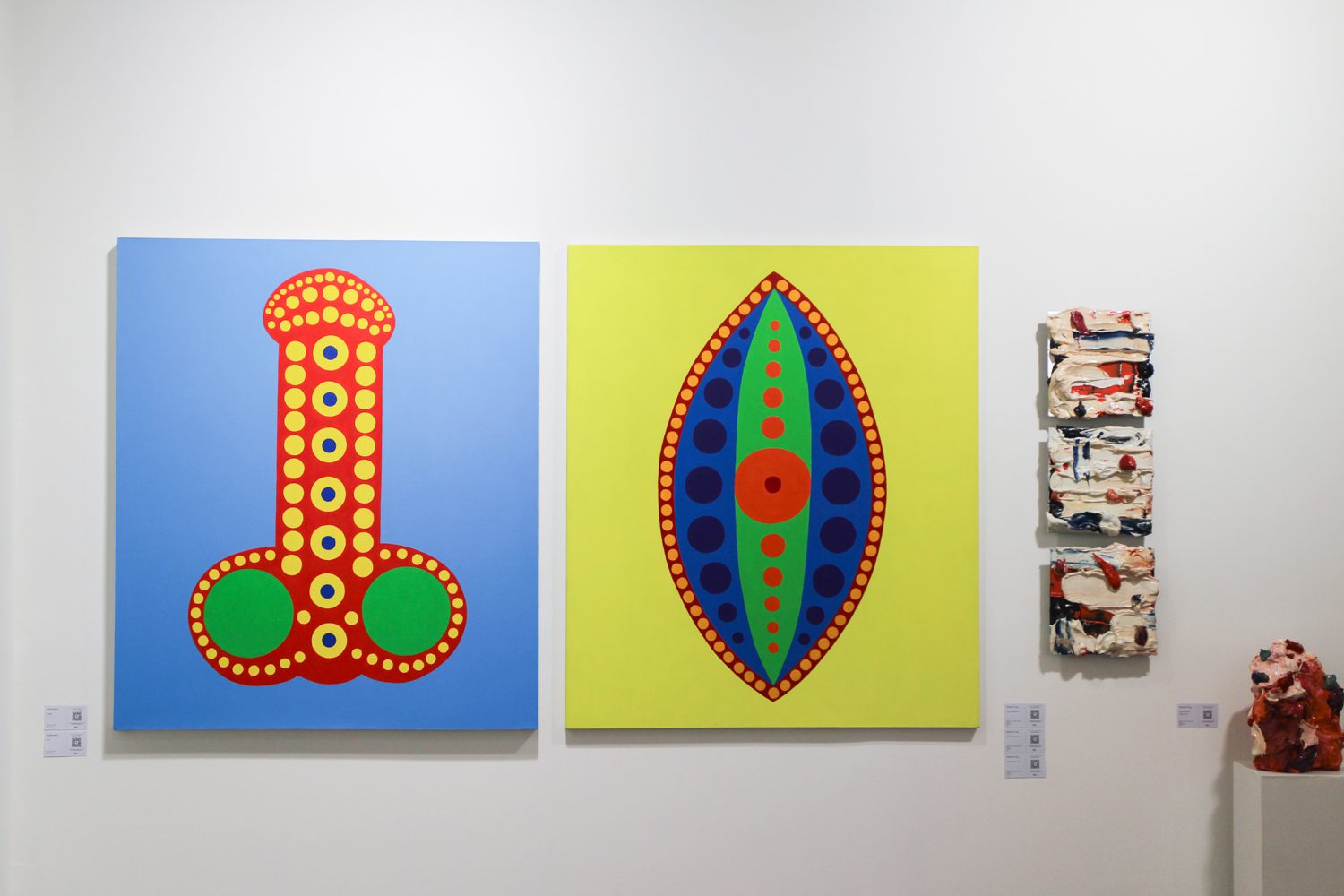
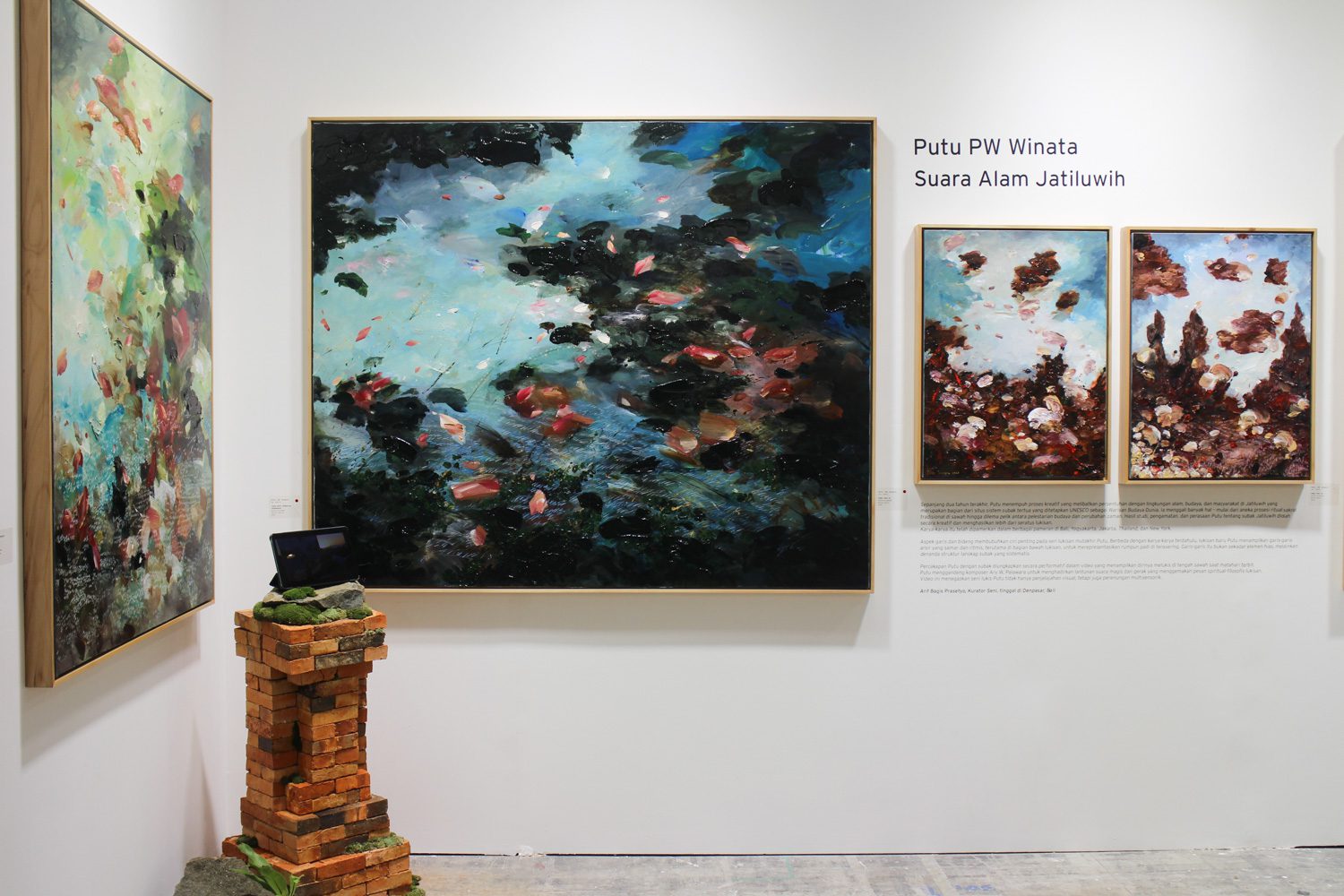
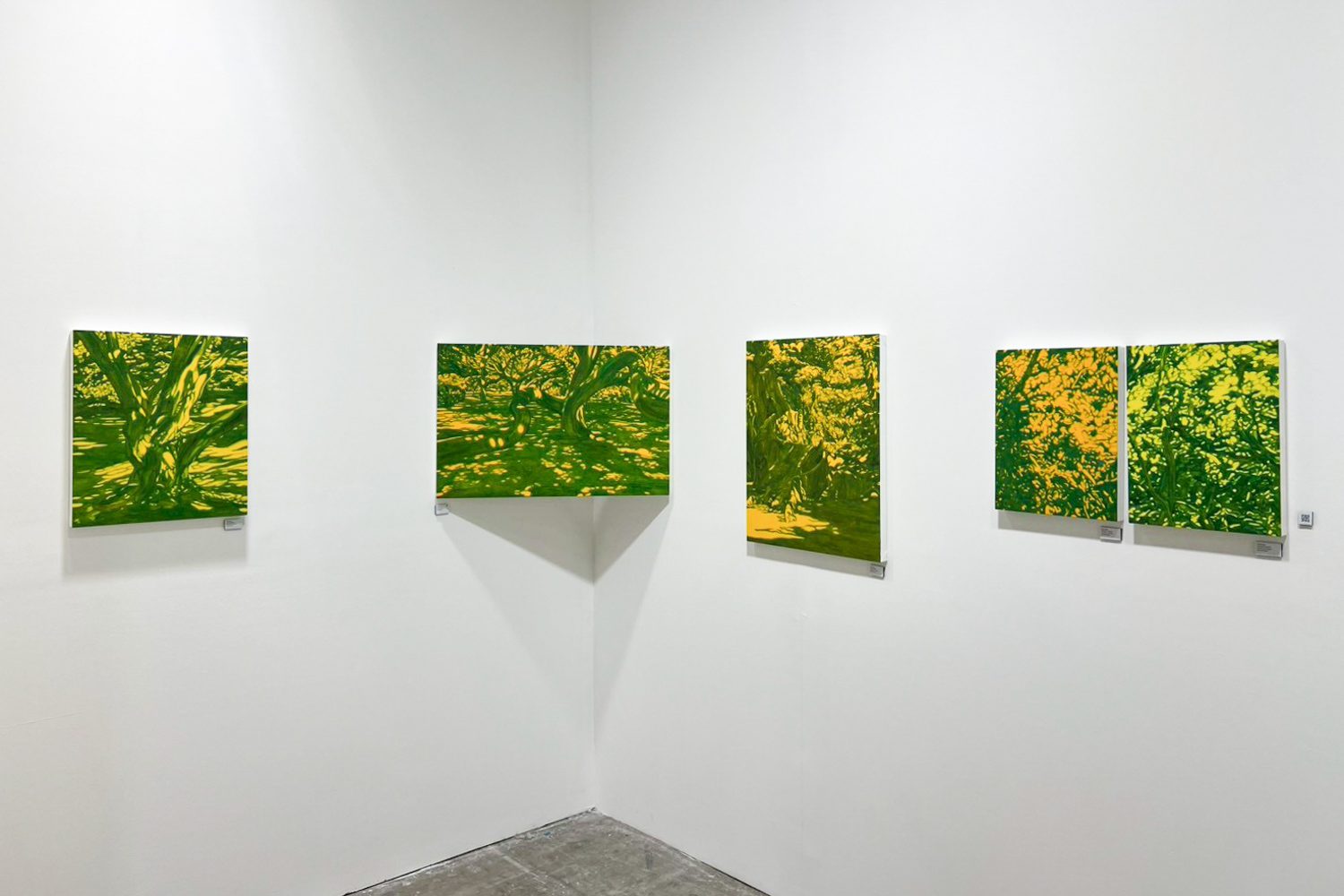
The sea of people packed into the venue did little to dampen our curiosity. I weaved our way through every space that offered even the slightest room to move, past gallery booths, installation zones, activity stages, and even the book section. Along the way, I practiced a kind of ‘peek tour,’ stealing glances at works whenever a small gap allowed, pausing briefly where space permitted, and when luck granted me a wider view, allowing the experience to sink in fully. In those rare, unhurried moments, the aesthetic and emotional charge of the art seemed to seep through the skin and into thought itself.
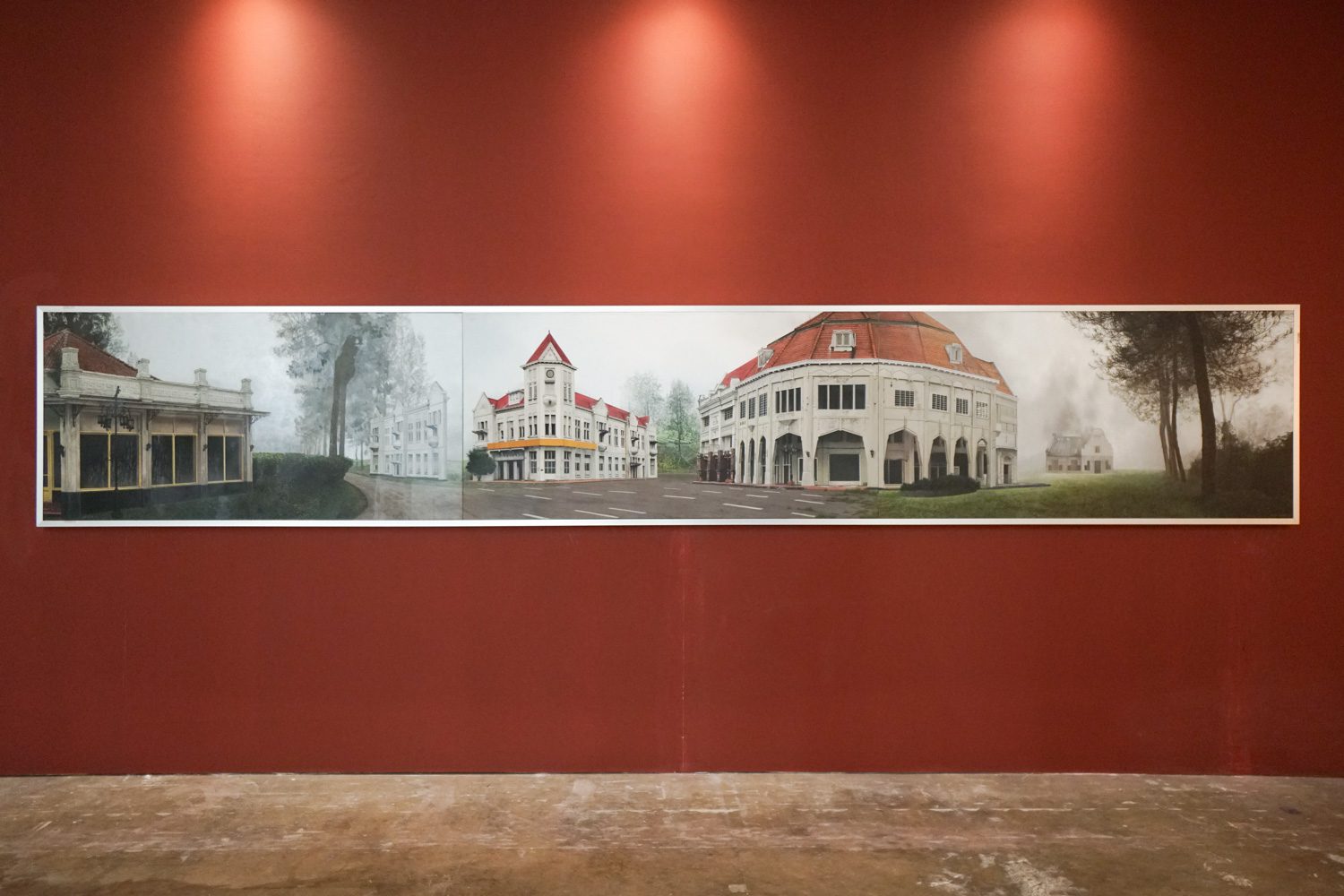
Photo courtesy of Art Jakarta 2025
As I wandered through the fair, my thoughts drifted inward. I was reminded of my background in art history and my enduring interest in politics. It struck me how profoundly different Indonesia’s artistic paradigm and ecosystem are from those of Thailand, with centuries of Dutch colonial rule, the nation’s transition into the modern era of art, the integration of art into social and political discourse, and the existence of multiple art institutions, more than just one or two. Even its art destinations, though few, such as Jakarta, Yogyakarta, and Bandung, offer expansive and vibrant creative grounds. Together, these elements shape a diverse yet cohesive field of artistic practice, where distinct approaches and ideologies converge into what might be called a contemporary and unmistakably ‘Indonesian sensibility,’ one that moves in step with the world.
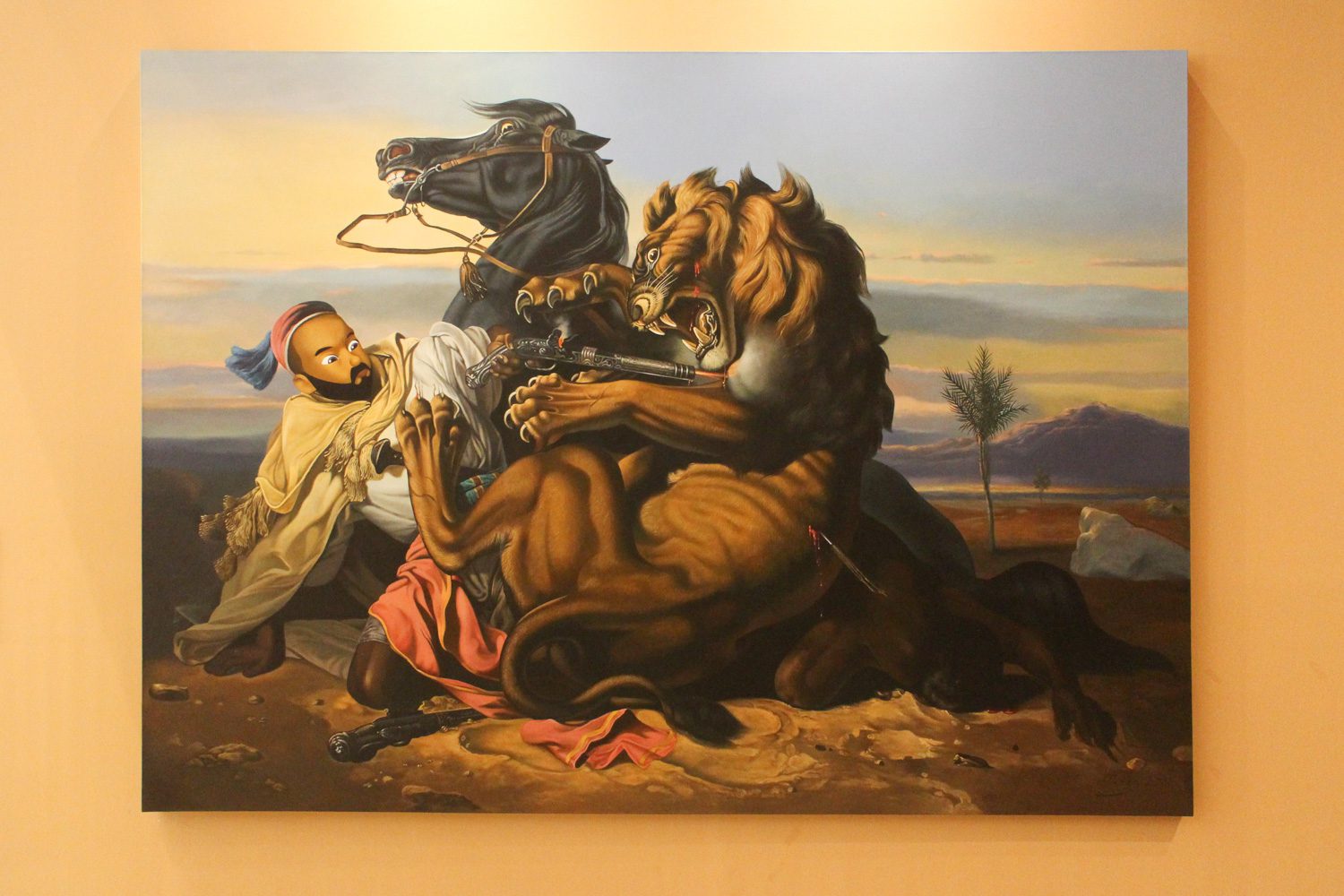
Art Jakarta encapsulated the contemporary Indonesian sensibility with remarkable clarity that is so attuned to the world, particularly in its reflection and interpretation of art’s dialogue with politics. One striking example was the work of Uji Hahan, a Yogyakarta-based artist whose piece was presented in the AJX section by MTN Seni Rupa. His work reimagined Antara Hidup dan Mati (Between Life and Death, 1870) by Raden Saleh, widely regarded as the father of modern Indonesian art. The original painting depicts a man on horseback locked in battle with a lion; in Hahan’s version, the man’s face is replaced by a Memoji from Apple’s iOS system. It’s a playful yet incisive gesture that speaks to the boundless nature of art and time.
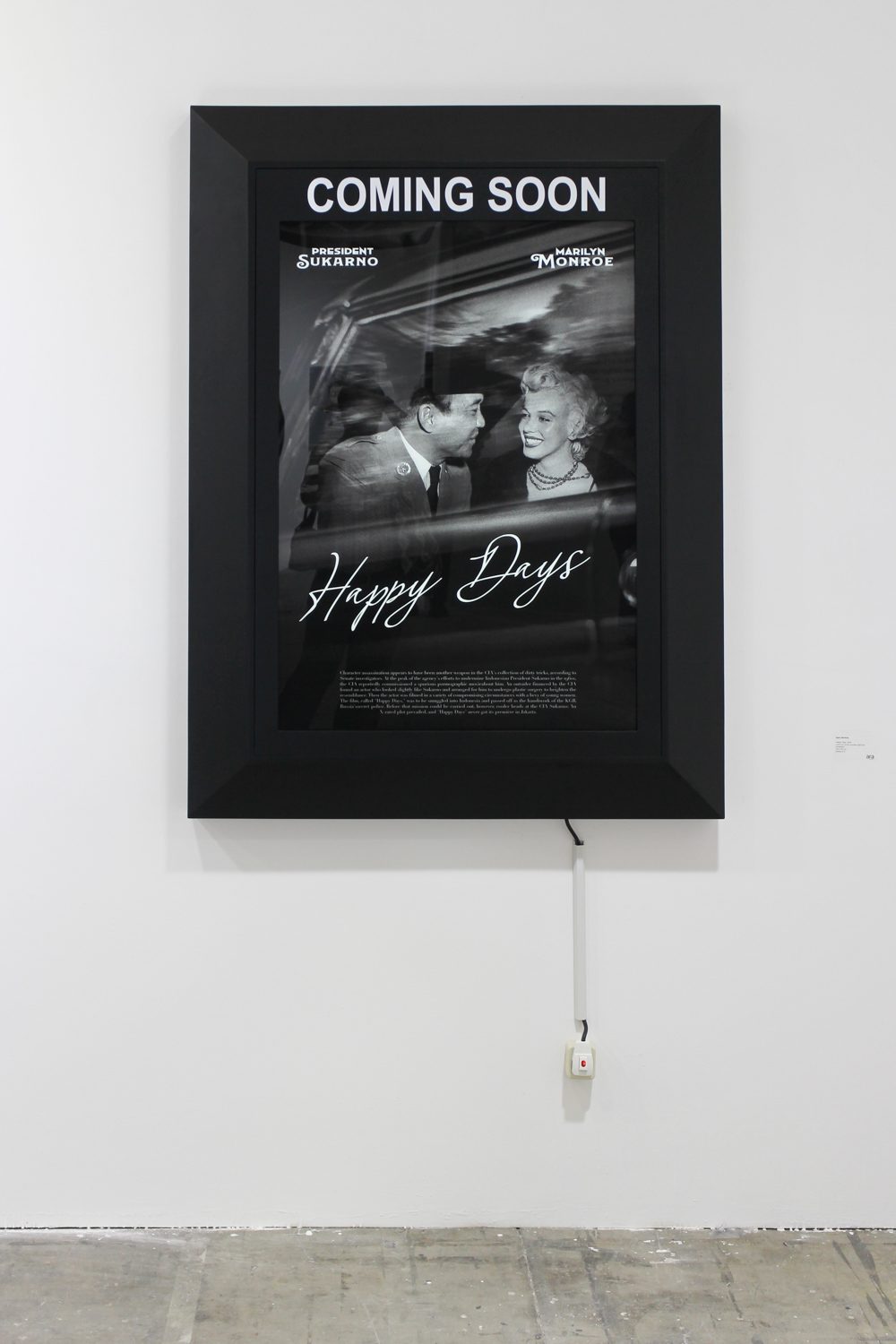
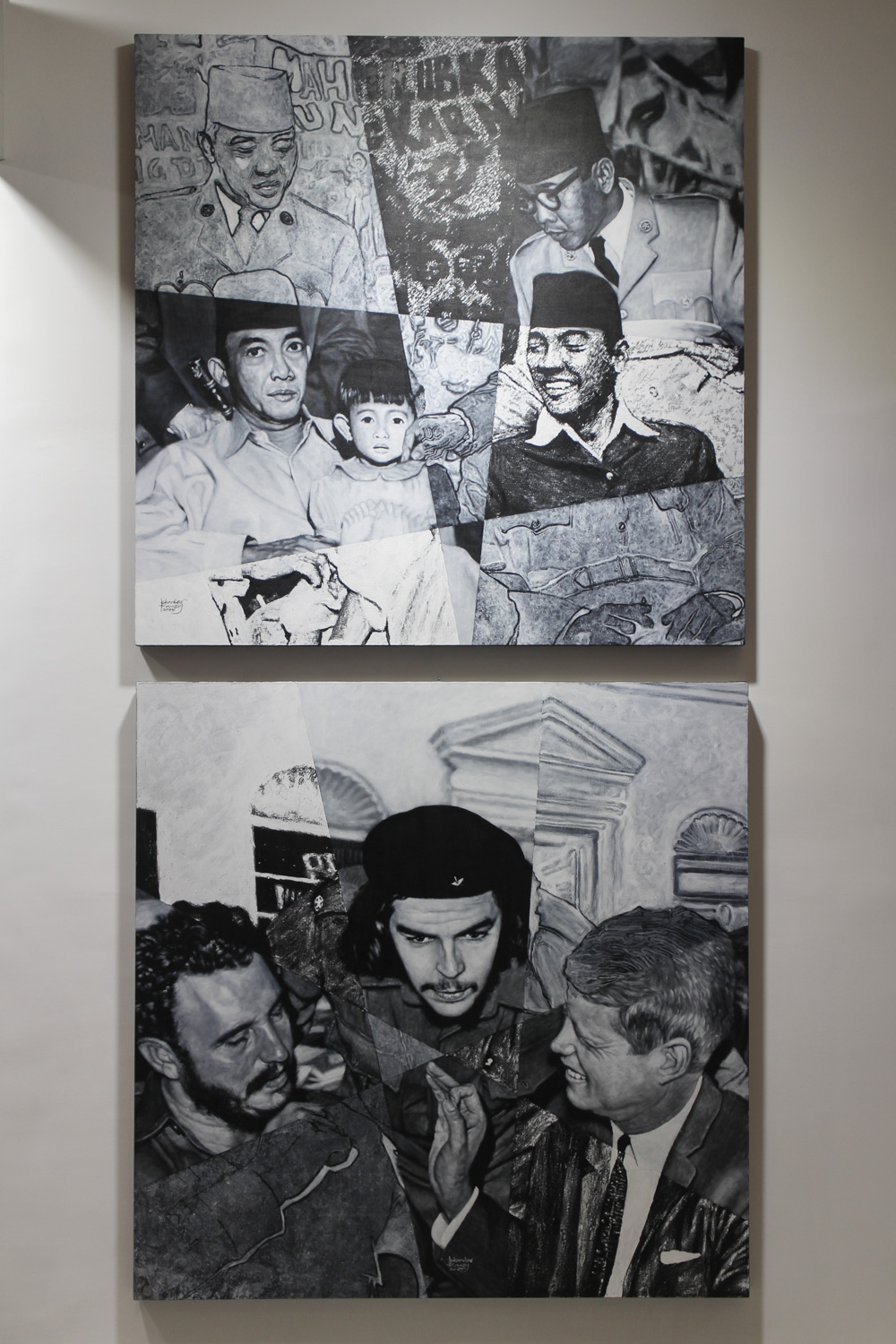
Another recurring theme was the reinterpretation, sometimes reverent, sometimes subversive, of Sukarno, Indonesia’s first president. Artists explored his multifaceted image: the unifier of the nation, the nationalist leader, and the legendary ‘Great Lover’ known for his many marriages. At ara contemporary, one piece presented a poster for a fictitious ‘forbidden film’ that was never screened, or even made, based on a CIA-fabricated scandal suggesting a romantic affair between a look-alike of Sukarno and none other than Marilyn Monroe.
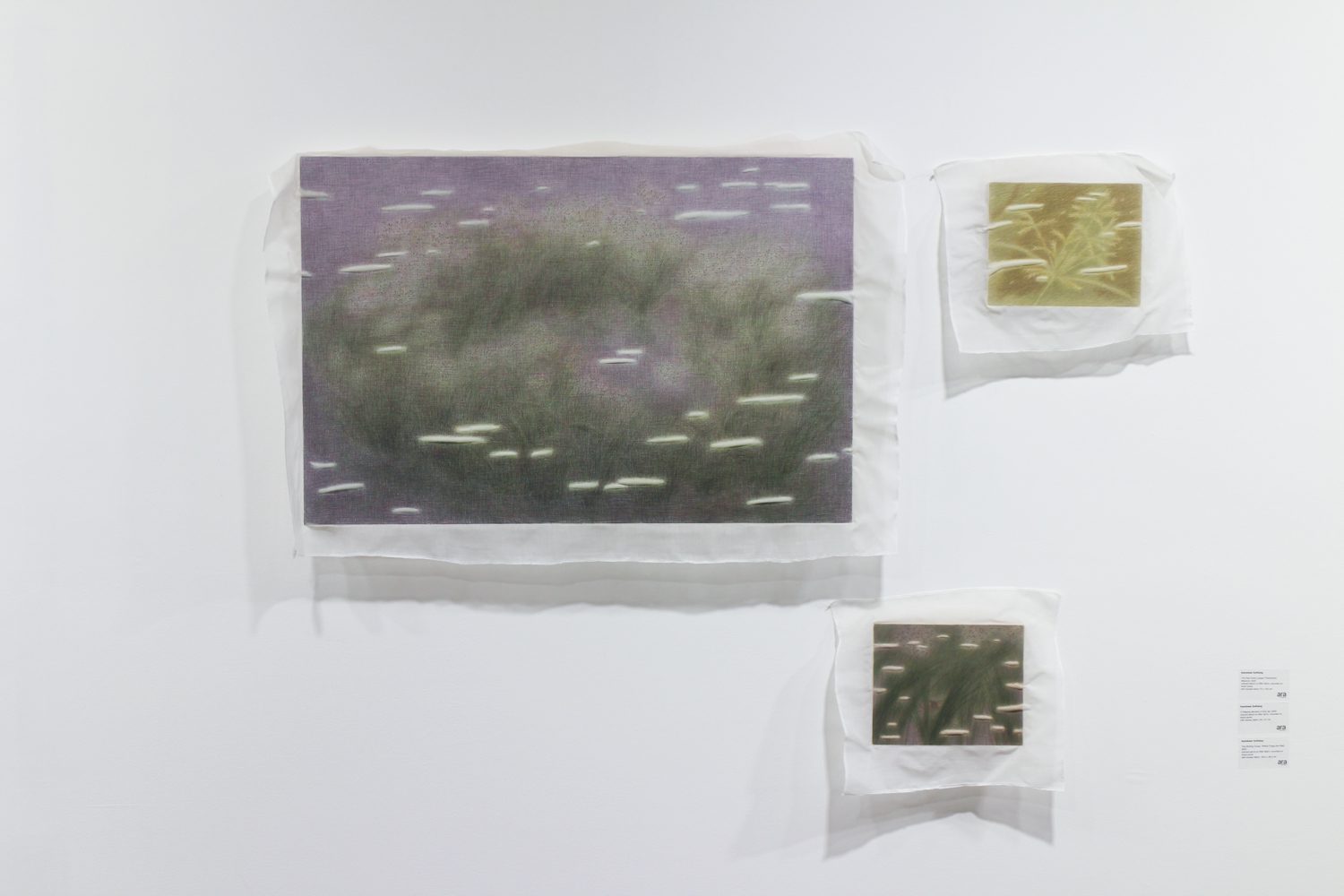
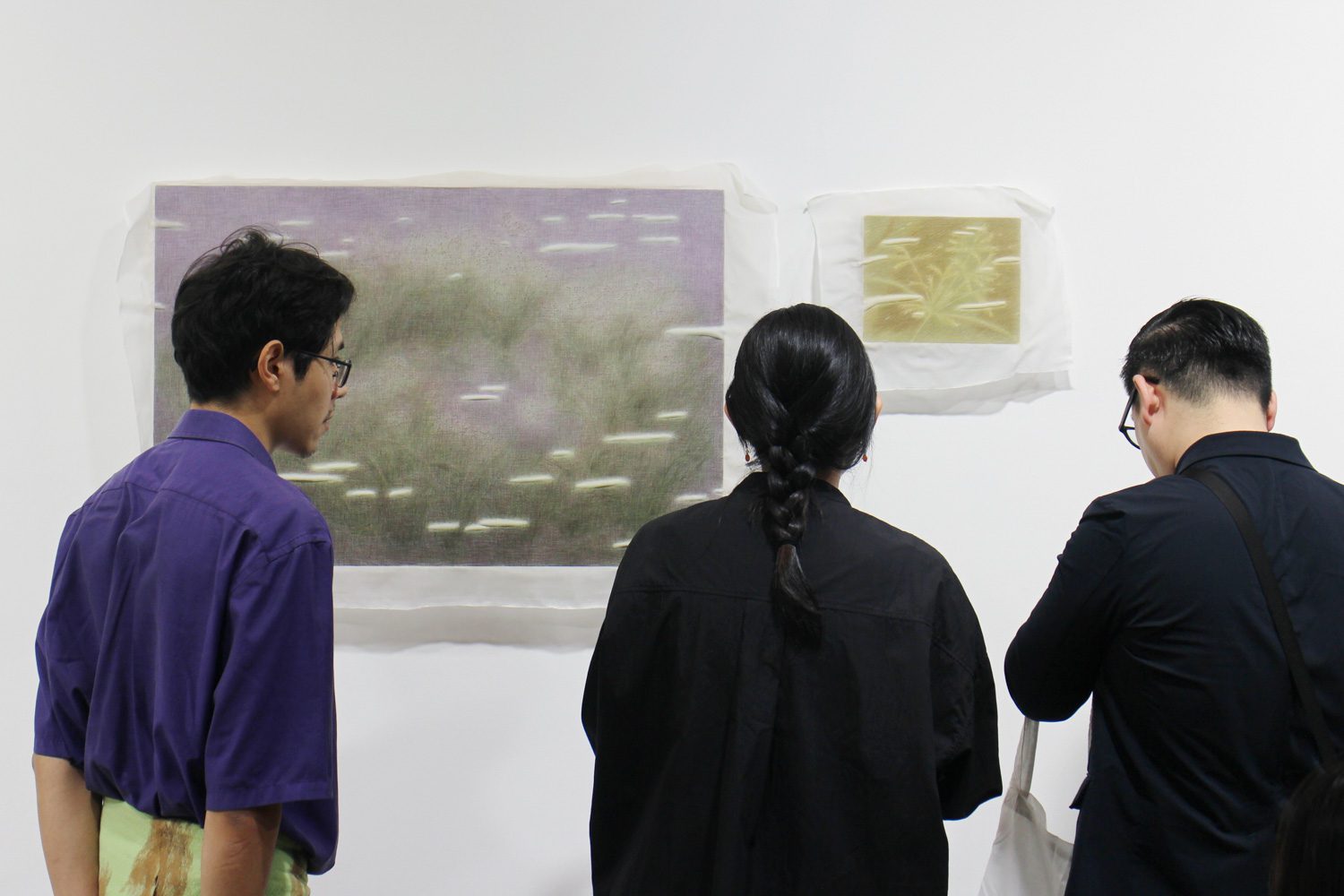
Beyond that delightfully rebellious ‘forbidden film’ poster, ara contemporary also presented a compelling work by emerging Thai artist Ing-Kanokwan Sutthang, a former participant in Early Years Project #7. Her series, Between the Rice Fields, reveals the overlooked beauty of weeds that grow among rice paddies such as grass bindweed, sand sedge, and other species long eradicated by farmers. In this body of work, Kanokwan redefines and reclaims the meaning of what is deemed ‘undesirable.’ She questions the very notion of weed or vatcha-peuch, a term rooted in negation, with vatcha meaning ‘that which is wrong.’ For her, these plants should not be seen as enemies but as elements that coexist and sustain one another within the ecosystem. Her work seeks to grasp and preserve the invisible thread of the wind that passes through the fields, connecting every blade, every living form that sways beneath its touch.
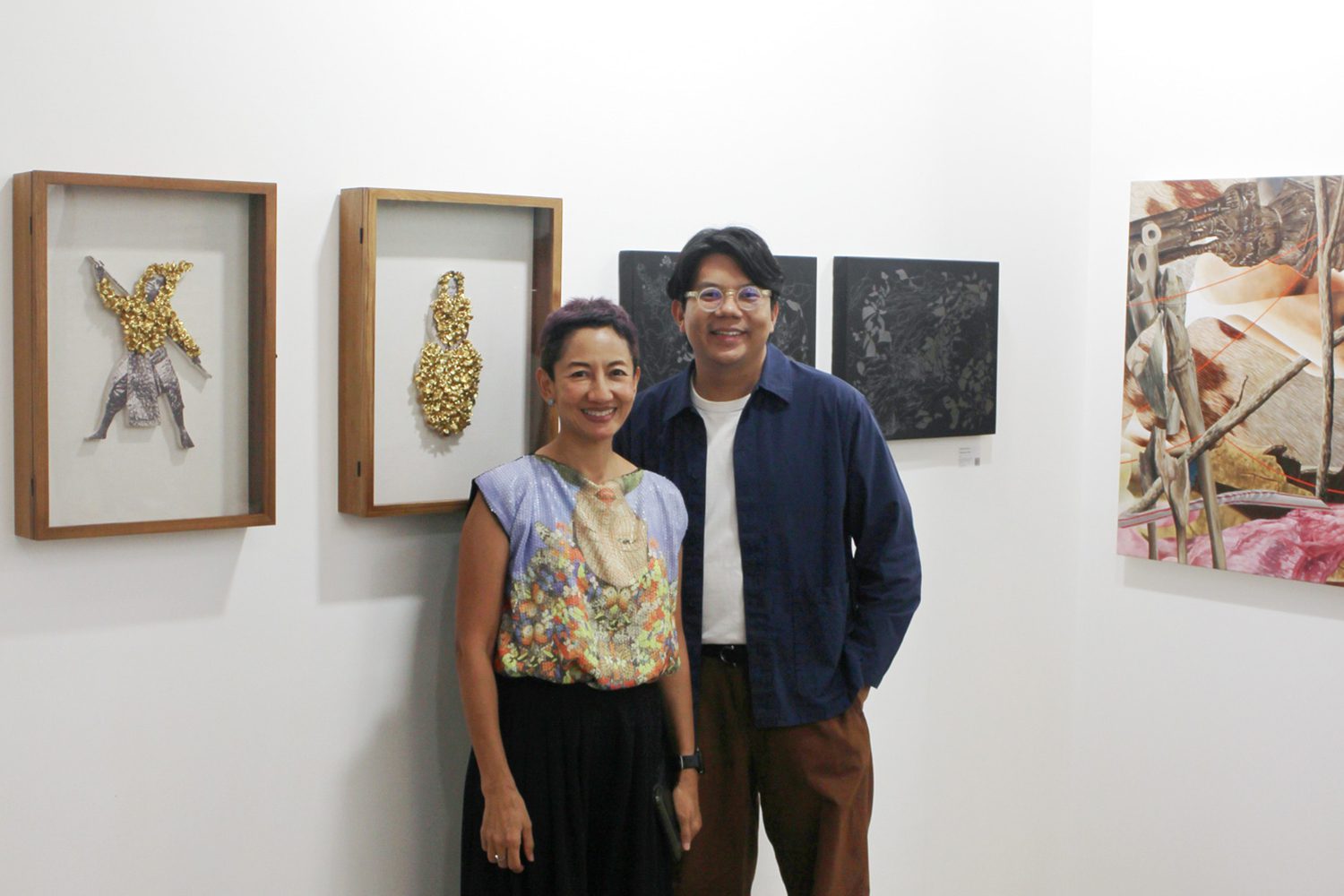
Sukhonthip Nakasem (Owner of Warin Lab Contemporary) and Nakrob Moonmanas in front of Nakrob and Imhathai’s artworks
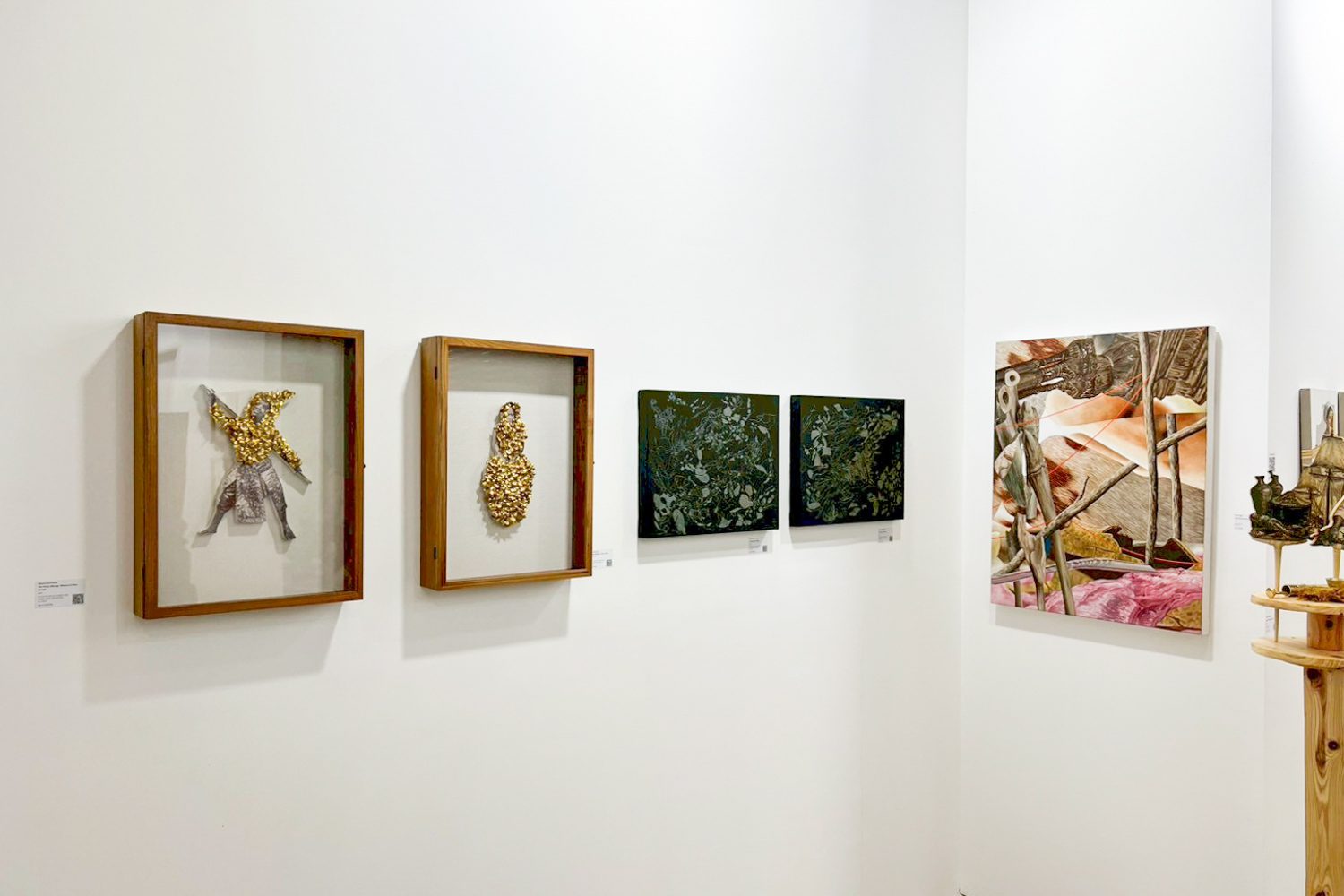
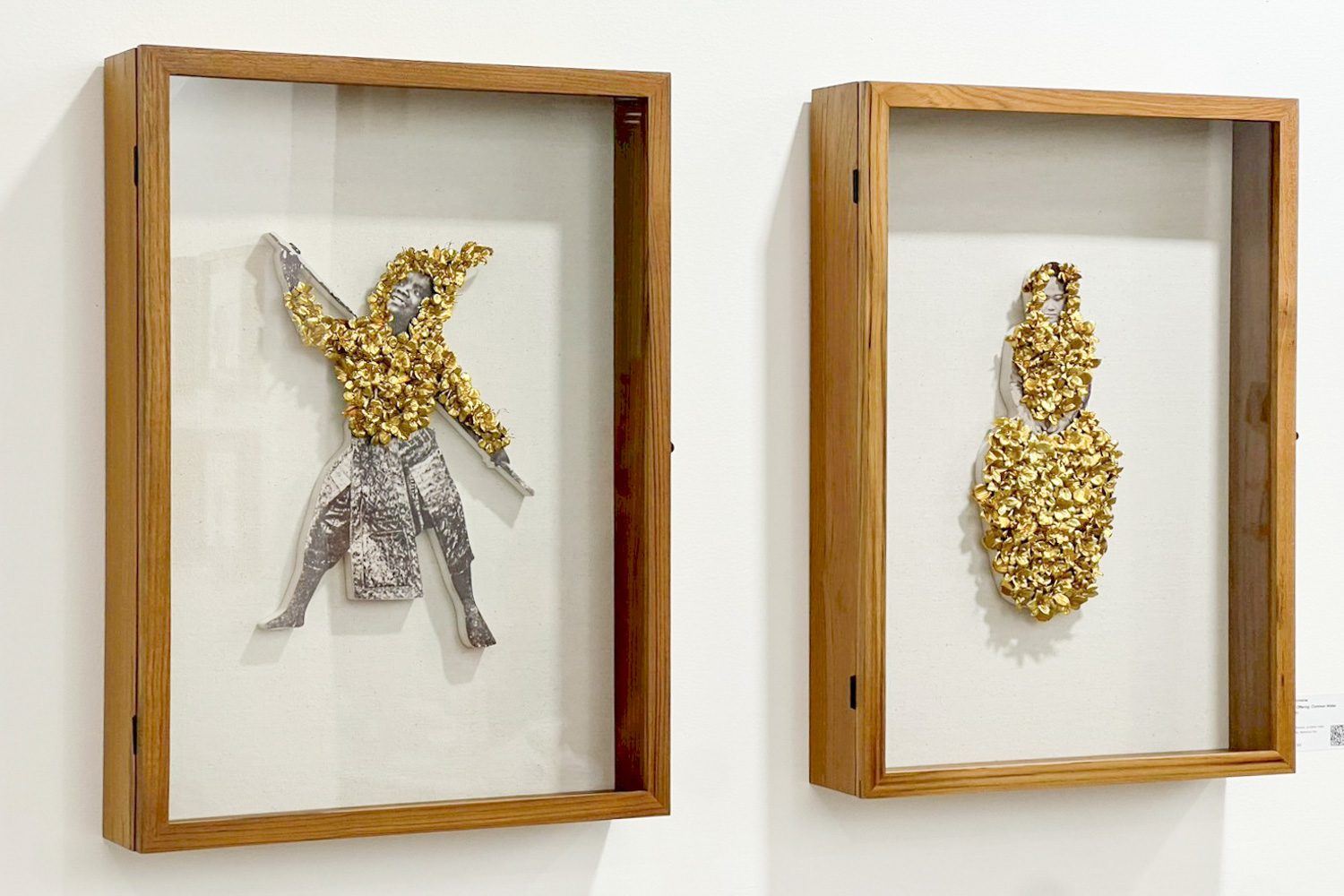
At Warin Lab Contemporary, the Charoen Krung–based gallery that made its way to the Jakarta International Expo, a selection of works by both resident and guest artists was presented, including two Thai artists. Nakrob Moonmanas showcased ‘Silver Flowers, Golden Flowers,’ a work that reinterprets the traditional dok mai ngoen dok mai thong, or ‘silver and gold flowers,’ once offered as tributary gifts from vassal states to the Siamese court. Here, these ornate emblems of loyalty and subordination are reimagined as adornments on the bodies of those deemed socially inferior to the royal court: figures such as Chao Chom Tengku Safiah, a noblewoman from the Javanese city of Lingga who became a consort of King Rama IV, and Kanang, the ‘Ngoh Pa’ (wild man) from Phatthalung who was taken into King Rama V’s household. Both, in their own way, embody the idea of living tribute; human offerings from distant lands. Meanwhile, Imhathai Suwatthanasilp presented a work exploring the abrupt transformations that occur within human nature; shifts so sudden and forceful that they form ‘phenomena’ unto themselves, capable of stirring ripples more powerful than those found in nature itself.
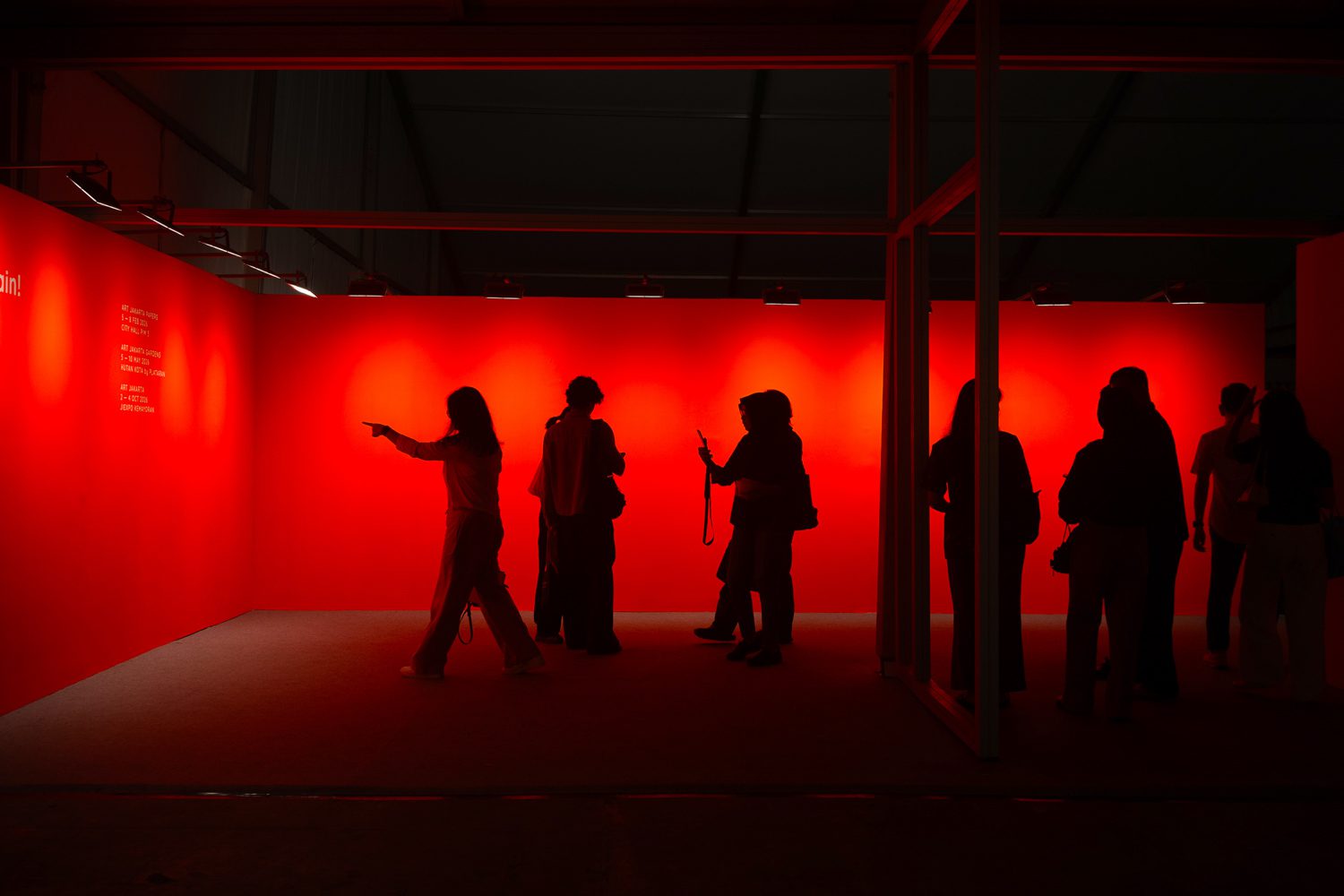
Photo courtesy of Art Jakarta 2025
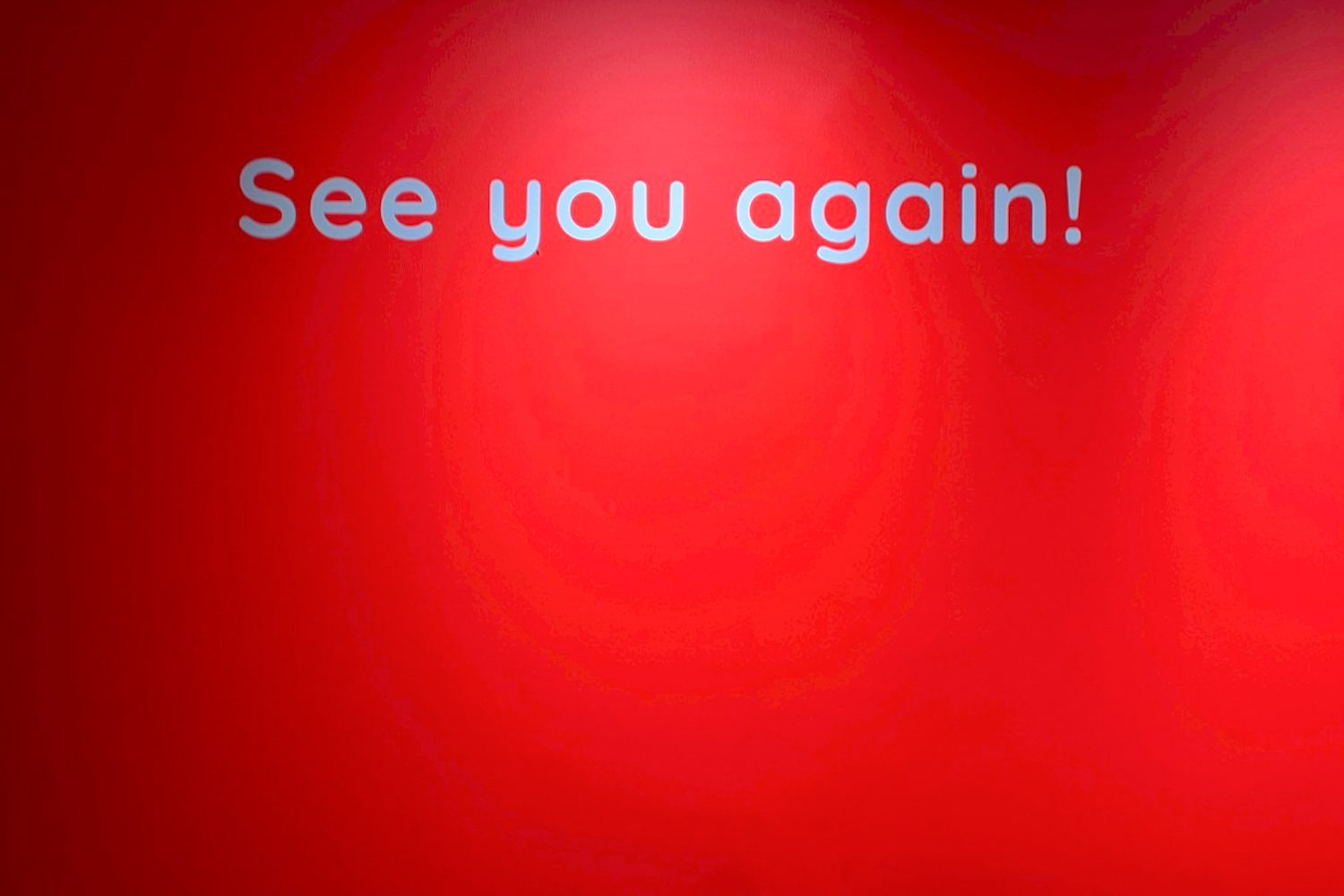
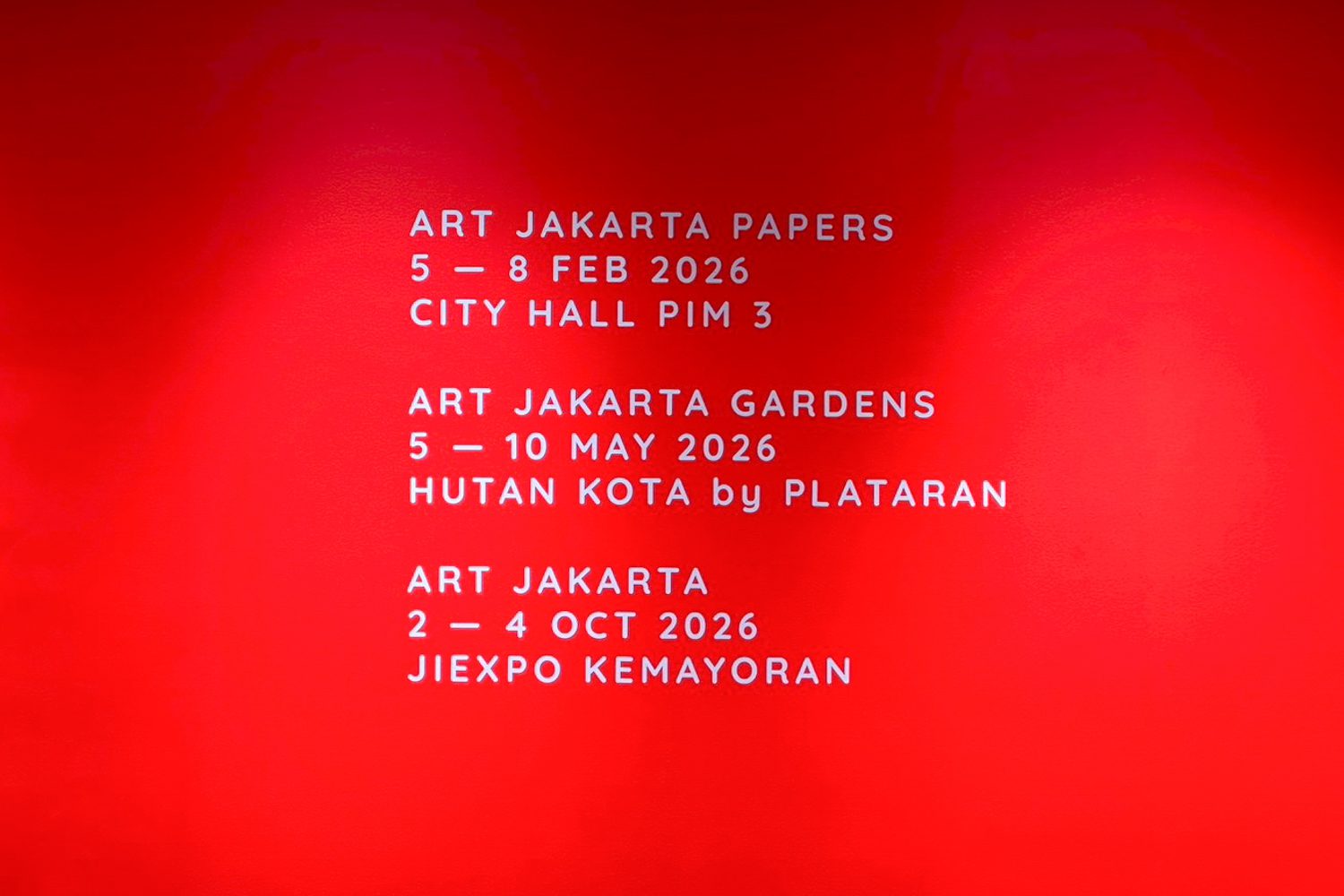
In the end, these impressions capture only part of what I felt, as someone who once studied art history, while traveling to and writing about Art Jakarta, one of Southeast Asia’s most prominent contemporary art festivals. As I made my way out of the exhibition hall, a flash of white letters against a vivid red wall caught my attention. My eyes followed the text, which turned out to be the schedule of upcoming Art Jakarta events, accompanied by the words ‘See you again!’ It felt like a warm farewell, inviting everyone to return and experience all that awaits in 2026.
For more information about ‘Art Jakarta,’ you can read at: