
INTRODUCING THE 3 ICONIC LAMPS FROM FLOS, AN ITALIAN LIGHTING BRAND FOUNDED IN 1960 BY DINO AND CESARE CASSINA. SURPASSING BASIC ILLUMINATION, FLOS EMBRACES TECHNOLOGY AND ARTISTIC DESIGN THROUGH COLLABORATIONS WITH WORLD-RENOWNED DESIGNERSRead More
SUPITCHA TOVIVICH, TAKE US TO A RENOVATED WALKWAY BETWEEN THUNGSONG RAILWAY STATION AND THUNGSONG CITY MUSEUM AT NAKHON SI THAMMARAT THAT TRANSFORMED THE IMAGE OF THE UNATTRACTIVE LOCAL TRAIN STATION INTO A VIBRANT PAVILION AND WALKWAY
CONTEXT STUDIO OFFERS A NEW IMAGE OF PUBLIC SCHOOLS BY TRANSFORMING THE SPACE TO BE SUITABLE FOR LEARNING EXPERIENCES FOR BOTH STUDENTS AND TEACHERS THROUGH THE ‘OCEAN’ DESIGN CONCEPT
It is not often that we see a public school invest in architectural design and decoration with the intention that these built environments will help improve the children’s learning ability and playing experiences, not to mention doing it at the level of a good private school. But the Samutsakorn Public School, also known as Anuban Samutsakhon School, shows how important it is to put money toward improving the school’s architecture and functional spaces. The improvement has stunned many parents and passersby, even having them wonder if this is actually a space inside a Thai public school.
Badintra Balankura of Context Studio, the project’s architect, talked about a conversation he had with the school’s director: “When the school’s director called us, I was surprised. Because, to me and many others, it is unusual to see a public school invest money towards its architecture. I personally have never seen anything like this. After having a serious conversation with the director, I discovered that the province’s governor was partially responsible for this renovation because he wanted to see the public schools in the province have top-notch learning environments that would enhance both the children’s experience and the province’s image and reputation. The director also agreed with the idea of designing functional spaces that would serve as a tool to help prepare the children for life outside of school. The design is also intended to instill a sense of pride in the students and alumni.”
The school’s location, which is only 200 meters from the mouth of the Tha Chin River.
The final few sentences about creating a space that would help prepare the children for the real world became the essence of the design concept, which compares the experience to a ship’s embarkation into the ocean. The concept also corresponds with the province’s prominent fishery industry and the school’s location, which is only 200 meters from the mouth of the Tha Chin River, situated almost directly on the gulf. The river and water thus plays an important role in the design. The renovation includes the multipurpose classroom, the hall beneath the elevated floor of the building, and the faculty office.
“The multifunctional classroom, or what the teachers refer to as the ‘presentation room,’ which has been carefully scheduled for the children from different classes to take turns using, depending on the subjects they’re learning, has to be the highlight of this project. We designed the surfaces of the walls and ceiling to have acoustic properties with functions that are more suitable for presentations with projectors and activities that require verbal communication and interactions. When we associated the design to the concept of water, the ceiling ended up looking like waves; quite intimidating-looking waves (laugh), though, because we wanted them to be able to absorb noise effectively,” explained Badintra about the design concept of the first section of the spatial program.
It wasn’t easy to design and build the ceiling to resemble intimidating-looking waves while still delivering the intended functions. The recurring spans between the waves required the design team to use Rhino software to work out the form of the ceiling. Sixteen variations were created, each with waves of varying lengths and enough repetitive spans to help reduce echoes. The CNC machine was used to create molds from the sixteen digital files. The molds were then used to cast the fiber glass tissue modules, which were then assembled into the undulating ceiling.
The multifunctional classroom’s floor and walls are made of a light-colored wood substitute to create a warm and welcoming atmosphere for the students. The wood finish reveals groove details, adding a fun dynamic to the room, which would otherwise be just a rectangular classroom with a plain surface. The grooves also contribute to the sound-absorbing property of the room, one of its primary functional requirements.
The faculty’s office, which also includes the director’s office and a meeting room, is designed to use the same material and color tone as the presentation room, with wood as the main material. The design of the building, which mimics the bottom of a large ship, incorporates elements of water and rivers. A highly skilled group of local ship builders constructed the ceiling, and the process itself was a cooperative effort that brought the province’s officials, the school, and the neighborhood together and strengthened community ties. The hall under the raised floor of the building is the area where the children play and engage in various activities. The ceiling is meant to look like the hollow cockpit of a ship. The curved and hollow features of the columns reduce the rigidity of other elements while lowering the risk of injury to the children as they run around the area. The renovated floor is constructed out of terrazzo that is partially made of glass scraps and gravels, allowing the children to see an example of an environmentally conscious effort through design.
“We’ve renovated a number of areas, and the school is planning to continue renovating other zones as well. The end result will undoubtedly distinguish the school from other public schools in Thailand. I admire everyone involved for recognizing the significance of spaces in children’s learning experiences, in addition to the curriculum. It would be amazing if other public schools could spare their budget to improve their spaces and facilities in the same way that Anuban Samutsakhon School has.”
The ideas, concepts, and points of view that Badintra shared with us about the project, as well as how they differentiate Anuban Samutsakhon School from other public schools in such a positive and impressive way, made us realize how building a good school or influencing children to become accomplished people involves so many factors that go beyond issues such as budget and curriculum. These things involve adults’ visions and their willingness and ability to look at what today’s children want to learn. It is the responsibility of grownups, particularly teachers, to closely observe the children’s needs and interests. While architecture is not the only solution that contributes to a child’s good upbringing, its ability to create an environment that is conducive to children’s learning experiences and allows them to exercise and express their imagination will undoubtedly help motivate and foster their creativity, positive awareness, and interest in ways that are unquestionably superior to being forced to sit in a boxy classroom all day.
BREAKING DOWN THE DESIGN PRINCIPLE OF PARIS 2024 SUMMER OLYMPICS’ PICTOGRAM AND EXAMINING ITS ADVANTAGES AND DRAWBACKS COMPARED TO THOSE OF PREVIOUS OLYMPIC GAMES
Humans learned to communicate through body language long before the existence of letters and writing systems, as evidenced by prehistoric wall paintings. Despite the development of written languages and alphabets, pictorial representations continue to have a place in today’s communication system. Pictograms have the potential and ability to help people from different linguistic backgrounds to understand each other. It produces endless sets of standard symbolic visuals for all kinds of activities, such as symbols for building safety regulations, washing care for garments, and even machinery and automobiles.
For an event that draws people from all over the world, such as the Olympics, sports pictograms have always been something that graphic design aficionados look forward to, just as much as the event’s logos and mascots. The easily recognizable sports pictogram was designed and used for the first time at the 1964 Tokyo Olympics. Other noteworthy pictogram designs that followed include the ones that Lance Wyman created for the 1968 Mexico City Olympics and the 1972 Munich Olympics.
Pictogram for 1964 Summer Olympics in Tokyo | Photo courtesy of the Organizing Committee for the Games of the XVIII Olympiad
Pictogram for 1968 Summer Olympics in Mexico City | Photo courtesy of Organizing Committee of the Games of the XIX Olympiad, MEXICO 68
Pictogram for 1972 Summer Olympics in Munich | Photo courtesy of ERCO GmbH Lüdenscheid
A pictogram is typically constructed using the grid system and other features that serve to form continuity while also possessing an identity that corresponds with other visual aspects as well as the cultural identity of the host country. One prominent example is Sydney 2000’s pictogram, in which boomerangs, one of the weapons of the Aboriginal people, Australia’s indigenous tribe, were shaped into the form of a human body. Another interesting example is the Beijing 2008 pictogram, with its details and lines that took inspiration from the inscriptions on ancient Chinese utensils.
Pictogram for 2000 Summer Olympics in Sydney | Photo courtesy of SYDNEY 2000, ORGANISING COMMITTEE FOR THE GAMES
Pictogram for 2008 Summer Olympics in Beijing | Photo courtesy of the Beijing Olympic Organizing Committee
It is undoubtedly difficult for a visual design for such a large-scale event to please everyone, be it the design enthusiasts or the general public. The London 2012 Olympics logo has faced criticism since its debut due to its unconventional typographic style. However, the pictogram took a rather realistic approach, while the Tokyo 2020 Olympics logo had to be revised due to a plagiarism allegation. The criticism leveled against these pictograms is that they are “unoriginal.” I had the same impression about Tokyo 2021’s pictogram, which is clearly an intentional attempt to modernize the design used for the Tokyo 1964 Olympics, until I attended the opening ceremony, in which real human performers were choreographed into the symbols in the most ingenious way.
Pictogram for 2012 Summer Olympics in London | Photo courtesy of The London Organising Committee of the Olympic Games and Paralympic Games Limited
Pictogram for 2021 Summer Olympics in Tokyo | Photo courtesy of Tokyo Olympic Organizing Committee
When the introductory video for the 2024 Paris Olympics was first shown at the closing ceremony of the 2020 Tokyo Olympics, audiences were captivated by a variety of novel concepts. New sports, such as skateboarding and breakdancing, were added while competition sites were held at major landmarks in the city. Certainly, the design of the event’s visual identity is equally impressive, from the logo, which combines different elements of the flaming torch, gold medal, and the face of Marianne, the woman who symbolizes the French Revolution, to the use of a vibrant color palette that reflects the host country and the city’s rich culture. Everything perfectly fits the overall mood and tone of the other media created for the event.
Photo courtesy of International Olympic Committee, 2023
The recently unveiled sports pictogram for the 2024 Paris Olympics upends many people’s expectations to the point that it feels uncertain if the design can be termed a pictogram at all. There are no human elements found in the symbols representing various sports categories. Instead, each symbol incorporates sporting equipment as well as features of competition grounds and venues, all of which are placed in a rectangular space divided by diagonal lines. The finished design looks like an emblem of a European family or city, with details and nuances that must be carefully explored, as opposed to most graphic symbols, which allow viewers to comprehend concepts and meanings in a brief period of time.
Photo courtesy of International Olympic Committee, 2023
I’m not sure how well this pictogram (?) will work. The first shortcoming and issue is how difficult it will be to notice when these symbols are employed in a smaller size compared to previous designs. The lines do not exactly correlate with the 2024 Paris Olympics’ logo, but rather with the 1924 Olympics’ logo, which was also held in Paris. Everything, I believe, is a purposeful endeavor to impart the inherent creativity of the past to the present. Every symbol in this pictogram is intended to present itself as an adaptable logo (a type of logo that varies its form and elements based on the scale of the space it’s in), which will be especially interesting when used in animated and interactive media formats.
Paris 1924 Olympic logo
Photo courtesy of International Olympic Committee, 2023
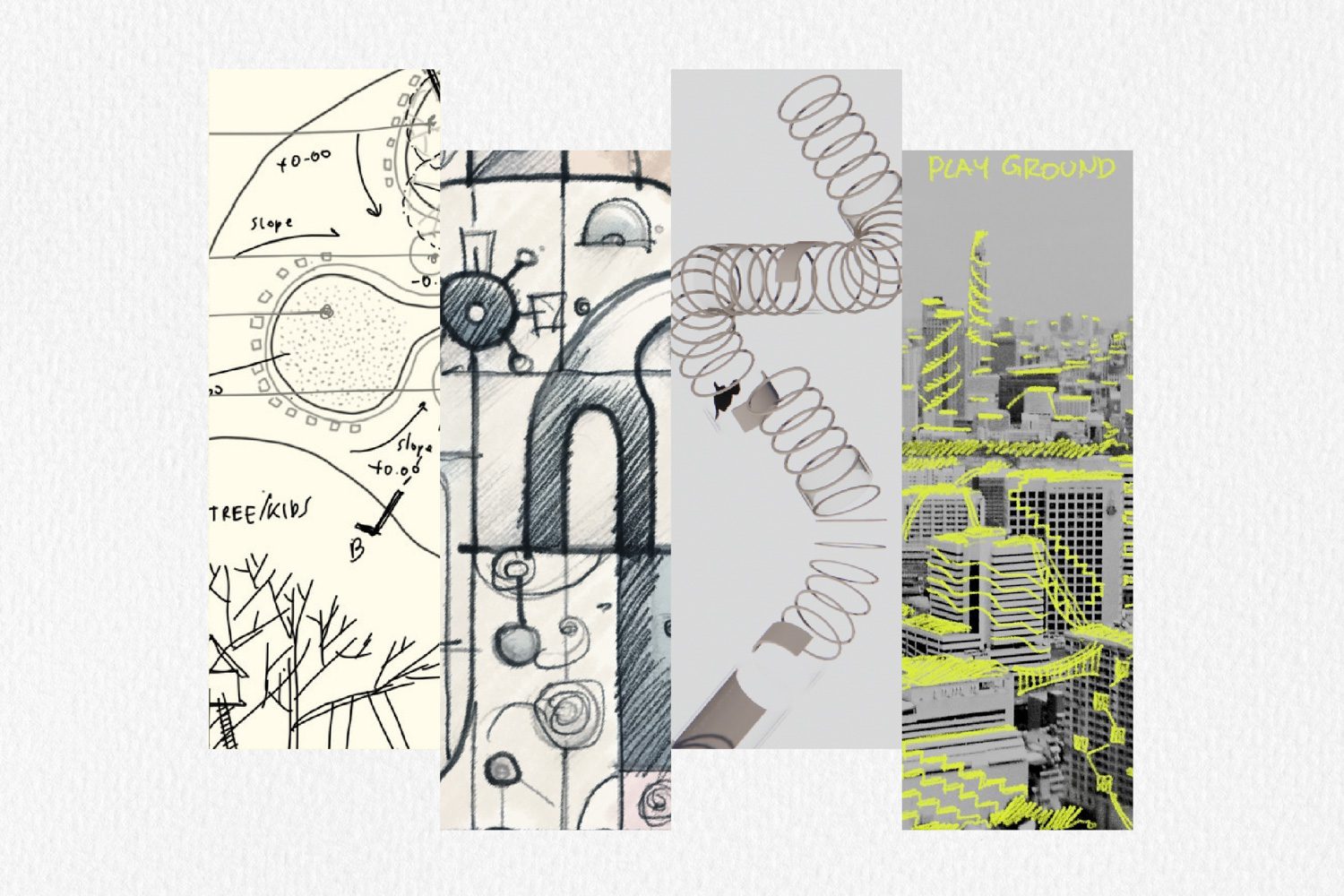
MEET WITH 8 FINALISTS FROM DESIGN ACTION HERO, A DESIGN COMPETITION FROM THE THAI HEALTH PROMOTION FOUNDATION IN COLLABORATION WITH art4D FEATURING FOUR AREAS FOR PARTICIPANTS TO WORK ON: CREATIVE PLAYGROUND, GREEN BUSINESS, TECHNOTOPIA, AND SOFT POWER
EXPLORE FOUR DESIGN PROJECTS THAT ARE INFLUENCED BY BELIEFS AND SUPERSTITIOUS IDEAS, WHILE ALSO FULFILLING FUNCTIONAL REQUIREMENTS AND EXPLORING NEW DESIGN TERRITORIES
AN EXHIBITION BY PINK BLUE BLACK & ORANGE (PBB&O) SHOWCASES 25 CRUCIAL ‘MATTERS’ FOR GRAPHIC DESIGNERS TO SUCCEED, AND OFFERS A BRIEF OVERVIEW OF THE THAI GRAPHIC DESIGN INDUSTRY OVER THE PAST 25 YEARS
A SHOPPING MALL THAT CENTRAL PATTANA RENOVATES WITH THE CONCEPT OF ‘EVERYDAY GOOD VIBES’ TO PROVIDE A PLACE WHERE PEOPLE CAN VISIT EVERY DAY AND FEEL COMPLETELY AT EASE
AP THAILAND’S PROJECT IN THE CENTRAL CHAROEN KRUNG AREA OFFERS A ‘LUXURY GATED COMMUNITY’ CONCEPT THAT CATERS THE VARYING NEEDS OF MULTIPLE GENERATIONS, WITH A SHARED FOCUS ON ‘FREEDOM AND SECURITY’
DESIGNED BY IDIN ARCHITECTS AND TROP : TERRAINS + OPEN SPACE, THIS CAFÉ IS AN INSEPARABLE FUSION OF ARCHITECTURE AND LANDSCAPE. WITH THE PERFECT BACKDROP OF TREE SHADE, IT IS A PLACE WHERE PEOPLE COULD FOCUS ON THE DELICATE CUP OF COFFEE
This website uses cookies to improve your experience. We'll assume you're ok with this, but you can opt-out if you wish. Cookie settingsACCEPT
Privacy & Cookies Policy
Privacy Overview
This website uses cookies to improve your experience while you navigate through the website. Out of these cookies, the cookies that are categorized as necessary are stored on your browser as they are essential for the working of basic functionalities of the website. We also use third-party cookies that help us analyze and understand how you use this website. These cookies will be stored in your browser only with your consent. You also have the option to opt-out of these cookies. But opting out of some of these cookies may have an effect on your browsing experience.
Necessary cookies are absolutely essential for the website to function properly. This category only includes cookies that ensures basic functionalities and security features of the website. These cookies do not store any personal information.
Any cookies that may not be particularly necessary for the website to function and is used specifically to collect user personal data via analytics, ads, other embedded contents are termed as non-necessary cookies. It is mandatory to procure user consent prior to running these cookies on your website.